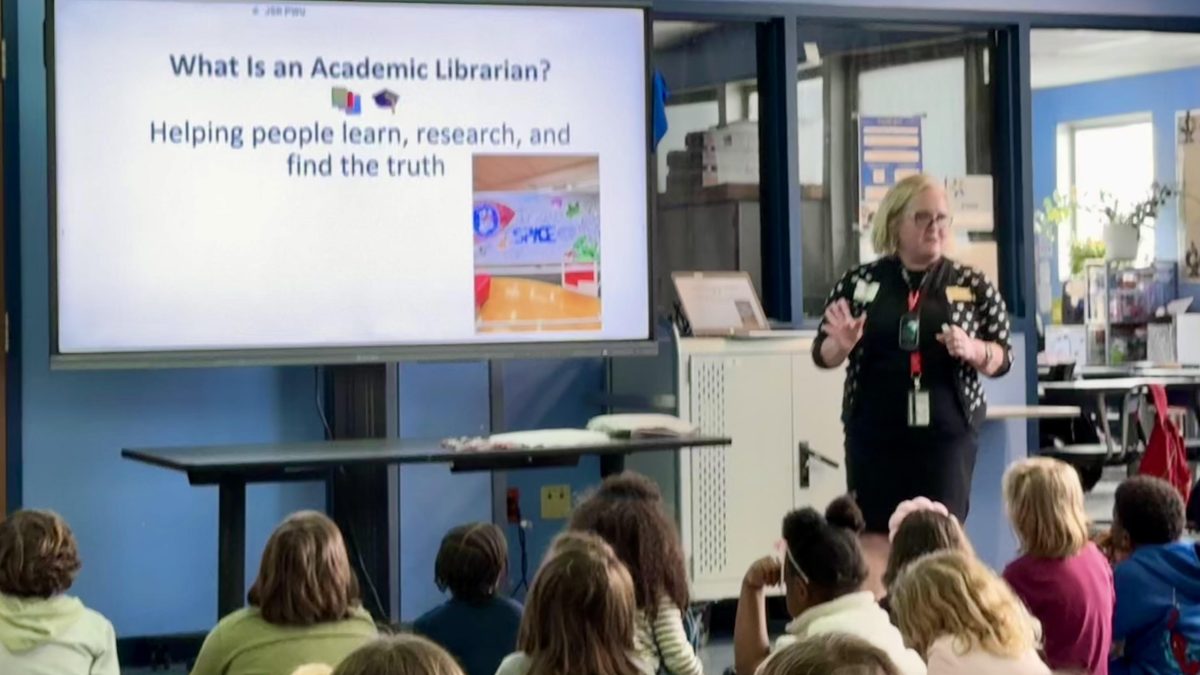
I recently had the unique opportunity to visit my child’s classroom on Career Day to talk about academic librarianship. The audience was a pod of nearly 100 third and fourth graders, and I had 15 minutes to make an impression.
To start, I shared a short time-lapse video of our library building, highlighting collaborative spaces, art installations, and our massive stacks. The kids seemed genuinely engaged. I talked about student employment opportunities in university libraries, which caught the attention of a few of the fourth-grade girls. From there, I moved into an age-appropriate lesson on information literacy—how to recognize fake information in (my son’s favorite) YouTube videos and across the internet more broadly.
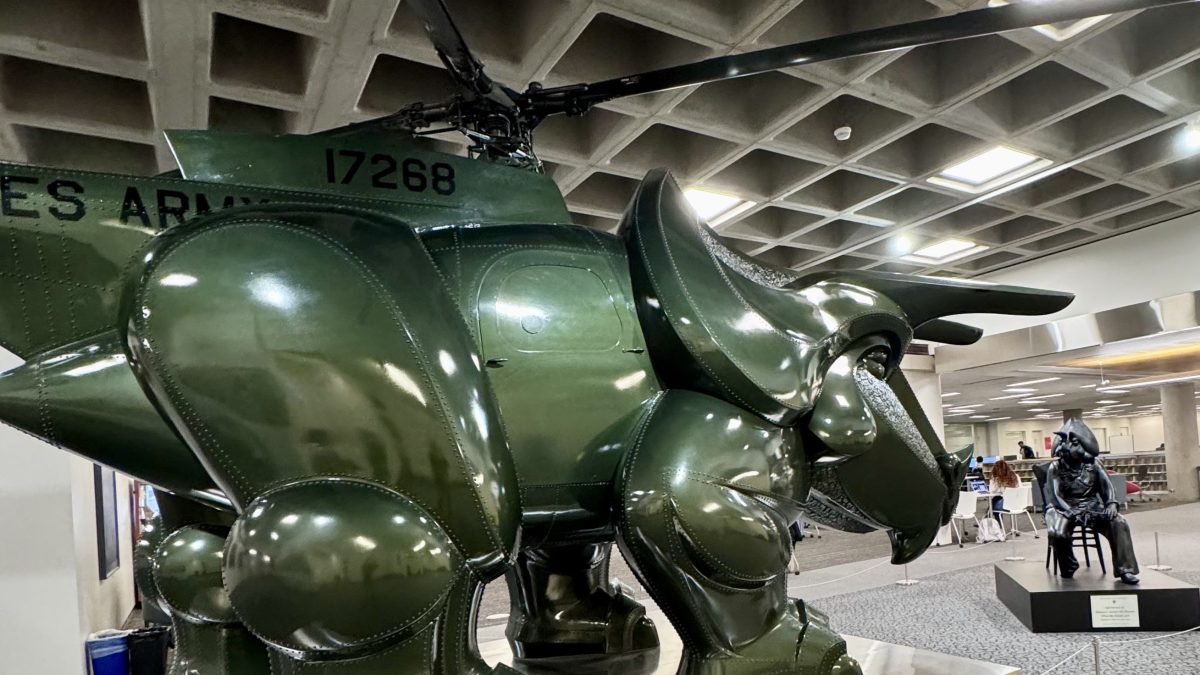
I introduced Special Collections and explained just how old some of our materials are, hundreds of years old, in fact, which managed to impress even the hardest-to-impress third and fourth graders. My one misstep was mentioning the artist of our very cool Tricercopter: The Hope for the Obsolescence of War sculpture, requested that their ashes be placed inside the piece after their death. I immediately knew I’d gone too far when a student raised their hand to ask, “What are ashes?”
In all honesty, this was a challenging presentation. Academic librarianship is incredibly broad; how do you choose what to share when your goal is to inspire future librarians? With the rapid introduction of new technologies like artificial intelligence, our work is becoming even more critical. We’re facing yet another overwhelming flood of information and are tasked with understanding how it’s created, building ethical and moral guardrails for its use, and, of course, identifying what’s fake. If current trends are any indication, we are going to be drowning in AI-generated content very soon, if we aren’t already.
This is core librarian work. We have been organizing, evaluating, and understanding information since the dawn of recorded knowledge. To keep up, we must continually adapt our foundational frameworks to meet challenges we haven’t yet experienced or even imagined.
This is an exciting, and some might say transformational, time for librarianship and higher education. I hope I was able to convey that excitement to those bright third and fourth graders, because we’re going to need their help.