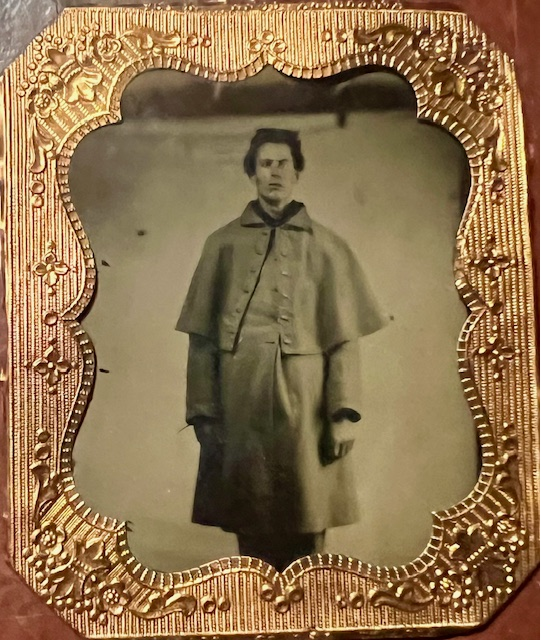
Benjamin L. Askue, Jr. during the American Civil War, circa 1860s
Frontline accounts of military conflicts provide a glimpse into the world of the war. The historical record reflects numerous descriptions of soldier’s and military doctor’s accounts of the bloodiest war ever engaged on American soil – the Civil War. The Henry R. Winkler Center for the History of the Health Professions announces the launch of the narratives of the 23rd Regiment Ohio Volunteers Infantry doctor, the Benjamin L. Askue, Jr. Civil War LettersBenjamin L. Askue, Jr. Civil War Letters on JSTOR.
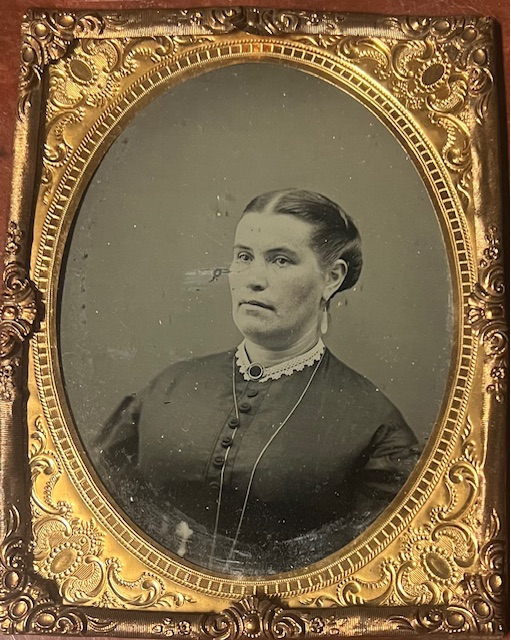
Askue was born in November 1833 to Benjamin and Rowena Cordelia Askue in Ashtabula, Ohio. In 1853, he married his cousin Flavia Pritchard. The letters he wrote to Flavia during the American Civil War demonstrate that they had a happy marriage. The couple had five children together.
During the 19th century and early 20th century, physicians often received their training through apprenticeships. Askue followed this path becoming a homeopathic doctor. In 1861 he joined the 23rd Regiment Ohio Volunteers Infantry, Company B in the Union Army. Askue served as a cook, nurse, hospital steward, and in the 23rd Regiment’s infantry. He left the Union Army In July 1865. Askue returned to Ashtabula to farm and practice homeopathic medicine. He died in 1906.
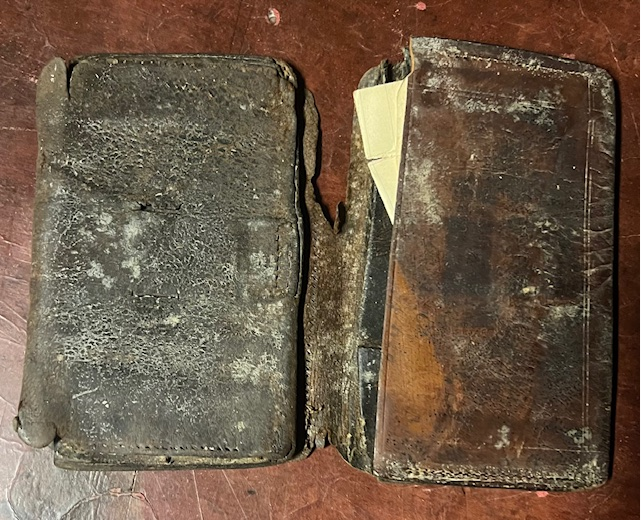
Askue’s archives and artifacts were donated to the Winkler Center. While his archives hold numerous documents and artifacts, the highlight of the collection consists of letters written to Flavia beginning in June 1861 and concluding in July 1865. He described the 23rd Regiment’s travels, battles, camp life, politics, family in Ashtabula, Ohio and Askue engaged in philosophical analysis of the era.
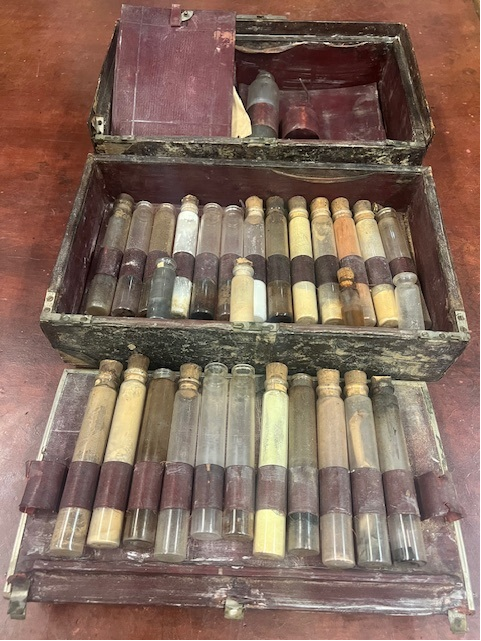
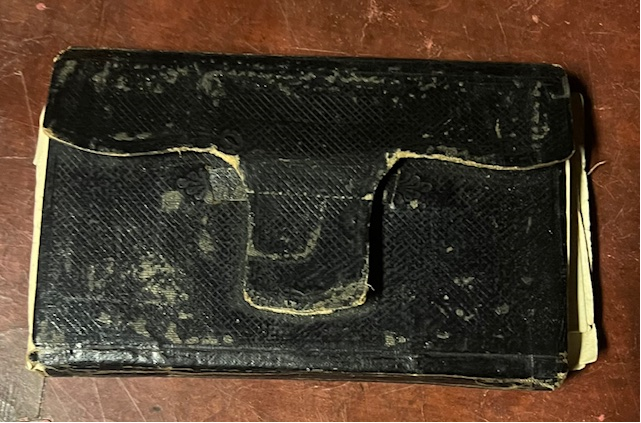
Mid-19th century doctor’s traveling medicine kit
Benjamin Akue held his wife in family and great esteem. He addresses Flavia as “Dearest Companion,” and signs his letters “Your affectionate Husband” and “From Ever your Husband.”
Kiss all the children for me and give my love to all the friends and tell Grandmother that I often think of her and would like to see her again if possible and have a long talk with her. My love to all the rest of the family and friends and good bye for this time.July 8, 1862 on JSTOR
Flavia Pritchard Askue, circa 1850
Askue regarded his participation in the American Civil War as his duty and an honorable calling.
What I am fighting for is freedom of Speech of thought and voting and if there is the least chance of getting better officers I shall vote and if the ones in power do not like it is not my fault. I do not make any calculations to shrink from any known duty through fear for that in my way of thinking is a poor roll for my belief is that the right will prevail in good time. All we need is patience to wait that good time.July 19, 1861 on JSTOR
I for one mean to do my duty if it is hard cheerfully. I did not expect the comforts of home and the society of friends when I enlisted but I looked for hard marches and a thousand unpleasant things for a war without inconvenience would be no war at all. But the contrary.September 15, 1861 on JSTOR
He wrote that the Union’s soldiers’ inspiration to fight was superior in comparison to the Confederate soldiers.
We have Credit, provisions, men and the great secret of success. The men know for what they are fighting and do it without force while in the south the Leaders are the only ones that know the true standing of the case and have to lie and have lied about as long as it will pay. They will soon want some of the promises they have made fulfilled or they will desert and run worse than they do now for they will soon find out that the northern men get pay and clothing and pay that is worth something too. While theirs will daily depreciate in value and in time become worthless.November 21, 1861 on JSTOR
Last week a Brigider General that lived in this place came home and delivered himself up and is released on parole. He had been in Floyd’s army and lately in Richmond. He thinks the rebels are about Whiped or claims he thinks so and his comeing home is proof enough for a man is not apt to holler that he is whiped before he believes it himself.March 22, 1862 on JSTOR
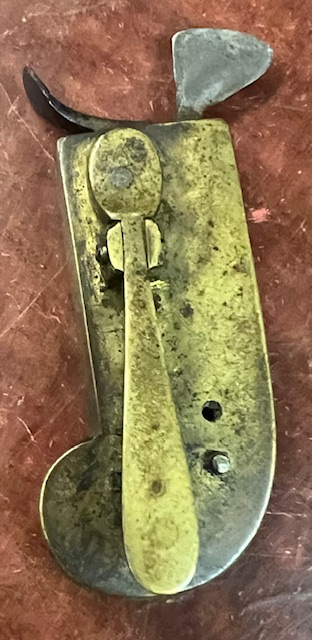
Brass Lancet (bloodletting device) used to draw blood, circa 1860
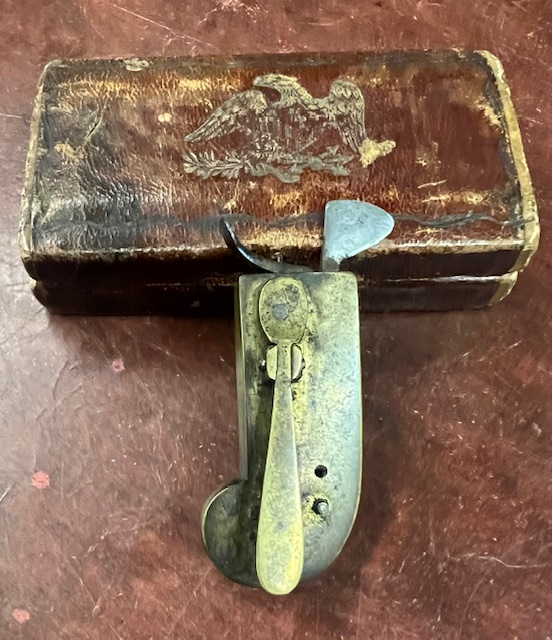
Brass Lancet (bloodletting device) and wood case, circa 1860
In his letters to Flavia, Askue regularly evaluated the competence of the Union and Confederate leaders.
I see by the dispatch yesterday that Hooker’s division had advanced and that our men were confident of moving on to the rebel capital in a short time and that Major General Pope has command of Fremont, Shields, and Banks divisions in Virginia. I expect they will soon do something for they are all good Generals and I hope have all the men that they need by this time to move towards Richmond and keep old Davis from retreating if he should try it.June 29, 1862 on JSTOR
We have the rumor in camp that Jackson has been badly whipped and that he was killed and found on the field of battle. If so they have lost one of the best fighters they had as a General.July 8, 1862 on JSTOR
All have faith in our General George Crook. He makes his camp in the field without display, puts on no style and sees to all the movements in person. Is the first and foremost on the battle field cheering on his men and taking his chances with them. His old Regiment the 36th Ohio cannot be beat for fighting material and the bully old 12th Ohio have always stood all tests that have been brought against them.May 22, 1864 on JSTOR
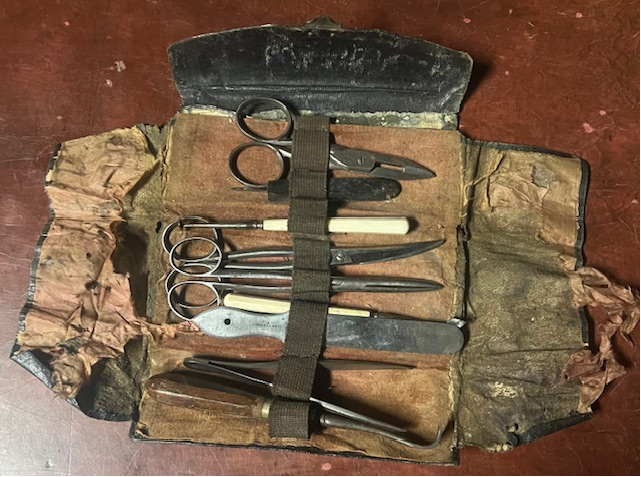
Pocket surgical kit, circa 1850
Askue’s letters reveal the state of the Confederacy’s supply challenges throughout the war.
The battle was but a short distance from where we fought on the 10 September at a place called Cross Lanes. Among the guns found in the enemy’s camp are rifles of all sorts and as old as Methuselah nearly and flint lock muskets, some good guns, some cattle and other stores. I hear that there was 50 or 60 thousand dollars worth of Property taken in. All I know there was a pile of it.September 15, 1861 on JSTOR
In addition to munitions, Akue theorized about the food and nutrition of both armies.
We are here with enough to eat and wear and feel safe but as near as we can learn the rebels have hard times and are in a sweat all the time and hardly sleep of nights for fear of the Vandals of the north getting them before they can get away…. I think better for we are better fed and have a plenty of salt while they do not have half enough and no coffee but I suppose they have some whiskey to keep their pluck up.July 8, 1862 on JSTOR
The Union’s access to reliable train transport bolstered food supplies throughout the conflict.
From the 10th until after we arrived here provisions were short and we had but little besides what we got from the country and that was mostly corn and meal so we had mush and parched corn and wheat ground and baked without sifting and not over rations at that but no one starved if some did go hungry for a few days. We met the train here and now have a plenty of Crackers and coffee and fresh beef.May 22, 1864 on JSTOR
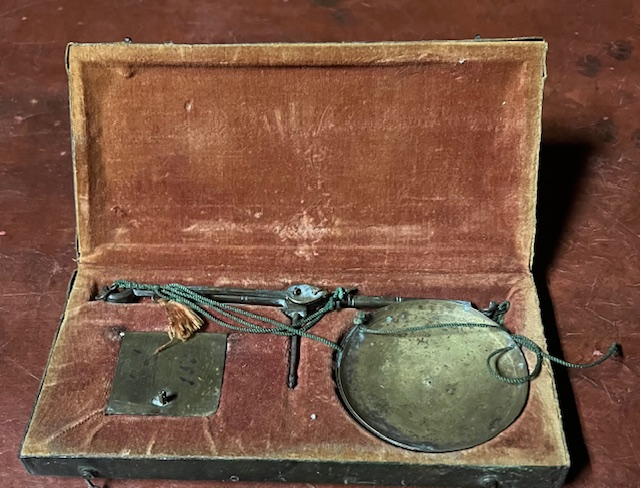
Brass transportable apothecary balance scale, circa 1850
Many of Benjamin Askue’s letters to Flavia reflected personal matters, such as adequate funds, weather, homesickness and timely news.
I will send $10.00 this time and will send you some more as soon as I get a good chance. I expect to get pay for two months again about the first of December but it is altogether likely we will be in winter quarters by that time.November 21, 1861 on JSTOR
I would give a good deal to see the children to day all of them and have a good play with them. If the war is not ended in four or five weeks I shall try and get a furlough and come home to see you all but I think that peace will be declared before winter. But you at home can keep better posted of the movements of the troops than we do here for you get the news before it is a month old.September 18, 1861 on JSTOR
The weather here is all sorts. Yesterday it was pleasant and like spring to day it is as blustering as March blows, snow, rain and sunshine all in the same hour. Last night it was thundering some and tomorrow it will be something else I suppose.February 22, 1863 on JSTOR
I suppose that long before this you will have heard the report that Jeff Davis is dead. We all here hope that the report is true but are afraid it will prove false. If he is dead and Floyd wounded two of the head devils are getting a little of their pay for their deeds and others are getting it every day & will until the war is ended.September 18, 1861 on JSTOR
We are daily looking for some big news from Vicksburg and the coast and we hope for big victories to our cause. We have the daily papers here from Cincinnati so that we get the news in a few days from three to five.February 22, 1863 on JSTOR
Benjamin L. Askue, Jr.’s pocket medical diary, circa 1860
Askue’s letters demonstrate that he was astutely aware of the politics of war. He often expressed his political opinions to Flavia.
There is a considerable stir among the citizens about these times for the militia are organizing here to day and are voting for the new State of New Virginia. Off 18 or 20 miles the secesh Cavalry and the bushwhackers keep the citizens in hot watter for they are taking prisoners of some of them but a good many stay in the woods to keep out the way of them.April 2, 1862 on JSTOR
I see by your letter that your half believe in what a few of the papers and among the rest the Sentinel say of General McClellan but you will find but few in the 23rd Regiment who do not have faith in McClellan and in his plans. It is his place now to save the union and have nothing to do with politics at all or with sectional interests but to work for the good of the union men of the South as well as North. As for Slavery that is dead and a few years will see the last slave in this country and the last of its supporters to. I think as a class or party there may be a very few for what has been so long instilled in the public mind takes time to wholly eradicate but in time it will be done for the wheel is set in motion and no earthly power will stop it. When they say that McClellan is a traitor I think they say what can not be proved in a single particular…. McClellan a traitor and Lincoln a traitor and all in the army traitors but the cowardly Politicans and home guards who have never and never will risk a single cent in the defence of our country and her rights will stay home and cry coward and traitor when they do not know the first principles of bravery or of military matters.July 8, 1862 on JSTOR
…we have heard of the removal of McClellan. There are but a few of the soldiers who are satisfied with his removal. For my part I do not care if it will help to bring the war to a close. Burnside is an old War horse and time will tell whether he is capable of filling the post to which he has been assigned. I saw him a number of times while in Maryland and liked him well. He does not put on the least bit of style but dresses very plain and looks like some rich old farmer and he looks as though he was not to be bought or sold and I should as soon think of trying to scare one of them old Virginia hill from their place as him such is my opinion of him. We were in his corps at South Mountain and Antietam.November 17, 1862 on JSTOR
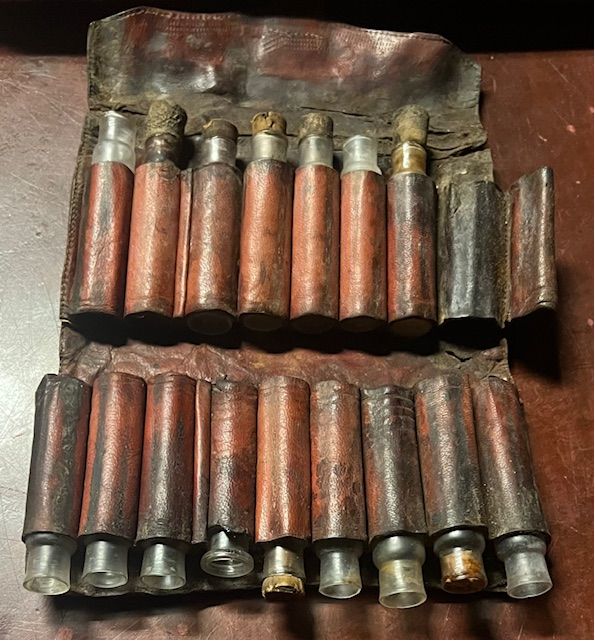
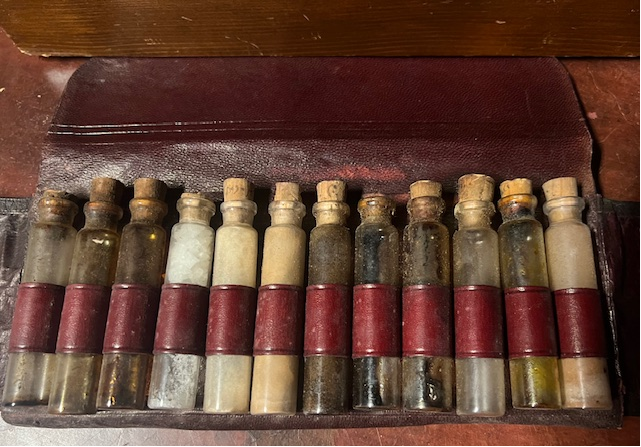
Doctor’s transportable and foldable apothecary kit, circa 1850
Benjamin Askue held strong opinions about slavery and politics. He wrote to Flavia,
I think the Lincoln dynasty will be the commencement of a free republic and not what it has always been before–free only in name to a large portion of the Inhabitants not only to black but the white population of the south. The leaders of the Slave principle at the south can never make fools of the Inhabitants as they have formerly done for they will read and find out for themselves in future times and another thing they will have to let the cords looser on their slaves year by year for the slaves have learnt a lesson that they will not forget until the last slave is free and acknowledged as such by their former Masters. And it is my opinion that it is a good thing for the country that the present war broke out for if we had fed and nursed Slavery for a few years longer there would have been a worse rebelion than the present and it would have been carried on by the black and their advocates in different parts of the globe. But the present war will do away with all that and I think with a good deal less loss of blood and treasure but enough of Politics for the present.March 22, 1862 on JSTOR
8 years since I was married. Little did I think 8 years ago to day that I would be in camp as a soldier at this time although I had some idea that there would be a strife between the Slave and free powers but I supposed the commencement would be on the part of the free and lovers of Liberty but instead the Slave Powers have made a desperate and almost successful stroke for the rule and reign in this land. But their apparent success will lead to their greater downfall for it only shows what they would be if in the ascendant. I have strong faith that our cause will come off victorious & that peace and plenty will once more dwell in the land and that the curse of Slavery will be entirely removed.November 17, 1862 on JSTOR
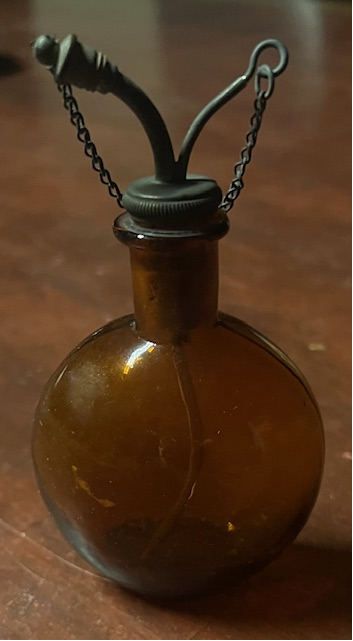
Chloroform dropper bottle utilized administer anesthesia during surgery, circa 1860
Askue’s letters gave vivid descriptions of battle preparations and engagement.
General Binhams Brigade had been across the River a few days and we were going to reinforce him for we heard he had some secesh treed and they were going to fight. We marched 11 miles to the river and 5 miles beyond encamped for the night. We were all tired and sore for we had lain still so long that our muscles had gotten soft and we had got too fat to march easy. At 12 o’clock at night we got up and marched on again leaving our knapsacks and a few to guard them. I travelled til about an hour before day and stoped until day and rested. Went in and catched up with the rest of the company there. The whole of the 3rd Brigade along the 23rd, 26th & 30th we soon after day came to the rebel embankment but no rebels in a couple of miles. We came to a camp that Benham had drove them from the day before and from there to where we now are at the county seat. There were tents, cooking utensils, guns and Amunition and all the implements that belong to an army scattered in the road and a good many were burnt on the camp ground. We got here about 9 o’clock in the morning had marched some 10 miles…. The 15th and Benhams Brigade followed in the course of the day. They could not catch the rebels and their provisions had run out so they came back and brought a Colonel Calvary that was kiled and the secesh had not time to take him but threw him over the fence and left him. He was a school mate of General Binham and spoke to him before he died. Told him he had got what he deserved. He belongs to Kentucky and our men will send him to his friends. He lived but a short time after he was shot. I hear that they lost some 20 men or more and that our men lost but one man.November 16, 1861 on JSTOR
On Monday we moved our camp about one mile and we have a very good place here now. It is on grass land or the part of the regiment that we are in is and is a good deal healthier than the other camp was. There is more sickness in camp now than at any time before. There is a considerable diarhea and some fever. Some of this company are sick but none seriously. The most are sick with a dysentry.September 18, 1861 on JSTOR
The fight takes place at or near… between 3 and 4 miles from the Rail Road. Our men push on towards the rail road and meet a part of… as reinforcements but only in time to be whiped out and retreat again. Our troops encamp on and near the rail road that night. Our company suffered heavy in the fight and done nobly as did the whole Regiment. The loss of the 23rd was over 90; 17 I believed killed. The first who fell in the company was J.P. Greenfield shot through the bowels lived about 2 hours. Next A. West he lived but a short time. Lamb shot in the head killed instantly. Henry Simons shot through the breast and hand will hardly live. John Ray shot through the side a bad wound not likely to return. Cook shot through the right lung may possibly get along. McCarthy Shot in the hand. James Thompson in the wrist. Corporal Foster near the knee. C. Thomas flesh wound in leg. Peabody in arm (amputated). Young Piper flesh wound in leg. There were all left in hospital near the battle field and a few the company are with them.May 22, 1864 on JSTOR
Transportable homeopathic apothecary kit, circa 1885
Throughout the war years (1861—1865), Askue surmised that the conflict would be brief.
I shall try and write a little more than I did in May if I am well and we do not have much Marching to do but I think there will be no need of my writeing many more letters from the Army for I think in about 4 weeks from now if not sooner the fighting will be over. A few more moves and they will be out flanked at every point if our men are successful.June 29, 1862 on JSTOR
As soon as the north as a people acknowledge the sin of slavery and agree to put it down at any or all hazards but it will not as long as they choose blood and taxation before principle. When they are willing to have a reconstruction or rather a different construction put upon the Constitution and read it without Slavery then the war will end in a short time and I think the people are about ripe for it if not a few more months of war will do so.December 22, 1862 on JSTOR
I am looking for news from Sherman and Grant’s armies now as I see by the last paper that Sherman is at Selma, Alabama and is they think marching on Montgomery and Atlanta. If they succeed all around the Southern Confederacy will be about played out.February 29, 1864 on JSTOR
Benjamin L. Askue, Jr.’s pocket medical ledger case, circa 1850
Askue wrote to Flavia about President Lincoln’s assassination from pragmatic and philosophical perspectives.
Of course you will have heard before this of the great national, will not say calamity, but loss that has so lately befallen us just as the nation was emerging from her four years of affliction and suffering. Happening now I do not think the loss will in any prolong the war or clog the government but it seems a pity that he could not enjoy the fruits of his labors but it was not to be. But the nation! has his Example and Memory which will grow brighter and nobler as the years roll around.April 18, 1865 on JSTOR
In all ages since the commencement of History great men have been found for great events and the great changes to which countries and nations are periodicaly subject. Mores finished his work and he passed away before the fruits of his labors were fully realised and we find it the same with all great reformers down to the present perhaps a few exceptions. Lincoln had finished his work in being a guide for the nation in its strugle for universal Liberty and passed away in the death struggle of despotism. He has achieved his ends and desires & others to come after him will reap the (reward) of his trials and labors. His reward here was in knowing he was working for the good of all.May 1, 1865 on JSTOR
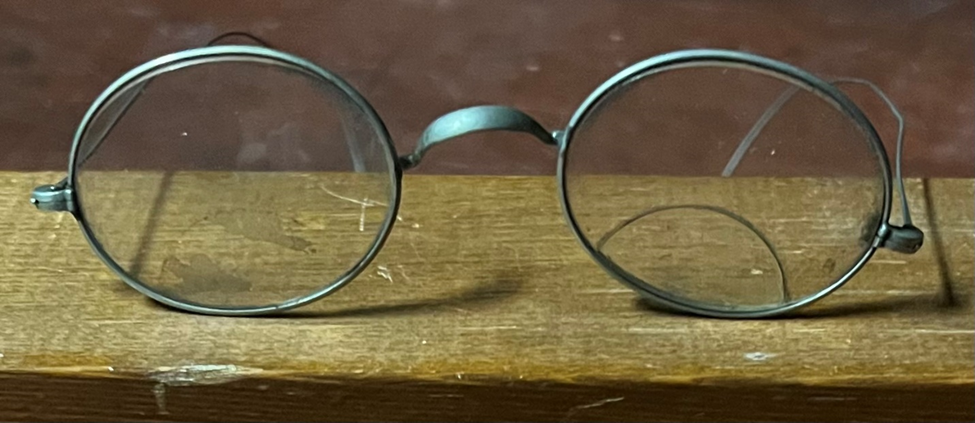
Benjamin L. Askue, Jr.’s spectacles, circa 1880
While the American Civil war hostilities concluded with the surrender at the Appomattox Virginia Courthouse in early April 1865, Askue and the 23rd Ohio Volunteer Infantry remained in the field until mid-July. His correspondence with Flavia continued until several days before their reunion.
There is no news here of any consequence only the rebels are comeing in by droves and getting their paroles and going to their homes. The Confederate army will never meet again as an organized body.April 26, 1865 on JSTOR
Well I will just drop you a line to let you know that we arrived here this morning all safe and sound. I suppose you have seen that the 23rd is to muster out at once. It will probably be two or perhaps three weeks before we get home as it takes a long time to make out all the muster rolls.July 19, 1865 on JSTOR
Well we are so far on our homeward way safe and sound…. I hear that we will receive our pay and discharge on Tuesday and if we do will probably by home on the first train afterwards. We will come by way of Ashtabula, I think…. Tell them lf nothing happens I will be at home in time to help finish haying.July 29, 1865 on JSTOR
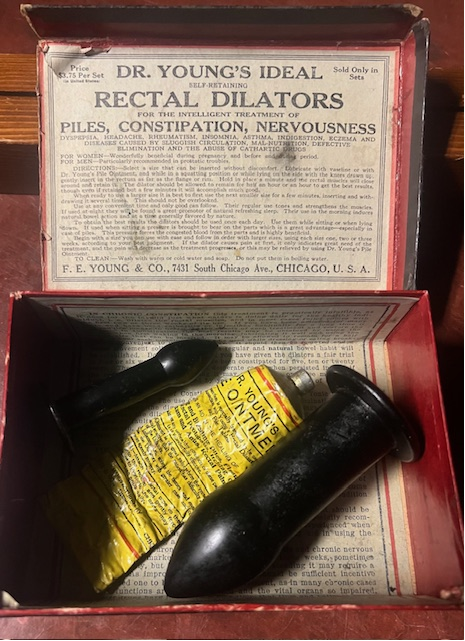
Set of hard rubber rectal dilators. Advertised as a “cure-all” for constipation, hemorrhoids, nervousness, headache, and other conditions, circa 1890
Following the American Civil War, Benjamin L. Askue, Jr. continued his homeopathic medical practice in Ashtabula, Ohio. He died in 1906. The Henry R. Winkler Center for the History of the Health Professions is grateful for the partnership with the University of Cincinnati Libraries Digitization Initiatives Team–Sidney Gao, James Van Mil and Sean Crowe. Through this partnership the Benjamin L. Askue, Jr. Civil War LettersBenjamin L. Askue, Jr. Civil War Letters on JSTOR are accessible for historians, students, researchers, physicians, and scholars. (Also see the Daniel S. Young: American Civil War Medical Illustrations are available on Daniel S. Young: American Civil War Medical Illustrations on JSTOR)