Inspired by the cholera epidemic of 1849, the Jews of Cincinnati, Ohio established the Jewish Hospital at the corners of Bauer and Central Avenue. Their hospital was one among three Jewish hospitals launched in the 19th century in the United States, which included Mt. Sinai Hospital in New York, New York and Touro Infirmary in New Orleans, Louisiana. These hospitals were established to assist the indigent poor, protect Jewish patients against discrimination and to insure the observance of Jewish traditions at the time of a patient’s death.
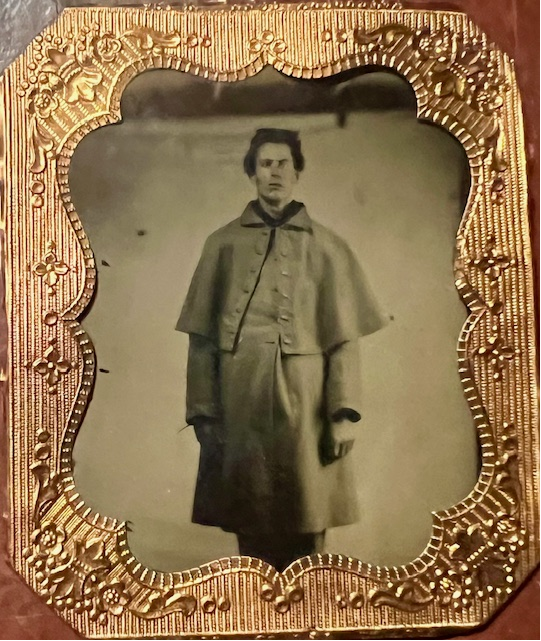
Benjamin L. Askue, Jr. during the American Civil War, circa 1860s
Frontline accounts of military conflicts provide a glimpse into the world of the war. The historical record reflects numerous descriptions of soldier’s and military doctor’s accounts of the bloodiest war ever engaged on American soil – the Civil War. The Henry R. Winkler Center for the History of the Health Professions announces the launch of the narratives of the 23rd Regiment Ohio Volunteers Infantry doctor, the Benjamin L. Askue, Jr. Civil War LettersBenjamin L. Askue, Jr. Civil War Letters on JSTOR.
Askue was born in November 1833 to Benjamin and Rowena Cordelia Askue in Ashtabula, Ohio. In 1853, he married his cousin Flavia Pritchard. The letters he wrote to Flavia during the American Civil War demonstrate that they had a happy marriage. The couple had five children together.
During the 19th century and early 20th century, physicians often received their training through apprenticeships. Askue followed this path becoming a homeopathic doctor. In 1861 he joined the 23rd Regiment Ohio Volunteers Infantry, Company B in the Union Army. Askue served as a cook, nurse, hospital steward, and in the 23rd Regiment’s infantry. He left the Union Army In July 1865. Askue returned to Ashtabula to farm and practice homeopathic medicine. He died in 1906.
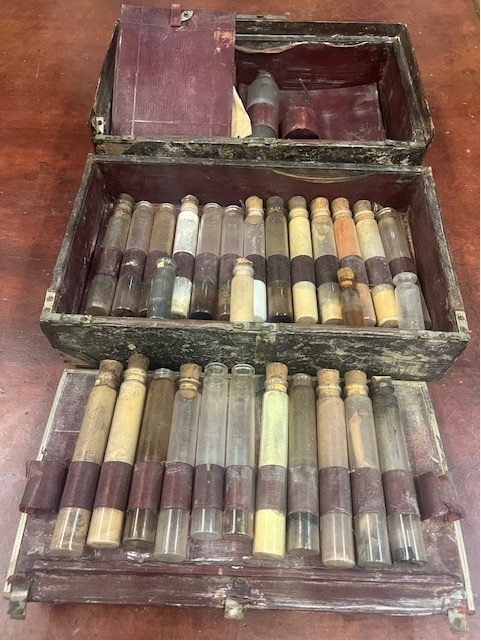
Askue’s archives and artifacts were donated to the Winkler Center. While his archives hold numerous documents and artifacts, the highlight of the collection consists of letters written to Flavia beginning in June 1861 and concluding in July 1865. He described the 23rd Regiment’s travels, battles, camp life, politics, family in Ashtabula, Ohio and Askue engaged in philosophical analysis of the era.