
Throughout his career, Dr. Sabin was featured in many headlines and articles. Many of his friends and colleagues sent him copies of these newspaper clippings over the years, which Dr. Sabin saved. I wanted to highlight some of them here, in order to give you some perspective as to what he was involved in over the years.
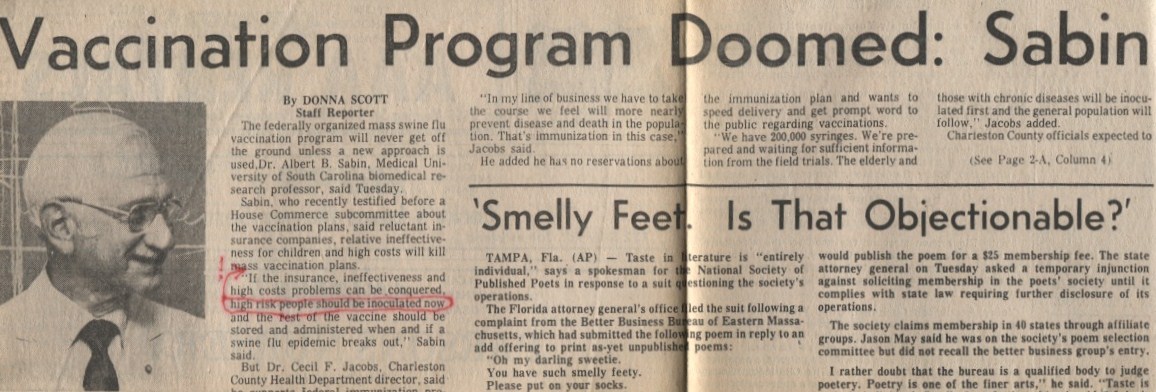
This article on the swine flu vaccine appeared in The News and Courier, July 21, 1976.
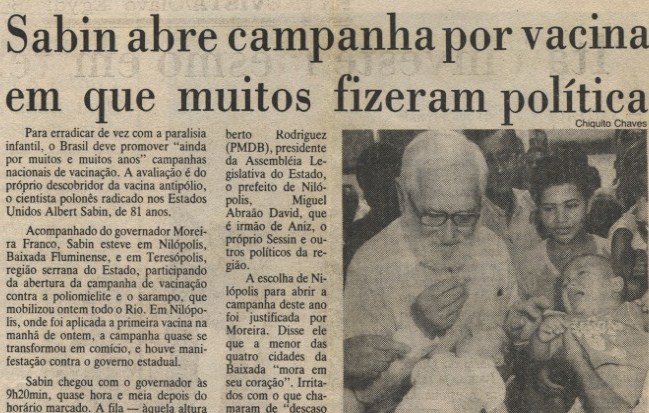
Information about the polio vaccination campaign in Brazil appeared in Jornal do Brasil, May 22, 1988.

Many years after the introduction of the oral polio vaccine, the disease was still a threat in parts of the world. This article appeared in The Times - Picayune, November 26, 1978.
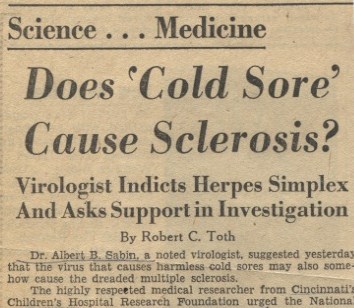
This article about the possible connection between cold sores and multiple sclerosis appeared in the New York Herald Tribune, June 15, 1958.
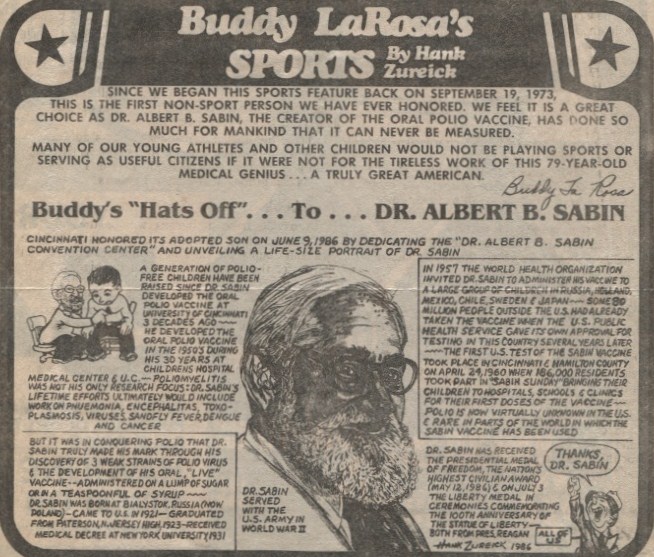
This advertisement appeared in the Cincinnati Enquirer, July 13, 1986.
In 2010, the University of Cincinnati Libraries received a $314,258 grant from the National Endowment for the Humanities (NEH) to digitize the correspondence and photographs of Dr. Albert B. Sabin. This digitization project has been designated a NEH “We the People” project, an initiative to encourage and strengthen the teaching, study, and understanding of American history and culture through the support of projects that explore significant events and themes in our nation’s history and culture and that advance knowledge of the principles that define America. Any views, findings, conclusions, or recommendations expressed in this blog do not necessarily reflect those of the National Endowment for the Humanities.