
Does the name Werner H. Von Rosenstiel ring a bell? If you have been inside the University of Cincinnati’s Arts & Sciences Hall, it just might. The Werner H. Von Rosenstiel Reading Room is named after a former student who donated his library to the University in 2001. His papers were later donated to the University’s Department of History by Von Rosenstiel’s daughter and were transferred to the Archives and Rare Books Library in 2024 as a part of the German-Americana collection so that the collection could be organized and made accessible for research.
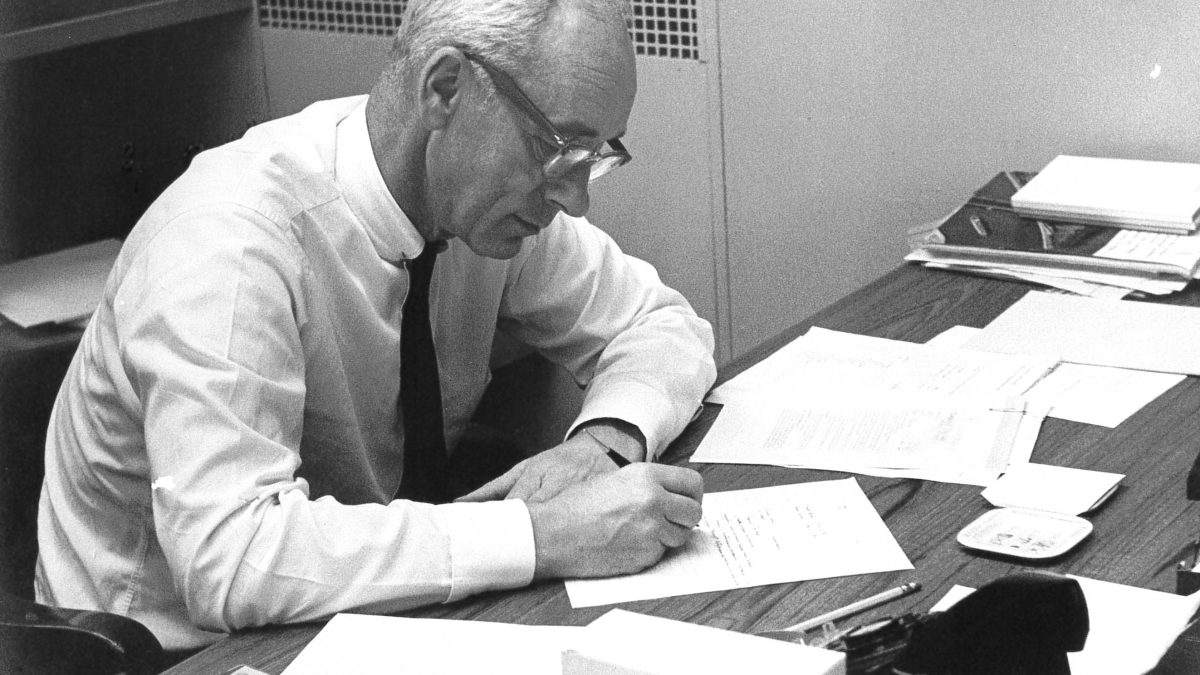
ARB is celebrating the publication of the finding aid for the Werner H. Von Rosenstiel papers which can now be accessed online.
Who was Von Rosenstiel?
Werner Hans Von Rosenstiel (1911-2008) was born and raised in Anklam, Germany. He followed in his father’s footsteps and studied law at the Friedrich-Wilhelms-Universität in Berlin (now known as the Humboldt University of Berlin) and participated in a student exchange program at the University of Cincinnati from 1935-1936. During his time in the United States, he met his future wife Marion Ahrens and learned Adolf Hitler’s true plans for Germany. Von Rosenstiel decided once he finished his law degree, he would immigrate to the United States, marry Marion, and start a new life. His parents did not agree with his decision to leave Germany but aided him in obtaining the necessary documents to do so.
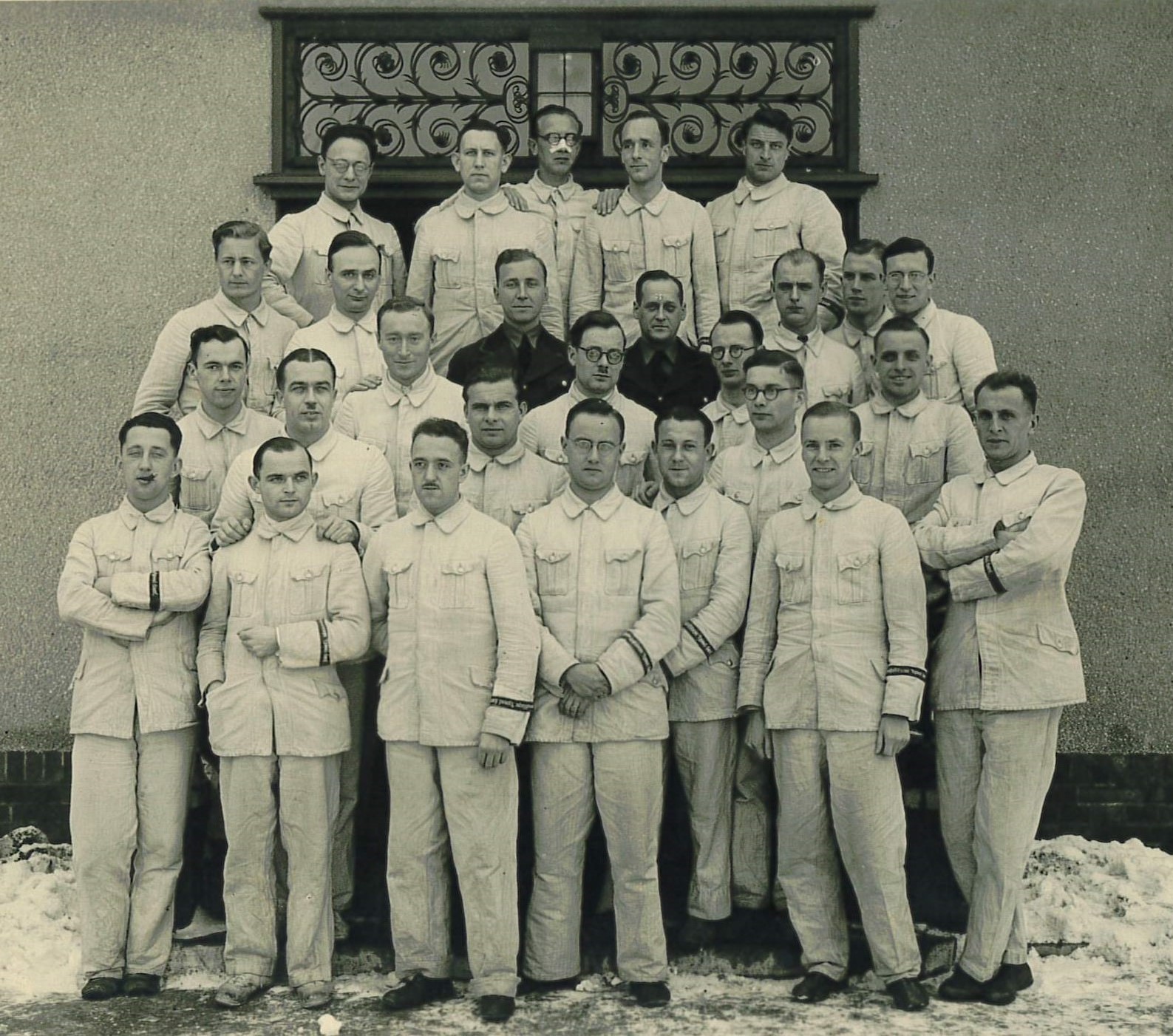
When he arrived back in Germany in 1937, Von Rosenstiel had two more years of studying and legal clerk work before completing his law degree. He was studying in Breslau when he was drafted into the German Army (Wehrmacht). He served for eight weeks and then in 1939, Von Rosenstiel passed the bar exam. He was offered a position in the Nazi Party’s judicial department. He accepted the position with the stipulation he needed a month in the United States to freshen up his English skills for this position. He was then able to escape Germany and get a visa to the United States.
Once in the United States. he married Marion Ahrens on August 12, 1939, and began working as a laborer for a German pharmaceutical business in New Jersey until he received his draft notice for service in the United States Military. Von Rosenstiel passed the U.S. bar exam in 1943 and was inducted into the military. He was initially assigned to the 1576th Service Unit at Fort Indiantown Gap Military Reservation in Pennsylvania for KP or kitchen patrol duty for three months until he received his citizenship. He was then reassigned to the 67th Quartermaster Laundry battalion in Elkins, West Virginia, for a few weeks before being transferred to the 23rd Machine Records Unit at Fort DuPont, Delaware. He stayed in this post for half a year working on IBM machines and later writing legal briefs and court martial opinions for the Corps Judge Advocate.
In July 1944, Von Rosenstiel was shipped overseas to England with the XVIII Airborne Division where he learned how to operate a glider. With the Airborne, he was transferred to France in December 1944 and sent alongside other Judge Advocate support staff to the Battle of the Bulge and later Epernay, France. In April 1945, Von Rosenstiel returned to Germany for the first time in six years.
He continued working on court martial cases until Germany surrendered and he assisted in collecting documents and interviewing witnesses for the upcoming war crimes trials. This included surveying the records of the German Ministry of Justice for evidence to be used in the trials and to learn as much as he could about the operation of the Nazi court system. During the Nuremburg Trials, Von Rosenstiel was chosen to interpret for 11 of the 21 defendants including Hermann Göring, Karl Brandt, Walther Von Brauchitsch, Otto Ohlendorf, Albert Speer, Hjalmar Schacht, and Konstantin Von Neurath. During his time in Germany after the war, Von Rosenstiel also located his displaced family members and ensured their safety.
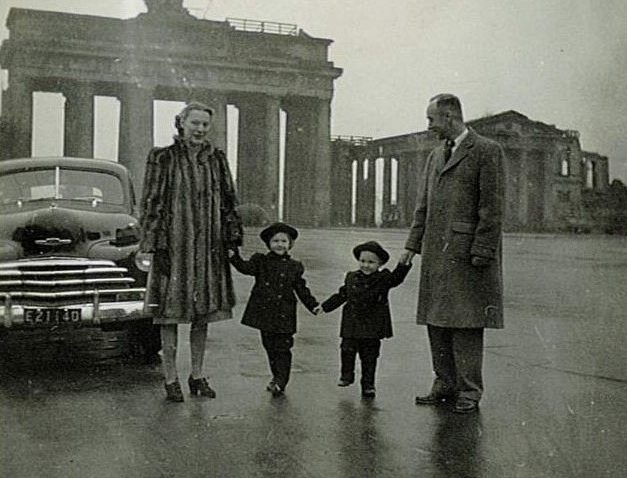
Von Rosenstiel returned to the United States in January 1946 and was discharged from the military as a Second Lieutenant. He and his family settled in Pennsylvania where he worked in advertising and law for several different companies before finally practicing law full-time starting in 1971.
In the last 20 years of his life, Von Rosenstiel gave many lectures and interviews on his upbringing in Germany and his military service to promote education and awareness of the events he witnessed. In 2000, he published one portion of his eight-volume memoir, Tales of an American Soldier which detailed his military service during World War II.
Werner H. Von Rosenstiel passed away on July 6, 2008, at 97 years old.
Treasure trove of documents
The Werner H. Von Rosenstiel papers contain primary and secondary sources which document his upbringing in Germany during the rise of Nazism, his experiences attending the University of Cincinnati, his World War II service with the United States military, and his involvement with the adjunct general’s office at the Nuremberg Trials.
His papers are comprised of five series covering 1828-2003. A significant portion of his collection is from 1930-1998. This includes correspondence, photographs, military documents, family history, documents related to his legal education, Nazi propaganda, newspaper articles, and personal writings. Within the collection are typed notes in English from Von Rosenstiel explaining specific documents. However, there are many documents in German, most notably newspapers and material created prior to his move to the United States.
Von Rosenstiel’s papers provide details about his life in an eight-volume unpublished autobiography along with copies of his published memoir, Tales of an American Soldier. There are also photographs of Von Rosenstiel’s time in in Cincinnati and in the United States prior to World War II, his travels during the war, his time in Germany after the war (which includes photos of war-torn Germany), and his return to Germany six years later.
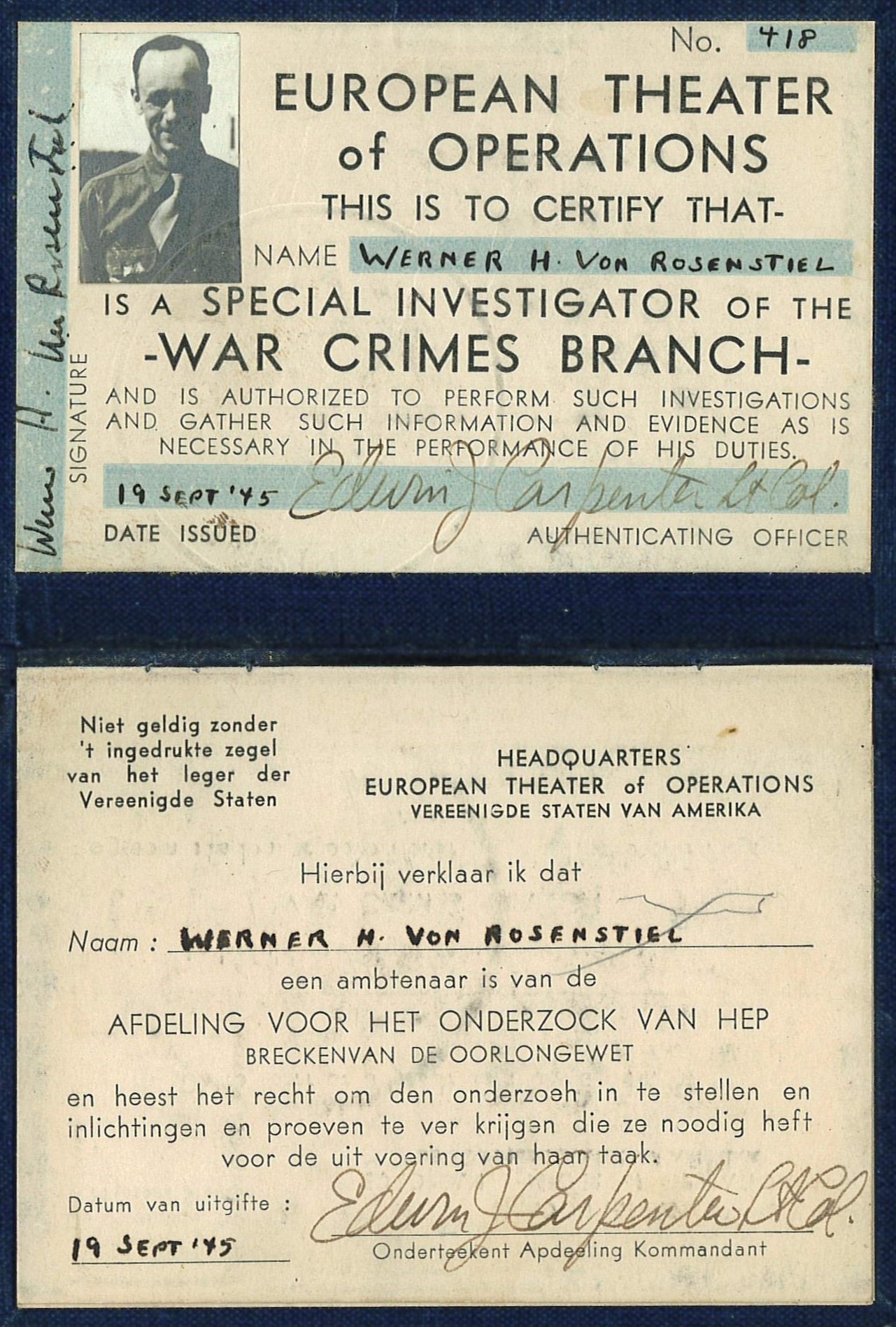
There is a large amount of correspondence in the collection including correspondence regarding his witnessing Kristallnacht, case files copied from the Germany Ministry of Justice, 19th century correspondence in German from his wife’s family in Cincinnati to relatives in Germany, original newspaper articles before and during World War II, doctoral theses, immigration documents, personal accounts on his siblings’ experience in Germany throughout the war, war crimes investigator identification, his wife’s unpublished manuscript on her visit to Germany after World War II, photographs of Nazi rallies in Germany, a large collection of German inflation money issued after World War I, and audio interviews with Von Rosenstiel.
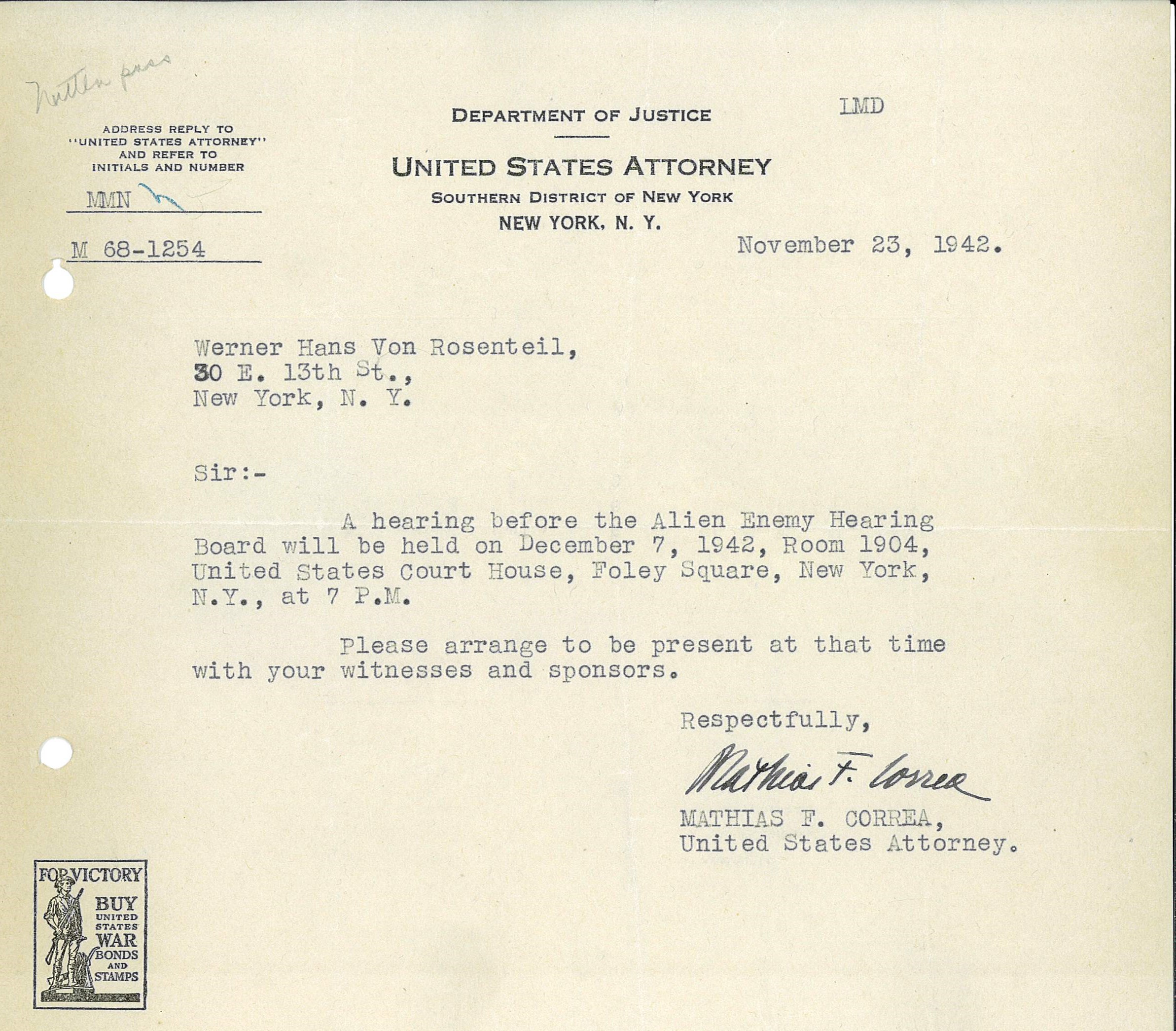
Werner Von Rosenstiel’s eye-witness account of the rise of Nazism in Germany and his experience with the United States Military first as an “enemy alien” then trusted interpreter during World War II serves as one of the many unique collections within ARB’s German-Americana Collection.
The Archives and Rare Book Library would like to thank the University of Cincinnati History Department’s Von Rosenstiel Committee for support in processing this collection.