
From everyone at the Winkler Center, best wishes for the holiday season and the new year! In the spirit of the holiday season, here are some greetings from around the world that can be found in Dr. Sabin’s papers. Enjoy!
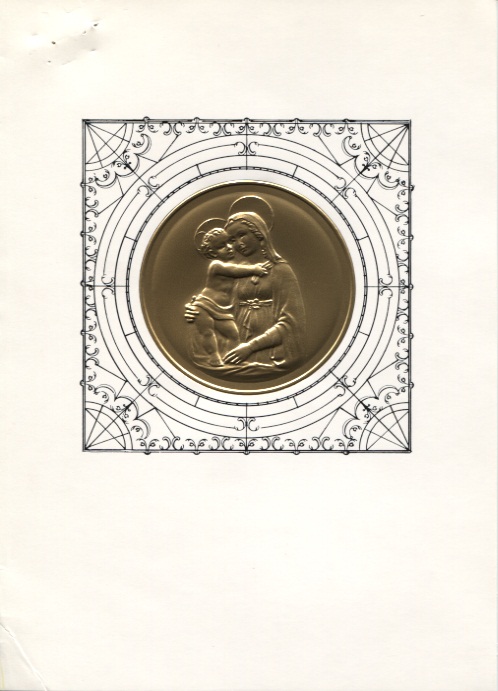
Christmas card from Julia and Walter Langsam, undated
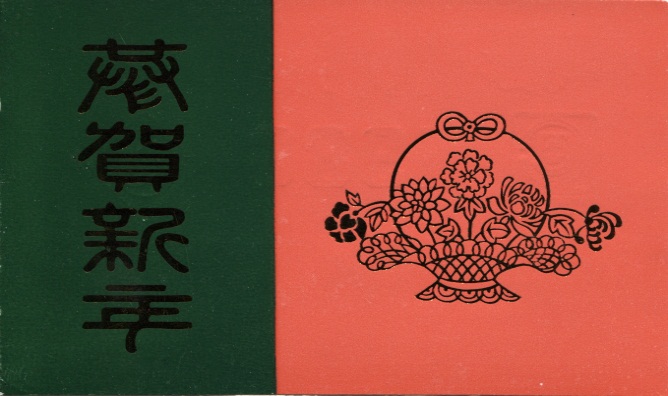
A "Happy New Year's" card from Dr. Ma Haide and the China Leprosy Association, 1986
A holiday card from Dr. Maurice Hilleman and family, undated
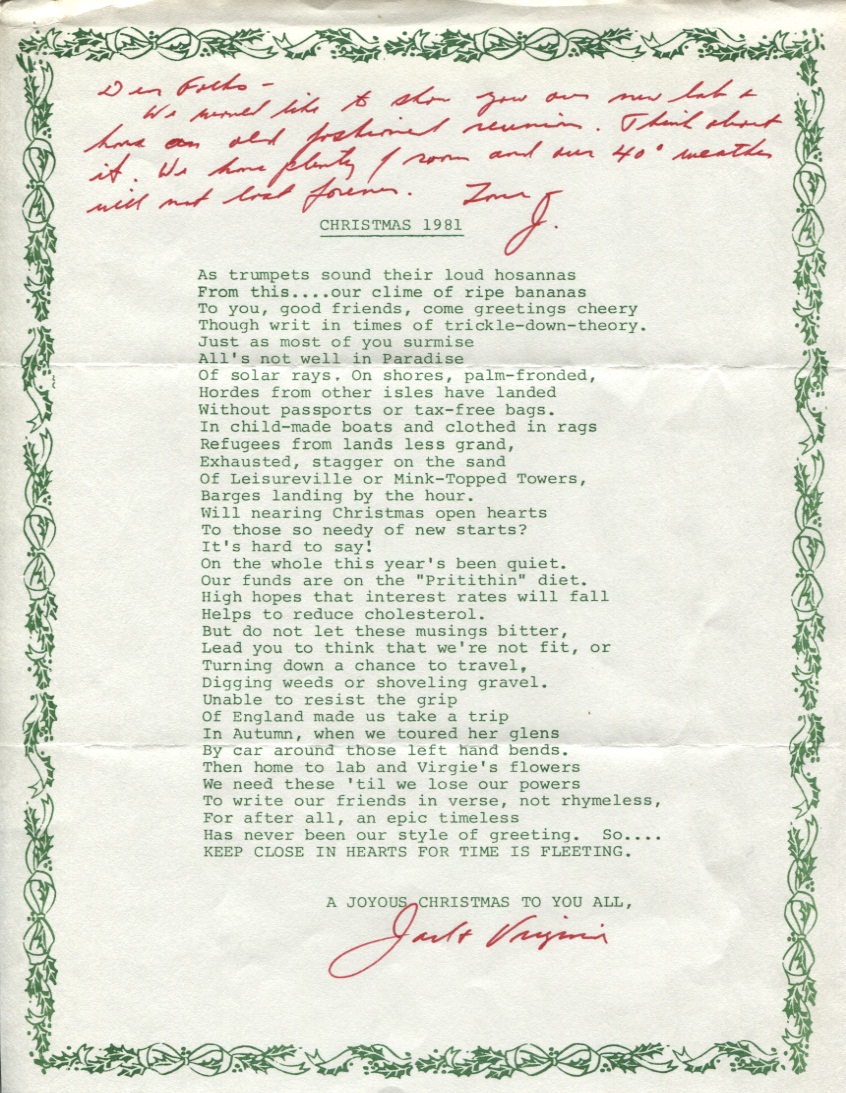
A Christmas poem from Joel and Virginia Warren, 1981
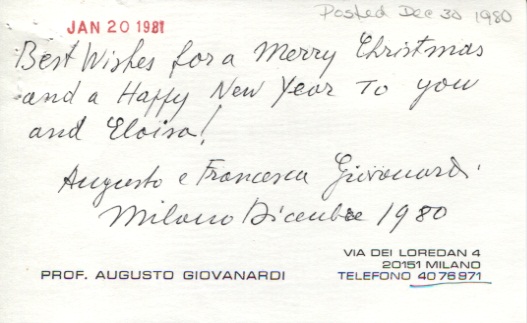
Christmas and New Year's note from Professor Augusto Giovanardi, 1980
Our collection also has hundreds of letters containing Dr. Sabin’s acknowledgment of the holiday greetings. Here is a sample of one of Dr. Sabin’s replies.
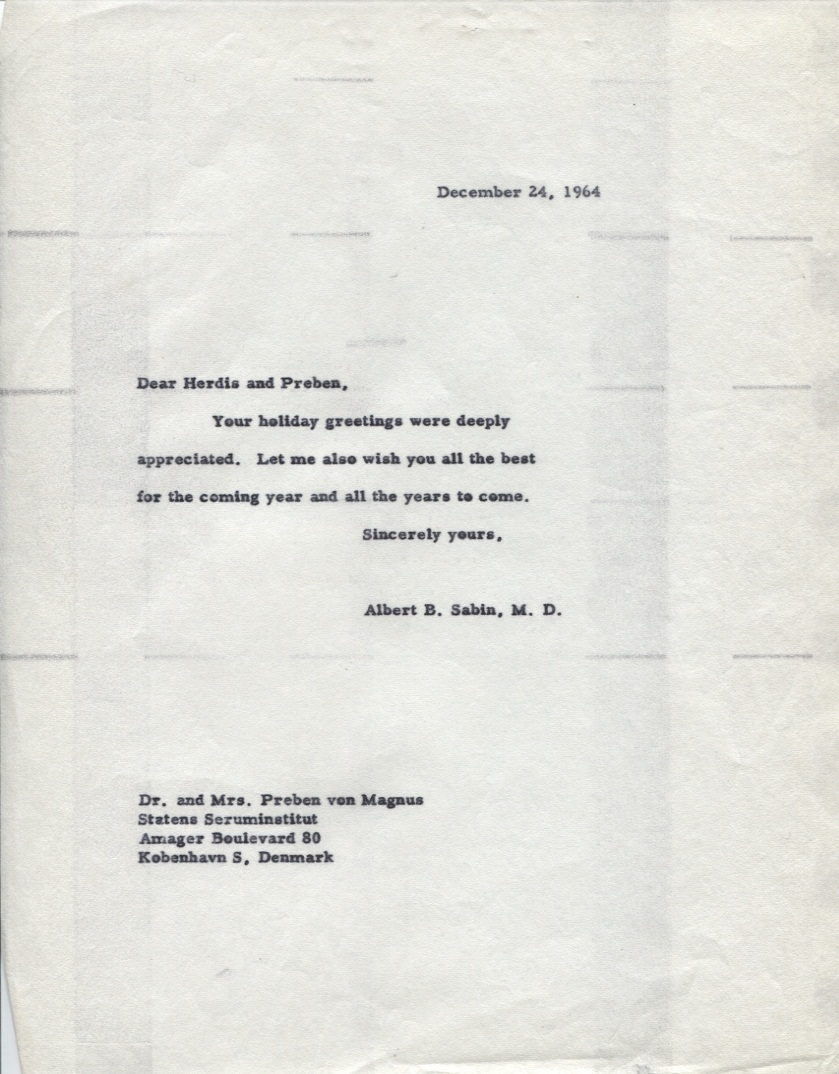
Letter from Dr. Sabin to Dr. and Mrs. Preben von Magnus, 1964
If you have any questions or would like to see more of the cards in Dr. Sabin’s collection, please feel free to contact us at chhp@uc.edu.
In 2010, the University of Cincinnati Libraries received a $314,258 grant from the National Endowment for the Humanities (NEH) to digitize the correspondence and photographs of Dr. Albert B. Sabin. This digitization project has been designated a NEH “We the People” project, an initiative to encourage and strengthen the teaching, study, and understanding of American history and culture through the support of projects that explore significant events and themes in our nation’s history and culture and that advance knowledge of the principles that define America. Any views, findings, conclusions, or recommendations expressed in this blog do not necessarily reflect those of the National Endowment for the Humanities.