Across languages and borders: International collaborations at Oesper
By Mark Chalmers, Science & Engineering Librarian and Curator of the Oesper Collections
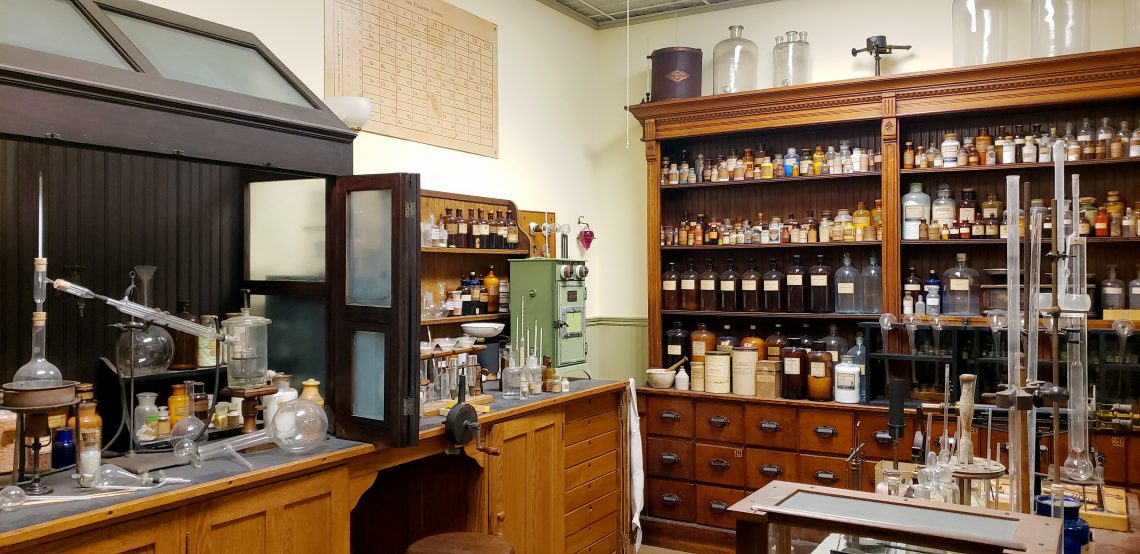
The Oesper Collections in the History of Chemistry, housed at the University of Cincinnati, are local in their physical setting but global in their reach. While the work of curating these materials involves preservation, description, stewardship and access, their broader significance often emerges through collaboration, particularly when scholars and organizations beyond the United States engage with them in new and exciting ways.
Two recently completed international partnerships highlight how historical materials from the Oesper Collections continue to circulate, finding new audiences and new contexts across languages and borders.
Reconnecting Greco-Egyptian texts through translation
One such collaboration centers on The Leyden and Stockholm Papyri: Greco-Egyptian Chemical Documents from the Early 4th Century AD, a text that brings together some of the earliest surviving chemical recipes from the Greco-Egyptian world. These documents offer insight into ancient practices of metallurgy, dyeing and imitating precious stones and gems, and as such occupy an important place in the study of the earliest chemical traditions.
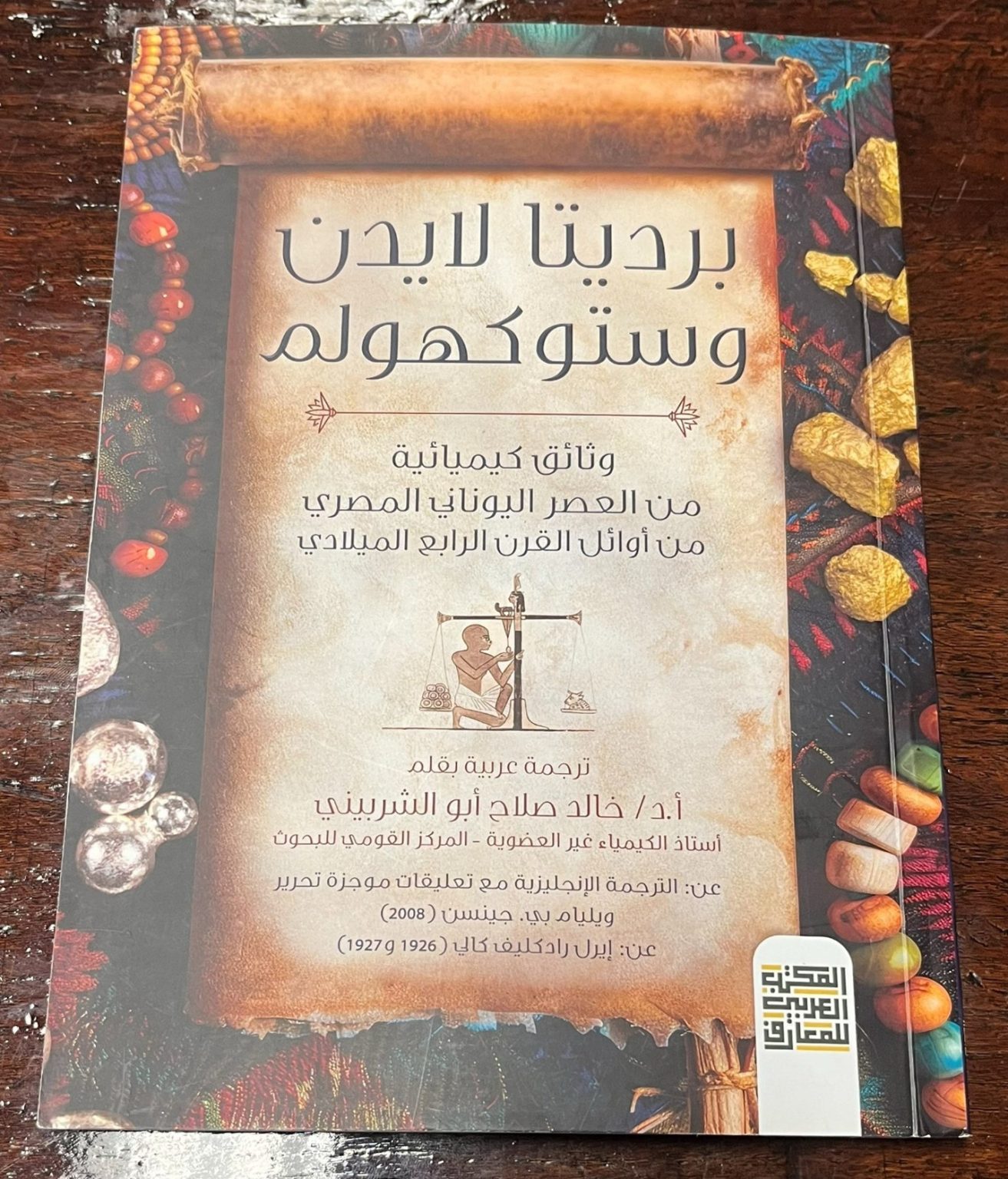
A complete set of English translations of these papyri first appeared in the Journal of Chemical Education in 1926 and 1927 through the work of Earle Caley. Building on that foundation, William B. Jensen, late curator of the Oesper Collections, published an expanded volume in 2008 that provided a general introduction, notes on techniques and a materials index. That edition places the documents in clearer historical context for modern readers and is now available open access through the University of Cincinnati Libraries’ Digital Resource Commons.
More recently, the work has been translated into Arabic through a collaboration with Abou-El-Sherbini, a chemist and former head of inorganic chemistry at Egypt’s National Research Center. Abou-El-Sherbini first reached out in May 2025 to express interest in producing an Arabic translation. Within a year, a printed copy of the translation arrived in Cincinnati for inclusion in the Oesper Library collection.
This translation extends access to the text while also placing it into closer dialogue with the regions and intellectual traditions from which it emerged. The Greco-Egyptian origins of the papyri make their availability in Arabic particularly significant, supporting engagement from scholars and readers with strong cultural and historical connections to the material.
At the same time, the project reflects the continued vitality of historical chemical texts. What appear to be static artifacts on their face continue to be engaged, translated, interpreted and incorporated into new scholarly conversations and discourses.
Jensen’s caricatures and a Spanish audience
A second recent collaboration took a different form but reflects a similar kind of engagement.
I’m very appreciative of Dr. Joaquin Perez and the broader group at El Club del Alambique for their interest in the collections and for the care they took in presenting them to their readers.
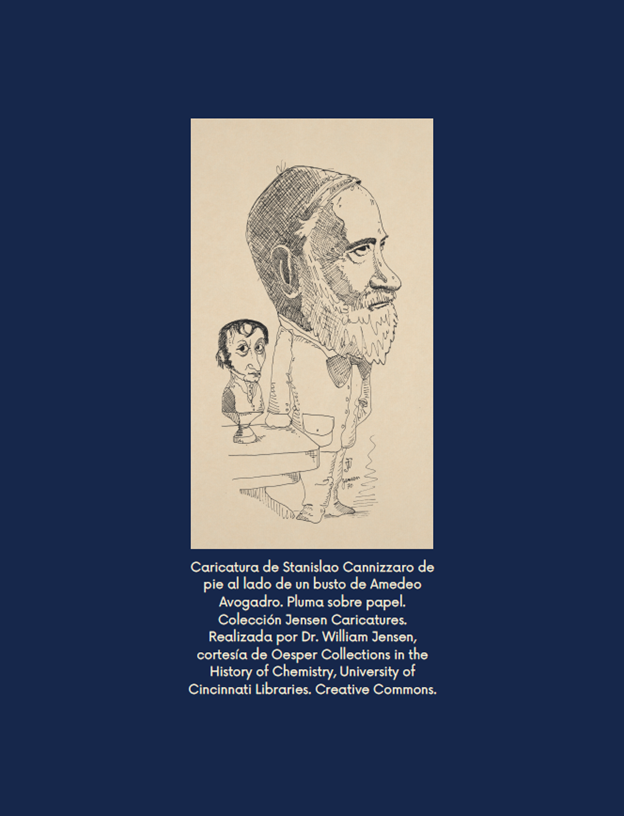
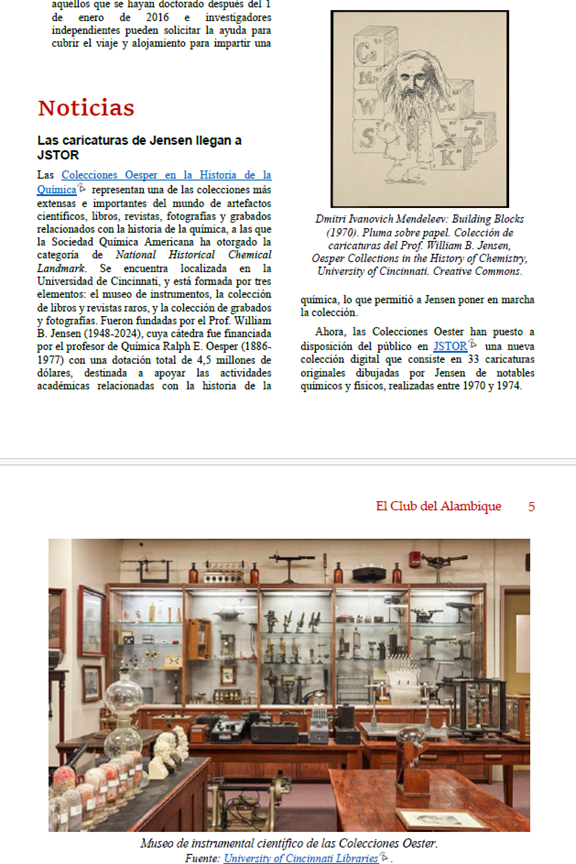
The Oesper Collections was recently featured in a publication of El Club del Alambique, a bulletin published by the History of Science section of the Spanish Royal Society of Chemistry. In that feature, they highlighted our museum space and digital collections, and made use of two caricatures created by William B. Jensen.
Jensen produced many caricatures of chemists and influential scientists. They are often humorous, but also quite perceptive, capturing elements of personality, pedagogy and the culture of the discipline. In fall 2025, these works were launched as an open access digital collection on JSTOR, where they have begun to reach a wider audience.
Even prior to that launch, the caricatures had attracted international attention. Several were discussed in another recent collaboration, “Chemical Caricature as a History of Science or Chemists on the Cartoonists’ Pencil,” an article by Russian chemists Alexander Rulev and Vadim Eremin, published in The Chemical Record, a journal of Chemical Society of Japan.
Their reproduction and discussion in a Spanish publication further demonstrates how visual materials can travel across linguistic boundaries while remaining meaningful in new contexts. The feature also introduced the Oesper Collections to a broader international audience.
Collections, collaboration and ongoing work
These two projects are quite different as one is a scholarly translation that aligns with Ralph Oesper’s career as a chemical historian translating texts, while the other is a feature in a history of science bulletin, but they point to a shared underlying principle.
Collections such as those at Oesper are more than repositories. They serve as starting points for research, teaching and interpretation. The materials they contain are continually reused and reinterpreted, often in ways that extend far beyond their original context. This process depends on collaboration. In both cases, external partners brought their own expertise and perspectives, identifying new ways to engage with the collections and share them with broader audiences. The result is not only increased visibility, but a richer and more globally connected understanding of the history of chemistry.
Looking Ahead
International collaboration continues to be an important part of the work of the Oesper Collections. Opportunities for partnership exist with scholars, translators, educators and others interested in working with primary source materials in the history of chemistry.
Recent efforts have also included supporting the research of The Chemistorian, a London-based creator producing widely viewed videos on the history of chemistry—another example of how these materials continue to find new platforms and audiences.
Those interested in working with the Oesper Collections or exploring potential collaborations are encouraged to reach out.
The Oesper Collections are grateful to colleagues in Egypt, Spain and beyond for their partnership and for helping extend the reach of these materials in meaningful and lasting ways.