
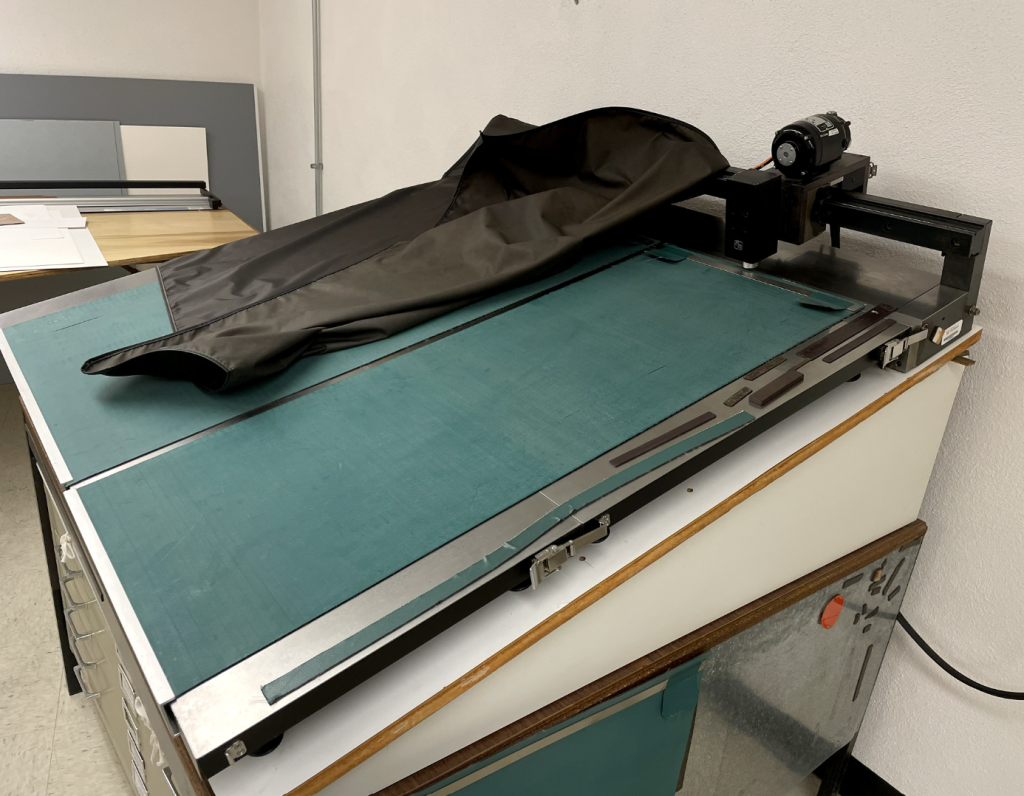
Like many tools used in conservation, some of our most useful equipment didn’t begin in the field of conservation. Conservators often adapt tools from other industries for highly specialized preservation work. This ultrasonic welder is one of those examples.
What Is Encapsulation?
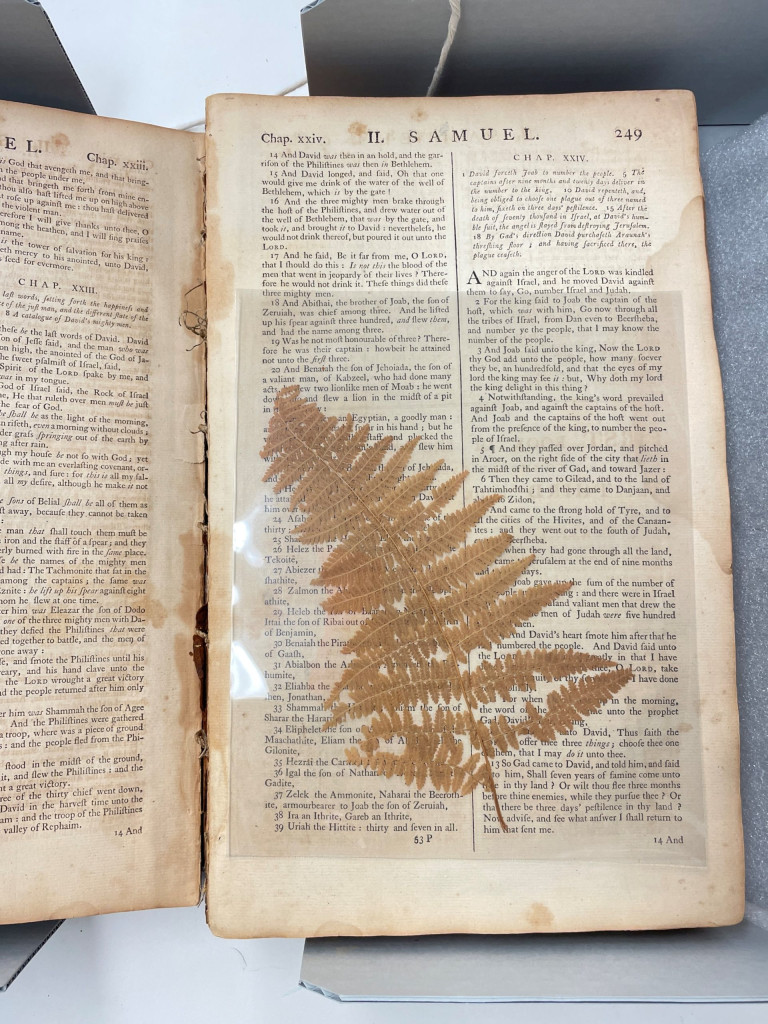
In conservation, encapsulation is a common preservation method for storing fragile documents or artifacts, such as the dried botanical specimen pictured. The vulnerable item is placed inside a clear sleeve made from polyester film, which supports the object during handling while keeping all of its physical features and information fully visible.
Encapsulation is often confused with lamination, but the two are very different. Lamination uses adhesives or waxes that permanently bond to an object, making it non-archival. The adhesives and waxes often cause discoloration of the object overtime. Encapsulation uses no adhesive at all. Instead, the polyester film is sealed to itself around the perimeter of the item, leaving the object untouched inside. The process is fully reversible and safe for long-term preservation.
Bill Minter’s Ultrasonic Welder
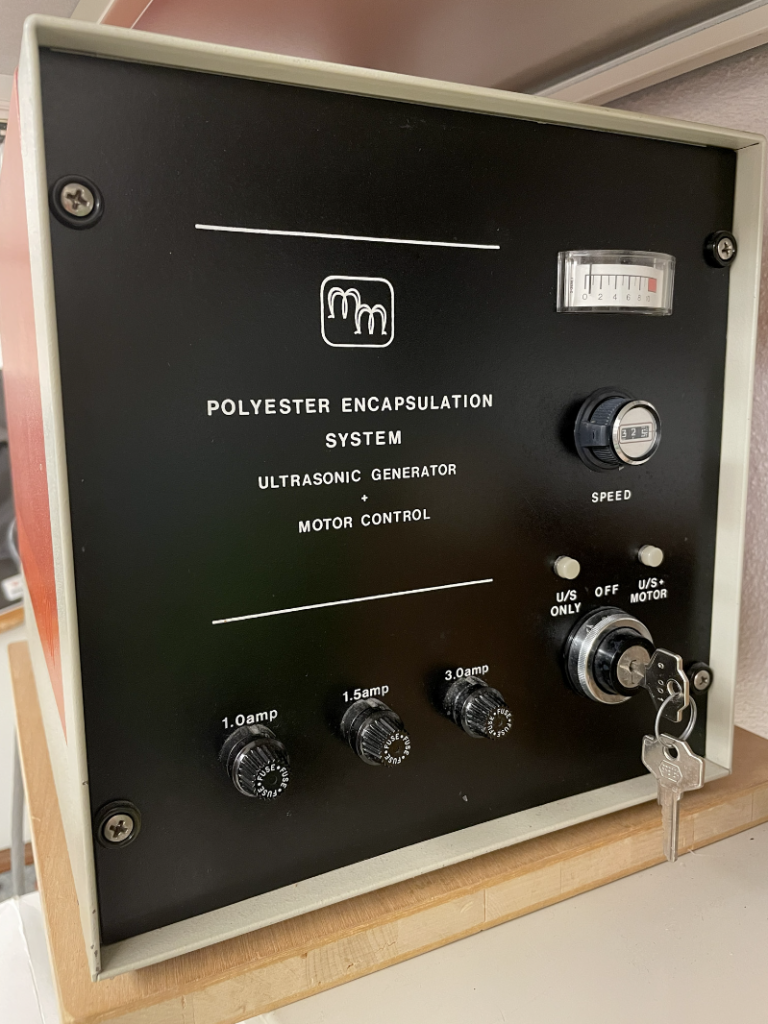
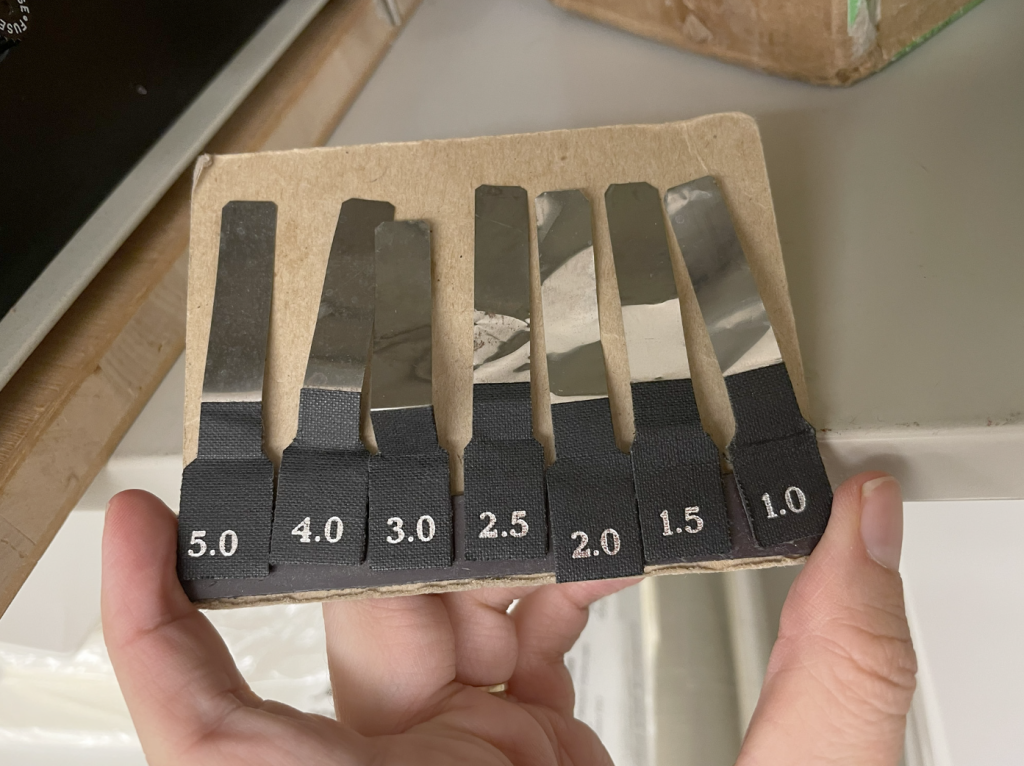
At the Preservation Lab, we have the luxury of using a specialized ultrasonic welder designed specifically for conservation work. Unlike commercial welders that can require objects to be fed through a machine, this model has a metal tabletop, magnetic blankets, and a movable electronic arm that glides over the object, holding a document secure in place. The settings can be adjusted for speed and weld intensity, making it ideal for creating custom polyester enclosures for flat paper materials without using a traditional heat weld.
This machine was developed by conservator Bill Minter in the 1970s–80s. Existing units are highly sought after by conservation labs, and every time ours needs maintenance, there’s a sense of collective anxiety in the lab. It can still be serviced, but replacement options are limited.
Looking for Alternates
Because these conservation welders are increasingly scarce, conservators have been exploring newer options.
- In the comments on a 2022 article about creating a spine-pocket wrapper for books with detached spines on the Book and Paper Gathering blog, conservators discuss the use of an HDS portable hand-held ultrasonic spot welder, produced by by Harry Singh in the UK.
- Others have recommended the UltraTek 40KHz Hand-Held Welder; however at around $6,000, it remains quite pricey and would require an additional metal base to operate on top of.
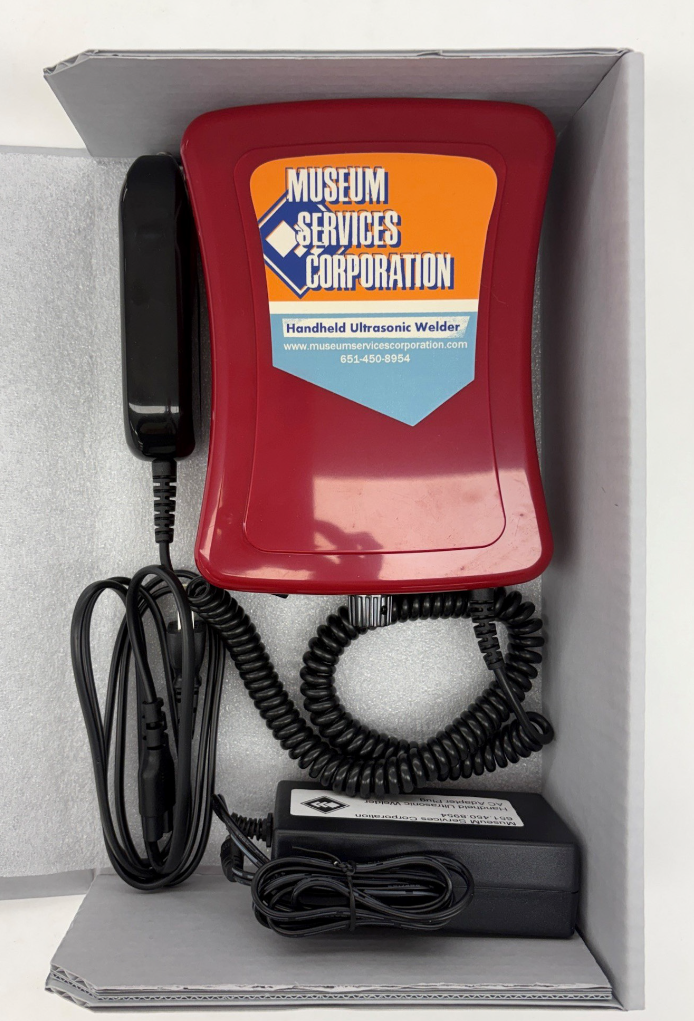
- A more recent option comes from Museum Services Corporation in the USA, which offers the 1000 Series: MS Handheld Ultrasonic Welder. It’s a unique model that houses all the components in the handle (no metal base needed), is easily portable – and more affordable at $840!
Museum Services Corporation 1000 Series: MS Handheld Ultrasonic Welder
After spotting this device at an Midwest Regional Conservation Guild Annual Meeting in Columbus, IN, our lab jumped on the opportunity to purchase and test it out.
It comes with two welding wheels: one flat wheel that creates a solid weld line and a slotted wheel that creates a dotted weld line. They are interchangeable in the handle.

Tips For Using the MSC Welder
After some trial and error, a few practical observations emerged:
- Practice is needed. There is a learning curve to producing a straight and connected weld.
- The unit has an internal safety timer that automatically stops the weld after a max of 6 seconds.
- Turning dial fully to right allows the maximum interval between welds.
- Ensure polyester is clean and dust free before welding.
- Extend polyester over the edge of the table ~ ½ inch.
- Use the table edge as a guide to push against while sliding the welder.
- Hold “stapler” handle with both hands to improve control. To get a straight weld, move with the handle using your body and arms as a single unit (more like practicing Tai Chi or wheel pottery throwing), rather than moving only one arm along.
- Only a light pressure is needed.
It’s always exciting when a new tool expands what’s possible in the lab, especially when it helps bridge a gap left by equipment that is becoming increasingly rare to find and difficult to maintain.
Additional Resources
If you’ve followed our blog, you might recall my earlier post on creating a CoLibri jacket with an encapsulated spine using our CoLibri Cover welding system.
Now that we have the MSC handheld spot welder, I’m excited to experiment with new enclosure possibilities, such as creating polyester pockets for spines within jackets, like the example shared on the Book and Paper Gathering blog, mentioned above.
I’ve also had success testing out encapsulation possibilities such as the ones we used during our project to encapsulate pages from Althea Hurst’s scrapbook, such as welding Hollytex or paper hinges into the sleeves.
This new welder may also open up interesting applications for polyethylene welding or creating circular welds as well!
Ashleigh Ferguson Schieszer – Book and Paper Conservator