This past December, the Lab hosted a small 3D Imaging workshop for a group of digital imaging colleagues. The workshop was led by UC School of Art professors, Jordan Tate and John-David Richardson. Colleagues from Ohio University Libraries, the Ohio State University Libraries, Library of Michigan, Veterans Affairs History Office in Dayton and UC Libraries were able to join us for this amazing opportunity to learn practical, high-resolution 3D imaging techniques using a simple setup.
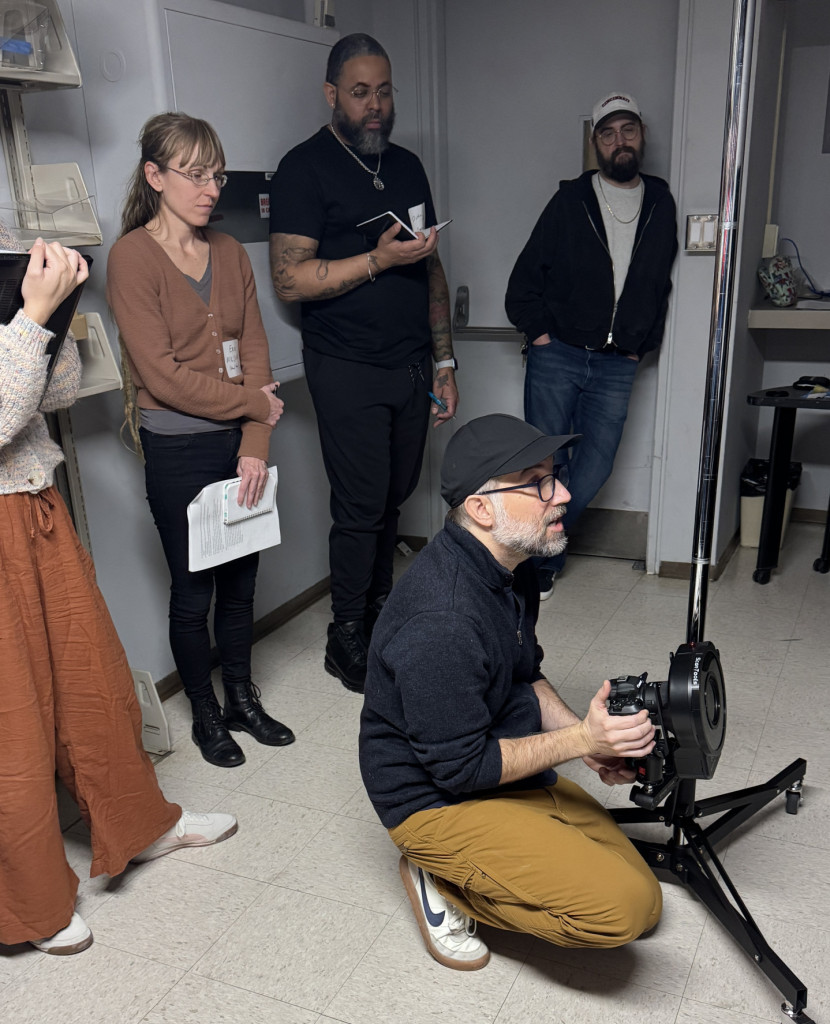
Jordan demonstrating to the group how to set up a low-angle shot.
Prior to the workshop, I had worked with UC Libraries special collections curators to attain a selection of various objects for imaging ranging from cuneiform tablets to plaster busts. For the workshop, we began with a painted wooden Nigerian statue from the Winkler Center. We walked through the imaging process first, using a fairly standard DSLR manual setup and a ring flash with a polarized filter. The object was placed on a motorized turn-table which allows you to determine how many rotations or shots you want per angle.
Yoruba statue, from the Winkler Center, being photographed on the motorized turntable.
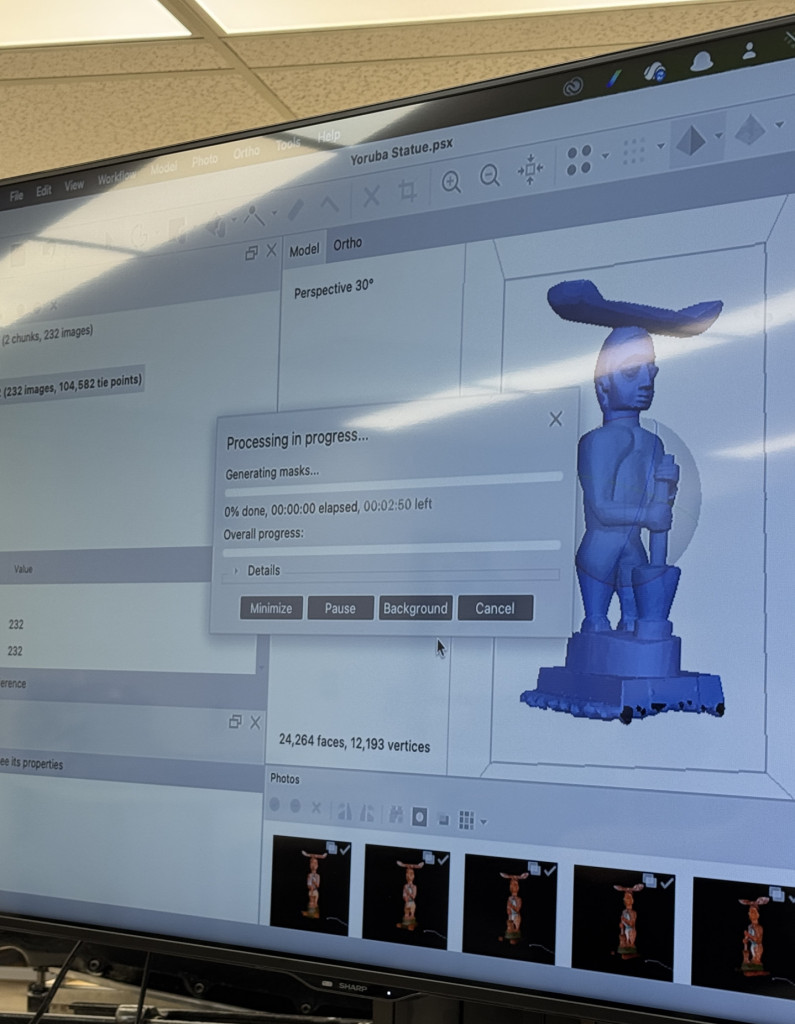
Once all the images were captured, we moved onto the processing portion, using Agisoft Metashape Professional Educational edition.
The model of the Yoruba statue being processed in Agisoft Metashape software.
After lunch we ran through another imaging and processing session, to reinforce what we had learned in the morning. Overall the day was incredibly successful and I am beyond grateful to Jordan and John-David for sharing their time, knowledge and passion for 3D imaging with the group. They truly made the imaging capture and processing experience fun and attainable!
Following the workshop, fellow Assistant Conservator, Catarina, and I were able to get some 3D imaging practice in; using what we had learned in the workshop and putting it into action. This was made possible by two very important factors: first, Jordan had graciously loaned us his equipment to use before the ’26 Spring semester began, including his polarized flash ring, and second, we had a couple of slower days, following our special collections returns and prior to winter break, which afforded both Catarina and I this time to learn and hone this new technique.
The combat medic statue from the Winkler Center being photographed.
In the end, Catarina and I ended up imaging three additional objects, including a Gothic manuscript from the Archives and Rare Books Library, a plaster bust of Antoine Lavoisier from the Oesper Collection, and a combat medic statue from the Winker Center.
Again, thanks to Jordan’s immense generosity, he has hosted the 3D models of the objects we captured on his site, so that they can be shared more broadly with a wider audience. If you can click on the links below (whether with computer, phone or tablet) you can view and manipulate the 3D models of each object, as well as read more about the object:
Again, a huge thank you to Jordan and John-David for their eagerness to share their knowledge during the workshop, and to Jordan for his ongoing generosity and collegiality. And, as always, thank you to our curators for supplying us with an array of objects for the workshop, and to our department head, Holly Prochaska, for her perennial support and advocacy.
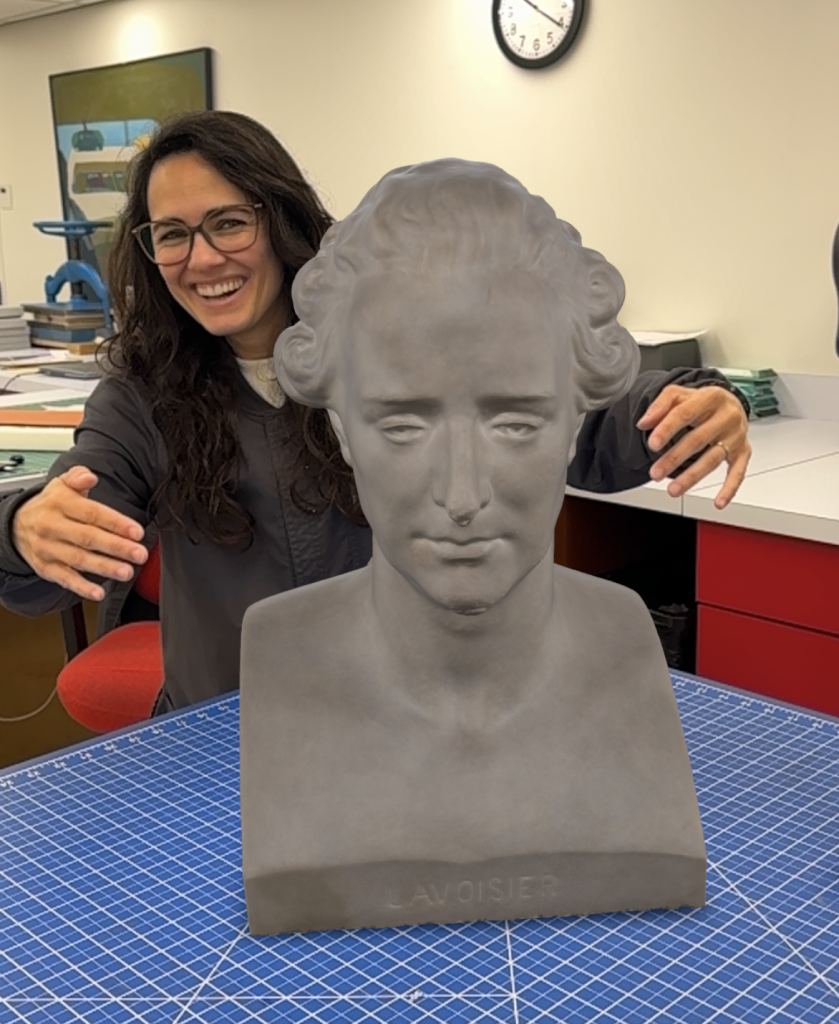
Catarina attempting to hug the Lavoisier bust model. This model is being projected from an iPhone, allowing it to be “placed” on the table.
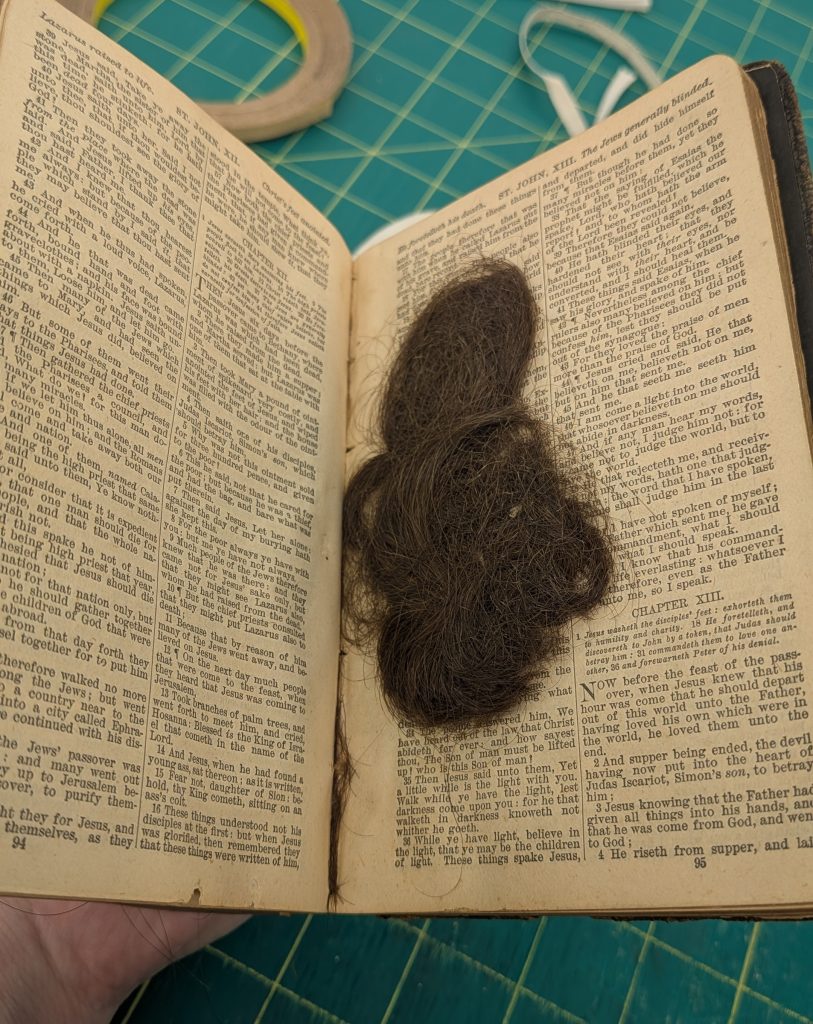
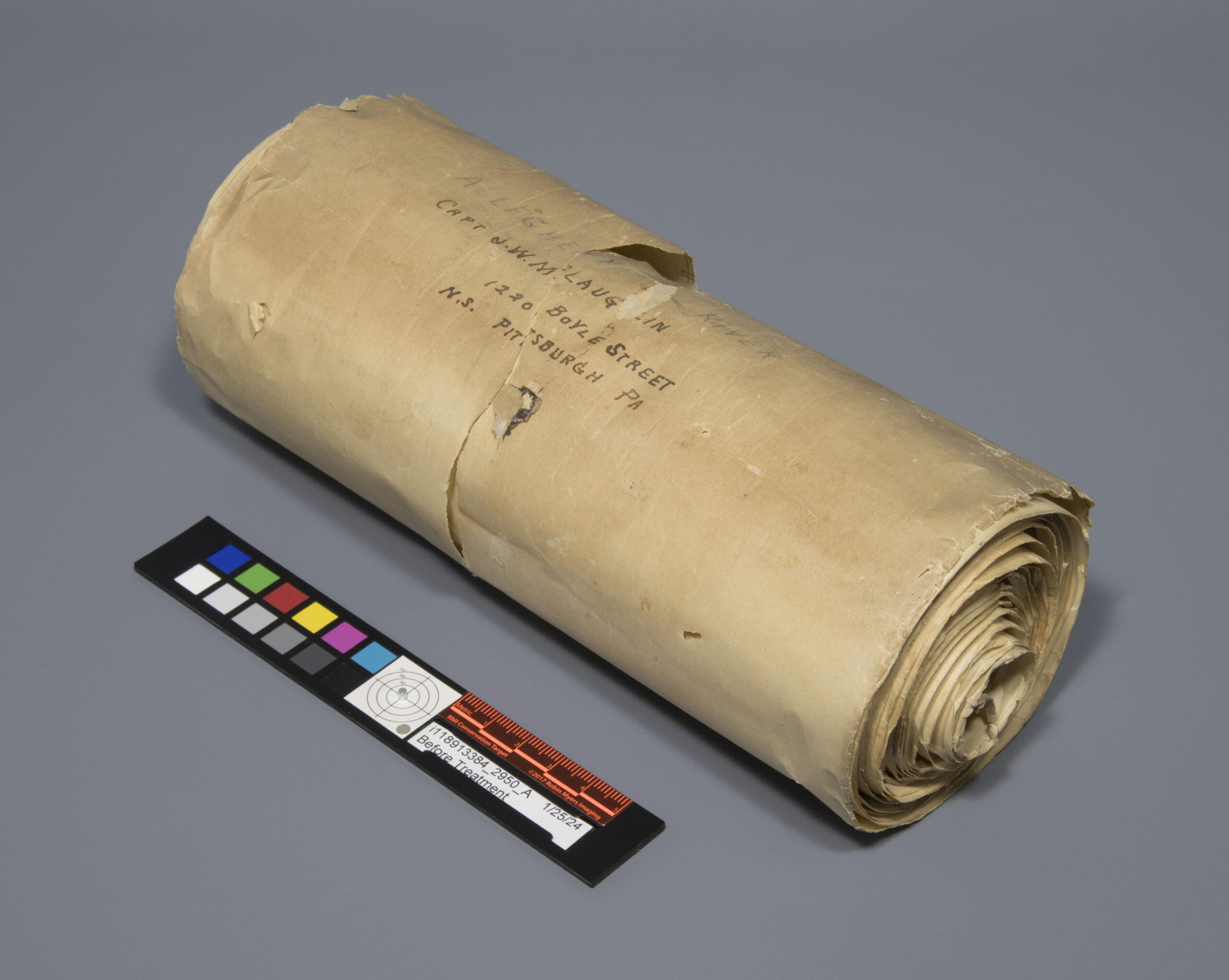
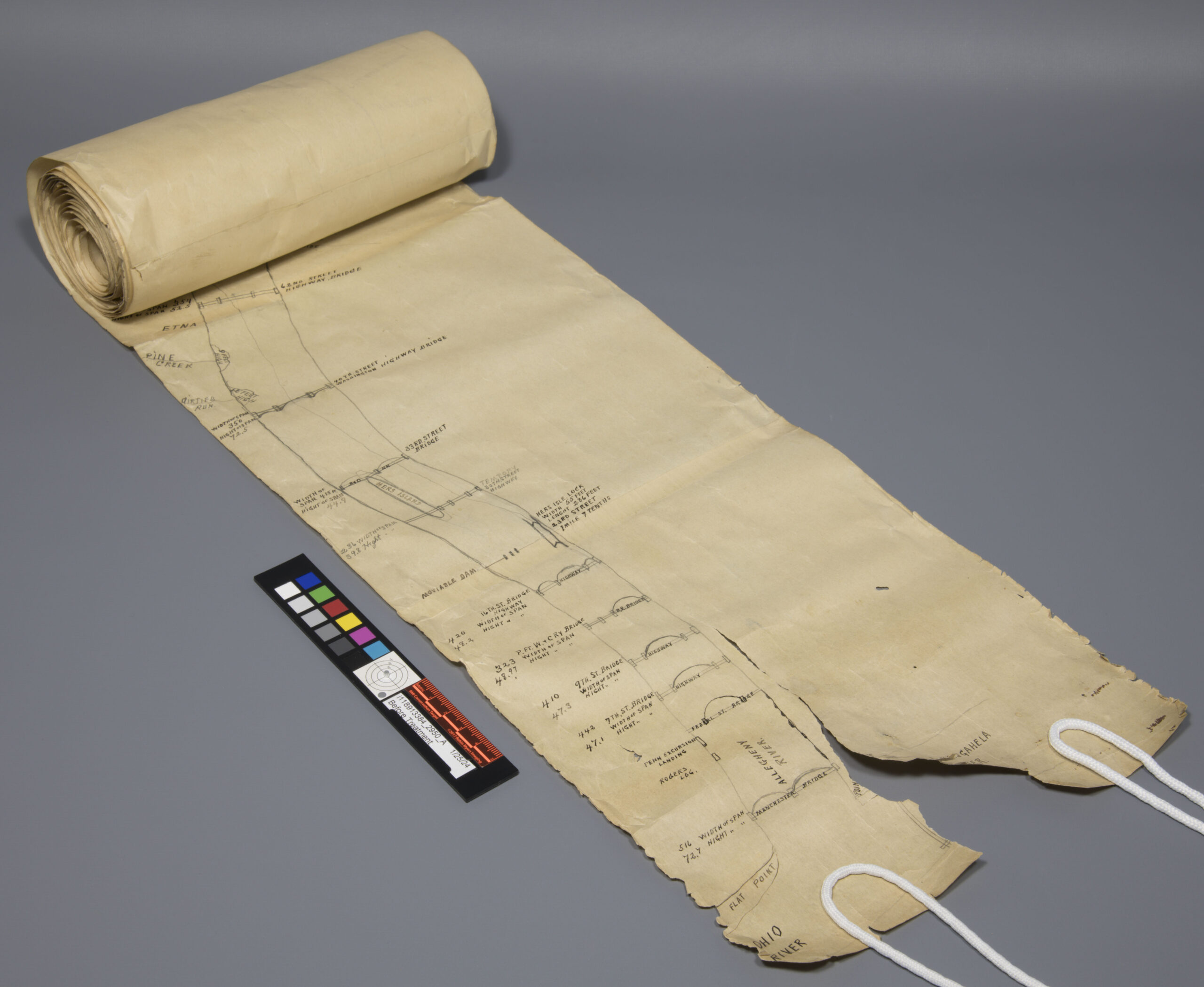
Back in October of 2024, we received something slightly more unusual from the Cincinnati and Hamilton County Public Library, a 15-foot-long, hand-drawn rolled map of the Allegheny River. Yes, fifteen feet. This map was created by joining smaller sheets edge-to-edge, forming one continuous scroll that looked more like a treasure map than your typical library item.
A dilemma quickly followed, how do I create a housing solution that’s safe and functional, but won’t turn future handling into a logistical nightmare? Like many libraries, they didn’t have a 15-foot shelf just waiting for this (because who does?), so storing it flat was out. Storing it rolled became our only real option. The enclosure needed to be secure and protective for the map, and ideally, easy and elegant to display when needed.
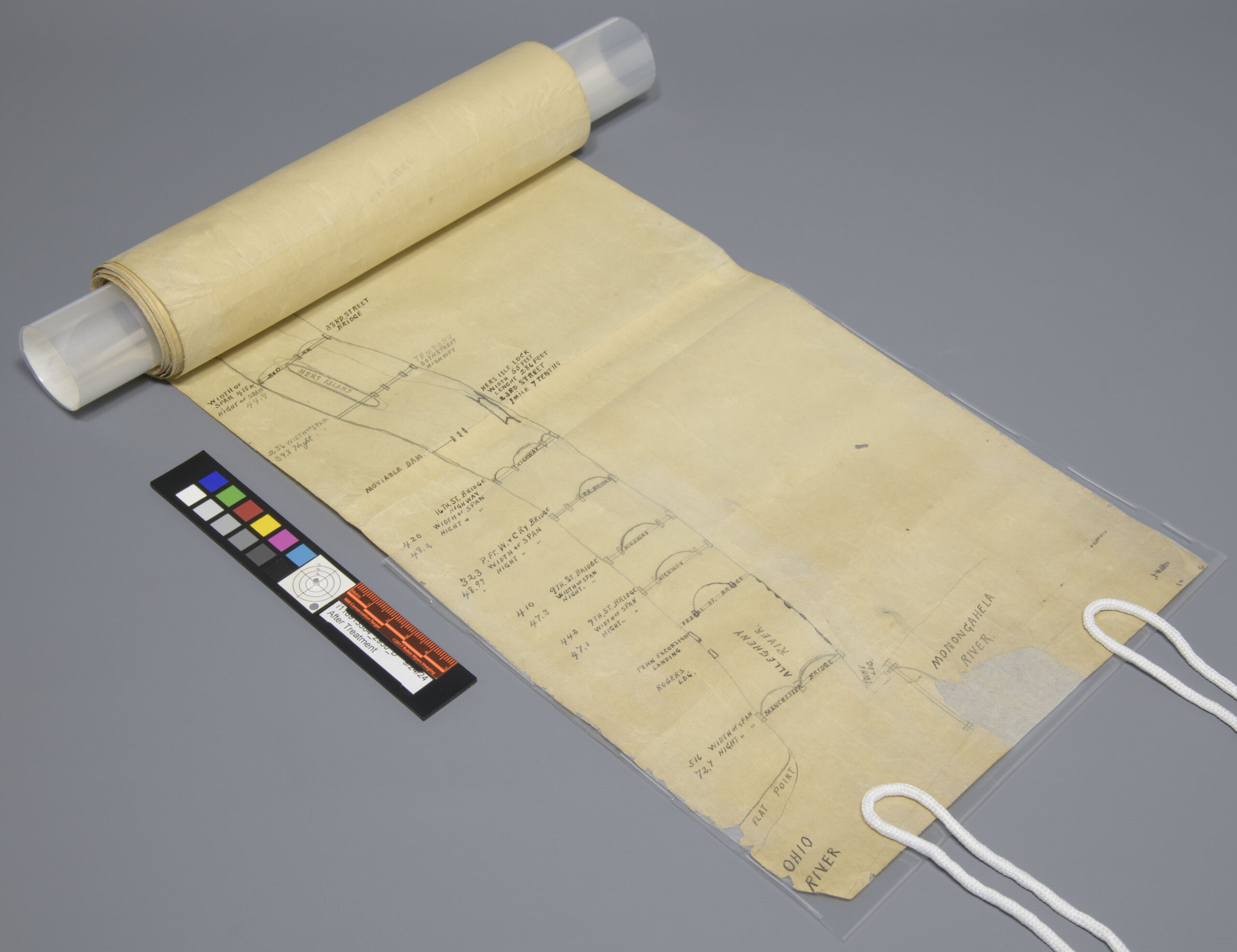
First things first, some stabilization treatment. Before tackling the housing design, the scroll underwent conservation treatment to mend small tears and fill losses, particularly at the “beginning” and “end” (depending on which direction you follow the river). Once stabilized, it was ready for some housing trials.
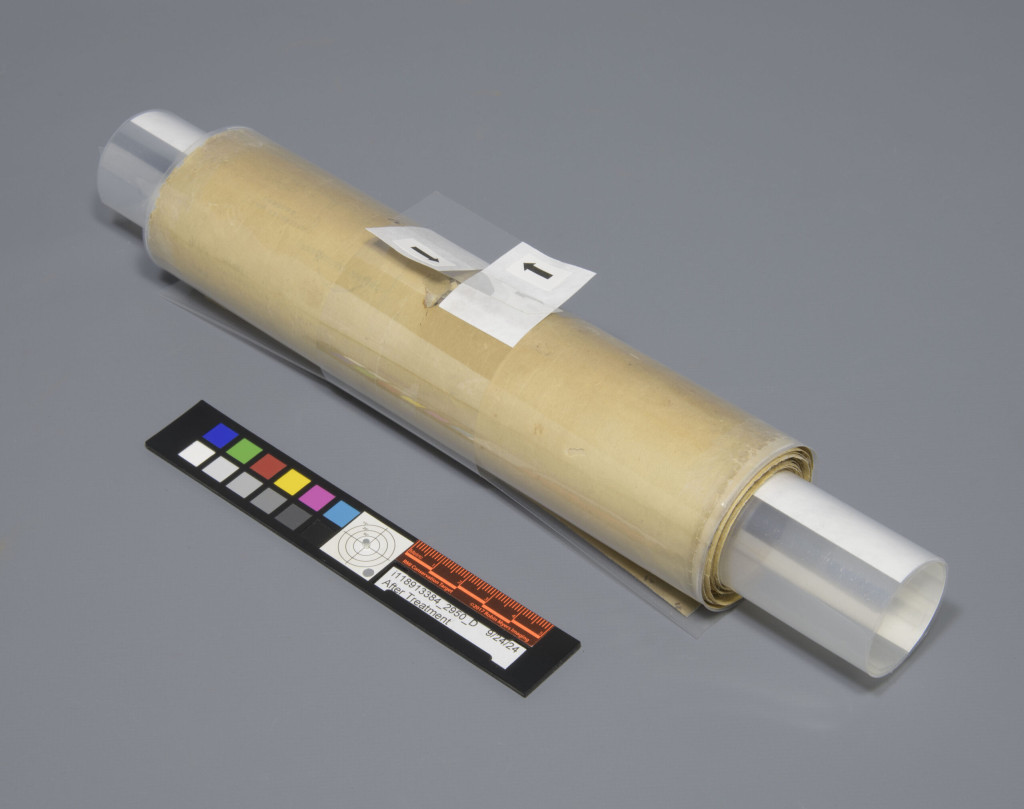
Before Treatment – Large loss and tear at one end.After Treatment – Large loss repaired and map rolled around the polyester cylinder core.
While researching solutions online, I stumbled upon a fantastic blog post by J.M. Iacchei from the Cornell University Library Conservation Lab (link here). Their approach to scroll housing was clever, practical and elegant, and it just gave me the spark I needed to create our own version.
Here is how we rolled:
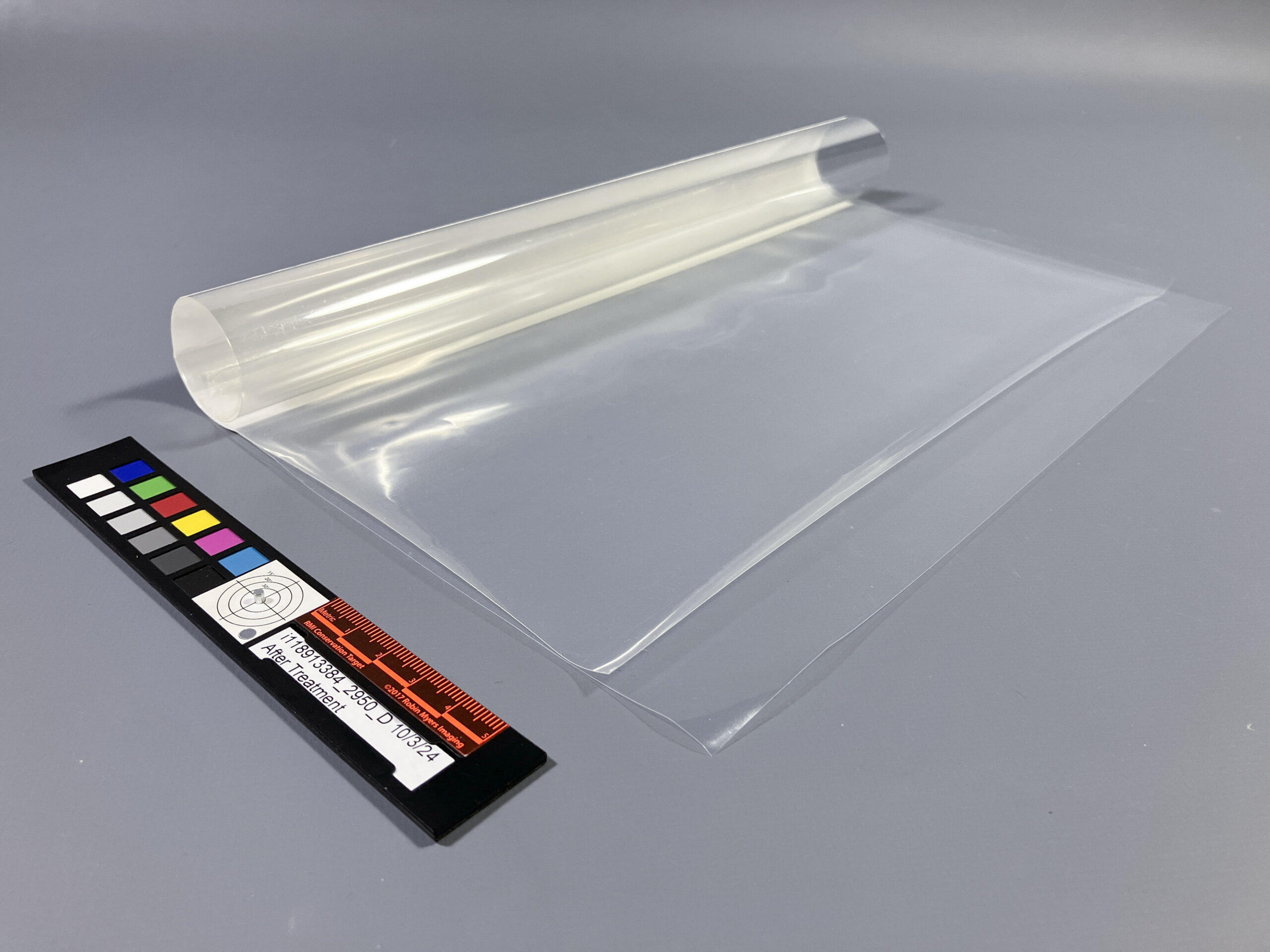
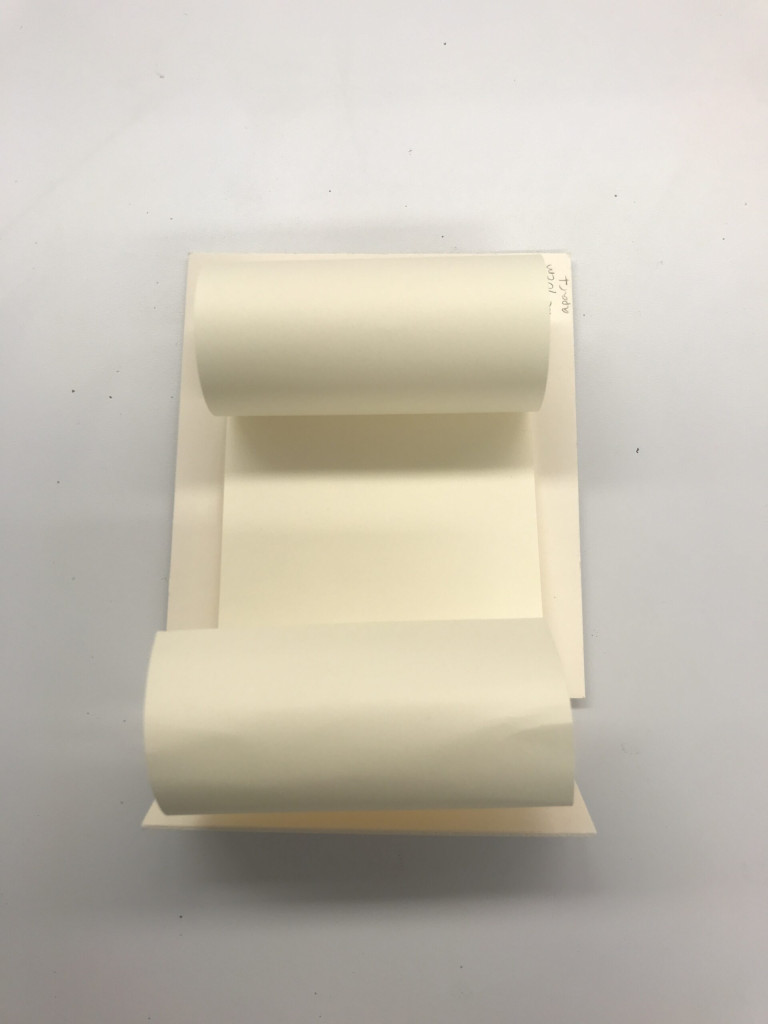
A support core – To give the scroll structure while rolling, I created a polyester cylinder core with a polyethylene sling. The sling supports one end of the scroll as it begins to wrap around the core, providing gentle guidance and protection as you start to roll the map. The map can be easily inserted into the sling to begin rolling.
Polyester cylinder core with a polyethylene sling to secure one end of the map.The end can be easily inserted into the sling and supported as the map is rolled around the polyester core.
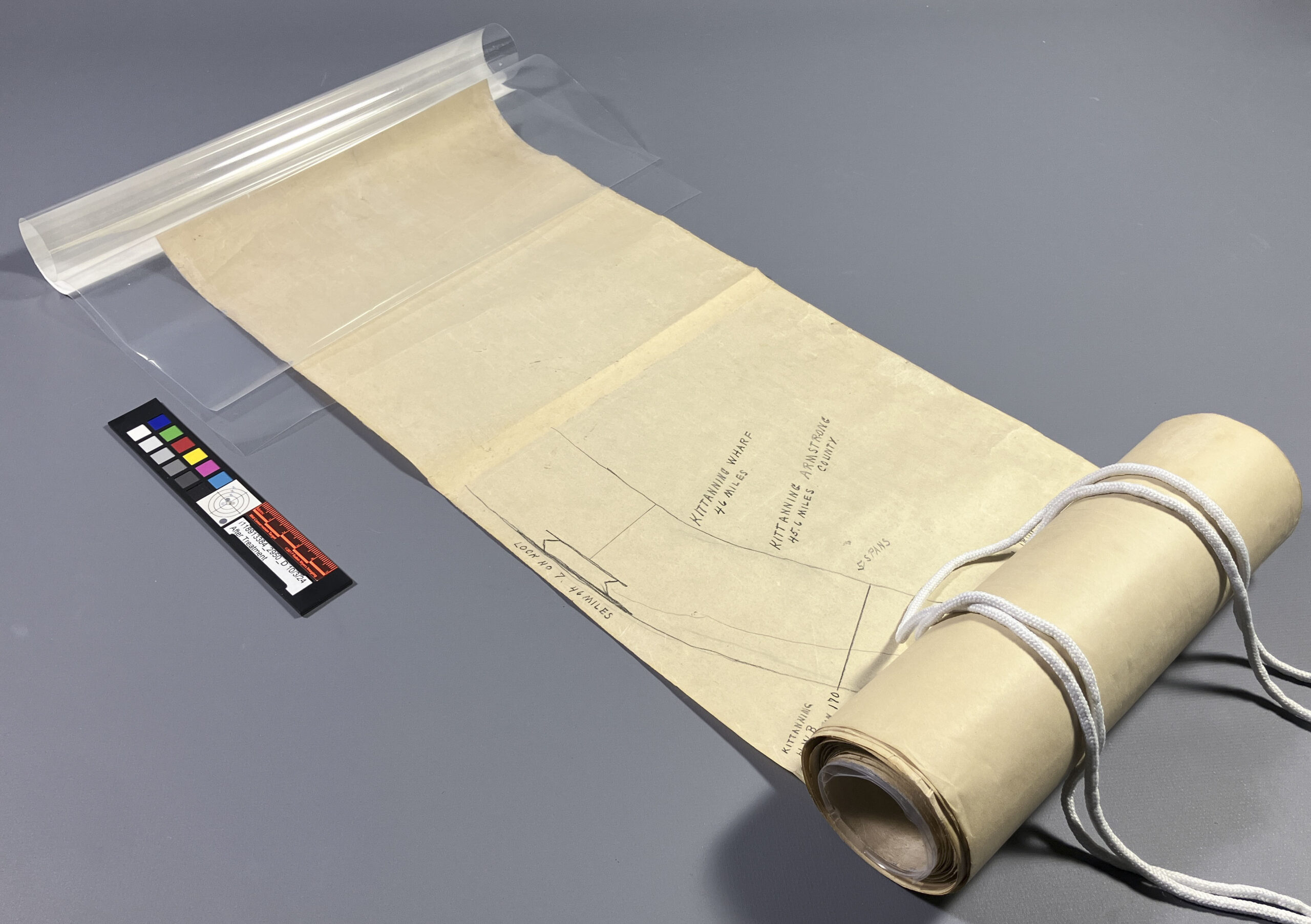
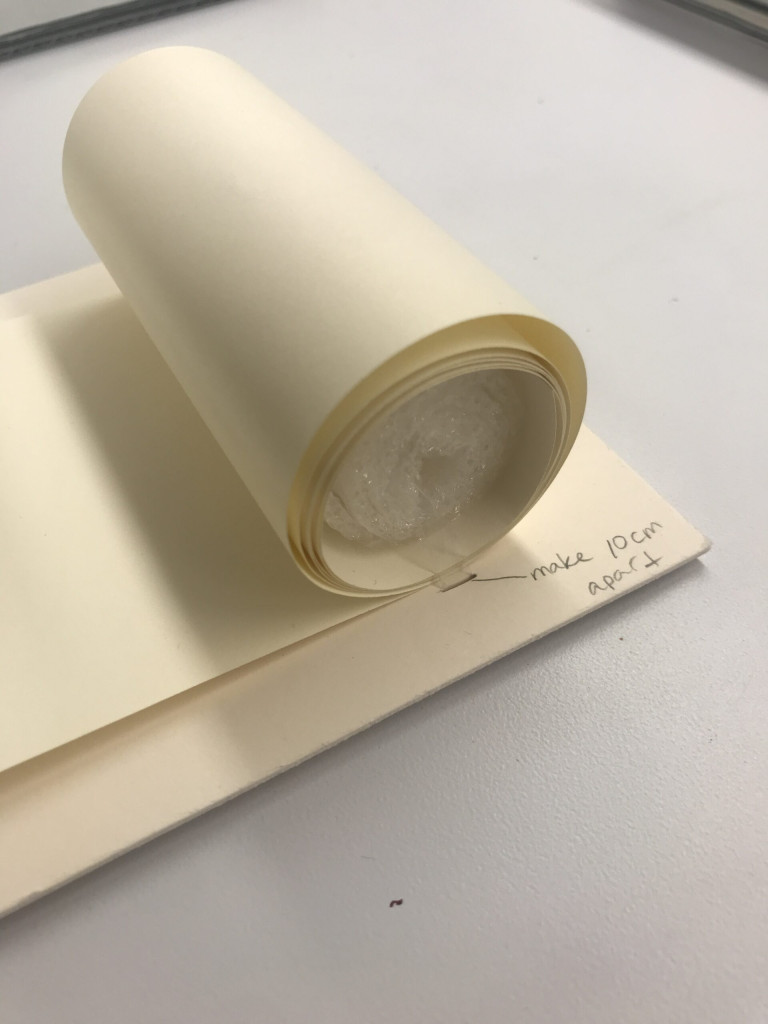
Protection of the ends – The opposite end of the scroll was placed into a soft, transparent polyethylene pocket. It’s flexible, unobtrusive, and doesn’t need to be removed, even during after treatment photography.
The other end of the map is protected with a polyethylene pocket that is flexible and offers support to the fragile end of the map.
Keep it rolled – Once fully rolled, the scroll was secured with a polyester belly band. The polyethylene pocket helped protect the scroll surface from any abrasion caused by the belly band.
The rolled map is secured with a polyester belly band.
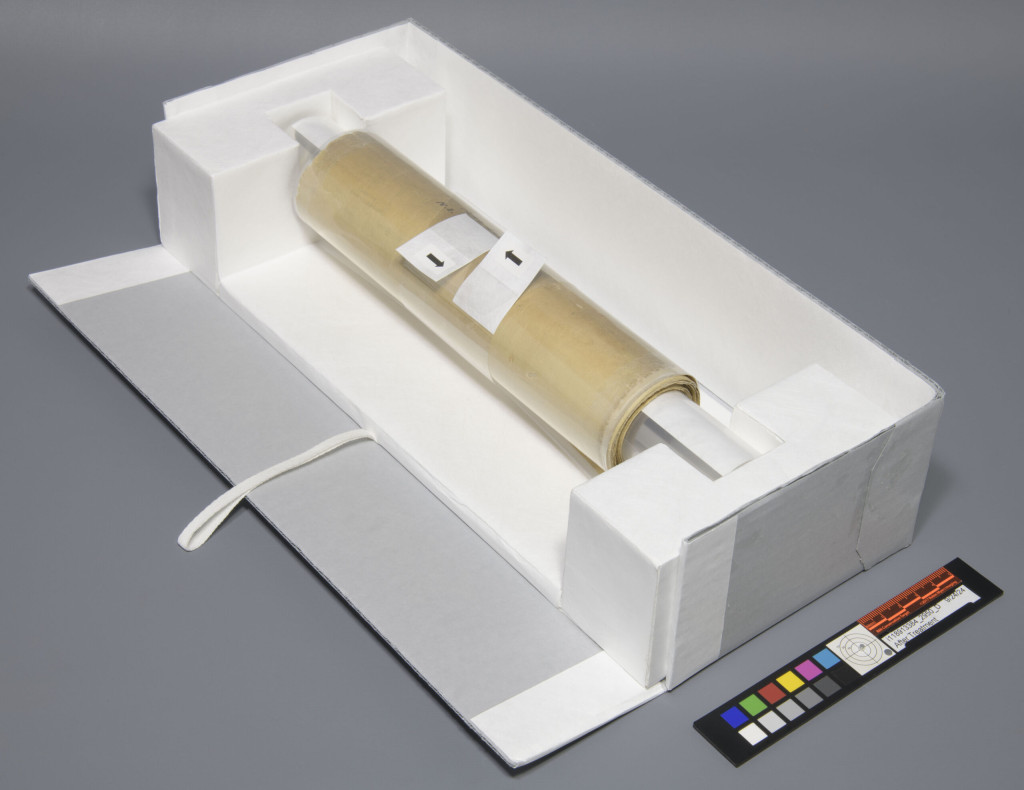
Display ready? – For display,I built a removable tray that cradles the rolled scroll without letting it rest directly on a surface. This tray doubles as a mini display platform, so the scroll can be partially unrolled and supported during handling and exhibit. Functional and elegant.
Display tray that offers support to the rolled map for long term storage.
I also tested a few other methods along the way, like supporting the entire scroll in a single 15-foot polyester sheet or sandwiching it between two. But the seams where the map’s original sheets were joined caused additional creases with those solutions. In the end, supporting the scroll in its entirety just wasn’t viable, so I pivoted to protecting the ends and letting the core do the heavy lifting.
Also: cutting two 15-foot-long sheets of Mylar by hand? Let’s just say I don’t recommend it… and I definitely don’t miss it.
When a collection of Egyptian mummy bandage fragments at the Cincinnati and Hamilton County Public Library was found in an area used to store uncatalogued flat materials, the lab was asked to play a role in providing better stewardship.
Click the links below to jump to the following posts:
History – Historical information provided about the Egyptian inscriptions
Treatment – How the materials were treated after learning about their content
Storage Solutions – Individual solutions for separated fragments as well as storage as a collection
Conservation Treatment Consultations
Being a primarily book, paper, and photograph conservator, working on textiles comes up only intermittently as minor stabilization or housing. When these projects do arise, I tend to consult immediately with a textile conservator. This project was no different. Generously, Obie from the Cincinnati Art Museum kindly visited the lab to look at the fragments with me in person.
Initial Treatment Idea
Before consulting with Obie, my initial plan was to cut the overall board and separate the individual fragments. Once separated, I thought I might hinge the fragments to a backboard inside a sink matting system. I had briefly corresponded with a textile conservator at the MFA Boston who is familiar with ancient textiles and she confirmed this would be a sufficient option.
Testing
However, with Obie present, together we tested the solubility of the adhesives and likelihood of removing the fragments from the acidic board for better storage. Surprisingly, we determined removal was possible with the smallest amount of moisture!
Being familiar with backing removals and conserving degraded cloth covers (and now encouraged after having Obie’s support) I next went beyond spot testing and decided to perform a test treatment on one of the fragments to remove the backing board… with the caveat that I would stop at any point if I felt uncomfortable. Should I ever feel out of my element at any step, or have concerns that removing the textiles from the backing would not keep them intact, I knew I could always pivot to my initial solution of storing the mounted parts in mats.
Treatment
My new plan was now to first reduce the acidic backing board layer by layer. Once the backing was removed, I would assess if it was appropriate to remove the brown paper lining. (While my test treatment was performed on only one of the smaller fragments, images below are pulled from the actual treatment for better illustration).
Low and behold on my first fragment, treatment proceeded without a hitch.
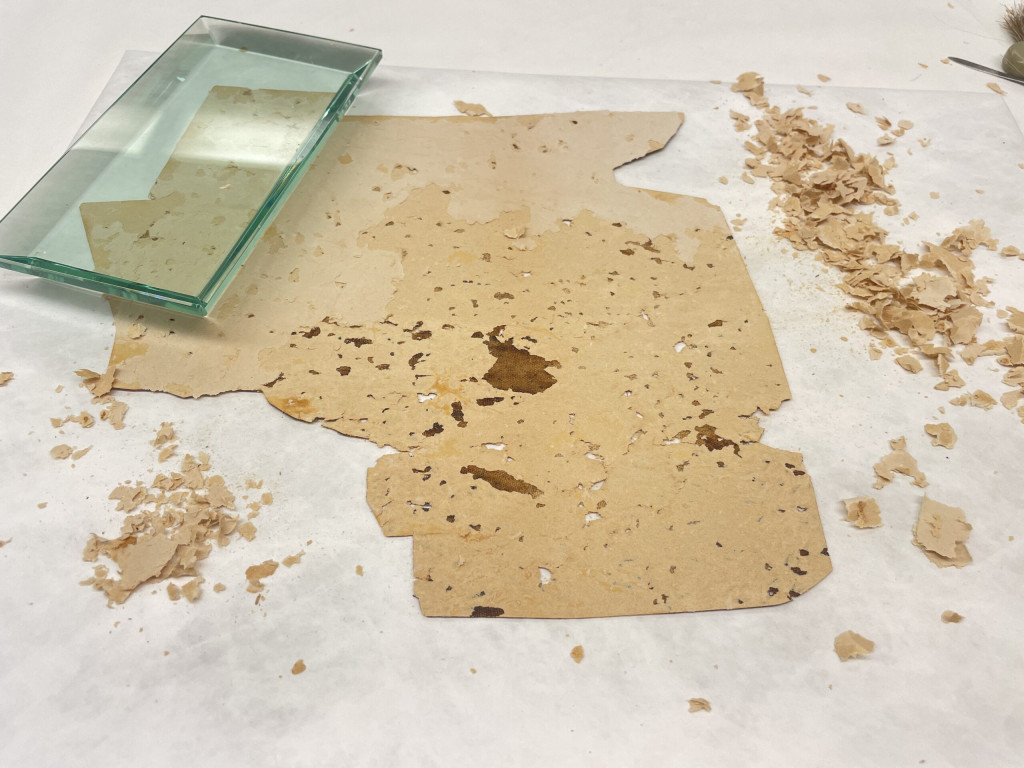
The board was removed slowly, layer by layer. The fragment was kept planar to prevent mechanical damage to the textile.
Before I knew it, it felt as though I was performing a regular backing removal on a photograph or document and soon found myself down to the final brown paper layer.
After removing multiple layers of board, the brown paper lining was revealed. Some areas of the brown paper were no longer adhered to the textile and readily released during mechanical removal while other areas remained more firmly attached.
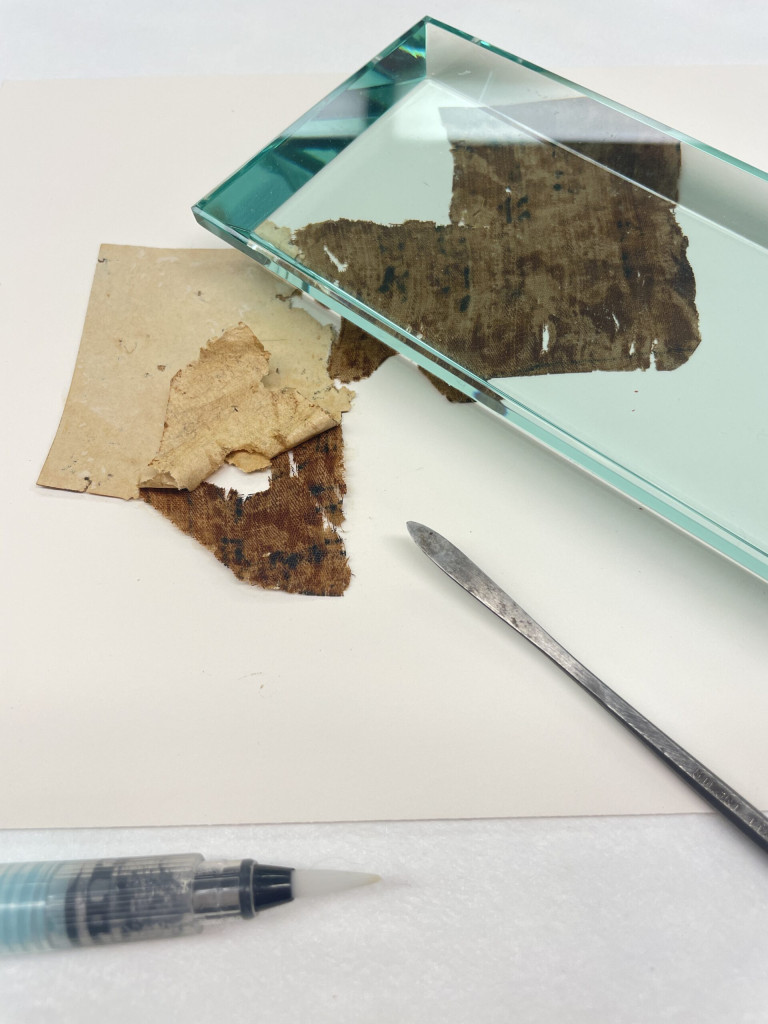
At this point, with the backing and lining parts removed as much as possible, I decided to test a corner of the paper backing with light moisture. To my surprise, the paper backing adhesive quickly reactivated, the lining lifted with little effort, and the humidification strengthened the fibers of the linen fragment. All of this eased fears the fragments might fracture during final treatment steps. Proceeding with treatment felt obtainable.
The final step was releasing the brown paper lining with moisture from a water pen and lifting the lining with spatulas.
With this new turn of events, I realized, if I ventured so far as to remove both the mounted board AND the paper backing, I’d need a new storage solution.
I halted treatment and went back to the drawing board to research storage enclosures (click here to jump to my post on storage solutions). Once I felt confident in selecting a method of storage for the loose textiles, I resumed treatment to remove the brown lining paper and proceeded with treatment on the rest of the fragments.
This is a time-lapse video showing how the brown paper lining was removed in stages. Localized humidification was applied from the back while mechanically separating the paper from the textile with spatulas.
Before Treatment
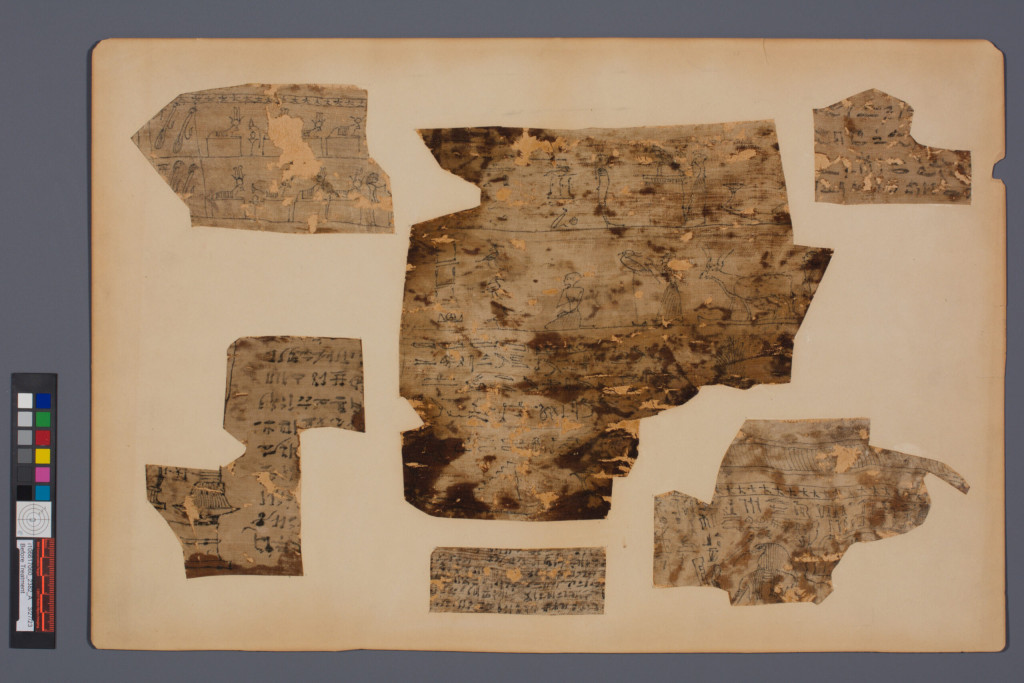
Collection is mounted to an acidic board with two of the fragments oriented upside down.
Normal Illumination, Before Treatment
After Treatment
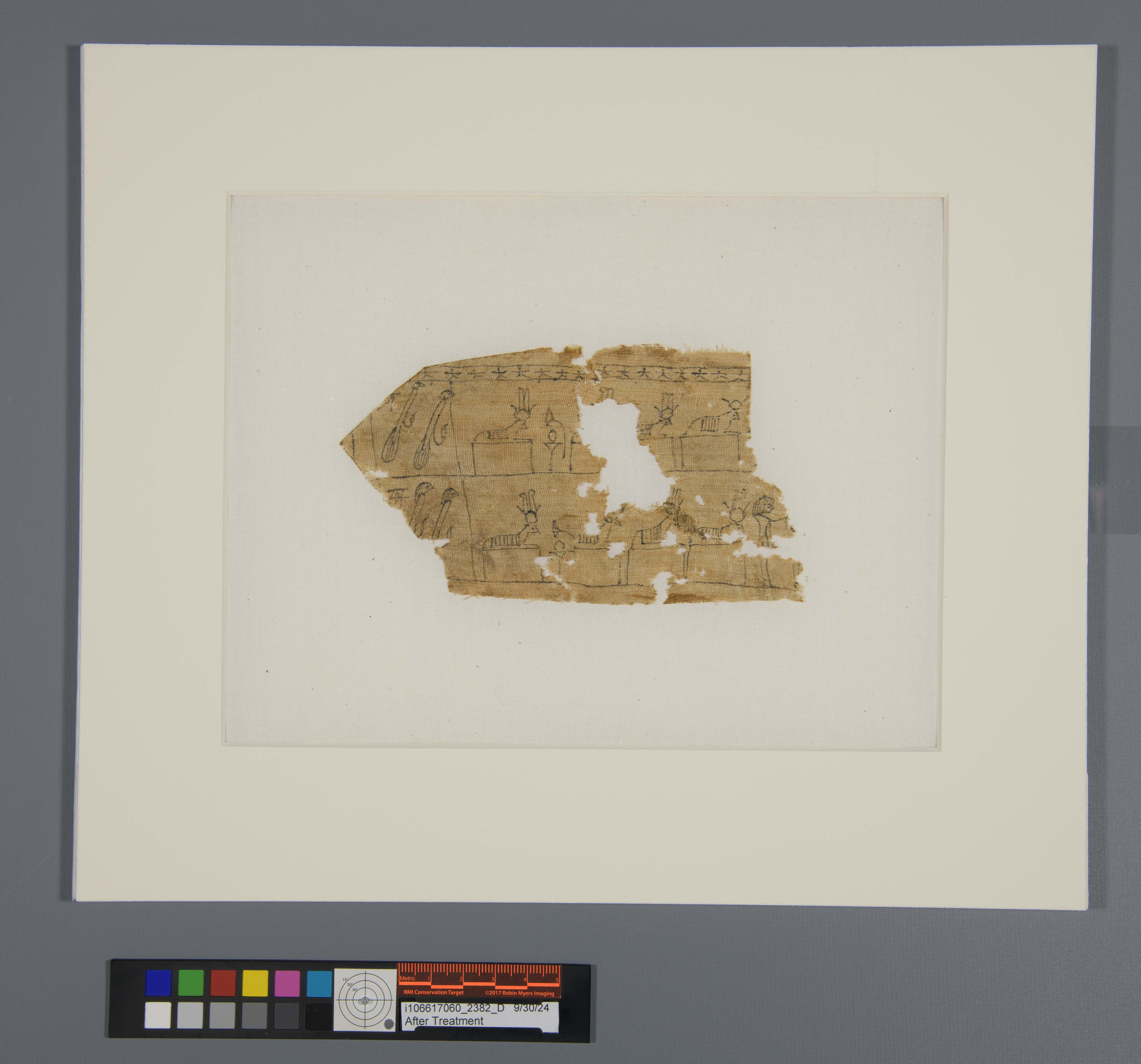
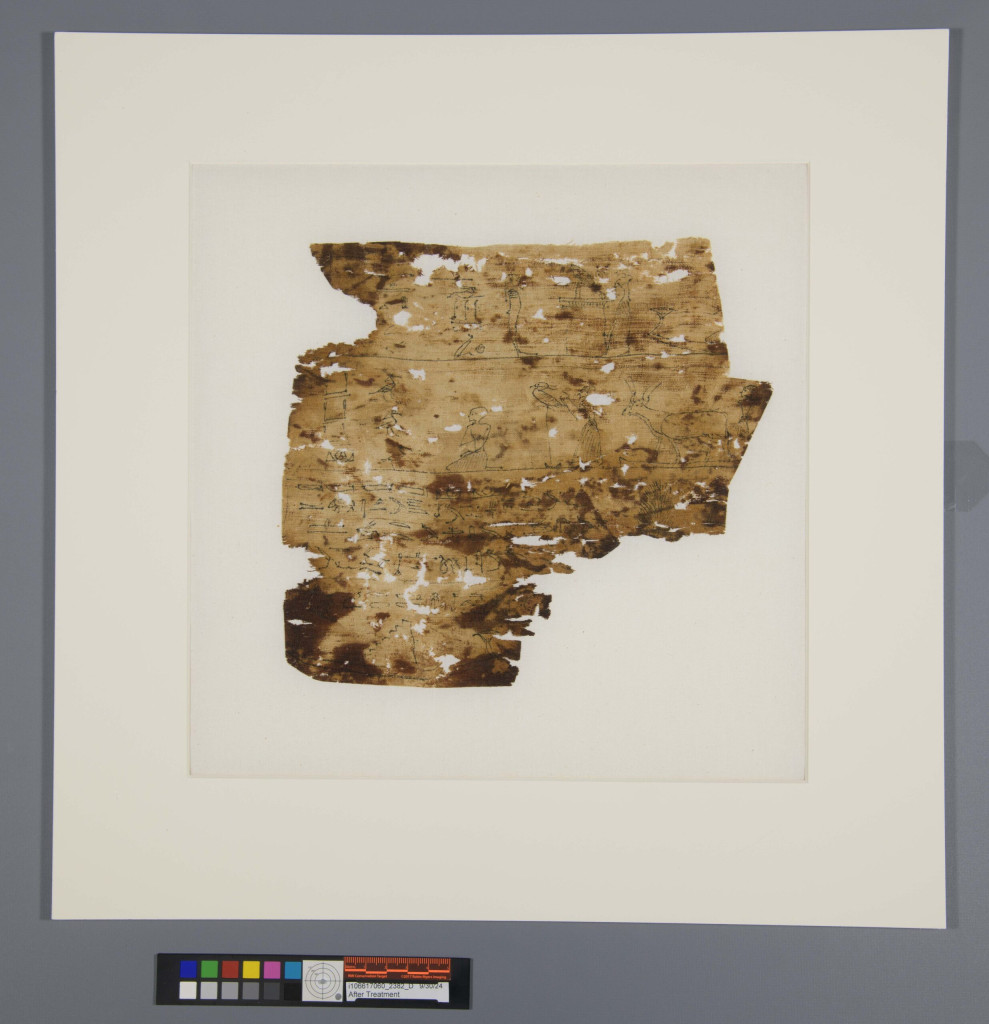
Fragments are stored individually in storage solutions that double as long-term housing. The enclosures facilitate handling as well as display. Being stored individually, the fragments are able to be grouped as necessary by their context.
When a collection of Egyptian mummy bandage fragments at the Cincinnati and Hamilton County Public Library was found in an area used to store uncatalogued flat materials, the lab was asked to play a role in providing better stewardship.
Click the links below to jump to the following posts:
History – Historical information provided about the Egyptian inscriptions
Treatment – How the materials were treated after learning about their content
Storage Solutions – Individual solutions for separated fragments as well as storage as a collection
Learning About the Collection
Before coming to the lab, the library knew little about the fragments. So first and foremost, I reached out to a handful of scholars to see if I could glean any information. I soon found myself engulfed in a journey of discovery with each colleague leading me to a new reference, sharing a collective wealth of knowledge.
History
With generous information provided by colleagues, the library learned the following about the fragments (fragment measurements below are with height and width at the widest points):
Normal Illumination
Raking Illumination
Ultraviolet Fluorescence
Infrared Radiation
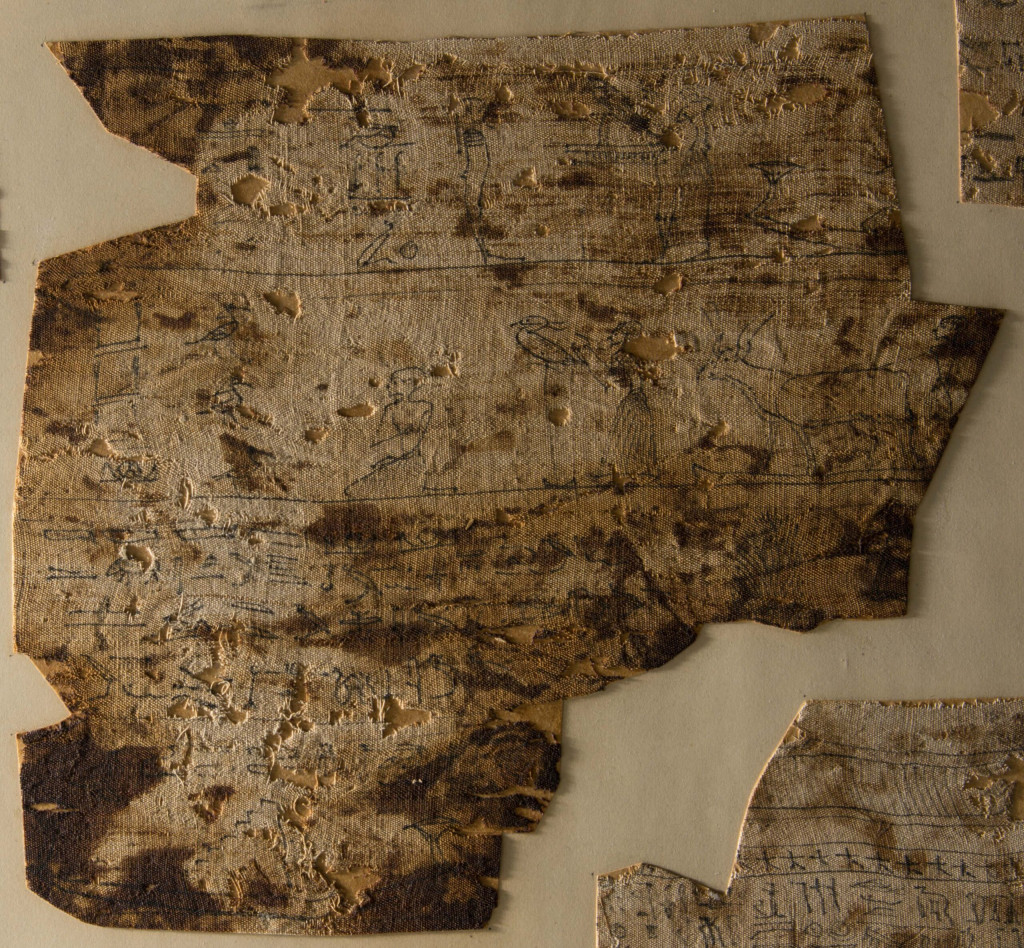
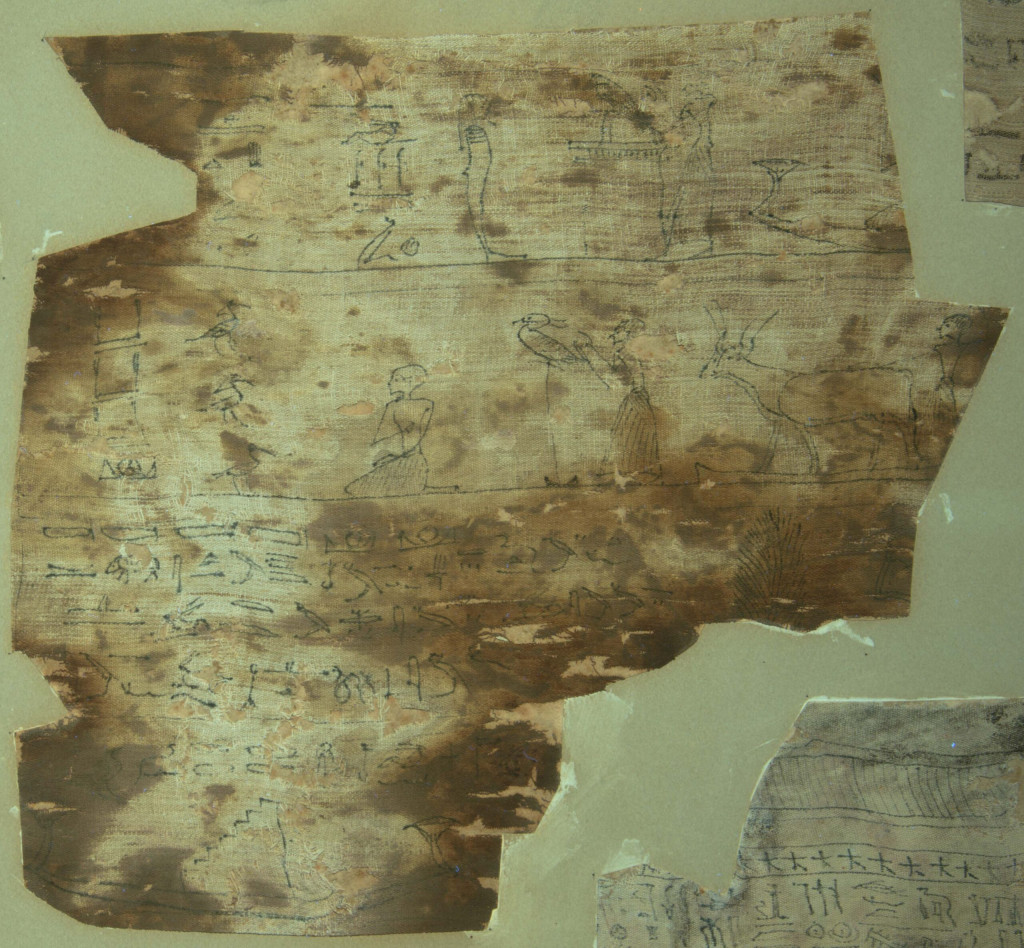
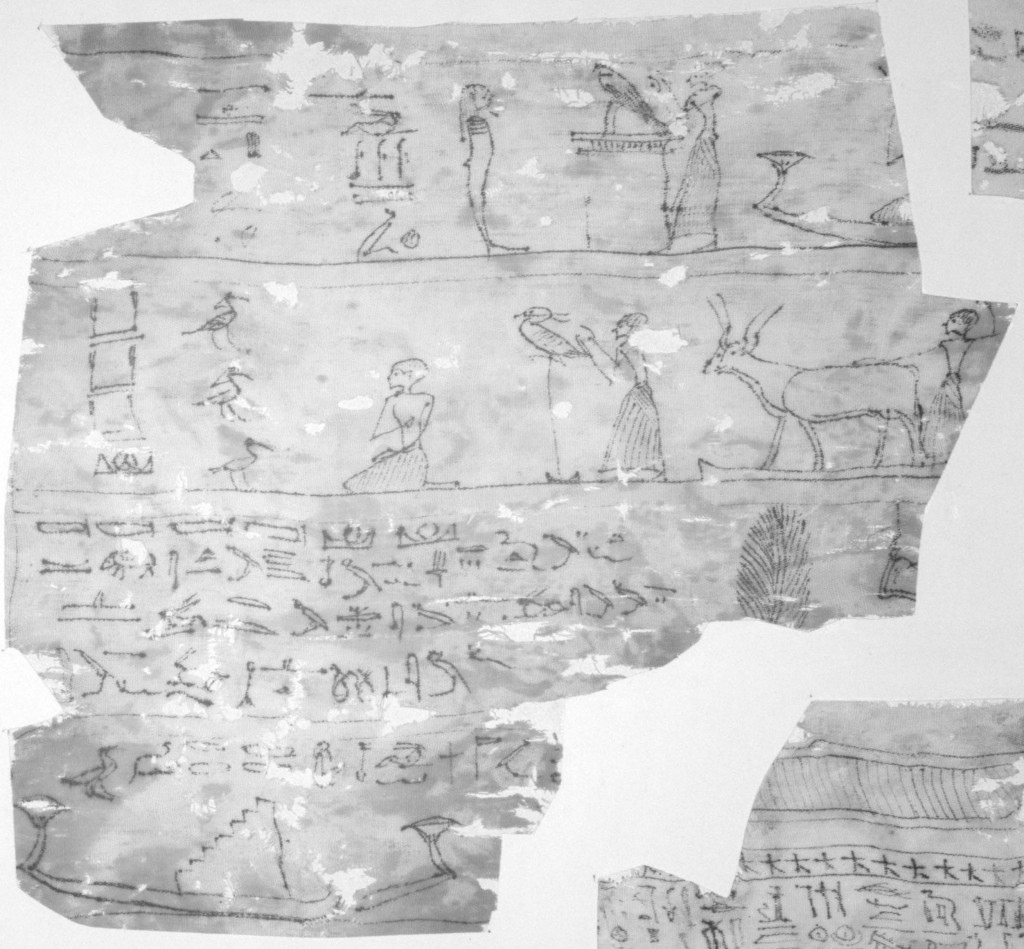
This is the center fragment. It contains Hieroglyphic script, measuring 21 x 23 cm. It’s part of a 3-piece set that belonged to a priest called Wennofer. The large scene in the middle belongs to Book of the Dead Spell 110 showing the deceased doing various things in the netherworld.
Normal Illumination
Raking Illumination
Ultraviolet Fluorescence
Infrared Radiation
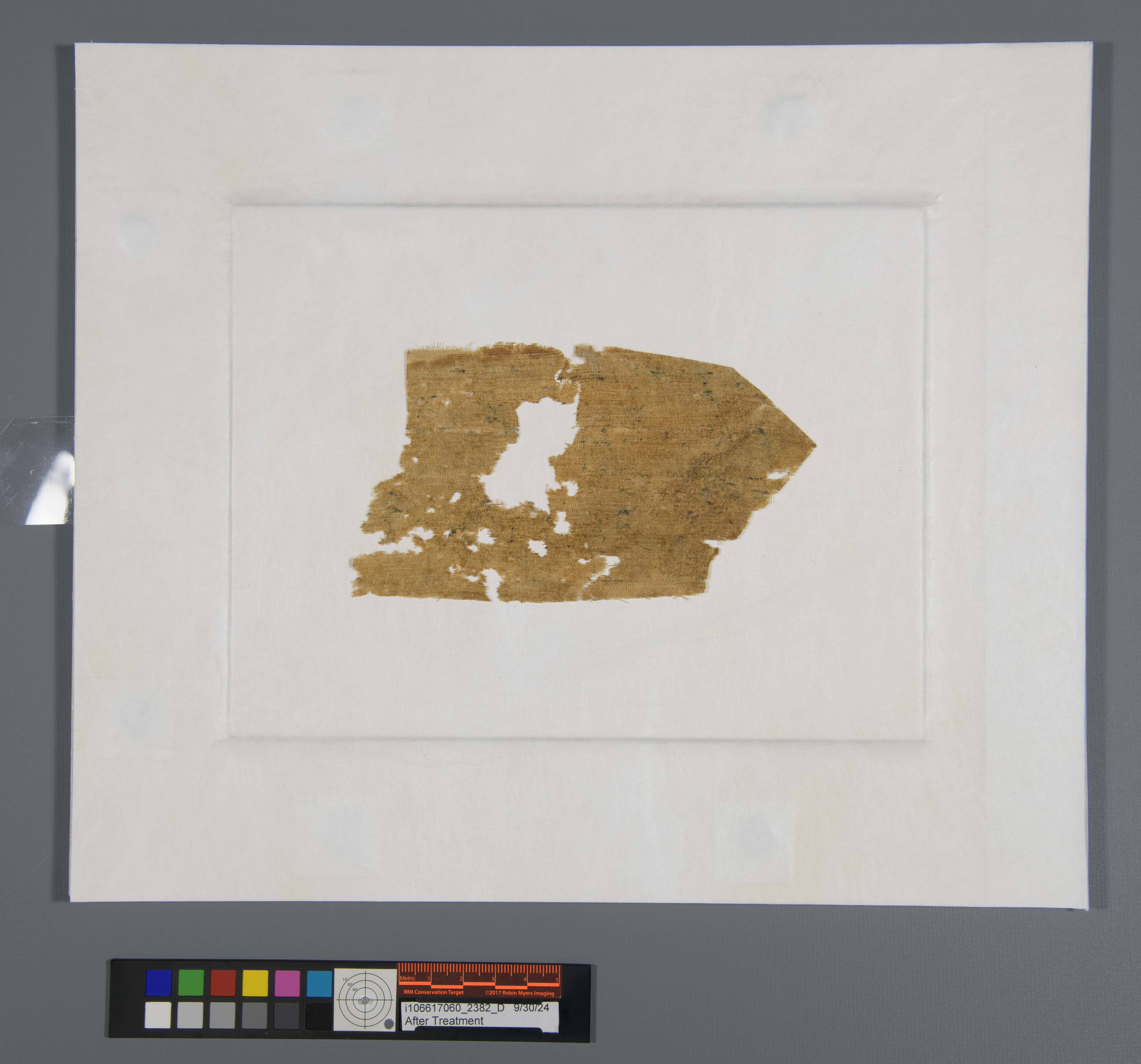
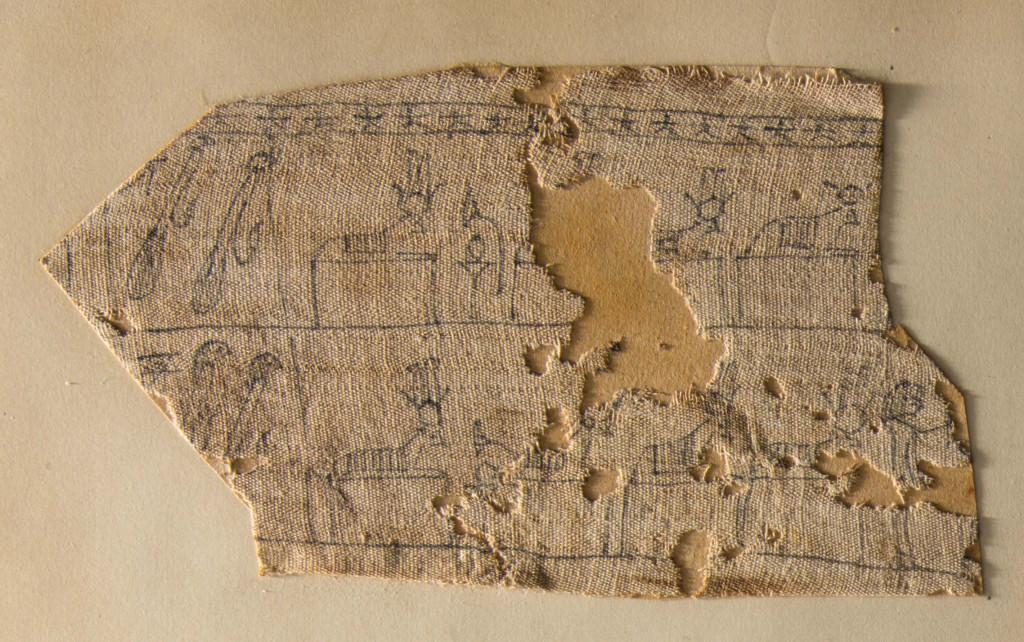
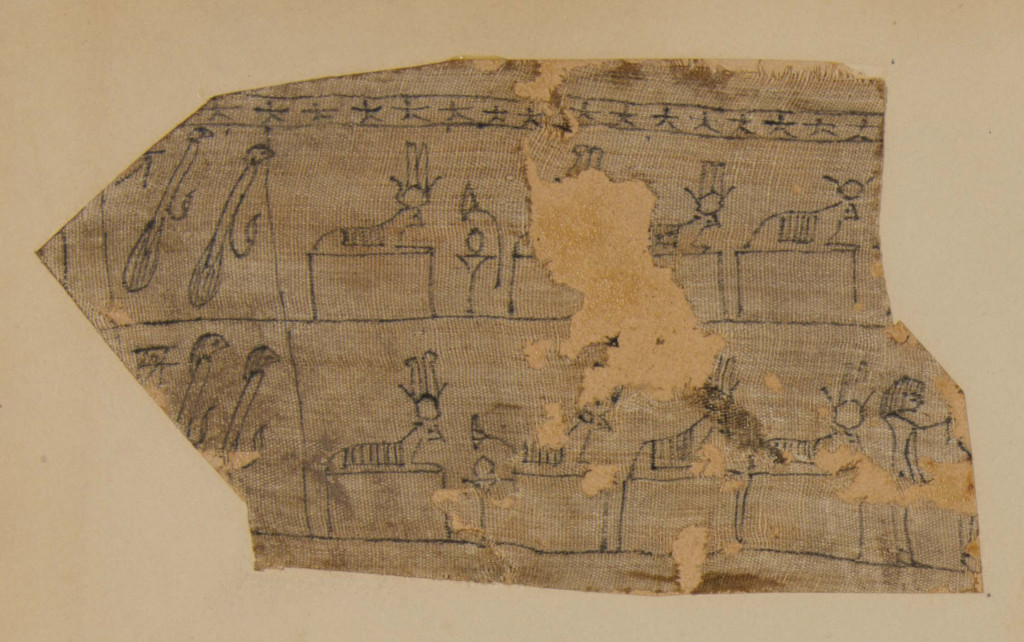
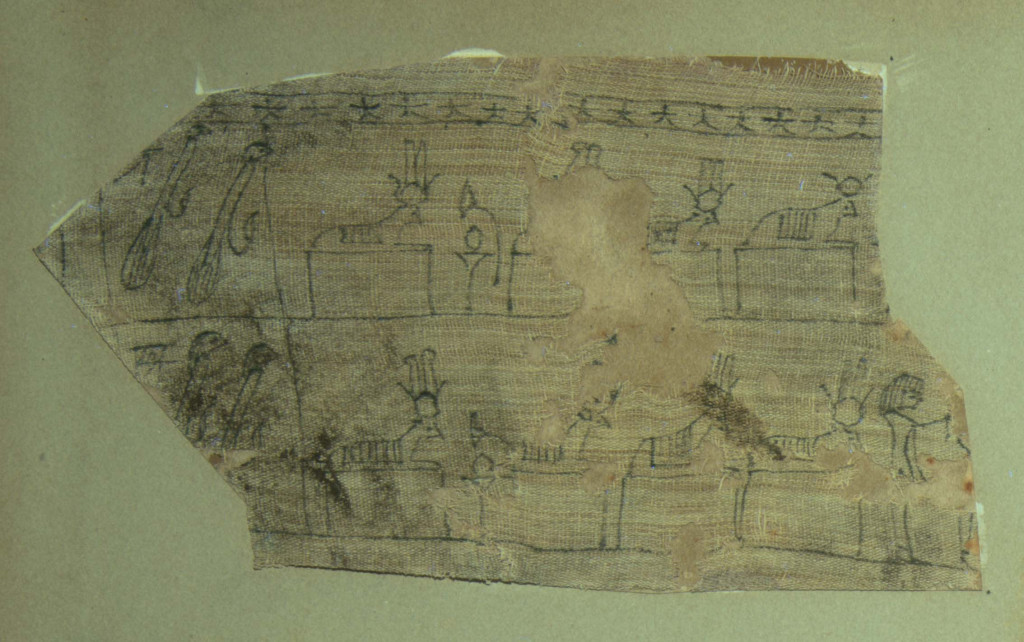
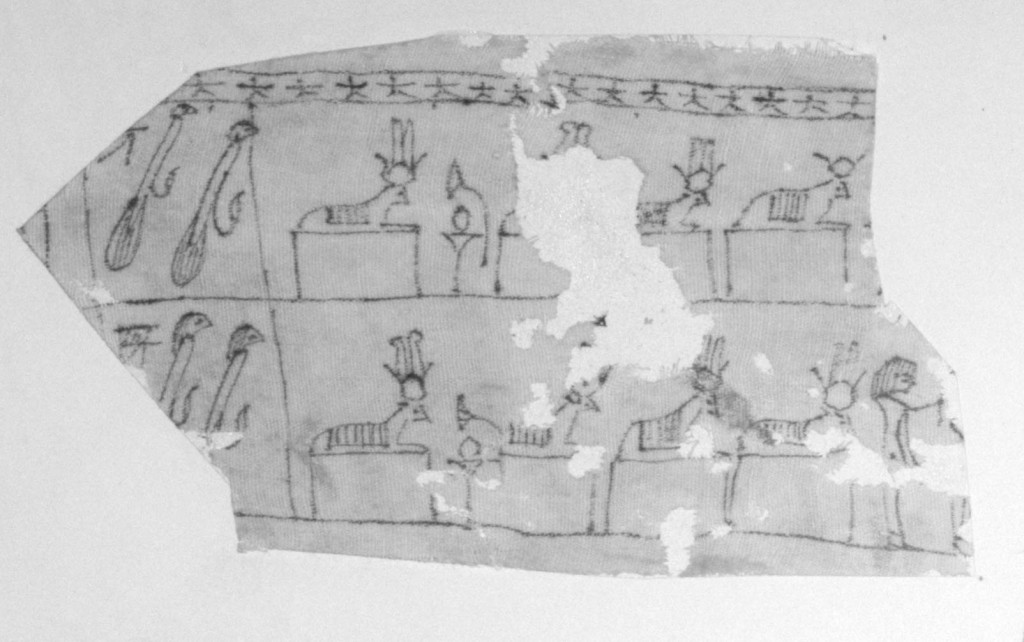
This is the upper left fragment. It measures 8 x 14 cm. Script contains images and no preserved text. This is part of the 3-piece set that also belonged to a priest called Wennofer. Images belong to the vignette of Book of the Dead Spell 148. “For making provision for a spirit in the realm of the dead” this spell provides the names of the Bull of Heaven and his seven cows, providing an eternal supply of food and beer.
Normal Illumination
Raking Illumination
Ultraviolet Fluorescence
Infrared Radiation
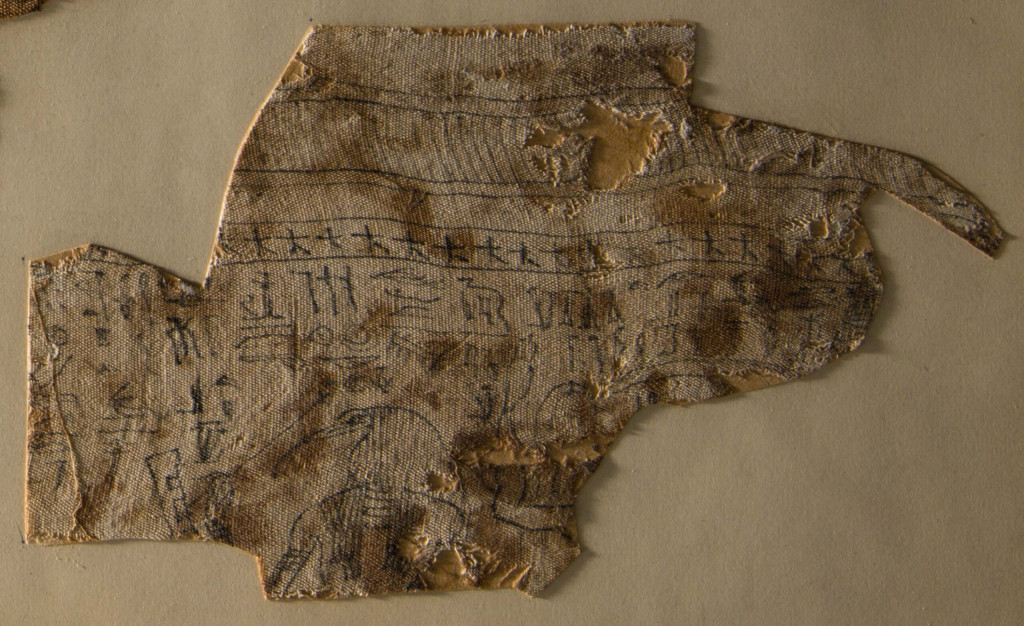
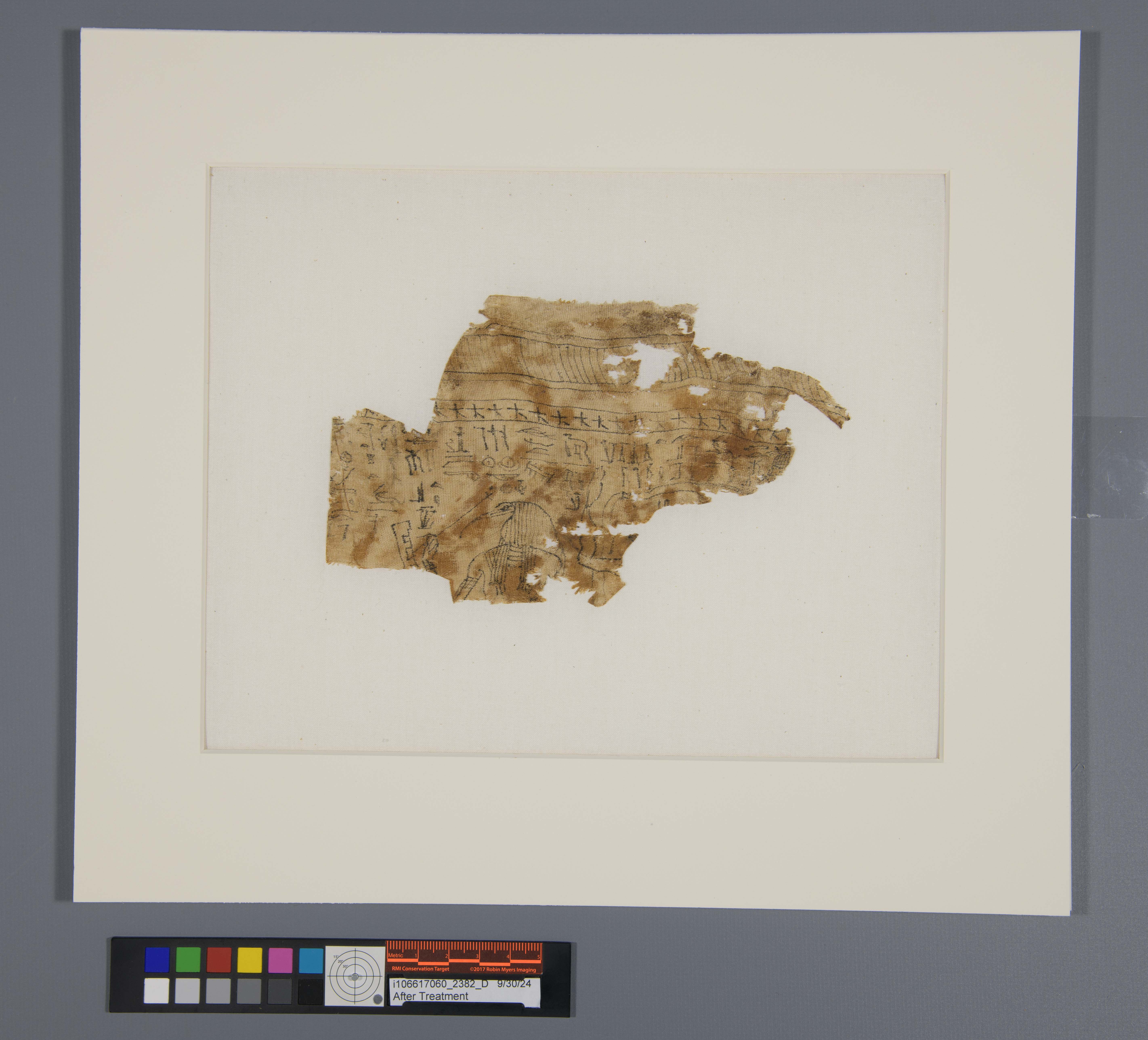
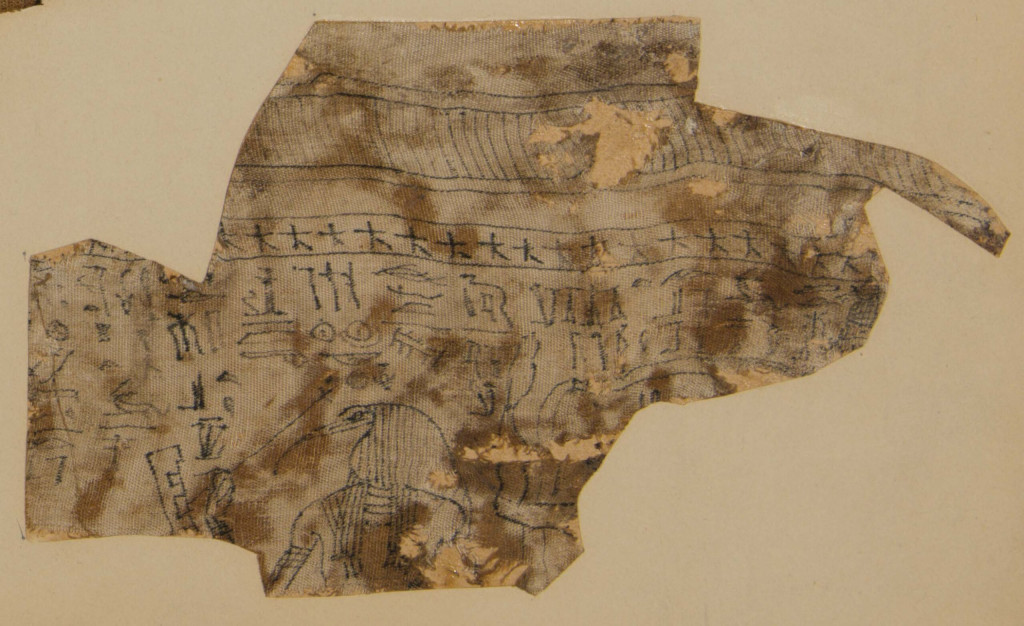
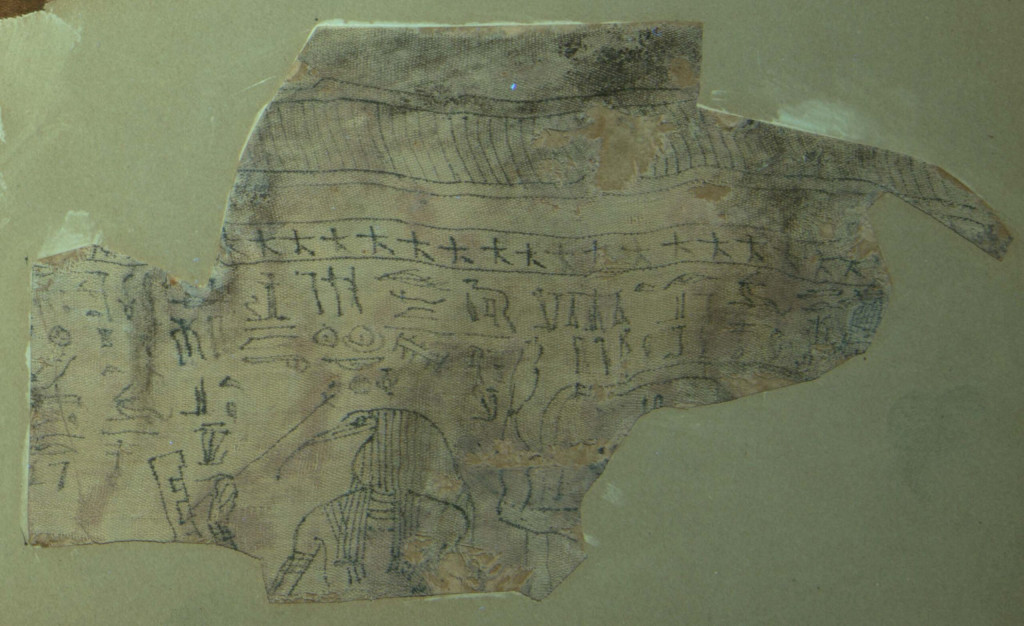
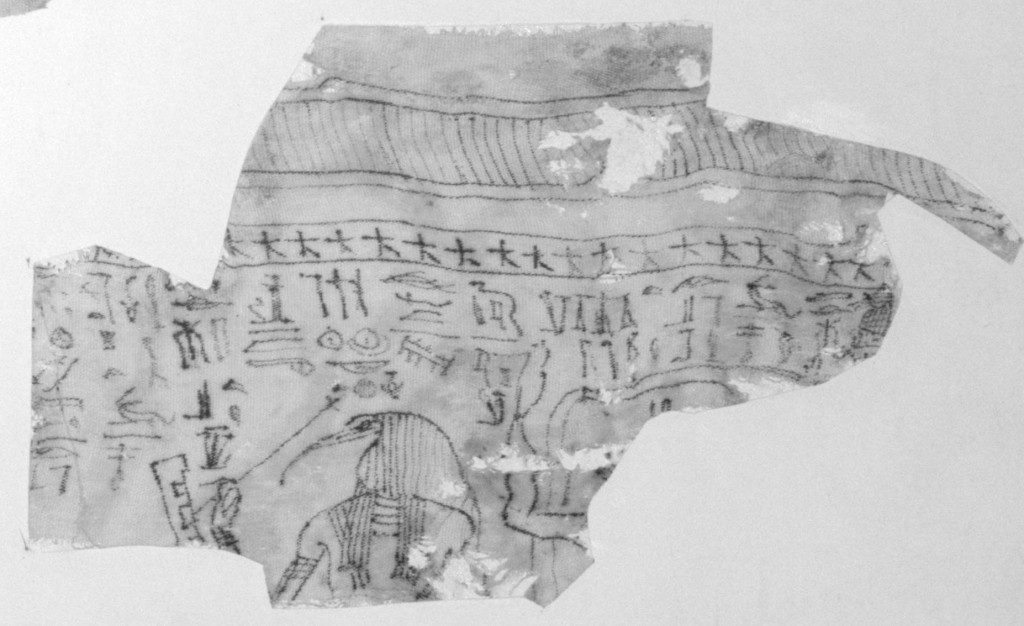
This is the bottom right fragment. It contains Hieroglyphic writing and measures approximately 10 x 17 cm, containing a Thoth god image. It’s the final part of the 3-piece set that belonged to a priest called Wennofer. Preserved images are part of the vignette of Book of the Dead Spell 125, the so-called judgement scene.
Normal Illumination
Raking Illumination
Ultraviolet Fluorescence
Infrared Illumination
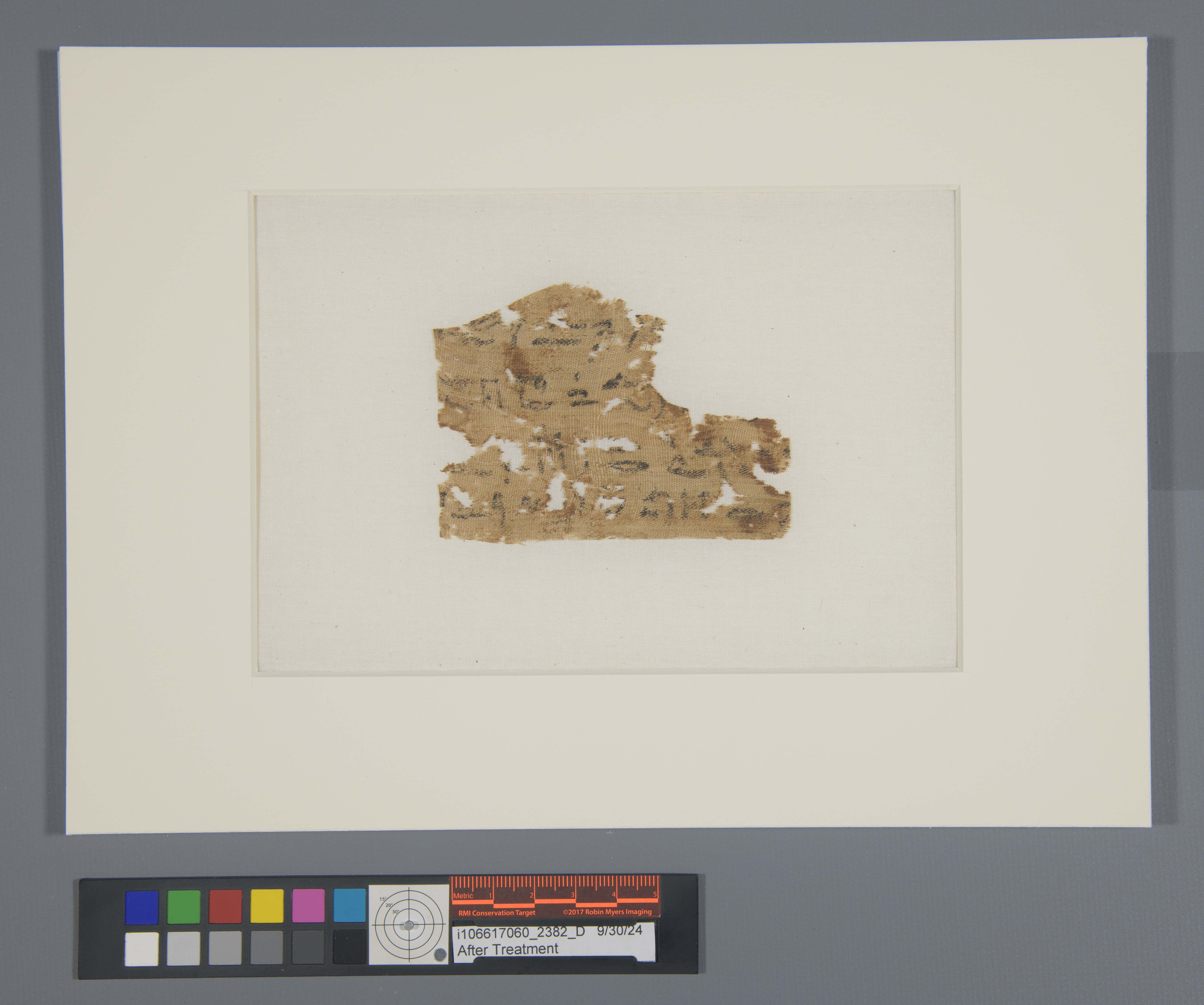
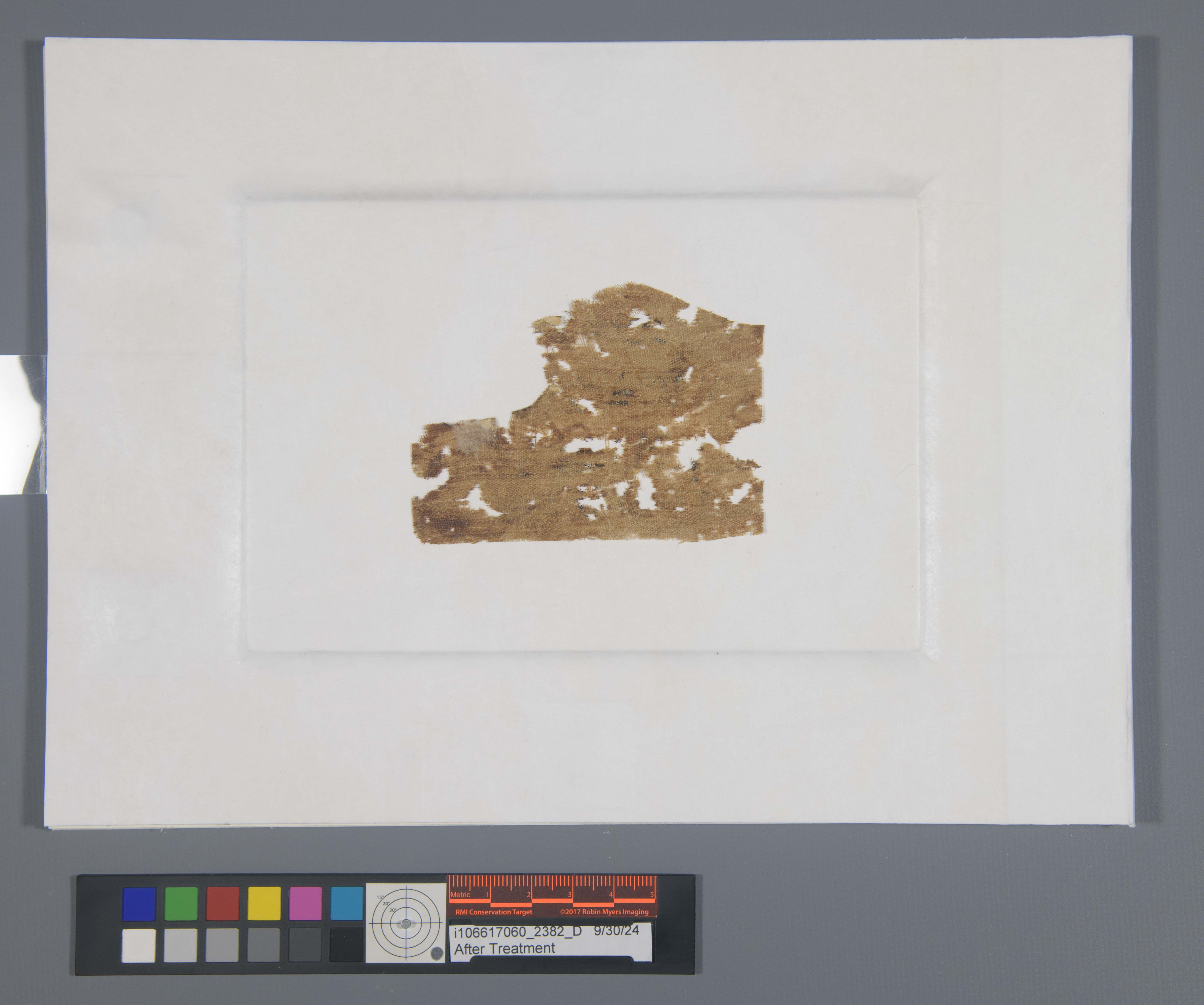
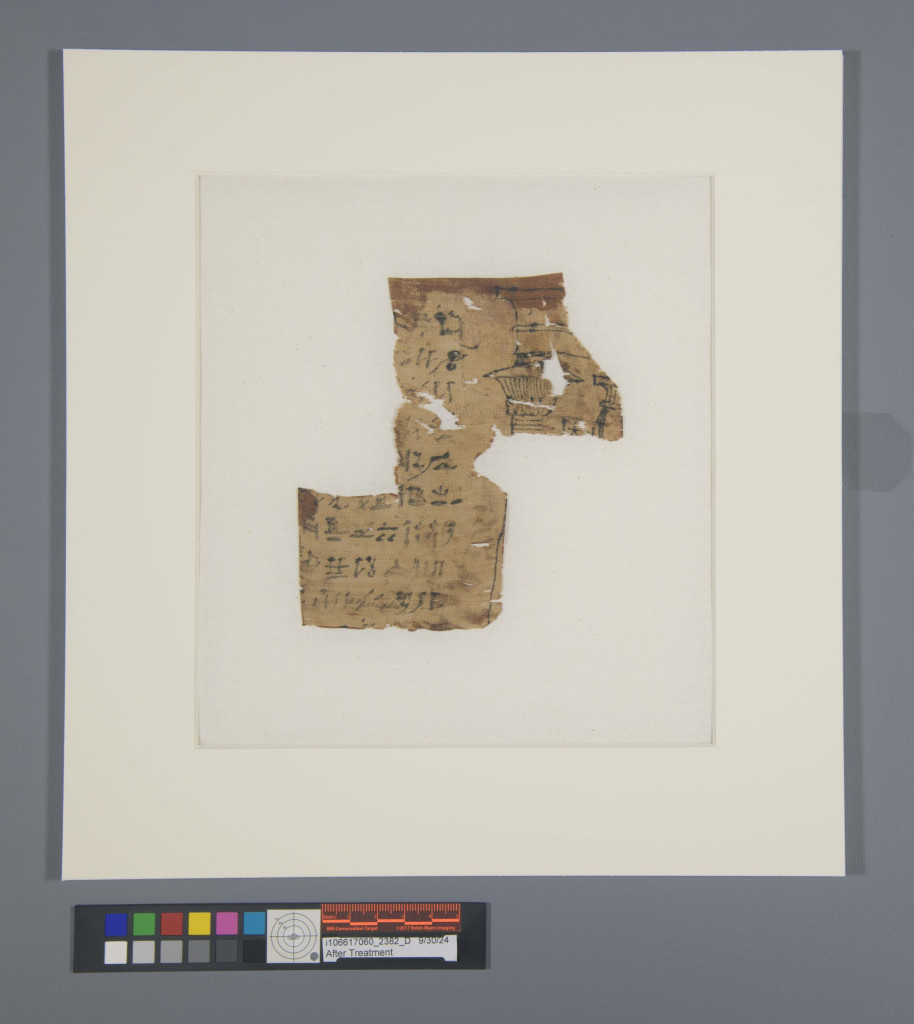
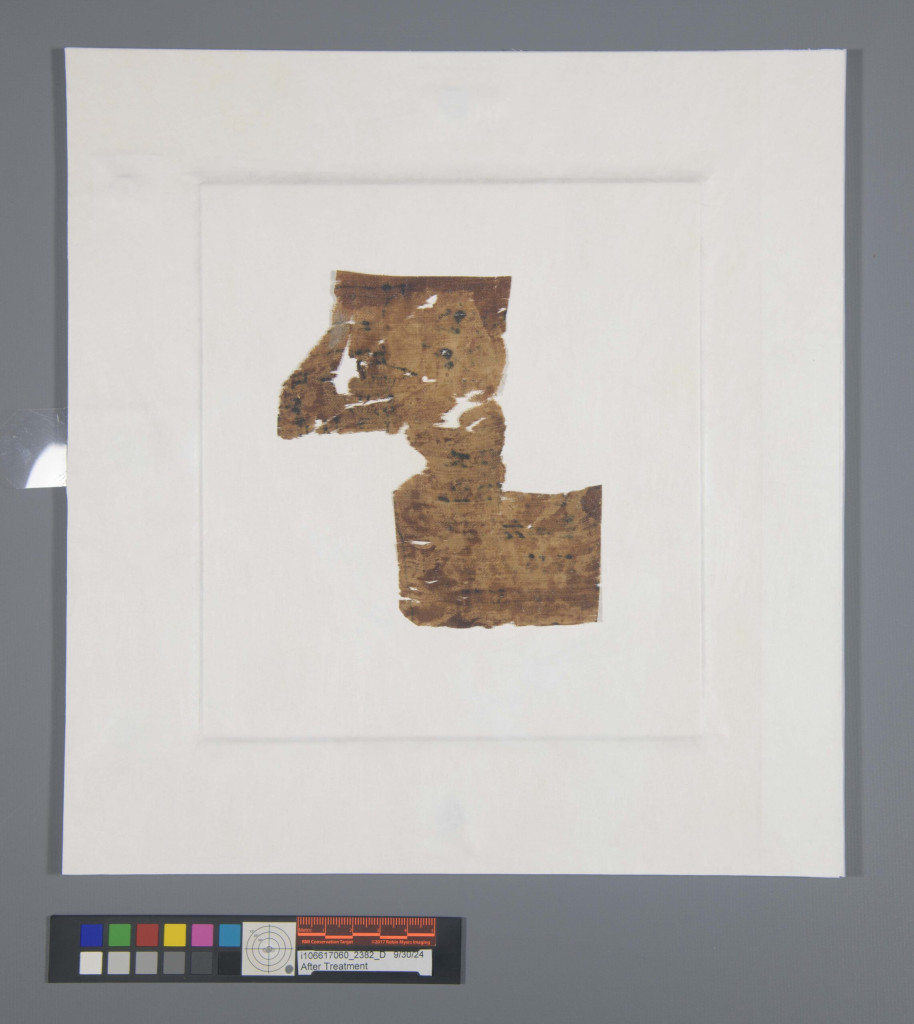
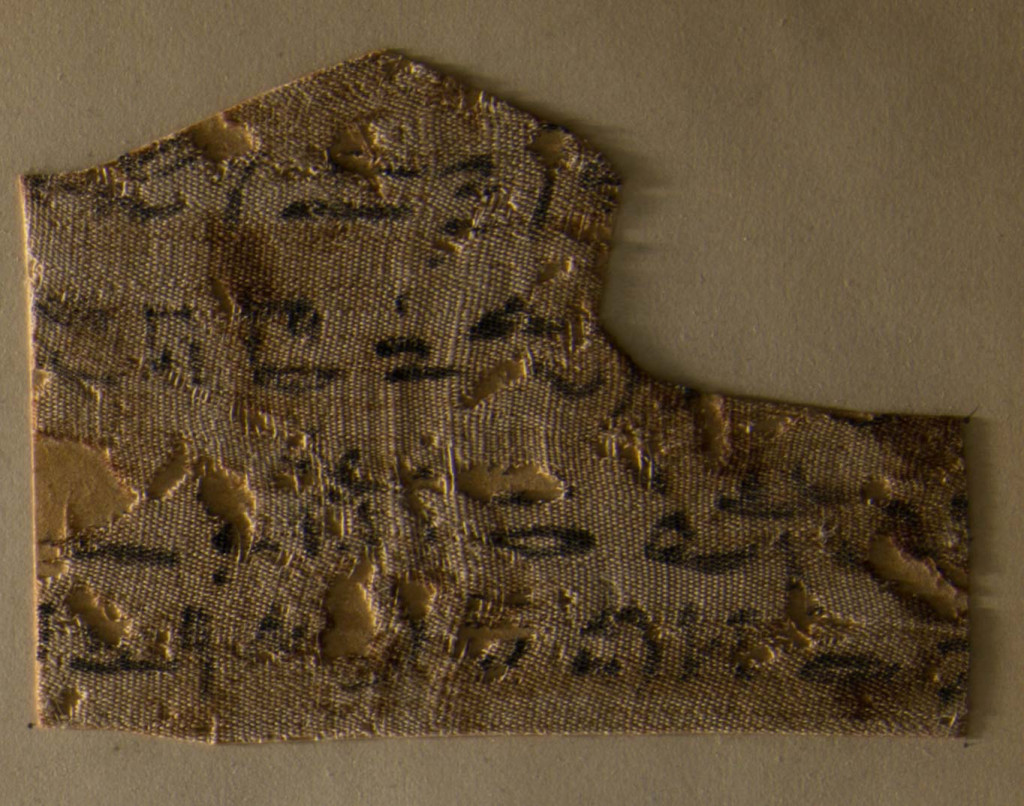
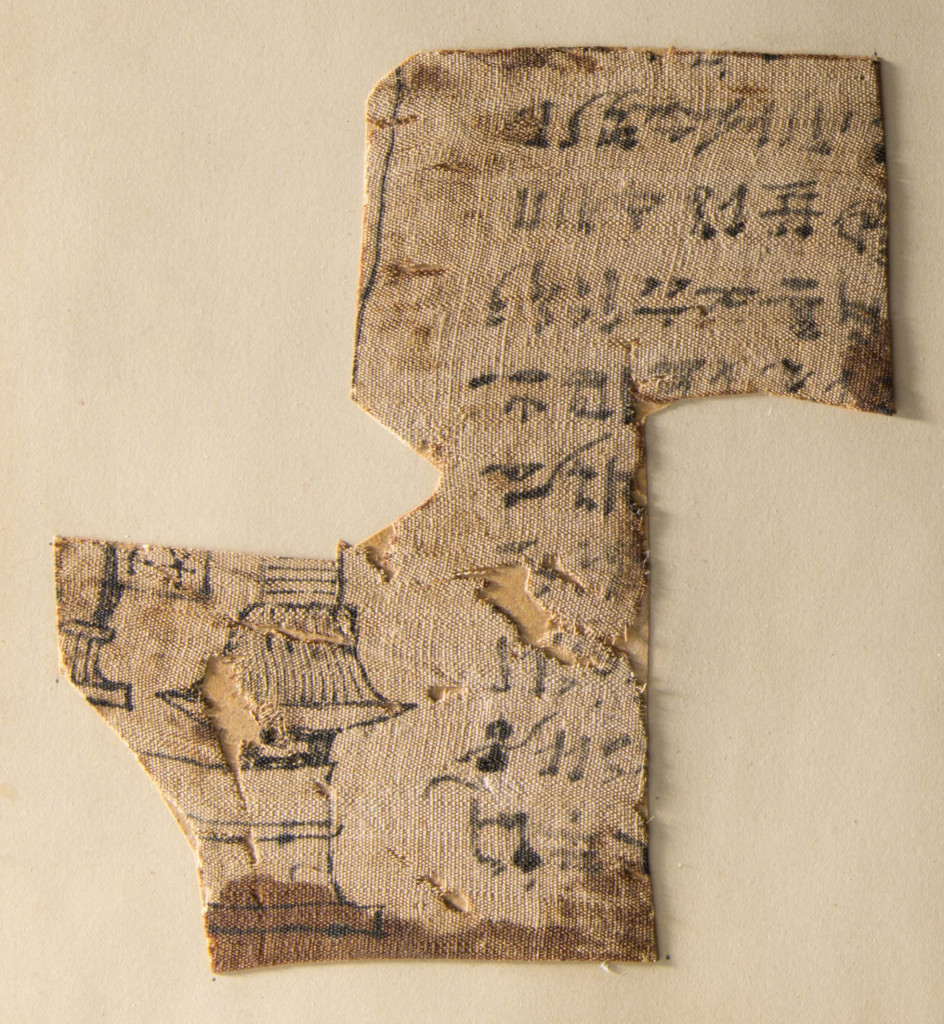
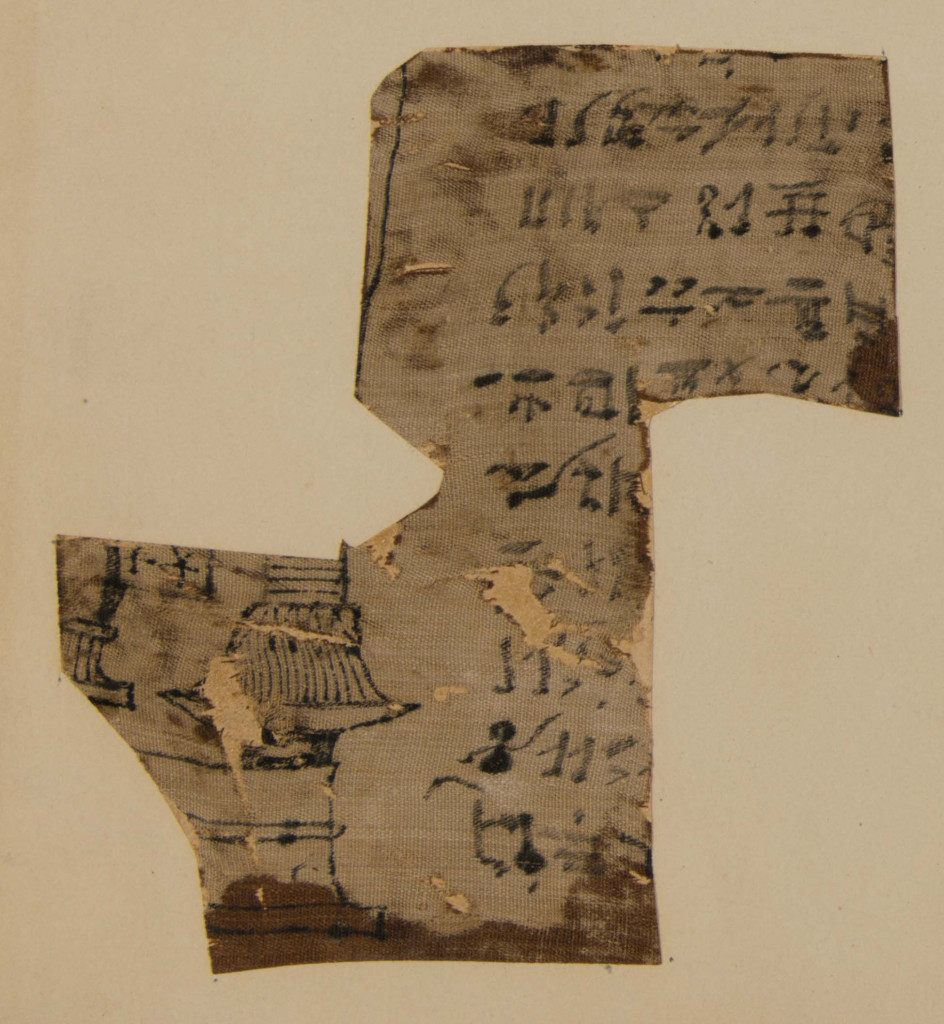
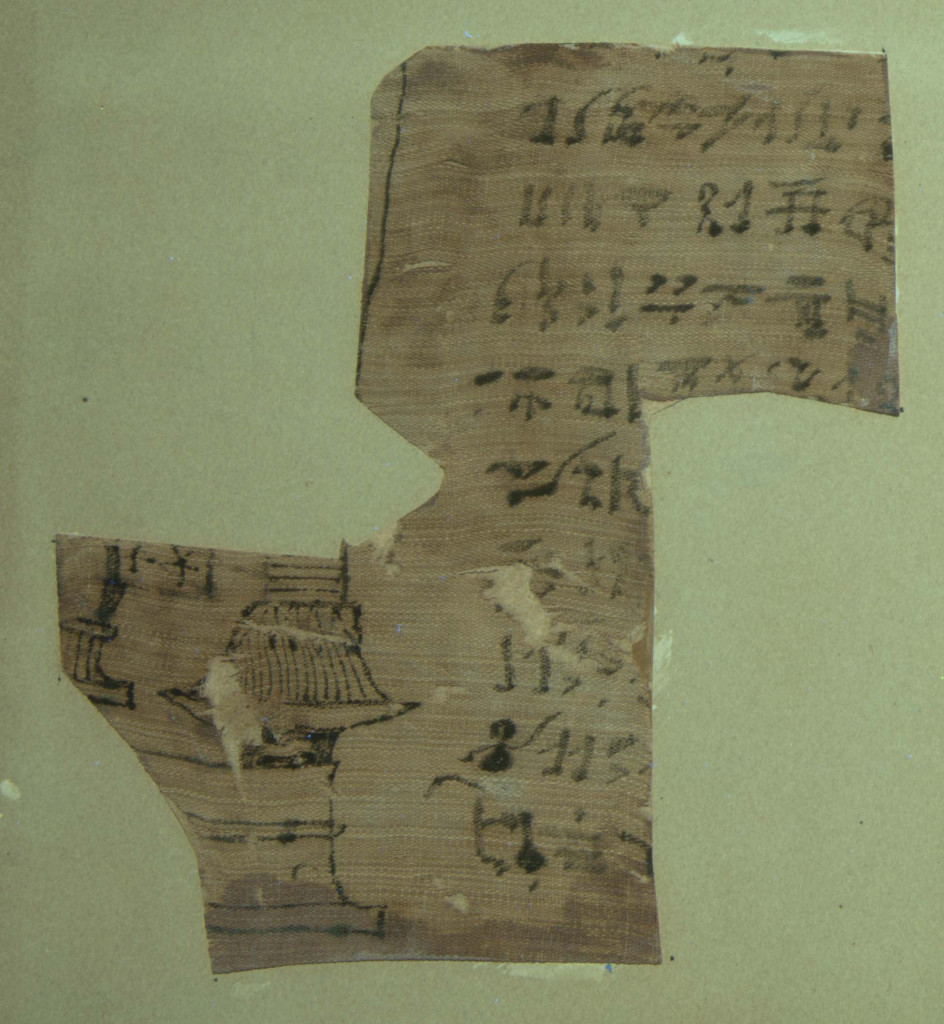
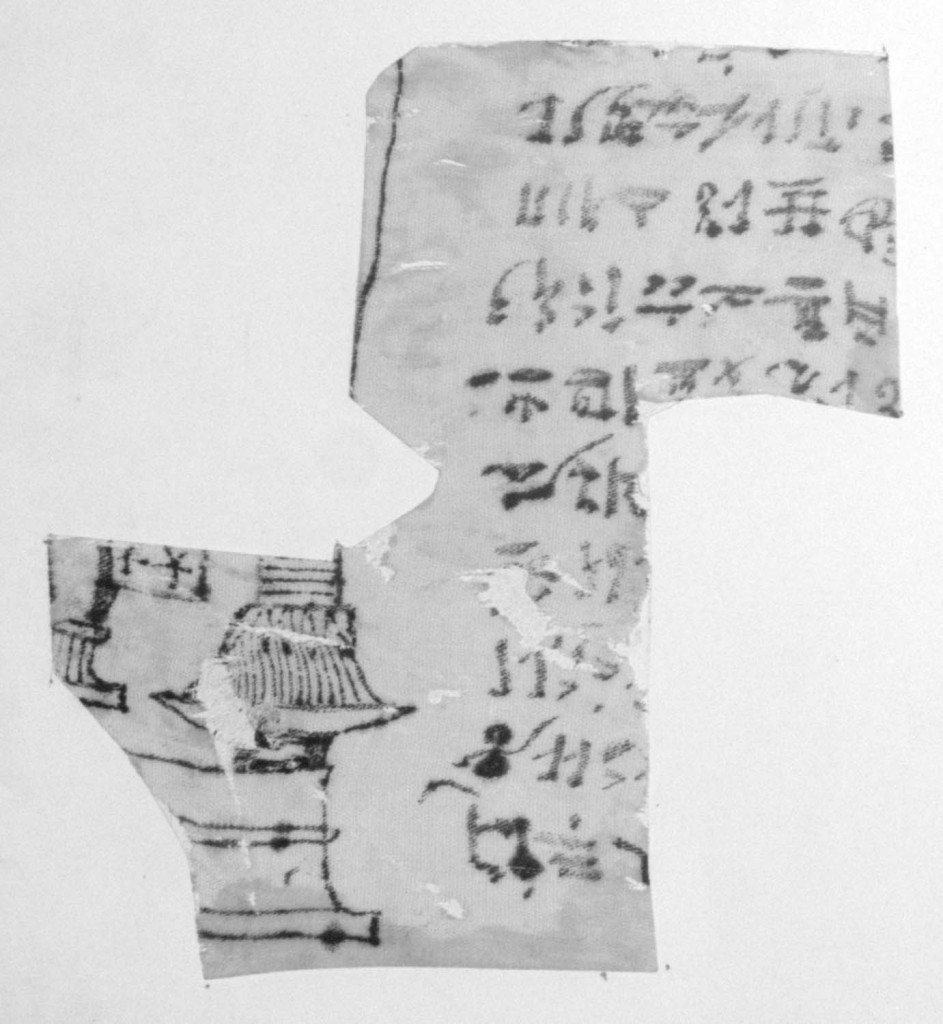
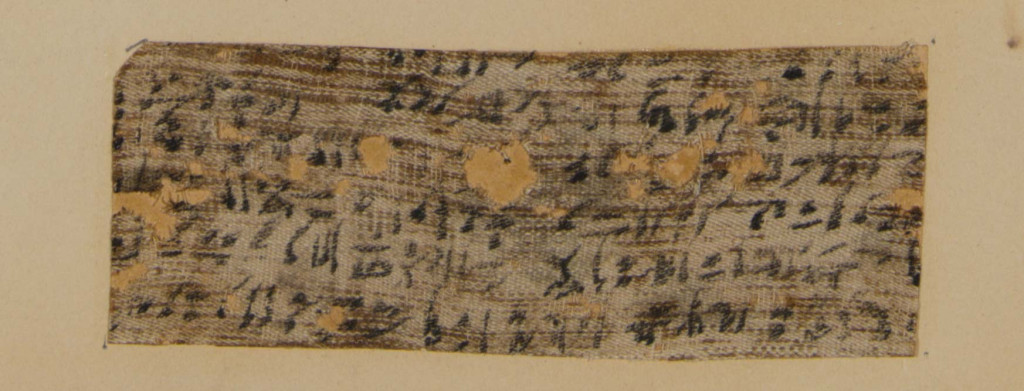
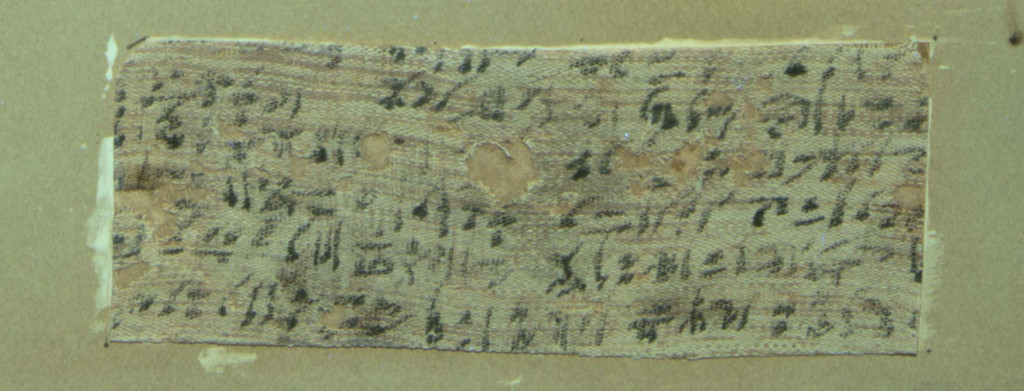
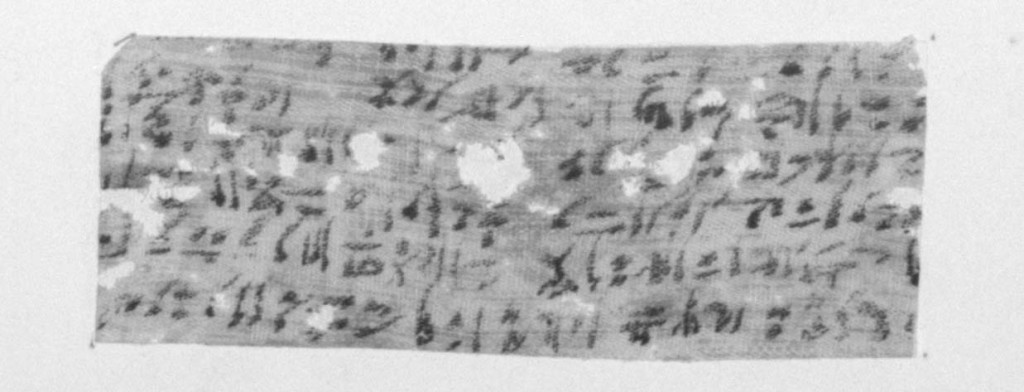
This is the bottom left fragment containing Hieratic script, however it is oriented upside down. It measures approximately 13 x 12 cm. There isn’t an owner’s name preserved so we’re unsure if it belongs with any other fragments in this collection. Images contain a shrine column, sections of Book of the Dead Spells 125 and 126, as well as traces of the vignette belonging to Book of the Dead Spell 125.
Normal Illumination
Raking Illumination
Ultraviolet Fluorescence
Infrared Radiation
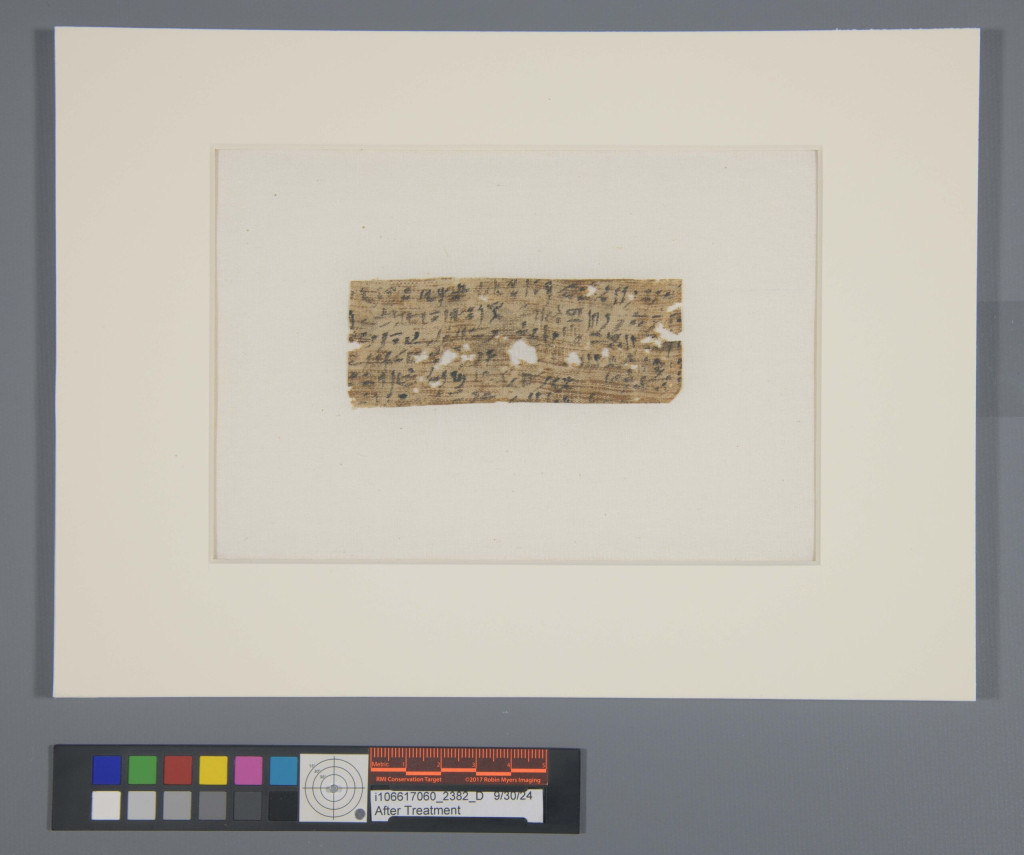
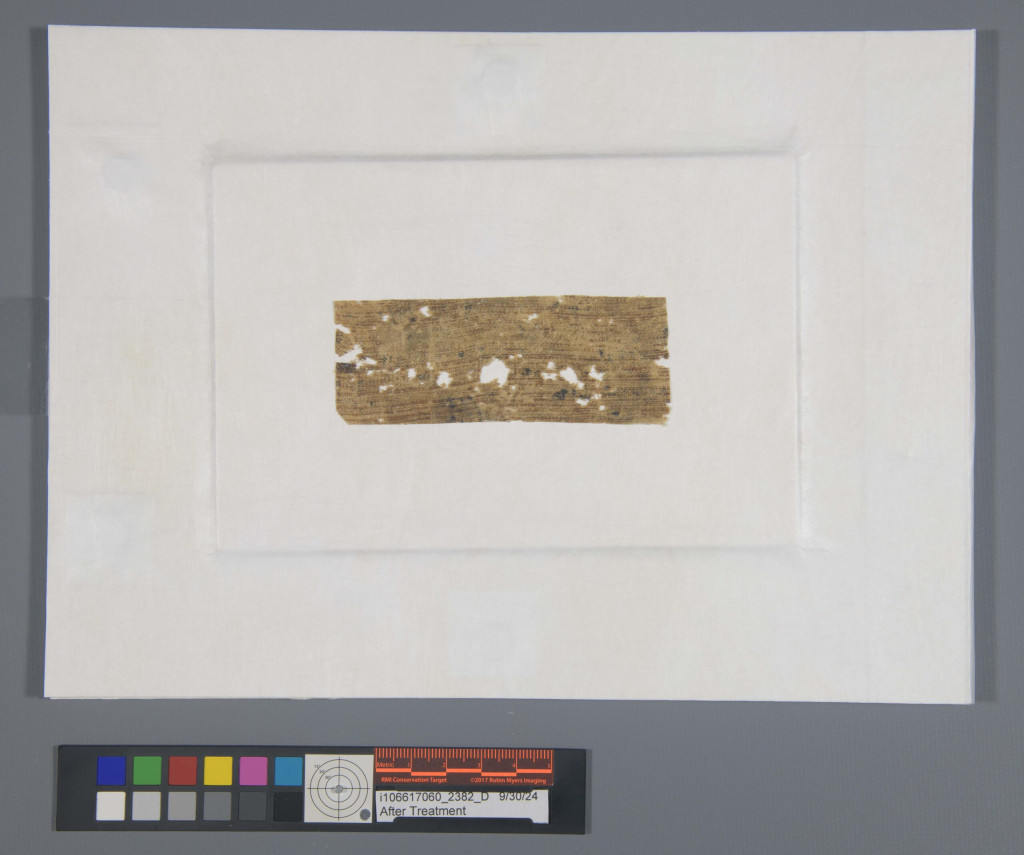
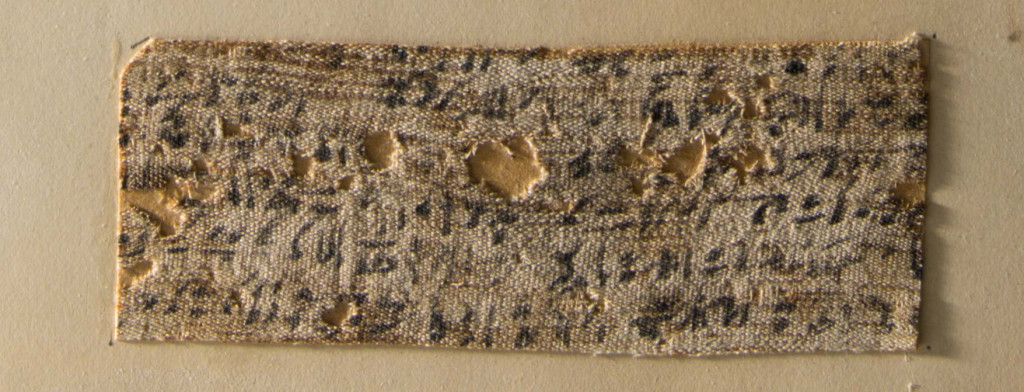
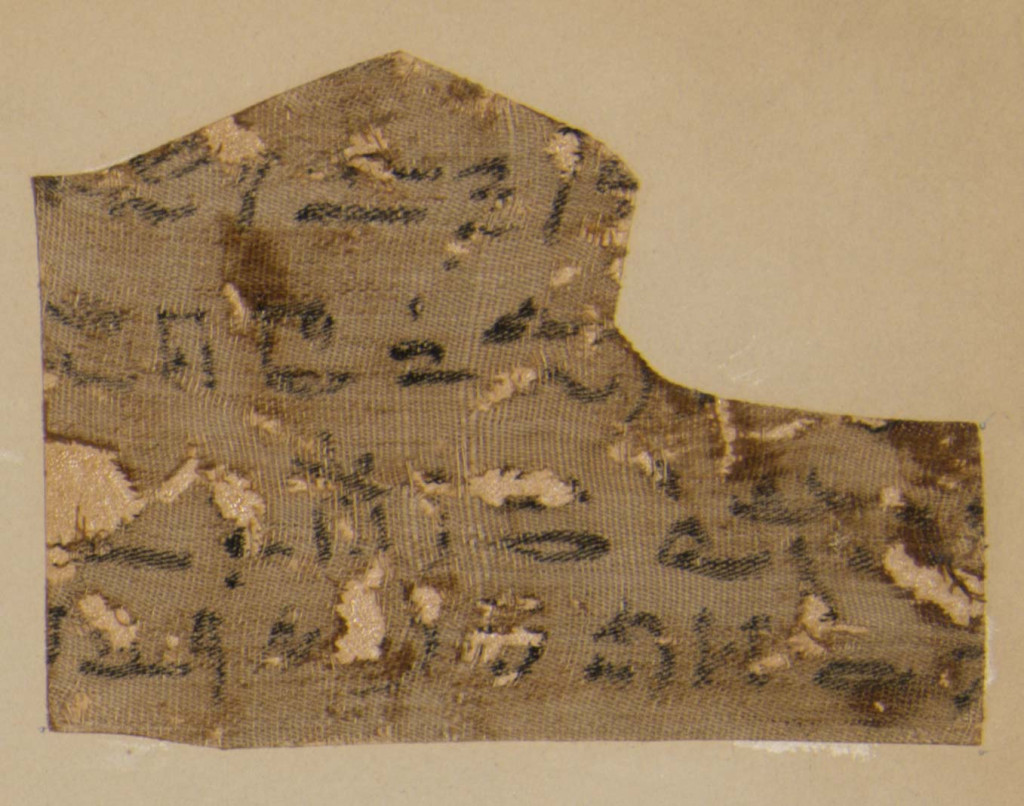
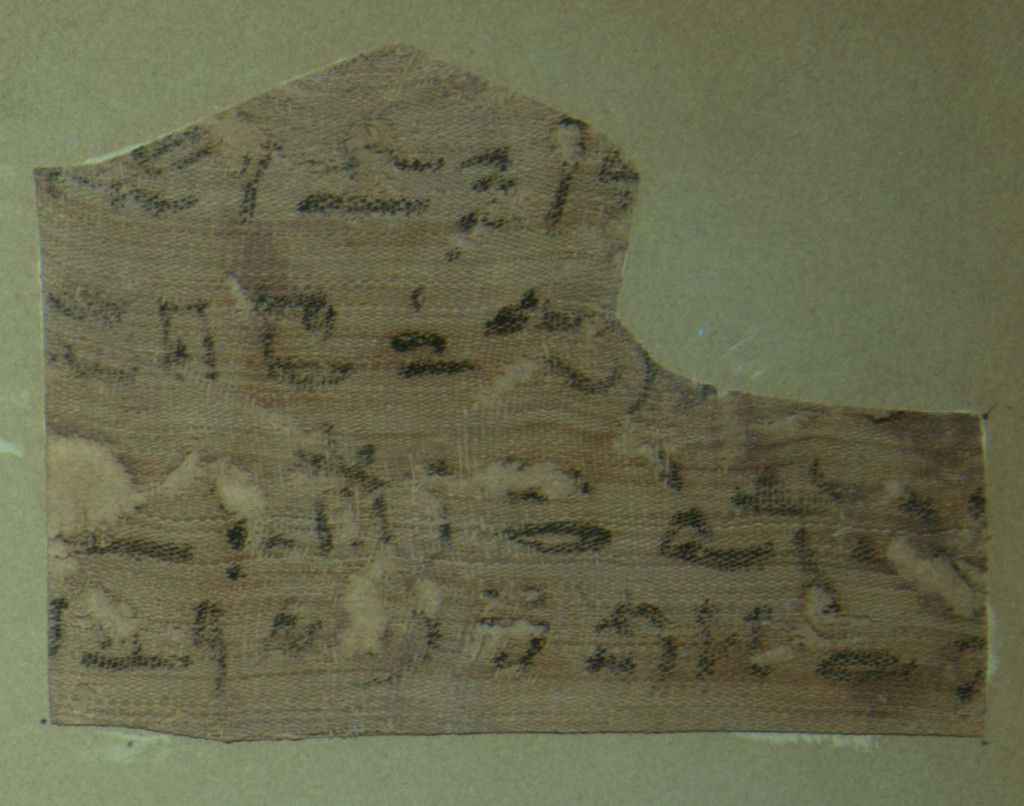
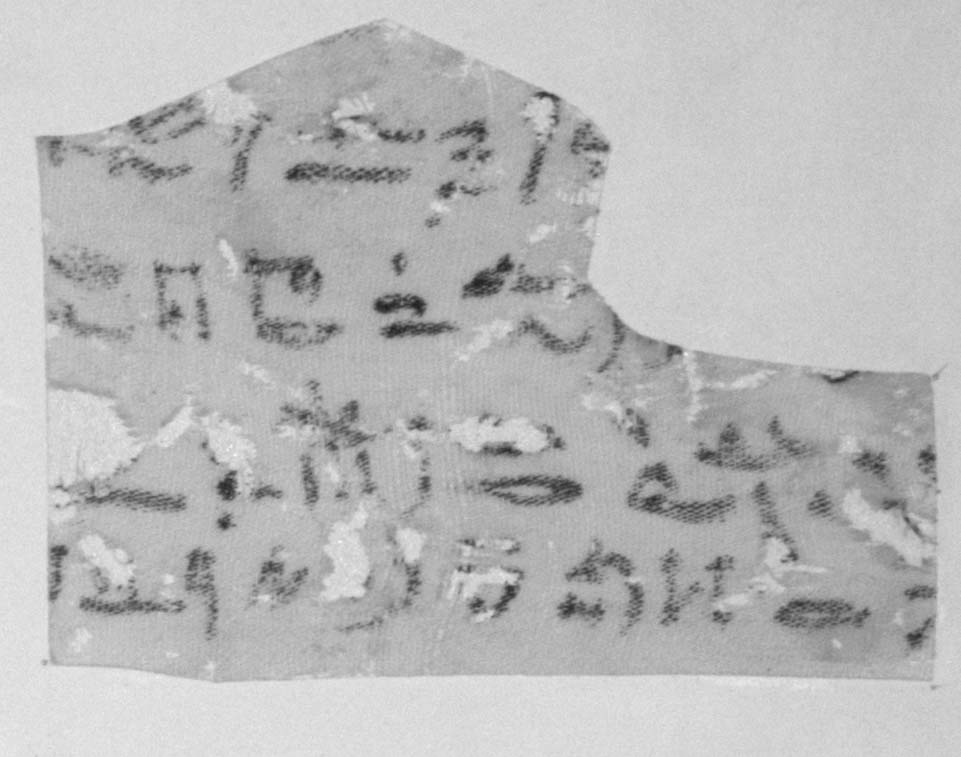
This is the upper right hieratic fragment with Hieratic script. It measures approximately 9 x 7 cm. There is no owner’s name preserved.
Normal Illumination
Raking Illumination
Ultraviolet Fluorescence
Infrared Illumination
This is the bottom center hieratic fragment measuring 4 x 10 cm, also with no owner’s name preserved and oriented upside down.
Further Reading
Check out this essayfor Glencairn Museum News by Dr. Jennifer Houser Wegner to learn more about burial practices and in particular, funerary texts, such as the Book of the Dead.
To learn about how the fragments were treated in preparation for long-term storage, check out the third post of the four-part series: The Treatment
If you missed the earlier installment, you can jump to previous post using the links below (or even skip to the final post on storage):
For one week in July, 2024, the Preservation Lab busted out belt sanders and opened the elbow grease to host a workshop taught by Jeff Peachey, learning all about making, modifying and maintaining our own hand tools. Jeff, a book conservator and master tool maker, brought all kinds of fun machinery and exciting tools for us to learn from and use. From hacksaws to pencil sharpeners, Jeff’s tool collection is inspiring, and we all left the week with some amazing new additions to our bench.
A set of raw materials each participant received at the beginning of the week to shape into their own personal new tool set! Credit: Jeff Peachey
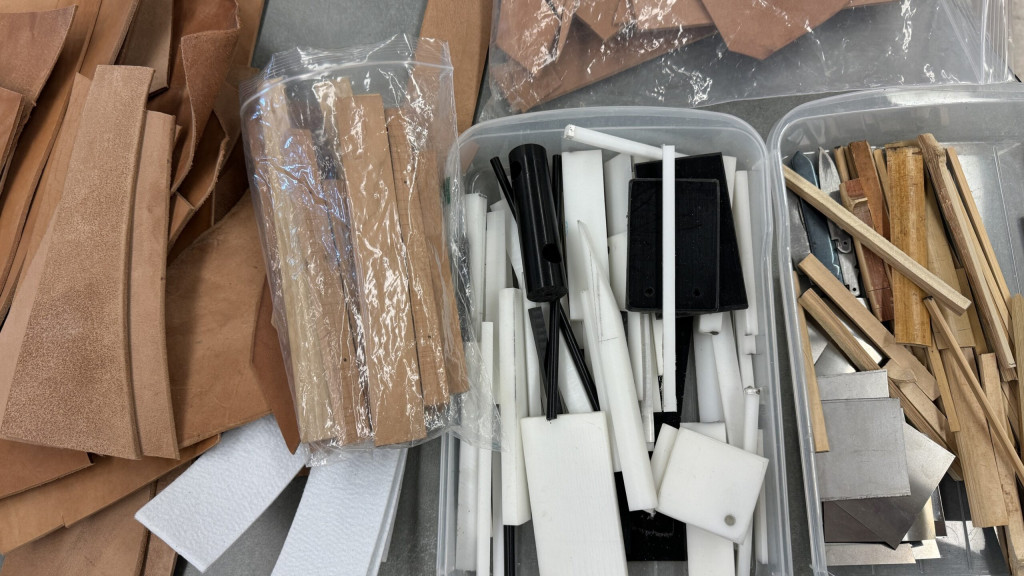
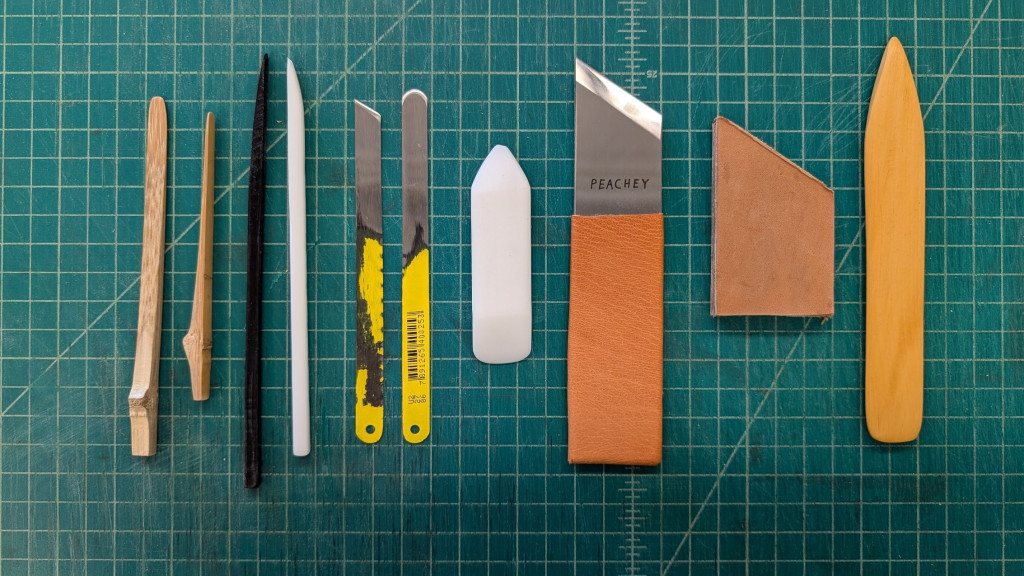
Extra scraps of horse butt, cherry, pear and box wood, Delrin, and bamboo: materials we used and experimented with during our workshop. Credit: Jessica Ebert
Delrin
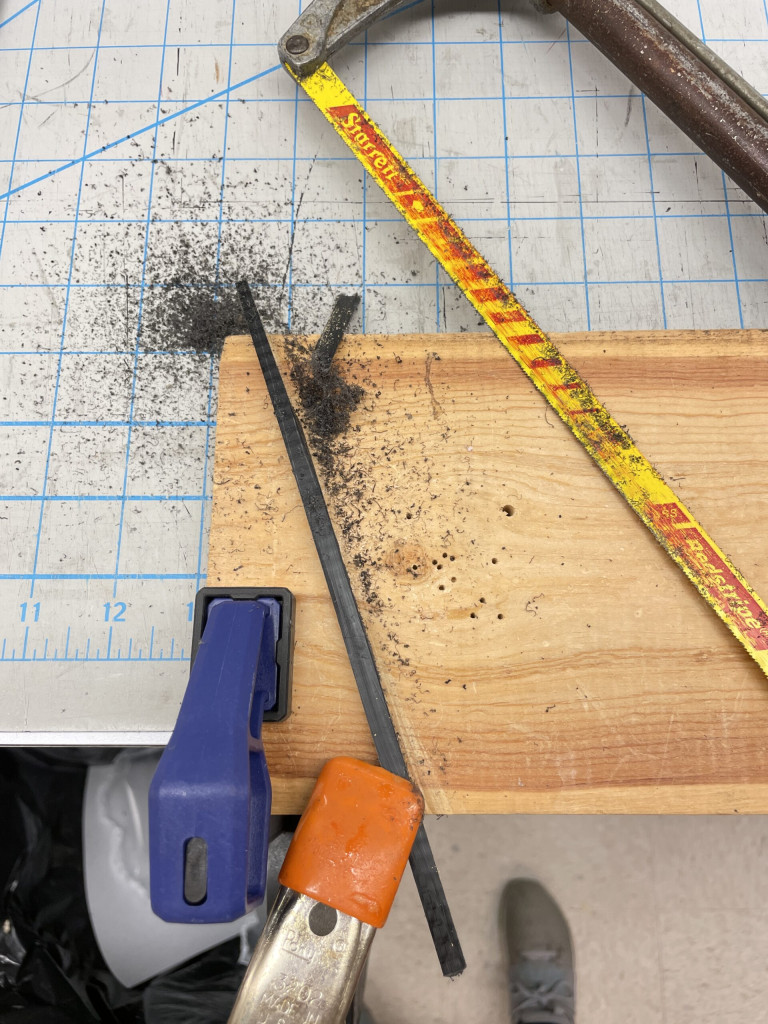
We started the week off working with Delrin. Delrin, an acetal homopolymer plastic that appears similar to Teflon, was easy to shape with saws, files, scrapers and silicon carbide sandpapers. We burnished with sanding pads and polishing paper.
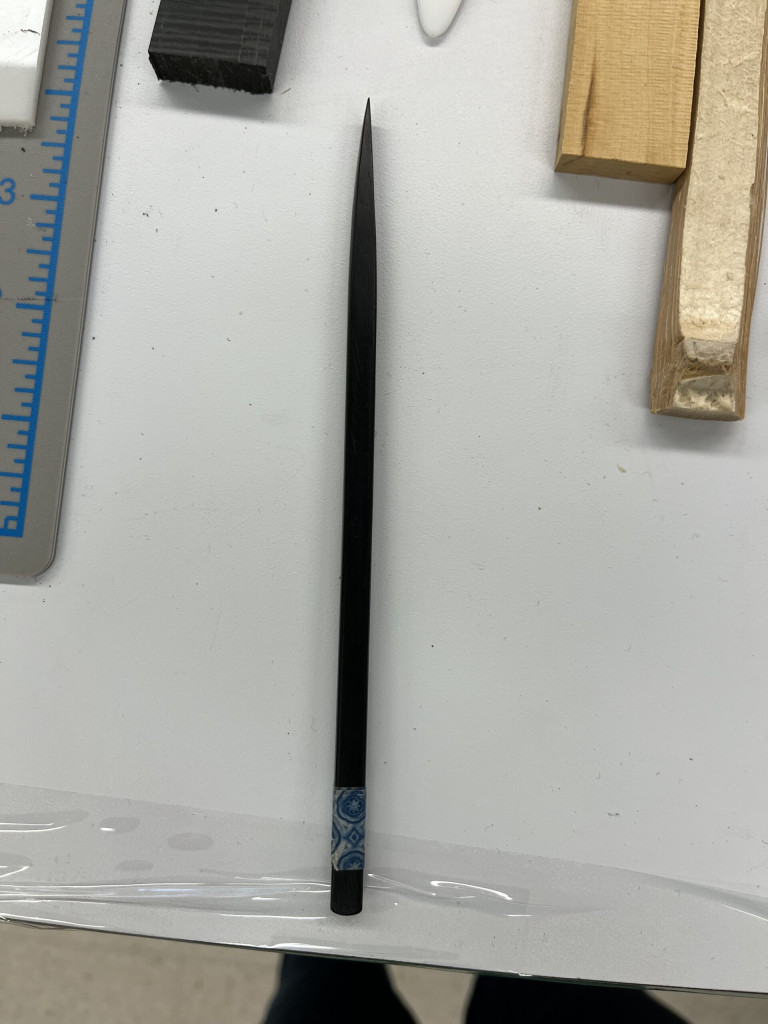
We started off with Delrin rods that we shaped into delicate heras. Heras are thin tools with spatula-like ends that Jeff says are great for delicate prying, inserting small amounts of adhesive, and lifting tape to name a few of the uses for this handy little tool.
We made a rough cut of the shape we wanted with the bandsaw, then smoothed everything out by going through a sandpaper grit progression. Once we’d crafted these, many of us tried our hand at making versatile Delrin folders. With lots of filing and sanding, this malleable Delrin was easy to manipulate into a variety of tool shapes, and no two tools were exactly alike.
A Delrin hera created by Holly. Credit: Holly Prochaska
Ashleigh uses a saw to shape her Delrin. Credit: Ashleigh Ferguson Schieszer
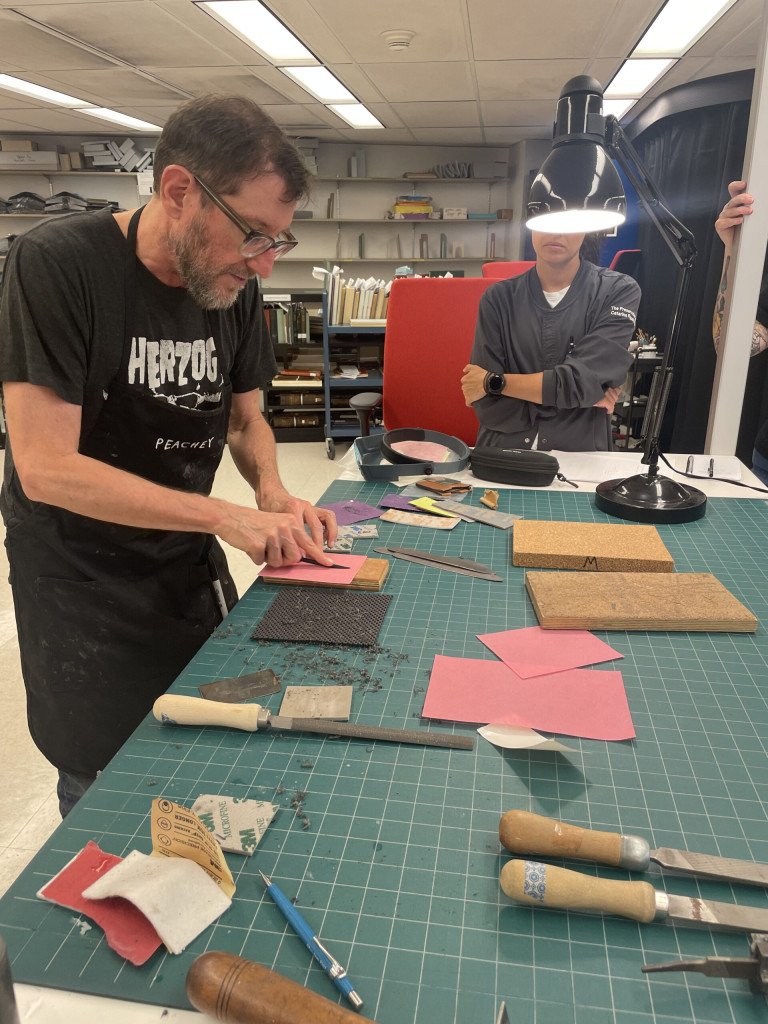
Jeff demonstrates how to work with Delrin. Credit: Ashleigh Ferguson Schieszer
Knives
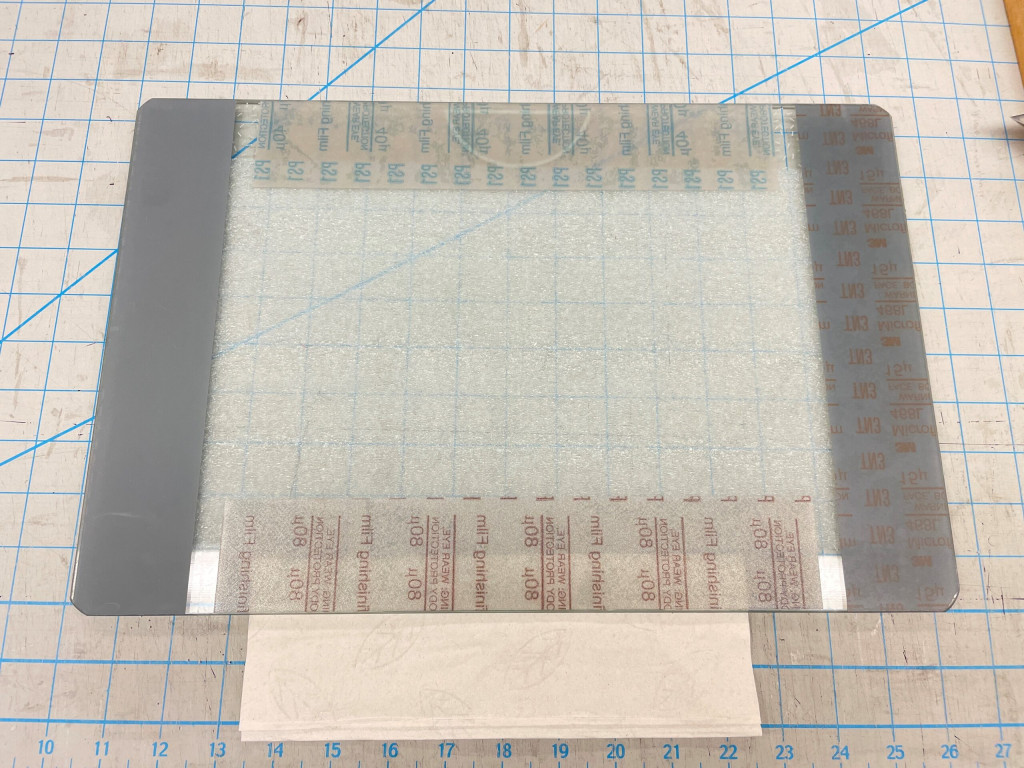
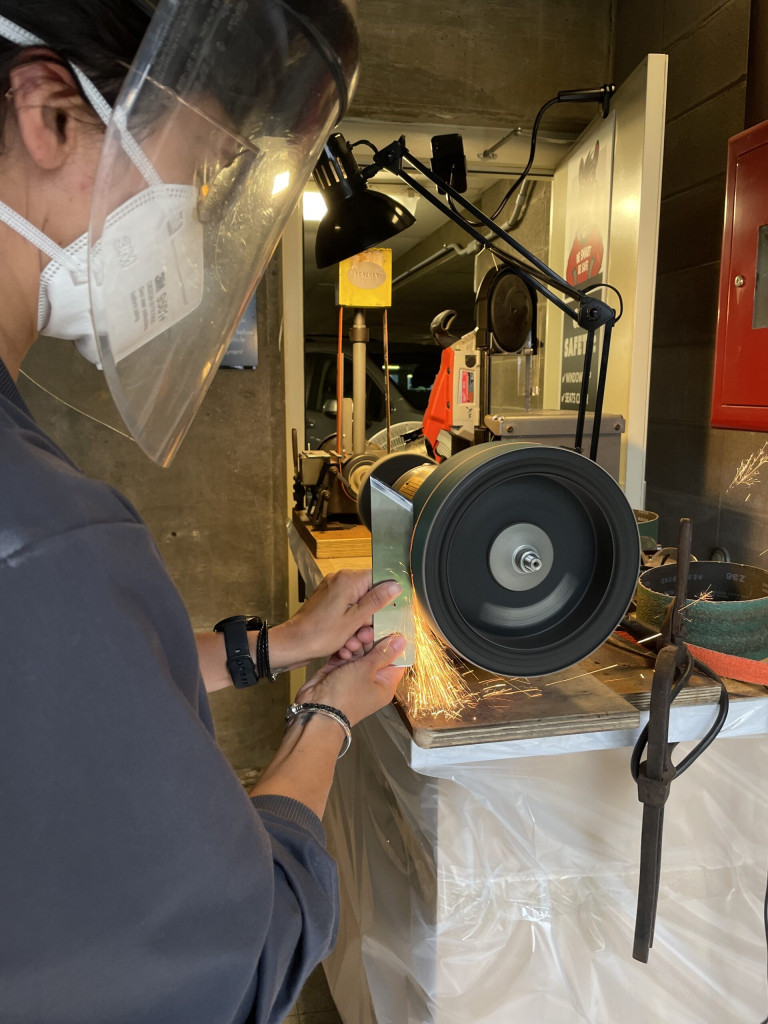
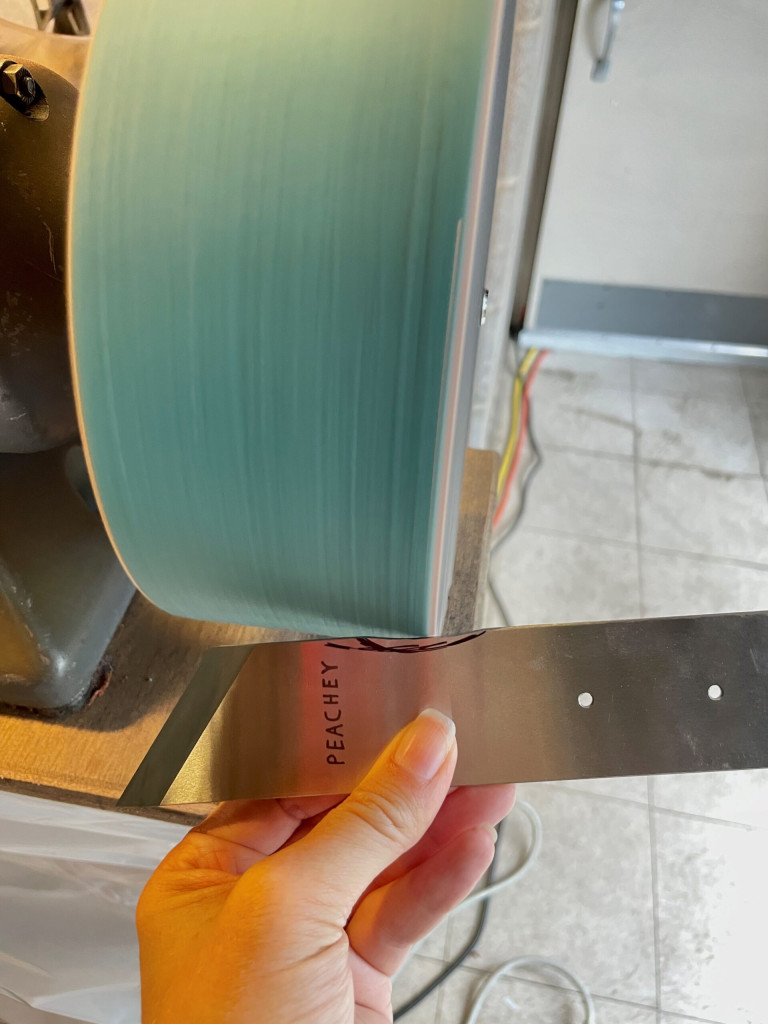
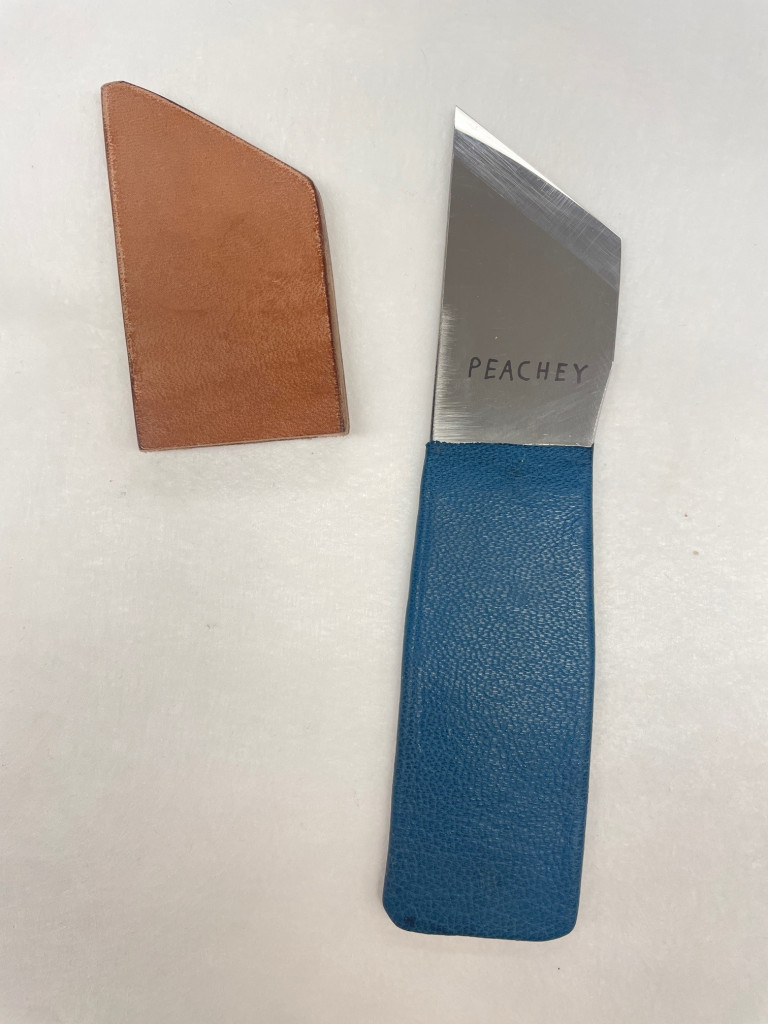
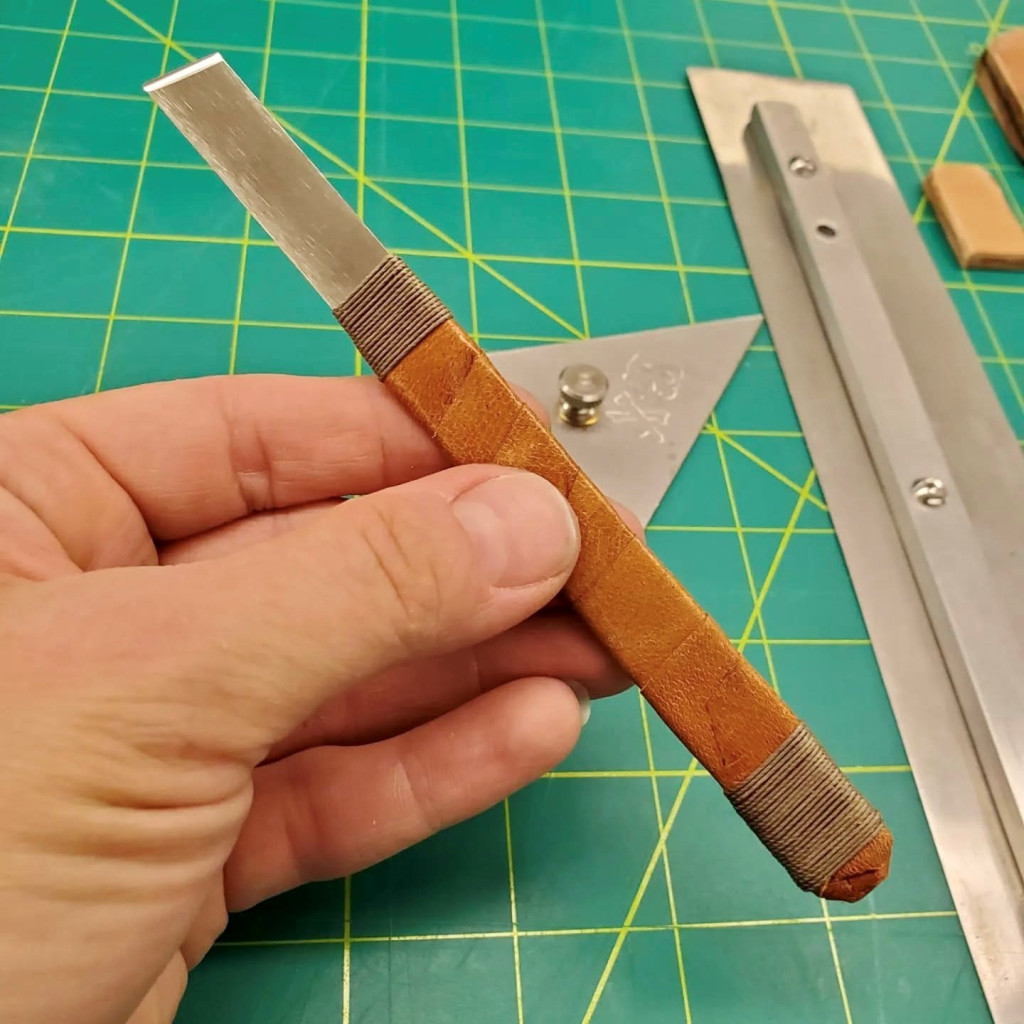
Our second and third days with Jeff were all about M2 steel knifes, both sharpening them and making them. We learned all about using Jeff’s sharpening system and honed down our own Peachey paring knife. We also made two lifting knives out of Starrett 32T hacksaw blades by grinding the blades down on a belt sander and then taking them through the sharpening system with microfinishing films to achieve a sharp edge.
A progression of 3M Microfinishing Films adhered to a glass plate for sharpening. Credit: Ashleigh Ferguson Schieszer
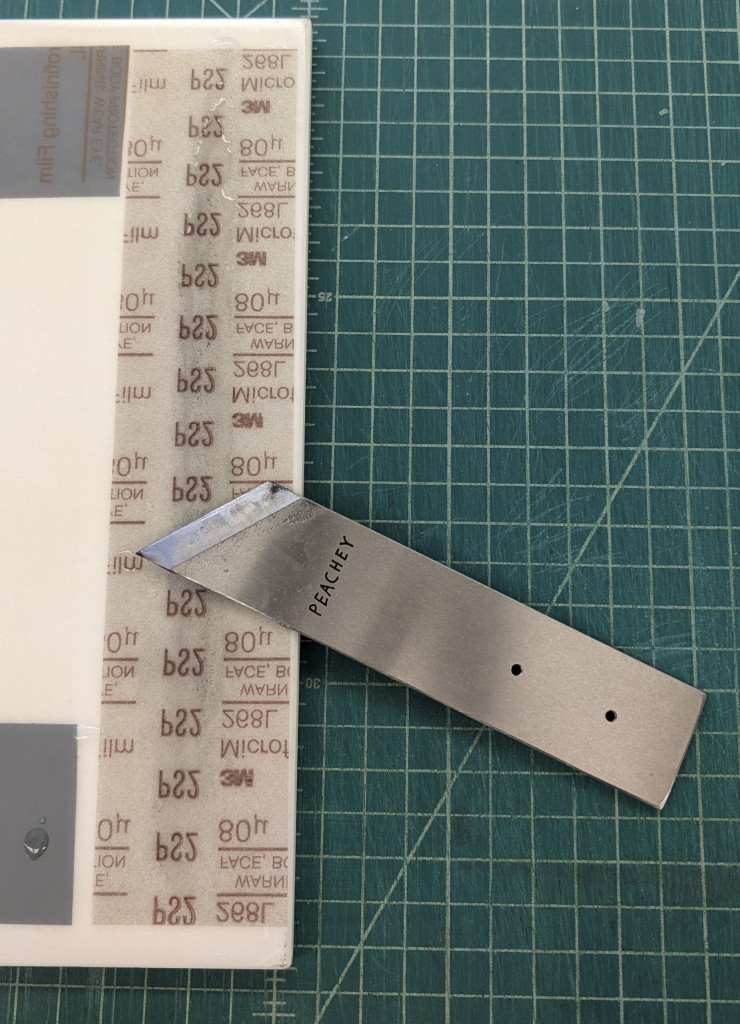
A Peachey knife next to a sharpening system on marble. Credit: Holly Prochaska
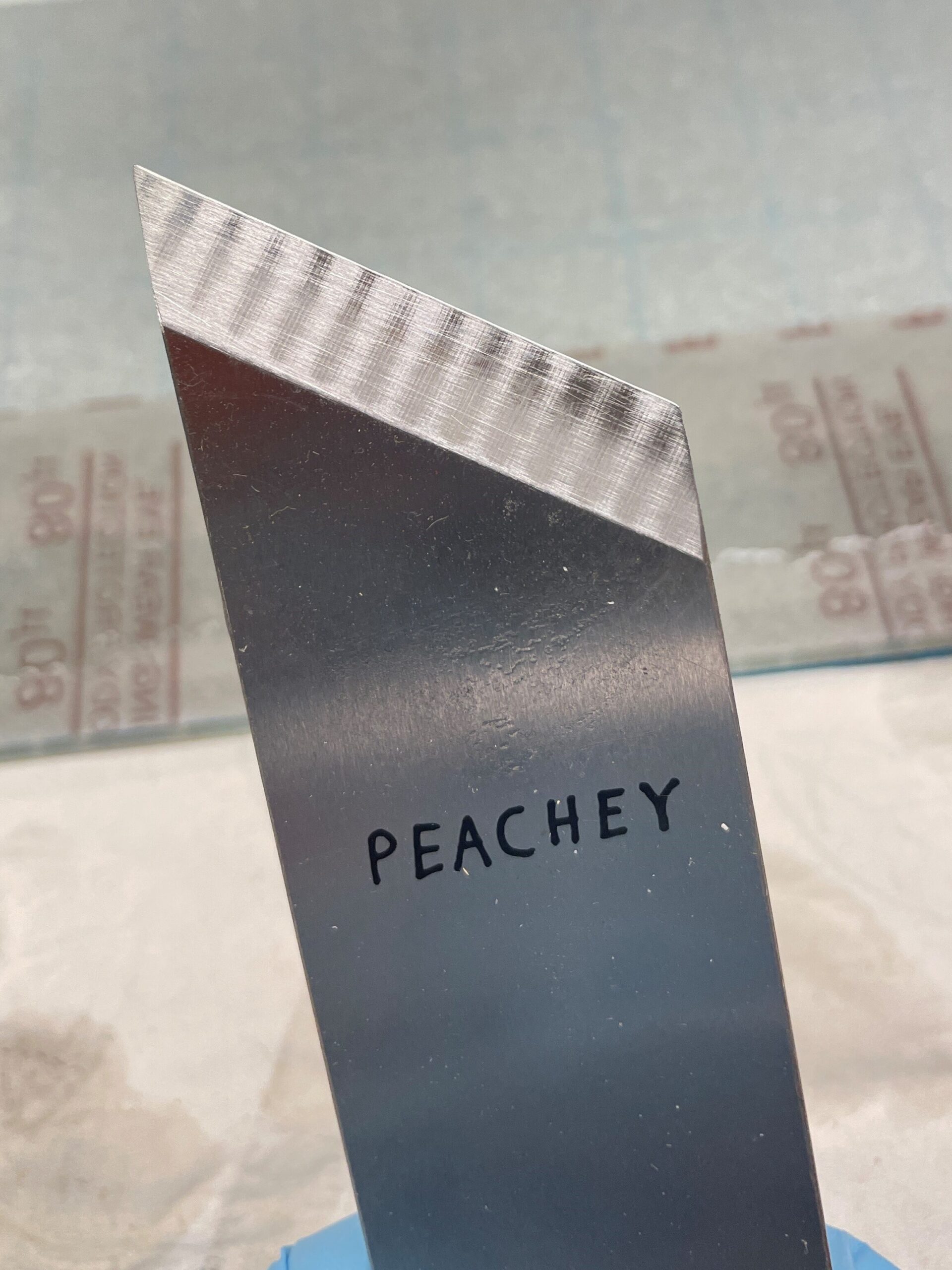
Sharpening knives turned out to be a complex process – a burr must be formed at each grit gradient before moving on to the finer grind, and if your hand position is off this could take some time. Furthermore, the wrong hand position could yield a bevel angle too big or too small on the plane of the knife. We aimed for an ideal bevel angle between 11 and 13 degrees.
Specular light shows a raw bevel angle during sharpening, before it has been ground smooth on the first grit progression. Credit: Ashleigh Ferguson Schieszer
Additional Knife Features
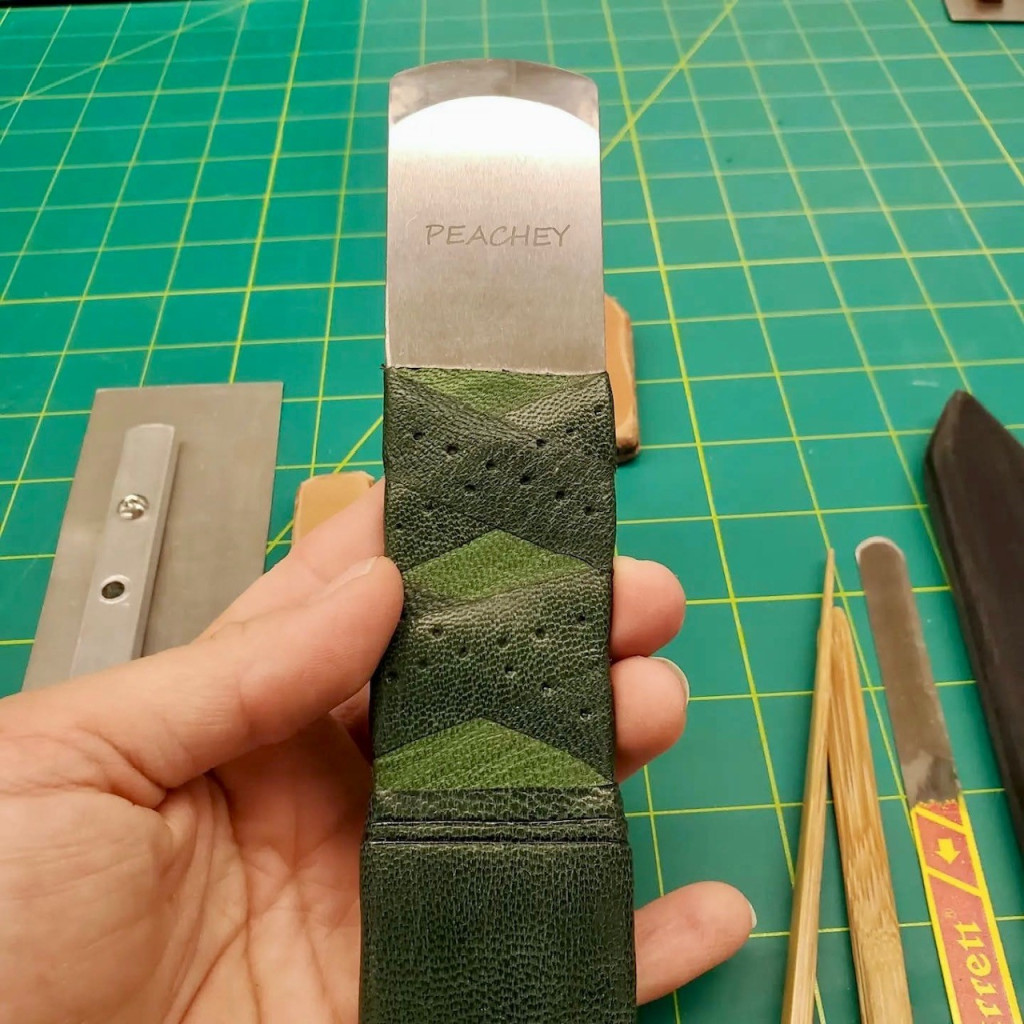
Some people chose to add grooves into the sides of their paring knives for a more comfortable grip; some of us chose to wrap our knife handles in leather and make horse butt sheaths for them. Matt was the bravest of all and mounted a custom carved wooden handle to his left-handed paring knife.
Catarina finishes a groove on the belt sander to make it more comfortable to hold. Credit: Ashleigh Ferguson SchieszerAshleigh begins her groove. Credit: Ashleigh Ferguson SchieszerMatt’s paring knife is pictured with a wooden handle and leather sheath. Credit: Matt McCoyAshleigh’s German-style paring knife with a leather covered handle. Credit: Ashleigh Ferguson SchieszerKathy Lechuga’s completed hack saw lifting knife. Credit: Signature ConservationKathy Lechuga’s rounded French-style paring knife with a leather covered handle. Credit: Signature Conservation
Grained Book Cloth
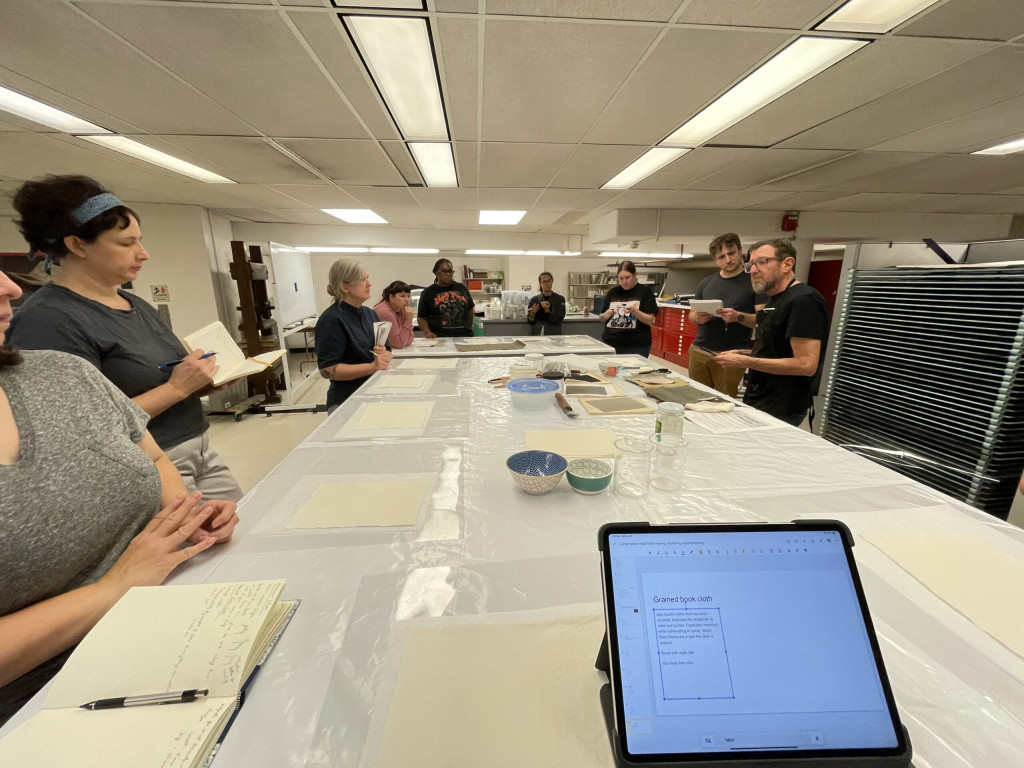
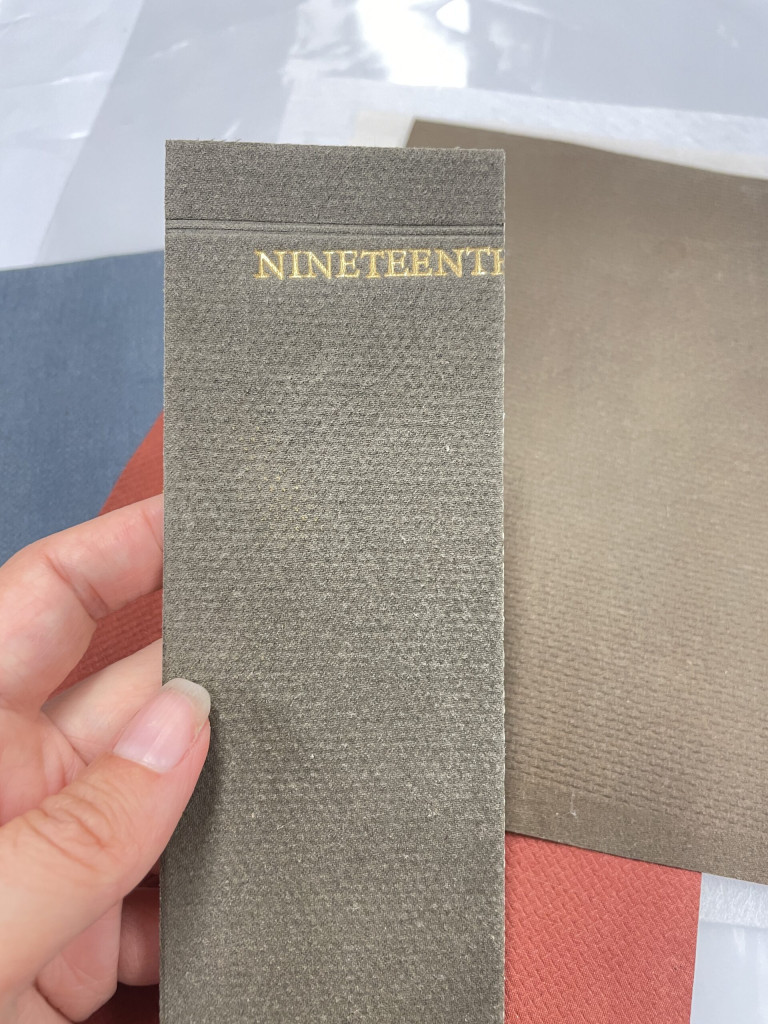
We also went over creating 19th century grained book cloth on our third day. Through toning, glazing, then pressing with a die that has your desired pattern, it’s possible to create book cloth that mimics the textures of 19th century book cloth. After going through the time-consuming process, the idea of making up large batches at one time became appealing.
Jeff demos coating a cotton muslin with acrylics and paste, pressing the coated cloth with screens to add a grain, then finishing with an egg glare. Credit: Ashleigh Ferguson Schieszer
Jeff’s samples he made ahead of the workshop
Wood and Bamboo
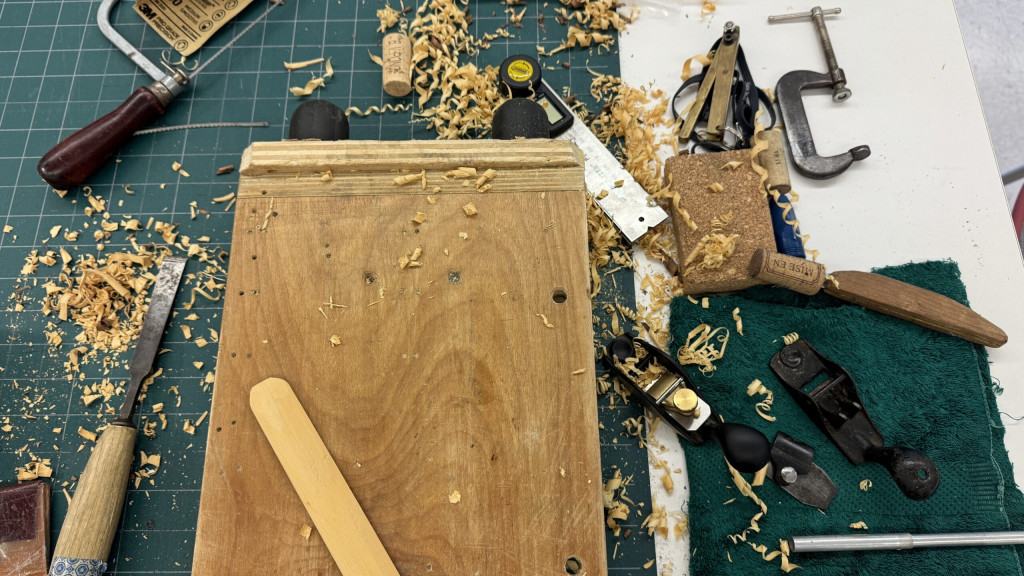
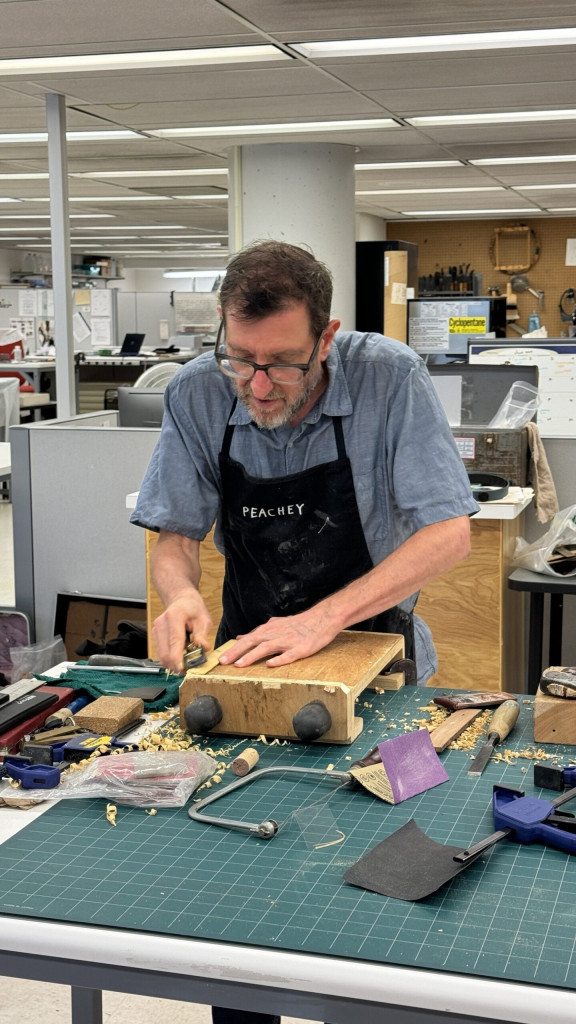
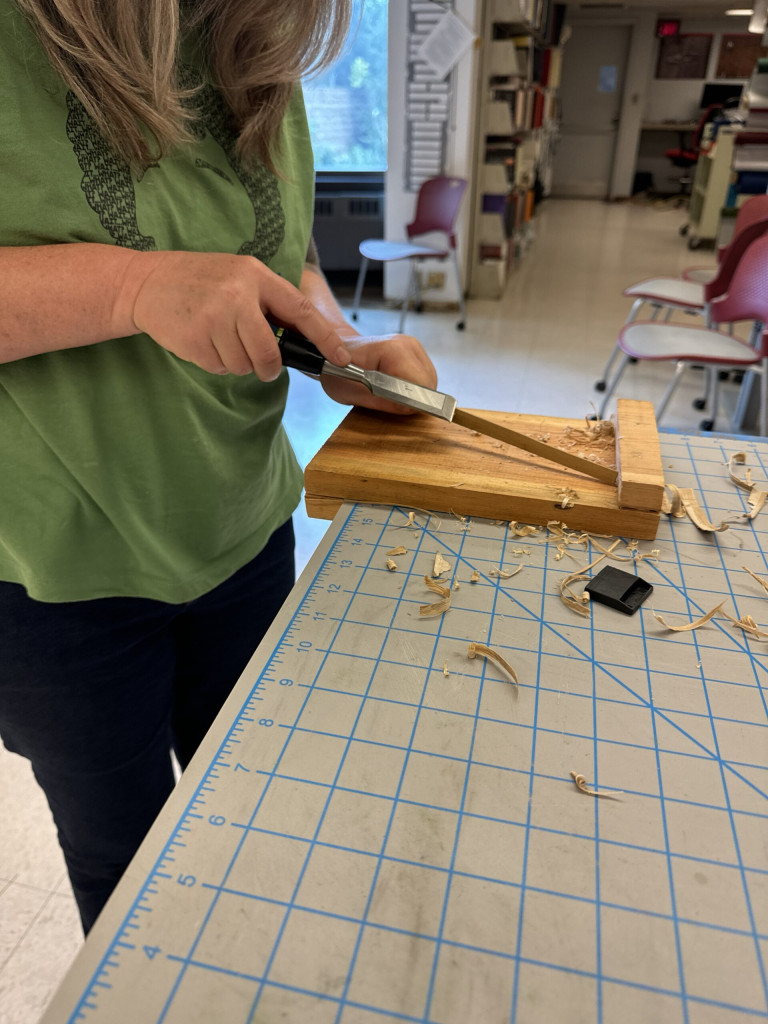
On our fourth day we learned all about wood and bamboo carving. Using a chisel, wood plane or hatchet, we created the crude shape we wanted our wooden tools to take. Then we got to work sanding until the wood was smooth, and created a more precise shape. A final finish with nose grease or wax was optional.
Jeff’s workbench after his wood carving demo. Credit: Jessica Ebert
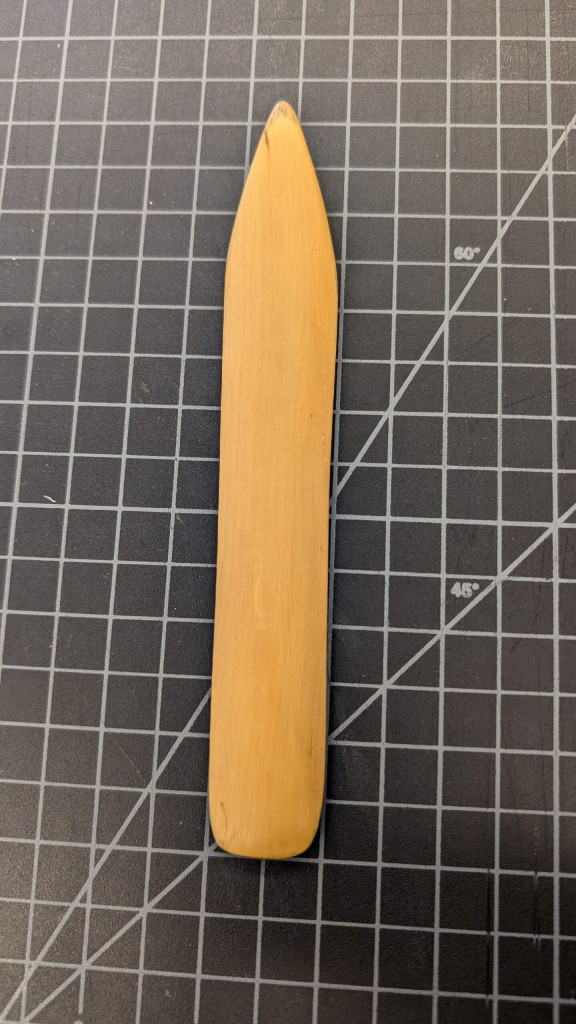
Bamboo is great for creating thin, flexible tools. With our pieces of wood most of us created folders, but a few decided to make wooden handles for their knives or straight edges. Personally, my favorite tool I created the whole week was my wooden folder I made, though it was probably the hardest to create. I had to shape it using a small hatchet, then sand it for quite some time before it took on the shape that I wanted.
Jeff demonstrating how to carve our piece of wood using his proprietary bench hook. Credit: Jessica Ebert
Holly chiseling a piece of bamboo using a generic bench hook. Credit: Jessica Ebert
My new wood folder. Credit: Nicole Browning
Stainless Steel
Our final day with Jeff was spent shaping stainless steel tools, which to me was the hardest material we worked with, as it took a lot of patience with the belt sander, and the metal was prone to heating up quickly and potentially burning our fingers. We created straight edges or 45 degree triangles, and even learned how to drill holes and attach small handles to these tools. We also had a thicker piece of stainless steel for creating a folder, which I found the most challenging of all. The stainless steel was harder to manipulate, understandably, and much less forgiving than the wood or Delrin.
Holly drilling holes in the stainless steel handle of her straight edge. Credit: Ashleigh Ferguson Schieszer
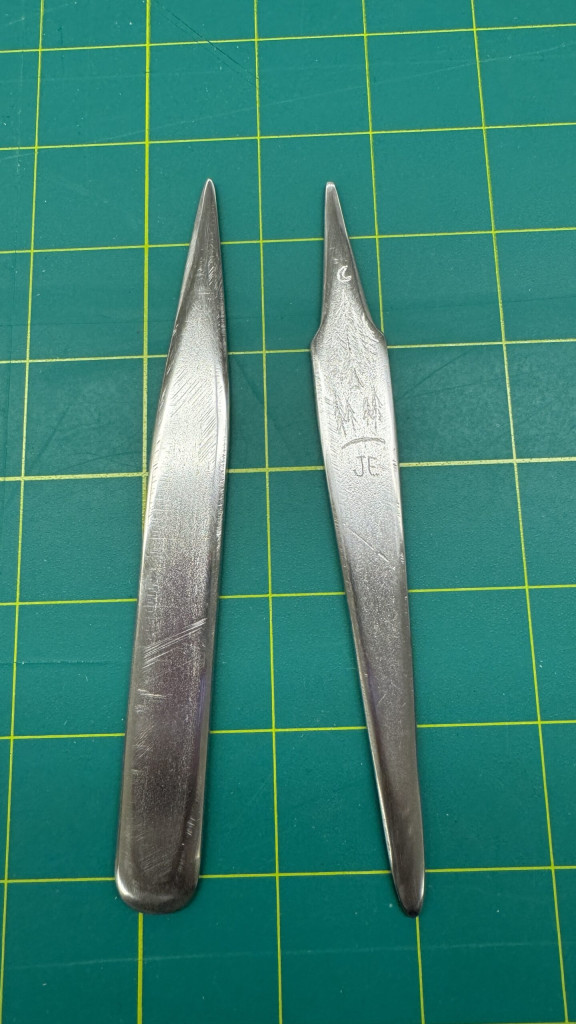
Two stainless steel folders made and engraved by Jessica. Credit: Jessica Ebert
We ended the week by testing the sharpness of our blades and doing a little show and tell of our favorite tools that we made. It was so amazing to see all the different tool shapes people were inspired to make based upon what they most used in their work.
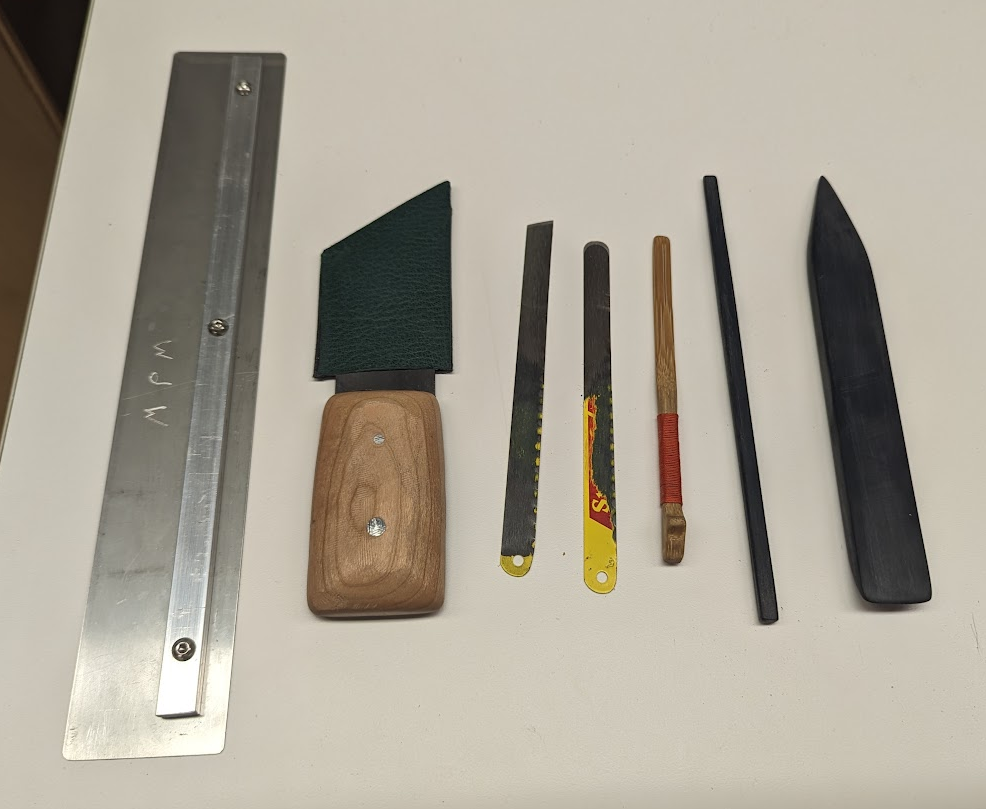
My assortment of tools I made at the workshop. From left to right: bamboo lifters, two Delrin Heras, two lifting knifes, a Delrin folder, a paring knife and its sheath, and a wooden folder. Credit: Nicole Browning
Learning from Jeff was such an amazing opportunity, and it was so eye-opening and world-expanding to learn that so many of these tools we use every day can be created from our own hands.
Jeff did a fabulous job tailoring his tool-making workshop to the the availability of machinery and other logistics of our facility. As a result, the actual tools made in our version of this workshop vary from other workshops Jeff has taught, empowering us to keep making tools with our space in the future. If you ever have the chance to take this workshop, we highly recommend it!
Be sure to check out this Instagram post by Jeff featuring all of us showing off our favorite hand tools we created!
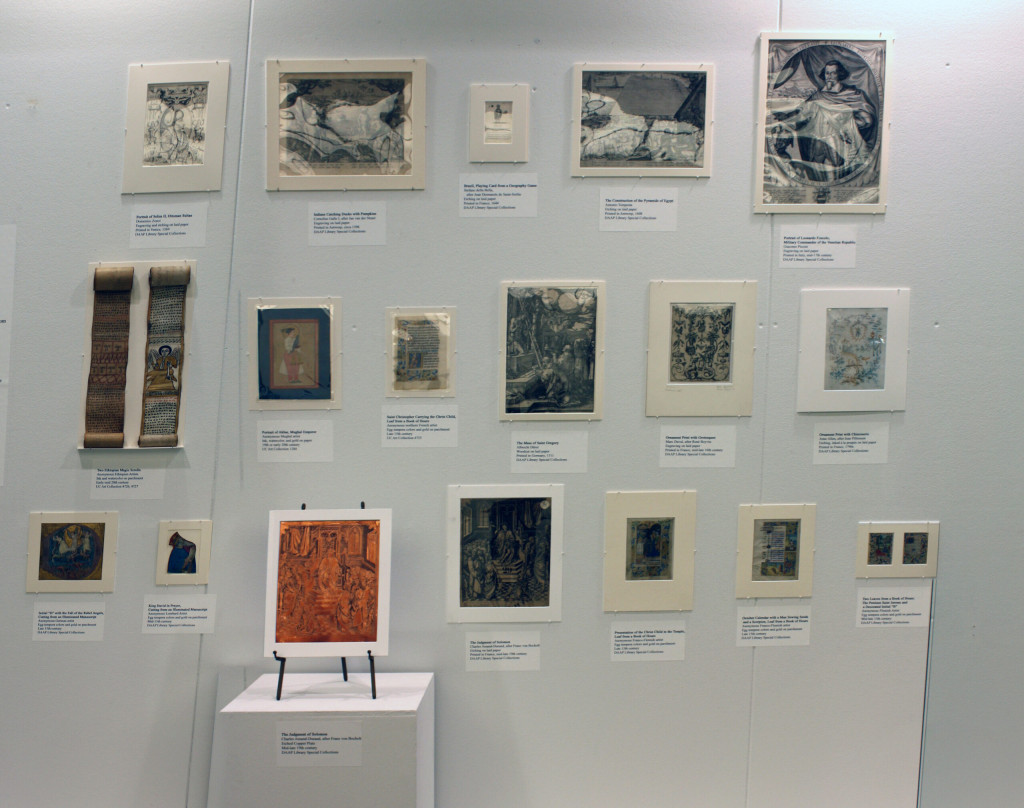
For the past six months, Jessica and Catarina have been working with the DAAP Library on housing their Teaching art collection, including prior acquisition and newly acquired items. This collection consists of different art prints on paper, print plates and manuscript parchment leaves in need of long-term housing. In addition to housing, this collection is used for teaching in a classroom setting and for exhibition.
Most of the collection only requires simple matting systems, but some require more intricate matting systems such as the copper plate along with its print, a project mentioned in a previous blog post entitled How many magnets is too many magnets!?.
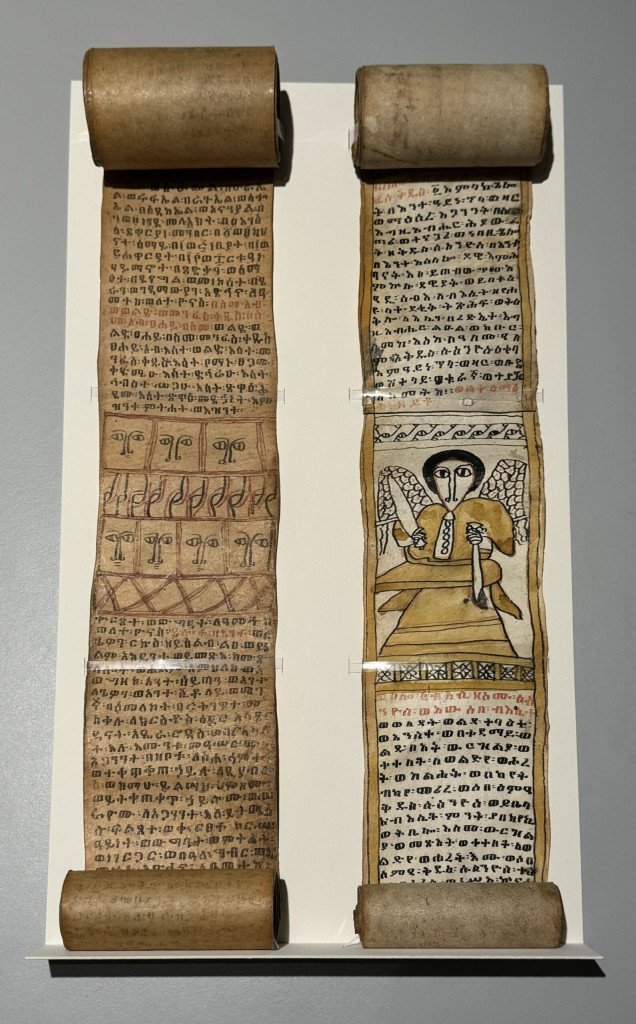
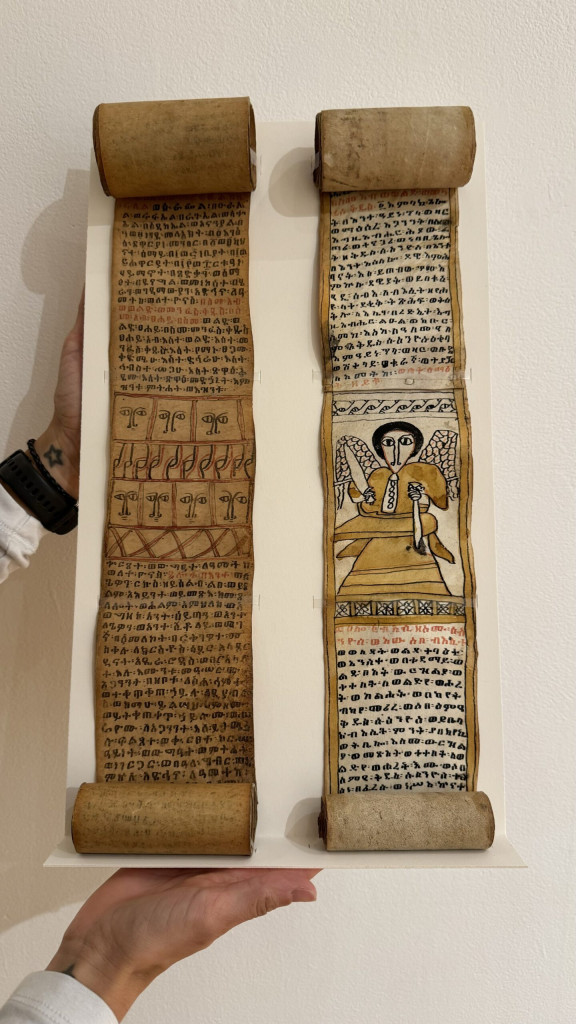
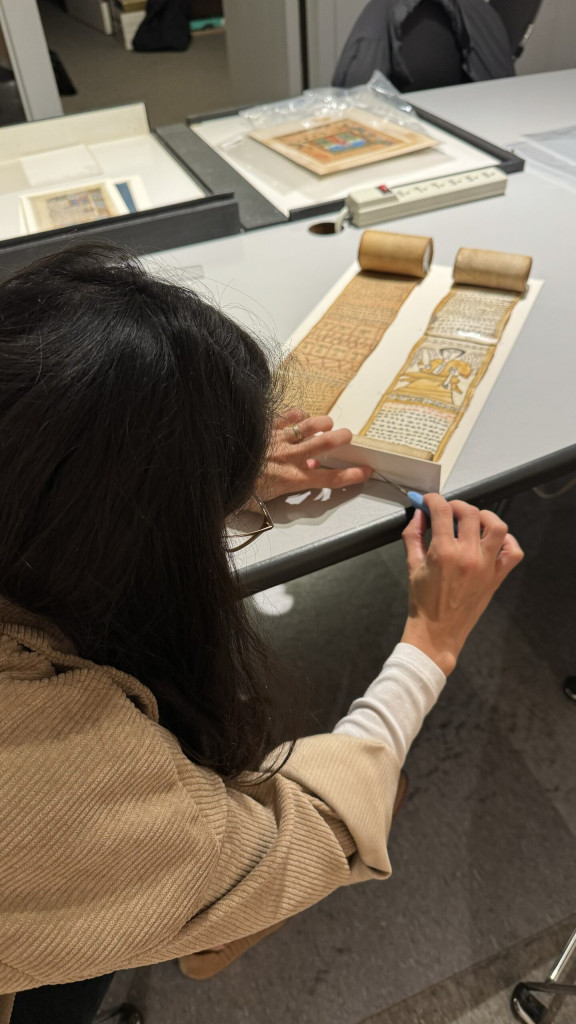
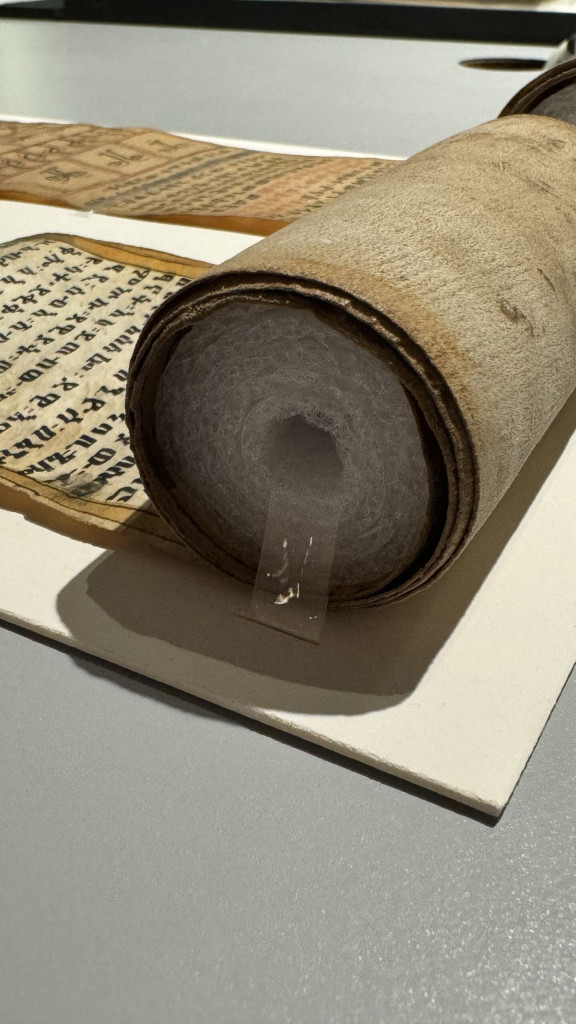
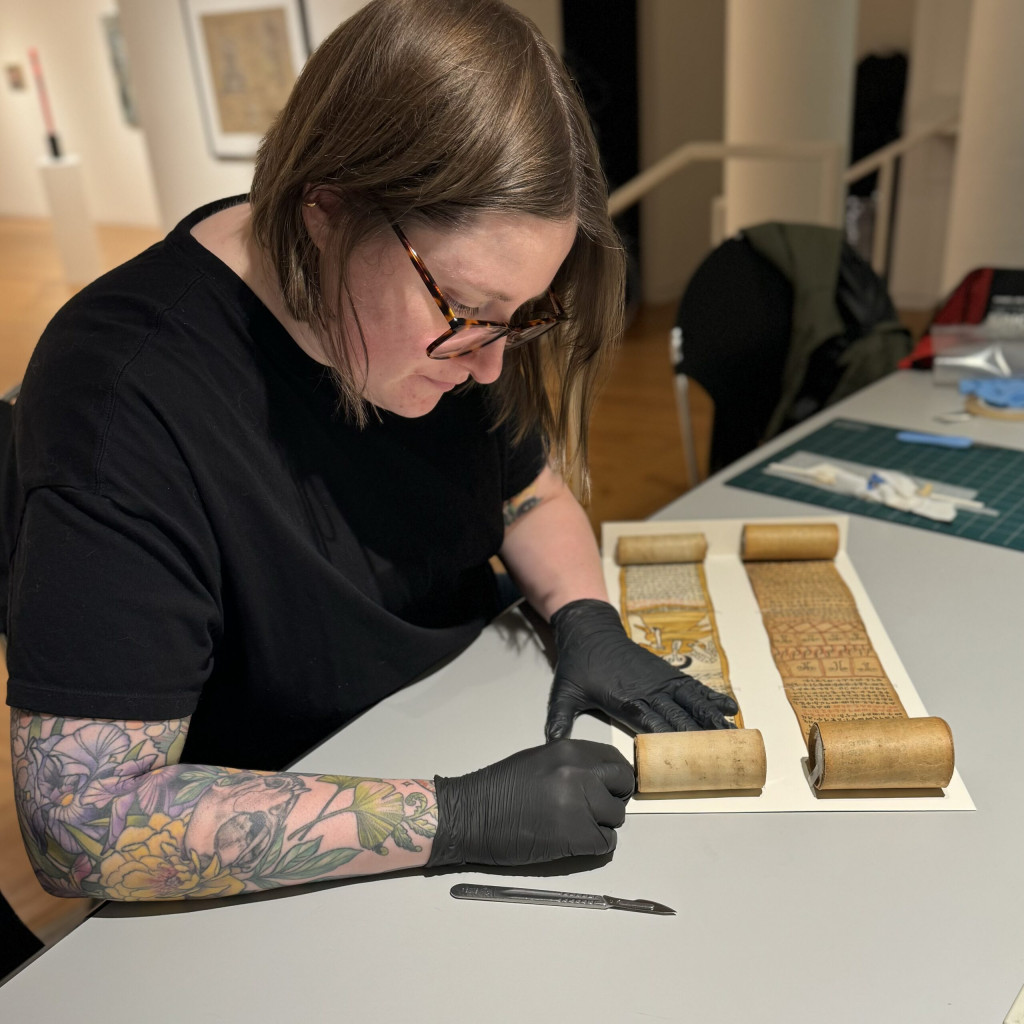
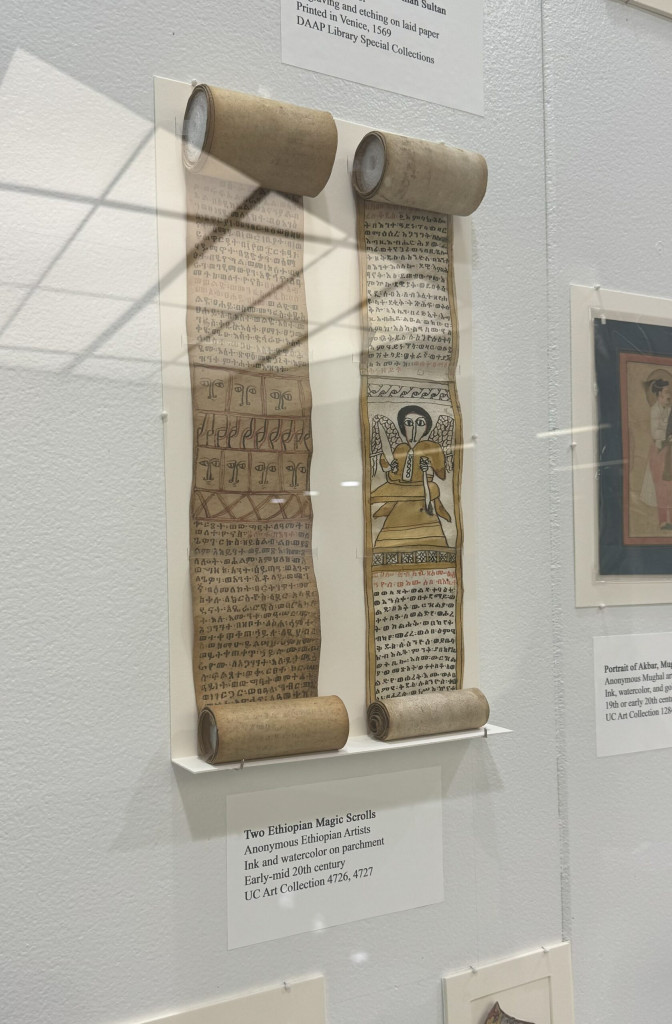
As some of the items of this collection were being prepared to go on exhibit, we had the opportunity to create mounts for other items, such as two parchment scrolls that were included in the exhibit. This was a fun project to work on, as it required us to create a support that would secure both scrolls, while providing an elegant solution for display.
To start, Jessica created a very rough small model with mat board, polyethylene strapping, and paper (as we always do with anything new in the lab, we do love model making!!). The model provided us the visual example that we needed to create the mount for the two scrolls.
Small rough model created by JessicaSmall rough model created by Jessica
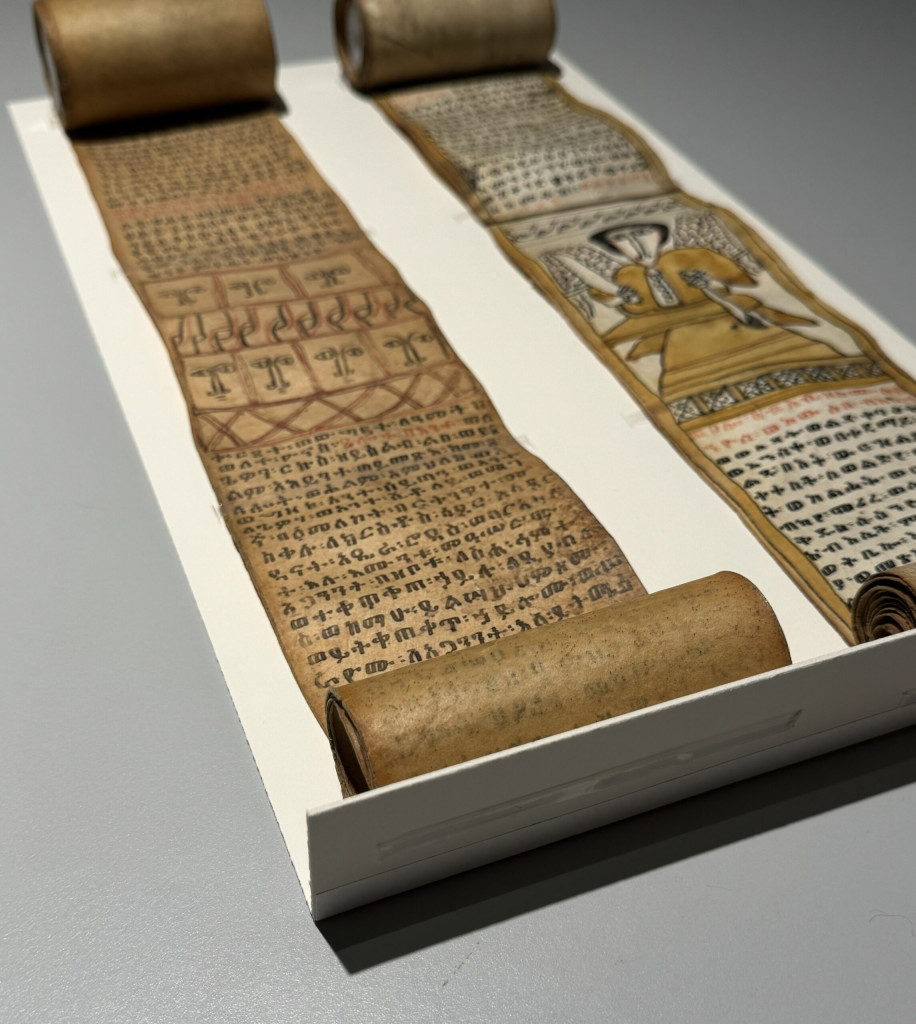
With the model in mind, we were able to engineer a good system that would provide support for the scrolls and could be used for display. The scrolls were supported with foam rolls on the inside for the rolled ends, and secured with polyethylene strapping that only touched the foam. The sections of the scrolls that were going to be displayed were also secured with polyethylene strapping that wrapped around the mat board support through slits in the board. At the bottom, the mat board extended outwards creating a small shelf to support the end of the scroll.
Scrolls mounted and ready for exhibition.Scrolls mounted and ready for exhibition.
A small “shelf” of mat board supports the bottom of the scrolls.
Catarina adjusting the strapping on the mount.
A small “shelf” of mat board supports the bottom of the scrolls.
The foam rolls support the inside of the scrolls and are secured with polyethylene strapping.
Jessica securing the foam roll that supports the scroll.
As a result of all the mounting and matting we did for the Teaching Art collection and for the scrolls, each item is currently on display at the DAAP Library entrance case:
Current display at the DAAP Library featuring the Teaching Art Collection.A close-up of the scroll mounted on exhibition.
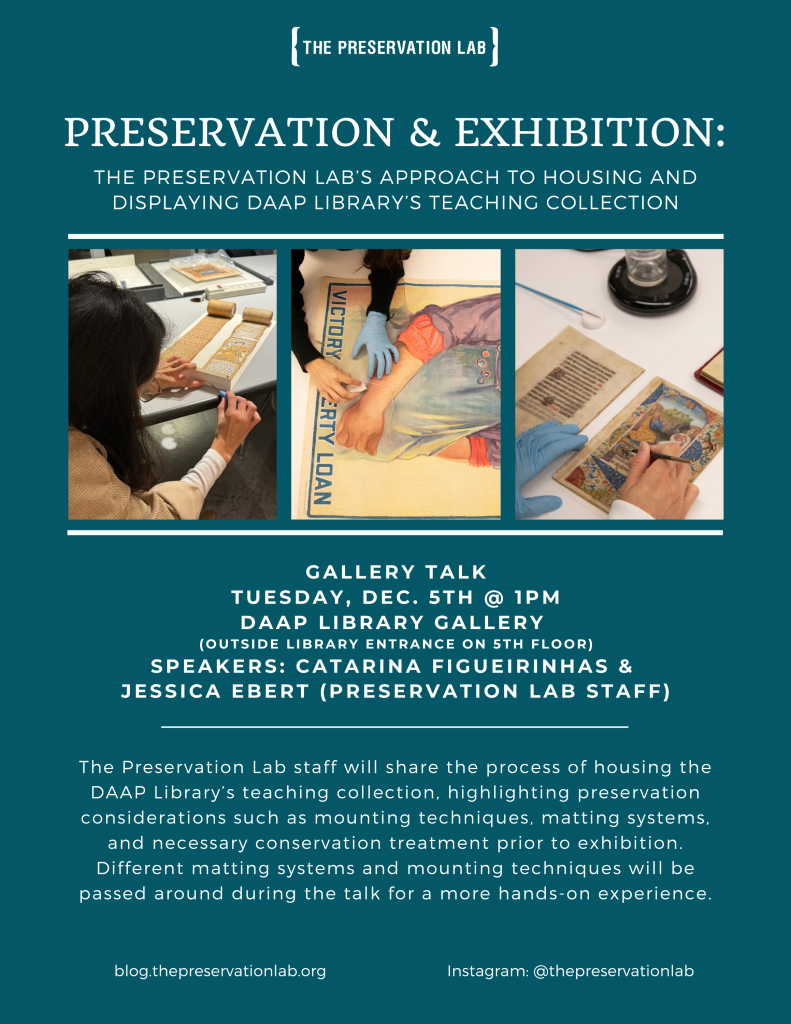
If you are interested in learning more about our preservation considerations for exhibition of this collection, Catarina and Jessica will be giving a short gallery talk on Tuesday, December 5th at 1pm, at the DAAP Library entrance on the 5th floor.
Recently Jessica and I started working on a series of special collection items from UC Libraries’ DAAP Library. These were recent acquisitions specifically bought to be used as a teaching collection within the DAAP Library. Most items are small prints and single manuscript leaves that need to be matted for exhibition and prepared for handling during class. We have been working on these in small batches since it is a much larger collection that keeps growing.
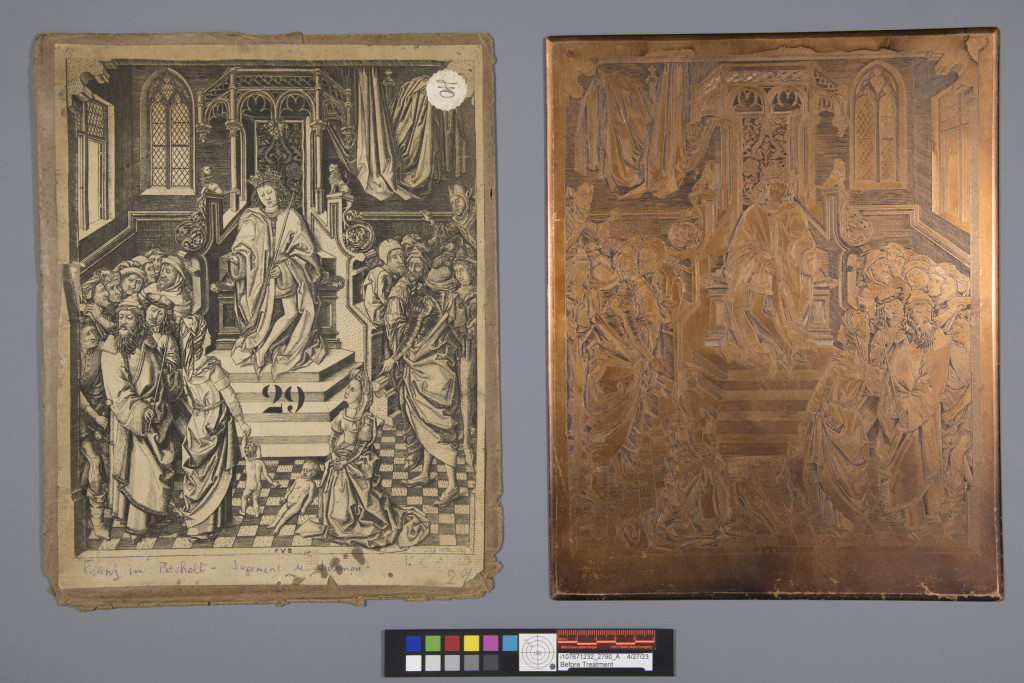
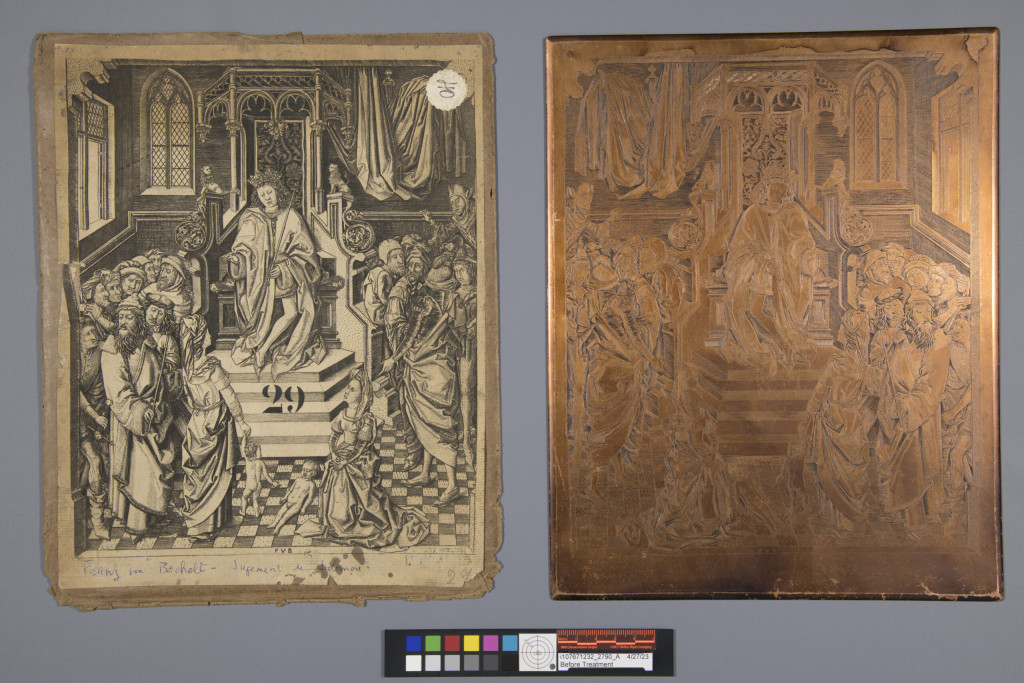
Most of the items we have received so far have been very straightforward matting projects, however we encountered one that was puzzling and fun to work on. We received this item: a proof print accompanied by its very heavy, copper engraving plate. The print was adhered to a paper brown envelope with no information and the copper plate was also unhoused.
Proof print (left) and engraving plate (right) before treatment and housing.
The curator of the collection wanted both items to be housed together and housed in a way that would allow students to touch the items, and also be able to use them for exhibits. We decided that both items would be matted individually, and then housed together in a thin corrugated clamshell box. The most challenging part would be to create a matting system that was strong enough to secure the very heavy copper plate and elegant enough to be used for exhibition.
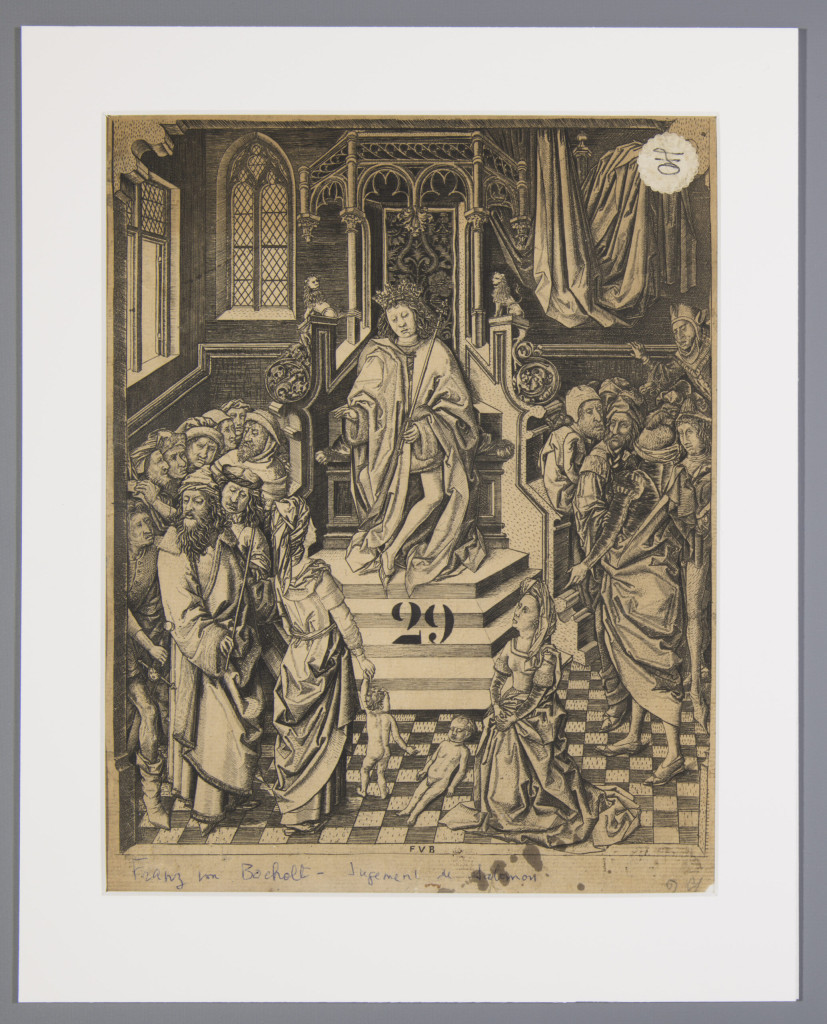
The print itself received minor treatment, with the backing envelope being removed and the print housed in a polyester L-sleeve mounted with photo corners.
Print housed in a polyester L-sleeve and matted with photo corners.
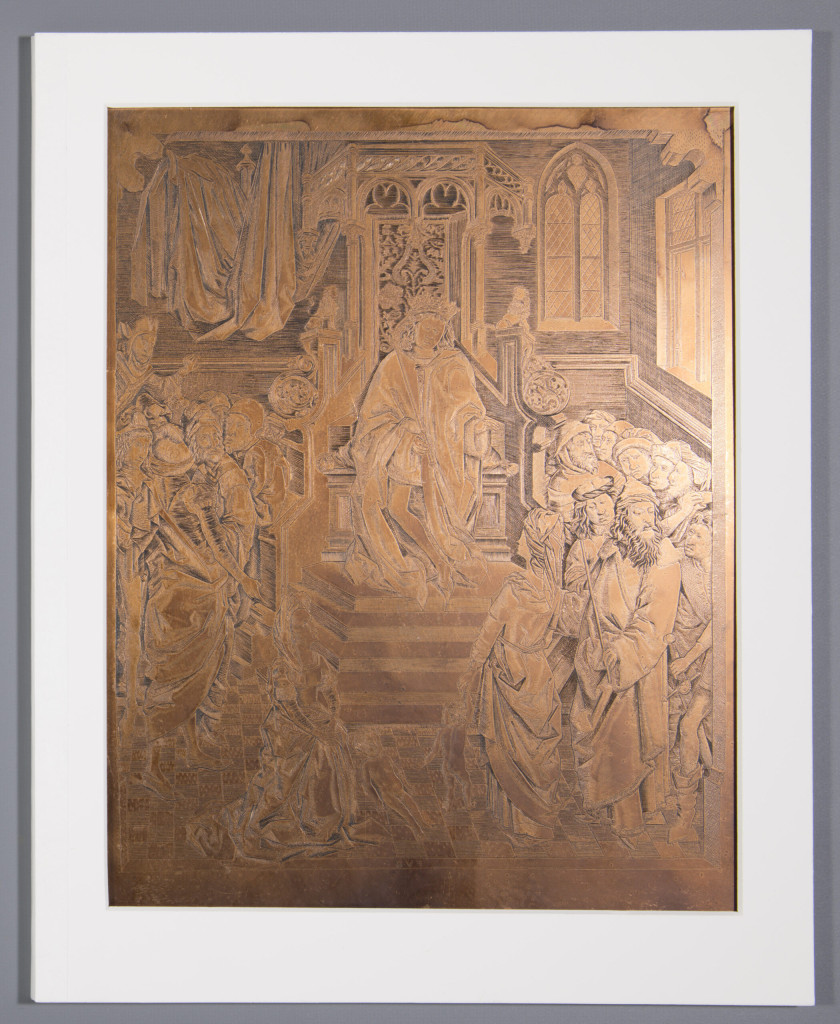
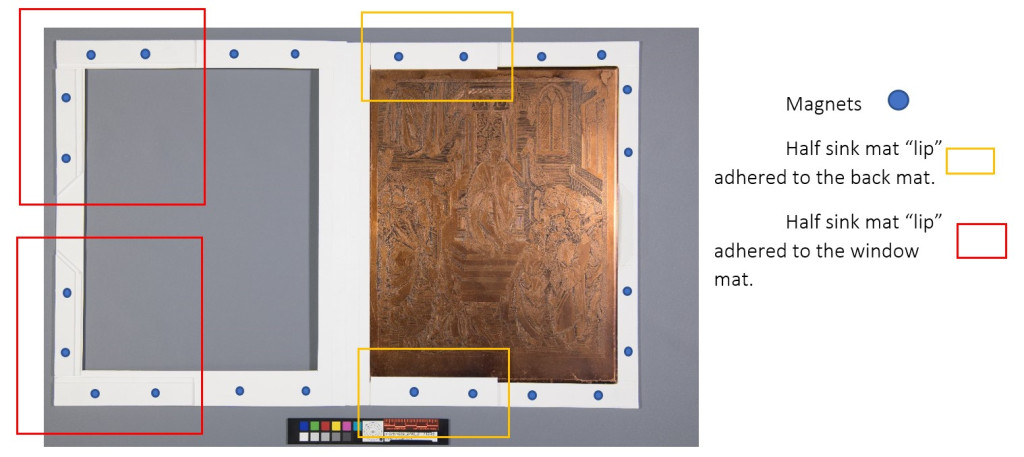
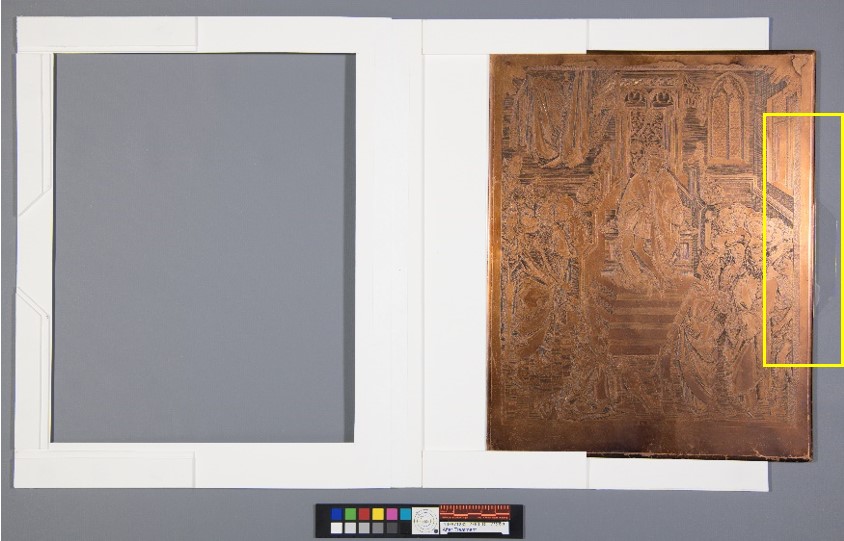
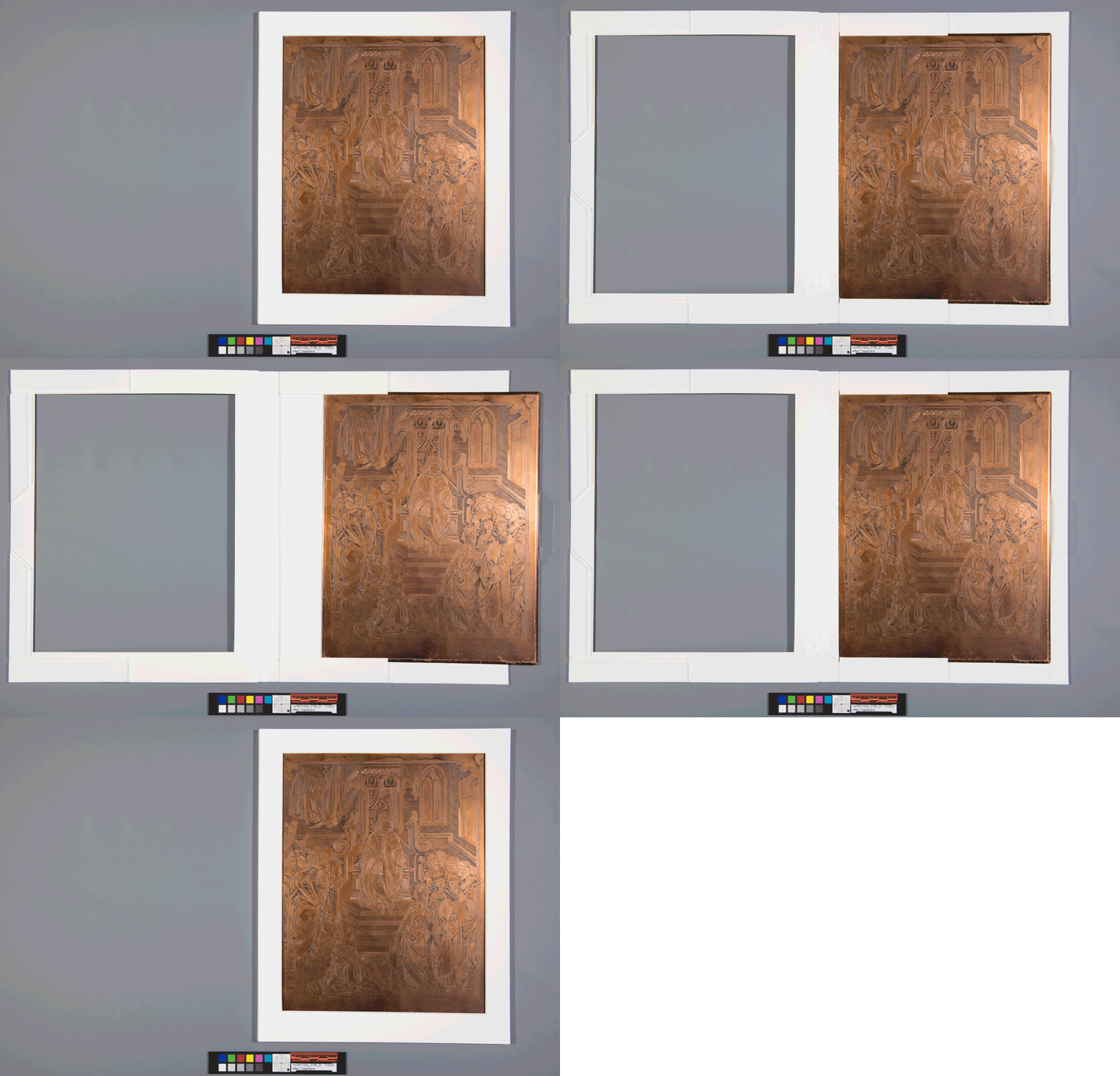
With the engraving plate, I needed to figure out how to create a matting system that was strong enough to hold the copper plate in place, especially if used for an exhibit where it may be propped at a slight angle. After considering some options, I created a sink mat that would secure the plate halfway, and then the rest of the sink mat would be adhered to the window mat so the copper plate, resting on a polyester tray, could be pulled out of the mat easily. How would I keep the matting system closed? ….with magnets, lots of magnets! For this project I used 24 rare earth magnets.
Copper engraving plate housed in a specialty sink mat with magnetic closures.Matting system for the copper plate – a sink mat, half attached to the back mat and half attached to the window mat, all secured closed with magnets.Copper plate slightly removed from the matting system by the polyester film tray.
This was a fun project to work on. After using 24 magnets and breaking a few in the process, the copper plate was securely housed in the sink mat, while also able to be propped up for exhibition and handled for teaching.
Before treatmentAfter treatmentThe matting system in action!
The University of Cincinnati’s Archives and Rare Books Library owns a few cuneiform tablets that date around the 1st century BCE. Most are small enough to fit within the palm of your hand. However, the clay tablet in question measures 14 inches (W) by 14 inches (T) x 4.5 inches (D) and weighs roughly 40-50 lbs.
Assyrian cornerstone during surface cleaning
More accurately, it is thought to be an Assyrian cornerstone that dates between 860 and 824 BCE. It is described in the catalog record to be from the ruins of Calah (near Ninevah) on the Tigris River. It is likely the cornerstone of a temple or palace erected by Salmanser III, king of Assyria. The provenance of how the University acquired the tablet is uncertain.
A translation of the cuneiform writing reads, ““Salmaneser, the great king, the mighty king, king of the universe, king of Assyria, son of Asurnaserpal, the great king, the mighty king, the king of Assyria, son of Tukulbi-Ninib, king of the universe, king of Assyria, and indeed builder of the temple-tower of the city of Calah.”
Front, Raking Illumination with Reflectance Transformation Imaging (RTI) by Jessica Ebert
Front, Normal Illumination by Jessica Ebert
Back, Raking Illumination by Jessica Ebert
Back, Normal Illumination by Jessica Ebert
After surface cleaning and digitizing the cornerstone, finding suitable storage for an Assyrian cornerstone tablet seemed like a straightforward task in the beginning. I thought, “Let’s get it off the floor, house it, and protect it from dust!” No problem, right?
But once we got the item back in the lab, the weight of the object combined with its fragility proved more of a challenge after Chris, Holly and I began thinking about how the object would be retrieved from storage and how it would be handled. Rather than being stored in specialty shelving (such as items might be in a museum), this item was a library item. We needed to fit the tablet amongst archival book shelving. We were also faced with the prospect of transporting the cornerstone up and down a flight of stairs from the secure rare book storage. There is no easy elevator access! And finally, once it was put in an enclosure, how would a librarian get it out to show researchers and students?
We decided on an industrial case with wheels that could be transported and stored anywhere. I knew I wanted a device with handles to pull the object in and out of the case, but immediately decided against the idea of ratchet straps. The threat of fracturing would be too great if the ratchet straps were over-tightened.
After careful thought (and the creation of mock up solutions!) the following custom design was created in five stages:
1. A waterproof, shock-proof rolling Nanuk 950 case (similar to a Pelican case) was purchased.
Nanuk case openNanuk case closedLabeled Nanuk case
2. The interior was customized with foam and supports.
3. The lid was fashioned with a Tyvek pillow screwed to the top with an interior Coroplast sheet.
Marking screw holesCoroplast screwed to lid inside pillowcaseSealing pillow filled with polyester
4. The cornerstone was wrapped around all sides in a foam sheet with four flaps.
Foam flaps secured with VelcroUnfolded flas
5. A cloth wrapper with custom handles was sewn to support the tablet during insertion into and retrieval from the case.
Sewing cloth wrapperDuring creation of handlesCompleted wrapper
In addition, life-size surrogate photographs were printed by Jessica Ebert and stored in a polyester sleeve within the case. These images may prove even more useful during exhibition or teaching than seeing the actual tablet as they were captured with raking light that beautifully highlights the cuneiform writing. They could even be used as an alternative to handling the heavy tablet.
To help guide future librarians on how to handle the cuneiform tablet in the future, handling instructions were provided, a handling video was created, and a QR code of the video was pasted onto the case. Check out the video below.
I was appreciative to have been able to hearken back to my object’s conservation experience working at the Musical Instrument Museum. My prior experience helped guide me to dust the tablet and store surface cleaning samples, however, this was a project that took me out of my library conservation comfort zone. The knowledge required to house such an object (and the amount of textile sewing used to create the cloth wrapper!) gave me even more appreciation for the work objects and textile conservators do to preserve our oversized and heavy materials – especially when transporting and taking them on and off display!
Ashleigh Ferguson Schieszer [CHPL] – Rare book and paper conservator
The purpose of this blog is to show a relatively easy long-term solution for strengthening and protecting the packaging for shallow banker’s box enclosures. There are two notable benefits to using this solution. The first being that in some cases little to no repairing needs to be done to damaged parts of the box and the second is at no time does any adhesive come into contact with the original piece. I have developed this system down to a science. If I make my measurements correctly, from start to finish, the lid and base jacket can be made from the custom stencils in about 180 minutes.
Ultimately you’ll be cutting 2 pieces of 4 mil Mylar to the following dimensions (W+thx4+4inches x H+thx4+4 inches) with the help of stencils.
To make a stencil I just place the lid in the center of the wastepaper and adding about 1mm all around, trace the width and height. Add 1 wall thickness all around followed by 1 wall board thickness all around then another wall thickness all around. Draw each of these added lines all the way to the edge of the paper.
You may notice little adaptations to the tabs that will be cut out of the Mylar. I make the tabs on opposite sides to create symmetry. Here is a close-up of one.
After scoring and cutting out the Mylar to match the pattern, fold on the lines using either a ruler and bone folder or your fingers.
When you are all ready, place the box in the center of the Mylar sleeve and place double stick tape where the tabs will secure the corners. Start with the outside corners first.
One of the great qualities of this protective wrapper is that it can cut out repair time by the virtue of the strength of the wrapper itself.
Secure the rest of the outside, then inside corners, and we’re done!
Now it’s time to enjoy the music.
Chris Voynovich (CHPL) — Senior Conservation Technician
The Preservation Lab at UC Blog uses Accessibility Checker to monitor our website's accessibility.