Category Archives: Book arts

Paper & Book Intensive 2026: A First-timers Recap

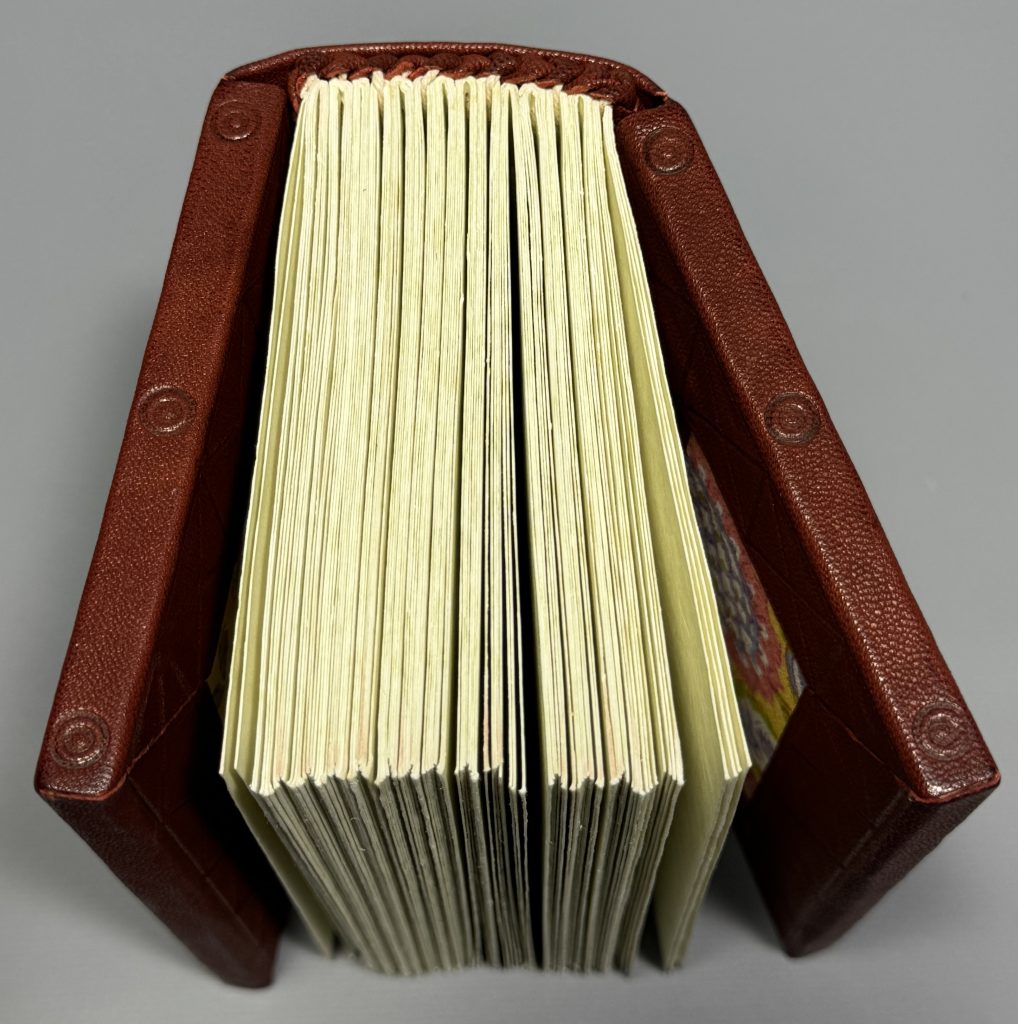
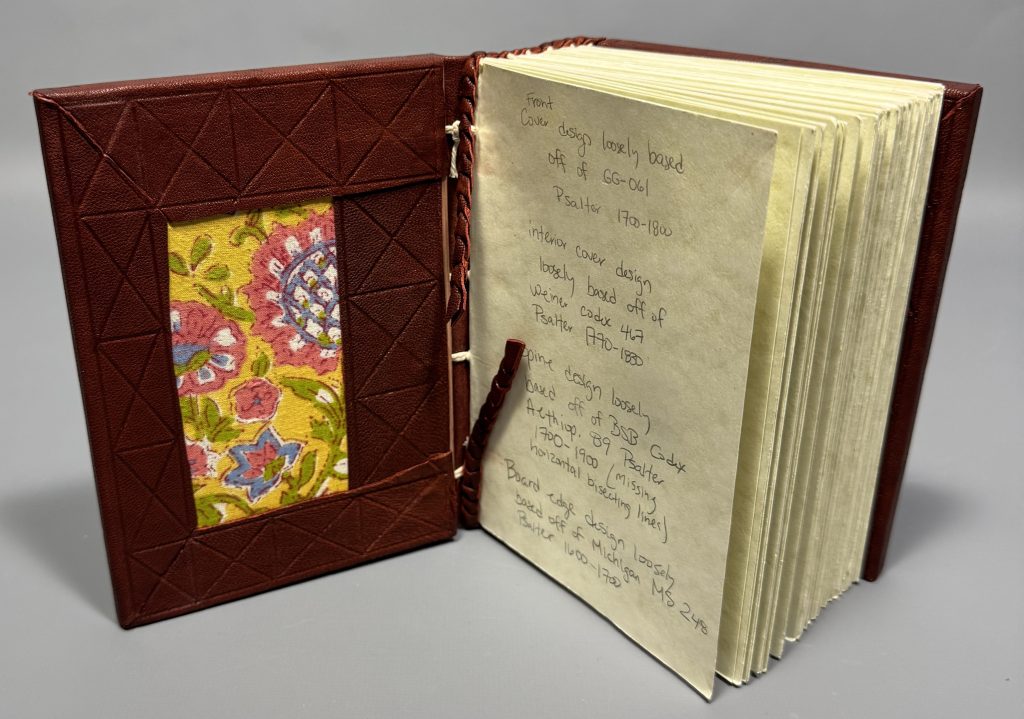
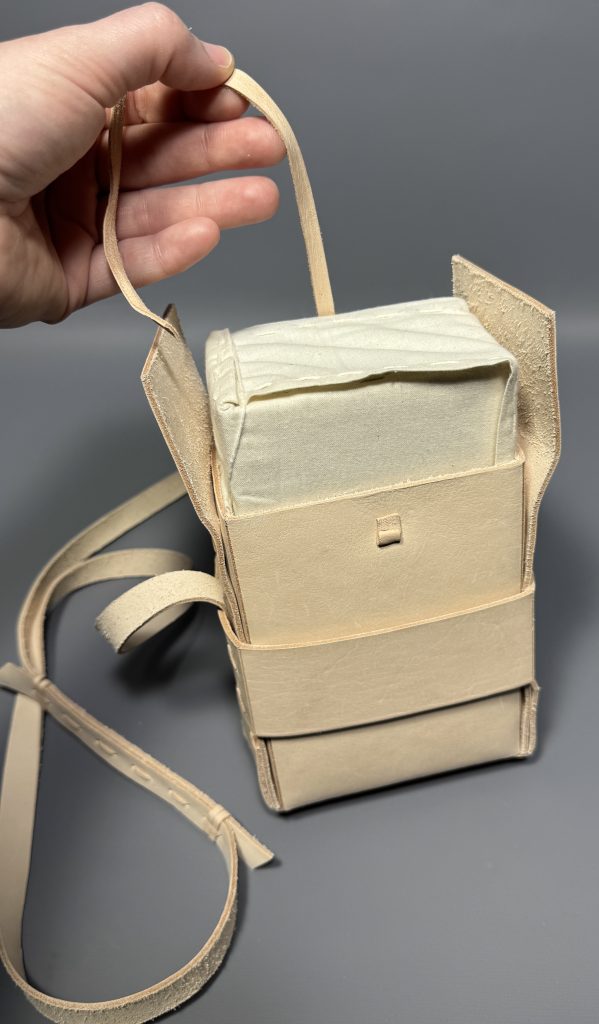
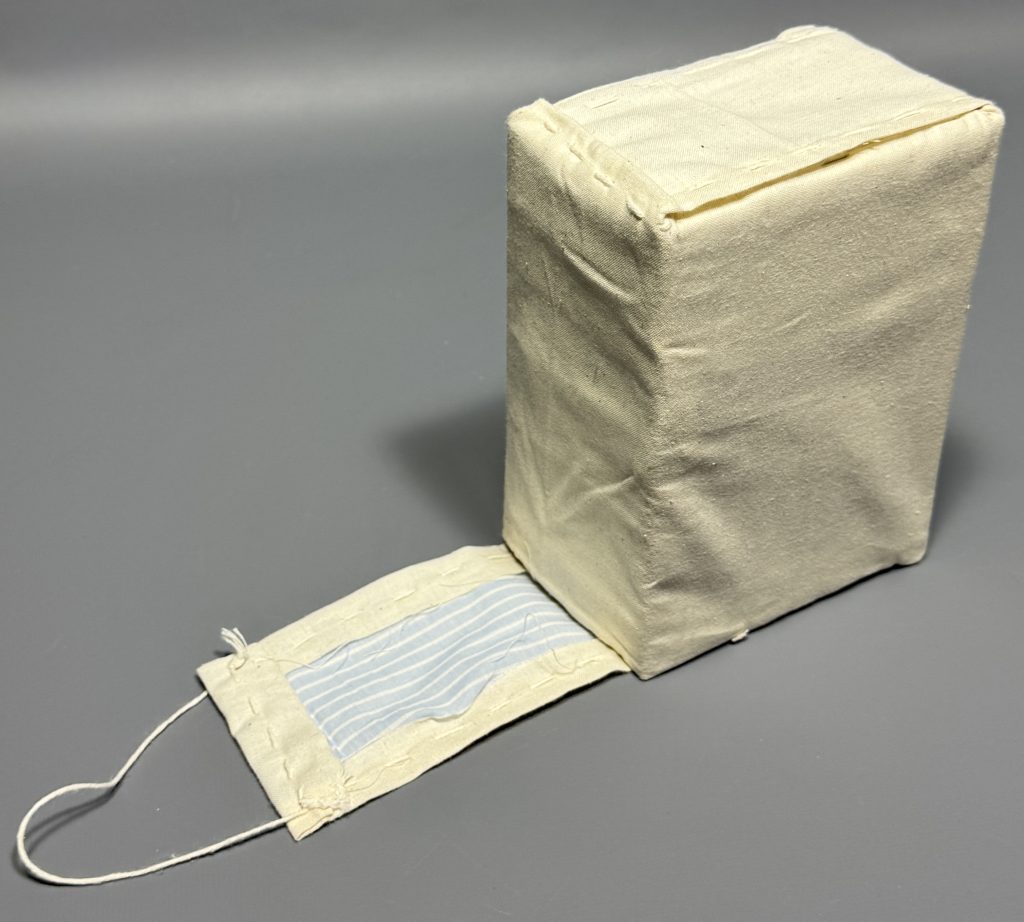
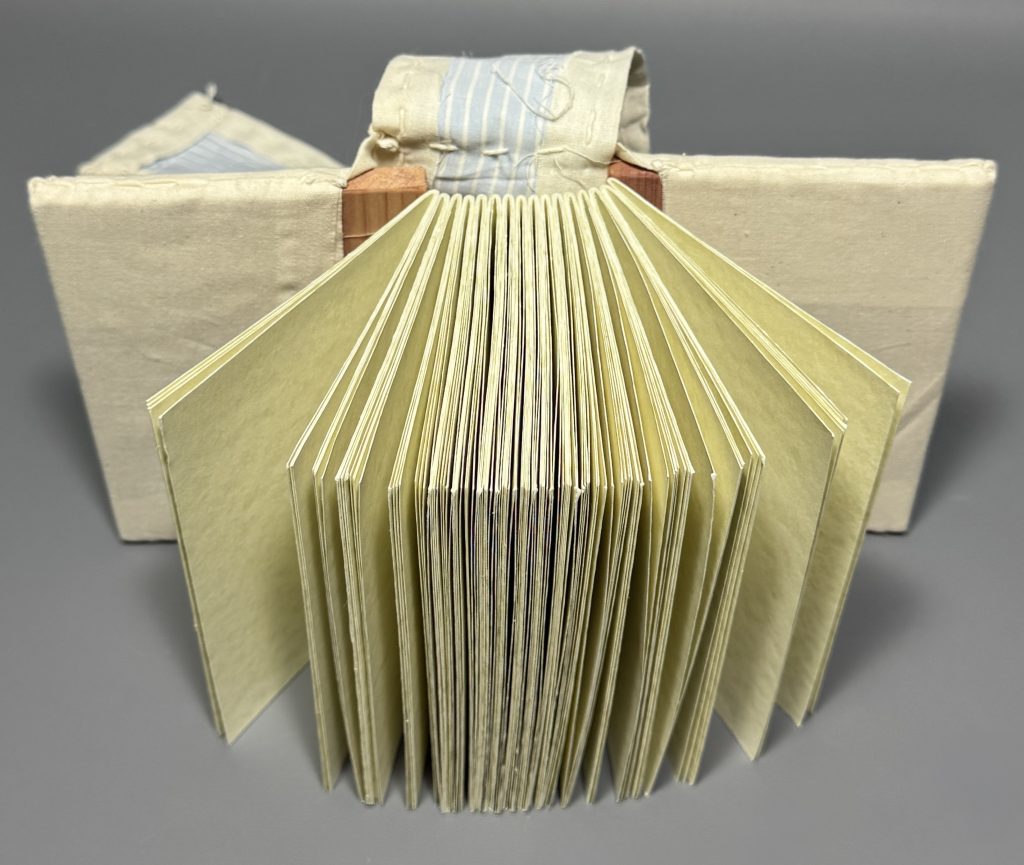
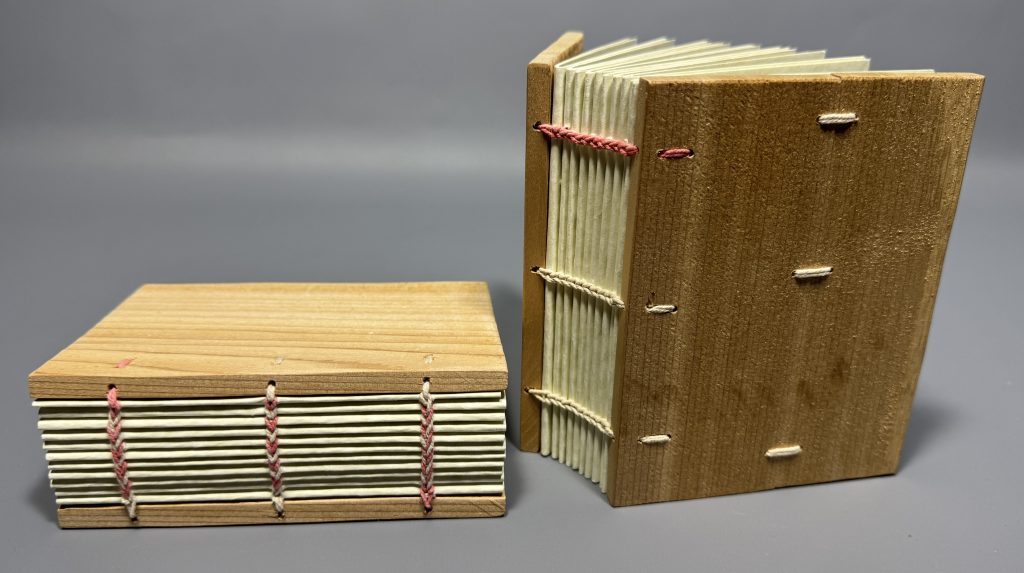
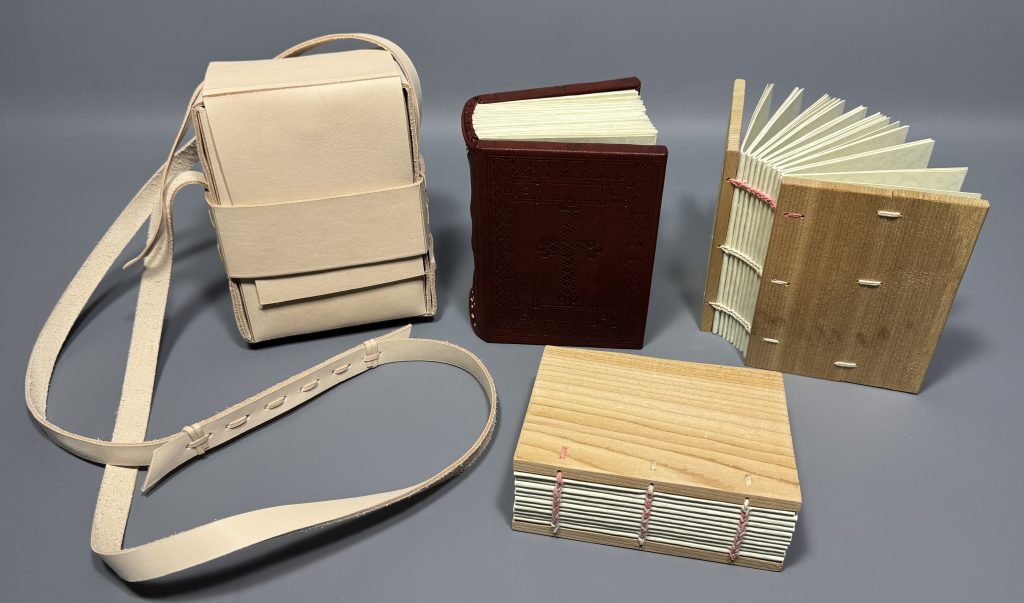
Four Ethiopian book models: one in a leather satchel, one covered in a dark red leather and blind tooled, and two with wooden boards and exposed sewing.
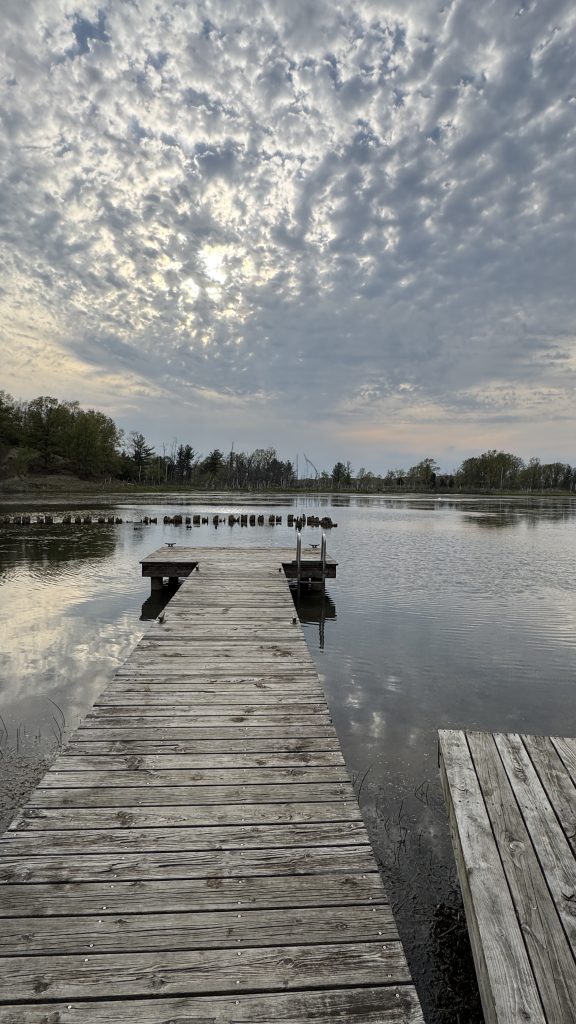
View of the Kalamazoo River from the dock at OxBow.

I was fortunate enough to attend Paper and Book Intensive (PBI) for the first time this year as part of my annual staff development. If you are not familiar with PBI, it is a non-profit group that hosts an annual sabbatical-style work retreat that focuses on book arts, papermaking, and conservation. It takes place in Saugatuck, Michigan at the OxBow School of Art and is structured into two sessions, and each session lasts four days. Each attendee takes two classes during the first session and one class during the second session. The first session is broken up into a morning class and an afternoon class, while the second session classes are full day and more intensive.

When you apply to PBI you rate your preferences of classes. If you are accepted, you are then placed in classes based on availability and demand. Again, I was incredibly lucky and I was placed in all of my top choices for classes. For session one: American and English Boarded Bindings, 1780-1830 with Todd Pattison (AM session) and Marbling on Paper with Steve Pittelkow (PM session). For the second session: Madagos: The Living Tradition of Ethiopian Bookbinding with Bill Hanscom.

Boarded Bindings with Todd Pattison

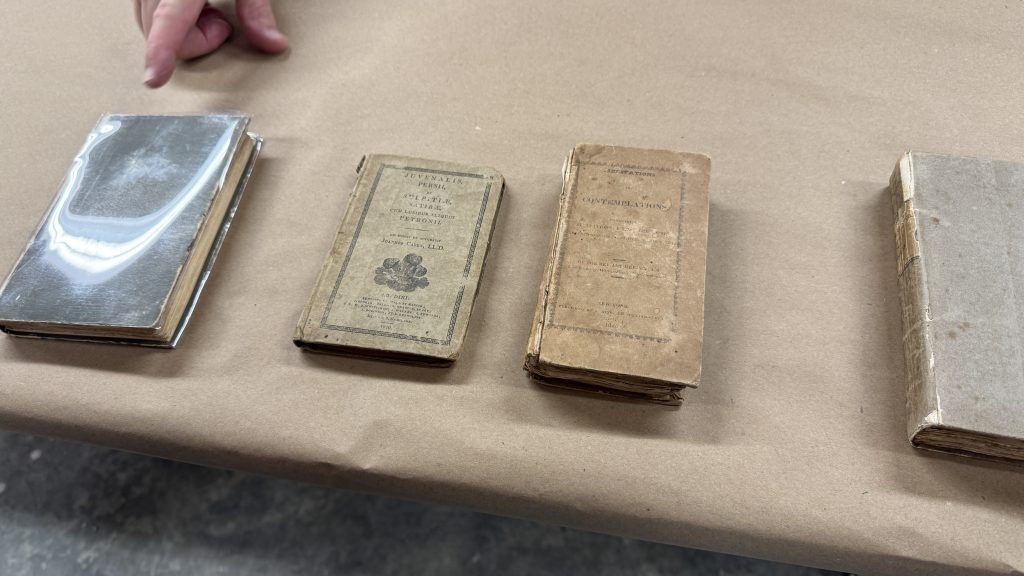
Todd brought a host of historical examples for us to examine, including volumes printed in Britian and America, which was fantastic.
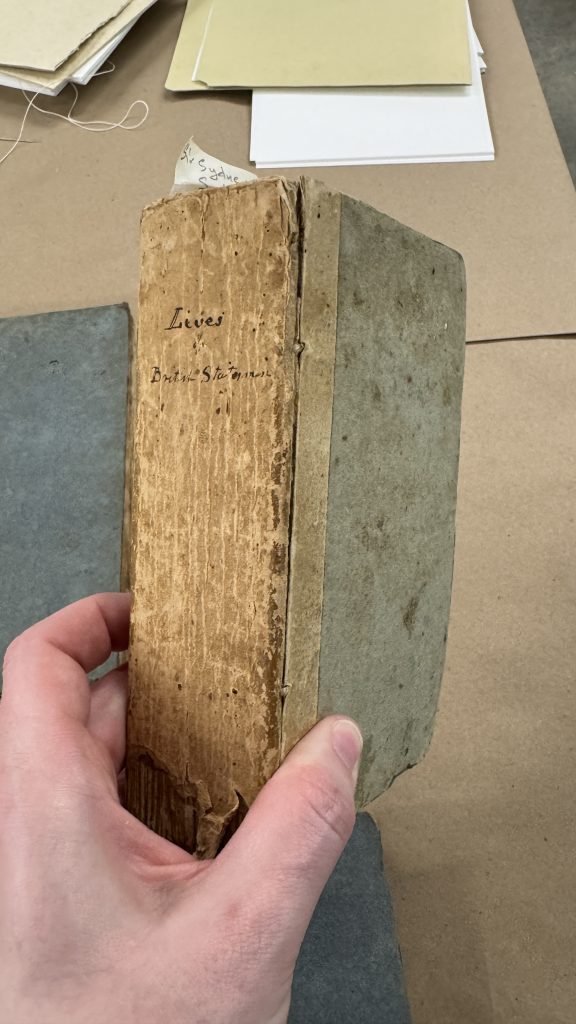
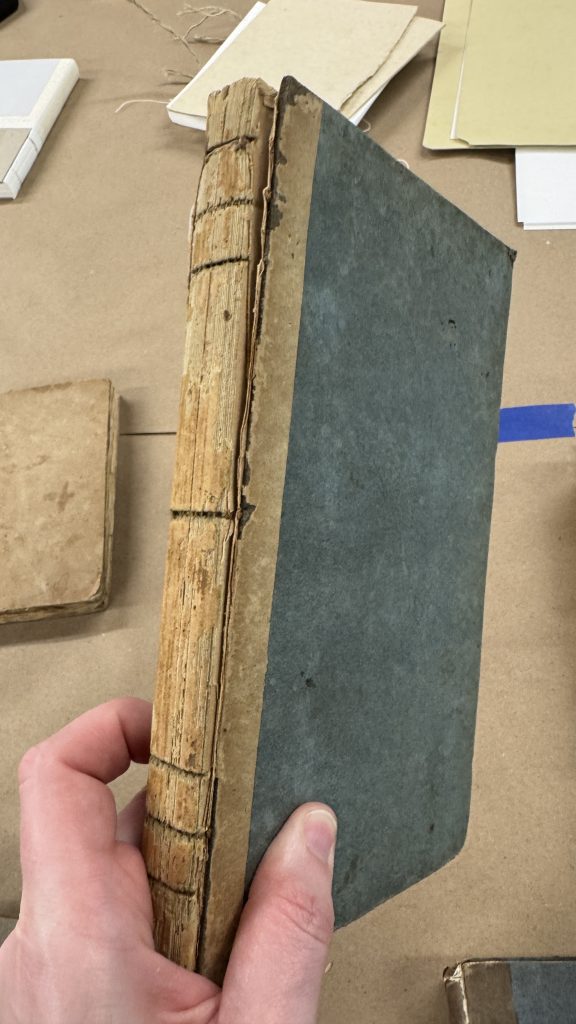
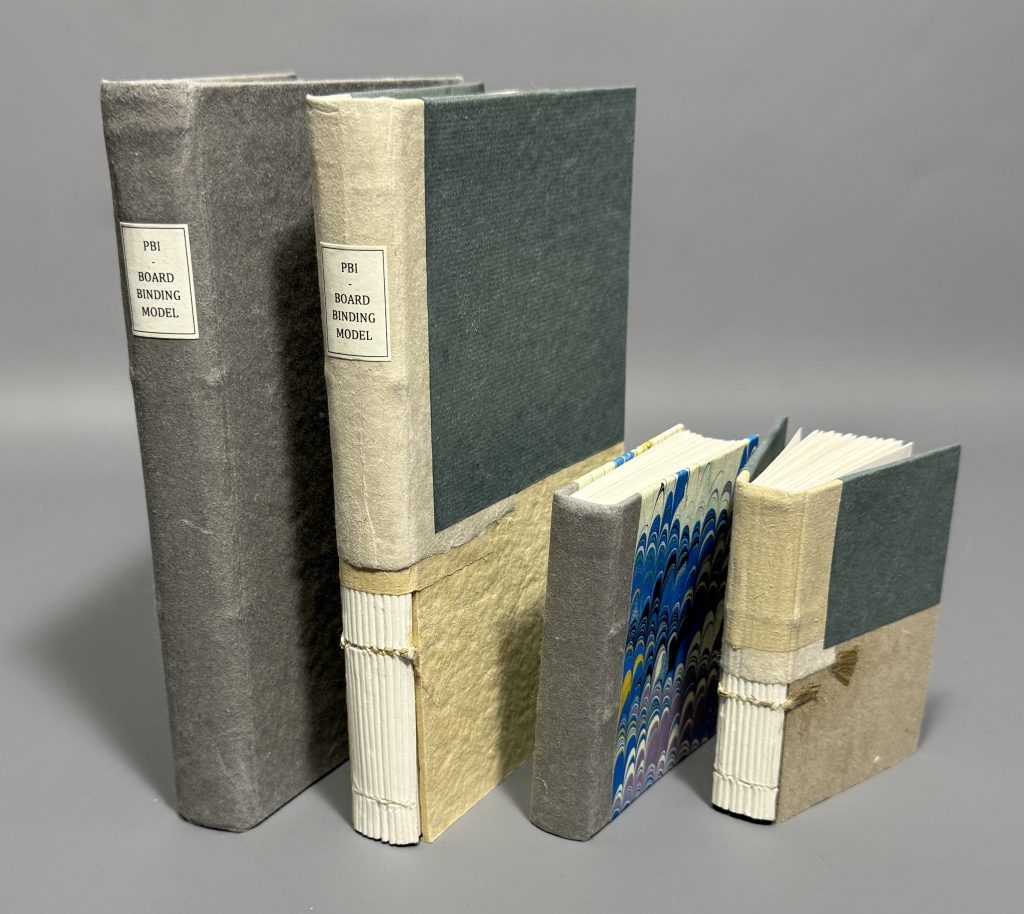
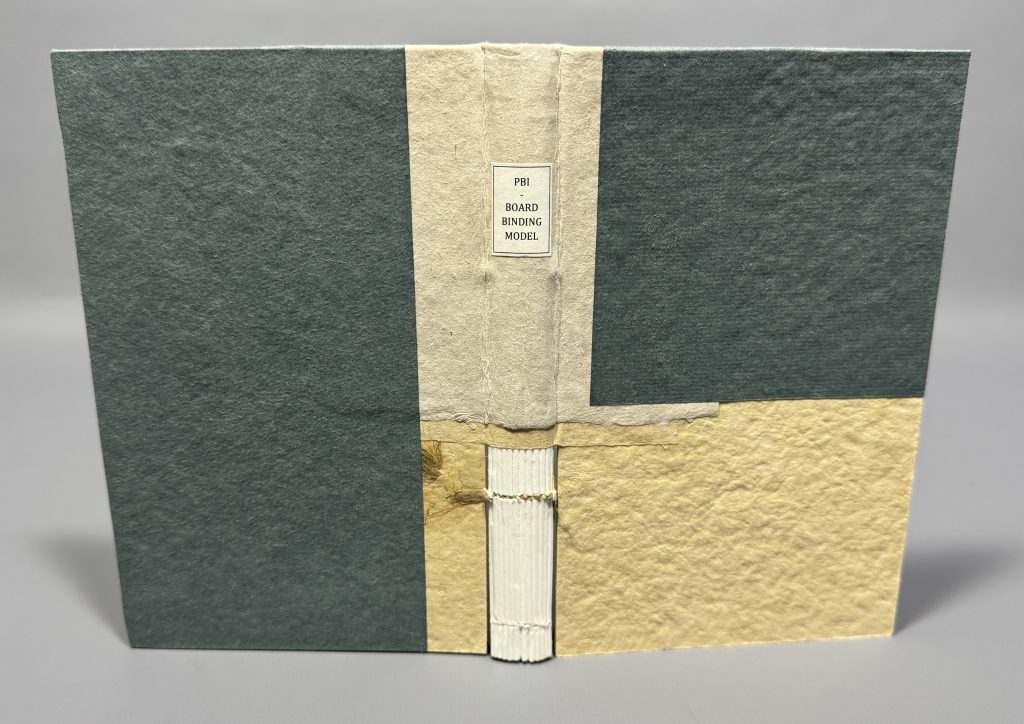
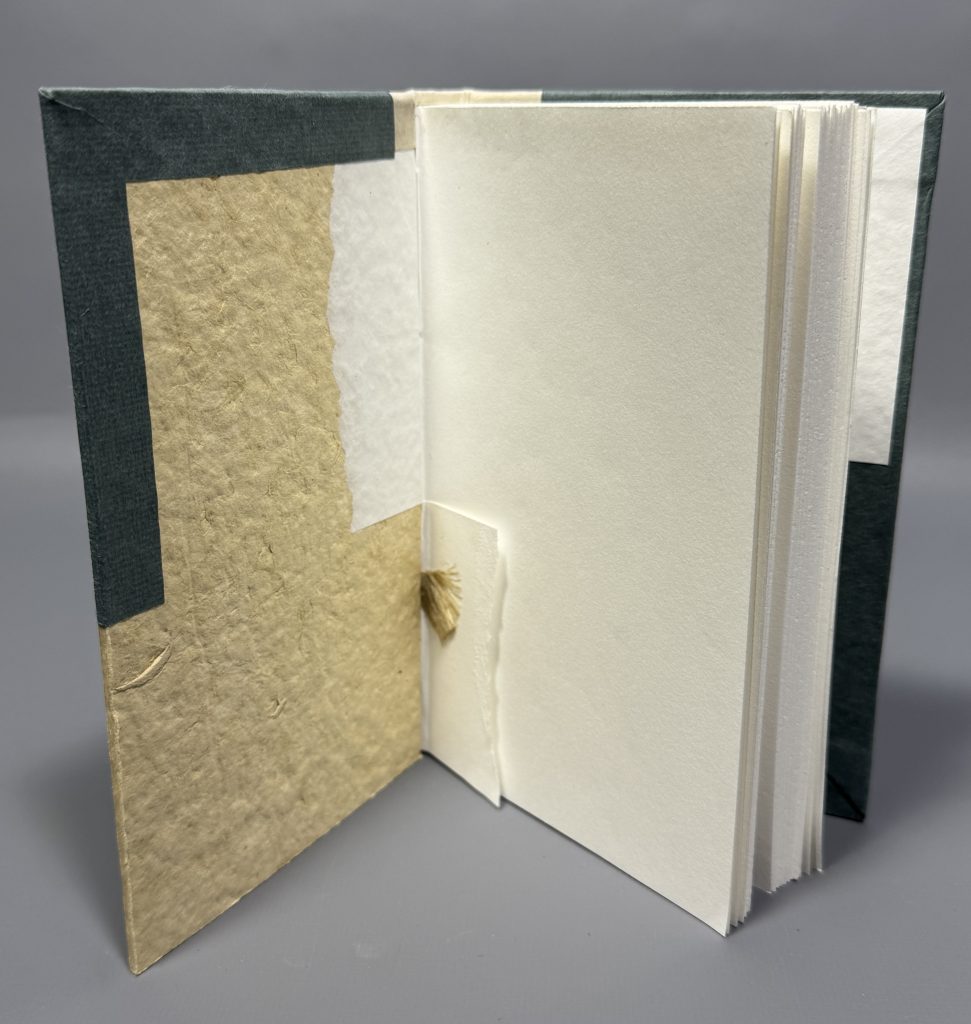
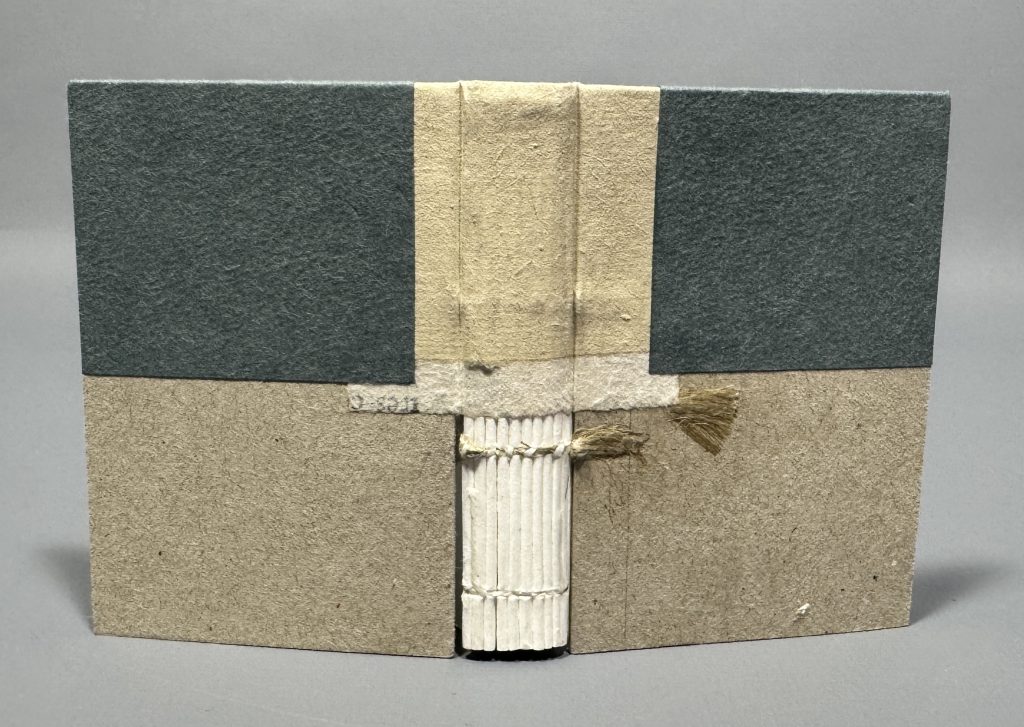
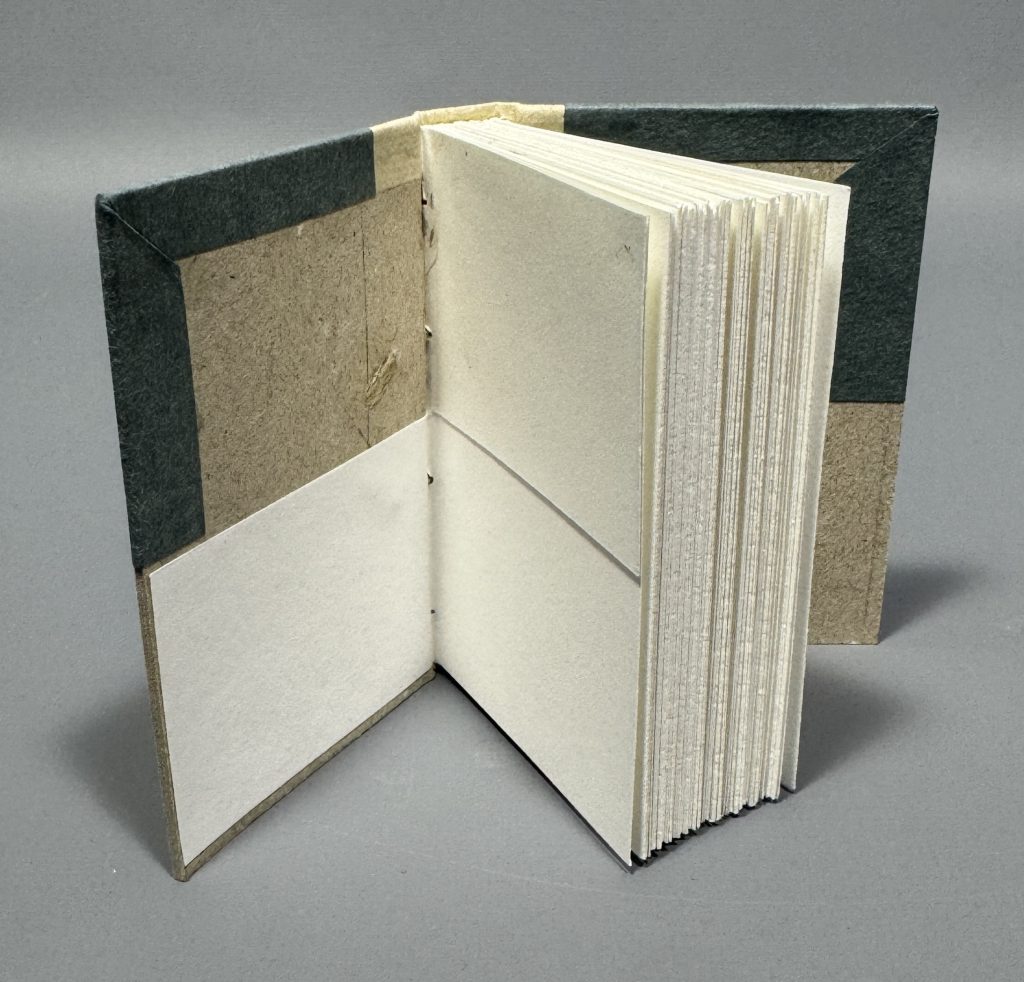
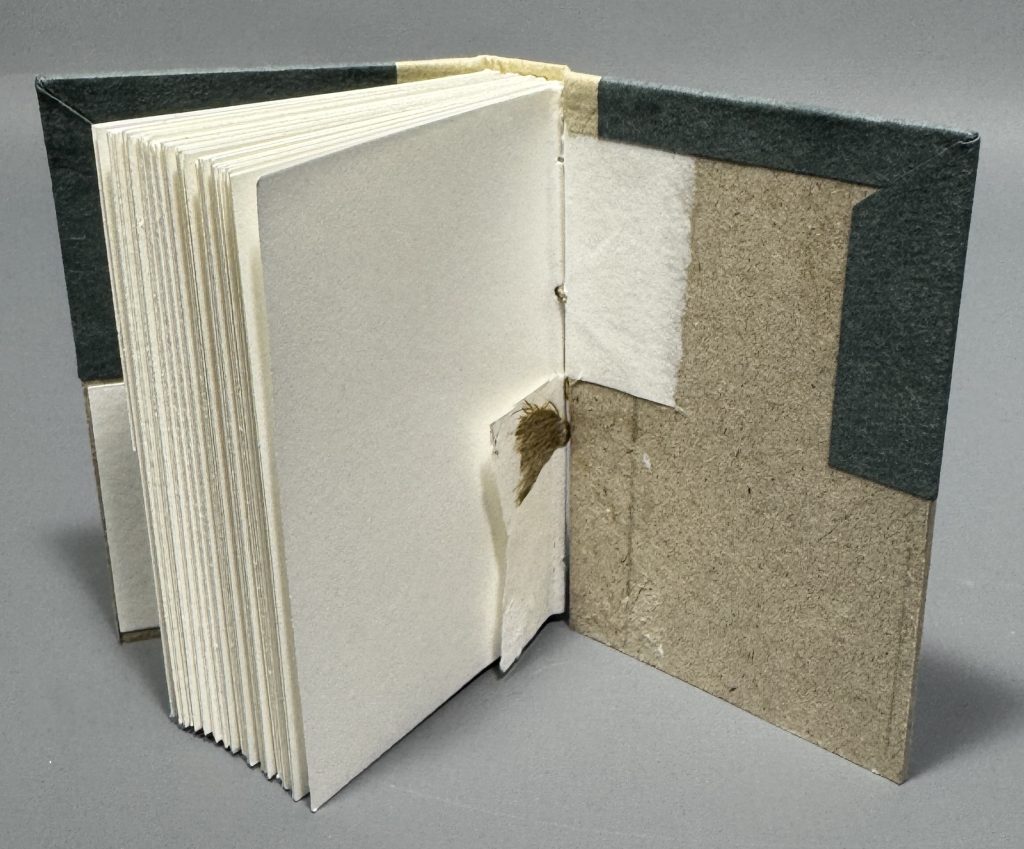
During the class we created two models: one cutaway and one paper-covered model. Both models were sewn on two recessed cords with an abbreviated, two-on sewing pattern. Once the text blocks were sewn, a layer of wheat starch paste was applied to the spine. Then the spines were rounded and backed. For the cutaway model, one board was attached by lacing the cords through the board, which is more commonly seen on the British boarded bindings, while the other board was attached by simply combing out the cords and adhered it down to the board, which is more commonly seen with American boarded bindings. For the paper-covered model we could attach the boards however we liked (I chose lacing them on). Todd was then kind enough to prepare additional materials for us, so that we could make an extra third models if we wanted. I chose to cut my third model (landscape oriented originally) into two small models. I then made a smaller cutaway model and small quarter binding model with marbled paper (an “extra” boarded binding) using marbled paper I had just created in my afternoon class.
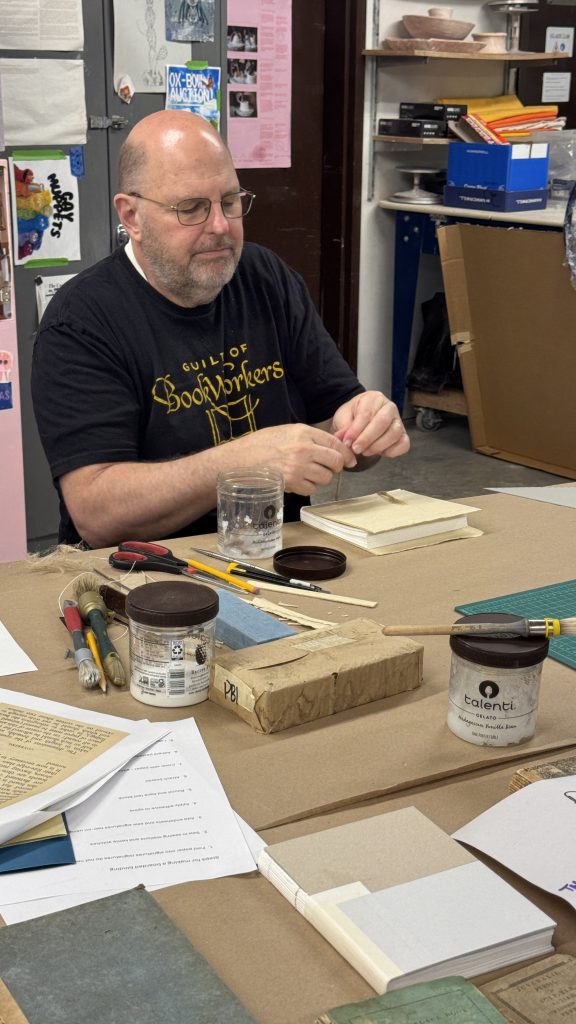
Todd adding wheat starch paste to the ends of the cords in preparation for lacing.
Todd adding wheat starch paste to the ends of the cords in preparation for lacing

Finished Models

Four boarded binding models: grey paper-covered binding, quarter binding cutaway model, quarter binding "extra" boarded binding model with marbled paper and grey paper on the spine, and a small quarter binding cutaway model.

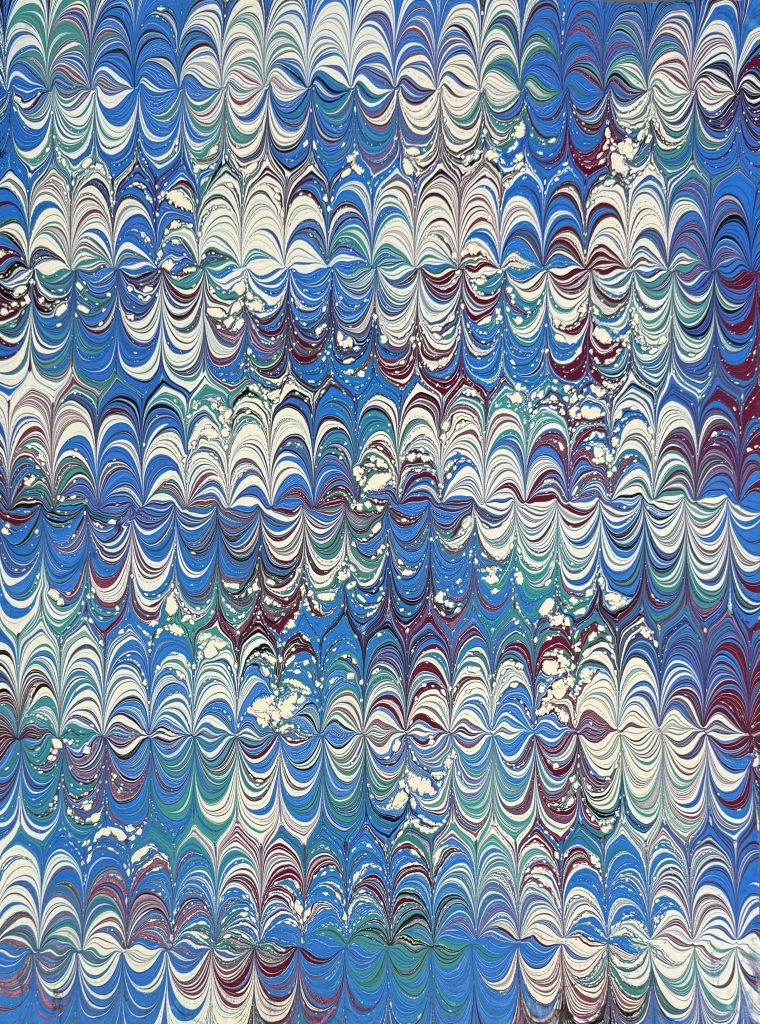
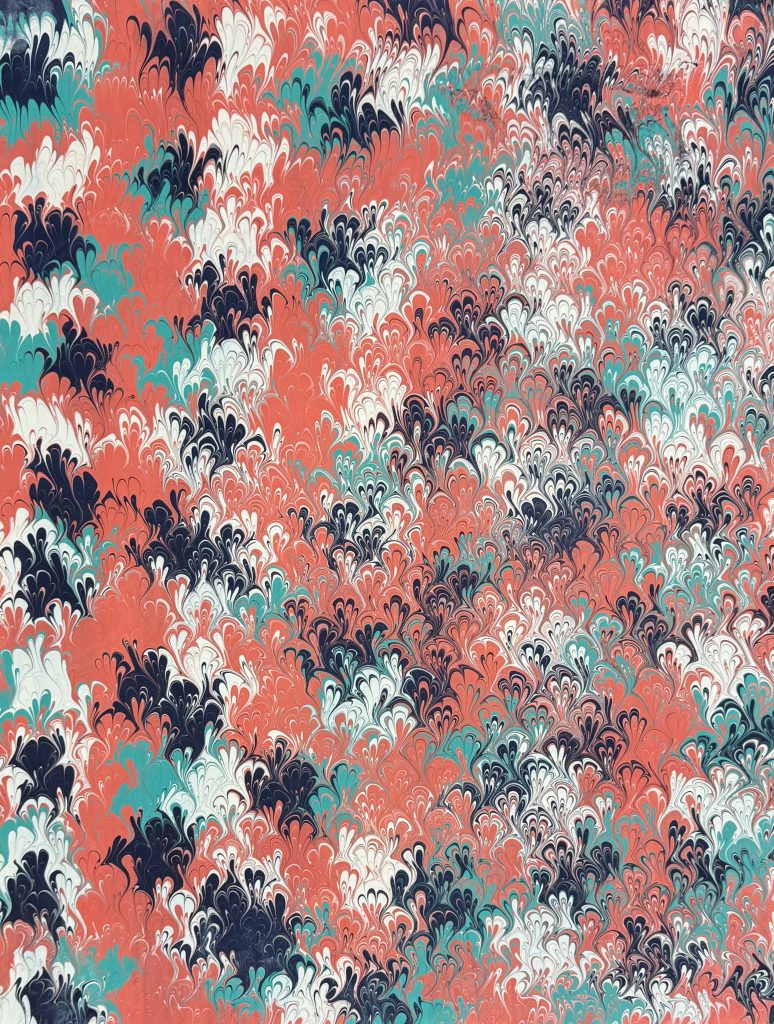
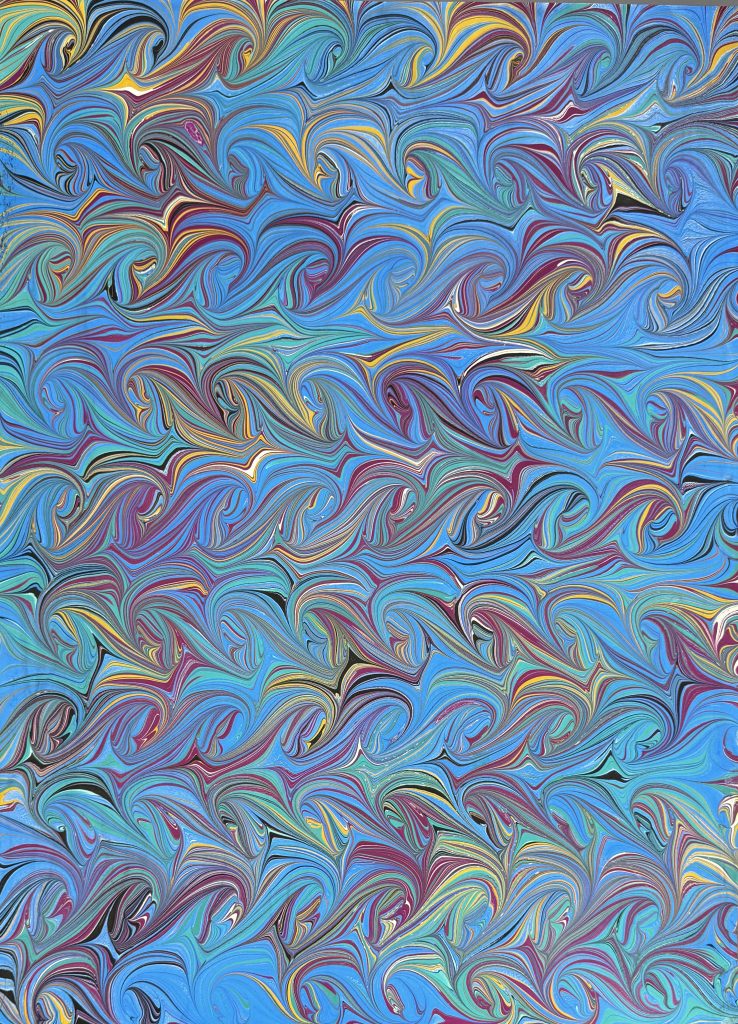
Marbling on Paper with Steve Pittelkow
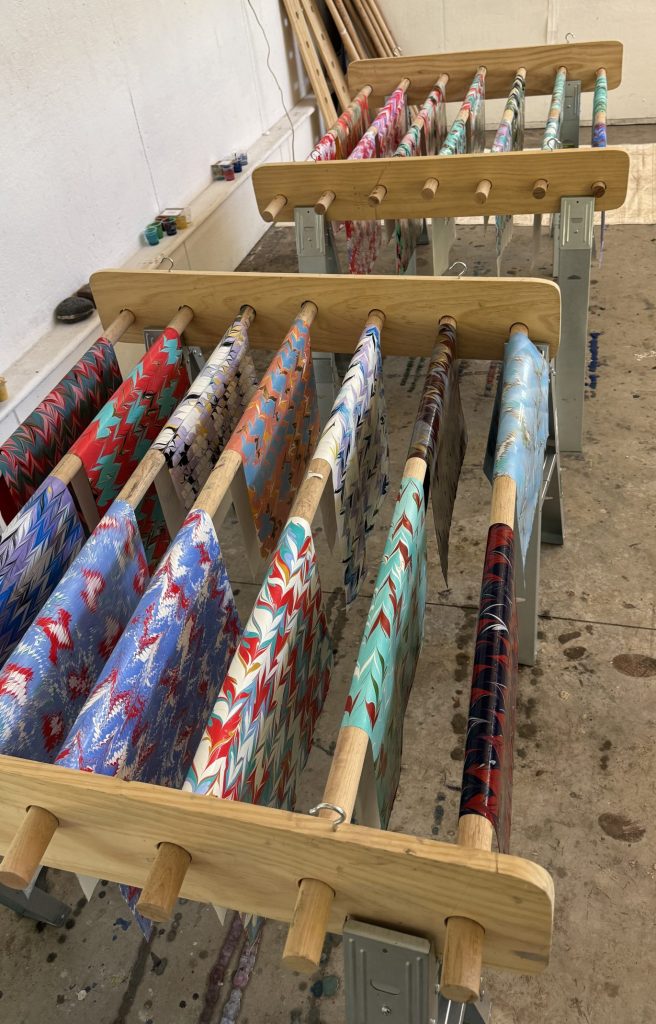
A collection of marbled paper hanging to dry on large dowel rods between saw horses.
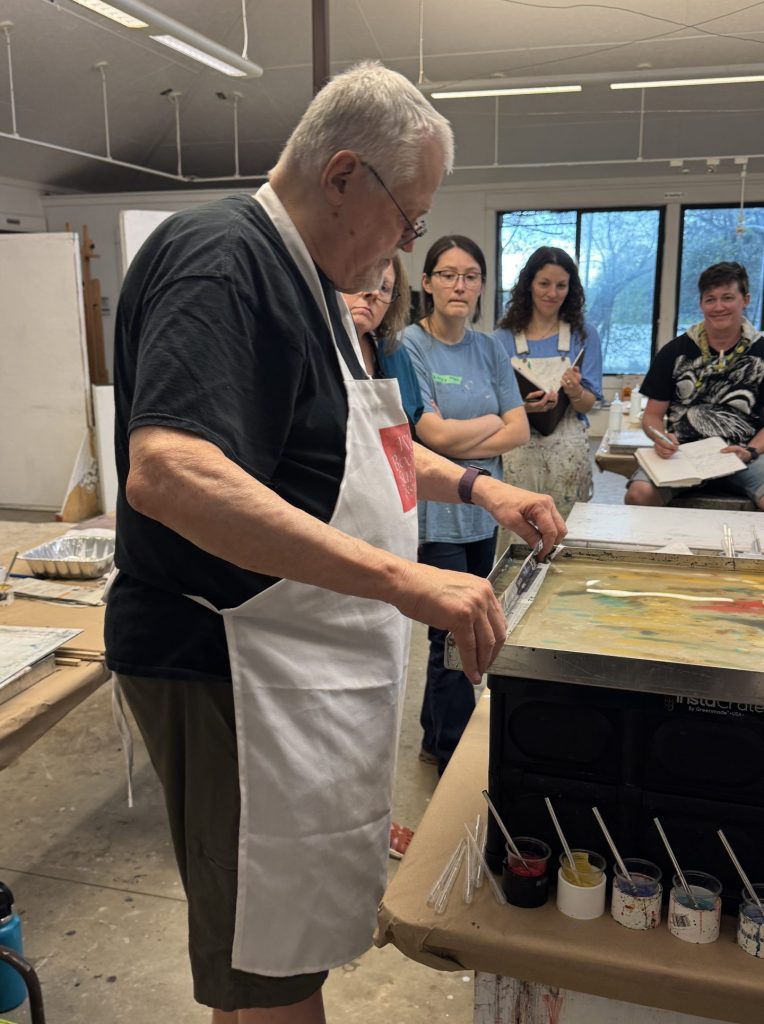
Instructor demoing at a marbling tray to a class full of students.
Steve demoing to the class

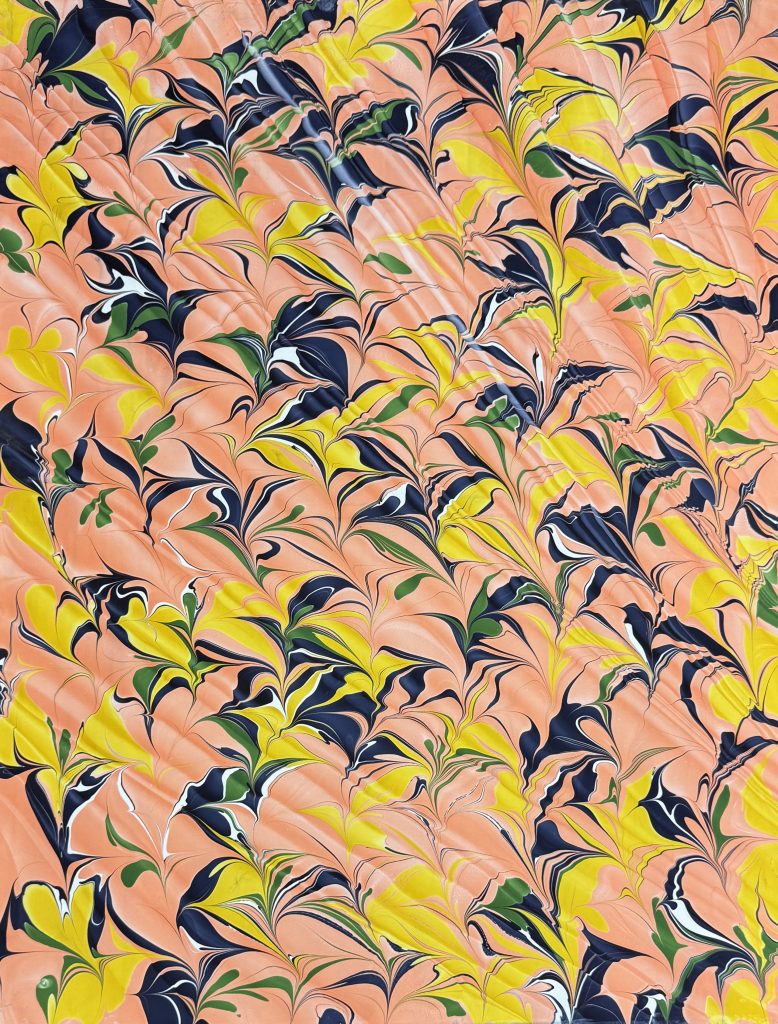
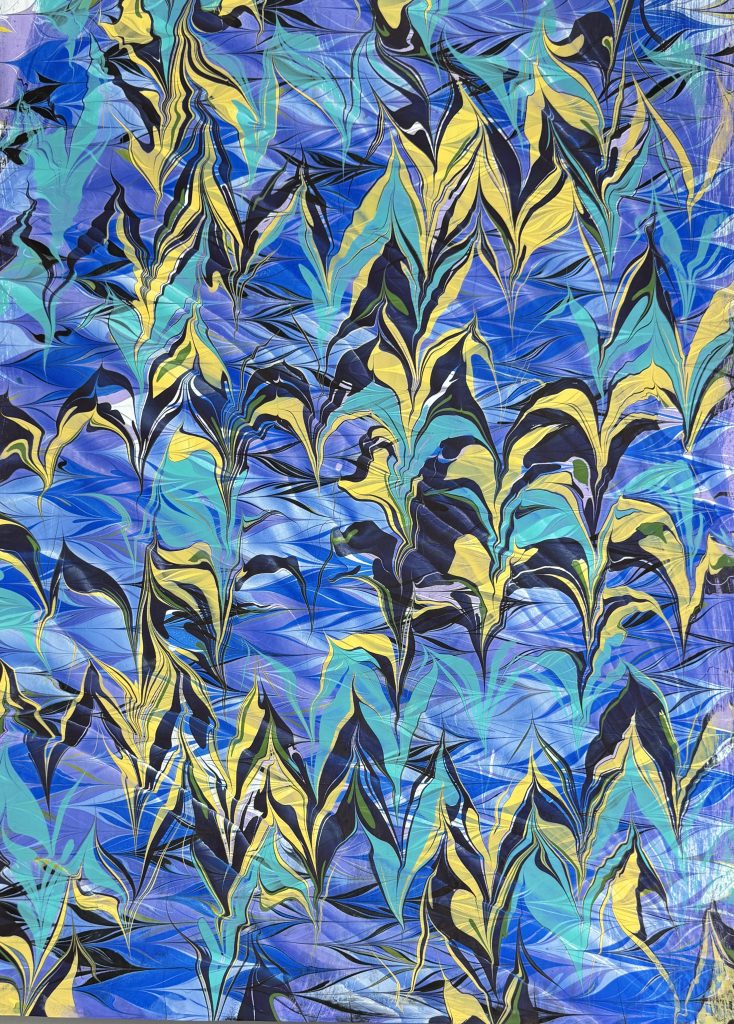
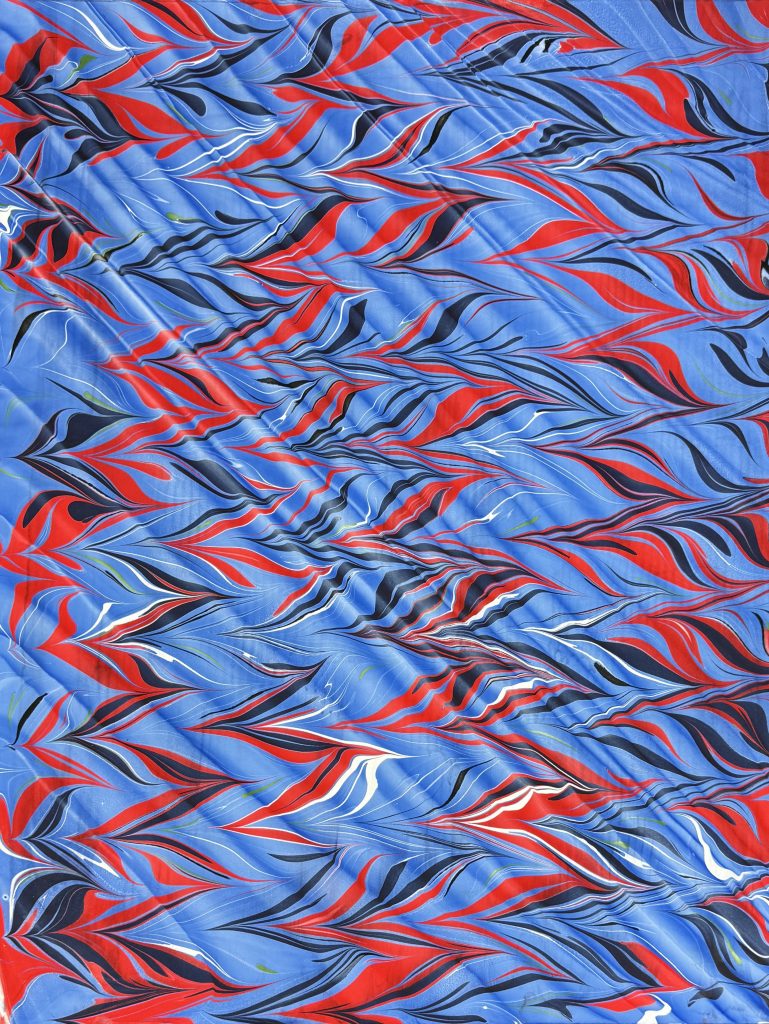
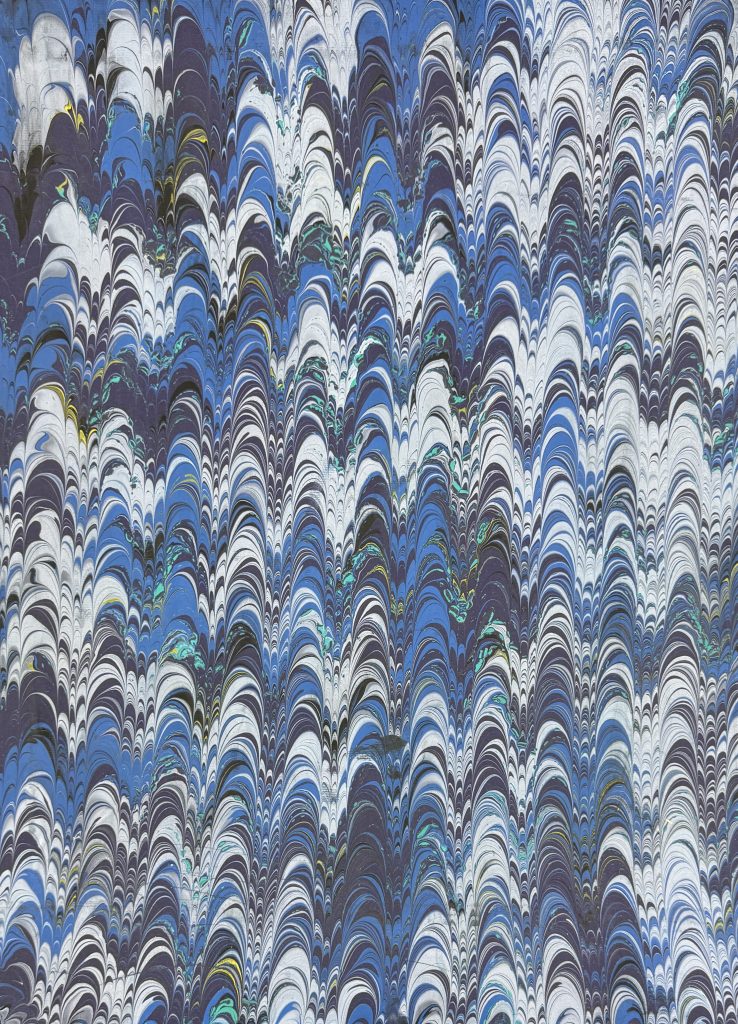
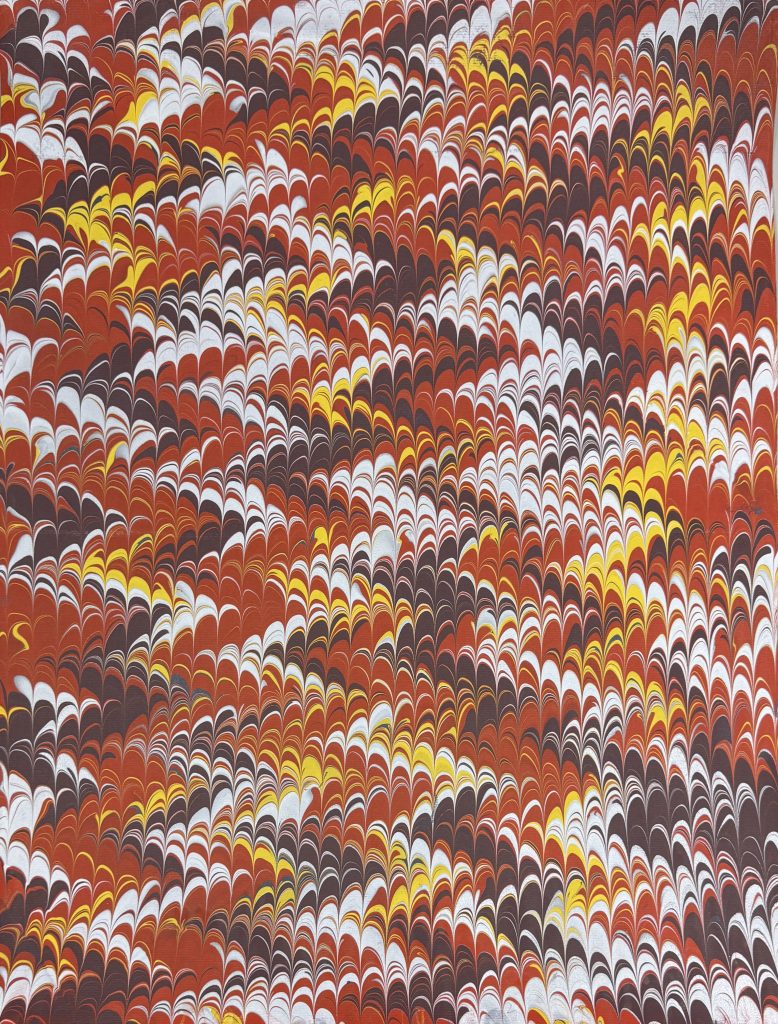
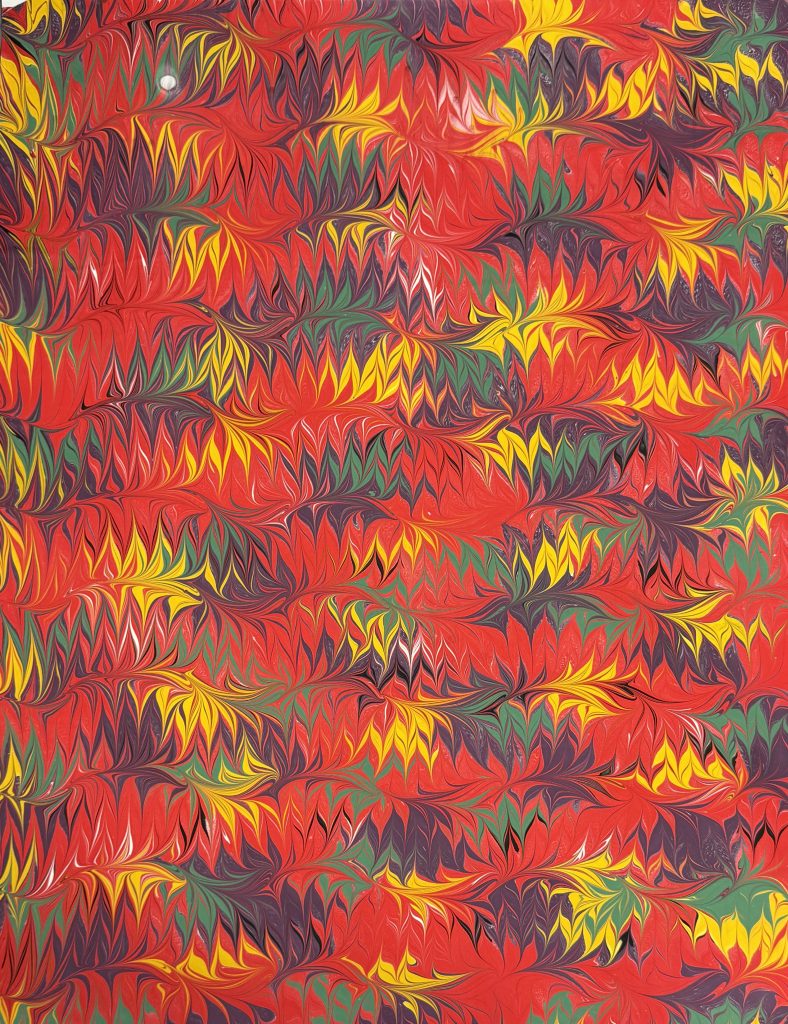
Though I have been paper marbling for years, I was super excited to take this class from Steve, because he is such an amazingly precise pattern-maker and his colors are so bright and vibrant. Little did I know before the class, we would be using acrylics, which is the one type of marbling media I really haven’t worked with too much, and definitely haven’t come close to mastering. My foundational experience with marbling has been in traditional Turkish marbling with watercolor pigments, and then I’ve also experimented with the dye-based pigments that are used in fabric marbling. But using acrylics was a whole new exciting world for me and I learned so much from the class. I also greatly improved my pattern making. I’ve always been someone who is very fond of a stone or a drawn stone pattern (a stone pattern that is manipulated with a stylus), but when it came to using combs and/or rakes to make intricate patterns I would shy away or be lazy in my pattern making practices. Steve’s focus on marbling best practices and following a rhythm in your movements as you are pulling more intricate patterns, working around the bath in a methodical, precise way, was so helpful and something I will carry with me going forward.

A Selection of My Papers
Ethiopian Bookbinding with Bill Hanscom

Following a wonderful Show & Tell where we got to see all of the amazing projects from all the classes during session one, we had a short break and then proceeded into session two, which for me meant Ethiopian Bookbinding. I was super excited about this class, partly because of the recent release of Bill Hanscom’s (the instructor) new book Ethiopian Bookbinding Tradition, and partly because I was sitting across from Bill throughout the Boarded Bindings class and they announced that they had over-prepared and brought a ton of extra models. Basically, the participants would have PLENTY to work on, and then some! I couldn’t wait. For book nerds, this was basically a declaration that we would be kids in a candy shop, and they weren’t joking. Here is proof that Bill was indeed not lying about their preparation, which was quite extensive and so well-organized:
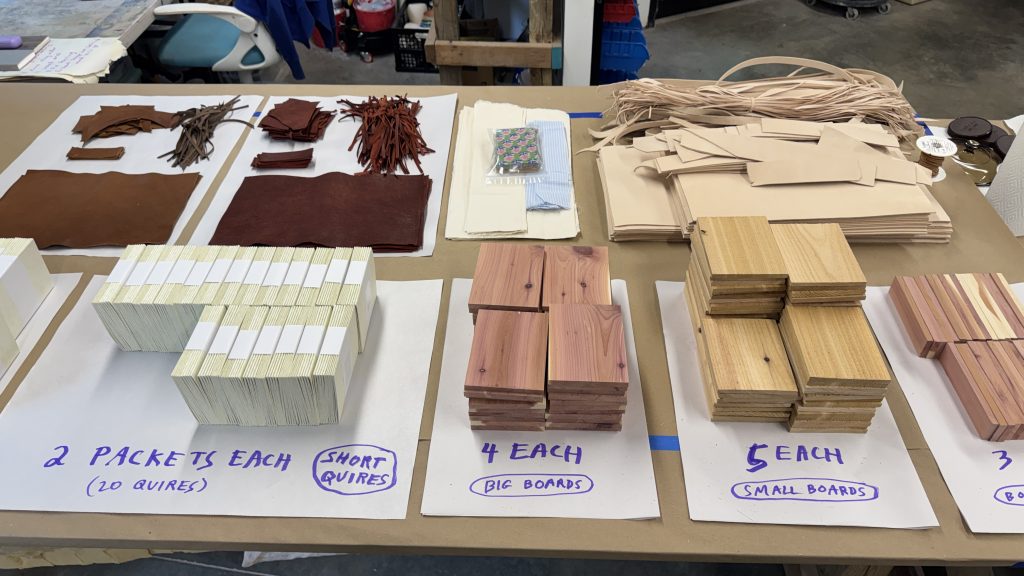
Table with neat stacks of prepared materials for workshop, including boards, leather and textblocks.
Some of Bill’s preparation for the Ethiopian Bookbinding class…so organized!

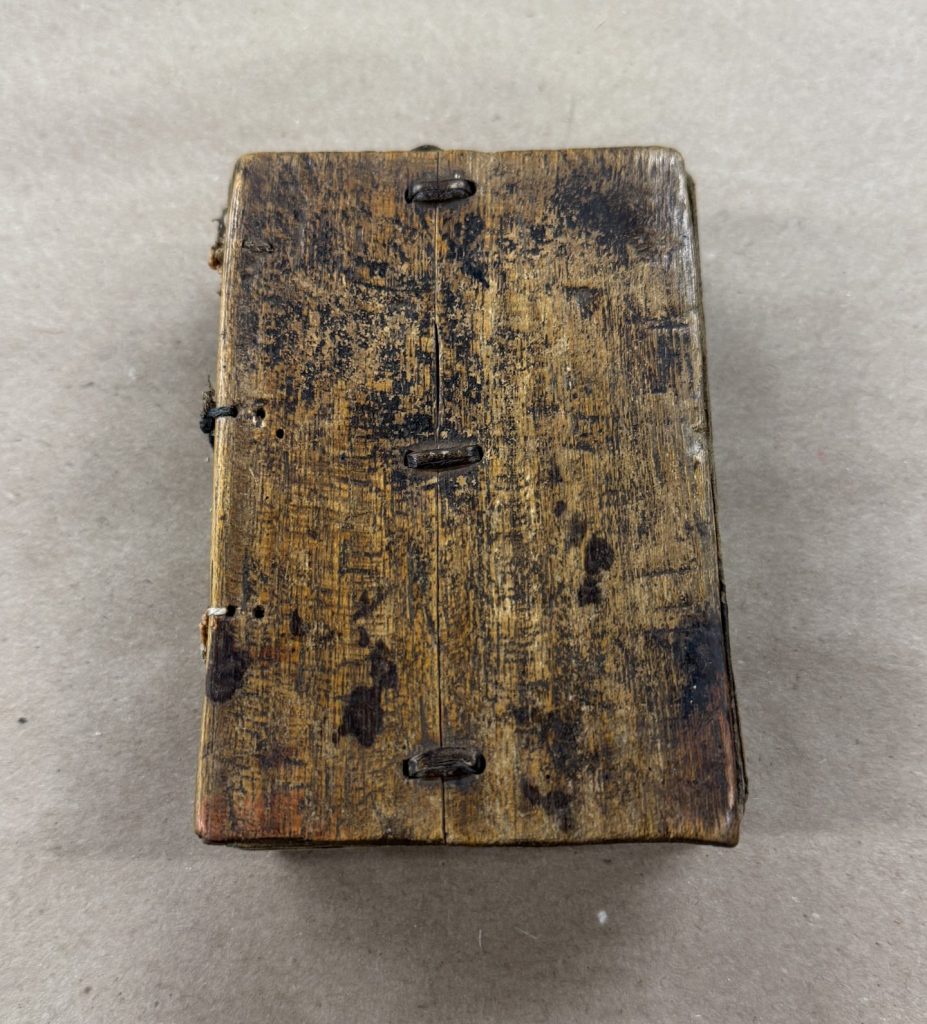
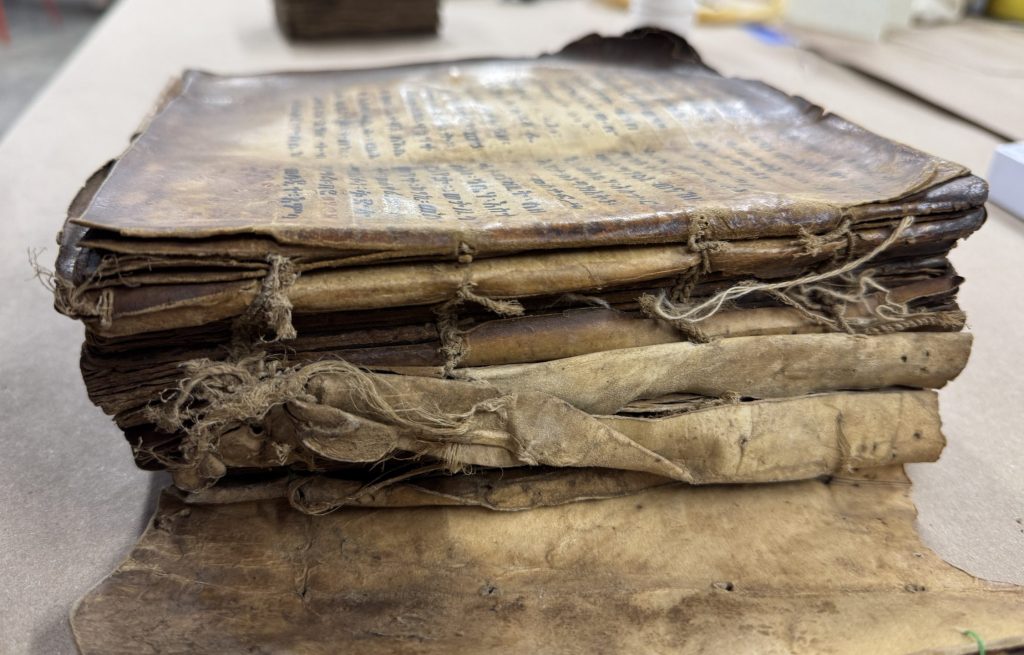
Bill also had two exemplars of Ethiopian binding, both of which showed traits we would be replicating throughout the class; a smaller volume (pictured in the first gallery below, belonging to Todd Pattison) and a larger binding (pictured in the second gallery below, belonging to Bill).
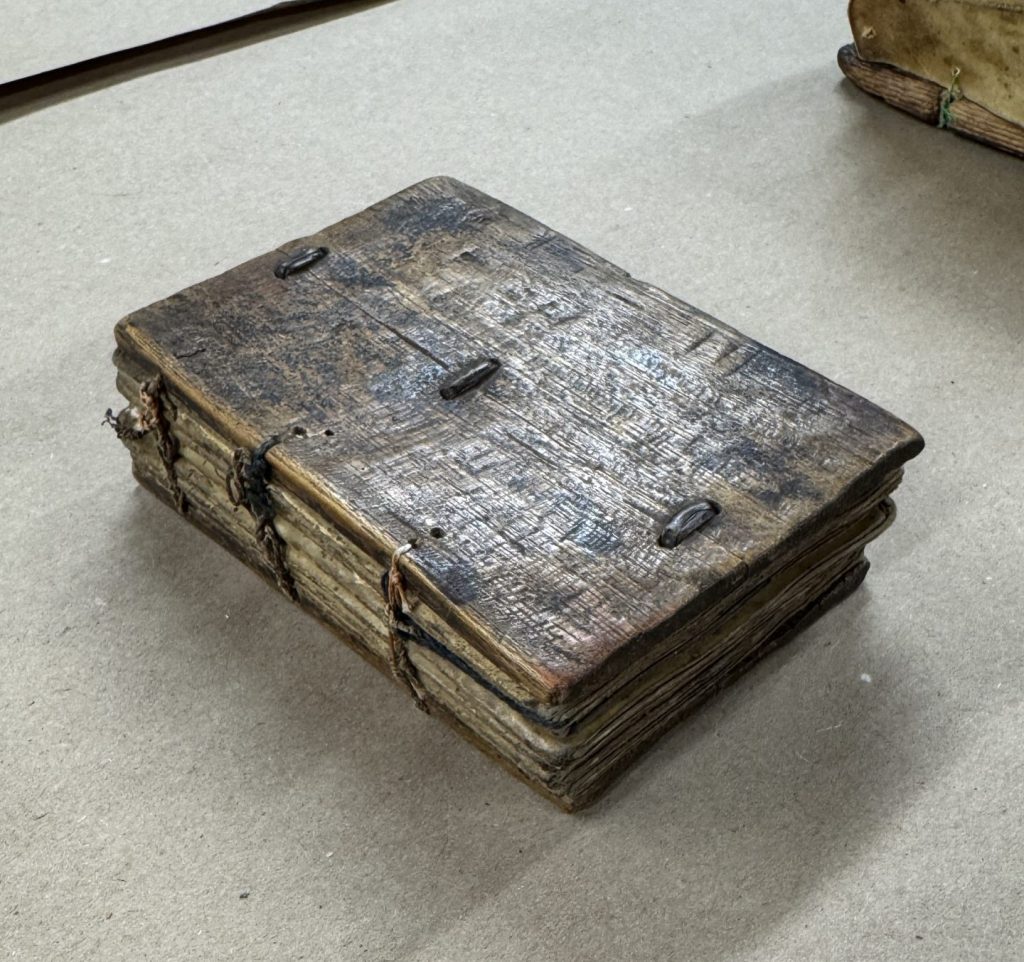
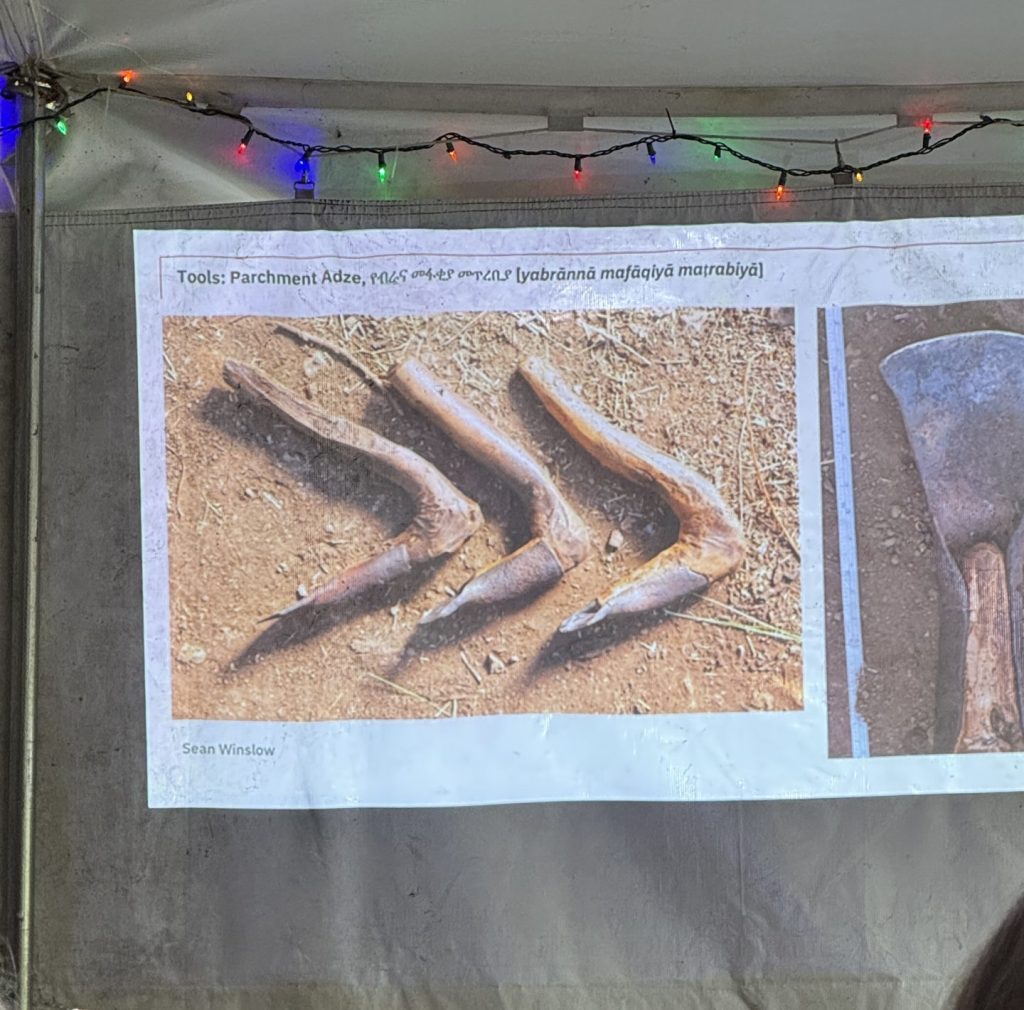
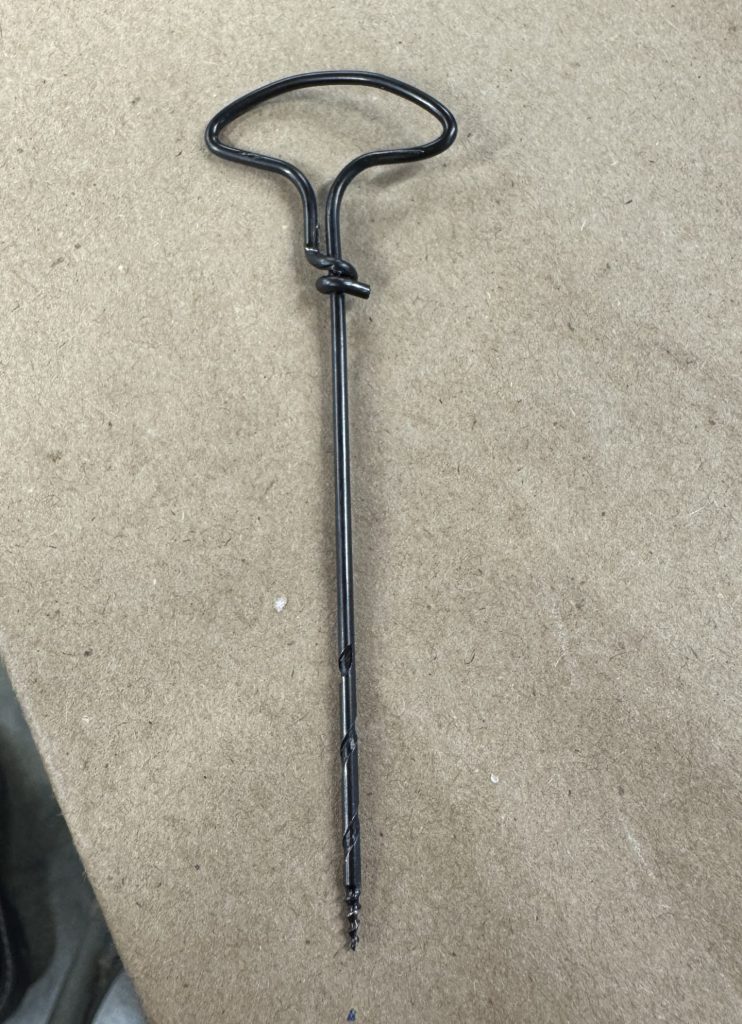
The class was a true immersive experience in Ethiopian bookbinding, with Bill really aiming to give us a taste of as many aspects of the tradition as they possibly could. From thread making out of deer sinew and parchment to hand-drilling our tunnels in our wooden boards with a heated awl, though for practicality sake and the sake of our poor awls, we just did that as a practice on a sample board and we used a pin-vise and a gimlet to drill and bore the holes for the rest of our models. Bill even constructed their own parchment adze, an Ethiopian took used to remove the hair from the skin of the hide, from a branch found at OxBow (see below).
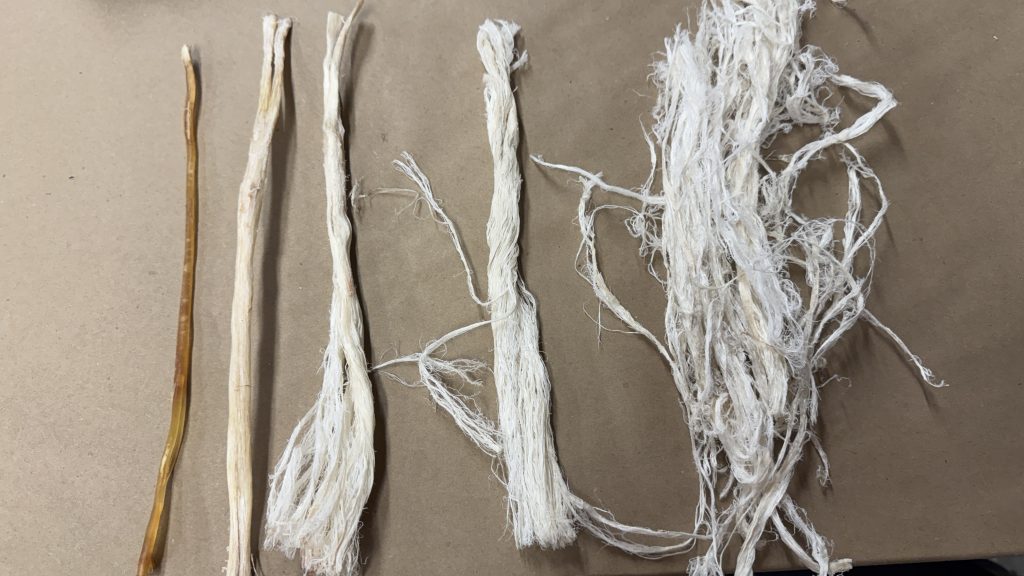
A series of deer sinew in various stages from simply dried on the left to pounded, white and stringy on the right.
Deer sinew in various processing stages.
Instructor demoing how to attach the textile board lining and leather patch attachment before covering with leather.
Bill demoing how to attach the textile board lining and leather patch attachment before covering with leather.

Throughout the workshop we made two primary wooden board models with paired station sewing (four sewing stations, using 4 needs and two lengths of thread) and the “typical lacing hole arrangement” which is the most commonly seen example of board attachment (and what is used on the two exemplars). Of the two primary models we were creating, one was to be covered in leather. Prior to covering we added textile board linings and leather patches. Once covered, we created leather endbands that were then attached to the inner joints and anchored along the head and tail. The model was then blind tooled. Naturally, Bill had a plethora of historical examples of tooling designs for the class to look at for inspiration.

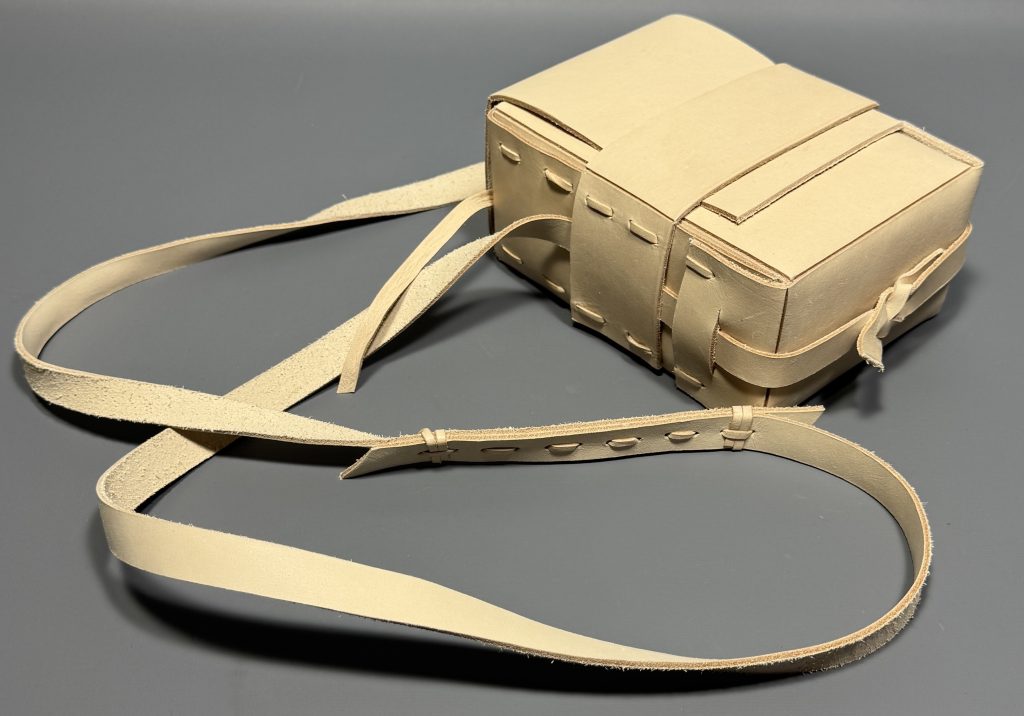
In addition, we could also make a textile over-cover, which I opted to do for my second model, since the over-cover is sewn around the book and meant to stay on. And then on the final day we made leather satchels. I was one of the few who opted for the more strenuous double-walled satchel (for my second model), which meant punching through three layers of thick leather in multiples sections of the satchel, but I’m very happy with how the satchel turned out. It even has a pull string to allow you to remove the book more easily, as it is meant to be a snug fit (which mine is!).

Bill also prepared additional boards and text blocks for class participants, if they were interested, encouraging us to try three station sewing at our leisure. For those who were interested, we dyed some cotton thread red in order for us to better see the various three station sewing patterns. Of those, I tried the hook variation and the pick-up variation. I also split the board of one of these models so that I could repair it it with a common thread repair.

Finished Models

Beige leather satchel with strap that has been woven together with strips of leather to extend the length.
One piece, double-walled leather satchel.
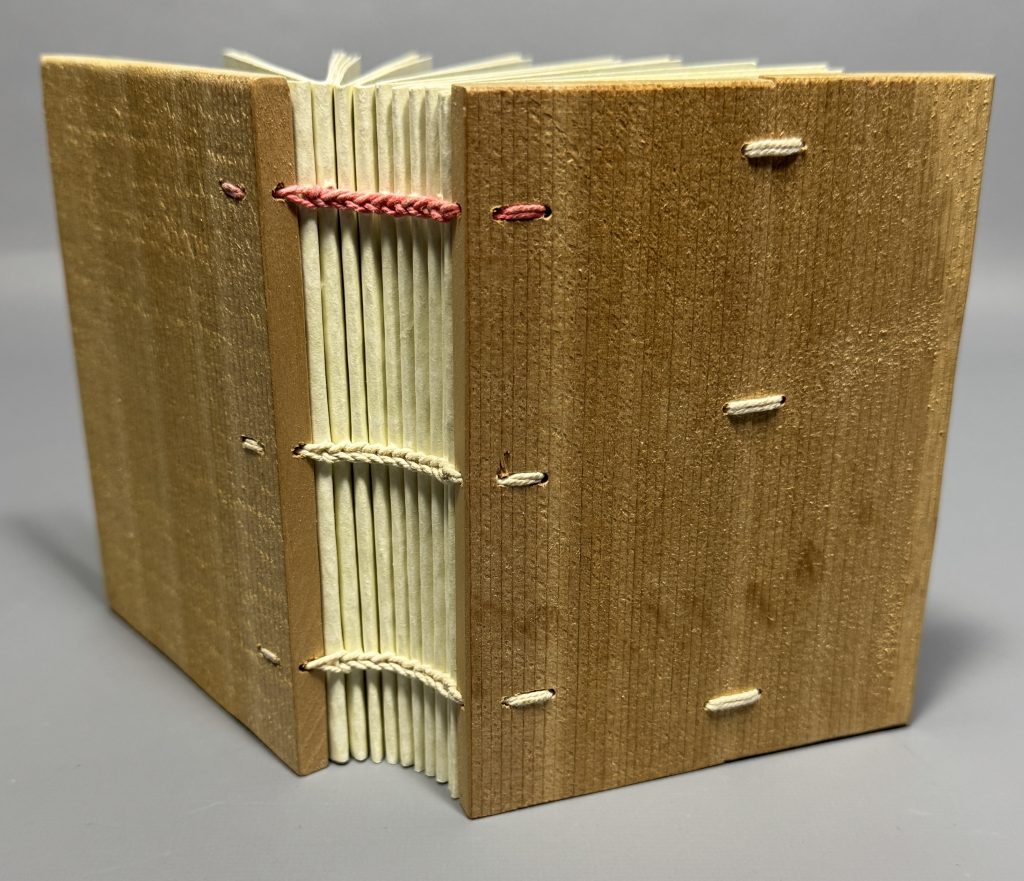
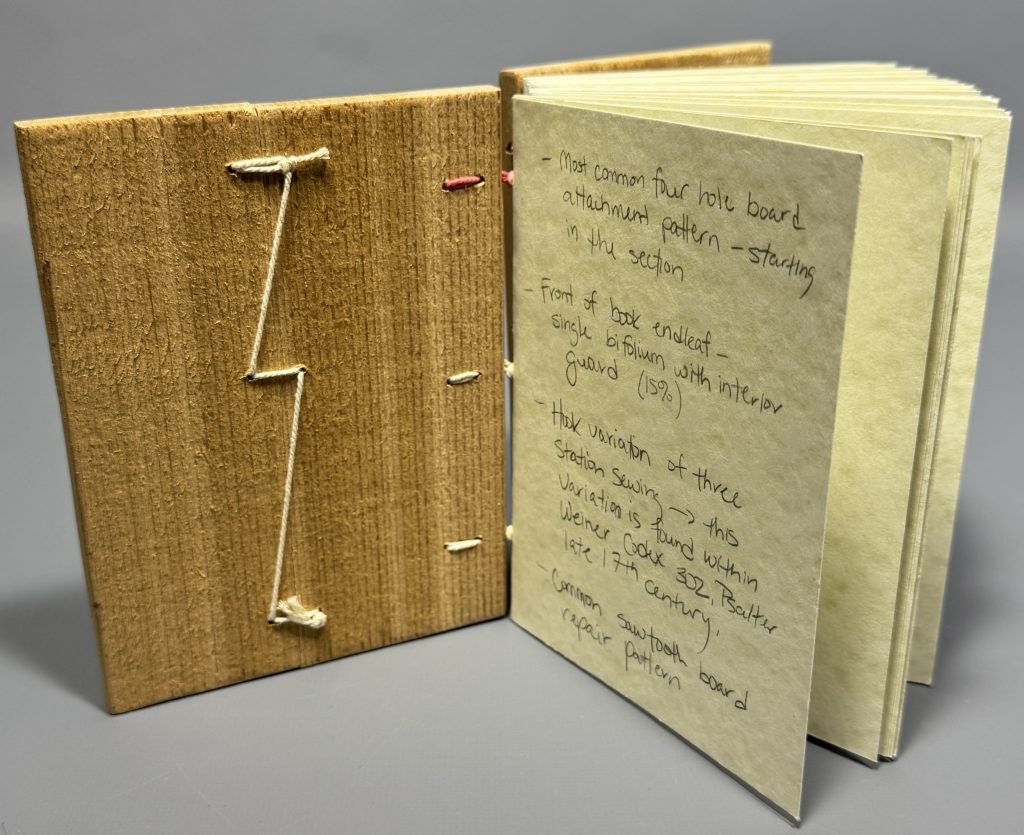
Two additional models with 3 station sewing, using dark pink thread to show how the pattern works. One book has a broken board that has been mended with thread.
Left: Pick-up variation of three station sewing, Right: Hook variation of three station sewing with broken board repaired with thread.

Overall, it was a wonderful experience, and I walked away with so much knowledge and appreciation for the traditions, materials I worked with, and the new people I met.

If you haven’t checked out the two reels recapping my experience at PBI on the Preservation Lab Instagram, I highly recommend taking a couple minutes to watch them:

Session one recap:

Second session recap:

Jessica Ebert – Assistant Conservator

A huge thank you to my supervisor, Holly Prochaska, for her continuous support in my professional development and to my Associate Dean, Brian Gray, and UC Libraries for the financial support for this impactful experience. And also thank you to the Ohio Preservation Council for the development grant which help to subsidize some of the funding as well.
Fun with Copying Technology

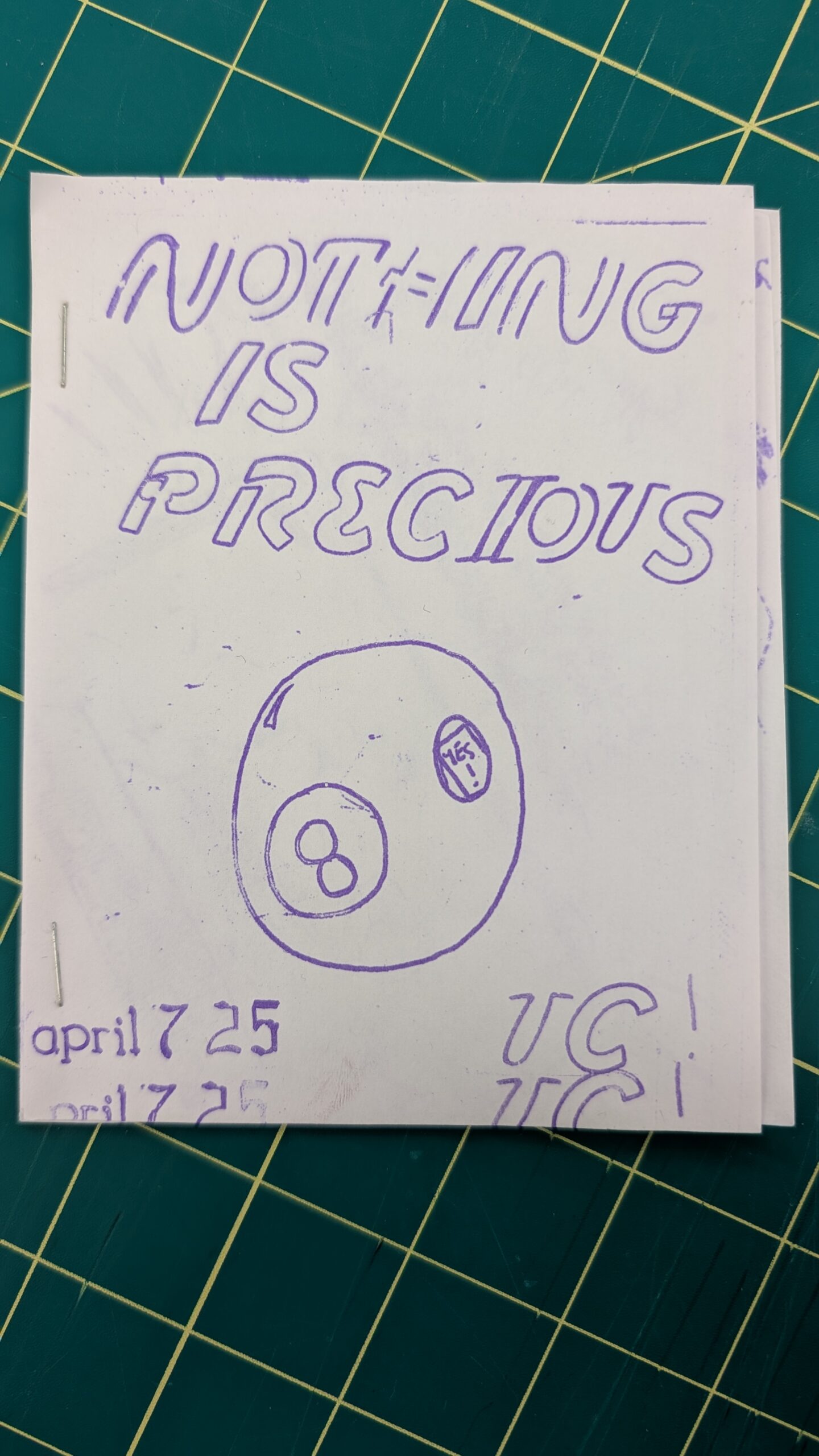
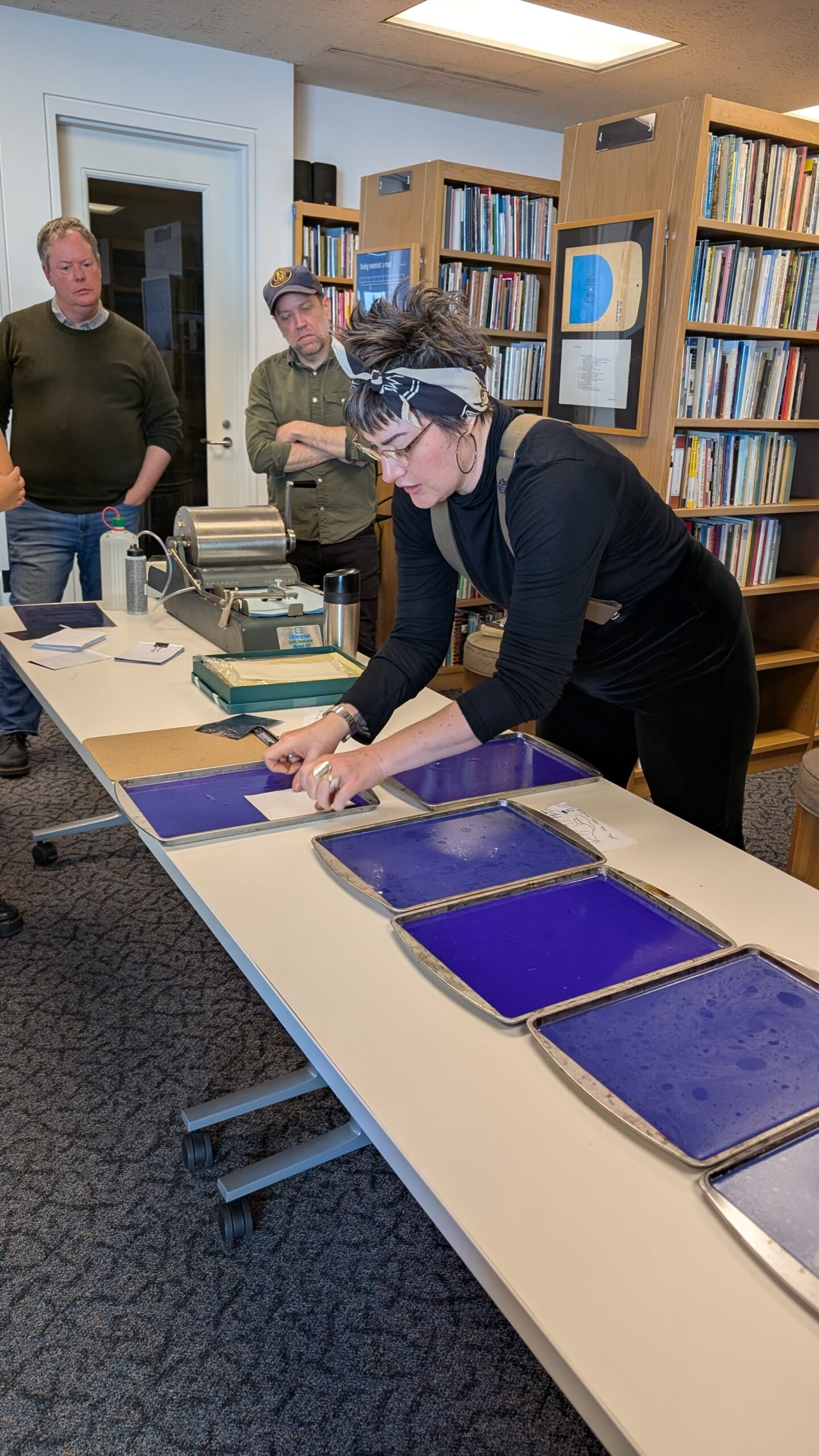
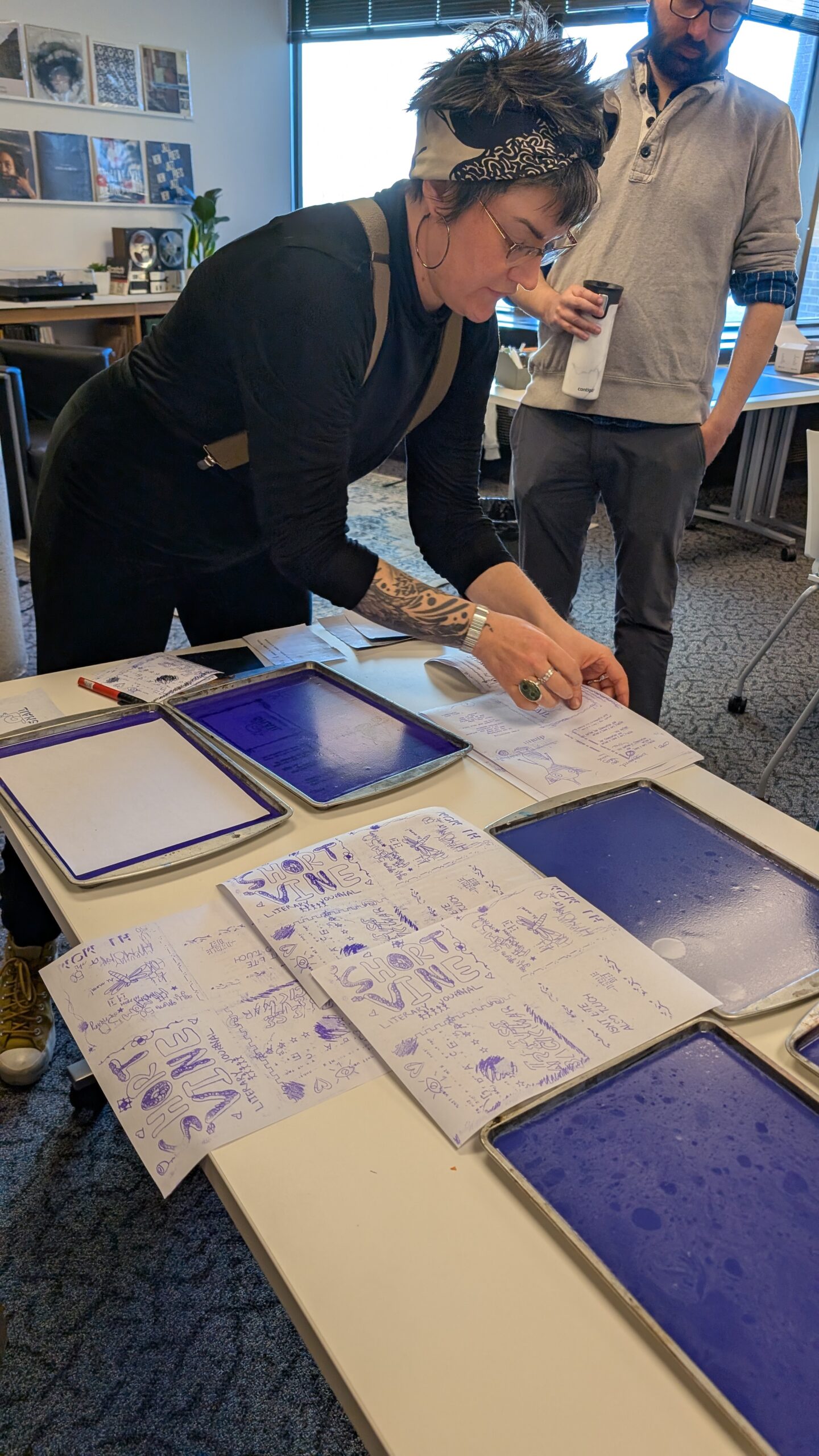
On Monday, April 7, the Archives and Rare Books Library along with the Elliston Poetry Room hosted a workshop with Rich Dana. Rich is a copier artist and founder of Obsolete Press, and he teaches at the University of Iowa Center for the Book and the Center for Book Arts in New York. The workshop covered obsolete duplicating technologies, which covered the mimeograph and hectograph.

Along with his assistant Leisha, a performance poet and publisher herself, Rich talked us through how to use these machines. The hectograph, also known as a gelatin duplicator, used gelatin in trays as the matrix. Master copies were created using spirit tattoo paper, then the master was pressed to the gelatin matrix. Once the design was down on the gelatin, a fresh sheet of plain paper was pressed to the gelatin matrix, and the design transferred over to the paper. This method can be used multiple times — we made at least twenty copies off it, and the fading was minimal!

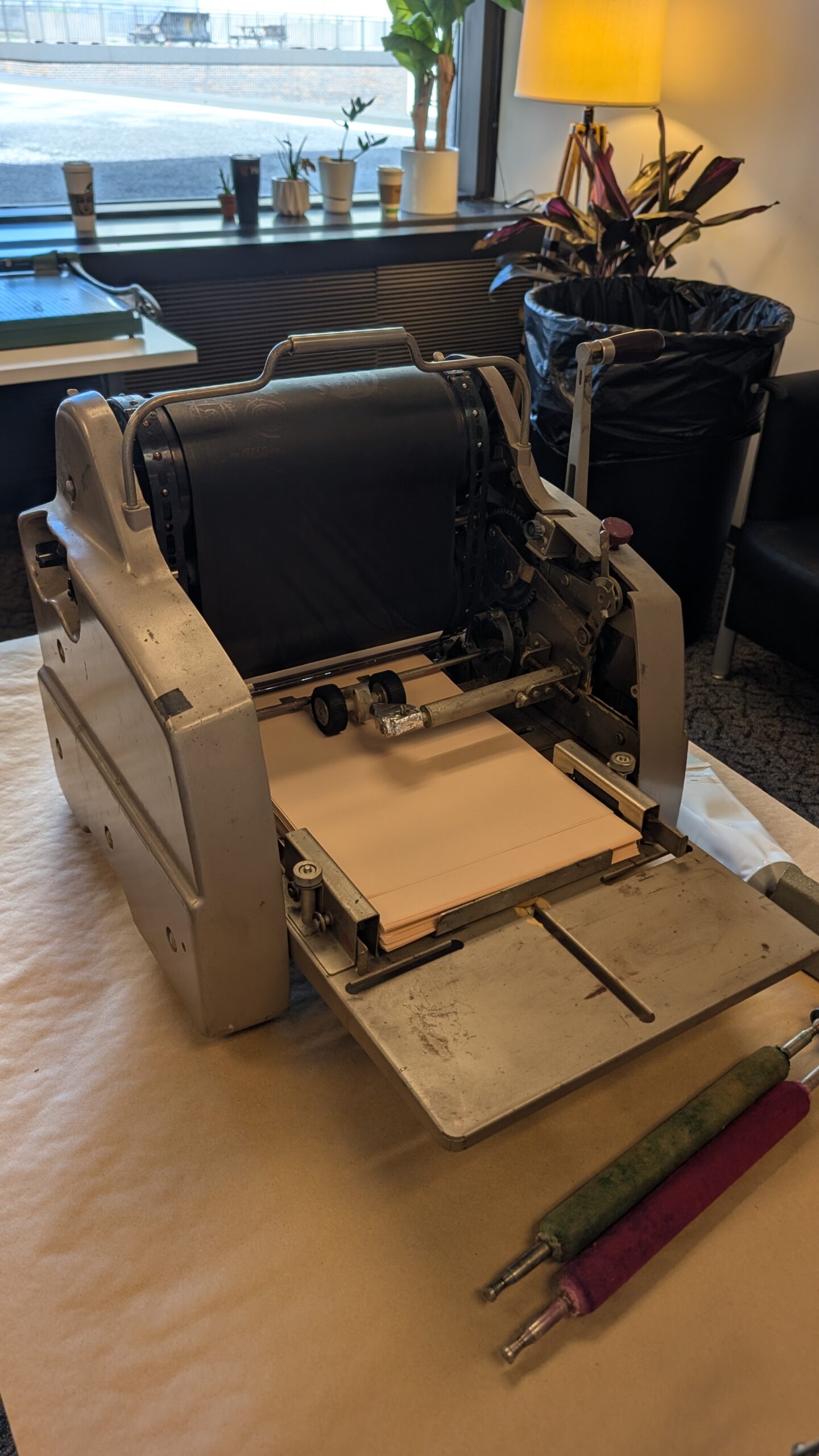
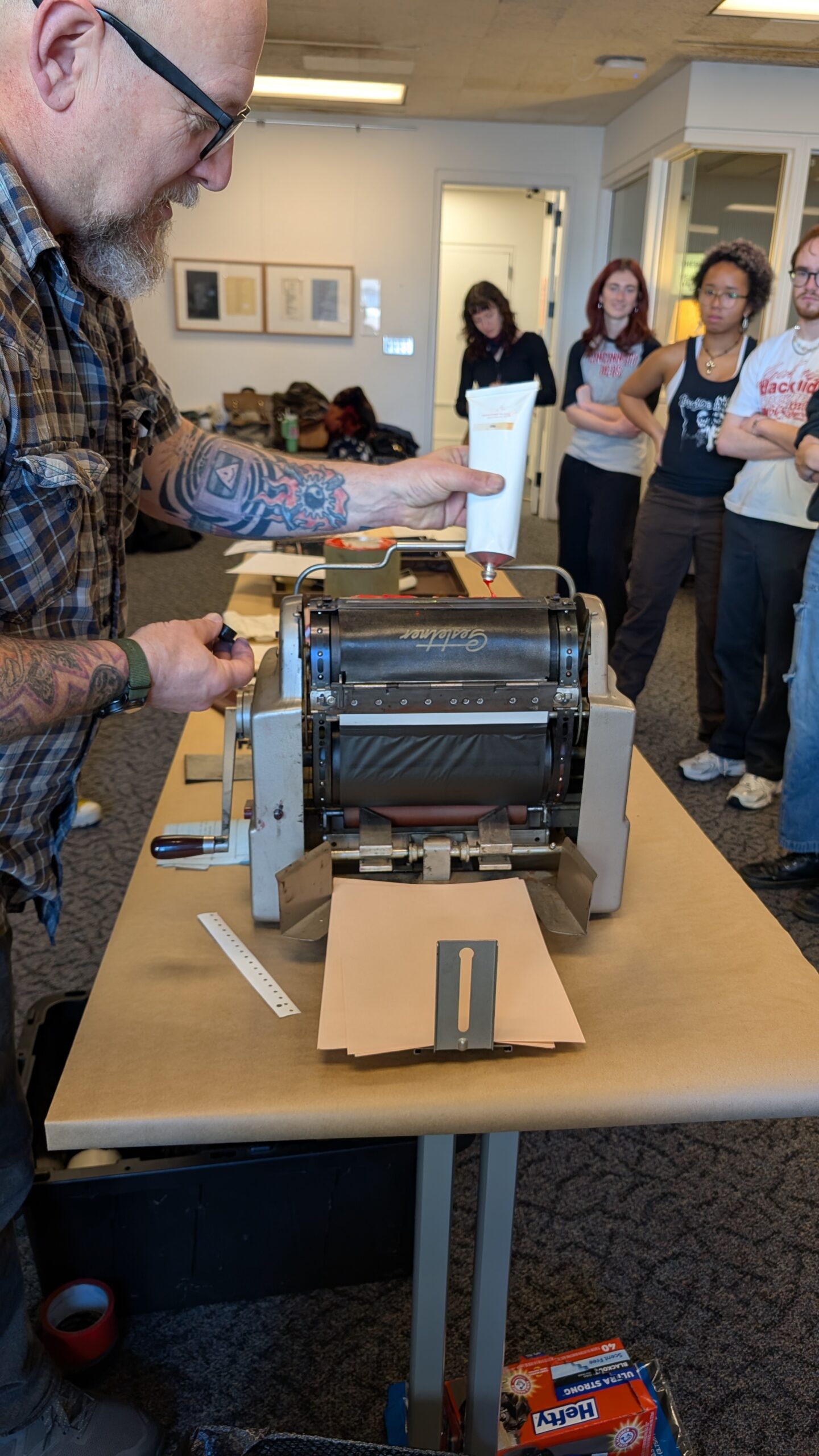
The mimeograph is an upright machine with a crank that picks up the paper and rolls it through the stencil. With a big roller that holds the stencil, the machine forces ink through the stencil and onto paper to create copies. The user must manually put ink on this machine before using it.

Getting to play with these two technologies was so much fun. We got to create our own stencils that we then made copies of and turned into a zine! We were able to use typewriters or styluses, stencils and our own creativity to create our stencils for these pages that we printed. It was amazing to see technology that’s not so modern still in use and working, and to play around with that technology and still use it to create was inspiring.

Image of the zine created by the workshop participants on the mimeograph machine.
The cover of the zine we created with the hectograph.

Nicole Browning — Library Conservation Specialist

Otto Ege: Villain or Hero?

Introduction

Otto Ege (1888-1951) was a real-life figure known for his involvement in the dispersal of medieval manuscripts. Whether he is considered a villain or a hero depends on the perspective and context in which his actions are viewed.

Ege was a book dealer and collector who gained notoriety for breaking apart medieval manuscripts and selling individual leaves or pages to collectors and institutions. He would disassemble bound illuminated manuscripts and sell them as separate pieces or as a collection of works, thereby dispersing the original works.

Otto Ege: Villain or Hero?
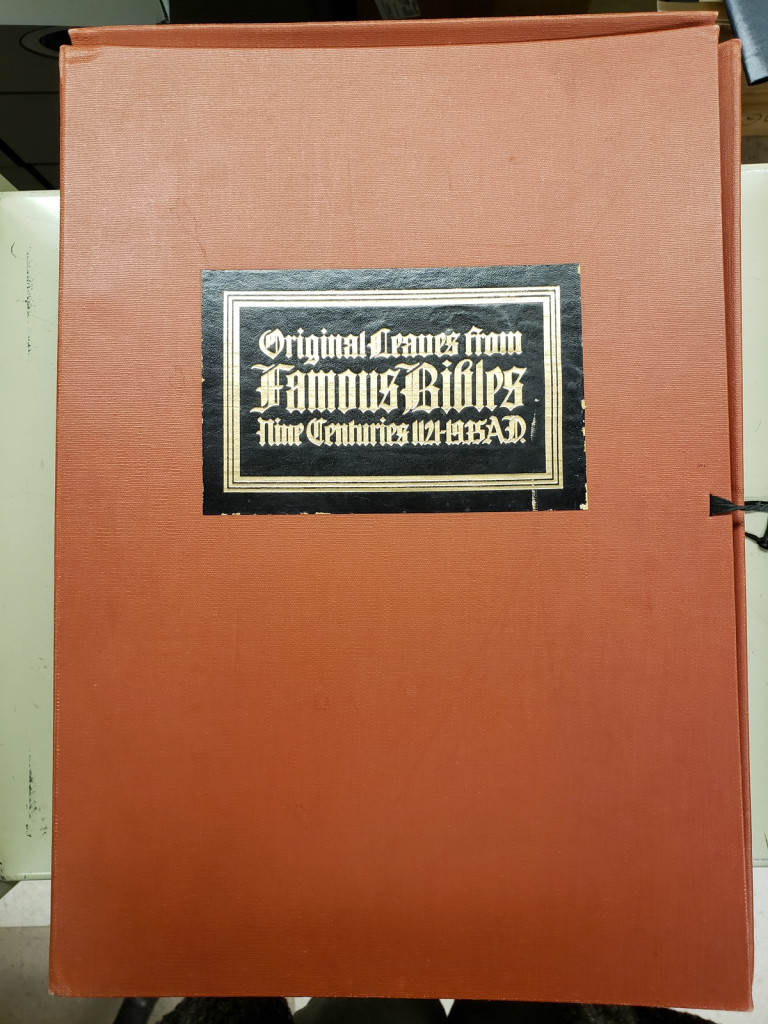
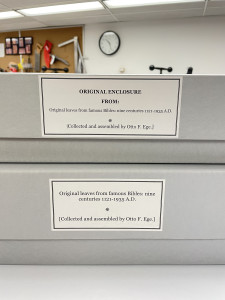
Original portfolio case
Otto Ege: Villain or Hero?
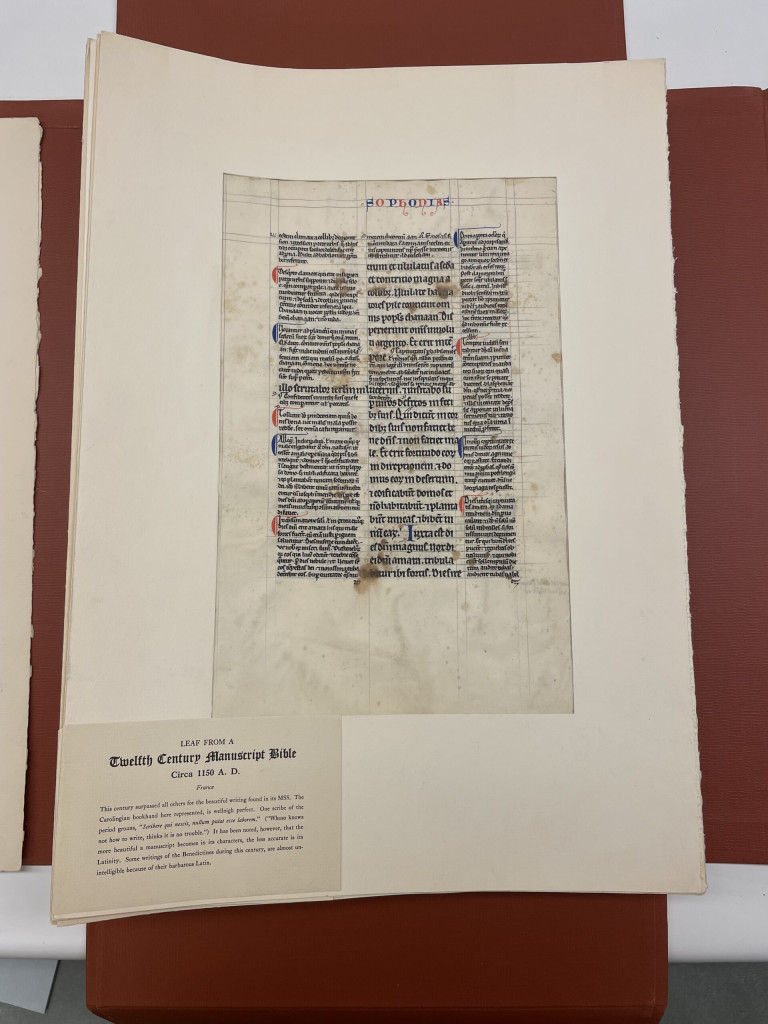
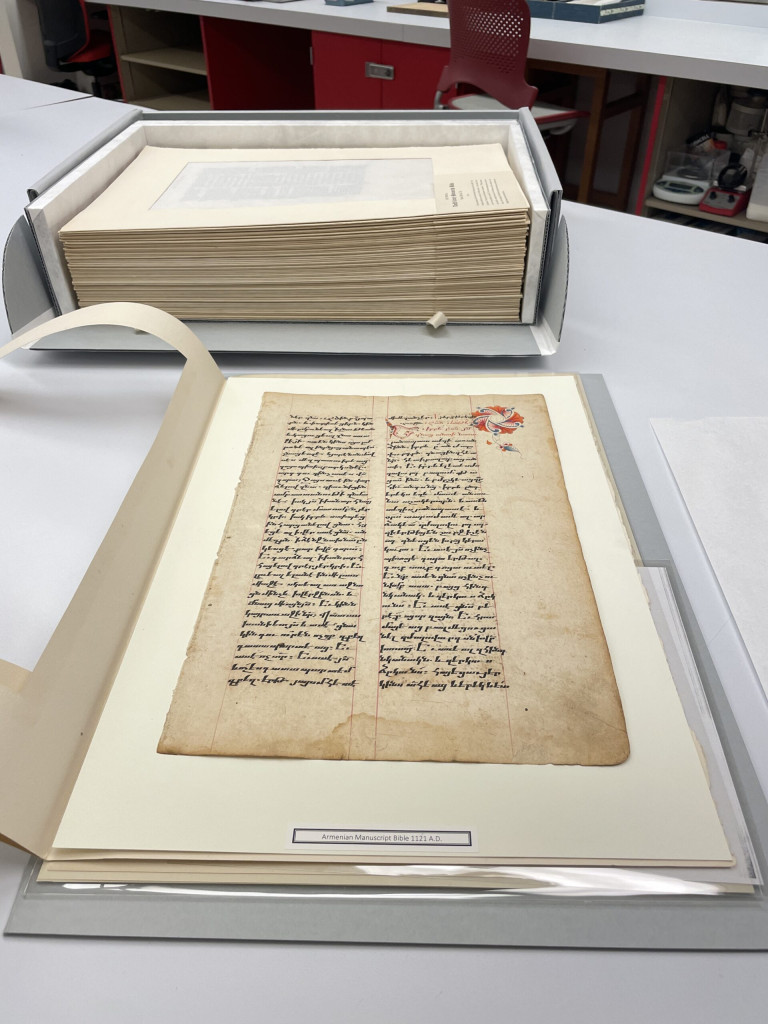
Leaf from 12th century manuscript bible
Otto Ege: Villain or Hero?
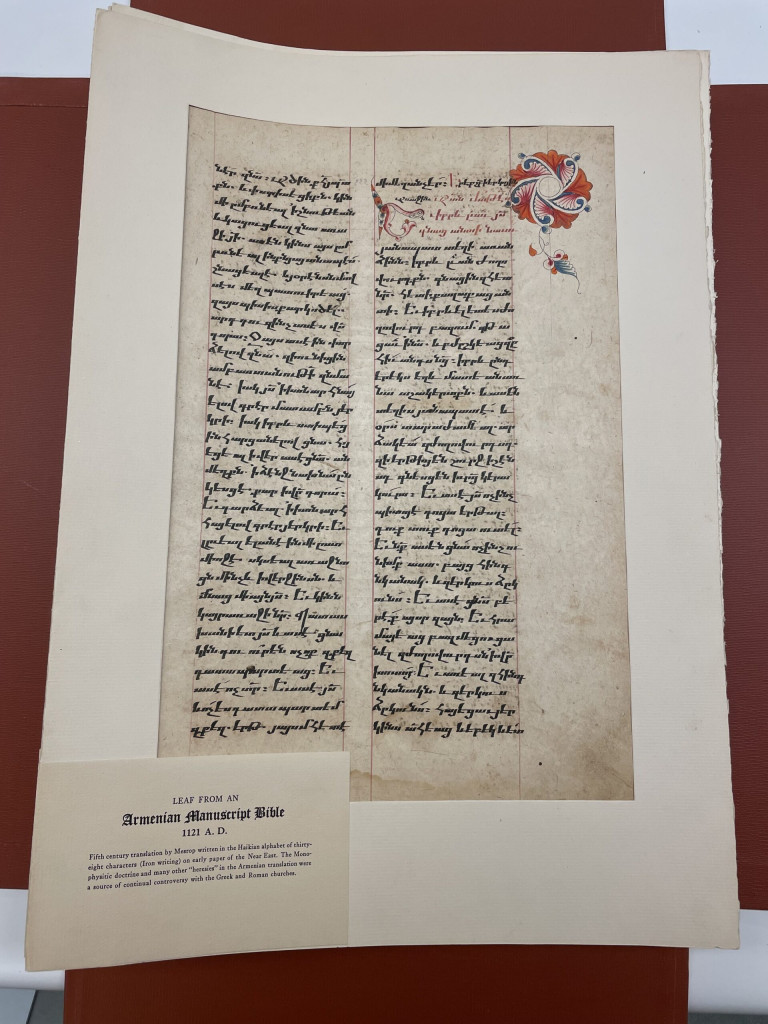
Leaf from 12th century Armenian bible

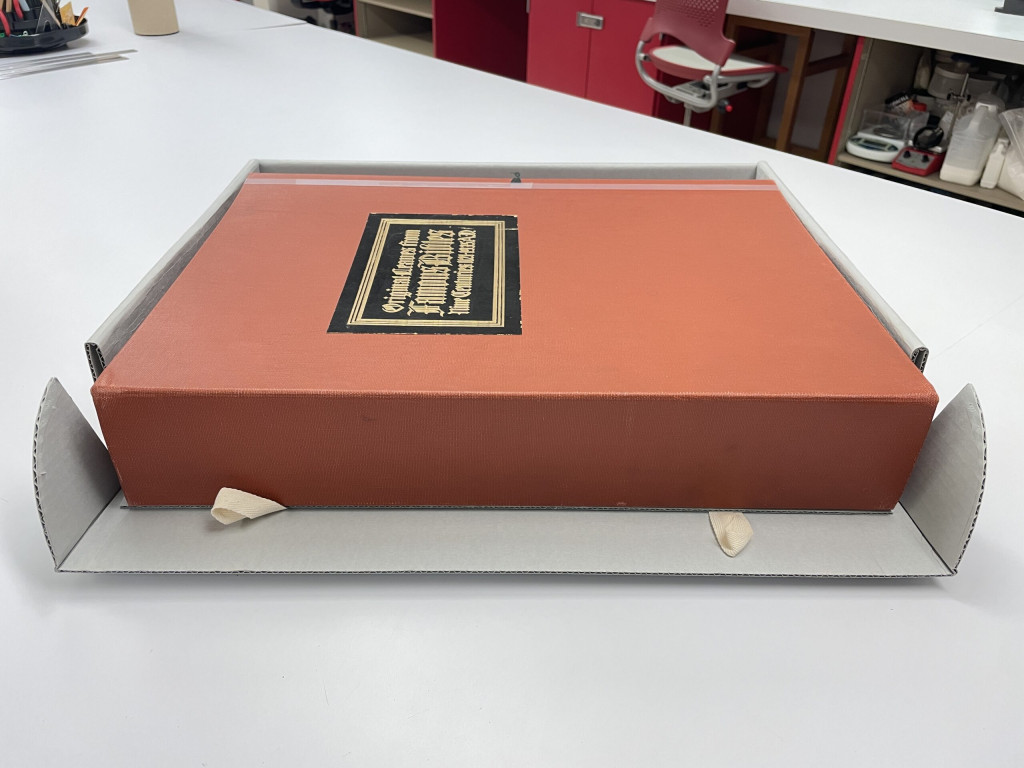
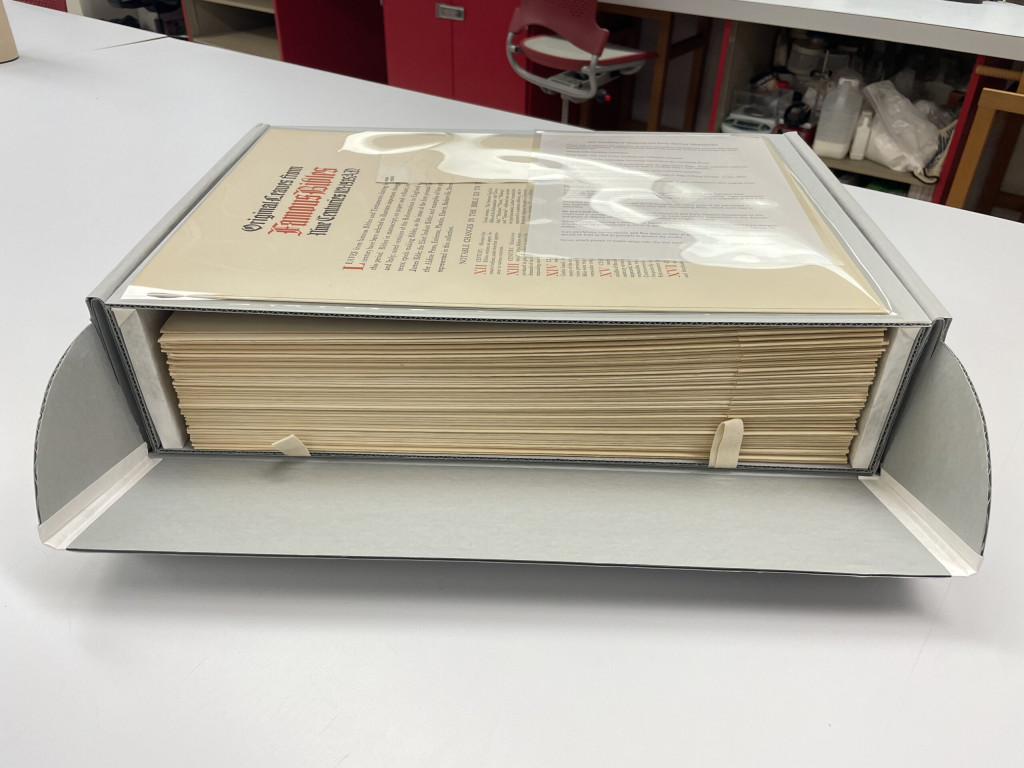
This is one of four Otto F. Ege collections owned by the Cincinnati and Hamilton County Public Library before treatment.  It is titled Original Leaves from Famous Bibles, Nine Centuries 1121-1935 AD (call number R090 ffB582).  It came to the lab for better long term storage.

Villain

From the perspective of some scholars and conservators, Ege’s actions are viewed as unethical today. By breaking up unique historic manuscripts, he caused irreparable damage to the cultural, historical, and scholarly heritage they represented. The dispersal of these manuscripts makes it challenging for researchers to study them as cohesive and complete works, leading to a loss of valuable historical information and artistic context.

Hero

On the other hand, some might argue that Ege’s actions had positive effects. By selling individual leaves, he made rare and exquisite artworks more accessible to a broader audience, including institutions and collectors who might not have been able to afford an entire manuscript. This enabled more people to appreciate the beauty and artistry of these ancient texts.

Conclusion

Otto Ege’s legacy is a complex one, and opinions about him vary widely. However, it is essential to note that Ege’s actions occurred in a different time when the appreciation for medieval manuscripts as complete works of art was not as prevalent as it is today. Modern views on preservation and the importance of maintaining cultural heritage have evolved significantly. Ultimately, his actions highlight the ethical and moral dilemmas surrounding cultural heritage and the need for responsible stewardship of historically significant artifacts.

Treatment and Storage of the Public Library’s Collections

The Public Library owns four collections by Ege. Each have been receiving treatment to better improve their long-term storage. After the smaller collections received successful treatment, this larger collection followed suite.

Treatment

In their original format, the manuscript leaves were hinged to floppy paper folders with windows cut out for viewing. The original hinges were thick cloth, and in many cases, no longer functioning as the hinges became stuck in place. This prevented viewing the backs of the materials. The flexible folders overtime became U-shaped and were in need of supports to keep materials planar, especially during handling.

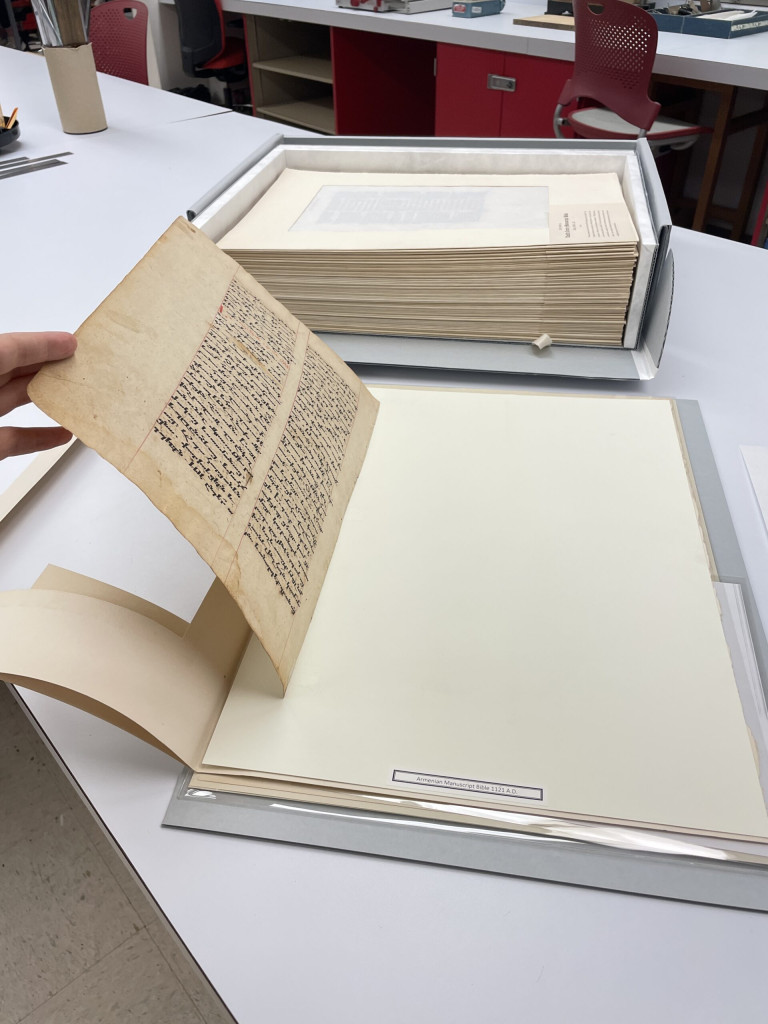
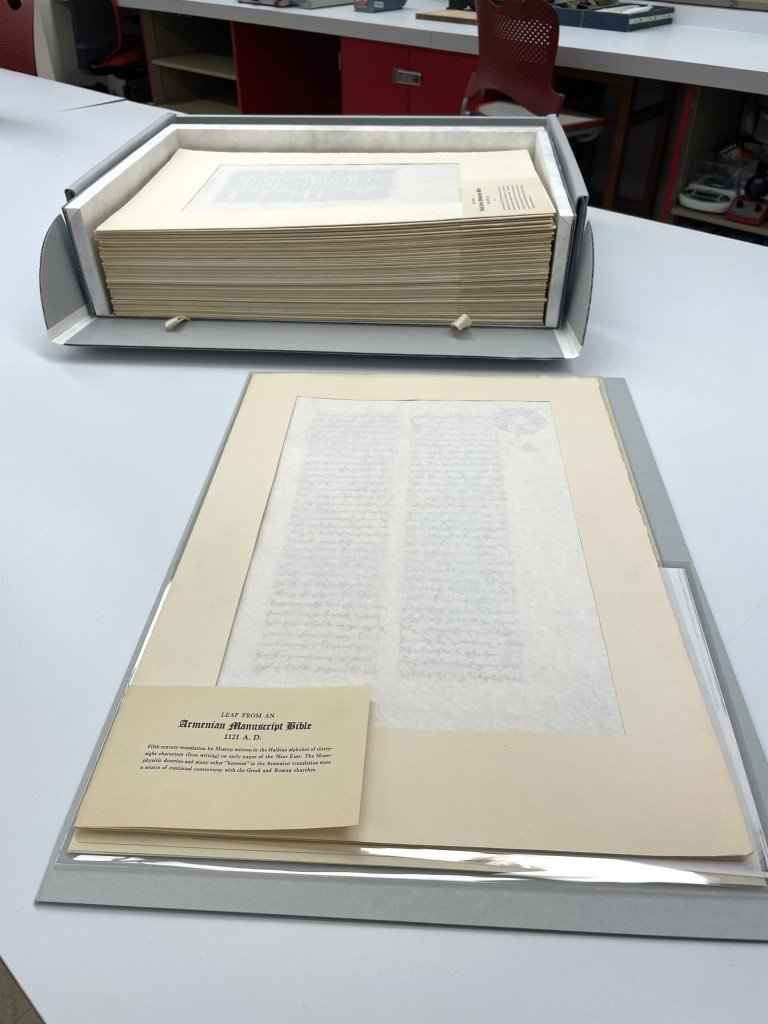
Individual leaves were unmounted from the original paper folders and re-hinged with kozo tissue and wheat starch paste onto archival 2 ply mat board supports. The mat board supports were then placed within the paper folders. Unbuffered interleaving tissue was then added between the manuscript and the folder window for long term storage to prevent the edges of the window from catching or rubbing onto the objects.

Otto Ege: Villain or Hero?
Armenian manuscript hinged to 2ply mat board support, stored within the original paper folder
Otto Ege: Villain or Hero?
The backs are now viewable!
Otto Ege: Villain or Hero?
Interleaving tissue protects the face of the manuscripts from rubbing along the edges of the windows

Storage

While other collections were retained within their original enclosures with a protective chemise, this portfolio was acidic and deformed with broken ties, so two new corrugated banker’s boxes were created to retain the original enclosure and store the manuscripts separately.

Otto Ege: Villain or Hero?

Additional Resources

The Public Library also owns Ege collections titled Fifty Original Leaves from Medieval Manuscript Western Europe: XII‐XVI century (call number R096.1 ffF469), Fifteen original oriental manuscript leaves of six centuries (call number 096.1 ffF469f), and Original Leaves from Famous Books, Eight Centuries 1240 A.D. – 1923 A.D. (call number R094 ff069).

The collection Fifty Original Leaves from Medieval Manuscripts is digitized and is available online in the digital library.

There are also multiple copies of the printed pamphlet by Otto Ege titled Pre‐Alphabet days. Interestingly, Genealogy and Local History own two copies in different formats. One copy is a cased‐in hardback with a single sewn gathering while the other copy is a single gathering pamphlet sewn into a paper case. Both pamphlets are original formats that would have been offered to buyers at different price points!

If you’re interested in further treatment details, check out our treatment reports on the Digital Resource Commons by searching for Otto Ege.

Ashleigh Ferguson Schieszer [CHPL] – Special Collections Conservator, Lab Manager

Nests and Eggs on Display at the Cincinnati Symphony Orchestra

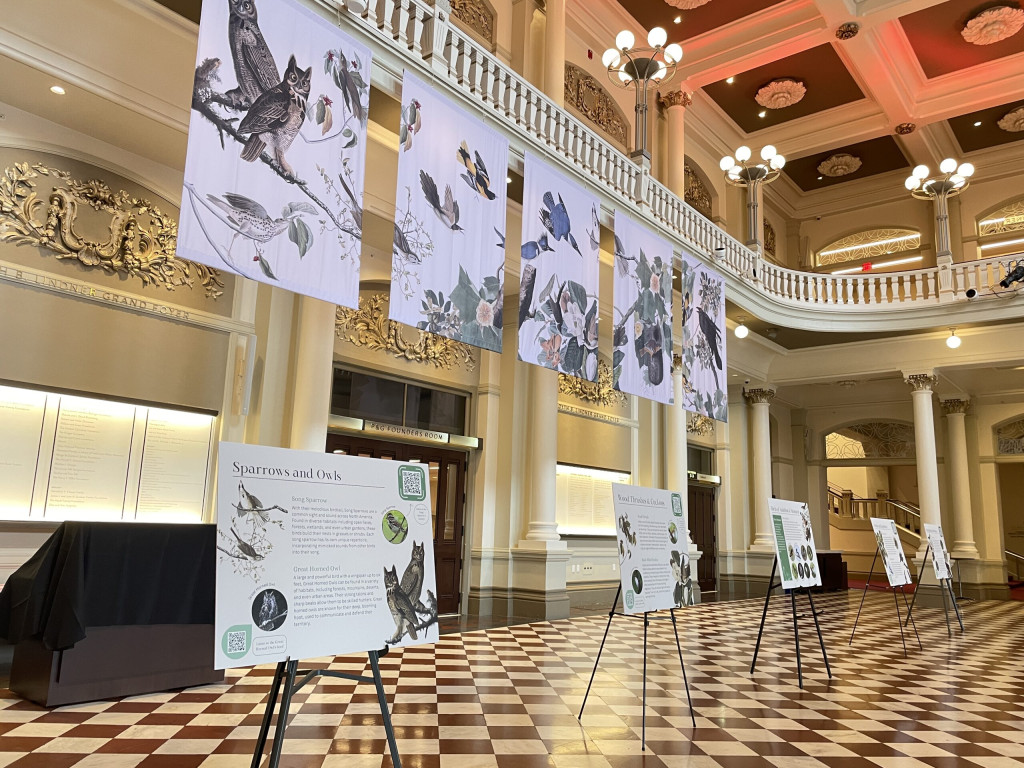
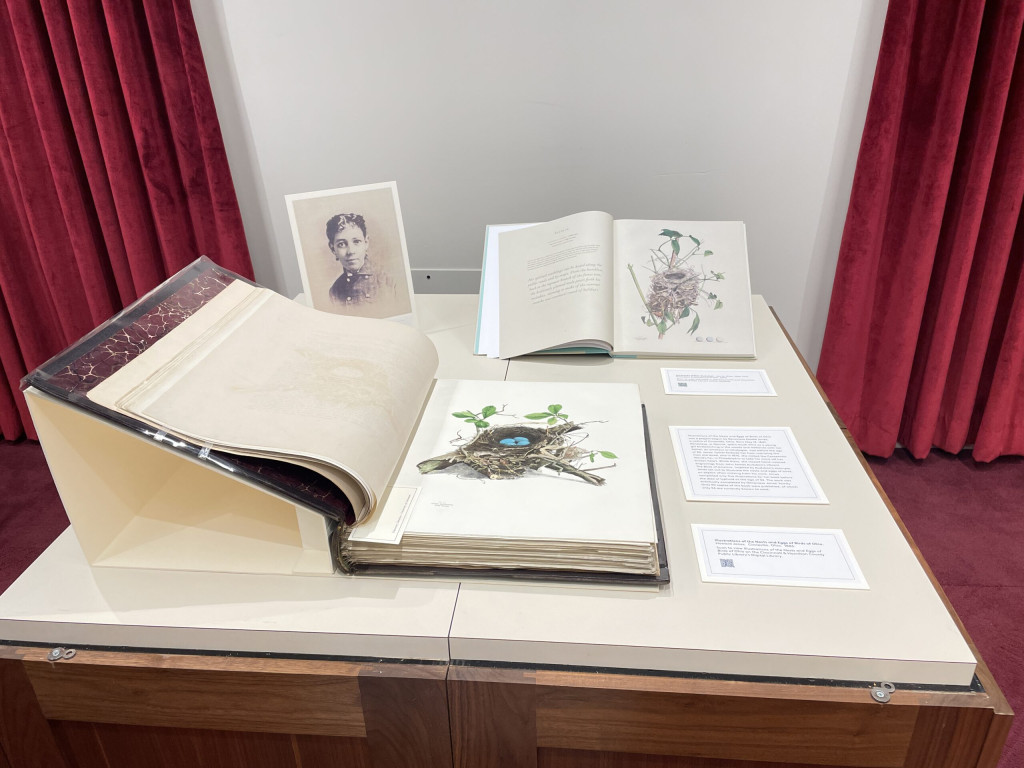
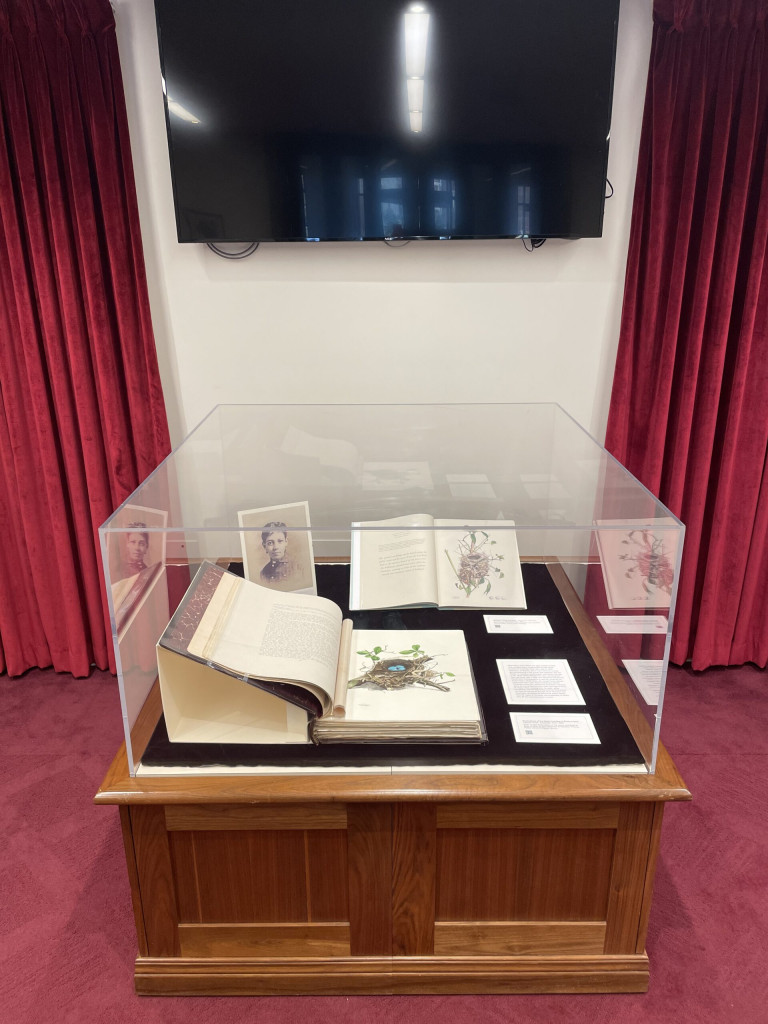
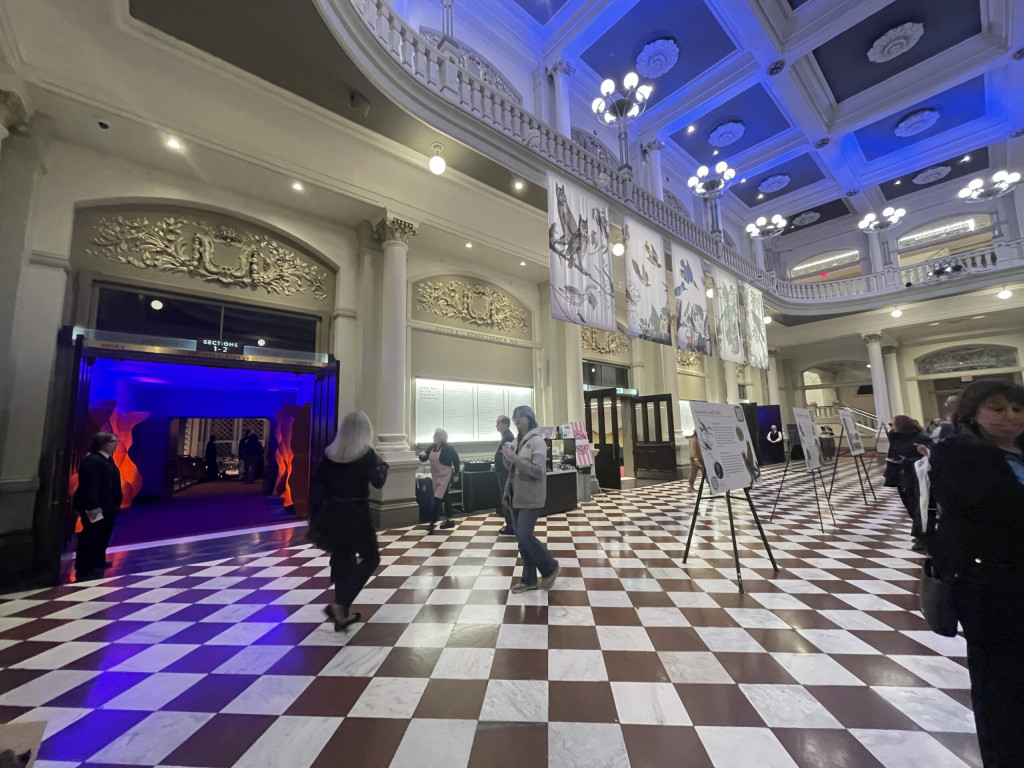
Illustrations of the Nests and Eggs of Birds of Ohio are on display at the Cincinnati Symphony Orchestra March 1st and 2nd as part of a musical program honoring Oliver Messiaen who was both a major composer of the 20th century and an ornithologist.

Synesthesia

Oliver Messiaen is well known for studying bird songs and interpreting their notes into musical transcriptions. His works are also unique in that Messiaen experienced synesthesia which greatly influenced his creations. Synesthesia is when a person perceives more than one sense at a time, such as Messiaen who experienced colors when listening to music and was able to see sounds. 

Cincinnati Symphony Orchestra Program

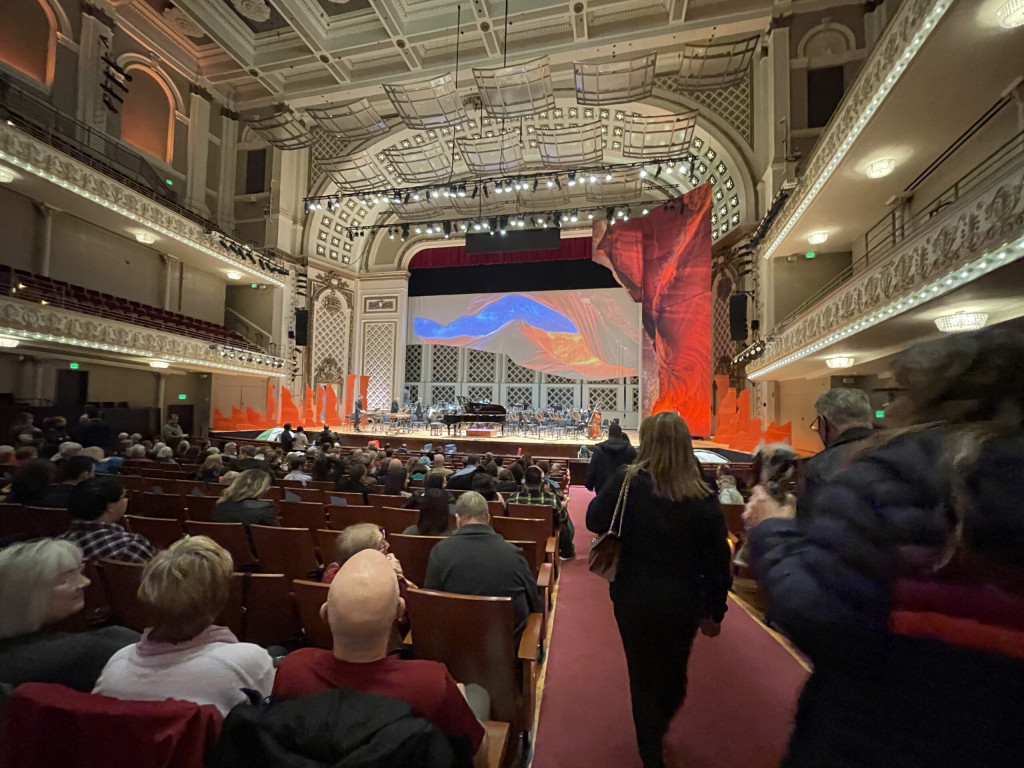
The program at the CSO honors Messiaen by incorporating both music, color, and bird visuals to invite the audience to experience a unique multi-sensory experience. Messiaen’s Des canyons aux étoiles (“From the Canyons to the Stars”) will be performed  by the conductor, Matthias Pintscher, and pianist Pierre-Laurent Aimard.

Nests and Eggs on Display at the Cincinnati Symphony Orchestra
Click the image for a link to the digital program for the CSO Proof: From the Canyons to the Stars

“Inspired by his visits to Utah’s Bryce Canyon and Zion National Park, Messiaen’s Des canyons aux étoiles (“From the Canyons to the Stars”) depicts the birdsong and red rock hues he experienced during his time in the desert… Accompanied by immersive video-art, Springer Auditorium will be transformed, allowing listeners to escape into the southwestern landscape and experience a synesthesia of their own.” – As described by the CSO website

Nests and Eggs

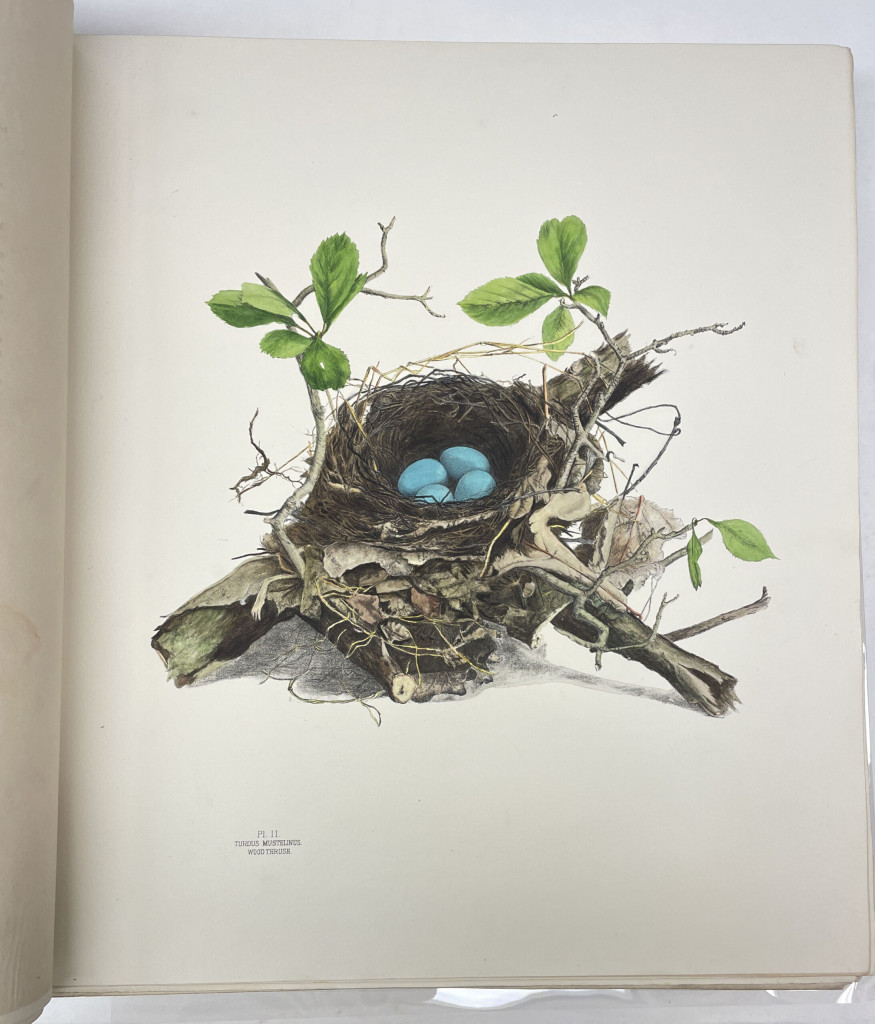
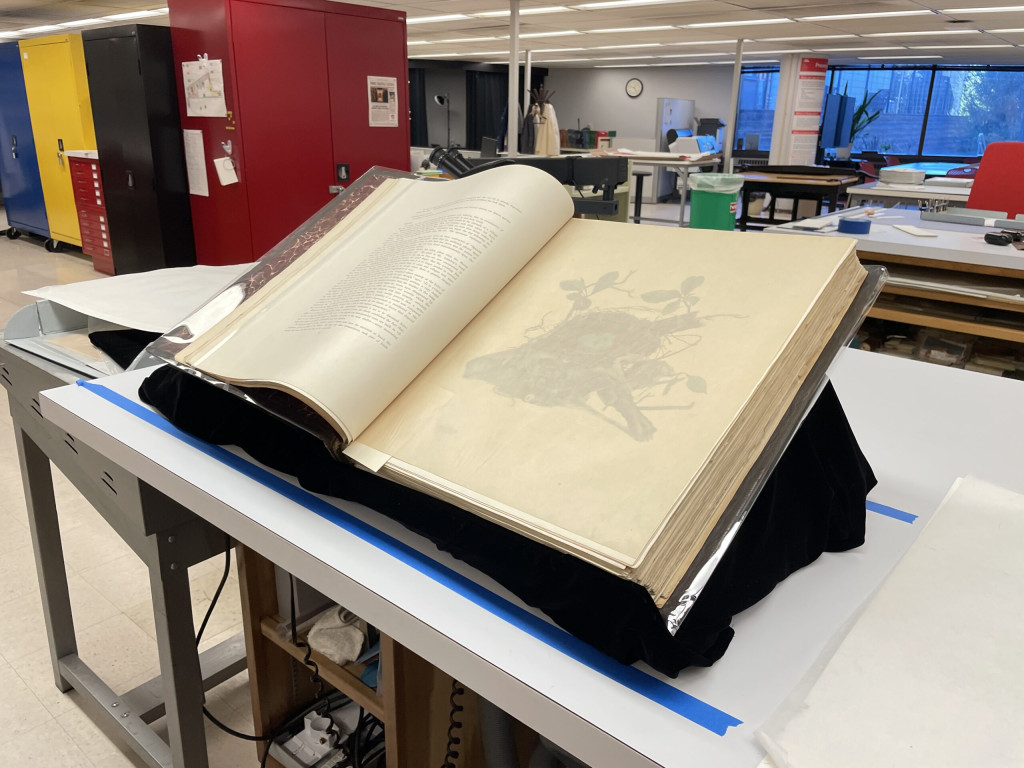
Complementing the musical performances, on display will be a page from Cincinnati and Hamilton County’s Illustrations of the nests and eggs.  The page showcases a local Ohio native, the Wood Thrush, who lays bright blue colored eggs within a nest made of old leaves, dried grasses and moss (rarely sticks).  The nest of the Wood Thrush also contains “rootlets” placed intentionally inside of the nest, resulting in a pinkish brown or black lining. The nest is “plastered” with a thin mud that is easily missed as it’s thoroughly worked in and covered.

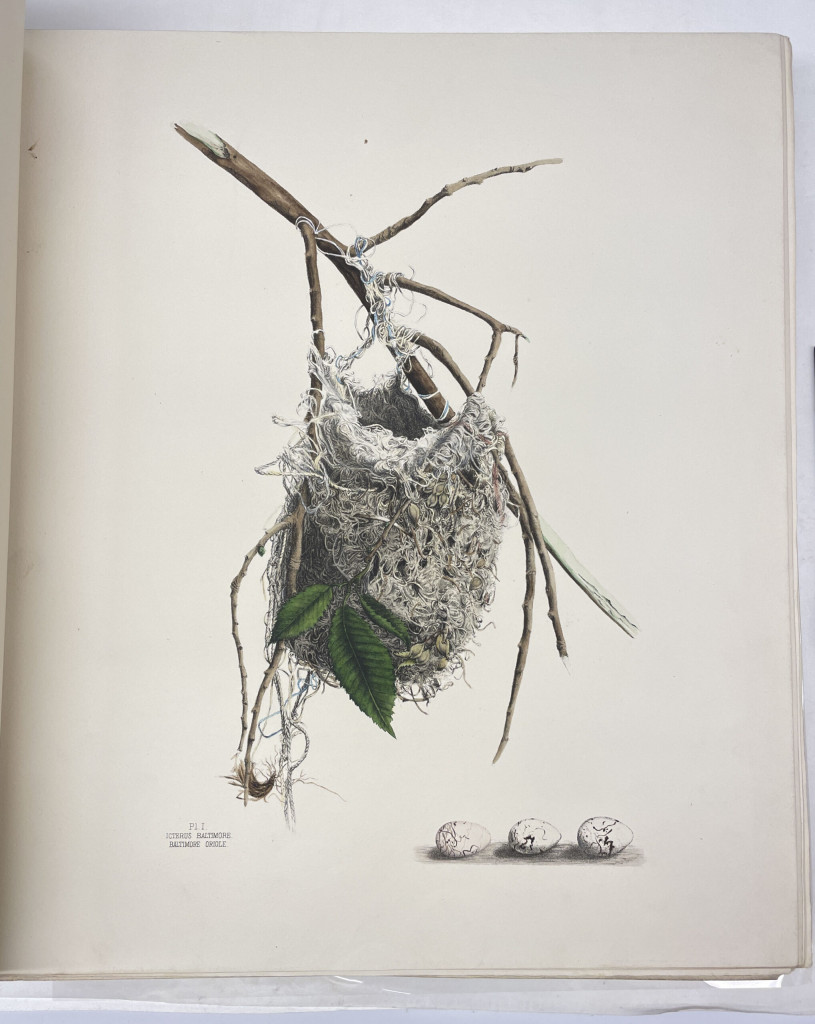
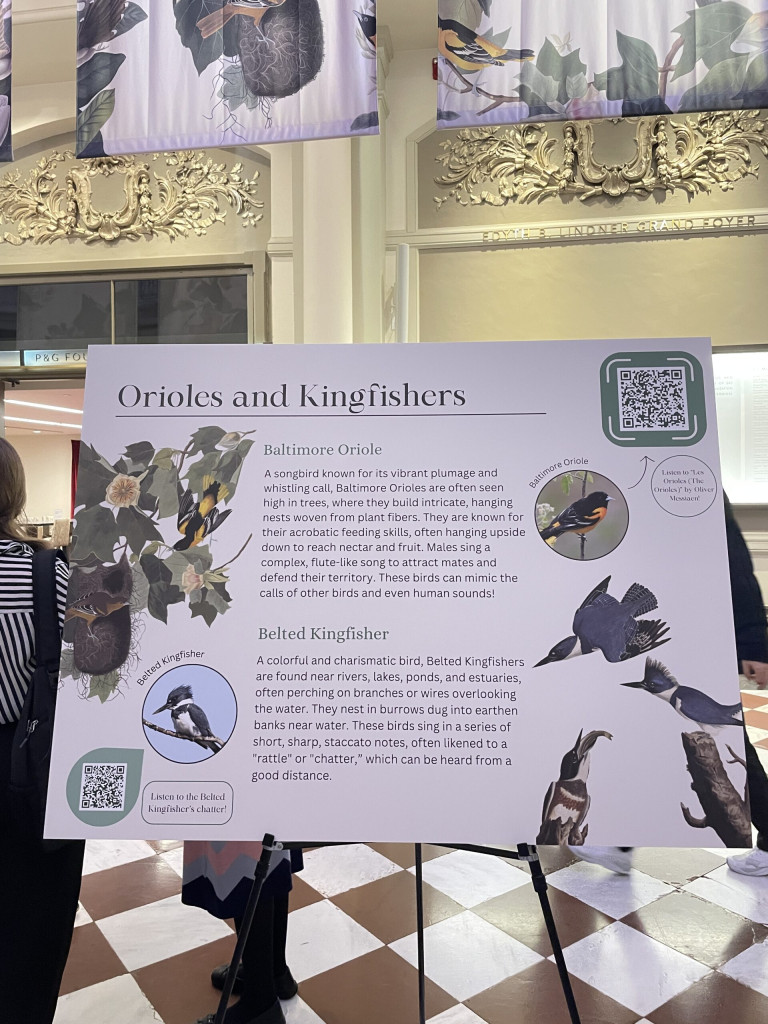
Nests and Eggs, while lesser known than Audubon’s Birds of America, is quite extraordinary in how it highlights the uniqueness of the construction of nests made by different bird species. Take for instance, the Baltimore Oriole’s nest, which primarily consists of strings and flax fibers to create a soft and long pocket.  Compare that to the more traditional nest of the Wood Thrush whose home is bowl-shaped with a wide opening.

Nests and Eggs on Display at the Cincinnati Symphony Orchestra
Baltimore Oriole – Plate 1
Nests and Eggs on Display at the Cincinnati Symphony Orchestra
Wood Thrush – Plate II

It’s also extraordinary that the illustrations are detailed lithographic portraits created by Gabrielle Estelle Jones and her family, despite not having been formally trained.  Their work was intended to be used as a companion volume to John James Audubon’s Birds of America.  While not as large as the Birds of America double elephant folios, Eggs and Nests is still an impressively large-sized volume. 

Gabrielle “Gennie” Estelle Jones

The following excerpt was written by Sara Williams, Arts & Special Collections Reference Librarian:

Illustrations of the Nests and Eggs of Birds of Ohio was a project begun by Genevieve Estelle Jones, a native of Circleville, Ohio. Born May 13, 1847, Genevieve, or Gennie, spent much time as a young girl birdwatching in the woods and wetlands with her father, an amateur ornithologist. Just before the age of 30, Jones’ father forbade her from marrying the man she loved, and in 1876, she visited the Centennial World’s Fair in Philadelphia to take her mind off her broken heart. While there, she viewed hand-colored engravings from John James Audubon’s vibrant The Birds of America. Inspired by Audubon’s example, Jones set out to illustrate the nests and eggs of birds, an aspect often missing from his work. Jones completed only five illustrations for her book before she died of typhoid at the age of 32. The work was eventually completed by Genevieve Jones’ family. Only 90 copies of the book were published, of which only 34 are currently known to exist.  

Preservation

As part of the Preservation Lab’s role in displaying the object, a condition report book was created to accompany the item to ensure the object’s condition is preserved. This helps those who are installing anticipate any possible challenges in supporting fragile pages or bindings. In this case, the upper endsheets are extremely brittle and have been previously repaired, but could break again if not carefully draped and held with polyester strapping in a safe manner.

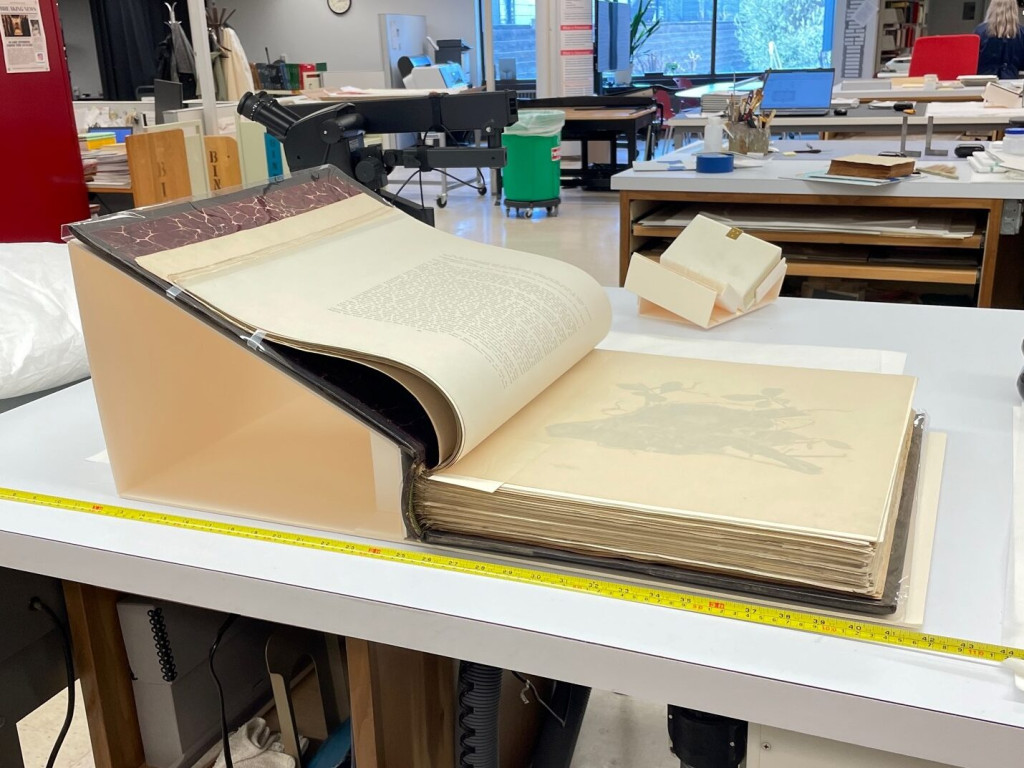
After determining a proper exhibit case to fit and secure the binding, a custom cradle was made. To protect weak points of the binding on display, a support was constructed out of 8 ply museum mat board to support the heavy and oversized pages from stress along the joint.  

Nests and Eggs on Display at the Cincinnati Symphony Orchestra
Solutions were tested to fit within an 18 inch deep case, however, the book was just too large!
Nests and Eggs on Display at the Cincinnati Symphony Orchestra
A custom 8 ply mat board cradle was created to fit within a more appropriate 4 ft case. Pages are strapped with polyester strapping

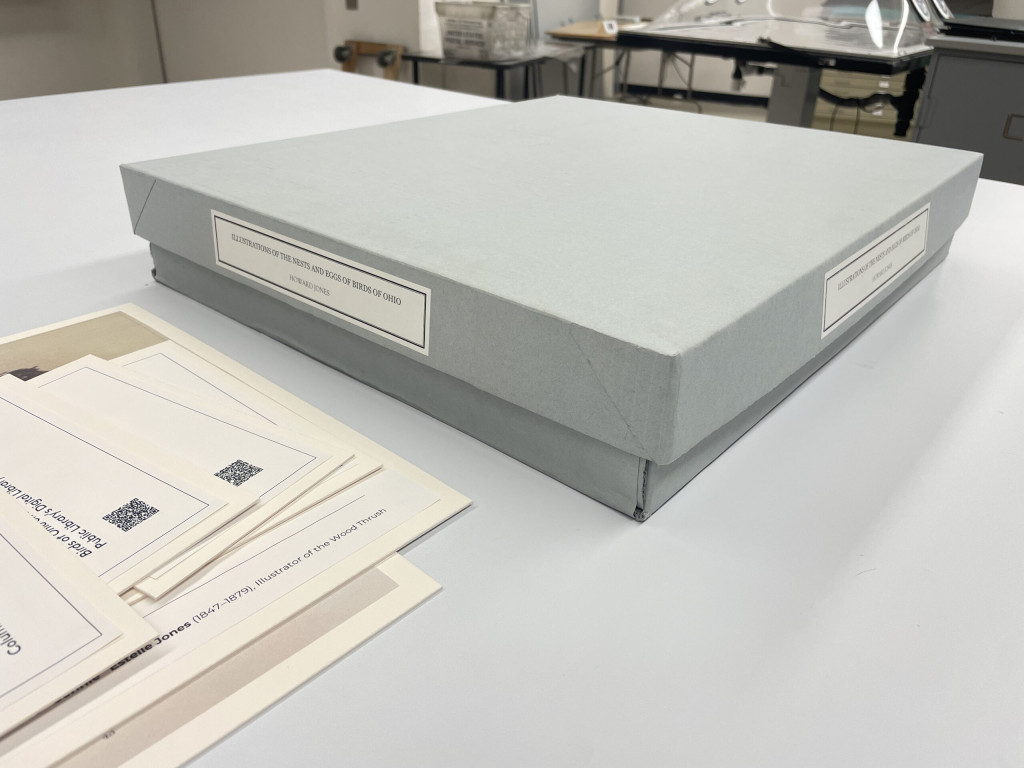
Before an object travels, it’s often reviewed to make sure it can handle transport and treated if necessary.  Luckily, in this case, the binding was treated in 2016 and is still in great condition for its age.  When it received treatment, at that time it received a lightweight yet strong enclosure that will also work well to safely protect the item for travel to the CSO.

Nests and Eggs on Display at the Cincinnati Symphony Orchestra
Corrugated banker’s box with a drop spine houses the Nests and Eggs book. Binding and exhibit labels are ready for packing.
Nests and Eggs on Display at the Cincinnati Symphony Orchestra
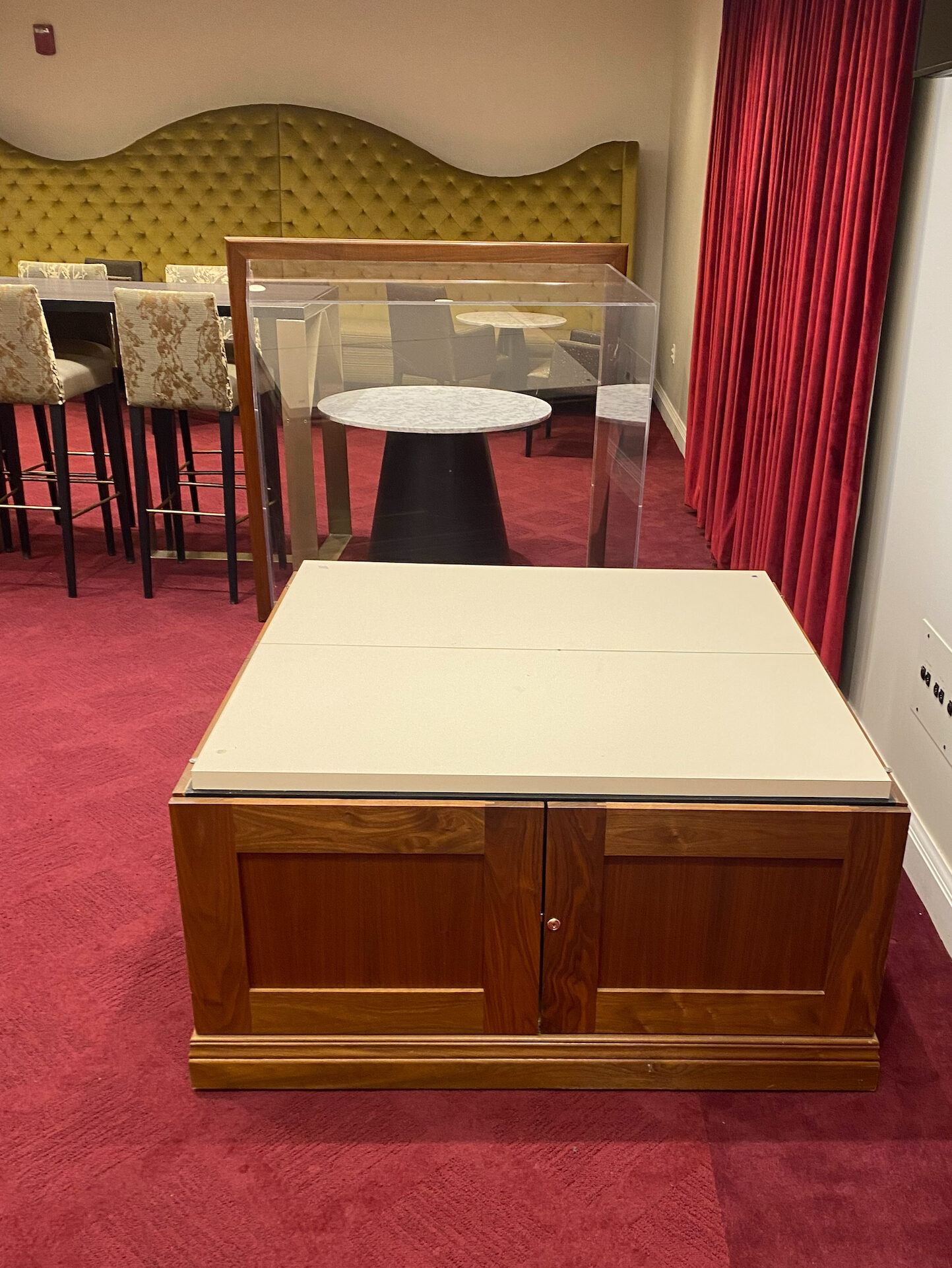
A 4-foot case was kindly loaned to the CSO from the Behringer-Crawford Museum and is ready for use! (Image credit: Amber Ostaszewski)
  • Nests and Eggs on Display at the Cincinnati Symphony Orchestra
  • Nests and Eggs on Display at the Cincinnati Symphony Orchestra
  • Nests and Eggs on Display at the Cincinnati Symphony Orchestra
  • Nests and Eggs on Display at the Cincinnati Symphony Orchestra
  • Nests and Eggs on Display at the Cincinnati Symphony Orchestra
  • Nests and Eggs on Display at the Cincinnati Symphony Orchestra
  • Nests and Eggs on Display at the Cincinnati Symphony Orchestra
  • Nests and Eggs on Display at the Cincinnati Symphony Orchestra

Additional Resources

Interested in seeing more Nests and Eggs?  The entire binding is conserved and digitized where it is made publicly available online. More information about Gennie’s fascinating and tragic history can be read at the Linda Hall website.

CSO Program Dates

There are two programs where you can view the item on display, Friday, March 1st and Saturday, March 2nd, both at 8pm at the Music Hall. Interested? Click here for the digital program.
We hope to see you there!

Ashleigh Ferguson Schieszer [CHPL] – Book and Paper Conservator, Co-Lab Manager

What ſay you! A brief look at the “long s” and its usage

Introduction To The Long S

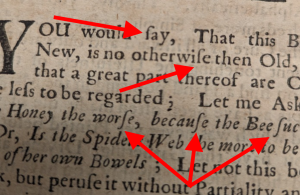
I was recently building an enclosure for a book dating back to 1681 entitled The Experienced Farrier. While examining this item I noticed something interesting about the spelling of certain words: often, rather than seeing what normally should be the letter “s” I would see what appeared to be the letter “f.”

What ſay you! A brief look at the “long s” and its usage
Figure 1: An image from The Experienced Farrier, containing what appears to be “strange” spellings.

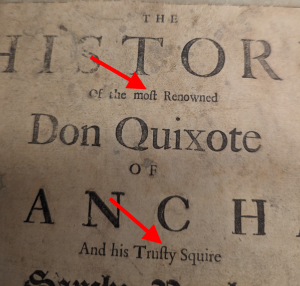
Since noticing this, I started seeing these seemingly bizarre spellings in other items dating to this period, as can be seen in the title page from a copy of Don Quixote from 1678.

What ſay you! A brief look at the “long s” and its usage
Figure 2: An image of the text from Don Quixote, with further examples of these “strange” spellings.

Identifying The Long S

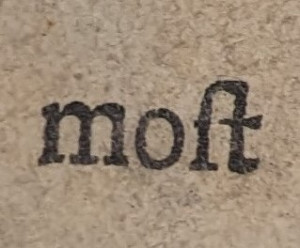
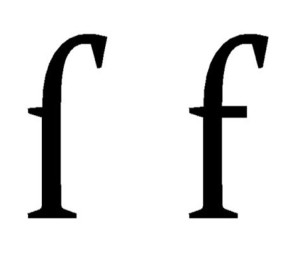
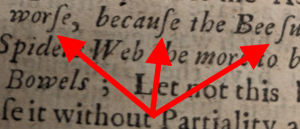
After some sleuthing, I discovered something interesting: these letters were not “f”s at all. They were a now defunct character known as the “long s.” Closer examination of these letters in the text showed that, although they closely resembled an “f,” the horizontal cross bar did not extend all the way across the letter; it starts on the left side and ends in the middle.
What ſay you! A brief look at the “long s” and its usage
Figure 3: A close-up of the word “most” that uses the “long s.” Note that the horizontal cross bar stops at the center stem of the letter.
What ſay you! A brief look at the “long s” and its usage
Figure 4: The “long s” (left) as compared to a lowercase “f” (right).

This solved some of the mystery, but what about the characters that looked like an “f” where the bottom of it curves to the left?

What ſay you! A brief look at the “long s” and its usage
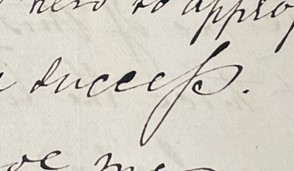
Figure 5: Another style of the “long s,” depicted as it would appear in cursive handwriting.

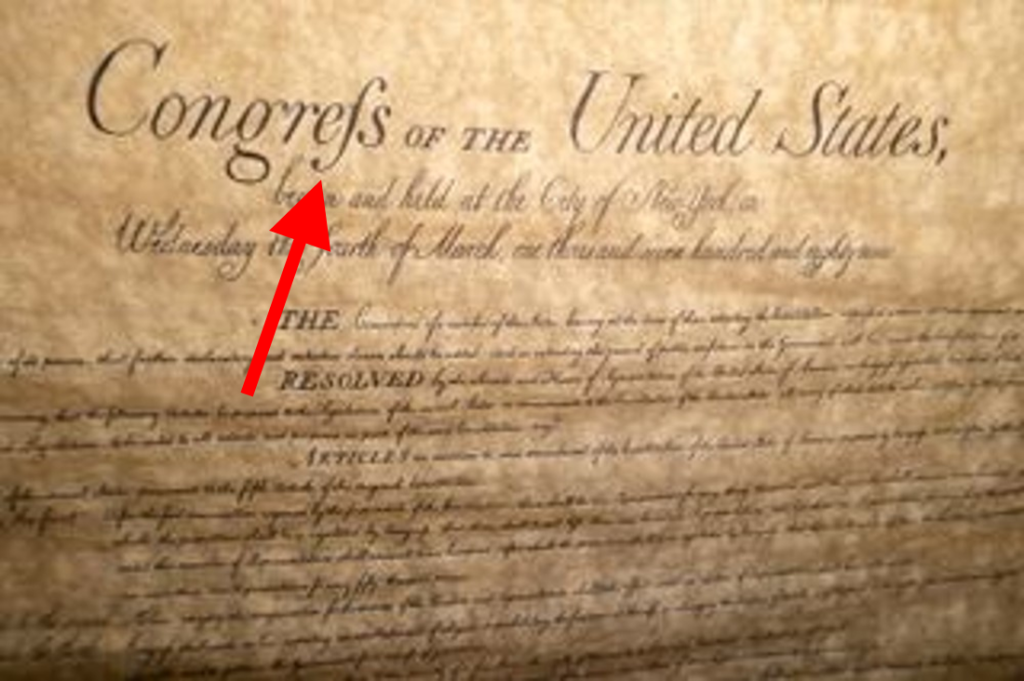
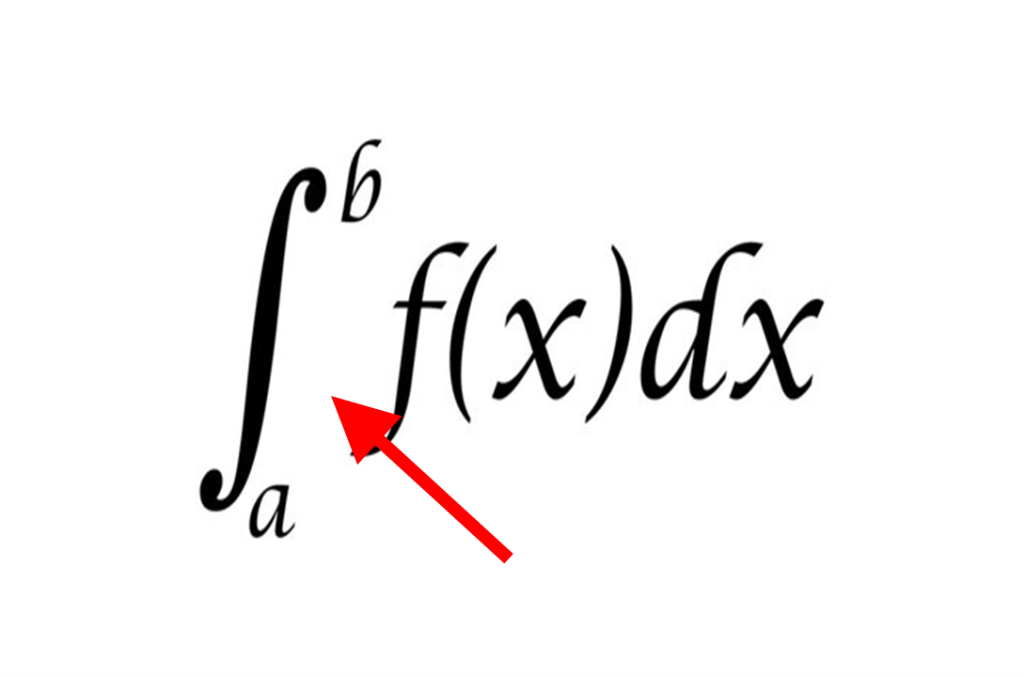
The answer is that this is also a “long s,” but depicted how it was written in cursive. If you feel like you’ve seen this character before, you’re probably correct: a notable example of this style of “long s” can be found in the first line of the Bill of Rights. Some may also recognize this character from calculus as the “integral” symbol.

What ſay you! A brief look at the “long s” and its usage
Figure 6: The “long s” that occurs in the word “Congress” as it appears in the handwritten Bill of Rights.
What ſay you! A brief look at the “long s” and its usage
Figure 7: The “integral” symbol used in calculus uses the same character used for the cursive-style “long s.”

When The Long S Was Used

You may have noticed in some of these examples that not every “s” is the long form. So, what exactly were the rules for when and where this character was used?

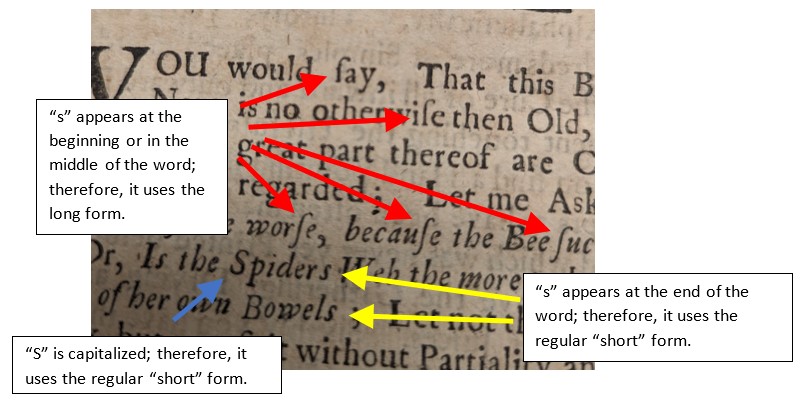
It’s difficult to say exactly, as the rules changed over time and writers/printers didn’t always adhere to the same rules. However, according to a blog from the National Archives, some simple guidelines for when and where the “long s” was used are as follows:

  • An “s” would use the long form if it appeared at the beginning or in the middle of a word, but only if it is a lowercase s. An uppercase S would not use the long form of the letter.
  • An “s” would not use the long form if it was the last letter in a word.
  • It was very common in the case of a “double s” or “ss”, as in the word “opossum”, for both “s”s to be the long form (opoſſum), unless the “ss” ended the word, as in the word “congress”, in which only the first “s” would be the long form (congreſs). *

*An observant reader may notice that this last rule is redundant given the first two rules; however, mentioning the “long s” in the case of an “ss” is significant in that as this character fell out of favor with writers/printers, one of the last remaining circumstances that utilized it was in the case of an “ss.”

What ſay you! A brief look at the “long s” and its usage
Figure 8: Examples of when the “long s” was/was not used.

Final Observations

Gradually, the “long s” fell out of usage around the time of the late 1700’s-1820’s, although it persisted longer in handwriting. Serendipitously, while writing this blog post, the lab received a first edition copy of Goblin’s Market with a handwritten note inside from the author, Christina Rossetti dating to 1862 that features this use even in the late 19th century:

What ſay you! A brief look at the “long s” and its usage
Figure 9: Although difficult to read, this is the word success (ſucceſs) from a handwritten note dating to 1862 that utilizes the “long s” several decades after it fell out of common usage in printed media.

If you still find words containing a “long s” difficult to read, you aren’t alone; it has been theorized that it was phased out in favor of exclusive “short s” usage as they weren’t as easily confused with other letters and were found to be more legible. The disappearance of the “long s” is a good reminder that language, both written and spoken is fluid with ever evolving rules and norms.

Resources

For further information about the long s and its history be sure to check out these excellent blog posts, that were very helpful in the gathering of information for this post:

Matt McCoy, Conservation Specialist [CHPL]

Book Arts in the Lab

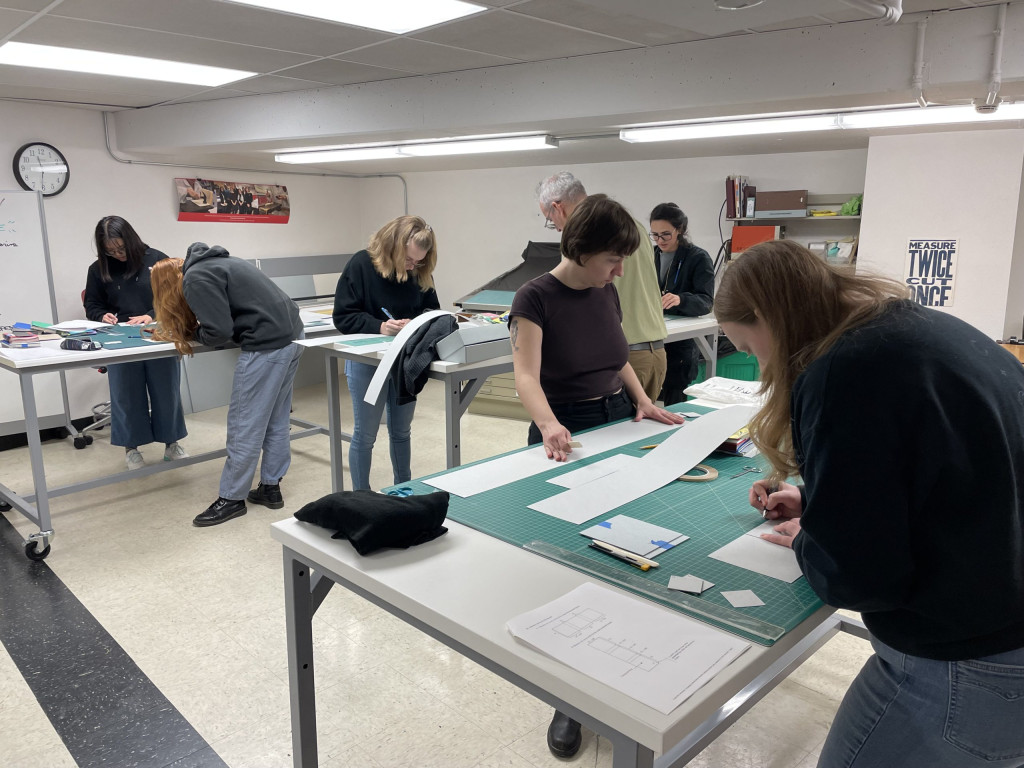
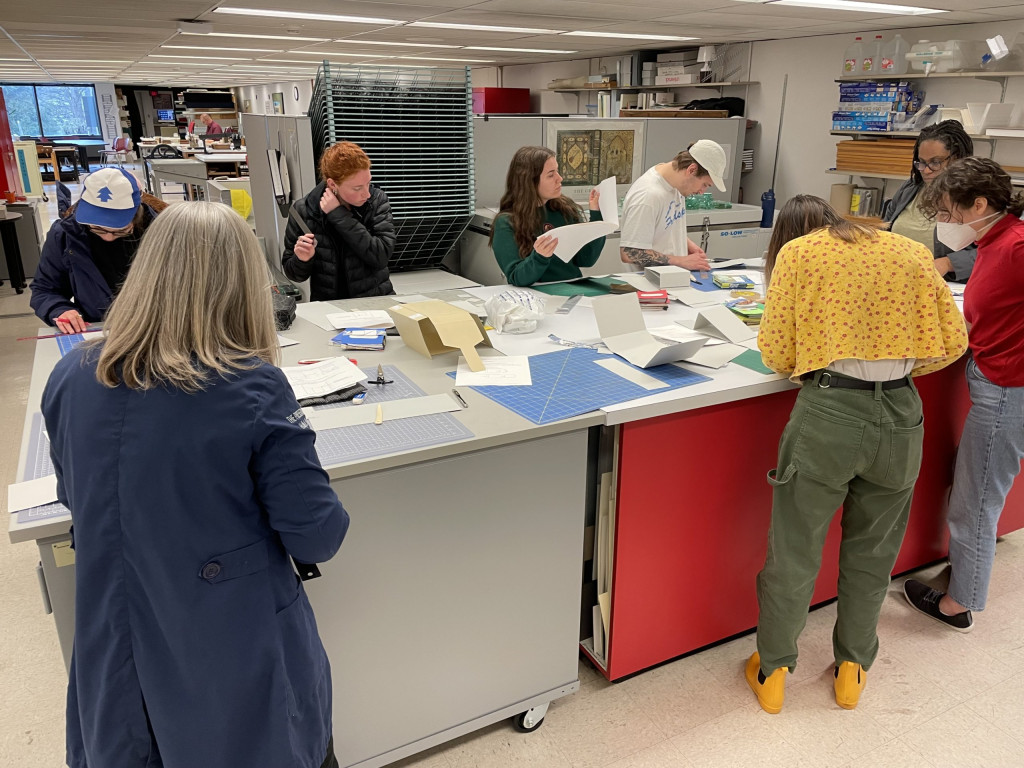
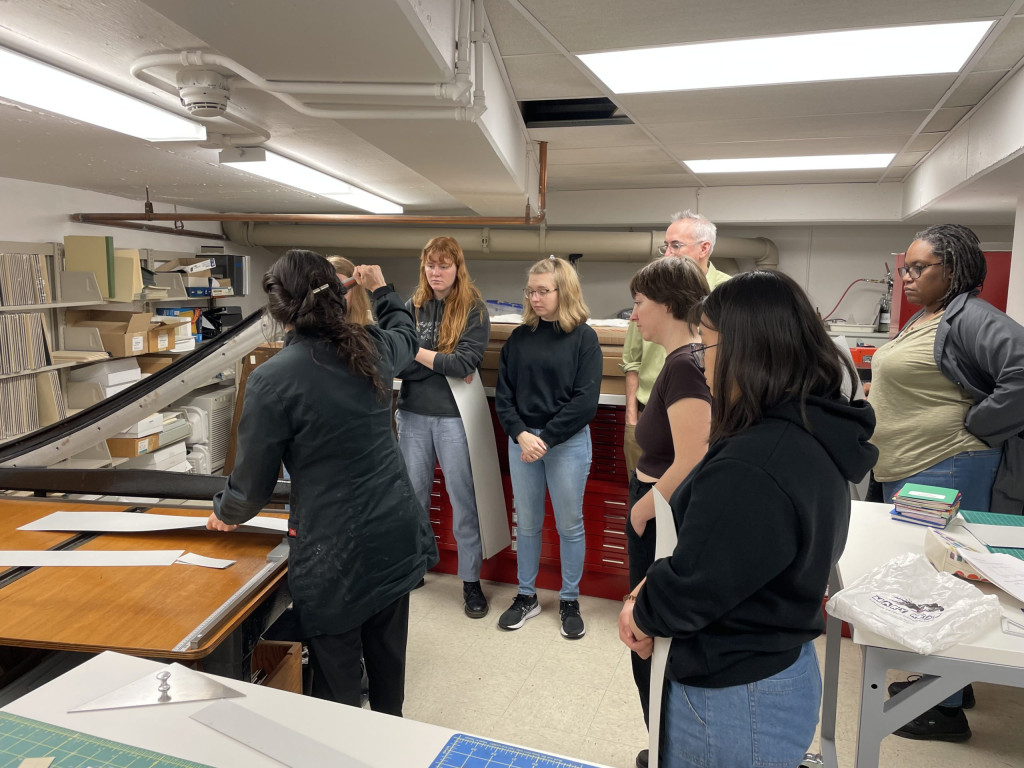
This semester the Preservation Lab is collaborating with the English department and Associate Professor Gary Weissman to teach ENGL 3097 – Book Arts. The experiential learning portion of the course is taught in the Preservation Lab by Holly Prochaska, with much assistance from Jessica Ebert, Catarina Figueirinhas, and Hyacinth Tucker. The course offers students a foundation in the history of the codex, artists’ books, and zines, as well as a hands-on introduction to paper making, bookbinding, and printing.

Last week the students finally got their hands on our beloved board-shears while making a tux box to house the many models they constructed during the course.

It has been a fun and rewarding spring thanks to the enthusiasm of our 12 students!

If you are interested in learning more about the experiential learning portion of the Book Arts curriculum, please reach out to holly.prochaska@uc.edu.

Holly Prochaska (UCL) — Preservation Librarian

How to Make a Collapsible Punching Cradle: New Video on Our YouTube Channel

We’ve reached the end of Preservation Week and what better way to celebrate than with a fun how-to video on our Lab’s YouTube channel?!

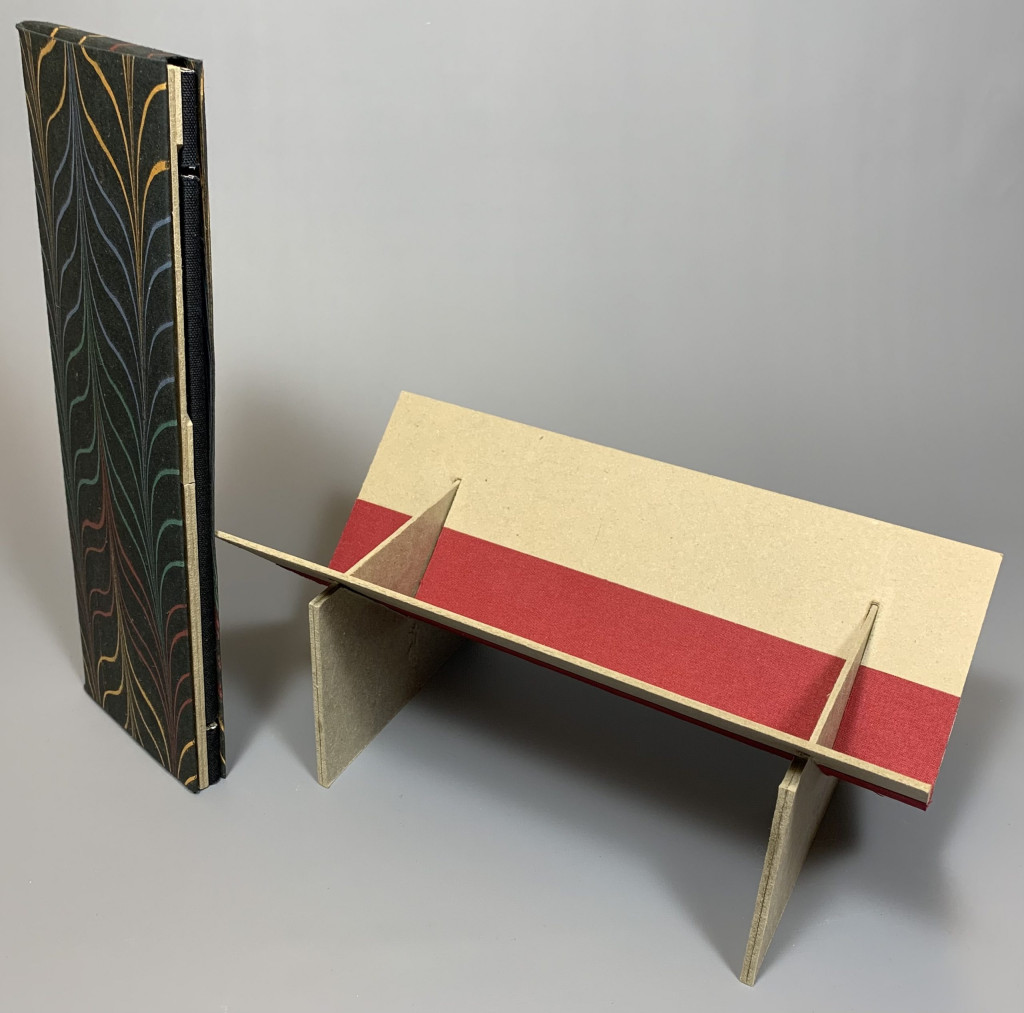
This video goes over how to make a collapsible punching cradle, step-by-step. Punching cradles are a useful bookbinding tool to have on hand in your toolbox. They allow you to create uniform sewing stations in your signatures or gatherings when you are preparing to sew a textblock. Best of all, this type of punching cradle is fully collapsible and easy to store while not in use; especially when you make one of these simple slipcases to hold all the pieces.

How to Make a Collapsible Punching Cradle: New Video on Our YouTube Channel
Here you can see a collapsed punching cradle stored in a paper slipcase made with marbled paper (left) and a punching cradle assembled and ready for use (right).

Don’t forget to “like” our video and subscribe to our YouTube channel to stay in the loop when we post new videos to the channel. If you decide to make your own punching cradle, we’d love to know what you thought of the video or, even better, tag us in a photo of it on Instagram (@thepreservationlab).

We hope you’ve enjoyed celebrating Preservation Week 2021 with us! We look forward to celebrating our 11th annual Preservation Week next year…maybe even in person this time?!

Jessica Ebert (UCL) – Conservation Tech & Photographic Documentation Specialist

Button Hole Stitch Binding

Every year our staff, students and volunteers look forward to our Student & Volunteer Appreciation day, which we affectionately call “fun day”. It generally takes place in late November or early December, always before finals week. It is a time to show our appreciation for all the hard work our students, volunteers and staff do throughout the year, while having an opportunity to come together and learn some new bookbinding or book arts technique. In the past, we’ve done paper marbling, made handmade paper, created German long stitch binds, and more.

I have been coordinating our student & volunteer appreciation days for almost as long as I’ve been in the Lab, so for at least 12 years now. I love it because I am the type of person who enjoys planning these types of things, but also I love watching a student, volunteer or staff member just get really excited about something new. You never know if it’s going to be that quiet new volunteer who just can’t get enough of paper marbling, or that student who doesn’t have any art background but just does the most amazing pulp paintings ever! So after all these years, the thought of 2020/the pandemic ruining everything and not having any sort of student/volunteer appreciation day was just unacceptable!

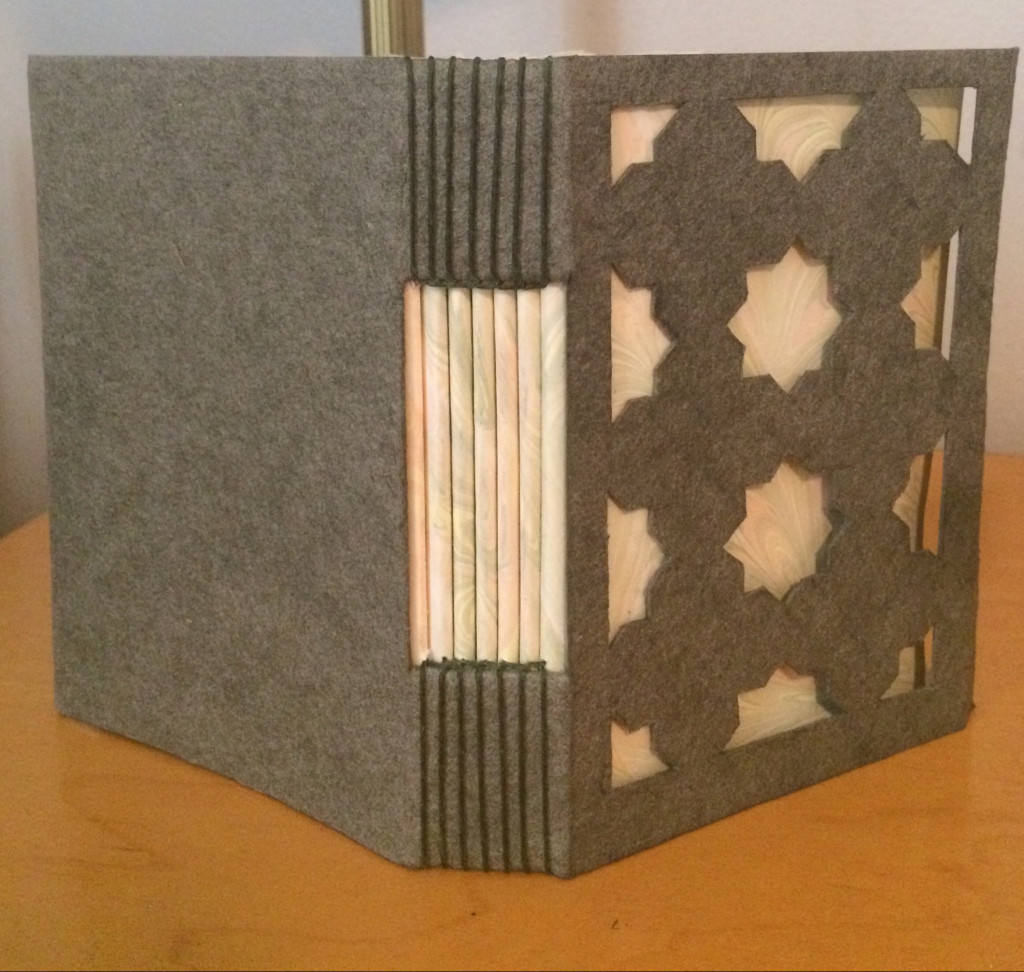
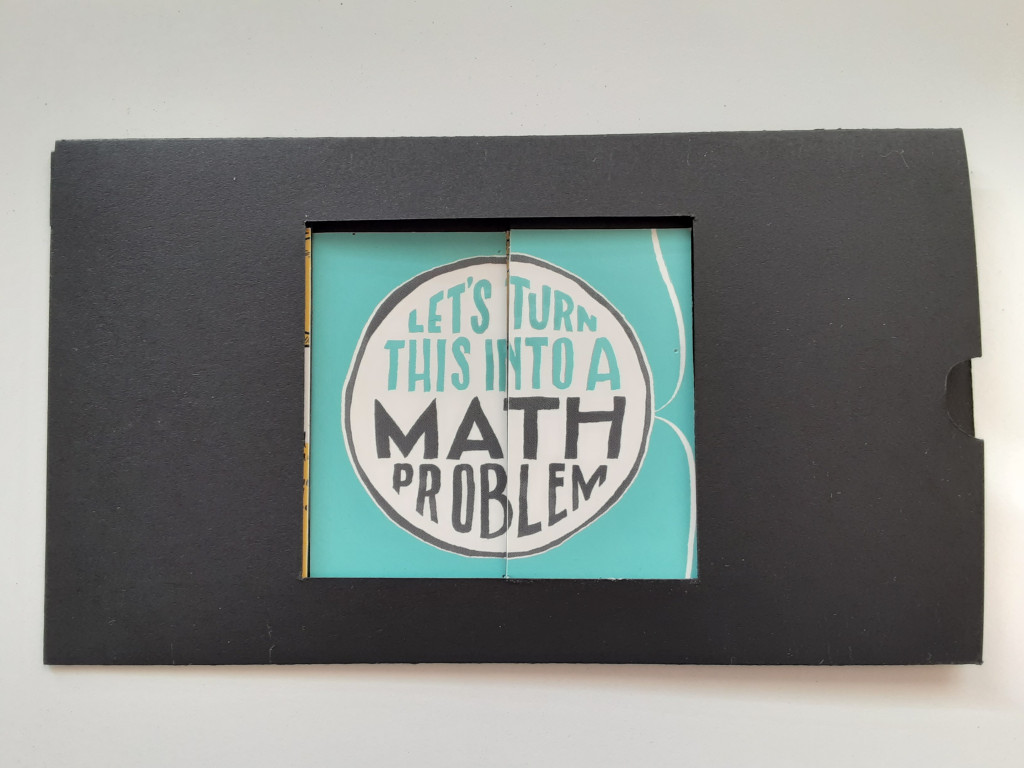
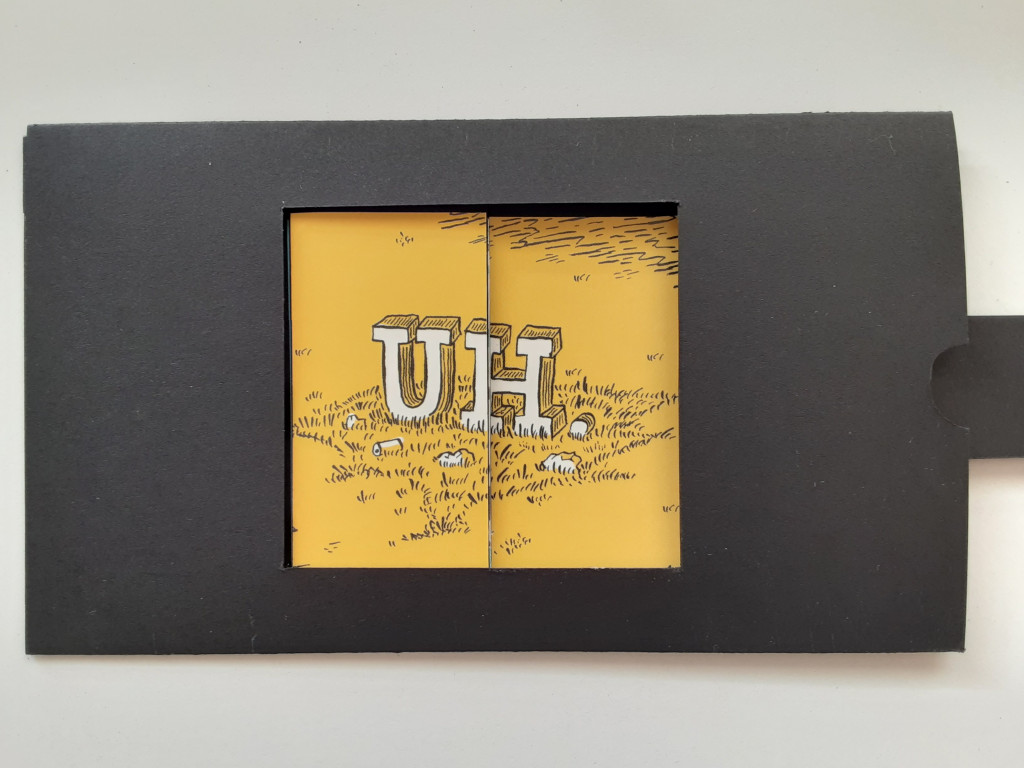
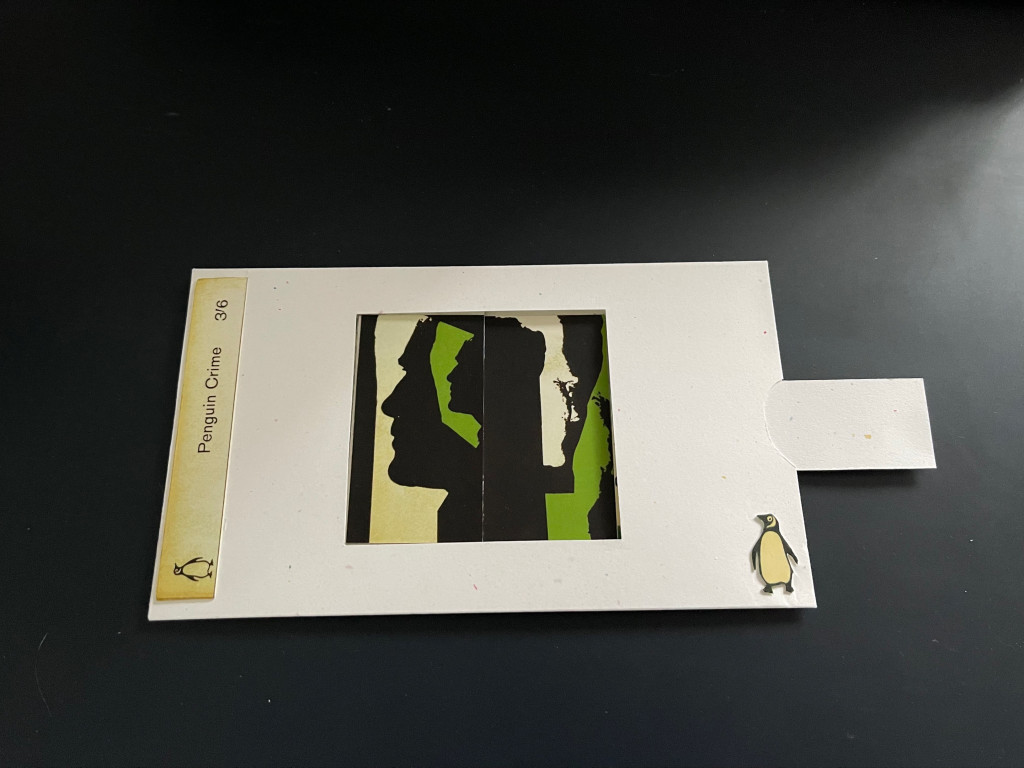
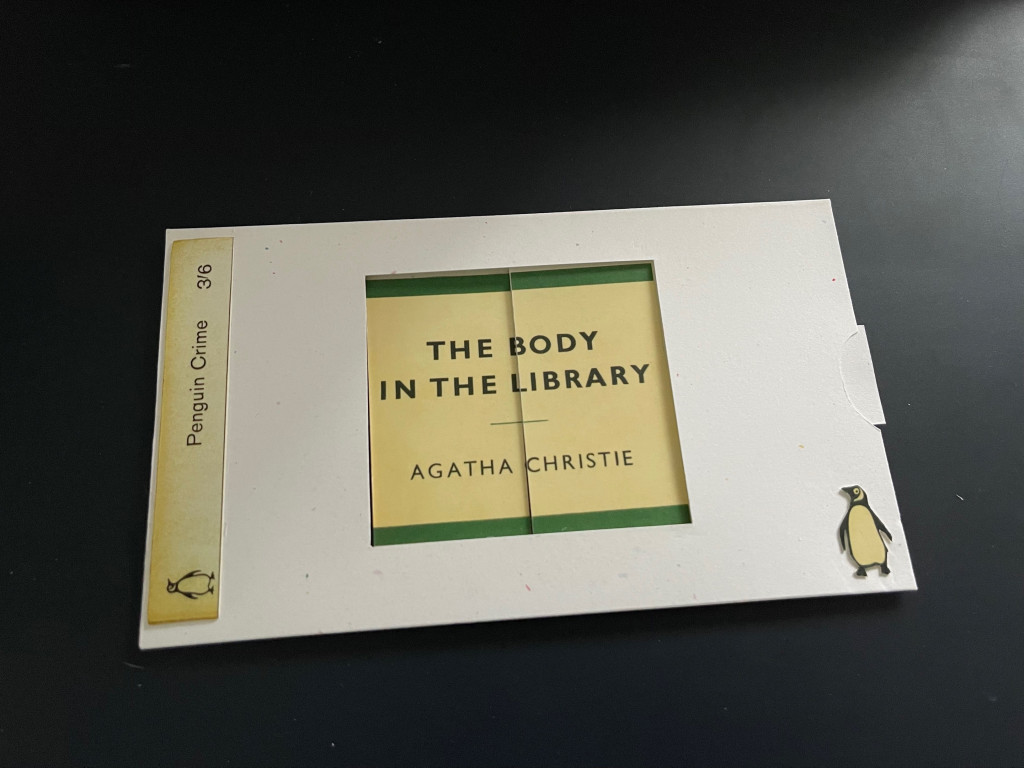
I immediately thought, “What types of activities could we do virtually that would be no cost to the lab and would give everyone a couple hours to come together and decompress?” After a little brainstorming with Holly, we came up with a Button Hole Stitch binding (which I had recently learned) and a simple dissolving view. With the help of my wonderful student staff member and cohort buddy, Lexie, I prepped kits for our virtual event, as well as prepared a step by step video on creating a button hole stitch binding.

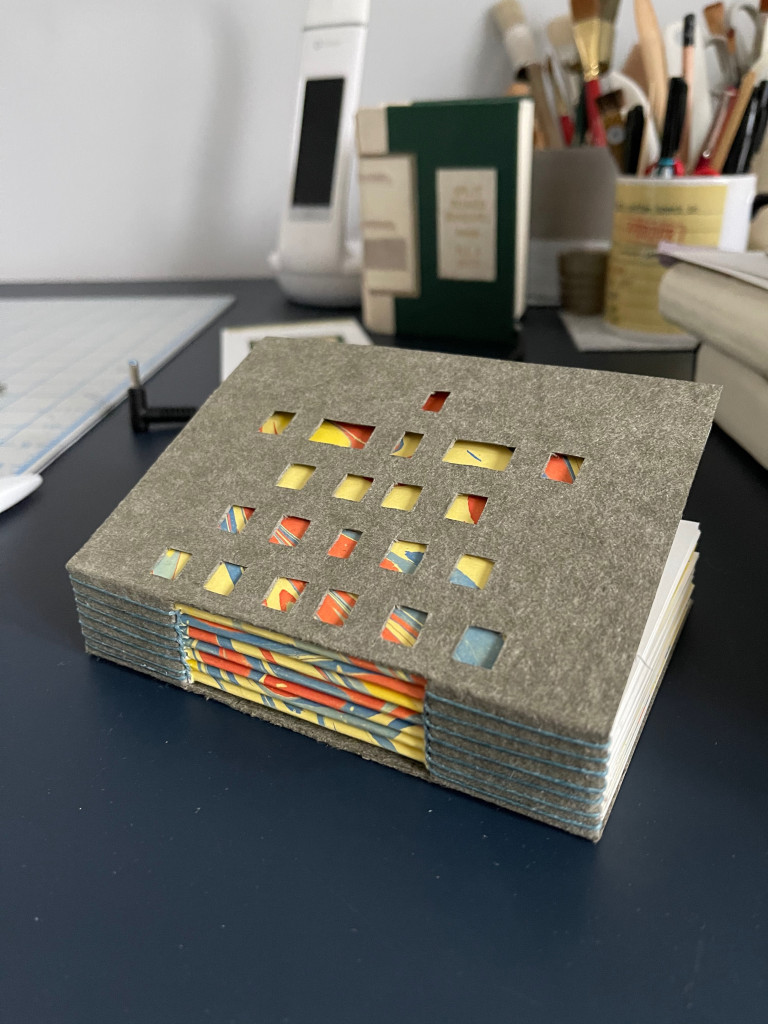
Here are some of the beautiful creations that came out of our little virtual fun day:

If you would like to make your own Button Hole Stitch book check out our video on the Preservation Lab MediaSpace channel:

For the dissolving view we used Green Chair Press’ handy template, which you can find here in their blog post on dissolving views.

Jessica Ebert [UCL] – Conservation Tech/Photographic Documentation Specialist/Student Supervisor

Model making: Italian stationery bind, laminated archival bind

Admittedly the title of this blog is a bit dry, but whenever I see the phrase stationery binding my eyes dart and the corners of my mouth start to move upward. Since trying my hand at an accounting book at Paper and Book Intensive 2017 in Chela Metzger’s workshop Early Modern Record-Keeping Book Structures, I have enjoyed learning more about their variations, creating historical models, and using the form as an inspiration for artist’s books.

After digging into Katherine Beaty’s essay Tackets, Buckles, and Overbands: Italian Stationery Bindings of the HBS Medici Family Collectionthe in the latest volume of Suave Mechanicals (http://www.thelegacypress.com/suave-mechanicals-vol-6.html), I decided to attempt a model of the second largest laminated archival bind. Beaty’s essay provides excellent descriptions of the various accounting books within the Medici collection, helping guide me in the construction of the model and filling in large gaps in my knowledge.

Katherine Beaty’s essay is not a “how to” manual, so all the errors and false assumptions that present themselves in the final model are mine alone. Making this at home with materials I had on-hand provided some challenges, so there are some missteps in terms of historical accuracy. But, in the end I’ll give the final product solid B for effort! And I had a great time making it.

Laminated leather archival binding with buckle fastening, size 34 x 27 cm.

I would love to make the next model better, so shoot me and email (holly.prochaska@uc.edu) with tips and corrections. Here is a somewhat rough draft of my instructions – proceed with joy and cautionhttps://drive.google.com/file/d/10sXW-dRi1XO6cVS8S-5CPBUHH8G_wpMX/view?usp=sharing

Holly Prochaska (UCL) —- Preservation Librarian

Book Arts Course and Remote Learning

As mentioned in an earlier post, this Spring the Preservation Lab is partnering with the English Department to co-teach Book Arts (ENG3097), with the Lab staff leading the hands-on experiential learning portion of the course. Unfortunately due to the COVID-19 pandemic, all courses needed to move to a remote learning curriculum for the remainder of the semester. So far one of the biggest challenges has been student access to supplies and materials – papers, leathers, book cloths, etc.

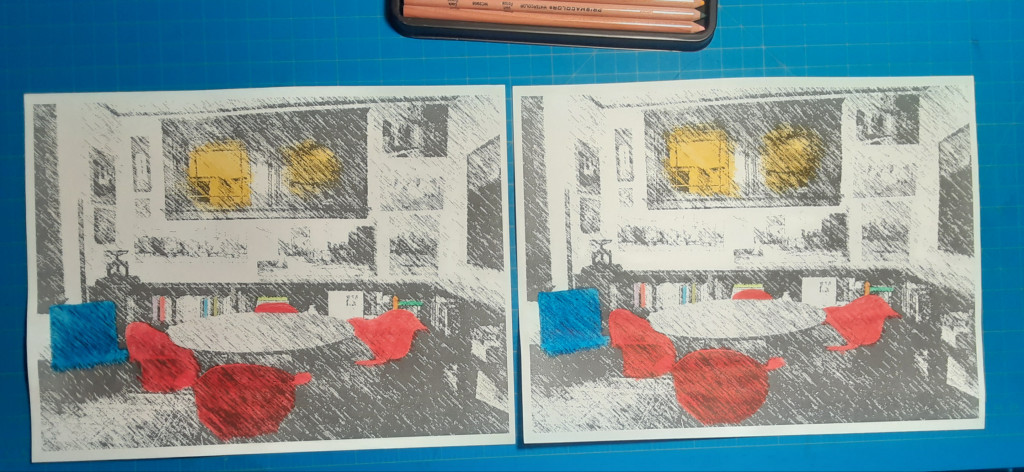
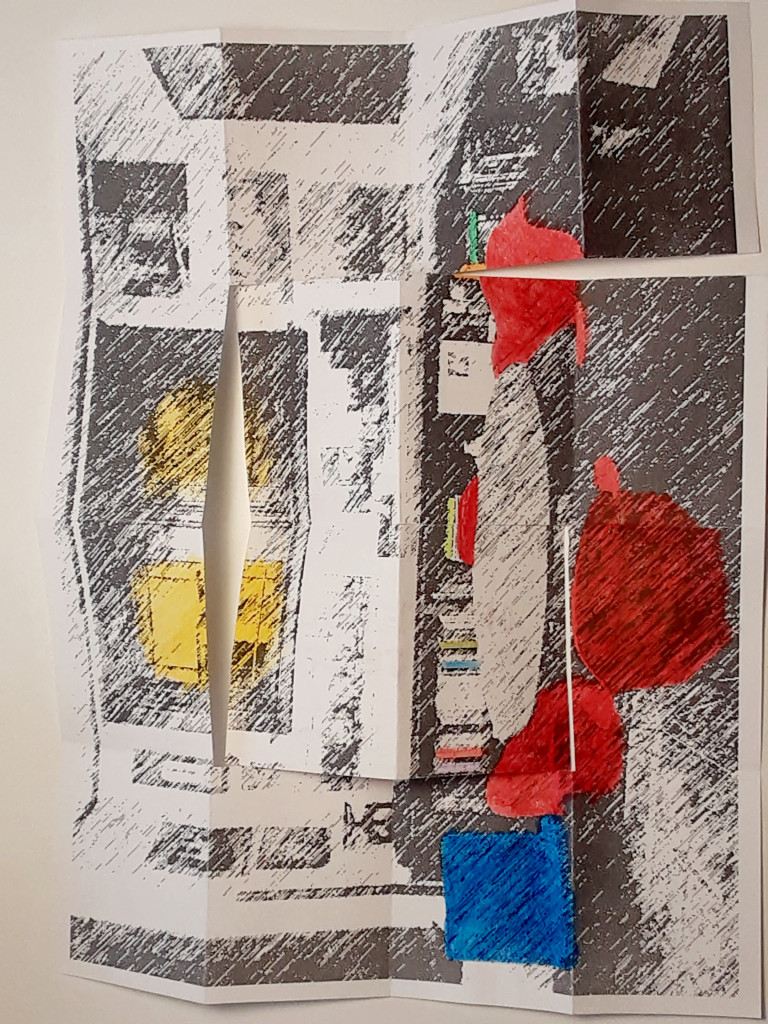
In recognition of this obstacle, I created four different books using the same series of black and white 8.5″x11″ laser prints as the base structure. Ideally the exercise communicates the advantages and disadvantages of each form in expressing my loose narrative, and shows the variety of structures that can be achieved using cheap printer paper. The four structures used are – snake book, accordion with pocket, volvelle inside a scene, and Hedi Kyle’s pocket-link book.

Book Arts Course and Remote Learning
Base images for the snake book and accordion with pockets. I added some color using watercolor pencils.

First up, an exploration of the snake book.

Book Arts Course and Remote Learning
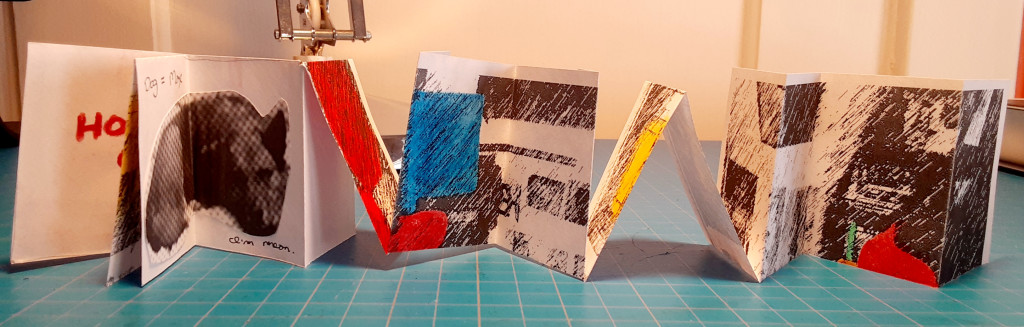
(FOLDED) Because the snake book has folds that go every which way, it is hard to understand the overall image, without unfolding it completely. There are few opportunities to provide additional text or images if this is viewed, or interacted with, as a traditional book.

I’d say that the snake book isn’t a successful structure for my image. Next, let’s try the accordion with pockets.

Book Arts Course and Remote Learning
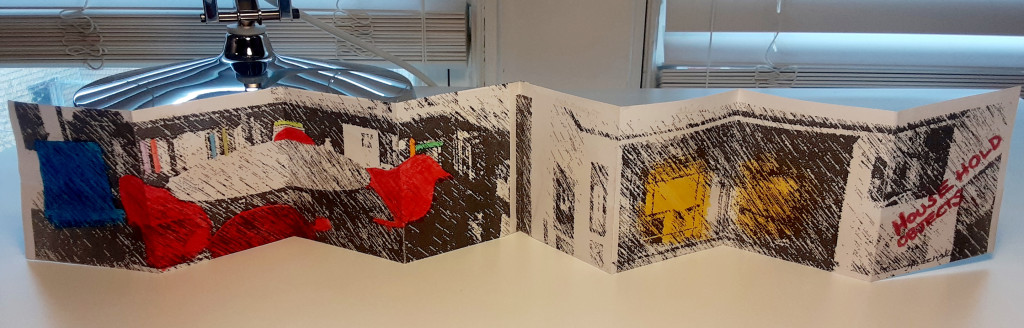
(OUTSIDE) Cutting the 8.5×11 sheet in half and pasting it together at the short edge, an 8 panel accordion was created.
Book Arts Course and Remote Learning
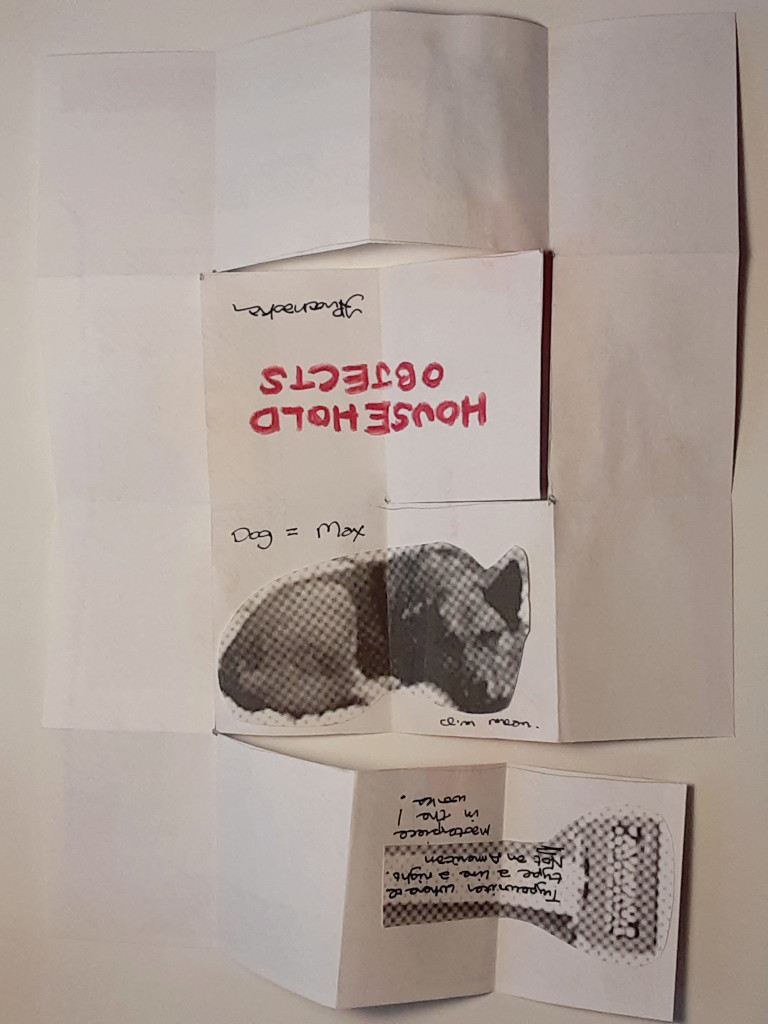
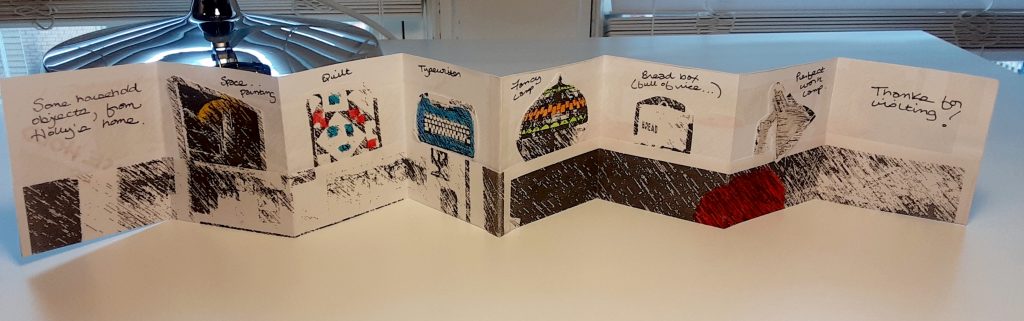
(INSIDE) By folding the outside bottom of the accordion towards the inside, a small pocket is created. In the pocket I placed images of items found in my house…that’s why these two little examples are titled “Household Objects.”

The accordion seems to work better for my image. The outside image is clearer and easier to interpret and the inside blank space provides room to tell a story.

Next, using the same base image, I incorporate two techniques that we covered in class – the construction of volvelles and the use of pochoir (adding color with stencils).

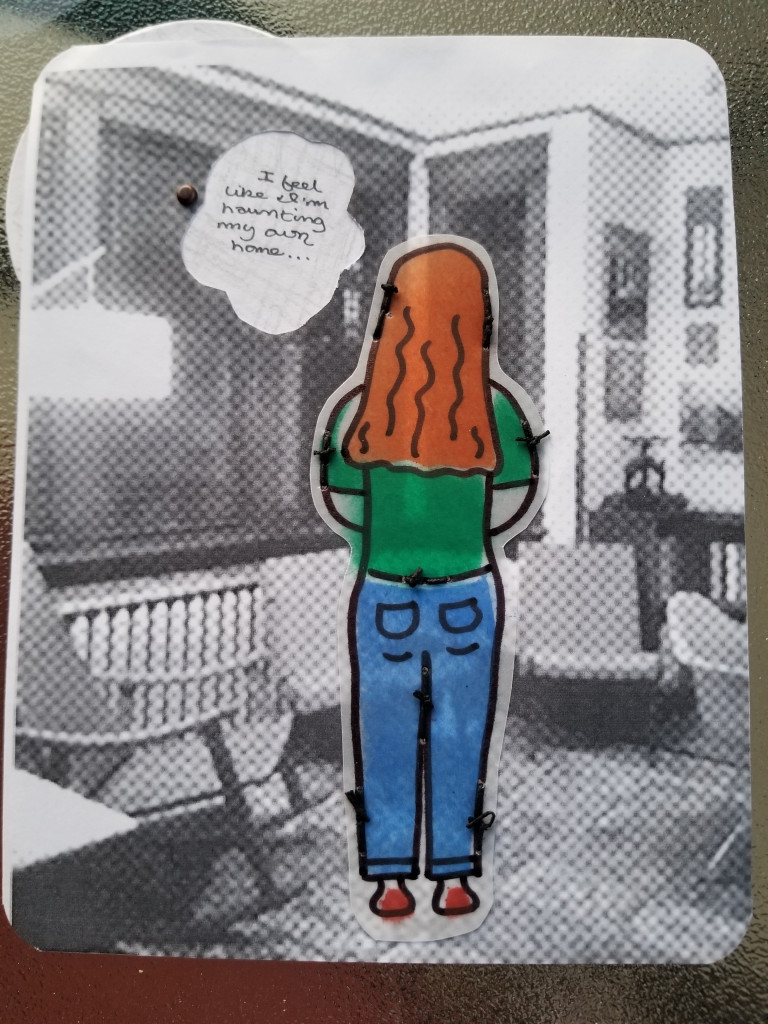
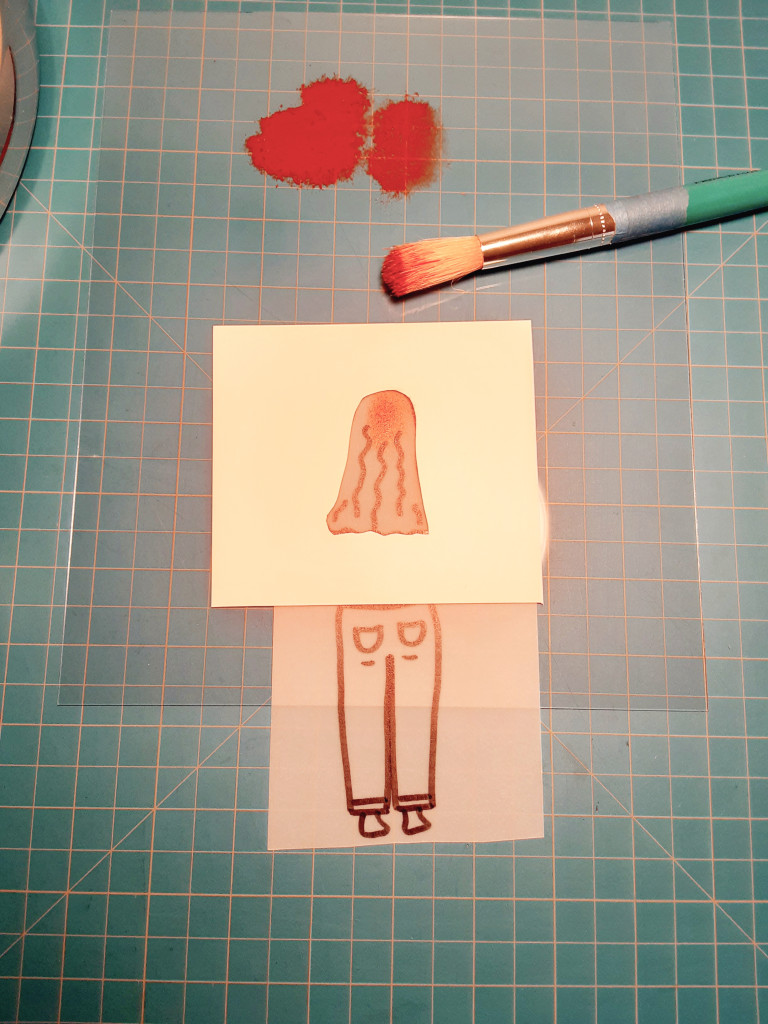
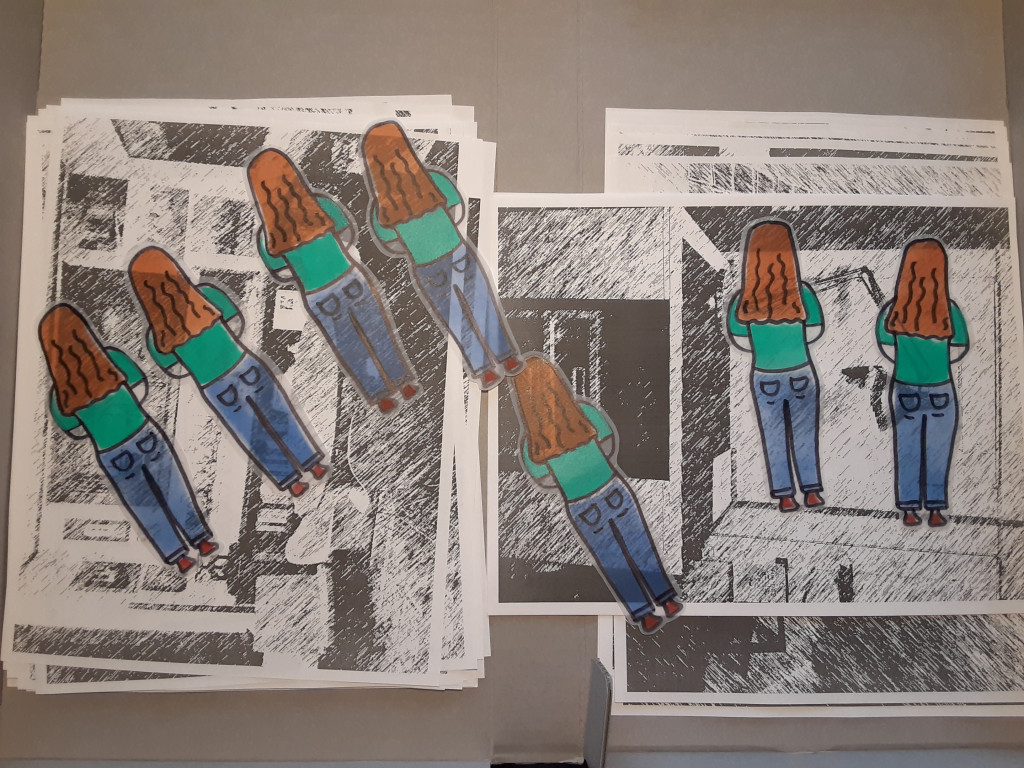
Musings on staying at home these past three weeks turn a little grim in this small (8″x7″) scene with an internal volvelle. Turn the wheel and two conversations take place, one on the front and the other on the back, both a bleak internal dialog. The paper dolls are on Neenah UV/ultra translucent paper allowing much of the background drawing to show through, giving the impression of haunting or drifting, not being fully present. These dolls line-up and are sewn together with small pamphlet stitches, with the printer paper substrate in between.

The last book builds upon the volvelle scene, expanding the content and transforming it into a traditional codex using the pocket-link structure. The structure has pockets created by the way the pages are linked, you can see them on the left side of the double spreads. I’ll be filling these pockets with mementos of my time haunting my house.

Click on this LINK, or the image below, to flip through the book – Ghost in my home.

All four of these books are just models, but I think they all have potential! Maybe you do too and want to try your hand at these simple forms. If so, check out these “how to” links on snake book, accordion book, and volvelle inside a scene. [Unfortunately, I don’t have an authorized set of instructions for the pocket-link structure to share.]

I hope you’ve enjoyed this little diversion into book arts and wishing you well…

Holly Prochaska (UCL) —- Preservation Librarian