Category Archives: Photograph

Bite-Sized Takeaways From Photographic Chemistry Study

Introduction and a Little Something About Halides

About two years ago, I set upon a mission to gain expertise in the area of identification and treatment of photographic materials. Under the guidance of our conservator, Ashleigh, I developed an education plan that was split between the theory of learning the ins and outs of photograph identification, and the hands-on work of treating pieces that came into the Lab. Of course, these two things go hand in hand. If you can’t identify a piece, you can’t treat it correctly, right?

Fast forward to last year. With the start of the pandemic and the transition to working from home, my education plan changed radically. If I’m not in the Lab, I can’t spend much time on treatment, so I had to get a little creative and work on other ways to learn more.

Enter the American Institute for Conservation’s self-study series on Photographic Chemistry for Preservation. It involves eight fairly in-depth units on silver-based analog photographs, how they are created, and as a consequence, how they age and deteriorate.  

I am about halfway through the series; a triumph for me, as I have never been one for the study of chemistry. I will say that while it is still very technical, I’ve had a lot of good pegs to hang the information on, owing both to my earlier studies in photograph conservation and my personal history with film photography. It’s been a tremendous thing, viewing things that I learned as a photography student from a different angle. So far, it’s been a great journey. 

In this series, I will share with you some of the most fascinating things that I’ve learned so far. My aim will be to keep the technical as simple as possible, for those of you who are like me, still coming to terms with the deeper science. The small bites help it all make sense, I promise. Hopefully, you’ll find it all as interesting as I have.  

Before we can understand anything else, we need to talk about halides. What are those and why are they used in photography? Good questions! Halide salts are derived from halogens, which occupy group 7A (column 17) of the Periodic Table of Elements (see below.) Halide salts are used in photographic emulsions that are spread over a substrate (such as paper or film) before the substrate is exposed to light. The silver halides react to the light to form an image when developed.  

I should note here that silver gelatin prints, albumen, and collodion photographs all utilize silver halides in their chemical composition. However, silver gelatin is unique among the three in that it is the only one that uses a true emulsion; in albumen and collodion coatings, the halides rest on the surface.  
In forming the silver gelatin emulsion, halide salts are combined with silver nitrate and water to form silver halides, the compound at the core of silver gelatin photography. Silver nitrate is pretty much universally used regardless of halide salt, as it is water soluble (it dissolves) but not too much so. The freed silver will look for a bond partner, and the halides in halide salt fits the bill.  As a result, silver nitrate, when combined with a halide salt in water, will result in silver halide and a left over salt.  

This reaction, which seems like a lot, I know, is referred to for our purposes as “The Emulsification Equation.” To refresh our memories a bit, an emulsification is a liquid (here, gelatin) that contains fine particles of another liquid (the silver halide) without fully combining. Think mayonnaise, or butter. (This isn’t perfectly analogous, as silver halides are crystalline solids and not liquid fats, but the basic idea is the same.) 

Chemically speaking, that reaction looks like this: 

Equation for emulsification

As a quick reminder, Ag = silver, N = Nitrogen, O = Oxygen, K = Potassium, and Cl = Chlorine. 

Now, if you’ll look at the image of the halogen column of the table below, you’ll see a number of options for salts to combine with silver nitrate. Older emulsions involved bromine or iodine; more modern emulsions tend toward chlorine. Crystals formed from silver chloride salts are much more uniform in structure, which makes its use outcomes much more predictable.  
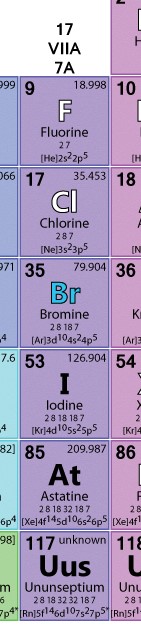
Salts that will combine with silver nitrate

I’m sure you’ve noticed that we’ve got a couple of halogens unaccounted for, namely fluorine and astatine. Neither of these are used for this kind of work, and for good reason. Fluorine, for its part, is very water soluble. Very water soluble. To put it in perspective, sodium chloride (regular table salt) is about 35% water soluble. I’m sure that in the course of cooking, we’ve all dissolved salt in water, and you can recall how relatively simple that is to do, though not without some small effort. Well, fluorine salts are about 172% water soluble! You could use it for your emulsion, but moments after developing an image in a water-based solution, you’d see it dissolve before your eyes.  

I’ll note here very briefly that chlorine, bromine, and iodine are also more soluble than table salt, but not nearly as much as fluorine, making them perfect partners for our silver ions.

Meanwhile, astatine is…well, it’s radioactive. I think you can see the problem with this one.  

And there you have it, a short and hopefully painless explanation of the humble halide in silver-based photography. In the coming months, we’ll be looking at other fascinating aspects of halides and our Emulsification Equation.  

Hyacinth Tucker (UCL) —- Bindery and Conservation Technician
Fun with PhotoDoc: Infrared (Edition 7)

At the end of last year the lab purchased a modified UV-Vis-IR Nikon through MaxMax so that we can start to play around with infrared photography.  Infrared photography (IR) is commonly used in fine art conservation as an examination tool.  Reflected IR can be helpful when trying to identify pigments, inks, coatings, etc. and transmitted IR can helpful for viewing watermarks, underdrawings, and linings. We’ve only just started dabbling with IR photography, but I wanted to share some photos from my most recent session with reflected IR.

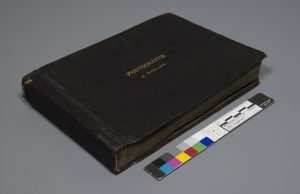
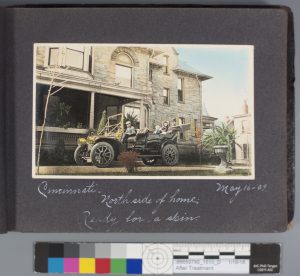
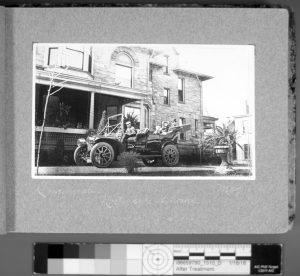
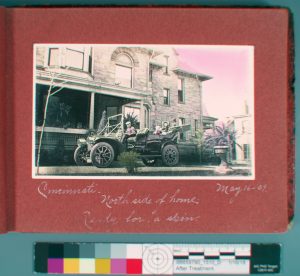
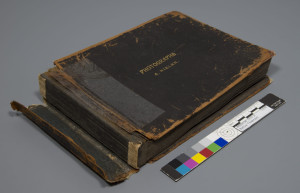
This is a full leather photo album from the Public Library of Cincinnati & Hamilton County’s collection.  This early 1900s photo album contains hand-colored silver gelatin photographs taken by A. Nielen.   The photographs appear to depict his travels through the US and Canada, and various landmarks and neighborhoods of Cincinnati are represented.

This seemed like a good object for reflected IR because of the hand-coloring on the photographs and the white ink inscription below each photograph.  I began by taking a representative visible light image (first image below) using our modified UV-Vis-IR camera, incandescent lighting, and the X-Nite CC1 filter on our 50mm lens.  Then, being careful not to move the position of the camera or the object, I switched to the X-Nite 830 filter (830nm) and converted that image to grayscale in Photoshop (second image below).  Then I took my visible light image and my reflected IR image into Photoshop to create the false-color image (third image below).  The digital false-color image is a combined representation of the visible and infrared images, and it’s actually quite simple to make.  You basically copy and paste the various channels for the VIS and IR image as follows, green to blue, red to green, and IR to red.  The false-color image allows you to better differentiate and characterize the various materials (pigments, inks, etc.) and potentially even identify them if you have sufficient known samples to use as references.

Like I said, we’ve only just started using IR and we’ve got a long way to go, but I’m looking forward to experimenting and learning more about it as time goes on.

Jessica Ebert (UCL) – Conservation Technician & Photographic Documentation Tech
Fun with PhotoDoc – Edition 4

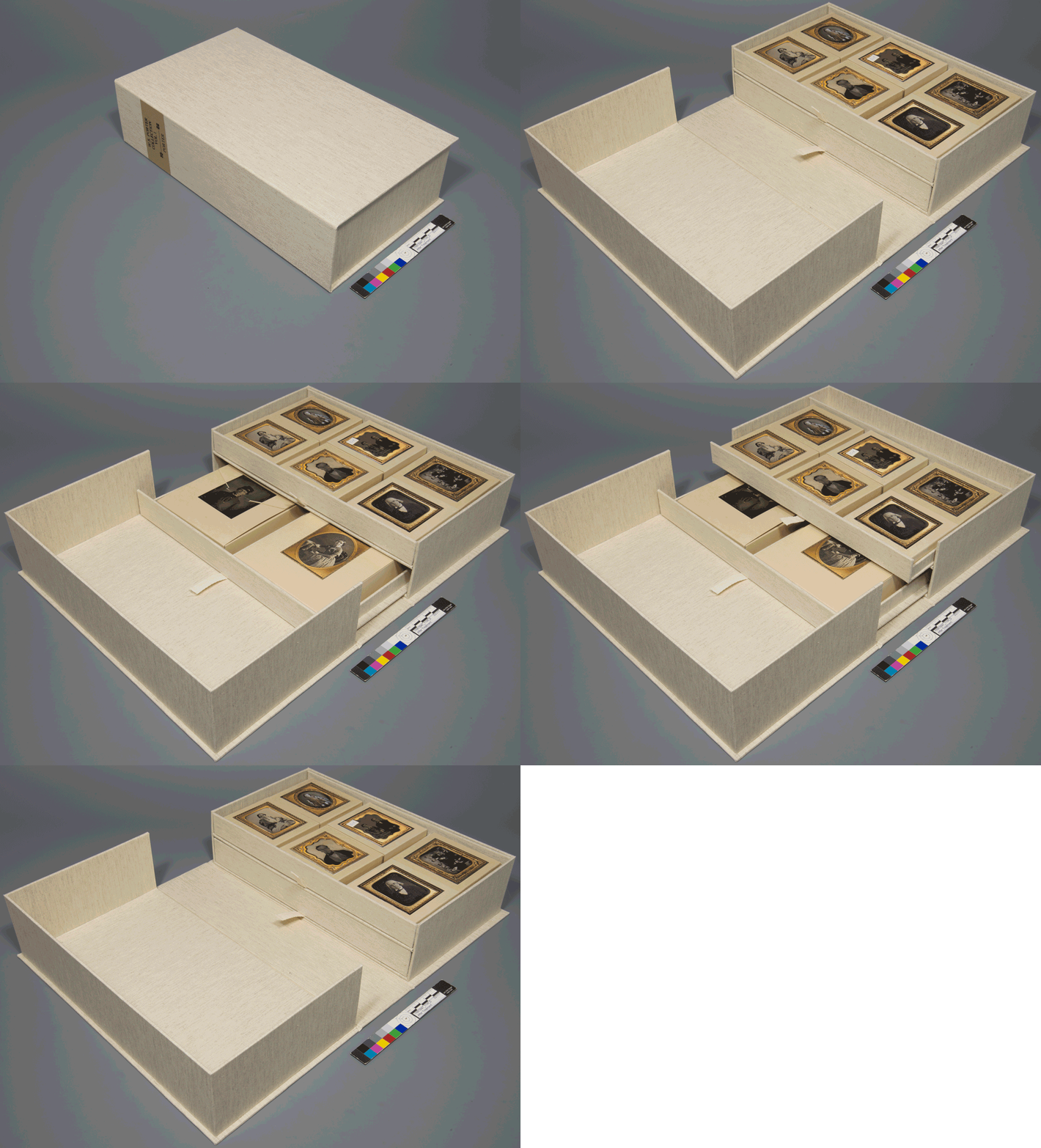
The amazing enclosure made by our very own conservation technician, Chris Voynovich, for volume 1 of the W.S. Porter Collection.


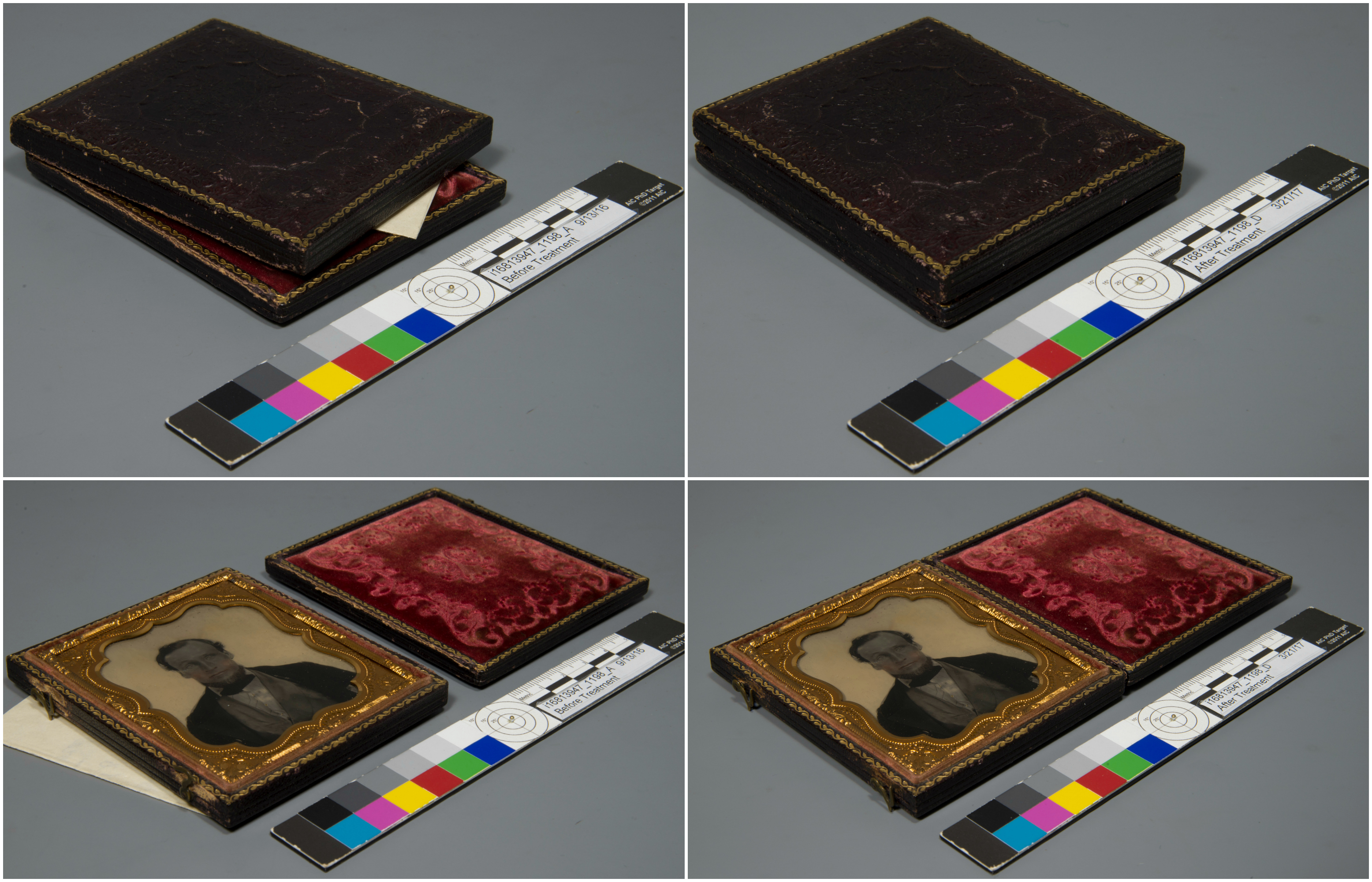
We very recently returned a two volume collection of photographs taken by William S. Porter, known as the W.S. Porter Collection, to the Public Library.  William S. Porter is known in Cincinnati as one of the two photographers responsible for the 1848 Cincinnati Panorama (you can read more about and even explore this amazing daguerreotype panorama here). Volume one of the collection consists of 7 cased photographs (including daguerreotypes, ambrotypes, and tintypes) and 1 non-cased tintype, all reportedly taken by W.S. Porter, while volume 2 consists of one framed daguerreotype of W.S. Porter and a preservation print of that photograph.  When these photographs arrived in the Lab for treatment, many of the cases were damaged (especially along the spine – some broken completely, one previously “repaired” with tape, etc.), the framed photograph needed re-packaging, and the collection needed two custom enclosures (vol. 1 & 2) to safely store all the photographs.

(Left) Before “bench” photos of one of the cased photographs labeled “John Wesley Lever”, (Right) After photos of the mended case.


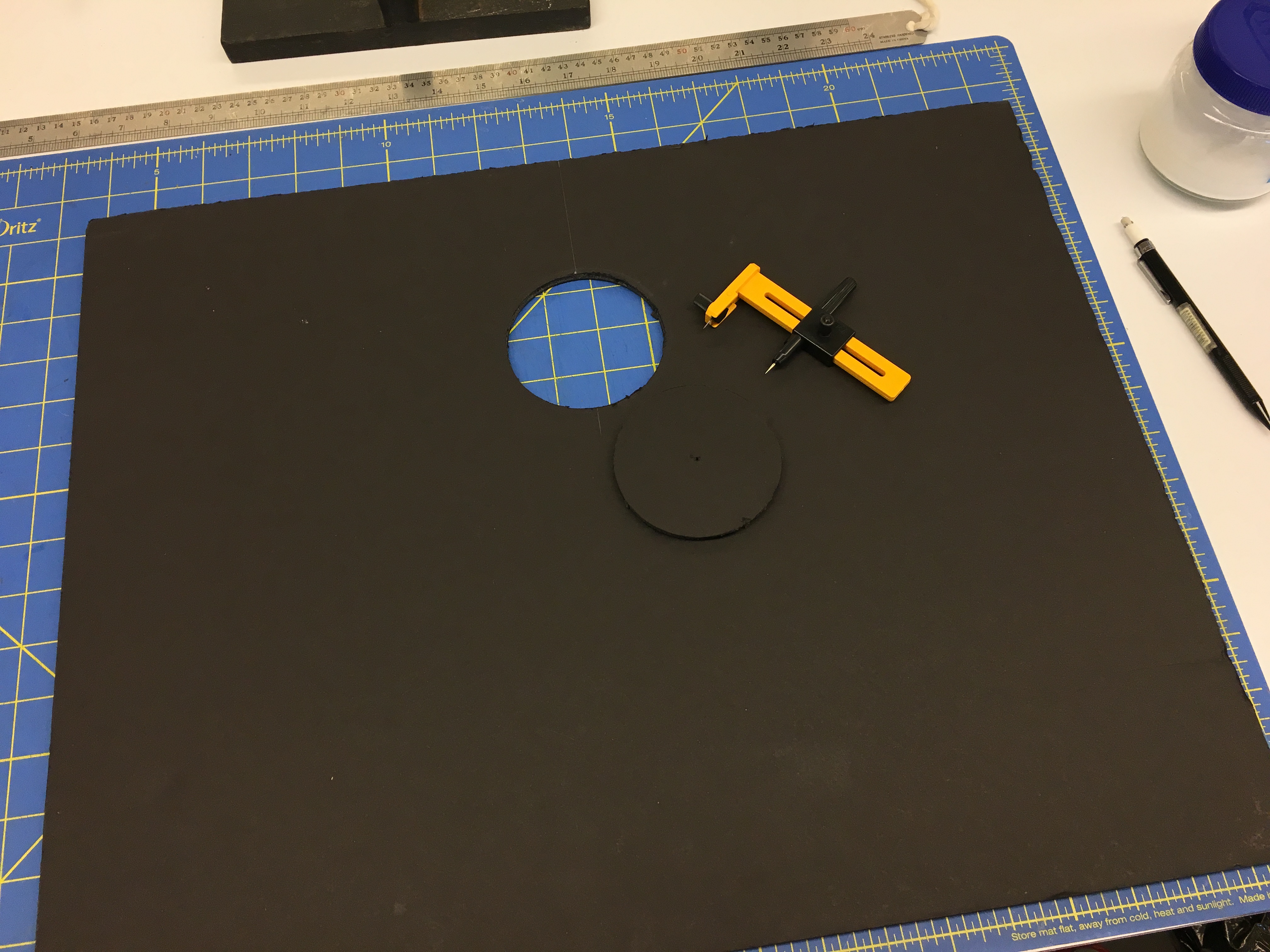
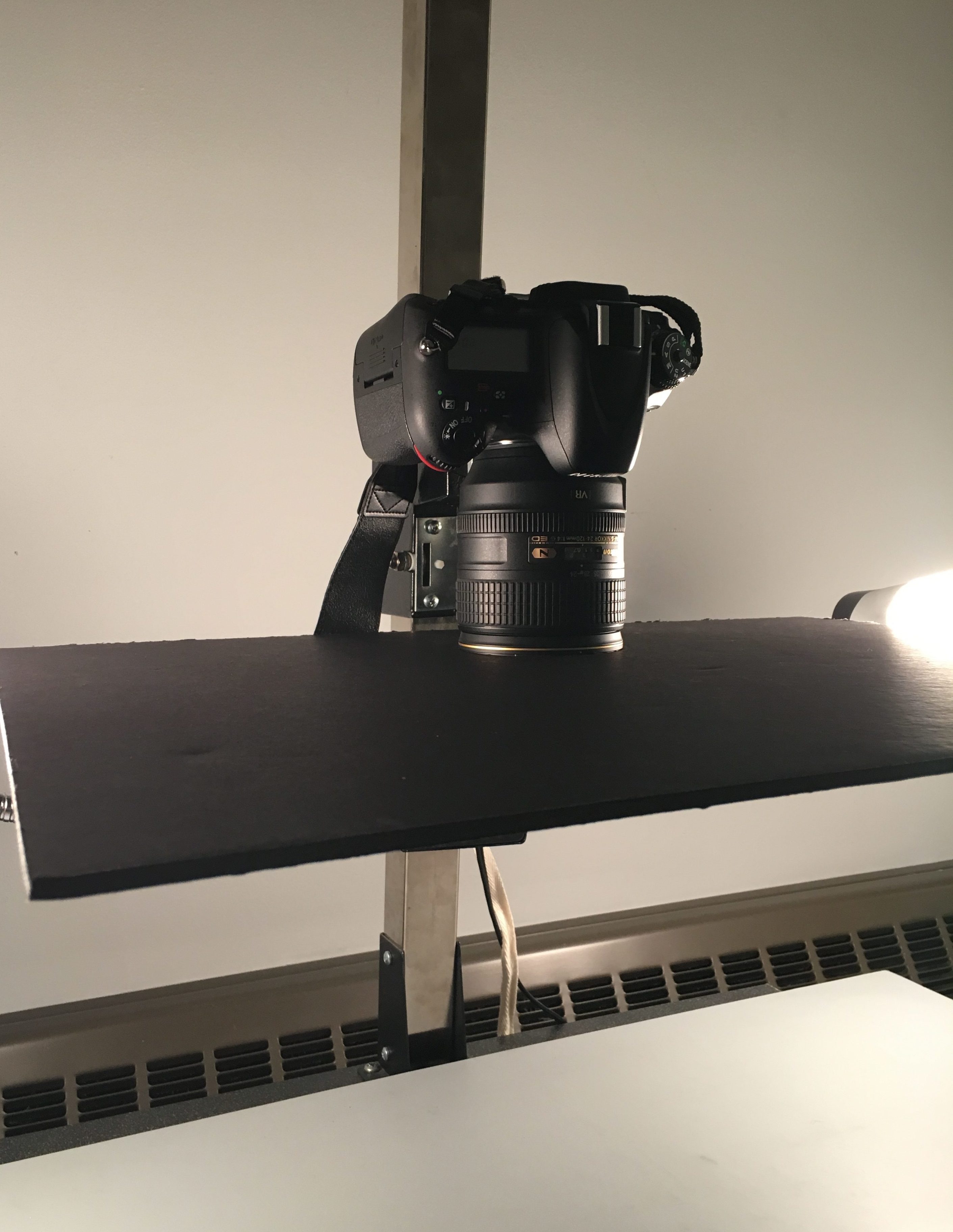
Now, as anyone who does photographic documentation will tell you, taking treatment documentation photos of photographs is a pain, especially on the copy stand (i.e. from above) and especially when you were trained in-house in a book and paper lab.  Glass objects just aren’t as common around these parts.  During PhotoDoc glass just acts as a mirror, reflecting all your light and even your camera lens and obstructing the actual photograph you are trying to capture.  But we knew that we wanted some good quality photos of the photographs to print as surrogates and to also use in the enclosures.  Black foam core and an Olfa rotary cutter to the rescue!  Using these two supplies I created a non-reflective black surface to place around the camera lens to help reduce reflections and absorb light.

In order to mount this black foam core on the camera lens I measured the diameter of our lens and the distance from the edge of the lens to the neck of the copy stand when the camera was in place.


The foam core allows enough flexibility for the deflector to just slide past the UV filter and snap into place securely.


With the black non-reflective board in place, I was able, with guidance from our conservator, to get some pretty good shots of the photographs to be used as surrogates.  The photos were also printed out and attached to the back of individual tuxedo boxes for each cased photograph.  Instructions to “store face down” were placed on the front of each tuxedo box to assist patrons in proper storage.  (The glass on all of these photographs is degraded and if stored face up the glass can actually weep onto the photograph causing significant damage, therefore cased daguerreotypes/ambrotypes/tintypes are generally stored up-side-down to prevent further damage to the actual photograph).  All of the tuxedo boxes for volume 1 were housed within a two-tiered clamshell box with two removable trays made by our resident “Box Master”, Chris Voynovich.  It should be noted that it’s a miracle this enclosure made it out of the lab and back to the Public Library, because several staff members were so enamored with it and thought it would make the best jewelry box!  I mean, it kind of would, wouldn’t it?
Here are the images I was able to obtain using my homemade non-reflective board:

Jessica Ebert (UCL) – Conservation Technician
Fun with PhotoDoc – Edition 1

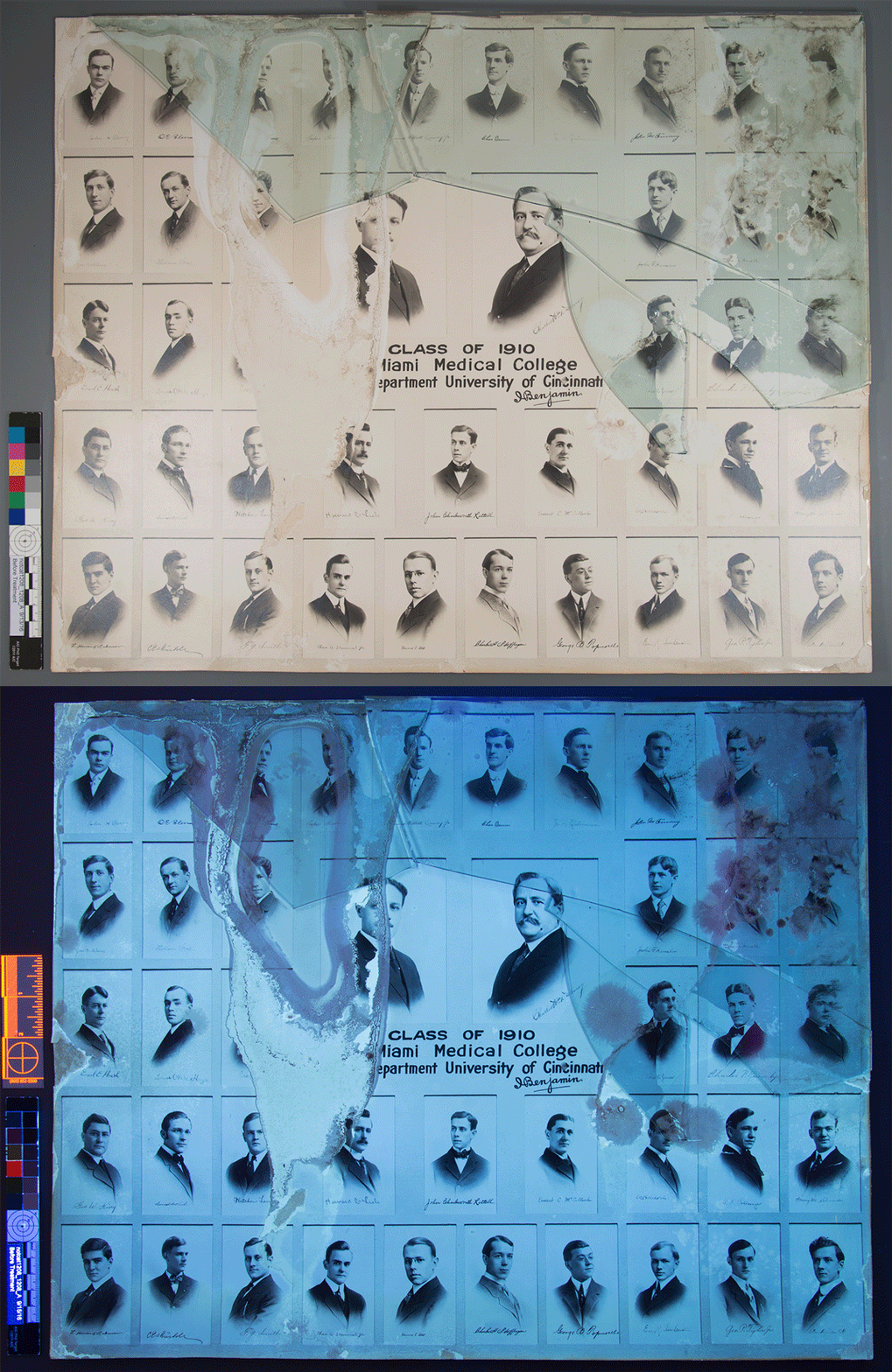
Since I am the conservation technician who carries out most of the photographic documentation in the lab I think that pretty much all PhotoDoc is fun.  With all the different tools in the toolbox it really doesn’t get much better than when you get to bust out the ultraviolet radiation to reveal something that is otherwise not so obvious under normal illumination (like a stain, handwriting, etc.).  And then when you can transform those normal and UV before photos into a gif…well, that just makes for a fun Friday, if you ask me!

classphoto_uv_gif

This photograph is part of the Henry R. Winkler Center for the History of the Health Professions collection and arrived in the lab with the original glass broken and partially attached to the photo. It is obvious under normal illumination that the photograph endured some kind of spill or water damage, but under UV florescence you can better make out the path that the water or perhaps beverage created and even note splotches of possible mold damage (which flourese purple).  Now that’s it’s photographed I’ll turn it over to Ashleigh, our conservator, to determine what’s happened to this poor thing and the best course of action when it comes to treatment and storage.


Jessica Ebert (UCL) – Conservation Technician

A Simple Solution for Lantern Slides

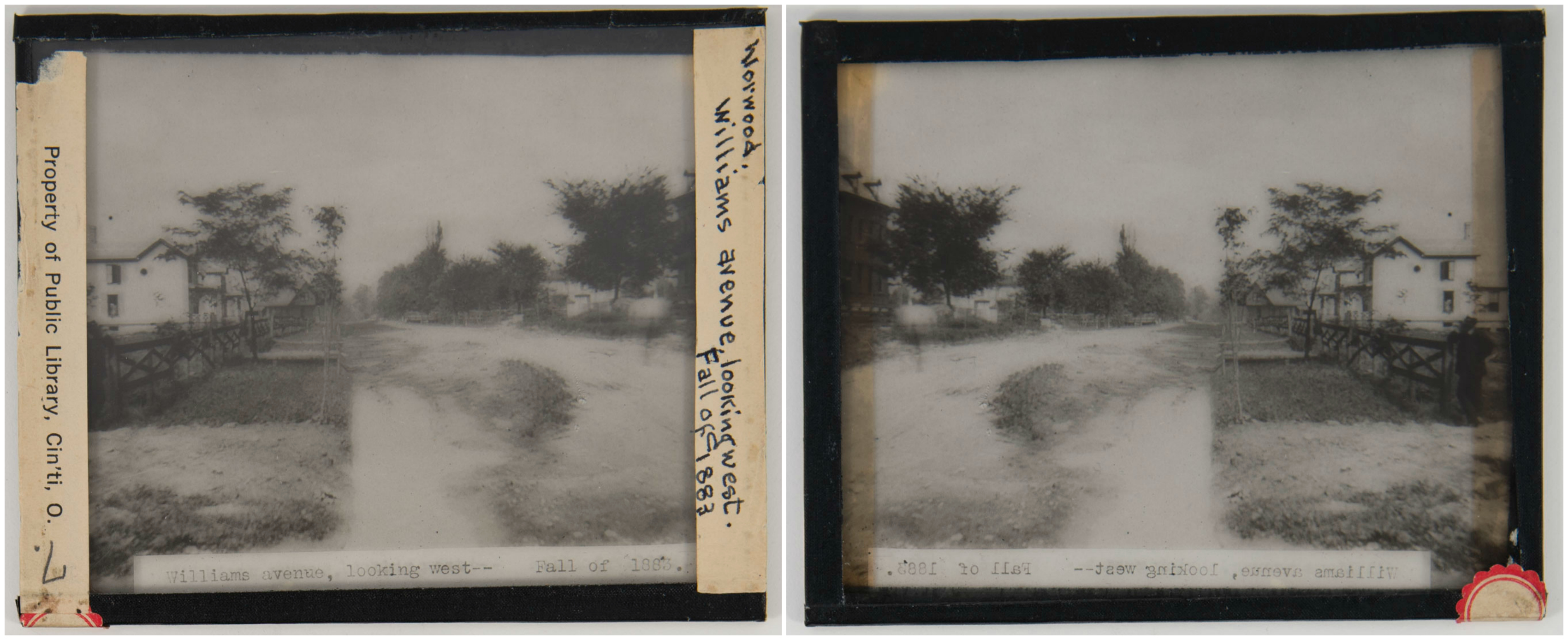
This October the Preservation Lab arranged for staff training in photograph conservation with an expert in this specialty to help us address specific needs for the two institutions.  The lab hosted a 3-day workshop taught by Photograph Conservator, Tom Edmondson.  Lab staff and two other local paper and book conservators attended.  We were taught how to identify more than 16 types of historic photographic processes.  We learned how to safely preserve and store a variety of formats, including daguerreotypes and lantern slides. Using actual historical photographs as learning opportunities we were taught basic and advanced treatment techniques such as surface cleaning photographs, washing, removing linings, flattening creases, and matting.  The technicians have already begun to implement the knowledge gleaned from the workshop in the treatment of some Public Library lantern slides.
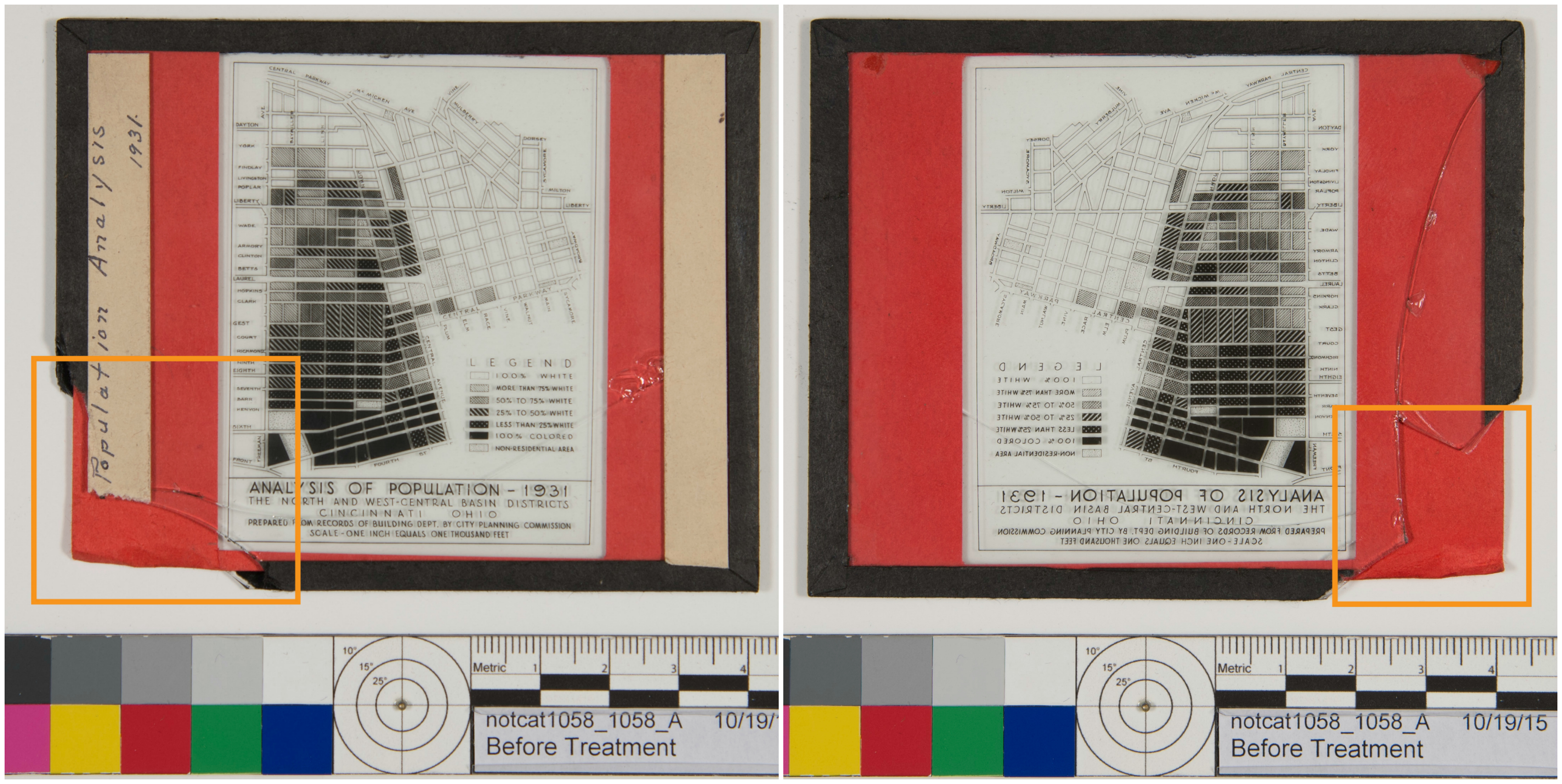
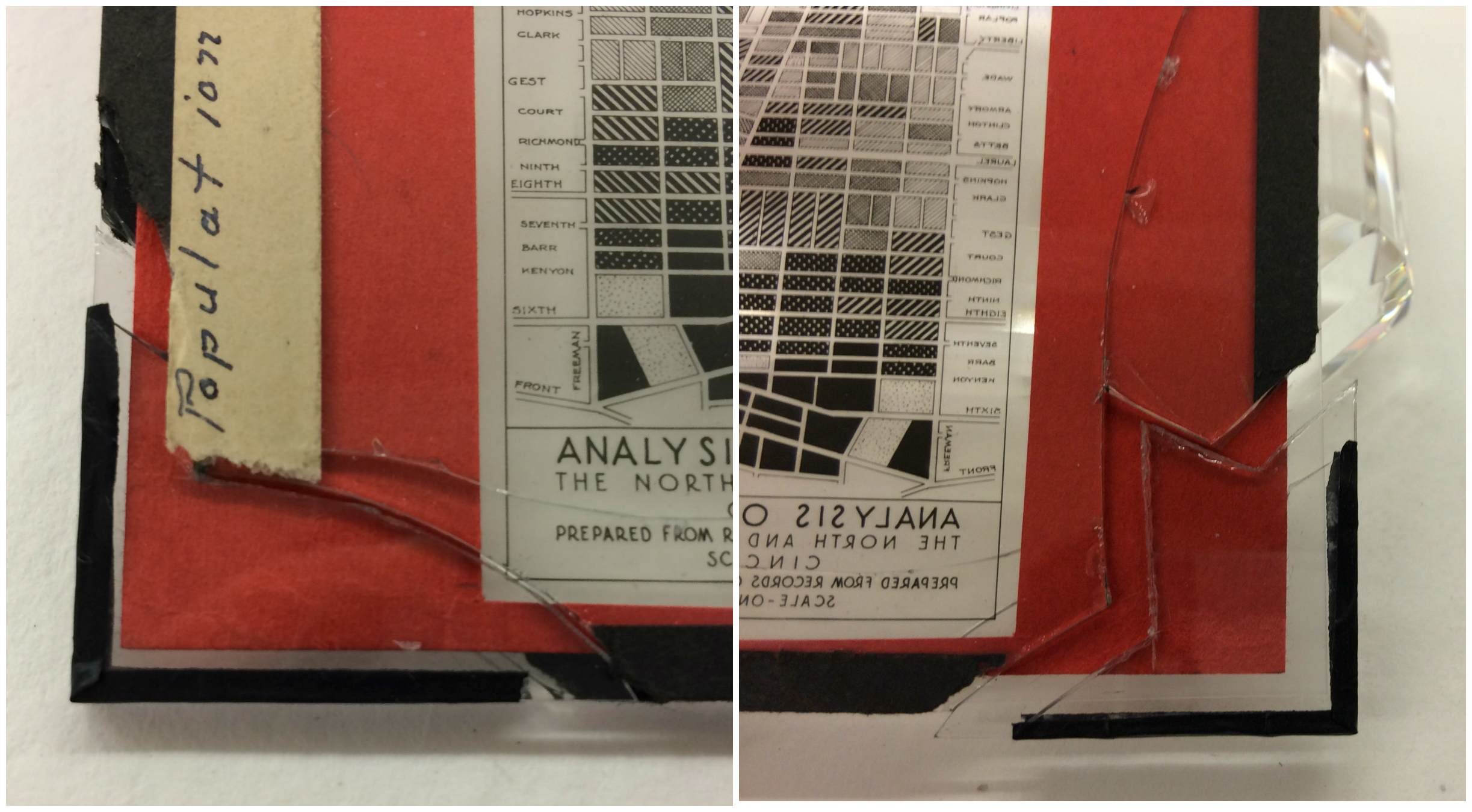
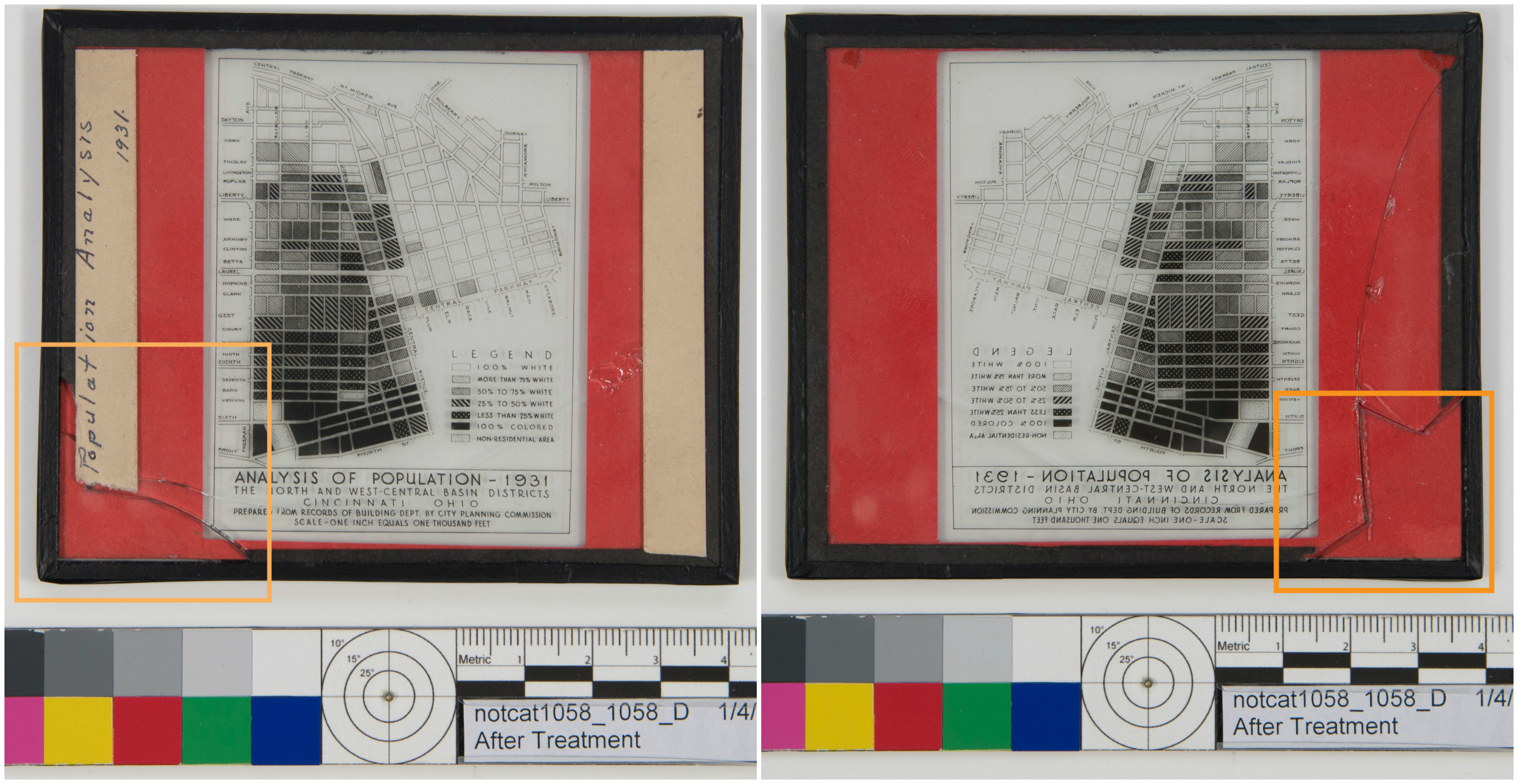
For example, with the lantern slide below the losses on the glass were filled with Vivak in order to prevent further damage.  Vivak, a clear thermoplastic sheet, was chosen since it is archival, looks similar to glass and is an easy material to cut and shape without losing its structural integrity.The Vivak was precisely cut and placed onto the missing areas.
The Vivak was precisely cut and placed onto the missing areas.

Collage3

Detailed images of the Vivak fills. Verso and recto pieces were secured together with a strip of Filmoplast R.


To attach the recto and verso of the Vivak fill pieces to each other, a strip of Filmoplast R was used around the edges. Filmoplast R, a cellulose tissue coated with an acid and solvent free heat-activated adhesive, was toned with Golden fluid acrylics to match the original paper strip around the edges of the lantern slide.
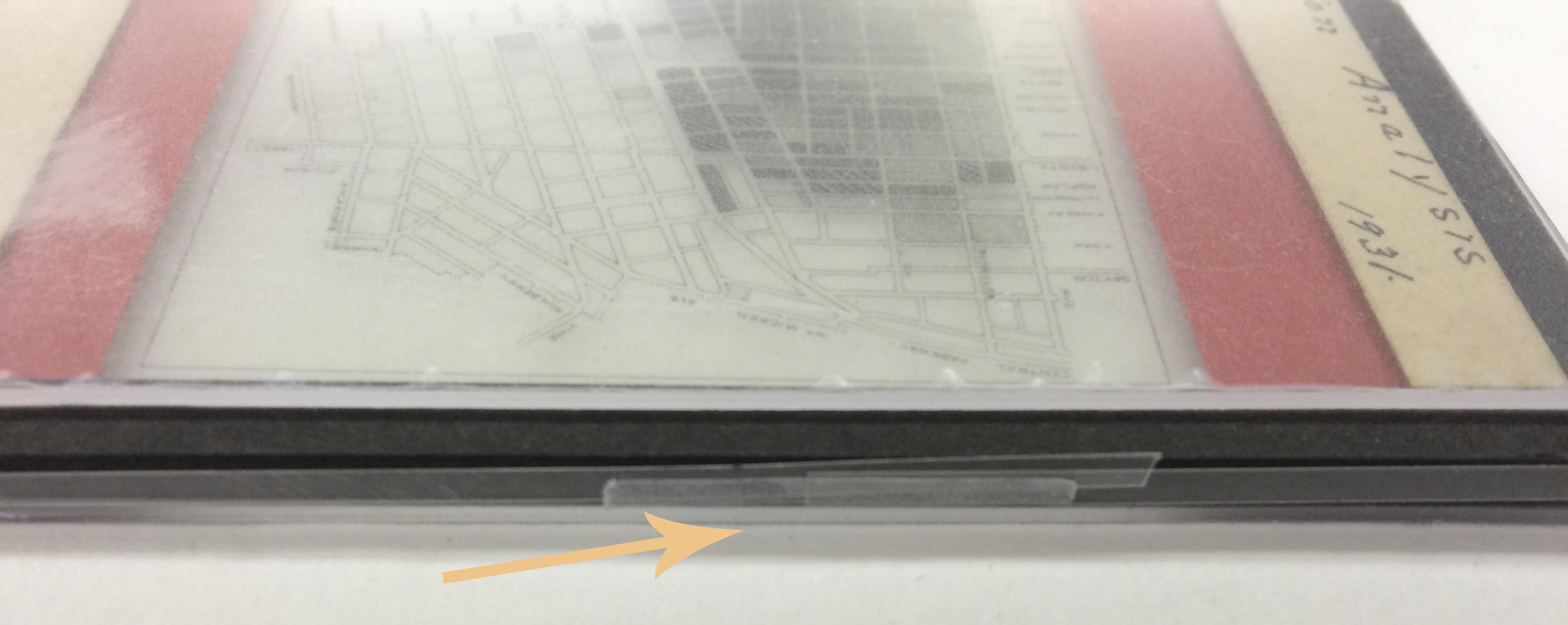
To protect the edges of the lantern slide, and to secure the filled areas in place, a strip of Mylar (polyester film) was placed along the edges and secured with a small piece of Filmoplast R.
The strip of Mylar around the edges of the lantern slide will also work as a barrier between the edges of the original object and Filmoplast R adhesive.

The strip of Mylar around the edges of the lantern slide will also work as a barrier between the edges of the original object and Filmoplast R adhesive.


Finally, the lantern slide was sandwiched between two pieces of Vivak and secured with a strip of toned Filmoplast R by wrapping it around the edges.Collage2
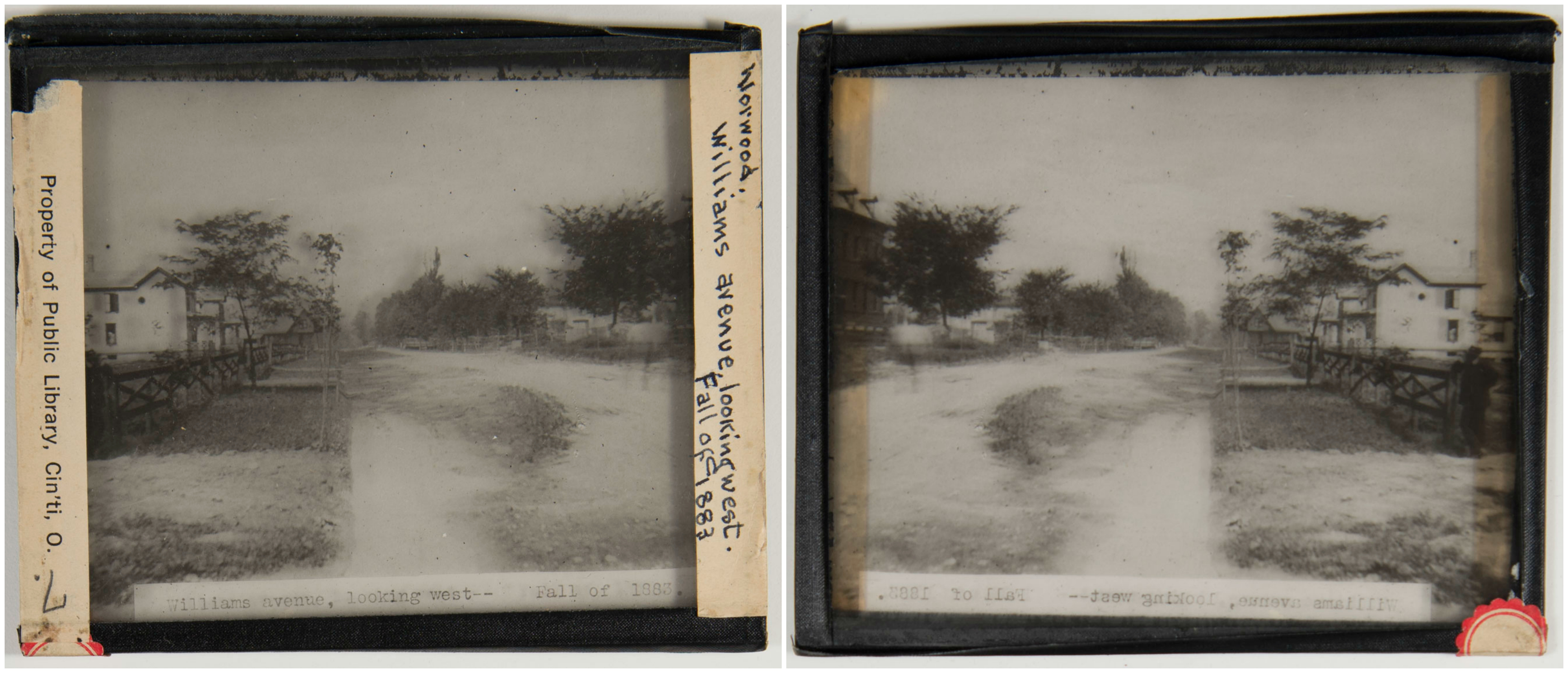
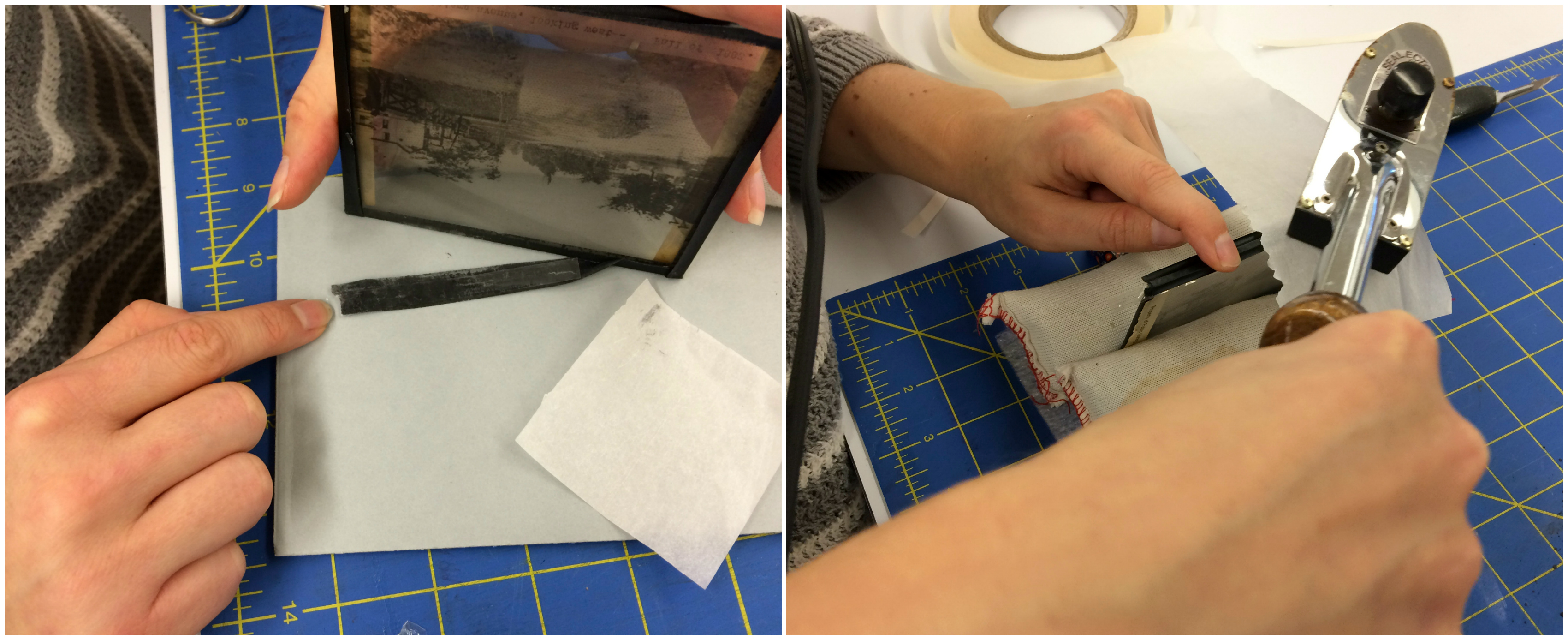
With another lantern slide, the original plastic coated paper strip around the glass plates was lifting and detaching from the glass.Collage4
The detached black strip was mended and adhered in place with the heat activated adhesive BEVA film 371, and a tacking iron.Collage6
Since this lantern slide was not broken and the paper was mended, there was no need to sandwich the lantern slide between pieces of Vivak.

Since this lantern slide was not broken and the paper was mended, there was no need to sandwich the lantern slide between pieces of Vivak.


This project was a great opportunity to learn and work with different materials.
 
Ashleigh Schieszer (PLCH) — Book and Paper Conservator, Author
Catarina Figueirinhas (UCL) — Sr. Conservation Technician, Author & Photographer
Jessica Ebert (UCL) — Conservation Technician, Photographer