Category Archives: Uncategorized

Exhibition Prep for Upcoming Show: Real Art for Young Artists

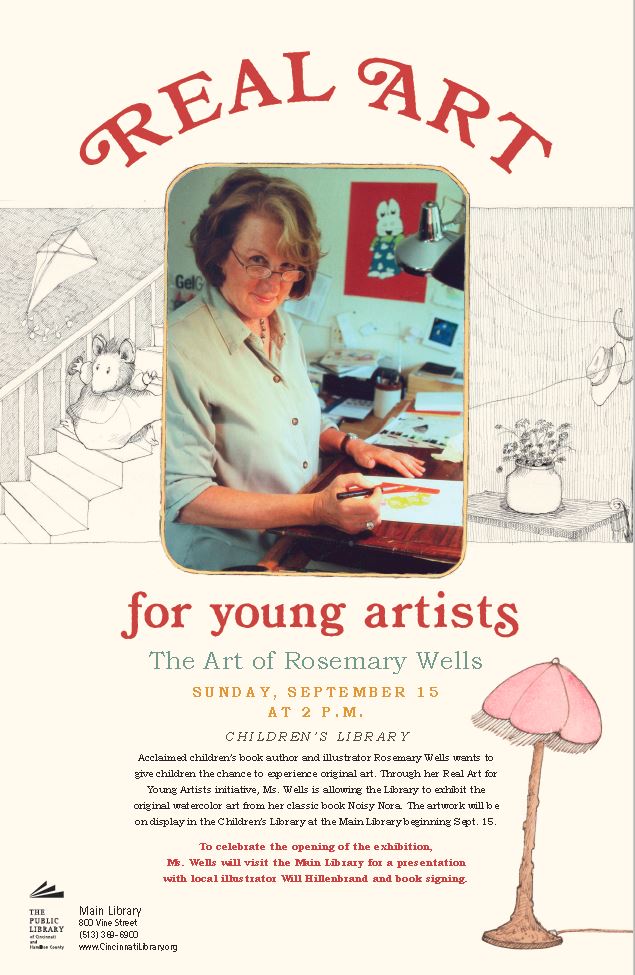
Join us September 15th, 2019 at 2pm as the Public Library of Cincinnati and Hamilton County unveils the newly acquired pen and India ink illustrations from Rosemary Well’s Noisy Nora in the beloved nook in the Children’s Library.  The illustrations are richly hand colored in watercolor, colored pencils, acrylic ink and gauche pigments.  With so much detail, they are a treat to see in person!
Acclaimed author and illustrator, Rosemary Wells, has written many endearing children’s books, including Noisy Nora (a story about a mischievous young mouse) and an entire series about the bunnies Max and Ruby.  As part of Ms. Well’s initiative, Real Art for Young Artists, Rosemary Wells has generously offered the Public Library of Cincinnati and Hamilton County the opportunity to exhibit more than a dozen original drawings for long-term display in the Children’s Library located in the Main building downtown.
Exhibition Prep for Upcoming Show: Real Art for Young Artists
Since the spring of 2018, the Preservation Lab has been collaborating with colleagues in the Public Library’s Programming, Digital Services, Cataloging, and Facilities departments, as well as the artist herself, on an exhibition of Wells’ Noisy Nora illustrations.  To prepare the materials for long-term exhibition each department lent their expertise to ensure a balance between preservation standards, viewer’s needs, and the artist’s vision.   This blog post highlights some behind the scenes activities leading up to the exhibition.
Exhibition Prep for Upcoming Show: Real Art for Young Artists
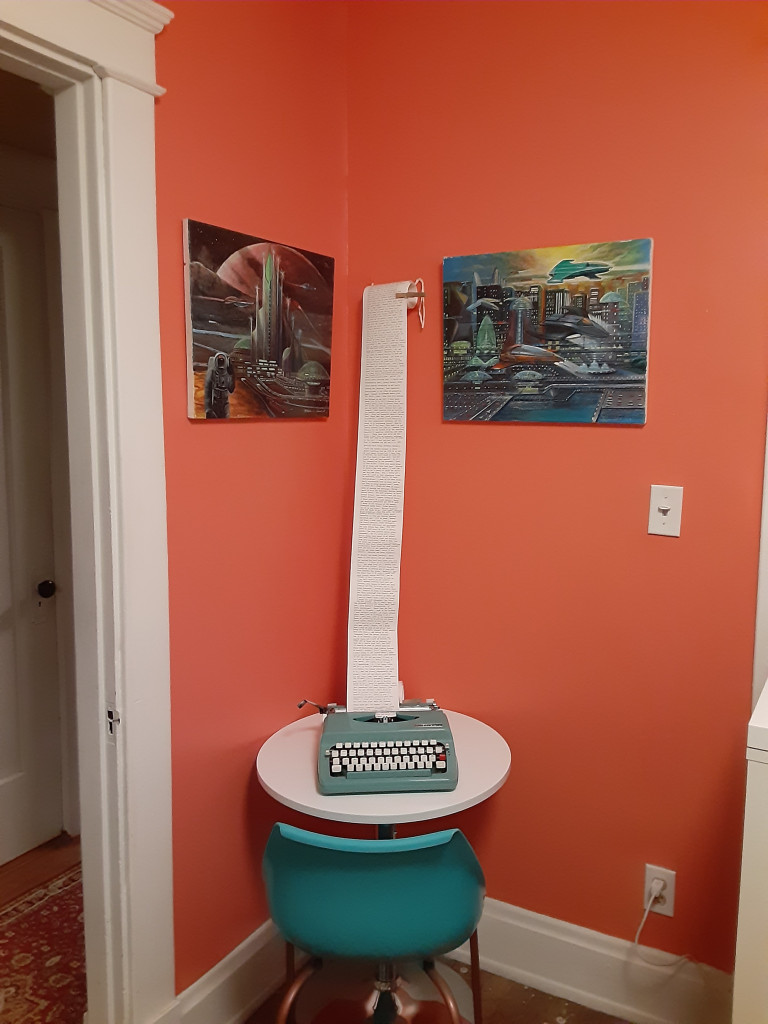
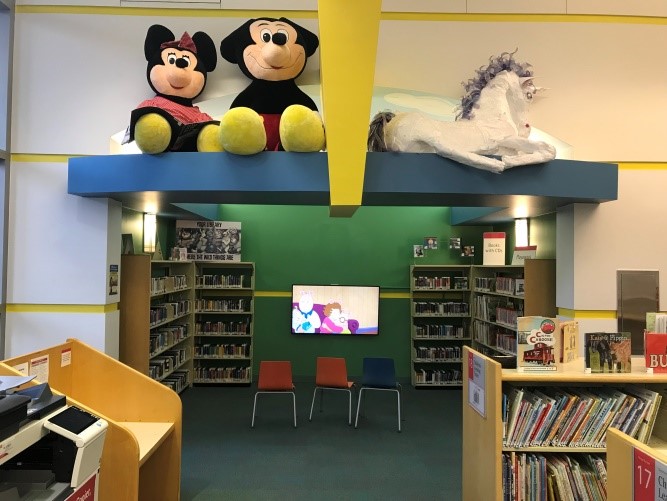
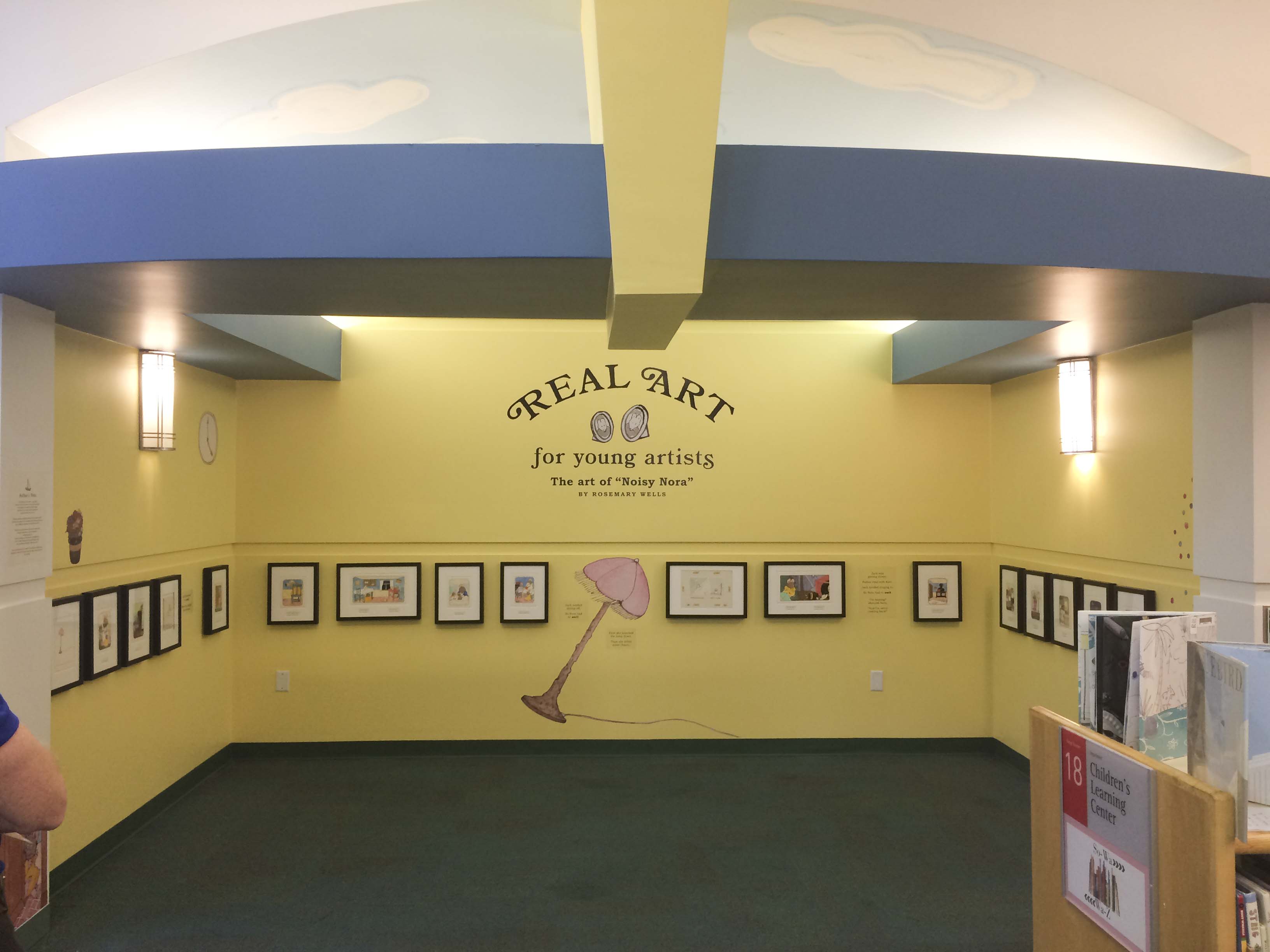
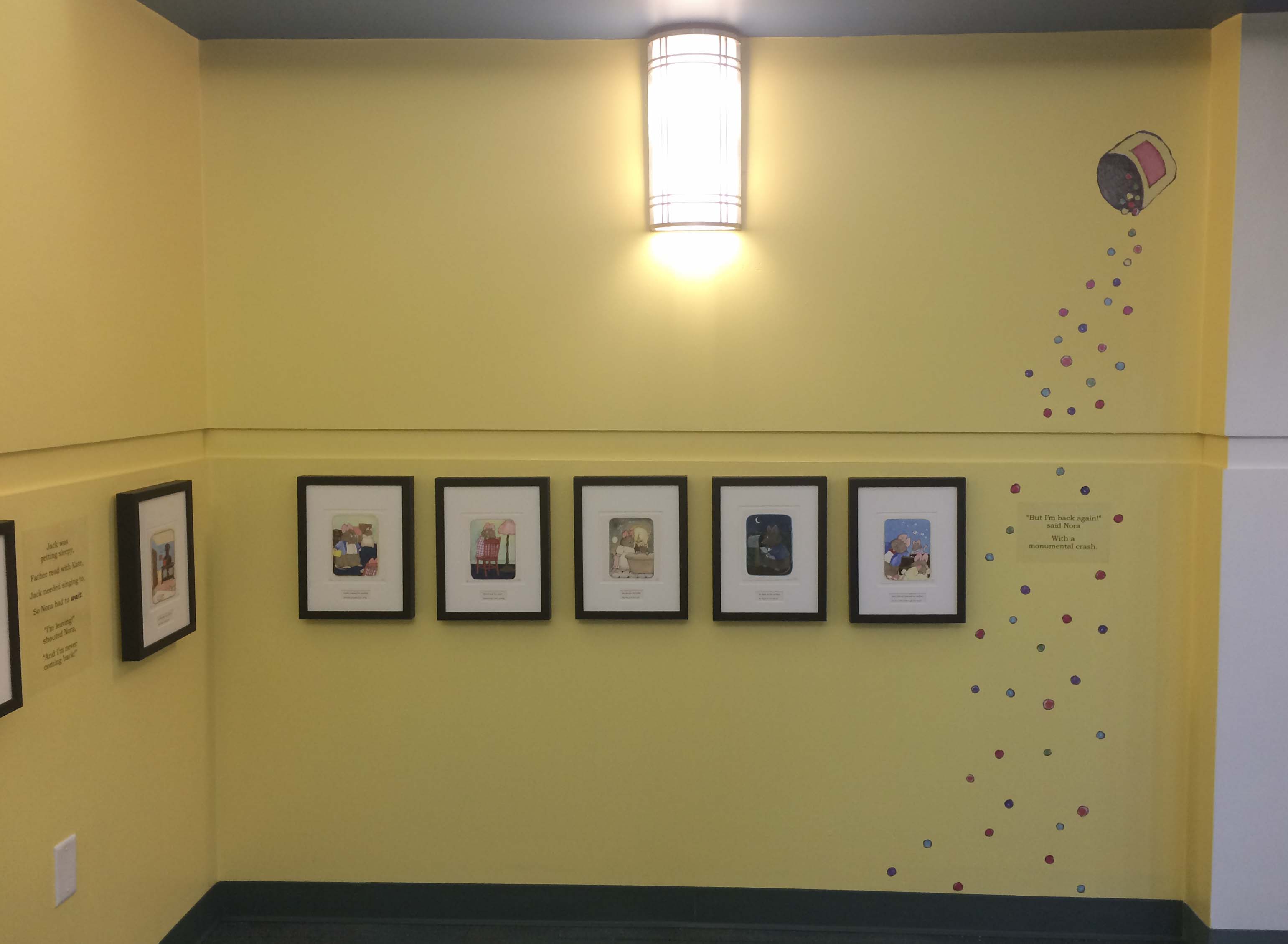
Above is an image of the nook in the Children’s Library selected as the exhibition space for the illustrations.  The nook is a perfect spot where the light can be controlled, preventing the artwork from fading overtime and it’s a great place to showcase the art at a height children can easily interact.  Facilities updated the nook with new paint and wall decals where the artwork will be hung.  In addition, to inspire young generations to create their own artwork, seating and tables for crafts will replace the current audio visual shelving and television.
Exhibition Prep for Upcoming Show: Real Art for Young Artists
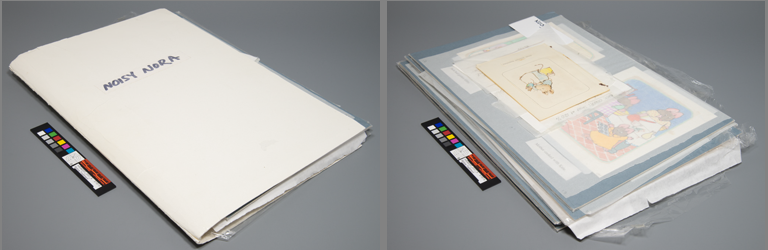
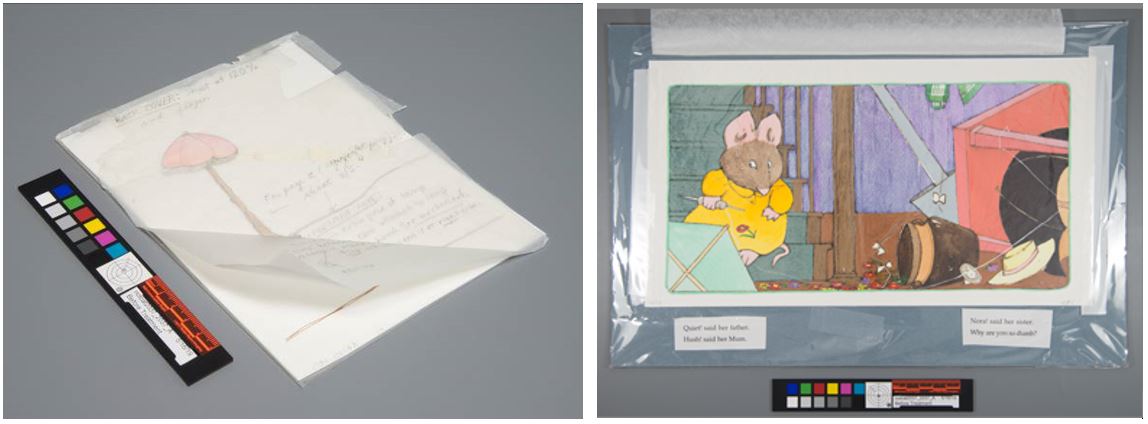
At the Lab, approximately 16 pen and ink drawings and one booklet were received directly from the artist as a group within a folder. Many drawings were attached to illustration boards with translucent overlays wrapped around from behind, taped into place, giving the feeling as though they were just recently mocked up for production.    Graphite notes to publishers were written on the transparent papers to inform the size the images should be enlarged or reduced for printing.  While not exhibition ready, seeing the artwork in this preproduction state is a rare glimpse into the creative process of the artist!
Exhibition Prep for Upcoming Show: Real Art for Young Artists
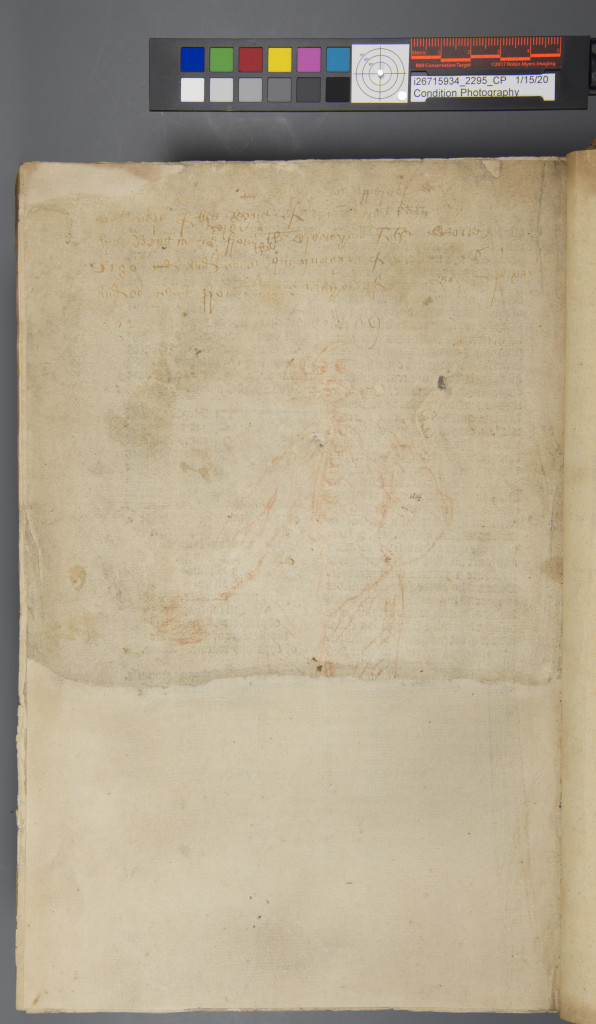
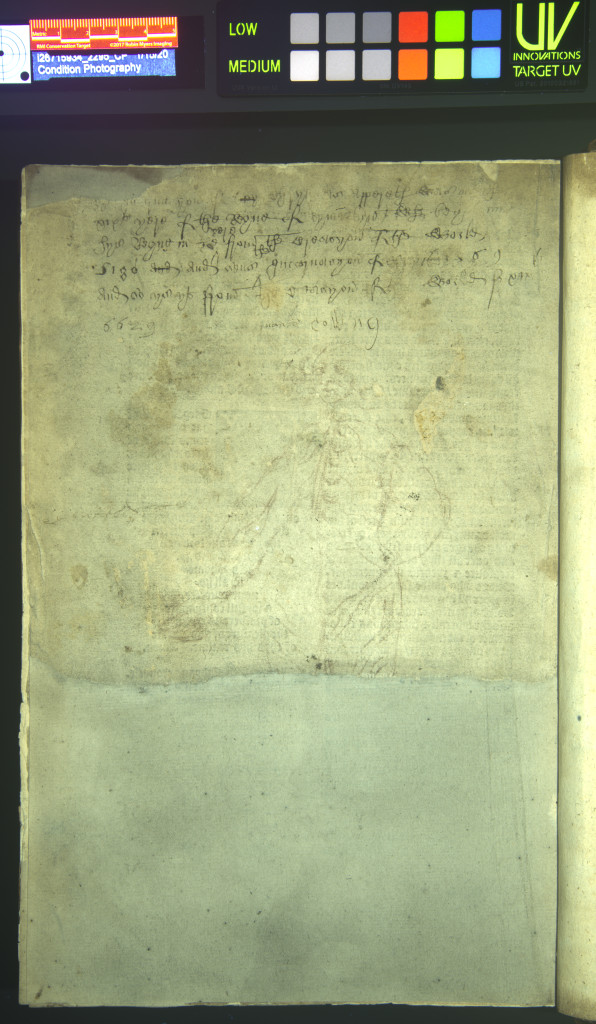
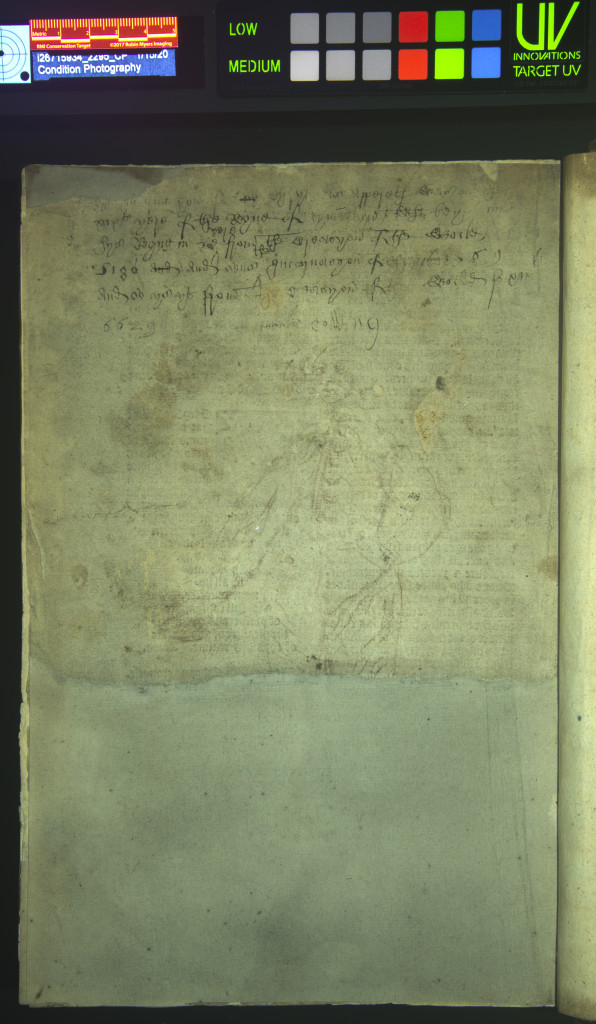
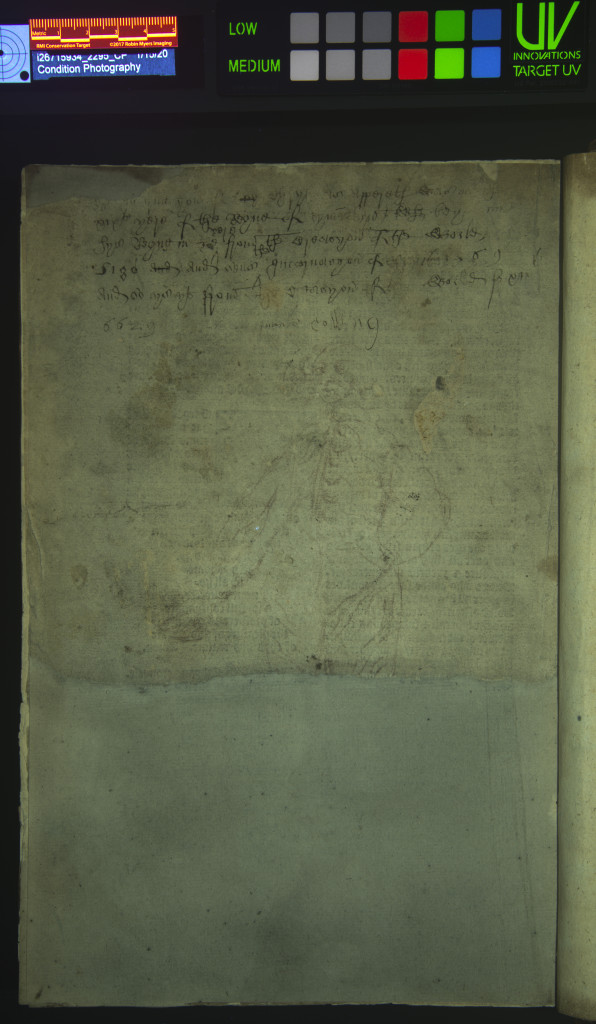
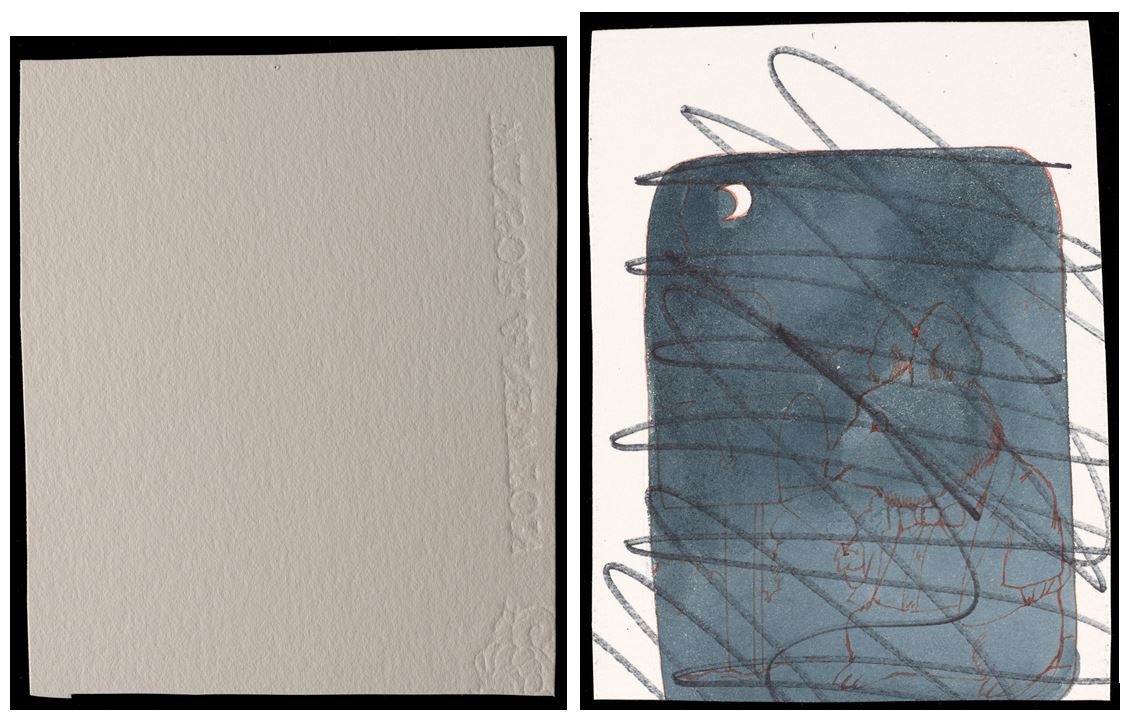
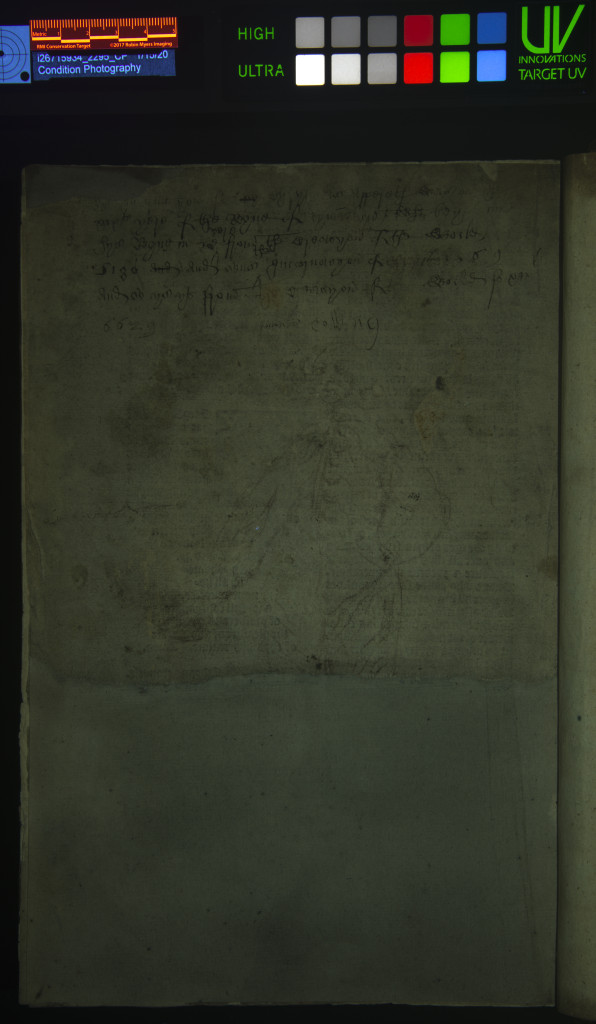
After the drawings were carefully removed from the illustration boards, using conservation tape removal techniques, some unique features were discovered on the verso of two illustrations.  The drawings were digitized to document their condition prior to exhibition.  Digitized images of the backs of two illustrations are shown below.

Exhibition Prep for Upcoming Show: Real Art for Young Artists

Left: Verso of “And then she dropped her sister’s marbles on the floor” showing an impression of a Windsor and Newton watermark. Right: verso of “No Nora in the Mailbox, No Nora in the Shrub” with a prior sketch crossed out on the back.


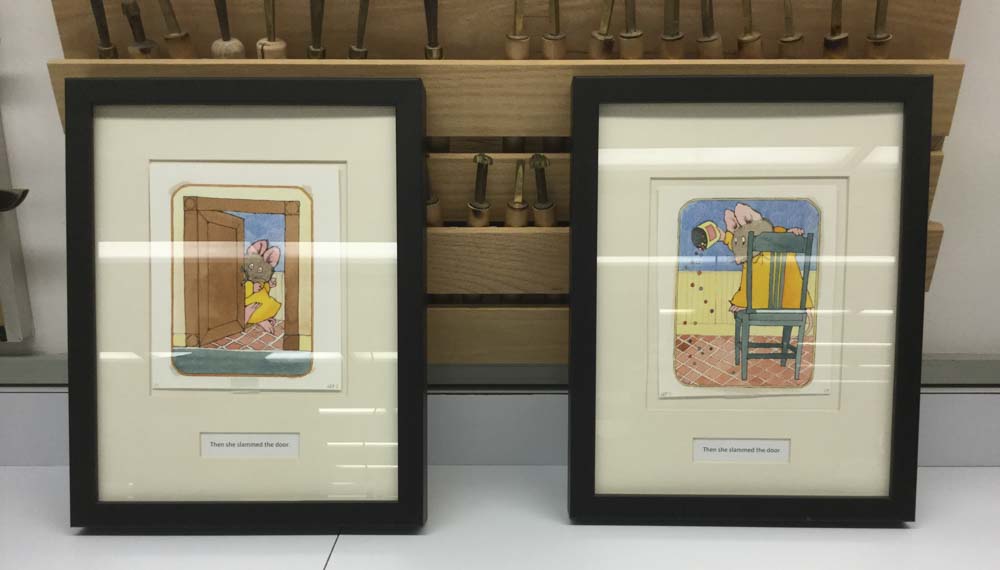
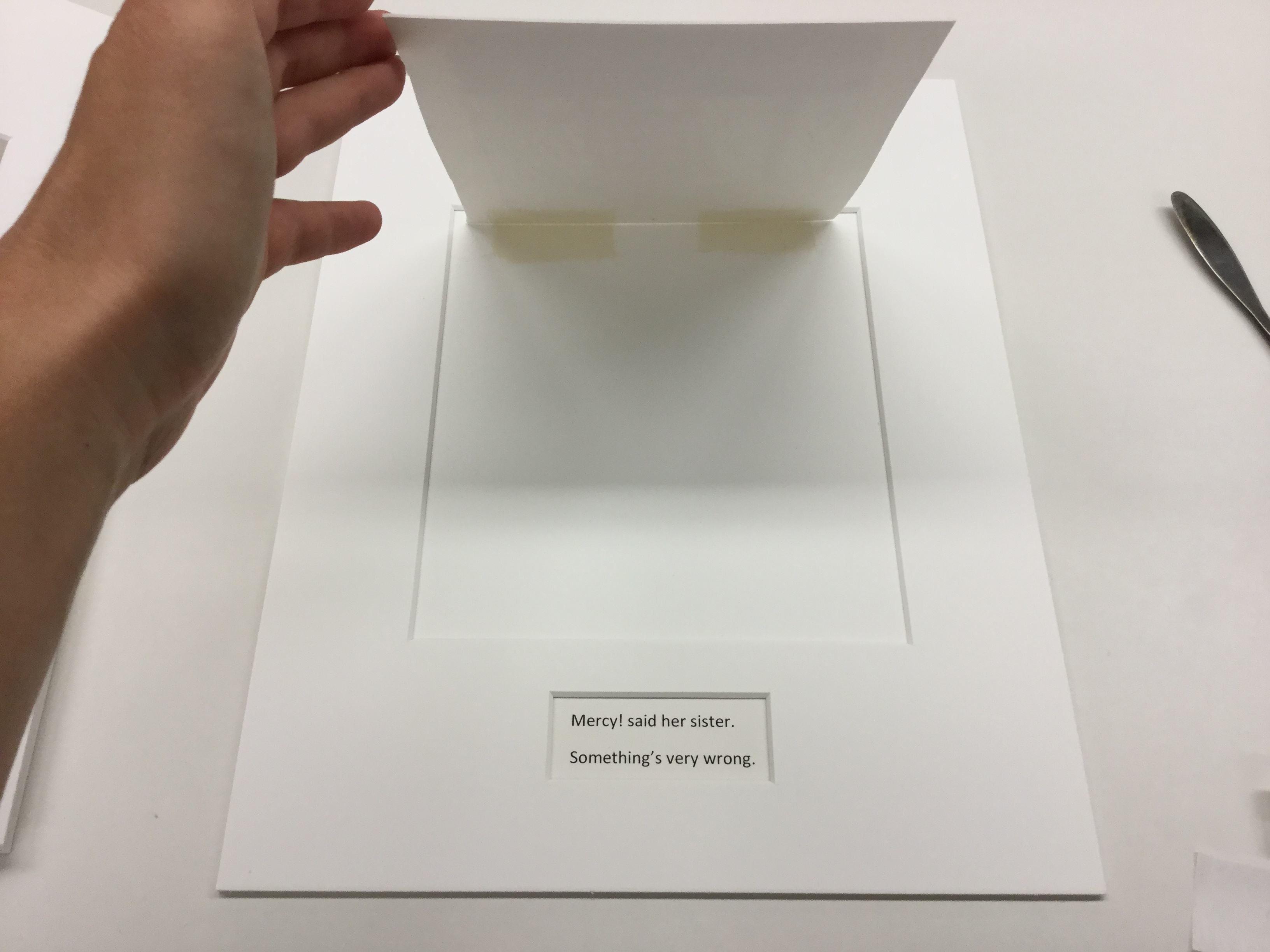
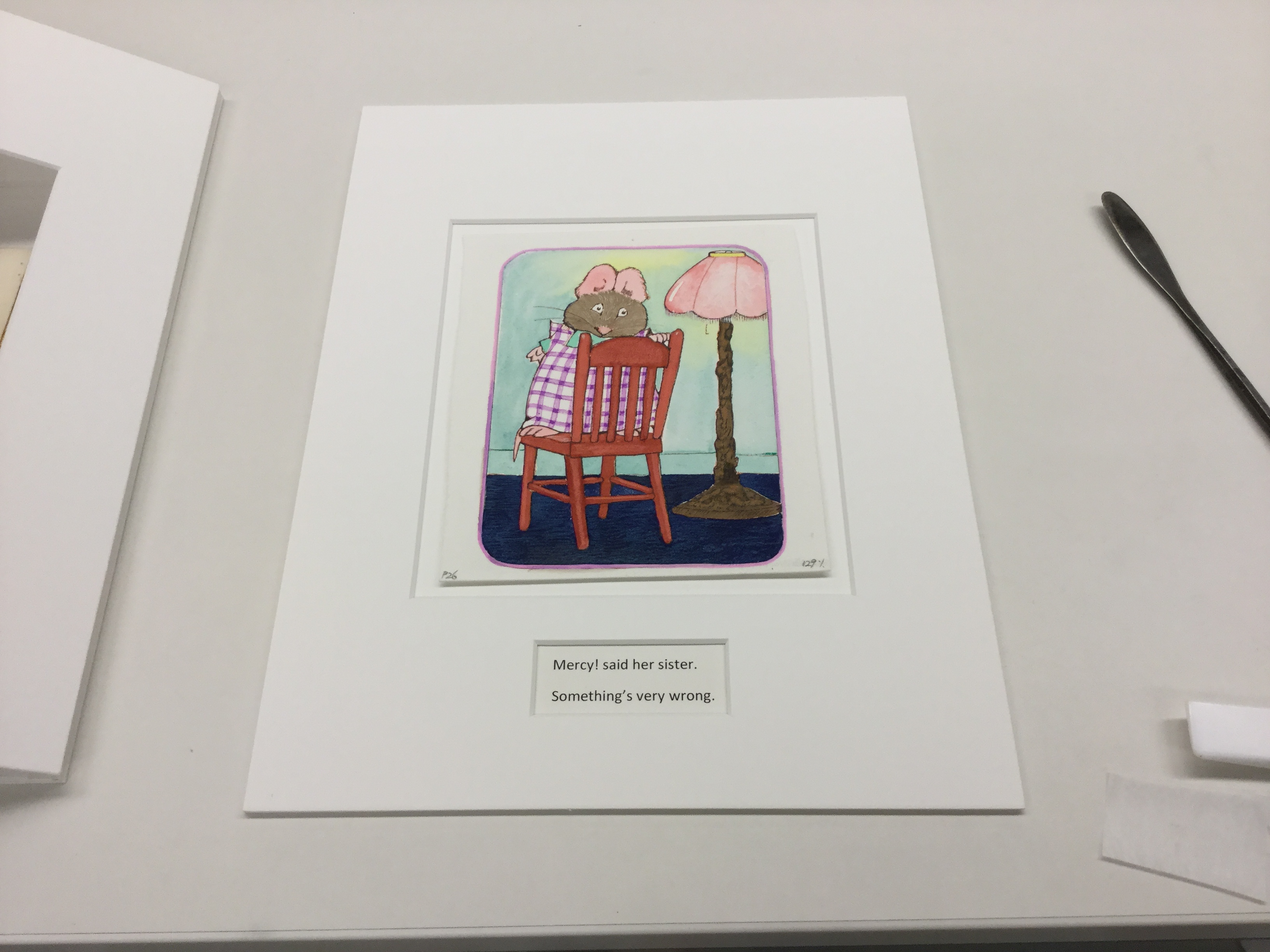
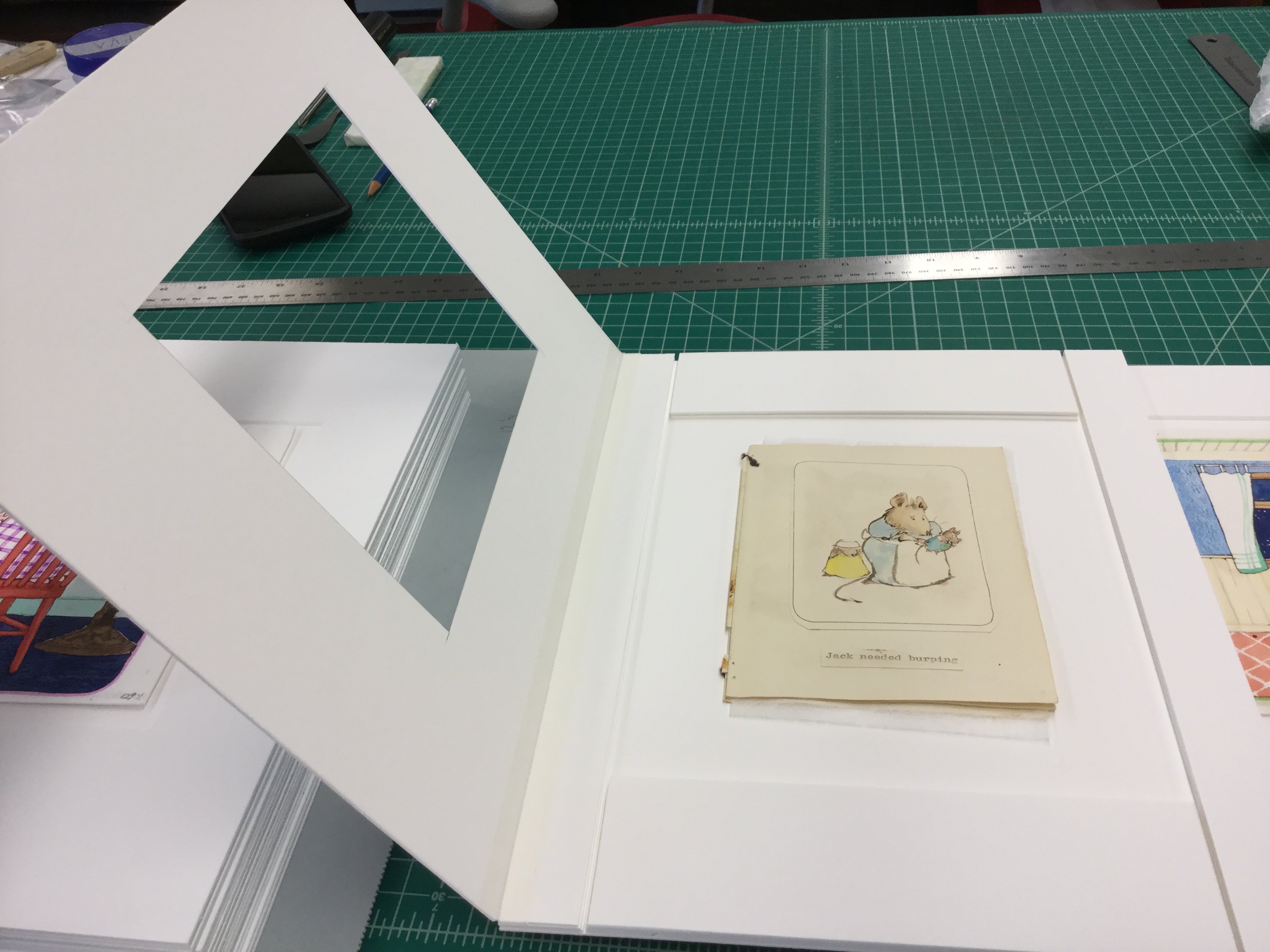
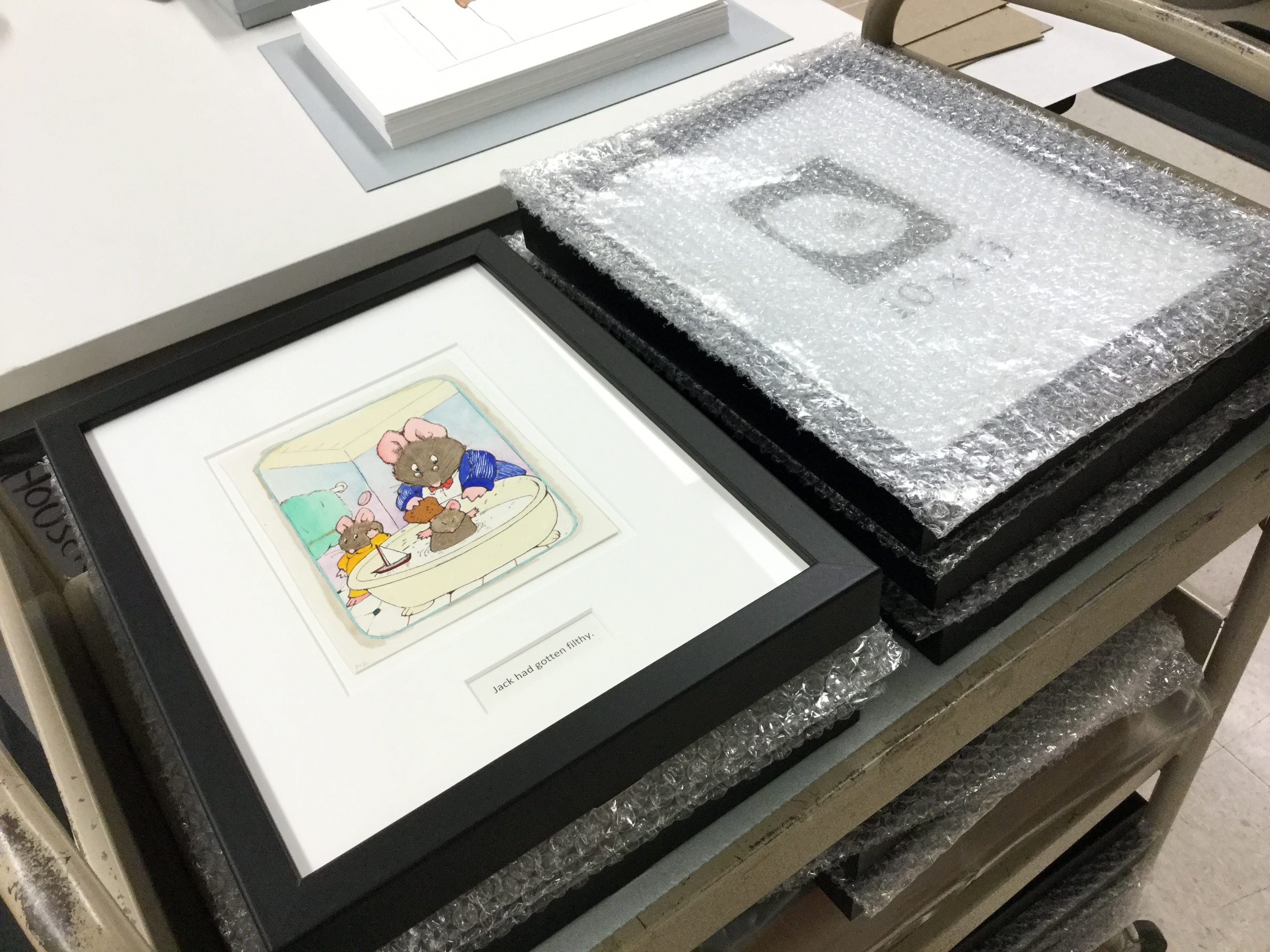
To visualize how the illustrations would look in their frames, mock up window mats were created to experiment with how the drawings and captions should be arranged.  Below, the frame on the left centers both the artwork and the caption with a small margin around the art; whereas the frame on the right centers mostly the artwork with a much larger margin around the art.  Ultimately, our aesthetic preference was the extra margin around the art since the artwork itself was not square.  We also decided that no matter what option we chose, we wanted the bottom of the caption to line up throughout all of the frames, whether there was a single or double line of text.
Exhibition Prep for Upcoming Show: Real Art for Young Artists
Next, the artwork was measured to estimate material costs for matting and framing.  Following exhibition preservation standards, Rising rag museum mat board, UV filtered glazing, and wood frames were selected by the Preservation Lab.  We choose using glass over Plexiglas glazing so there would be less concern of harming the glazing surface with cleaners.  Because the artwork will be displayed a children’s height level, we also took into account how the artwork will be hung.  With the aid of security locking devices, the frames are not removable from the wall by the public, therefore there will be no danger of the frames falling.
To mimic how the artwork was mounted on the original presentation boards (preserving the artist’s intent), the work was matted with captions from the children’s book added below the art.  The artwork was mounted with Kozo (mulberry) tissue v-hinges that were pasted to the back of the artwork and then adhered to the back mat with with Zen Shofu wheat starch paste.  To maintain a 45% relative humidity environment, the matted artwork was housed within a sealed archival framing package.
Exhibition Prep for Upcoming Show: Real Art for Young Artists

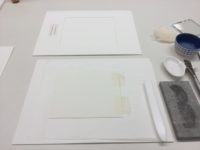
Kozo hinges were adhered to the verso of the drawings with Zen Shofu wheat starch paste.


Exhibition Prep for Upcoming Show: Real Art for Young Artists

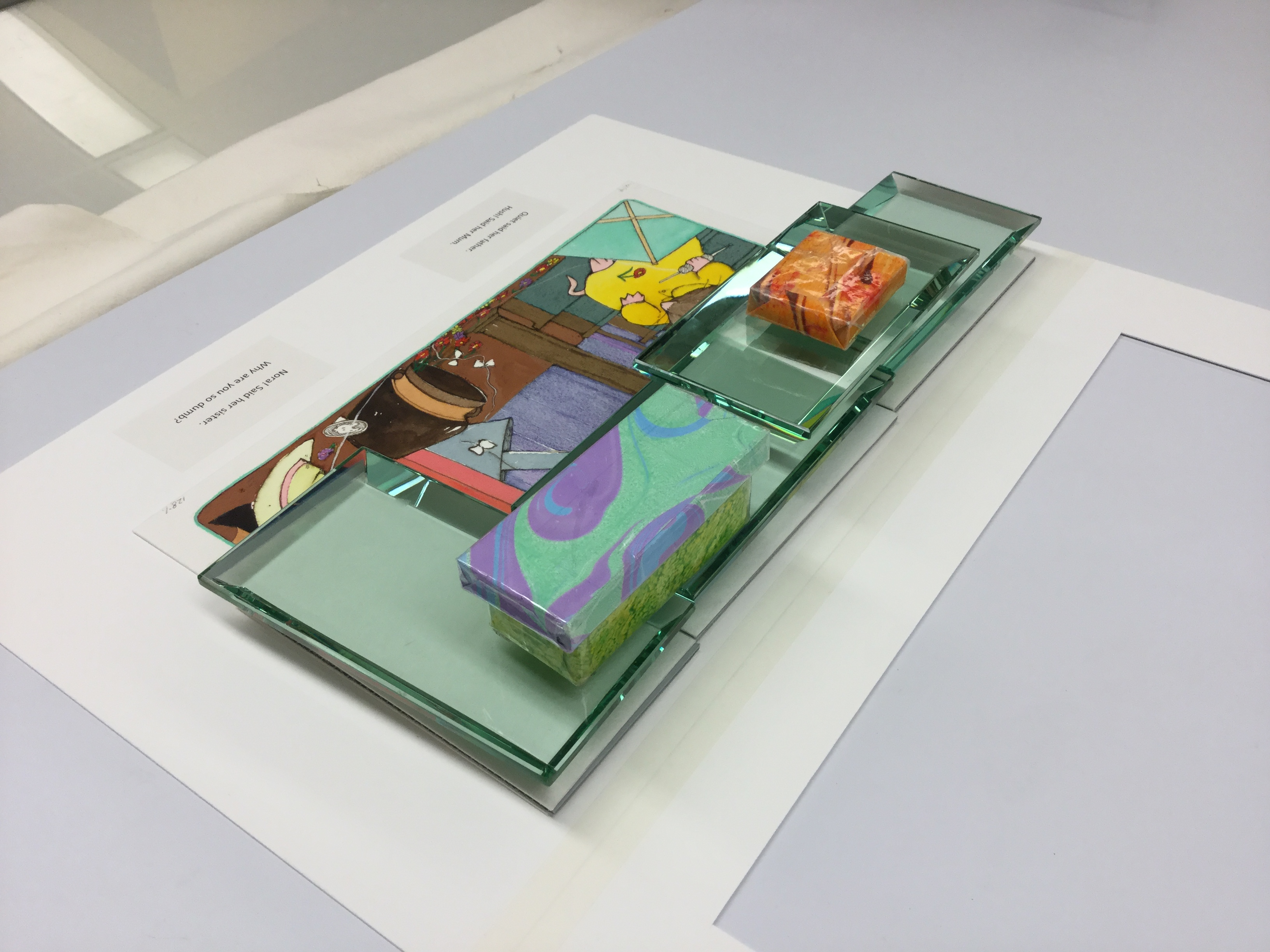
The hand colored drawings were then attached to the back mat using the kozo v-hinges, also adhered with wheat starch paste. The hinges were lightly pressed under weight to dry using pressing stacks.


Exhibition Prep for Upcoming Show: Real Art for Young Artists

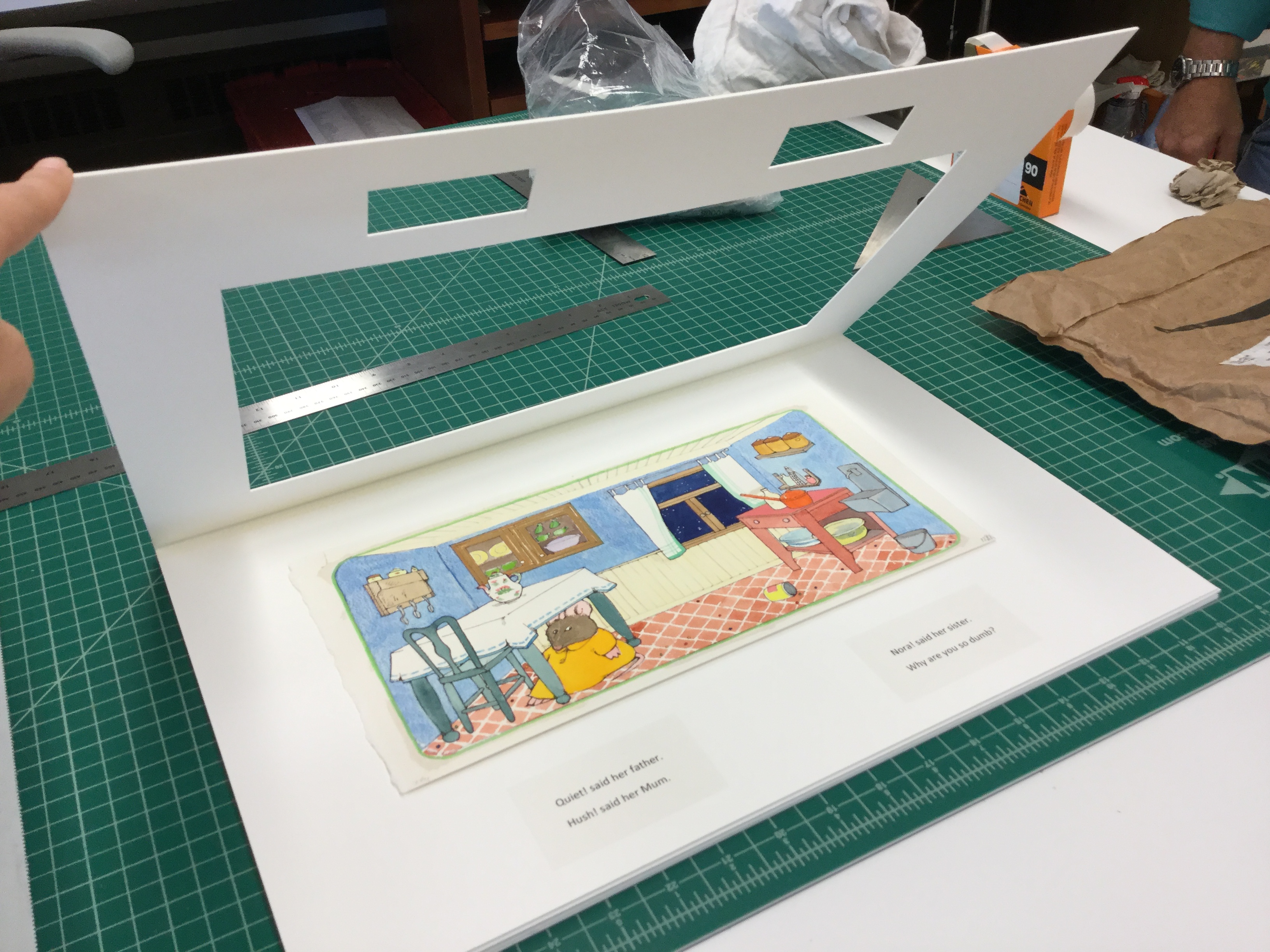
Landscape window mats were hinged along the top edge with P90 Filmoplast tape.


Exhibition Prep for Upcoming Show: Real Art for Young Artists

View of the v-hinges after they are dry.


Exhibition Prep for Upcoming Show: Real Art for Young Artists

Drawings are float mounted so the rough cut edges of the drawings are visible.


Exhibition Prep for Upcoming Show: Real Art for Young Artists

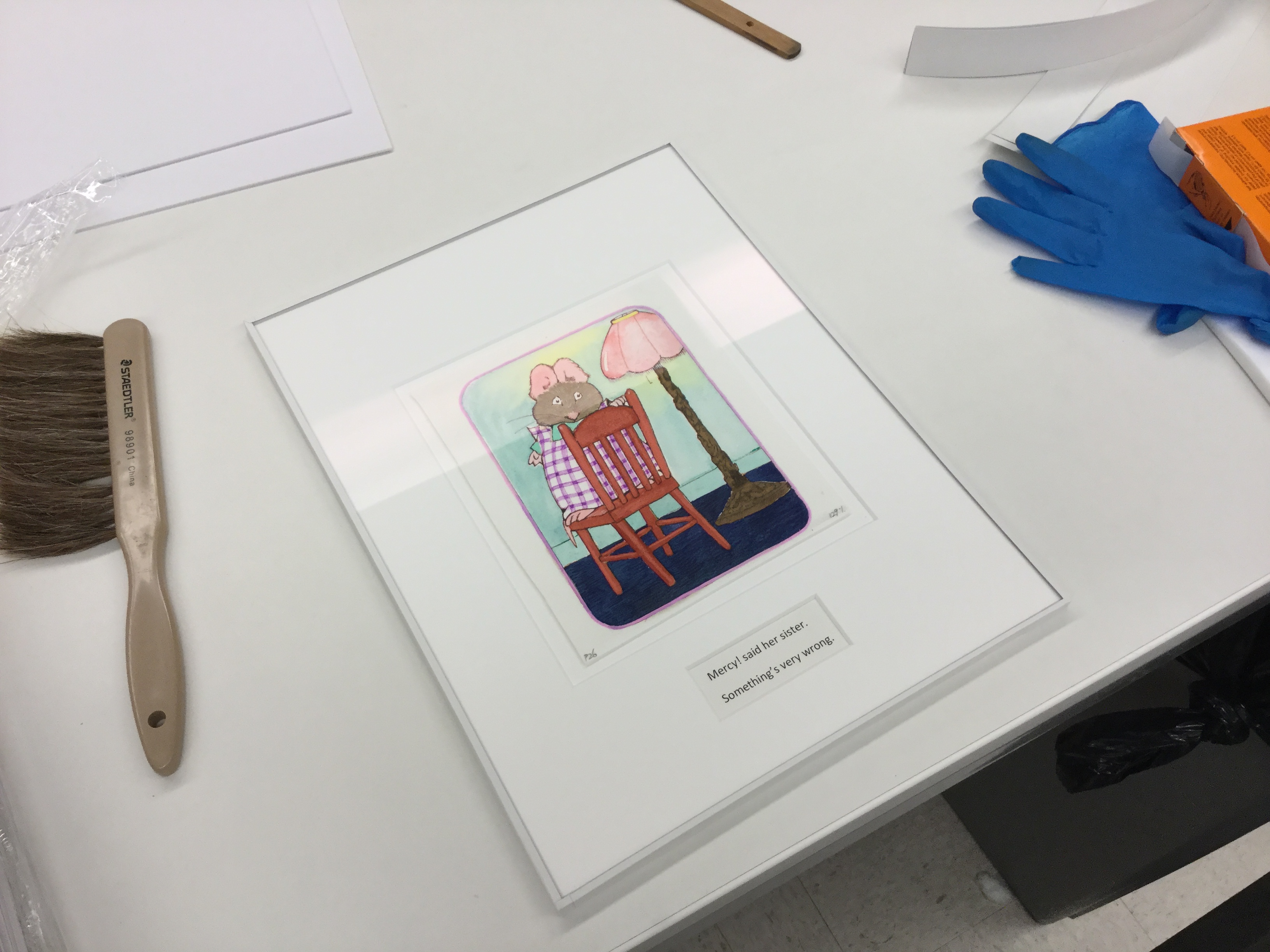
Recto of sealed framing package.


Exhibition Prep for Upcoming Show: Real Art for Young Artists

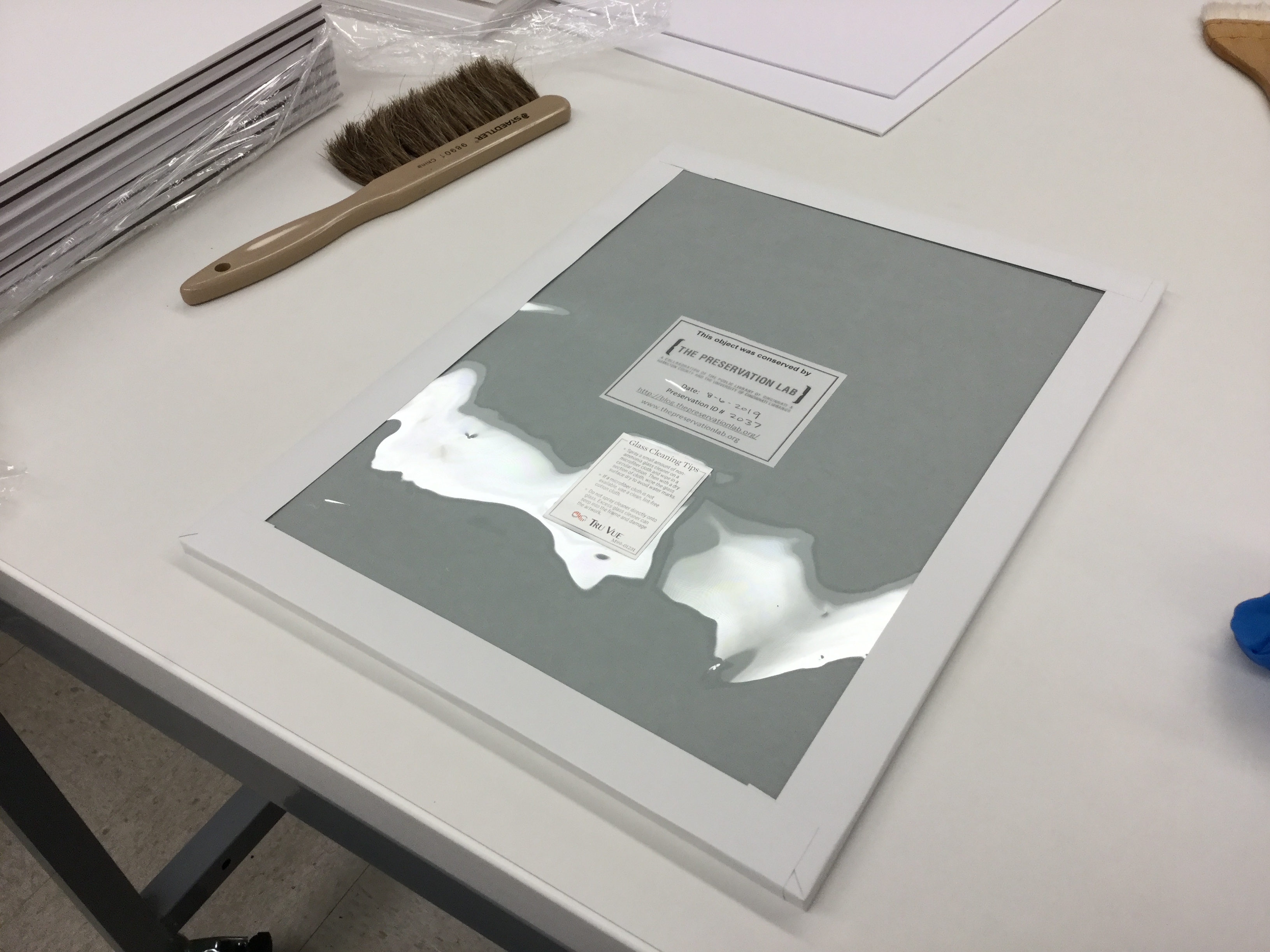
Verso of sealed framing package.


The framing package contains:

  1. UV filtered Tru View Museum glass (purchased from our local art supply framing store).
  2. Float mounted artwork with two Usu gami hinges applied with wheat starch paste inside matting system. Window mat hinged to the left edge of back mat with P90 filmoplast tape.
  3. Blue corrugated cardboard used as a backing board to the matting package.
  4. Conservation note loosely set into place for future reference on the back of the corrugated backing board.
  5. Sheet of Polyester film added behind the corrugated board as a moisture proof barrier.
  6. To fully seal the entire package, the edges of all the materials were first sealed with pressure sensitive P90 filmoplast tape. A second foil backed framing tape from University Products (part of the Perma/Seal label line) was applied as a barrier to prevent moisture and gas exchange.
  7. A Dove Gray dust cover was attached to the back of the frames with 3M 415 double stick tape. Barcode labels and an additional conservation note were added to the dust cover.
  8. Lastly, Three security hangers were attached to the back of the frames; two at the top and one at the bottom.

With the exception of one frame, the original metal prongs were reused to secure the matting packages within the frame.  The one exception includes the booklet mounted with a sink mat, this thicker package required nailing brads secured to the inside of the frame rabbet to hold the matting package in place.

Exhibition Prep for Upcoming Show: Real Art for Young Artists

Booklet was mounted within a sink mat to account for the thickness of the object.


Before exhibit prep:Exhibition Prep for Upcoming Show: Real Art for Young ArtistsDuring exhibition preparation:
Exhibition Prep for Upcoming Show: Real Art for Young Artists
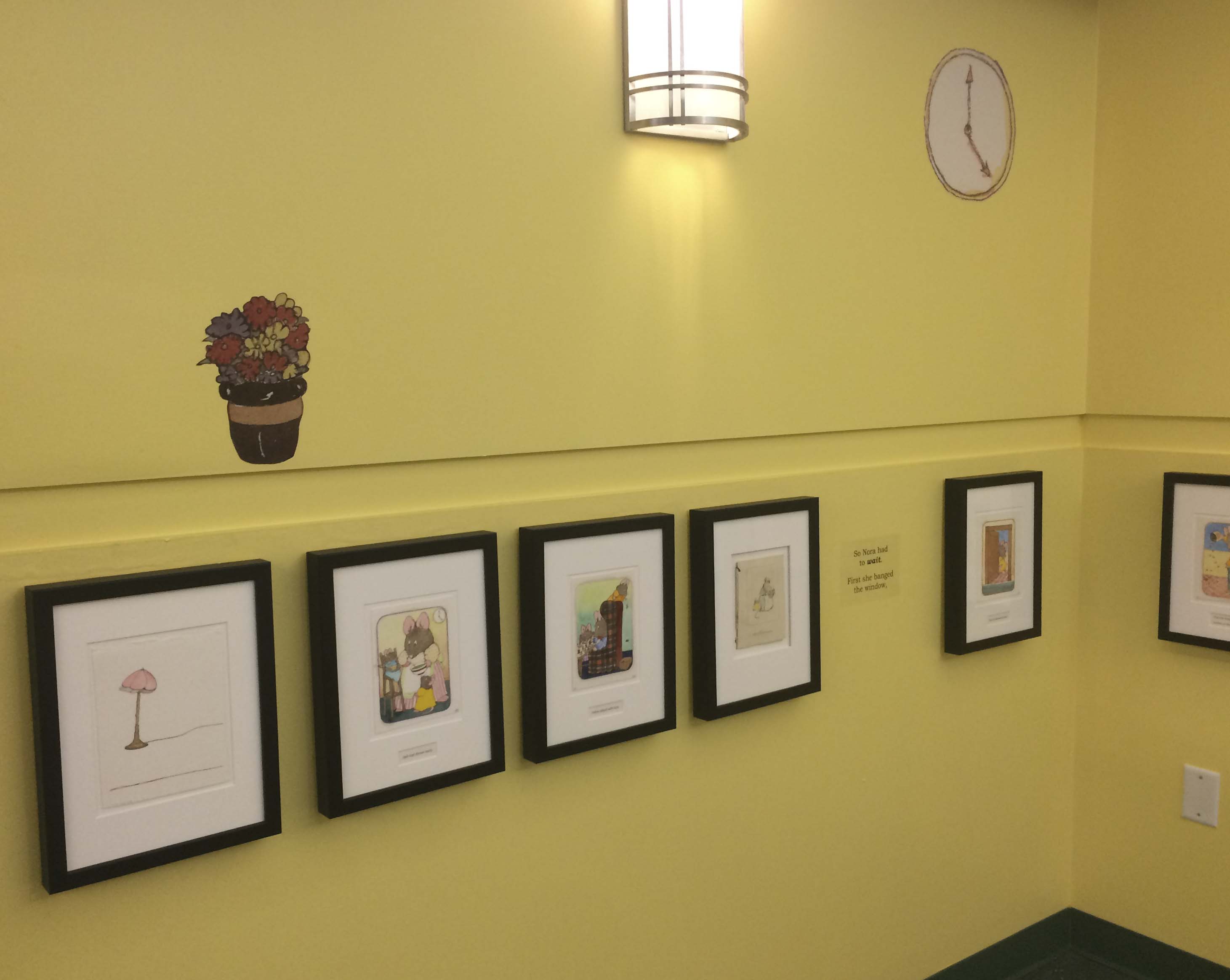
After installation (the art is hung at children’s height!):

Exhibition Prep for Upcoming Show: Real Art for Young ArtistsExhibition Prep for Upcoming Show: Real Art for Young ArtistsExhibition Prep for Upcoming Show: Real Art for Young Artists

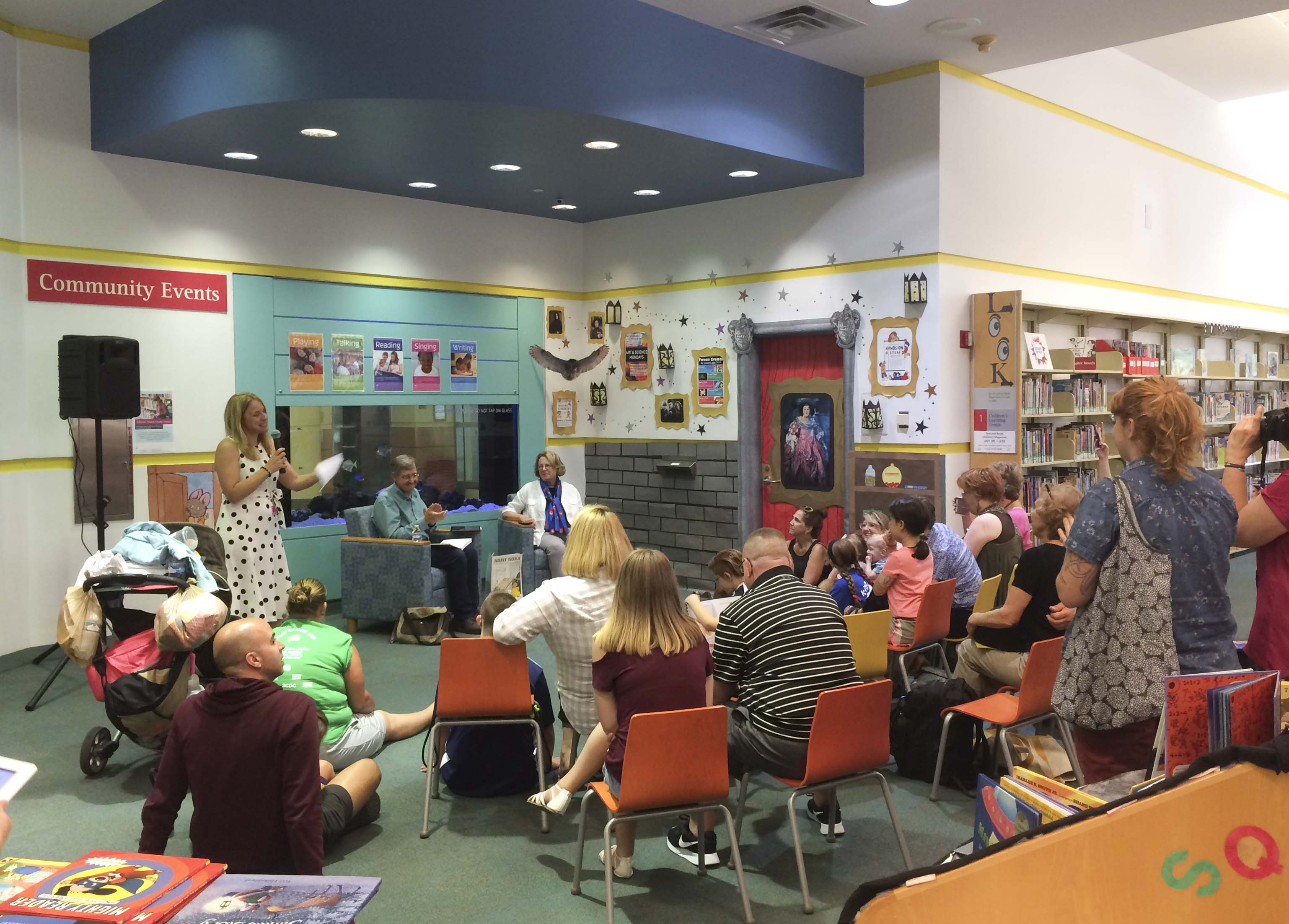
During Will Hillenbrand and Rosemary Wells visit on Sept. 15th, they discussed inspiration for books such and Max and Ruby (who are modeled after Ms. Well’s own children!) and delved into the subject of creating a “noisy” book. Mrs. Wells explained her process of conveying sound through illustrations – which by nature are a silent, quiet experience.

Exhibition Prep for Upcoming Show: Real Art for Young Artists

You can view the treatment report and treatment documentation for this original artwork on the Preservation Lab’s Digital Resource Commons site here.
Ashleigh Ferguson Schieszer (PLCH) – Book and Paper Conservator
Photographic Documentation by Ashleigh Ferguson Schieszer, Jessica Ebert & Sidney Gao

Navigating to the Preservation Lab's digital collections

Today UC Libraries unveiled our new website design at https://libraries.uc.edu/.  It is streamlined, meets accessibility standards, and is quite lovely.
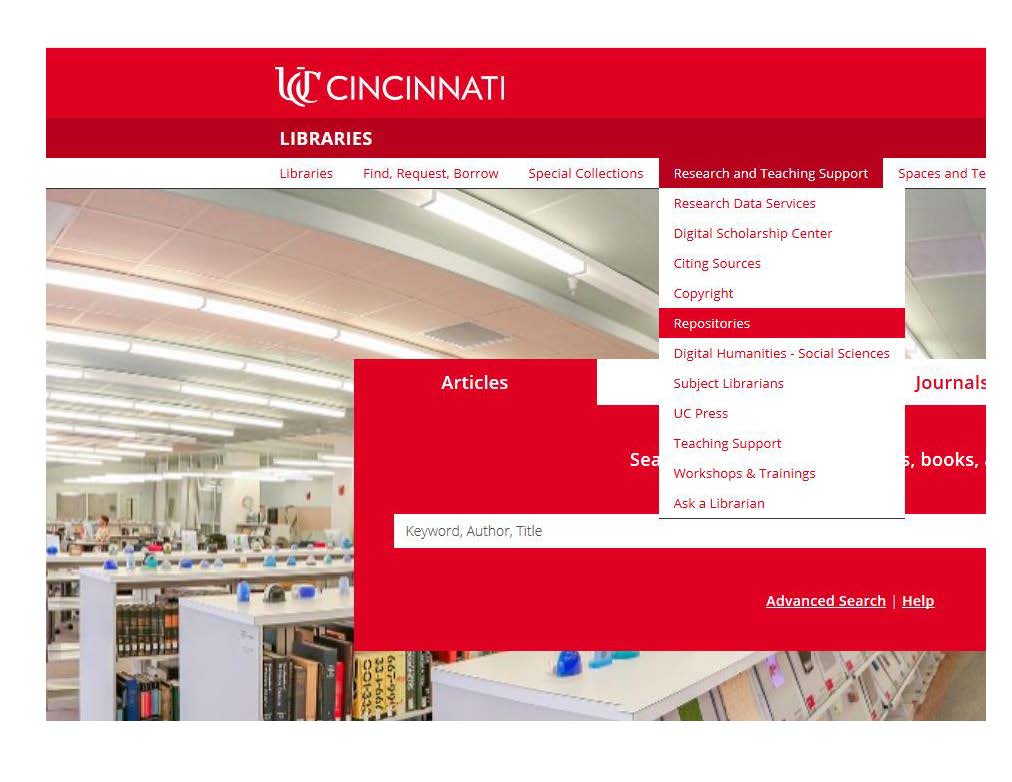
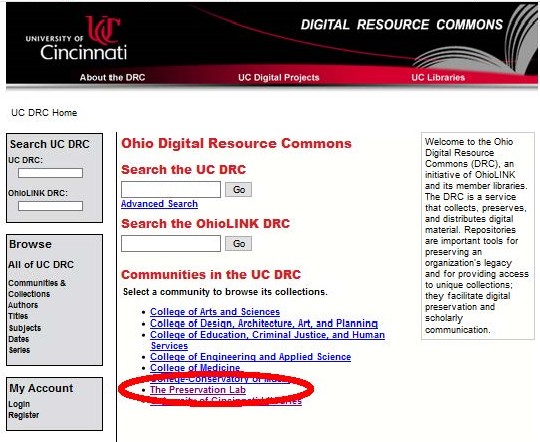
However, this website refresh has altered the path users previously followed to access the Lab’s treatment reports. The new path is as follows —-  From the main page top navigation bar choose Research and Teaching Support, then pull down to select Repositories.  UC Libraries homepage with pull down revealing Repository link.From the Repositories page choose UC Digital Resource Commons (DRC).  You’ll then be directed to the main DRC search page.  Here you can limit your search to the Preservation Lab’s collection.
Accessing the Preservation Lab collection from the DRC search page.Or, for those power users, simply bookmark our digital content landing page – http://digital.libraries.uc.edu/collections/preservation/
Preservation Lab DRC landing page
Access to individual treatment reports remain linked within the library catalog’s item record level holdings as well.
Thanks for your patience during this time of change and transition.
Holly Prochaska (UCL) —- Preservation Librarian
 

Fun with PhotoDoc (Edition 10)

Since it’s Tuesday, but you’re probably wishing it was Friday, I  thought I’d share some fun gifs of a 16th century German ophthalmolgy book from UC’s Archives & Rare Books Library that was recently treated and returned.  But first, let’s take a look at the treatment carried out by our conservator, Ashleigh Schieszer.

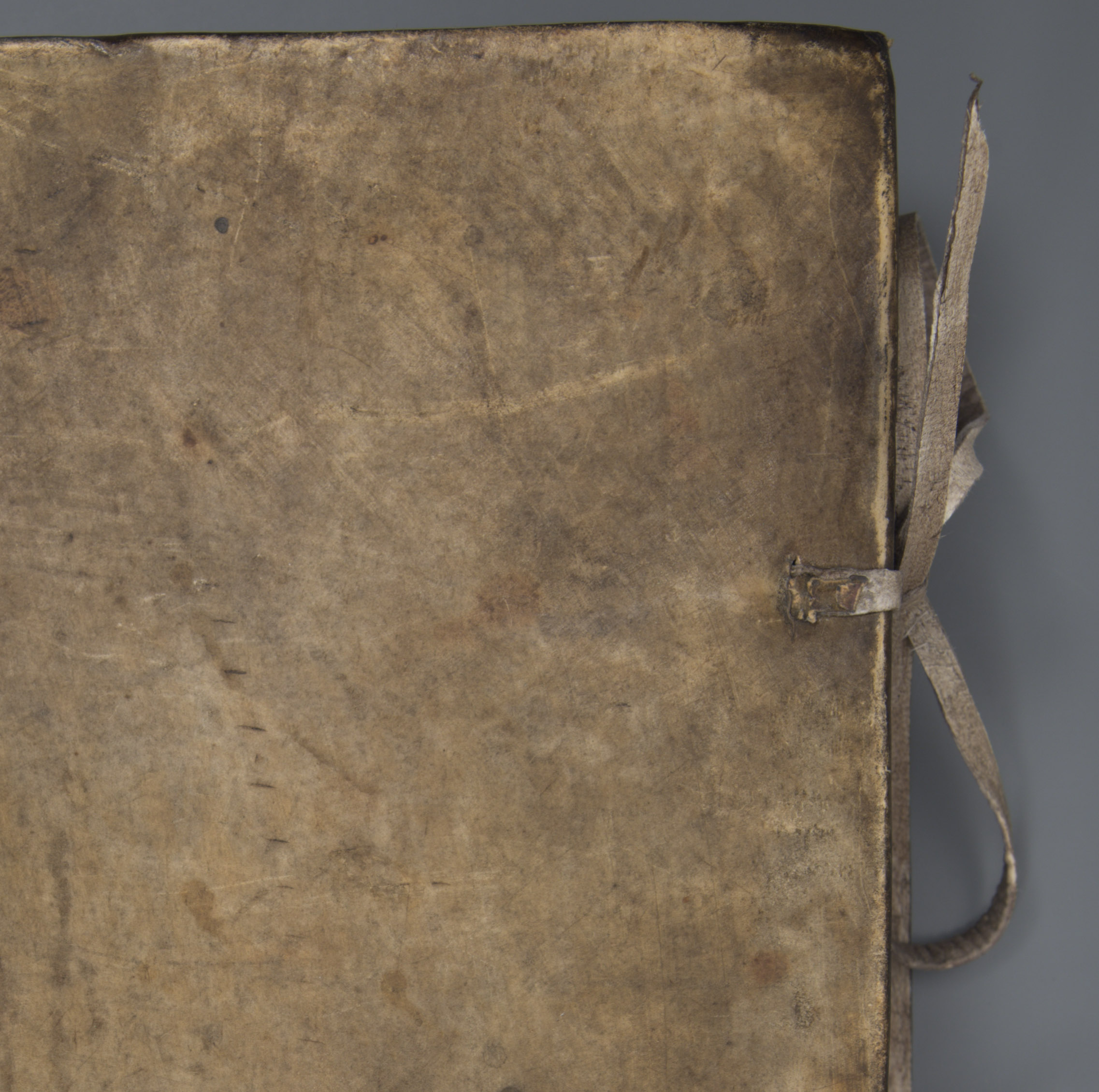
This full vellum binding suffered the same fate as many other stiff board vellum bindings:  significantly warped boards, a result of fluctuations in humidity.  The volume arrived in the lab with vellum losses along the head and tail of the spine.  There was also evidence of two ties at the fore edge that would have originally been used to keep the boards from warping, however, all but a small fragment of these ties were lost.  Ashleigh humidified and flattened the upper and lower boards and added new alum-tawed ties sympathetic to the placement and size of the original ties.  The binding was then housed in a cloth covered compression clamshell (created by our box-making magician, Chris) to help keep the boards from warping in the future.

Fun with PhotoDoc (Edition 10)

Here you can see the fragment of the original tie with the new tie inserted below it.


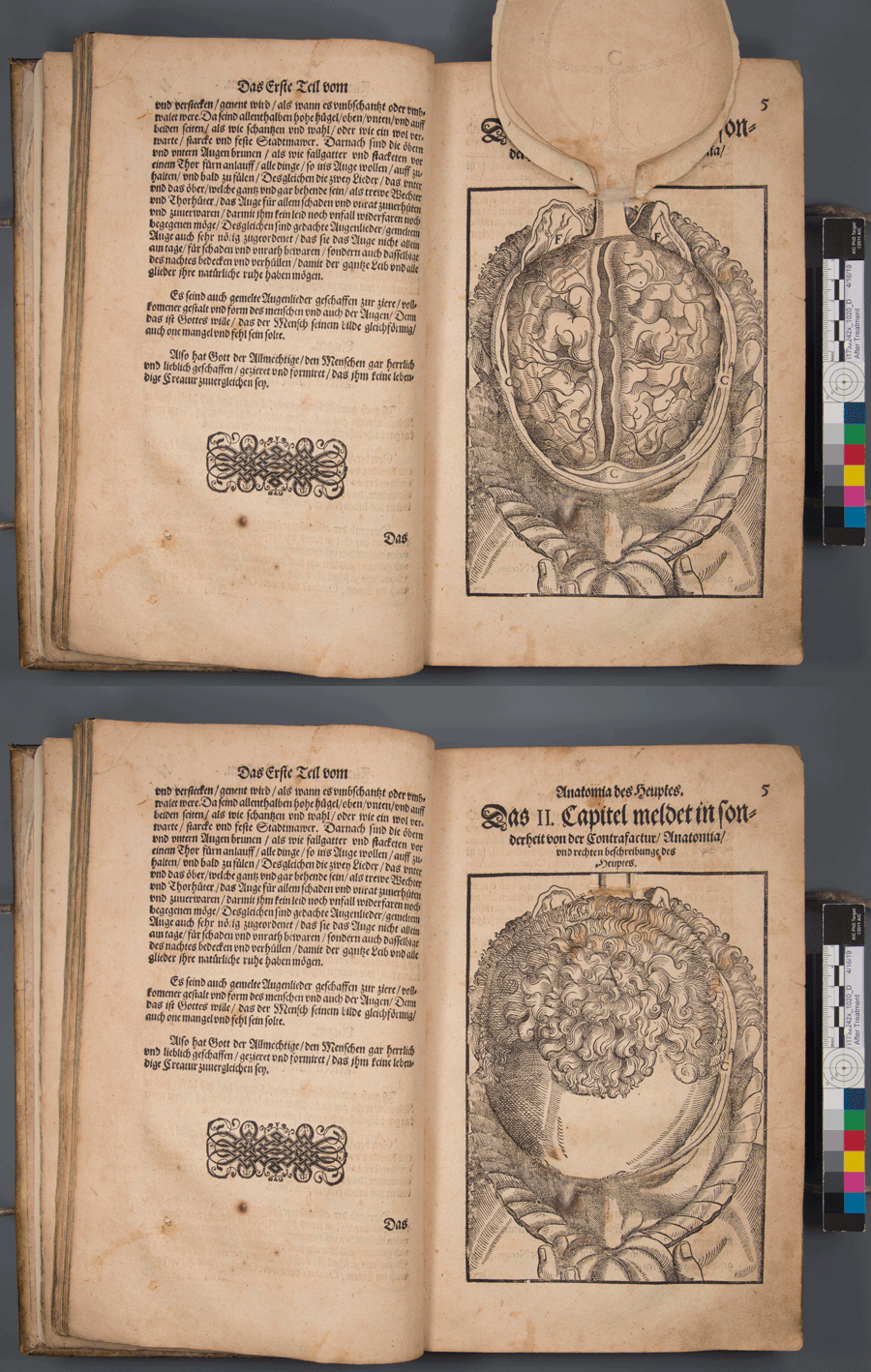
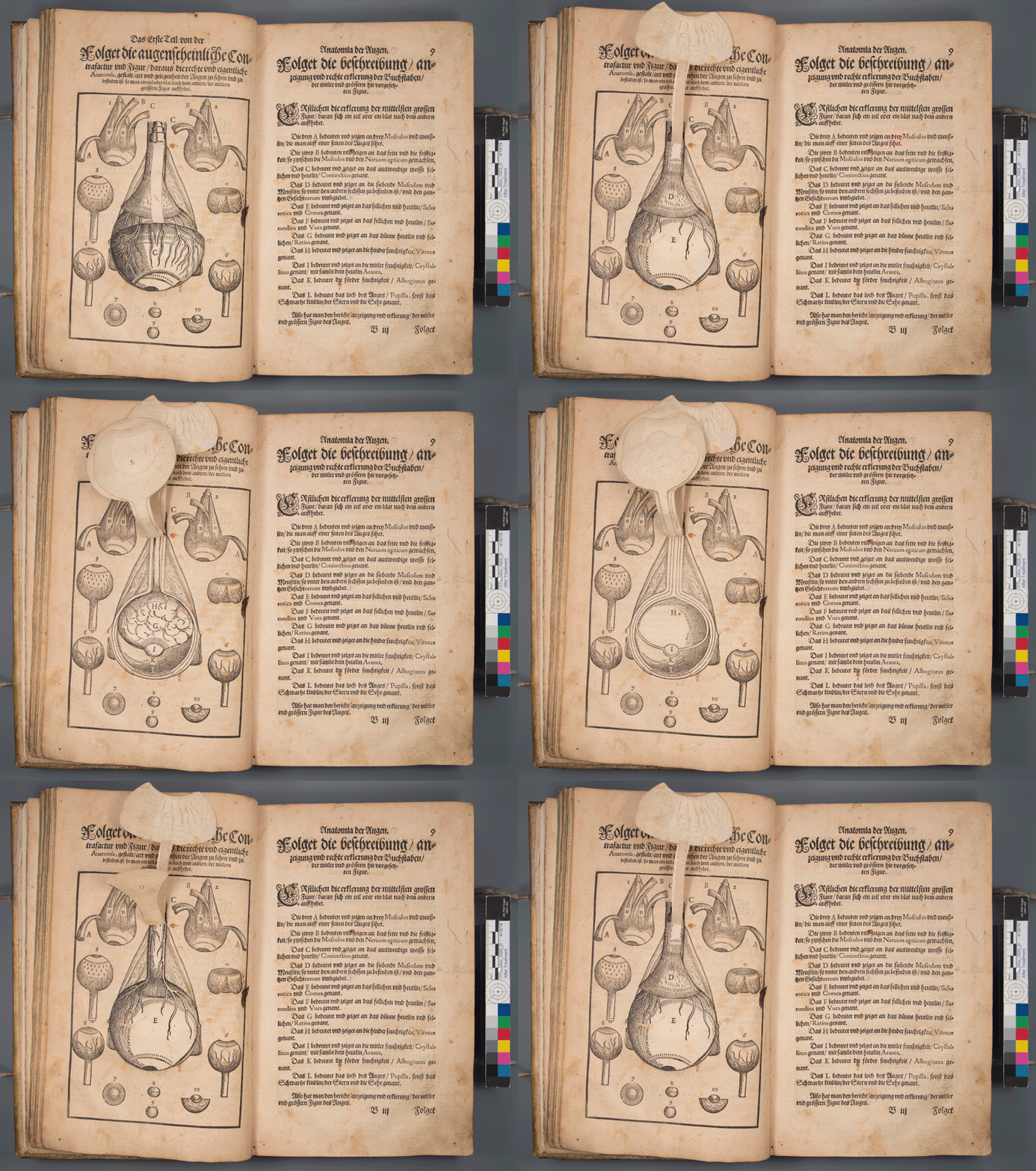
Now onto the gifs.  This volume has several anatomical flap prints that explore the inner working of the eye.  Here are two of the flap prints, one which takes a look at the brain from above and another that examines the eye from the side:
Fun with PhotoDoc (Edition 10) Fun with PhotoDoc (Edition 10)
We were in luck that these particular anatomical flap prints were in relatively good condition when they came to the lab.  However, that is usually not the case with these very fragile multi-component prints.  If you are interested in the learning more about the history, treatment and exhibition of these prints, check out Meg Brown’s article “Flip, Flap and Crack”.
Jessica Ebert [UCL] – Conservation Tech/Photographic Documentation Tech

2019 Preservation Week Open House

2019 Preservation Week Open House

Chris Voynovich discussing papyrus and paper with attendees


We celebrated Preservation Week (a week late) with our Annual Preservation Open House, and we want to thank everyone who was able to stop by!  This year we took a step back through time to share a brief history of the book, starting with some examples of cuneiform tablets and ending with modern e-reader and computer technology.  By displaying our staffs models of book structures through time, visitors were able to take a hands-on approach to understanding how these structures were made, used, and evolved.  This is information we use to inform the work we do in preservation every day.
2019 Preservation Week Open House

Examples of early codices, including clay tablets, single quires, multi-quires, wooden tablets, rolls and scrolls


2019 Preservation Week Open House

14th to 19th century models


We were also able to show recent conservation projects, including a two-volume set of a 17th century German bible, which highlighted what one volume looked like before treatment and what the other looked like after treatment.  Another item in the lab for treatment is an oversized missal, which received RTI to offer a closer look at the metalwork on the binding. 
 
2019 Preservation Week Open House

“An obscenely abbreviated History of the Codex by The Preservation Lab” one-page wonder


Visitors were invited to make a “One Page Wonder,” which covers an obscenely abbreviated history of the codex.  We hope this little book and the hands-on interaction helped spread preservation awareness and inspire a deeper love of the book! 


If you missed us this year and want to see what all the fuss is about, check out a live video posted to our UC Library Page.  We hope to see you all again at next year’s Preservation Open House! 
 
Kasie Janssen (PLCH) – Senior Conservation Technician

Historic Structures with Julia Miller

For Preservation Week, we decided to treat ourselves to the best staff development imaginable: a five day intensive workshop with Julia Miller on early historical structures.  We learned so much from Julia and we are beyond grateful for her to coming to the Lab for this workshop!  What an amazingly knowledgeable instructor and wonderful human being; thank you Julia for sharing your knowledge with us!
We will probably share a more in-depth post about what we learned later, but for right now I created a compilation video of time-lapse videos I captured during our workshop.  Hope you enjoy!

Jessica Ebert [UCL] – Conservation Tech/Photographic Documentation Tech

The Preservation Lab – in the news!

The Preservation Lab and lab staff were in the news twice this week.

UC's newspaper from March 2019

The News Record 3/27/2019


Check out a nice write up on the work of the Lab in the student newspaper, The News Record, HERE.
“Below the main floor of Langsam Library, where students bustle about studying, researching and caffeinating, there’s a lab where books with torn pages and cracked bindings fall into the capable hands of a team of technicians who spend their days quietly restoring texts back to working order.”  —- Sami Steward


Cake of an octopus

Edible book by Jessica Ebert


Also, Jessica Ebert was interviewed about her participation in the annual University of Cincinnati Libraries’ Edible Book Festival by the local news station.  Check it out HERE.
 
 
Holly Prochaska (UCL) — Preservation Librarian

Happy 20th Anniversary, Holly!

Our Preservation Librarian and co-manager, Holly Prochaska, is celebrating her 20th year at UC Libraries today!  Holly is such a great advocate for the Lab and the Lab staff.  She cares so much about the Lab and we wanted to show her just how much we care about her, so we planned a little surprise…Happy 20th Anniversary, Holly!See Holly’s reaction here:


Congratulations on this milestone, Holly!
Check out the Lab’s Instagram @thepreservationlab (especially our story highlights) to see more fun photos of the Rock (Dwayne Johnson) around the Lab.
Jessica Ebert [UCL] – Conservation Tech/Photographic Documentation Tech

Lab Featured in New Book & Save the Date!

Lab Featured in New Book & Save the Date!
 
Secret Cincinnati: A Guide to the Weird, Wonderful, and Obscure by Kathryn Witt recently came out and you wouldn’t believe who’s featured in it…


The Preservation Lab!

Lab Featured in New Book & Save the Date!
When you flip to # 72 you will find a great description of the Lab’s annual Open House, where the Lab opens its doors to the public and shares a little bit about what with do.  Generally our Open House falls on ALA’s Preservation Week (the last week of April).  However, this year it will be held during this first week of May due to a scheduling conflict.
 
 
So mark your calendars!

Thursday, May 2nd, 2019 | 1:30-3:30pm

University of Cincinnati | Langsam Library | 300 Level

 
Jessica Ebert [UCL] – Conservation Technician & Photographic Documentation Tech
*Thank you to Mikaila Corday, a docent at the Lucky Cat Museum (also featured in Secret Cincinnati), for sharing the feature with us and lending us her copy of the book!


Meet Kasie Janssen, our newest Preservation Lab team member!

Meet Kasie Janssen, the newest addition to the Preservation Lab, located on UC’s Campus. Employed by the Public Library of Cincinnati and Hamilton County, she will be filling the position, Senior Conservation Assistant.
Meet Kasie Janssen, our newest Preservation Lab team member!Welcome Kasie!
Chris Voynovich:   What drew you to conservation?

Kasie Janssen:   Actually, I was applying to go to library school at the University of Illinois at Urbana Champaign. My initial interest was in archiving but there was not a graduate assistantship available in the archives, but there was in conservation. That was my first introduction to the field of conservation. The heavens opened because my background was English and studio art. It was the perfect melding of books, literature and tactile materials. After that, I went through two years of library school while working in the conservation lab at UIUCC.

Chris:  You came from a Conservator of Special Projects position at the Newberry. What are you looking for in this Senior Conservation Assistant position in the Preservation Lab at the Public Library of Cincinnati?

Kasie: I am excited and looking forward to concentrating on the technical side of conservation where my responsibilities are focused on collection treatment.

Chris:  Do you like Charles Dickens?

Kasie:  Yes. How did you know that?! My favorite is David Copperfield. I’ve read it almost four times. I love and have read all his novels. My interest started in undergraduate school. It was a kind of a love-hate relationship. To me, they were initially kind of dense, but I loved the humor and that was what hooked me.

Chris:  So you like the Green Bay Packers?

Kasie: Yes. I grew up watching football in Wisconsin. I am a lifelong Packers fan. My husband likes hockey, the Anaheim Ducks, so these are my two main sports to watch.

Chris:  What do you know about Cincinnati or the Tri-State?

Kasie:  Not a lot. I’ve heard about the food scene and I’ve heard of the East side vs. West side rivalry!

Chris:  Do you have a favorite conservation project you have done?

Kasie:  One of the most surprising items I was able to prepare for an exhibit was an Oscar, for Ben Hecht’s screenplay for the 1927 film Underworld, which won the Academy Award for Best Original Screen Play.  It was cool to hold an Oscar, which is heavier than you would expect.
Chris:  What kind of treatments do you like doing most?

Kasie:  I like repairing a book from start to finish. It’s a satisfying feeling of accomplishment when I get a book that is completely falling apart and can do all the treatments necessary to repair.

Chris:  Favorite book?

Kasie:  Life of Pi, by Yann Martel.

Chris:  Favorite musical artist?

Kasie:  I like Folk, 80’s, Indie, depends on my mood.

Chris:  Favorite movie?

Kasie:  Shawshank Redemption.

Chris:     If you could travel anywhere where would you go?

Kasie:    I like traveling places that have a lot of nature. I guess New Zealand though it is pretty far away.  The flight is intimidating, and I know it would take a long time to get there.

Chris:     Do you have any hobbies?

Kasie:    I like hiking and biking. It’s nice to see a hill again after coming from the flat-lands of Chicago. 😀

Chris:     What is your favorite flavor birthday cake?

Kasie:    Chocolate with chocolate icing.

Chris:     Do you prefer coffee or tea?

Kasie:    Coffee.

Chris:     Do you play any musical instruments?

Kasie:    No. I’ve played piano and flute but not in 5 years. I sing sometimes…(when no one hears me).

Chris:     Do you have any pets?

Kasie:    I have a cat and a dog. The cat’s name is Dany, short for Daenerys Targaryen from Game of Thrones. My dog’s name is Brie, short for Brienne of Tarth. She is a Greyhound and she is a couch potato.

Chris:     How many cities have you lived in?

Kasie:    Five states; I was born and raised in Wisconsin.  As an adult, I’ve lived in Grand Rapids, Michigan, Houston, Texas, Wisconsin, and Champagne, Illinois for Grad school.  I moved to Chicago for my first job after Library school – and now to Cincinnati! But my favorite is Wisconsin because it feels like home.

Chris:     What is your favorite book structure to make?

Kasie:    I like Long Stitch bindings. The sewing structure on the outside of the spine is beautiful and so customizable.  But I always like to learn new binding structures.

Chris:     Who do you think has influenced you most personally?

Kasie:    My mom because we are really close. She is a very independent and active person. I feel like I’ve tried to follow those qualities. She is not afraid to try or get involved new things. She is a great lady.

Chris:     Do you lean more toward Vampires or Zombies?

Kasie:    Zombies. I do think the conservation lab would be a great place to be during a Zombie Apocalypse because we have all the sharp tools like a guillotine and scalpels. We know where the “safe house” is!

 
Interview by Chris Voynovich (PLCH) — Senior Conservation Assistant