One of the Lab’s big projects recently has been to help the University of Cincinnati’s Classics Library with preparations for a move of a large section of their collection’s rare books. Moves like this are a great opportunity to assess the condition of a collection, and to provide enclosures for more vulnerable materials so they are protected in transit and beyond. In this particular case the Librarian also requested the lab maintain visibility of the original books as much as possible.
There are quite a few vellum books in the Classics Library collection. Vellum bindings are generally pretty sturdy, but may become brittle over time. They can also expand and contract quite a bit more than other types of bindings, depending on the relative humidity where they are stored. The Image Permanence Institute at the Rochester Institute of Technology has a fun time-lapse video demonstrating this effect – the book looks as if it’s haunted! Given time this expansion and contraction can cause distortion.
Hard-sided slipcases do make it possible to protect most of a book while keeping its spine decoration and information visible, but they are not generally a preservation go-to. They can abrade the edges and covers when pulling the book in and out, and they don’t usually hold up over time because it can be difficult to insert fingers around the book to pull it out if the case is tight, resulting in a broken box or, alternatively, damaged endcaps.
A soft-sided slipcase can work well for vellum-bound books. The vellum is smooth, so abrasion is not a concern. The flexible sides give a little when reaching fingers in to remove a book, so the box won’t eventually fail and there is no need to grab the book from its endcap, damaging it. The cloth allows the book to breathe and flex somewhat, while at the same time preventing it from expanding too far at the fore edge, and squeezing its neighbors.
With a deadline looming we needed to figure out a way to produce soft-sided slipcases quickly and easily. Our solution was to create a template in an Excel spreadsheet, allowing us to simply plug in the book’s measurements and know exactly what size to cut the cloth and where the creases need to be, without needing to have the book handy.
We measured several books where they were, then took the measurements back to the Lab, where we used the spreadsheet to make a handful of slipcases. I was holding my breath when the time came to unite them with their books. Much to my relief they fit perfectly!
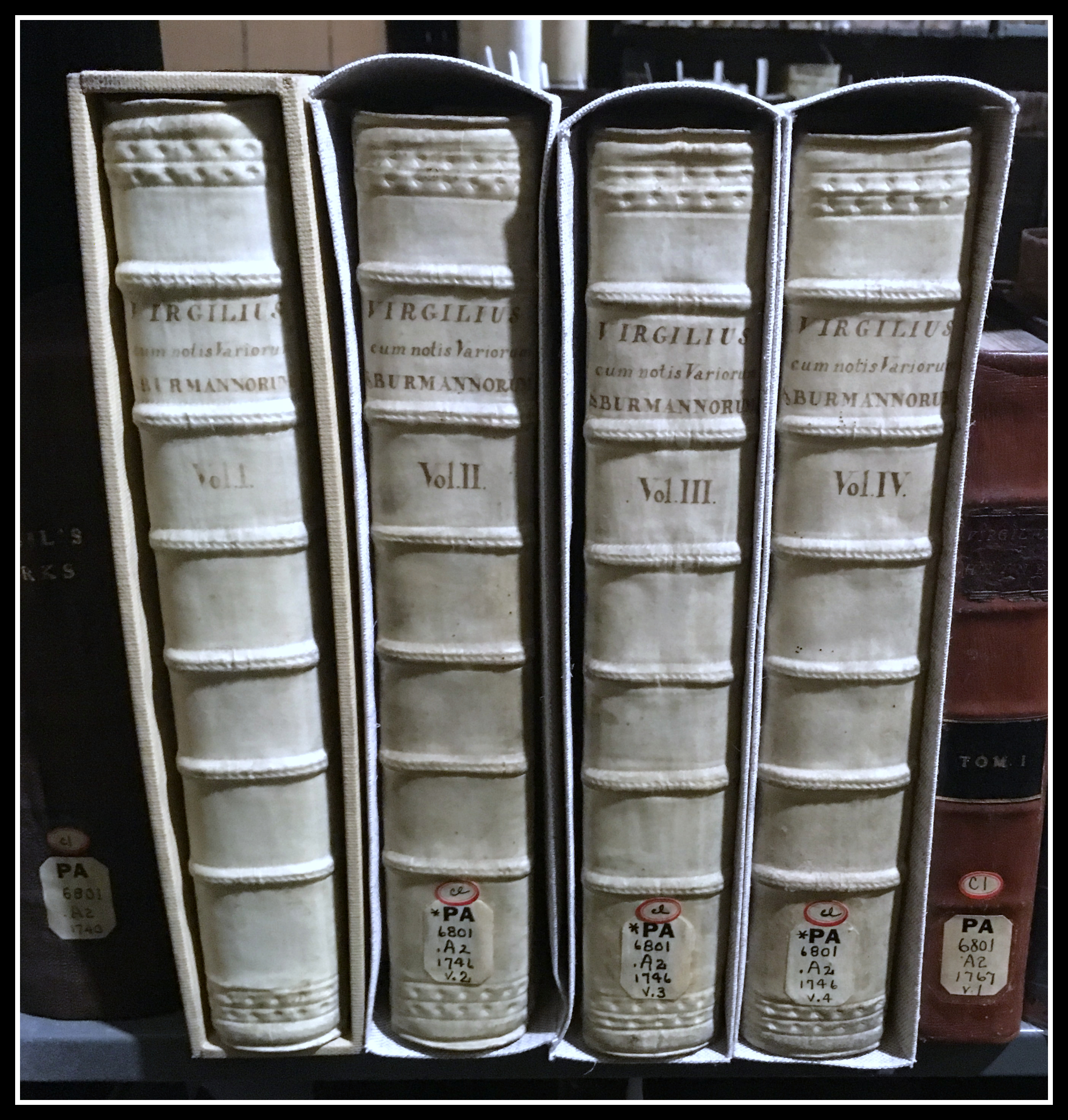
Check out this picture showing 4 vellum books – the one on the left was already housed in a hard-sided, cloth-covered, board slipcase, while the 3 on the right are in the brand new soft-sided cloth slipcases. The books are protected, but the spines are still visible. Win, win.

Now that we know it works it’s time to go ahead and make the rest of them!
We’d like to share the Excel spreadsheet used to create these slipcases – Soft-Sided_Slipcase_template. Try it out and let us know what you think!
Veronica Sorcher (PLCH) – Conservation Technician
NEW! Preservation Lab Channel on UCL MediaSpace
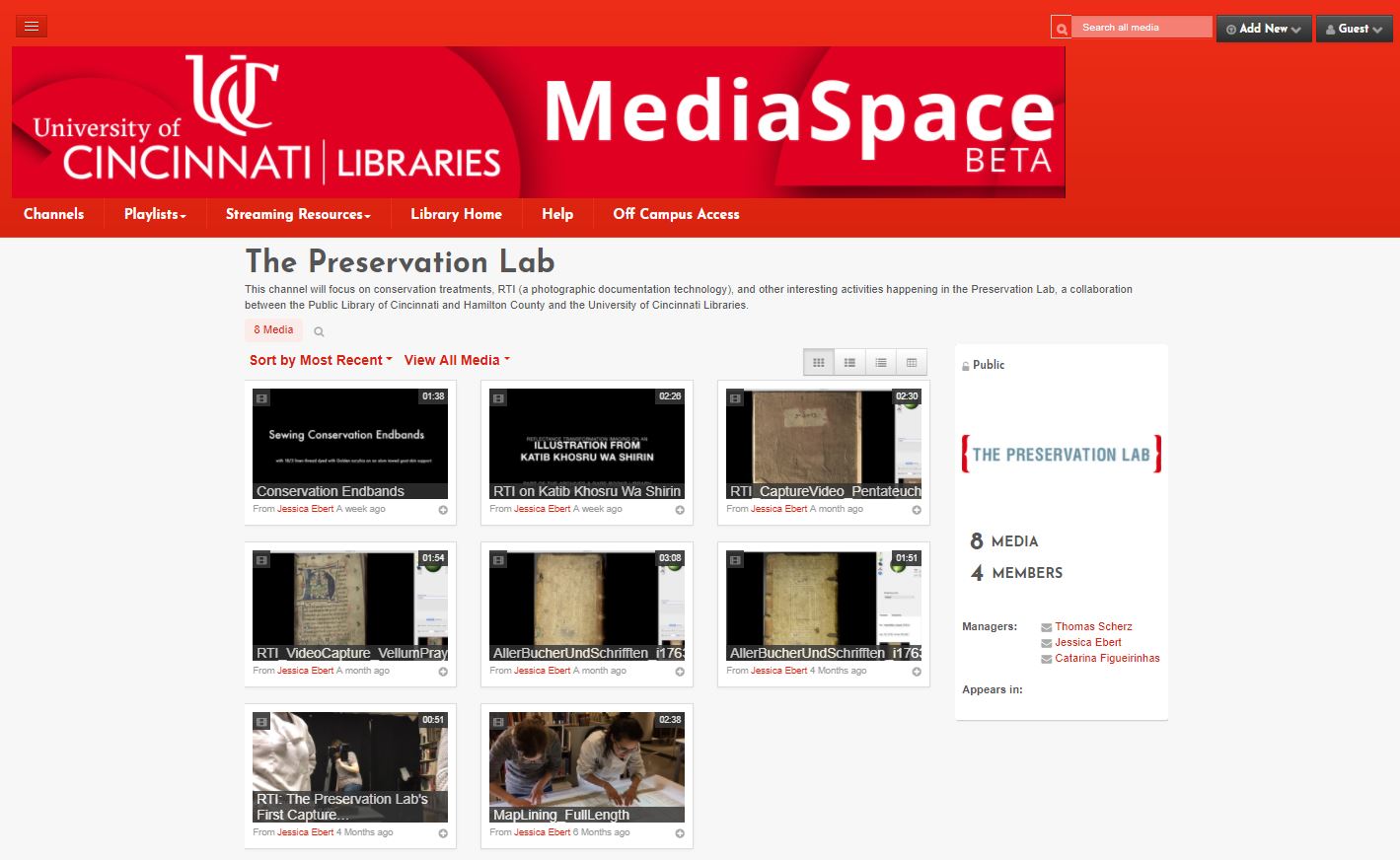
The Preservation Lab now has its own channel on the UC Libraries MediaSpace, a YouTube-like media platform powered by Kaltura! You can find the Lab’s channel, here.

We currently have 8 videos on the MediaSpace, most of which relate to RTI. But I recently created this fun little time-lapse video of sewing conservation endbands on a Classics collection item. (If you enjoy twangy bluegrass music, then make sure to turn your volume up!)
Stay tuned for future videos from the Lab!
Jessica Ebert (UCL) – Conservation Technician
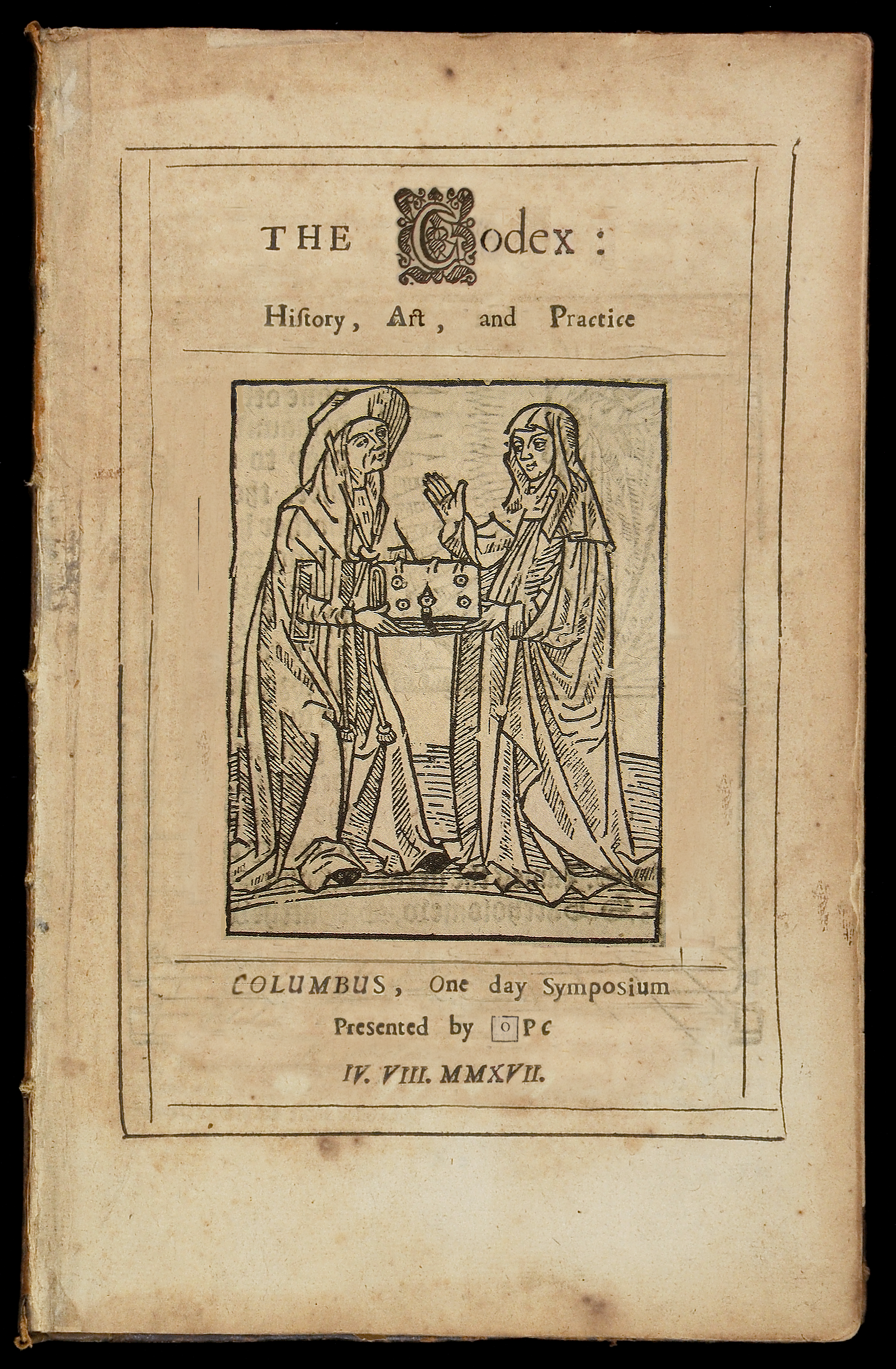
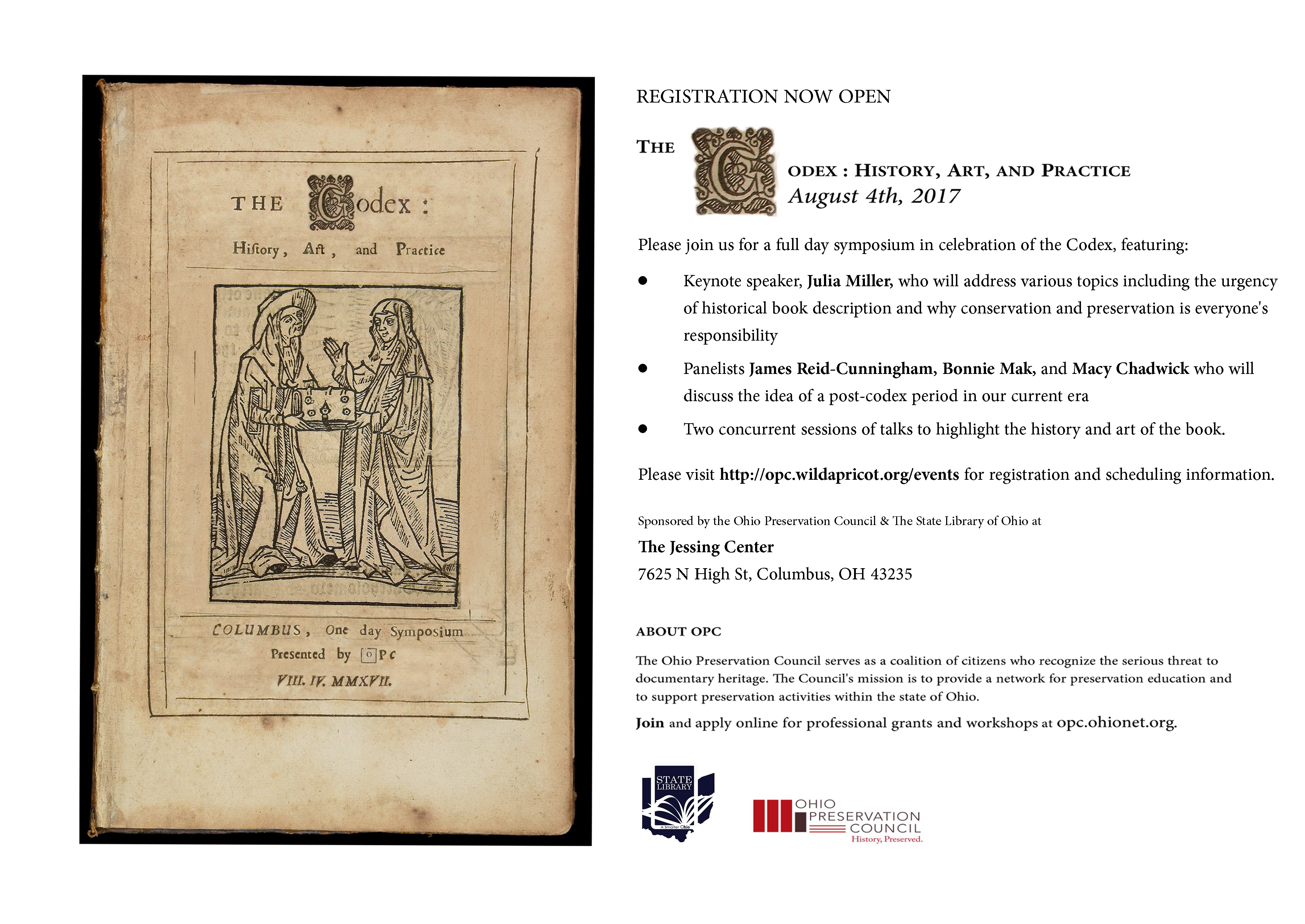
The Codex Symposium
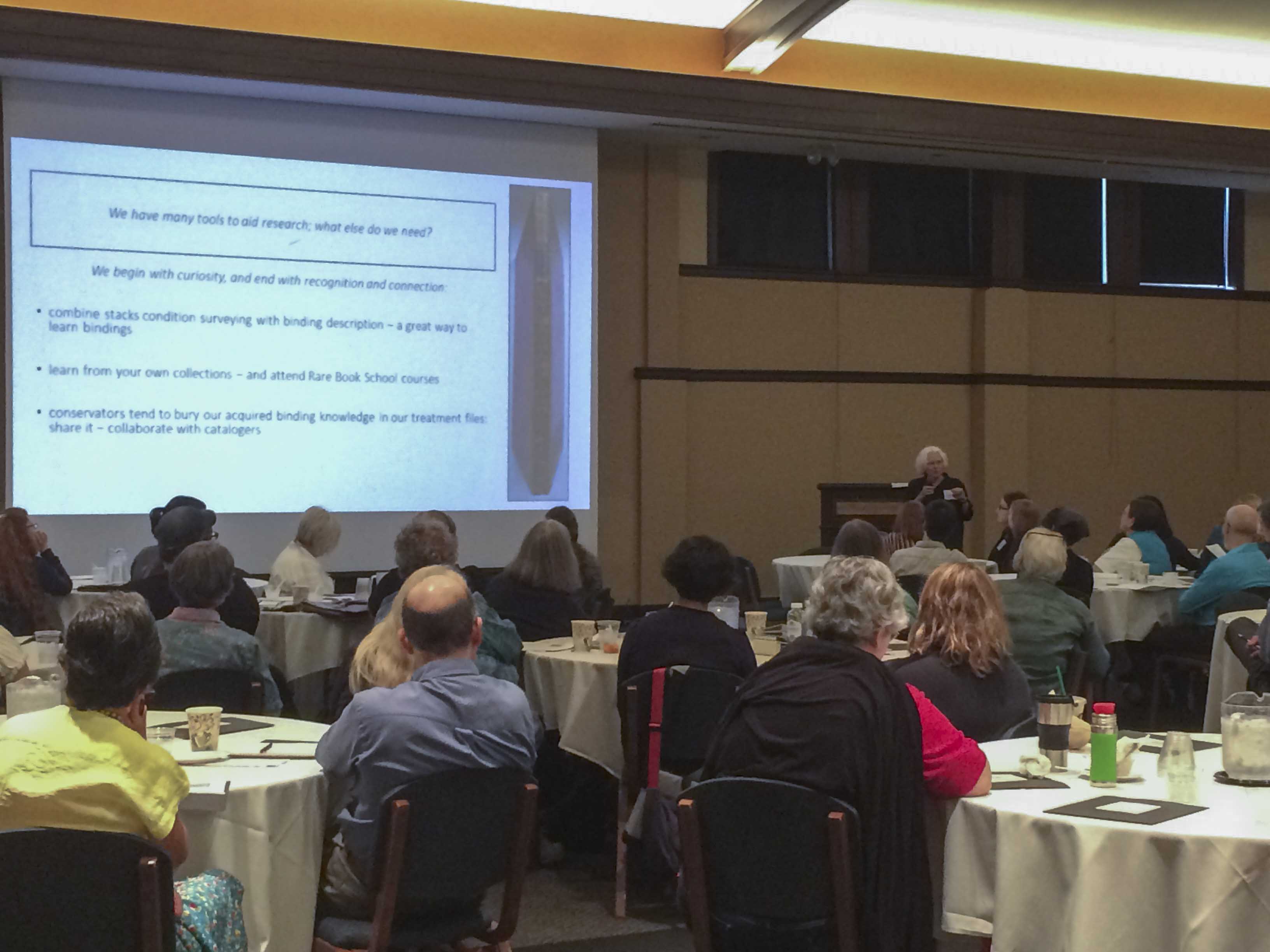
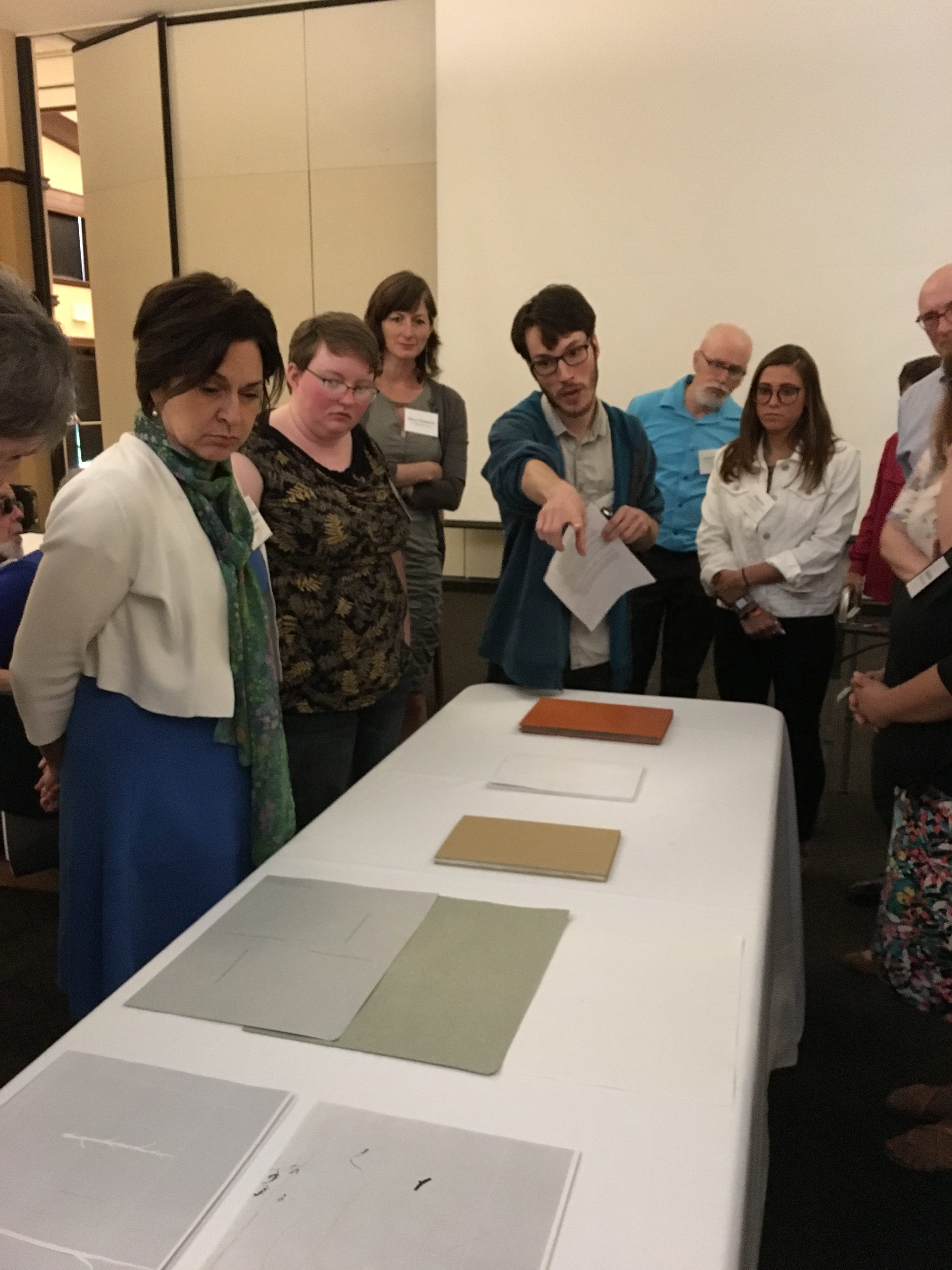
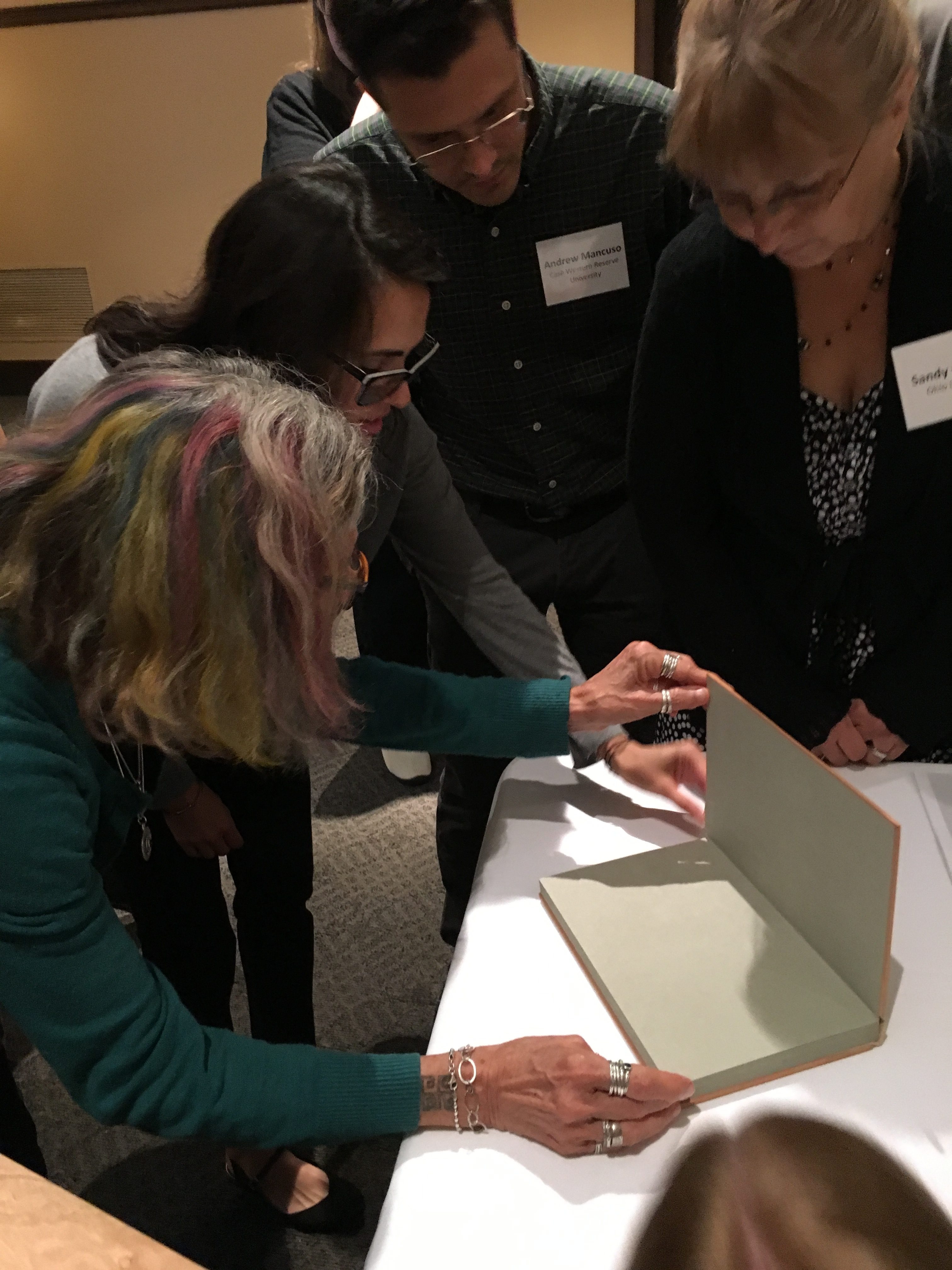
On August 4th, the Ohio Preservation Council hosted a full day symposium in celebration of the book, The Codex: History, Art, and Practice. The lab shut down for the day so that staff could attend this great event.

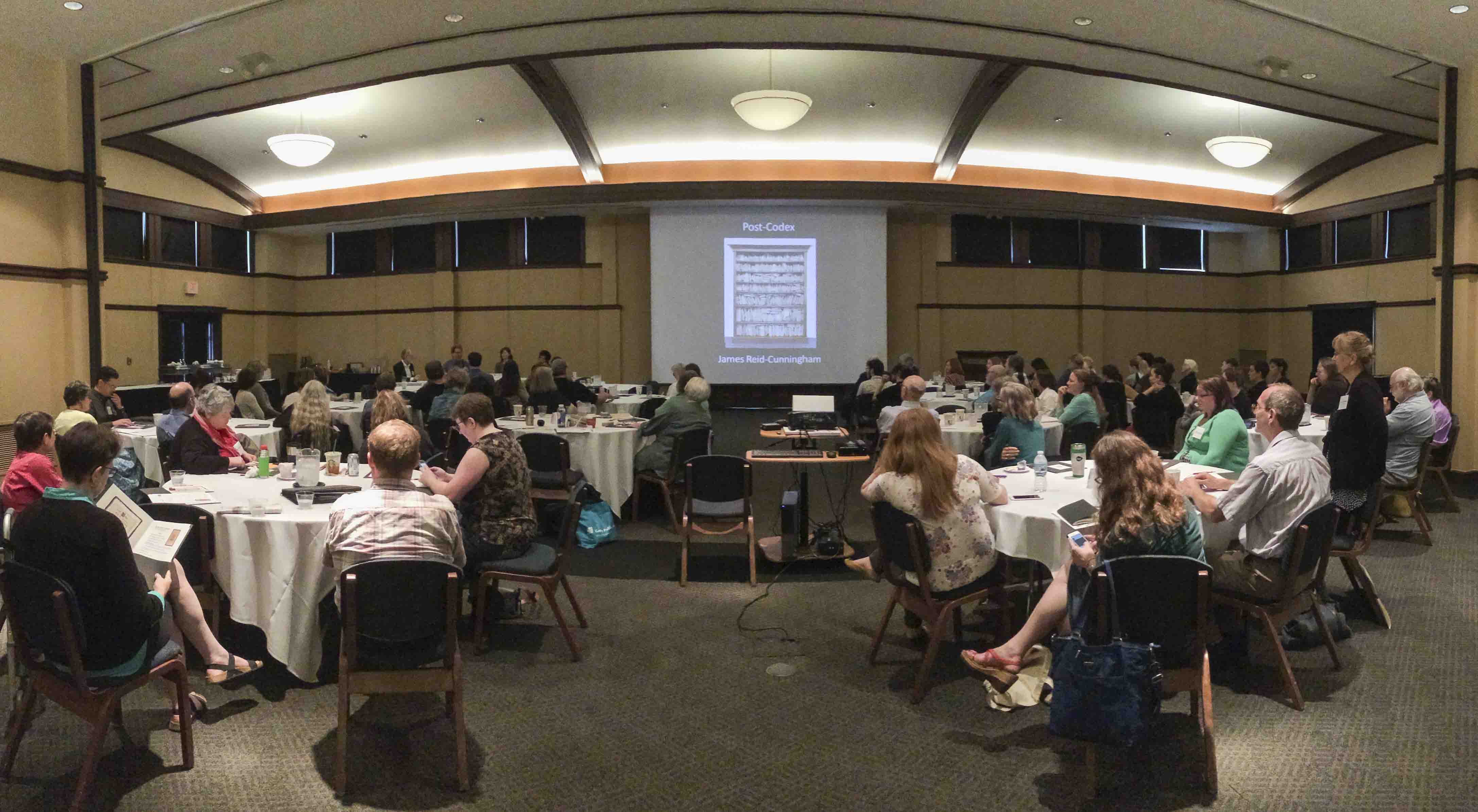
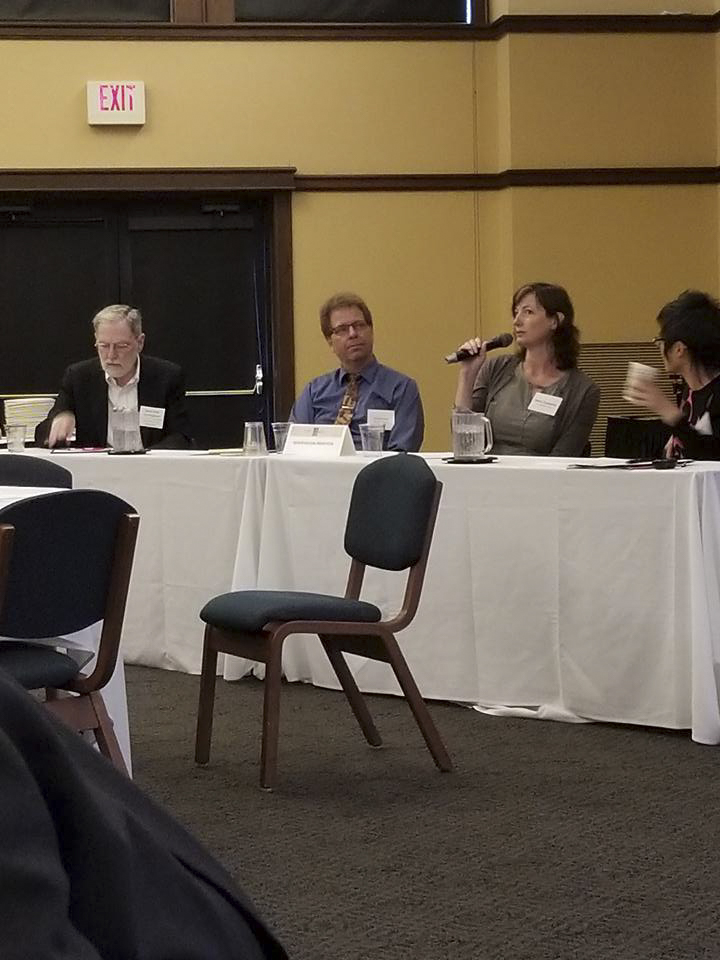
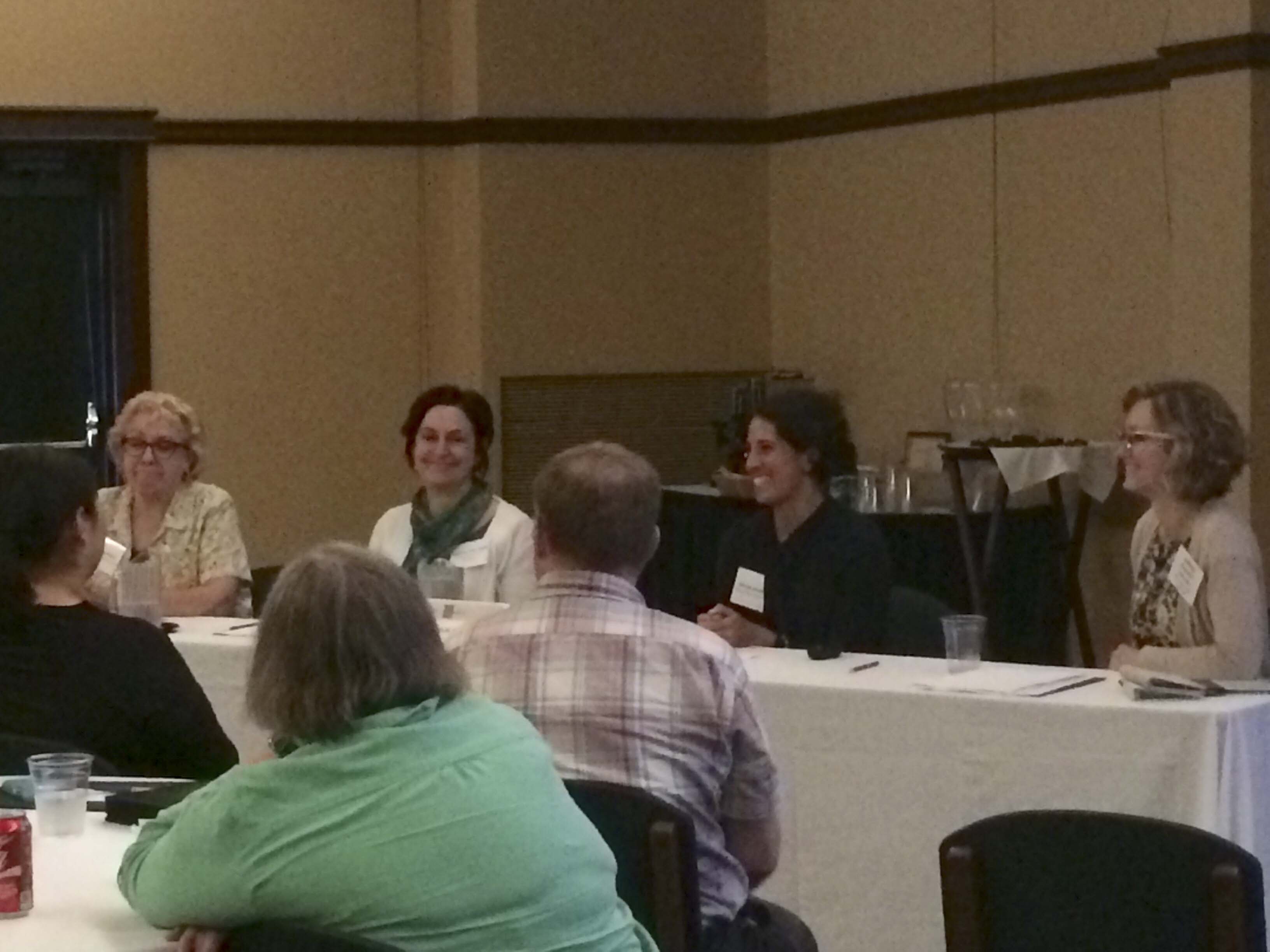
Panelists James Reid-Cunningham, Macy Chadwick, and Bonnie Mak discuss the idea of a post-codex at the Jessing Center in Columbus.

Panelists James Reid-Cunningham, Macy Chadwick, and Bonnie Mak discuss the idea of a post-codex, with moderator Ed Vermue.

Kyle Holland from the Morgan Art of Papermaking Conservatory and Educational Foundation discusses his project that’s been years in the making.

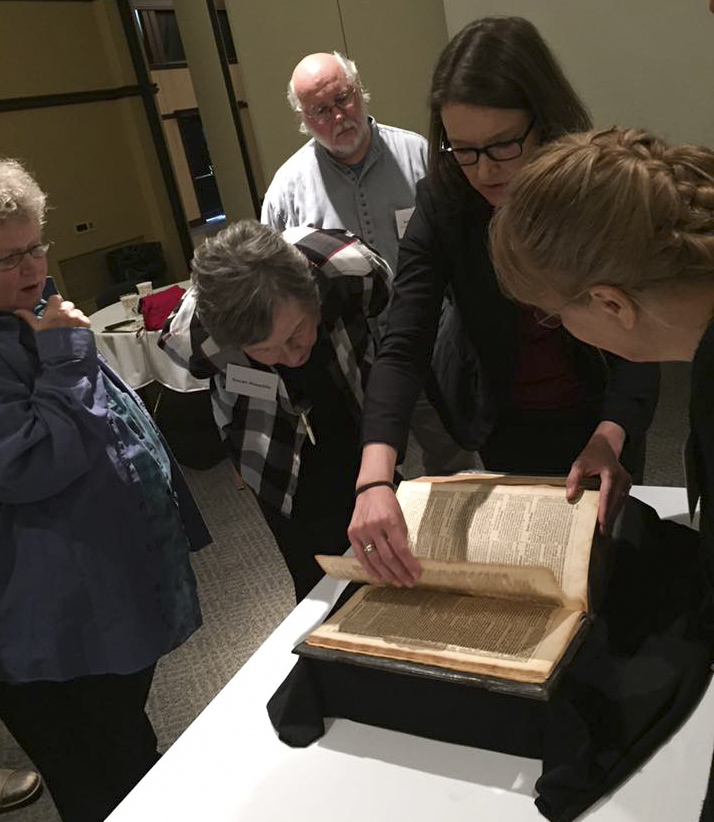
Carrie Phillips, archives and special collections librarian from Bluffton University, shares one of the most significant codices to be produced in pre-revolutionary America.

Conservators Jayme Jamison and Ashleigh Ferguson Schieszer discuss two Ohio Public Library conservation treatments performed on scrapbooks significant to the collection/the community.
Many thanks to all the wonderful guest speakers, exhibitors, and fellow Ohio Preservation Council members for a wonderful day dedicated to celebrating the history of the book!
Ashleigh Schieszer (PLCH) – Book & Paper Conservator
Jessica Ebert (UCL) – Conservation Technician
Basement Finds
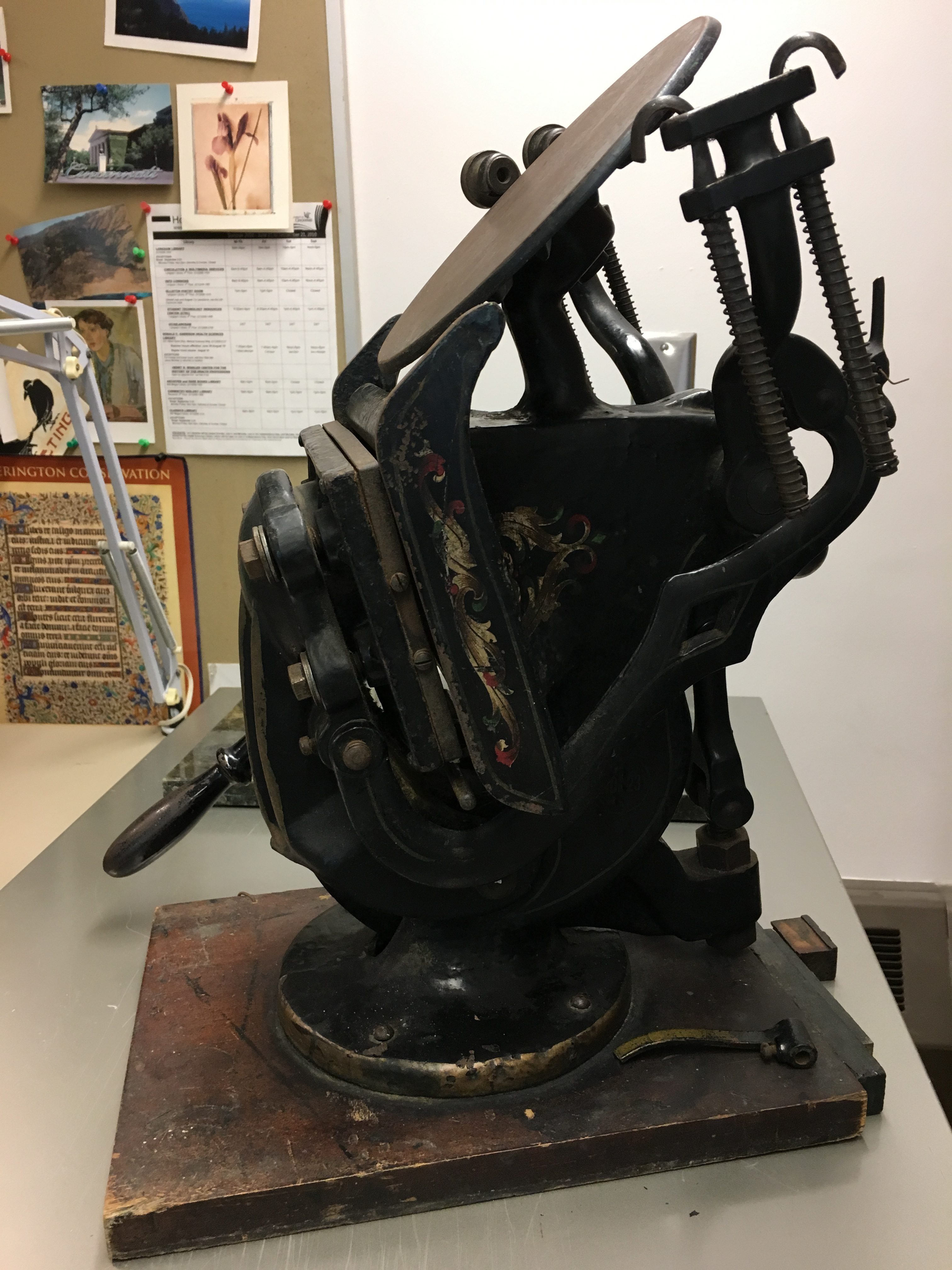
We follow that old rule of conservation labs always being in the basement (though we do have a window!). Well, technically we’re not actually in the basement. While our lab space was originally storage space when the library was built, there is actually another storage space below us, i.e. the real basement. Or, more accurately, the deep, dark void full of stuff…random chairs, pieces of shelving units, leftover carpet tiles, etc. Recently we heard a lot of activity going on down there and when Holly made a little trip down to check out our PackTite she found the space completely different. Dare I say, verging on organized. And front and center was this little gem with a thick layer of dust on it…
Needless to say, Holly scooped that puppy up and whisked it away to the lab (and then promptly called our facilities manager to make sure that was ok)! We have every intention of fixing this beauty up and doing some very fun and exciting things with it in the future. So stay tuned!
Jessica Ebert (UCL) – Conservation Technician
18th Century Poetry Pamphlets
This past April, during one of the UCL Special Collections meetings, the Lab received a new stabilization/housing project; a collection of Latin poetry pamphlets translated into German from 1830-1917. This collection of 79 volumes is part of the Classics Library’s collection. While the Lab will be treating and housing all 79 volumes, the collection is being brought to the Lab in small, manageable batches. The first batch received by the Lab were pamphlets bd.66 to pamphlets bd.79.
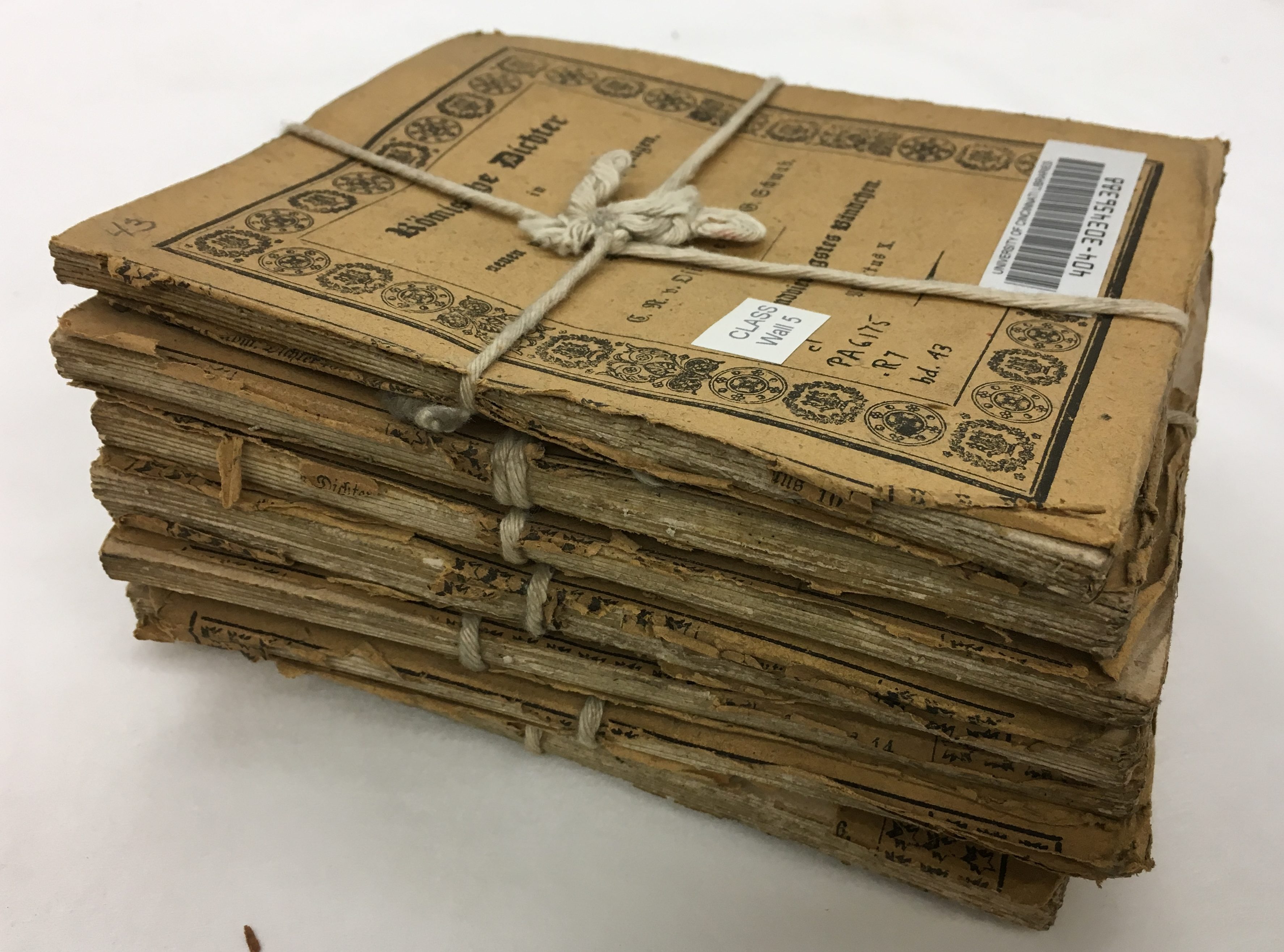
After consulting with the Lab’s conservator, each pamphlet was evaluated and treated individually. The condition of each pamphlet greatly varied; some pamphlets were in good condition, with only small tears along the outer joints of the paper cover. Other pamphlets were in poor condition, with missing covers, detached covers, split textblocks, torn or missing covers.
After the first batch of pamphlets was evaluated and treated, four stabilization treatment types were established for future batches. According to the condition of the pamphlet, from good condition, fair condition, poor condition, to severe condition, each pamphlet received either no treatment, a minimal treatment, a minor treatment, a major treatment with stabilization though encapsulation, respectively. For future batches received by the Lab, the same treatments will be applied with small variations when needed.
No treatment: For any pamphlets in good condition do not require treatment, these pamphlets will simply be surface cleaned and receive a polyester film jacket.
Each image below shows an example of the treatments mentioned above. Click on the photo to view the full size image:
Fair condition/ minimal treatment: This group of pamphlets were in fair condition. There were minor tears on the cover that were mended.
Poor condition/minor treatment: This pamphlet was in poor condition. The cover was torn and detached and the textblock was broken with loose gatherings. The cover was mended and the textblock was repaired. The cover was reattached to the textblock.
Severe condition/ Major treatment – stabilization through encapsulation: This pamphlet was received in severe condition. The covers were detached from the textblock and showed major losses. The textblock was stapled and the staples had corroded overtime which stained the paper. The staples were removed and the textblock was sewn. The covers were encapsulated and sewn onto the textblock using Usu Mino tissue hinges.
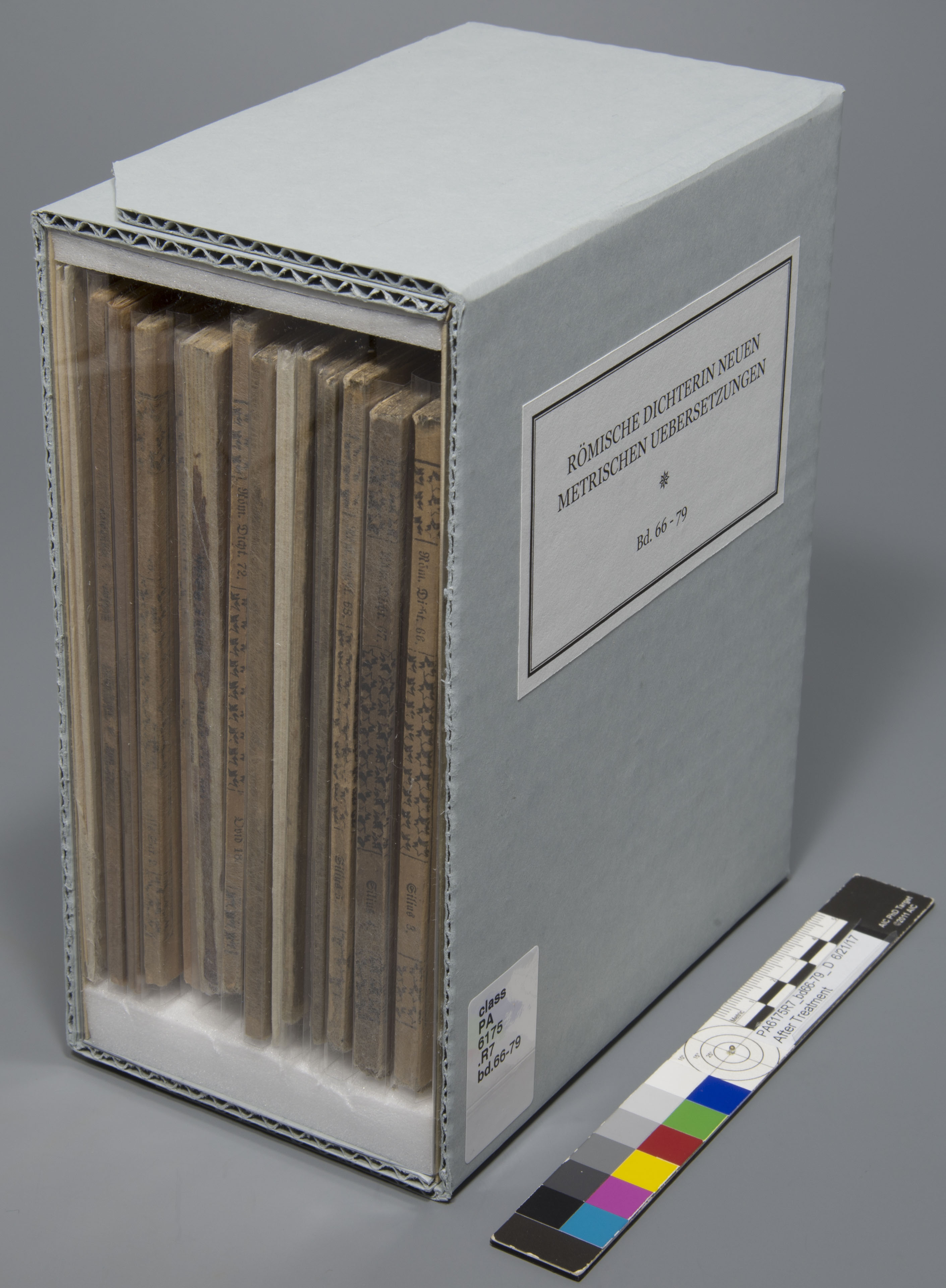
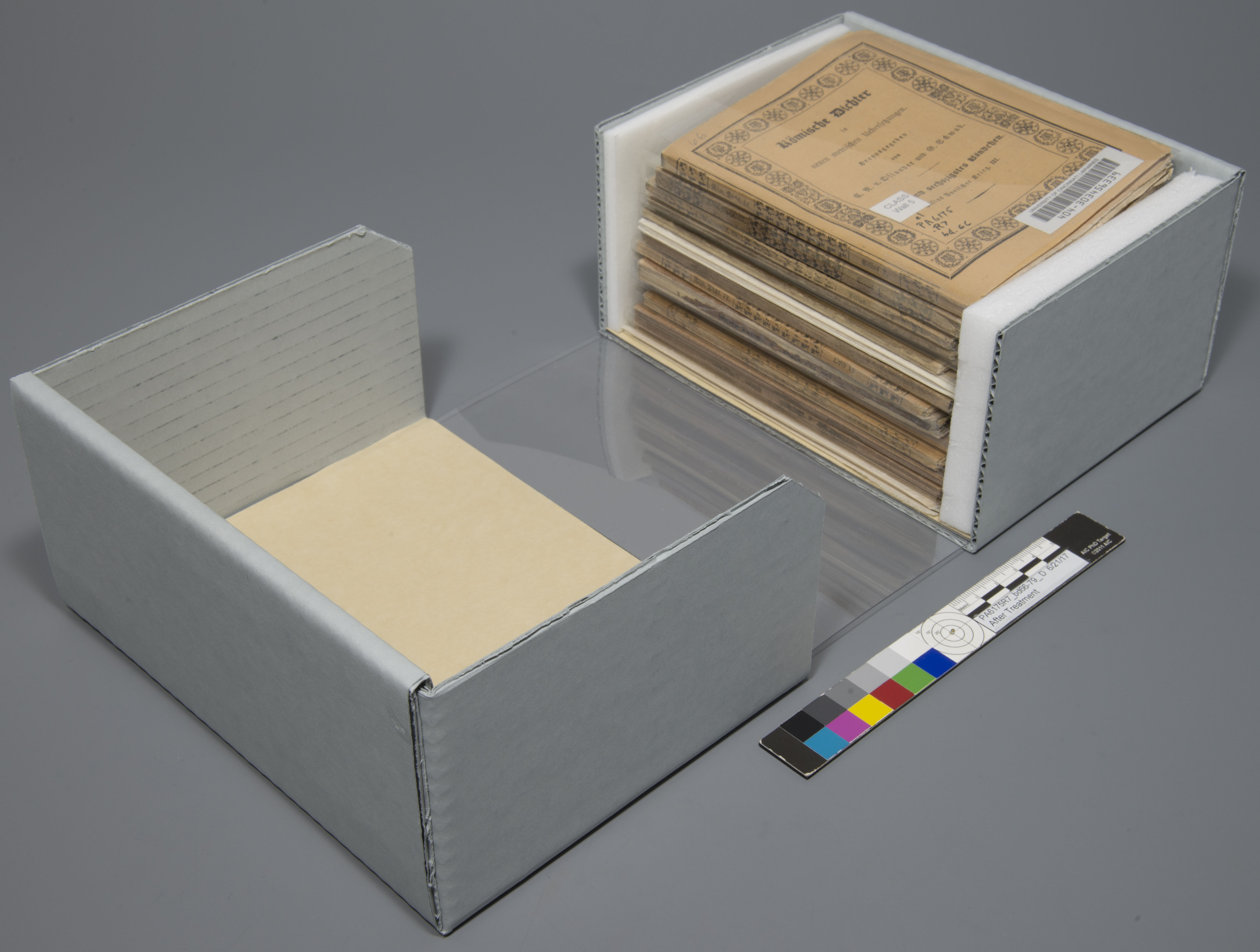
Once the treatment of the first batch of pamphlets was concluded, the pamphlets were housed together in a custom made corrugated clamshell box with a clear spine. This model of a modified corrugated clamshell box will be used for the future batches of these pamphlets that the lab receives from the Classics Library.
At the moment, I am working on the second batch of pamphlets; pamphlet bd. 50-bd. 65. On this second batch most pamphlets are in poor condition. The covers are detached and some pamphlets have missing covers. However, the textblocks are in good condition. Below you will find a sneak peak of this ongoing treatment.
Catarina Figueirinhas (UCL) — Sr. Conservation Technician
Photographic Documentation: Jessica Ebert (UCL) — Conservation Technician
The Codex: A Symposium August 4th 2017 in Columbus, OH
The Ohio Preservation Council and the State Library of Ohio are pleased to offer a full day symposium in celebration of the book. This symposium will highlight the history and art of the book with panel discussions, concurrent talks, and hands-on learning.

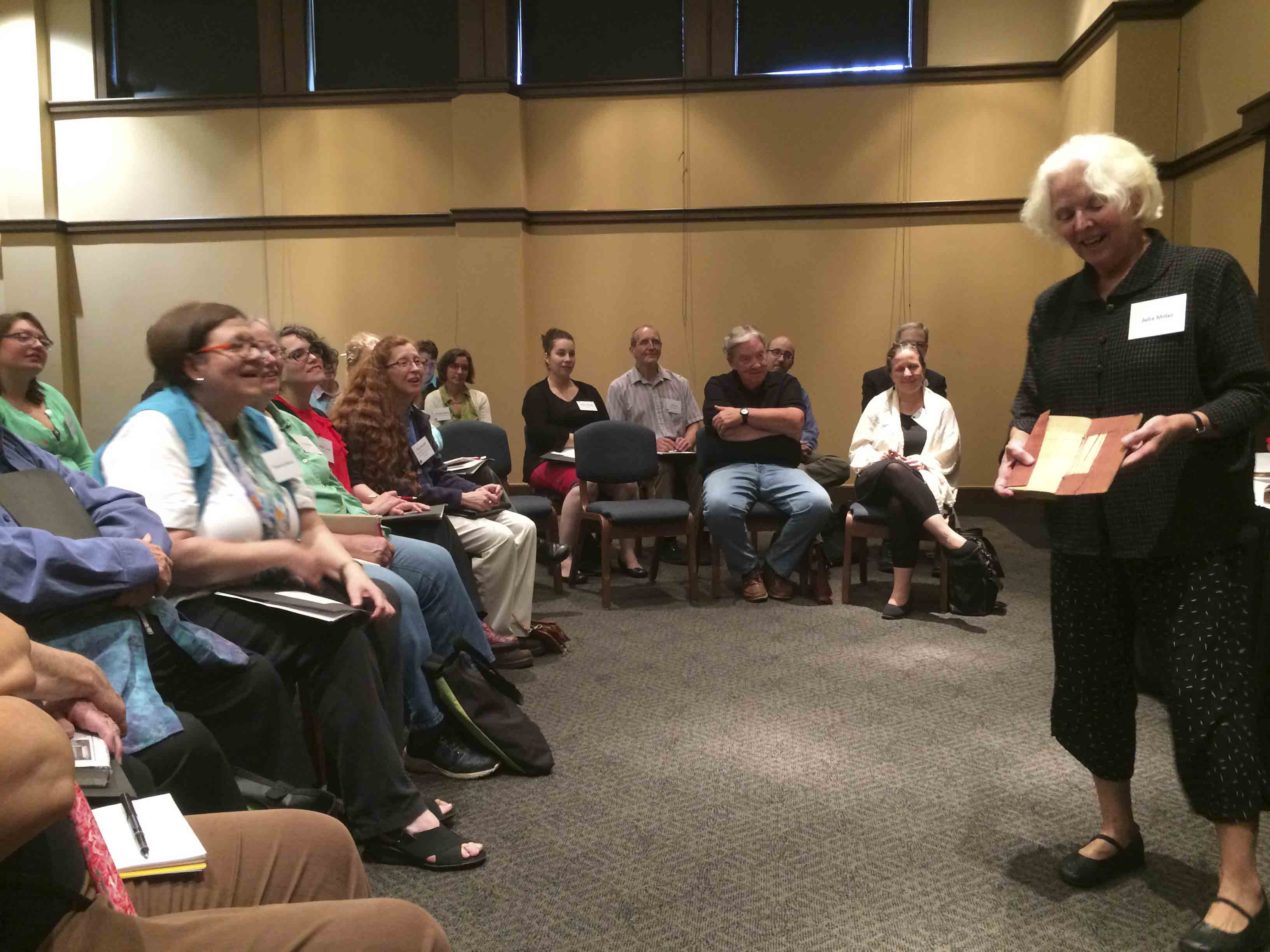
Keynote speaker, Julia Miller, will discuss various topics including the urgency of historical book description and why conservation and preservation is everyone’s responsibility.
Book Artist, Macy Chadwick, Assistant Professor in Medieval Studies, Bonnie Mak, and Book Conservator Jim Reid Cunningham will speak about the future of the Codex in a post codex panel.
A curated set of breakout sessions will further the registrant’s knowledge and appreciation of the codex in a number of creative and historic applications. These sessions include a presentation by Kyle Holland from the Morgan Paper Conservatory, a dramatic history presented about the 1748 Ephrata Martyrs Mirror by Carrie Phillips, a discussion about the conservation and preservation of scrapbooks by conservators Jayme Jamison and Ashleigh Ferguson Schieszer, and a session with Julia Miller who will present her collection of bookbindings.
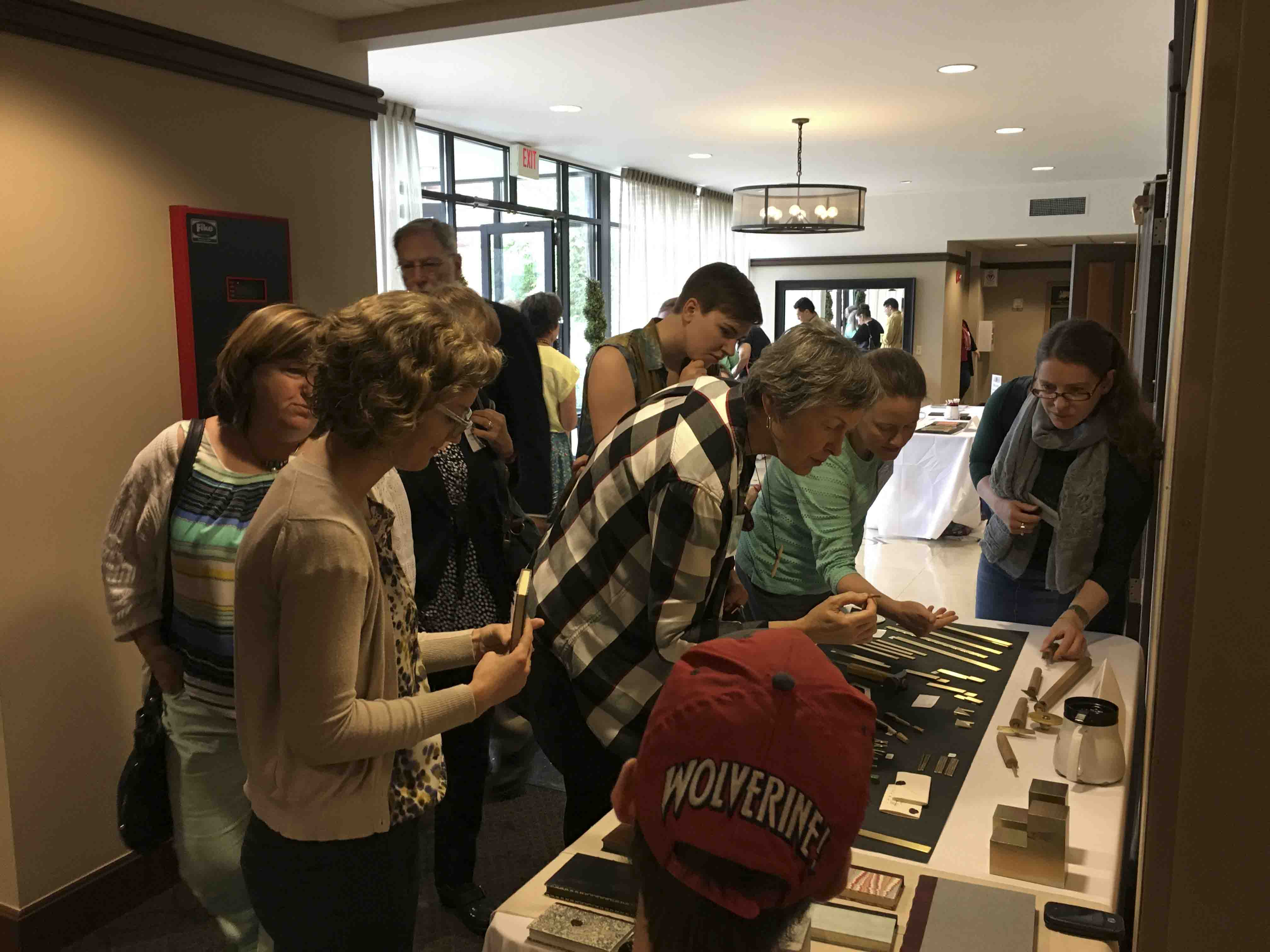
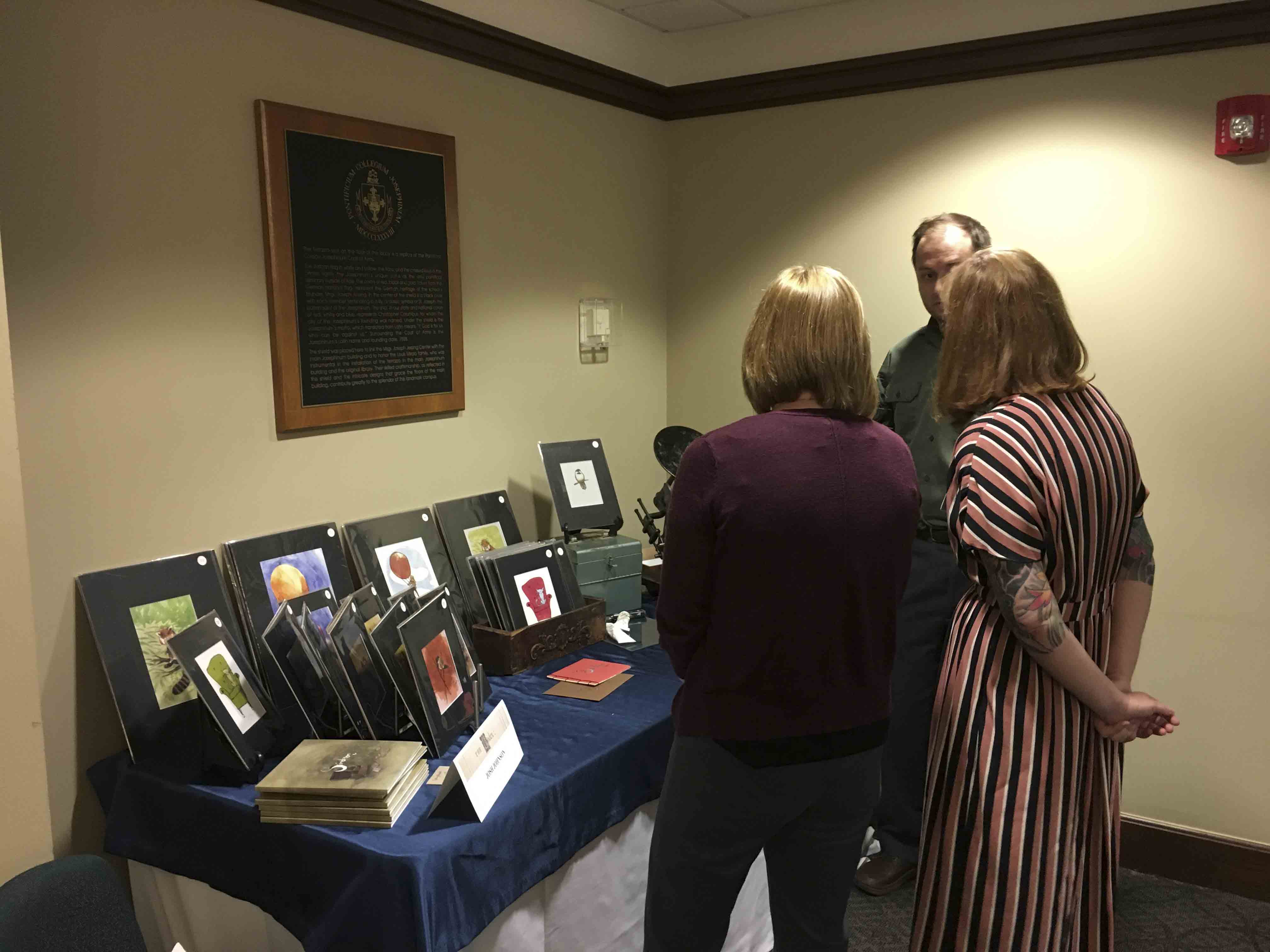
Additionally, attendees will have an opportunity to purchase one of a kind materials from local craftspeople, bookbinders and artisans at the exhibitor hall(way).
Located at:
The Jessing Center
7625 N High St, Columbus, OH 43235
Please visit the Ohio Preservation Council’s News and Events for registration and symposium information. See also: http://opc.ohionet.org/opcjoomla/news-and-events/.

Fun with PhotoDoc – RTI Viewer Video (Edition 6)
In my last “Fun with PhotoDoc” post I discussed the my recent RTI training with Cultural Heritage Imaging at Yale University. If you missed that post you can check it out here. In that post I discussed our first RTI capture session on a book entitled, Aller Bücher und Schrifften des thewren, seligen Mans Gottes Doct. Mart. Lutheri …, which is part UC’s Archives & Rare Books Library’s collection and is the eighth volume in an eight volume set. The binding is most likely age-hardened alum-tawed leather (though possibly vellum) on wooden boards with embossed paneled decoration that is barely visible under normal illumination. In that first RTI blog post I shared some snapshots of the various RTI modes you can explore within the RTI Viewer software, but I knew that I ultimately wanted to create a video capture of the RTI Viewer in action. I was finally able to do that using a free software called TinyTake.
This video can also be viewed through UCL Media Space: https://stream.libraries.uc.edu/media/AllerBucherUndSchrifften_i17632730_VideoCaptureRTI/1_s13c9opc
In this video we explore the following modes built within the RTI Viewer as the light position is moved around the object:
- Default Mode (HSH)
- Specular Enhancement Mode with color removed (HSH) – notice the “1571” inscription that becomes more apparent. This volume was printed in 1568, and we believe that 1571 was when the publication was bound.
- Normals Visualization Mode (HSH) – allows the human eye to better determine is convex and concave on the surface of the cover.
- Diffuse Gain Mode (PTM) – This mode is ideal for visualizing surface abrasions and losses. Take notice of the “ID” inscription that becomes more visible, and when we switch back to the default mode you can see that this “ID” inscription is virtually invisible to the naked eye.
I have to say, Catarina and I really enjoyed the capture process for this binding, but when we found that “ID” and then looked at the physical binding and could barely see anything…we were kind of giddy! I’m hoping to create more RTI Viewer video captures like this as we carry out more RTI capture sessions for collection materials. When I do, I will make sure to share them here.
Jessica Ebert (UCL) – Conservation Technician
Fun with PhotoDoc – RTI (Edition 5)
At the beginning of April I was lucky enough to attend a RTI (Reflectance Transformation Imaging) workshop offered by Cultural Heritage Imaging (CHI) at Yale University. CHI is a non-profit organization that shares and teaches RTI and Photogrammetry technology with cultural heritage institutions around the world. The class I attended was a 4-day NEH grant sponsored course taught by three RTI experts from CHI, and it was amazing!

This is a composite image of all the highlight points from one RTI section. The software uses these highlight points to map the surface shape and color of your object.
So, what is RTI? CHI describes it on their website as “a computational photographic method that captures a subject’s surface shape and color and enables the interactive re-lighting of the subject from any direction”. For highlight RTI, which is the least expensive and most accessible method for most institutions and what I was taught in the class, you basically take a series of 36 to 48 images of an object where everything is constant (settings and position of objects, camera and spheres) except for the light position. With a reflective black sphere (or 2) set up next to your object, you move you light source around the object at varying angles. Then, you take that set of images and plug them into the free RTI software provided by CHI and the algorithm detects the sphere(s) and the highlight points (from your light) captured on the sphere(s) and voila!…you have an fun and interactive way to look at your object’s surface texture.
Before I attended this fantastic training opportunity, our conservator and I knew right away what the subject of our first capture would be when I returned…a 16th century German Reformation text by Martin Luther with a highly decorated cover that is practically invisible under normal illumination.
Here’s a time lapse video of our first (and second) capture in the Lab…
That day (Tuesday) were were able to capture the upper and lower covers of the Reformation text (from ARB), the original silk cover from a 17th century Chinese manuscript (from Hebrew Union College) and an illuminated page from a German vellum prayer book (from PLCH). And here our some snapshots of our results from two of those captures (click on the thumbnails for a larger view of the image)…

This possibly 13th century German Prayer Book has a full stiff vellum binding and an illuminated first page. The varying modes highlight condition issues like worn/abraded parchment and flaking gold illumination, as well as the overall surface texture of the illumination.
I hope you’ve enjoyed getting a little sneak peek into RTI. I will be demoing and discussing in further depth this afternoon from 1:30 to 3pm at the Lab’s annual Preservation Week Open House. I also hope to do more RTI captures/processes in the future and share them here.
Jessica Ebert (UCL) – Conservation Technician
Welcome President Pinto!
The Preservation Lab had the opportunity to collaborate with our Director of Library Communications, Melissa Norris, and the Head of Archives and Rare Books Library, Kevin Grace, to create a hand bound writing notebook full of fun facts about the Library system. The book was bound by Jessica Ebert, conservation technician.
Also pictured is a custom bind of Dot Christenson’s book Keep On Fighting: The Life and Civil Rights Legacy of Marian A. Spencer, also bound by Jessica created to mark the gift of the Marian Spencer collection to the Archives and Rare Books Library.
Fun with PhotoDoc – Edition 4

The amazing enclosure made by our very own conservation technician, Chris Voynovich, for volume 1 of the W.S. Porter Collection.
We very recently returned a two volume collection of photographs taken by William S. Porter, known as the W.S. Porter Collection, to the Public Library. William S. Porter is known in Cincinnati as one of the two photographers responsible for the 1848 Cincinnati Panorama (you can read more about and even explore this amazing daguerreotype panorama here). Volume one of the collection consists of 7 cased photographs (including daguerreotypes, ambrotypes, and tintypes) and 1 non-cased tintype, all reportedly taken by W.S. Porter, while volume 2 consists of one framed daguerreotype of W.S. Porter and a preservation print of that photograph. When these photographs arrived in the Lab for treatment, many of the cases were damaged (especially along the spine – some broken completely, one previously “repaired” with tape, etc.), the framed photograph needed re-packaging, and the collection needed two custom enclosures (vol. 1 & 2) to safely store all the photographs.

(Left) Before “bench” photos of one of the cased photographs labeled “John Wesley Lever”, (Right) After photos of the mended case.
Now, as anyone who does photographic documentation will tell you, taking treatment documentation photos of photographs is a pain, especially on the copy stand (i.e. from above) and especially when you were trained in-house in a book and paper lab. Glass objects just aren’t as common around these parts. During PhotoDoc glass just acts as a mirror, reflecting all your light and even your camera lens and obstructing the actual photograph you are trying to capture. But we knew that we wanted some good quality photos of the photographs to print as surrogates and to also use in the enclosures. Black foam core and an Olfa rotary cutter to the rescue! Using these two supplies I created a non-reflective black surface to place around the camera lens to help reduce reflections and absorb light.

In order to mount this black foam core on the camera lens I measured the diameter of our lens and the distance from the edge of the lens to the neck of the copy stand when the camera was in place.

The foam core allows enough flexibility for the deflector to just slide past the UV filter and snap into place securely.
With the black non-reflective board in place, I was able, with guidance from our conservator, to get some pretty good shots of the photographs to be used as surrogates. The photos were also printed out and attached to the back of individual tuxedo boxes for each cased photograph. Instructions to “store face down” were placed on the front of each tuxedo box to assist patrons in proper storage. (The glass on all of these photographs is degraded and if stored face up the glass can actually weep onto the photograph causing significant damage, therefore cased daguerreotypes/ambrotypes/tintypes are generally stored up-side-down to prevent further damage to the actual photograph). All of the tuxedo boxes for volume 1 were housed within a two-tiered clamshell box with two removable trays made by our resident “Box Master”, Chris Voynovich. It should be noted that it’s a miracle this enclosure made it out of the lab and back to the Public Library, because several staff members were so enamored with it and thought it would make the best jewelry box! I mean, it kind of would, wouldn’t it?
Here are the images I was able to obtain using my homemade non-reflective board:
Jessica Ebert (UCL) – Conservation Technician