
Grooved Disc Media
Although The Preservation Lab is primarily a book and paper lab, we often receive items that fall outside this realm and are required to do a little research and get creative. I was recently assigned a small collection of various grooved disc media that required archival storage solutions. “Grooved disc media” is an umbrella term that encompasses any type of sound recording that features small grooves cut into its surface that a stylus then passes over to produce an audio signal. Think vinyl records, shellac discs, 45s and more. Another term I like that covers multiple varieties of grooved discs is the term “records”, which I will use interchangeably with “grooved discs” for the remainder of this post.
Considerations
Until this point, we had not received any grooved disc media requiring new housing at the Lab. In situations like this, I like to do a bit of research and figure out what is required of the housing to determine what is required for safe storage. We found several trustworthy sources that provided tips for what to do as well as what not to do. The most important ones are as follows:
- First and foremost, any grooved disc should be stored upright. When multiple discs are placed on top of each other, their collective weight can compound quickly. This weight can then slowly compress the grooves on the discs and result in loss of media.
- Grooved discs should have their old plastic sleeves, both inner and outer, replaced with archival plastic sleeves. Older records often have non-archival plastic outer sleeves that are susceptible to warping over time. This can lead to the discs themselves warping, affecting playback speeds which can lead to further degradation. We ended up purchasing these Original Master Sleeves and Archival Record Sleeves, both made by Mofi Mobile Fidelity Sound Lab.
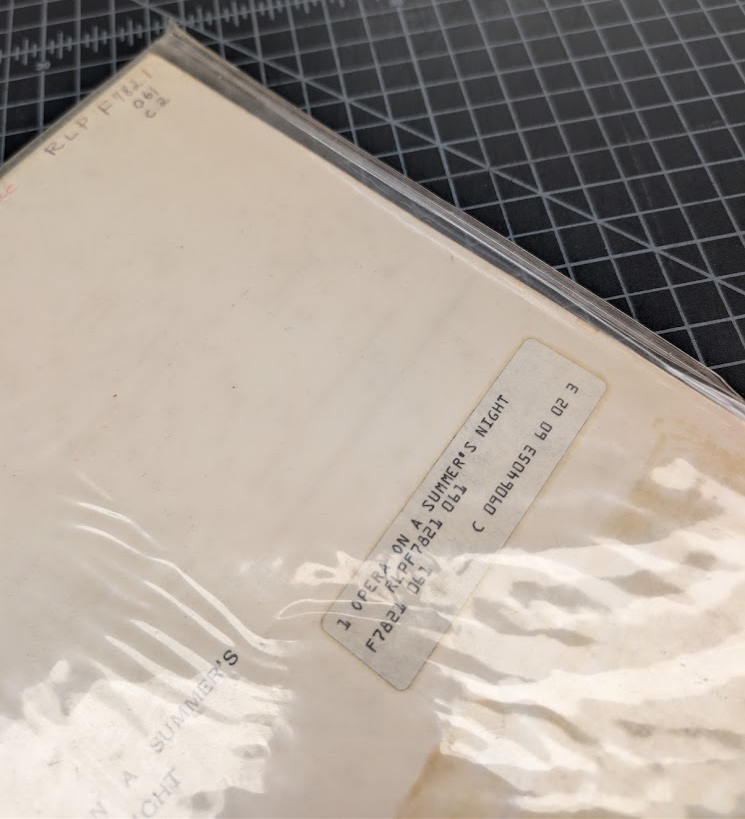
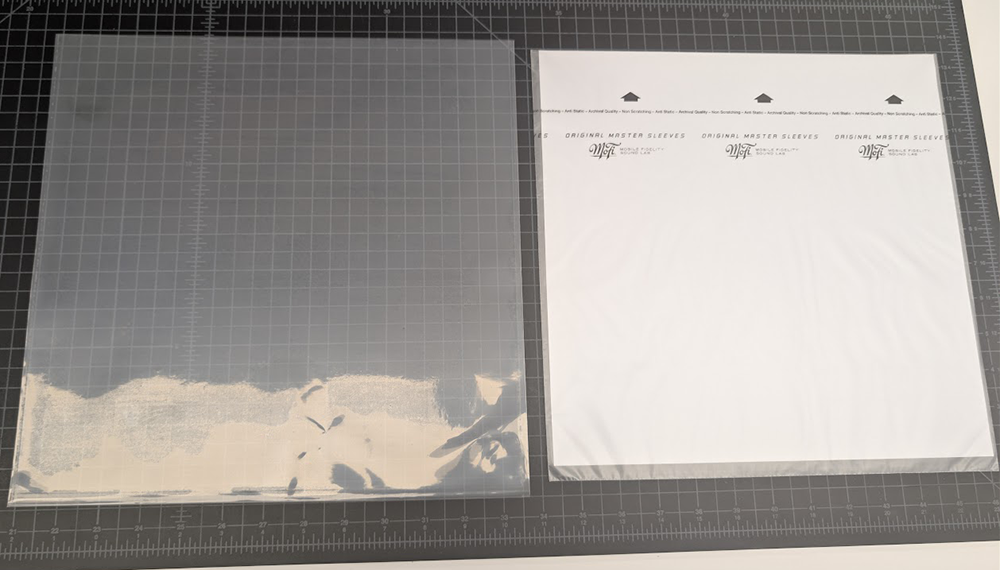
- The original cardboard sleeves should be retained if desired and if they contain any information or artwork related to the recording. However, it is advisable to store these separate from the sleeved records, or at least with the record inside a protective archival inner sleeve before placing it inside the cardboard. These cardboard sleeves can sometimes foster mold growth in high humidity environments.
- Ideal relative humidity for the storage environment is between 30-50% with fluctuations not exceeding +/- 5% in a 24-hour period.
Solutions
After learning all these considerations, assistant conservator Catarina Figueirinhas came up with the following solution.
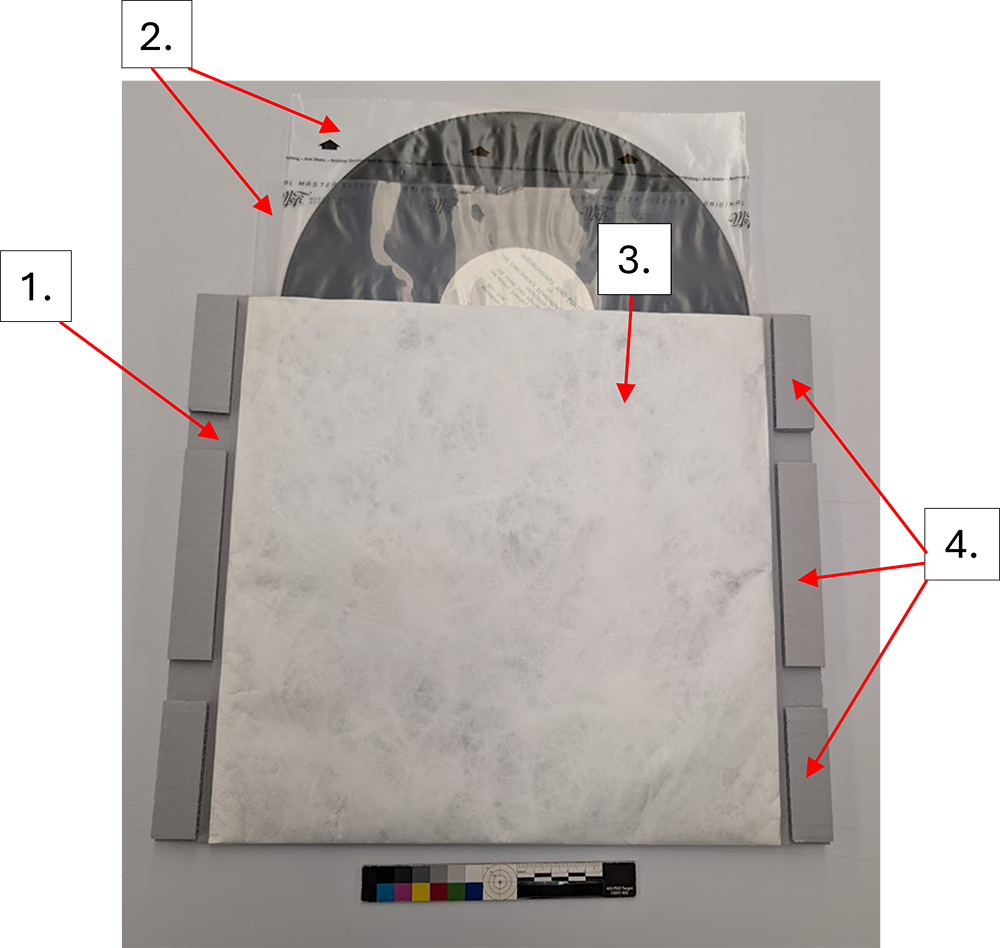
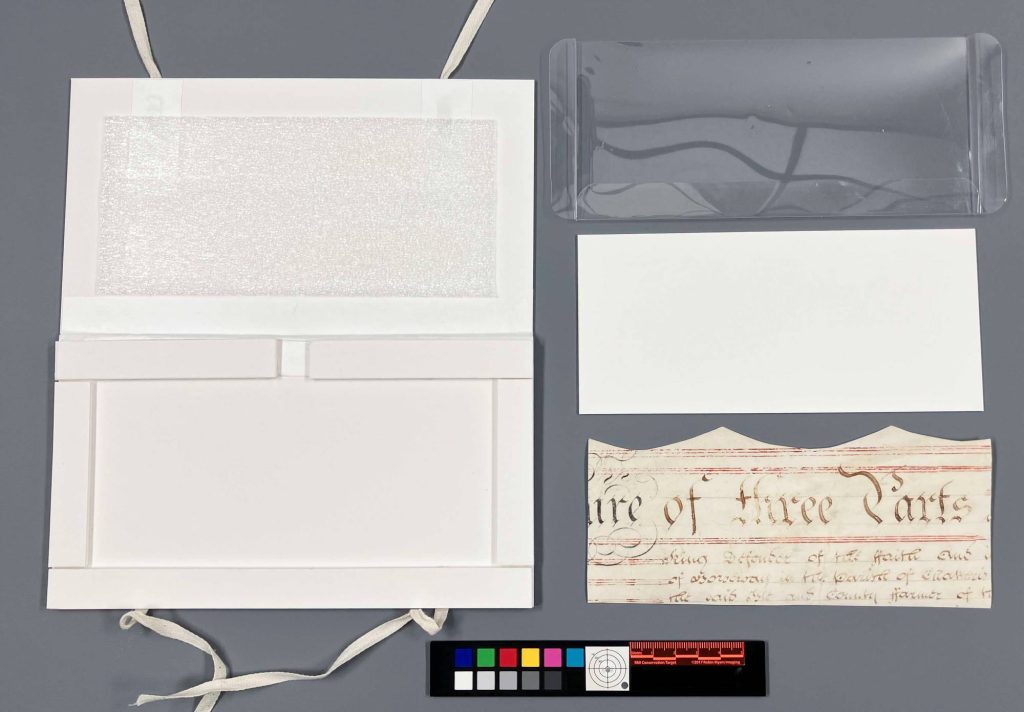
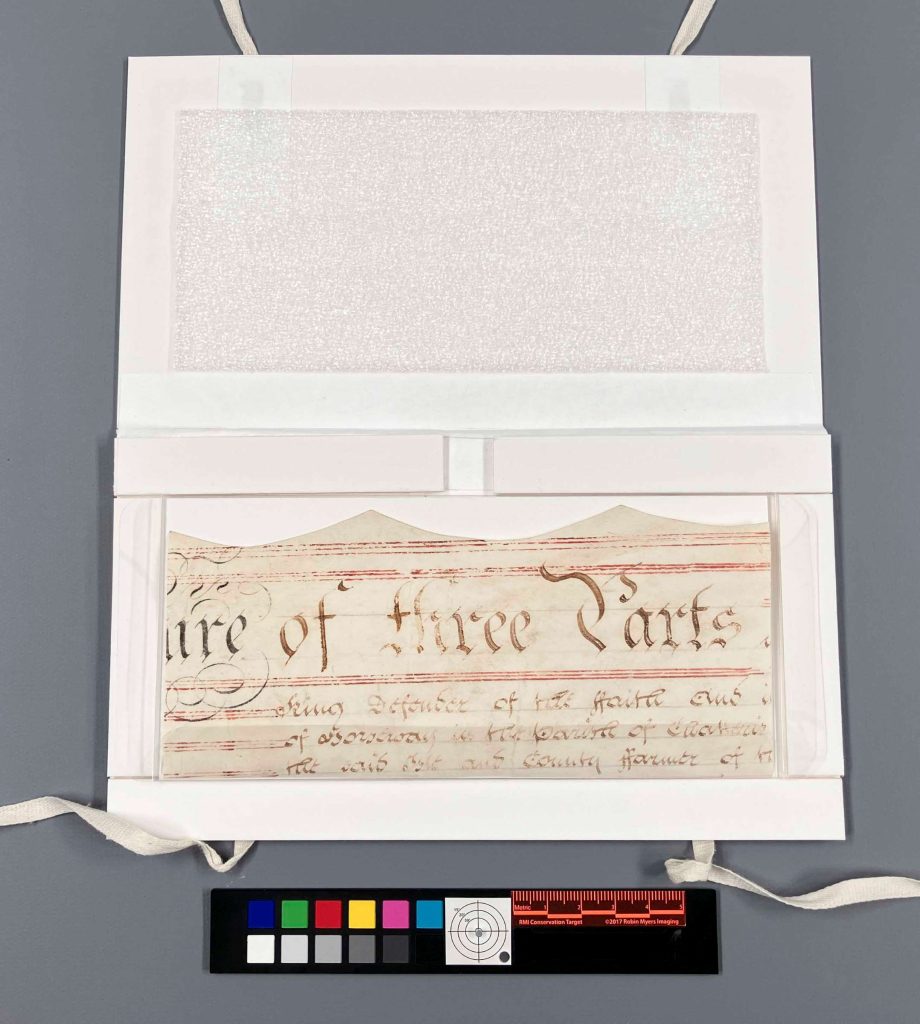
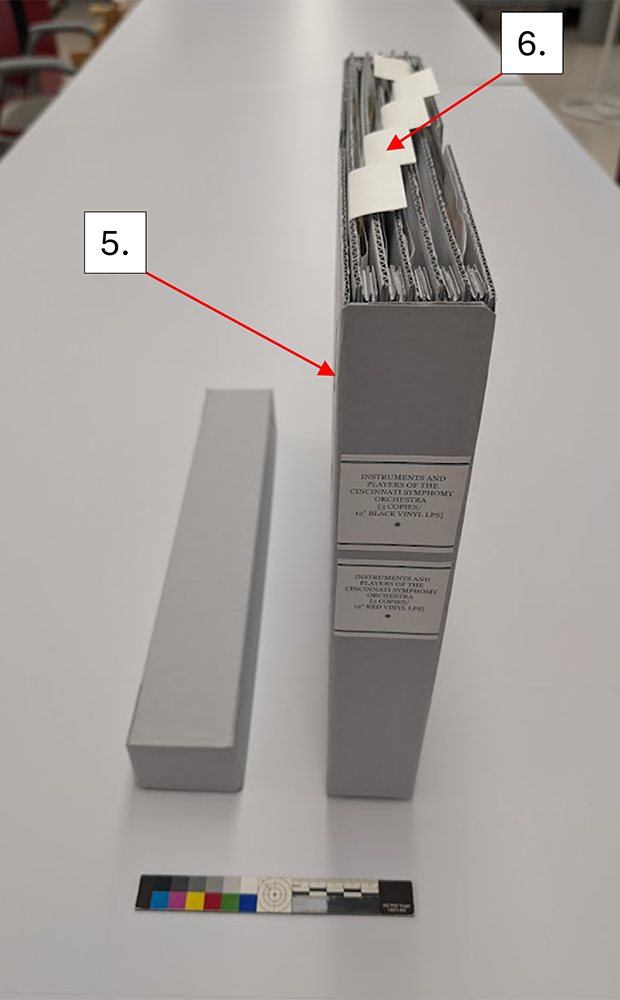
- Individual corrugated board trays were constructed for each disc. Corrugated board was chosen because it is lightweight, inexpensive, and relatively strong. They were cut slightly oversized to provide room for protective bumpers to the left and right of where the sleeves will be attached.
- Each disc was placed inside its own archival inner sleeve. These are the sleeves that Mofi refers to as “Original Master Sleeves”. Each disc inside its inner sleeve was then placed inside the archival outer sleeves, which Mofi refers to as “Archival Record Sleeves”. In cases where a cardboard sleeve was present, they would also be placed inside these plastic outer sleeves. The disc’s inner sleeve should protect it from coming into contact with the non-archival cardboard, and the plastic outer sleeve will also help protect the cardboard from damage.
- A final pocket was constructed of Tyvek to store each disc inside its sleeves, which was then adhered to the corrugated board trays using PVA.
- To prevent any potential abrasion to the discs while sliding them in and out of their final enclosure, several small, corrugated board bumpers were added to the left and right of each attached Tyvek pocket that were thicker than the pocket and all its contents.
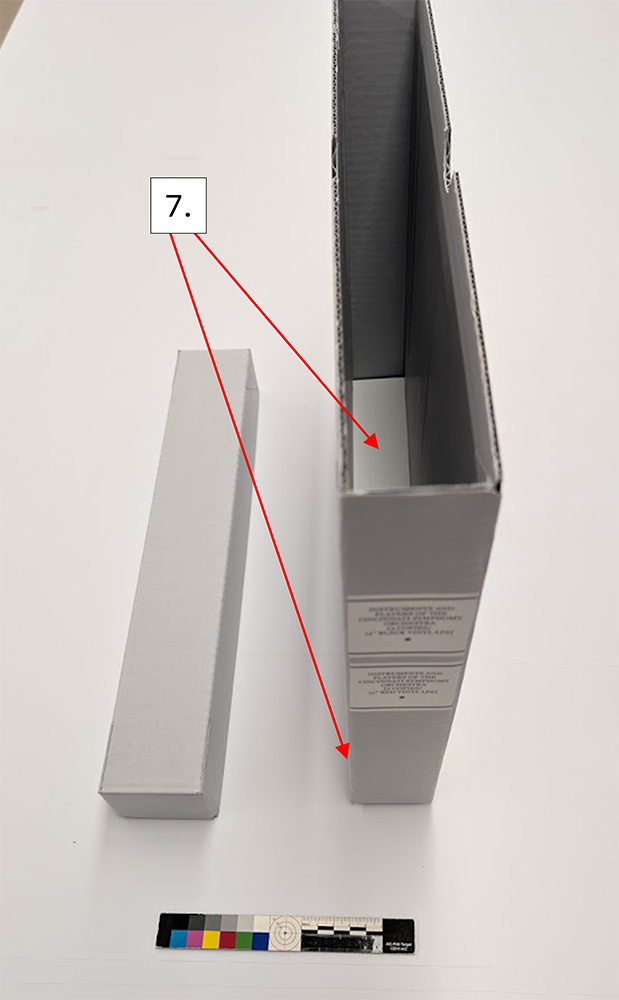
- A single corrugated board banker’s style box was constructed to house each disc/tray in the series.
- To help with removal, Tyvek tape pull tabs were added to each individual tray.
- After adding all the trays and their discs to the banker’s box, it was discovered that the box was quite top-heavy and prone to tipping over. To combat this, I added a strip of Dibond (a composite material consisting of a polyethylene core sandwiched between two pieces of aluminum sheeting) to both the bottom of the inside of the box and to the underside of it as well. This provided extra weight to the bottom and added some nice stability. For future enclosures of this nature, I will make the box thicker, adding fill if necessary. This make it more stable without the need to weight the bottom of the box.
Final Thoughts
Although this storage solution will almost certainly continue to evolve as I make more of them, I was very happy with how the first batch turned out. Part of the fun of creating new storage solutions is figuring out what works and what doesn’t and adjusting accordingly.
On a side note, I realize that some readers of this post may be concerned for their record collections as they do not have a conservation lab at their disposal to construct an enclosure like this. To that I would say that any of the storage considerations mentioned that are achievable, such as storing discs upright and in new archival sleeves will go a long way in ensuring the longevity of your collections.
A huge thank you is deserved to both conservator Ashleigh Ferguson-Schieszer and assistant conservator Catarina Figueirinhas, who helped me brainstorm on this project.
Sources
- https://mofi.com/record-sleeves/
- https://www.nedcc.org/fundamentals-of-av-preservation-textbook/chapter1-care-and-handling-of-audiovisual-collections/chapter-1-section-2