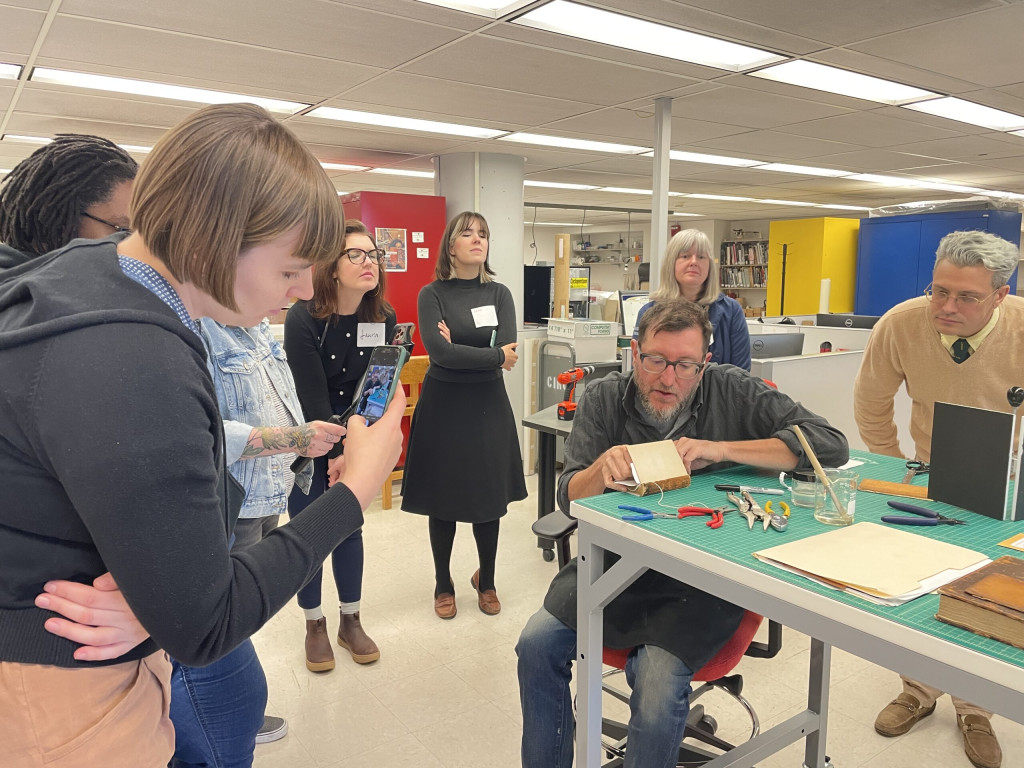
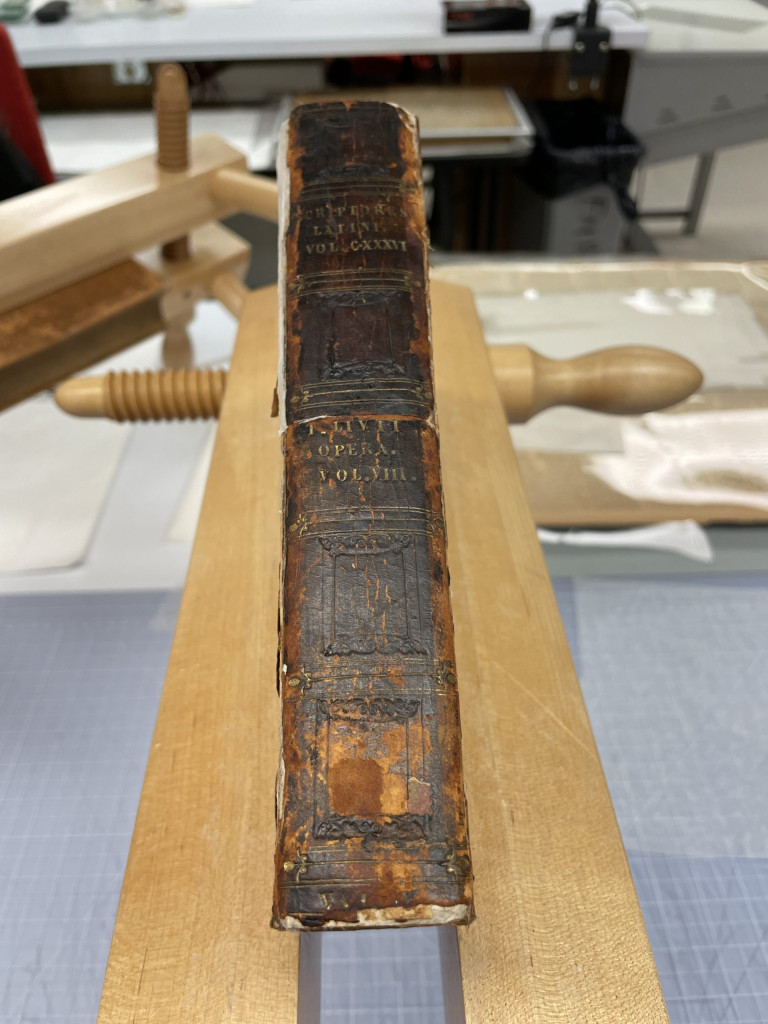
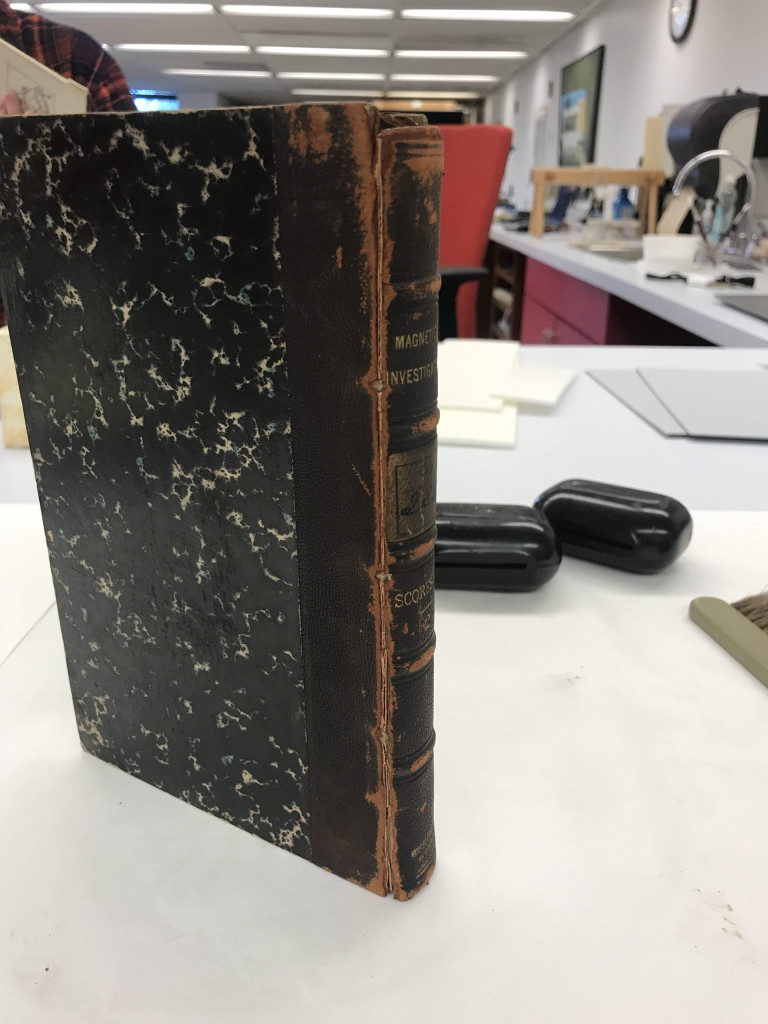
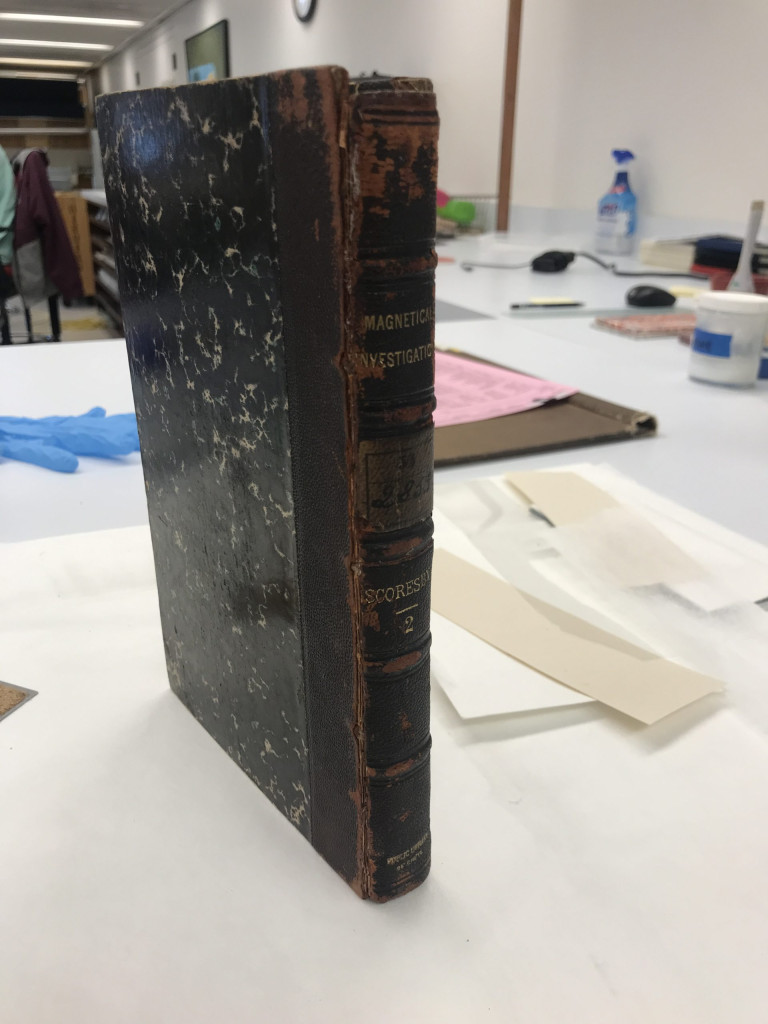
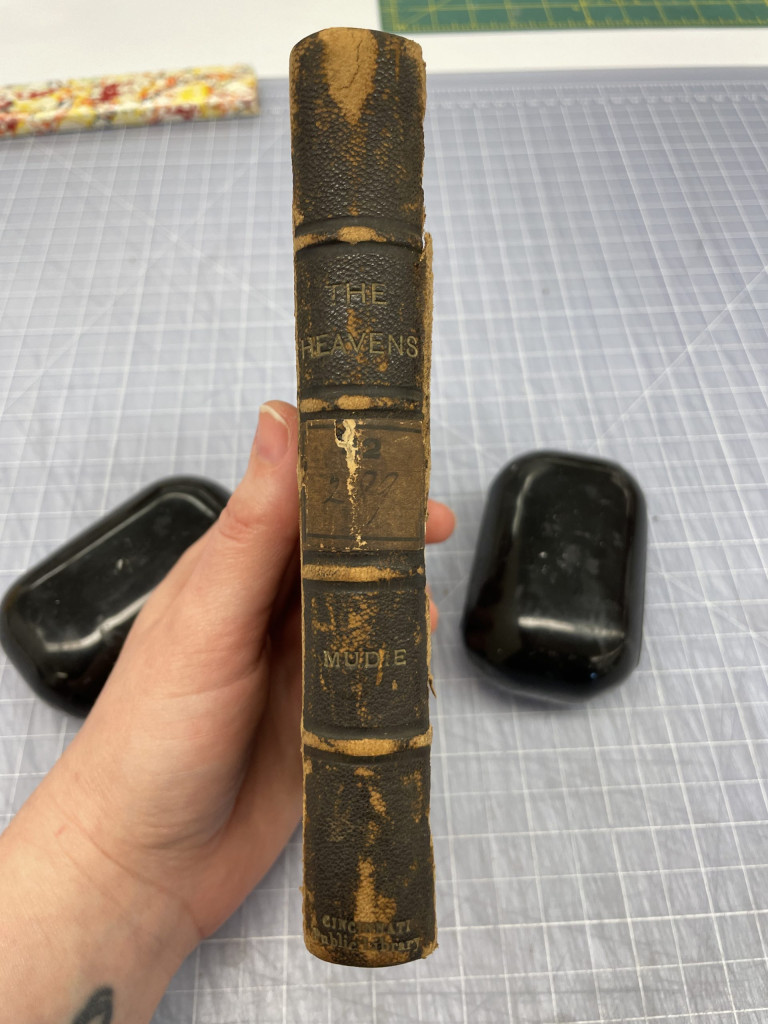
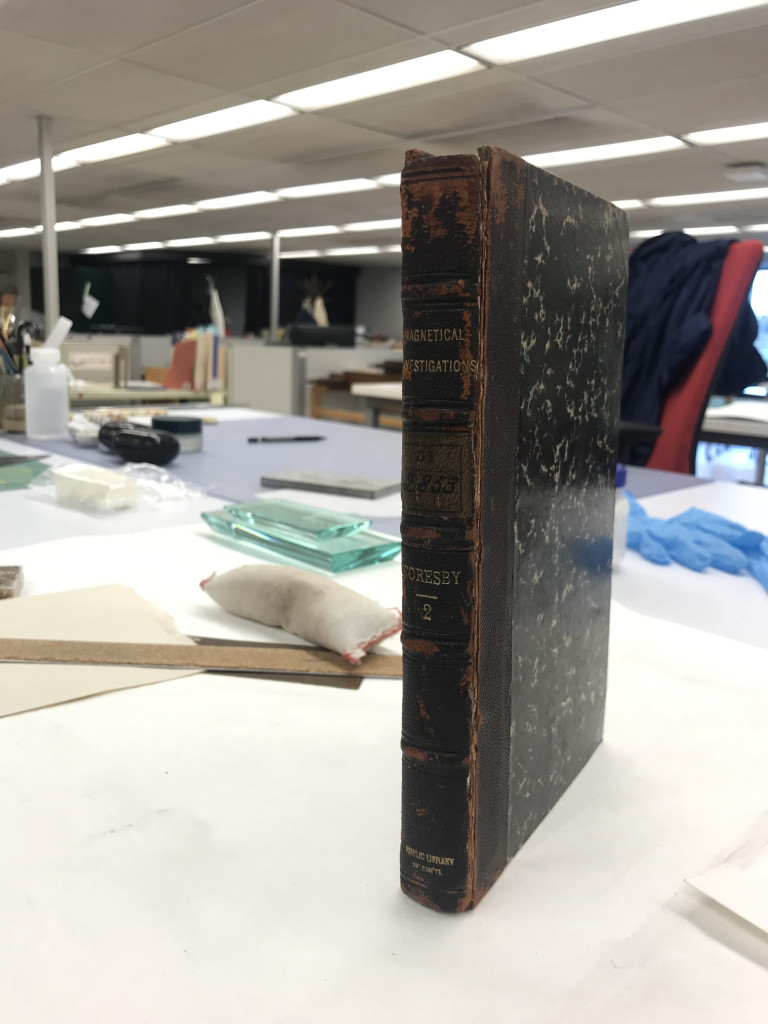
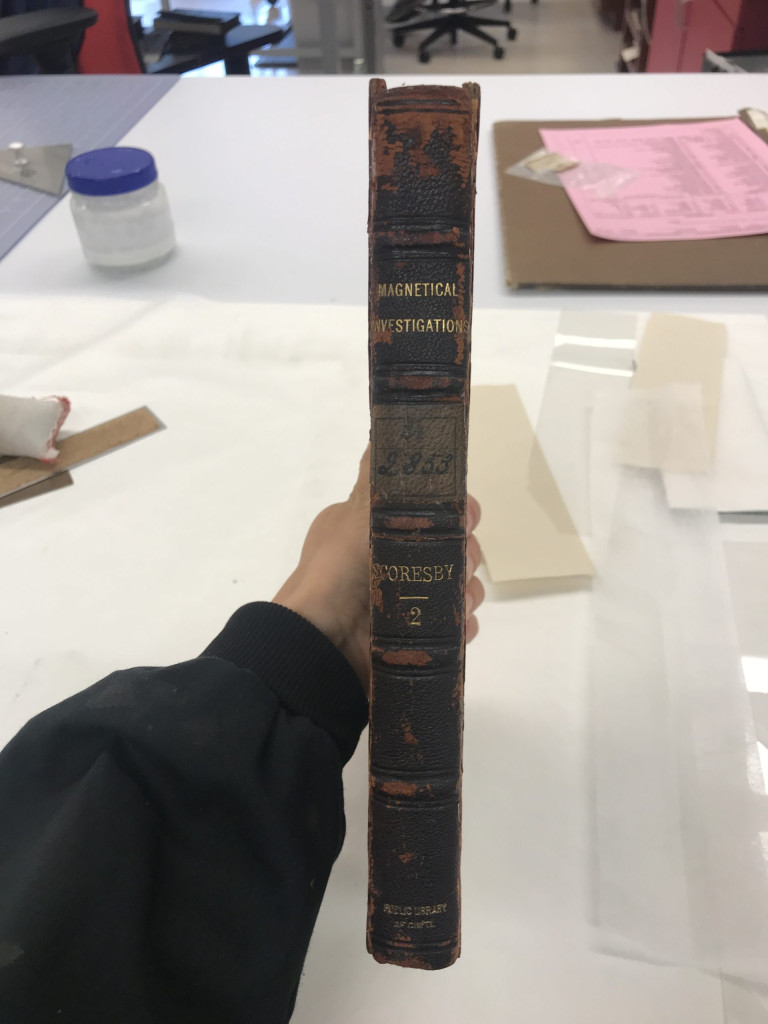
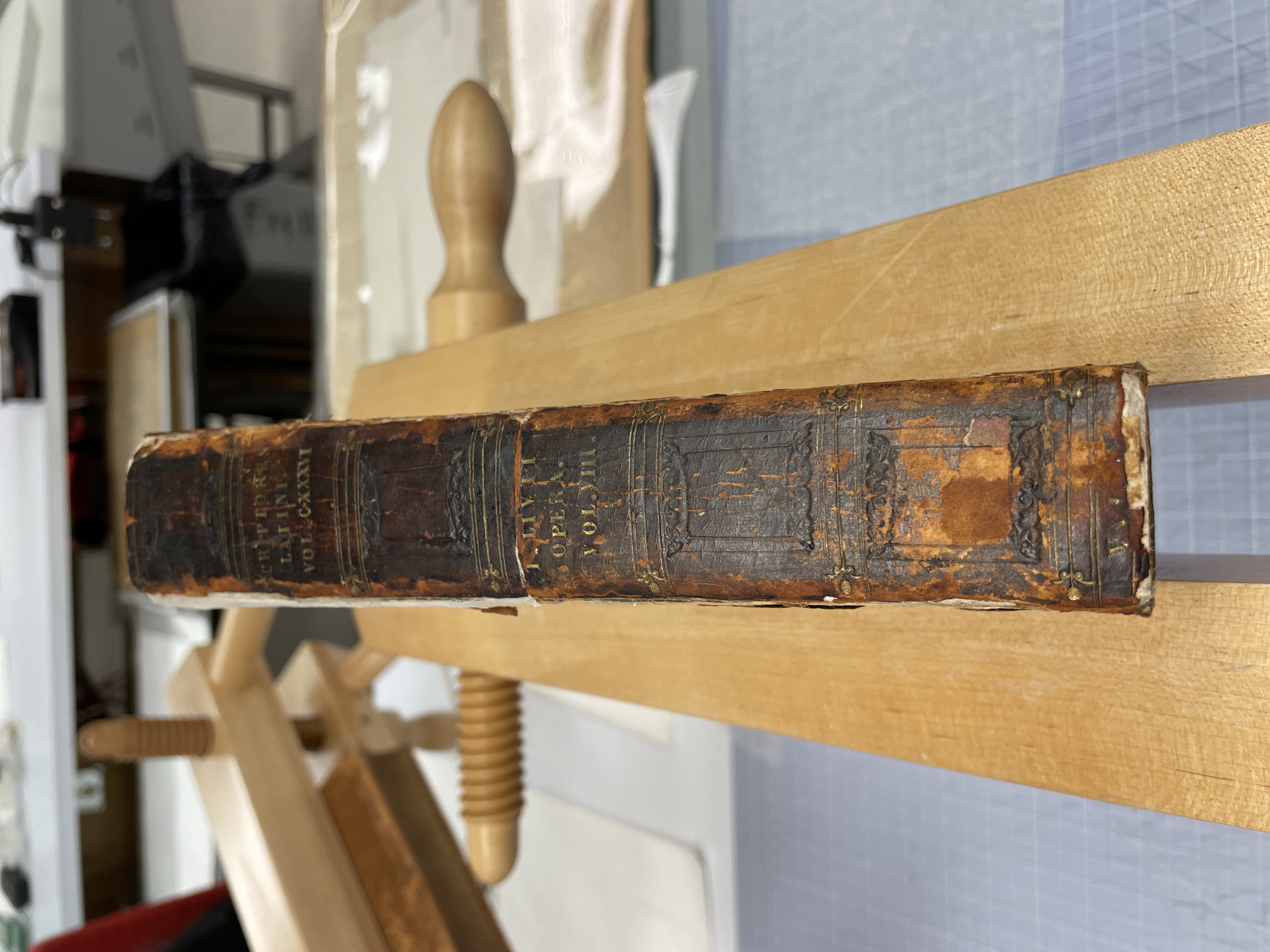
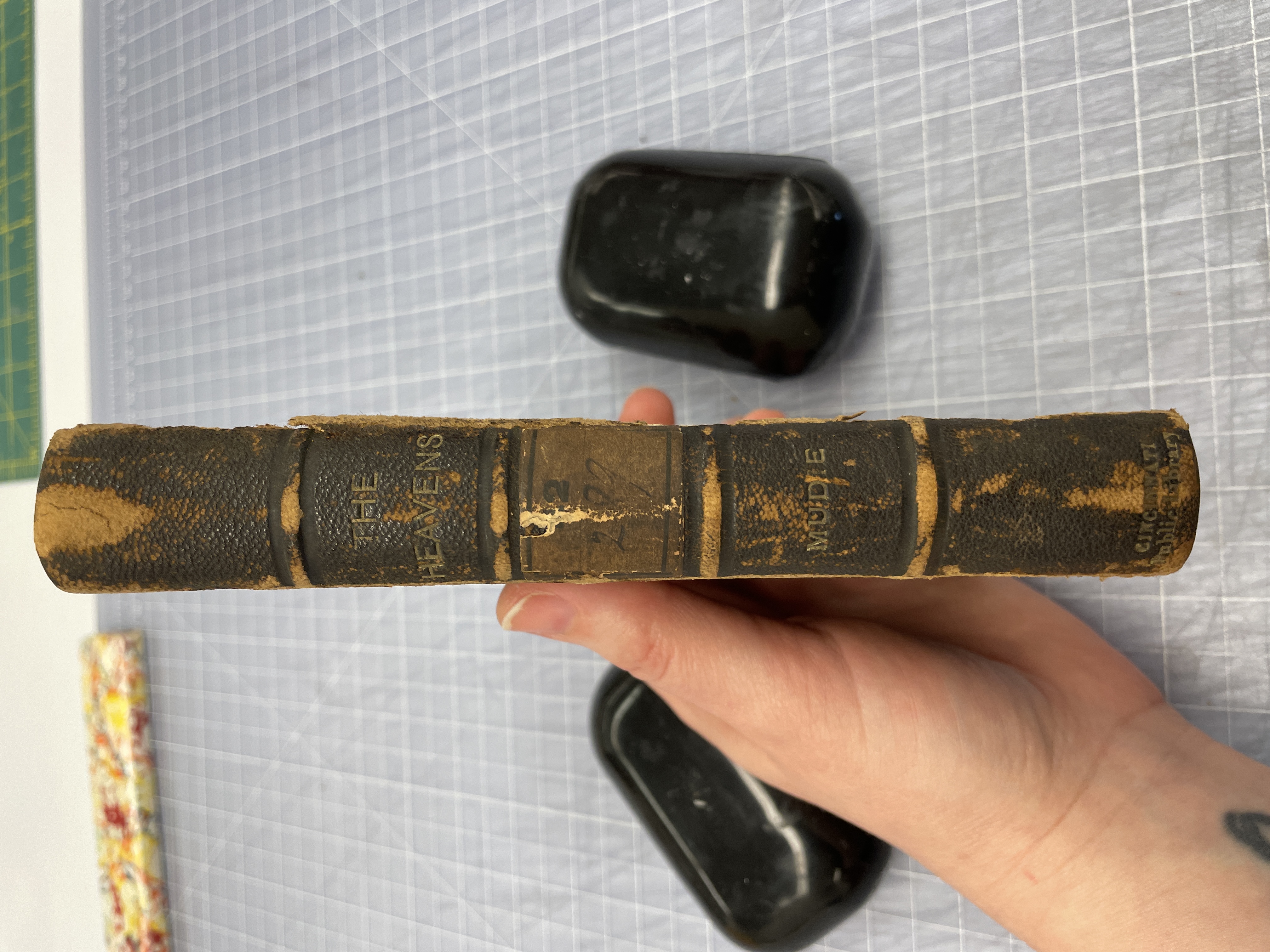
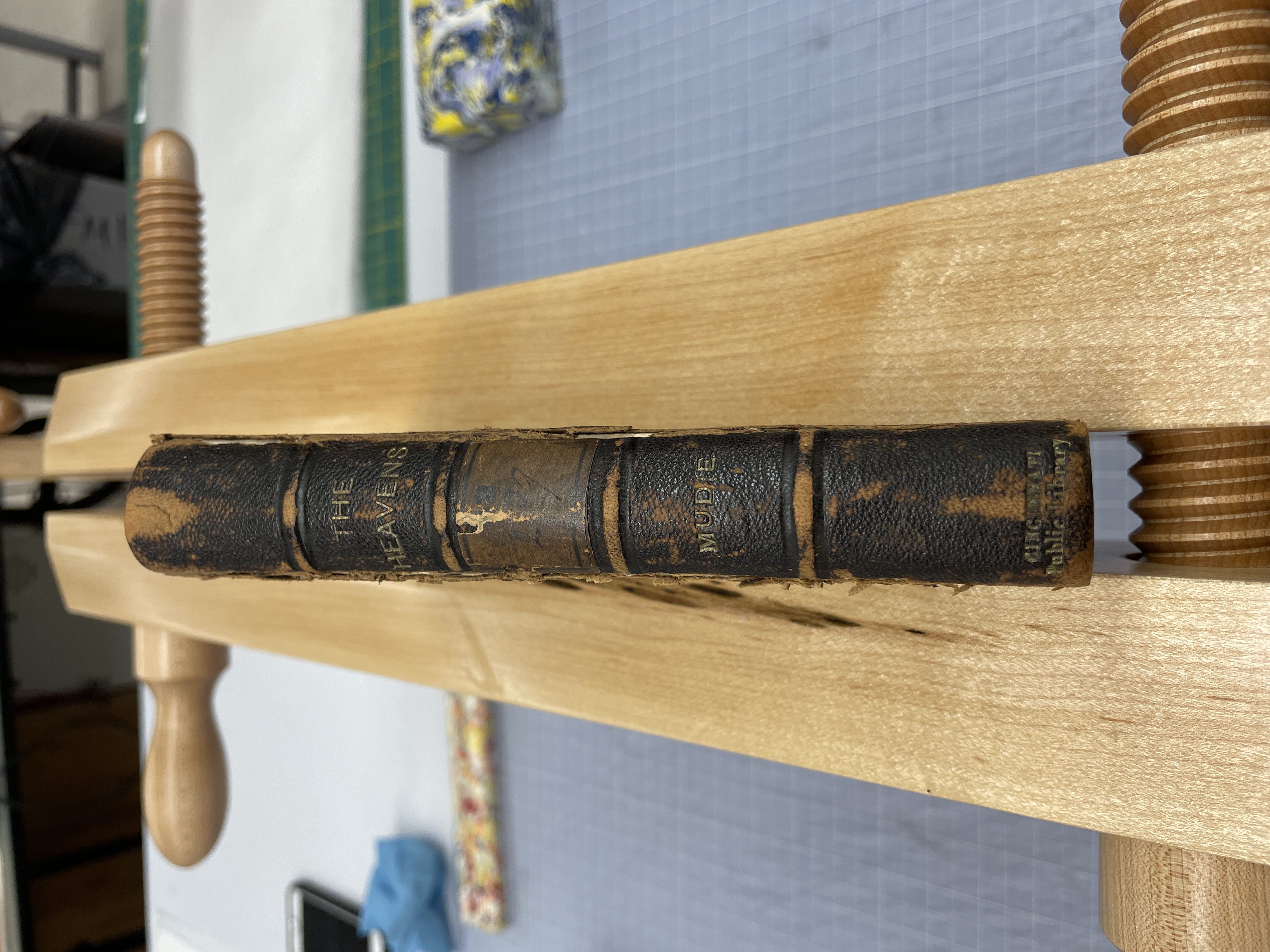
This week the Preservation Lab and the Archives and Rare Books Library hosted a 2-day workshop with the conservator and book historian Julia Miller. The workshop, Identifying and Describing Historical Binding Structure: A Stacks Appraisal Workshop, provided the Preservation Lab staff, University of Cincinnati Libraries’ (UCL) special collections catalogers, and UCL special collections stewards an opportunity to strengthen their skills of historical binding identification and description. We honed our descriptive skills by examining collections from the Archives and Rare Books Library and models/exemplars from Julia’s personal teaching collection.
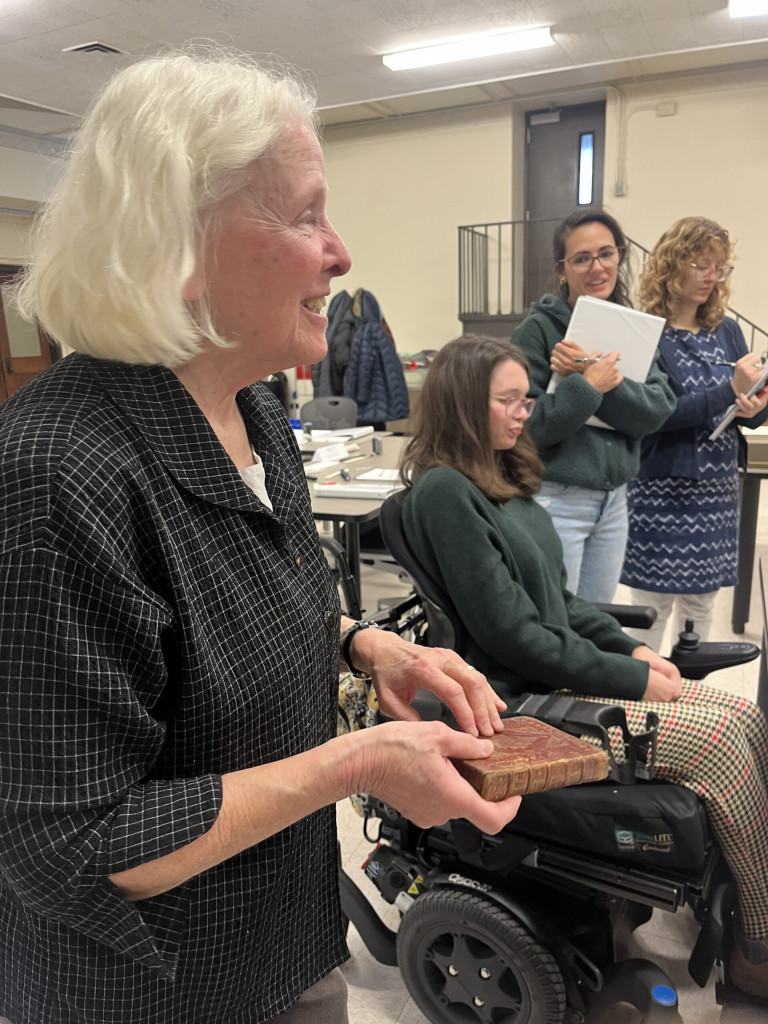
Julia Miller presenting to the Historical Binding Structures class.
Thanks to Julia Miller, one of the most knowledgeable and giving people that we have had the privilege to learn from.
Thanks to Chris Harter for providing access to so many Archives and Rare Book treasures and a wonderful space to learn and collaborate.
Thanks to Catarina Figueirinhas for suggesting the course and being the on-site coordinator and organizer.
Lastly, thanks to University of Cincinnati Libraries for their continued support of staff professional development!
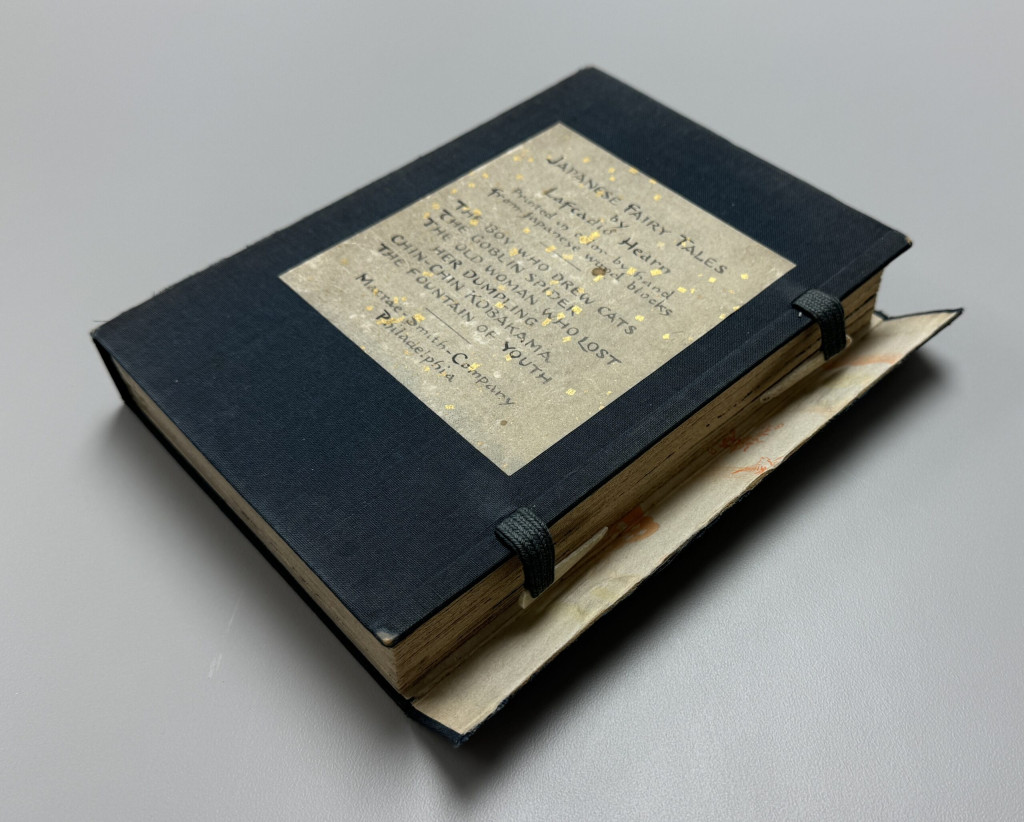
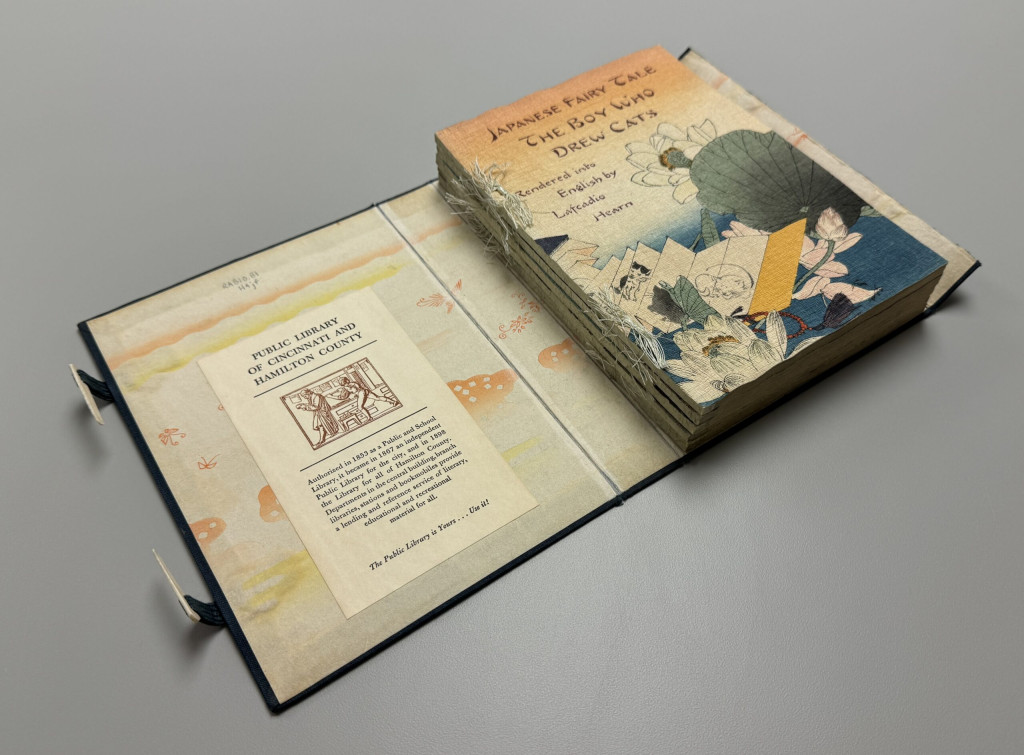
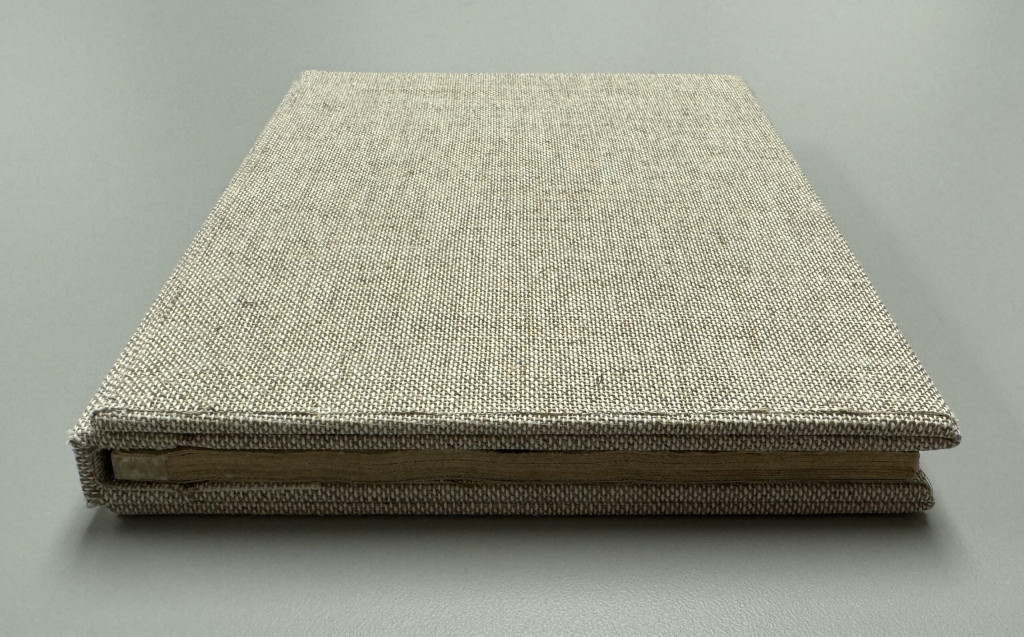
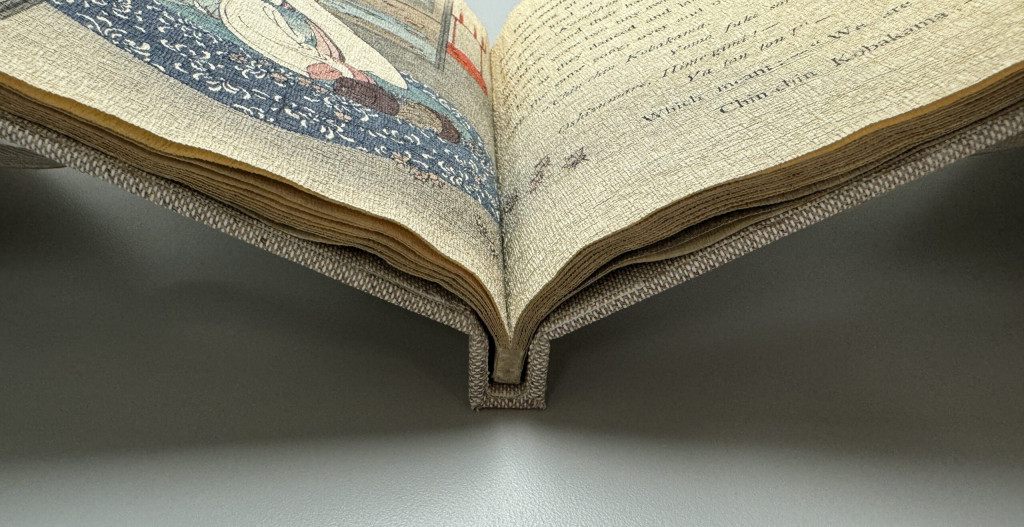
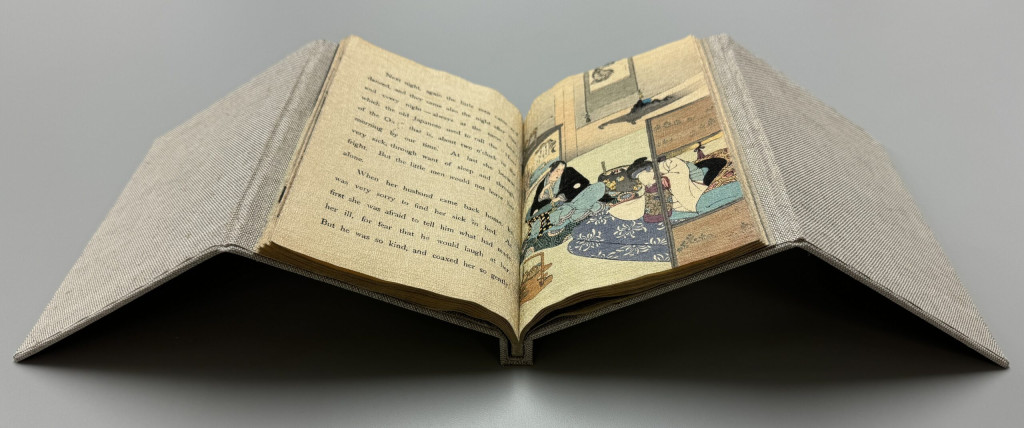
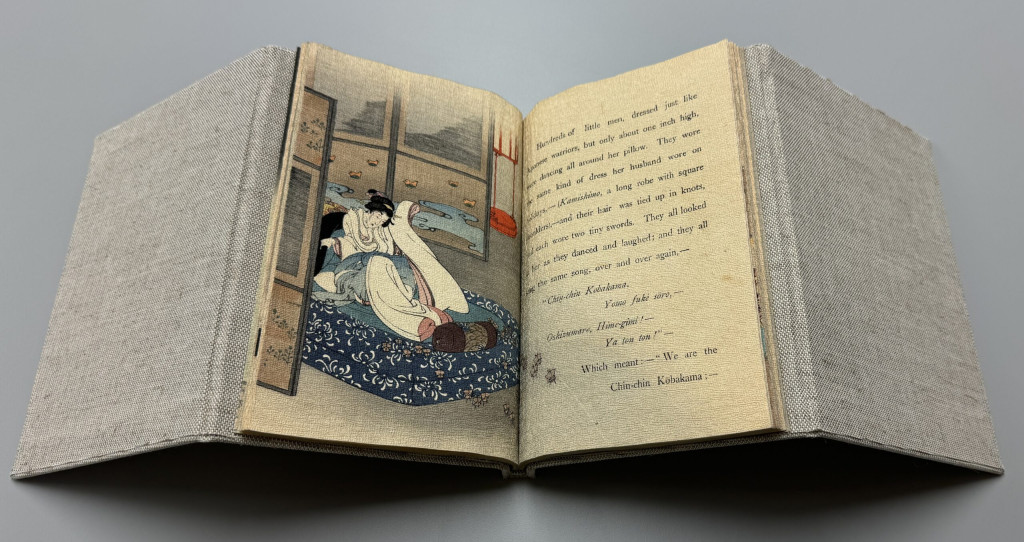
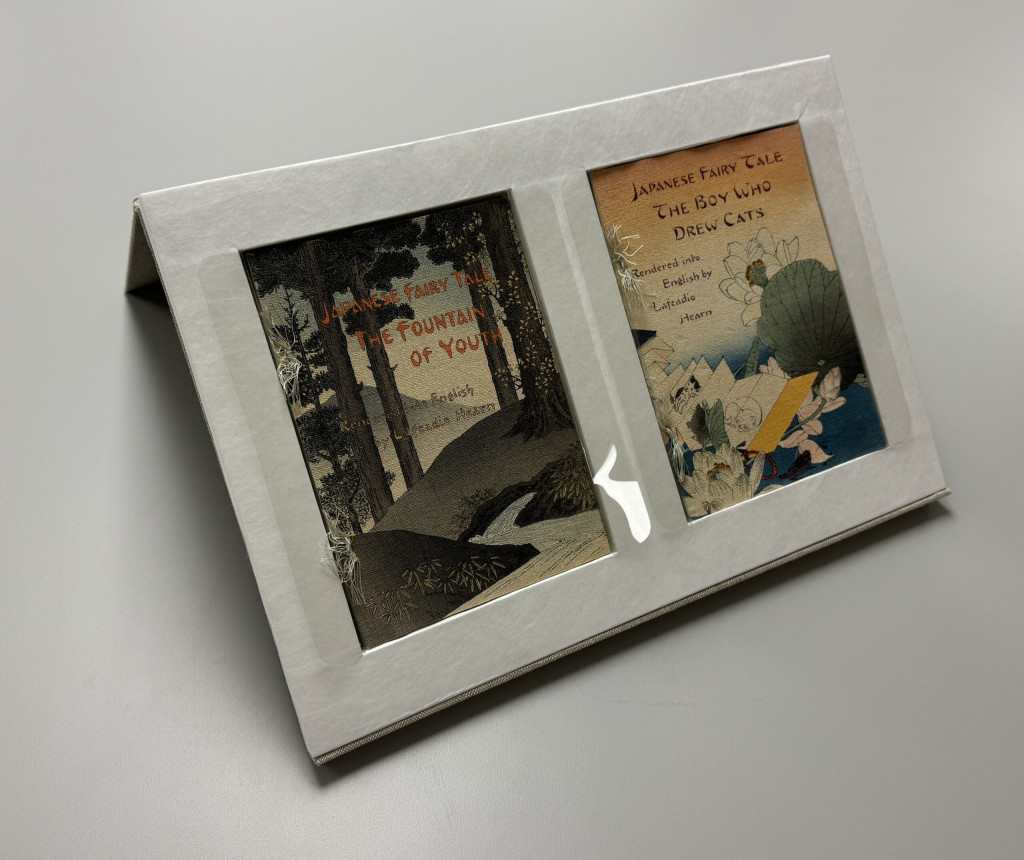
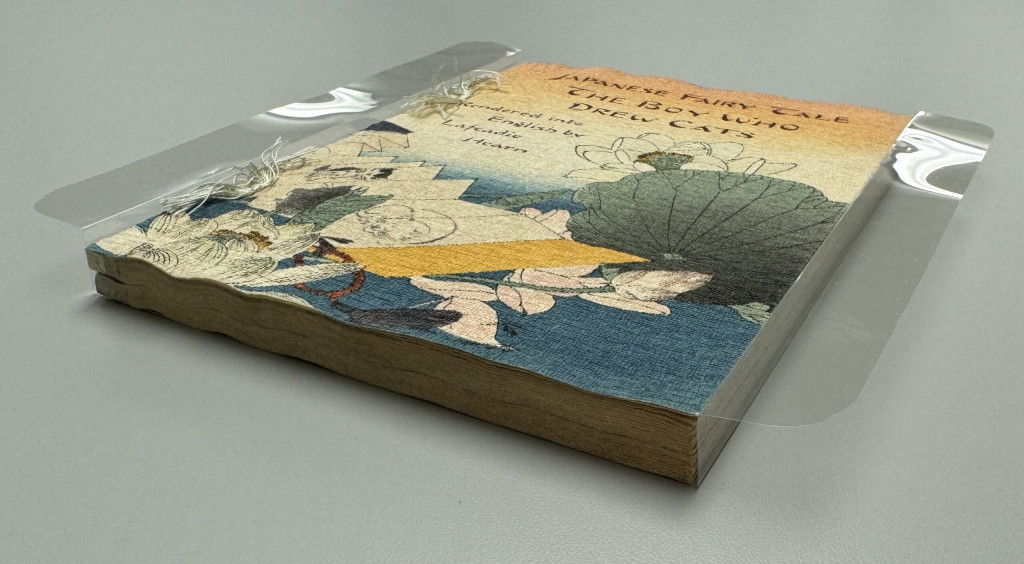
This set of Japanese side-sewn, crepe paper bindings, or Chirimen-bon, came to the Preservation Lab housed in their damaged traditional Japanese wraparound case, known as a maru chitsu. The set belongs to the Cincinnati and Hamilton County Public Library, which has an extensive Lafcadio Hearn collection. This collection of volumes was printed by Hasegawa Takejirō, a Japanese publisher who specialized in books written in European languages on Japanese subjects. The Japanese Fairy Tale Series was one of the more popular series, beginning with six volumes in 1885; though this later collection only has five volumes of fairy tales. Lacadio Hearn was one of the foreign translators employed by T. Hasegawa.
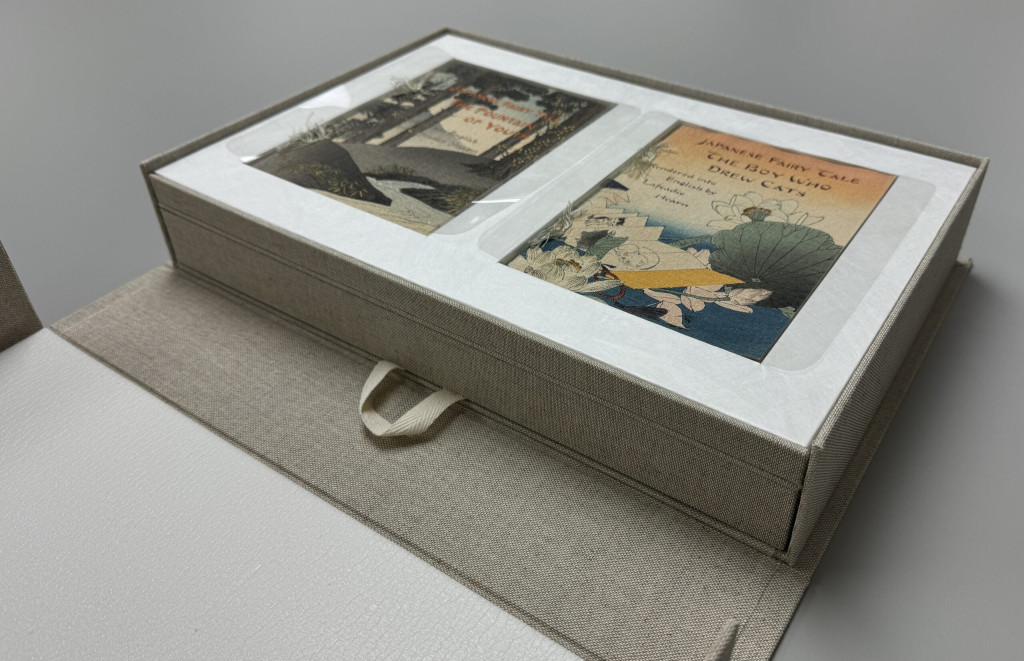
Original enclosureFive volumes withing the original enclosure (pictured after treatment)
Due to the high profile nature of Lafcadio Hearn for the library and the beauty of the bindings, the collection is often shown during tours and used for display, however, the crepe paper volumes, while in excellent condition, are extremely floppy, and they are also side-sewn, both factors make them difficult to handle and display. The original enclosure is also very fragile and damaged, and susceptible to further damage if used as an enclosure moving forward. For all these reasons, the curators wanted an enclosure that would not only store the collection long-term, but could also be used for display.
This proved to be a challenge, but a fun one. I started by making a couple of sketches and then a couple of models…
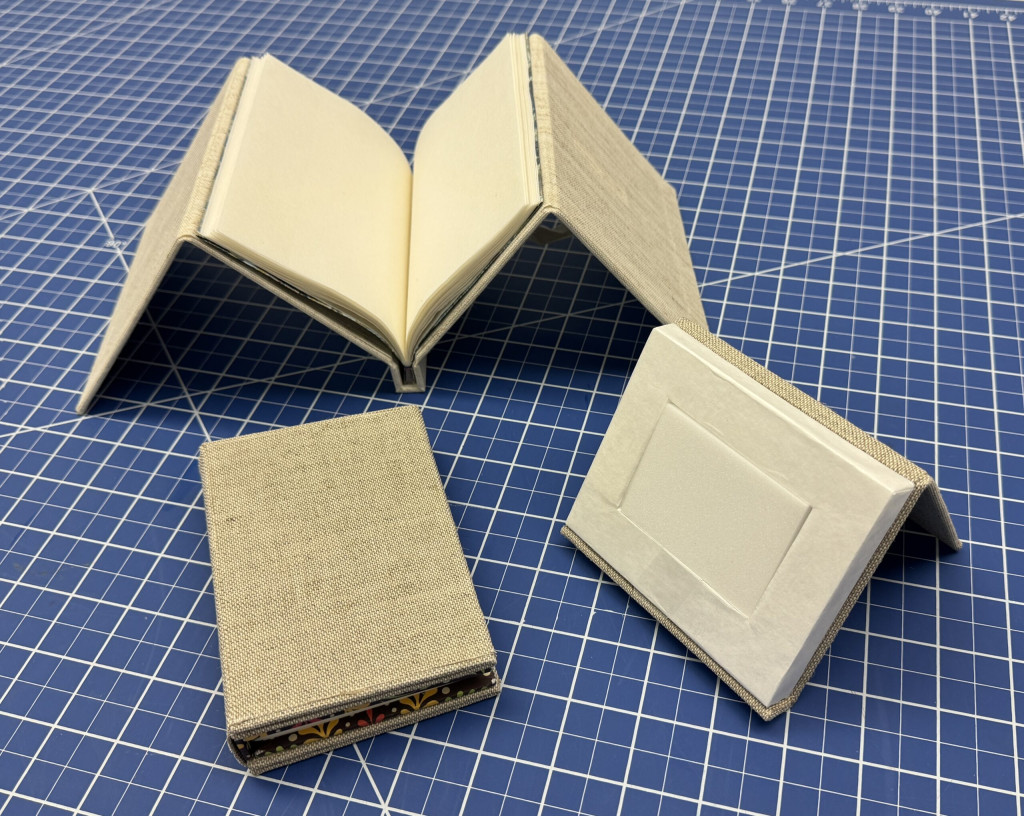
Models – two types of collapsible cradles and one model of the display tray/stand
For the models, I had two main focuses: 1) a collapsible cradle that would house and display one of the volumes, and 2) a display component that would act as a tray or level within the enclosure and house the remaining four volumes, in two stacks of two, side by side.
I will always advocate for making a model if you are trying to work through a new enclosure or adjust an existing enclosure or display piece, like a cradle. For example, I knew that a normal collapsible cradle wasn’t going to fit the bill for these volumes. Instead, I was going to need a stiff, squared off spine piece built into the cradle to help support the bindings’ spines.
One of the main areas I had to troubleshoot was the display tray, which would house the four remaining volumes. I knew I wanted to create a stand that would basically replicate one side of a collapsible cradle and have a 1/2 inch Plastazote foam insert, which happened to nestle the thickness of two volumes perfectly, that was covered in Tyvek. But I had concerns about gravity and reliability of PVA to hold the foam insert in place overtime. And I wasn’t happy with my initial ideas of how to remove the volumes (and also the original enclosure and collapsible cradle) from the insert(s), which consisted of a tab underneath the volume. It created friction that would ultimately cause damage to the actual volumes.
Ultimately, I am extremely happy with what I came up with. I think it functions very well, and checks all the boxes it needed to check. Safe, secure storage. Elegant display. User-friendly.
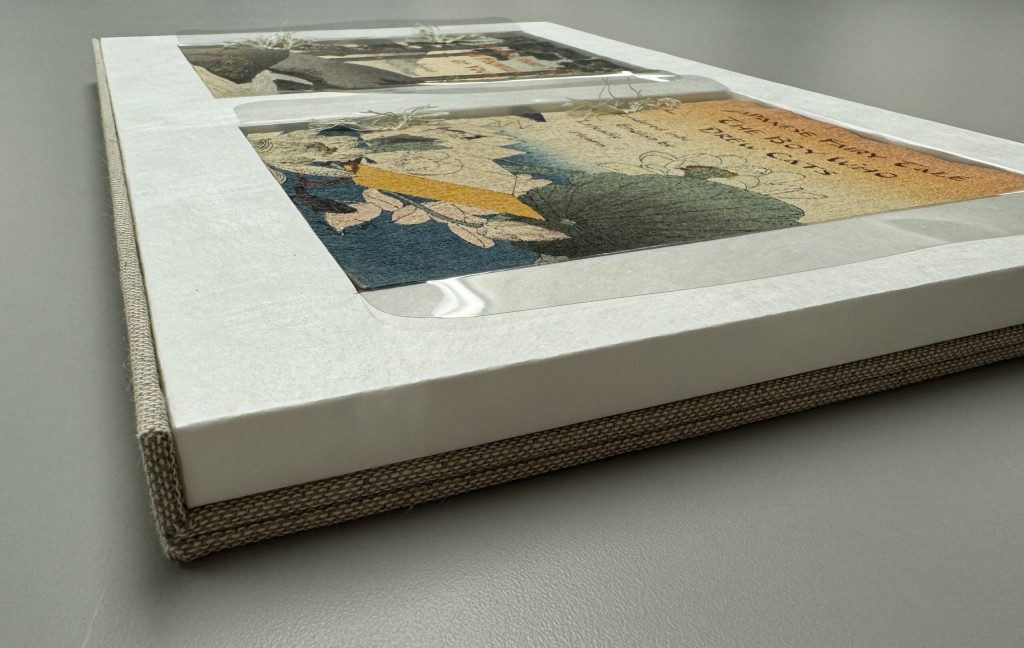
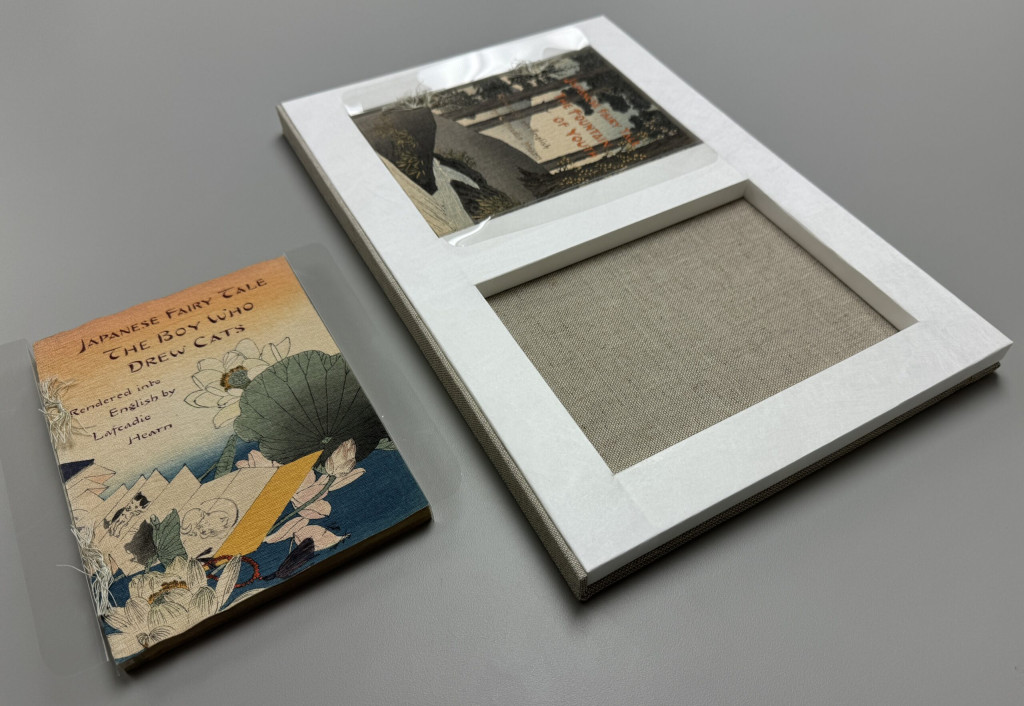
Display stand openDisplay stand closed. A lip was added to support the foam insert overtimeDisplay stand closed with one set of volumes removedPolyester slings were created as a solution for removing items safely and easily from the enclosure
The display stand includes a cloth tape inserted into the boards to keep it from opening too far, a foam insert covered in Tyvek, a lip to support the foam insert overtime, and two polyester film slings to aid in removing the volumes from the foam insert. The polyester slings proved to be an excellent solution for removing all the elements from the enclosure safely and easily.
For those interested in how some of the components were constructed, here are some in-progress images…
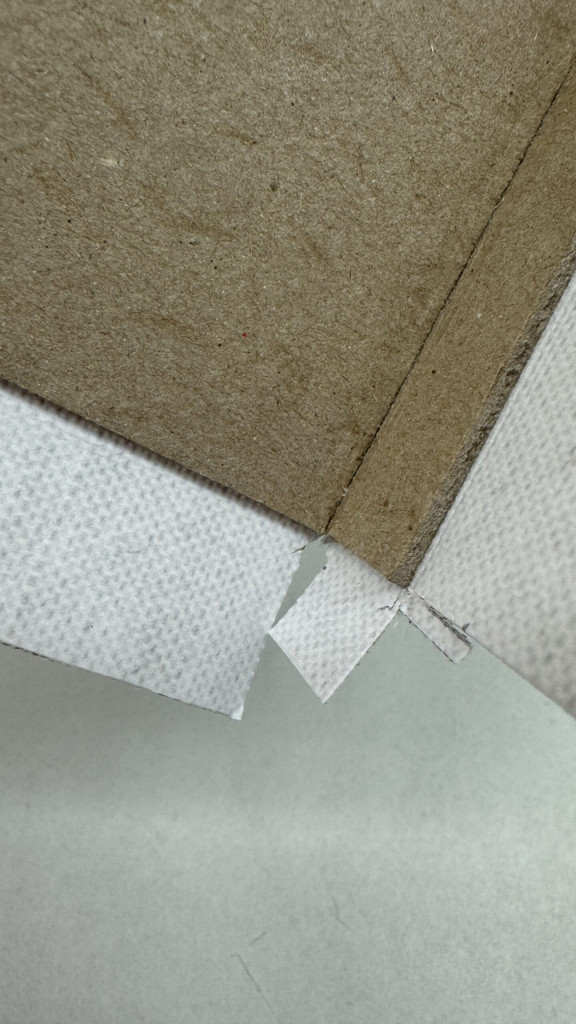
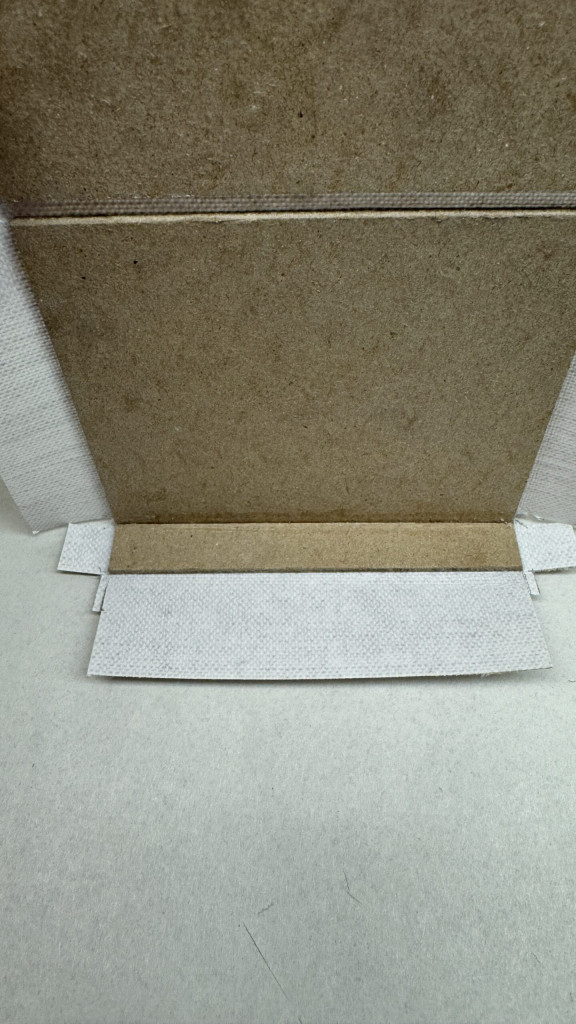
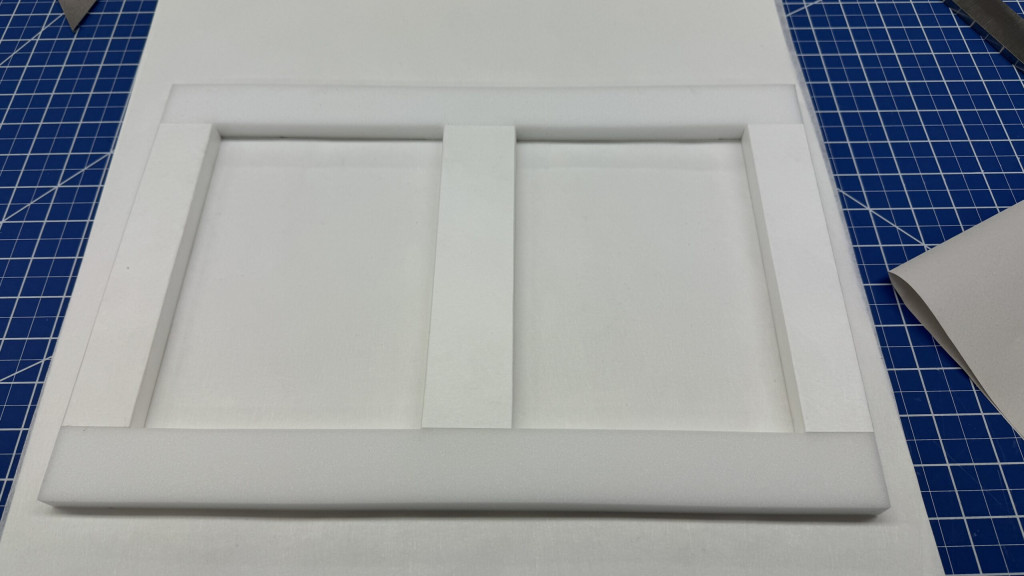
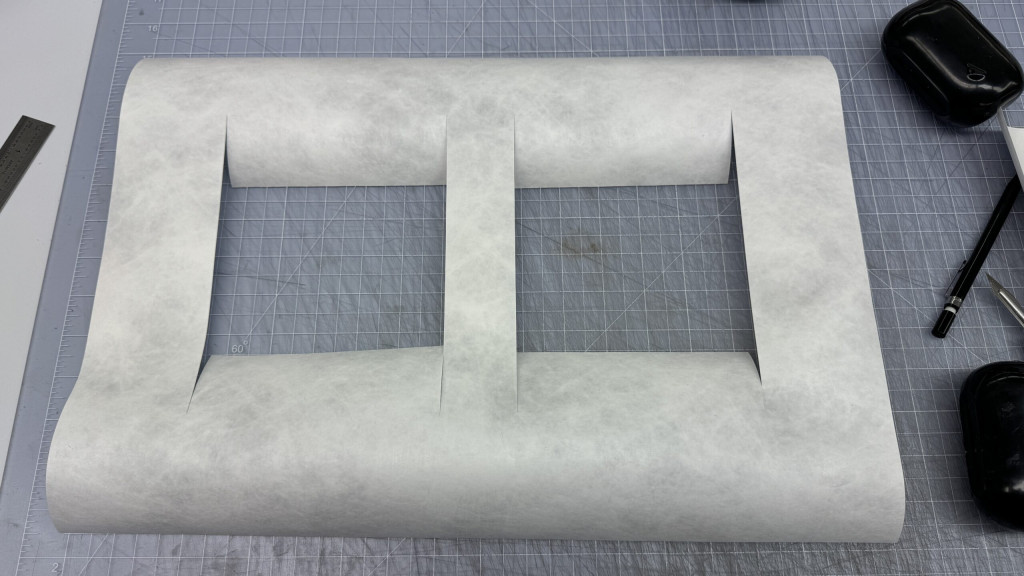
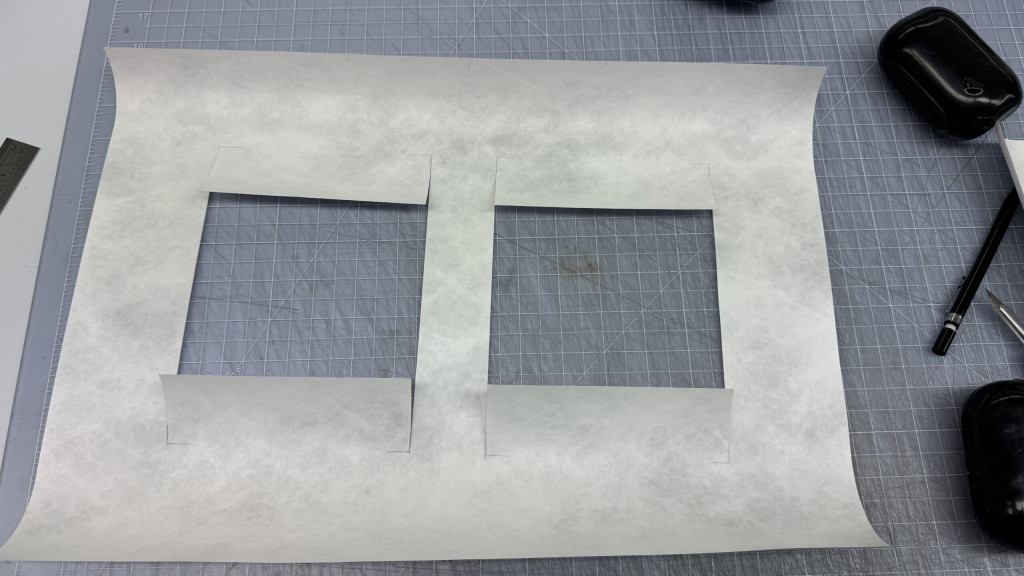
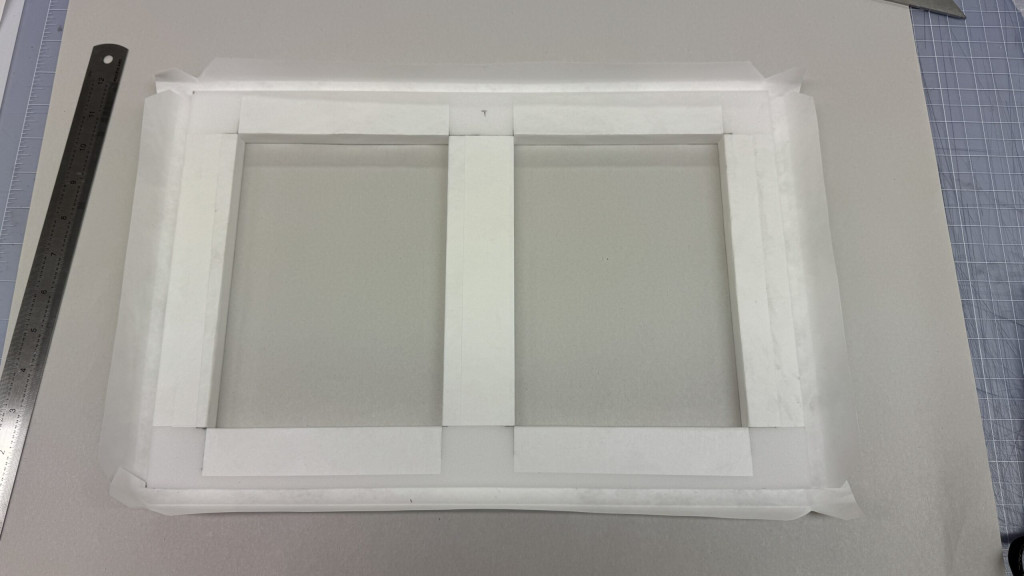
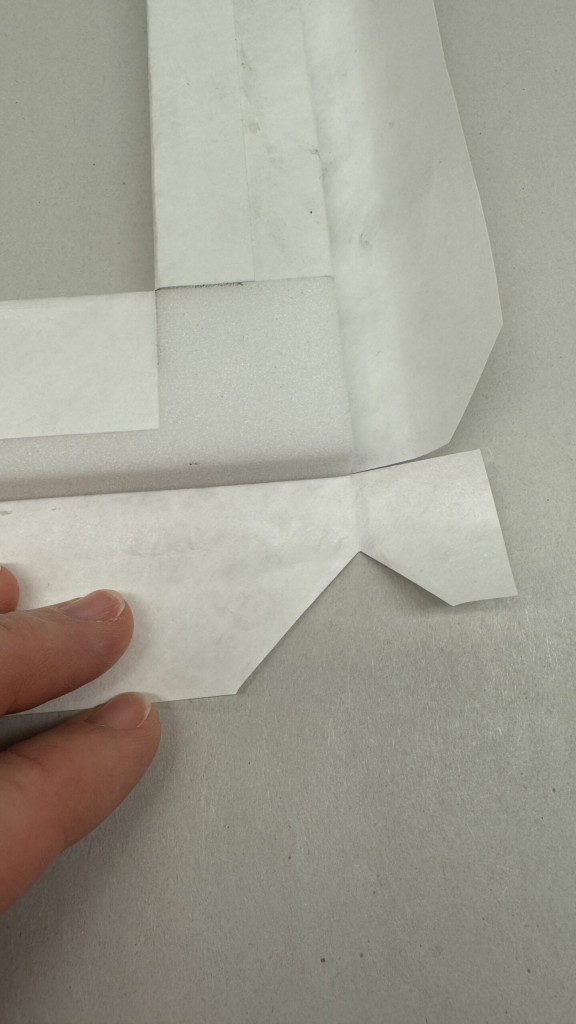
Detail of the turn-in for the display stand lip; cut similarly to how we cut our clamshell enclosure tray turn-insDetail of the turn-in for the display stand lip; cut similarly to how we cut our clamshell enclosure tray turn-insFoam insert, vertical panels covered in Tyvek firstTyvek sheet cut in preparation for attaching to foamTyvek sheet cut in preparation for attaching to foamTyvek attached to the front of the foam pieceTyvek turn-ins cut
Because of the way the trays/components of the enclosure are constructed, they are actually interchangeable. So if the “lower tray” with the original enclosure and collapsible cradle ends up on top of the display tray/stand, that’s not an issue at all. And there is a 1/4 inch Volara foam piece adhered to the outer tray of the clamshell enclosure, so whatever items are on top will be cushioned by soft foam in the enclosure.
Get a full tour of the enclosure by watching our reel on Instagram:
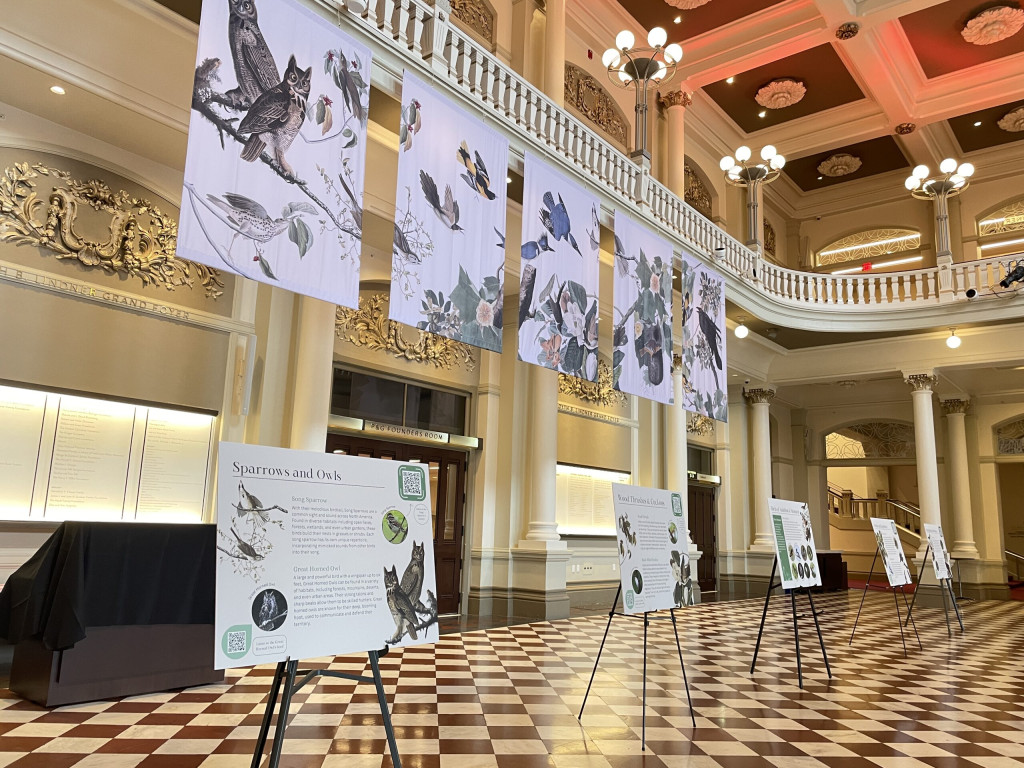
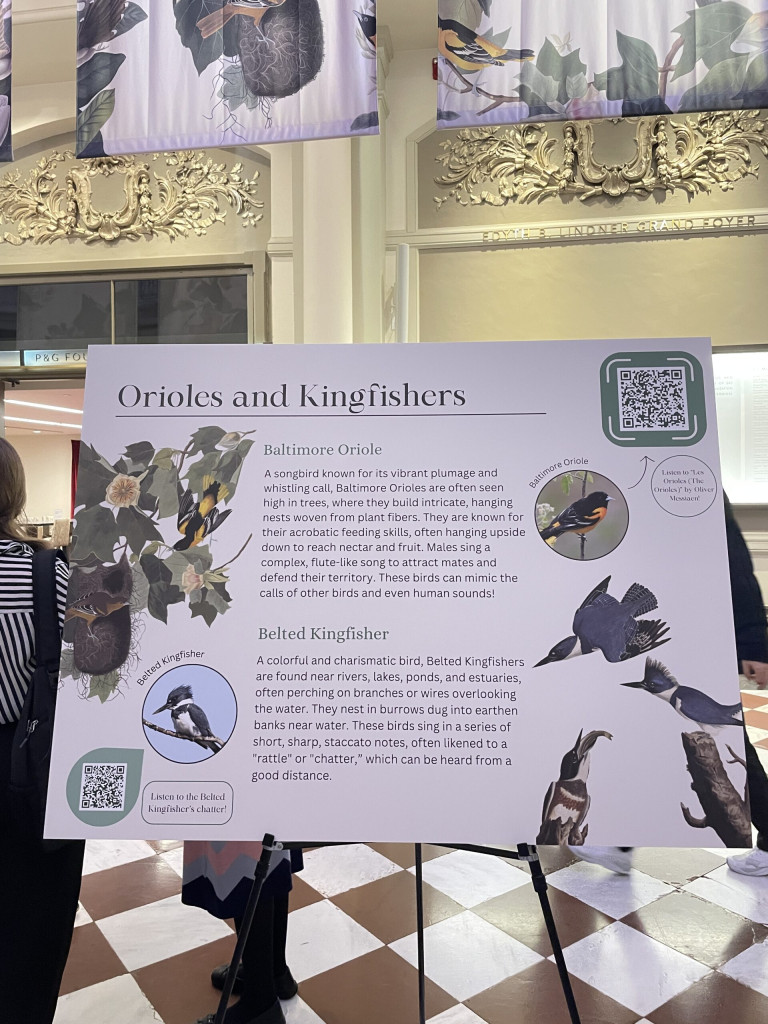
Illustrations of the Nests and Eggs of Birds of Ohio are on display at the Cincinnati Symphony Orchestra March 1st and 2nd as part of a musical program honoring Oliver Messiaen who was both a major composer of the 20th century and an ornithologist.
Synesthesia
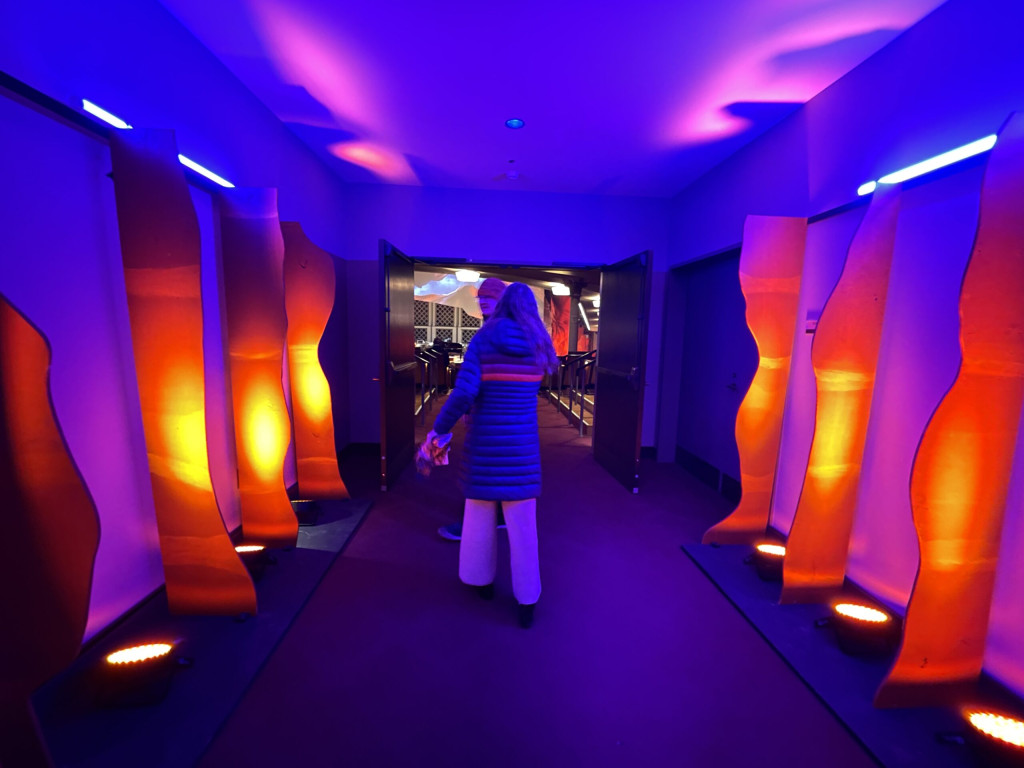
Oliver Messiaen is well known for studying bird songs and interpreting their notes into musical transcriptions. His works are also unique in that Messiaen experienced synesthesia which greatly influenced his creations. Synesthesia is when a person perceives more than one sense at a time, such as Messiaen who experienced colors when listening to music and was able to see sounds.
Cincinnati Symphony Orchestra Program
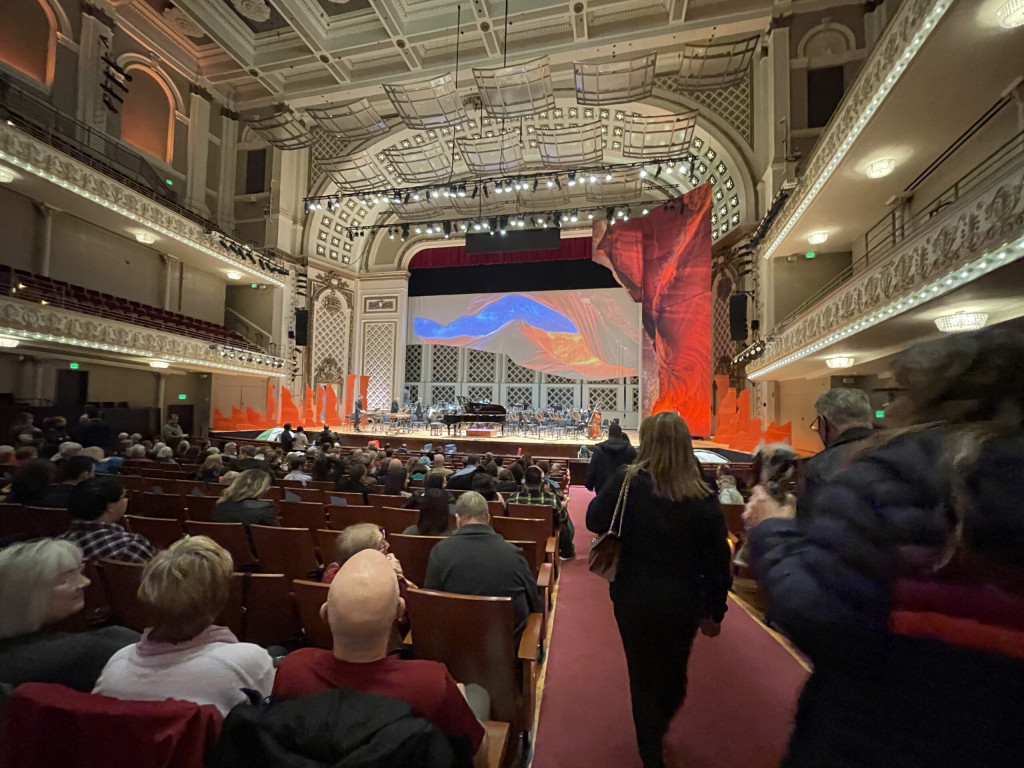
The program at the CSO honors Messiaen by incorporating both music, color, and bird visuals to invite the audience to experience a unique multi-sensory experience. Messiaen’s Des canyons aux étoiles (“From the Canyons to the Stars”) will be performed by the conductor, Matthias Pintscher, and pianist Pierre-Laurent Aimard.
Click the image for a link to the digital program for the CSO Proof: From the Canyons to the Stars
“Inspired by his visits to Utah’s Bryce Canyon and Zion National Park, Messiaen’s Des canyons aux étoiles (“From the Canyons to the Stars”) depicts the birdsong and red rock hues he experienced during his time in the desert… Accompanied by immersive video-art, Springer Auditorium will be transformed, allowing listeners to escape into the southwestern landscape and experience a synesthesia of their own.” – As described by the CSO website
Nests and Eggs
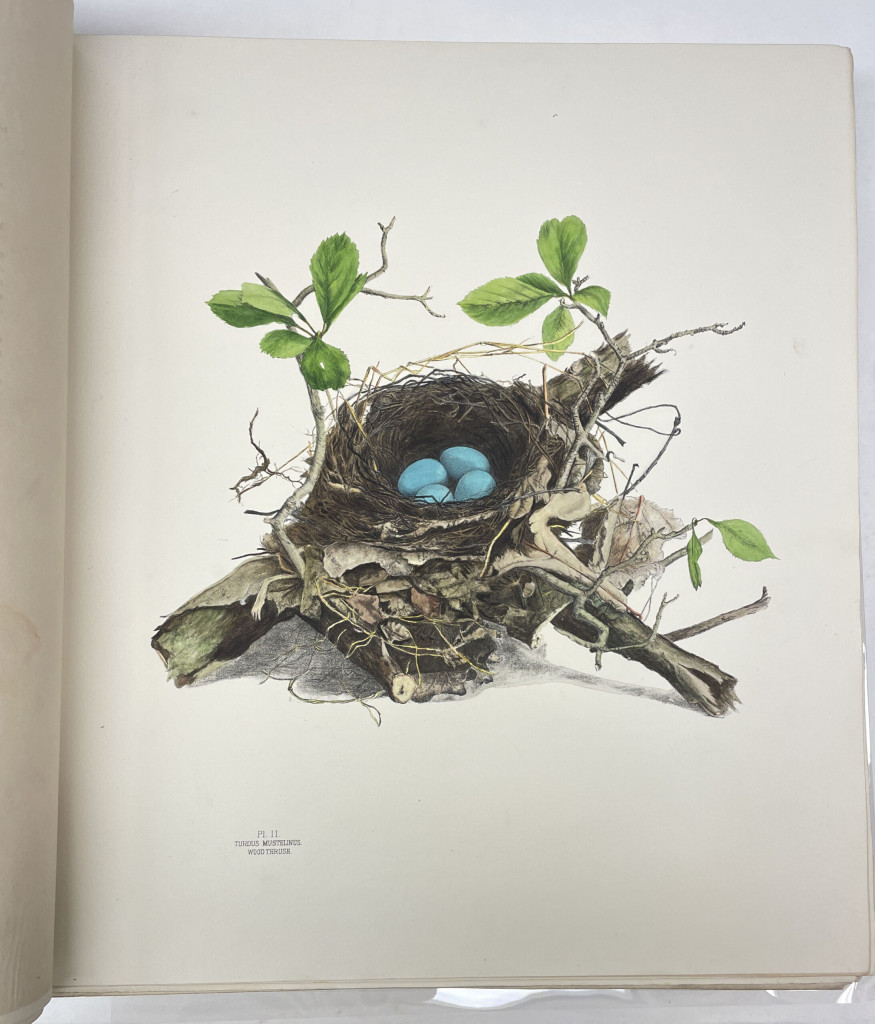
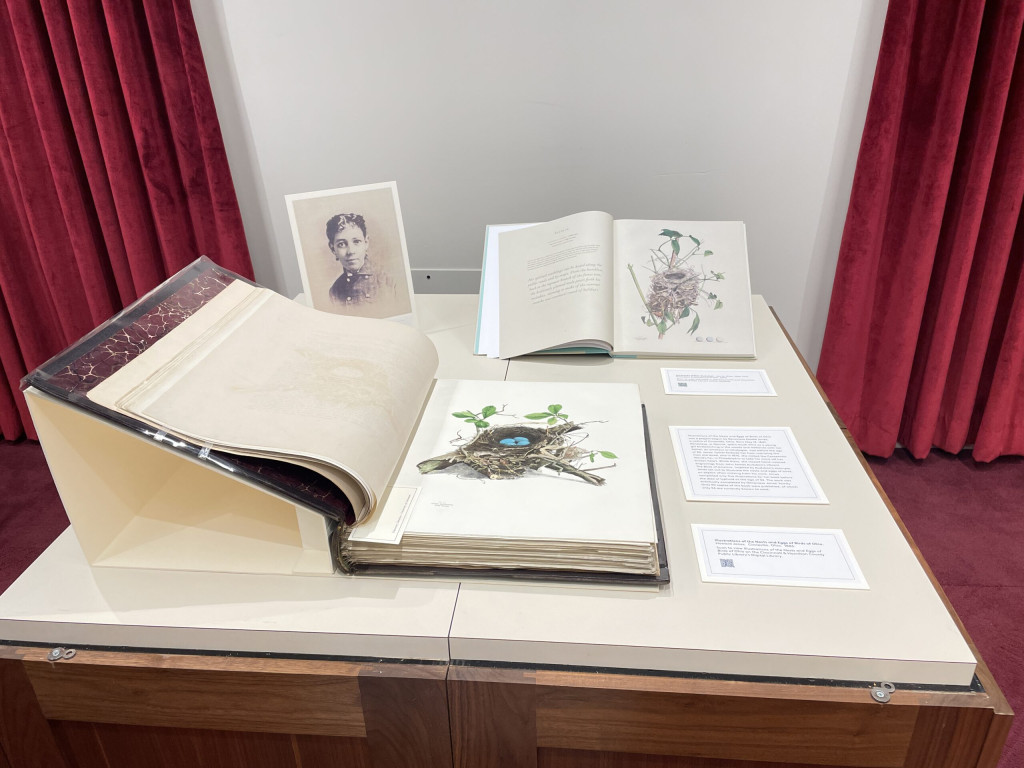
Complementing the musical performances, on display will be a page from Cincinnati and Hamilton County’s Illustrations of the nests and eggs. The page showcases a local Ohio native, the Wood Thrush, who lays bright blue colored eggs within a nest made of old leaves, dried grasses and moss (rarely sticks). The nest of the Wood Thrush also contains “rootlets” placed intentionally inside of the nest, resulting in a pinkish brown or black lining. The nest is “plastered” with a thin mud that is easily missed as it’s thoroughly worked in and covered.
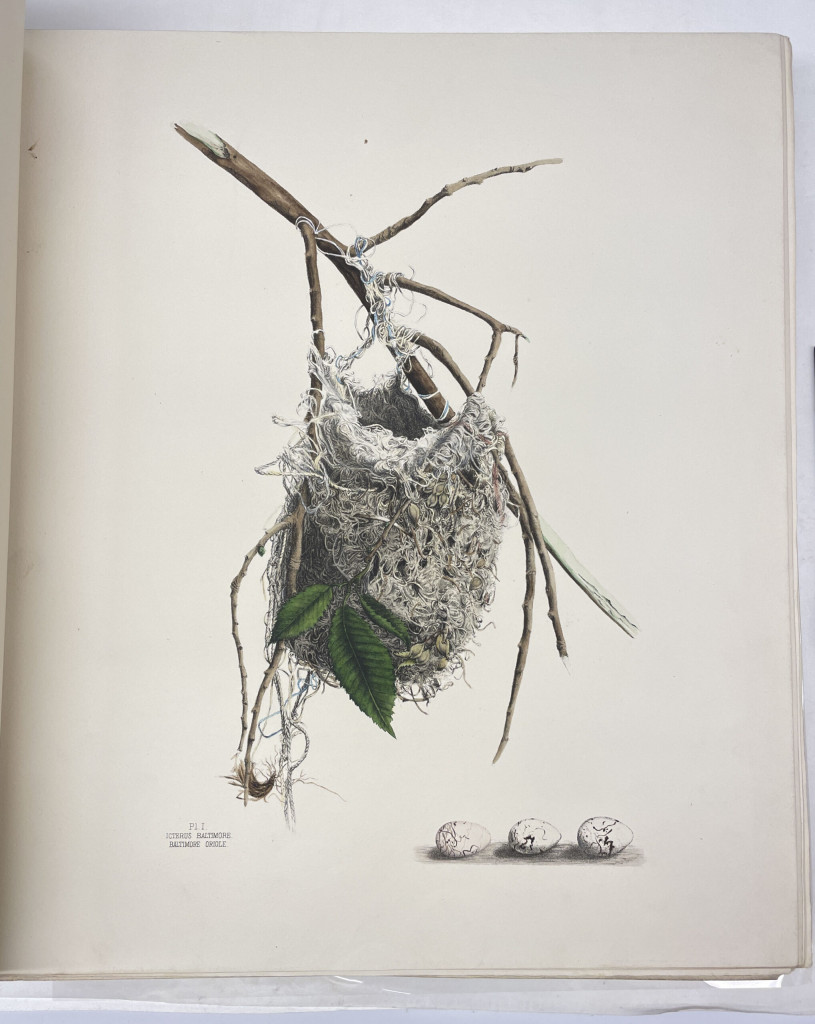
Nests and Eggs, while lesser known than Audubon’s Birds of America, is quite extraordinary in how it highlights the uniqueness of the construction of nests made by different bird species. Take for instance, the Baltimore Oriole’s nest, which primarily consists of strings and flax fibers to create a soft and long pocket. Compare that to the more traditional nest of the Wood Thrush whose home is bowl-shaped with a wide opening.
Baltimore Oriole – Plate 1
Wood Thrush – Plate II
It’s also extraordinary that the illustrations are detailed lithographic portraits created by Gabrielle Estelle Jones and her family, despite not having been formally trained. Their work was intended to be used as a companion volume to John James Audubon’s Birds of America. While not as large as the Birds of America double elephant folios, Eggs and Nests is still an impressively large-sized volume.
Gabrielle “Gennie” Estelle Jones
The following excerpt was written by Sara Williams, Arts & Special Collections Reference Librarian:
Illustrations of the Nests and Eggs of Birds of Ohio was a project begun by Genevieve Estelle Jones, a native of Circleville, Ohio. Born May 13, 1847, Genevieve, or Gennie, spent much time as a young girl birdwatching in the woods and wetlands with her father, an amateur ornithologist. Just before the age of 30, Jones’ father forbade her from marrying the man she loved, and in 1876, she visited the Centennial World’s Fair in Philadelphia to take her mind off her broken heart. While there, she viewed hand-colored engravings from John James Audubon’s vibrant The Birds of America. Inspired by Audubon’s example, Jones set out to illustrate the nests and eggs of birds, an aspect often missing from his work. Jones completed only five illustrations for her book before she died of typhoid at the age of 32. The work was eventually completed by Genevieve Jones’ family. Only 90 copies of the book were published, of which only 34 are currently known to exist.
Preservation
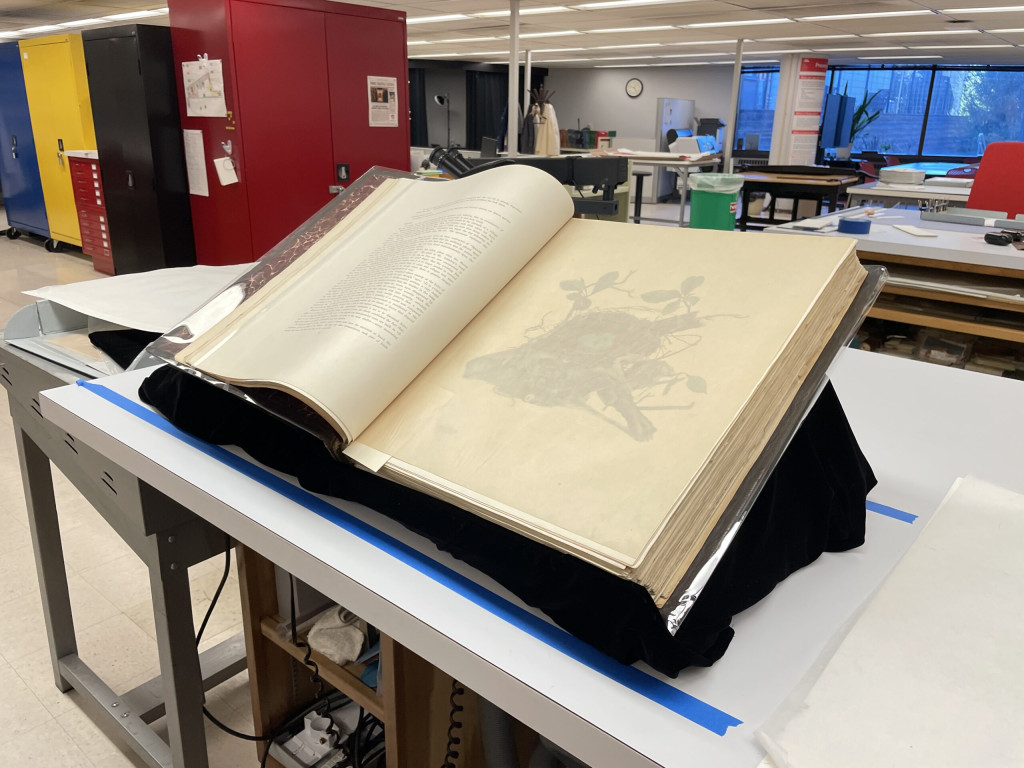
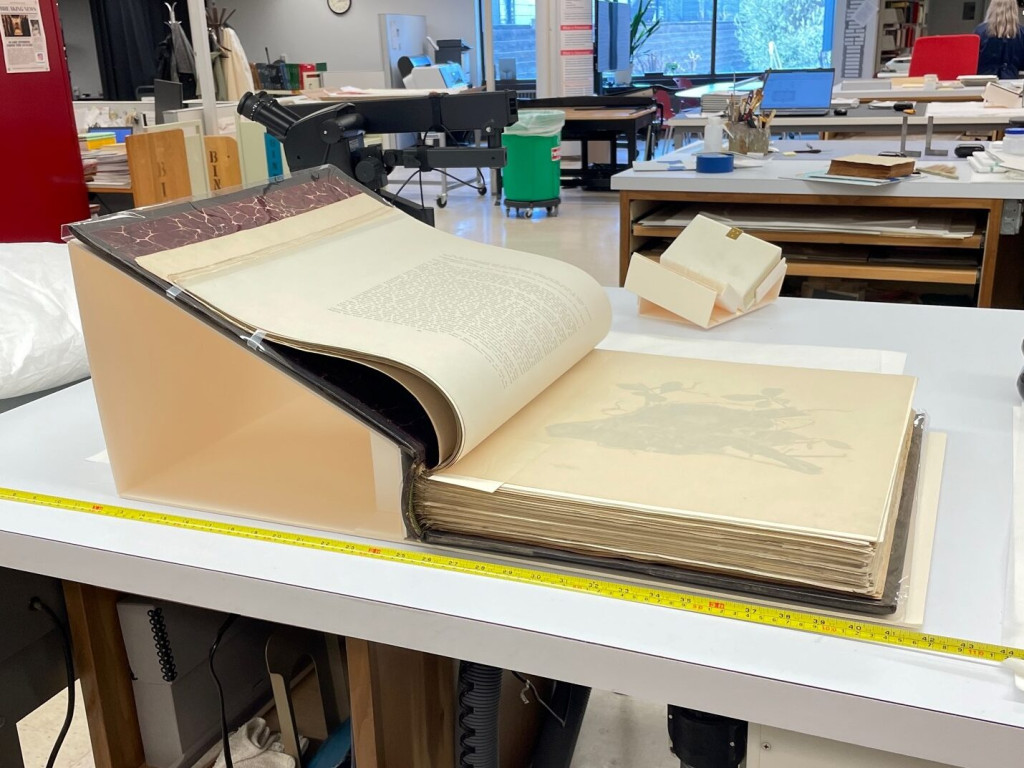
As part of the Preservation Lab’s role in displaying the object, a condition report book was created to accompany the item to ensure the object’s condition is preserved. This helps those who are installing anticipate any possible challenges in supporting fragile pages or bindings. In this case, the upper endsheets are extremely brittle and have been previously repaired, but could break again if not carefully draped and held with polyester strapping in a safe manner.
After determining a proper exhibit case to fit and secure the binding, a custom cradle was made. To protect weak points of the binding on display, a support was constructed out of 8 ply museum mat board to support the heavy and oversized pages from stress along the joint.
Solutions were tested to fit within an 18 inch deep case, however, the book was just too large!
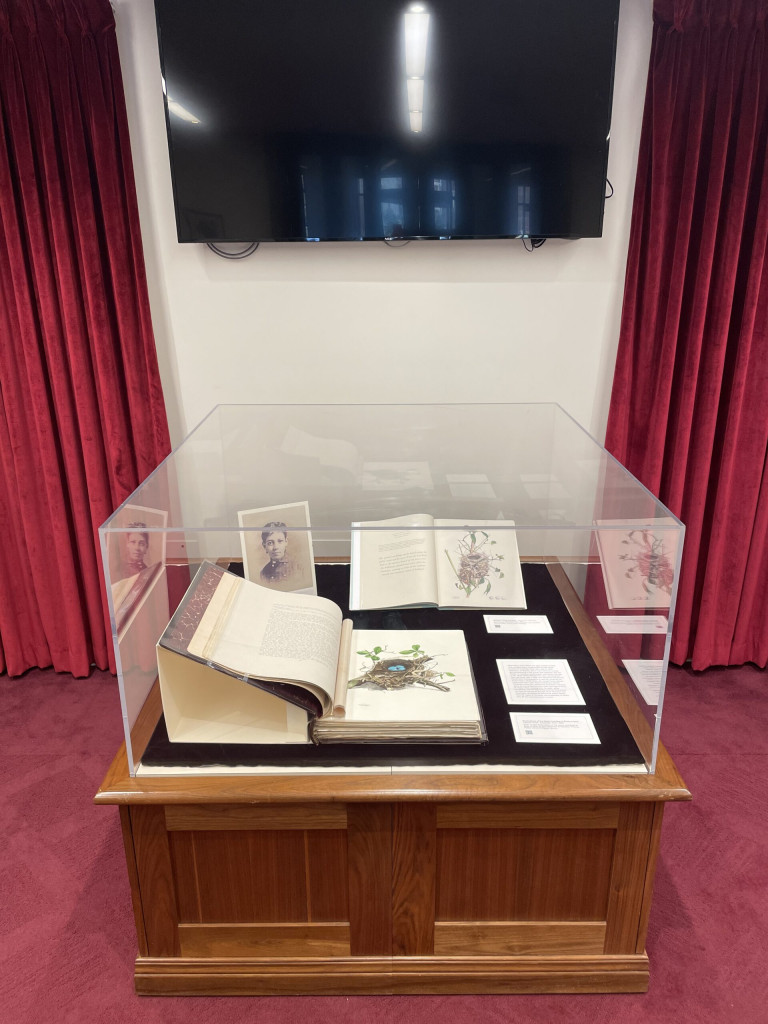
A custom 8 ply mat board cradle was created to fit within a more appropriate 4 ft case. Pages are strapped with polyester strapping
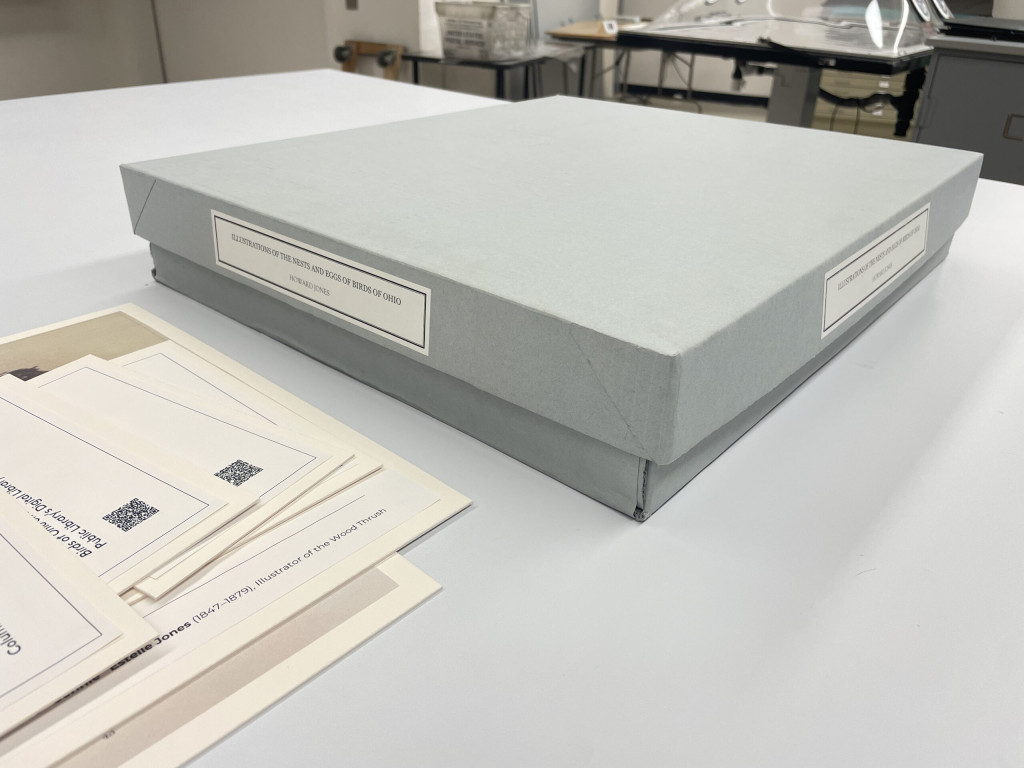
Before an object travels, it’s often reviewed to make sure it can handle transport and treated if necessary. Luckily, in this case, the binding was treated in 2016 and is still in great condition for its age. When it received treatment, at that time it received a lightweight yet strong enclosure that will also work well to safely protect the item for travel to the CSO.
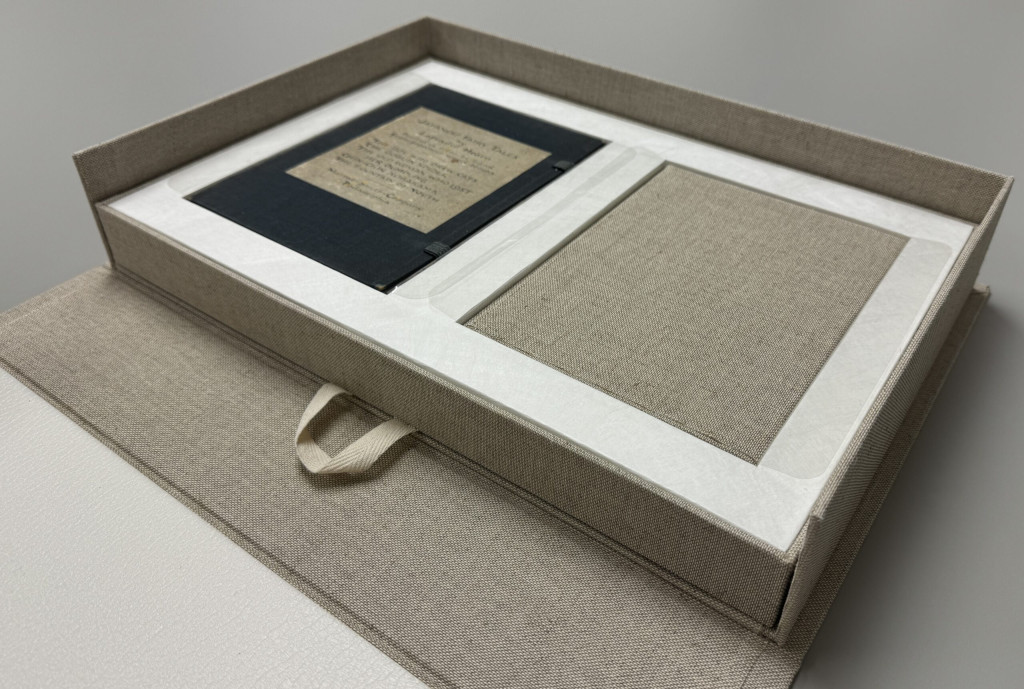
Corrugated banker’s box with a drop spine houses the Nests and Eggs book. Binding and exhibit labels are ready for packing.
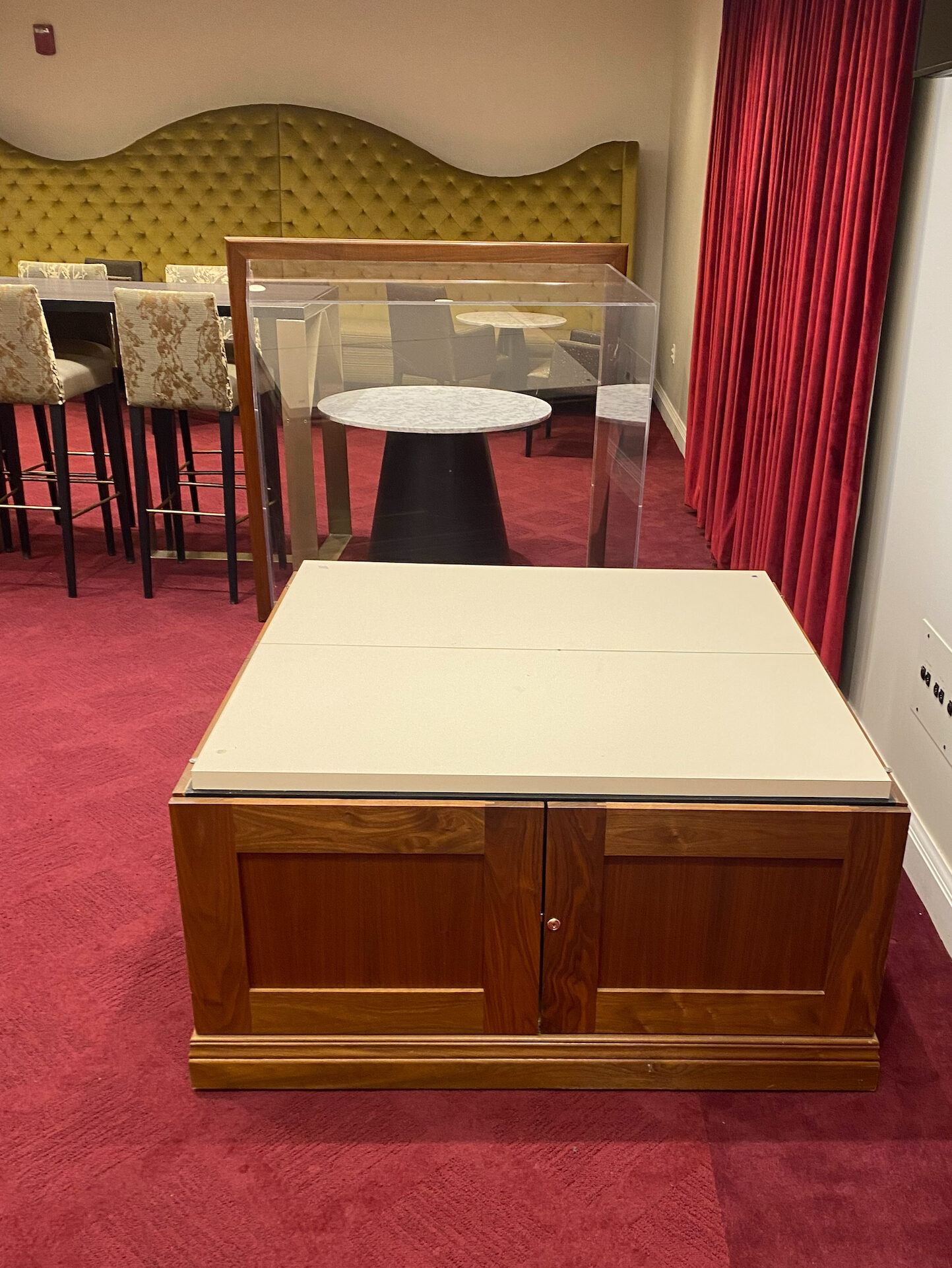
A 4-foot case was kindly loaned to the CSO from the Behringer-Crawford Museum and is ready for use! (Image credit: Amber Ostaszewski)
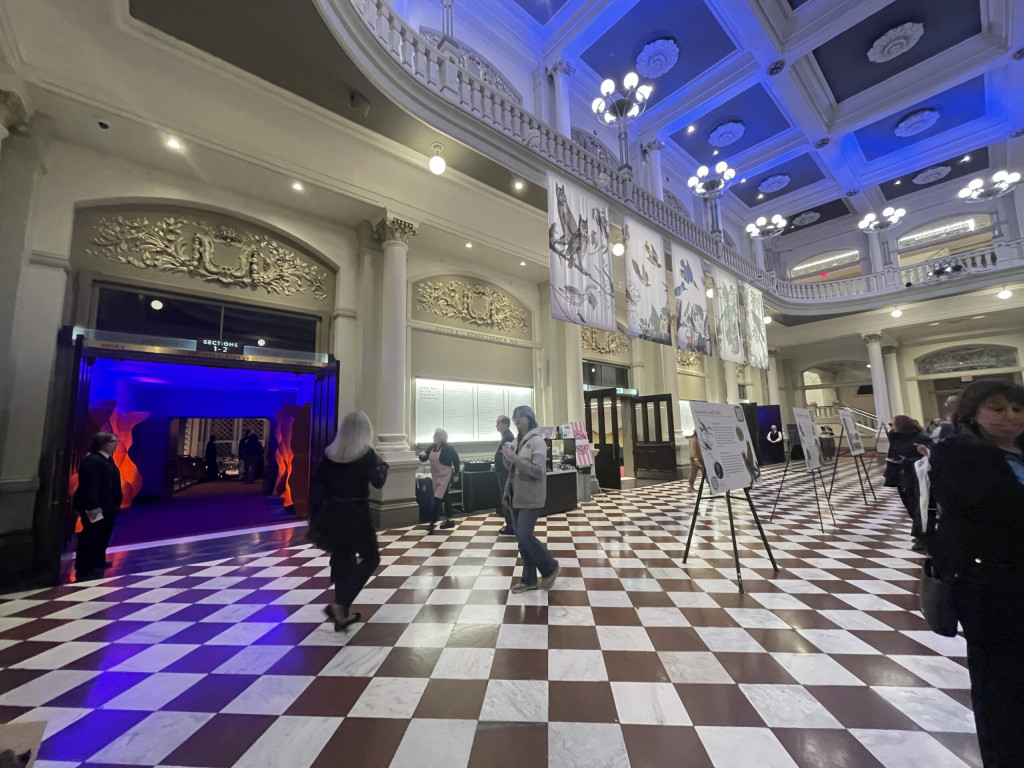
Entrance to the Founder’s Room
Bird sounds were played in the entryway
During staging of the exhibit
Nests and eggs on display in the Founder’s Room
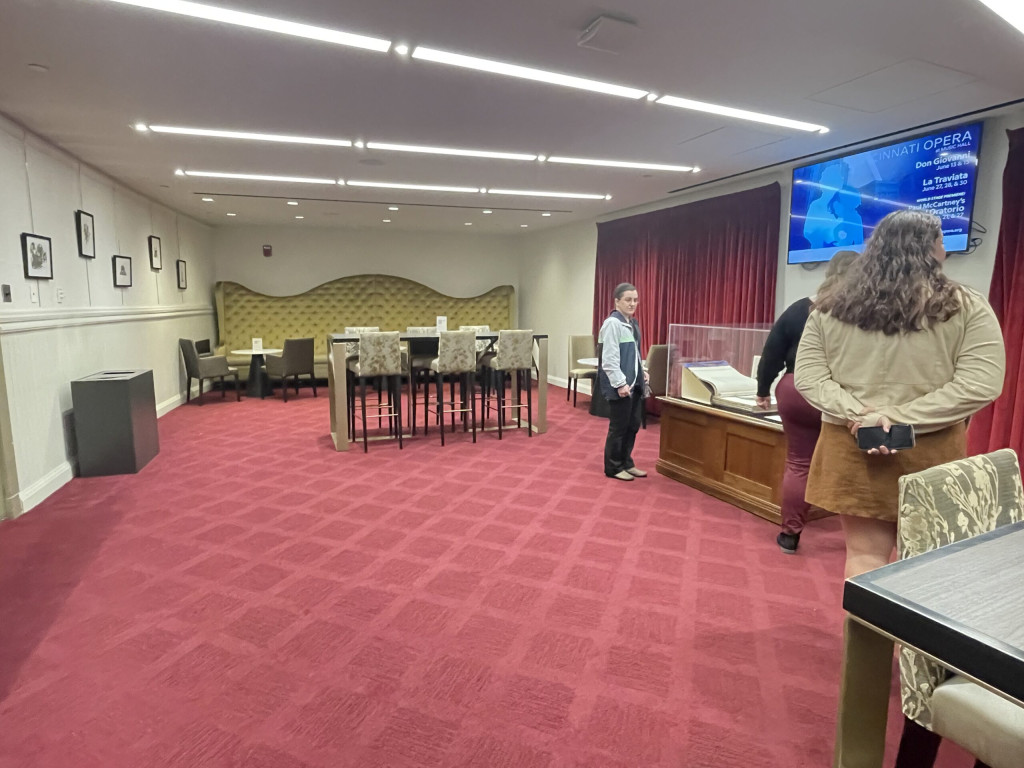
The Founder’s Room
Night of the performance
Entering the theatre
Not visible are the camping chairs and fire pits in the orchestra pit
Additional Resources
Interested in seeing more Nests and Eggs? The entire binding is conserved and digitized where it is made publicly available online. More information about Gennie’s fascinating and tragic history can be read at the Linda Hall website.
CSO Program Dates
There are two programs where you can view the item on display, Friday, March 1st and Saturday, March 2nd, both at 8pm at the Music Hall. Interested? Click here for the digital program.
We hope to see you there!
Ashleigh Ferguson Schieszer [CHPL] – Book and Paper Conservator, Co-Lab Manager
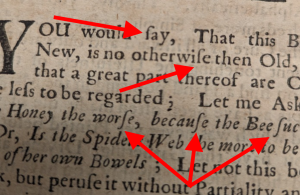
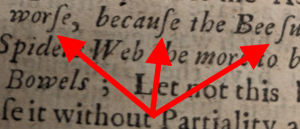
I was recently building an enclosure for a book dating back to 1681 entitled The Experienced Farrier. While examining this item I noticed something interesting about the spelling of certain words: often, rather than seeing what normally should be the letter “s” I would see what appeared to be the letter “f.”
Figure 1: An image from The Experienced Farrier, containing what appears to be “strange” spellings.
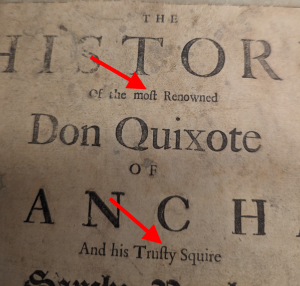
Since noticing this, I started seeing these seemingly bizarre spellings in other items dating to this period, as can be seen in the title page from a copy of Don Quixote from 1678.
Figure 2: An image of the text from Don Quixote, with further examples of these “strange” spellings.
Identifying The Long S
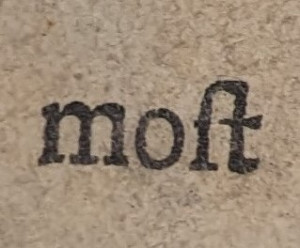
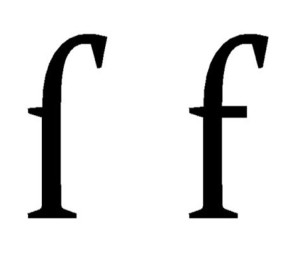
After some sleuthing, I discovered something interesting: these letters were not “f”s at all. They were a now defunct character known as the “long s.” Closer examination of these letters in the text showed that, although they closely resembled an “f,” the horizontal cross bar did not extend all the way across the letter; it starts on the left side and ends in the middle.
Figure 3: A close-up of the word “most” that uses the “long s.” Note that the horizontal cross bar stops at the center stem of the letter.
Figure 4: The “long s” (left) as compared to a lowercase “f” (right).
This solved some of the mystery, but what about the characters that looked like an “f” where the bottom of it curves to the left?
Figure 5: Another style of the “long s,” depicted as it would appear in cursive handwriting.
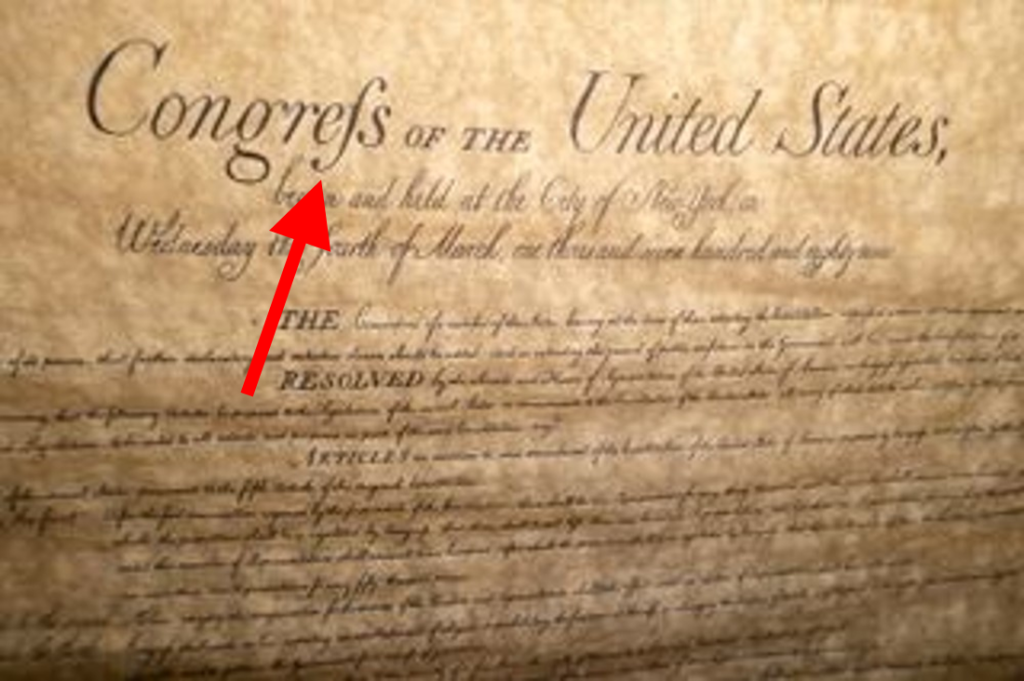
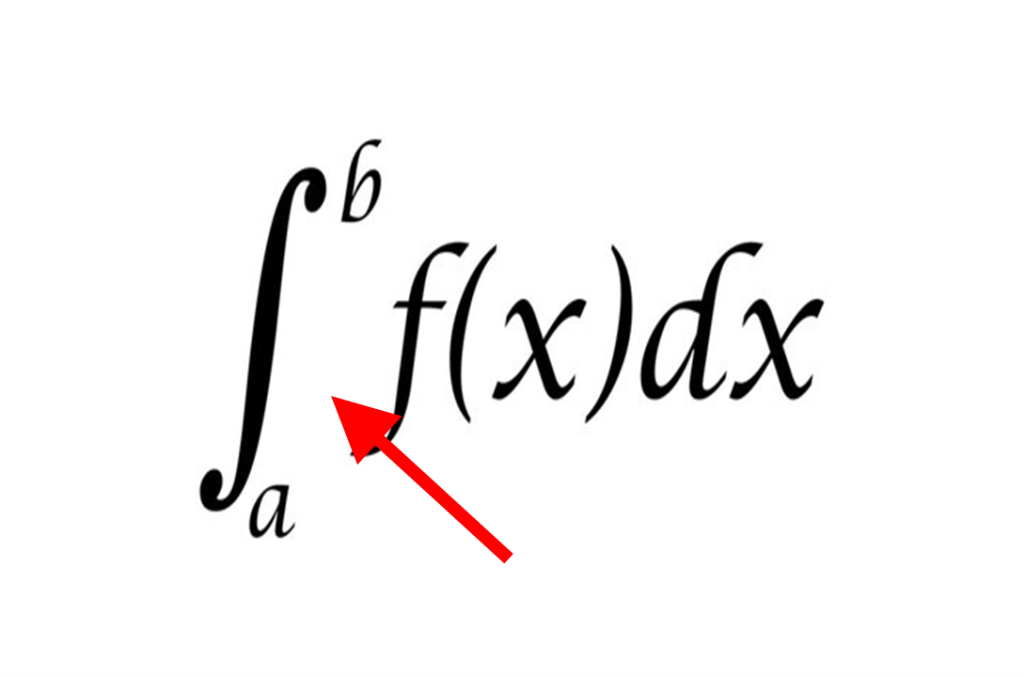
The answer is that this is also a “long s,” but depicted how it was written in cursive. If you feel like you’ve seen this character before, you’re probably correct: a notable example of this style of “long s” can be found in the first line of the Bill of Rights. Some may also recognize this character from calculus as the “integral” symbol.
Figure 6: The “long s” that occurs in the word “Congress” as it appears in the handwritten Bill of Rights.
Figure 7: The “integral” symbol used in calculus uses the same character used for the cursive-style “long s.”
When The Long S Was Used
You may have noticed in some of these examples that not every “s” is the long form. So, what exactly were the rules for when and where this character was used?
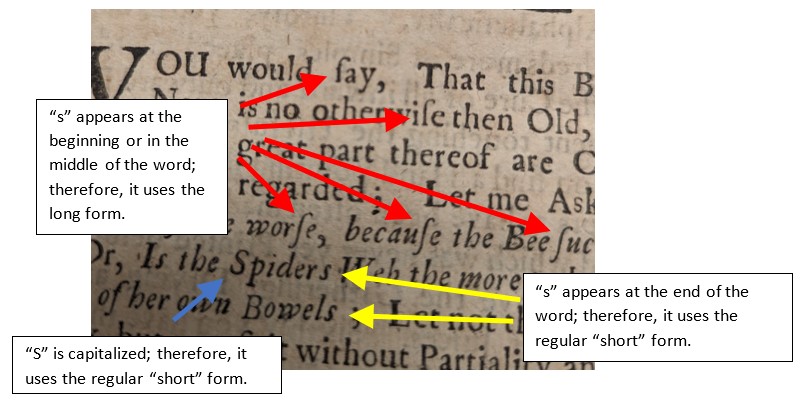
It’s difficult to say exactly, as the rules changed over time and writers/printers didn’t always adhere to the same rules. However, according to a blog from the National Archives, some simple guidelines for when and where the “long s” was used are as follows:
An “s” would use the long form if it appeared at the beginning or in the middle of a word, but only if it is a lowercase s. An uppercase S would not use the long form of the letter.
An “s” would not use the long form if it was the last letter in a word.
It was very common in the case of a “double s” or “ss”, as in the word “opossum”, for both “s”s to be the long form (opoſſum), unless the “ss” ended the word, as in the word “congress”, in which only the first “s” would be the long form (congreſs). *
*An observant reader may notice that this last rule is redundant given the first two rules; however, mentioning the “long s” in the case of an “ss” is significant in that as this character fell out of favor with writers/printers, one of the last remaining circumstances that utilized it was in the case of an “ss.”
Figure 8: Examples of when the “long s” was/was not used.
Final Observations
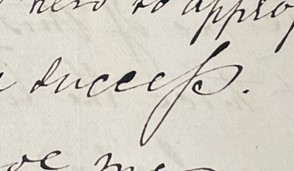
Gradually, the “long s” fell out of usage around the time of the late 1700’s-1820’s, although it persisted longer in handwriting. Serendipitously, while writing this blog post, the lab received a first edition copy of Goblin’s Market with a handwritten note inside from the author, Christina Rossetti dating to 1862 that features this use even in the late 19th century:
Figure 9: Although difficult to read, this is the word success (ſucceſs) from a handwritten note dating to 1862 that utilizes the “long s” several decades after it fell out of common usage in printed media.
If you still find words containing a “long s” difficult to read, you aren’t alone; it has been theorized that it was phased out in favor of exclusive “short s” usage as they weren’t as easily confused with other letters and were found to be more legible. The disappearance of the “long s” is a good reminder that language, both written and spoken is fluid with ever evolving rules and norms.
Resources
For further information about the long s and its history be sure to check out these excellent blog posts, that were very helpful in the gathering of information for this post:
Last year around this time, the lab was fortunate to bring in book conservator and toolmaker, Jeff Peachey for a week-long intensive workshop to learn leather rebacking. While I always expect to walk away with new anticipated skills as advertised by the workshop, I’m ALSO always pleasantly surprised by the tangential tips and tricks shared along the way. In the case of Peachey’s workshop, there were many! One of my favorites was his use of a fish gelatin.
Introduction to Cold Fish Gelatin
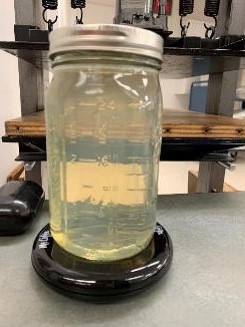
While adhering spine linings to our text blocks, Peachey pulled out a small baggie of fish gelatin he brought with him to the workshop. He poured the dry flaky powder into a small jar, added room temperature cold water, and mixed it until a liquid-y consistency. He then added strained wheat starch paste to the gelatin and mixed with water until he was happy with the consistency. He estimated it was a 40:60 ratio of gelatin to paste.
Jeff Peachey taught a workshop at the Preservation Lab in Oct. 2022 where he first introduced us to a low-bloom fish gelatin for book conservation that didn’t require heat for use
If you’ve ever used gelatin before, you might be wondering – how is it possible to mix the gelatin without heating? That’s the beauty of this product – it has a high molecular weight with low bloom strength and is produced from cold water fish which gives it this ability. It might not be the strongest of the films with a 0-bloom strength, but for a book conservator doing paper repairs that need to be reversible yet strong, this combo still had an amazing tack when dry!
Peachey explained he first heard about the gelatin on a lab tour at the Weissman Center. He recalled Alan Puglia might have been the one who originally investigated the adhesive for pigment consolidation of hundreds of manuscripts for a show. The mention of a high molecular weight Norland fish gelatin was shared during a talk given at the American Institute for Conservation’s 44th annual meeting. The talk was titled, The Challenge of Scale: Treatment of 160 Illuminated Manuscripts for Exhibition,” by Debora D. Mayer and Alan Puglia.
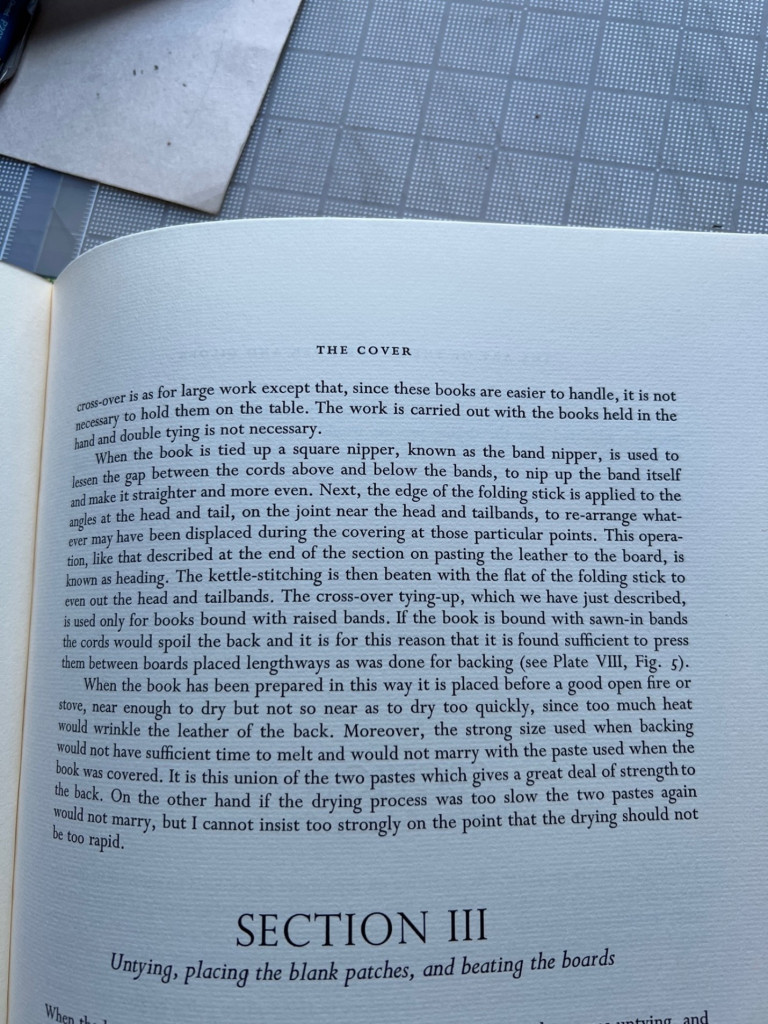
Peachey also doesn’t take credit for mixing the gelatin with wheat starch paste. He notes that even in Rene Matin Dudin’s 18th century manual, it discusses the “union” of paste and glue in the last paragraph below.
Peachey shares an excerpt by Rene Matin Dudin descripting his 18th century historic use of gelatin mixed with paste.
By the end of the week-long workshop, I had fallen in love with the properties of how well it adhered. By itself, the fish gelatin had a long working time and didn’t stick until it was nearly dry – but when mixed with wheat starch paste, it combined the best of both worlds. There was both the initial tack from the paste and a strong adhesion from the gelatin after dry. I wasted no time in ordering my own sample supply.
Treatments Testing the HMW Fish Gelatin
Over the past year, I’ve slowly incorporated the fish gelatin in treatments and testing more applications.
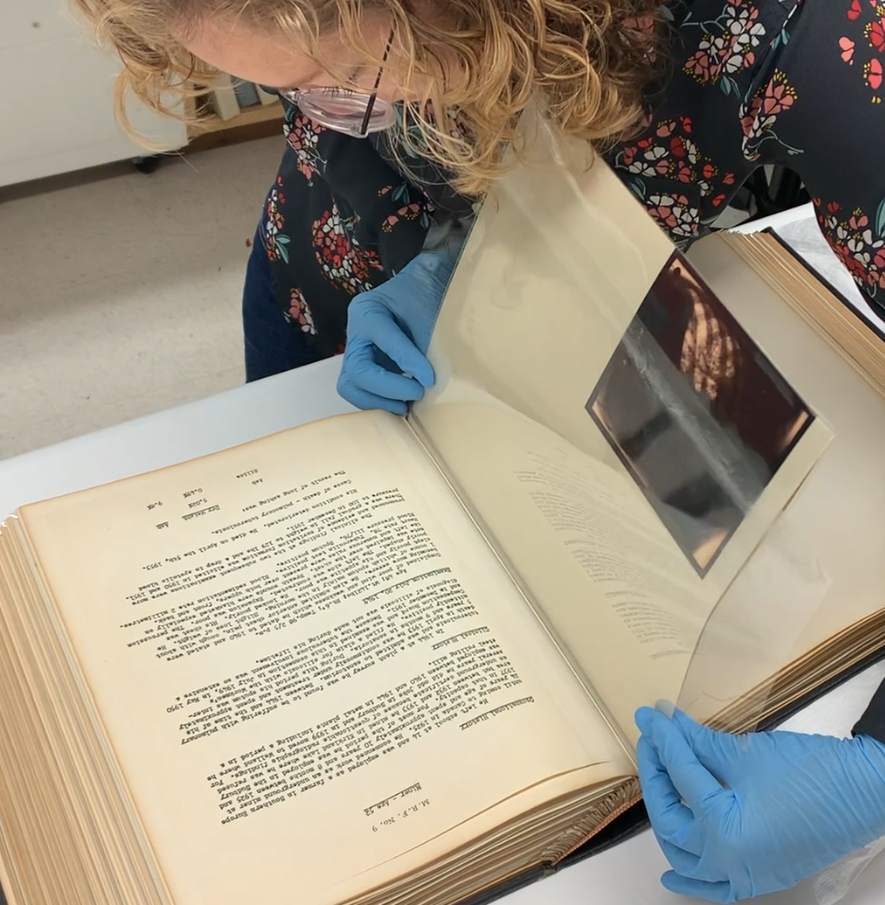
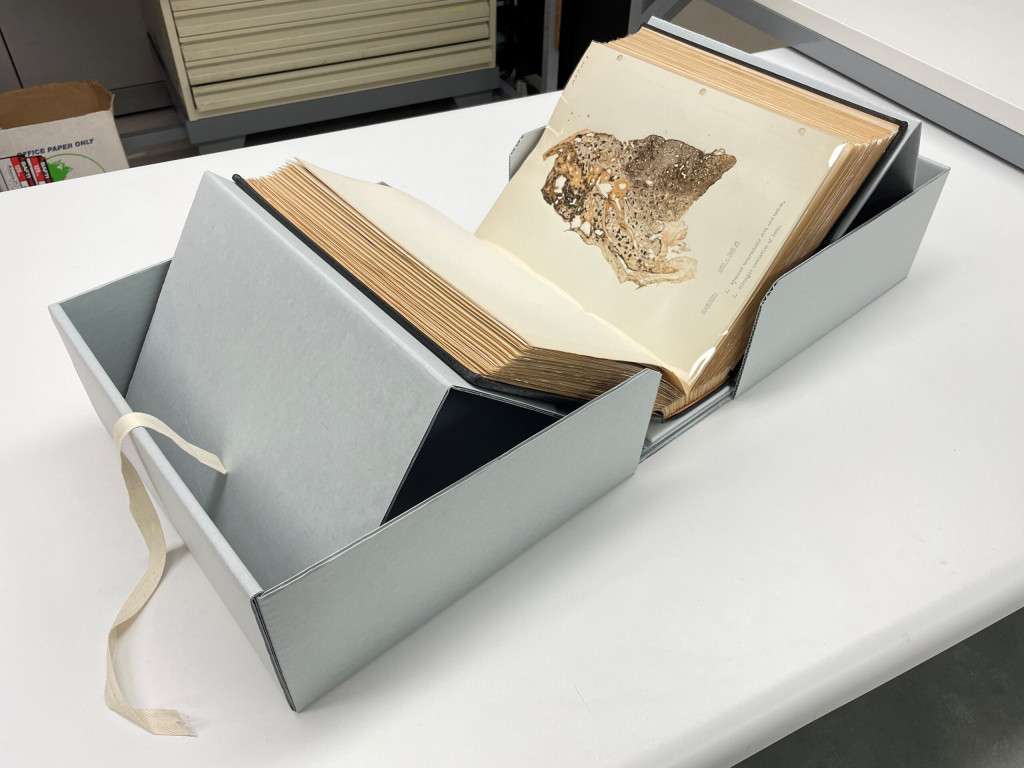
I first successfully used it to hinge-in heavy encapsulated sleeves into an album containing lung cross sections. After ultrasonically welding a paper hinge into an encapsulated sleeve, I applied the mix of wheat starch paste and fish gelatin to adhere the hinge to the scrapbook stubbing and had wonderful success. I was able to adhere with confidence that the encapsulation would stay in place and was able to avoid disbinding and resewing. At one point during treatment, I found I needed to reposition a hinge. I am happy to report the mixture was as easily reversible as wheat starch paste alone!
Ashleigh Ferguson Schieszer uses the 40:60 mixture of fish gelatin and wheat starch paste to hinge encapsulations into an album, ensuring the heavy encapsulations with paper hinges stay adhered.
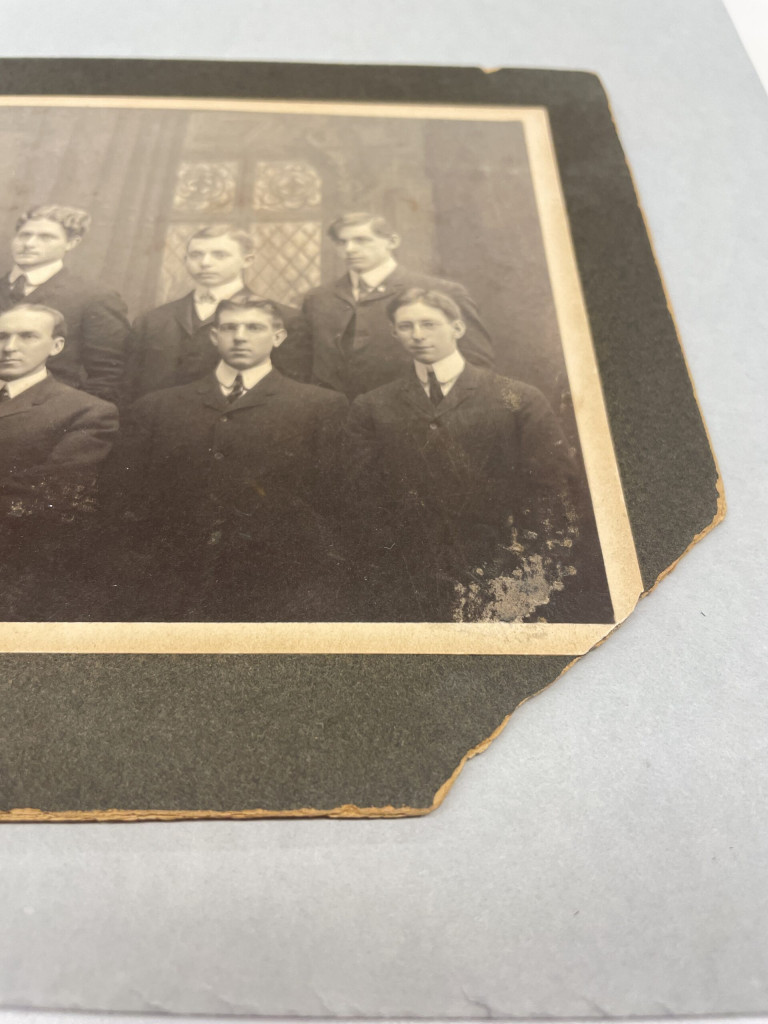
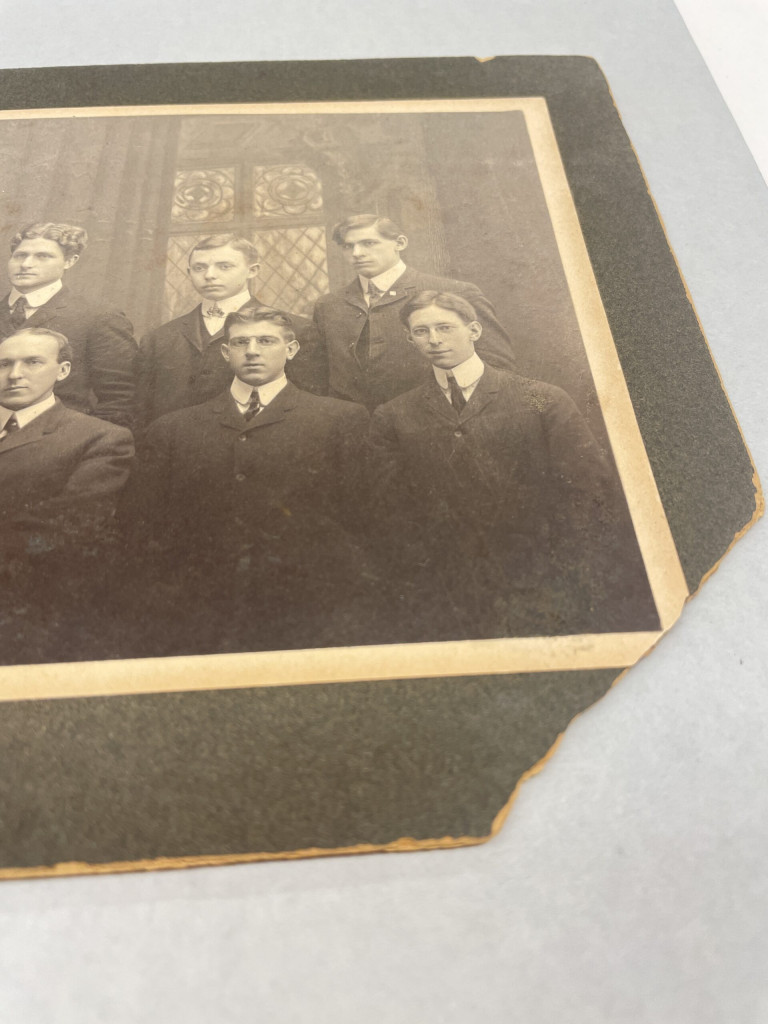
Most recently, I played around with using it for photographic emulsion consolidation. I used it first as a barrier layer before inpainting, and then to add sheen to in-painted photograph regions that were originally matte in comparison to the surrounding gelatin coating. It seemed extremely easy to apply and clean up was less messy than other photographic gelatins I’ve used in the past. The sheen was just the right amount of gloss I needed without being overly shiny. And, best of all, no heat required.
Before in-painting emulsion lossesAfter in-painting emulsion
Examples of photographic condition issues where the fish gelatin was tested: flaking emulsion was consolidated and a barrier layer was applied before inpainting
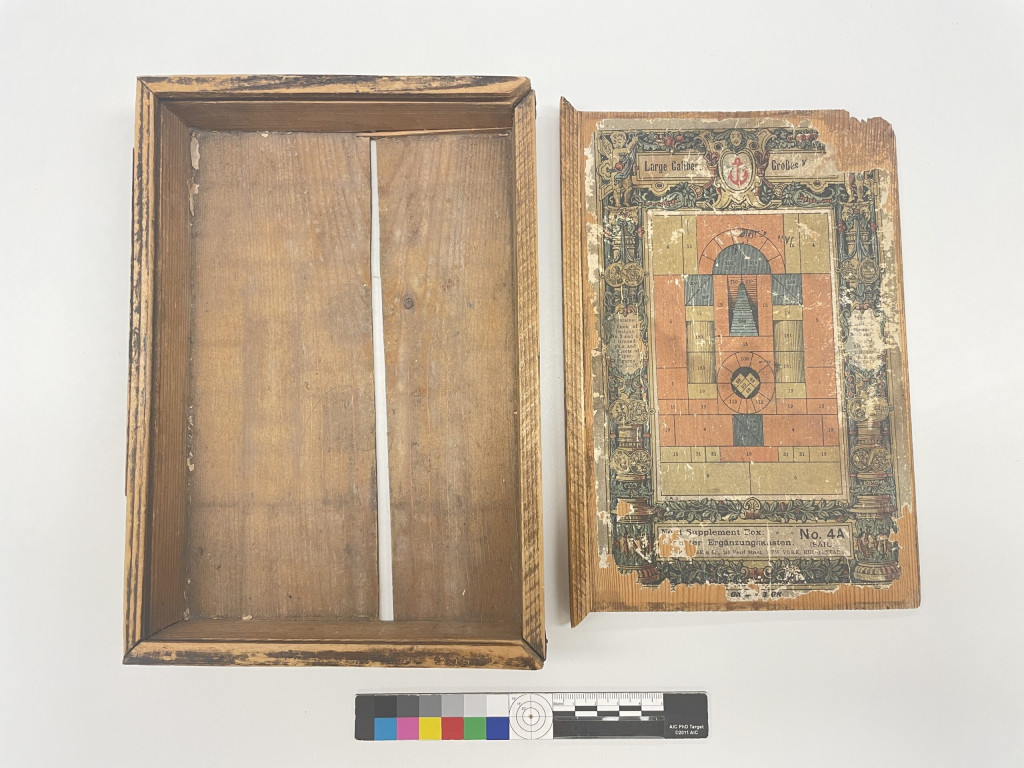
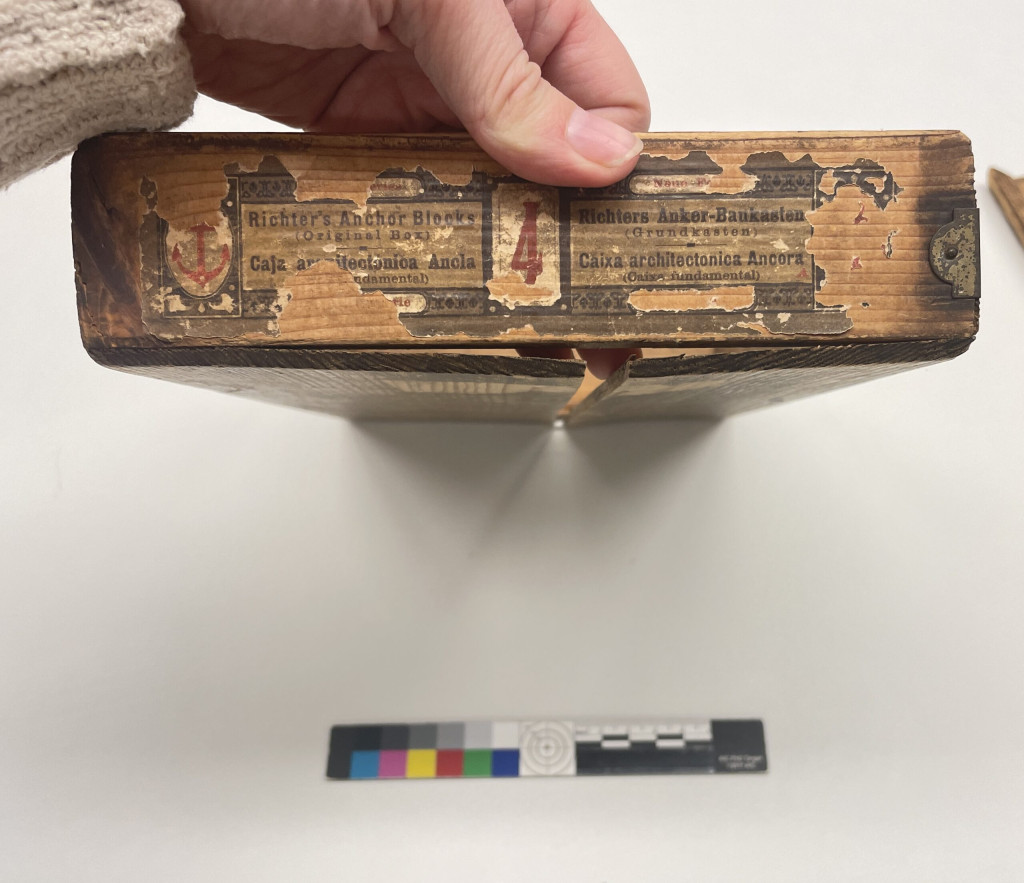
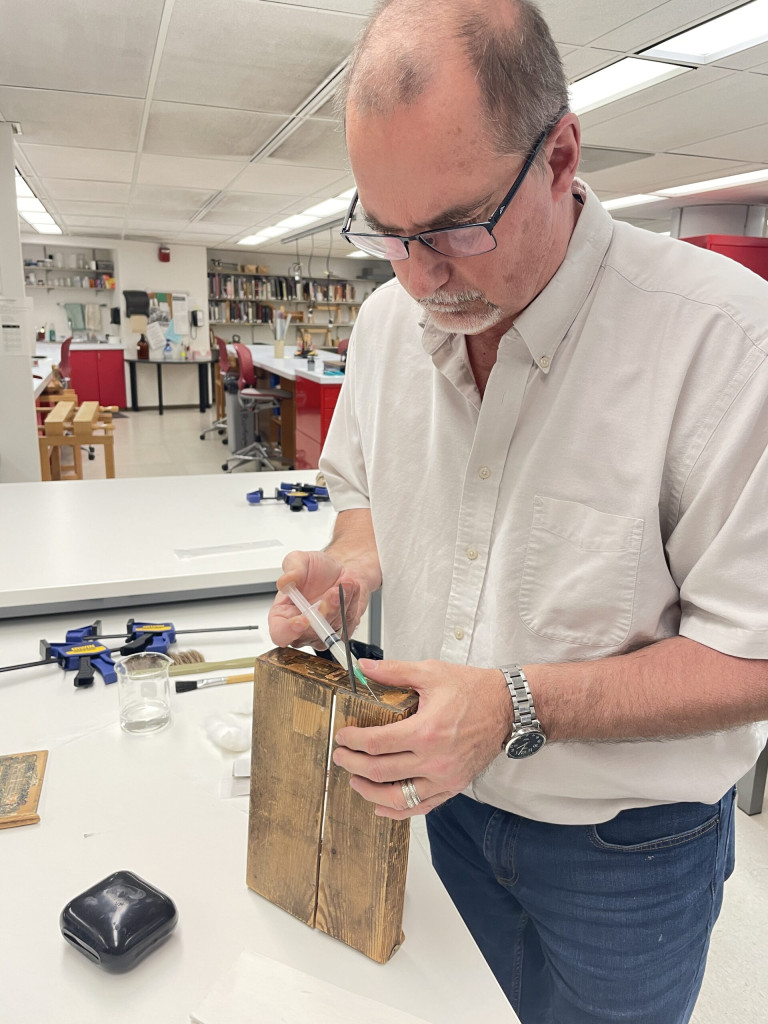
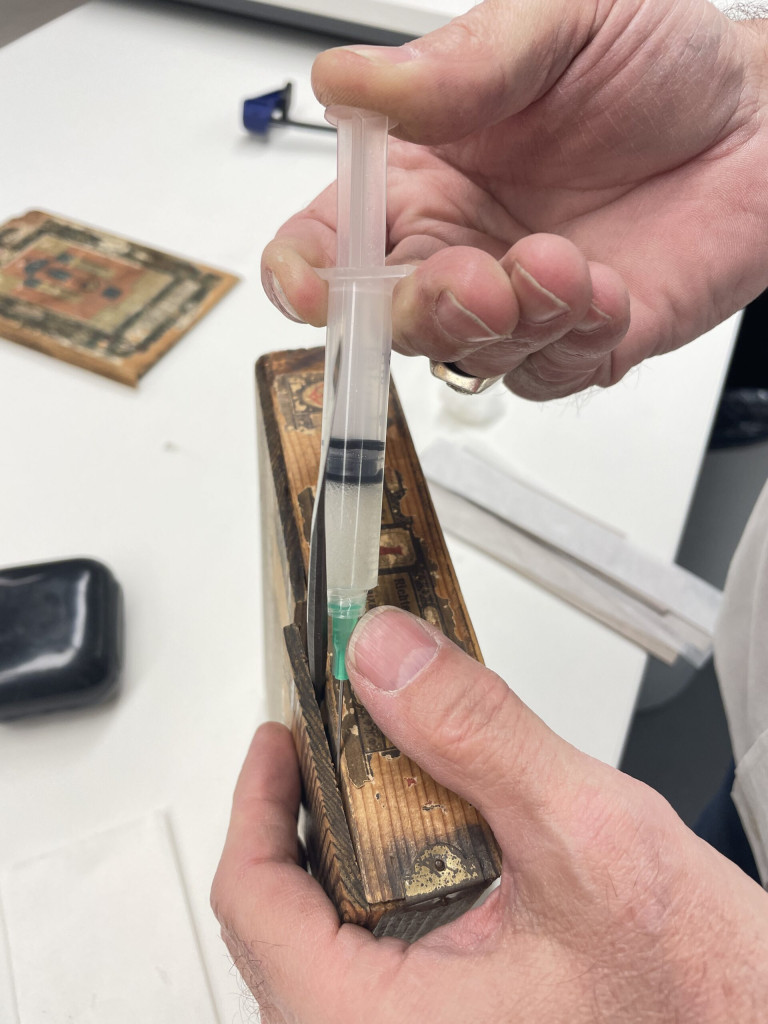
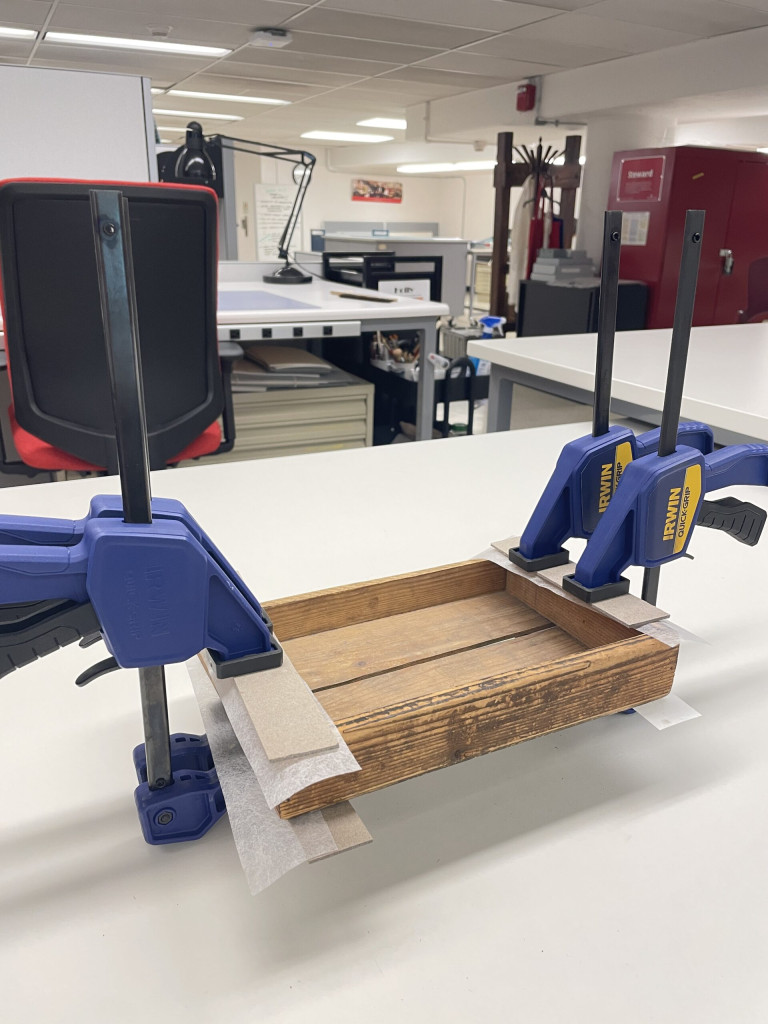
We’ve also used the gelatin to stabilze breaks in a wooden box originally used to house a Richter’s architecture game from the early 20th century.
Before TreatmentInserting fish gelatin with syringeClamping box during the curing process
Jeff Peachey’ main use is to line spines. He’s found it not only has better adhesion than straight paste, but makes the spine feel slightly more solid and resistant to torsional forces
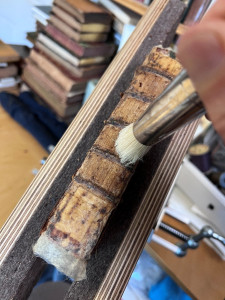
Applying fish gelatin to adhere spine linings
In the future, I imagine this gelatin would have excellent potential in media consolidation.
In all these uses, I couldn’t be more thrilled to not have to pull out my baby bottle warmer to set a beaker of gelatin on. As a result, there was no fuss in worrying about how long the gelatin was heated and if it was losing its properties due to heat.
Example of using a baby bottle or coffee warmer to re-heat pre-made gelatin during typical use
In terms of shelf life, the dried granules can be kept indefinitely like unmixed wheat starch paste. Once mixed, Jeff suggests that he’s found the adhesive properties hold up for about a week in the fridge; however, it does begin to smell fishy after just a day. So unlike wheat starch paste, if you’re adverse to the fishy odor, you’ll only want to make up as much as you’re planning to use for one day.
Supplier Info
Interested in getting your hands on some?
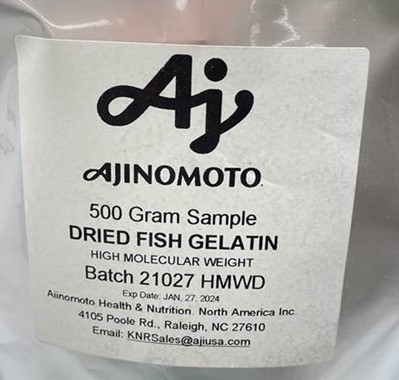
I found the product used at Weisman is no longer supplied by Norland – but I was able to track down what appears to be the same product through AJINOMOTO NORTH AMERICA, INC. If you’re interested in trying a sample, message Henry Havey, the Business Development Manager of Collagen & Gelatin at haveyh@ajiusa.com to request a sample of High Molecular Weight (HMW) dried fish gelatin.
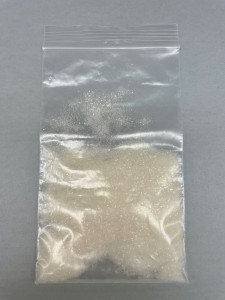
Fish gelatin sample acquired by the lab in a 500 gram sample bag
They provided me with a 500- gram sample at no cost and confirmed it was a Type A fish gelatin with a 0-bloom strength. Henry Harvey can also provide a pricing quote should you be interested in ordering a full supply which comes in 25 kg packs. They also provided the following product data info sheets:
While I still covet my isinglass cast films I created from boiling dried fish bladders, as well as our mammalian photographic grade type B gelatin, this HMW fish gelatin is a welcome addition I’ve added to my tool kit.
Ashleigh Ferguson Schieszer [CHPL] – Special Collections Conservator, Co-Lab Manager
Bibliography:
Dudin, M. The Art of the Bookbinder and Gilder. Trans. by Richard Macintyre Atkinson. Leeds: The Elmete Press, 1977, p. 51. (Originally 1772)
Foskett; An investigation into the properties of isinglass, SSCR Journal; The Quarterly News Magazine of the Scottish Society for Conservation and Restoration, Volume 5, Issue 4, November 1994, pages 11-14
Nanke C. Schellmann, Animal glues: a review of their key properties relevant to conservation, Reviews in Conservation, No. 8, 2007, pages 55-66
The Preservation Lab, a partnership to preserve and conserve the collections of the Cincinnati & Hamilton County Public Library and the University of Cincinnati Libraries, seeks applicants for a Conservation Assistant position.
The Conservation Assistant is a technician level position with on-the-job training that may appeal to emerging conservation professionals. This position will join a collaborative team of 7 full-time staff members, including conservators, a preservation librarian, technicians, student workers and volunteers to preserve collections from both institutions. The Preservation Lab staff consists of both Cincinnati Public Library and the University Library members. This position is a Cincinnati and Hamilton County Public Library position but is stationed at the University of Cincinnati West campus.
The successful candidate will demonstrate the ability to execute hands-on work with skill.
Founded in 1853, the Cincinnati and Hamilton County Public Library today is one of the busiest and most highly acclaimed library systems in the United States, providing service to over 800,000 residents through a network of 40 branch libraries, a major downtown Main Library, and a Distribution Center. CHPL holds one of the largest genealogical collections in the United States and many other specialized collections, most of which are housed in the Main library.
Back in October of 2022, The Preservation Lab had the pleasure of hosting Book Conservator, Jeff Peachey, for a week-long workshop on Conservation of Leather Bindings. One of the topics that was mentioned, but not discuss in depth, was leather facing.
No one in the lab had ever faced leather before, so Sr. Conservation Specialist, Jessica Ebert, and I decided to conduct some tests to understand the process, the best materials, and tools. With the research available, Jessica and I focused primarily on two sources, Conservation of Leather and Related Materials by Marion Kite and Roy Thomson and an article written by James Reid-Cunningham entitled Leather Rebacking, for the Seminar in Standards of Excellence in Hand Bookbinding, The Guild of Book Workers, 2013.
The primary reasons for testing out this technique was the fact that there were leather books from UC’s Archives and Rare Books Library here in the Lab for treatment and they could potentially be good candidates for leather facing.
Let the tests begin!!
Both Jessica and I chose two different withdrawn leather books to test on:
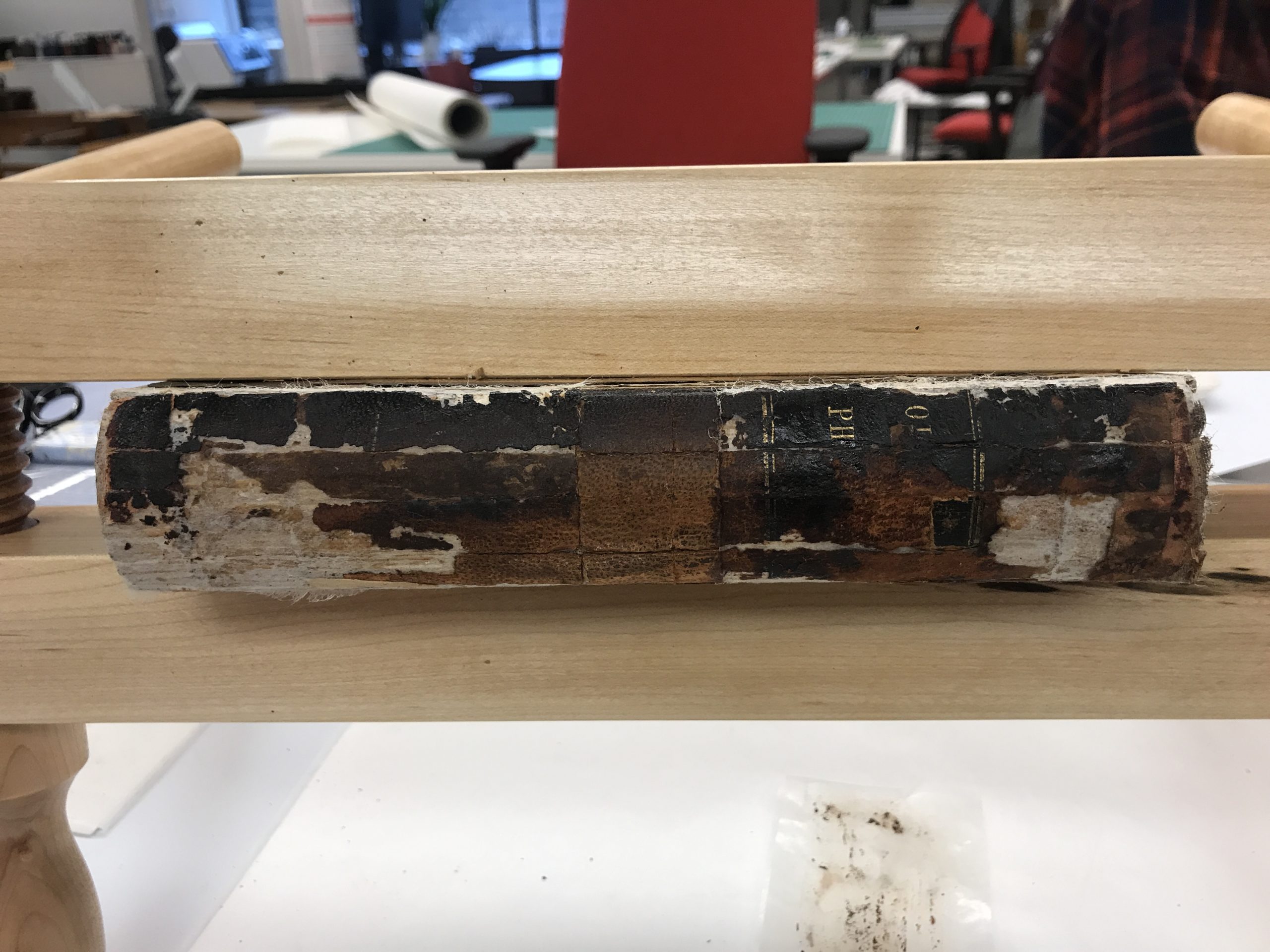
A tight back leather book
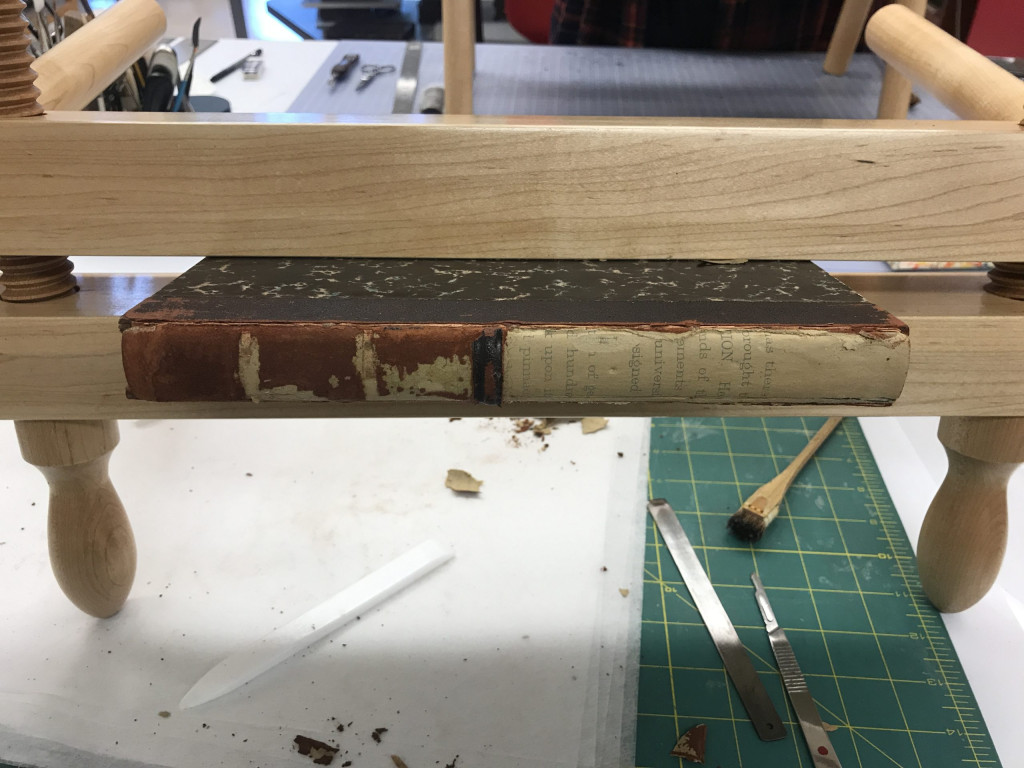
A leather book with false raised bands and a hollow tube
Catarina’s test model (tight back) before facing.Catarina’s test book model (tight back) after facing.Jessica’s test book model (tight back) before facing.Jessica’s test book model (tight back) after facing.Catarina’s test model (hollow tube with false raised bands) before facing.Catarina’s test model after the leather facing.Jessica’s test model (hollow tube with false raised bands) before facing.Jessica’s test model after the leather facing treatment.
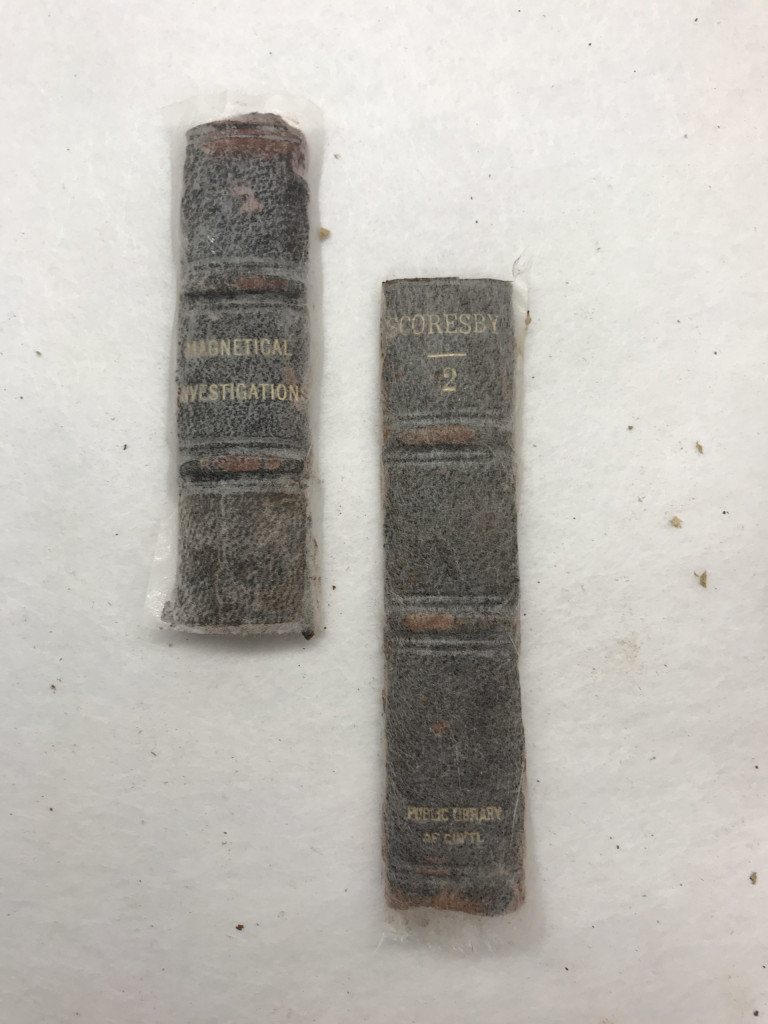
The first step was to consolidate the leather on all the withdrawn books we were using as models. The leather was consolidated with 3% Klucel G in isopropanol. Since there were different methods shown in the available resources regarding leather facing, we decided to use two different methods for facing: facing with Japanese tissue adhered with Klucel G and facing with a Crompton heat-set tissue activated with ethanol. Trying out these two different methods would help us to understand which one of these materials would work best and cause less damage/staining to the leather.
Catarina’s Test Models
After having consolidated the leather, the spine was “divided” in two sections, top and bottom, with a small portion of the spine in between. The reason the spine wasn’t fully faced was because I wanted to see if there were any changes in the leather after being faced, removed, and reattached.
Leather consolidated with 3% Klucel G in isopropanol. For this model, since the leather was so degraded, it wasn’t possible to get the Japanese tissue to adhere with klucel G. Therefore, only the Crompton heat-set tissue was used.
For this book, the leather was very degraded, and I couldn’t get the Japanese tissue to adhere to the leather spine with Klucel G. As a result, for this model I only used the Crompton heat-set tissue method.
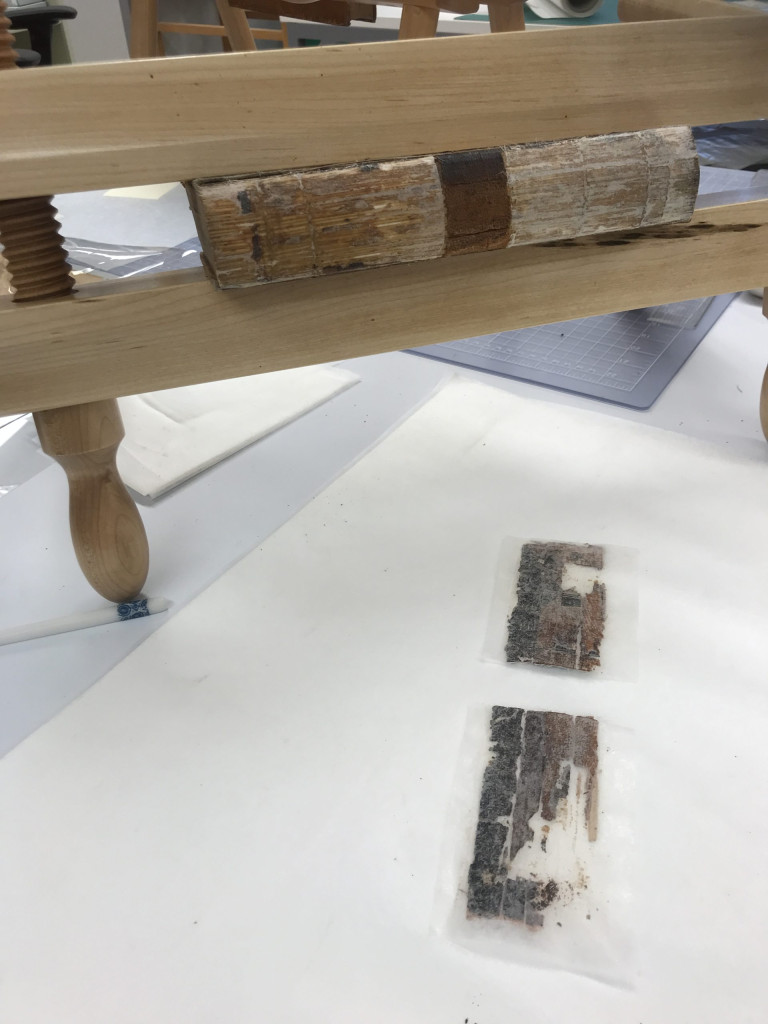
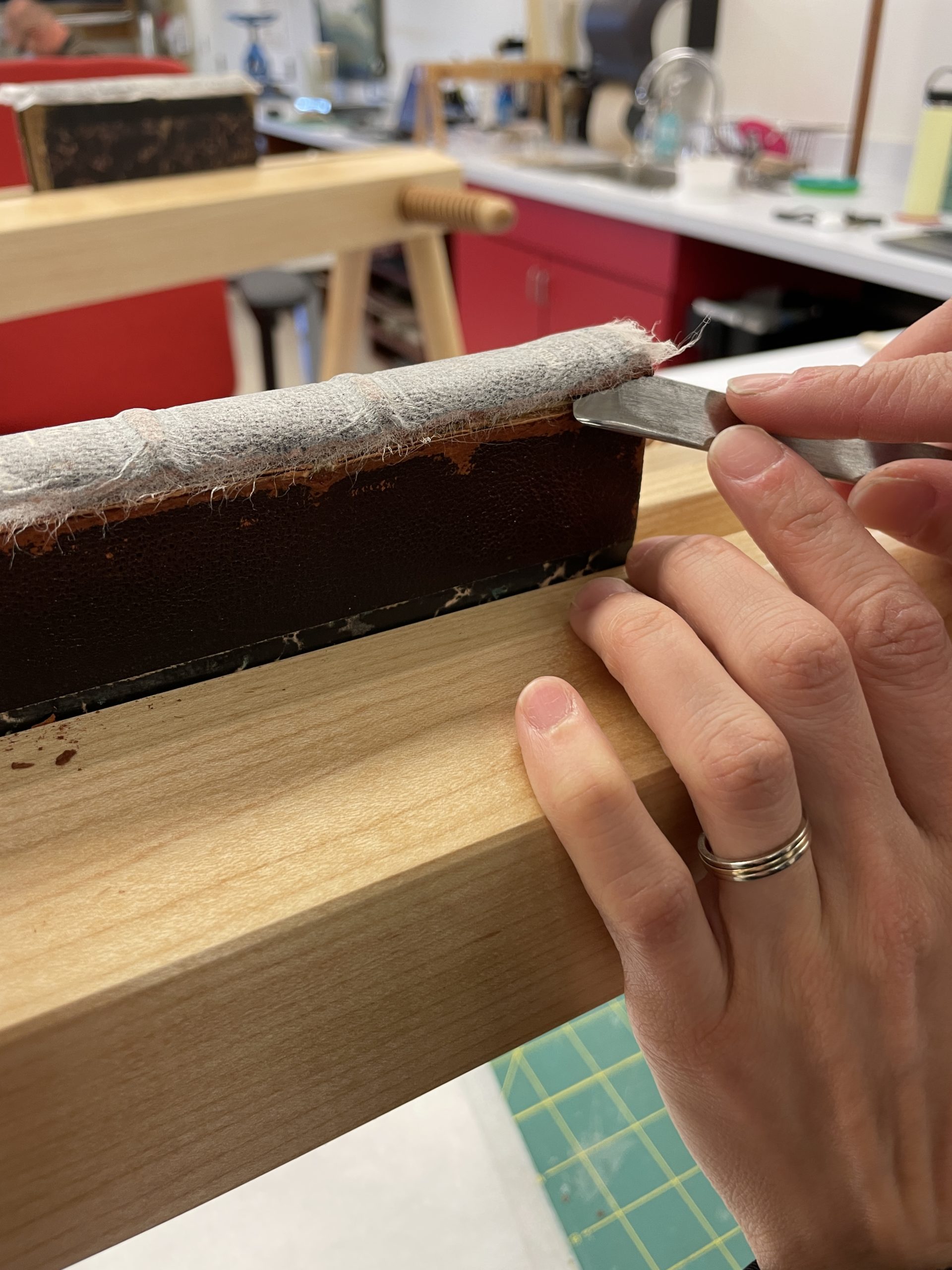
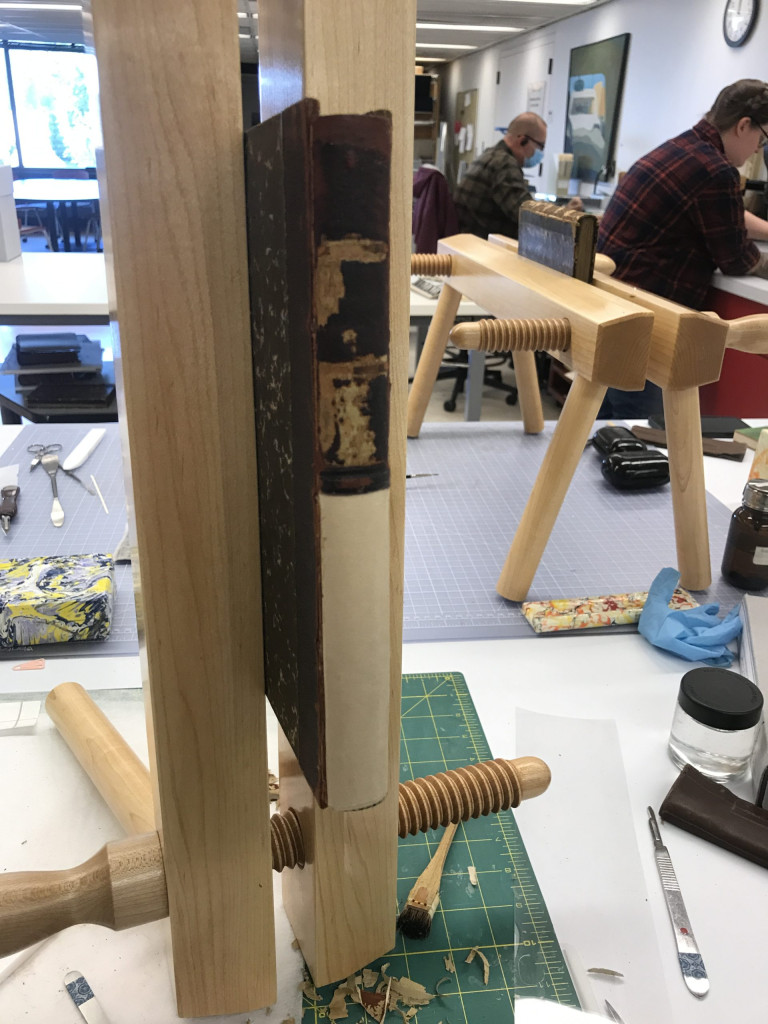
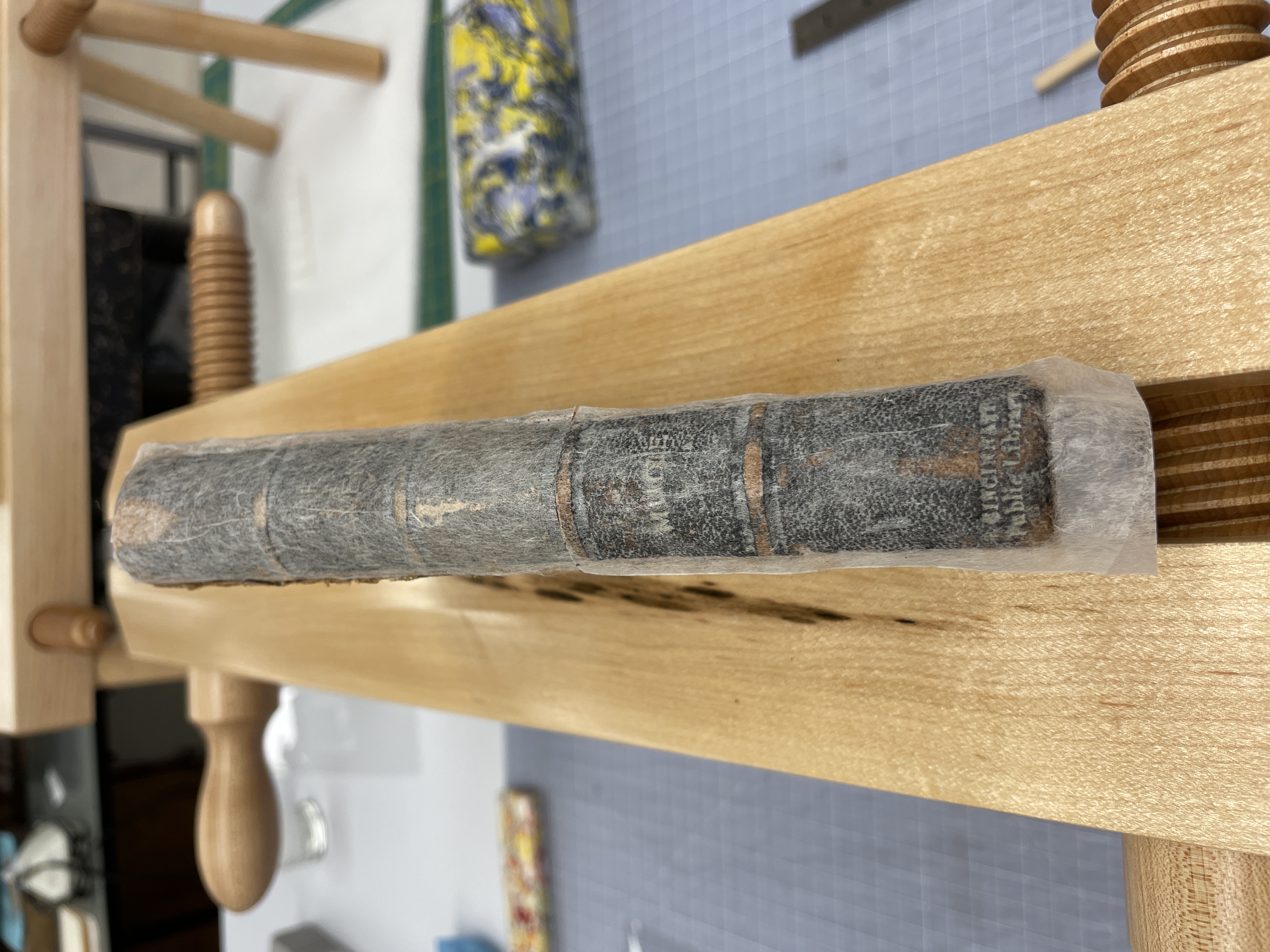
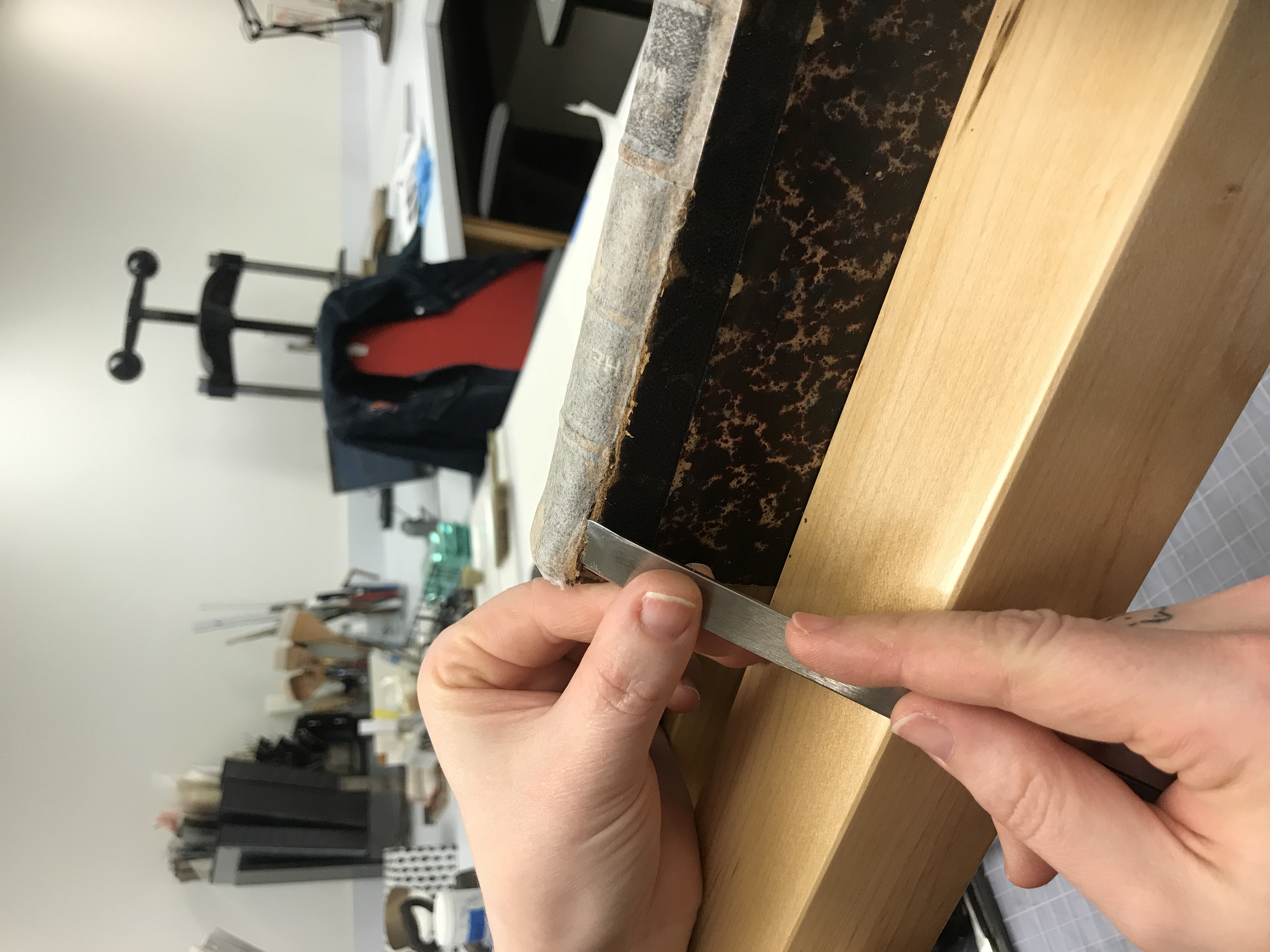
The adhesive on the heat-set tissue was activated by brushing on a thin layer of ethanol. Once it was activated, the heat-set tissue was placed on the spine, and with a tamping brush pressed on the leather. Using a lifting knife, I was able to remove the leather spine, leaving the middle portion still adhered to the text block for comparison.
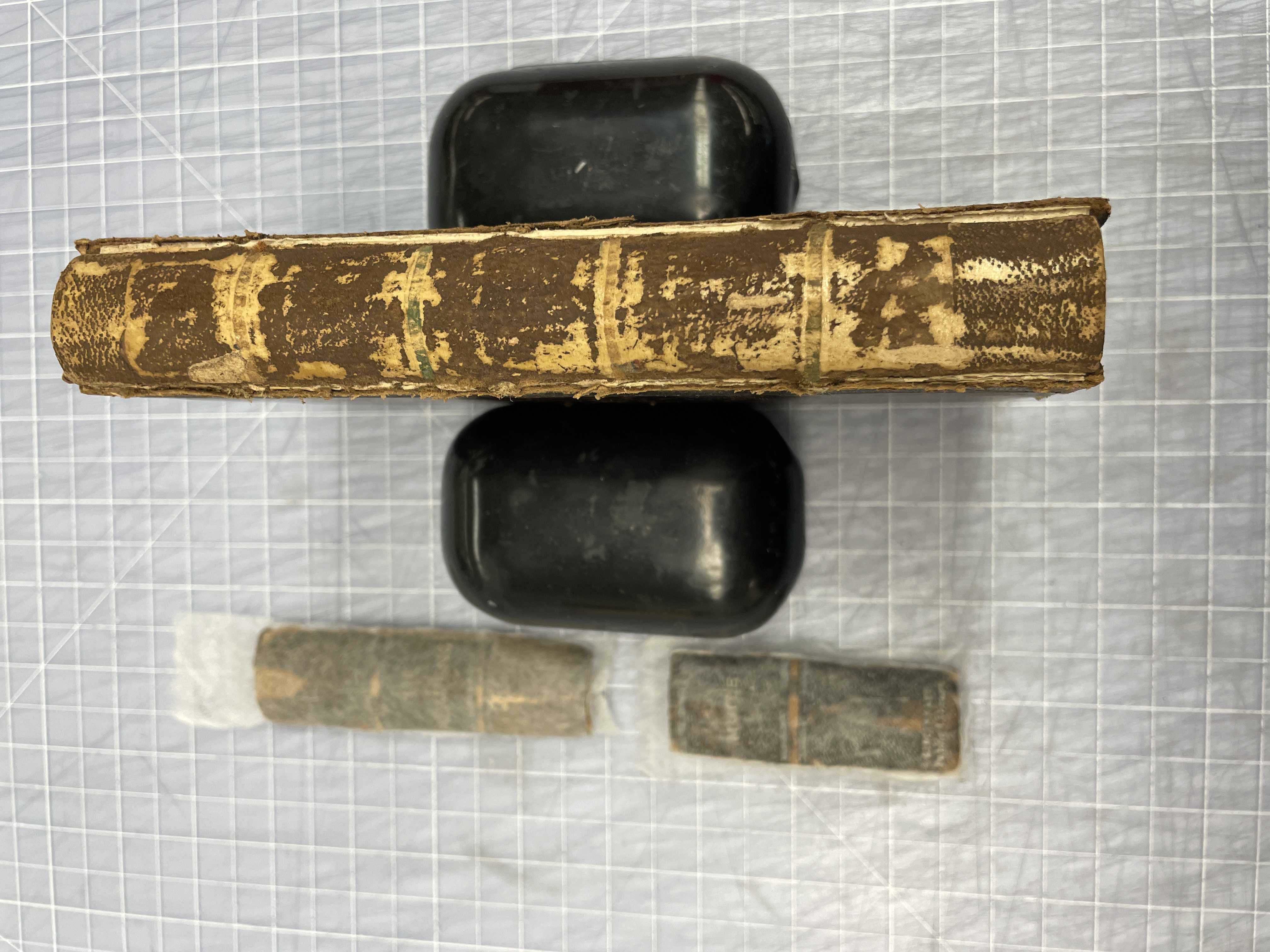
Two portions of the spine fully removed.Leather spine removed, and two portions of the spine faced.
Once the leather spine was removed, I relined the text block spine with a reversible layer of Japanese tissue and wheat starch paste. The two portions of the leather spine were lined from the back with Japanese kozo fiber tissue and wheat starch paste.
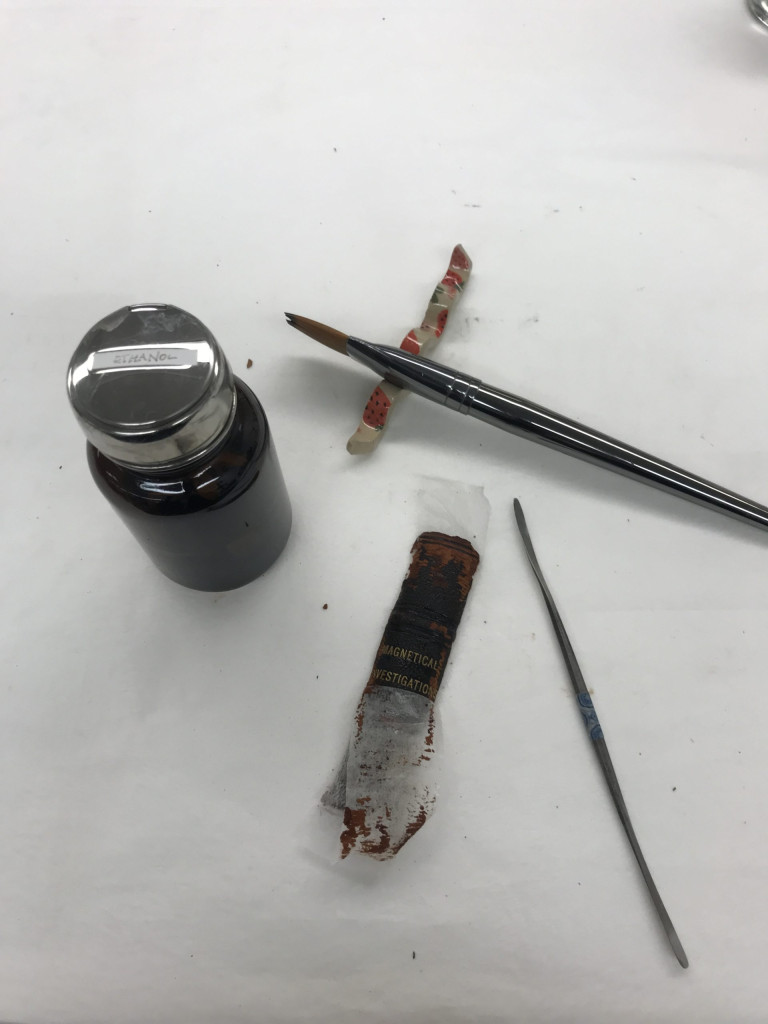
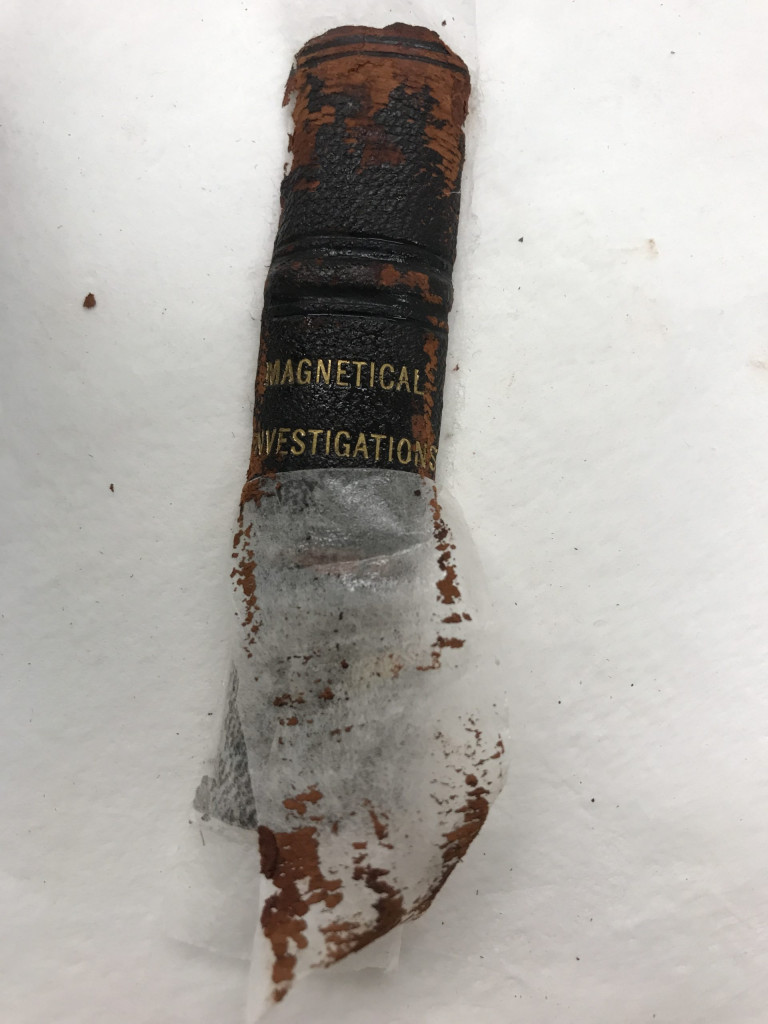
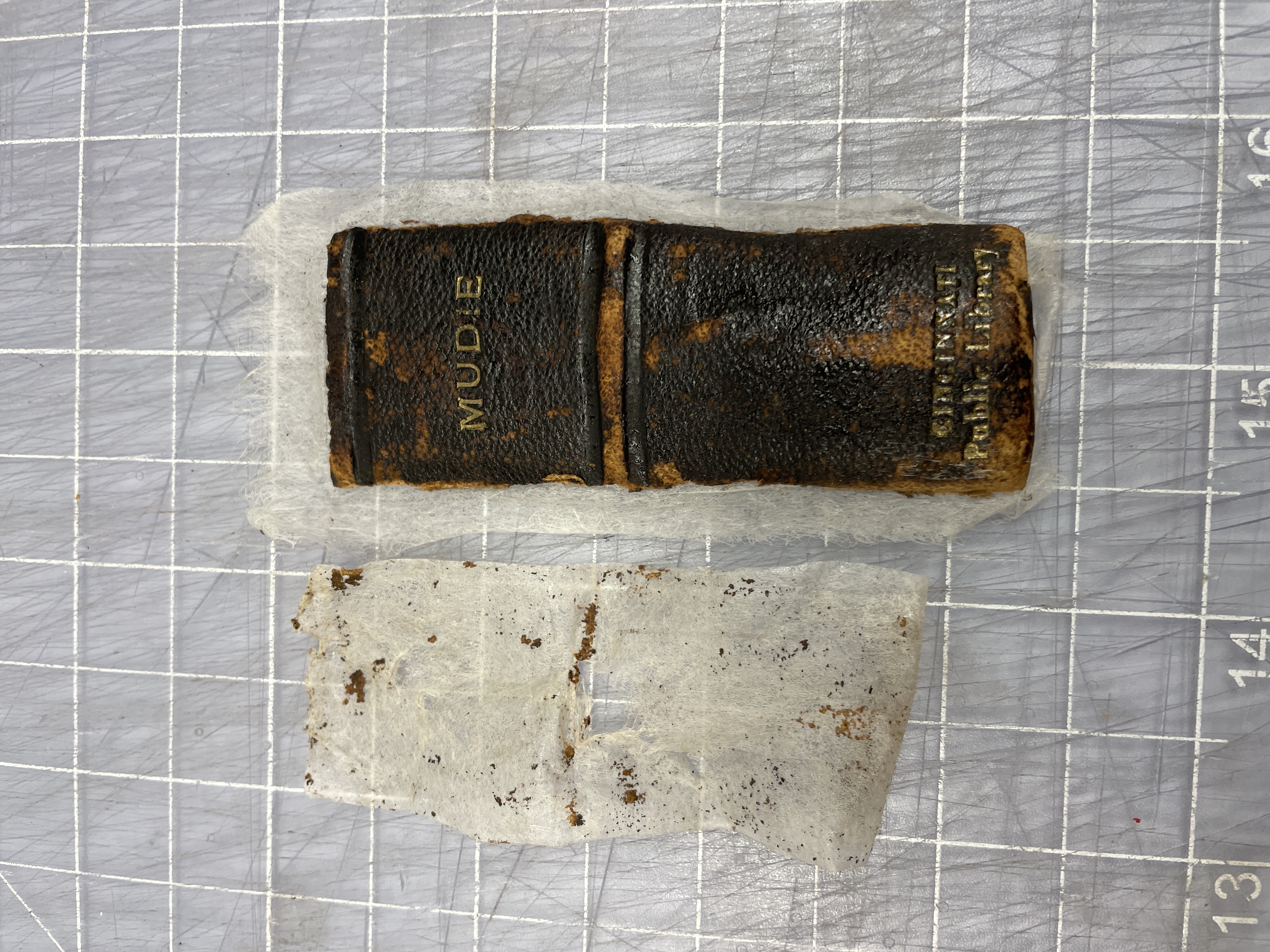
At this point, there were two different ways to follow, I could adhere the faced spines to the text block and then remove the heat-set tissue, or I could remove to heat-set tissue first and then adhere the leather spine to the text block. I decided to first remove the heat-set tissue by activating the adhesive again with ethanol and gently removing it with a Caselli spatula. Once the heat-set tissue was fully removed and the leather was dry, I reattached each portion of the leather spine to the text block with wheat starch paste.
Two portions of the leather spine adhered to the text block spine.
For the leather book with false raised bands and hollow tube, the process was very similar. However, for this model I was able to try out both the Japanese tissue adhered with Klucel G as a facing method and the Crompton heat-set tissue.
Test book model with false raised bands and hollow tube.
The spine was “divided” in two sections: top portion was faced with Crompton heat-set tissue activated with ethanol and the bottom portion of the spine was faced with Japanese kozo fiber tissue adhered with Klucel G.
Using a Peachey lifting knife, I was able to remove both portions of the spine. On the top portion of the spine, I ended up not removing the previous hollow tube, but removed it completely on the bottom portion of the spine.
Leather spine was removed. The hollow tube was not removed on the top portion of the spine and removed completely on the bottom portion of the spine.Two sections of the leather spine faced with different methods.
Once the two portions of the spine were removed, a new hollow tube was created to adhered to the bottom portion of the text block spine. The hollow tube was mode of Griffin Mill Broadsheet 60 gm/115 gm paper. The new hollow tube was adhered with wheat starch paste.
Again, I decided to remove the facing tissue before adhering the leather spine back on. With ethanol, I was able to remove the facing tissue from both pieces of the spine. As seen in the pictures below, while removing the Crompton heat-set tissue there was some loss of the leather along the edges and where the leather was most degraded already.
New hollow tube adhere to the bottom section of the spine.
Removing the Crompton heat-set tissue with a Caselli spatula and ethanol.
Removing the Crompton heat-set tissue with a Caselli spatula and ethanol.
Each spine piece was lined on the verso with a Tengujo tissue and wheat starch paste. This provided some support to the fragile leather spines. The two pieces of the spine were then adhered back on with wheat starch paste.
Leather spine after being faced, removed, and reattached.
Leather spine after being faced, removed, and reattached.
Jessica’s Test Models
Here are a few of Jessica’s test models (she has a better eye for taking good photographs throughout the process).
Tight back leather binding before facing.
Spine faced with Japanese tissue adhered with Klucel G and with Crompton heat-set tissue.
Mid process, spine fully detached.
Two sections of the spine faced with different materials.
Tight back test model after facing.
Final Thoughts…
This was a great project that Jessica and I worked together. It was useful to test out different methods using different types of books with leathers in various stages of deterioration. We learned that Japanese tissue may not be able to be used as a facing material when coated with Klucel G, since in one of the tests I did, it did not adhere to the leather. This could lead to further testing, perhaps working with a Klucel G of a different concentration since we only used a 3% concentration for these tests. In addition, depending on how degraded the leather is, using a Crompton heat-set tissue may not be an ideal good solution for every item as it created some damage on the surface layer of the leather spine of our of the test books. Finally, at least in one of my models, the leather became darker than it was originally. There is still more testing and practice to do before we use this technique on a collection item, but this was a great place to start.
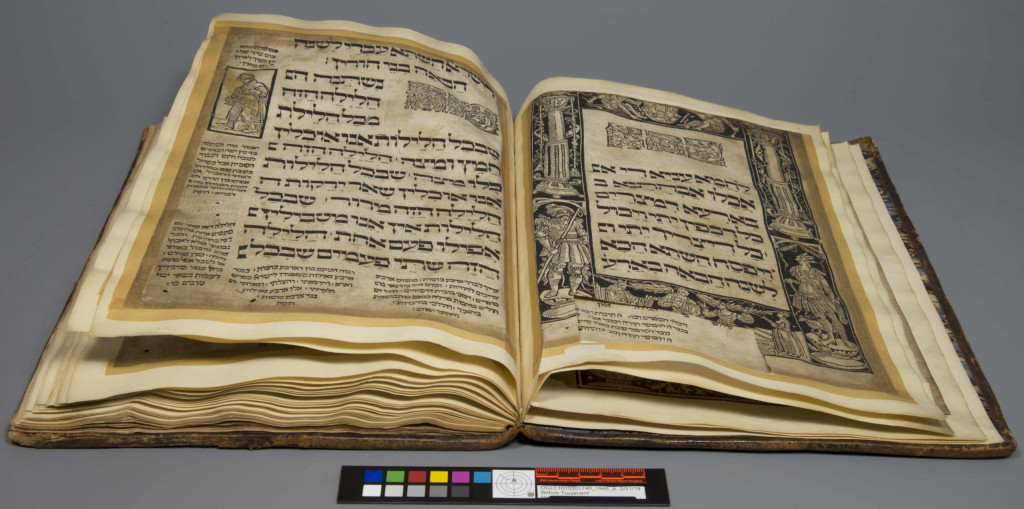
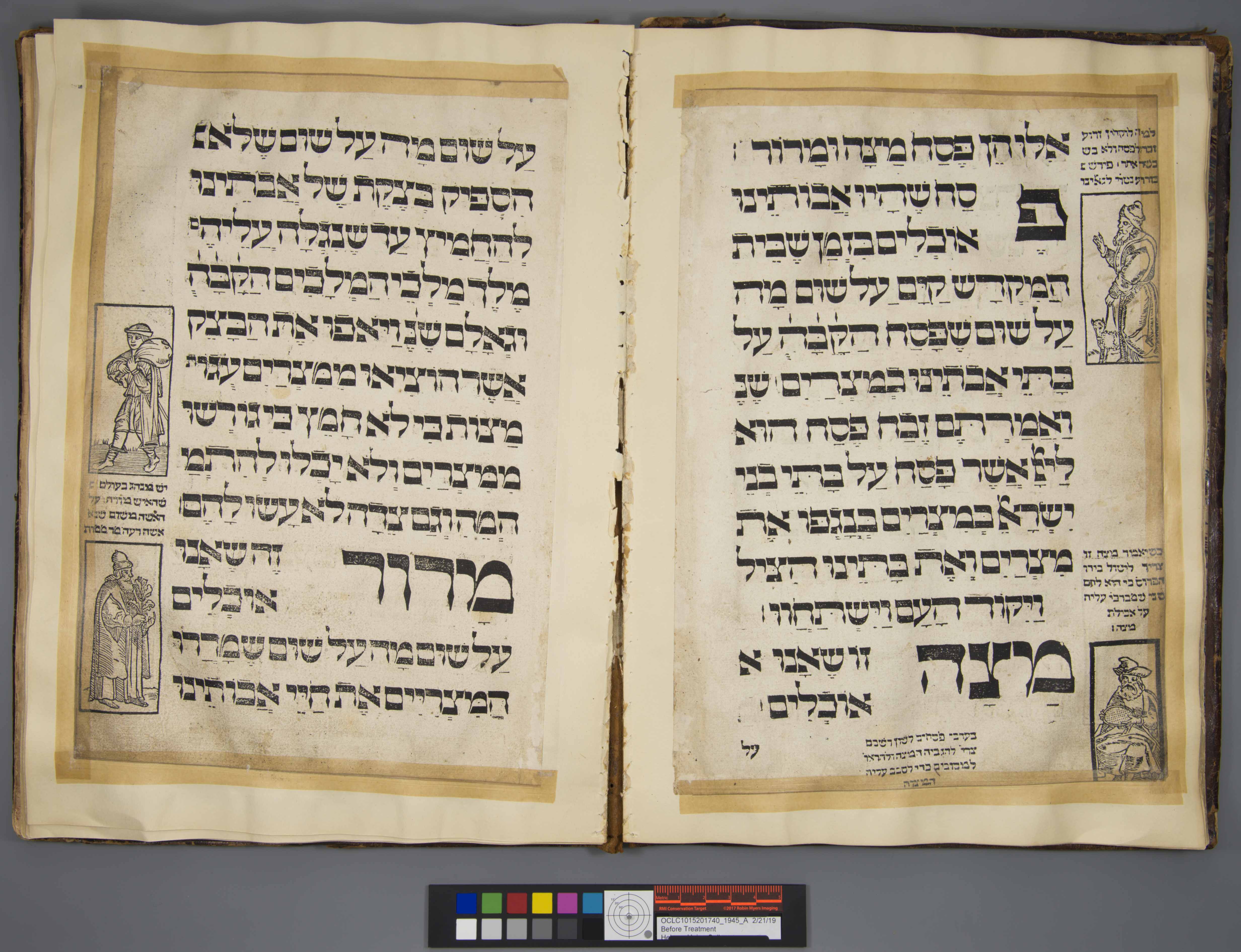
To celebrate the upcoming festival of Passover, please join Hebrew Union College and the Preservation Lab for a virtual presentation about the treatment of one of the earliest printed illustrated Haggadot in the rare book collection of the Klau Library.
View of broken sewing and poorly aging repairs before treatment
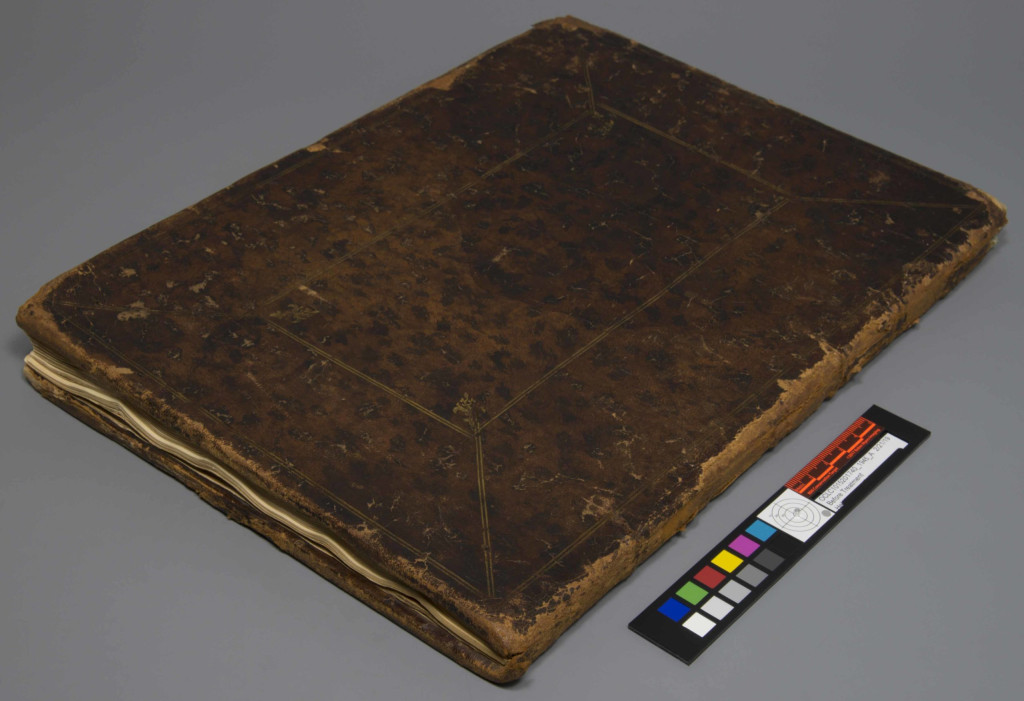
Overall view of leather binding before treatment
Dr. Jordan Finkin, Rare Book and Manuscript Librarian and Co-Director at Hebrew Union College Press will kick off the talk with a discussion about the significance and history of the Haggadah in the greater context of Haggadot Jewish book printing.
Ashleigh N. Ferguson Schieszer, Rare Book and Paper Conservator, will follow by describing the intricate process required to restore the binding and its contents. In this session, Ashleigh will discuss how she met the challenges facing her with this amazing historical work to reverse earlier poorly-done repairs. These treatments were conducted over several years, and included preservation of handwritten songs later added to the Klau’s copy.
Please join us at 11 am on April 10th, 2023 for the hour-long session by registering for the event here.
Check out the recorded session, now available on the HUC-JIR YouTube channel here.
This project was funded by the generous donations of Dr. Valerie Hotchkiss and Dr. David Price.
We’re excited to announce that the Madisonville branch is in its final stages to re-open their newly renovated space! Please join the library for the opening eventMarch 18th! At the event, the Genealogy and Local History Department staff member, Chris Smith will talk about Madisonville’s history from 3:30 pm – 4 pm.
During the event, the Madisonville scrapbook will be on view for festivities March 18th.
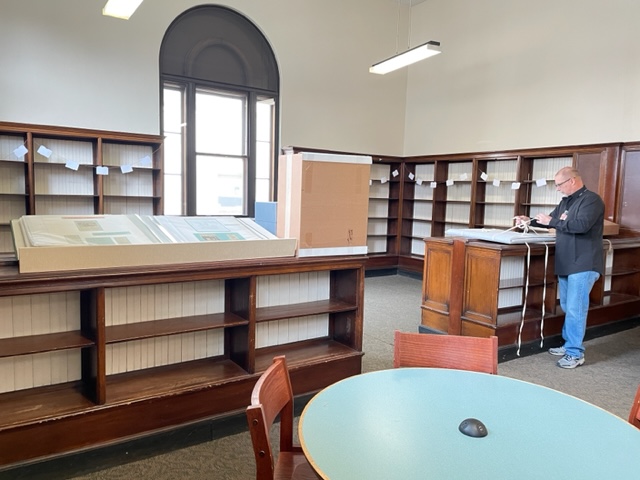
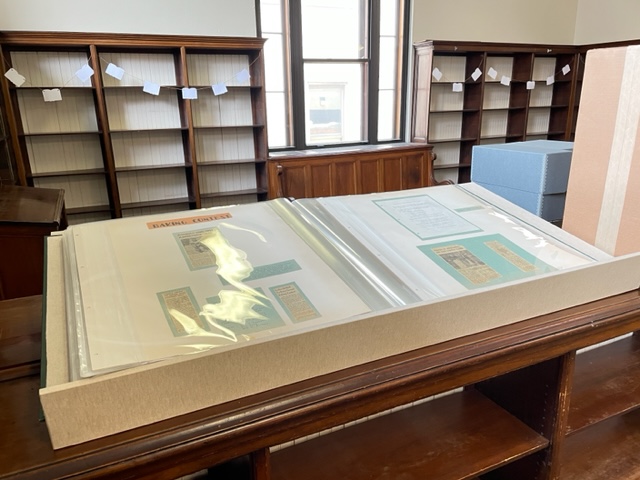
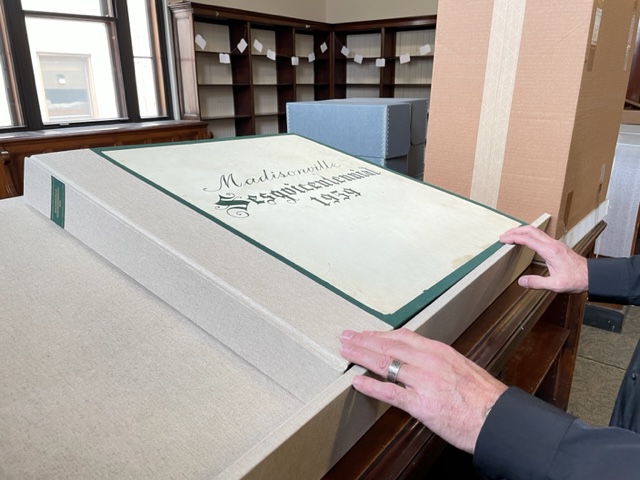
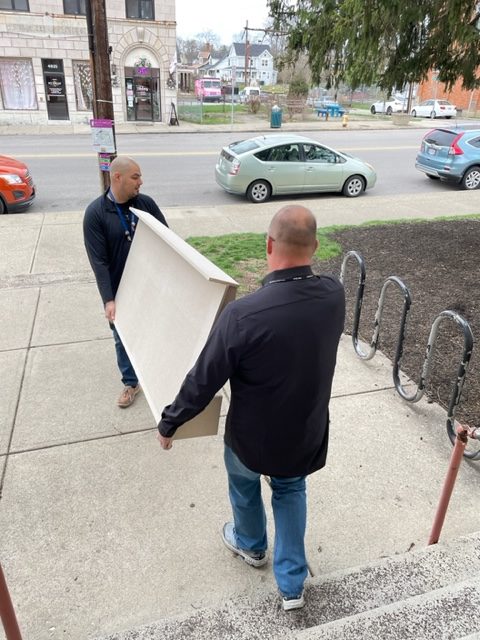
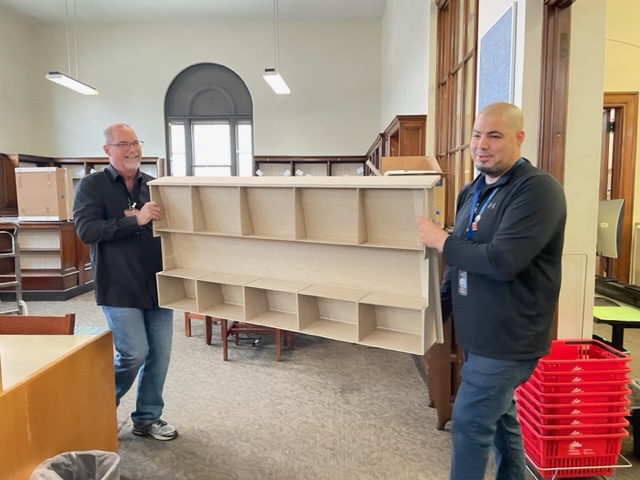
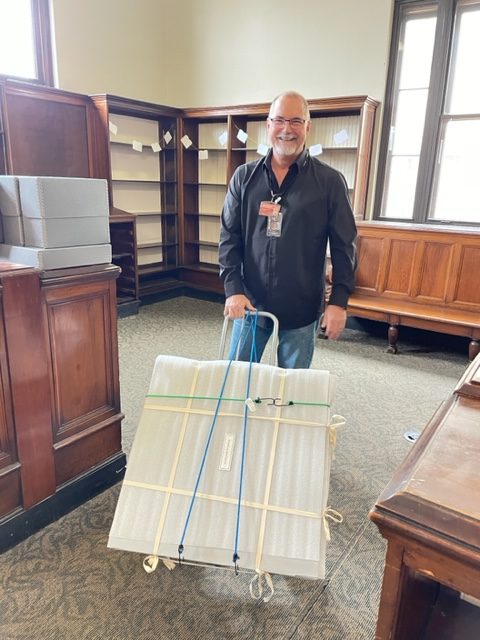
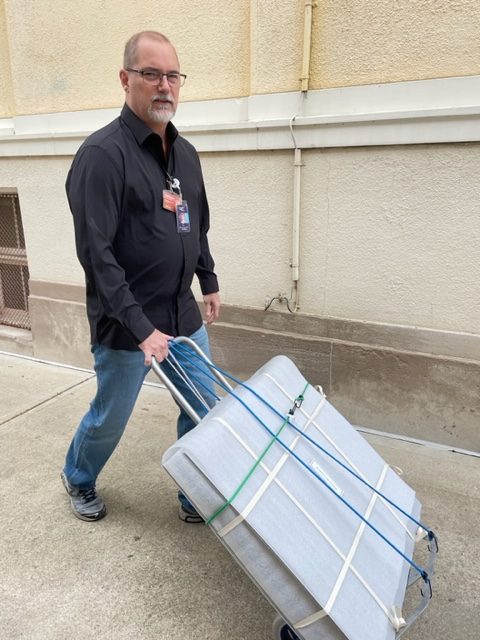
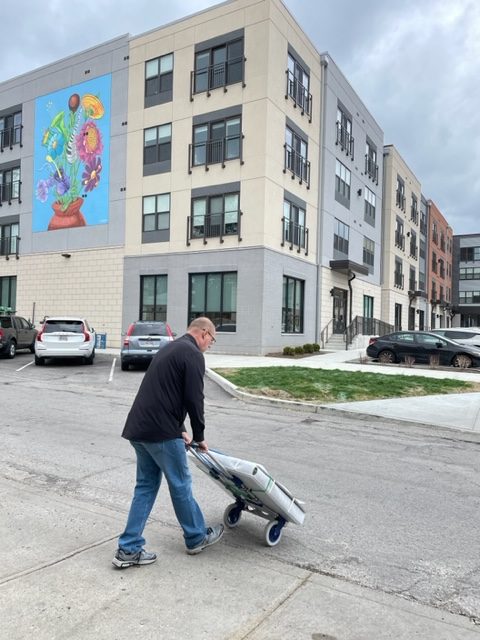
Because this material is HUGE and considered a rare irreplaceable item, both the book and cradle were hand delivered from one building to another by Preservation Lab and Madisonville staff. Below are “behind the scenes” images showing the delivery of these oversized materials.
View of book in its prior home location, recently cleared of books:
Scrapbook & cradle in room empty of booksCradle in prior locationScrapbook coverB
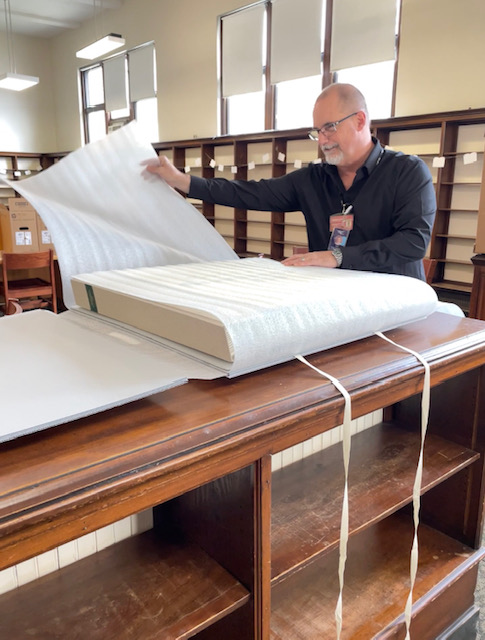
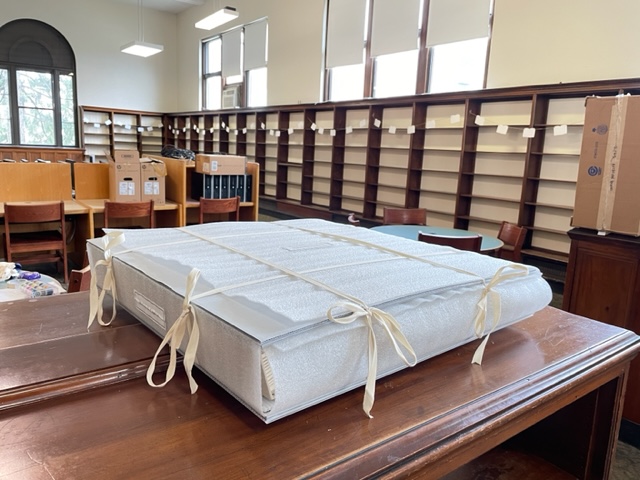
For transport, the oversized book was stored in a lightweight (but strong!) custom enclosure:
Two flaps of foam were first sandwiched under a flap of boardChris Voynovich closes all flapsFlaps were secured with integrated cloth ties
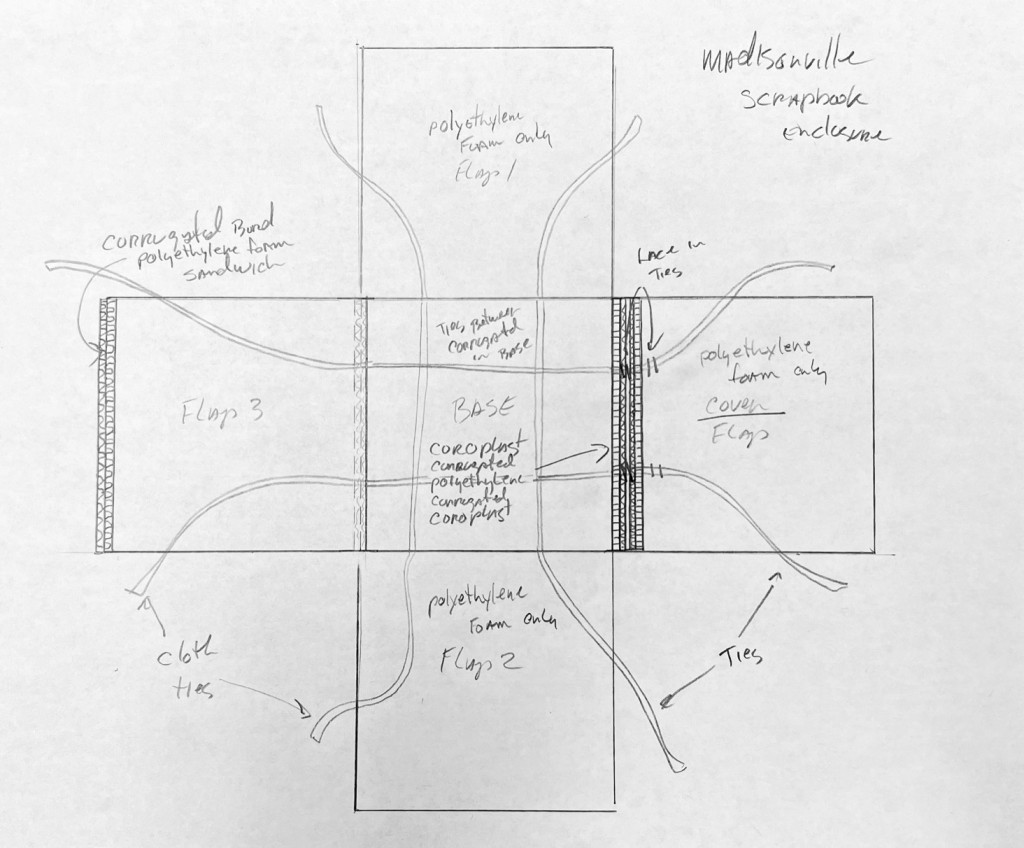
The custom enclosure consists of multiple light-weight layers and flaps of foam, all tied together with cotton ties, as shown in Chris’ schematic. This enclosure will be used both for transport and for long-term storage.
Once packaged, both the book and cradle were hand delivered to their new home next door:
Cradle hand delivered next door by Terry Barnum and Chris VoynovichBottom view of cradleBook strapped to dollyBook is oriented spine edge down for safe transport
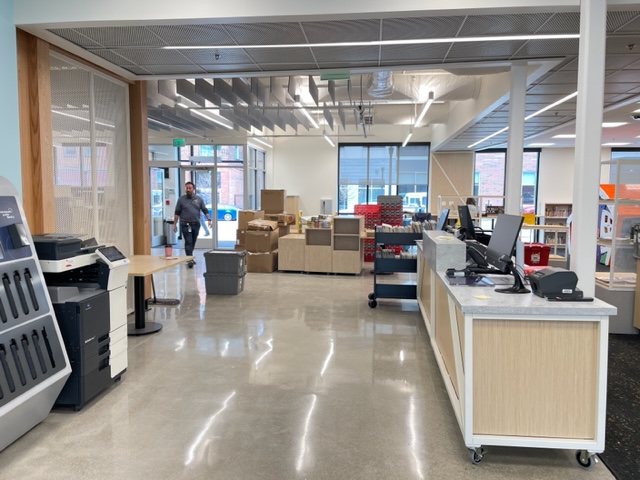
The book now awaits the re-opening event while staff continue unpacking the rest of collections!
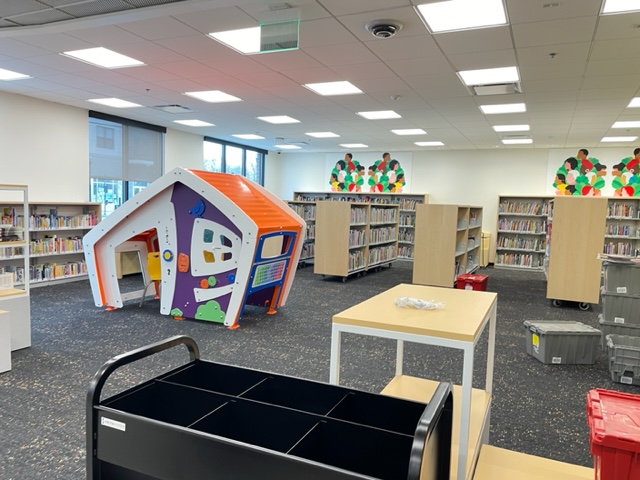
Boxes being unpacked in new spaceChildren’s area is coming together!
We hope to see you there!
Ashleigh Ferguson Schieszer [CHPL] – Rare book and paper conservator
To read about the conservation of the scrapbook and construction of the book’s cradle, please see the treatment documentation and a prior blog article titled, Madisonville Scrapbook.
As a bonus, to celebrate the completion of the oversized treatment, Chris created a comic you can fold from an 8 1/2 x 11 sheet of paper. Check out the printable file below! Instructions on how to fold can be found on the Preservation Lab’s YouTube channel video titled Preserving Scrapbooks beginning at the 10:42 time stamp.