
Tag Archives: Cincinnati and Hamilton County Public Library

Allegheny River / Capt. J.W. McLaughlin

How to store a 15ft paper scroll?

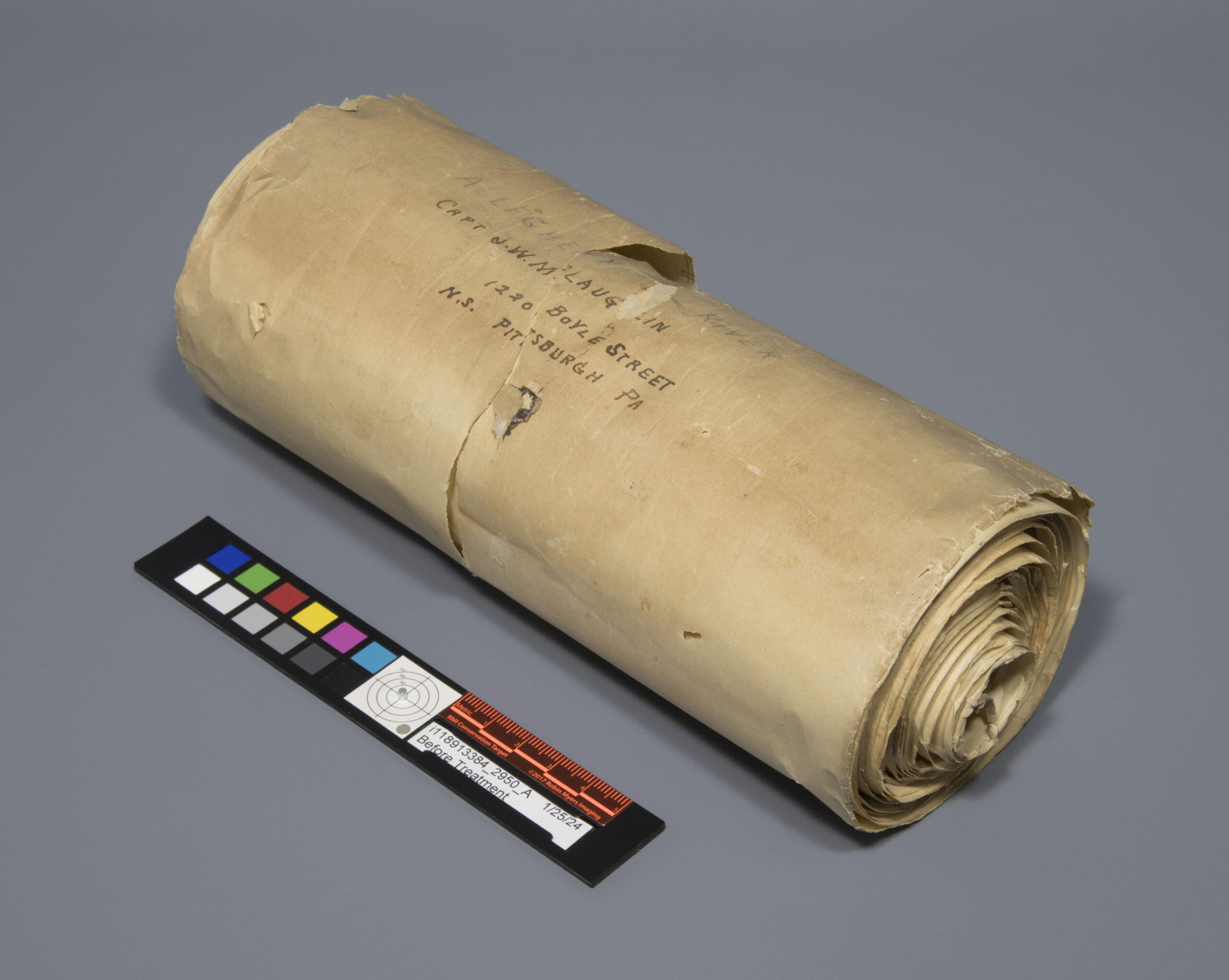
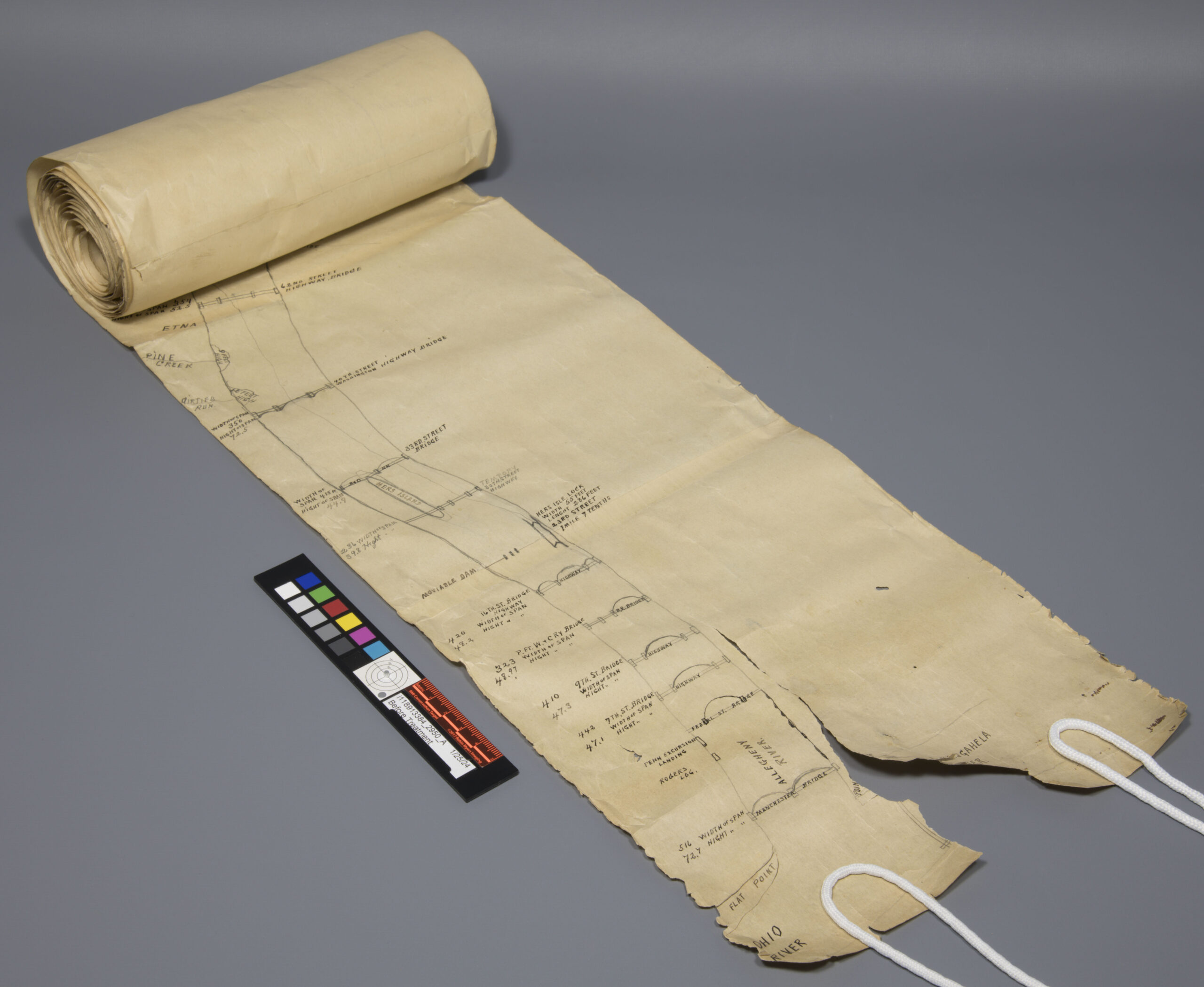
Back in October of 2024, we received something slightly more unusual from the Cincinnati and Hamilton County Public Library, a 15-foot-long, hand-drawn rolled map of the Allegheny River. Yes, fifteen feet.  This map was created by joining smaller sheets edge-to-edge, forming one continuous scroll that looked more like a treasure map than your typical library item.

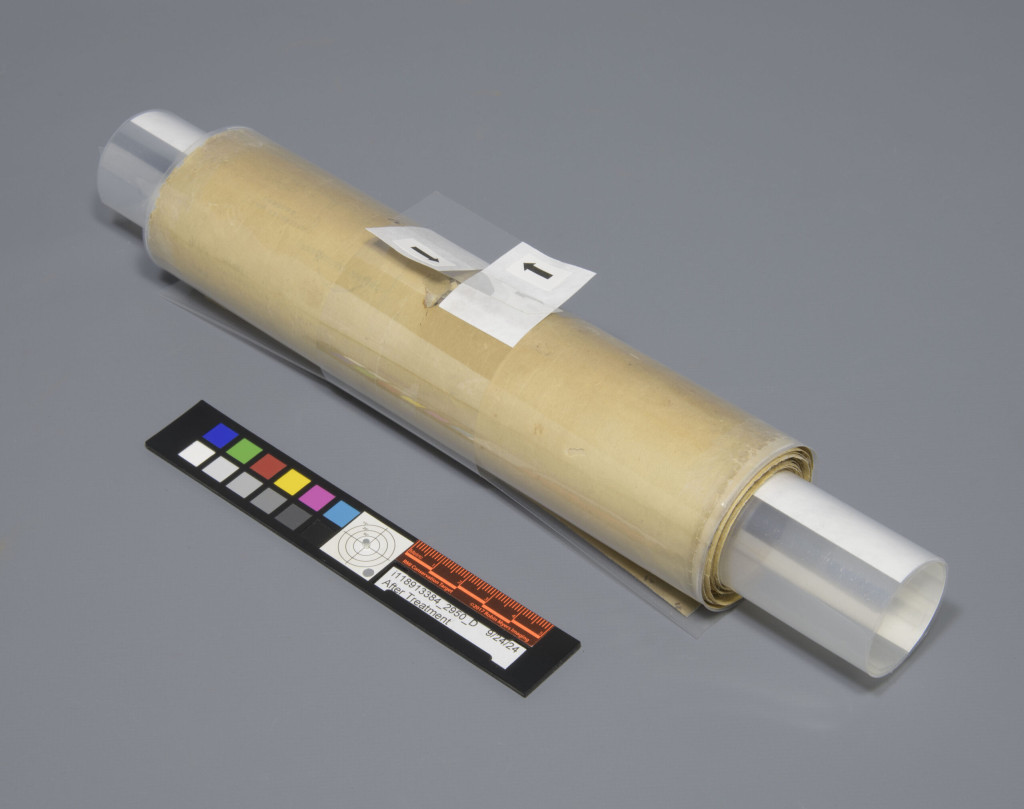
Scroll with photography target in front of it

A dilemma quickly followed, how do I create a housing solution that’s safe and functional, but won’t turn future handling into a logistical nightmare? Like many libraries, they didn’t have a 15-foot shelf just waiting for this (because who does?), so storing it flat was out. Storing it rolled became our only real option. The enclosure needed to be secure and protective for the map, and ideally, easy and elegant to display when needed.

First things first, some stabilization treatment. Before tackling the housing design, the scroll underwent conservation treatment to mend small tears and fill losses, particularly at the “beginning” and “end” (depending on which direction you follow the river). Once stabilized, it was ready for some housing trials.

scroll partially unrolled
Before Treatment – Large loss and tear at one end.
scroll partially unrolled
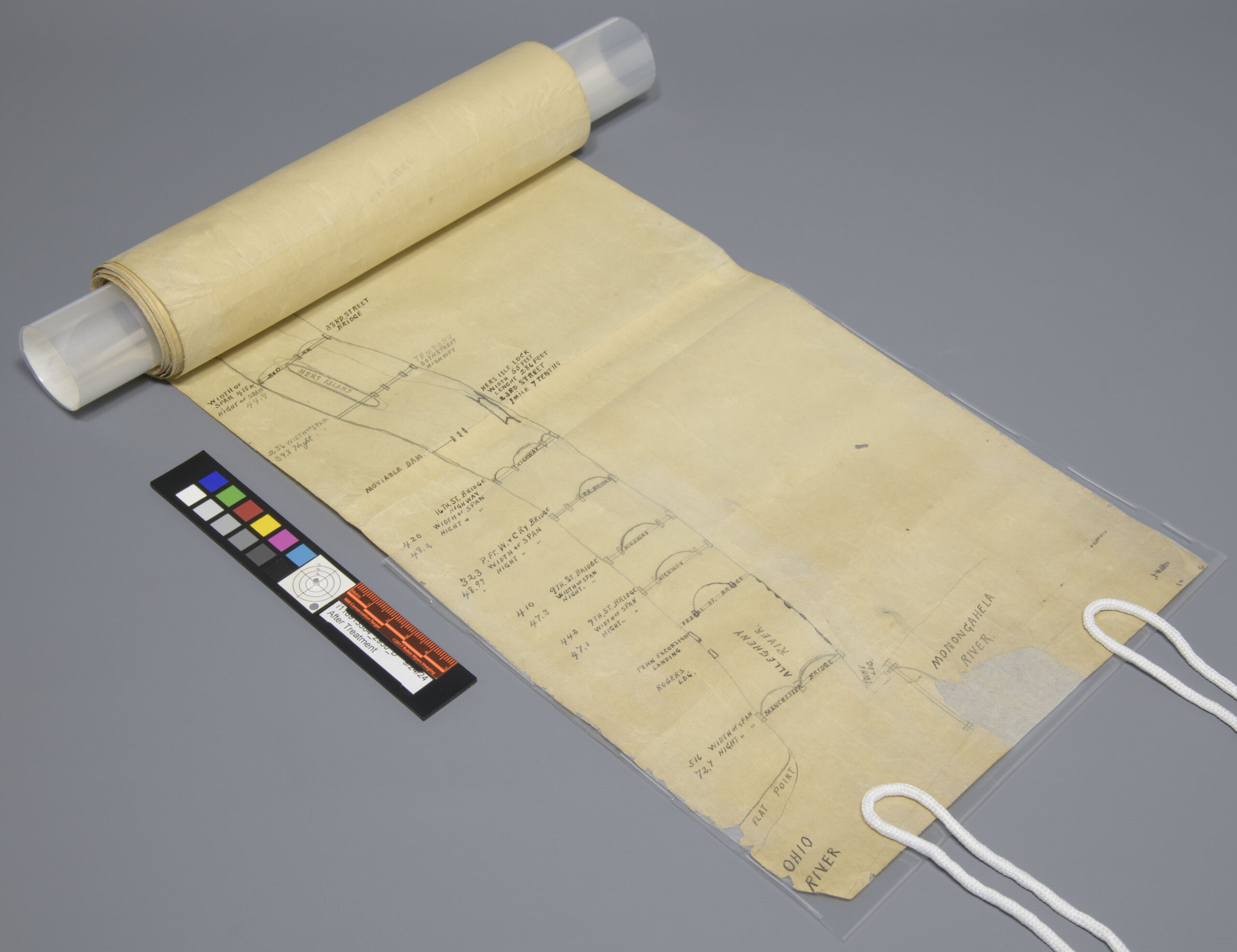
After Treatment – Large loss repaired and map rolled around the polyester cylinder core.

While researching solutions online, I stumbled upon a fantastic blog post by J.M. Iacchei from the Cornell University Library Conservation Lab (link here). Their approach to scroll housing was clever, practical and elegant, and it just gave me the spark I needed to create our own version.

Here is how we rolled:

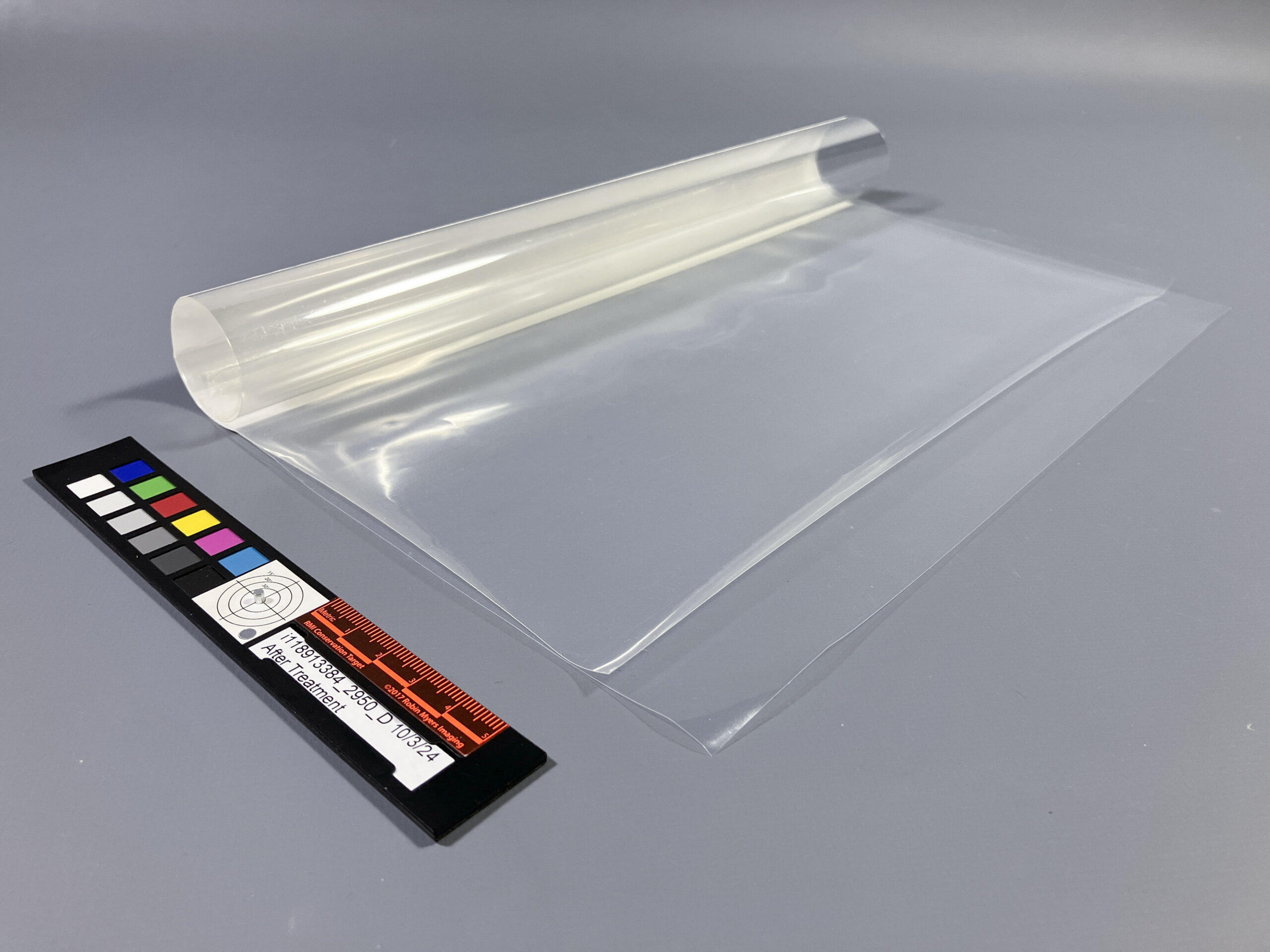
  • A support core – To give the scroll structure while rolling, I created a polyester cylinder core with a polyethylene sling. The sling supports one end of the scroll as it begins to wrap around the core, providing gentle guidance and protection as you start to roll the map. The map can be easily inserted into the sling to begin rolling.
Allegheny River / Capt. J.W. McLaughlin
Polyester cylinder core with a polyethylene sling to secure one end of the map.
Allegheny River / Capt. J.W. McLaughlin
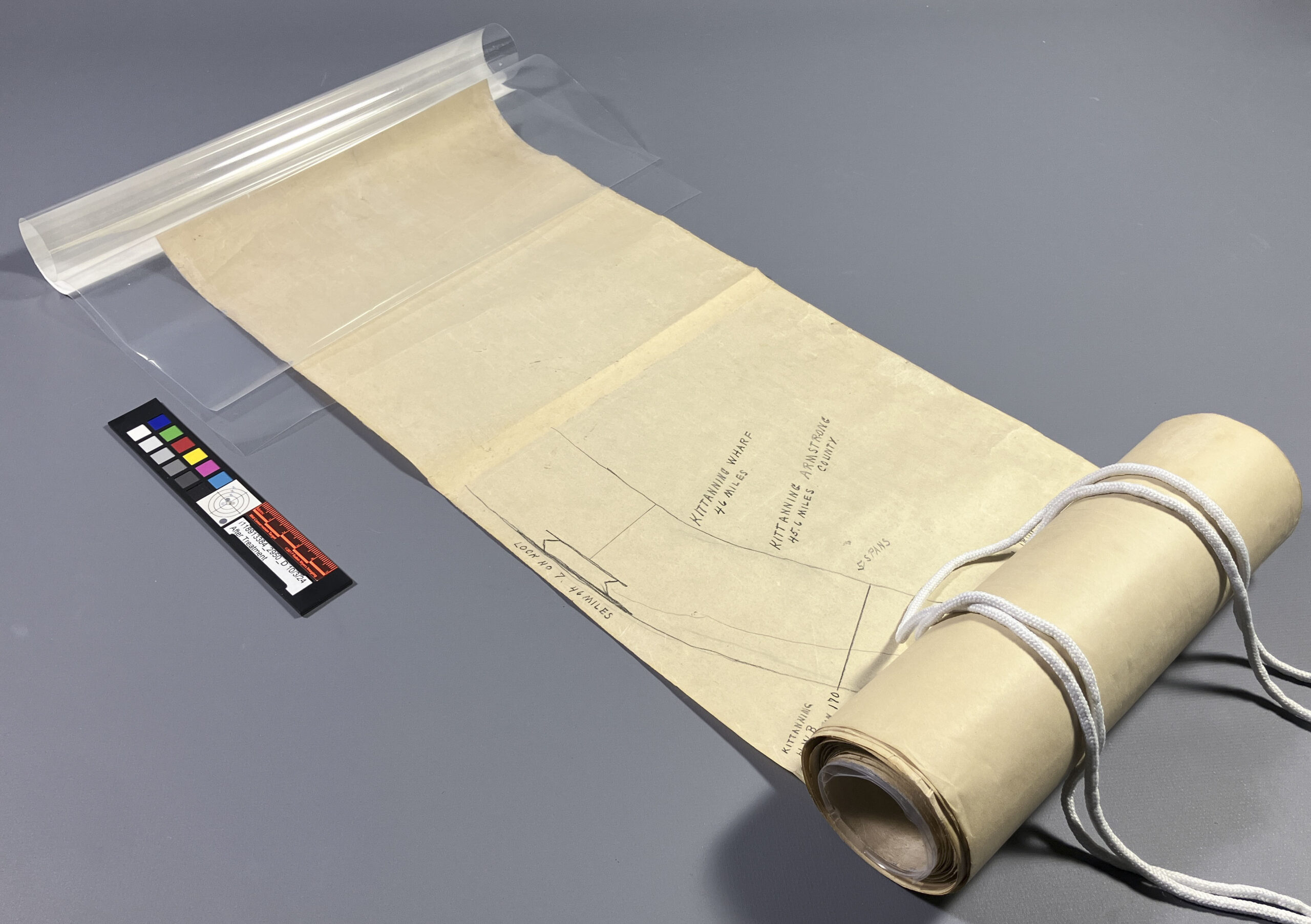
The end can be easily inserted into the sling and supported as the map is rolled around the polyester core.
  • Protection of the ends – The opposite end of the scroll was placed into a soft, transparent polyethylene pocket. It’s flexible, unobtrusive, and doesn’t need to be removed, even during after treatment photography.
Scroll partially unrolled
The other end of the map is protected with a polyethylene pocket that is flexible and offers support to the fragile end of the map.
  • Keep it rolled – Once fully rolled, the scroll was secured with a polyester belly band. The polyethylene pocket helped protect the scroll surface from any abrasion caused by the belly band.
rolled scroll with belly band to hold it in place
The rolled map is secured with a polyester belly band.
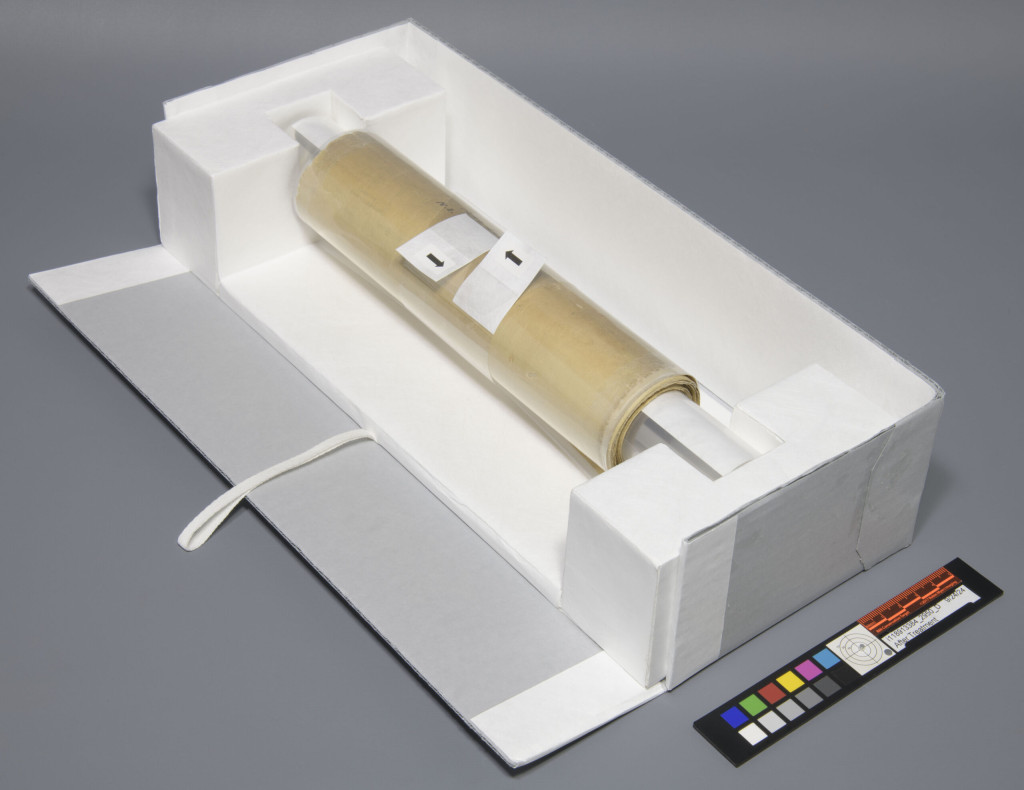
  • Display ready? – For display,I built a removable tray that cradles the rolled scroll without letting it rest directly on a surface. This tray doubles as a mini display platform, so the scroll can be partially unrolled and supported during handling and exhibit. Functional and elegant.
Rolled scroll secured within an enclosure tray
Display tray that offers support to the rolled map for long term storage.

I also tested a few other methods along the way, like supporting the entire scroll in a single 15-foot polyester sheet or sandwiching it between two. But the seams where the map’s original sheets were joined caused additional creases with those solutions.  In the end, supporting the scroll in its entirety just wasn’t viable, so I pivoted to protecting the ends and letting the core do the heavy lifting.

Also: cutting two 15-foot-long sheets of Mylar by hand? Let’s just say I don’t recommend it… and I definitely don’t miss it.

Here is what a 15ft paper map looks like:

Catarina Figueirinhas – Assistant Conservator

Archeological Textile Discovery in the Stacks: The Treatment

This is the third post of a four-part series.

When a collection of Egyptian mummy bandage fragments at the Cincinnati and Hamilton County Public Library was found in an area used to store uncatalogued flat materials, the lab was asked to play a role in providing better stewardship.  

Click the links below to jump to the following posts:

  • Research and Examination – Examining the material composition of the objects
  • History – Historical information provided about the Egyptian inscriptions
  • Treatment – How the materials were treated after learning about their content
  • Storage Solutions – Individual solutions for separated fragments as well as storage as a collection

Conservation Treatment Consultations

Being a primarily book, paper, and photograph conservator, working on textiles comes up only intermittently as minor stabilization or housing.  When these projects do arise, I tend to consult immediately with a textile conservator. This project was no different. Generously, Obie from the Cincinnati Art Museum kindly visited the lab to look at the fragments with me in person.

Initial Treatment Idea

Before consulting with Obie, my initial plan was to cut the overall board and separate the individual fragments.  Once separated, I thought I might hinge the fragments to a backboard inside a sink matting system.  I had briefly corresponded with a textile conservator at the MFA Boston who is familiar with ancient textiles and she confirmed this would be a sufficient option. 

Testing

However, with Obie present, together we tested the solubility of the adhesives and likelihood of removing the fragments from the acidic board for better storage. Surprisingly, we determined removal was possible with the smallest amount of moisture!

Being familiar with backing removals and conserving degraded cloth covers (and now encouraged after having Obie’s support) I next went beyond spot testing and decided to perform a test treatment on one of the fragments to remove the backing board… with the caveat that I would stop at any point if I felt uncomfortable.  Should I ever feel out of my element at any step, or have concerns that removing the textiles from the backing would not keep them intact, I knew I could always pivot to my initial solution of storing the mounted parts in mats.

Treatment

My new plan was now to first reduce the acidic backing board layer by layer.  Once the backing was removed, I would assess if it was appropriate to remove the brown paper lining.  (While my test treatment was performed on only one of the smaller fragments, images below are pulled from the actual treatment for better illustration).

Low and behold on my first fragment, treatment proceeded without a hitch.

Archeological Textile Discovery in the Stacks: The Treatment

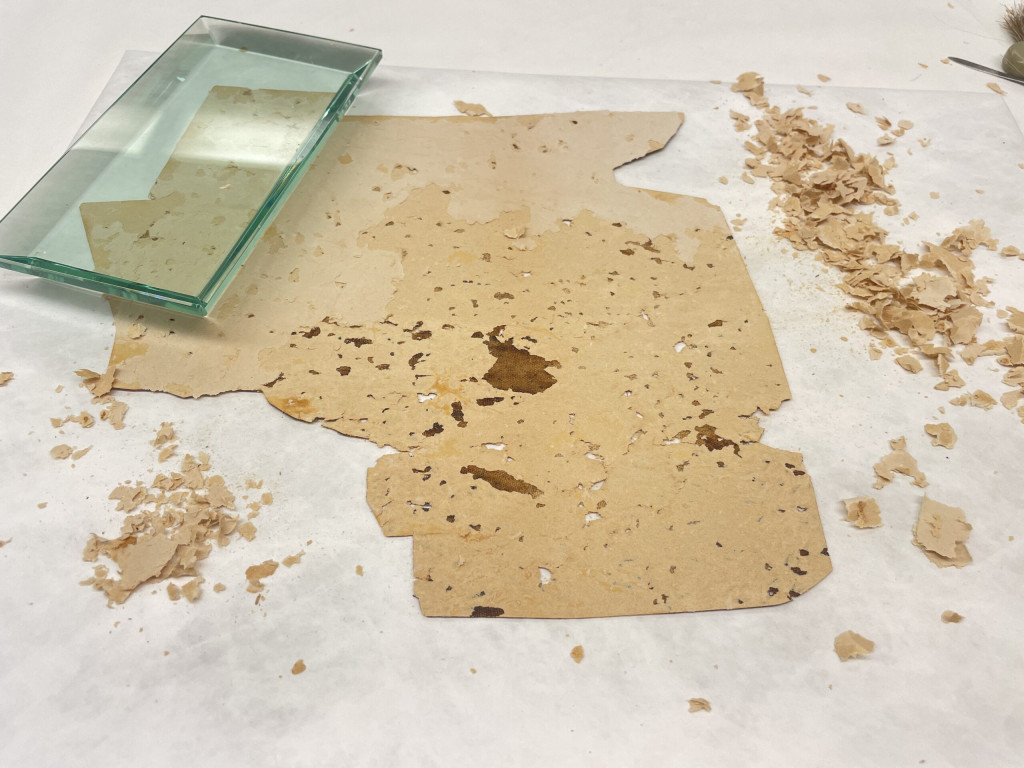
The board was removed slowly, layer by layer. The fragment was kept planar to prevent mechanical damage to the textile.

Before I knew it, it felt as though I was performing a regular backing removal on a photograph or document and soon found myself down to the final brown paper layer. 

Archeological Textile Discovery in the Stacks: The Treatment

After removing multiple layers of board, the brown paper lining was revealed. Some areas of the brown paper were no longer adhered to the textile and readily released during mechanical removal while other areas remained more firmly attached.

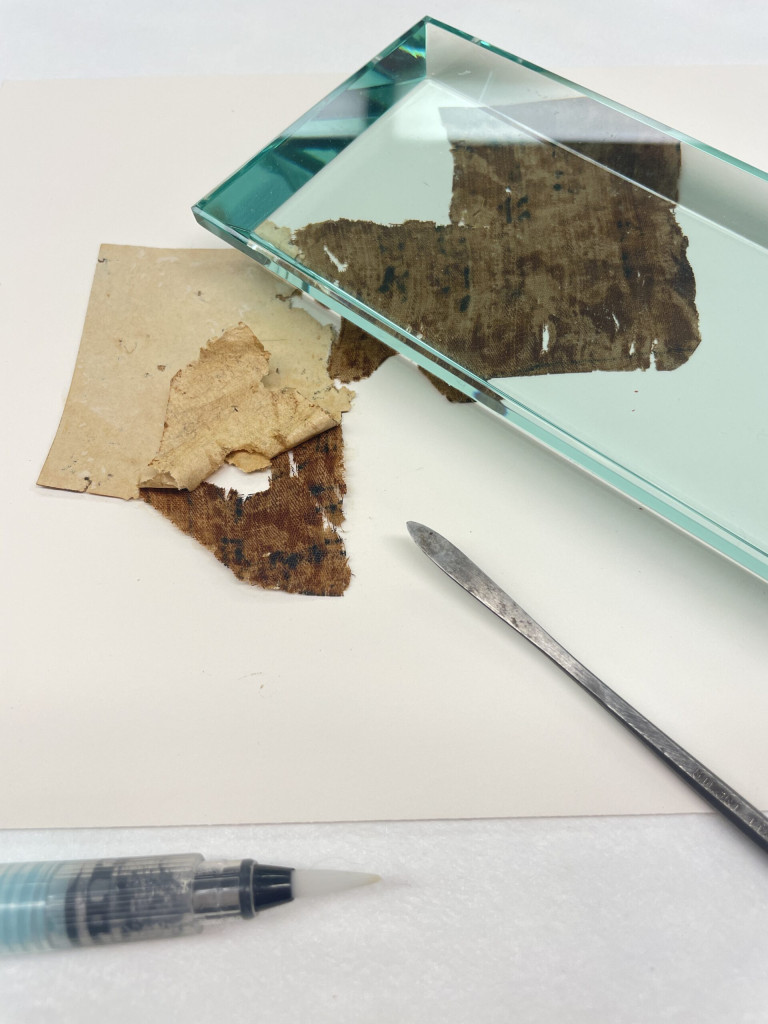
At this point, with the backing and lining parts removed as much as possible, I decided to test a corner of the paper backing with light moisture. To my surprise, the paper backing adhesive quickly reactivated, the lining lifted with little effort, and the humidification strengthened the fibers of the linen fragment. All of this eased fears the fragments might fracture during final treatment steps. Proceeding with treatment felt obtainable.

Archeological Textile Discovery in the Stacks: The Treatment

The final step was releasing the brown paper lining with moisture from a water pen and lifting the lining with spatulas.

With this new turn of events, I realized, if I ventured so far as to remove both the mounted board AND the paper backing, I’d need a new storage solution.

I halted treatment and went back to the drawing board to research storage enclosures (click here to jump to my post on storage solutions). Once I felt confident in selecting a method of storage for the loose textiles, I resumed treatment to remove the brown lining paper and proceeded with treatment on the rest of the fragments.

This is a time-lapse video showing how the brown paper lining was removed in stages. Localized humidification was applied from the back while mechanically separating the paper from the textile with spatulas.

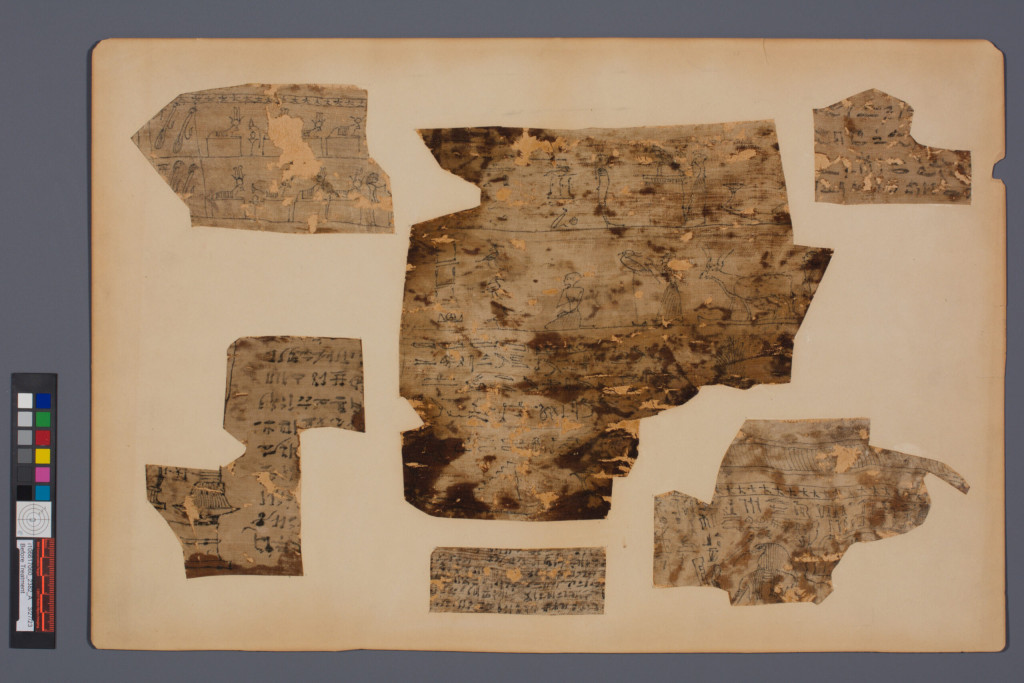
Before Treatment

Collection is mounted to an acidic board with two of the fragments oriented upside down.

Archeological Textile Discovery in the Stacks: The Treatment
Normal Illumination, Before Treatment

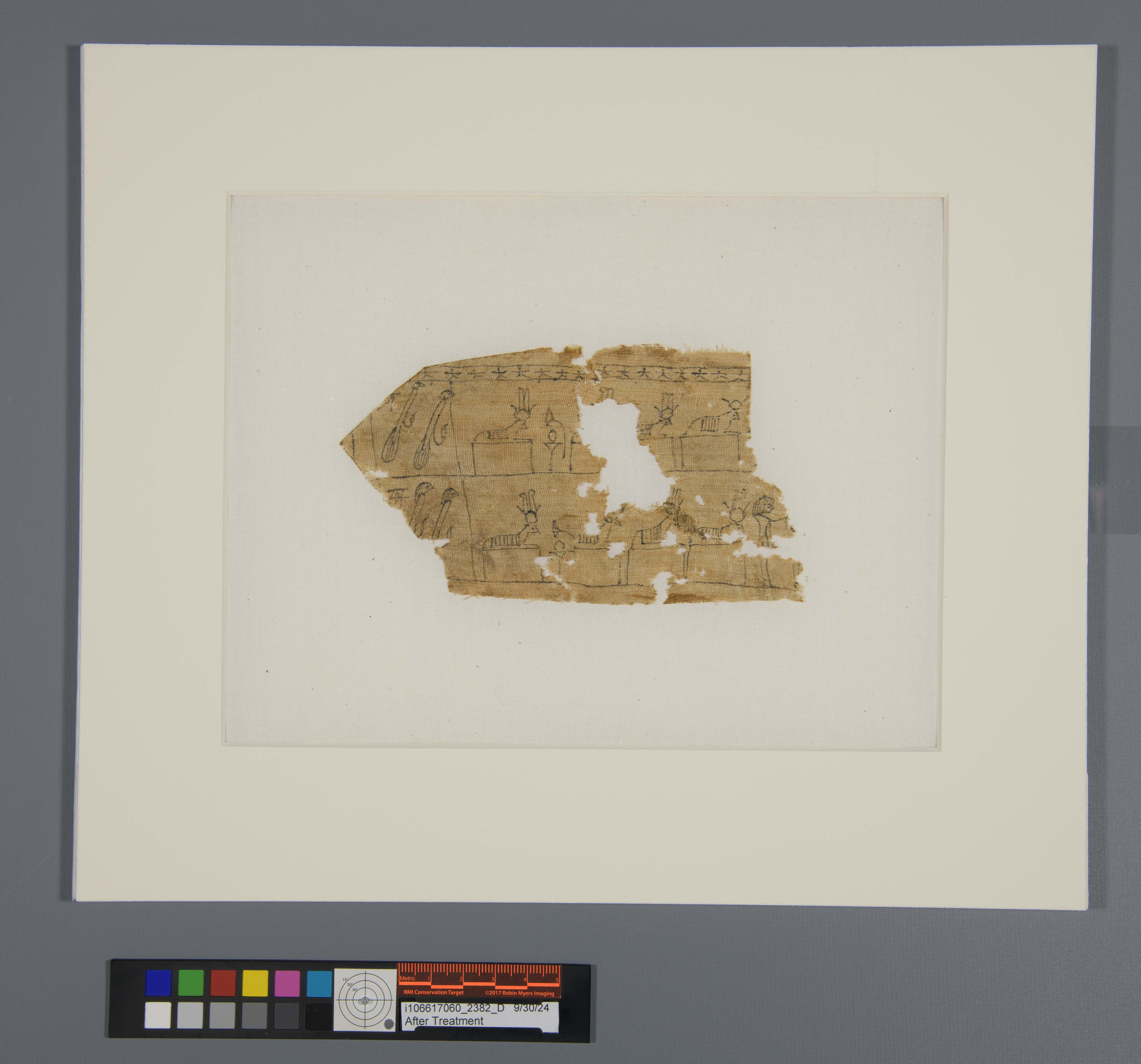
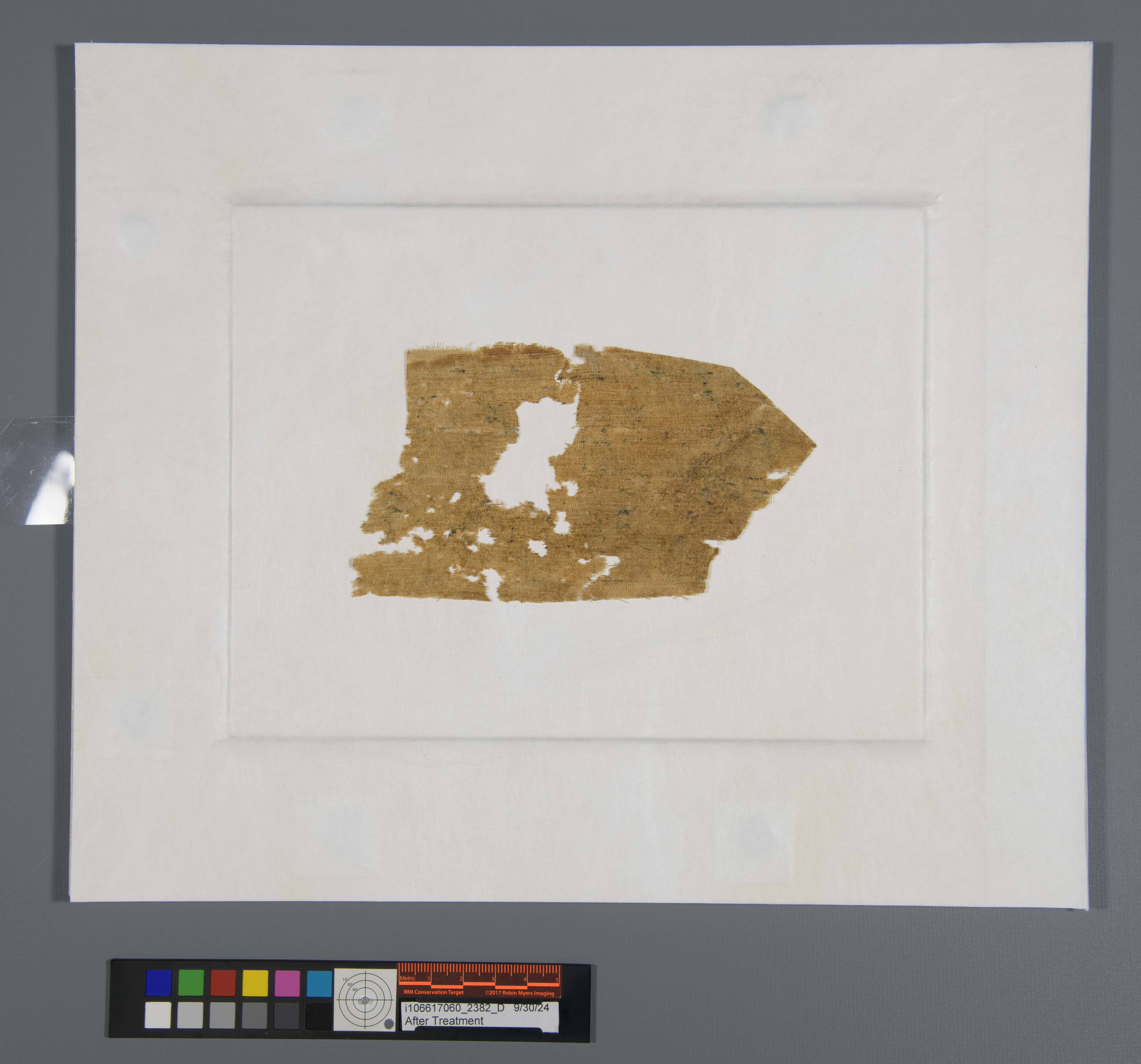
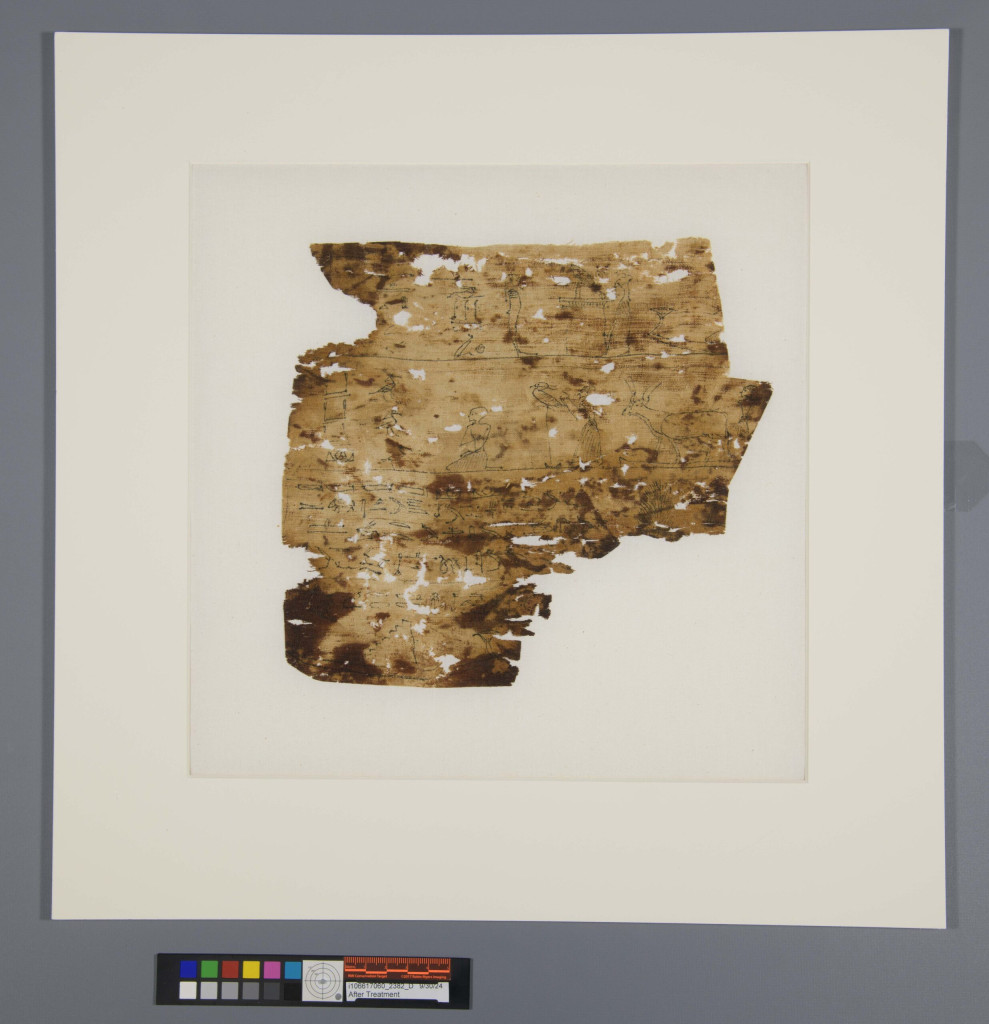
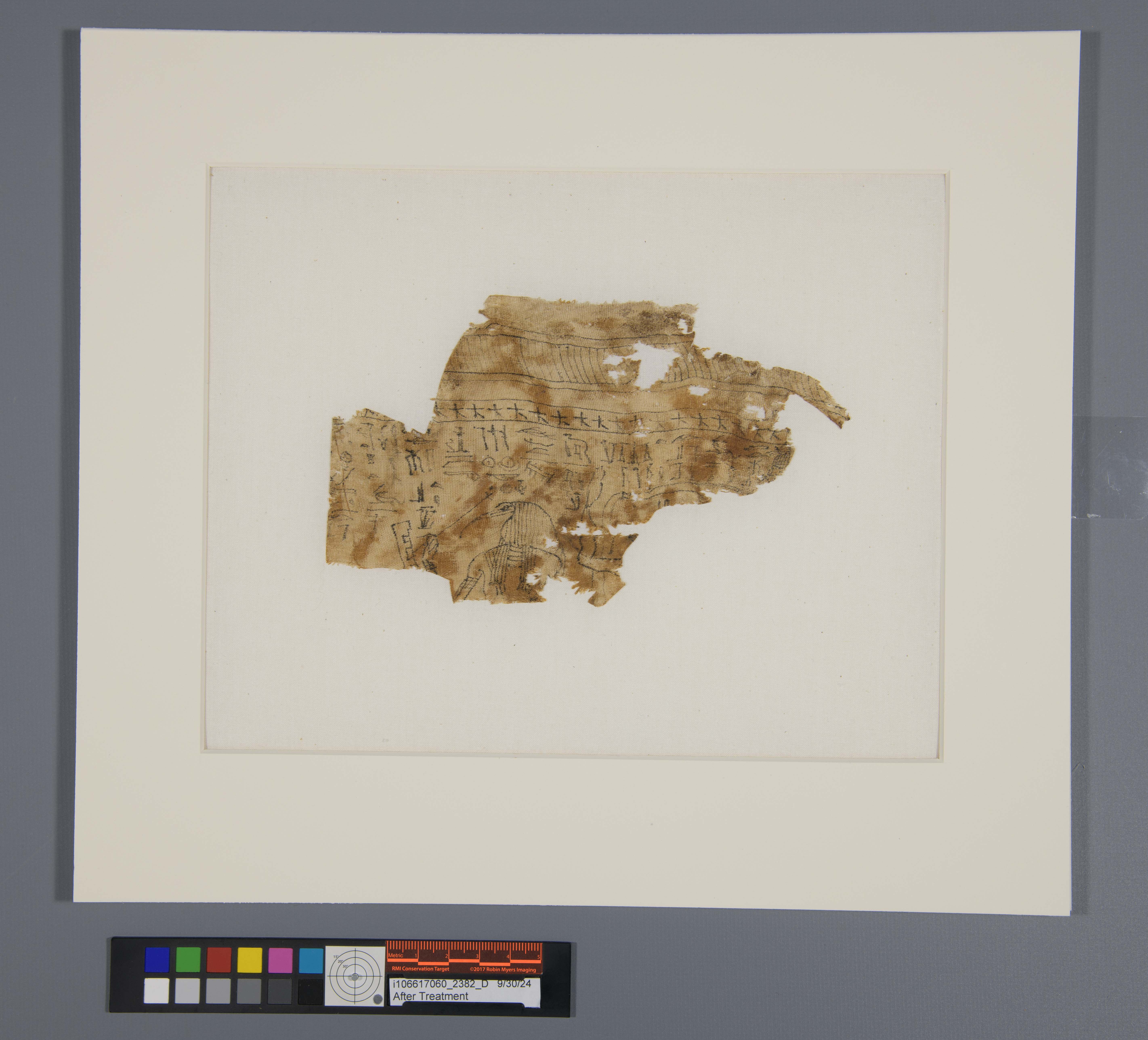
After Treatment

Fragments are stored individually in storage solutions that double as long-term housing. The enclosures facilitate handling as well as display. Being stored individually, the fragments are able to be grouped as necessary by their context.

  • Archeological Textile Discovery in the Stacks: The Treatment
  • Archeological Textile Discovery in the Stacks: The Treatment
  • Archeological Textile Discovery in the Stacks: The Treatment
  • Archeological Textile Discovery in the Stacks: The Treatment
  • Archeological Textile Discovery in the Stacks: The Treatment
  • Archeological Textile Discovery in the Stacks: The Treatment
  • Archeological Textile Discovery in the Stacks: The Treatment
  • Archeological Textile Discovery in the Stacks: The Treatment
  • Archeological Textile Discovery in the Stacks: The Treatment
  • Archeological Textile Discovery in the Stacks: The Treatment
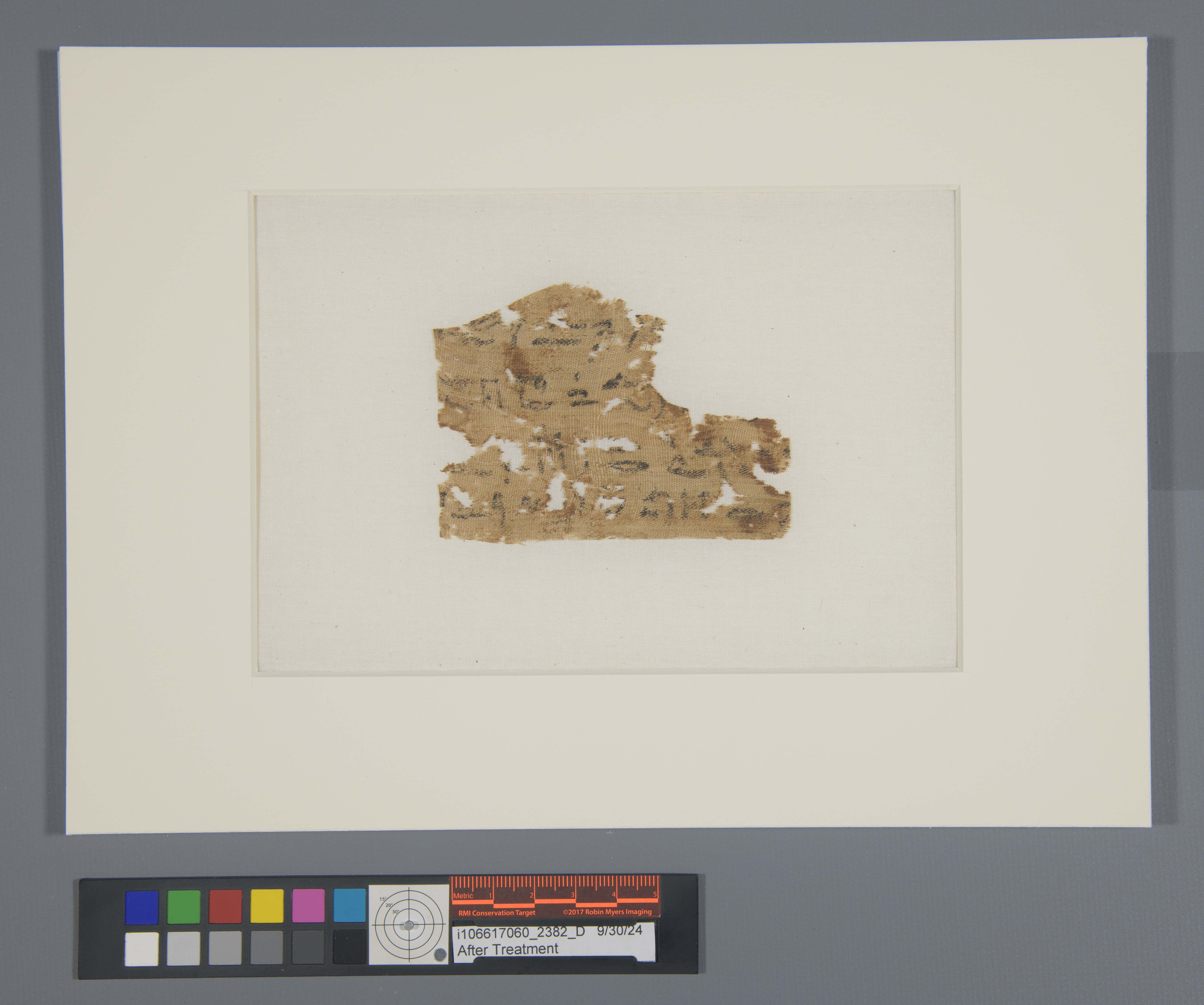
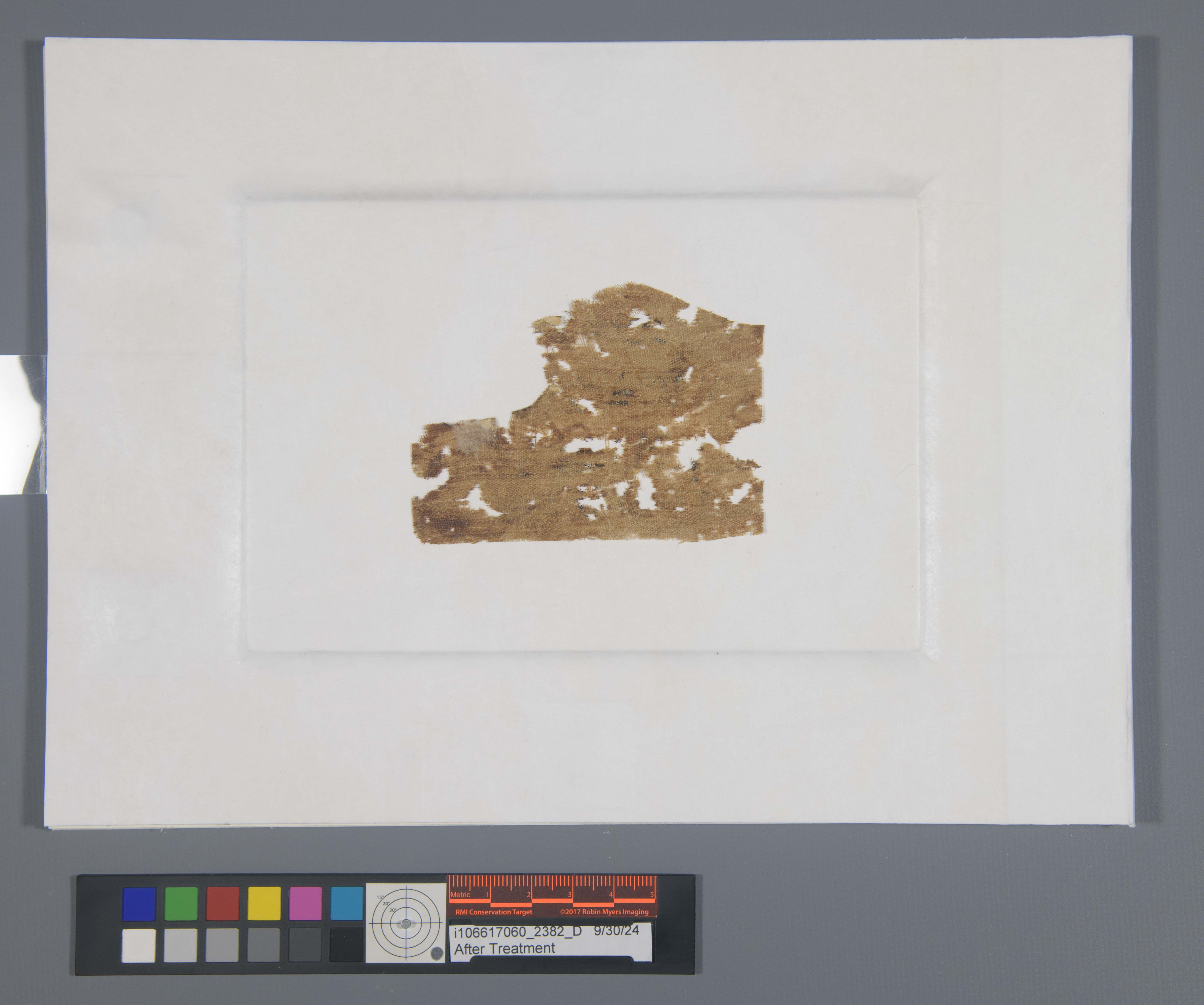
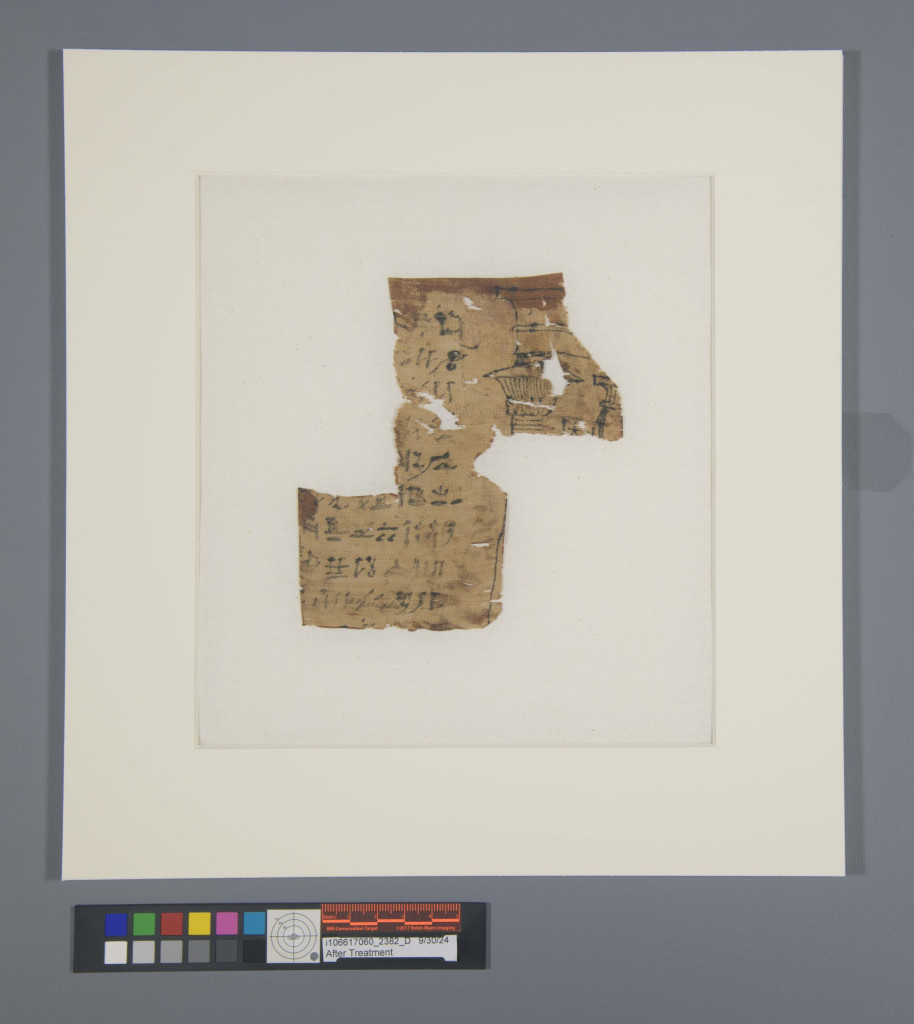
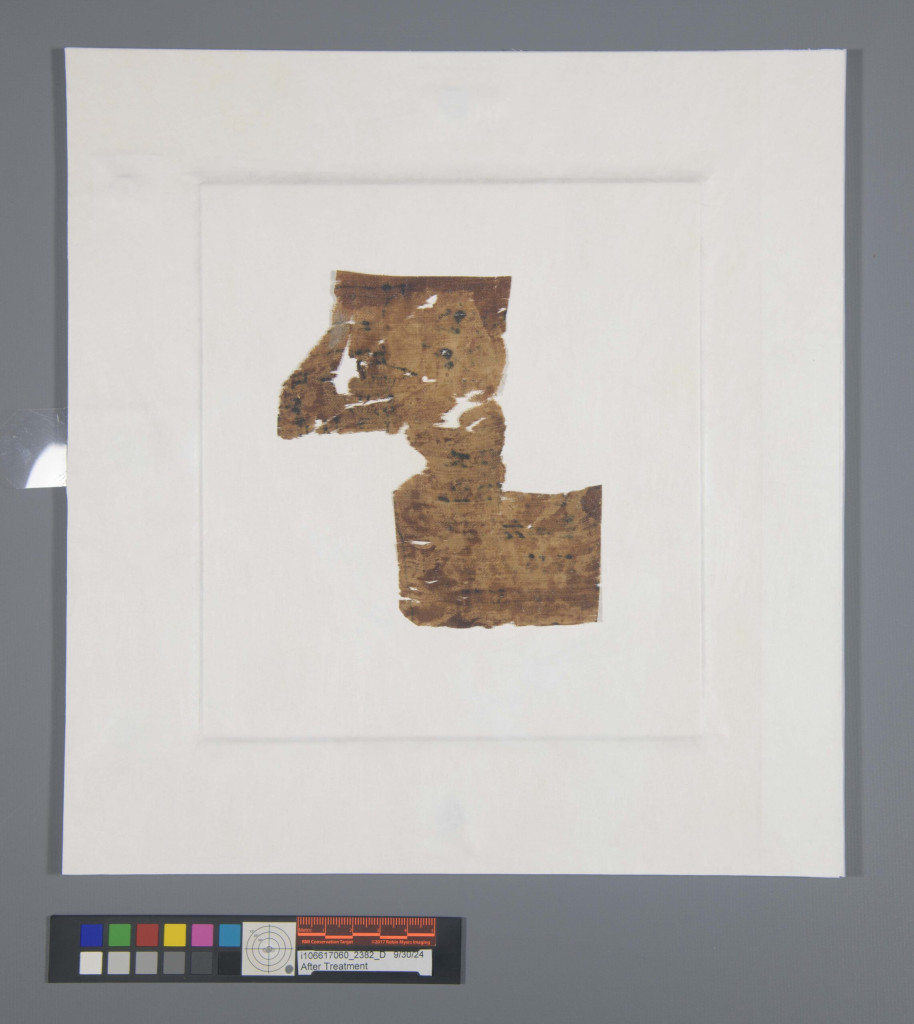
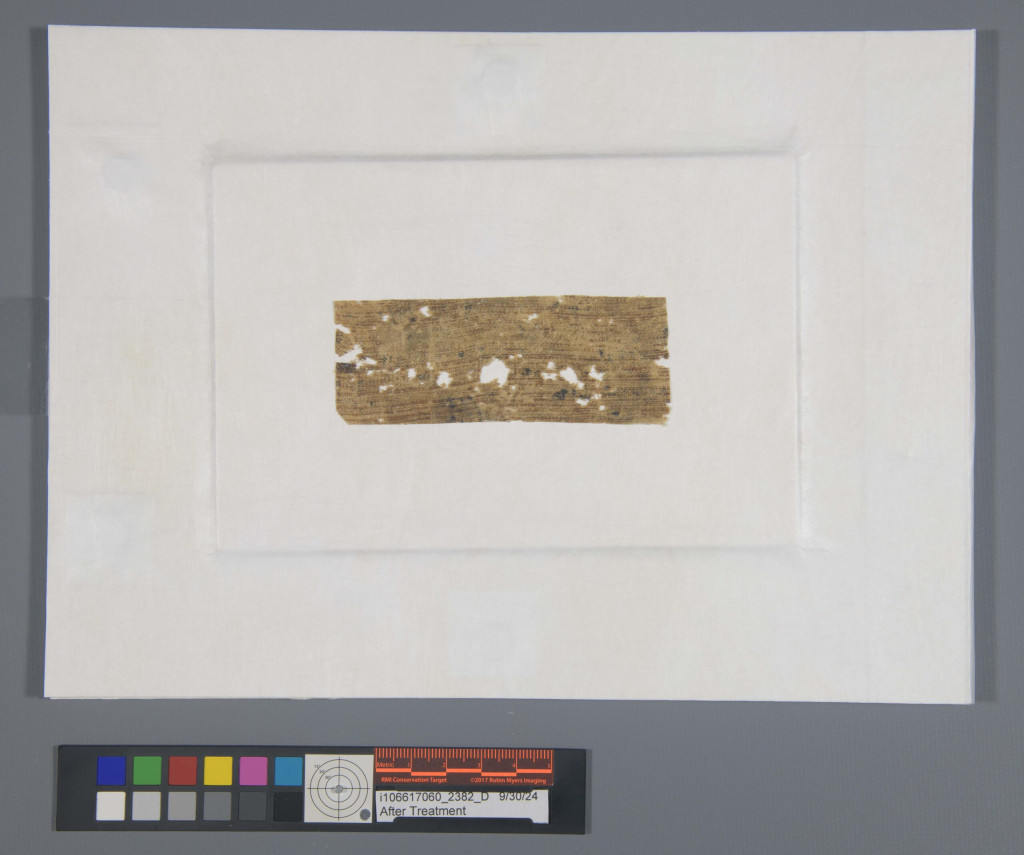
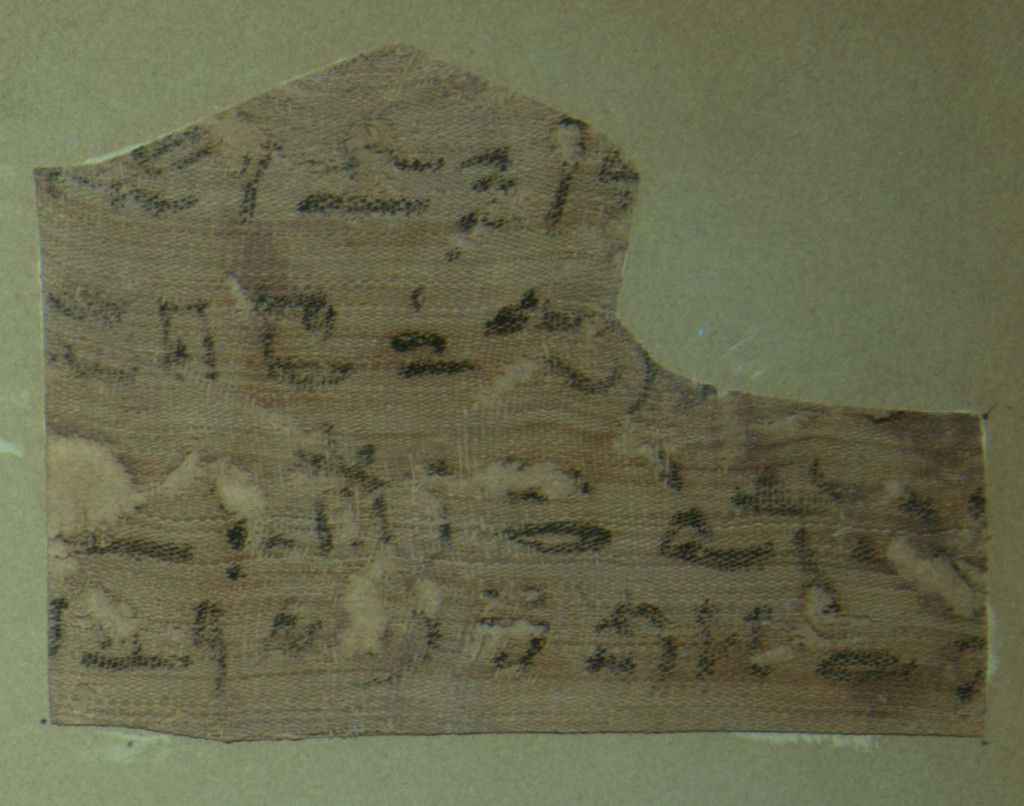
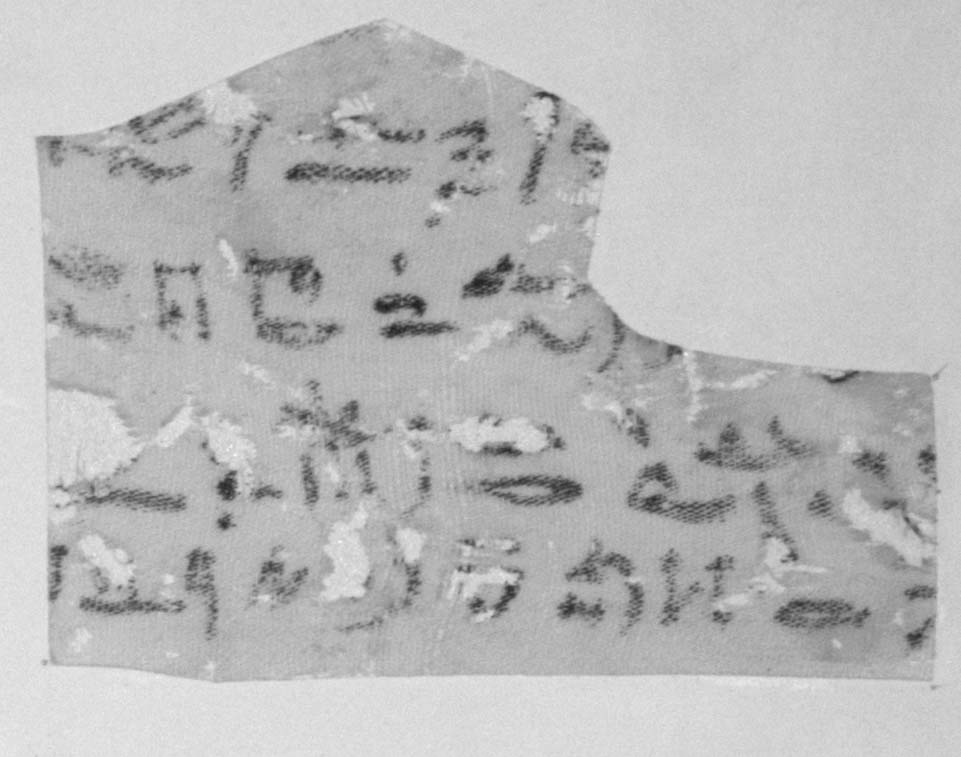
<div class="wp-block-jetpack-slideshow aligncenter" data-effect="slide"><div class="wp-block-jetpack-slideshow_container swiper-container"><ul class="wp-block-jetpack-slideshow_swiper-wrapper swiper-wrapper"><li class="wp-block-jetpack-slideshow_slide swiper-slide"><figure><img alt="" class="wp-block-jetpack-slideshow_image wp-image-5079" data-id="5079" src="https://libapps.libraries.uc.edu/thepreservationlab/wp-content/uploads/2024/10/i106617060_2382_D05N.jpg"/><figcaption class="wp-block-jetpack-slideshow_caption gallery-caption">Recto, Normal Illumination</figcaption></figure></li><li class="wp-block-jetpack-slideshow_slide swiper-slide"><figure><img alt="" class="wp-block-jetpack-slideshow_image wp-image-5082" data-id="5082" src="https://libapps.libraries.uc.edu/thepreservationlab/wp-content/uploads/2024/10/i106617060_2382_D06N.jpg"/><figcaption class="wp-block-jetpack-slideshow_caption gallery-caption">Verso, Normal Illumination</figcaption></figure></li></ul><a class="wp-block-jetpack-slideshow_button-prev swiper-button-prev swiper-button-white" role="button"></a><a class="wp-block-jetpack-slideshow_button-next swiper-button-next swiper-button-white" role="button"></a><a aria-label="Pause Slideshow" class="wp-block-jetpack-slideshow_button-pause" role="button"></a><div class="wp-block-jetpack-slideshow_pagination swiper-pagination swiper-pagination-white"></div></div></div>
  • Archeological Textile Discovery in the Stacks: The Treatment
  • Archeological Textile Discovery in the Stacks: The Treatment
  • Archeological Textile Discovery in the Stacks: The Treatment
  • Archeological Textile Discovery in the Stacks: The Treatment
  • Archeological Textile Discovery in the Stacks: The Treatment
  • Archeological Textile Discovery in the Stacks: The Treatment
  • Archeological Textile Discovery in the Stacks: The Treatment
  • Archeological Textile Discovery in the Stacks: The Treatment
  • Archeological Textile Discovery in the Stacks: The Treatment
  • Archeological Textile Discovery in the Stacks: The Treatment
  • Archeological Textile Discovery in the Stacks: The Treatment
  • Archeological Textile Discovery in the Stacks: The Treatment

To learn more about the storage, check out the final post of the four-part series: Storage Solutions!

If you missed the earlier installments, you can jump to previous posts using the links below:

  • Research and Examination – Examining the material composition of the objects
  • History – Historical information provided about the Egyptian inscriptions
  • Treatment – How the materials were treated after learning about their content
  • Storage Solutions – Individual solutions for separated fragments as well as storage as a collection

Acknowledgements

  • Katherine Davis, Lecturer in Egyptology in the Department of Middle East Studies at the University of Michigan
  • Suzanne Davis, the Associate Curator and Head of Conservation at the Kelsey Museum of Archaeology at the University of Michigan
  • Dr. Ann-Katril Gill at the University of Leipzig
  • Marieka Kaye, Harry A. and Margaret D. Towsley Foundation, Head, Conservation & Book Repair, University of Michigan Library
  • Obie Linn, Textile Conservator at the Cincinnati Art Museum
  • Ann Wuertemberger, Catalog Librarian at the Cincinnati and Hamilton County Public Library
  • Meredith Montague, Textile Conservator at the Museum of Fine Arts Boston

Ashleigh Ferguson Schieszer – Special Collections Conservator and Co-Lab Manager [CHPL]

Archeological Textile Discovery in the Stacks: The History

This is the second post of a four part series.

When a collection of Egyptian mummy bandage fragments at the Cincinnati and Hamilton County Public Library was found in an area used to store uncatalogued flat materials, the lab was asked to play a role in providing better stewardship.  

Click the links below to jump to the following posts:

  • Research and Examination – Examining the material composition of the objects
  • History – Historical information provided about the Egyptian inscriptions
  • Treatment – How the materials were treated after learning about their content
  • Storage Solutions – Individual solutions for separated fragments as well as storage as a collection

Learning About the Collection

Before coming to the lab, the library knew little about the fragments. So first and foremost, I reached out to a handful of scholars to see if I could glean any information.  I soon found myself engulfed in a journey of discovery with each colleague leading me to a new reference, sharing a collective wealth of knowledge.

History

With generous information provided by colleagues, the library learned the following about the fragments (fragment measurements below are with height and width at the widest points):

  • Archeological Textile Discovery in the Stacks: The History
  • Archeological Textile Discovery in the Stacks: The History
  • Archeological Textile Discovery in the Stacks: The History
  • Archeological Textile Discovery in the Stacks: The History

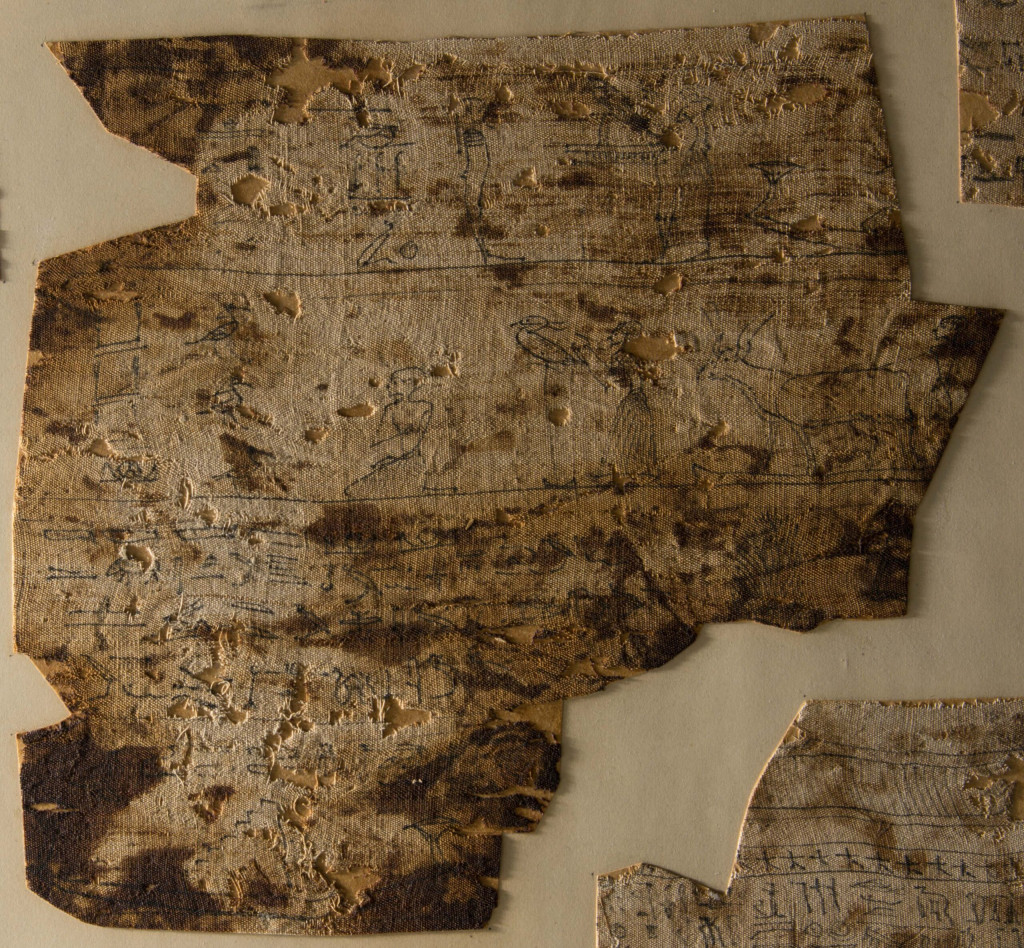
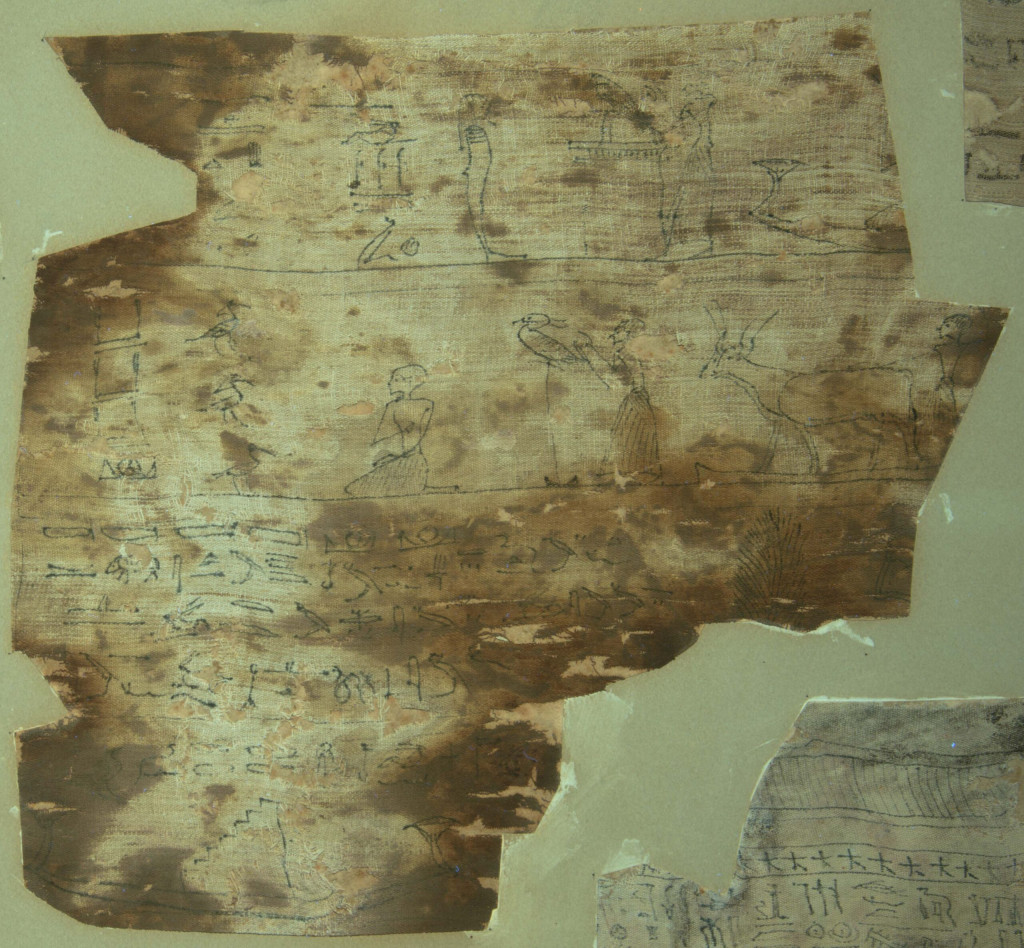
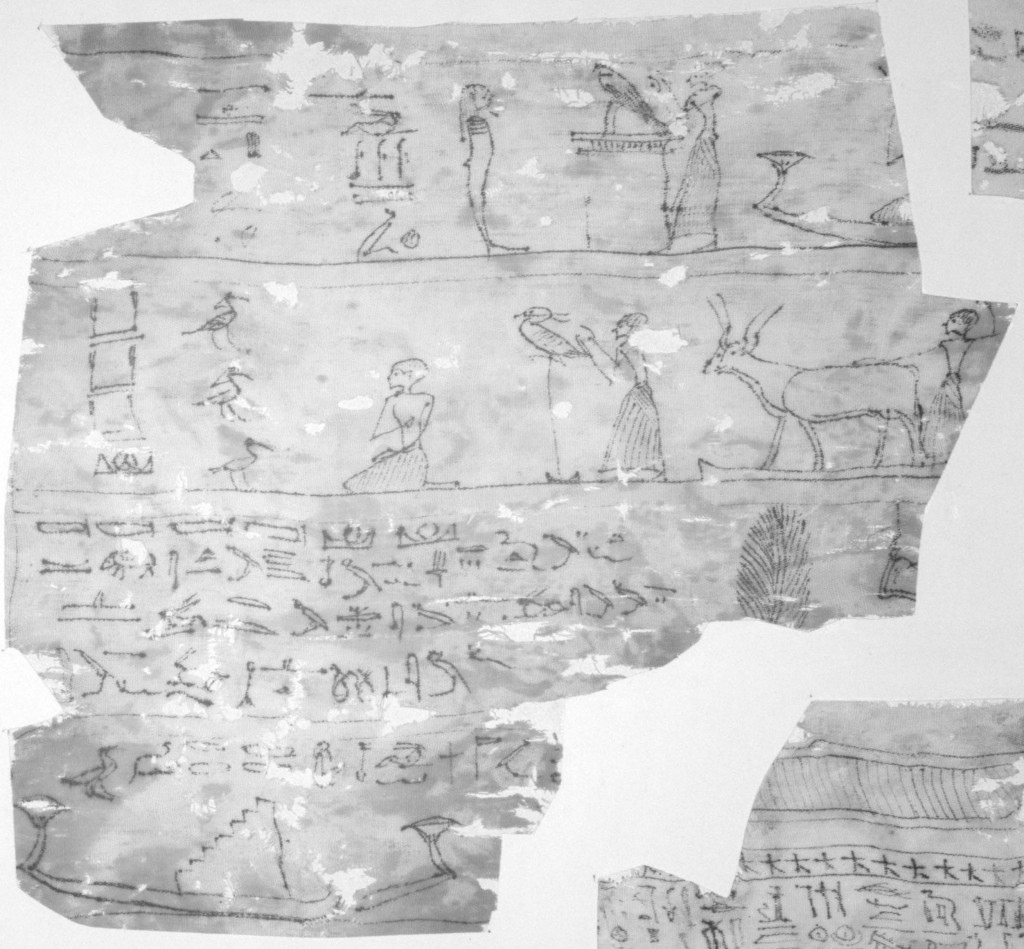
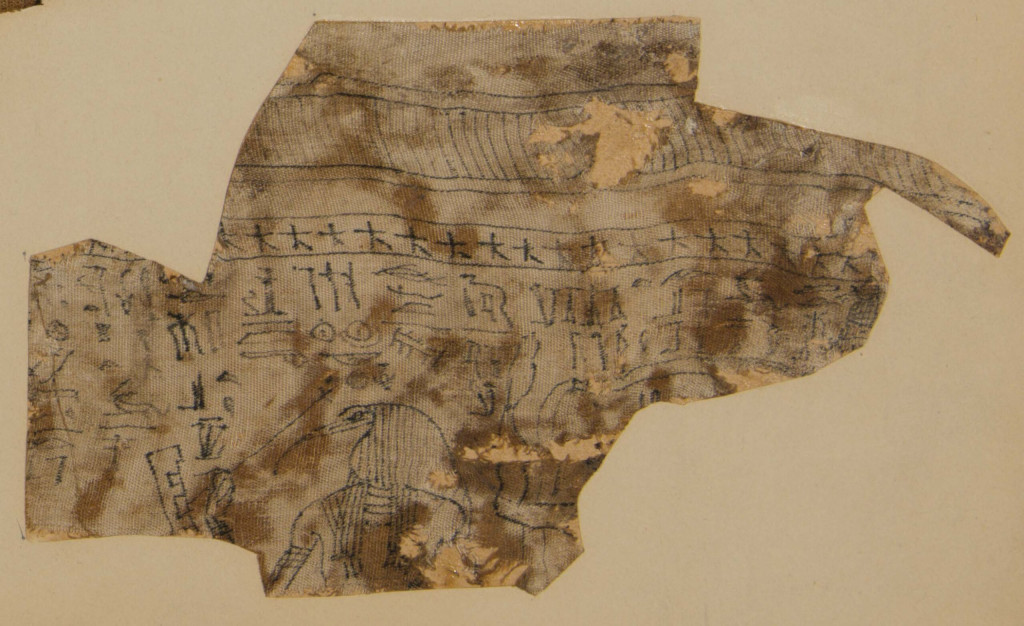
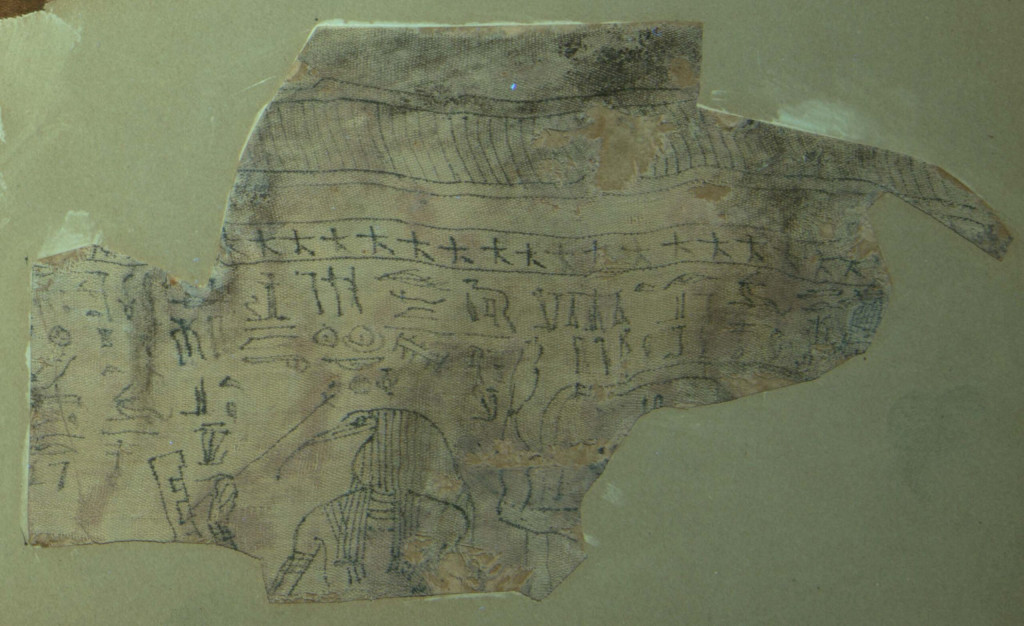
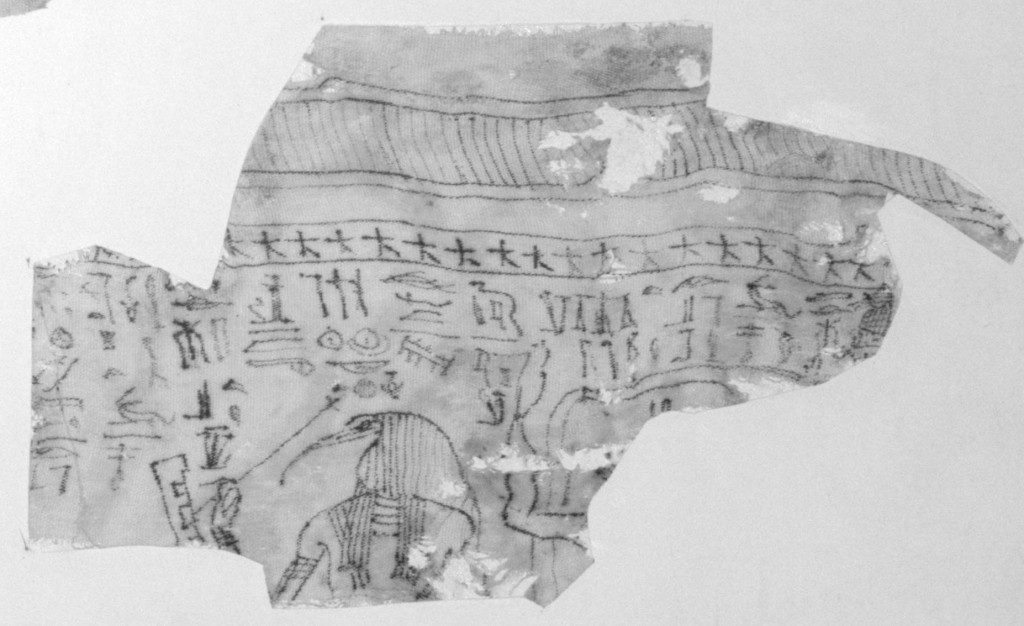
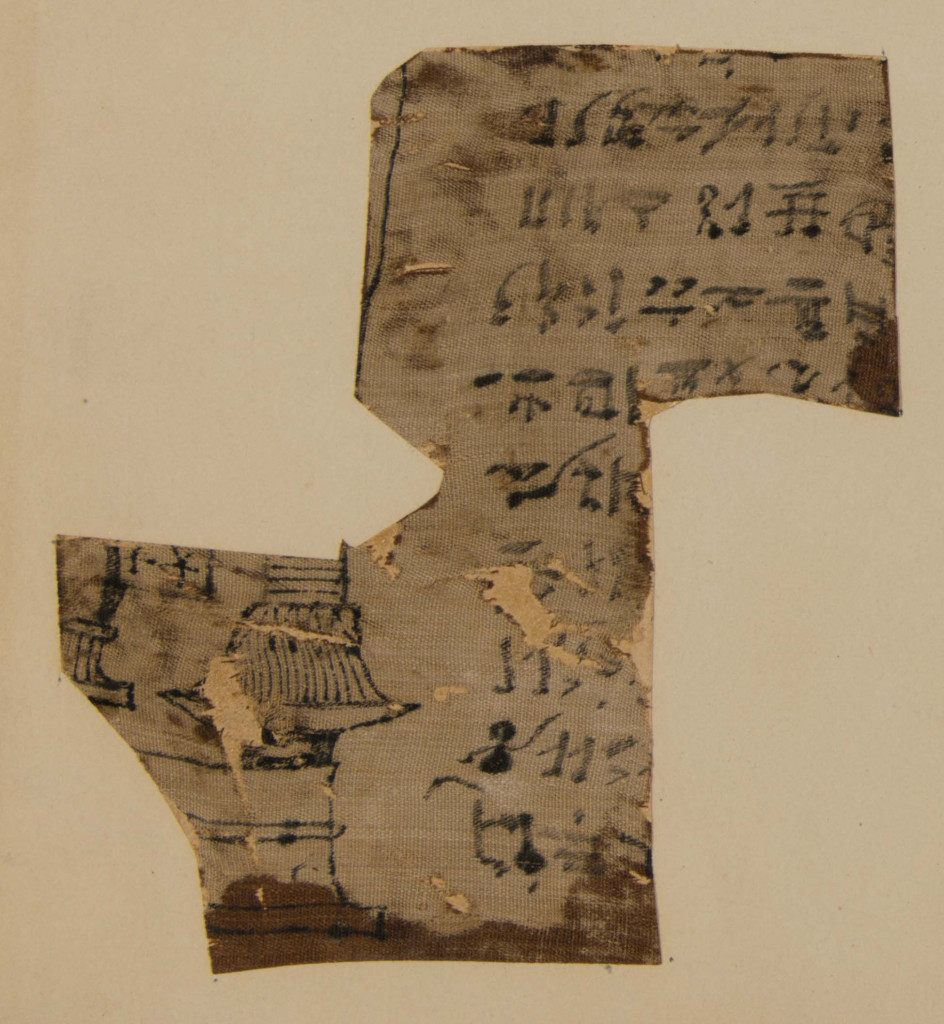
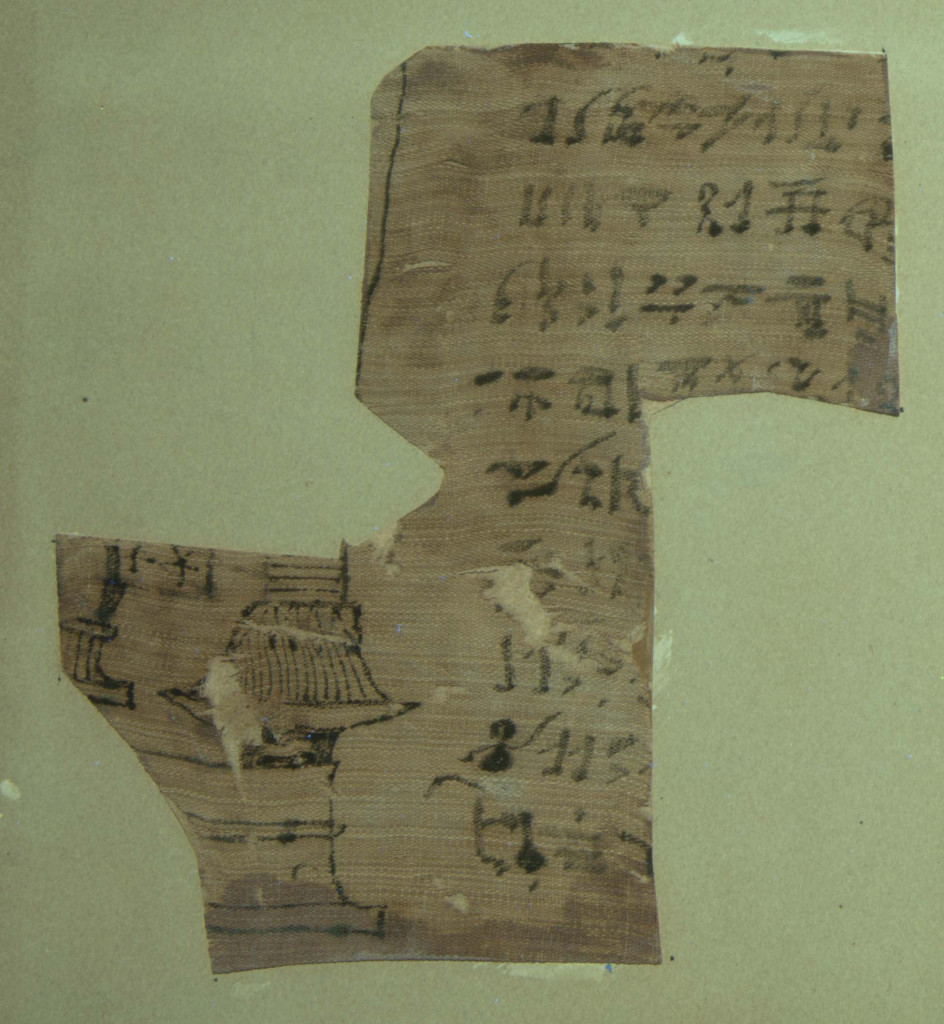
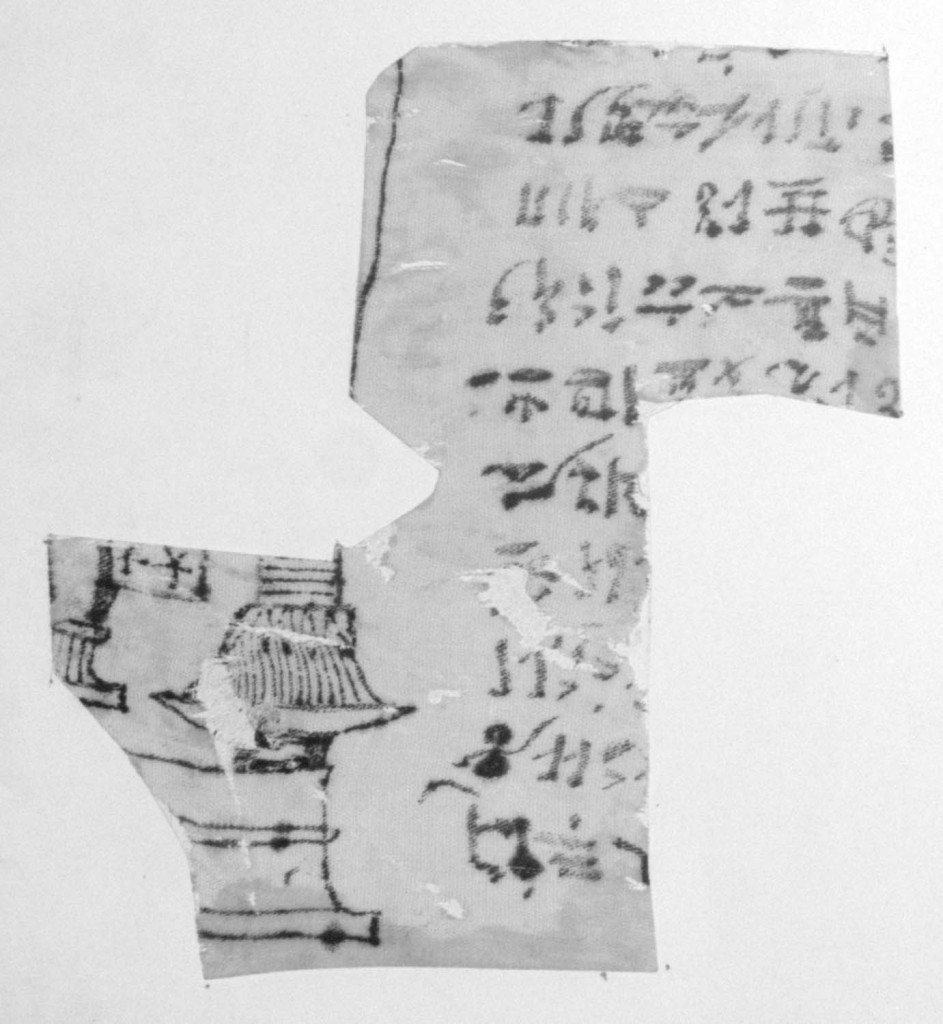
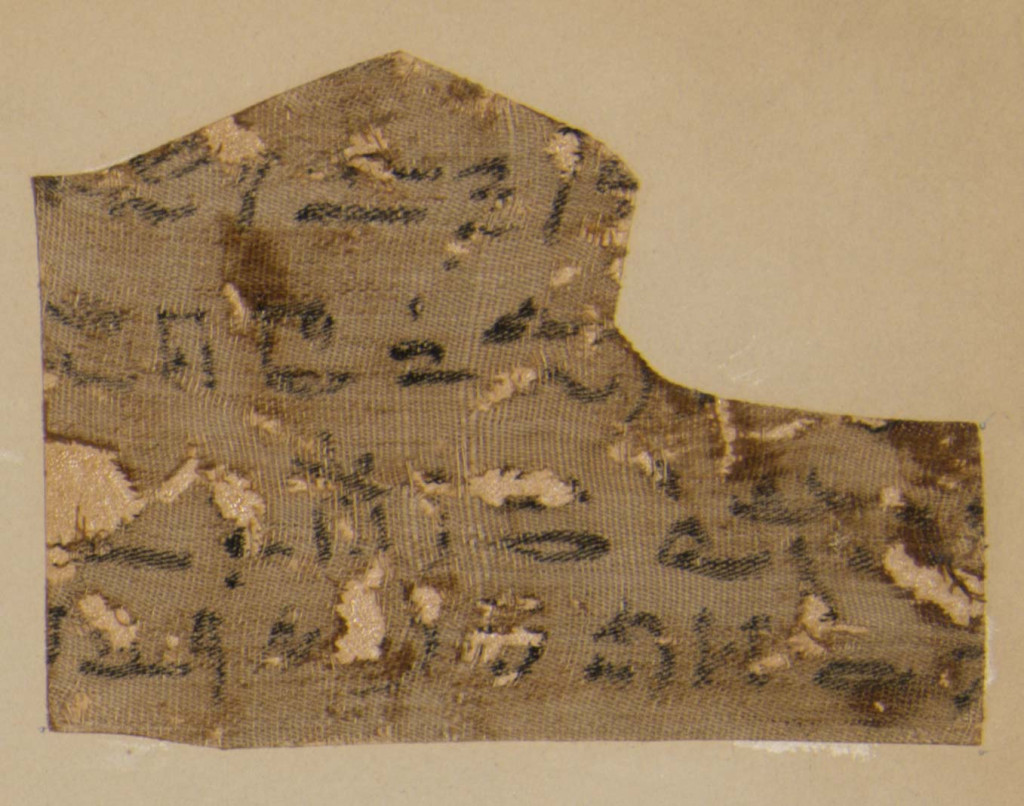
This is the center fragment.  It contains Hieroglyphic script, measuring 21 x 23 cm.  It’s part of a 3-piece set that belonged to a priest called Wennofer.  The large scene in the middle belongs to Book of the Dead Spell 110 showing the deceased doing various things in the netherworld.

  • Archeological Textile Discovery in the Stacks: The History
  • Archeological Textile Discovery in the Stacks: The History
  • Archeological Textile Discovery in the Stacks: The History
  • Archeological Textile Discovery in the Stacks: The History

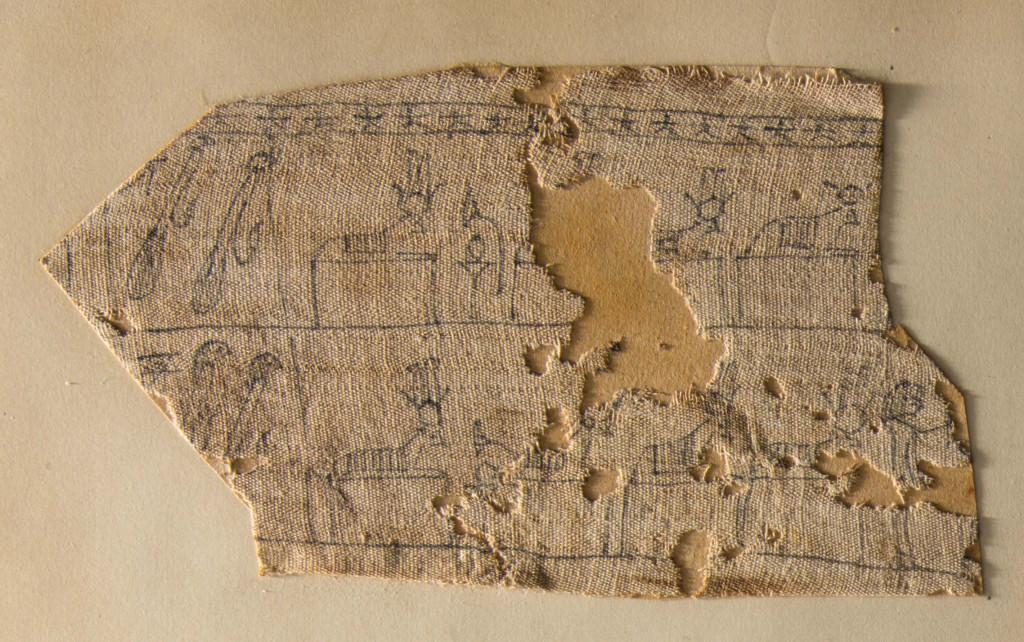
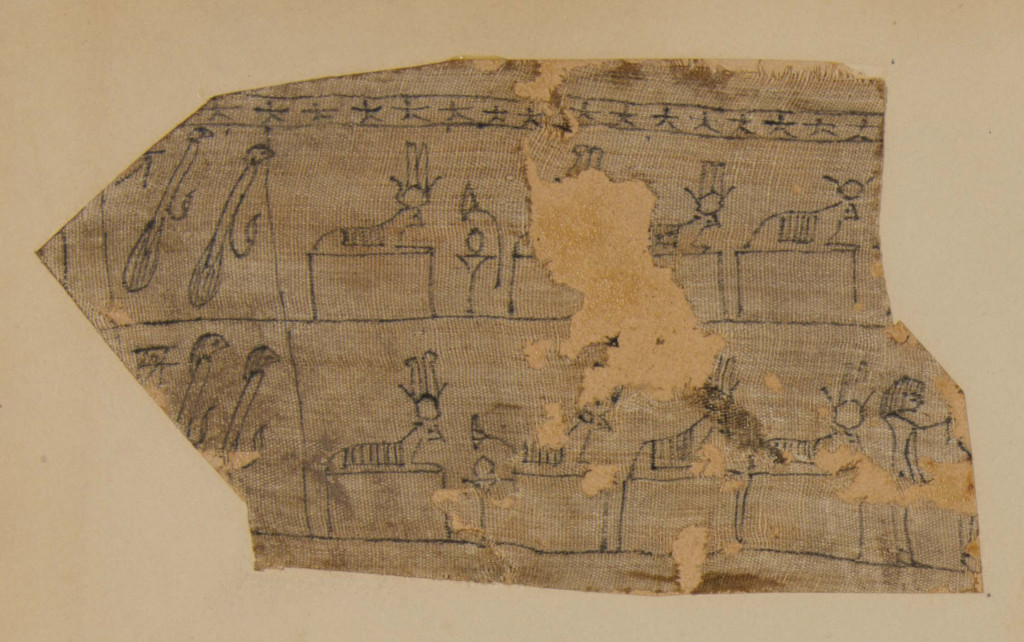
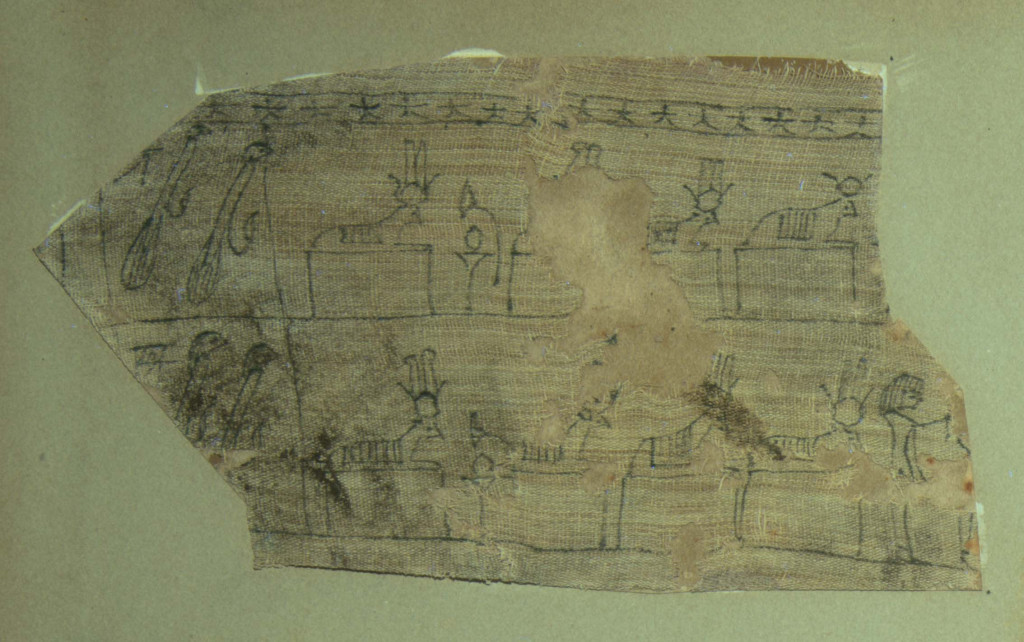
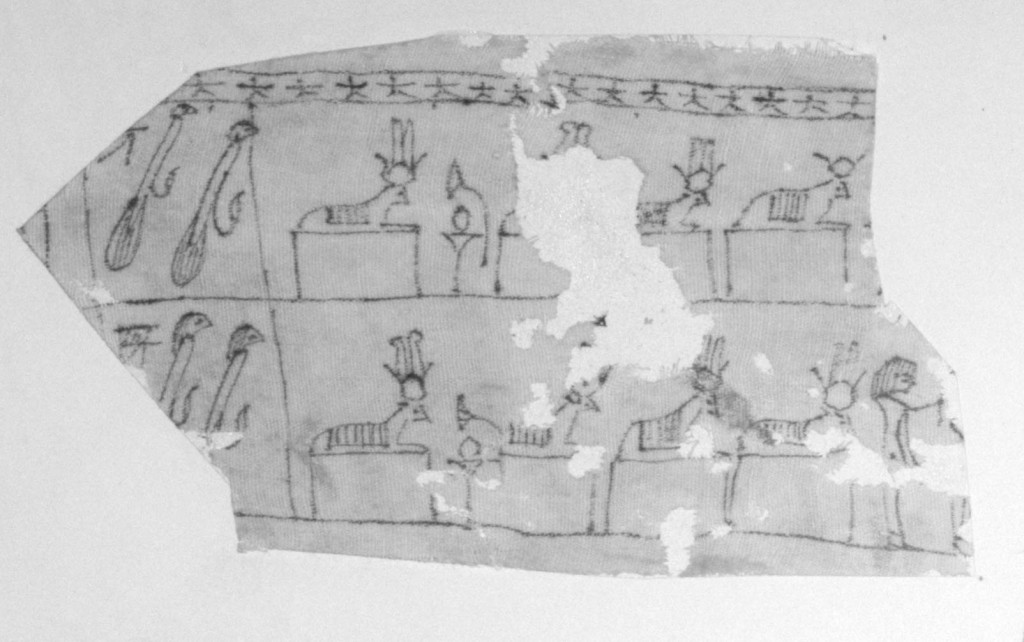
This is the upper left fragment.  It measures 8 x 14 cm. Script contains images and no preserved text. This is part of the 3-piece set that also belonged to a priest called Wennofer. Images belong to the vignette of Book of the Dead Spell 148. “For making provision for a spirit in the realm of the dead” this spell provides the names of the Bull of Heaven and his seven cows, providing an eternal supply of food and beer.

  • Archeological Textile Discovery in the Stacks: The History
  • Archeological Textile Discovery in the Stacks: The History
  • Archeological Textile Discovery in the Stacks: The History
  • Archeological Textile Discovery in the Stacks: The History

This is the bottom right fragment.  It contains Hieroglyphic writing and measures approximately 10 x 17 cm, containing a Thoth god image. It’s the final part of the 3-piece set that belonged to a priest called Wennofer. Preserved images are part of the vignette of Book of the Dead Spell 125, the so-called judgement scene.

  • Archeological Textile Discovery in the Stacks: The History
  • Archeological Textile Discovery in the Stacks: The History
  • Archeological Textile Discovery in the Stacks: The History
  • Archeological Textile Discovery in the Stacks: The History

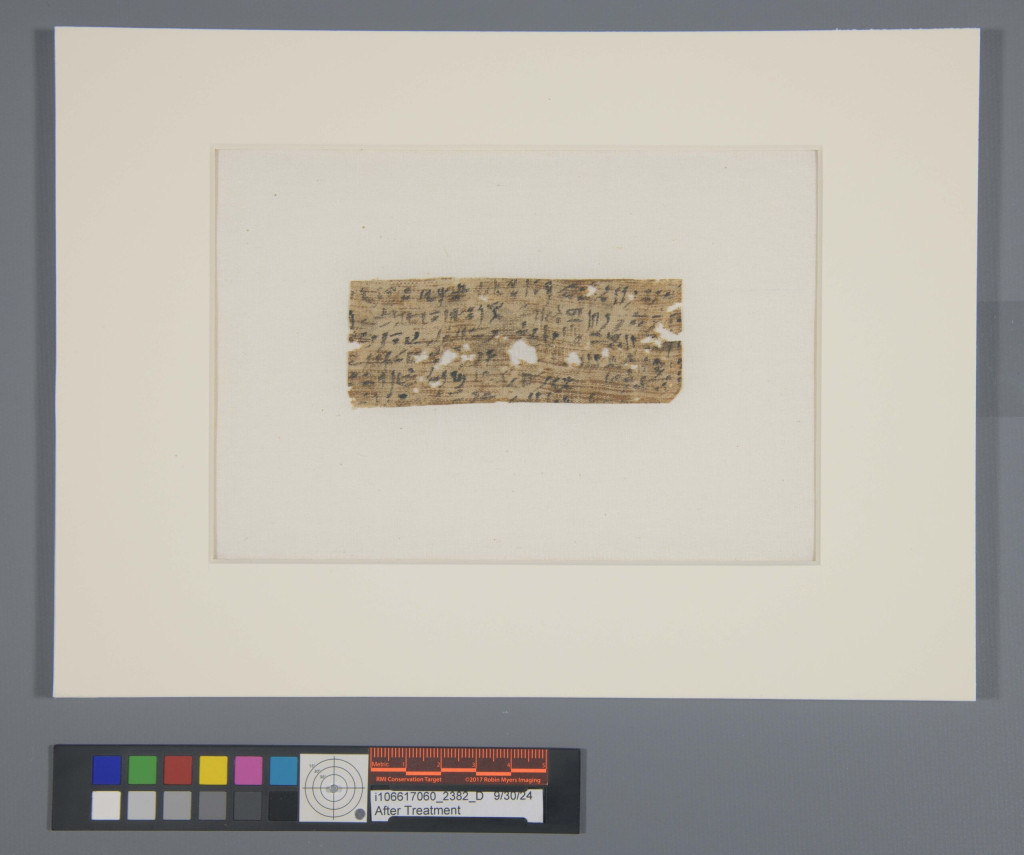
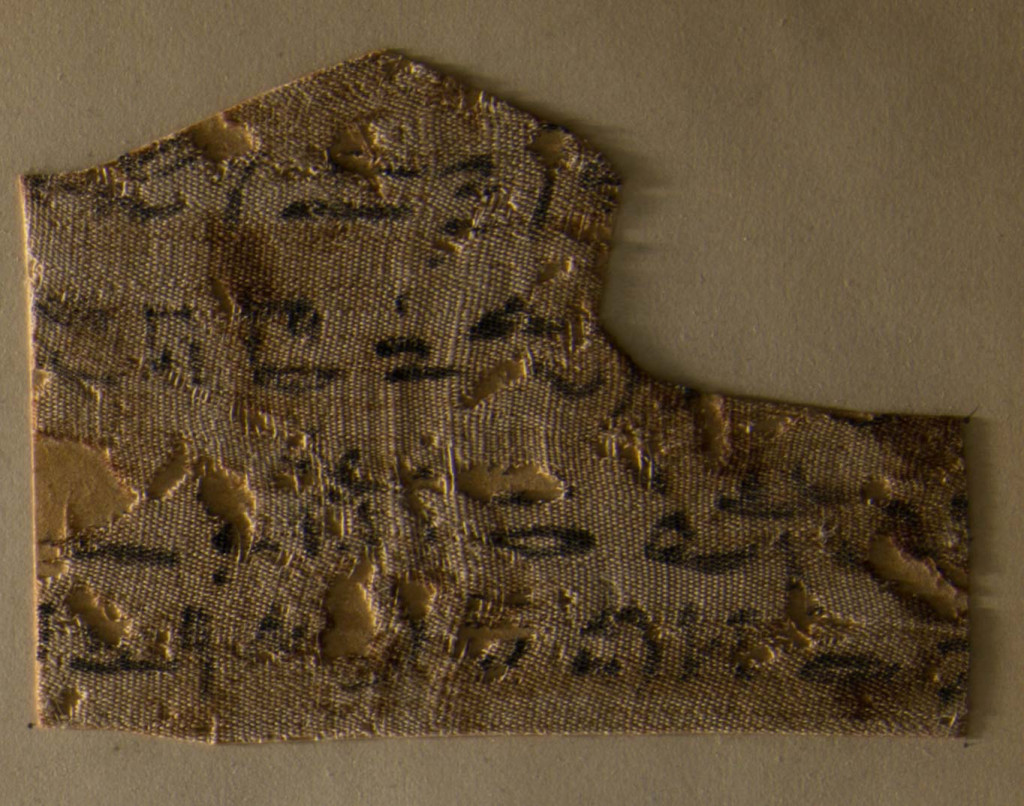
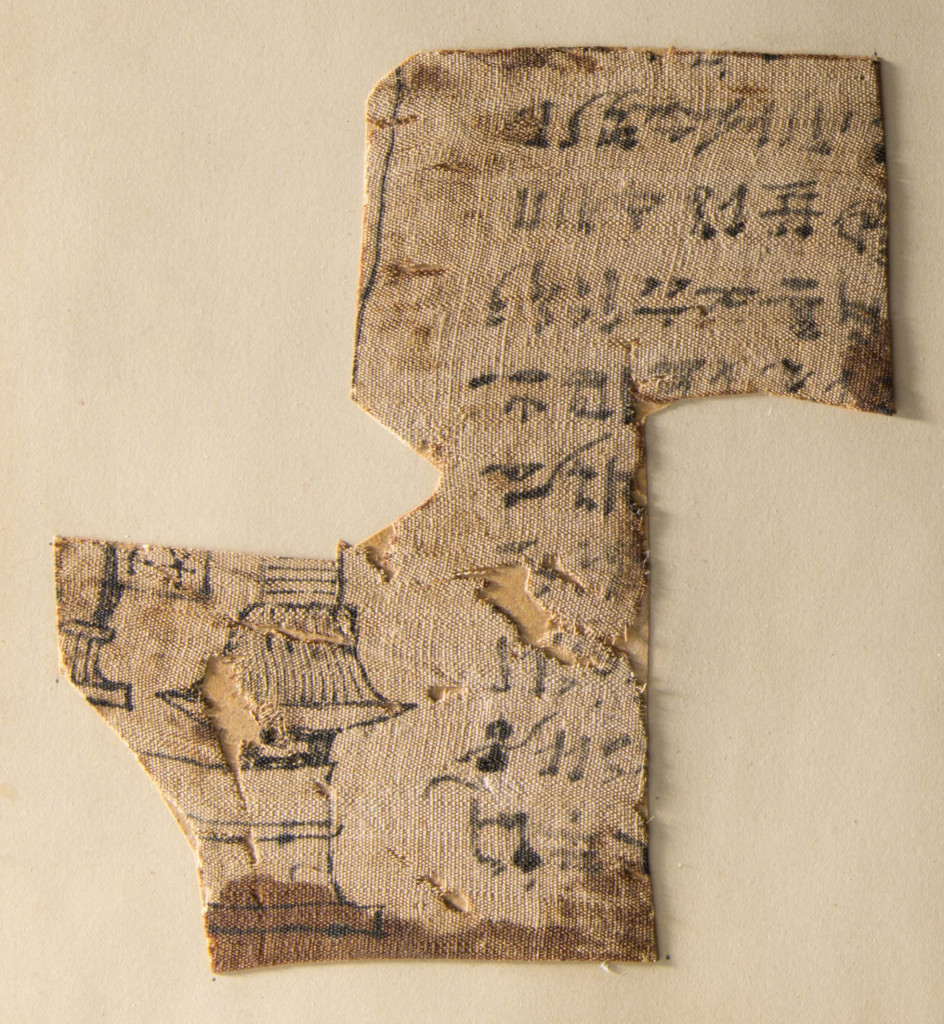
This is the bottom left fragment containing Hieratic script, however it is oriented upside down. It measures approximately 13 x 12 cm.  There isn’t an owner’s name preserved so we’re unsure if it belongs with any other fragments in this collection. Images contain a shrine column, sections of Book of the Dead Spells 125 and 126, as well as traces of the vignette belonging to Book of the Dead Spell 125.
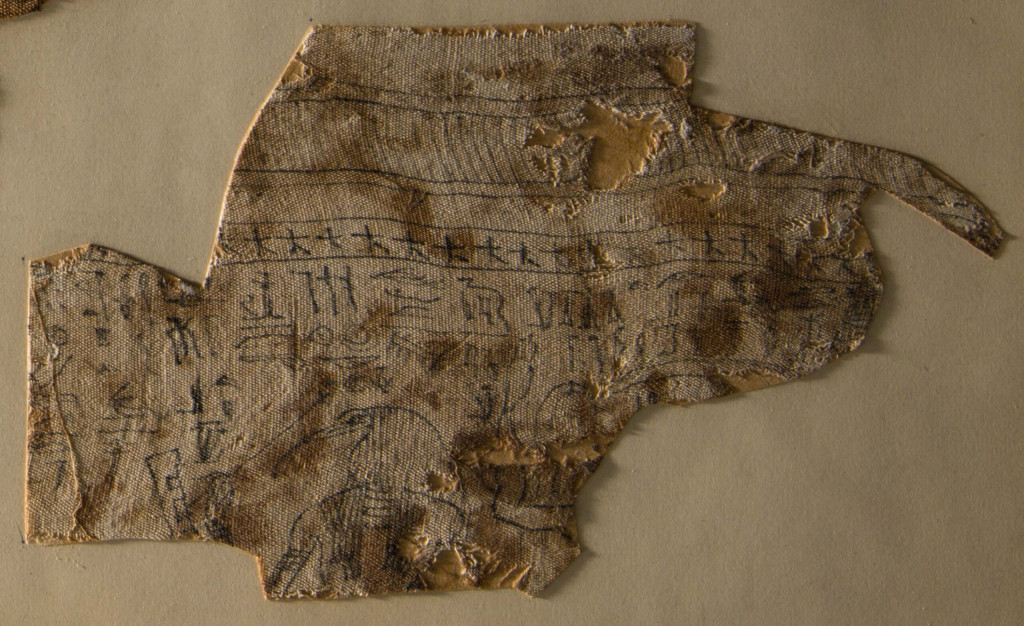
  • Archeological Textile Discovery in the Stacks: The History
  • Archeological Textile Discovery in the Stacks: The History
  • Archeological Textile Discovery in the Stacks: The History
  • Archeological Textile Discovery in the Stacks: The History

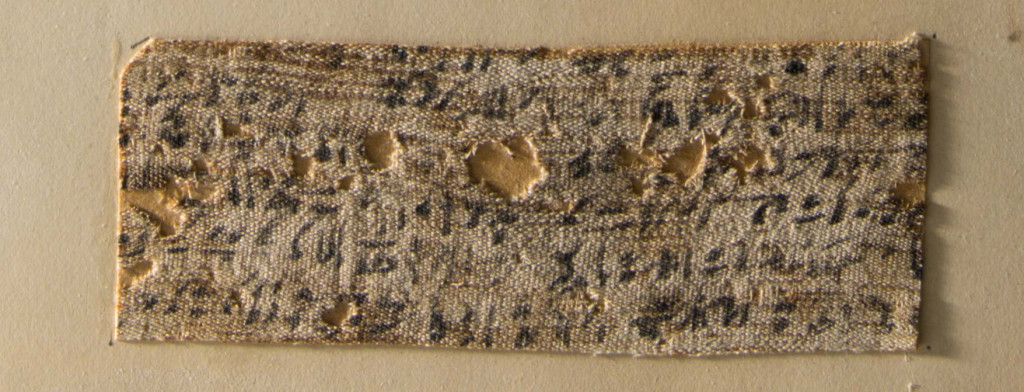
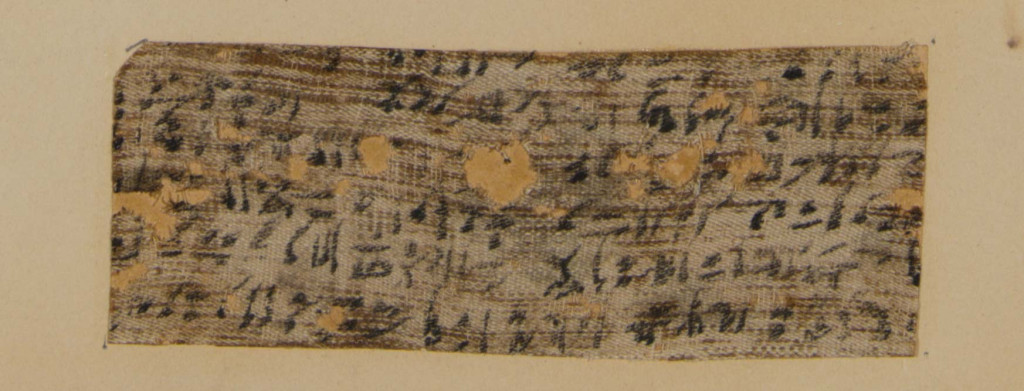
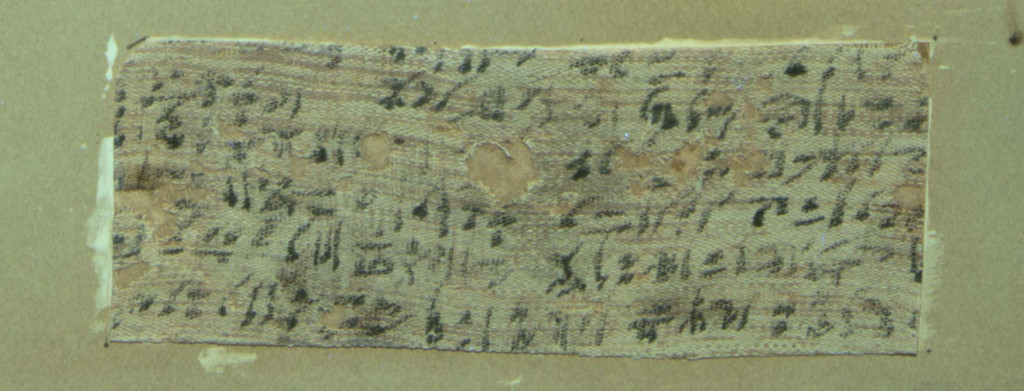
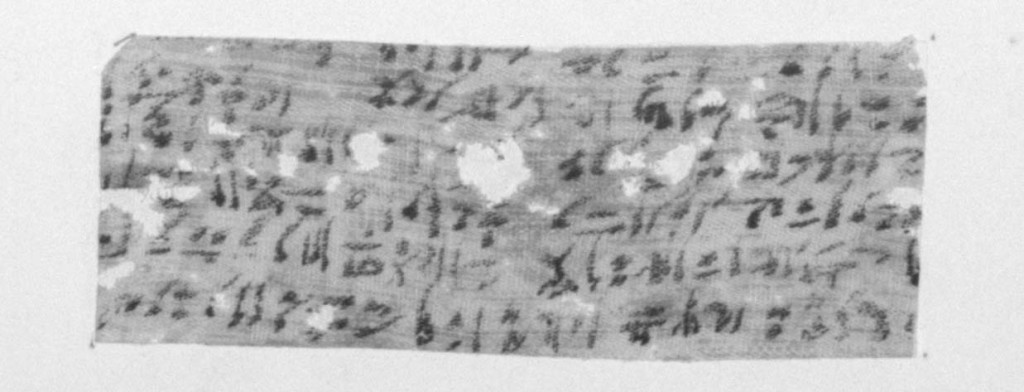
This is the upper right hieratic fragment with Hieratic script. It measures approximately 9 x 7 cm. There is no owner’s name preserved.

  • Archeological Textile Discovery in the Stacks: The History
  • Archeological Textile Discovery in the Stacks: The History
  • Archeological Textile Discovery in the Stacks: The History
  • Archeological Textile Discovery in the Stacks: The History

This is the bottom center hieratic fragment measuring 4 x 10 cm, also with no owner’s name preserved and oriented upside down.

Further Reading

Check out this essay for Glencairn Museum News by Dr. Jennifer Houser Wegner to learn more about burial practices and in particular, funerary texts, such as the Book of the Dead.

To learn about how the fragments were treated in preparation for long-term storage, check out the third post of the four-part series: The Treatment

If you missed the earlier installment, you can jump to previous post using the links below (or even skip to the final post on storage):

  • Research and Examination – Examining the material composition of the objects
  • History – Historical information provided about the Egyptian inscriptions
  • Treatment – How the materials were treated after learning about their content
  • Storage Solutions – Individual solutions for separated fragments as well as storage as a collection

Acknowledgements

  • Katherine Davis, Lecturer in Egyptology in the Department of Middle East Studies at the University of Michigan
  • Suzanne Davis, the Associate Curator and Head of Conservation at the Kelsey Museum of Archaeology at the University of Michigan
  • Dr. Ann-Katril Gill at the University of Leipzig
  • Marieka Kaye, Harry A. and Margaret D. Towsley Foundation, Head, Conservation & Book Repair, University of Michigan Library
  • Obie Linn, Textile Conservator at the Cincinnati Art Museum
  • Ann Wuertemberger, Catalog Librarian at the Cincinnati and Hamilton County Public Library
  • Meredith Montague, Textile Conservator at the Museum of Fine Arts Boston

Ashleigh Ferguson Schieszer – Special Collections Conservator and Co-Lab Manager [CHPL]

Problem Solving: An Exhibition-Style Enclosure for a Collection of Lafcadio Hearn Japanese Bindings

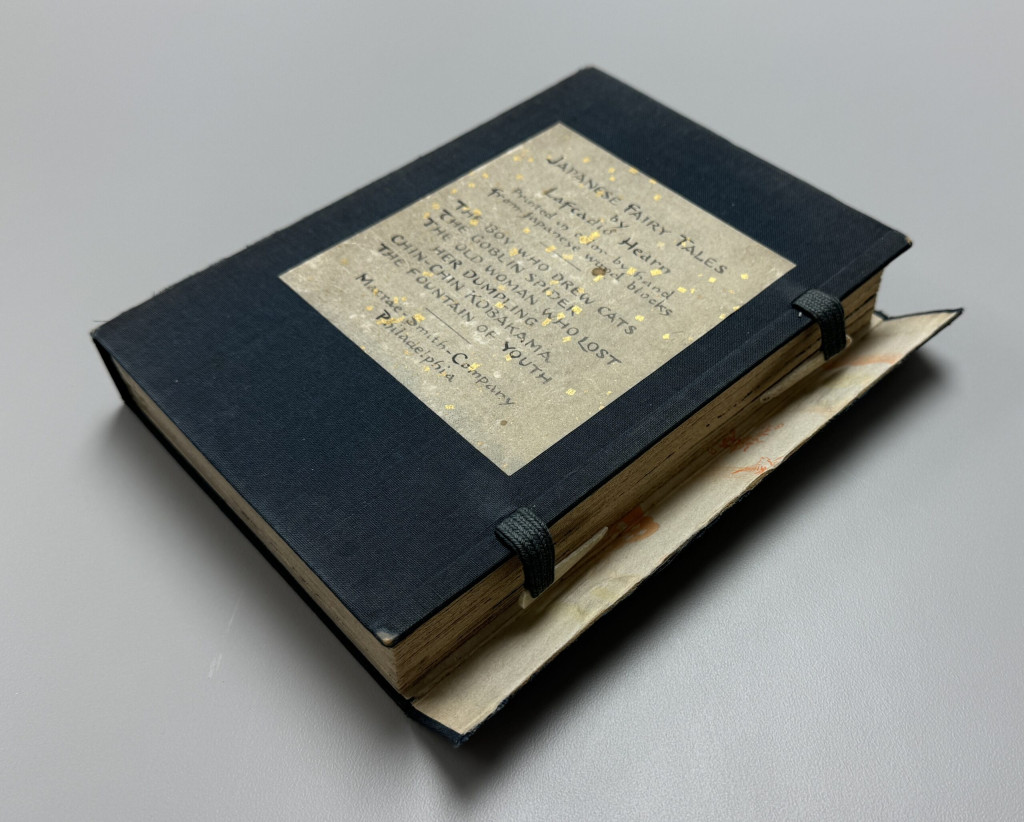
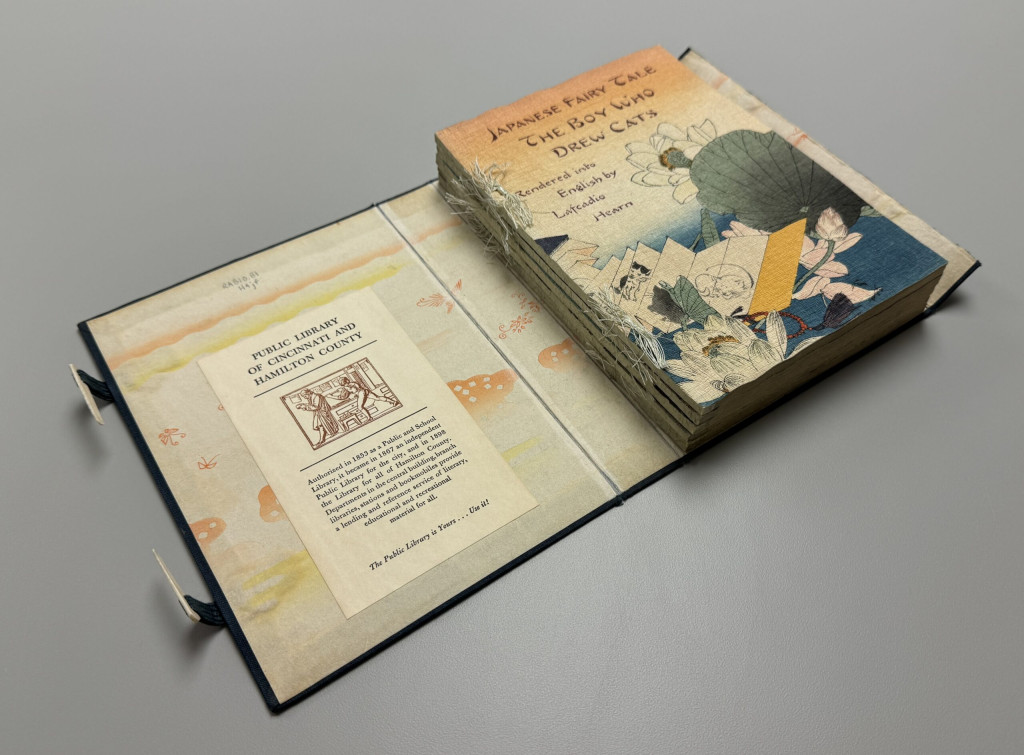
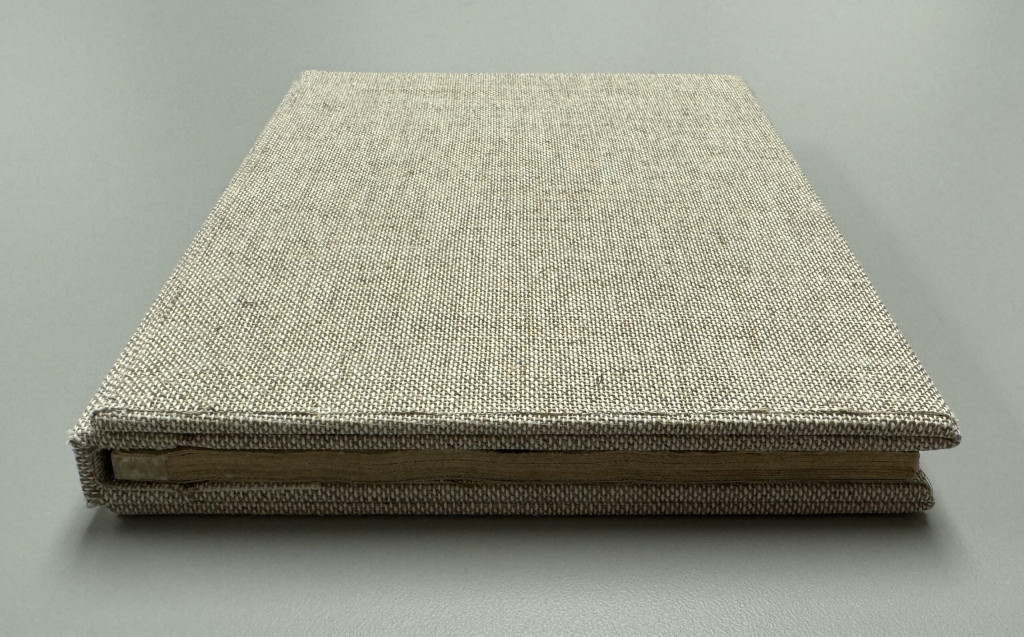
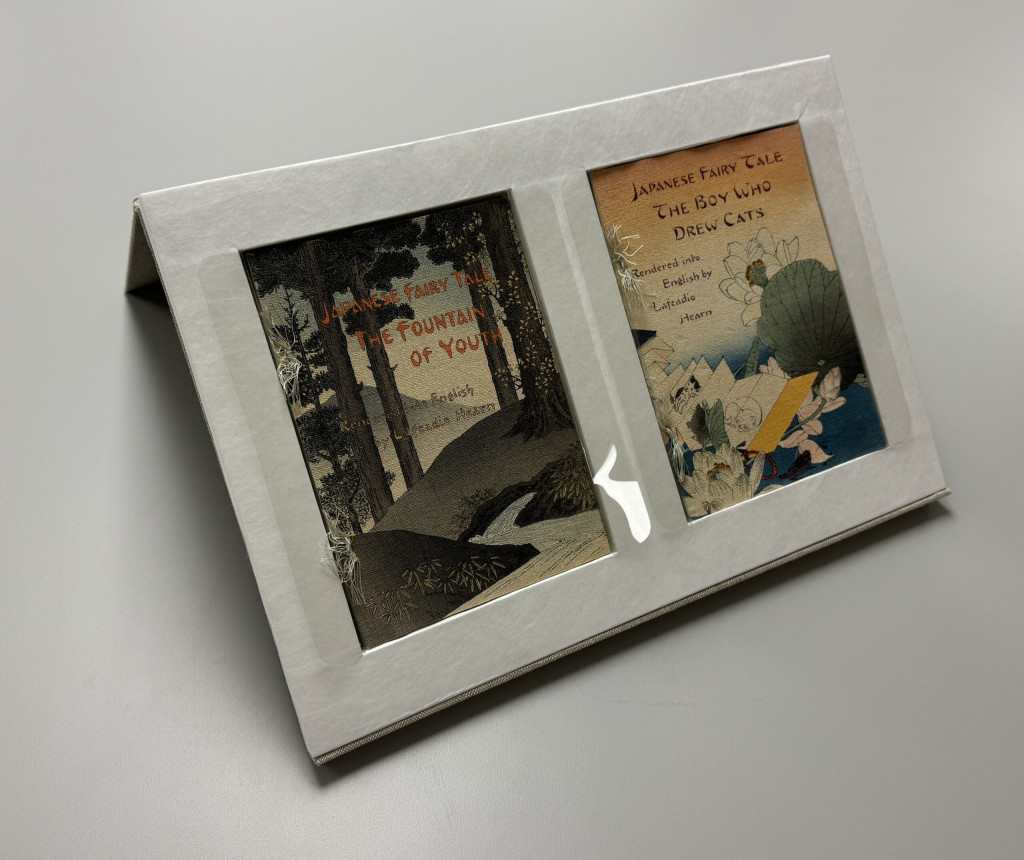
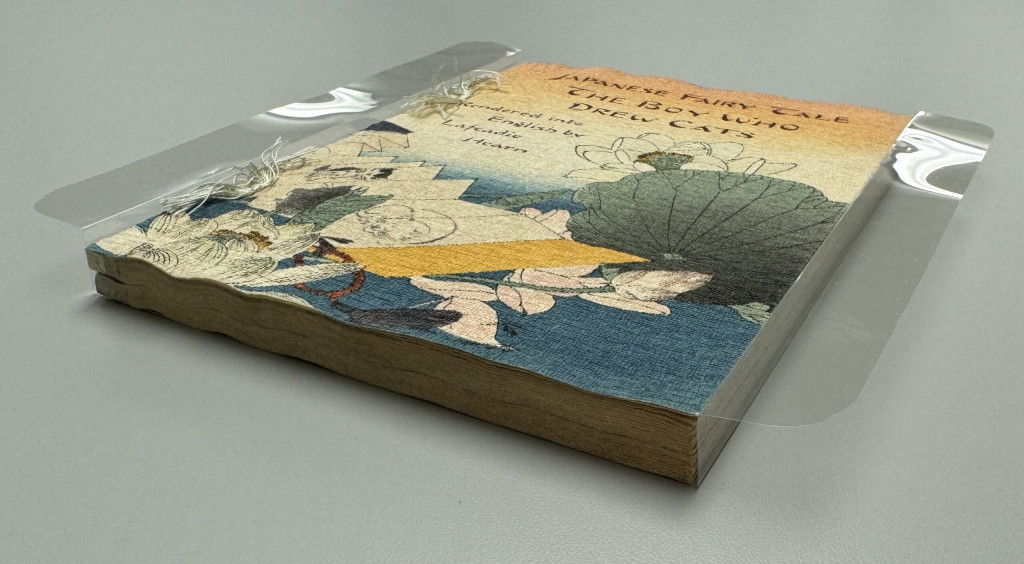
This set of Japanese side-sewn, crepe paper bindings, or Chirimen-bon, came to the Preservation Lab housed in their damaged traditional Japanese wraparound case, known as a maru chitsu. The set belongs to the Cincinnati and Hamilton County Public Library, which has an extensive Lafcadio Hearn collection. This collection of volumes was printed by Hasegawa Takejirō, a Japanese publisher who specialized in books written in European languages on Japanese subjects. The Japanese Fairy Tale Series was one of the more popular series, beginning with six volumes in 1885; though this later collection only has five volumes of fairy tales. Lacadio Hearn was one of the foreign translators employed by T. Hasegawa.

Due to the high profile nature of Lafcadio Hearn for the library and the beauty of the bindings, the collection is often shown during tours and used for display, however, the crepe paper volumes, while in excellent condition, are extremely floppy, and they are also side-sewn, both factors make them difficult to handle and display. The original enclosure is also very fragile and damaged, and susceptible to further damage if used as an enclosure moving forward. For all these reasons, the curators wanted an enclosure that would not only store the collection long-term, but could also be used for display.

This proved to be a challenge, but a fun one. I started by making a couple of sketches and then a couple of models…

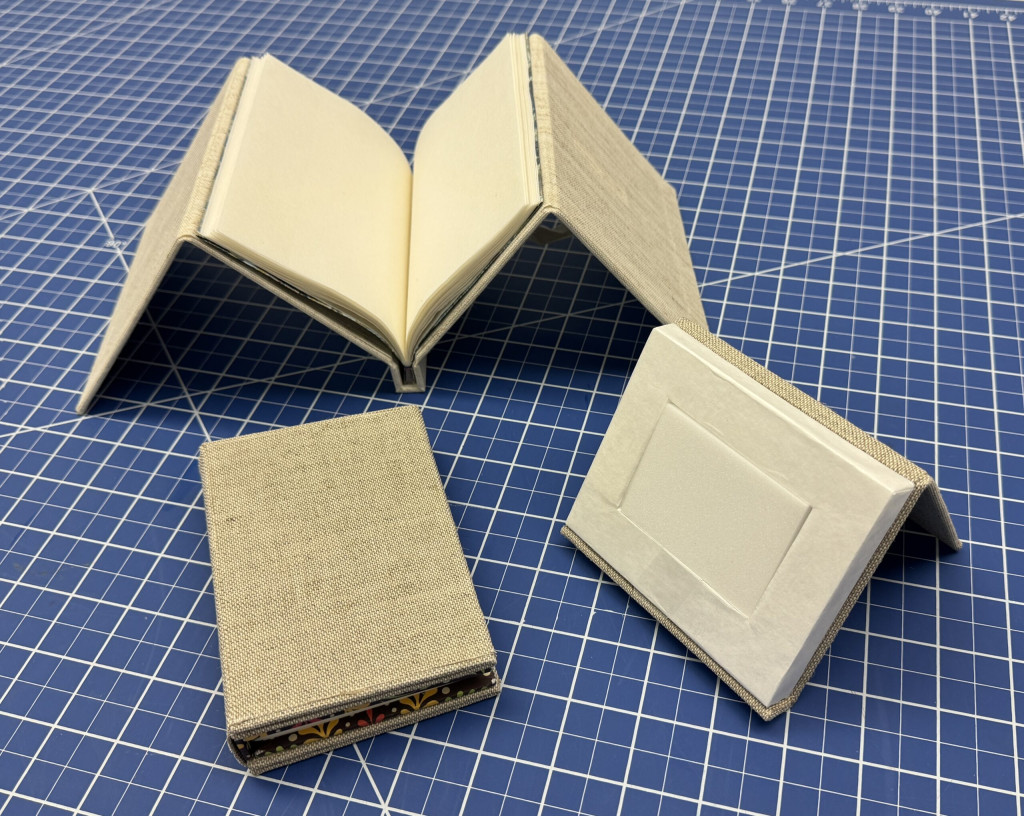
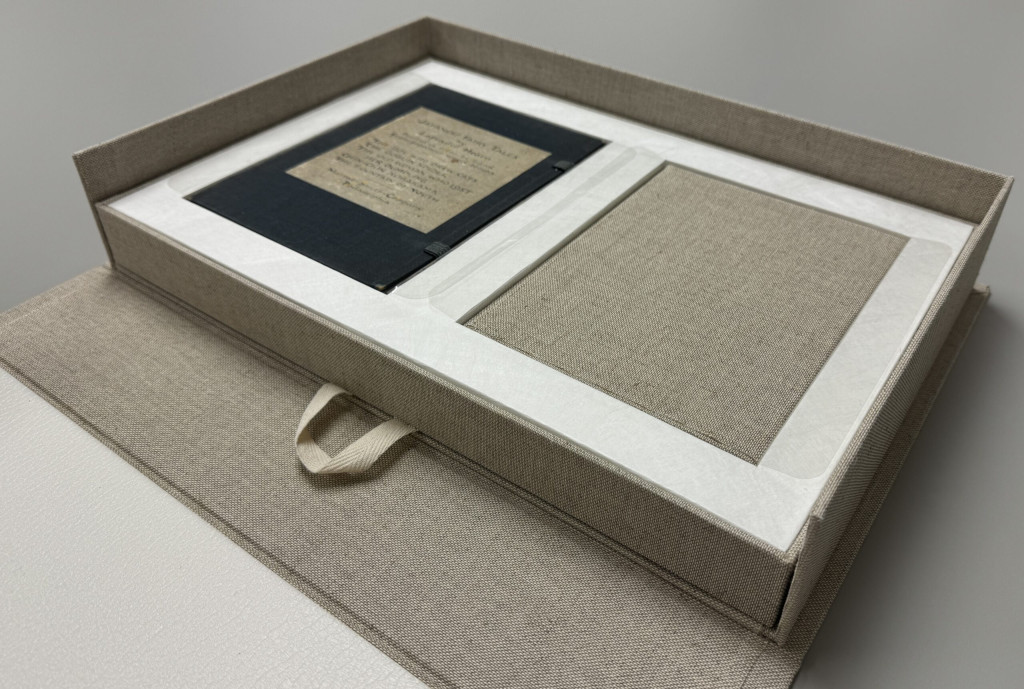
Three models pictured, two are collapsible cradles and one display stand with foam insert
Models – two types of collapsible cradles and one model of the display tray/stand

For the models, I had two main focuses: 1) a collapsible cradle that would house and display one of the volumes, and 2) a display component that would act as a tray or level within the enclosure and house the remaining four volumes, in two stacks of two, side by side.

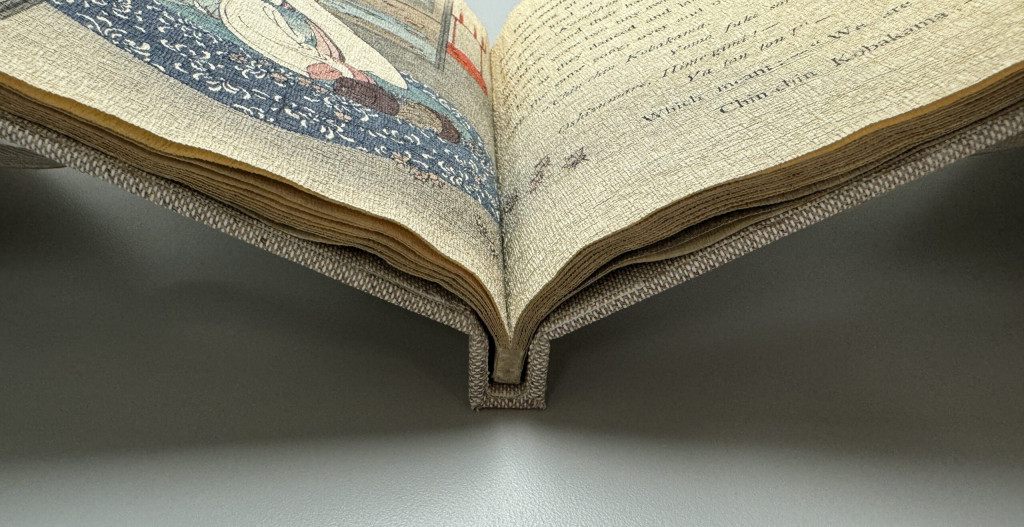
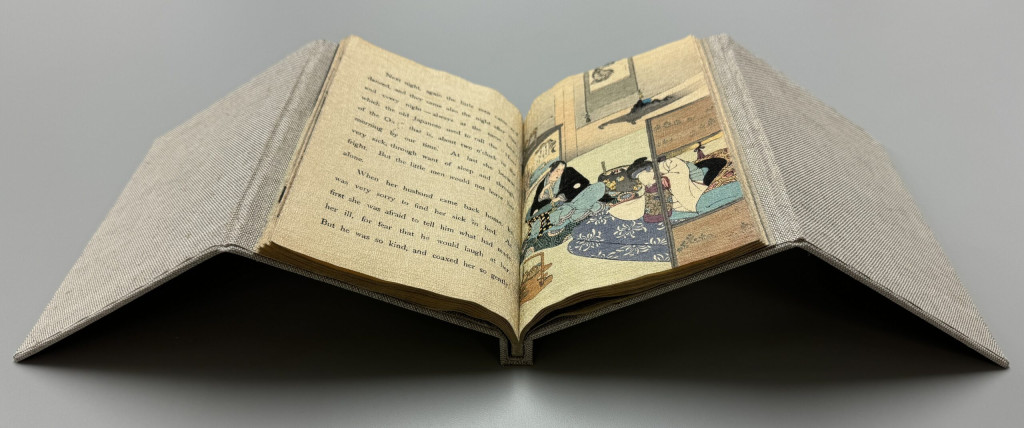
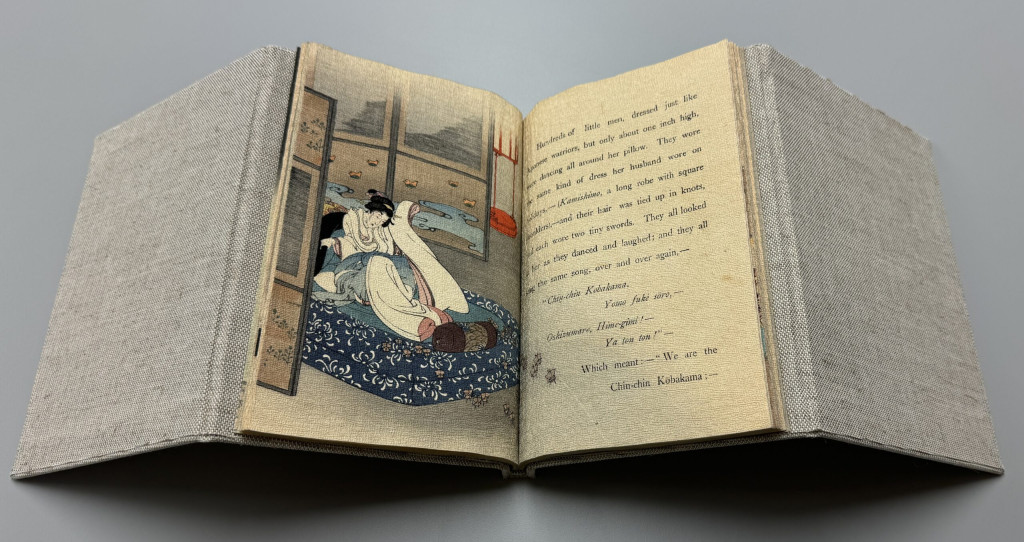
I will always advocate for making a model if you are trying to work through a new enclosure or adjust an existing enclosure or display piece, like a cradle. For example, I knew that a normal collapsible cradle wasn’t going to fit the bill for these volumes. Instead, I was going to need a stiff, squared off spine piece built into the cradle to help support the bindings’ spines.

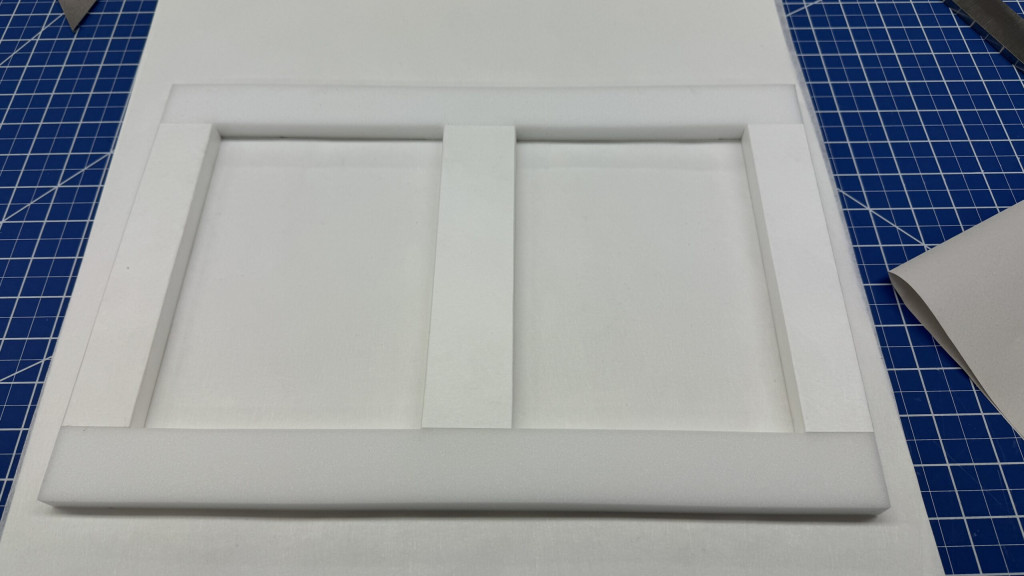
One of the main areas I had to troubleshoot was the display tray, which would house the four remaining volumes. I knew I wanted to create a stand that would basically replicate one side of a collapsible cradle and have a 1/2 inch Plastazote foam insert, which happened to nestle the thickness of two volumes perfectly, that was covered in Tyvek. But I had concerns about gravity and reliability of PVA to hold the foam insert in place overtime. And I wasn’t happy with my initial ideas of how to remove the volumes (and also the original enclosure and collapsible cradle) from the insert(s), which consisted of a tab underneath the volume. It created friction that would ultimately cause damage to the actual volumes.
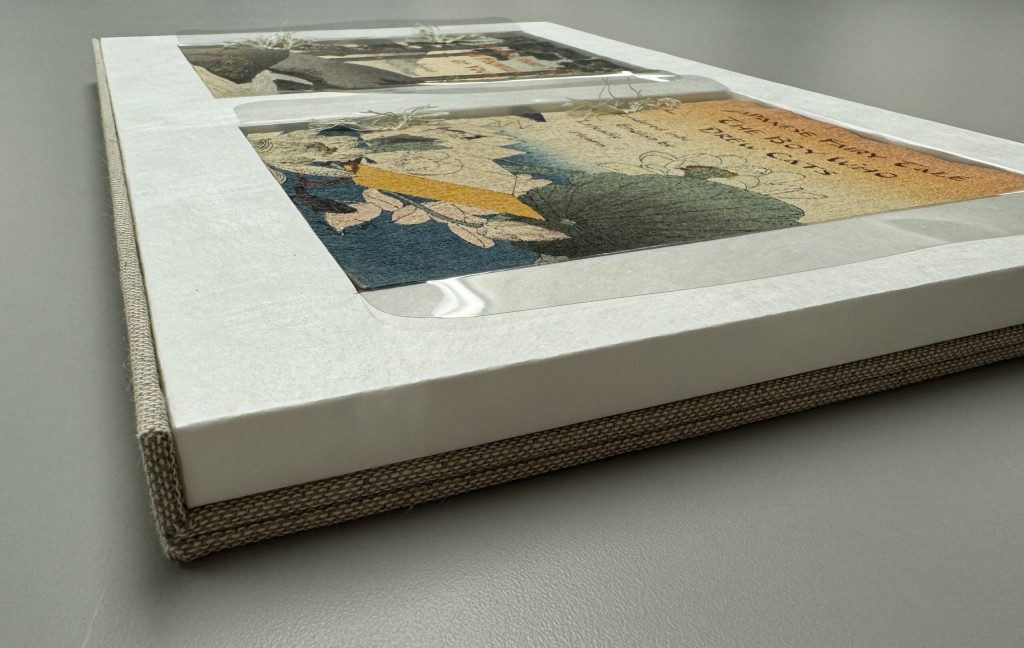
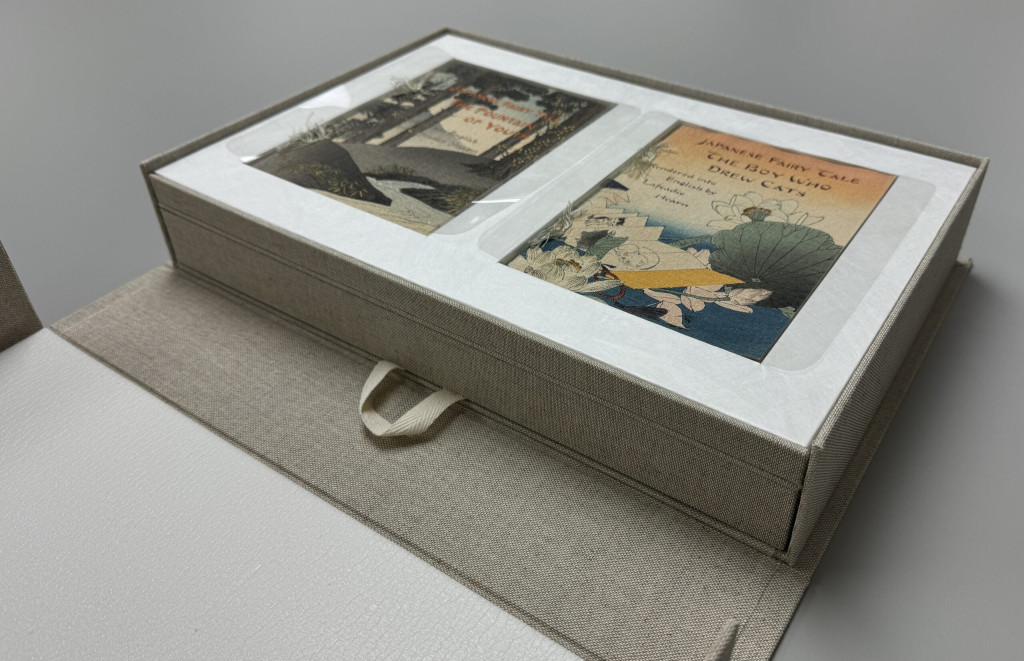
Ultimately, I am extremely happy with what I came up with. I think it functions very well, and checks all the boxes it needed to check. Safe, secure storage. Elegant display. User-friendly.

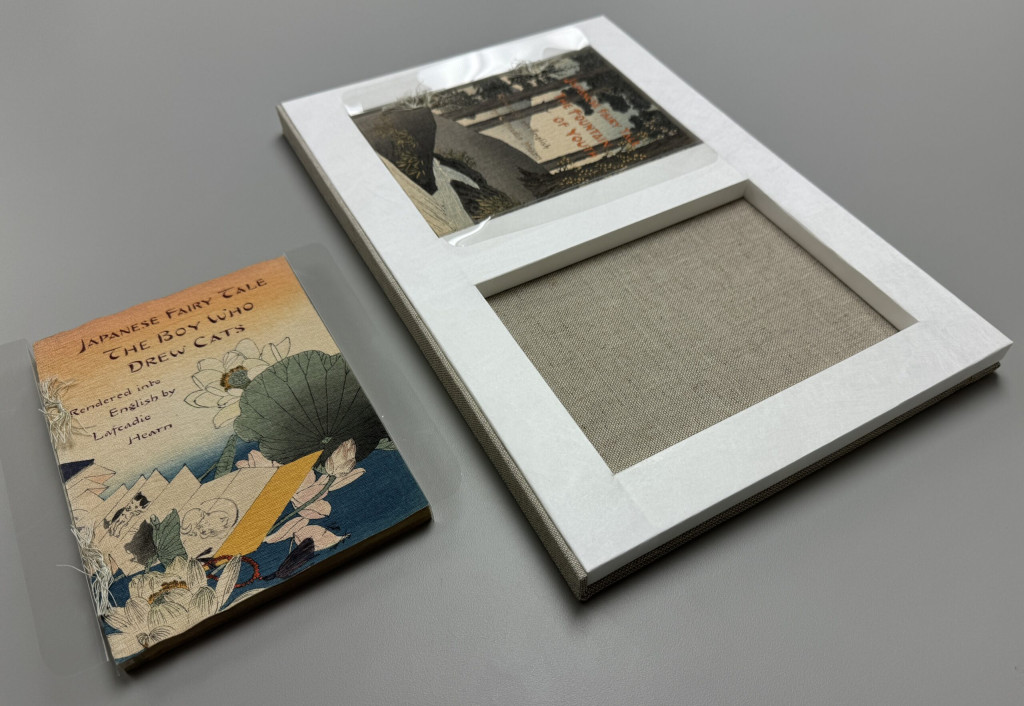
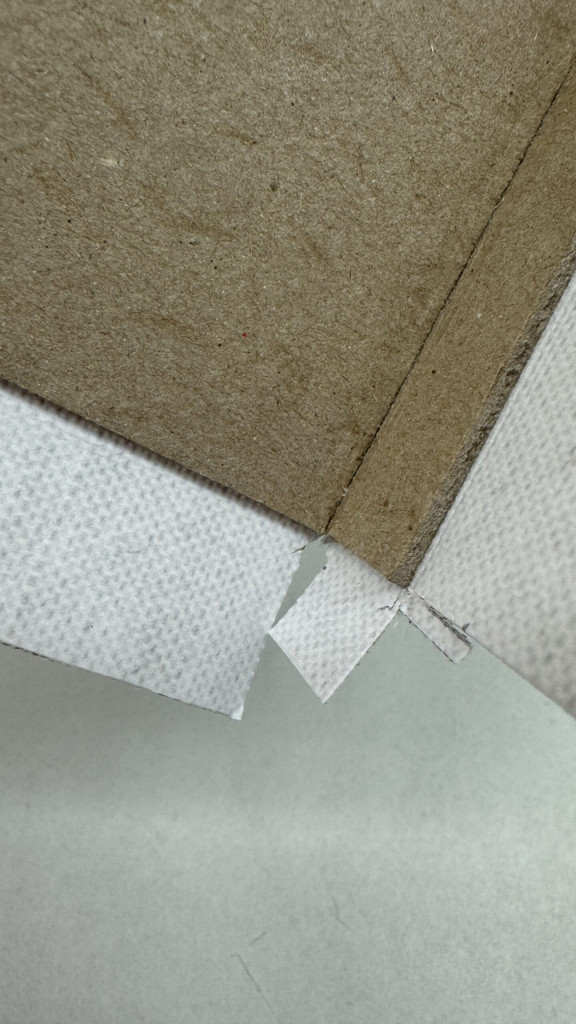
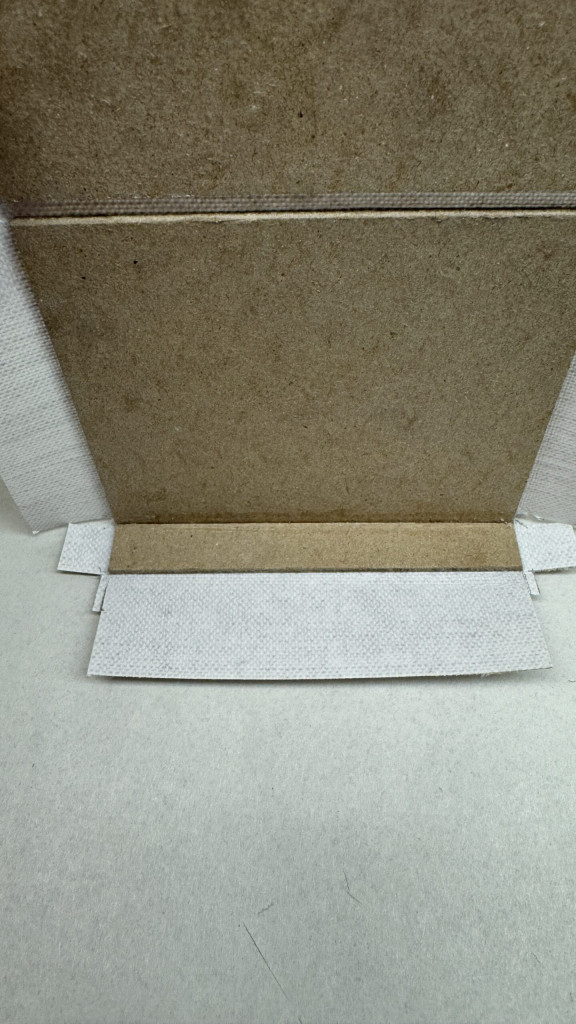
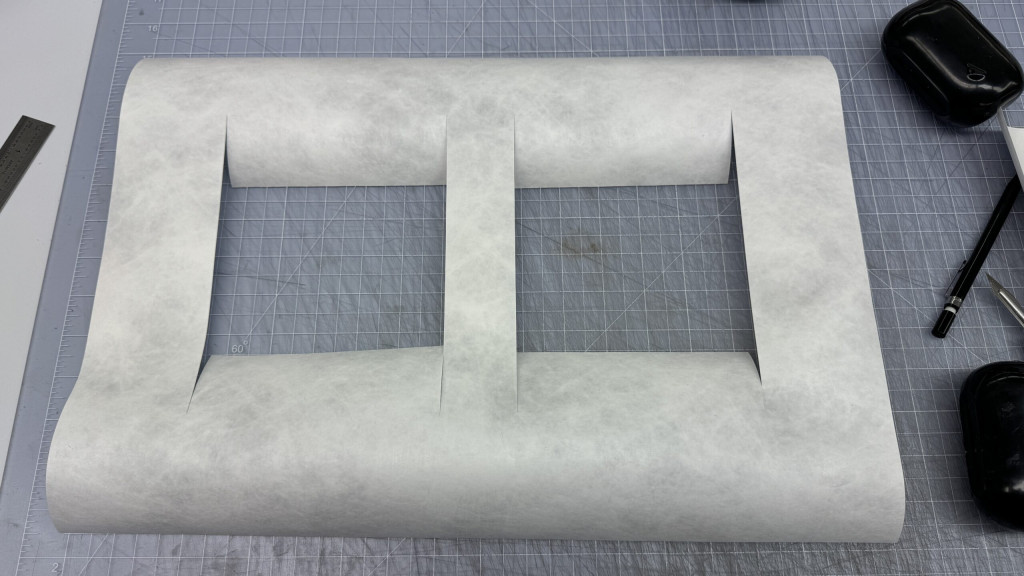
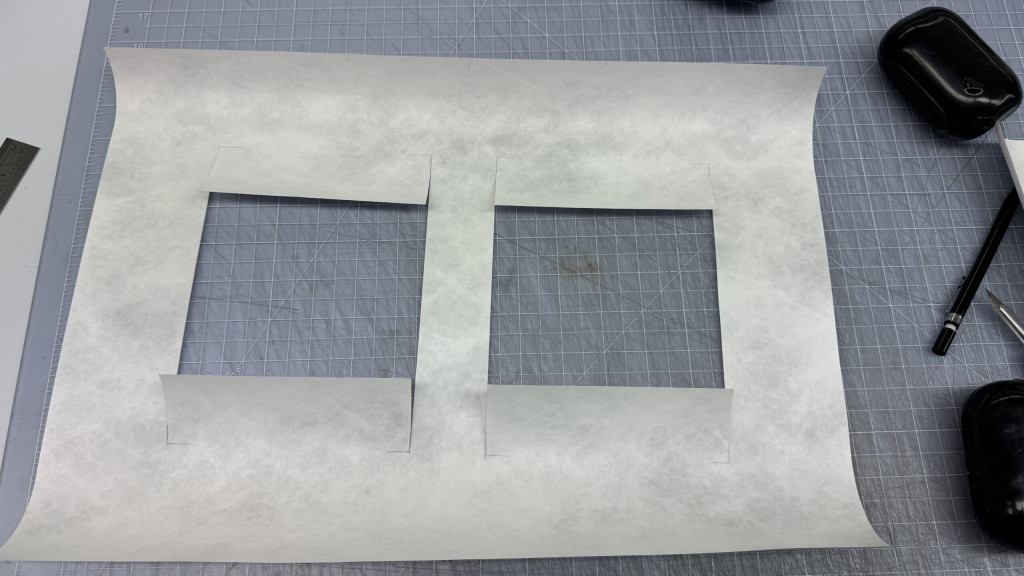
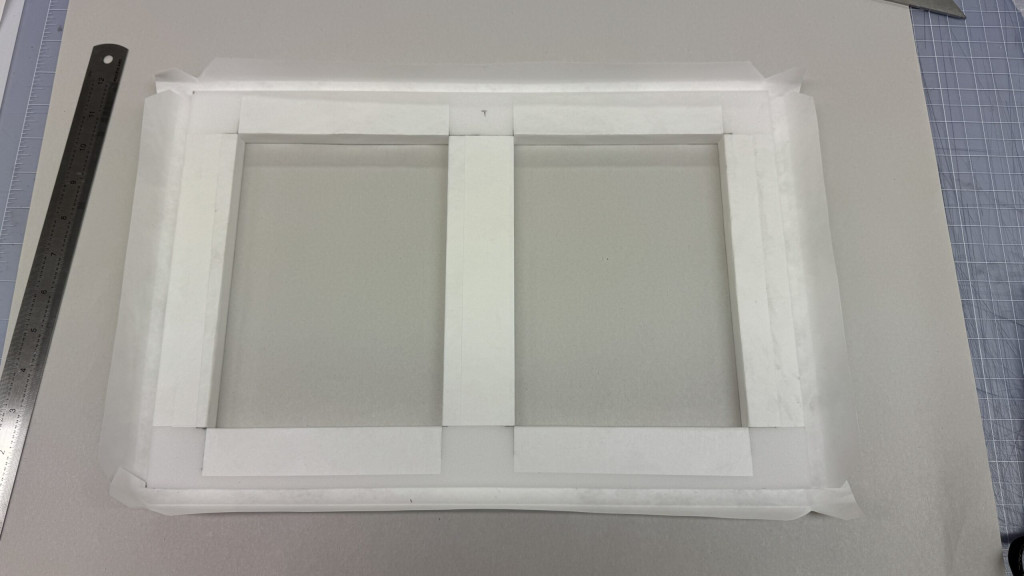
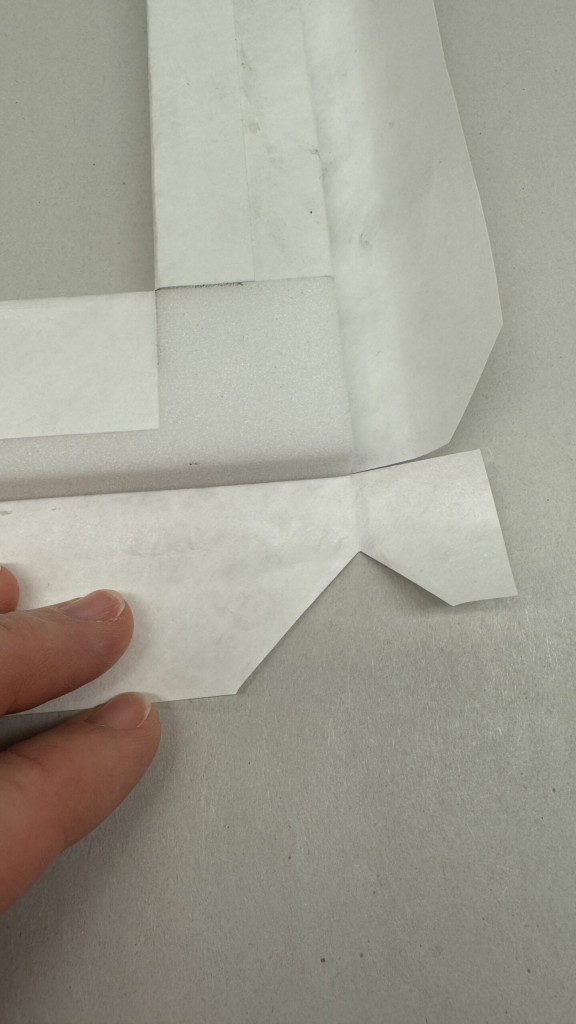
The display stand includes a cloth tape inserted into the boards to keep it from opening too far, a foam insert covered in Tyvek, a lip to support the foam insert overtime, and two polyester film slings to aid in removing the volumes from the foam insert. The polyester slings proved to be an excellent solution for removing all the elements from the enclosure safely and easily.

For those interested in how some of the components were constructed, here are some in-progress images…

Because of the way the trays/components of the enclosure are constructed, they are actually interchangeable. So if the “lower tray” with the original enclosure and collapsible cradle ends up on top of the display tray/stand, that’s not an issue at all. And there is a 1/4 inch Volara foam piece adhered to the outer tray of the clamshell enclosure, so whatever items are on top will be cushioned by soft foam in the enclosure.

Get a full tour of the enclosure by watching our reel on Instagram:

Jessica Ebert [UCL] – Assistant Conservator

Vivak, Velvet, and Vantage: Display Installation for FotoFocus 2024

Vivak, Velvet, and Vantage: Display Installation for FotoFocus 2024

Introduction

One of my favorite aspects of working for the Preservation Lab is the problem solving required to reach our clients’ goals. Whether performing treatments, building housings, or installing displays, we frequently find ourselves thinking outside the box to come up with custom solutions to unique problems.

FotoFocus

The problem solving aspect of the job was in full force with a recent display request from Art and Special Collections Reference Librarian, Sara Williams, for CHPL’s (Cincinnati and Hamilton County Public Library’s) participation in FotoFocus 2024 this Fall.

For those unfamiliar, FotoFocus is a biennial “month-long celebration of photography and lens-based art that unites artists, curators, and educators from around the world” (as described by the FotoFocus website). This year’s event was FotoFocus’ seventh iteration and encompassed 107 projects at 86 participating venues across Greater Cincinnati, Dayton, Columbus, and Northern Kentucky.

The Display Request

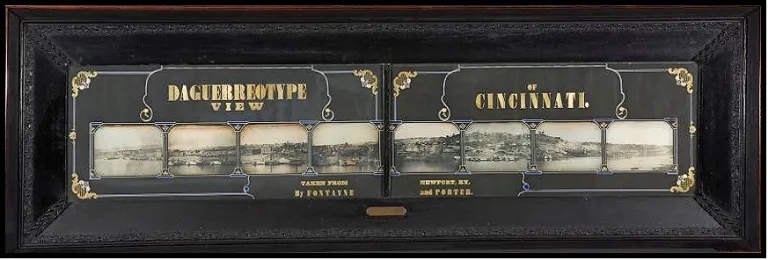
The theme for FotoFocus 2024 was Backstories, which focused on hidden stories within photographs that are not initially obvious. With this theme in mind, Sara Williams came up with the idea of highlighting stories hidden within one of CHPL’s most highly prized collection items: the 1848 Fontayne and Porter Panorama Daguerreotype. (For more information about this historic photograph, its preservation, and daguerreotypes in general, an earlier blog post I wrote on the subject can be found here.)

Vivak, Velvet, and Vantage: Display Installation for FotoFocus 2024
1848 Fontayne and Porter 8 full-plate panorama daguerreotype

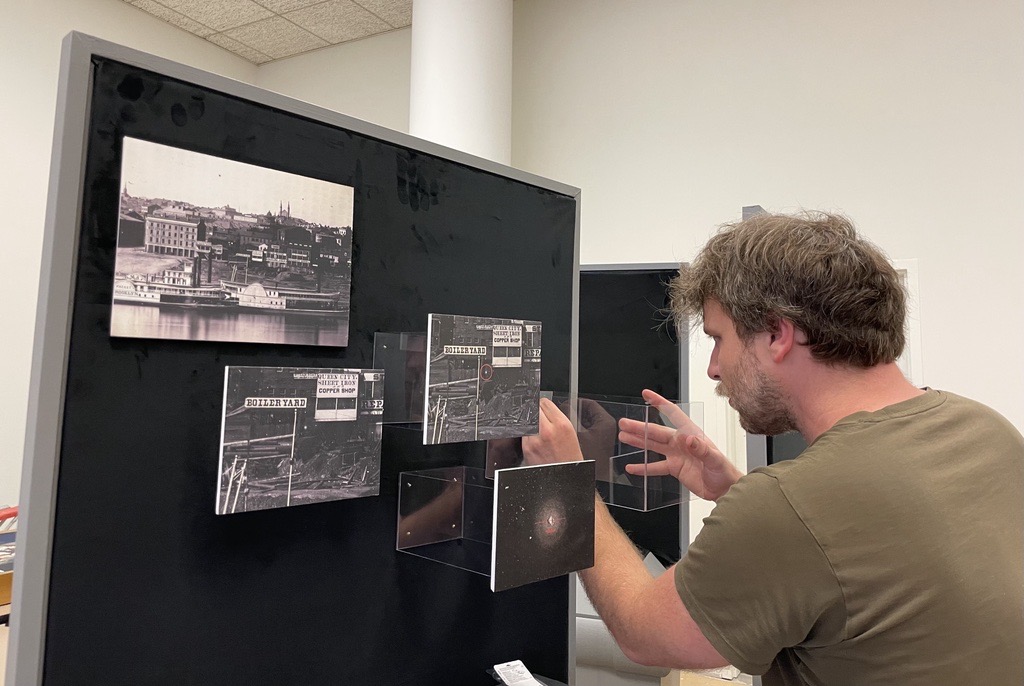
To convey this idea, Sara requested that the exhibit contain surrogate images attached to the back of the display cases, with images popping out at varying degrees of depth, highlighting the idea that each subsequent image is zoomed in closer, just as the story within the images become more in-depth.

Constructing a Prototype

I am still relatively new to the world of conservation, and even newer to that of display installation. When confronted with a task I am unfamiliar with such as this request, I like to think about what needs to be achieved, and then brainstorm how it can be achieved practically using stock materials we have in the lab. I did not yet have the specs on the display cases or the sizes of the specific images, but Sara gave me several printed foam board images like what would be used in the display to run tests with. Most importantly, I knew the two following bits of information:

  • The display needed images attached to a cloth-covered wall within the display case.
  • The images needed the ability to be mounted at custom depths from the cloth-covered wall.

After some brainstorming with our head conservator, Ashleigh Ferguson Schieszer, we decided to try using Vivak to “pop out” the images at various depths.

Vivak is a copolyester plastic that can be easily bent into various shapes, yet retains its shape once creased. It is also clear, making it useful for displays due to its ability to blend into backgrounds and not detract from the featured objects.

We also decided to use our cubicle walls as a test site until we could get our hands on the actual cases, since attaching a support mount to a cloth covered wall was a unique challenge for us.

First Prototype

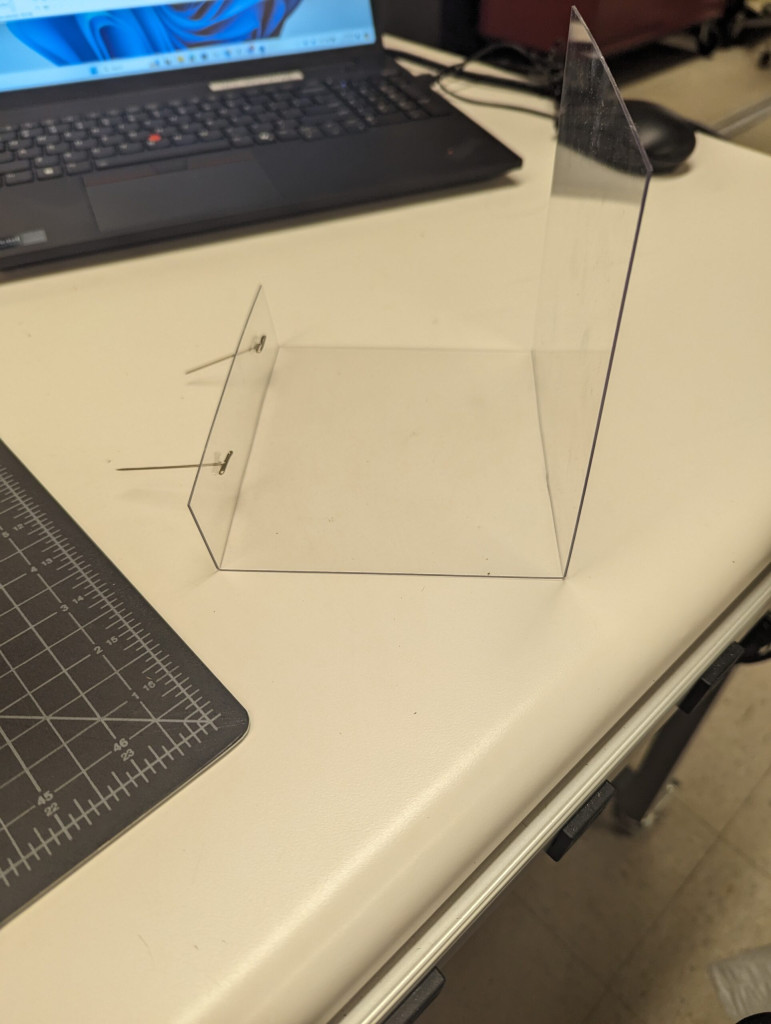
Vivak, Velvet, and Vantage: Display Installation for FotoFocus 2024
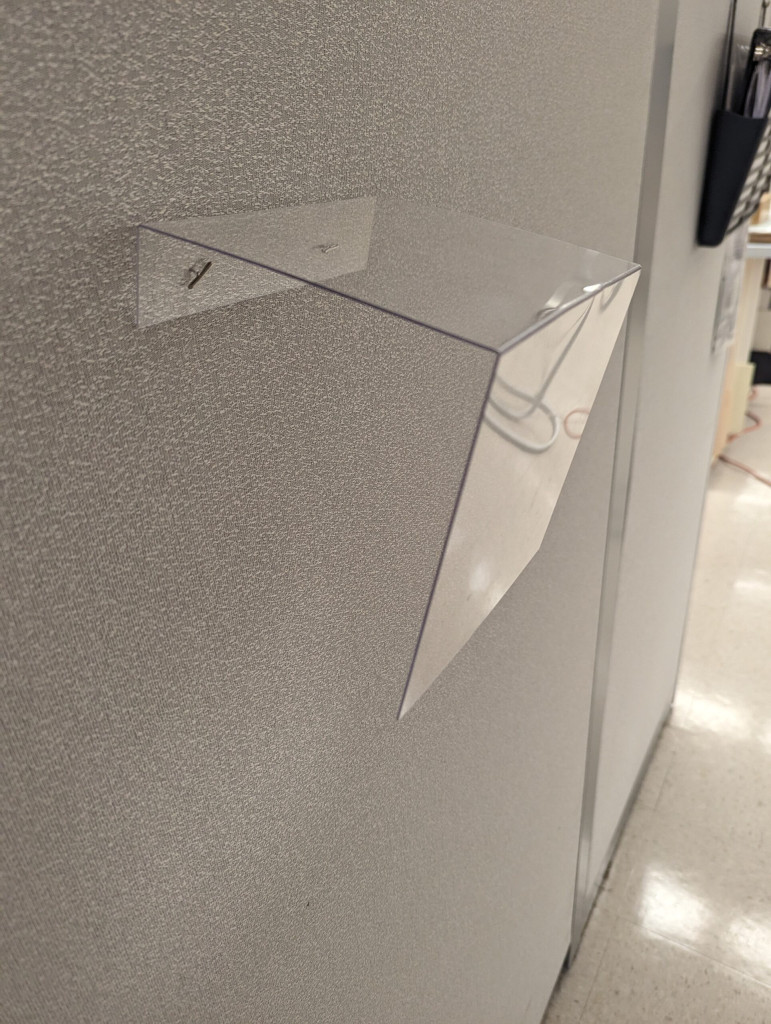
First Vivak Support prototype
Vivak, Velvet, and Vantage: Display Installation for FotoFocus 2024
Attached to wall with two pins along top

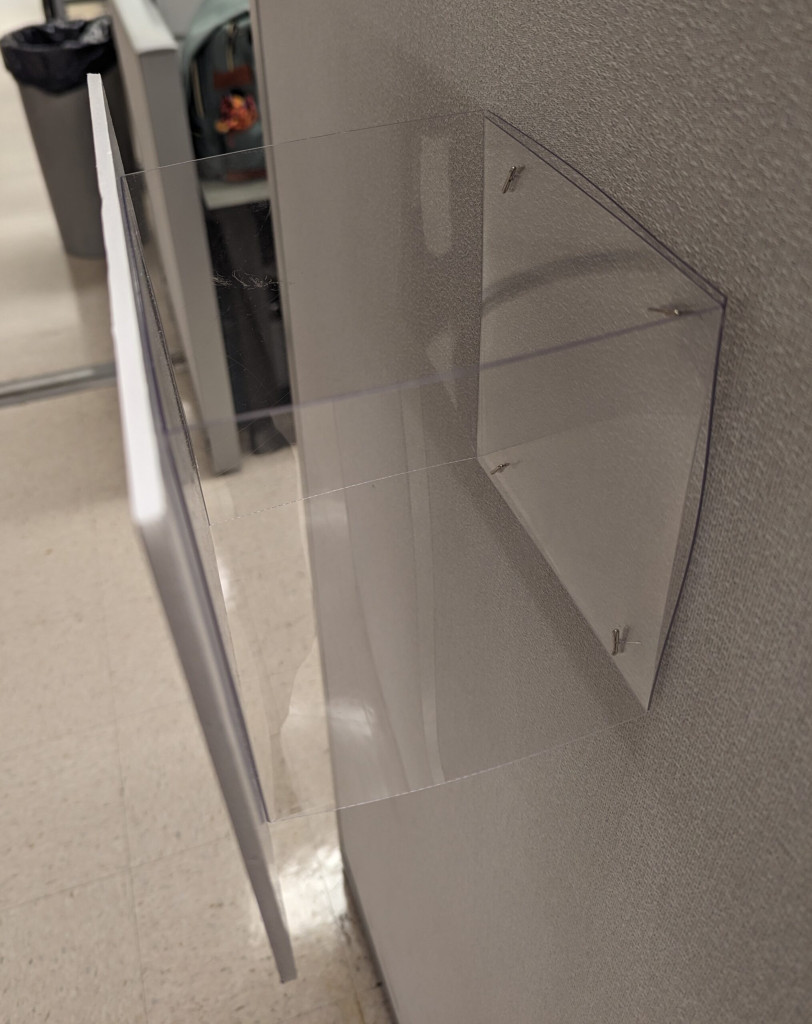
I constructed the first prototype by creasing a small sheet of Vivak twice into a “J” shape. I poked two holes in the smaller lip of the “J” so that I could use pins to secure it to the cloth-covered wall, with the image adhered to the larger lip.

This was moderately successful. These would be easy to construct and the pins held the support’s weight. But I was concerned about the Vivak bowing under the weight of the images, especially for the ones that were to be at the furthest depth from the cloth-covered wall, as it was already wanting to sag without an attached image under its own weight.

Second Prototype

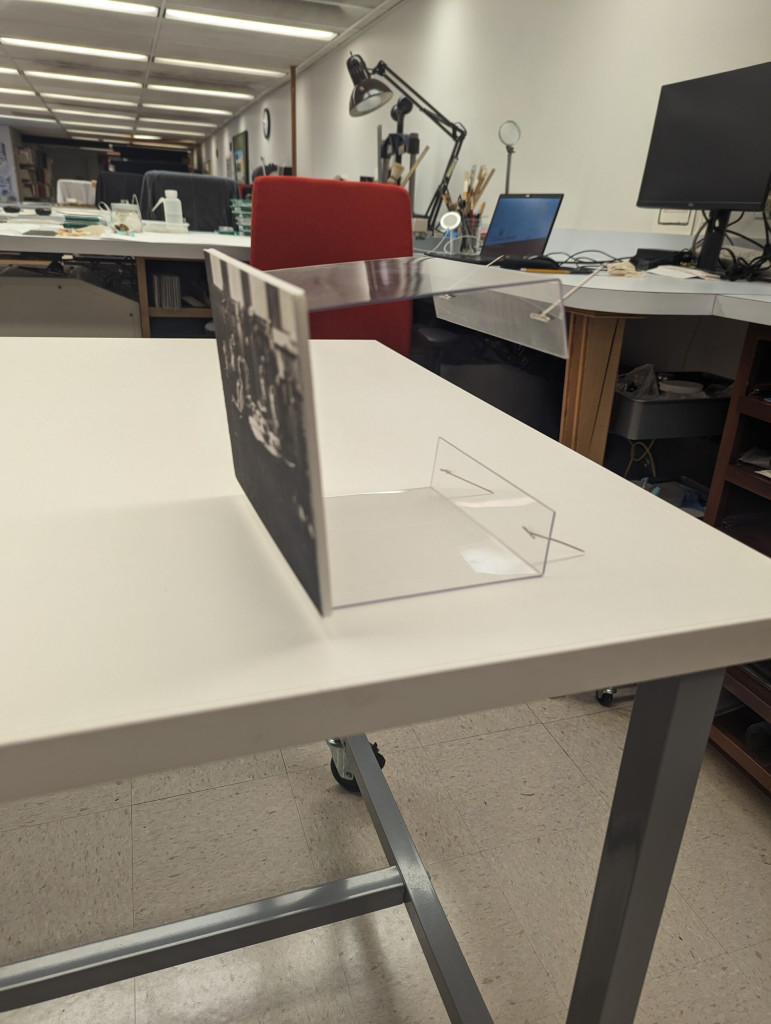
I made the second prototype into a “C” shape, so that there were two lips that could be pinned to the cloth-covered wall. My hope was that this would add more stability and reduce the potential sagging. This was certainly an improvement, but it still felt unstable, and I felt the Vivak pieces that needed to be longer still might sag.

Vivak, Velvet, and Vantage: Display Installation for FotoFocus 2024
Support with added base to combat sagging
Vivak, Velvet, and Vantage: Display Installation for FotoFocus 2024
“C” shape with added backing strip

I next added an additional support piece of Vivak along the back of this prototype so that the pins would penetrate it as well as the two lips, adding even more stability. This yielded the most favorable result so far, yet I felt like the process could be streamlined.

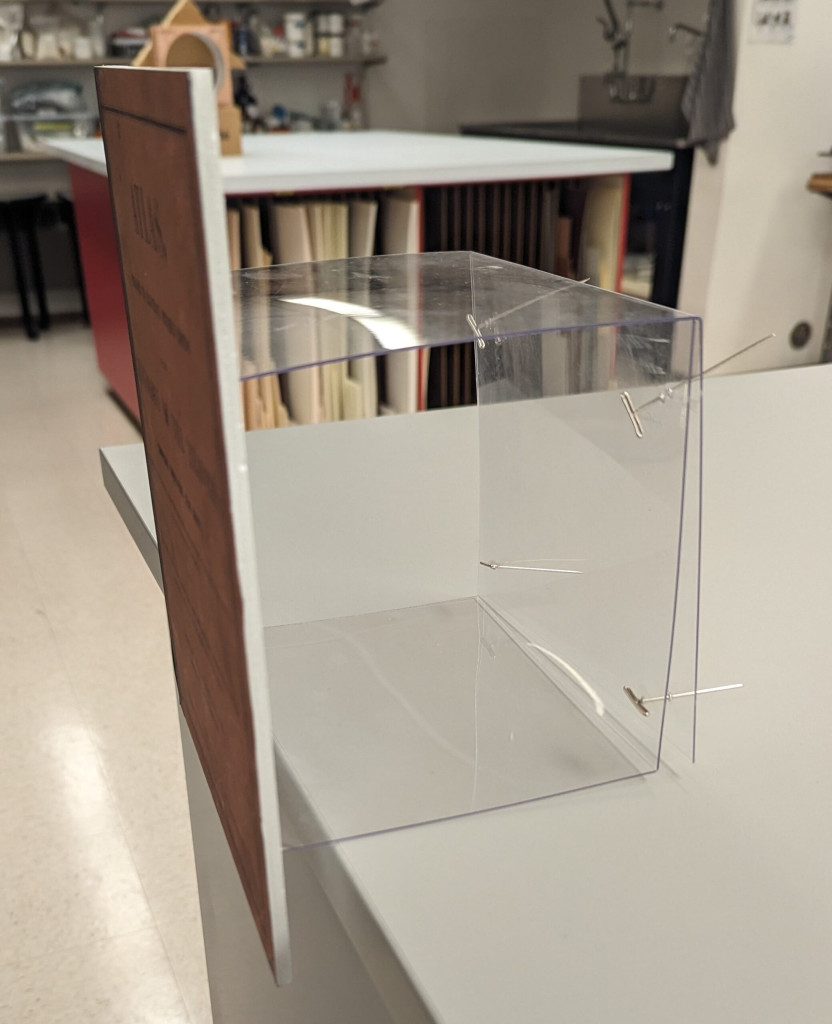
I wanted the “pop-outs” to be contained to one piece of Vivak, so for the final prototype so I extended the two lips of the “C” so that they overlapped each other making a square shape.

Final Prototype

Vivak, Velvet, and Vantage: Display Installation for FotoFocus 2024
Final prototype with overlapping Vivak strips
Vivak, Velvet, and Vantage: Display Installation for FotoFocus 2024
Attached to wall with Vivak folds at top and bottom – still showed propensity to sag
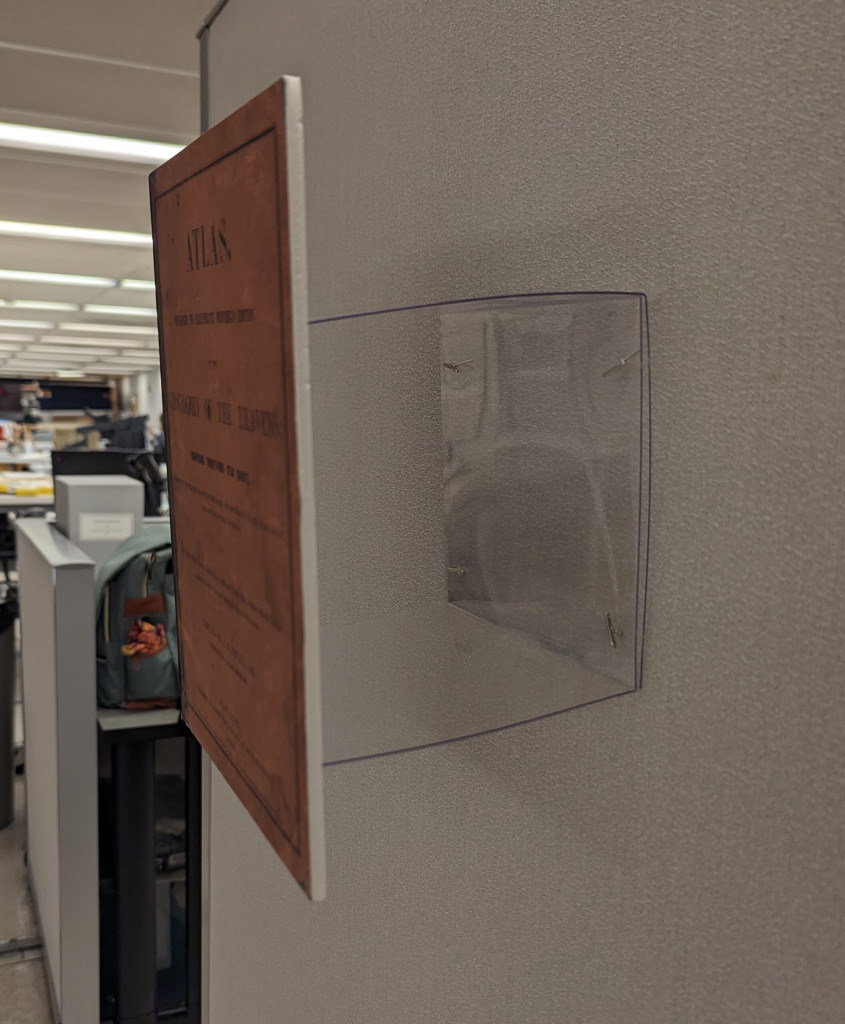
Vivak, Velvet, and Vantage: Display Installation for FotoFocus 2024
Attached to wall with folds along sides – this eliminated the tendency to sag!

The final prototype gave the stability of the second prototype but was easier to produce as only one piece of Vivak needed to be cut. After constructing this successful variation, I had the idea to rotate the “pop-out” 90 degrees so that the creased section of the Vivak would be vertical rather than horizontal, eliminating any tendency for it to sag from these creases outward.

Installation

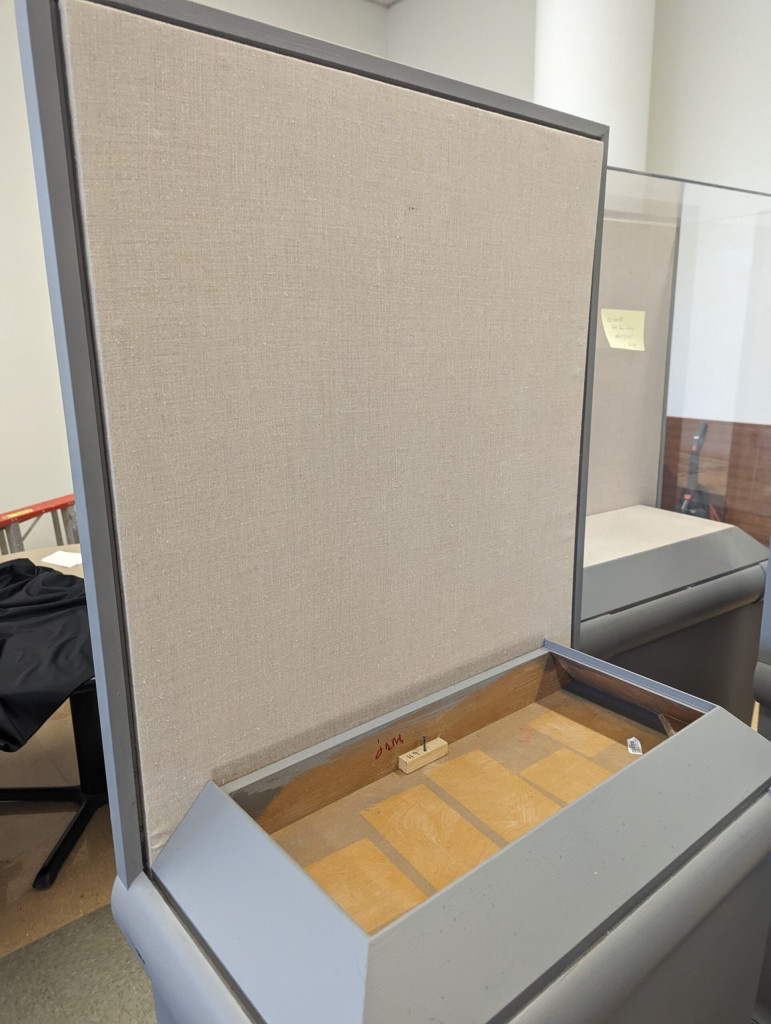
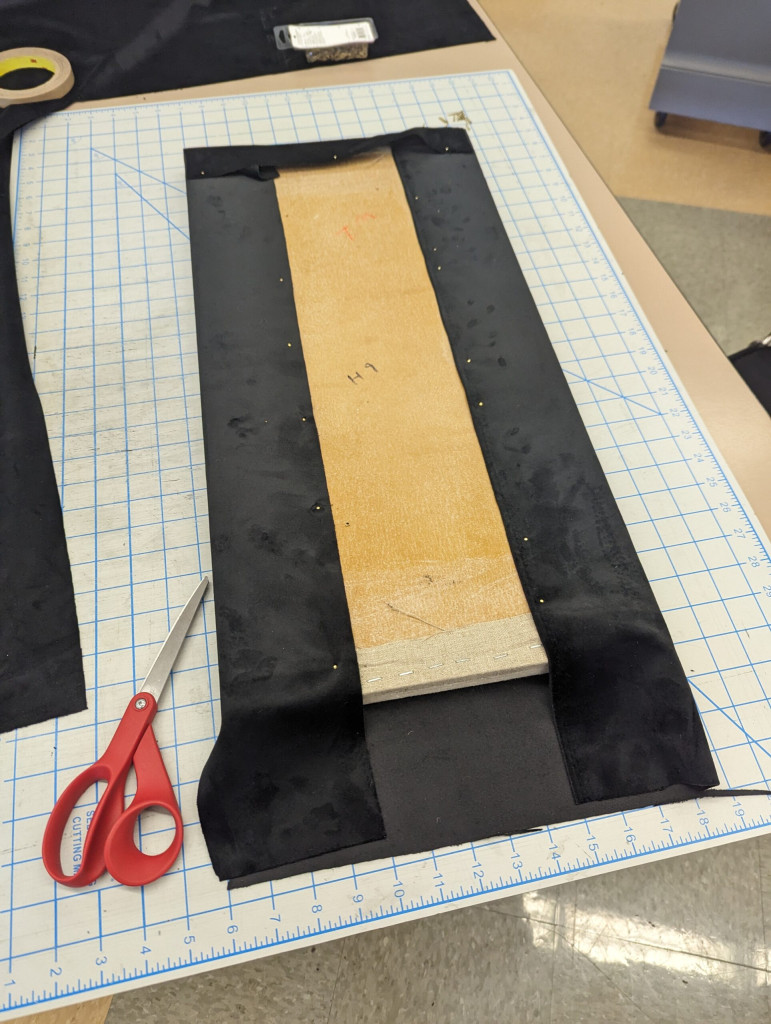
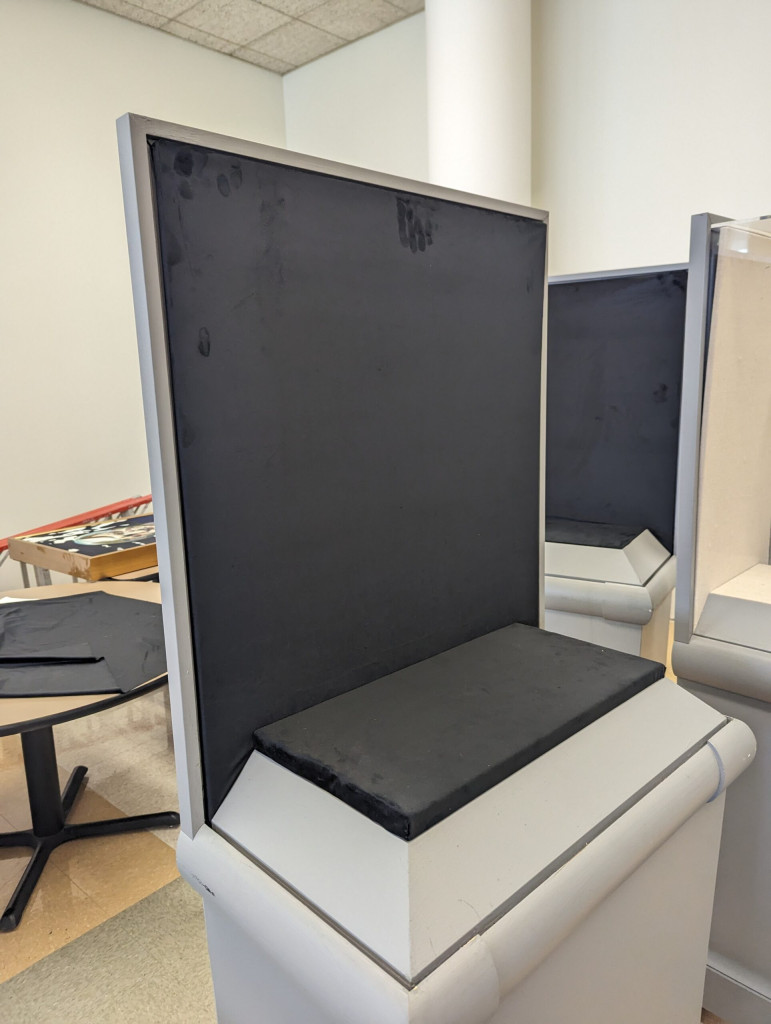
Sara had also requested that both the cloth-covered wall and base of the display be covered in black velvet to give the display a cleaner look, as the existing cloth had seen better days. This was accomplished by removing the boards, cutting enough velvet so they could be wrapped and completely covered on its exposed side, and then secured on their hidden underside using a staple gun.

Vivak, Velvet, and Vantage: Display Installation for FotoFocus 2024
The case before modifications, during deconstruction
Vivak, Velvet, and Vantage: Display Installation for FotoFocus 2024
The walls and base of the case were recovered with black polyester velvet
Vivak, Velvet, and Vantage: Display Installation for FotoFocus 2024
The case reconstructed after recovering

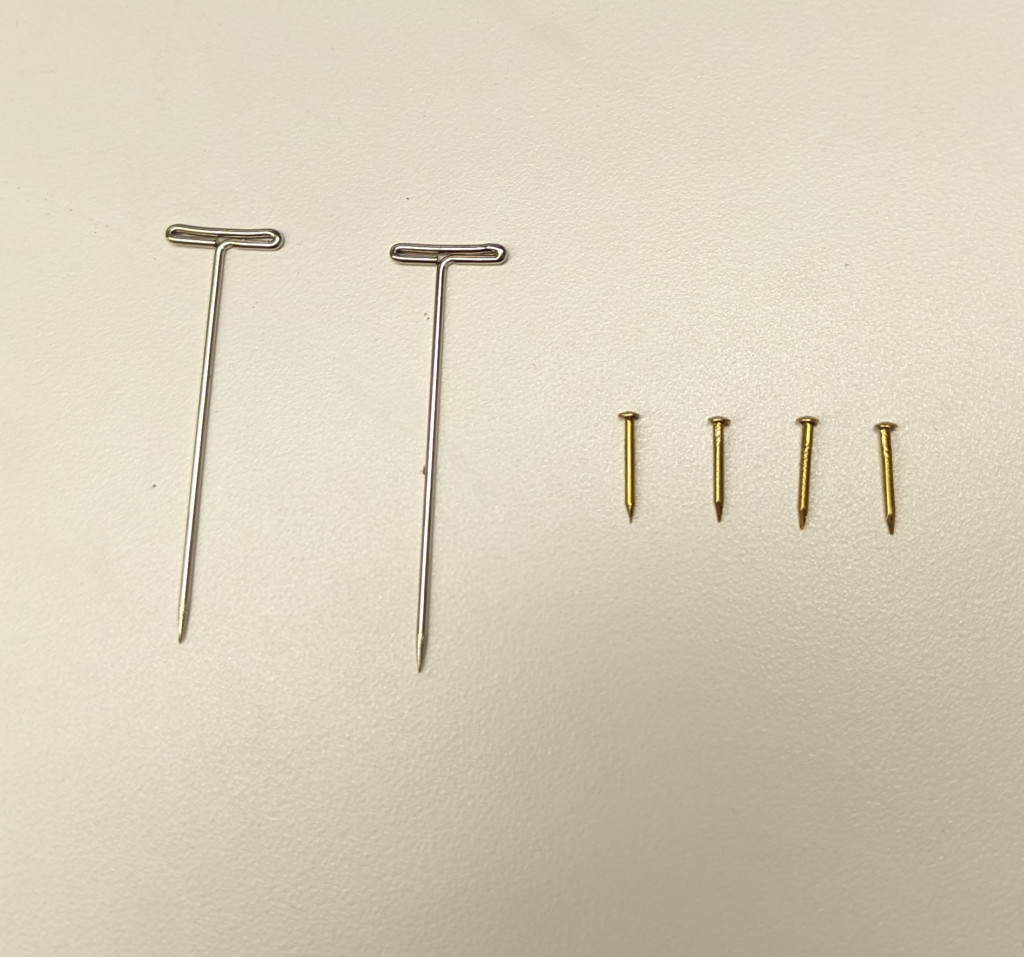
I had initially planned on using large “T”-shaped pins to fix the “pop-outs” to the cloth-covered wall, as they were abundant in the lab, and I felt the length of them would yield a stronger hold. However, upon attempting to test the prototype on the actual display case, it was discovered that the wall I assumed was cloth-covered foam was cloth-covered wood. As the “T”-shaped pins were long and not very sturdy, they would be extremely difficult to hammer into the wood.

I ended up using small ½” brass escutcheon pins. They are low profile and would be relatively easy to hammer into cloth-covered wood. I punctured 4 pilot holes through the overlapping “C” lips so the pins could hold the Vivak together, and then individual pins were hammered through the holes into the cloth-covered wood.

Vivak, Velvet, and Vantage: Display Installation for FotoFocus 2024
Long T-pins compared to the shorter escutcheon pins
Vivak, Velvet, and Vantage: Display Installation for FotoFocus 2024
The shorter pins were the perfect length to nail into the thin display case wall

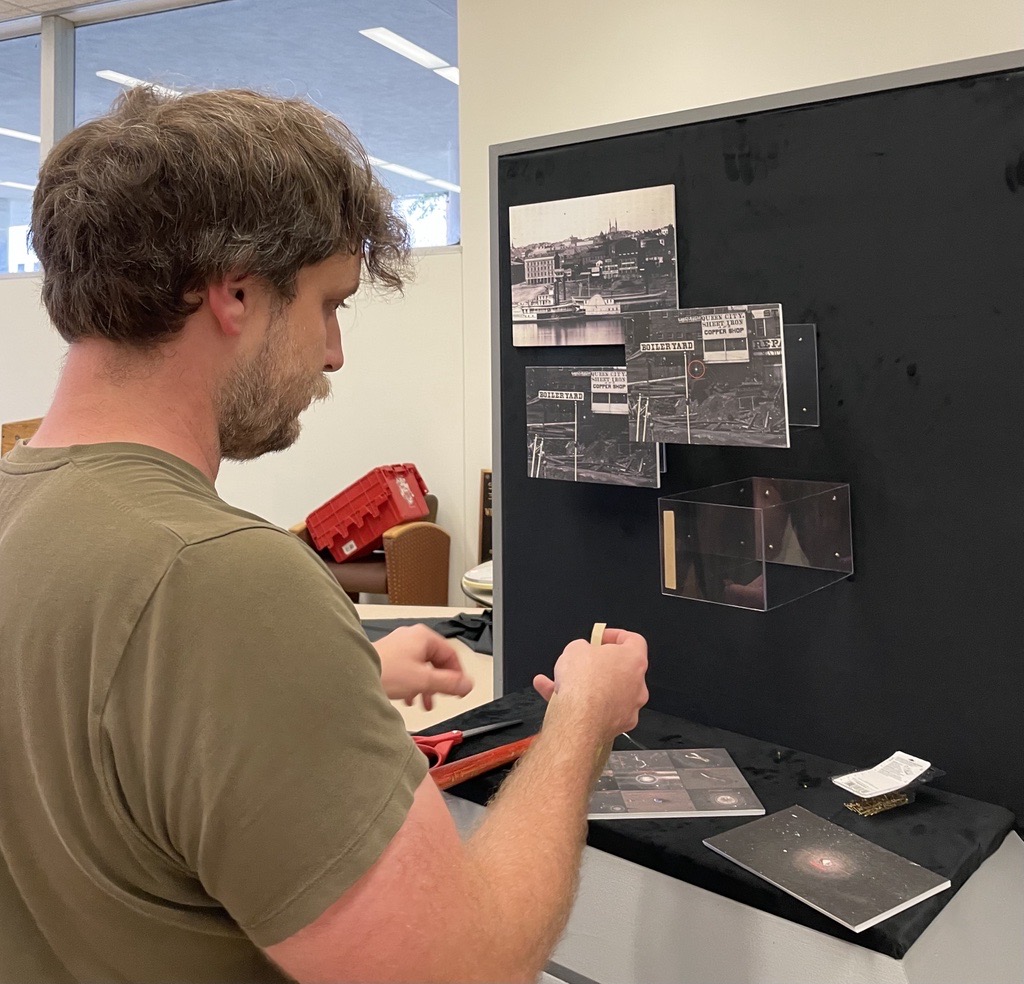
Once the velvet was installed and the “pop-outs” were secured to the freshly velvet-covered boards, the images could be adhered directly to the Vivak using double stick tape, as they were surrogate images printed onto foam board.

Vivak, Velvet, and Vantage: Display Installation for FotoFocus 2024
Nailing the Vivak support to the display case wall
Vivak, Velvet, and Vantage: Display Installation for FotoFocus 2024
3M 415 double stick tape was used to adhere the surrogate images to the Vivak supports

The Display During Installation

Once the cases were modified with the black velvet polyester and the Vivak supports were nailed into place, the bases were ready for Sara to add additional components underneath.

Vivak, Velvet, and Vantage: Display Installation for FotoFocus 2024
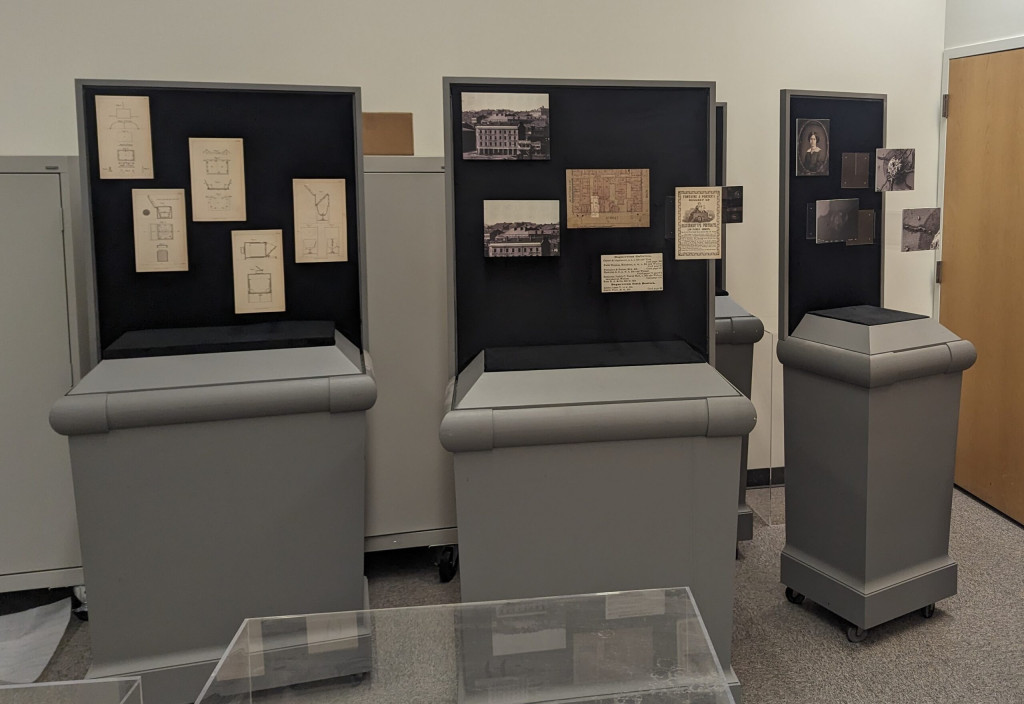
View at an angle showing the varying depths of field
Vivak, Velvet, and Vantage: Display Installation for FotoFocus 2024
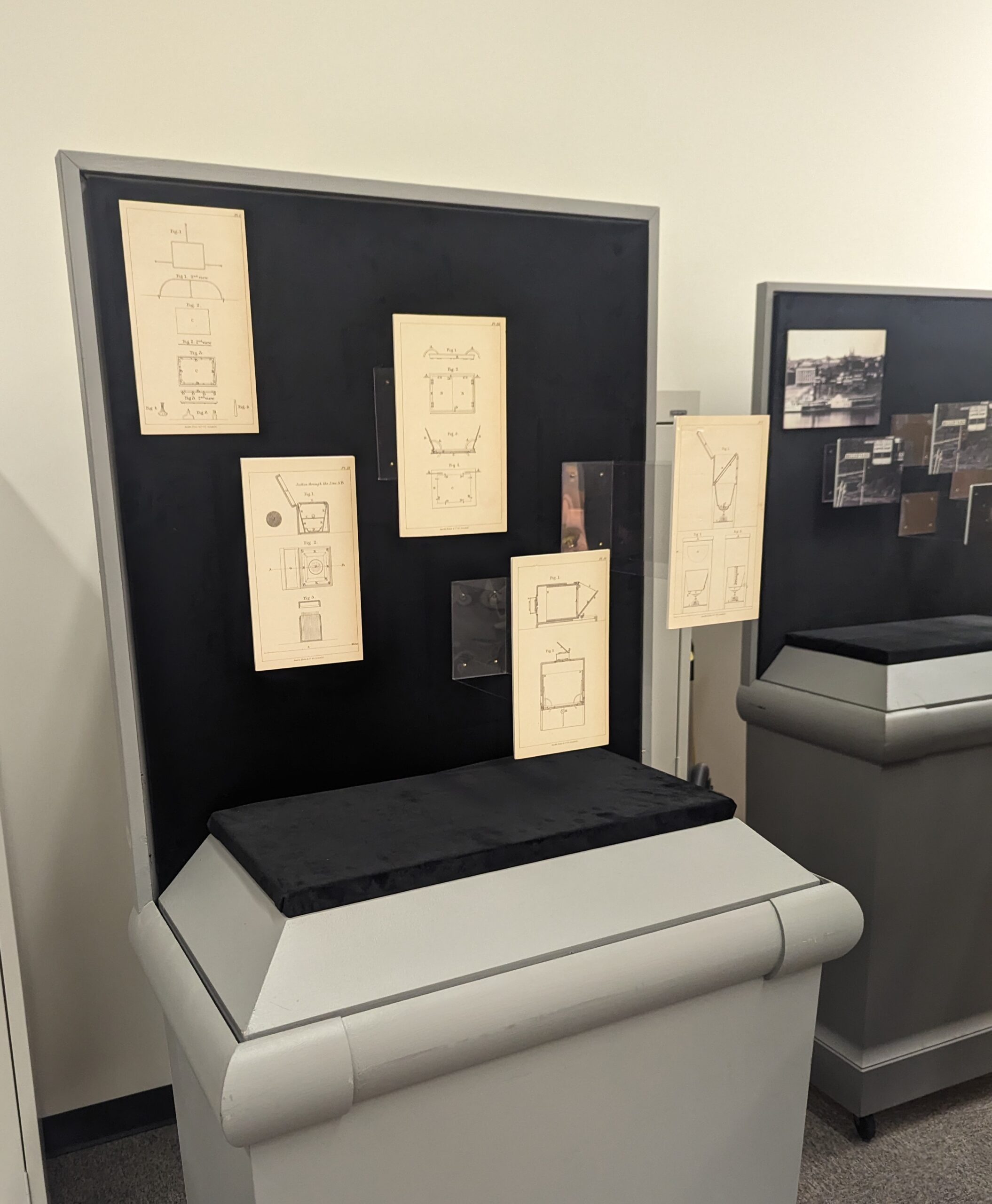
Three cases ready for final touches by Sara Williams

After Installation

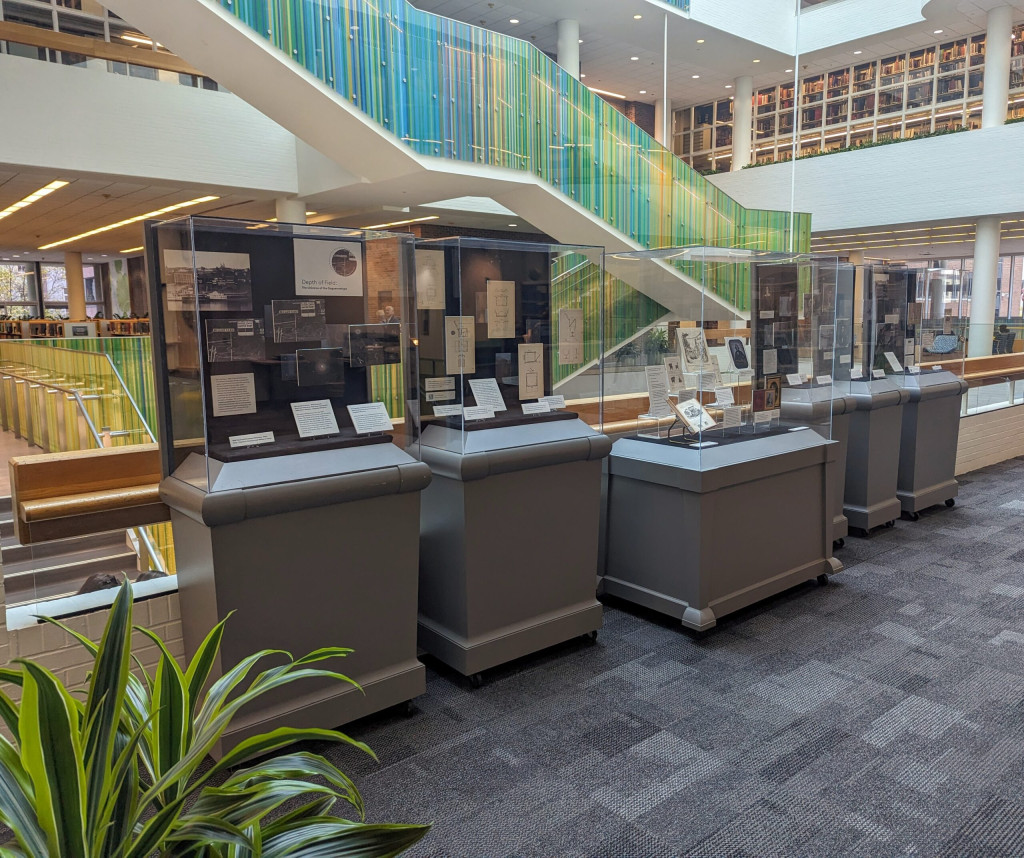
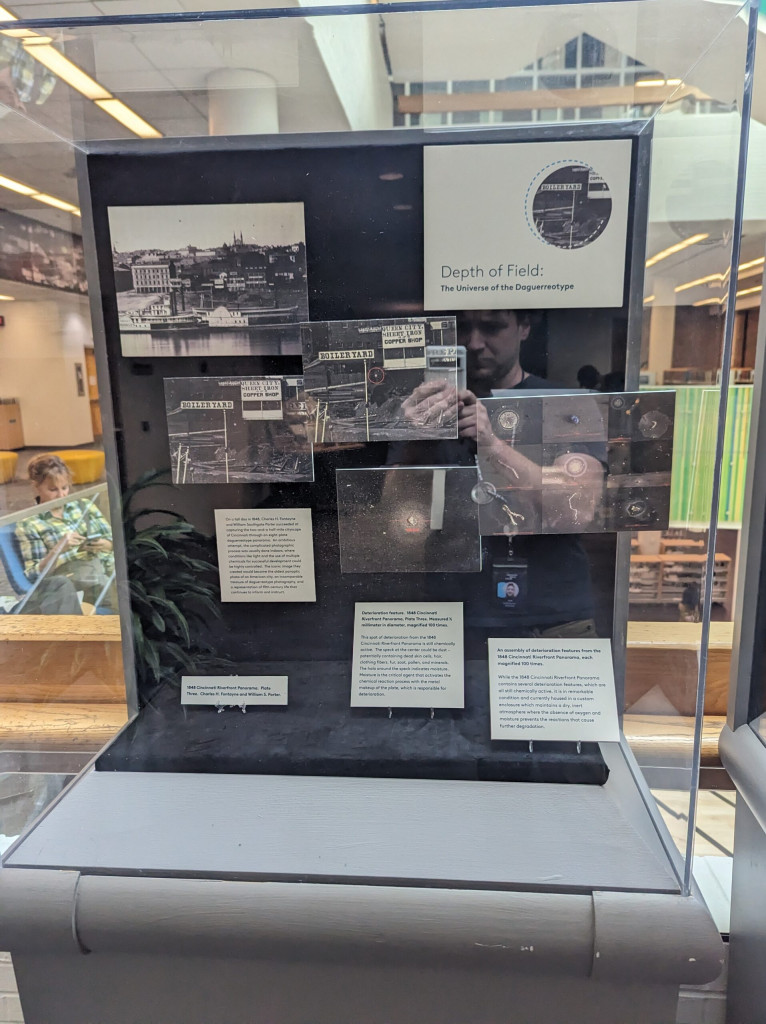
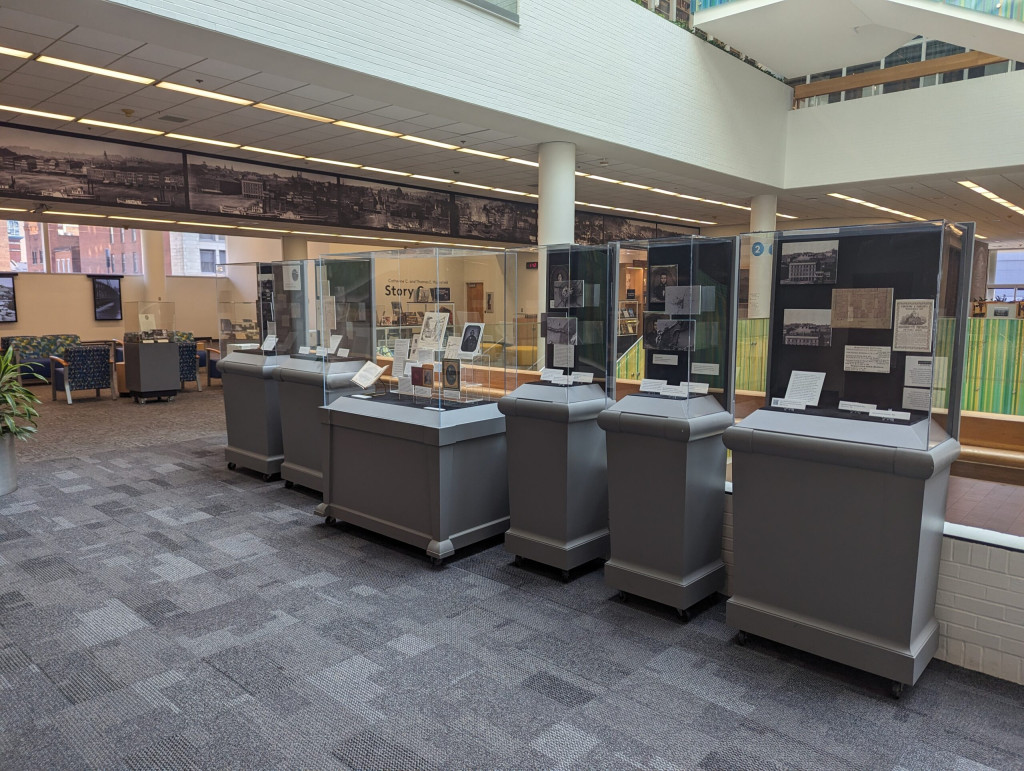
The completed display, entitled Depth of Field: The Universe of the Daguerreotype went live on September 24, and was located on the 2nd floor of the South building at the Downtown Main branch of CHPL through November 1st. Sara Williams curated a wonderful series of images, featuring supplemental newspaper articles, city directories, images shot through a microscopic lens, and more to highlight both the scientific and human stories that are contained within this iconic Daguerreotype.

Vivak, Velvet, and Vantage: Display Installation for FotoFocus 2024

Captions describe:

  • The astonishing achievement of how the photographic images were captured outdoors when normally, daguerreotypes are produced indoors to control the complicated process.
  • How moisture and dust caused deterioration specks which are shown under 100x magnification and routinely monitored.
  • The panorama’s unique anoxic custom enclosure, where the absence of oxygen prevents further degradation.

Although the display is no longer viewable, its primary subject still is. The 1848 Fontayne and Porter Panorama Daguerreotype can currently be viewed in the Cincinnati Room of CHPL’s Downtown Main branch along with other fantastic displays curated by Sara. Be sure to check them out and be on the lookout for the return of FotoFocus in 2026!

Vivak, Velvet, and Vantage: Display Installation for FotoFocus 2024
View of the exhibit after installation next to the Story Center

Matt McCoy – Conservation Specialist [CHPL]

Are You Ready for Halloween?

With Halloween creeping up, it’s either a chance for you to unleash your spooky side or to totally panic and obsess over costumes until the last second. Ghost? Meh. Mummy? Boring. Werewolf? Too hairy. But if you work in a conservation lab, fear not. We have you covered!  

This year, we’ve scoured the lab to create costumes that mix chilling creativity with eccentric conservation tools! Each costume has a difficulty rating, so you’ll know if it takes professional skill or just a wildly spooky imagination. 

So, grab some supplies, get haunting, and remember: Conservation may be reversible, but goofy Halloween memories are forever!  

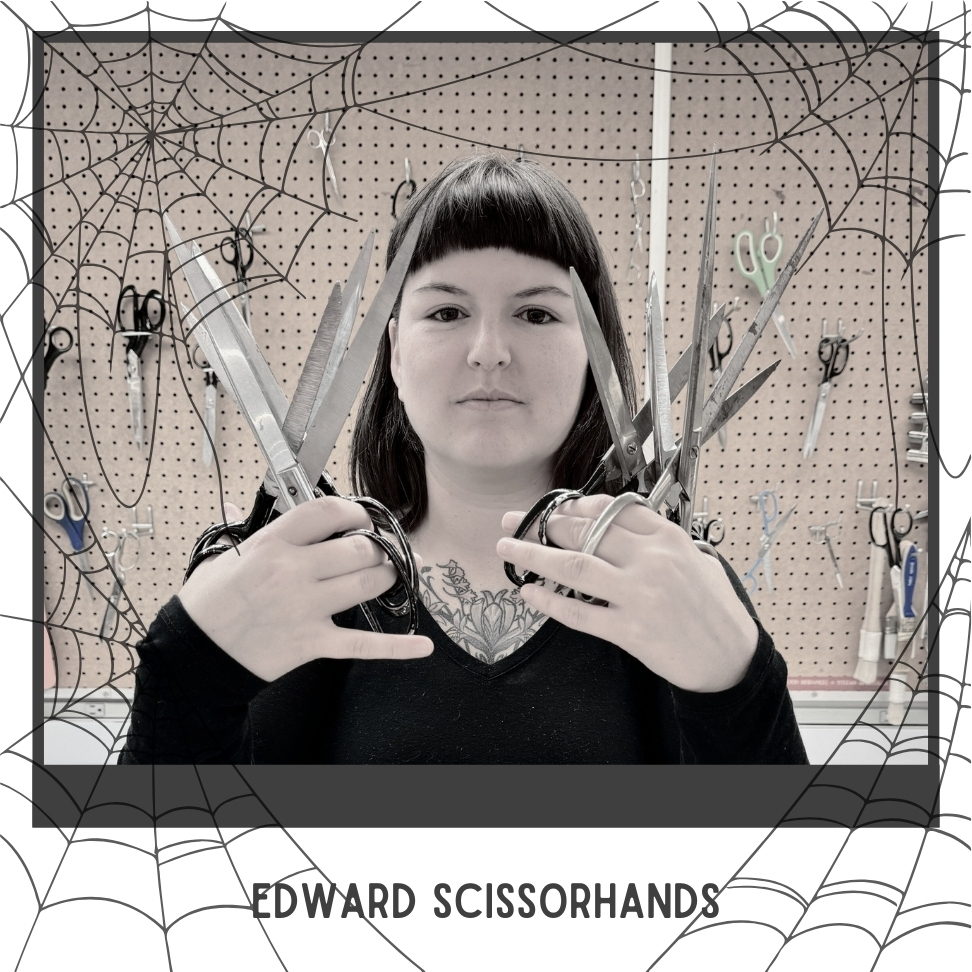
Edward Scissorhands costume, woman in black holding many scissors

Edward Scissorhands
Difficulty level – Easy
Materials and tools needed:

  • Scissors, tons of scissors
  • Black clothing
  • Strong hands (those old scissors may refuse to work properly)

Note – Not recommended for the long-haired among us…so remember, safety first! Keep a safe distance, and beware of those “accidental” snips, unless your colleagues think that you desperately need “just a little trim off the top”.

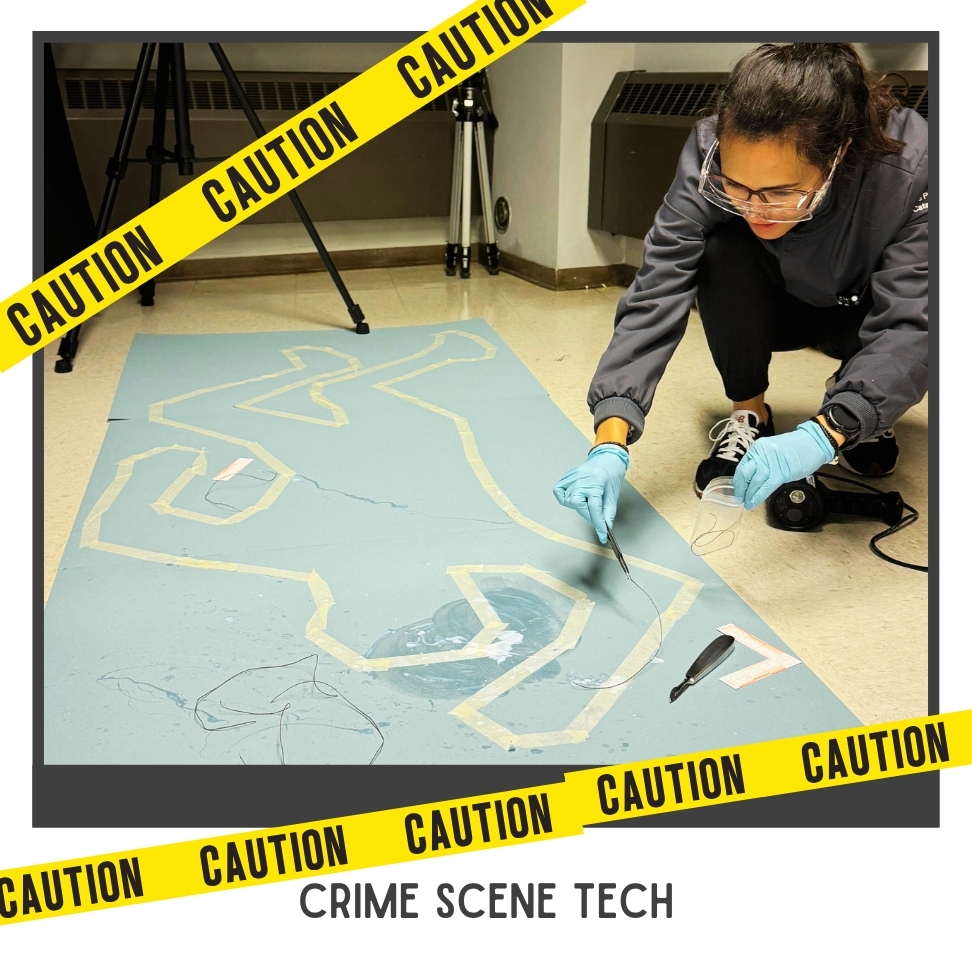
Mock crime scene with woman pretending to collect evidence by a fake chalk outline

Crime Scene Tech
Difficulty level – Medium
Materials and tools needed:

  • Masking tape
  • Caution tape
  • Gloves
  • Lab coat
  • Tweezers
  • Scalpel
  • Thread (to mimic hair samples)
  • Binder’s board to create a body/chalk outline (create a tri-fold for easy travel)
  • Golden gloss/matte media (or anything that fluoresces) to create “blood” splatters
  • Polyethylene bags (to collect evidence)
  • UV lamp
  • Protective UV goggles
  • Fluorescent scale (optional)
  • Camera (optional)
  • Tripod (optional)
  • A strong stomach, not for the faint of heart

Note – For the body outline, just kindly convince a colleague to lie on the binder’s board. Nothing says “team building” like creating a fake crime scene!

The following costumes can be done as a group effort or a solo act – dealer’s choice!

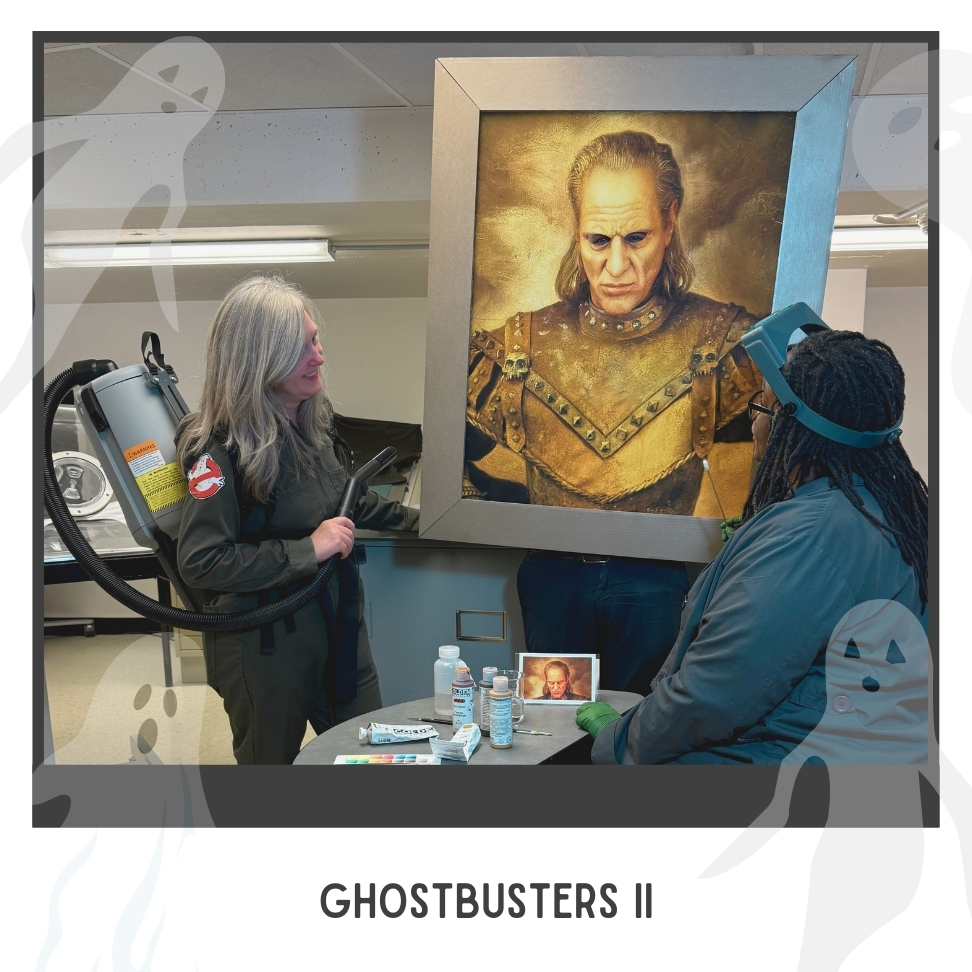
Ghostbuster on the left, painting of old man at the center, conservator seated on the right

Vigo the Carpathian (Painting)
Difficulty level – Hard
Materials and tools needed:

  • Print out of Vigo the Carpathian – our Lab recently switched to a 17″ wide Epson printer, so we are unable to print large scale items, so Jessica skillfully created the painting with two printouts pieced together.
  • Corrugated board
  • Cloth tapes (to create handles on the back of the painting)
  • Gold spray paint
  • Double-sided tape
  • Black/dark clothing
  • Strong arms and captivating eyes

Note – For that eerie stare DON’T FORGET to remove the eyes from the print out…the creepier, the better!

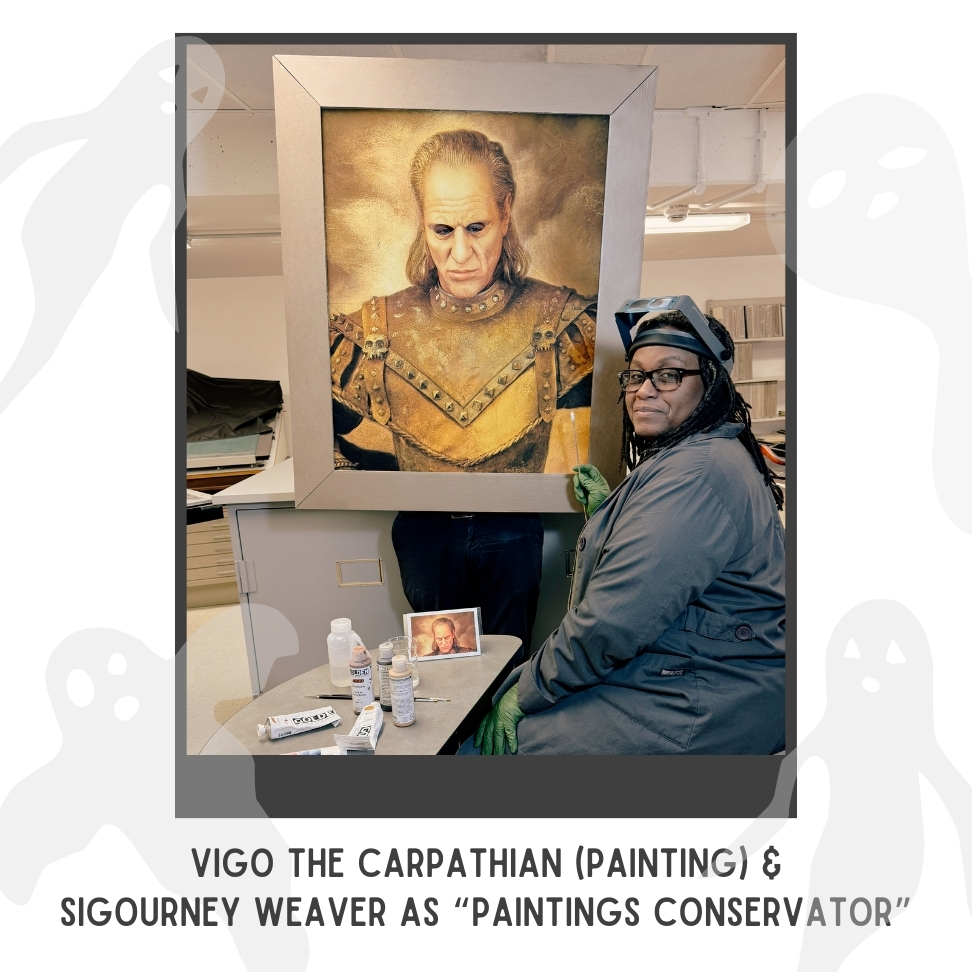
woman dressed as paintings conservator seated in front of a painting

Sigourney Weaver (as “Paintings Conservator”)
Difficulty level – Easy
Materials and tools needed:

  • Lab coat
  • OptiVisor
  • Acrylic paints
  • Gloves
  • Cotton swab
  • Beaker with filtered water
  • Paint brushes
  • Vigo printing proof, as reference (optional)
  • Must not be easily spooked by creepy eyes staring into your soul

Note – We know we aren’t a paintings conservation lab, but I think we pulled it off…or at least better than the movie, I hope!?

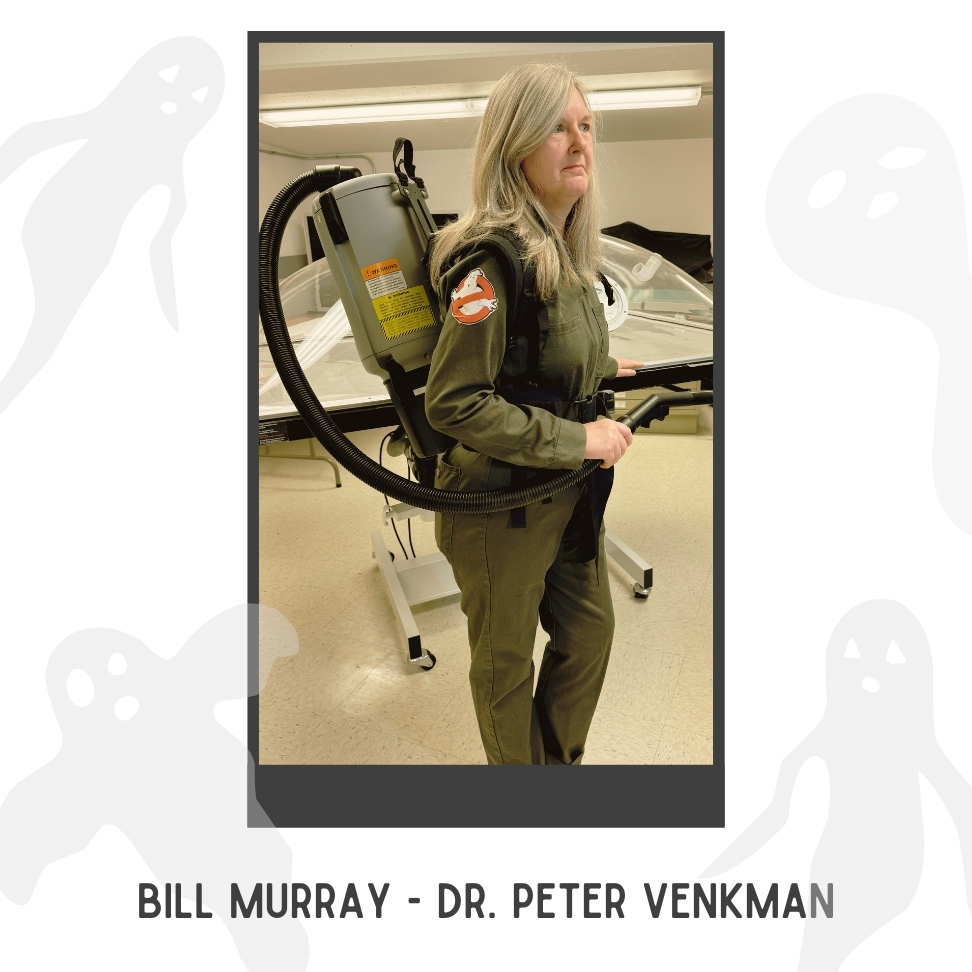
woman dressed as a ghostbuster

Ghostbuster / Bill Murray as Dr. Peter Venkman
Difficulty level – Easy
Materials and tools needed:

  • Jumpsuit from your favorite brand (Dickies, Albion Fit, etc.)
  • Nilfisk GD 10 Back HEPA Vacuum (Proton Pack)
  • Print out of Ghostbusters logo
  • Double-sided tape
  • Portable fan (for special effects)
  • Must be courageous yet capture the whimsy and humor of Bill Murray! Ready for anything!

Note – A portable fan can really elevate the special effects for this costume! Just check out our Instagram reel to see for yourself…

Happy haunting to you all! May the ghost tyrant and sorcerer Vigo (also known as Prince Vigo von Homburg Deutschendorf, Scourge of Carpathia, Sorrow of Moldavia, Vigo the Carpathian, Vigo the Cruel, Vigo the Torturer, Vigo the Despised, Vigo the Unholy1) protect you in all your spooky endeavors!

Catarina Figueirinhas [UCL] – Assistant Conservator

Images by Jessica Ebert [UCL] – Assistant Conservator & Social Media Coordinator

Otto Ege: Villain or Hero?

Introduction

Otto Ege (1888-1951) was a real-life figure known for his involvement in the dispersal of medieval manuscripts. Whether he is considered a villain or a hero depends on the perspective and context in which his actions are viewed.

Ege was a book dealer and collector who gained notoriety for breaking apart medieval manuscripts and selling individual leaves or pages to collectors and institutions. He would disassemble bound illuminated manuscripts and sell them as separate pieces or as a collection of works, thereby dispersing the original works.

Otto Ege: Villain or Hero?
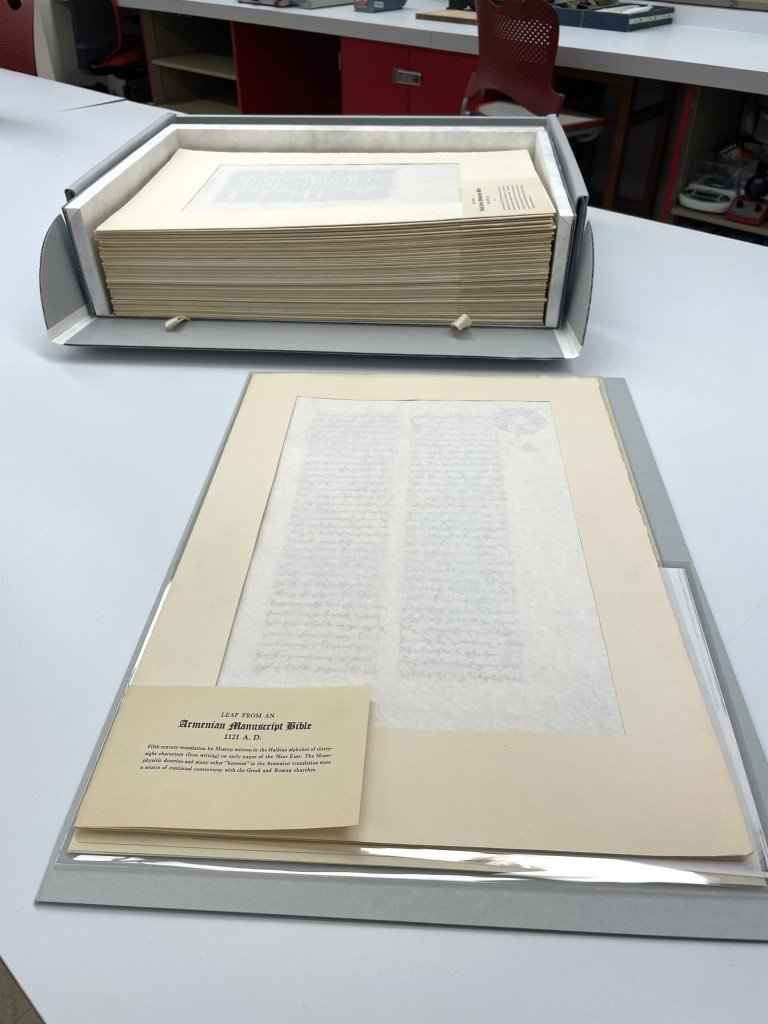
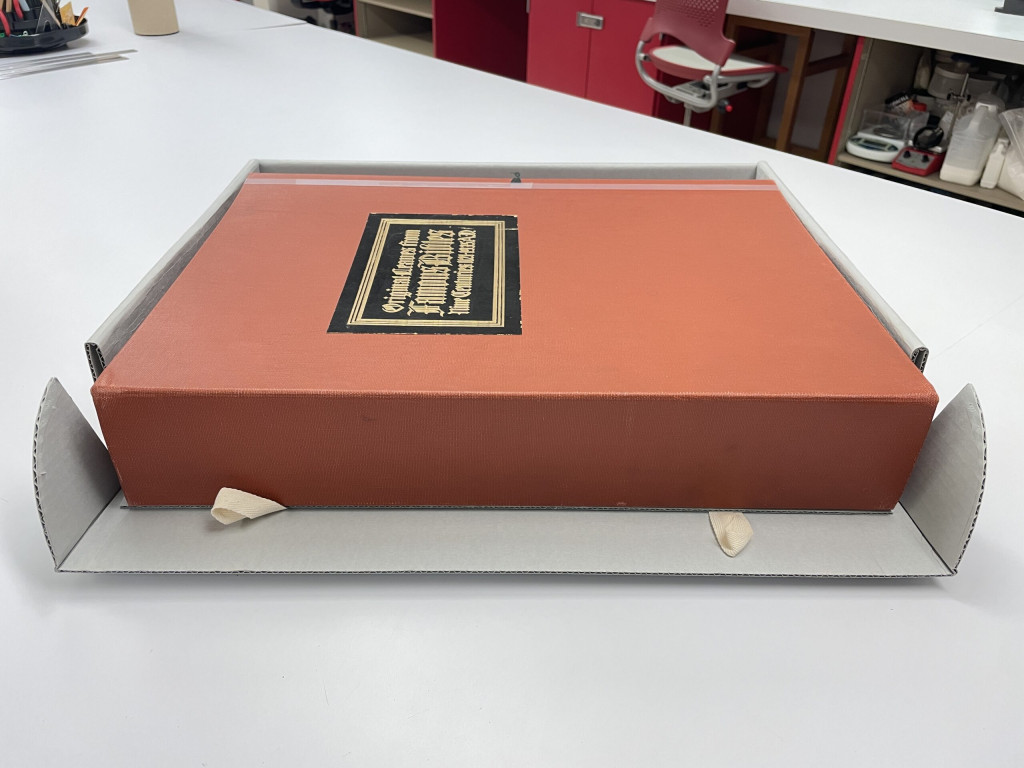
Original portfolio case
Otto Ege: Villain or Hero?
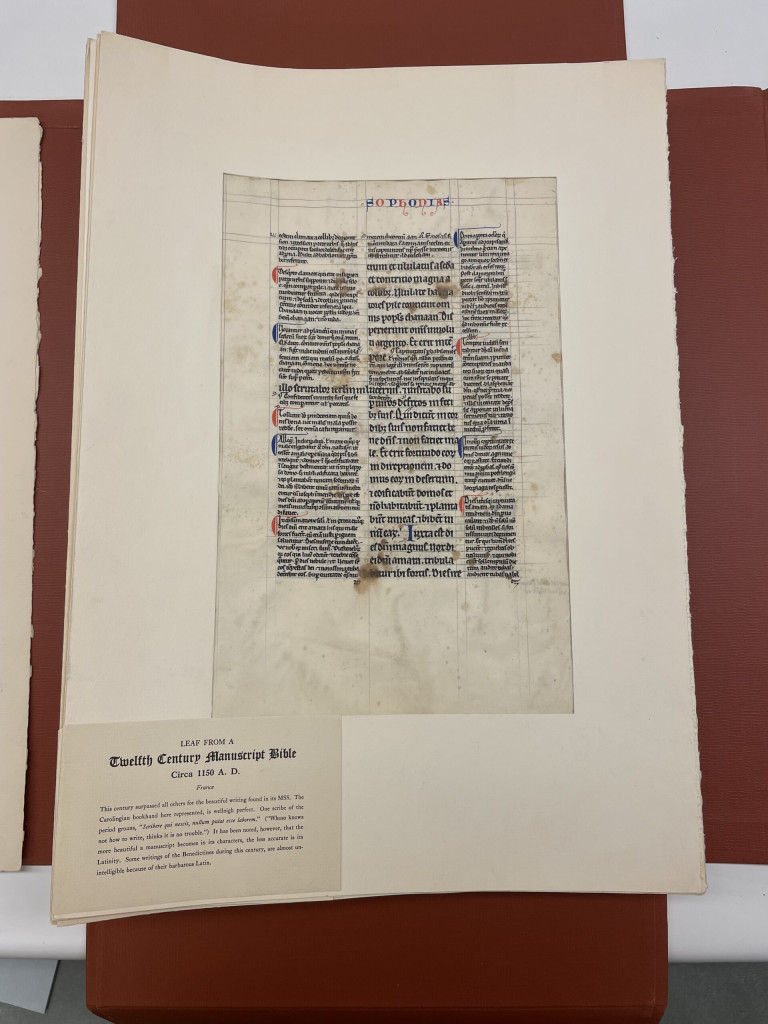
Leaf from 12th century manuscript bible
Otto Ege: Villain or Hero?
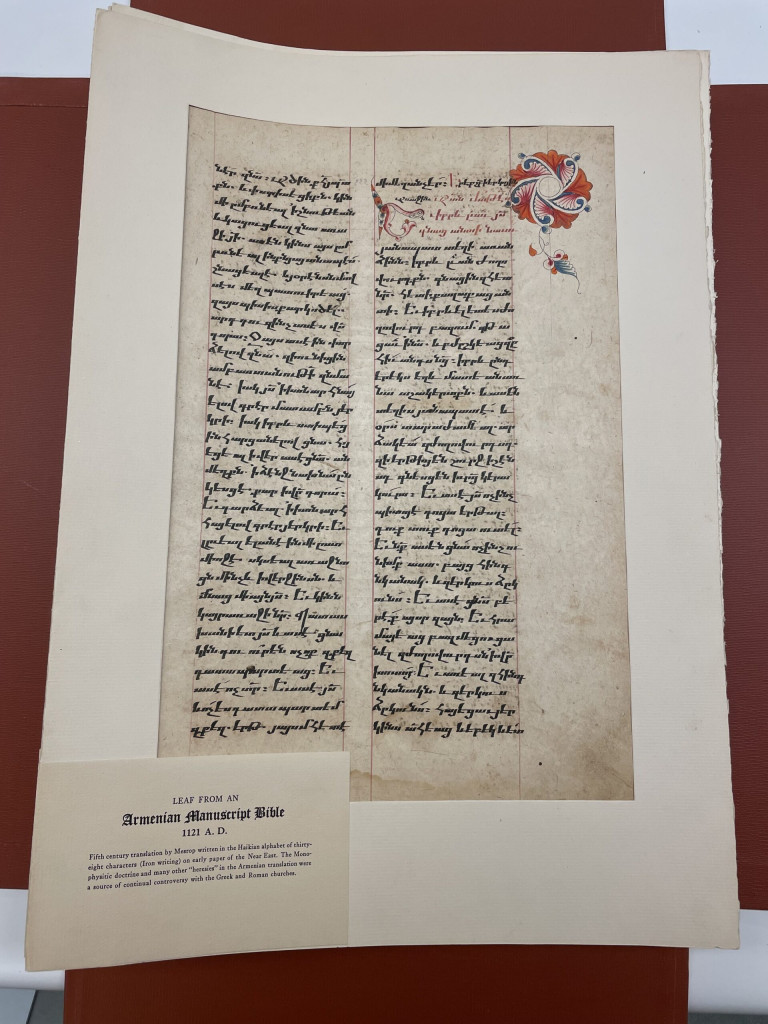
Leaf from 12th century Armenian bible

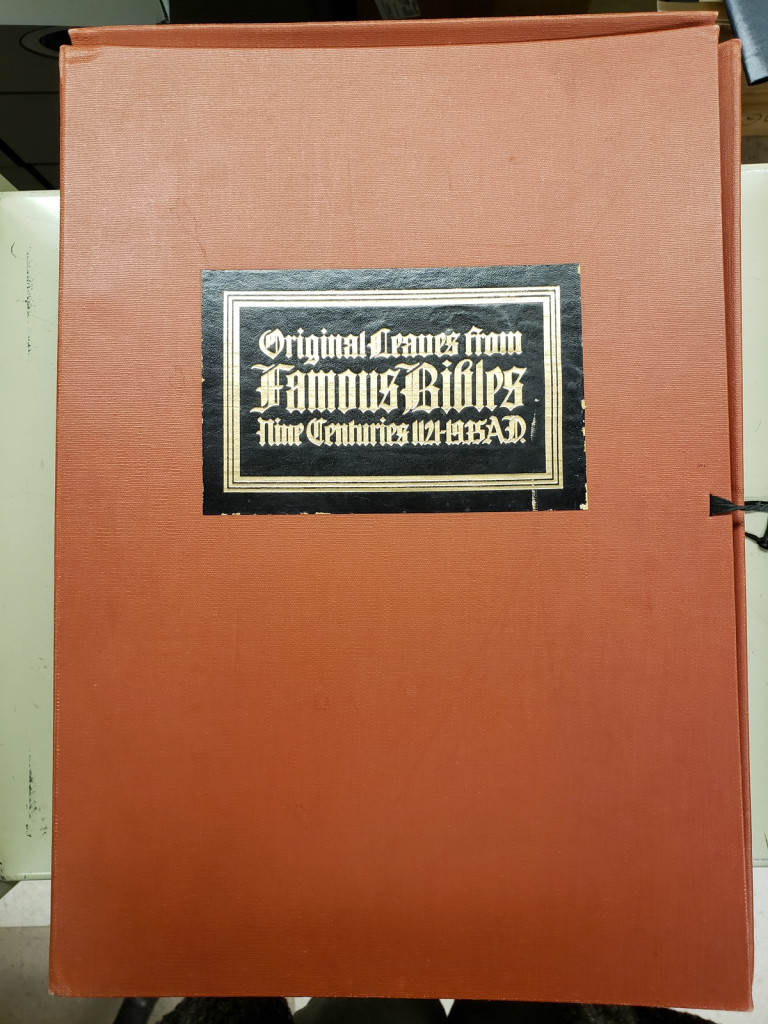
This is one of four Otto F. Ege collections owned by the Cincinnati and Hamilton County Public Library before treatment.  It is titled Original Leaves from Famous Bibles, Nine Centuries 1121-1935 AD (call number R090 ffB582).  It came to the lab for better long term storage.

Villain

From the perspective of some scholars and conservators, Ege’s actions are viewed as unethical today. By breaking up unique historic manuscripts, he caused irreparable damage to the cultural, historical, and scholarly heritage they represented. The dispersal of these manuscripts makes it challenging for researchers to study them as cohesive and complete works, leading to a loss of valuable historical information and artistic context.

Hero

On the other hand, some might argue that Ege’s actions had positive effects. By selling individual leaves, he made rare and exquisite artworks more accessible to a broader audience, including institutions and collectors who might not have been able to afford an entire manuscript. This enabled more people to appreciate the beauty and artistry of these ancient texts.

Conclusion

Otto Ege’s legacy is a complex one, and opinions about him vary widely. However, it is essential to note that Ege’s actions occurred in a different time when the appreciation for medieval manuscripts as complete works of art was not as prevalent as it is today. Modern views on preservation and the importance of maintaining cultural heritage have evolved significantly. Ultimately, his actions highlight the ethical and moral dilemmas surrounding cultural heritage and the need for responsible stewardship of historically significant artifacts.

Treatment and Storage of the Public Library’s Collections

The Public Library owns four collections by Ege. Each have been receiving treatment to better improve their long-term storage. After the smaller collections received successful treatment, this larger collection followed suite.

Treatment

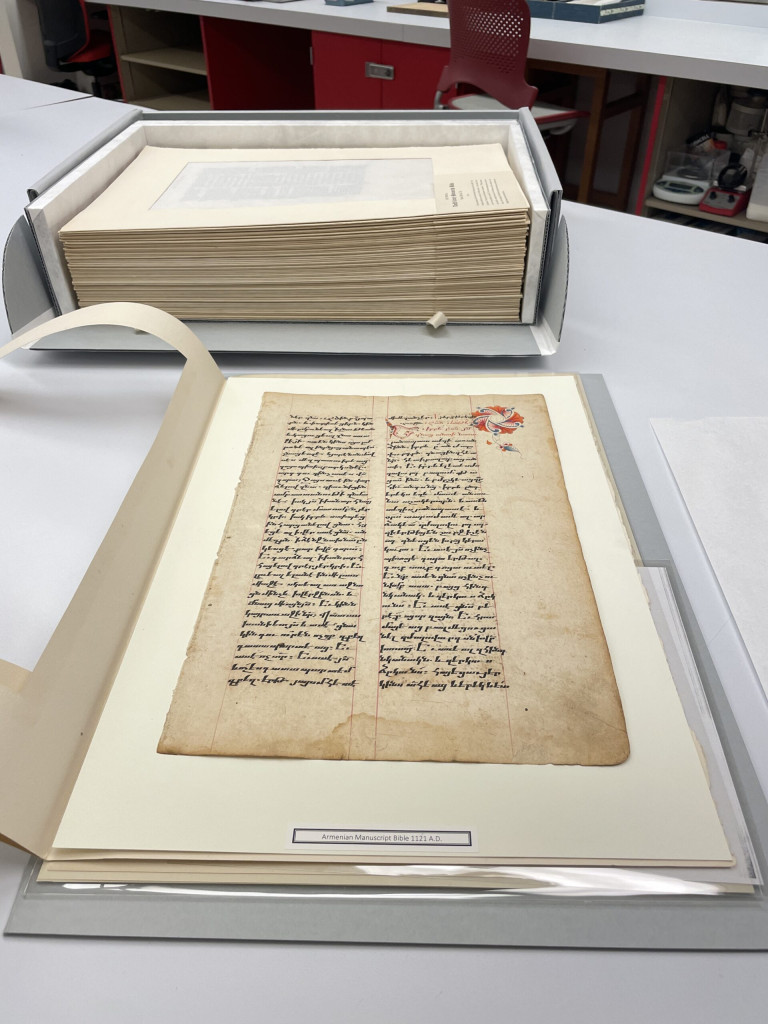
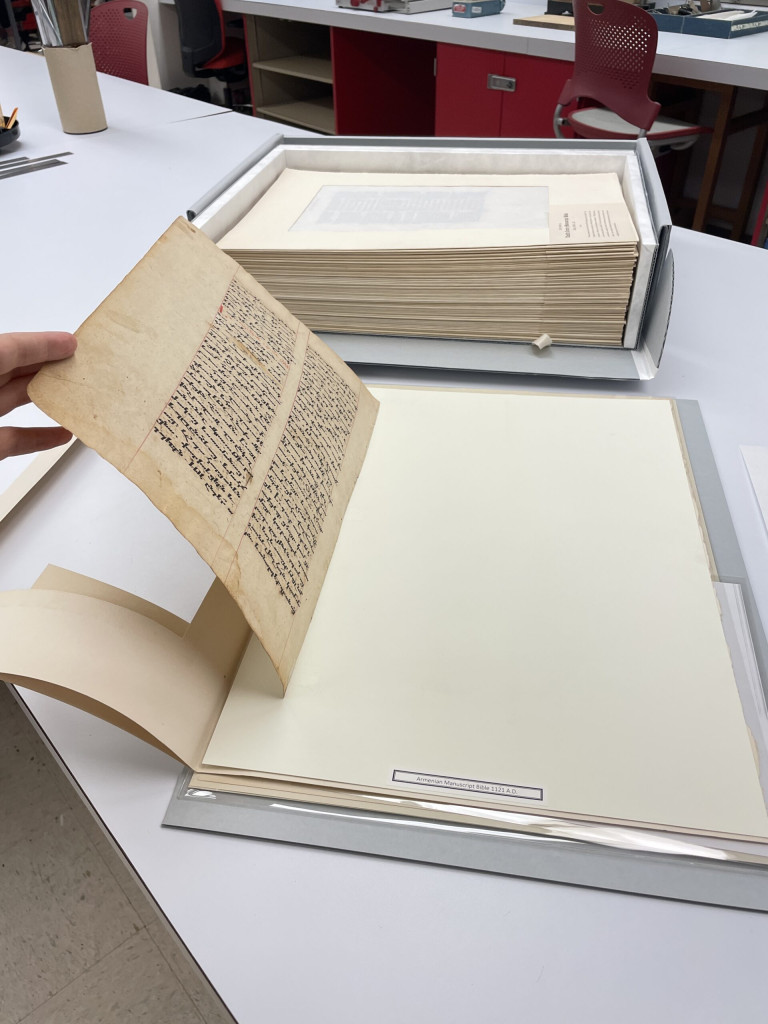
In their original format, the manuscript leaves were hinged to floppy paper folders with windows cut out for viewing. The original hinges were thick cloth, and in many cases, no longer functioning as the hinges became stuck in place. This prevented viewing the backs of the materials. The flexible folders overtime became U-shaped and were in need of supports to keep materials planar, especially during handling.

Individual leaves were unmounted from the original paper folders and re-hinged with kozo tissue and wheat starch paste onto archival 2 ply mat board supports. The mat board supports were then placed within the paper folders. Unbuffered interleaving tissue was then added between the manuscript and the folder window for long term storage to prevent the edges of the window from catching or rubbing onto the objects.

Otto Ege: Villain or Hero?
Armenian manuscript hinged to 2ply mat board support, stored within the original paper folder
Otto Ege: Villain or Hero?
The backs are now viewable!
Otto Ege: Villain or Hero?
Interleaving tissue protects the face of the manuscripts from rubbing along the edges of the windows

Storage

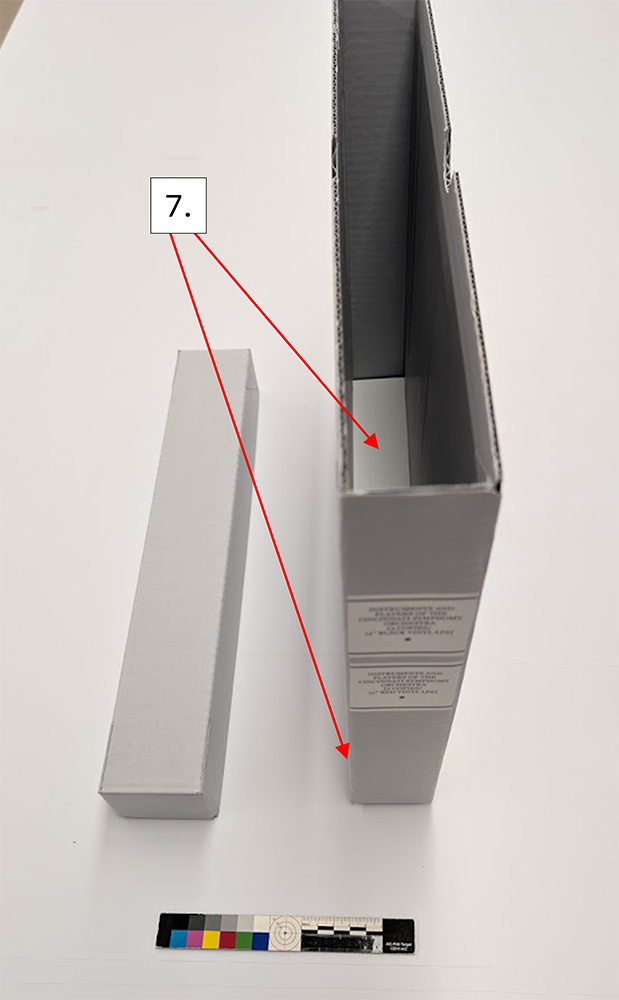
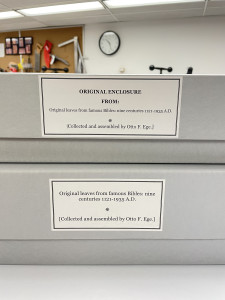
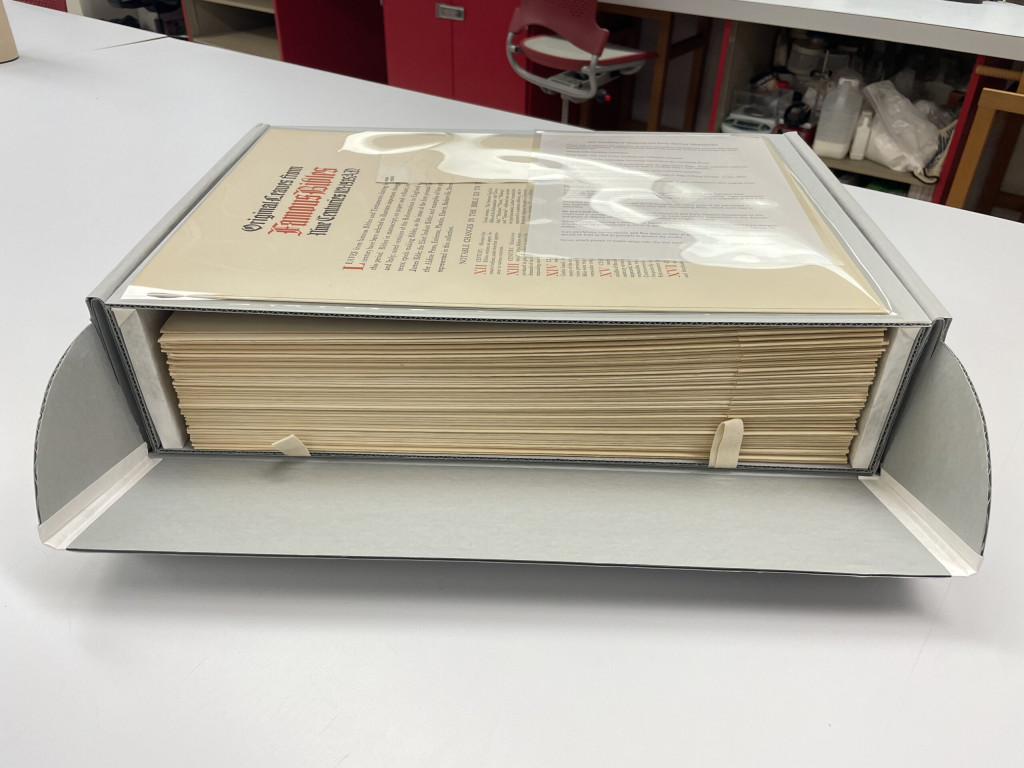
While other collections were retained within their original enclosures with a protective chemise, this portfolio was acidic and deformed with broken ties, so two new corrugated banker’s boxes were created to retain the original enclosure and store the manuscripts separately.

Otto Ege: Villain or Hero?

Additional Resources

The Public Library also owns Ege collections titled Fifty Original Leaves from Medieval Manuscript Western Europe: XII‐XVI century (call number R096.1 ffF469), Fifteen original oriental manuscript leaves of six centuries (call number 096.1 ffF469f), and Original Leaves from Famous Books, Eight Centuries 1240 A.D. – 1923 A.D. (call number R094 ff069).

The collection Fifty Original Leaves from Medieval Manuscripts is digitized and is available online in the digital library.

There are also multiple copies of the printed pamphlet by Otto Ege titled Pre‐Alphabet days. Interestingly, Genealogy and Local History own two copies in different formats. One copy is a cased‐in hardback with a single sewn gathering while the other copy is a single gathering pamphlet sewn into a paper case. Both pamphlets are original formats that would have been offered to buyers at different price points!

If you’re interested in further treatment details, check out our treatment reports on the Digital Resource Commons by searching for Otto Ege.

Ashleigh Ferguson Schieszer [CHPL] – Special Collections Conservator, Lab Manager

Meet Me at Main: Exhibit Prep for Reopening!

After a 43 million dollar renovation spanning three and a half years, the CHPL downtown library reopened July 12th, 2024!

In preparation for reopening, the Preservation Lab has been working closely with a variety of CHPL staff to prepare collection items and exhibit cases for display.

To celebrate the dramatic reveal of updates, we’ve provided before and after pictures of the Main downtown library followed by a sneak peek at some of the exhibits.

Main Library Before, During, and After Renovations

Meet Me at Main: Exhibit Prep for Reopening!
Before construction
Meet Me at Main: Exhibit Prep for Reopening!
Installation of scaffolding for skylight maintenance
Meet Me at Main: Exhibit Prep for Reopening!
Nearing completion
Meet Me at Main: Exhibit Prep for Reopening!
July 12th, 2024 – Opening Day! A view of the atrium with a new social staircase.

Exhibits

Exhibit prep work consisted of treatment, matting, creating custom supports, install on site (and more!) for eight different exhibits!

1. Eugenia Rhein Doll Collection

Meet Me at Main: Exhibit Prep for Reopening!
Eugenia holds a Spanish doll wearing a cofrades hat symbolizing penance, often worn on Easter

Located in the Nolan Room (namesake of John T. Nolan Jr, president of the board of trustees from 1951-1983, known as “Jack”), are a collection of dolls from all over the world, representing nearly 100 countries. The dolls were gifted to the Library by Eugenia Rhein who was an administration assistant and a deeply committed employee for over 40 years. During Eugenia’s extensive travels she collected the dolls from countries such as Kuwait, Algeria, Rhodesia, Korea, Pakistan, Whales and more. In the 1970’s the dolls were often used in displays at the library to tell stories about children from other cultures by the Children’s Librarian.

Image of Eugenia is courtesy of the Cincinnati and Hamilton County Public Library.

The Nolan Room

Now open to the public, this uniquely round room is located on the third floor next to the tower room.

During Doll Installation

Meet Me at Main: Exhibit Prep for Reopening!
Matt McCoy cleans the glass inside and out
Meet Me at Main: Exhibit Prep for Reopening!
Empty doll boxes during installation

Dolls were examined for condition during install. Dolls too fragile (or broken) were left stored in their corrugated clamshells. Dolls in good condition were carefully placed on stands, secured around their waste. Larger dolls required special strapping or additional supports to secure the object in place. Minor treatment was performed on site to repair dolls, reduce creasing in outfits, or clean dust and debris.

2. Veterans Exhibit

Located on the second floor at the top of the social staircase, a new purpose built space was built for the Veteran’s exhibit where artifacts are displayed in concert with stories provided by a digital exhibit and recorded interviews. The Book of Homage is highlighted with the pages turned periodically to reveal lists of names. Original War Bond posters, that were conserved and matted by the Preservation Lab, show the Victory Book Campaign requesting Americans donate books to their local library. War Bond posters will be rotated periodically to protect the vibrant printed colors from fading and the papers from darkening, but perhaps more importantly, show the wide range of art and messages conveyed during times of war.

Meet Me at Main: Exhibit Prep for Reopening!
New purpose-built Veterans exhibit the day of opening
Meet Me at Main: Exhibit Prep for Reopening!
One of my favorite war bond posters drawn by DR. SEUSS! (Not currently on display but available upon request.)

You might also be interested in:

  • This blog post where Jessica has highlighted war bond poster photographic documentation.
  • Conservation treatment reports for the War Bond Posters on the UC Libraries Digital Repository can be accessed here.
  • Digitized copies of many posters can be viewed on the CHPL Digital Library.

3. Real Art for Young Artists: Original Illustrations from Noisy Nora by Rosemary Wells

This exhibit, initially installed in the North building in 2019, was moved to the NEW children’s library location, now on the first floor in the renovated South building.

New Children’s Library

Meet Me at Main: Exhibit Prep for Reopening!
The new children’s library in the South building contains interactive sculptures with lights and sounds, such as this replica of the Roebling Bridge

Updated Exhibit Location

The exhibit showcases original hand-drawn illustrations created for the book Noisy Nora, donated to the library by the author and artist, Rosemary Wells.

Meet Me at Main: Exhibit Prep for Reopening!
Original 2019 location in North building
Meet Me at Main: Exhibit Prep for Reopening!
New 2024 installation in South building

Exhibit Preparation

Luckily, much of the exhibit prep work had already been completed in 2018 for the initial installation (you can read about the original conservation and matting of the illustrations here that are UV protected and waterproof!), but now it was time for maintenance and upkeep.

In particular, the glazing on the frames had developed an iridescent coating residue from well-intentioned cleaners. This made detailed viewing of the illustrations problematic.

Other issues stemmed from the art being at children’s height. The matting and glazing packages had come loose from the frames in a few instances from being pushed inward. Others, such as the illustration “Jack had gotten filthy” had been drawn on with yellow crayon. The crayon marks were not easily removable and needed evaluation by the conservation team to improve.

Despite these issues, due to our forward-thinking work in 2018, the tightly sealed matting packages kept the original artwork completely safe and undamaged. Improvements required adjustments to the frames only!

Meet Me at Main: Exhibit Prep for Reopening!
Before exhibit maintenance, the glazing of the matting package suffers from being drawn on by crayons
Meet Me at Main: Exhibit Prep for Reopening!
Before exhibit maintenance, a matting package was pushed into the frame
Meet Me at Main: Exhibit Prep for Reopening!
During treatment, the matting package is secured with strong nails to the inside of the frame rather than using the folding metal tabs
Meet Me at Main: Exhibit Prep for Reopening!
After treatment the art is secured in the frames and the UV coated glazing is clean

4. History of the Library

With the establishment of the Cincinnati and Hamilton County Public Library in 1853, it’s no surprise that it’s one of the oldest libraries in the county and thus full of history to highlight! This physical exhibition beautifully compliments the online virtual exhibit located here.

The physical exhibit is located on the 3rd floor in the Cincinnati Room along the connector where special collections are carefully monitored while on display with specialized light, humidity and temperature controls.

On view are captivating images of the iconic lost library of Vine Street as well as other branch locations, many of which are Carnegie buildings. You can also get up close and personal with past library technologies and special collection objects such as stained glass from the original Vine Street location.

  • Meet Me at Main: Exhibit Prep for Reopening!
  • Meet Me at Main: Exhibit Prep for Reopening!
  • Meet Me at Main: Exhibit Prep for Reopening!
  • Meet Me at Main: Exhibit Prep for Reopening!
  • Meet Me at Main: Exhibit Prep for Reopening!
  • Meet Me at Main: Exhibit Prep for Reopening!
  • Meet Me at Main: Exhibit Prep for Reopening!

For this exhibit (and many others!), Conservation Specialist, Matt McCoy worked diligently to replace non-archival black felts at the base of the cases with fresh polyester velvet covered boards. This great improvement is not only archival, but no longer slips and slides when objects are set in place and it’s easily removable to clean crumbs of books off with a brush.

Meet Me at Main: Exhibit Prep for Reopening!
Matt created custom boards covered in polyester velvet in the lab…
Meet Me at Main: Exhibit Prep for Reopening!
Then tweaked and installed on site!

5. Circulating Art Books

Located on the third floor of the South building, these stylish 1950’s cases were also refreshed by the lab with new bases of polyester velvet covered boards.

Currently on display are a variety of beautiful art books, sometimes referred to as coffee-table books. Unlike materials in the Cincinnati Room, these materials can be checked out and taken home!

Meet Me at Main: Exhibit Prep for Reopening!
Interested in an art book you see? Scan the QR code to check out any of the titles on display!

6. Birds of America by John James Audubon

Located in the reading room, named the Cincinnati Room, on the 3rd floor connector is where one of the library’s most famous special collection items lives. This item is proudly back on display after resting during renovations. It is the early 19th century double elephant folio known for its gigantic size: the Birds of America Vols. 1-4 by John James Audubon.

With pages that are turned once a week, their grandeur enables you to see the birds represented to scale! Even the flamingo is life size (albeit the neck is wrapped around the page instead of upright).

Meet Me at Main: Exhibit Prep for Reopening!
The Washington Sea Eagle is nearly four feet tall, located in Volume 1.

Exhibit Installation

Cleaning the cases was the first step before installation as they were covered in construction dust inside and out! Before main closed for renovations, the Cincinnati Museum Center modified these cases for us so that the beds pull out for easy access. Their generous modifications were provided as a thank you for loaning all four volumes of the Birds of America for their 2019 exhibit titled In the Audubon Tradition and were a wonderful improvement!

Meet Me at Main: Exhibit Prep for Reopening!
Volumes are protected with custom wrappers. Wrappers consist of strong but lightweight Dibond, archival corrugated board, cloth spines, and ethafoam sheeting secured with cloth ties.
Meet Me at Main: Exhibit Prep for Reopening!
Volumes are also covered in polyester jackets
Meet Me at Main: Exhibit Prep for Reopening!
These heavy books require at least two people to carry
Meet Me at Main: Exhibit Prep for Reopening!
Books are supported with hinging cradles from Benchmark Catalog. The cradles adjust to the weight of the book when pages are turned.
Meet Me at Main: Exhibit Prep for Reopening!
Polyethylene strapping attaches to back of the cradles with Velcro. Strapping protects pages from sagging due to gravity.
Meet Me at Main: Exhibit Prep for Reopening!
The digitized pages are available on a touch screen next to the display case. Nearby, the 1848 eight-plate daguerreotype panorama is also on display!

Supplemental Materials

Perhaps less well-known but just as captivating are the Nests and Eggs of Birds of Ohio. In nearby cases, these supplemental materials beautifully complement the Birds of America.

Read more about this amazing collection item that was recently on exhibit March 2024 at the Cincinnati Symphony Orchestra here and see images of the vibrantly colored lithographs. Or, check out the book America’s Other Audubon by Joy Kiser to see reproductions of the illustrations and learn about the female artist and her family who produced them.

Meet Me at Main: Exhibit Prep for Reopening!
The prospectus of Nests and Eggs is temporarily on display that may have been owned by the illustrator, Gabrielle Estelle Jones, used to entice funders
Meet Me at Main: Exhibit Prep for Reopening!
View the original Nests and Eggs by requesting the material in the Cincinnati Room
Meet Me at Main: Exhibit Prep for Reopening!
Check out and take home this reference material with reproductions of the illustrations and learn about the history of how they’re made

7. Satellite display of reference materials about the Birds of America

Located near the 1950’s cases on the 3rd floor of the South building are supplemental materials relating to the Birds of America. For example, John James Audubon also collaborated with his two sons to depict 150 plates of four-legged animals. While the Cincinnati and Hamilton County Public Library owns these two original volumes which can be viewed in the Cincinnati Room, this display shows reference materials relating to such items.

Meet Me at Main: Exhibit Prep for Reopening!

8. The Inland Rivers Steamboat Exhibition

This exhibit utilizes the Inland Rivers Collection at CHPL to illustrate the historic steamboat and river culture in the region. It is located on the 2nd floor connector.

While much of the materials in the exhibit are owned by the Public Library, some of the more unique treasures are on loan from the Cincinnati Museum Center who provided items such as a heavy life preserver made of cork and a leather-bound bible with handwritten inscriptions salvaged from steamboat wreckage.

Meet Me at Main: Exhibit Prep for Reopening!

Exhibit Installation

Exhibit Installation consisted of creating custom 3-D supports for special collection items on loan while CHPL materials were supported with flat mat board supports. Photographs were mounted to archival boards to prevent them from curling in changes of ambient humidity.

Meet Me at Main: Exhibit Prep for Reopening!
Three people are necessary to lift the vitrines safely over objects within these cases
Meet Me at Main: Exhibit Prep for Reopening!
Life preserver ready for showtime!
Meet Me at Main: Exhibit Prep for Reopening!
This steamboat relic was previously mounted and matted at the Preservation Lab by Chris Voynovich
Meet Me at Main: Exhibit Prep for Reopening!
Steamboat salvaged bible needed strapping and a custom cradle to show the handwritten inscription
Meet Me at Main: Exhibit Prep for Reopening!
View of Inland Rivers Steamboat Exhibit from the opposite end of the connector

With so many exhibits and a variety of content for all ages be sure to head downtown and visit them in person!

Ashleigh Ferguson Schieszer [CHPL] – Conservator and Conservation Lab Co-Manager

Bonus Images of Main

Meet Me at Main: Exhibit Prep for Reopening!
Front of library is easily accessible
Meet Me at Main: Exhibit Prep for Reopening!
The new Story Center with large touch screens for digital exhibits
Meet Me at Main: Exhibit Prep for Reopening!
Terraces available during certain hours

Learning the Basics

Hi! I’m Nicole, and I’m the newest member of the Preservation Lab.

Portrait of Nicole Browning
Nicole Browning makes a corrugated clamshell enclosures

When I was interviewing for the position of Conservation Assistant, I did a deep dive into what preservation and conservation really mean. I read through blog posts and perused the Lab’s Instagram, trying to get a grasp on what exactly the lab did. Little did I know, these snapshots into lab life hardly even scratched the surface.

Materials and Tools

My first week as a Conservation Assistant was full of learning, from what types of boards and paper supplies are available, to how to create a pamphlet binder and sew music scores. I had no idea there were so many types of paper out there, and I was ignorant about how many tools there exist simply to cut these pieces of paper. My hand skills were immediately put to the test with learning the stitches used to attach pamphlets to protective premade binders, which create a hard cover for these otherwise soft materials. I was also instructed in which methods of cutting are best for which practices and types of paper, such as board shears for larger pieces of Bristol or corrugated board, scalpels and Olfas for small, precision cutting, and even a corner cutter to clean up the corners of your pamphlet binders!

A music score lays on a bench with a needle and thread used for conservation sewing.
Sewing parts of a music score with a needle and thread.

Enclosures

Over the next few weeks, I was thrust into a whole new world of enclosures after learning about pamphlet binders and music scores. Enclosures are typically boxes that are used to keep a book or object safe from light, dust, and other environmental factors that can harm the item over time.

Tuxedo boxes

Creating tuxedo boxes was an exciting and fun challenge, as getting all the measurements right and being precise is so important. These boxes take a lot of focus to make, and attaching the two pieces of board can be daunting, as you must make sure not to overlap the folds and ruin the whole box.

Front view of a tuxedo box
View of a tuxedo box opened next to the book it will house.

A finished tuxedo box on the left, and the two pieces of an unfinished tuxedo box opened to show the full spread of the box on the right.

Corrugated Clamshells

Corrugated clamshell boxes came next, with their in depth measuring and precision crimping and cutting. Like a tuxedo box, these boxes offer better storage from light and dust, and are a more structured enclosure. Where they differ, though, is they are made from corrugated board rather than Bristol board, and this offers more support to items that need a little boost of structural help. These boxes are made from one piece of board that is cut and folded into a clam-like box that opens on one end and is attached at the spine.

A flat corrugated blue board that has been cut and pre-folded, ready to form into a box.
A corrugated clamshell during the construction process. This clamshell still needs it’s ends glued in to create it’s box shape.

General Collections Treatment

My final big learning project was cloth tape removal, which was something completely different, making it very enjoyable to learn. Cloth tape removal is taking off old adhesive tape that has been applied to materials that is now falling apart. To remove cloth tape, a poultice of methyl cellulose is applied in thirds to the tape. Introducing moisture to the adhesive allows you to slowly and carefully use a Casselli microspatula to loosen and remove the tape, leaving behind only the original materials.

General collections treatment removing a cloth spine hinge with a methyl cellulose poultice.

An old pamphlet that’s been bound together with cloth tape in the middle of the removal process. Weights hold down pieces of Mylar to keep the pamphlet cover from absorbing any of the poultice. The cloth tape is the grey strip on the right of the pamphlet, and you can see where some of the tape has been removed and what still needs to be done.

Final Impressions

I’ve learned so much over my first month at the lab, but so far corrugated clamshells have been my favorite. It’s been so fun to grow my hand skills and to see how much of a difference one month can make, and I’m so excited to expand my horizons and learn more about the lab in the upcoming months!

Nicole Browning, Conservation Assistant [CHPL]

Nests and Eggs on Display at the Cincinnati Symphony Orchestra

Illustrations of the Nests and Eggs of Birds of Ohio are on display at the Cincinnati Symphony Orchestra March 1st and 2nd as part of a musical program honoring Oliver Messiaen who was both a major composer of the 20th century and an ornithologist.

Synesthesia

Oliver Messiaen is well known for studying bird songs and interpreting their notes into musical transcriptions. His works are also unique in that Messiaen experienced synesthesia which greatly influenced his creations. Synesthesia is when a person perceives more than one sense at a time, such as Messiaen who experienced colors when listening to music and was able to see sounds. 

Cincinnati Symphony Orchestra Program

The program at the CSO honors Messiaen by incorporating both music, color, and bird visuals to invite the audience to experience a unique multi-sensory experience. Messiaen’s Des canyons aux étoiles (“From the Canyons to the Stars”) will be performed  by the conductor, Matthias Pintscher, and pianist Pierre-Laurent Aimard.

Nests and Eggs on Display at the Cincinnati Symphony Orchestra
Click the image for a link to the digital program for the CSO Proof: From the Canyons to the Stars

“Inspired by his visits to Utah’s Bryce Canyon and Zion National Park, Messiaen’s Des canyons aux étoiles (“From the Canyons to the Stars”) depicts the birdsong and red rock hues he experienced during his time in the desert… Accompanied by immersive video-art, Springer Auditorium will be transformed, allowing listeners to escape into the southwestern landscape and experience a synesthesia of their own.” – As described by the CSO website

Nests and Eggs

Complementing the musical performances, on display will be a page from Cincinnati and Hamilton County’s Illustrations of the nests and eggs.  The page showcases a local Ohio native, the Wood Thrush, who lays bright blue colored eggs within a nest made of old leaves, dried grasses and moss (rarely sticks).  The nest of the Wood Thrush also contains “rootlets” placed intentionally inside of the nest, resulting in a pinkish brown or black lining. The nest is “plastered” with a thin mud that is easily missed as it’s thoroughly worked in and covered.

Nests and Eggs, while lesser known than Audubon’s Birds of America, is quite extraordinary in how it highlights the uniqueness of the construction of nests made by different bird species. Take for instance, the Baltimore Oriole’s nest, which primarily consists of strings and flax fibers to create a soft and long pocket.  Compare that to the more traditional nest of the Wood Thrush whose home is bowl-shaped with a wide opening.

Nests and Eggs on Display at the Cincinnati Symphony Orchestra
Baltimore Oriole – Plate 1
Nests and Eggs on Display at the Cincinnati Symphony Orchestra
Wood Thrush – Plate II

It’s also extraordinary that the illustrations are detailed lithographic portraits created by Gabrielle Estelle Jones and her family, despite not having been formally trained.  Their work was intended to be used as a companion volume to John James Audubon’s Birds of America.  While not as large as the Birds of America double elephant folios, Eggs and Nests is still an impressively large-sized volume. 

Gabrielle “Gennie” Estelle Jones

The following excerpt was written by Sara Williams, Arts & Special Collections Reference Librarian:

Illustrations of the Nests and Eggs of Birds of Ohio was a project begun by Genevieve Estelle Jones, a native of Circleville, Ohio. Born May 13, 1847, Genevieve, or Gennie, spent much time as a young girl birdwatching in the woods and wetlands with her father, an amateur ornithologist. Just before the age of 30, Jones’ father forbade her from marrying the man she loved, and in 1876, she visited the Centennial World’s Fair in Philadelphia to take her mind off her broken heart. While there, she viewed hand-colored engravings from John James Audubon’s vibrant The Birds of America. Inspired by Audubon’s example, Jones set out to illustrate the nests and eggs of birds, an aspect often missing from his work. Jones completed only five illustrations for her book before she died of typhoid at the age of 32. The work was eventually completed by Genevieve Jones’ family. Only 90 copies of the book were published, of which only 34 are currently known to exist.  

Preservation

As part of the Preservation Lab’s role in displaying the object, a condition report book was created to accompany the item to ensure the object’s condition is preserved. This helps those who are installing anticipate any possible challenges in supporting fragile pages or bindings. In this case, the upper endsheets are extremely brittle and have been previously repaired, but could break again if not carefully draped and held with polyester strapping in a safe manner.

After determining a proper exhibit case to fit and secure the binding, a custom cradle was made. To protect weak points of the binding on display, a support was constructed out of 8 ply museum mat board to support the heavy and oversized pages from stress along the joint.  

Nests and Eggs on Display at the Cincinnati Symphony Orchestra
Solutions were tested to fit within an 18 inch deep case, however, the book was just too large!
Nests and Eggs on Display at the Cincinnati Symphony Orchestra
A custom 8 ply mat board cradle was created to fit within a more appropriate 4 ft case. Pages are strapped with polyester strapping

Before an object travels, it’s often reviewed to make sure it can handle transport and treated if necessary.  Luckily, in this case, the binding was treated in 2016 and is still in great condition for its age.  When it received treatment, at that time it received a lightweight yet strong enclosure that will also work well to safely protect the item for travel to the CSO.

Nests and Eggs on Display at the Cincinnati Symphony Orchestra
Corrugated banker’s box with a drop spine houses the Nests and Eggs book. Binding and exhibit labels are ready for packing.
Nests and Eggs on Display at the Cincinnati Symphony Orchestra
A 4-foot case was kindly loaned to the CSO from the Behringer-Crawford Museum and is ready for use! (Image credit: Amber Ostaszewski)
  • Nests and Eggs on Display at the Cincinnati Symphony Orchestra
  • Nests and Eggs on Display at the Cincinnati Symphony Orchestra
  • Nests and Eggs on Display at the Cincinnati Symphony Orchestra
  • Nests and Eggs on Display at the Cincinnati Symphony Orchestra
  • Nests and Eggs on Display at the Cincinnati Symphony Orchestra
  • Nests and Eggs on Display at the Cincinnati Symphony Orchestra
  • Nests and Eggs on Display at the Cincinnati Symphony Orchestra
  • Nests and Eggs on Display at the Cincinnati Symphony Orchestra

Additional Resources

Interested in seeing more Nests and Eggs?  The entire binding is conserved and digitized where it is made publicly available online. More information about Gennie’s fascinating and tragic history can be read at the Linda Hall website.

CSO Program Dates

There are two programs where you can view the item on display, Friday, March 1st and Saturday, March 2nd, both at 8pm at the Music Hall. Interested? Click here for the digital program.

We hope to see you there!

Ashleigh Ferguson Schieszer [CHPL] – Book and Paper Conservator, Co-Lab Manager