I just had to share this beauty of a box that was made by conservation technician, Chris Voynovich, to house the Public Library’s collection of Marguerite Lloyd’s diaries. These ten diaries are part of the library’s Genealogy & Local History Department. Marguerite Lloyd was the daughter of Major Harlan Page Lloyd, the former law partner of Alphonso Taft, the father of President William Howard Taft.
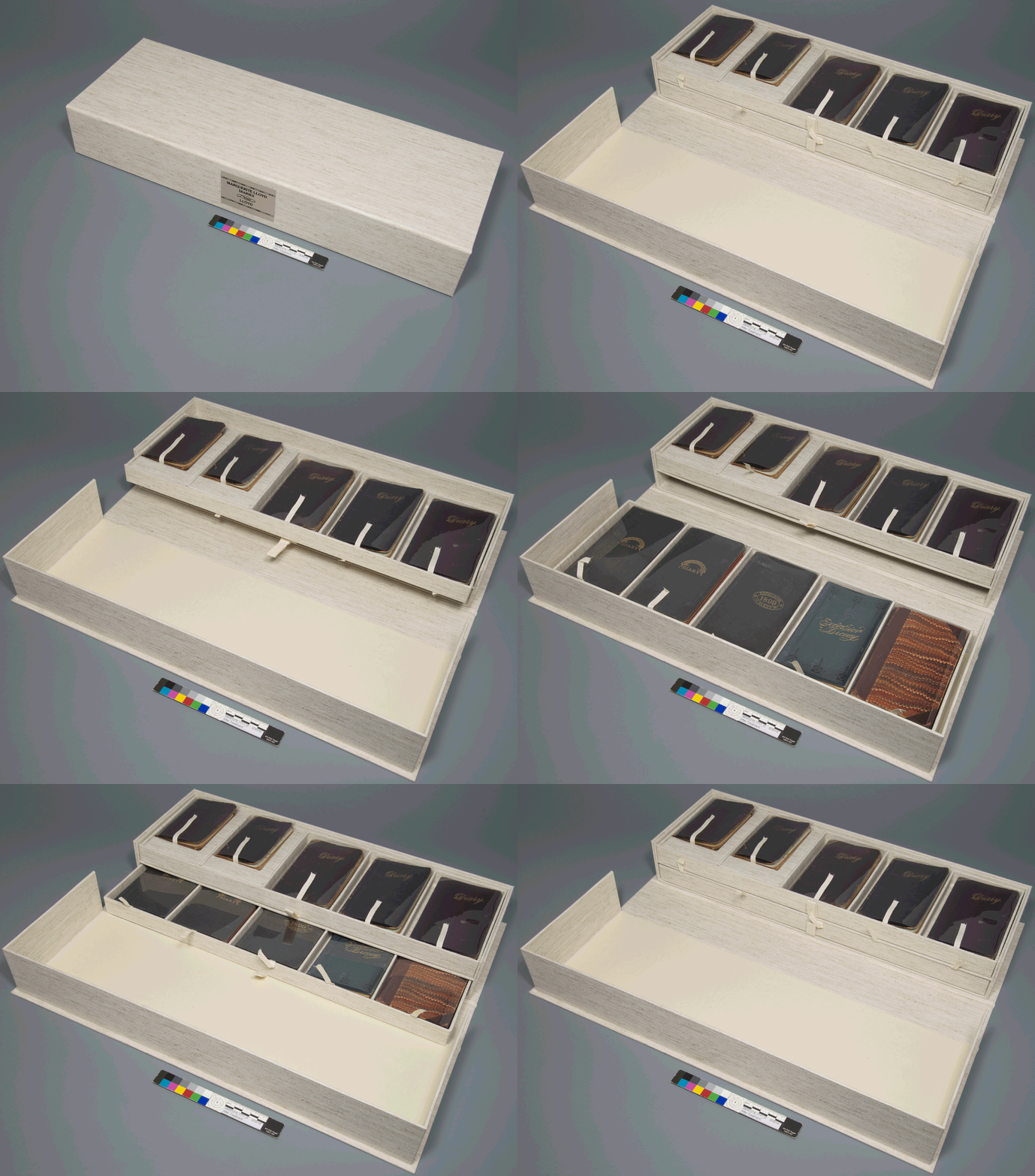
Chris created this lovely cloth covered clamshell box with two removable trays that each house 5 diaries. The compartments for the two smaller diaries have a custom fill to accommodate for their smaller size. All the diaries have received a polyester jacket and the linen tabs under each volume make them easy to remove and handle.
Jessica Ebert (UCL) – Conservation Technician, Lead Photographic Documentation Tech
Category Archives: Uncategorized
The slow march towards the digital age…
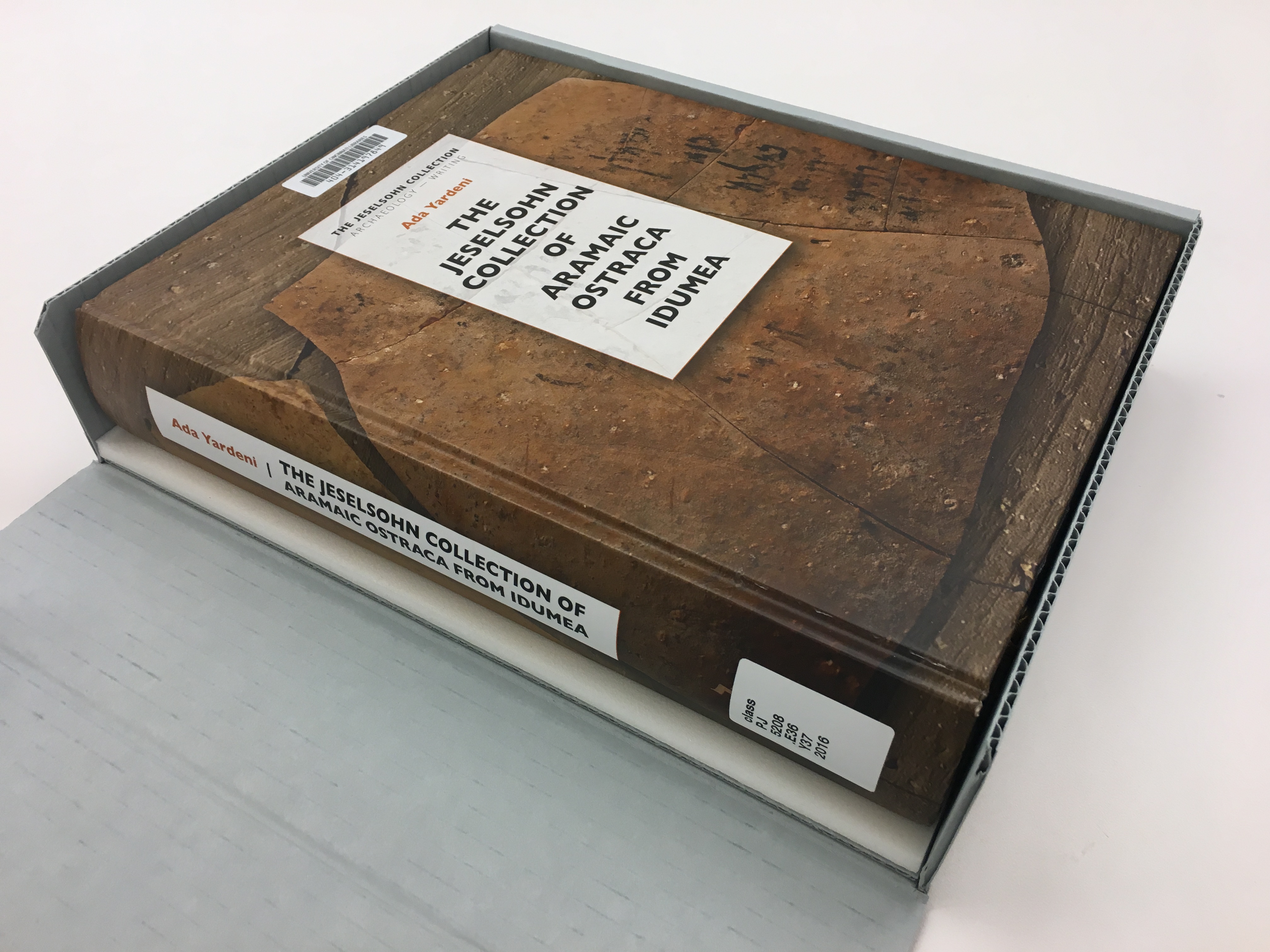 Our colleagues in the Classics Library sent us an interesting housing project. The goal, to secure and keep together a textbook and accompanying electronic content.
The additional electronic content was not in the form of a URL for on-line supplements, nor a DVD, but a small shiny USB drive. The drive was originally attached it to the book at 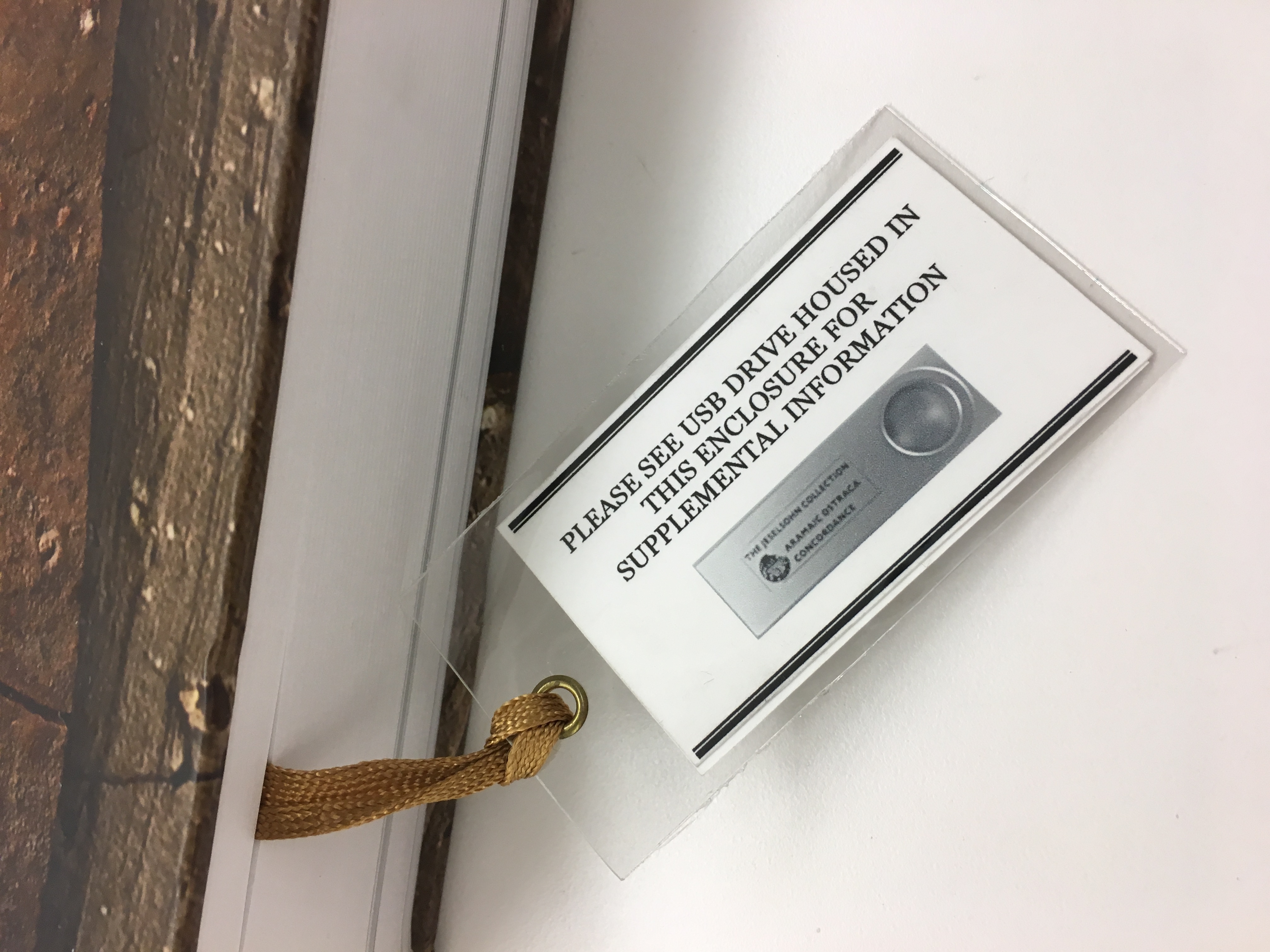 the end of a long silky bookmark adhered to the text block. A neat idea, but the drive was almost impossible to use attached to the anchor of the heavy book.
Ah, the mashup of the old and new!
Our solution was to make a simple corrugated enclosure with a volara foam compartment and a photographic surrogate on the end of the bookmark. The surrogate directs users to the compartment holding the USB port. Additionally, a message in the item record alerts library workers to “check for one USB device”.
To me the pleasure of this item is that it illustrates so clearly the tension between the easy functionality of the book and the limits of its fixed form. It also speaks to how slow the march towards the digital age feels – illustrating a change in technology without much of an improvement, such as the move from DVD to USB storage.
[And here is where I lament that I STILL don’t have a hovercraft or a robot maid.]
Though many of us have vowed to get out of the prediction game, let me predict in 10 years our students will marvel at this USB device the way they do now at floppy disks and zip drives.
LONG LIVE THE BOOK!
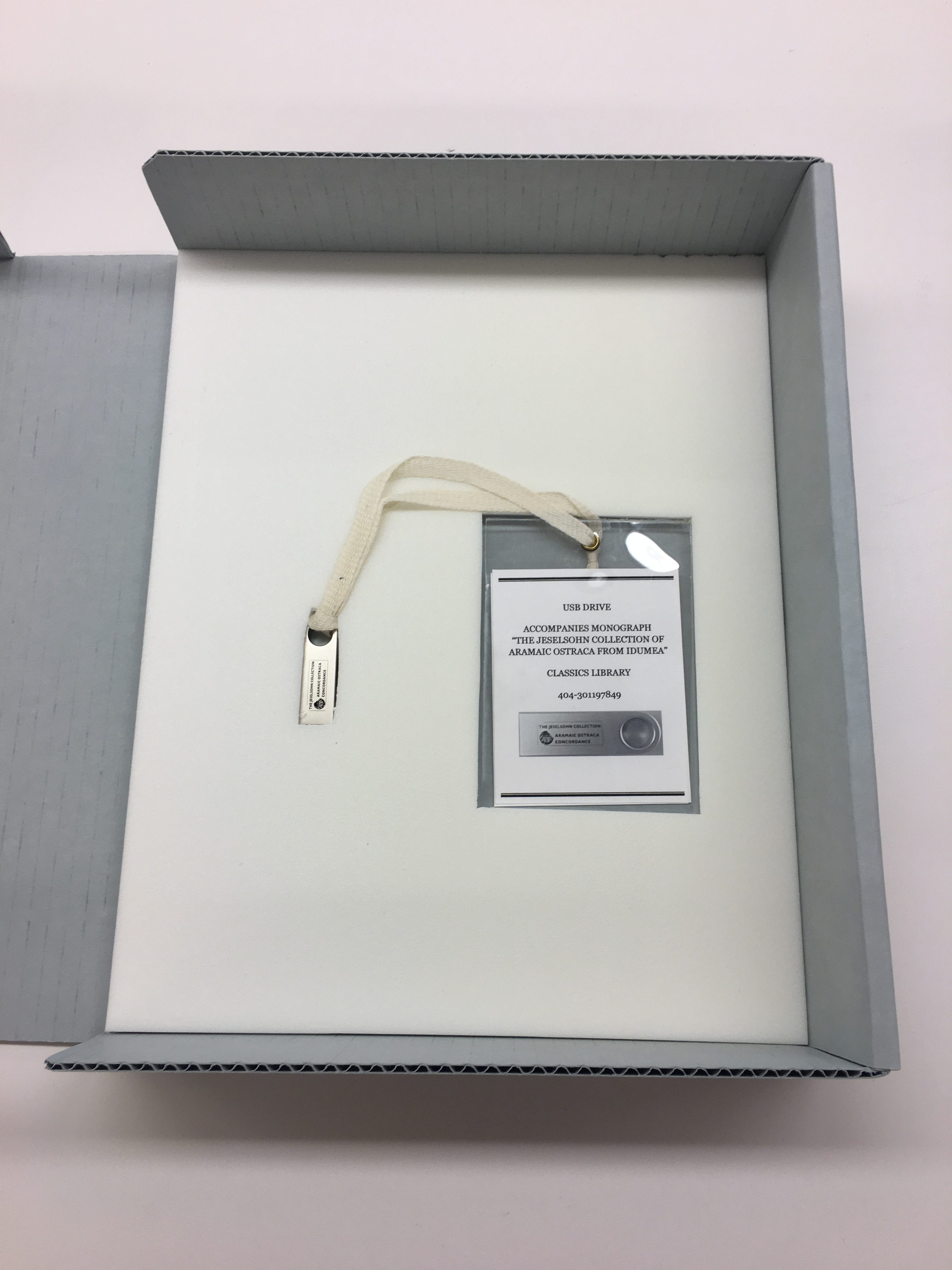
Enclosure by Jessica Ebert, conservation technician
Holly Prochaska (UCL) —- Preservation Librarian
Polyester Encapsulated Page Binding *Part Three: The Workflow
This is the third installment for the Althea Hurst scrapbook conservation treatment that outlines the workflow for the long-term project.
To read previous installments, please see: Polyester Encapsulated Page Binding * Part One: The Structure, and *Part Two: The Parts.
The following is a presentation from the 46th Annual American Institute for Conservation of Historic and Artistic Artworks (AIC) meeting in Houston, TX, as part of the Library Collections Conservation Discussion Group (LCCDG). The panel’s topic was Matters at Hand: The evolution of staffing and prioritization in library conservation labs. The title of the Preservation Lab’s talk was Teaming up on Treatment.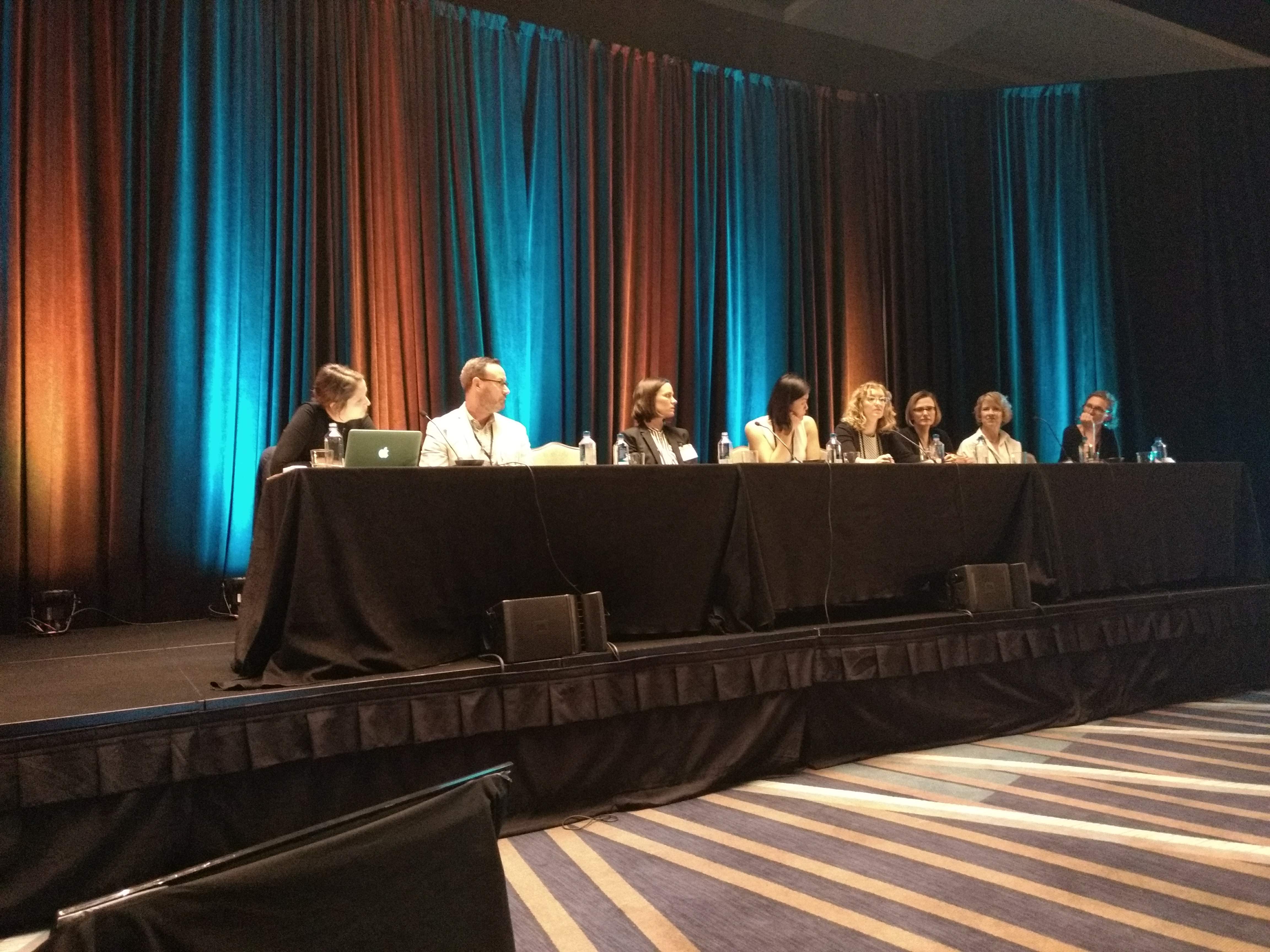
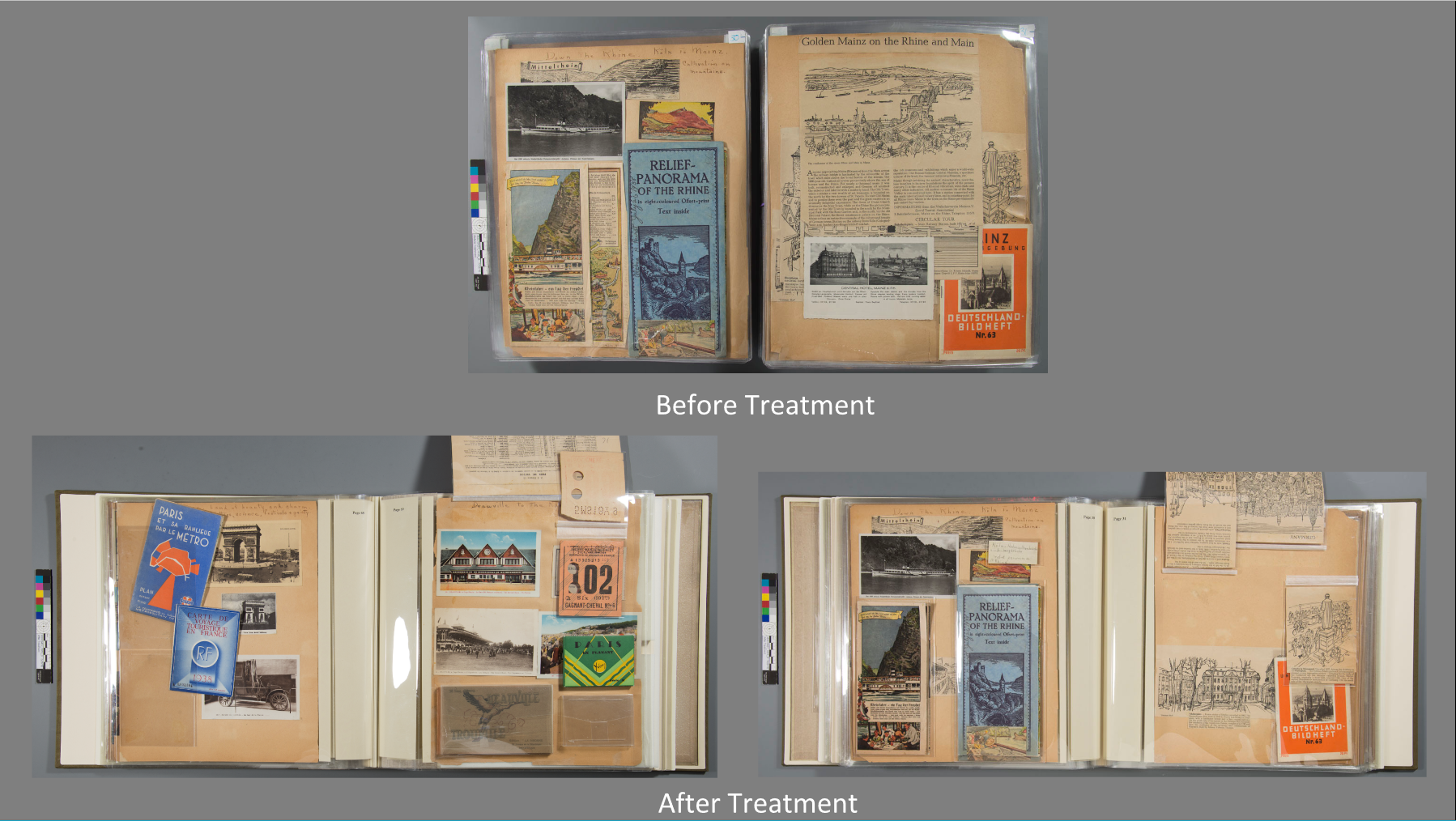
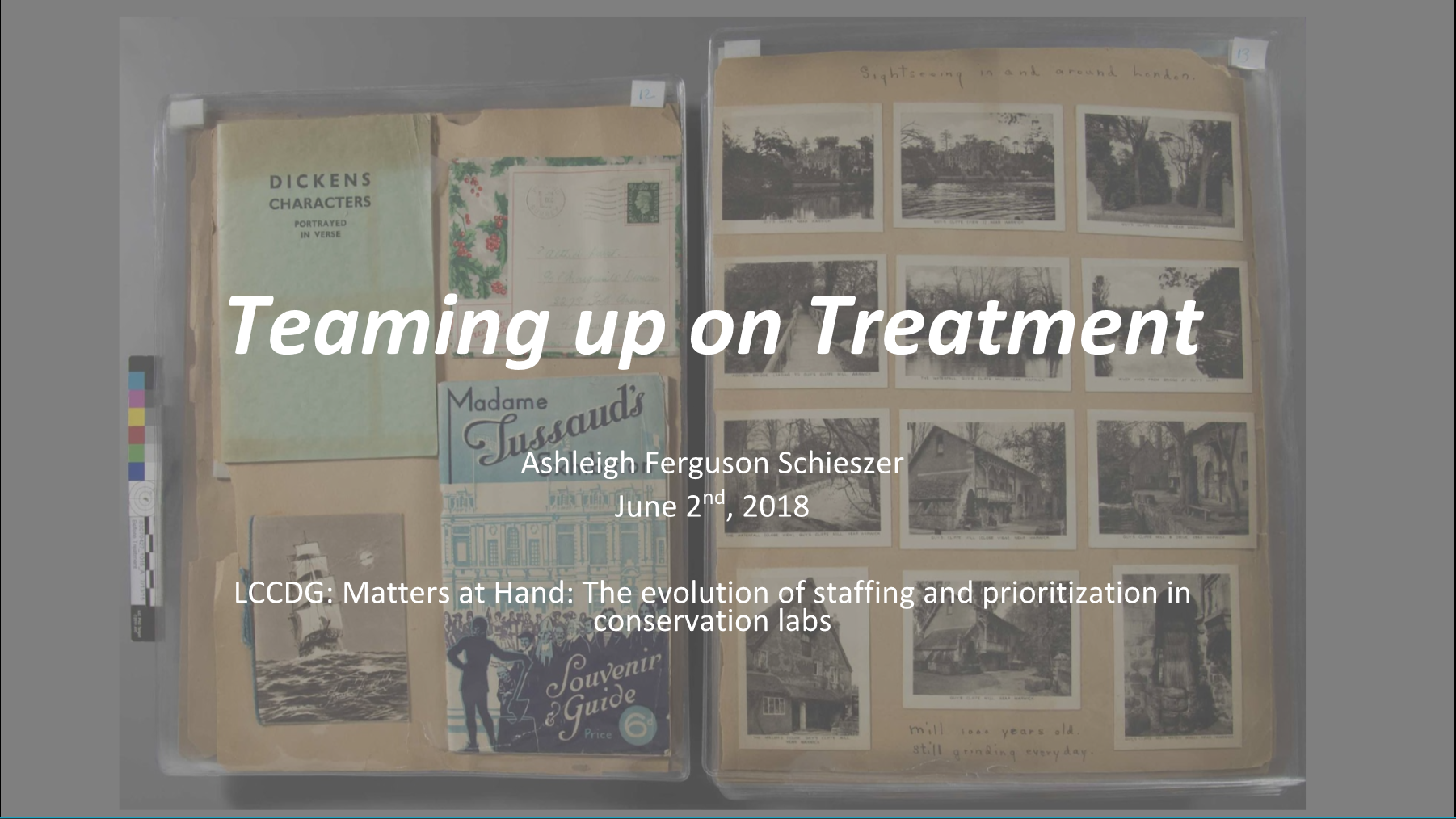 During large special collection projects, a conservator’s role is similar to that of a project manager, particularly when working with a team of skilled technicians, such as in our lab. To illustrate this collaborative working style, the presentation will discuss how a unique 1930’s scrapbook was treated to improve accessibility by our team of conservation staff.
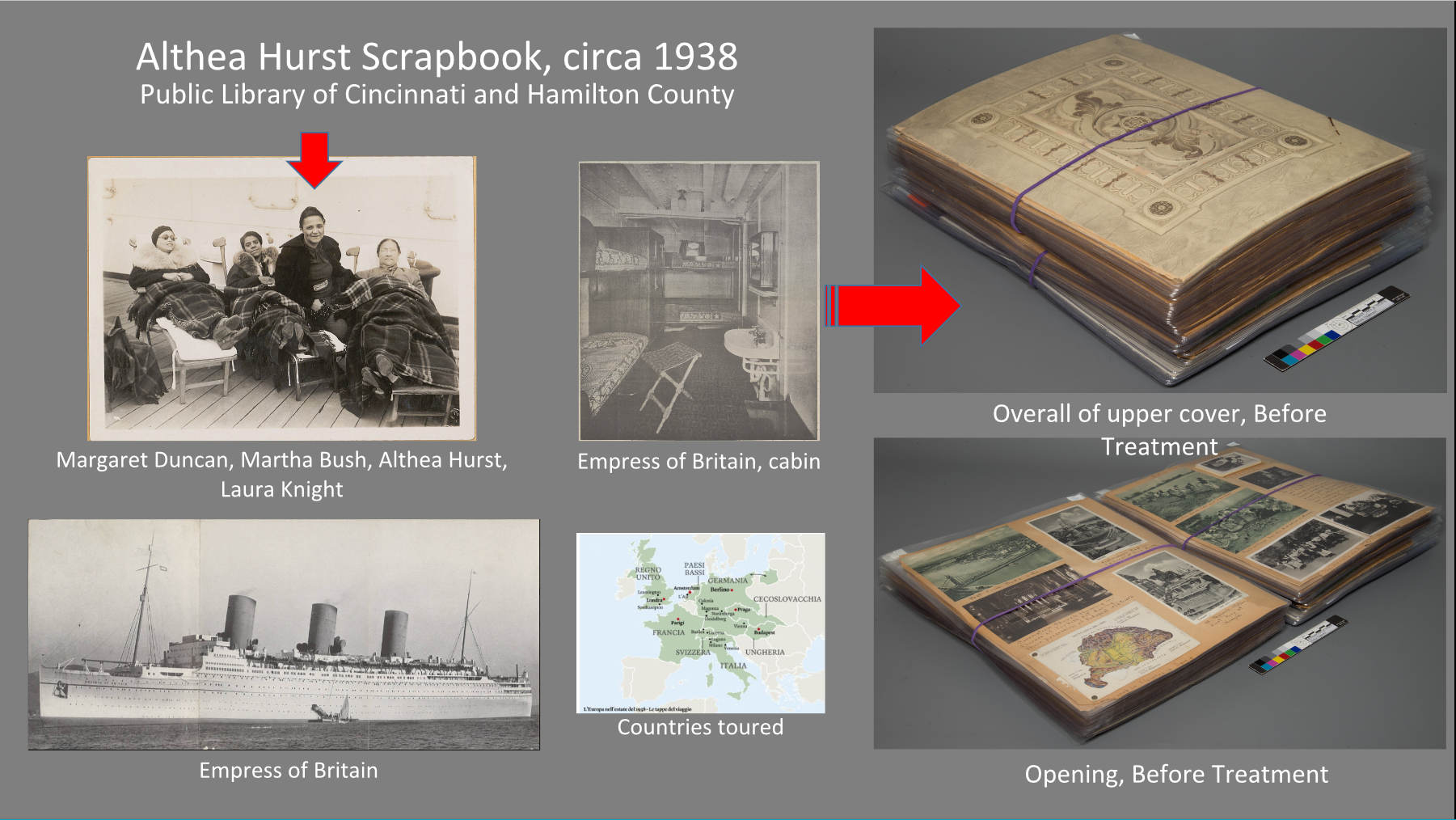 THIS is Althea Hurst, and THIS is her scrapbook. In the summer of 1938, Althea and three other female African American Educators from Cincinnati traveled abroad, alone, by steamship and train, to eight countries in pre-WWII Europe, including Nazi Germany and Italy under Mussolini’s rule.
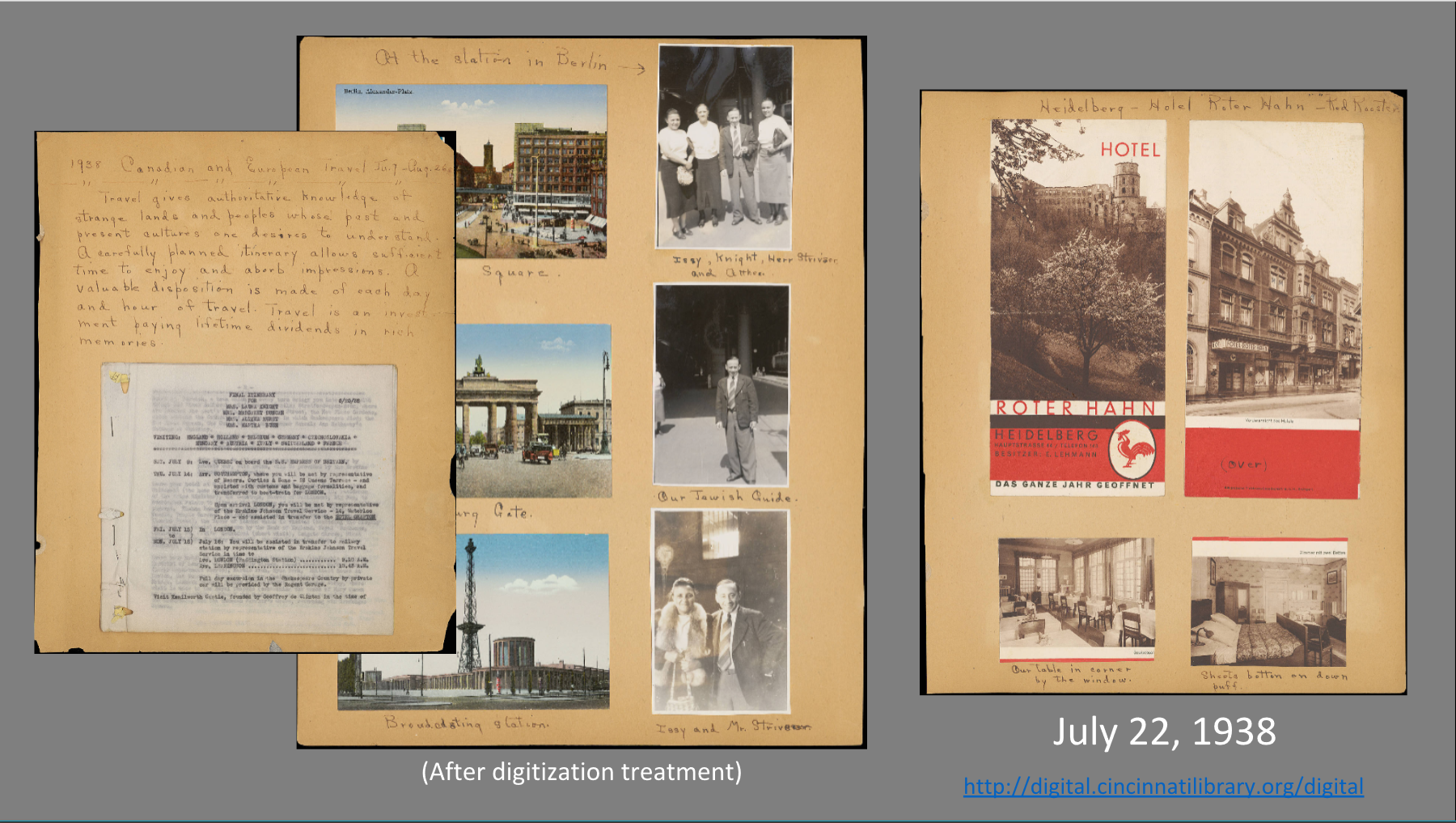 The pages are personalized throughout with handwritten inscriptions. Here, Althea notes their Jewish tour guide and documents travels through Heidelburg – just three months before Kristallnacht and the deportation of Jews to Dachau concentration camps.
Compelling letters in the back of the binding date to 1939 and 1947 as they describe the changing reality of life for a friend in Budapest. In 1939, the friend remarks how, “the situation changes with rapid speed; what was absurd and inconceivable only yesterday is tomorrow already an irrevocable fact.” And in 1947 she reflects, “we ask ourselves terrified, if it was all true, that we could survive all this?”
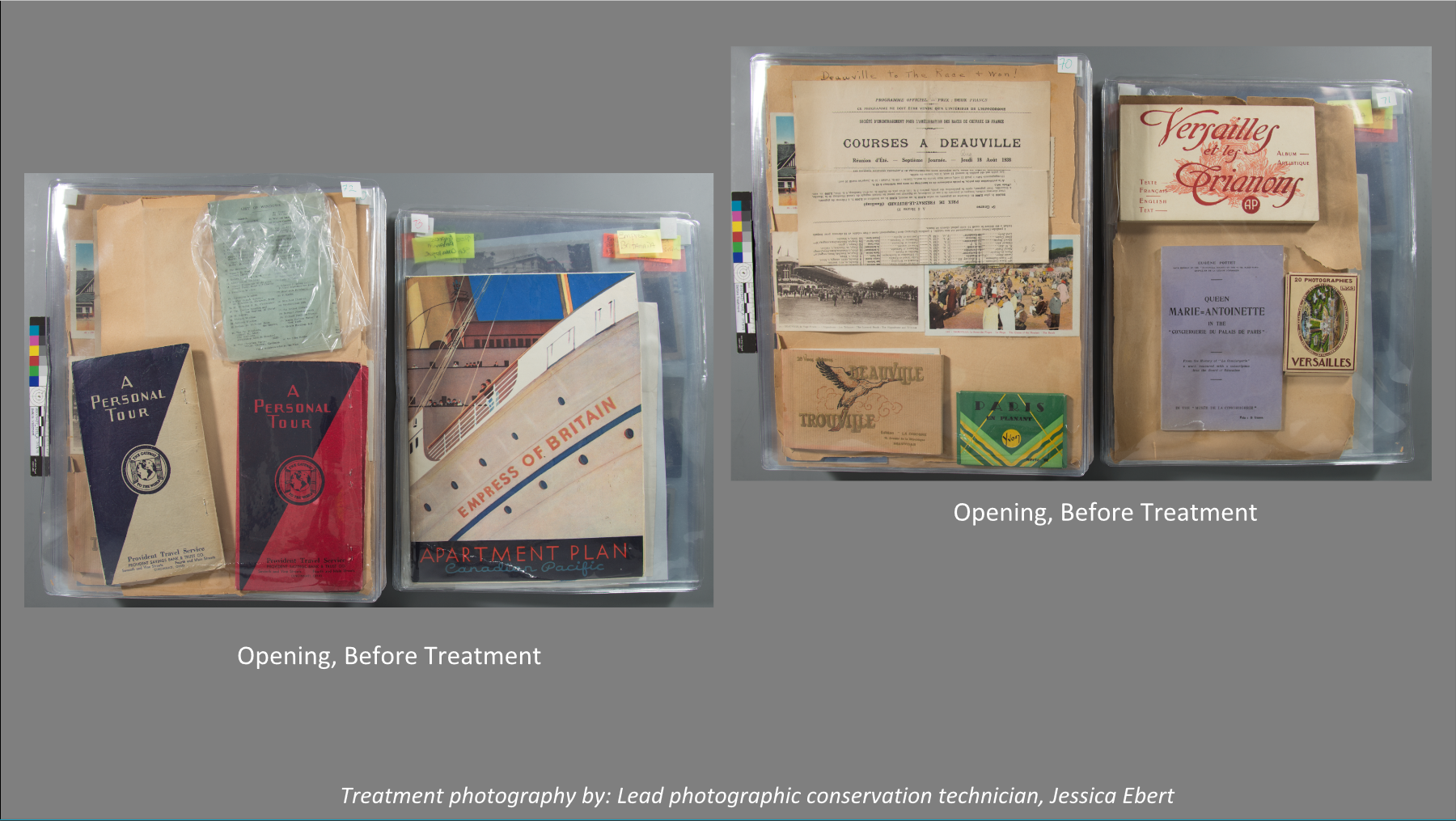 The purpose of the women’s travels? To share first hand experience with students to serve as an inspiration for learning. What resulted was an interactive scrapbook filled with rare ephemeral components and Althea’s personal notes.
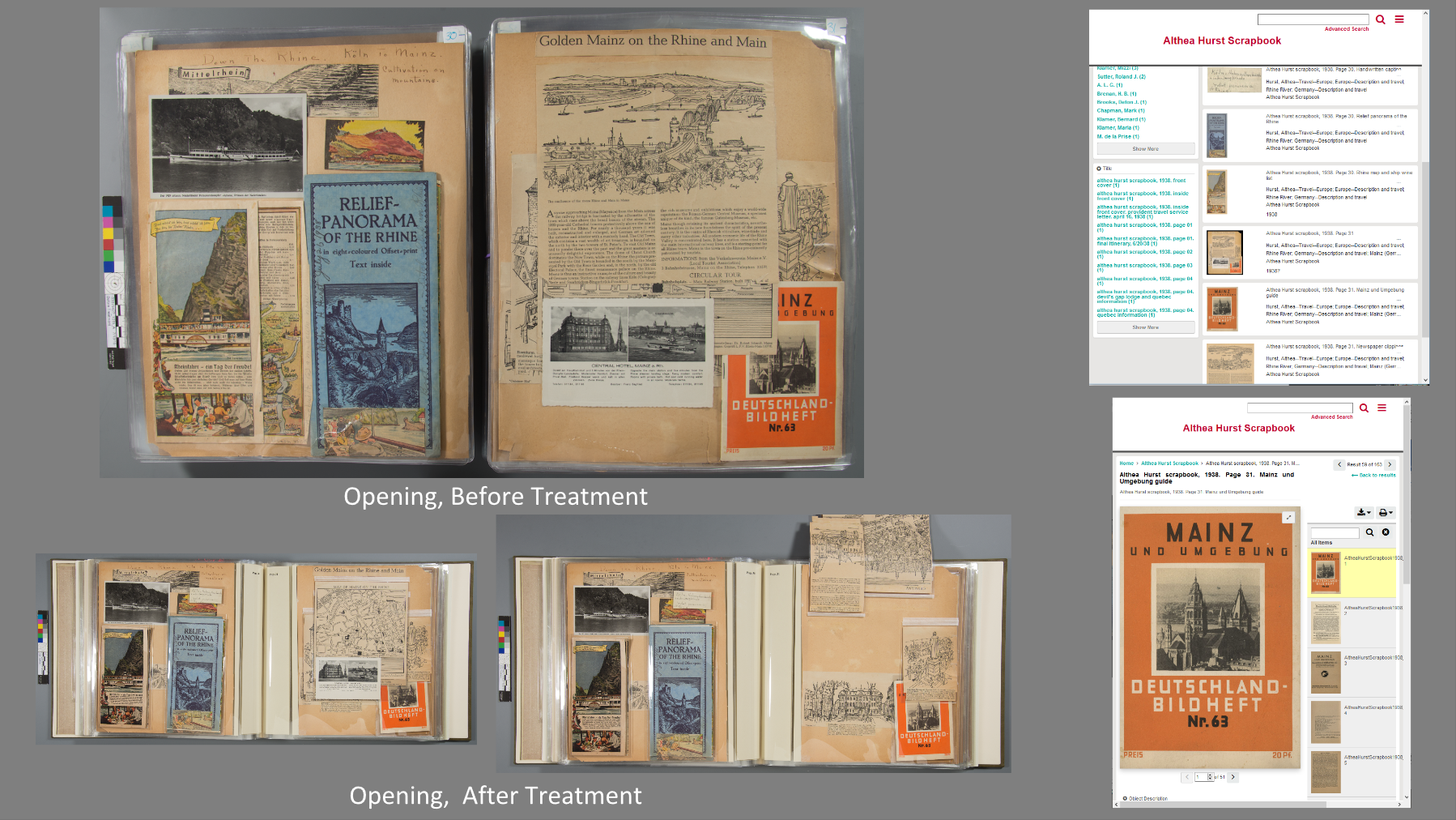 So how did we get from before treatment to after treatment? A bit like eating an elephant. One bite at a time, with a team of people who broke down larger goals down into manageable, digestible parts.
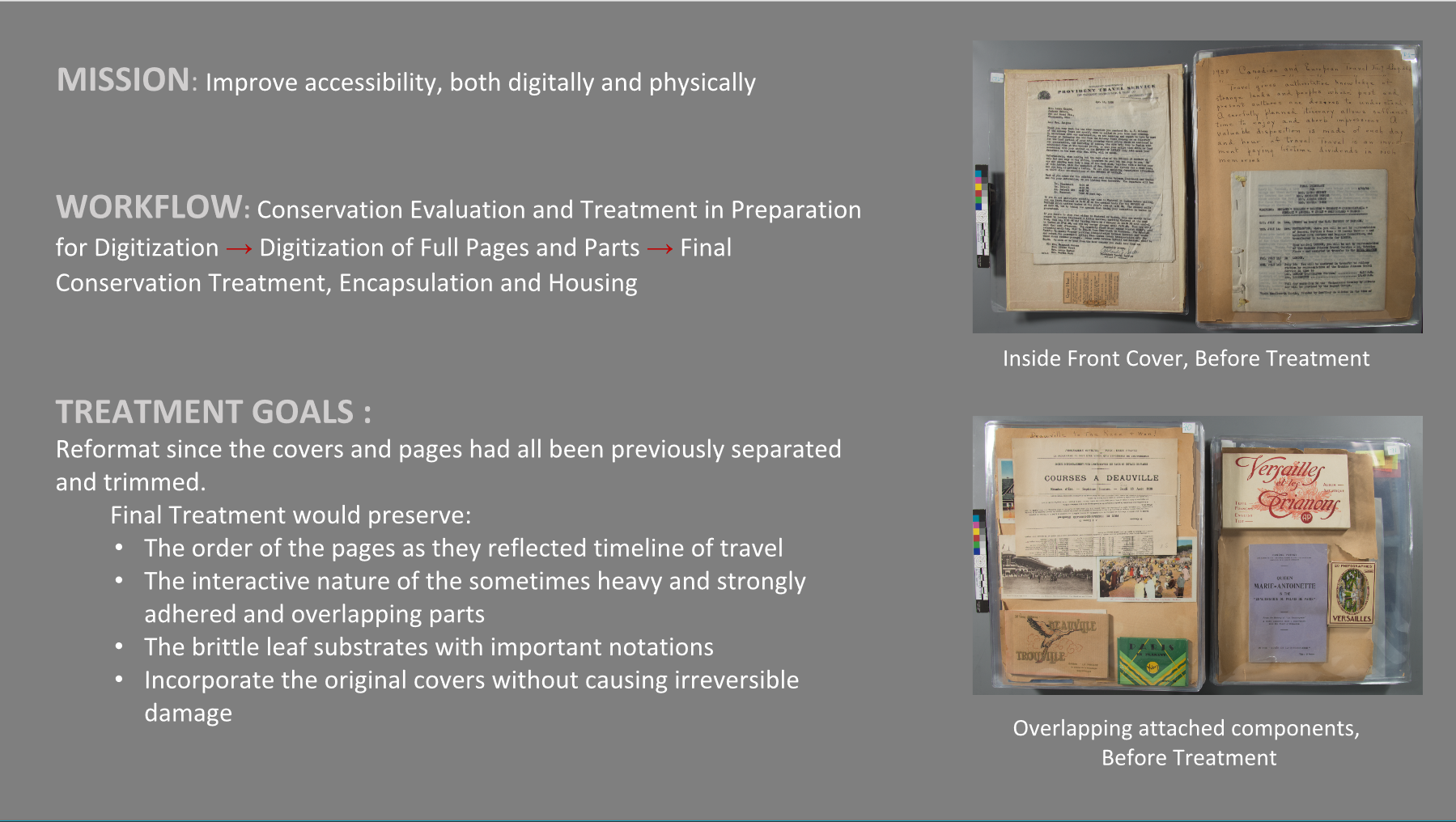 We first defined the Mission, Workflow, and Scope from which all else trickled into place.
The mission: improve accessibility, both in digital content and physical use.
The multifaceted project had a defined workflow that helped to serve as measurable milestones:
Conservation evaluation and treatment in preparation for digitization → led to digitization of full pages and parts → which was followed by final conservation treatment, encapsulation and housing.
Since the experiential importance of the tactile components was determined as equally important as the intellectual content, the overarching goal was to preserve the interactive nature and original organization of the binding. It was also noted, the parts were particularly rare on their own as standalone objects. In short: a Level 5 treatment according to Jennifer Hain Teper’s guidelines for managing scrapbook treatments in libraries.
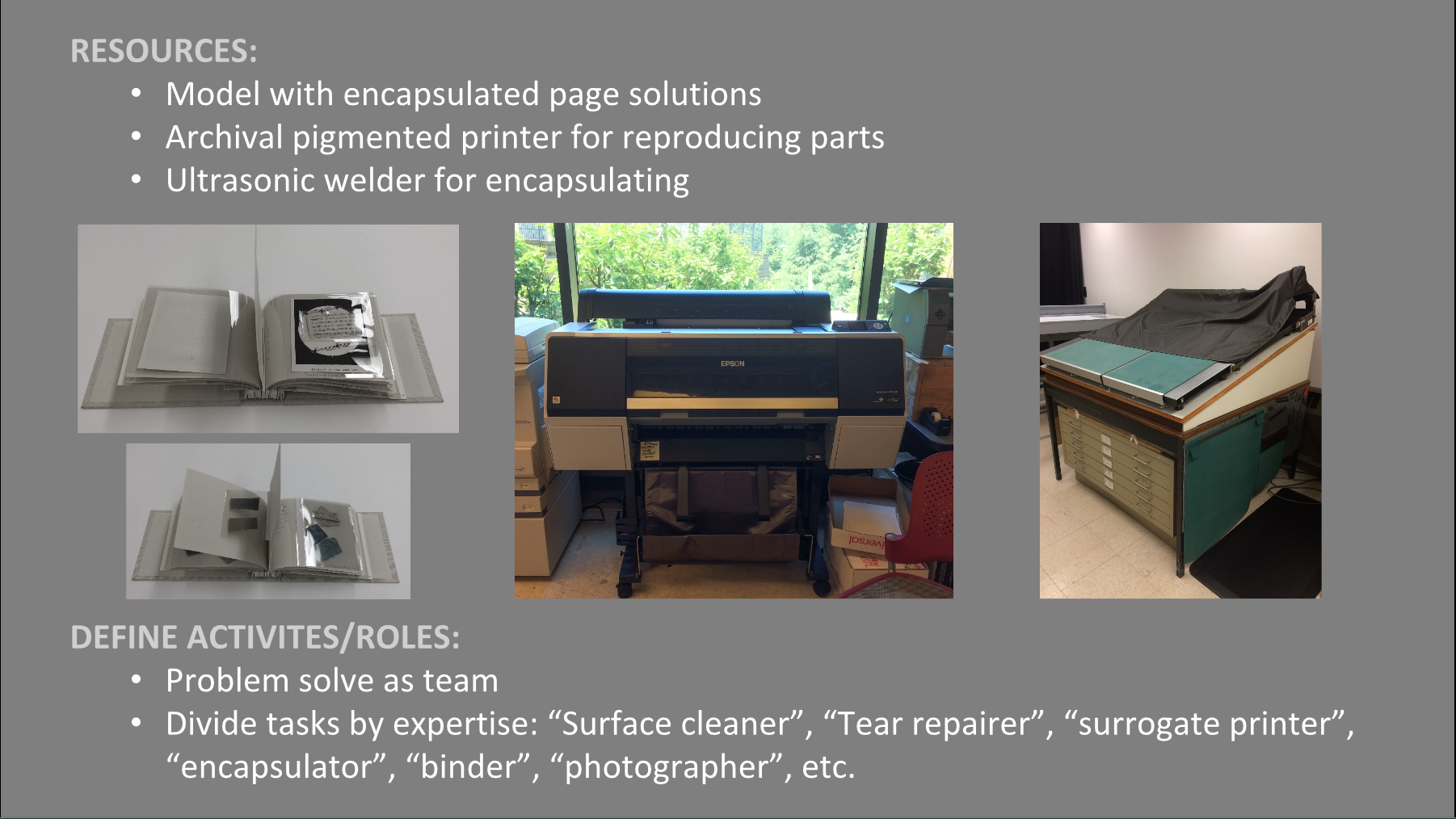 Three of the most important resources for the project was a model I created of various encapsulated page solutions, an archival pigmented ink printer for printing surrogates, and an ultrasonic welder for encapsulating individual components.
Outside of shared problem solving, team roles were defined early and shaped by a combination of a staff’s skill and passion.
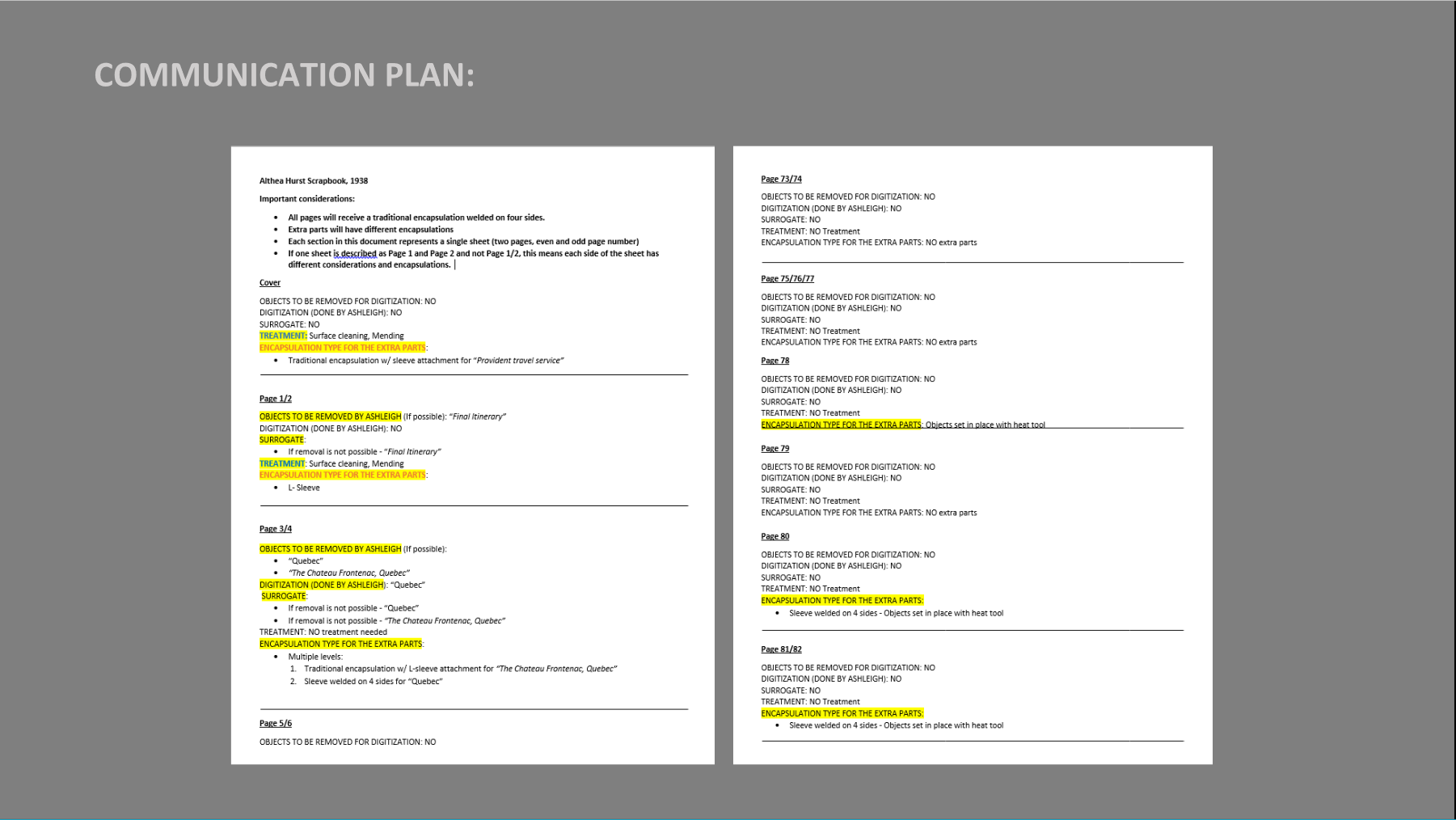 A rough survey categorized treatment needs for each page. The survey itself was cut up into slips that traveled with individual pages as pages were batch processed by one team member to the next.
Notes written directly on the slips of paper served as both our indispensable communication plan and tracking system.
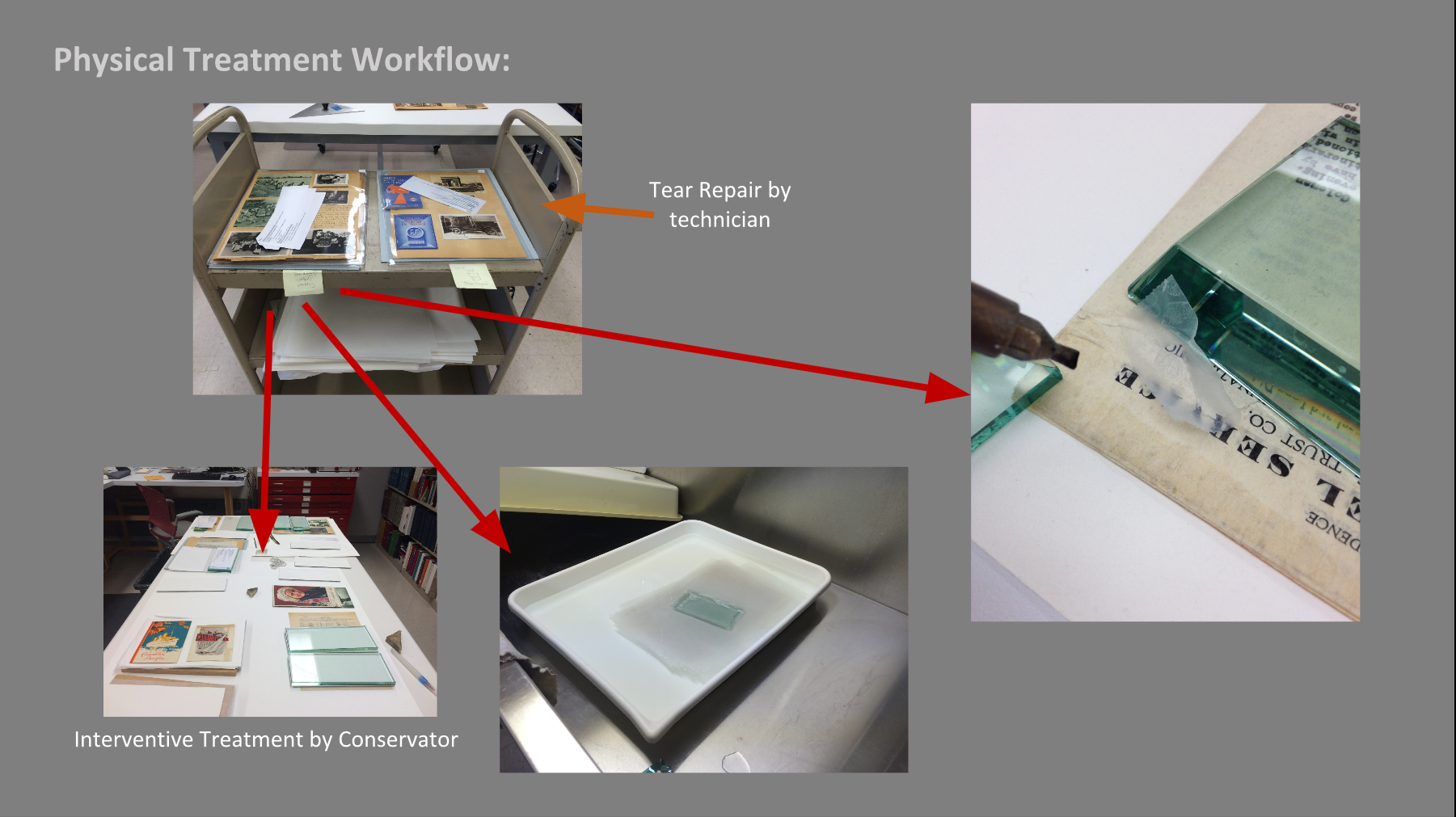 The lab’s internal workflow was a simple yet effective solution. Labeled carts held groups of pages that physically traveled from one treatment stage to next. For example, when pages filled senior conservation technician, Veronica Sorcher’s treatment pile, she immediately knew that they were surface cleaned by Chris and were ready for tear repair.
We also discovered that decisions, such as what tissue paper to use for repair, were helpful to make collectively as a group to ensure effectiveness and consistency.
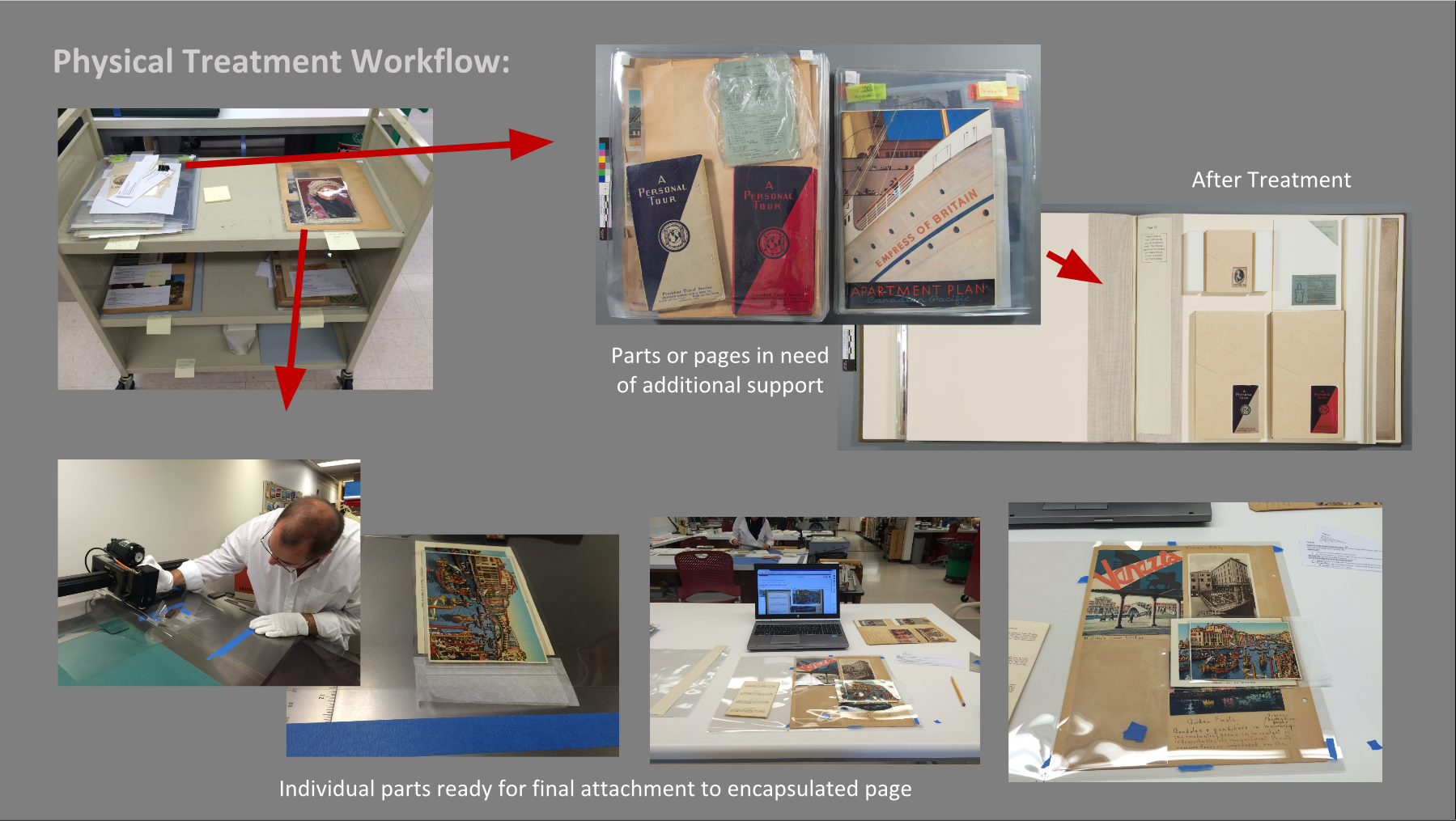 As the technicians began their roles, we outlined treatment parameters and solved challenges until a game plan was formed. Throughout the project I was often consulted, however, the techs quickly built areas of expertise that they naturally gravitated toward. Conservation technician, Chris Voynovich’s previous expertise was in encapsulating posters, which easily translated into creating encapsulated pages. After teaching additional welding techniques and strategies for retaining original placement, he was soon incorporating Hollytex hinges and polyester pockets on top of full page encapsulations and devising systems with blue tape to register complicated page parts.
Heavy components or extra parts without support leaves were also incorporated into the binding by Chris. Using my model as a guide, he constructed mat board support pages to mount objects housed in four flap enclosures.
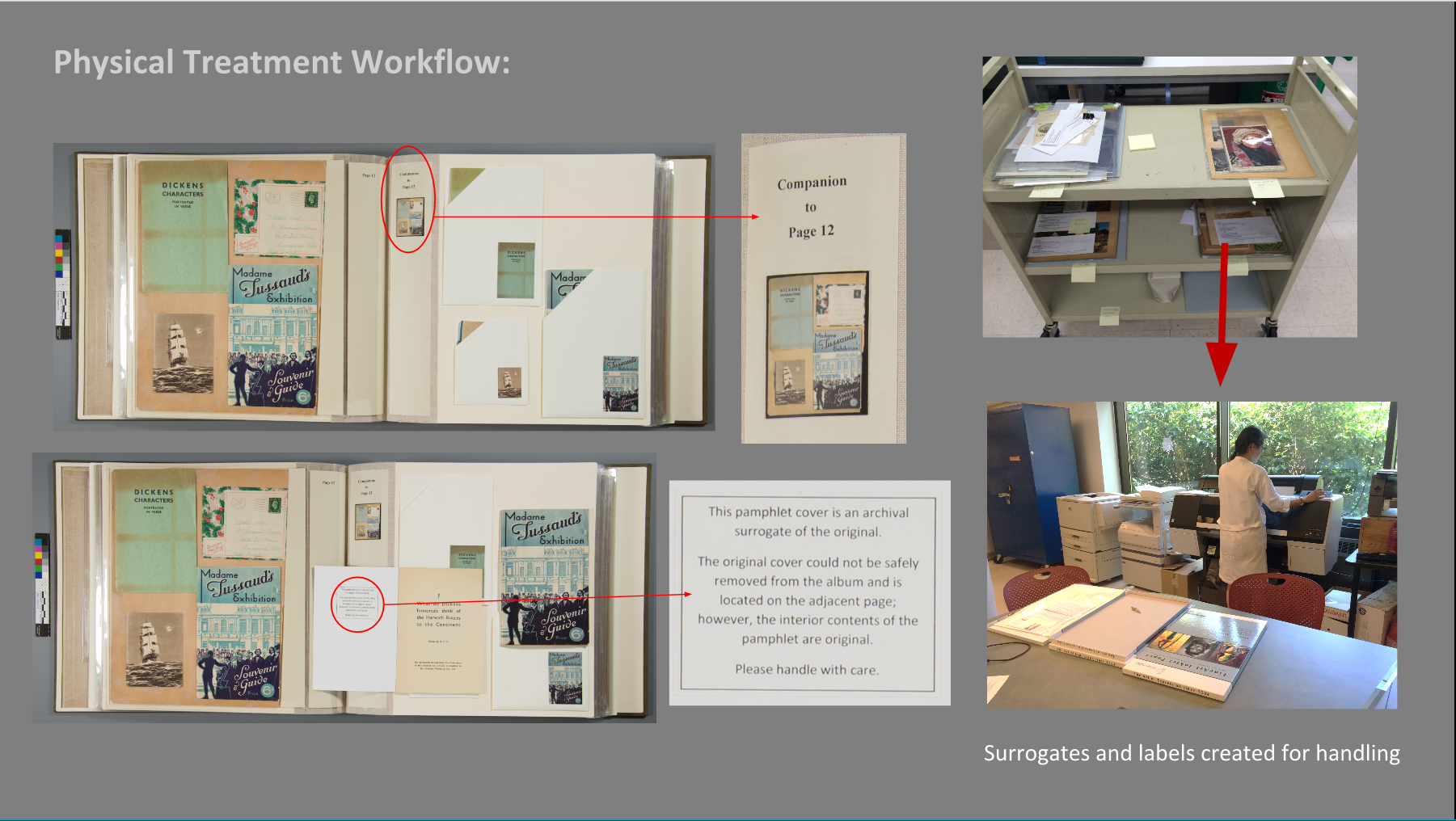 A few attached booklets would have been problematic to remove, such as pamphlets with clay coated covers. As an alternative, our printer was used to recreate attached parts from digitized images. Senior conservation technician, Catarina Figueirinhas, took quickly to understanding ICC color profiles since one of her first projects in the lab was assisting in creating exhibit surrogates. She was designated as the project’s printer and utilized a multitude of fine art papers. Inkjet prints were created in such similar appearance to the originals that labels were required to identify surrogates.
Catarina also prudently printed labels as visual clues to identify contents within pockets and boxes.
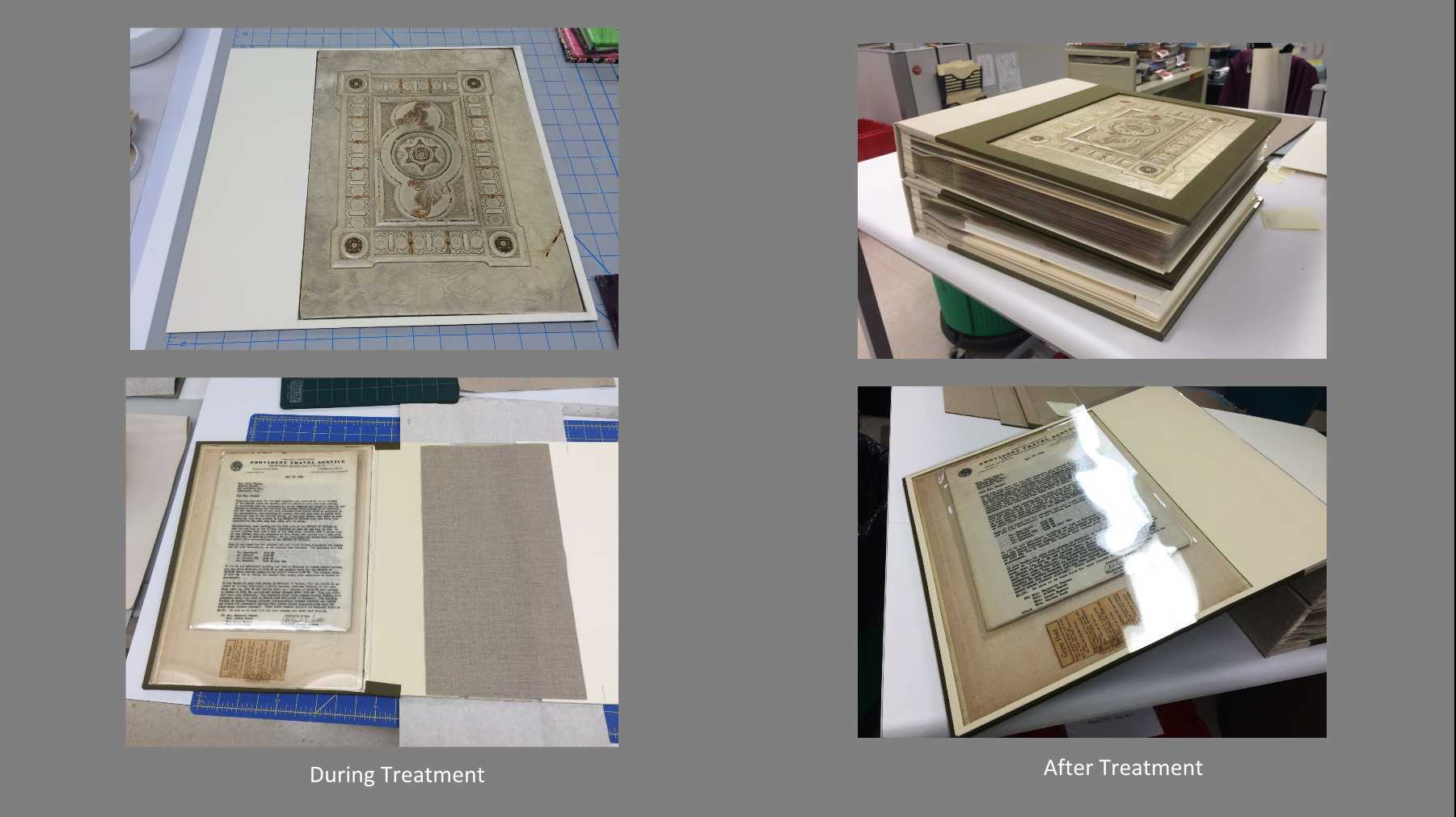 Discovering a solution to incorporate the original covers into the new encapsulated binding without causing irreversible damage was no easy task. Luckily, with the technicians tackling other parts of treatment, I was able to invest time experimenting with Vivak. After some trial and error, I was able to weld polyester sleeves to the clear support to include attached components, as well as use the clear sheet as a backing for a sink mat package to hold the covers.
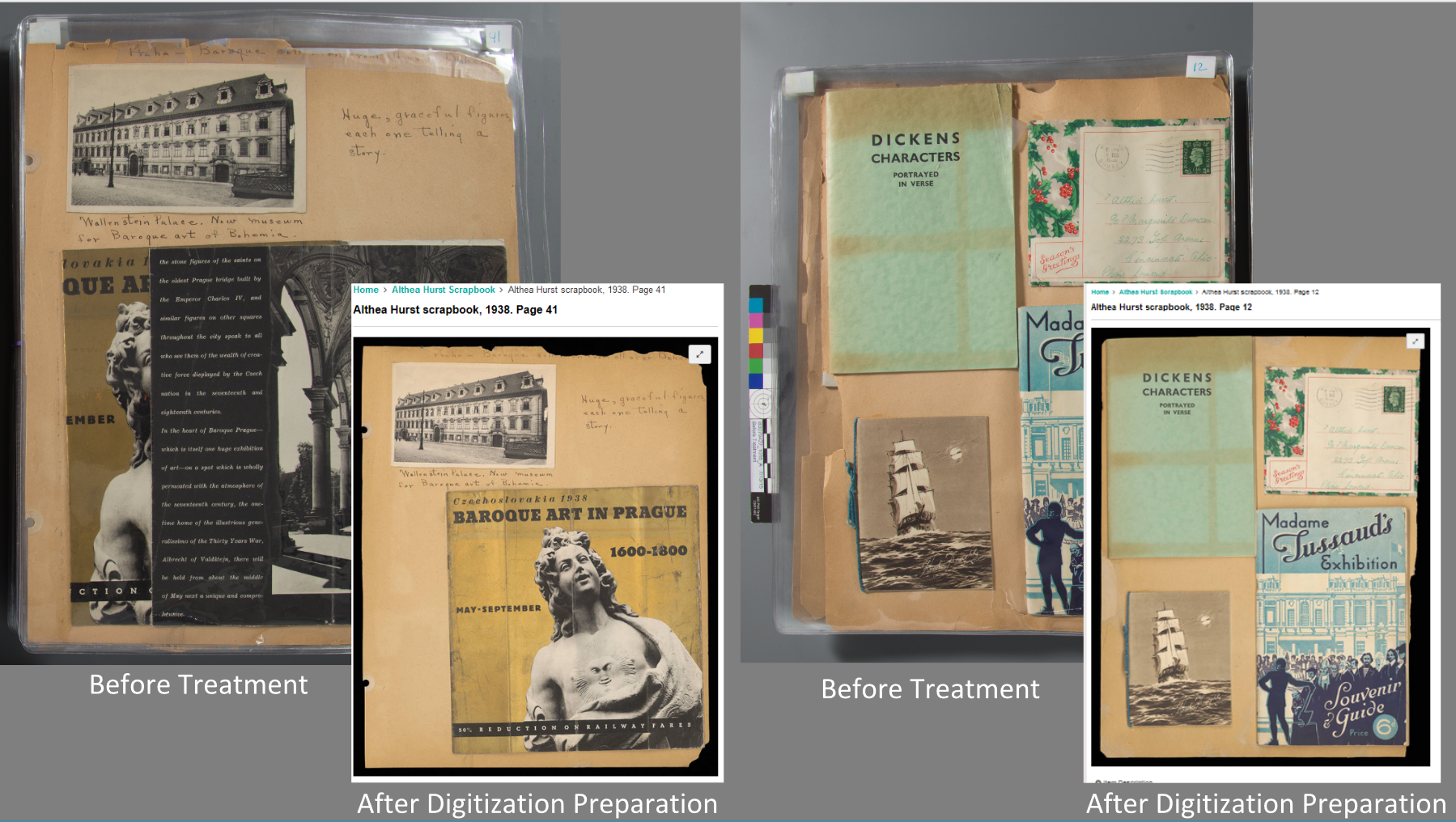 In the end, we were proud to meet the needs of numerous clients. A team of 3 people spent 53 total hours for treatment to improve handling and legibility for Digital Services.
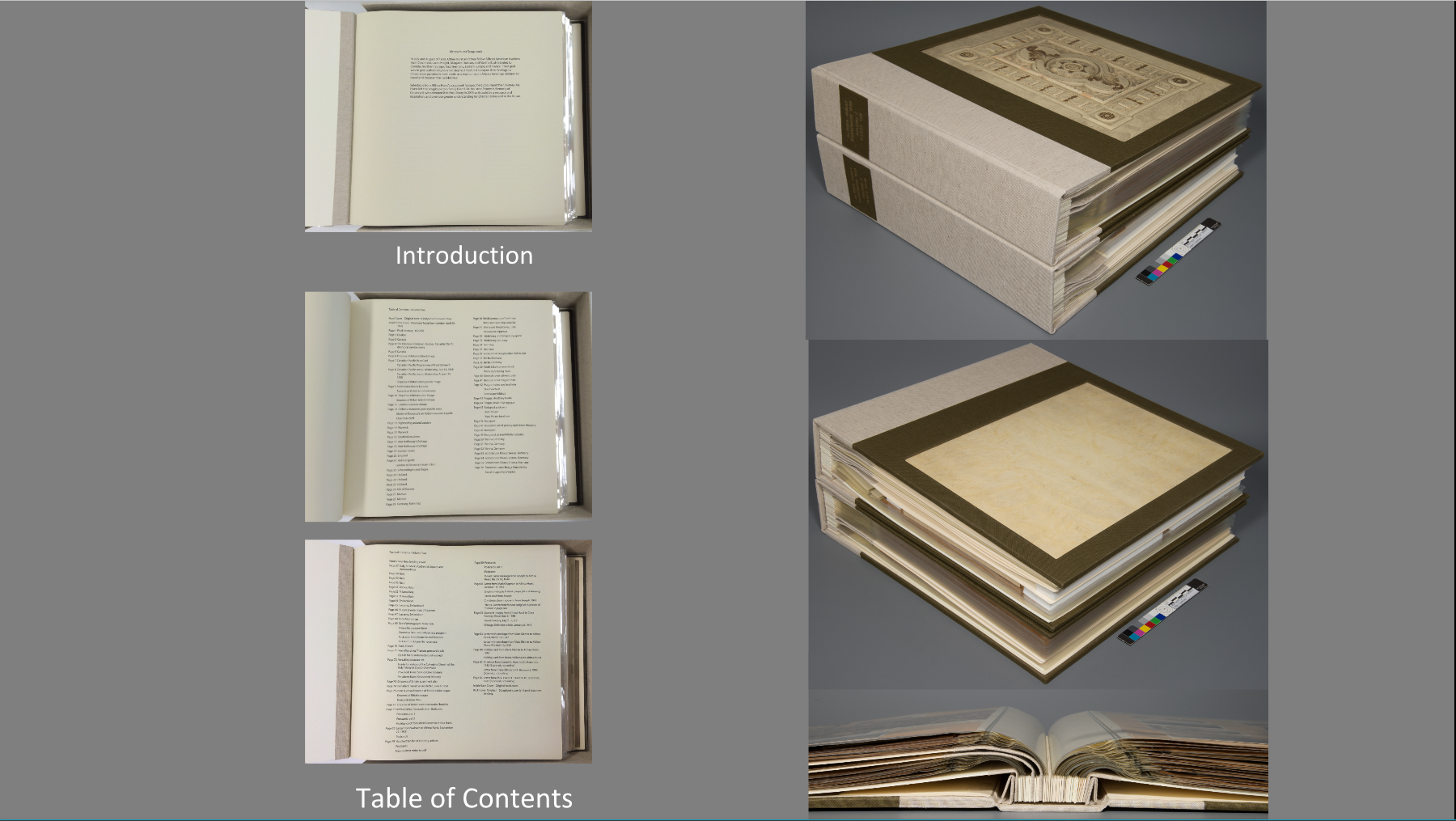 After digitization, 126 hours of treatment were invested by a team of four staff and one student to meet the needs of the Public Library librarians. Collaborating with special collections staff, we were even able to add a customized Table of Contents and an introductory paragraph to the front of the volumes.
The entire project from start to finish took a full calendar year, with a grand total of 183 hours. I’d like to note, while the project took longer than usual since it was a learning opportunity, only 43 treatment hours were invested by the project conservator, and the project was able to be worked in alongside the usual lab workload. The use of the students and technicians significantly reduced the overall cost by using the best person for the job.
 The increased visibility has brought users to the Main Public Library of Cincinnati and Hamilton County, both locally, and abroad from Italy. The Italian magazine, Internazionale, traveled to the US to experience the materials in person.
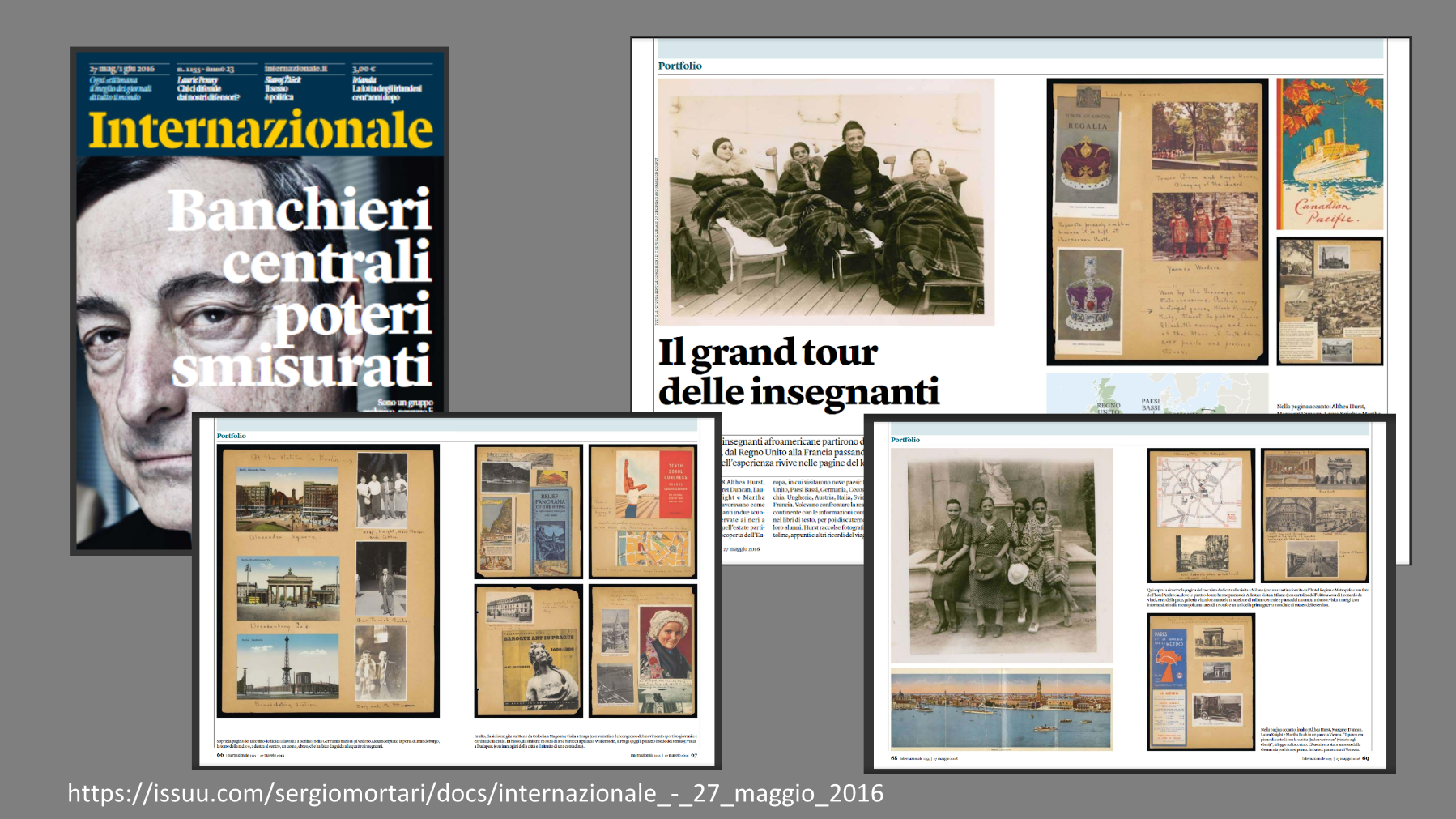 Subsequently, they featured the Althea Hurst Scrapbook in a 6-page spread.
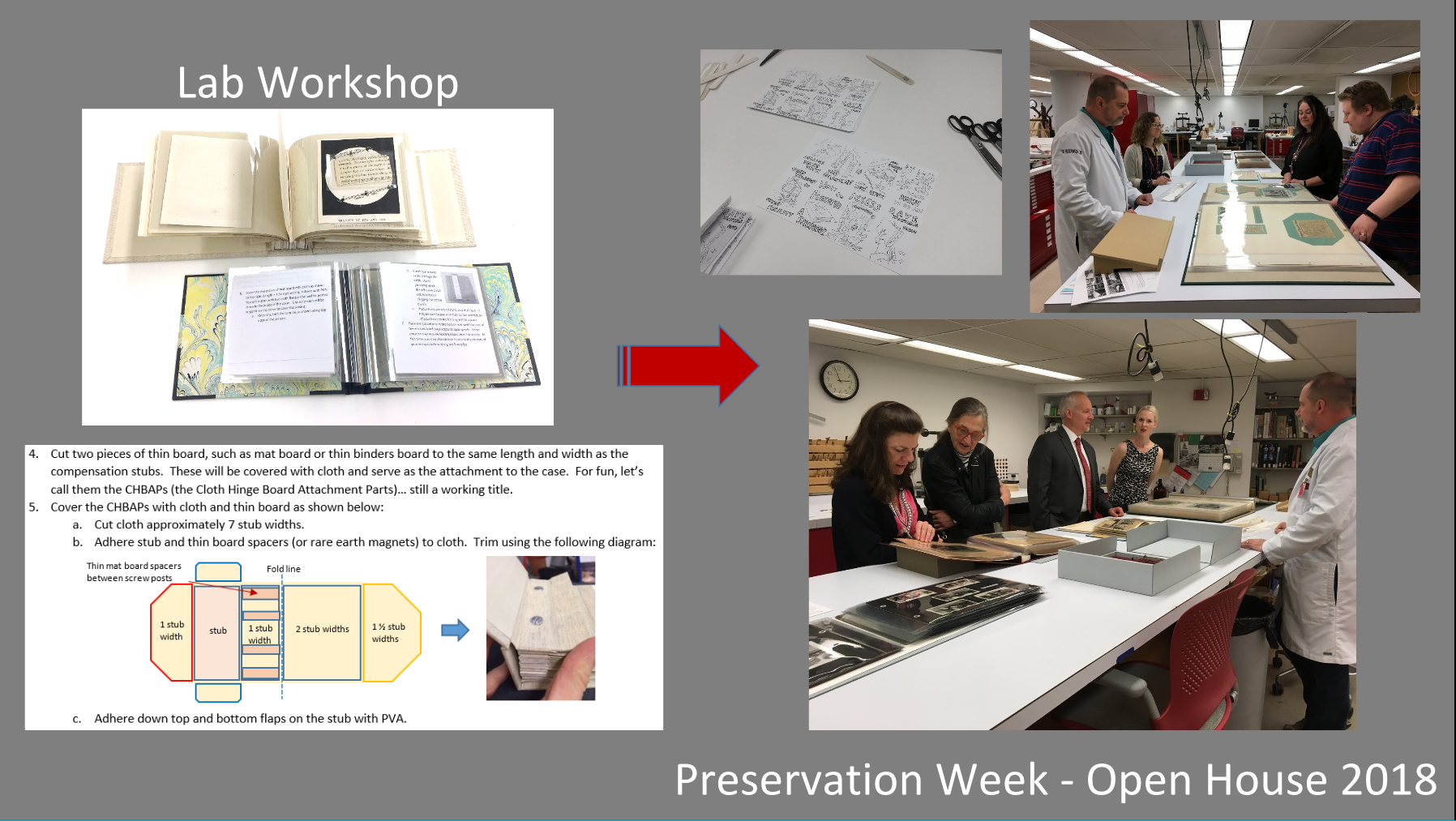 To conclude the project, the lab held an in house workshop where we archived our inventive encapsulated page solutions. Staff made two models– a post bound structure with a plethora of attached parts – and a side sewn version. Since Althea, the lab has tackled treatment of over a dozen other scrapbooks – including an oversized album with an opening spread of over 4 feet. Having tackled such a complex encapsulated binding as one of our first endeavors, we’ve developed our own language for scrapbook parts, such as “Chibap” (which refers to the acronym CHBAP, a Cloth Hinge Board Attachment Part), and the techs have discovered that they are armed with skills to problem solve any scrapbook that comes their way.
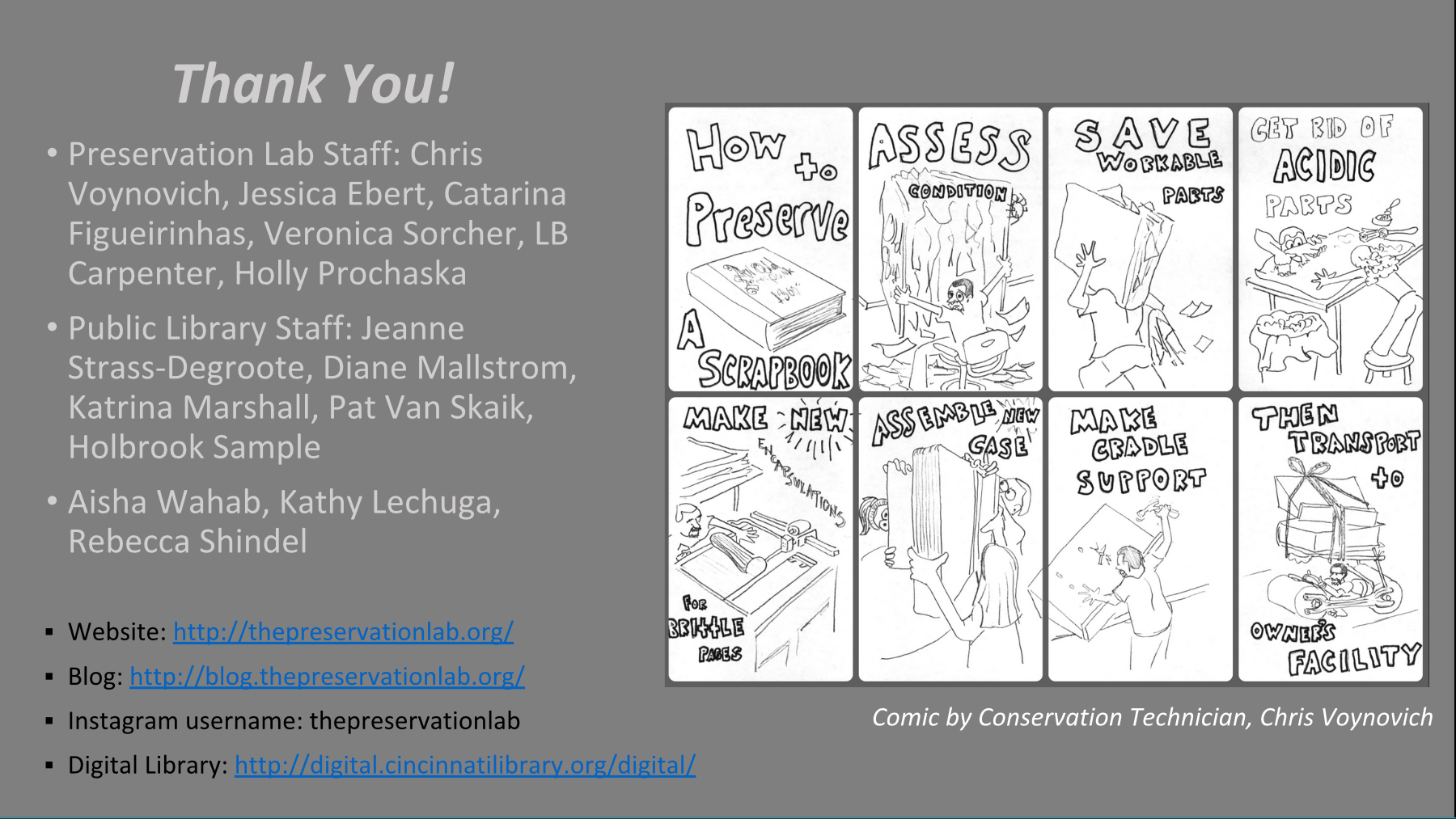 Special thanks to all Preservation Lab staff, Public Library librarians, Digital Services and conservation colleagues who shared their knowledge on bindings with encapsulated pages.
If you’d like to create a scrapbook comic of your own, here is a link to our 8 sided zine comic strip, created by, Chris Voynovich. Check out this link to WikiBooks for instructions on folding your own one page wonder
Ashleigh Ferguson Schieszer (PLCH) — Conservator, Conservation Lab Manager
2018 Preservation Week Open House Video
Were you unable to attend our annual preservation week open house at the end of April? OR maybe you did attend but didn’t get to see everything you wanted? Well, have no fear! I’ve created a quirky little video to encapsulate (fyi, that’s a scrapbook conservation joke) all the excitement, activity, and overall bombardment of information and cool stuff to your senses that our open houses generally entail.
A big thank you again to everyone who was able to make it and celebrate Preservation Week with us. This was definitely our biggest, most jammed packed year yet and it was so much fun! If you missed the event, definitely mark your calendars for next years’ preservation week, April 21-27, 2019 and stay tuned at the beginning of 2019 for an exact open house date. Until next time…
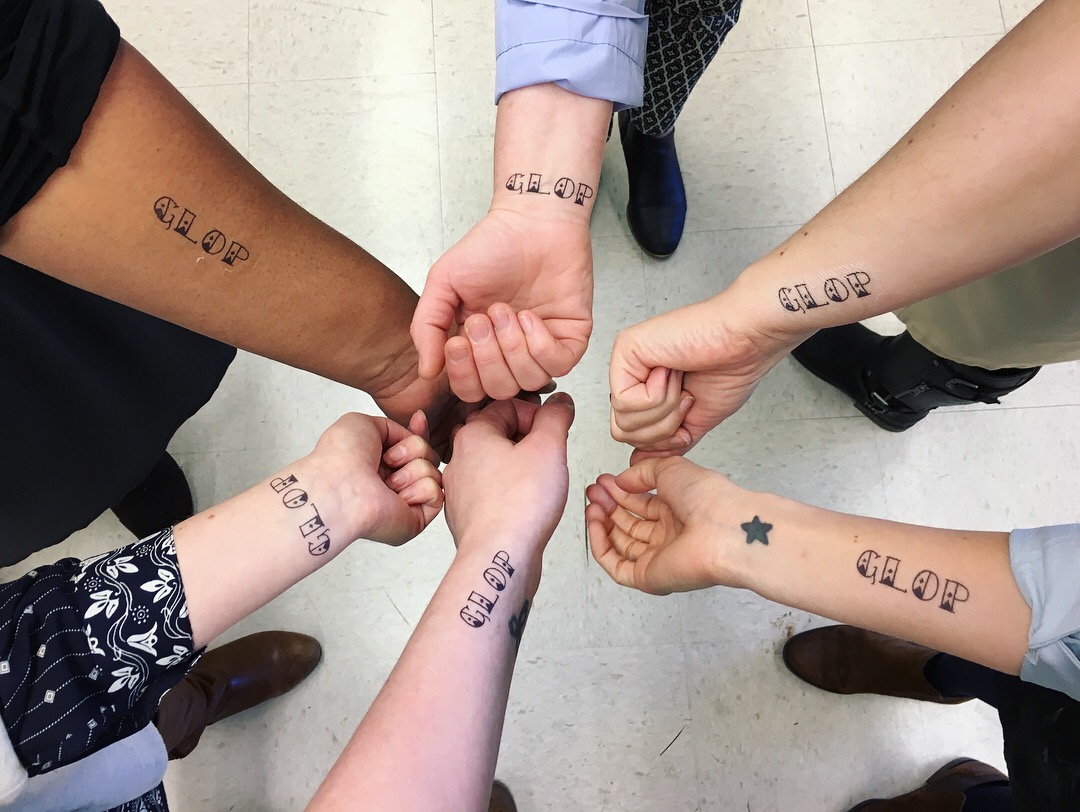
Our conservator, Ashleigh, ordered these GLOP custom temporary tattoos for all the staff members and we all couldn’t wait to sport them during the event! GLOP is our little nickname for our team and our preservation friends and it stands for Gorgeous Ladies/Lads of Preservation.
Jessica Ebert (UCL) – Conservation Technician (and maker of quirky Lab videos)
One for the Books
This is a special post written by one of our student workers, Stefan Apostoluk, who recently graduated…but as the student supervisor I couldn’t help but add a few quick words about our students first. The last couple weeks have been bittersweet here in the lab as we’ve had to say goodbye to a couple of our long time students (DJ and Brad, and soon Stefan). It’s so wonderful to see them grow and change during the years they work in the lab and call them part of our team. But it is always fleeting, as is the nature of working at an university. Having to say goodbye year after year to these amazing people that have become part of our preservation family is not easy, but it is so rewarding to see them enter the real world and move into careers in their chosen field while also expressing how much they’ve enjoyed their time in the lab. As Brad Miller, another of our student workers who graduated at the end of April and who we said goodbye to last week, has said to me several times over the last couple months, “this is the best job on campus” with complete and utter sincerity. Without further ado, I’ll pass things over to Stefan, who so eloquently summed up his time at in the lab and wanted to share the story of customizing his graduation cap. Excuse me while I grab a box of tissues… – Jessica Ebert (UCL)
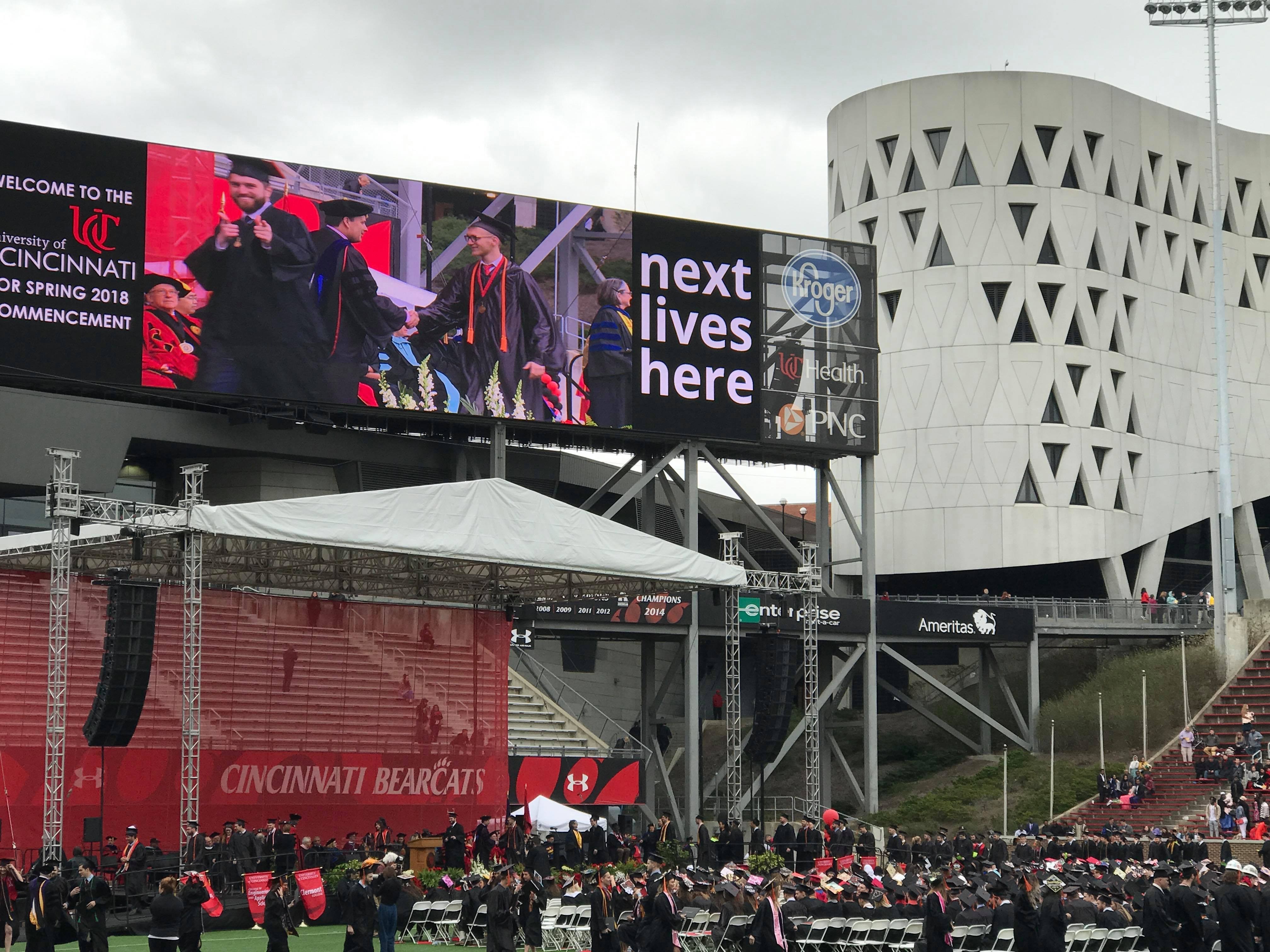
Stefan crossing the stage at graduation.
Graduating from college is weird. An end giving way to new beginnings, it’s exciting, tumultuous, and anxious. You have to say goodbye to so many places, people, and things that have become just so familiar in the span of a few years – time that felt like an eternity, but blew by in an instant. Frankly, I’m not much of a fan of goodbyes, but through graduation, I found the perfect way to close the book on college and give the Lab my farewell.
I’ve been a student worker at the Preservation Lab since the end of my first semester of college in early December of 2013 and I’ve loved every moment of it. My undergraduate studies in Computer Engineering were hard and dissatisfying, and while I identify as a Computer Engineering student through the challenges my classmates and I endured, my department was never a place that I loved. Instead, the Lab has been a home to me, filled with camaraderie and friends that I can’t see enough. They became my on-campus family, tucked away behind Langsam’s main desk and down a flight of stairs.
When graduation neared and it finally came time to customize my graduation cap and reflect upon my time at college, I thought about doing something techy and related to my major, but it just didn’t feel right! While lots of fun, flashy lights and LED screens just didn’t strike me as reflective of my college experience. Before long, the idea that to me would encapsulate my time at college hit me like a sack of bricks. It was obvious to me, and there was nothing else I could do that would feel right. I needed to make my grad cap into a book at the Lab.
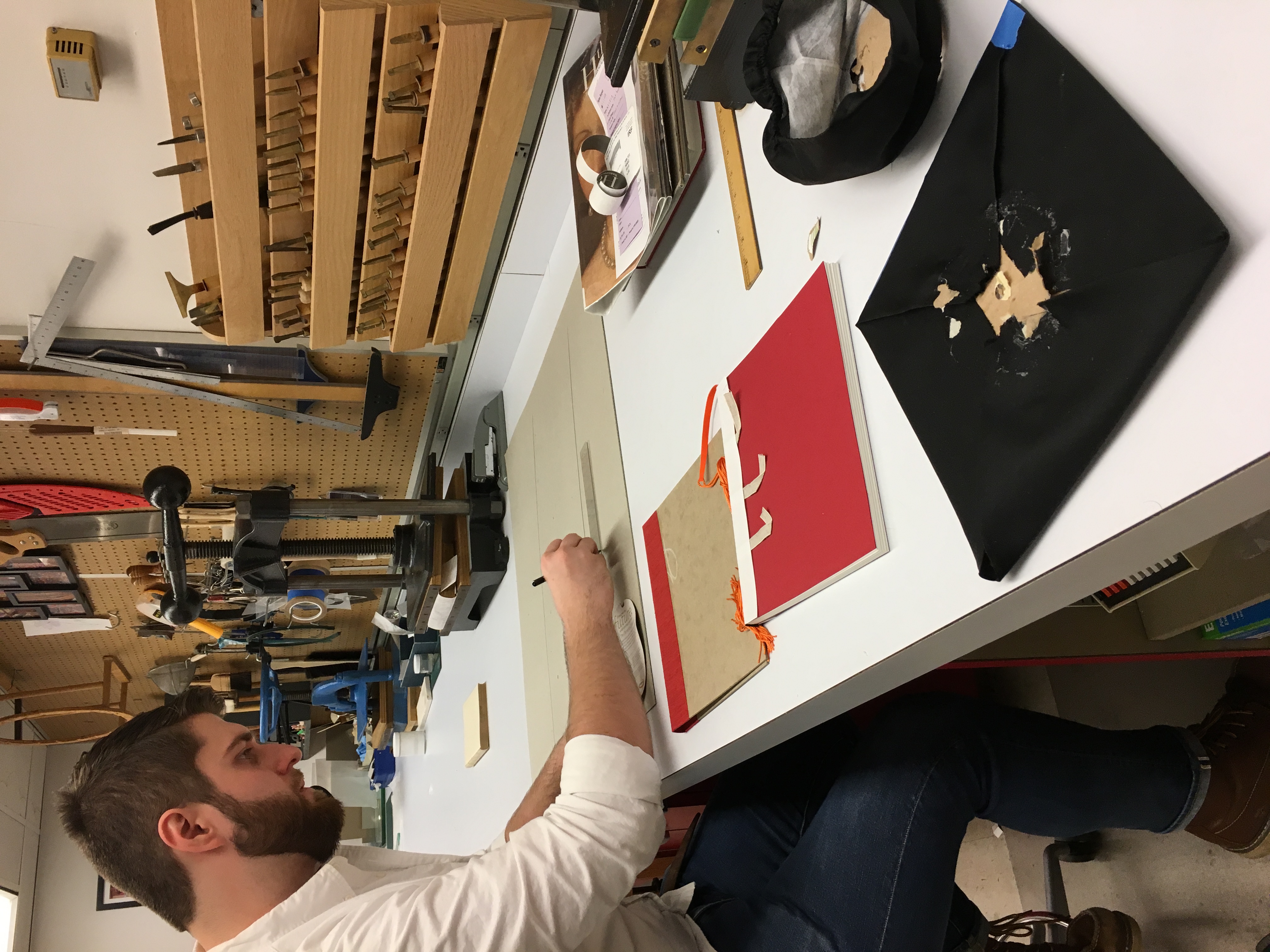
In the process of altering/making his graduation cap.
With the resources of the Lab at my disposal, I set out to make a square book to replace the flat black cardboard top of my graduation cap. In the weeks leading up to graduation and with tons and tons of invaluable help from Jessica, I spent hours tearing apart the boring default cap, planning details of the book’s construction, and actually assembling the cap. The book sports a black cloth cover to resemble the traditional grad cap, but is quarter-bound with a mottled red spine to give the book some zazz and show off some UC spirit. Instead of attaching my engineering tassel to the cover of the book, I adhered it to the spine and turned it into a bookmark that hangs at the back of my head when worn. Most excitingly, I got to use the hot stamper to give my book an official title that succinctly reflected my feelings on leaving college – “Good Riddance.” All in all, I’ve created a work that I’m proud to have worn when I walked across the stage at graduation. President Pinto even complimented me on it!
I’m not quite done with college yet since I’m still working on my MBA, but I won’t be around at the Preservation Lab much longer. Really, it’s going to be hard for me to say goodbye to the Lab. These people who work to preserve rare books have archived their way into my heart. In a way though, I’ve already said my goodbye. Making my grad cap served as a bookend to my undergraduate career, and I got to spend a lot of time in the Lab by making it. With signatures and heartfelt messages from everyone at the Lab written right on the first pages of my grad cap book and fond memories of my time at the lab written to my heart, I won’t be leaving empty handed.
Stefan A. Apostoluk (UCL) – Senior Student Worker
Open House Success
A big thank you to everyone who was able to attend our Preservation Week Open House last Thursday! It was a great success and we all had so much fun sharing what we do with everyone. If you were not able to attend, we wanted to share the awesome comic that our very own Chris Voynovich (conservation technician) created just for the event.
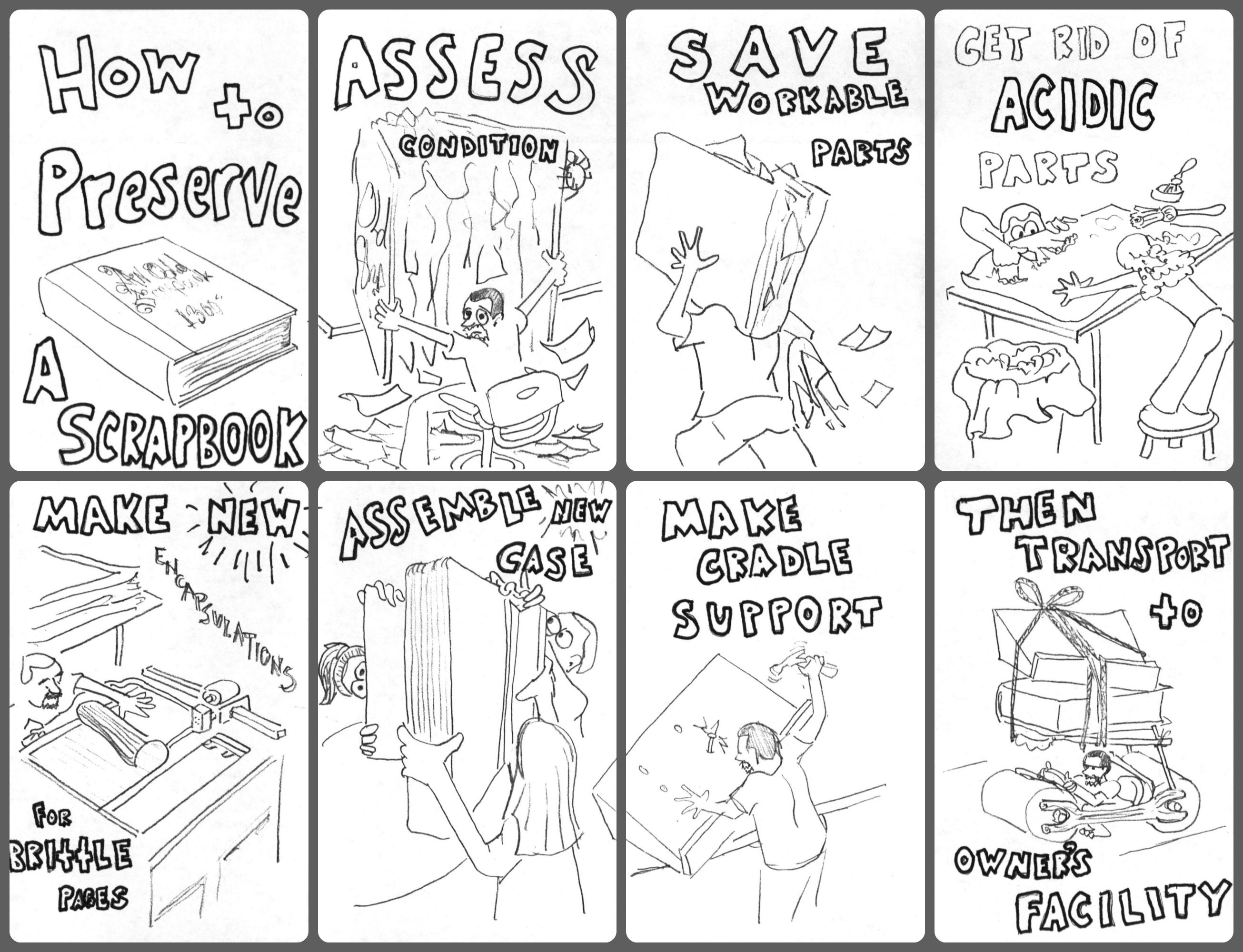 ScrapbookOnePgWonder_CV_withInterior
Attendees were able to create their own one-page wonder featuring this comic and then had a chance to flip through the Madisonville Branch Library’s scrapbook that inspired the comic. Those who attended were also able to explore various artist book structures by viewing and handling (and in some cases, just admiring from a far) collection items from the DAAP Library’s artist book collection. The evolution of the book was a central theme with attendees learning about pre-codex structures (like cuneiform tablets and scrolls), early codex structures (with a foray into medieval bindings and parchment), and modern structures like the ever complex scrapbook. Attendees were able to stamp their own book mark, featuring a quote by P.J. O’Rourke, and learn about RTI, how the lab has improved their capture process, and view the results from a recent RTI project featuring cuneiform tablets. And of course, attendees were able to grab a Busken cookie featuring our Preservation Lab logo. It was a great event!
Make sure to mark your calendar for 2019 Preservation Week (April 21–27) so you can come down, visit the lab, and see the cool stuff we’re working on. I’m also working on a little video of the event, so stayed tuned and check out our MediaSpace channel for updates in the near future.
Jessica Ebert (UCL) – Conservation Technician & Lead Photographic Documentation Tech
Preservation Week 2018 – be our guest!
It’s spring in Cincinnati, which means two things – the epic weather battle between winter and summer (snow yesterday, 71 degrees Fahrenheit tomorrow) and the annual Preservation Week Lab Open House!
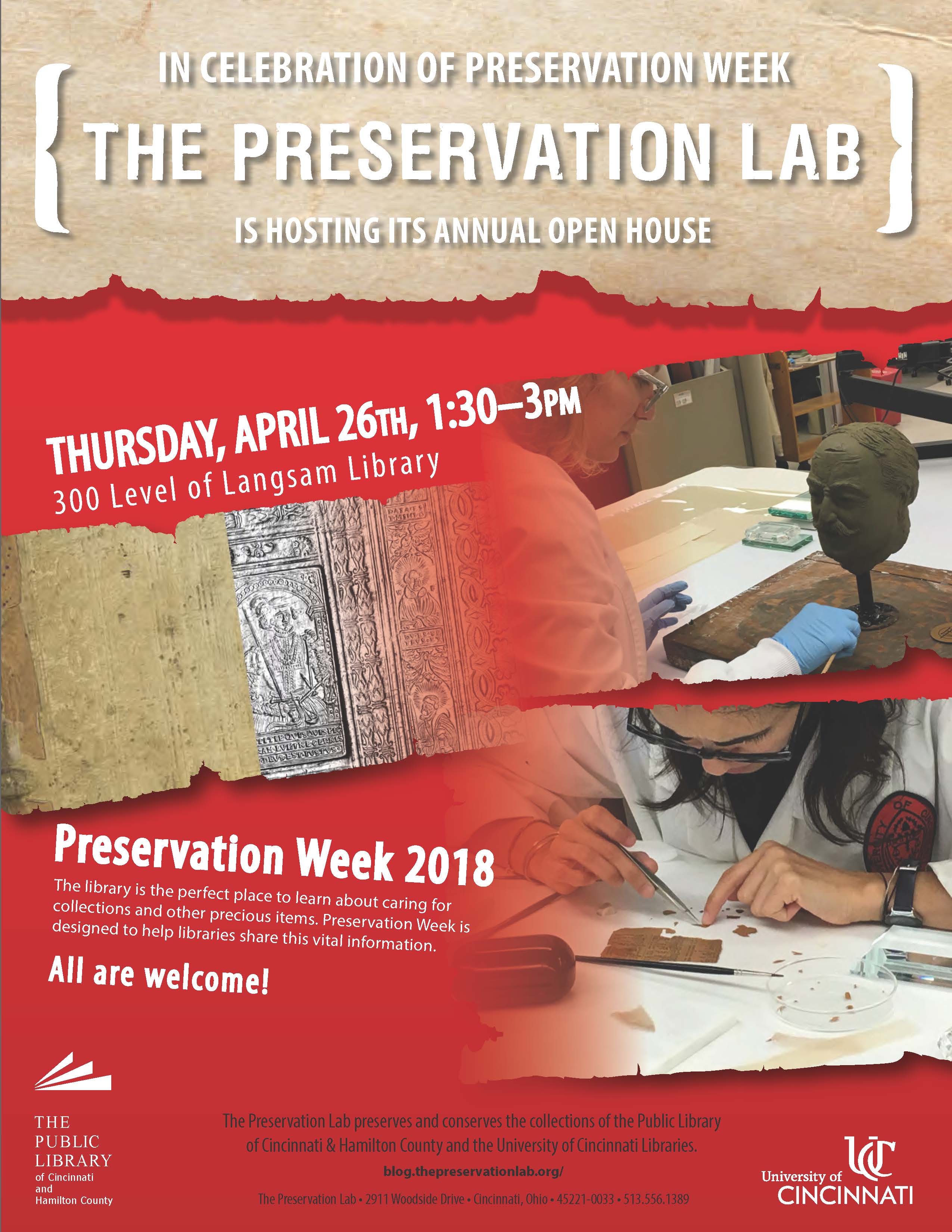 This year marks the lab’s 7th year of participation in this national event, an American Libraries Association initiative aimed at raising “awareness of the role libraries and other cultural institutions play in providing ongoing preservation education and information.” Our event is open to the public – come one, come all!
The Open House will include a behind the scenes tour of the lab, a peek at amazing collection items being preserved for our parent institutions – the Public Library of Cincinnati and Hamilton County and the University of Cincinnati Libraries, and of course a new bookmark.
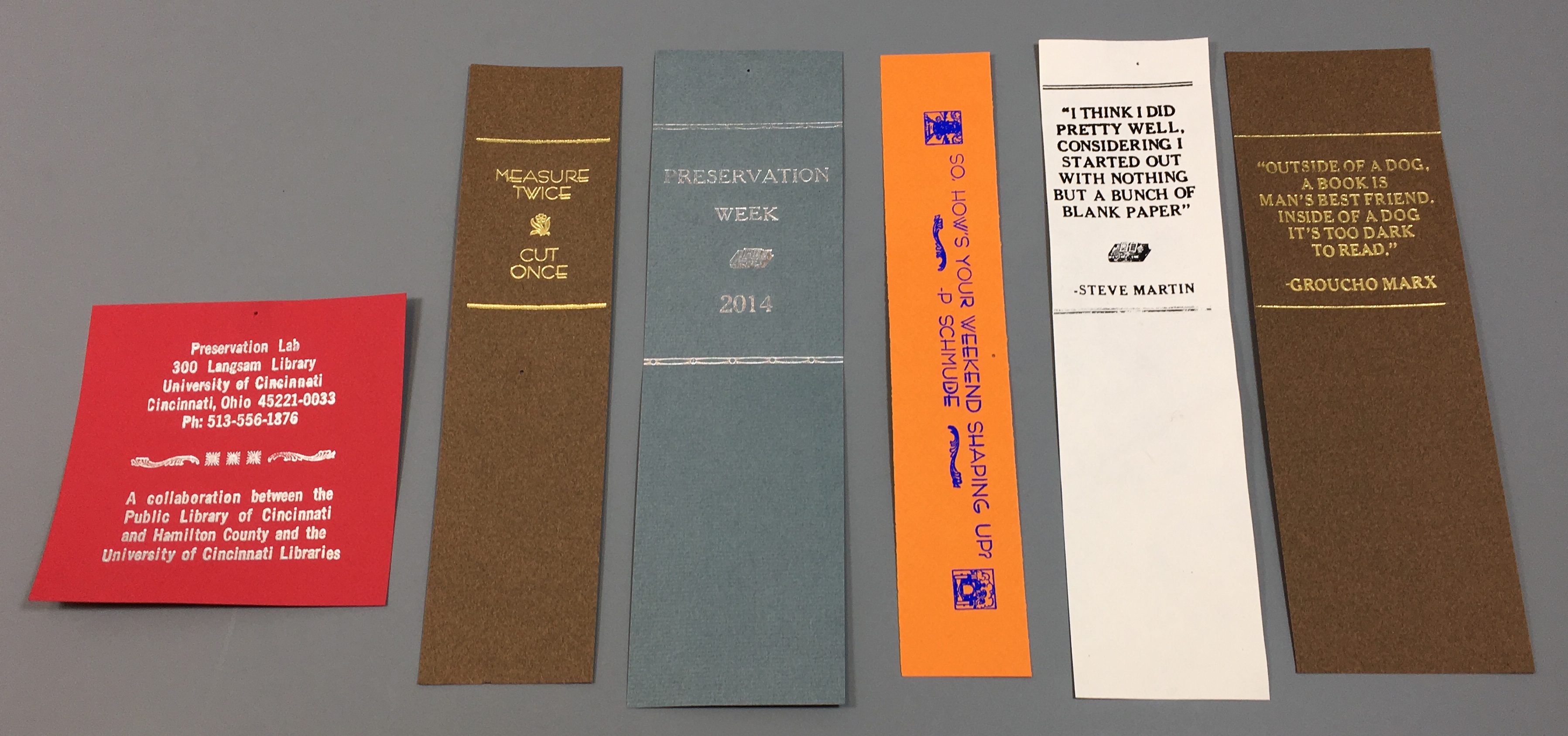
A walk down memory lane – bookmarks 2012-2017.
This year our theme highlights the versatility and artistry of the book, from a complex composite object such as a scrapbook to a simple one-page zine. We’ll also touch on the evolution of the book form, from cuneiform to artist’s book. As is our tradition, we’ll set up “stations” were visitors can roam, explore, and learn at their own pace.
We are looking forward to see you all on, Thursday, April 26th, 1:30-3:00 pm, 300 Langsam Library. And yes, there will be cookies!
Holly Prochaska (UCL) —- Preservation Librarian
A look back at last year's Preservation Week celebration
Our Colleague Nick Wantsala created this lovely video commemorating Preservation Week 2017. It will get prepare you for the highly anticipated 2018 celebration on April 26th!
Pick (click) a cookie above to see the video! Mmm good.
Flowers for Clara
I came across these pretty Arts and Crafts period endpapers in a German multi-volume set of books about Clara Schumann belonging to UC’s Albino Gorno Memorial Music Library, and wanted to share:
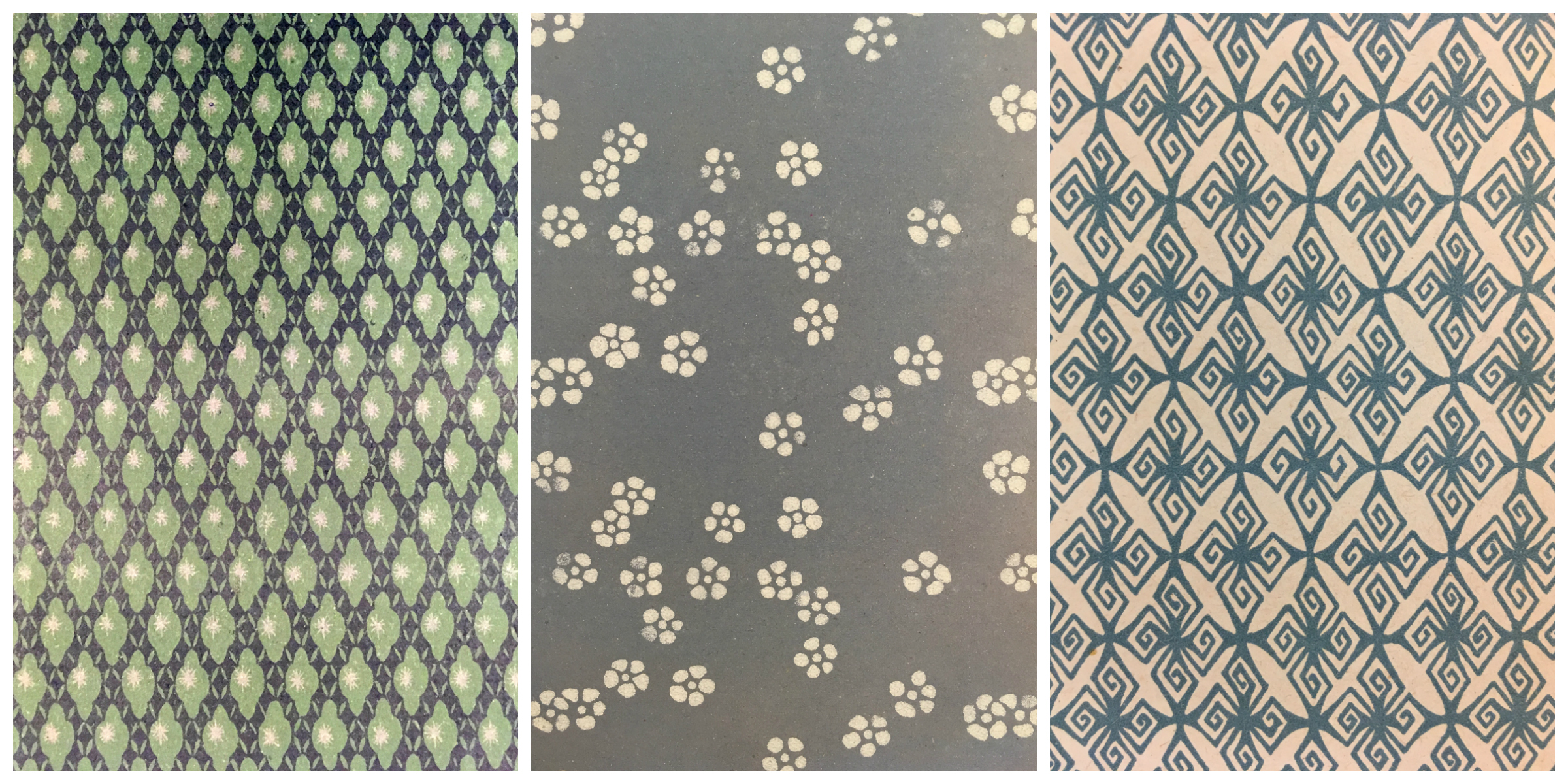
Veronica Sorcher (PLCH) – Conservation Technician
The Preservation Lab…in the news
Check out this new article about the work of the Preservation Lab by our collaborator Melissa Norris, with assistance from Ashleigh Schieszer, Jessica Ebert, and Kevin Grace at https://libapps.libraries.uc.edu/source/preserving-taft/.
Isn’t Preservation just so cool!
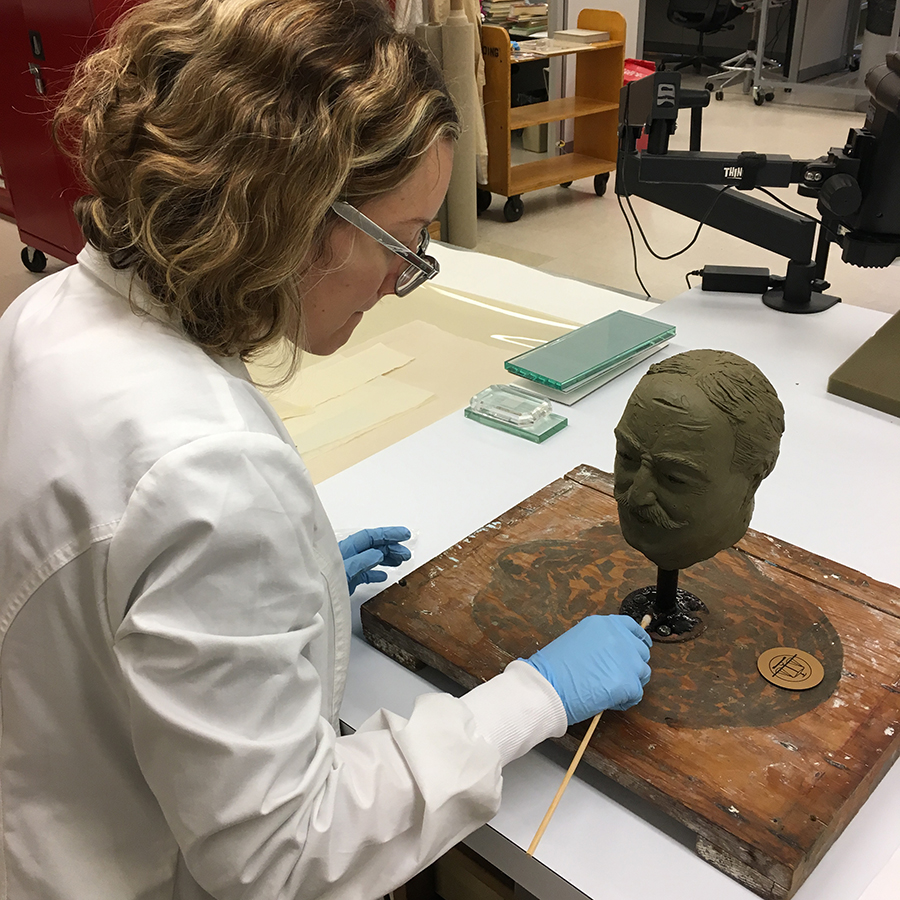
Ashleigh Schieszer works on Taft’s maquette. (Photo credit Jessica Ebert)
And for our loyal followers a bonus image of the housing of the William Howard Taft letters…
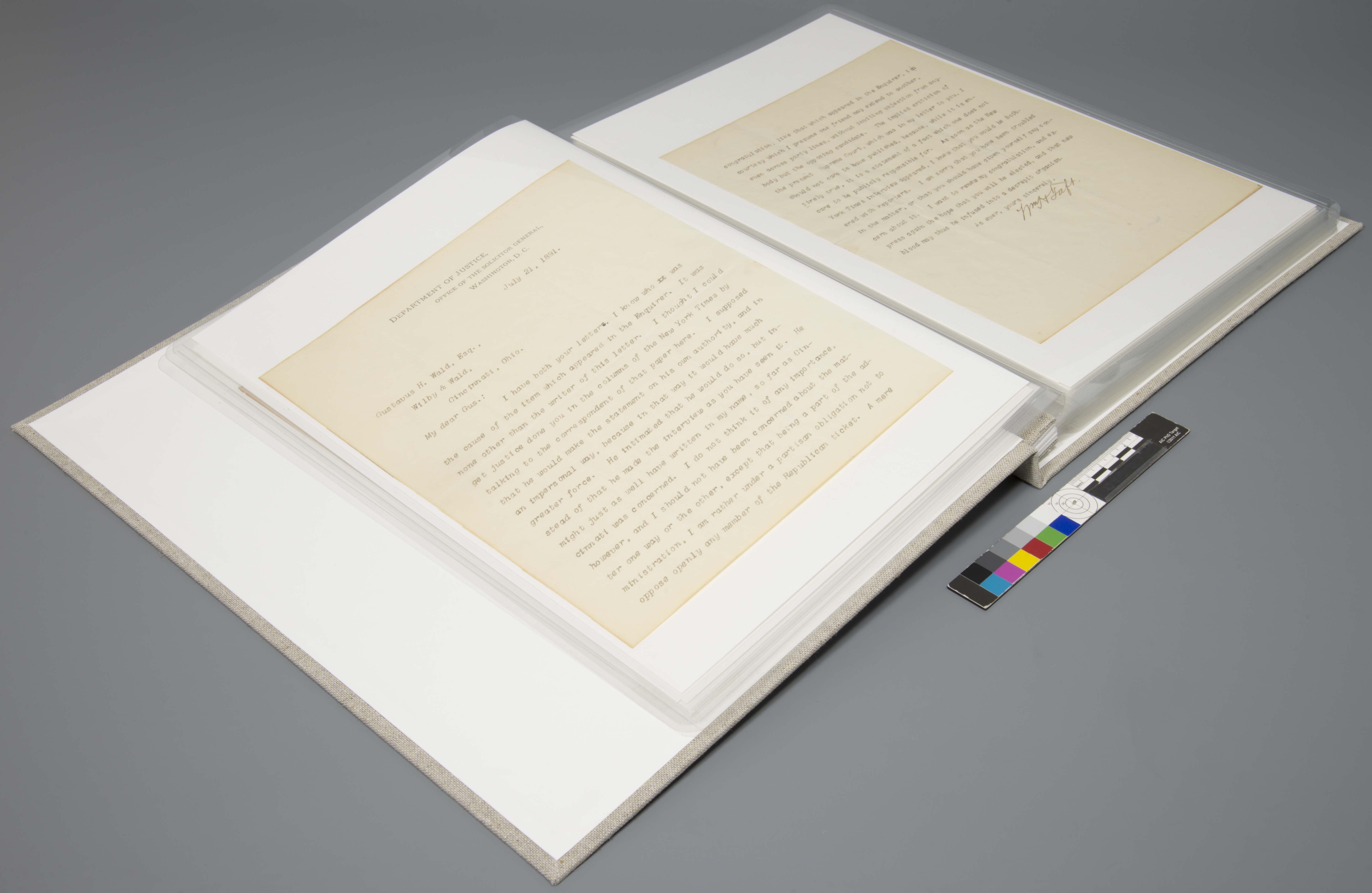
Encapsulated binding by Chris Voynovich, design by Ashleigh Schieszer (photo credit Jessica Ebert)