Category Archives: Book

A Long Journey of Model Making – The Nag Hammadi Codices

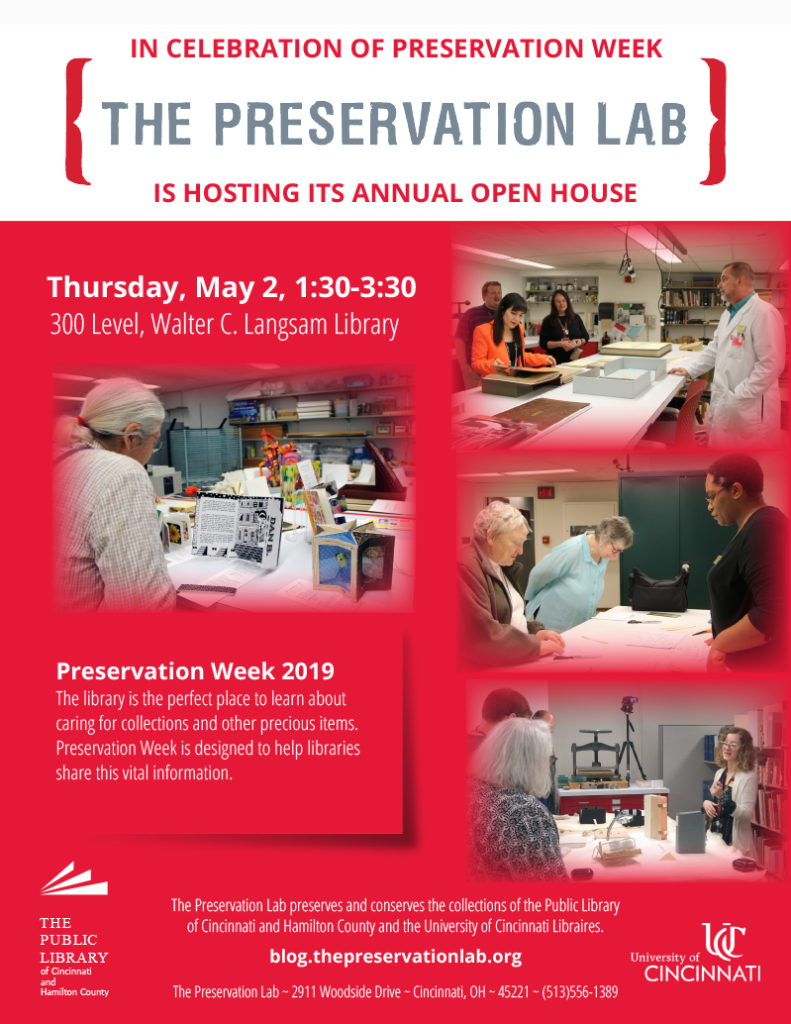
Preservation Lab Open House 2019 flyer

Each year, the Preservation Lab hosts an annual open house during ALA’s Preservation Week, inviting the entire community to visit the Lab and tour our facilities. Each Preservation Week we choose a theme and dedicate our annual open house to that theme. For instance, last year was dedicated to the history of the codex, where the community was able to discover and explore hands-on the evolution and history of the codex, through various book models created by the Preservation Lab staff. This was a great opportunity to share, with the public, the importance of the materiality of the book and how we can use primary resources as teaching tools.   

The history of the codex is a subject that I am deeply interested and has led me to meet and learn from great scholars such as Julia Miller, an expert in early book forms. As a result, I have been developing my own research skills, learning more about the history of the codex, creating historical book models, and sharing this knowledge with my colleagues and with different communities through opportunities such as Preservation Week. 

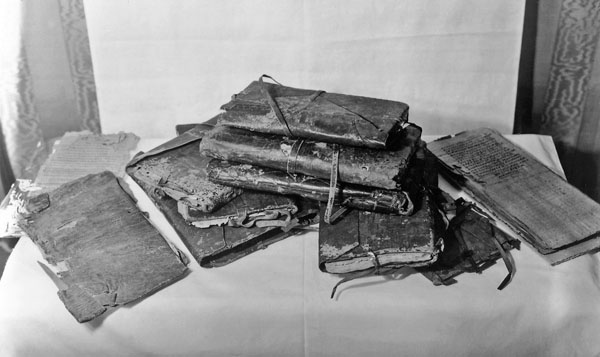
One of the most famous pictures of the Nag Hammadi Codices. Image retrieved from https://www.biblicalarchaeology.org/daily/biblical-artifacts/the-nag-hammadi-codices/

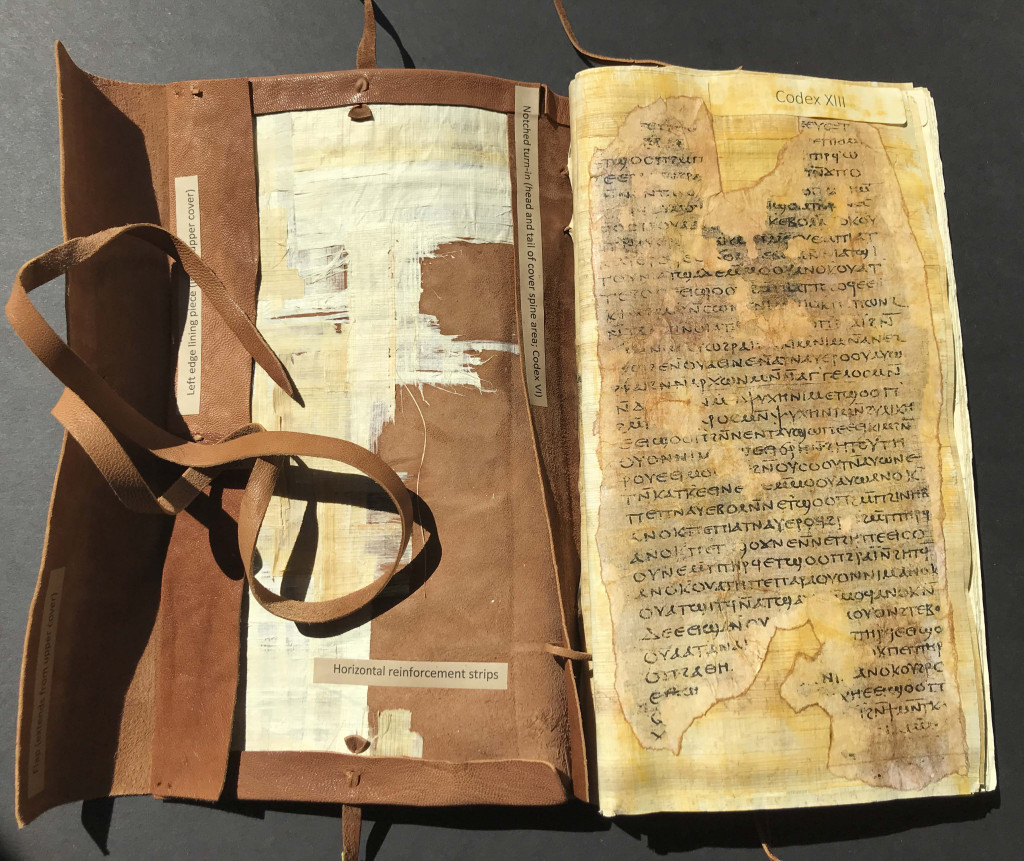
My interest in the history of the codex has led to a fascination for the Nag Hammadi Codices (NHC), also known as Gnostic Gospels. The Nag Hammadi Codices were discovered in 1945 in Upper Egyptian town of Nag Hammadi. The Nag Hammadi Codices appear to have been written during the fourth century. These codices are among some of the oldest codices to have survived with their bindings still intact. There were thirteen codices found, but only eleven bindings have survived. At the time of the discovery eleven covers were found with their texts, text fragments of a twelfth codex, and one text unbound (Codex XIII – tractate (treatise))1.The codices were leather bound with Coptic text written on papyrus sheets. The writings in these codices include fifty-two mostly Gnostic treatises, but they also include other works, such as the Corpus Hermeticum.  

This discovery was extremely important, since there were many texts within the Nag Hammadi Codices that were not known elsewhere at the time. For instance, one of the most famous writings is the Gospel of Thomas which is only complete in the Nag Hammadi Codices2. This was an incredible discovery not only in the world of paleography, religion but also codicology.  

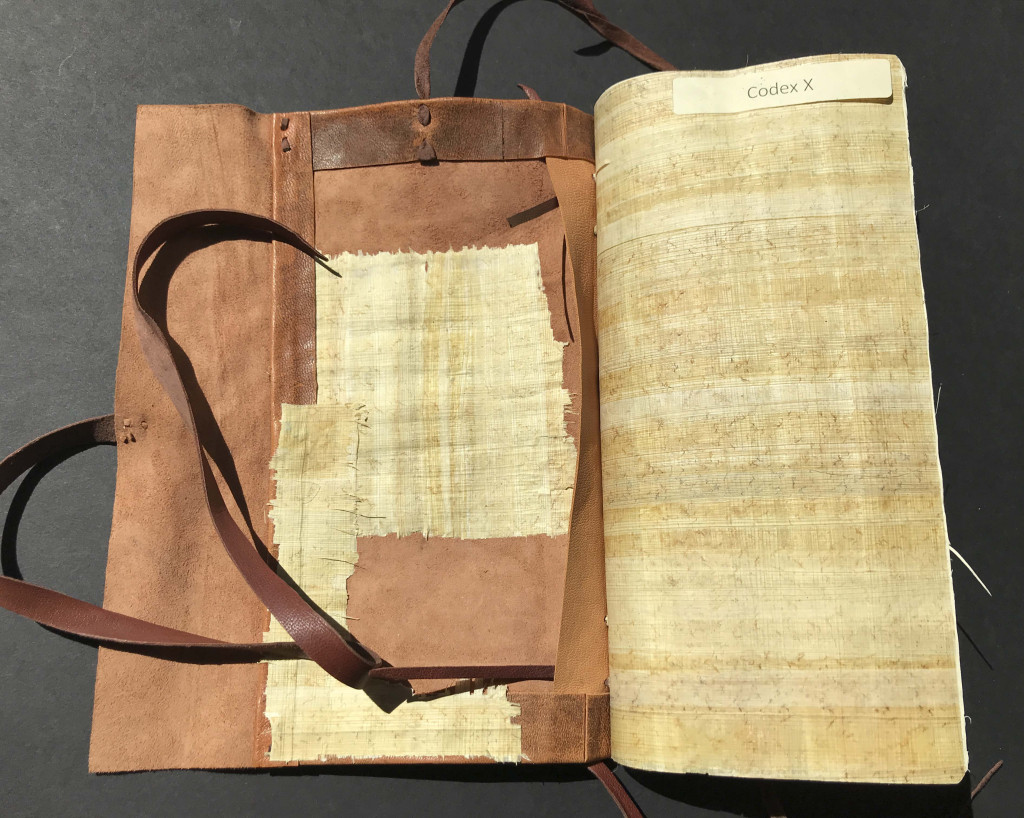
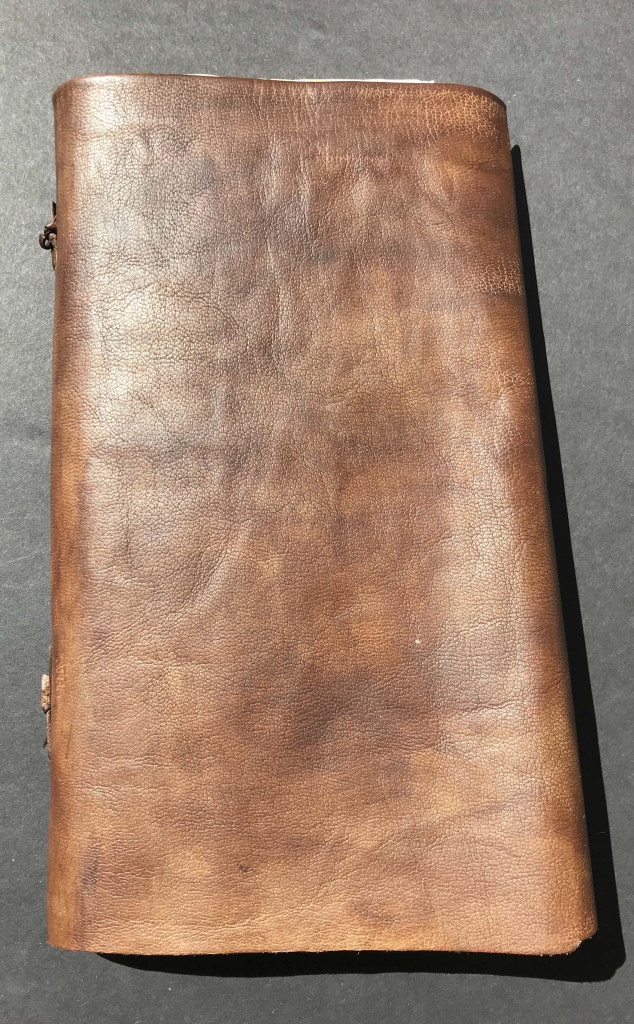
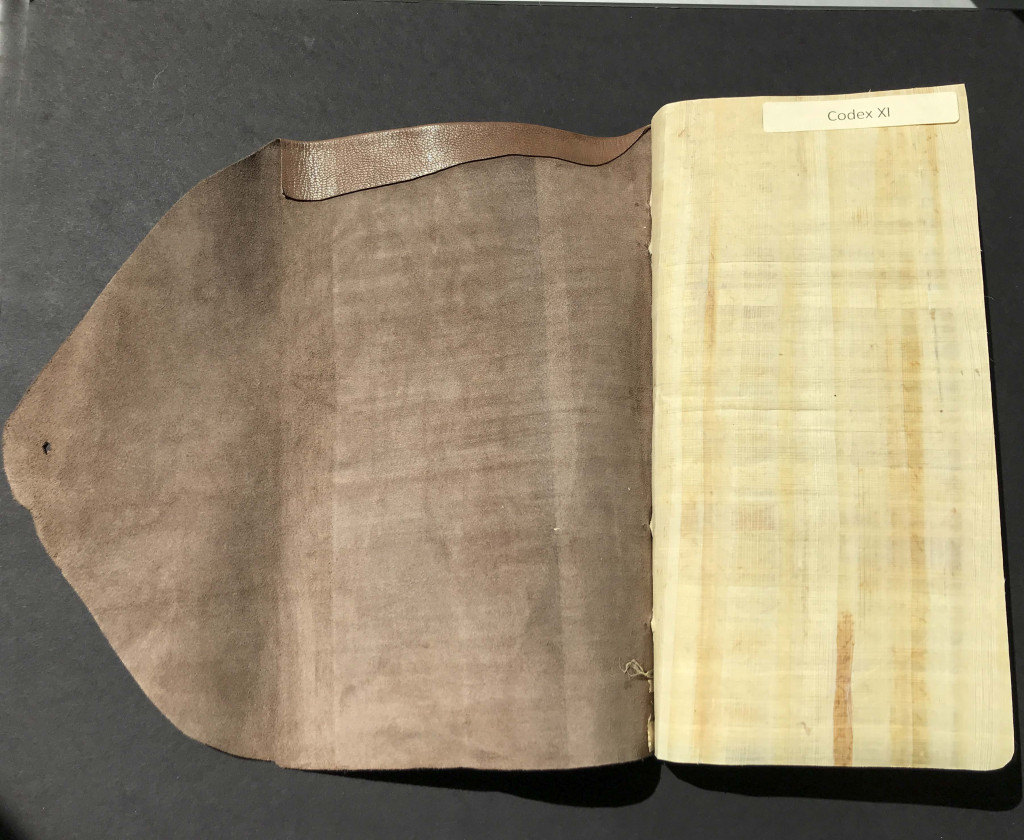
Because of my fascination with the Nag Hammadi Codices, I decided to dedicate some time to creating my own Nag Hammadi models over the years; creating to-scale the eleven bindings found in 1945.  

There are many reasons one chooses to make a model of a book structure, to learn its unique features, how the different materials work together, among others. In my case, I wanted to understand the differences between each of the covers, what features made each cover unique and not exactly the same as the others, and the differences between cover and quire attachment, as well as why some of the codices were more elaborate than others, with cover decoration and blind tooling. This has not been an easy task and has become much longer journey than expected. The tremendous research conducted by scholars and researchers over the years on the study of these texts within the Nag Hammadi Codices, as well as the bindings itself, has helped a great deal in my task of model making. I still have so much more to learn.
The long journey of model making 

I should start by saying that over the years, Julia Miller has been a great mentor to me; providing resources, guidance and advice throughout my endeavors to complete my full set of the NHC models.  
My first NHC model with its many mistakes, such as parchment tackets (not found in any NHC).

My first attempt to create a Nag Hammadi Codex (NHC) model was back in 2013. I started by reading The Archaeology of Medieval Bookbinding by J.A. Szirmai, where the NHC are explored in the first chapters related to single-quire codices. I also based my initial model from one created by the Lab’s conservator, Ashleigh Schieszer. At that time, I knew little about the unique features of each Nag Hammadi Codex and their bindings.

In 2017, I was able to attend a week-long course at the American Academy of Bookbinding (AAB) on early book forms with the conservator and researcher, Julia Miller. It was at the AAB that my interest for these historical structures solidified and where I learned a lot more about early codex forms. It was also in this workshop that I learn about the mistakes I had made with my first NHC model. This only deepened my interest and conviction that I had to make my own set of NHC to understand how these early codices were made.  

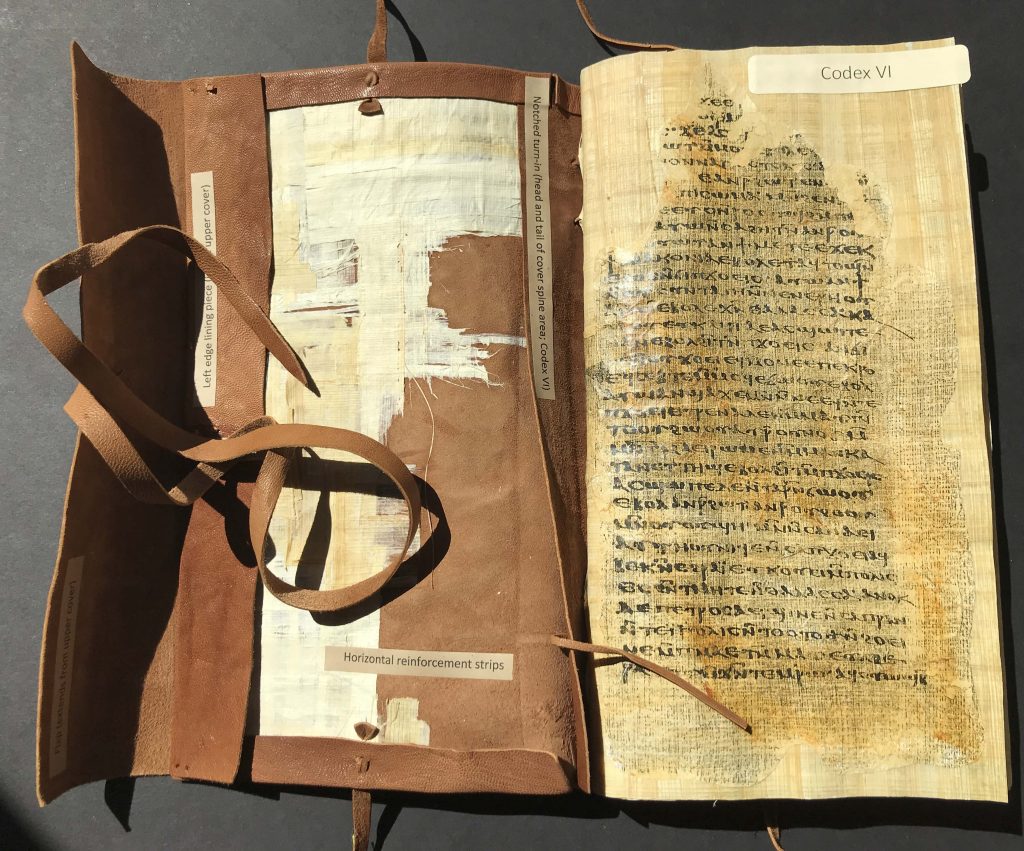
I would come to learn from Julia Miller again when I attended a weekend workshop at the Morgan Conservatory. During this weekend workshop, I created my first full-scale Nag Hammadi Codex VI model. In addition, as a side project I was able to create a small version of Nag Hammadi Codex VIII. This was a great opportunity to learn about each codex and their unique binding and quire attachment features.  With the full-scale model of Codex VI, I was on the right path to continue with my other full-scale models.  

Two resources that have been extremely helpful in creating the full-scale models are the Meeting by Accident, by Julia Miller, where there is a dedicated chapter on the Nag Hammadi Codices with full descriptions, measurements and pictures of each codex; and The facsimile edition of the Nag Hammadi codices by James M. Robinson. At times I became lost reading Robinson’s description of the measurements of each codex cover, and other features as it is all written in a continuous text. Luckily, Julia Miller’s book has each description organized, which makes the task of taking notes and model making a lot simpler.  

Another resource that has helped me immensely in this process was studying Julia’s own set of NHC models and paper templates. Seeing Julia’s physical models provided me further insights into visualizing and understanding the descriptions within her book and Robinson’s descriptions.  

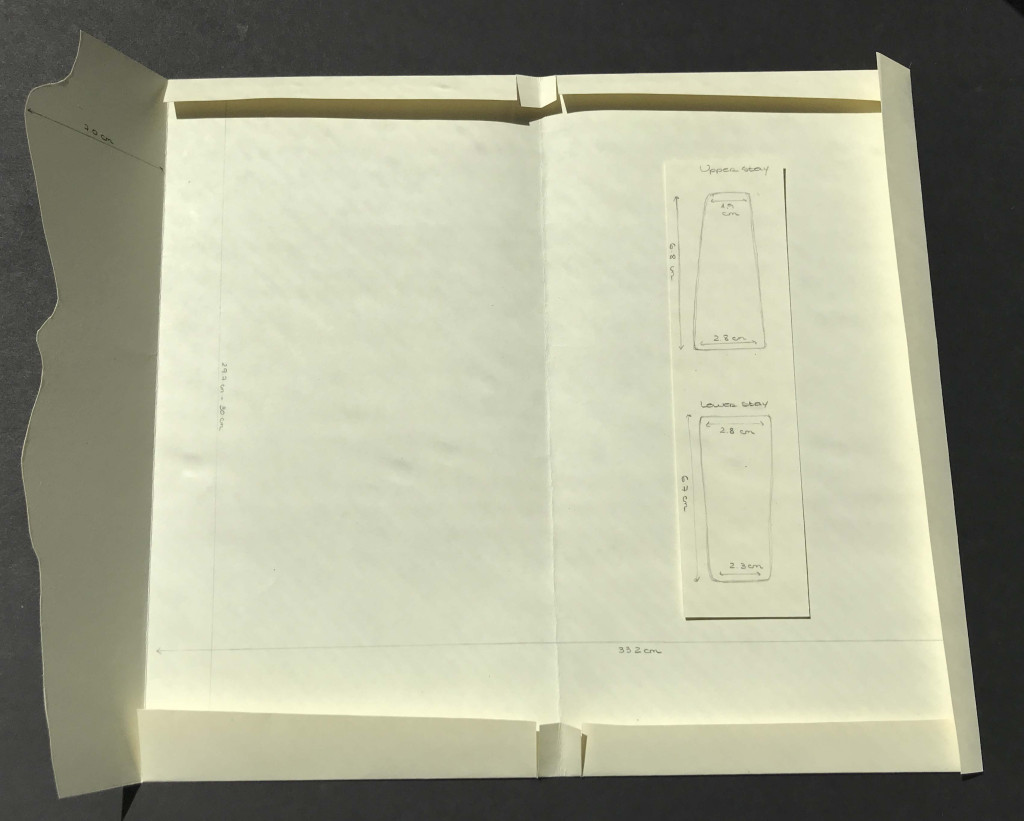
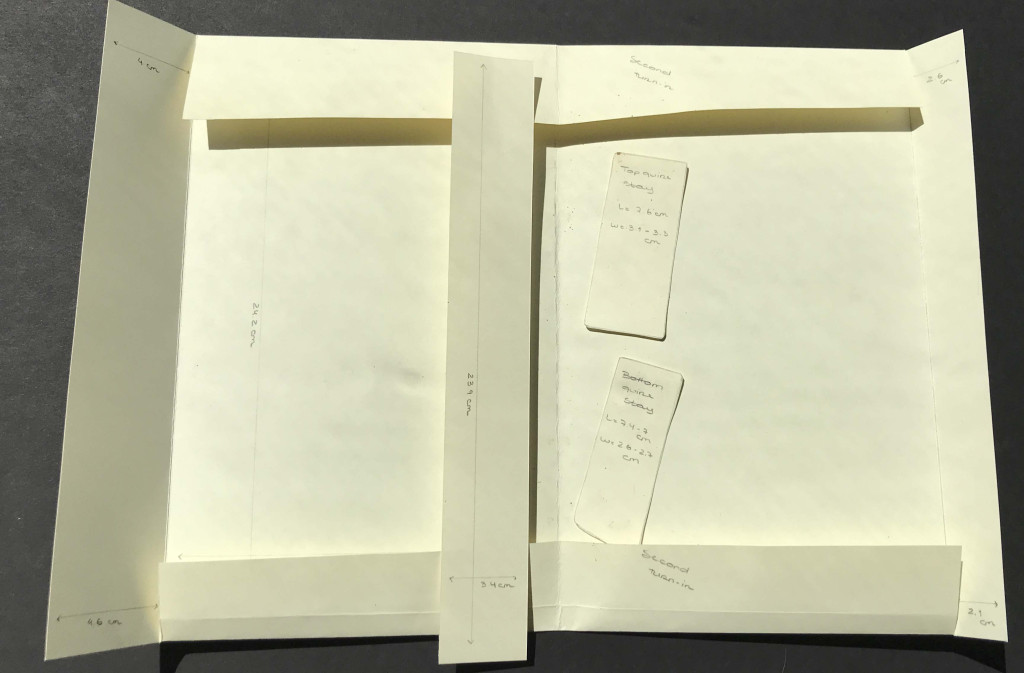
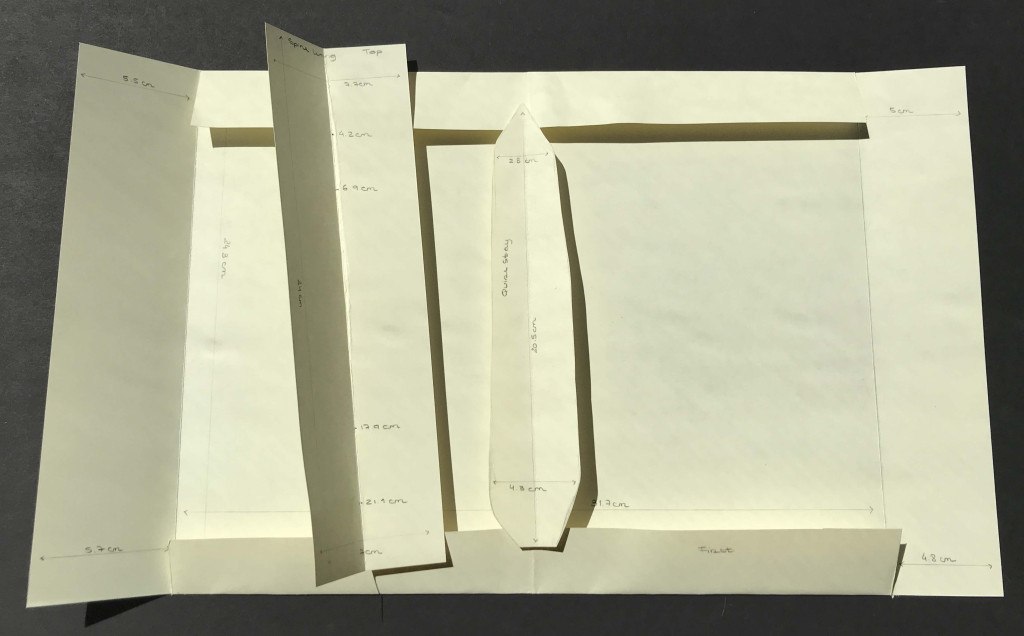
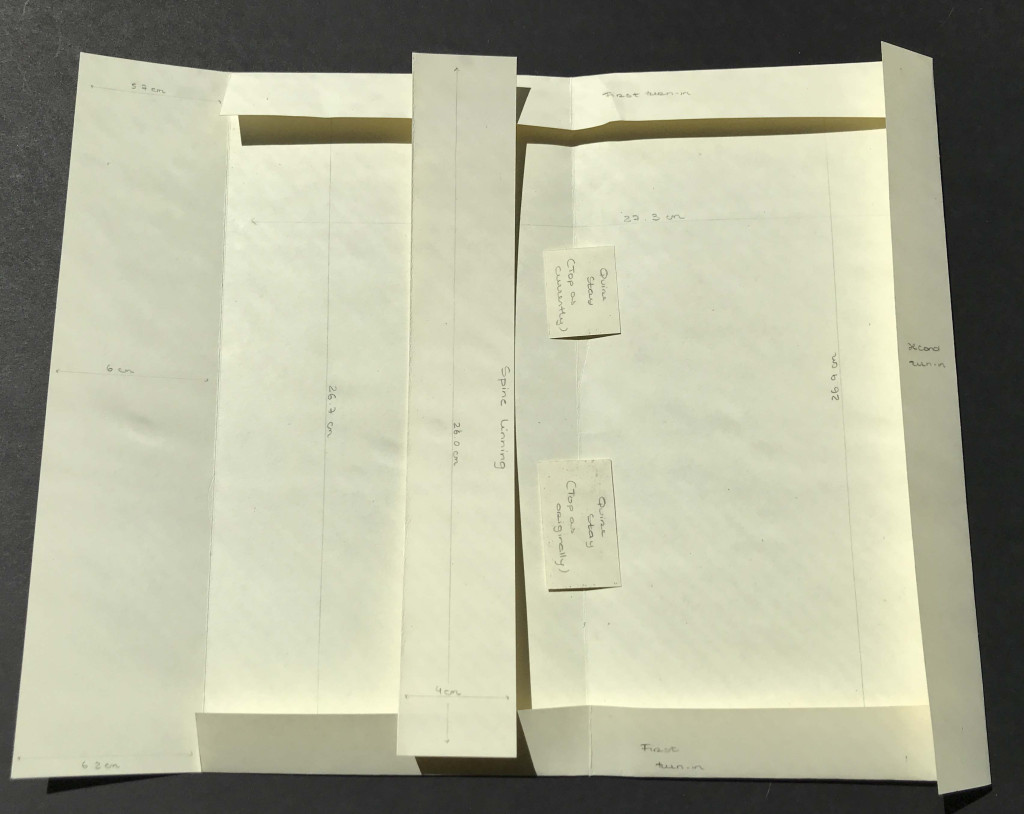
For the rest of the NHC models, I started by attempting to make Codex I without any paper template. I soon learned that this was a big mistake, as I ended up making the wrong dimensions of the cover and ruining the model. I realized that by first making a paper template, it allowed me to make mistakes without wasting materials such as leather and papyrus. Even though these were only models, representations of the NHC, I wanted to be as accurate as possible. 

As I mentioned before, my model making journey has been long; each model beginning with research and note taking.  Once I am satisfied with my research, I create a paper template that I will use to create the model with materials used at the time, such as leather and papyrus. This process of model making has been a great learning opportunity for me.

This past Spring I was able to share what I had learned more broadly when the Preservation Lab co-taught a Book Arts class with UC’s English Department. I taught our students about the Nah Hammadi Codices, and together we created a small model of a Nag Hammadi Codex VIII.  

As we continue to work from home, I have been able to dedicate time to continue my model making of the NHC, and research more about early book structures and their discoveries. So far I have completed the following NHC models: 

  • Codex I 
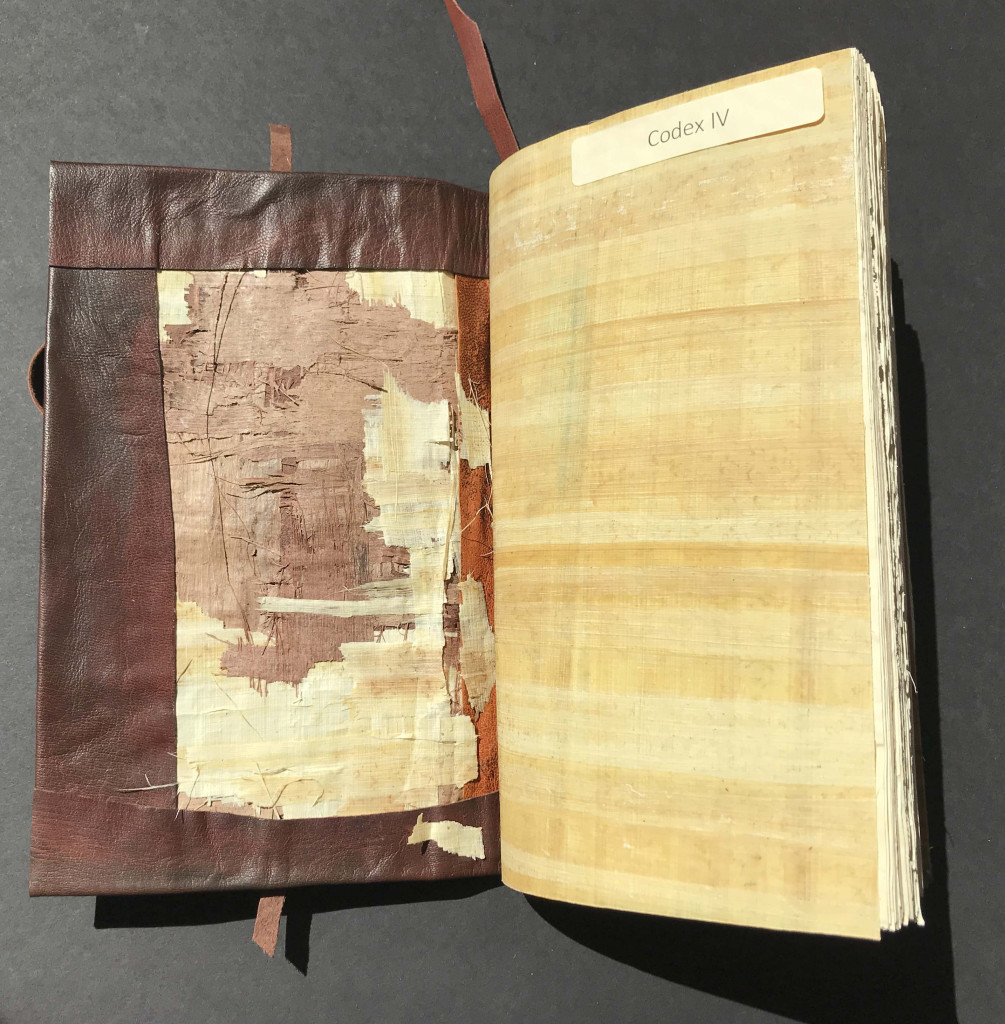
  • Codec IV 
  • Codex VI  
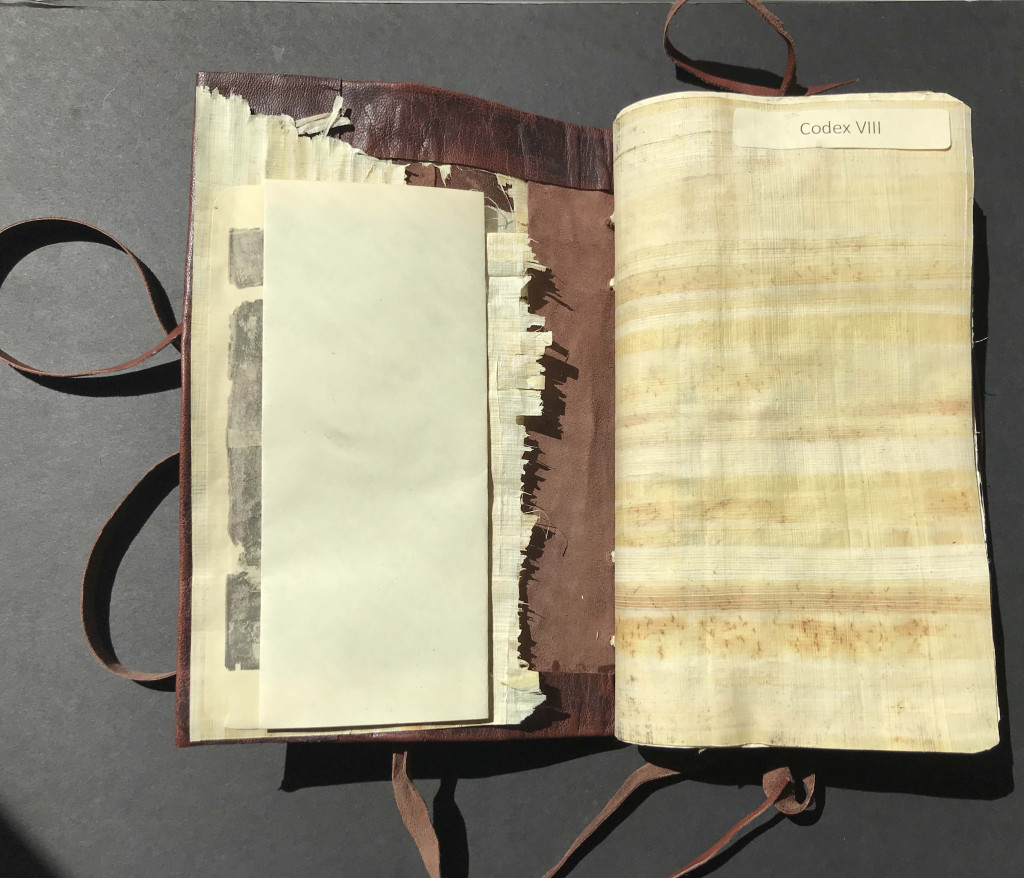
  • Codex VIII 
  • Codex X  
  • Codex XI 
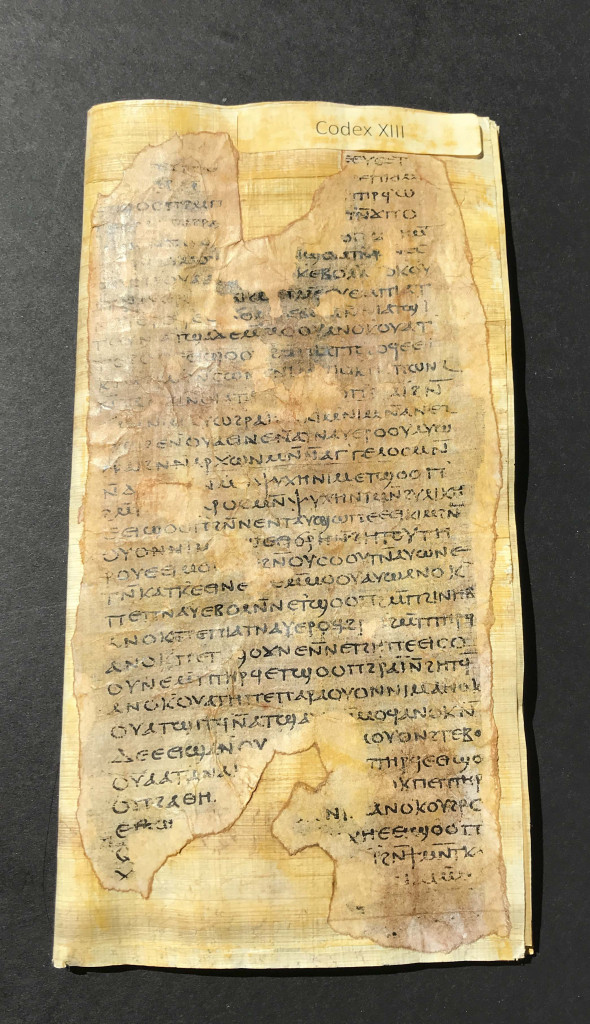
  • Codex XIII 

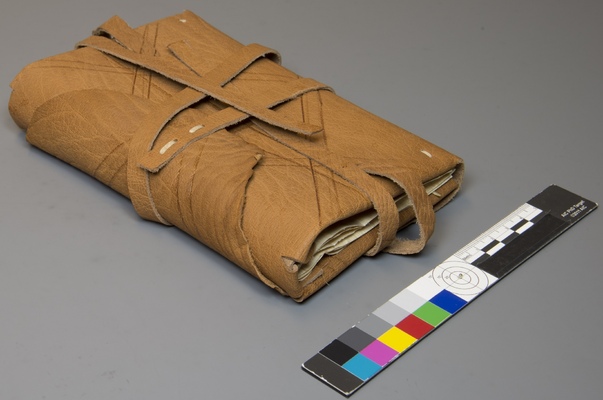
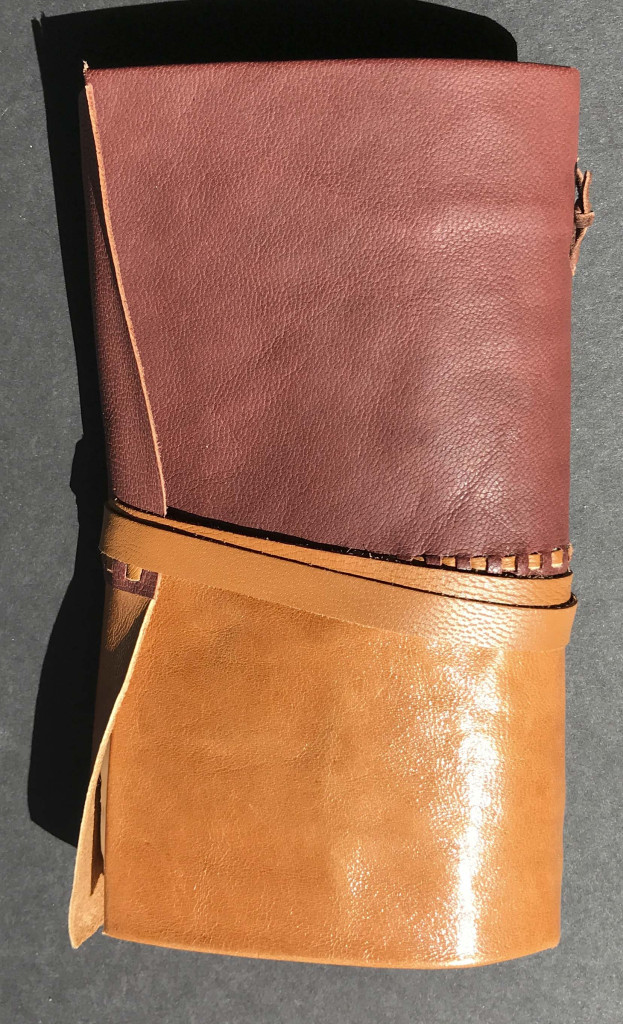
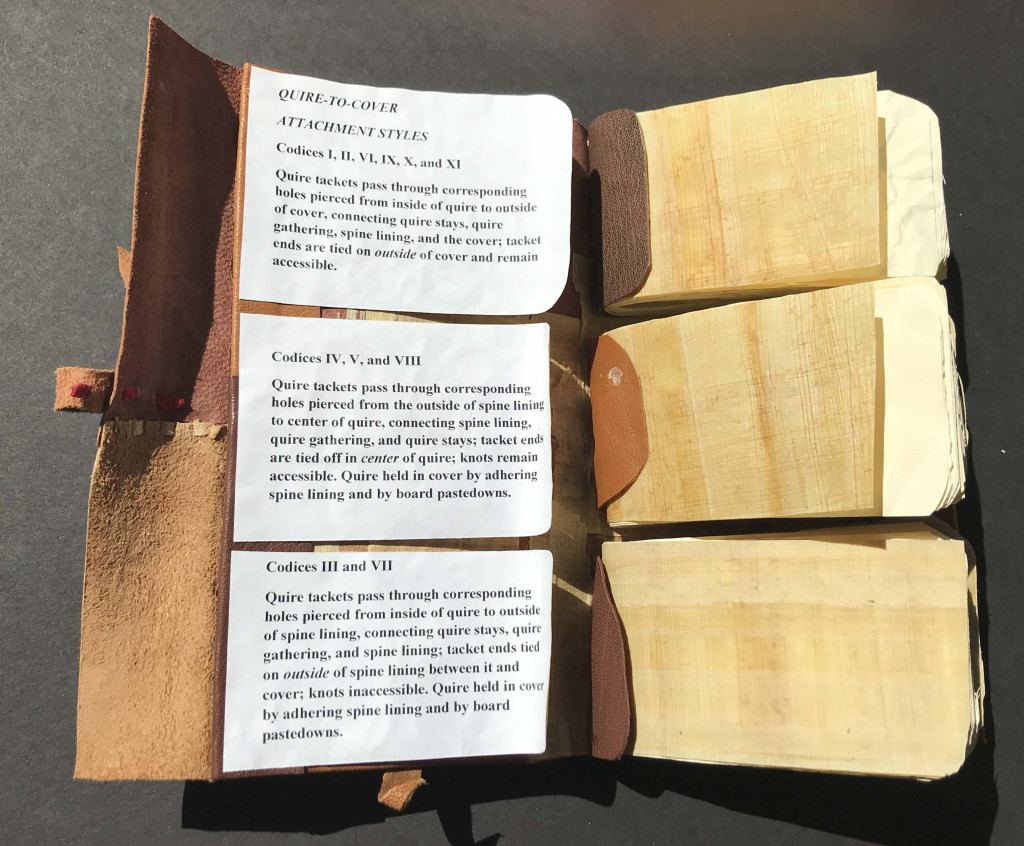
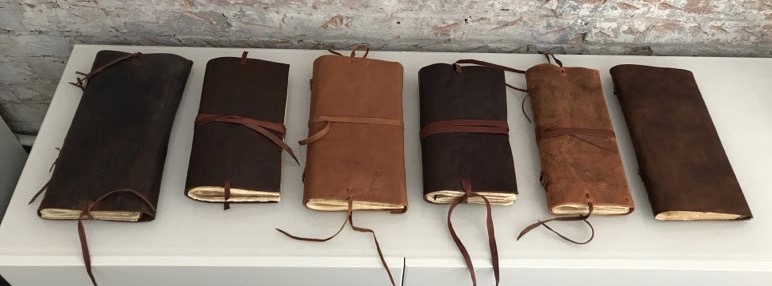
These models are not perfect, but they represent the unique features of the different Nag Hammadi Codices found in 1945. I am hopeful that these models will be a great addition to the teaching collection at the Preservation Lab, and that perhaps I have inspired others to start their own model making journey during this Preservation Week 2020! 

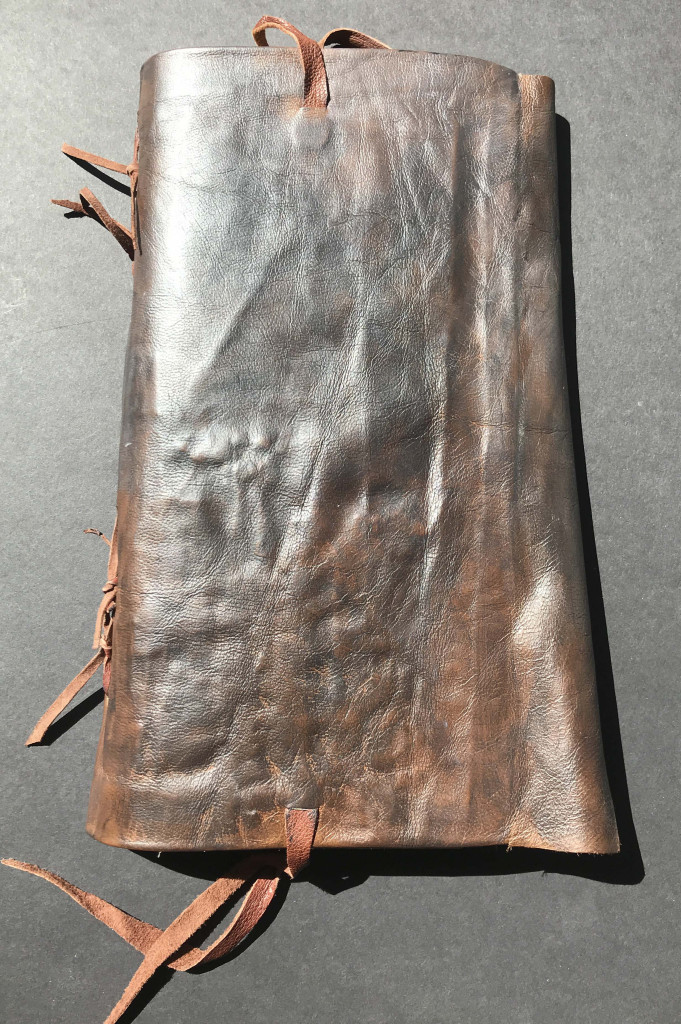
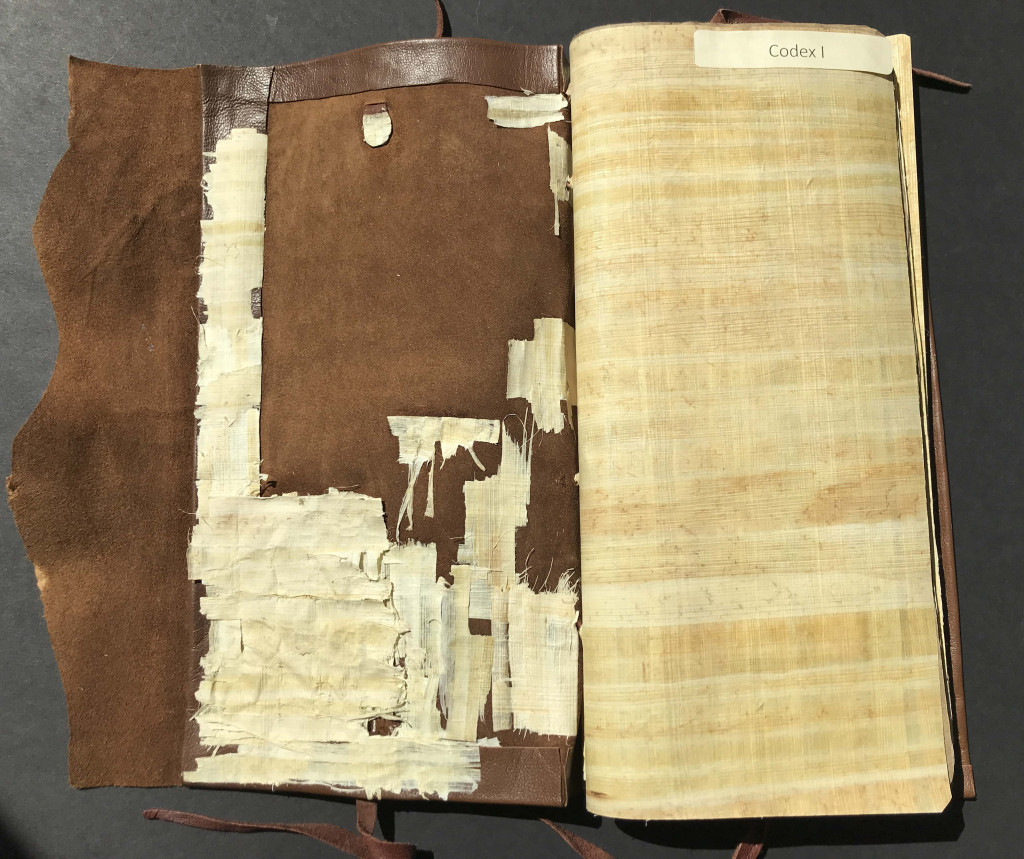
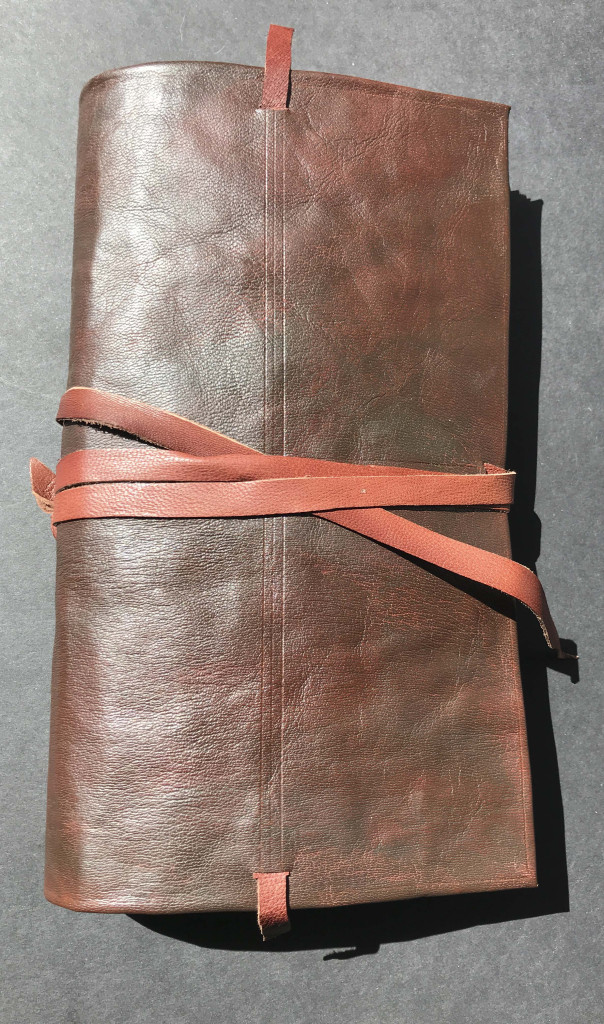
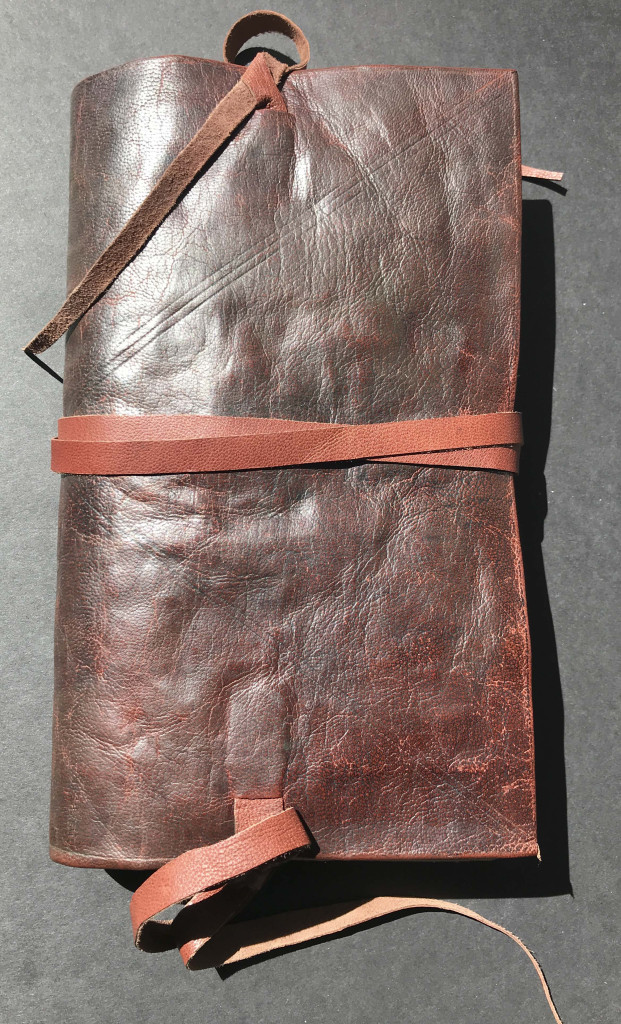
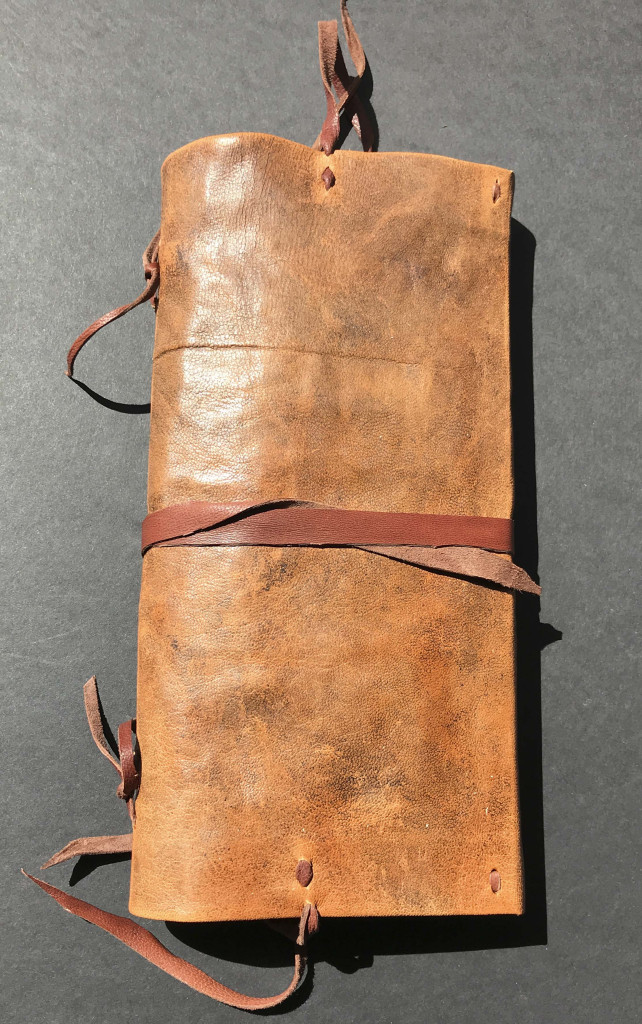
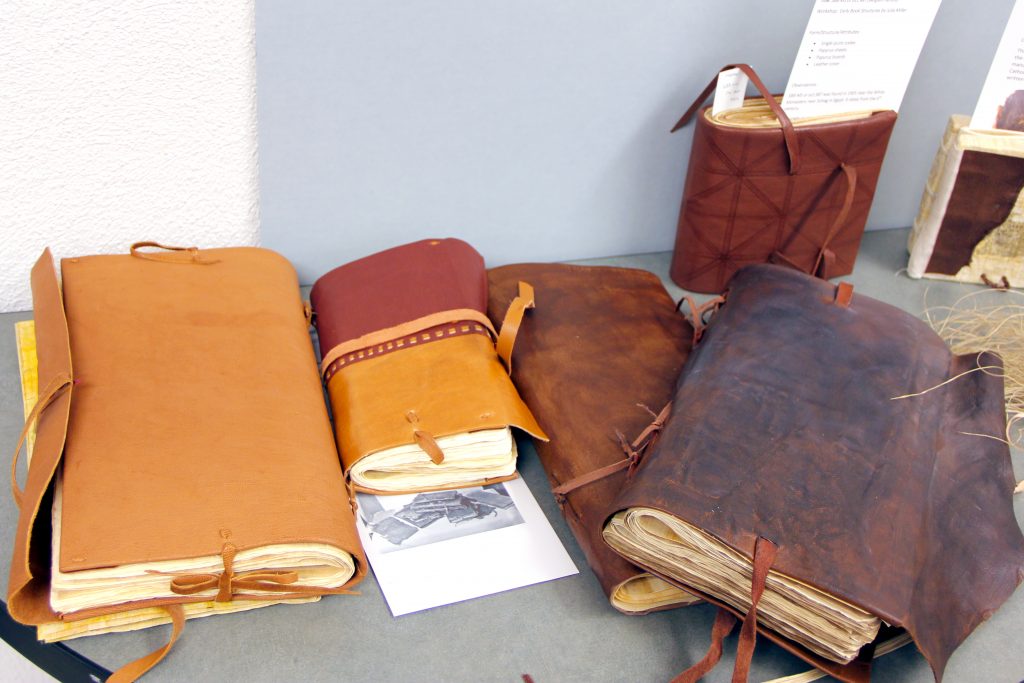
All the models that I have created so far: Codex I, IV, VI, VIII, X, XI, XIII.

References: 

  • Miller, J. (., Spitzmueller, P. J., & Legacy Press. (2018). Meeting by accident: Selected historical bindings. Ann Arbor, Michigan: The Legacy Press. 
  • Layton, B., & Sieber, J. H. (1991). Nag Hammadi codex VIII. E.J. Brill. Retrieved from http://search.ebscohost.com.proxy.library.kent.edu/login.aspx?direct=true&AuthType=ip&db=cat02507a&AN=ohiolink.b31949312&site=eds-live&scope=site 
  • Robinson, J. M. (1972). The facsimile edition of the Nag Hammadi codices. Leiden: E. J. Brill.  
  • Robinson, J. M. (2000). The Coptic gnostic library: a complete edition of the Nag Hammadi codices. Netherlands: Brill.  

Additional sources for more information: 

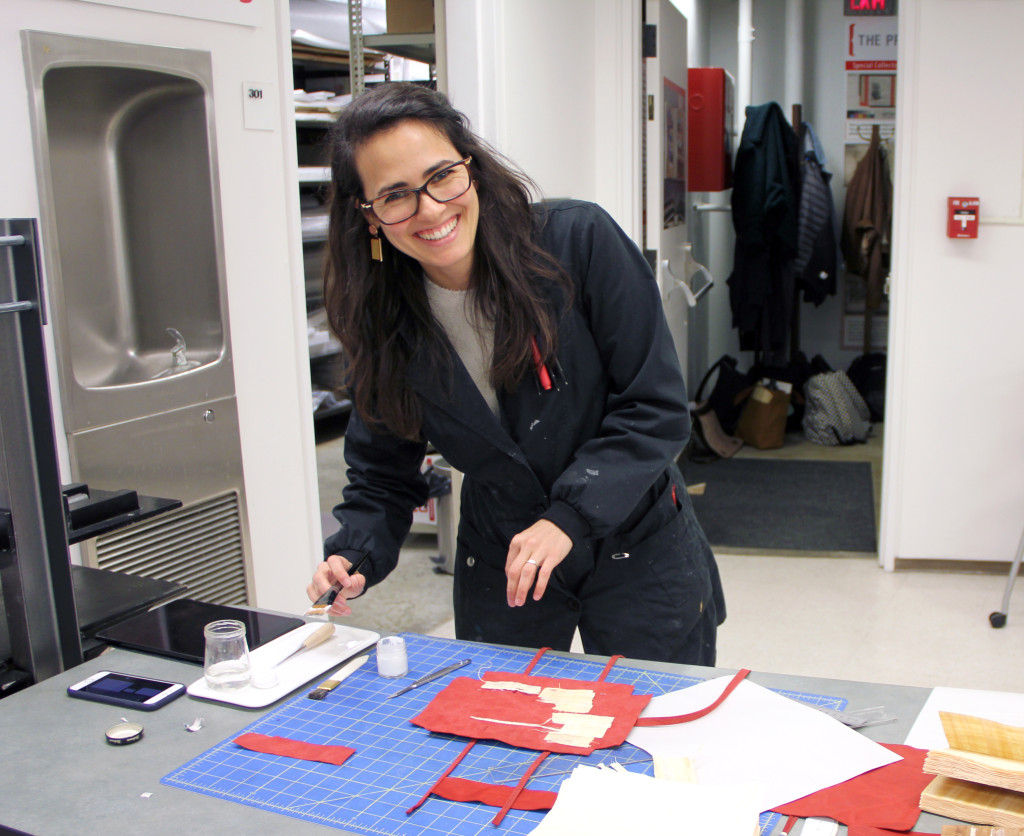
Catarina Figueirinhas [UCL] – Assistant Conservator

Make sure to check out our Instagram (@thepreservationlab) where we’ll share Catarina’s process of making her Codex X model later today. And, if you missed yesterday’s Instagram stories where Jessica shared the exciting journey of photography the choir psalter then take a look at our “PresWeek 2020” story highlight (see below).

Partners in Crime: Digitization Meets Preservation

Book & paper preservation and digitization seem antithetical in many ways; the former focuses on the physical and the hands-on, while the latter hones in on the digital and the technical. Even though there are differences between the fields, I like to think of them as partners in crime. Both preservation and digitization work to ensure that books filled with precious knowledge are around for learning well into the future; they just take different (often intersecting) paths to get there.  

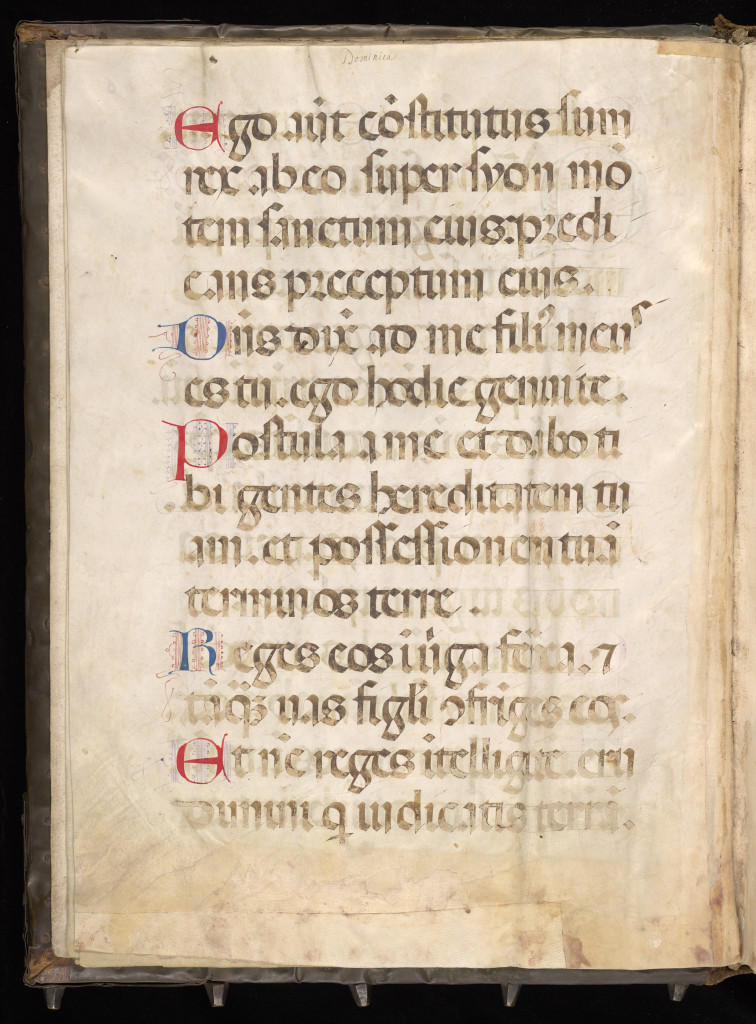
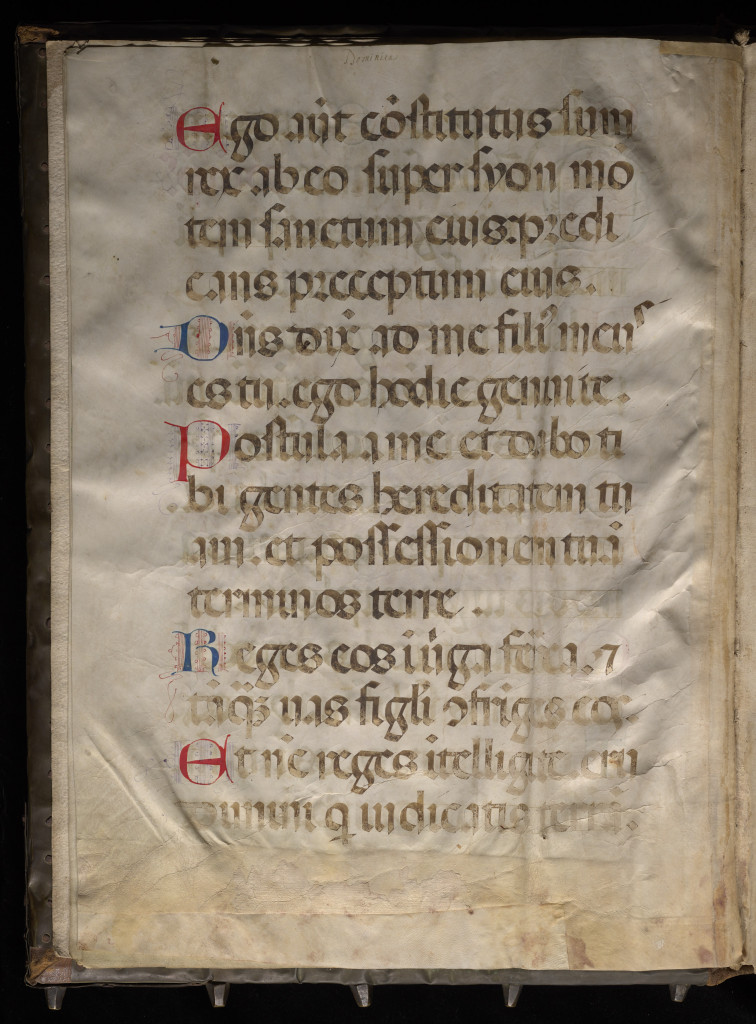
A few months ago, I had the opportunity to digitize a beautiful choir psalter from the UC Classics Library. This large book is theorized to have been used as a choir book in 15th century Italy, possibly the north-eastern area of Veneto. Its knowledge laden parchment pages and mysterious past rendered it the perfect candidate for both preservation and digitization. After it received treatment from the Lab’s conservator, I whisked it away to be digitized.

A book this distinguished required the care and attention of more than one person (it had nothing to do with how heavy it was… really). I was joined by the Lab’s photographic documentation extraordinaire Jessica, and that’s when the collaborative magic between preservation and digitization happened. Jessica and I sprinkled in some preservation-oriented photographic documentation as we digitized, allowing us to get a closer look at the materiality of the book while we had it on the copy stand. One of the most impactful imaging techniques we used on the antiphoner was that of raking light. 

Raking light involves the use of one lighting source to illuminate an object from a low angle, highlighting texture and depth. Using this technique on the choir book allowed us to see and feel the true age and history of a book that survived centuries of use; the mountains and valleys of each aged page suddenly revealed themselves in the same places they hid in normal illumination.

The normal illumination used to digitize allows us to read the book as it was meant to be read, and preservation-focused raking light allows us to experience the materiality of the object. The combination of both techniques allows for those who cannot physically interact with the book to experience (almost) all it has to offer. While there’s really no substitute for seeing the antiphoner in person, we’d like to think we can replicate the experience a little better by utilizing tools provided by our partners in crime: preservation and digitization. 

You can read more about the research done on this choir psalter in the Classics Library’s blog post, “Mystery at the Library”.

Also, make sure to check out of our Instragram (@thepreservationlab) where Jessica will be sharing some conservation photography of this beauty.

Sidney Gao [UCL] – Digital Imaging Coordinator

Book Arts instruction in the Preservation Lab

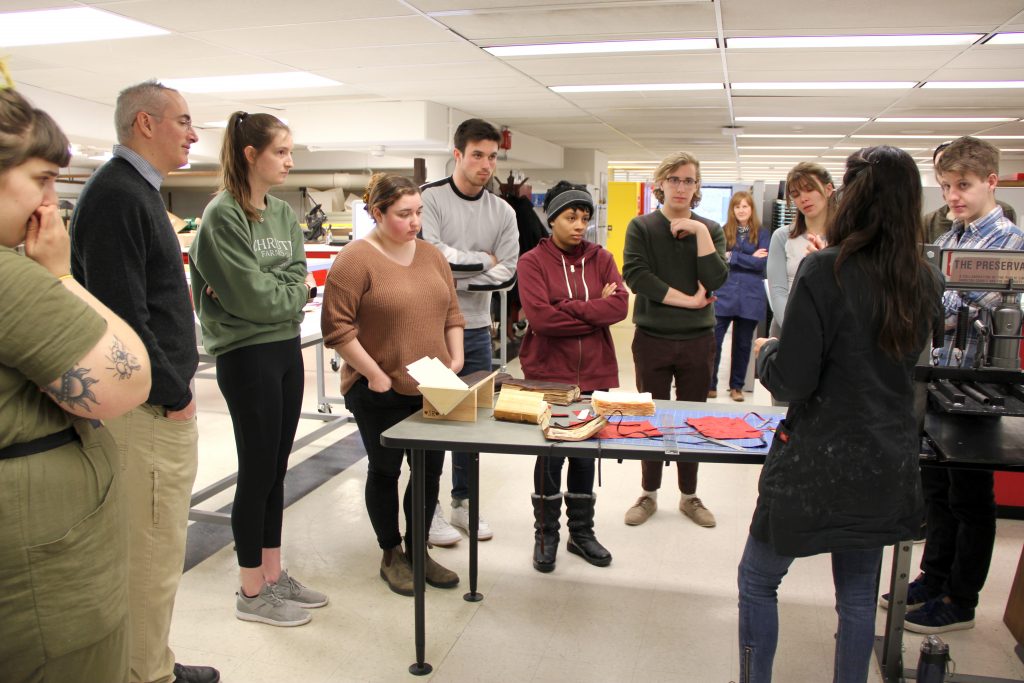
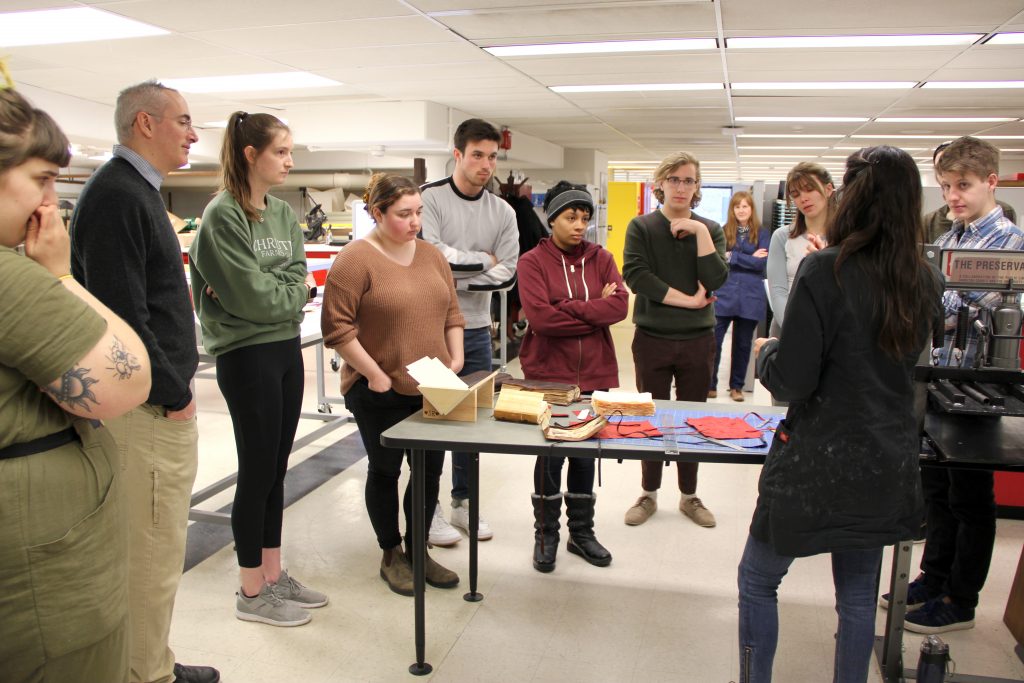
This Spring the Preservation Lab is partnering with the English Department to co-teach Book Arts (ENG3097). The Lab is leading the hands-on experiential learning portion of the course, with Gary Weissman (Associate Professor and Director of Literary & Cultural Studies, Department of English) leading the seminar portion.

During the Lab portion, students will be exposed to a brief history of the codex, make western-style paper, learn to a variety of sewn structures, have an overview of printing techniques, and explore ways to add interest to the codex structure (movable structures, closures, enclosures, material choice, etc.), among other activities.

For the February 5th class session, students made a model of the Nag Hammadi Codex VIII. Catarina Figueirinhas, Assistant Conservator, began the session with a short lecture on the discovery of the codices and the importance of the find to papyrologists, and book history and religious scholars. She then led the students through the creation of the half scale model.

It was a wonderfully successful afternoon thanks to a group of very engaged students and an amazingly prepared, as always, Catarina Figueirinhas.

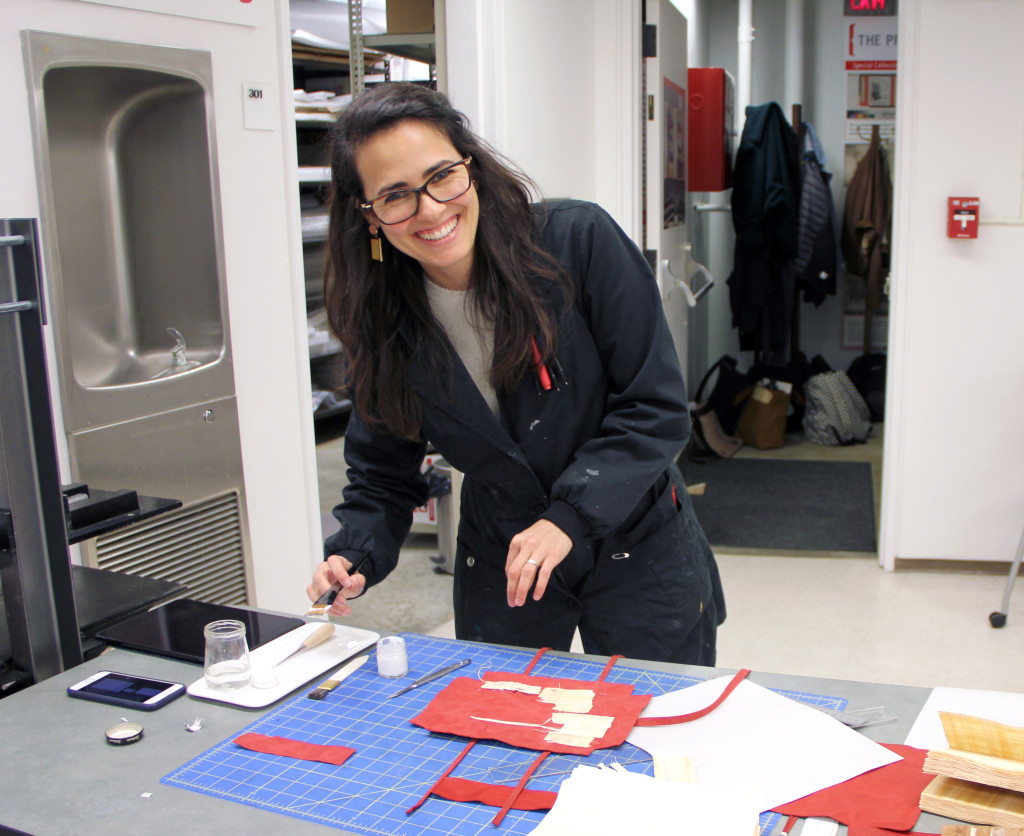
Catarina Figueirinhas building up the cover structure – cartonnage.
Nag Hammadi models created by Catarina Figueirinhas.

Holly Prochaska (UCL) — Preservation Librarian

All images provided by Melissa Norris (UCL) — Director of Communications

Closures – that's one secure book

The Preservation Lab is gearing up to co-teach a Book Arts Course with Gary Weissman in the English Department, Spring 2020.  Jessica Ebert and I prepped for the closure session by securing these two books.  The idea of creating this sampler was borrowed, with permission, from our friend and fellow bookbinder Fran Kovac.
Book secured with multiple closure types
That’s a lot of security! From top to bottom – bone clasp, two hole tie, O ring wrap, toggle, and 6th century wrap (wrapped two directions so as to see the design).
Holly Prochaska (UCL) — Preservation Librarian

A Monster of a Treatment

When this mid-19th century Treatise on Operative Surgery came to The Preservation Lab, little did we imagine the twists and turns the treatment would take. We certainly did not expect the treatment to turn into a Frankenstein’s monster, pulling inspiration from three different types of binding structures, although this monster found more successful results than Victor Frankenstein’s.

This 1844 full leather tight-back binding came to us from The Henry R. Winkler Center. The binding was in disarray with both the front and back boards having become fully detached, with only the back board remaining. Very few spine fragments remained, but there was clear evidence of false raised bands. The leather that remained on the spine and back board was severely red rotted. The textblock was sewn on recessed cords and remained beautifully intact. The textblock consists of 360 pages containing descriptions of surgical procedures, as well as 80 illustrated plates depicting some of these techniques.
Prior to any rebinding, the placement of the false raised bands was measured and recorded; the book’s spine was cleaned; the front and back flyleaves were mended and hinged; the back cover was housed in a polyester four-flap; new endsheets were sewn onto the textblock; and the spine was lined. Several of the linings attached will bring us to the first bookbinding structure that inspiration was pulled from…

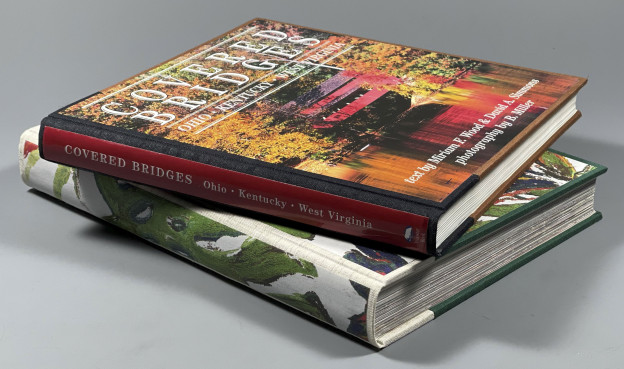
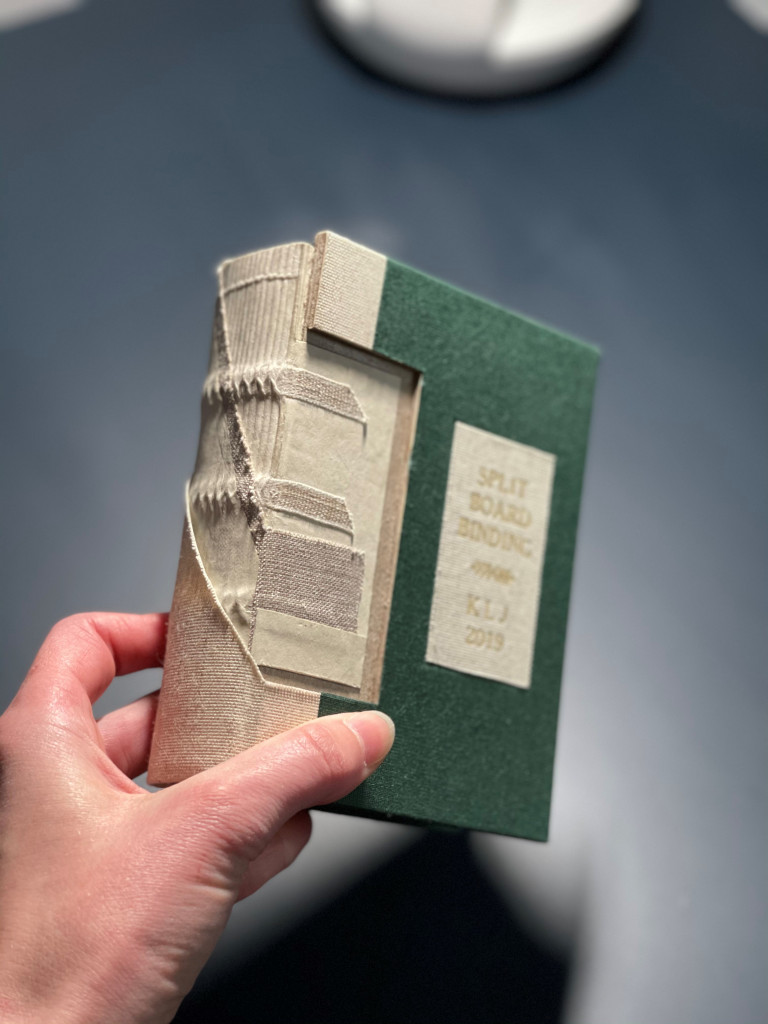
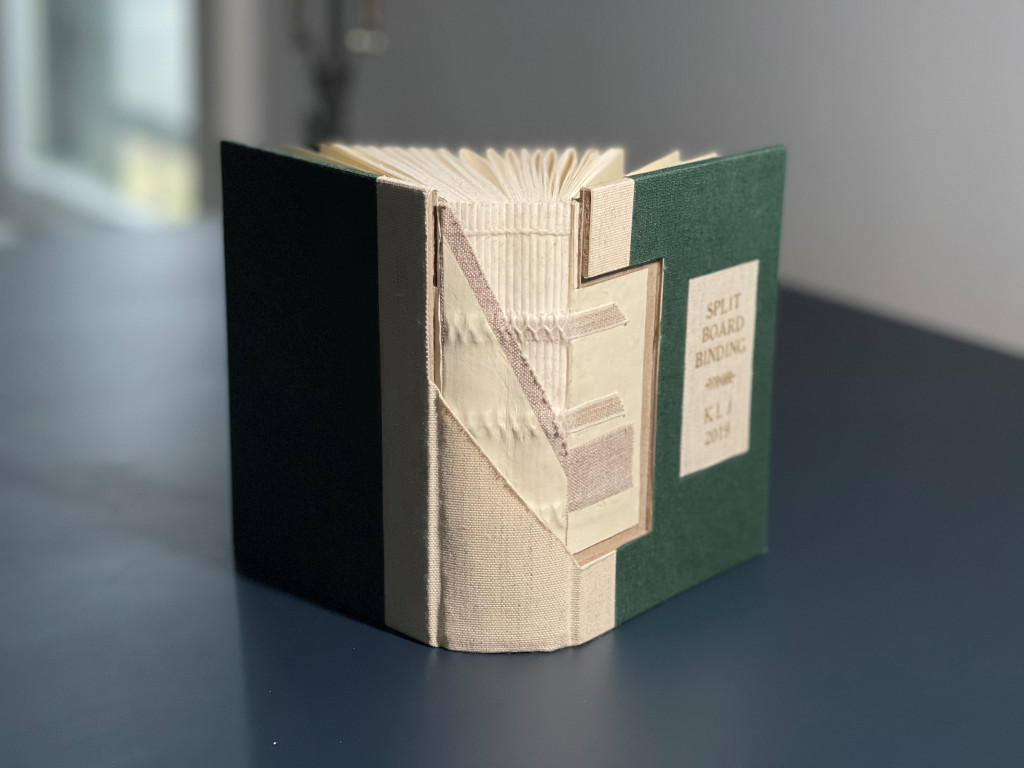
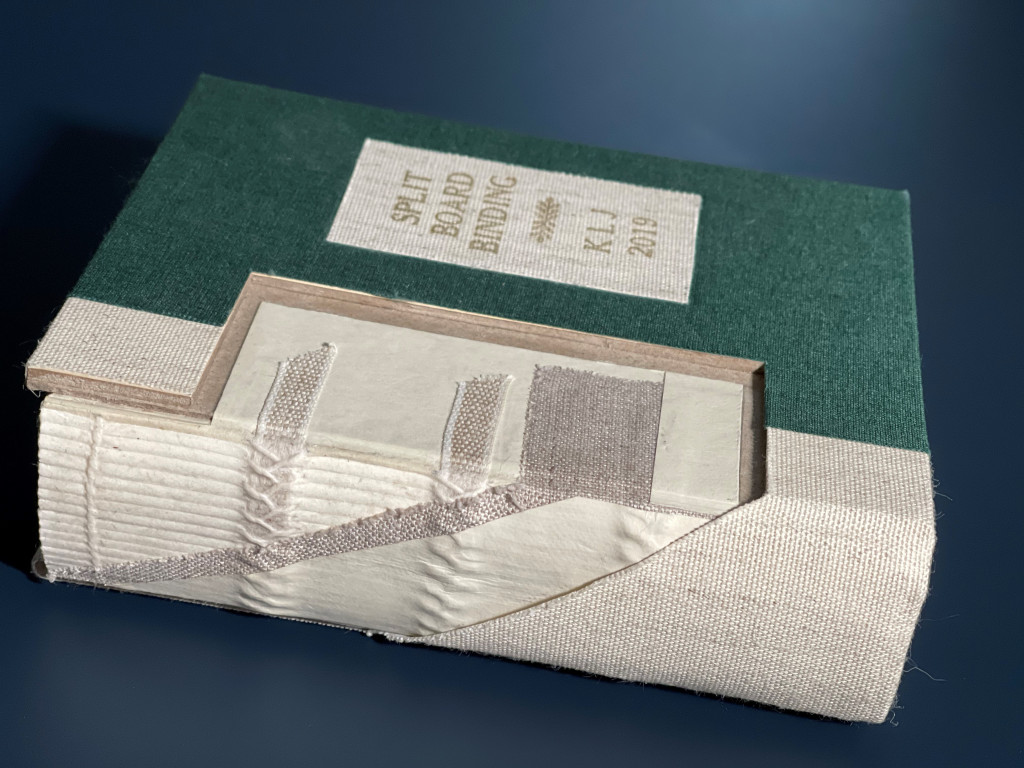
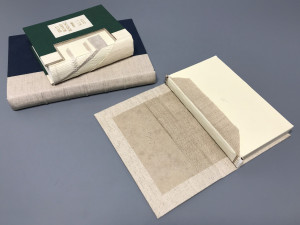
The Split Board Binding: Because of the large size of the book, a split board binding attachment was chosen to add strength to the board attachment. After the spine of the textblock was lined with Japanese tissue and wheat starch paste, creating a reversible layer, a secondary spine lining with flanges was created out of linen and attached with Jade 403 PVA. This linen is an integral part of the split board structure, as it, along with the first endsheet and sewing supports, will create the “laminated flange” that will be pasted in between the two boards (hence, split board). This flange and split board structure can be seen in the uppermost book model in the stack pictured above.
Now that the book has the structure and stability of a split board binding, we can pull from another binding structure to attach the raised supports…

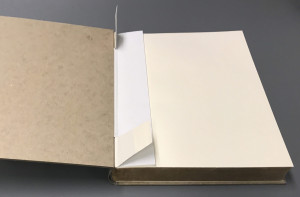
The “Baggy Back” Binding: A “baggy back” structure, also referred to as a conservation case, is what will allow the spine of the binding to be formed to the spine of the textblock, without being adhered directly to it. Another way to think about it is an alternative to a hollow tube structure. Sized linen was non-adhesively shaped over the spine of the textblock, and was pasted in between the split boards on top of the laminated flanges. The open book model in the image on the left shows what a typical “baggy back” structure looks prior to casing the textblock. Comparing that to how the linen can be integrated into the split board structure, we start to see our Frankenstein’s monster take shape.
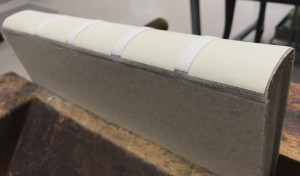
To prep for the final stages of rebinding, some elements were added to stay true to the original structure of the book. False raised bands were cut and shaped out of 4-ply mat board to mimic the shape and location of the original false raised bands. Hollow tube segments were also attached in between the false raised bands.

These spine elements will finally be covered up using inspiration from one final book structure…
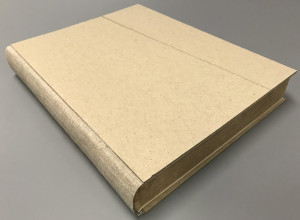
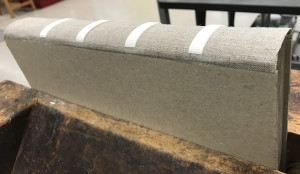
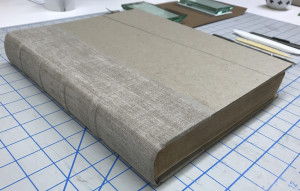
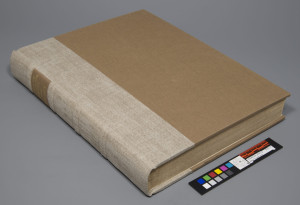
The Quarter Linen Binding: The book was decided to be finished as a quarter linen binding, instead of a more historical full leather or quarter leather binding for conservation purposes. The third model referenced, shown above, depicts the end result of this style of binding. In this structure the linen is stretched over the spine of the book to add the definition of the raised bands, or in the case of this treatment, false raised bands. The linen also allows for a strong attachment between the textblock and the boards. The hollow tubes laid between the bands allow for a better opening once the linen is in place.
During this treatment the linen was stretched over the spine of the book and onto the front and back boards, making sure the linen is securely and evenly applied around all of the spine elements. The book was then secured in a tying press to ensure definition of the bands.

Turn-ins were properly secured, and the linen was trimmed to the proper length on the boards. A brown book cloth was used to cover the remainder of the boards, the color chosen to mimic the color of the original leather used in the binding. The internal flanges from the split board binding structure (as seen in the right image above), along with the pastedowns, were applied to the inner boards. And no book is complete without a stamped title and a matching cloth covered clamshell.

Using three different book structures to plan this treatment does seem like a Frankenstein’s monster of a project, but the success of the treatment pays homage to the integration of bookbinding techniques we find in book structures throughout history.  And this book will certainly look like no monster when it is on display for tours at The Winkler Center.

Kasie Janssen (PLCH) – Senior Conservation Technician
Photographic Documentation by Kasie Janssen & Jessica Ebert

Book Arts – 3 simple structures

variation on a blizzard book

Crown book completed during workshop


Occasionally the lab is asked to teach simple book structures to students in other academic departments, usually to assist with the physical presentation of their final projects.  Here is the slideshow presentation that accompanied our on-site training for a photography class for the College of Design, Architecture, Art, and Planning on 7/15 and 7/16/2019.
Structures included an accordion book and crown book, with bonus instructions on a one-page wonder that can be made outside of class.  Click the link below to access the slideshow and Enjoy!
https://mailuc-my.sharepoint.com/:b:/g/personal/prochah_ucmail_uc_edu/EXm-2wHSzLtGqERd9T2UaSYBfDnS6ArPWSJdX-Ei4cQxCw?e=lhE9Rz


Fun with PhotoDoc (Edition 10)

Since it’s Tuesday, but you’re probably wishing it was Friday, I  thought I’d share some fun gifs of a 16th century German ophthalmolgy book from UC’s Archives & Rare Books Library that was recently treated and returned.  But first, let’s take a look at the treatment carried out by our conservator, Ashleigh Schieszer.

This full vellum binding suffered the same fate as many other stiff board vellum bindings:  significantly warped boards, a result of fluctuations in humidity.  The volume arrived in the lab with vellum losses along the head and tail of the spine.  There was also evidence of two ties at the fore edge that would have originally been used to keep the boards from warping, however, all but a small fragment of these ties were lost.  Ashleigh humidified and flattened the upper and lower boards and added new alum-tawed ties sympathetic to the placement and size of the original ties.  The binding was then housed in a cloth covered compression clamshell (created by our box-making magician, Chris) to help keep the boards from warping in the future.

Here you can see the fragment of the original tie with the new tie inserted below it.


Now onto the gifs.  This volume has several anatomical flap prints that explore the inner working of the eye.  Here are two of the flap prints, one which takes a look at the brain from above and another that examines the eye from the side:

We were in luck that these particular anatomical flap prints were in relatively good condition when they came to the lab.  However, that is usually not the case with these very fragile multi-component prints.  If you are interested in the learning more about the history, treatment and exhibition of these prints, check out Meg Brown’s article “Flip, Flap and Crack”.
Jessica Ebert [UCL] – Conservation Tech/Photographic Documentation Tech

Two minds think better than one

The lab received this book from the UC Classics Library in very poor condition. Ashleigh identified that the red cloth cover was not original to the textblock and overtime it had fallen off, exposing prior binding repairs.  Paper fragments along the spine indicated to her that the binding was once originally cased in a paper wrapper before being rebound in a variety of ways.  The book, originally sewn with only two sewing stations, had also been side stapled (!!).The staples were extremely corroded, staining the textblock and causing tears along the spine of the textblock pages, however; the original folded gatherings were mostly intact with original sewing stations revealed.

Since this book was important to the library and the librarians wanted the book to be handled by patrons and available to all, we needed to come up with a solution for a new cover that would be supportive of the textblock, flexible and could withstand handling from patrons. We also wanted to conserve the binding in a sympathetic structure to how the text was originally cased and sewn.
While talking with the Lab Conservator, Ashleigh, we explored various ideas for the new conservation cover, and ended up combining what we both had in mind. Clearly, our ideas had been influenced by our professional development opportunities that we attended in May; the AIC meeting Ashleigh attended and the weeklong workshop I attended on historical book structures with Karen Hanmer.
Inspired by the Smithsonian Archives AIC poster, Ashleigh suggested a combination of a sewn boards binding from Gary Frost and a limp vellum binding, adapting the structure of a non-adhesive paper case I learned with Karen Hanmer. Together we decided to explore a combination of all binding structures. Using the sewn boards binding for inspiration, we sewed on library boards as an extra set of endsheets, in addition to paper endsheets.  Conservation endbands were sewn on with a back bead, similar to a vellum binding, and were laced through the endsheets and cover, providing extra support and flexibility to the two sewing stations.
To test our idea, I created a small model (as we always do for new ideas). By creating a model I could explore our ideas without causing any harm to the original object.

Model: Sewn boards binding, limp vellum binding and non-adhesive paper case combination, with conservation endbands.
Textblock sewn through the original holes

The model structure was a success!  Therefore we proceeded to conserve the original book, starting with removing the staples. After Ashleigh removed the staples, I guarded several gatherings throughout the textblock with Japanese tissue and the textblock was sewn with a link stitch through the original sewing holes with an 18/3 linen thread.


In preparation for the new cover, a combination of sewn boards binding by Gary Frost, limp vellum binding and non-adhesive paper case by Karen Hanmer, two folios of 10 point board Bristol were sewn onto the textblock, one on each side, and lined on the inside with a sheet of 20 point board adhered with PVA.

Conservation endbands of a laminate of alum tawed leather and parchment were sewn, providing extra support for the cover attachment to the textblock.

Sewn boards onto the textblock with conservation endbands

The new cover was created with Cave Paper and adhered to the textblock by wrapping the paper case around the sewn boards and lacing the endbands through the cover.

And the final result…You can see, two minds are better than one…

Detail of the conservation endbands

Catarina Figueirinhas (UCL)  —- Senior Conservation Technician


Images from the Smithsonian Institution Archives poster at the 2018 AIC annual Conference:

A Little Box Magic

I just had to share this beauty of a box that was made by conservation technician, Chris Voynovich, to house the Public Library’s collection of Marguerite Lloyd’s diaries.  These ten diaries are part of the library’s Genealogy & Local History Department.  Marguerite Lloyd was the daughter of Major Harlan Page Lloyd, the former law partner of Alphonso Taft, the father of President William Howard Taft.
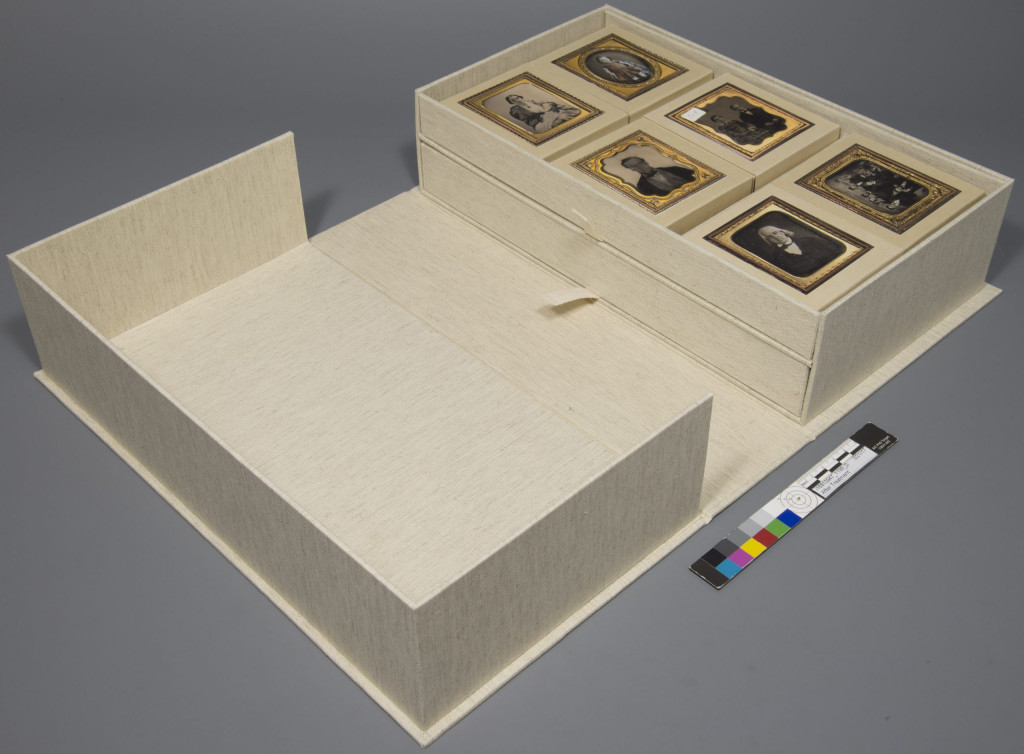
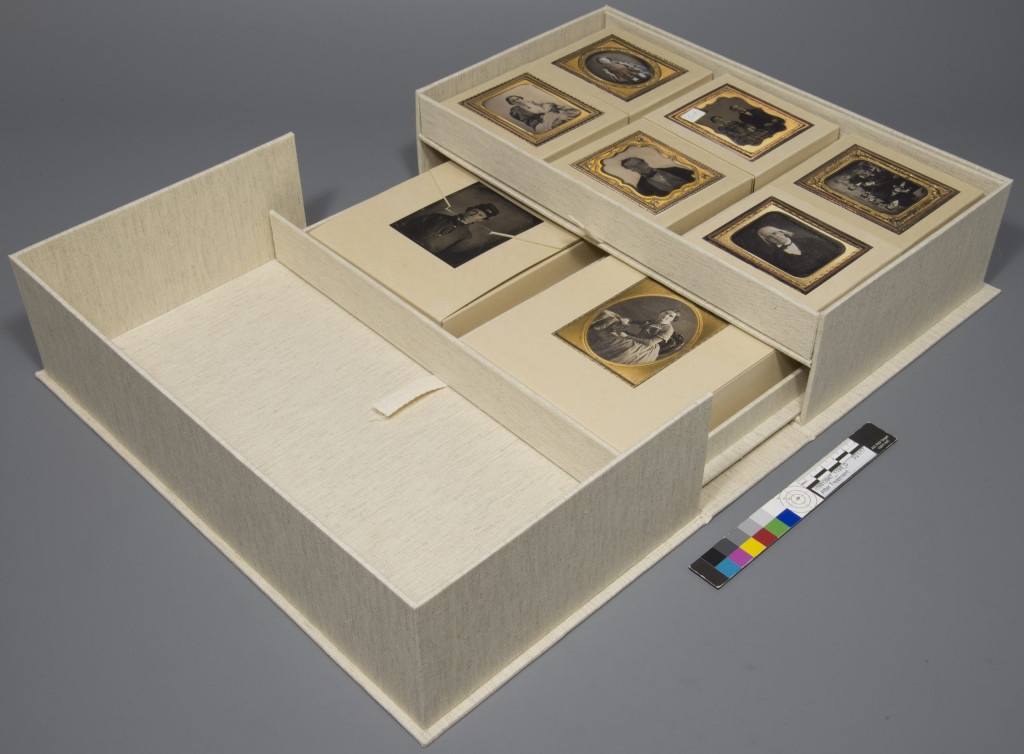
This is a gif (a graphics interchange format) showing a cloth covered clamshell box with two interior trays, each of which holds 5 diaries. The gif first shows the box being opened, then the top tray pulling out slightly, then the bottom tray pulling out further and then completely coming out.
Chris created this lovely cloth covered clamshell box with two removable trays that each house 5 diaries.  The compartments for the two smaller diaries have a custom fill to accommodate for their smaller size.  All the diaries have received a polyester jacket and the linen tabs under each volume make them easy to remove and handle.
Jessica Ebert (UCL) – Conservation Technician, Lead Photographic Documentation Tech

Two ways to compensate for loss. Textblock loss, that is.

Before the age of endless digital writing space, it’s easy to forget that blank paper was a commodity. Below are two fun examples of writing ledgers that remind me just how precious paper was.
While it’s possible that salacious writings were once written and removed from the back of these bindings… another theory is that the blank pages were no longer needed for their original intended purpose, and since they were going to waste… an opportunistic writer hastily cut and ripped out pages, seizing the goods for use elsewhere.

Half leather binding with cloth boards, Registry of the Leonard Hotel, 1886 – contains a page that features Grover Cleveland’s signature. Pages are lost from the back of the textblock. Fragments of pages remain sewn along the gutter where pages were removed.


So what does that mean for the ledgers left behind whose guts have been partially removed?
The covers no longer fit the pages inside.  The spines sag or pop off, and the covers extend beyond the fore edge of the book’s textblock – making both handling and long-term preservation problematic.

Registry of the Leonard Hotel, 1886, view of the head


Registry of the Leonard Hotel, 1886, view of fore edge and head


In order to relieve stress, conservation treatment can be undertaken to compensate for loss.  For extremely important bindings, treatment may entail replacing lost pages with new paper, resewing the sheets into the binding.
However, in the following two examples below, the textblocks were otherwise in fairly good condition, so the Lab explored a lower cost route by inserting foam spacers.
The Leonard Hotel registry (which contains Grover Cleveland’s signature from 1885!) was treated overall to reback and consolidate deteriorated leather.  A closed cell polyethylene foam was loosely inserted as a placeholder for the missing text. In this case, the foam can be removed at any time and the jagged edges of the page fragments can be observed.  Simple, yet effective!

After treatment, foam is loosely inserted in the back of the binding to help the textblock fit inside its covers.

Before treatment images are displayed on the left, after treatment images on the right:


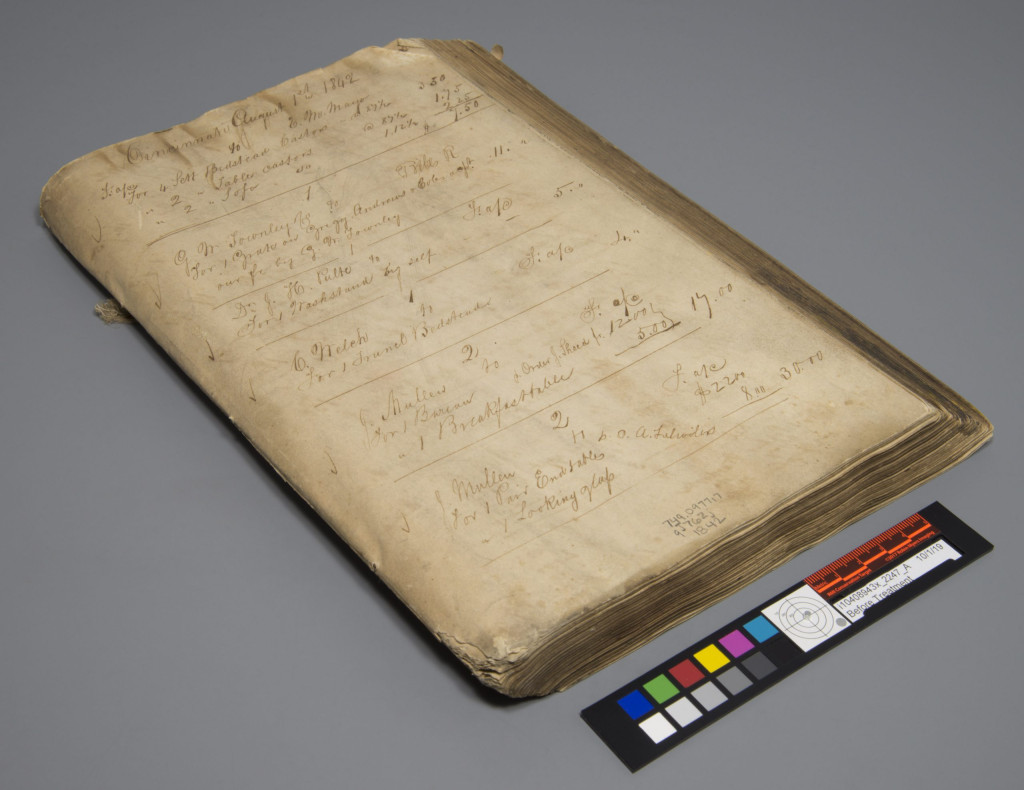
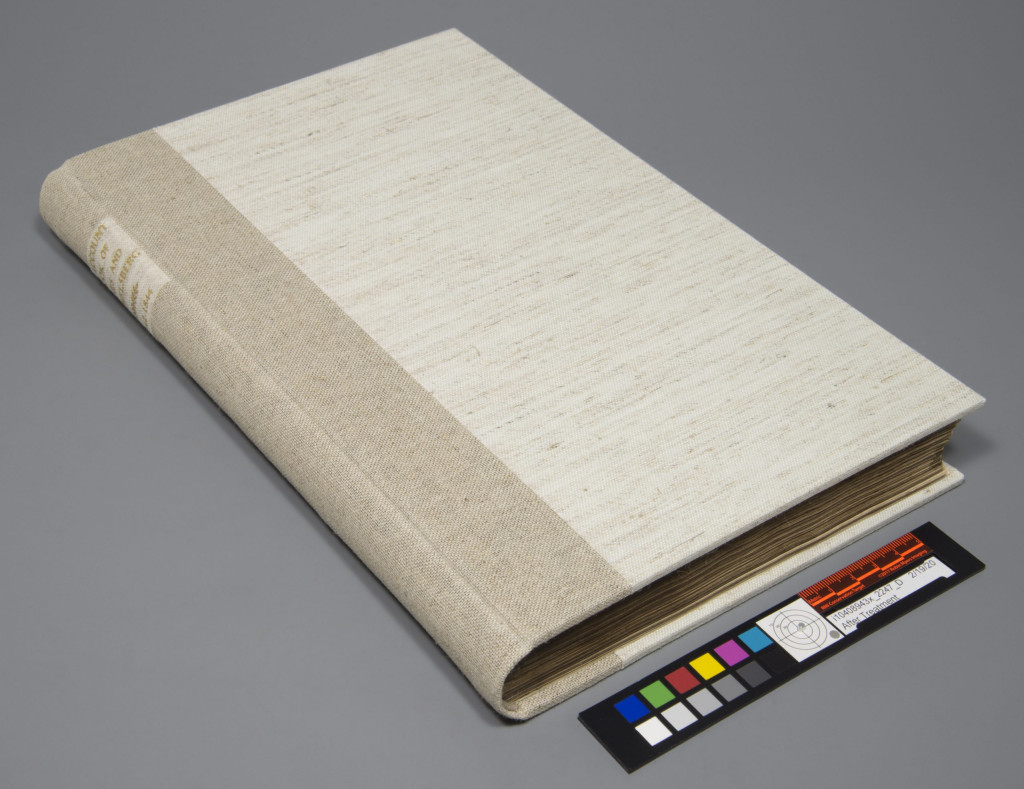
A similar treatment taken a step further builds upon the treatment solution above.  The following ledger contains early Cincinnati baptismal, marriage, and funeral records that predate city records, dating to 1838-1885.  A large section of lost paper in the back of the binding has caused the stiff spine to pop off.  The loose covers no longer support the textblock pages.

Volume 2 of a collection of “Third German Protestant Church of Cincinnati Records”. Full suede leather springback binding with stiff board spine. Sewn on cloth/linen tape supports. Receiving stabilization treatment in preparation for future digitization.  A large section of the textblock is lost in the back of the binding.


Treatment was conducted by our senior conservation technician, Catarina Figueirinhas, to stabilize the ledger for digitization out of house, as well as long-term storage.  Rather than insert foam loosely, this book was in need of a rigid support that would not be in danger of becoming lost.  Therefore, foam was sewn into the back of the binding as if it was a gathering.  This was achieved by wrapping the foam in an archival e-flute cardboard.  Essentially, the blue cardboard was folded into a “u-shape” with sharp corners and treated as an outer folio.  The corrugated cardboard was then sewn through each fold onto the original sewing supports, as though the cardboard was two gatherings.  The foam was adhered inside the cardboard with adhesive.

Volume 2 of a collection of “Third German Protestant Church of Cincinnati Records” after treatment.


Because this condition issue is unique – it’s part of the object’s history, yet presents us with preservation challenges – treatment solutions are not one-size-fits-all.  Each book calls for solutions based on how it will be used and interpreted.
In these cases, the foam gatherings, both sewn and loose, functioned well in the back of the bindings while also retaining the history of use. The constructed gatherings helped to improve handling and support the bindings in a cost effective and reversible way (with differing levels of reversibility).  I imagine this will not be the last book to come across my bench with chunks of missing text; I am excited to be armed with these simple solutions.
Ashleigh Ferguson Schieszer (PLCH) —- Book and Paper Conservator
Photographic Documentation by Jessica Ebert & Ashleigh Schieszer