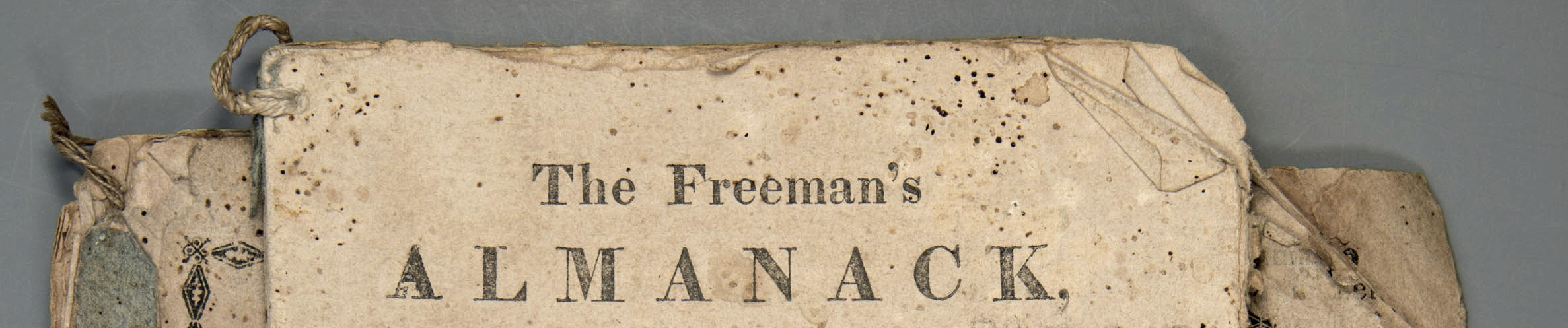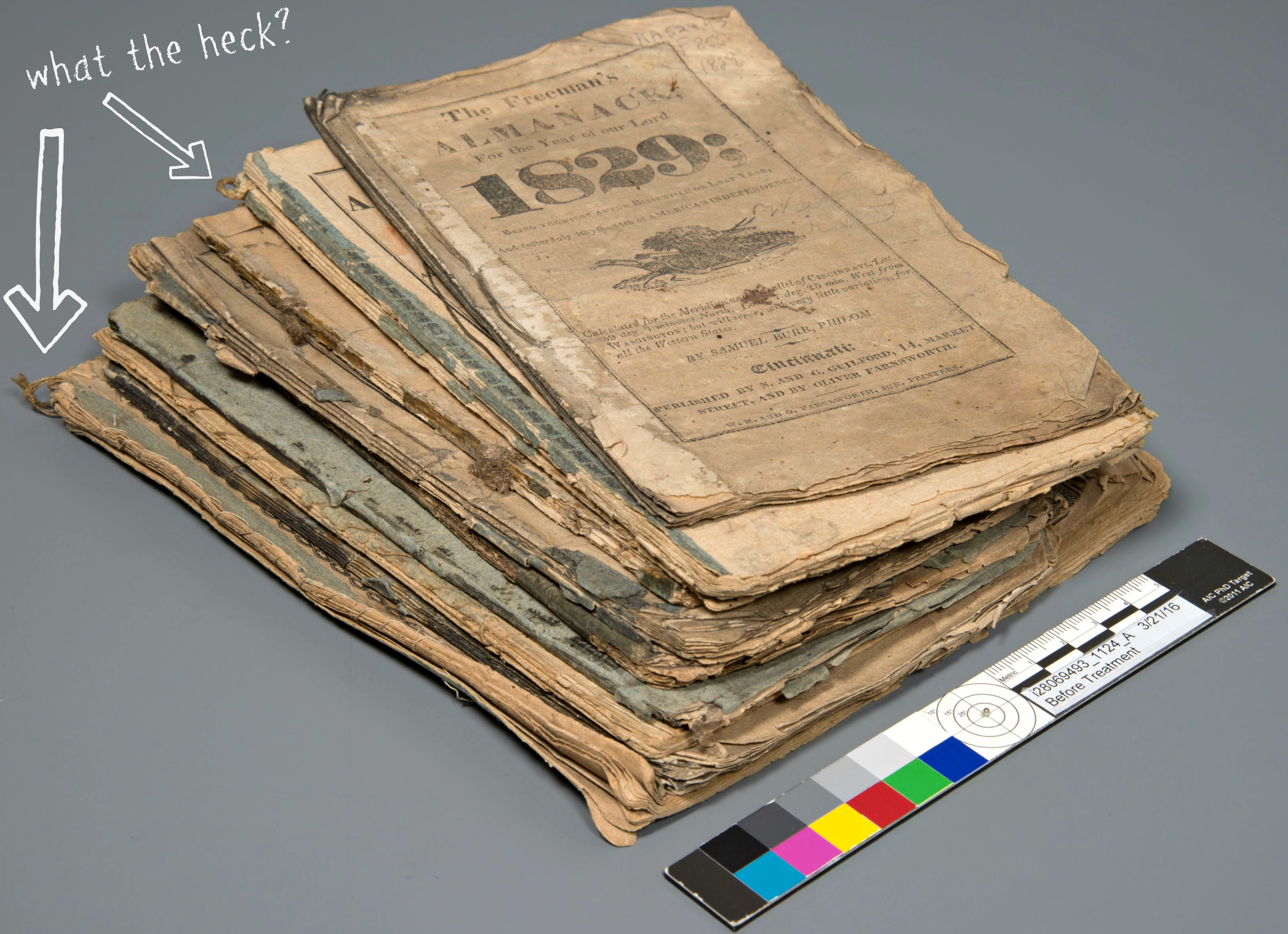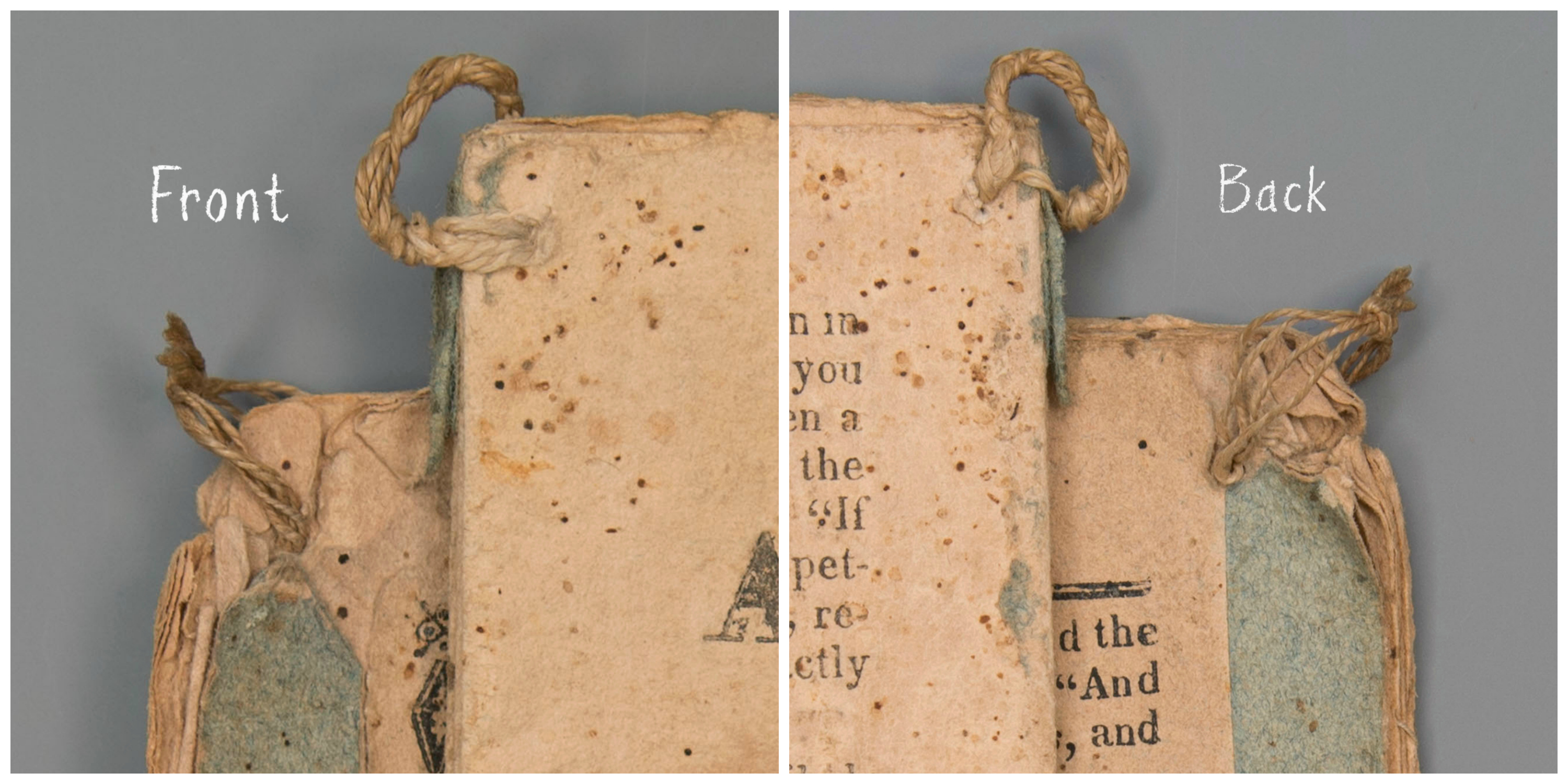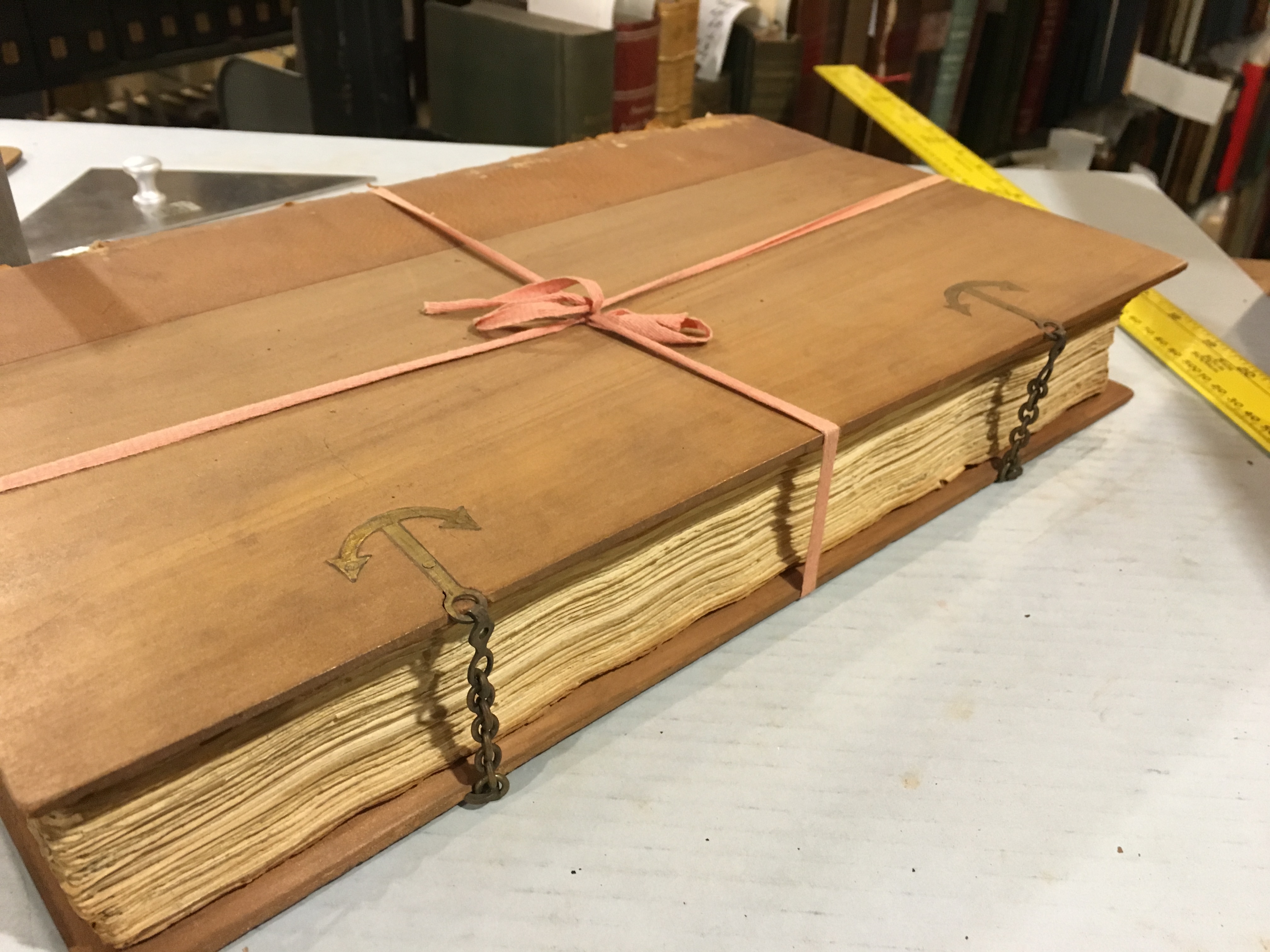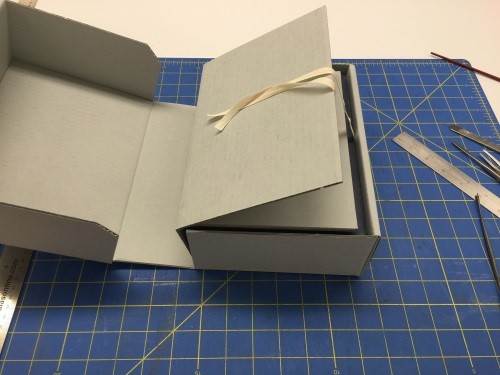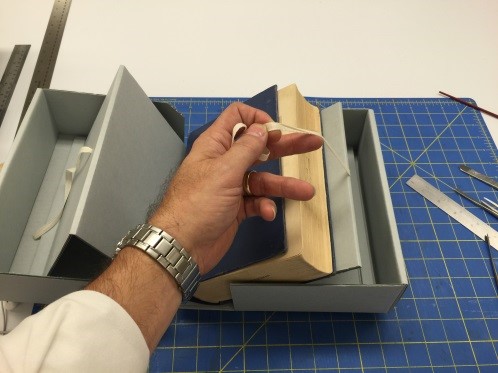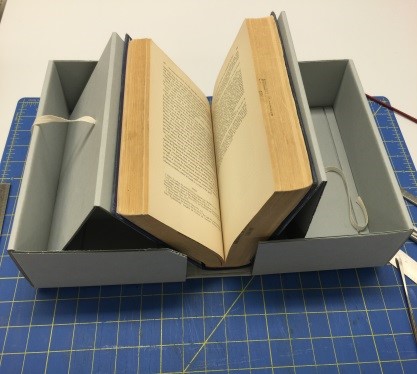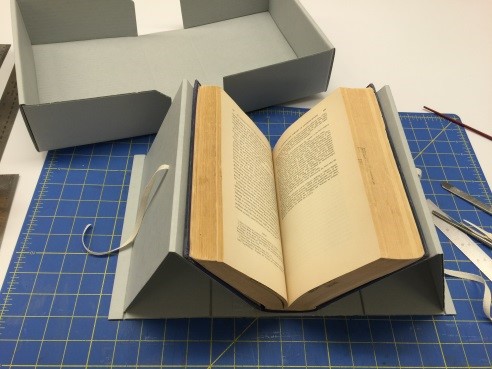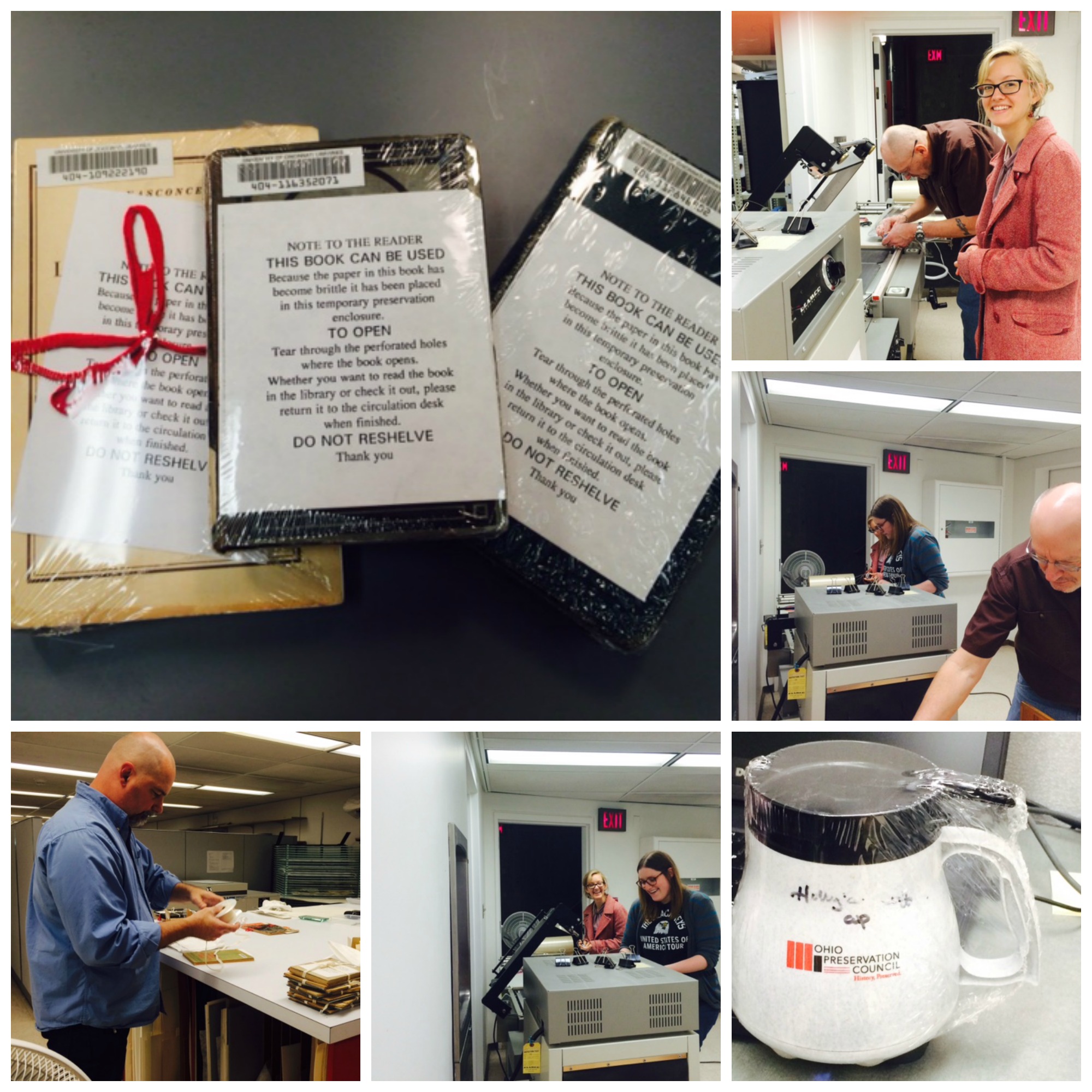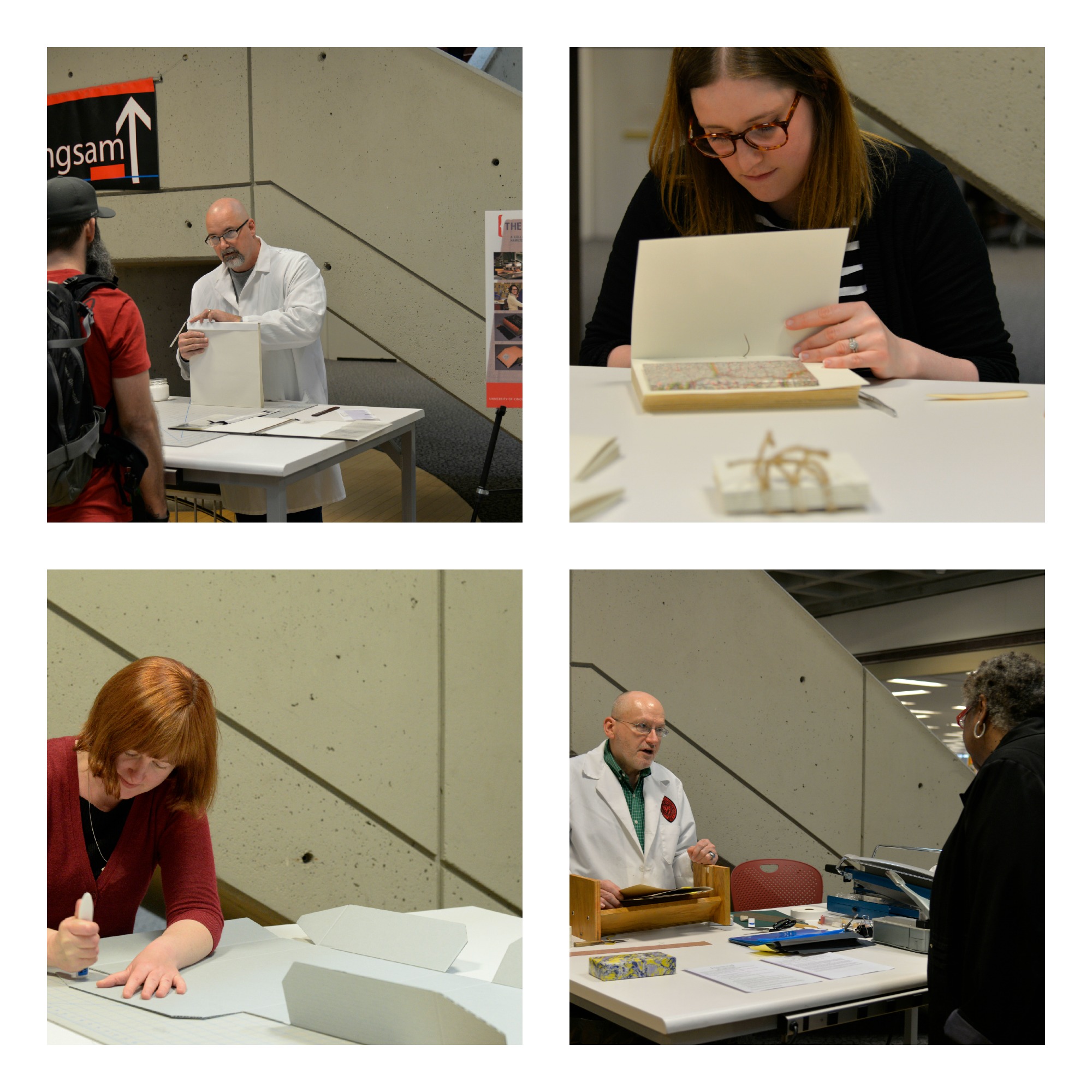
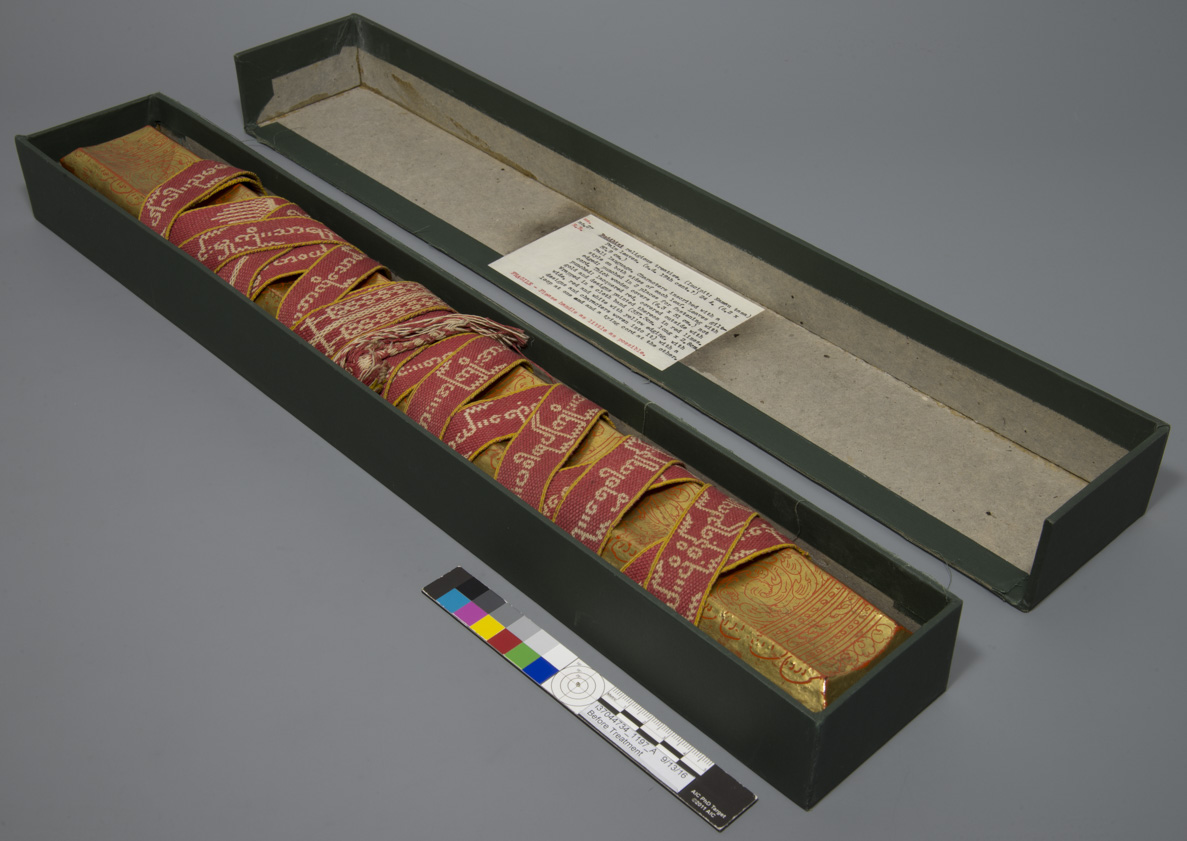
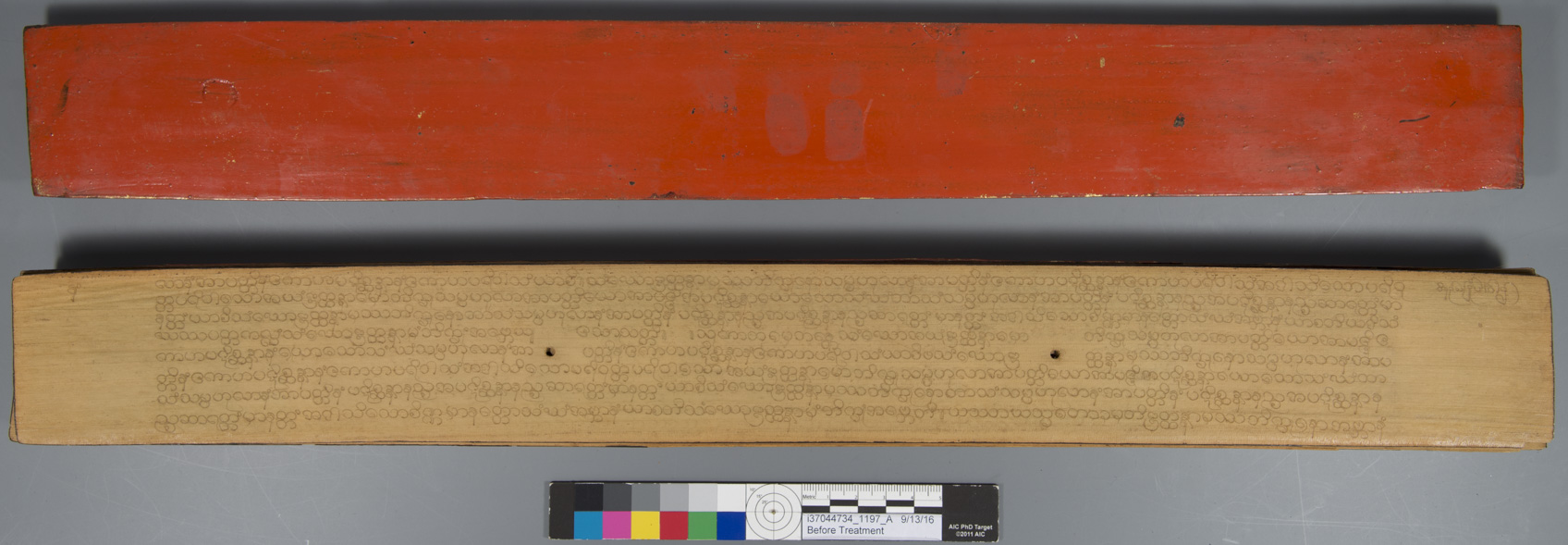
 In August of this year, the Lab received a Palm leaf book from Archives and Rare Books library during one of our usual monthly meetings. This item was brought to the Lab to receive a new enclosure for a better long-term preservation storage and easier access. Along with a new enclosure, the Lab was asked to create two surrogates of one of the original Palm Leaves for classroom use. Under the direction of Ashleigh Schieszer, lab conservator, technician Chris Voynovich constructed the housing working closely with Catarina Figuierinhas who created the surrogate leaves.
Creating Surrogates
In order to create an accurate surrogate of one of the Palm leaves, the Palm leaf book was taken to the University of Cincinnati Digitization Lab to be photographed with a PhaseOne Reprographic System. This system includes 60 MP PhaseOne digital back, DT RCam with electronic shutter, Schneider 72 mm lens, and a motorized copy stand. At the digitization Lab, one of the Palm leaves was digitized, recto and verso. The collaboration between labs allows the Preservation Lab to obtain a great quality image of a Palm leaf to print a high quality surrogate.
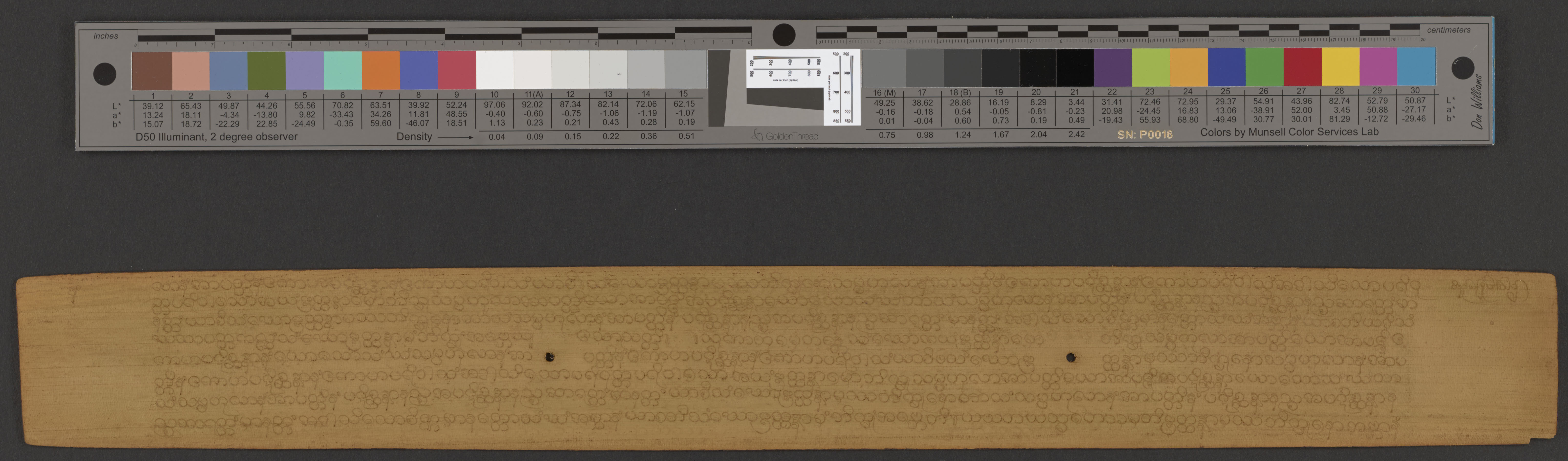
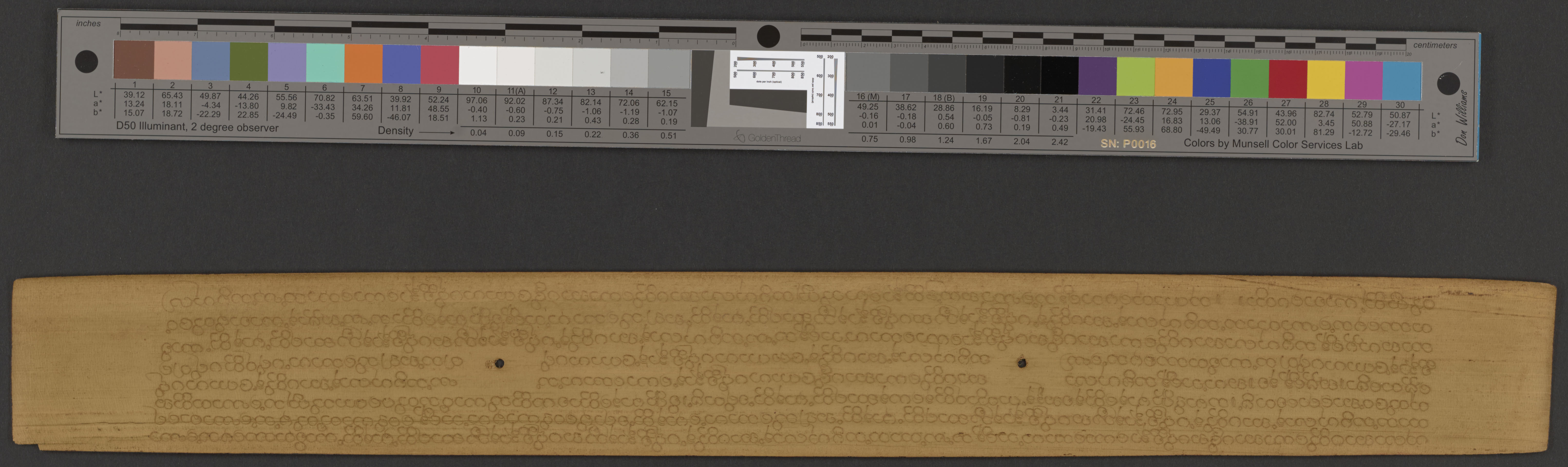
Once the Preservation Lab received an image with enough quality to work with, the process of creating a surrogate started.
In order to create a surrogate, it is important to have in mind several different aspects such as the purpose of the surrogate and the physical characteristics of the original object (texture, thickness and colors). When thinking about the purpose of the surrogate one has to answer questions such as: Is the surrogate going to be displayed or handled? If so, how? Behind a glass case? Will it need a presentation enclosure?
In this case, the purpose was for the librarian to be able to show a “real” palm leaf page without having to actually handle the original fragile leaves. Also, having a surrogate of a palm leaf would allow patrons and scholars to handle a replica of an original object without having to unwrap and open the book.
Our goal was to create two surrogates; one in color, true to the original Palm leaf page; and 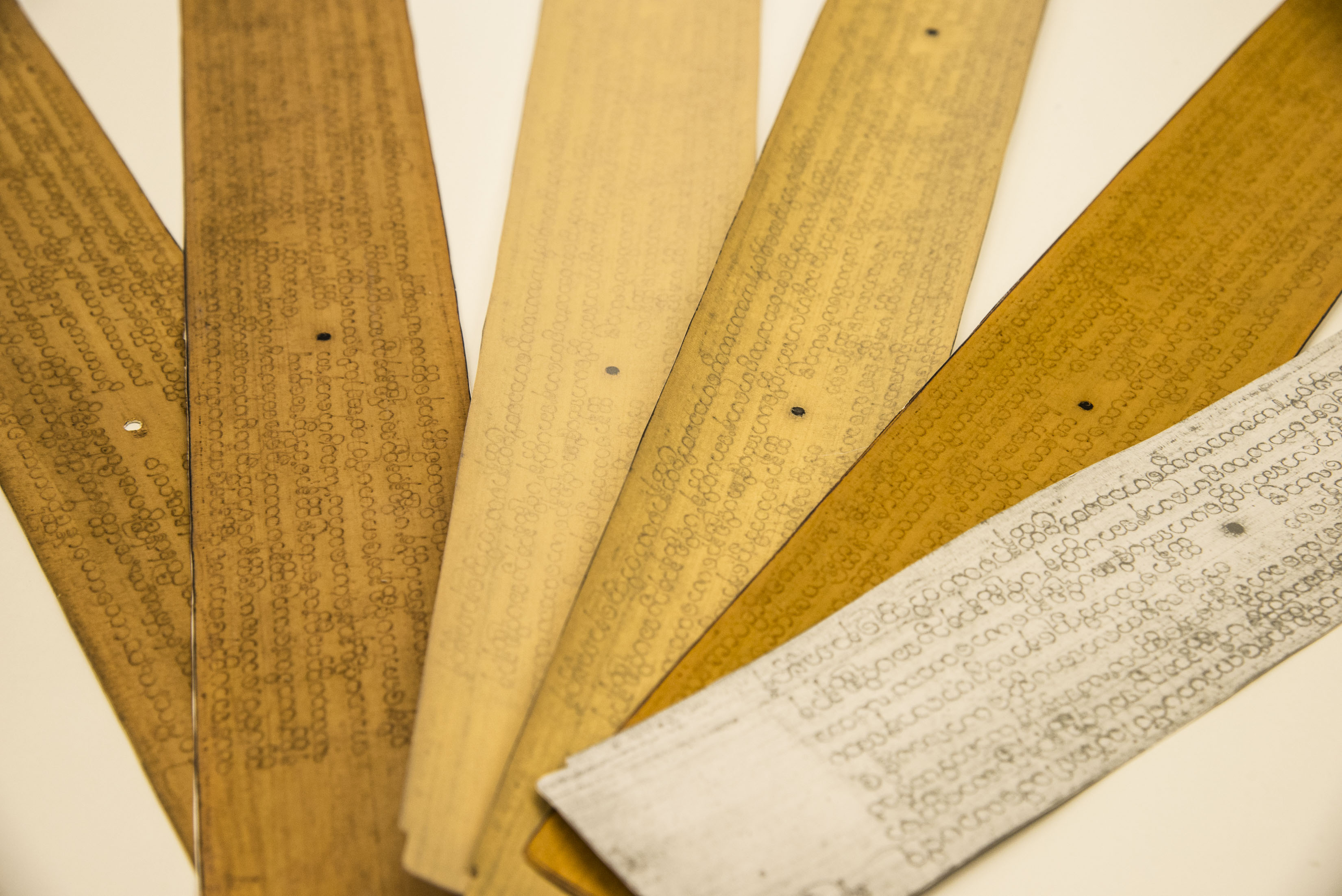 another black and white, allowing the writing to be read easier.
Since we wanted to create a surrogate as identical as possible to the original, it was necessary to study the original object’s texture and thickness, as well as consider specific details such as gilt edges or punched holes.
The first step was to select several papers to test for printing. Selected papers had a similar texture and thickness to the original Palm Leaf and/or were selected because they contained a handy ICC profile.
Once the papers were chosen for texture, thickness and color profiling, the image obtained from the Digitization Lab was enhanced in Adobe Photoshop CC 2015 and several surrogate samples were printed using a P7000 Epson Printer pigmented ink jet printer.
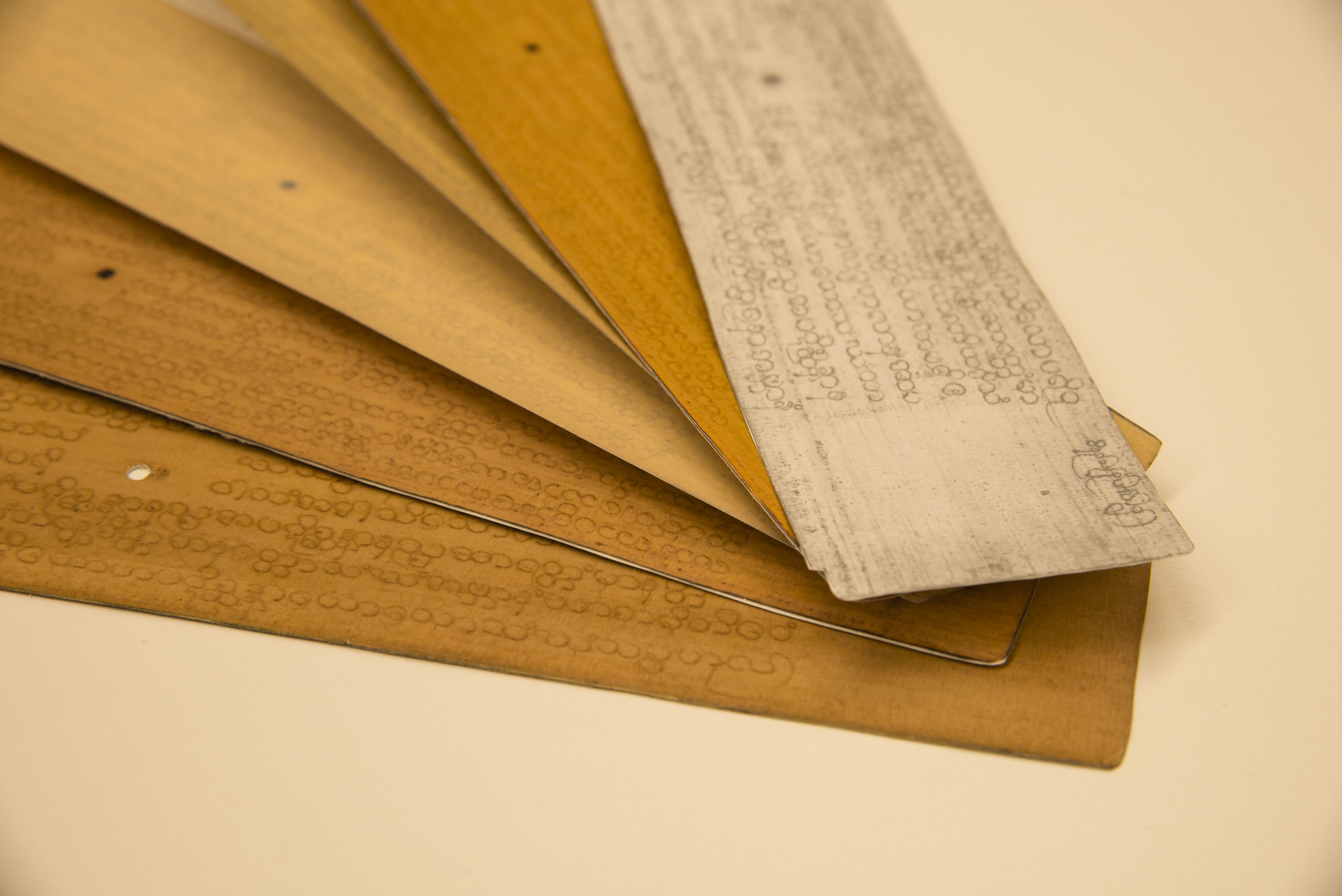
Middle holes were punched with a Japanese hole punch.
Surprisingly, papers containing ICC profiles did not necessarily produce a more accurate color representation.
Finally, after several trials and errors, a different paper was chosen for each surrogate. The colored surrogate was printed on an archival UltraSmooth Fine Art Epson paper. The black and white surrogate was printed on an acid-free Curtis Brightwater Artesian white smooth paper.
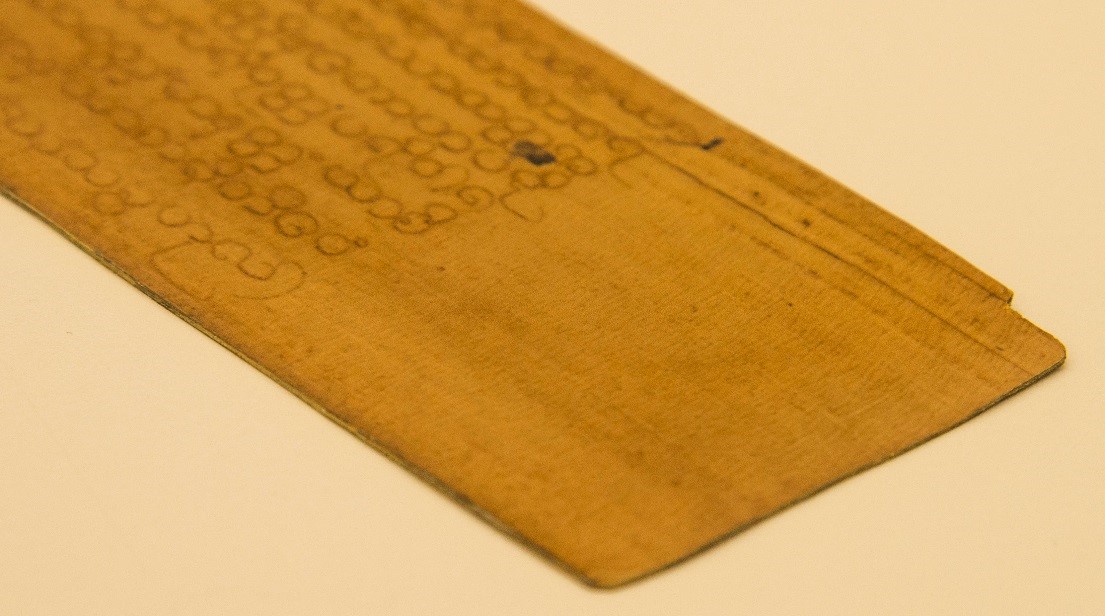
Edges of the colored surrogate were pained with iridescent gold acrylic paint.
Once the surrogates were printed and cut to the exact dimensions, the final finishing touches were made. On both surrogates, the middle holes were punctured in the same fashion as the original palm leaf. For the colored surrogate, the edges were colored with an iridescent gold Golden High flow Acrylic. Once the surrogates were complete, the process of constructing an enclosure for both the surrogates and the original object began.
Constructing a new enclosure
I’ve heard the joy should not be in the finished product but in the process. I have to say I agree with that theory. I love receiving a challenge like this and pounding out a solution. This particular enclosure had many facets which turned out to be exciting as well as rewarding to problem solve together with lab staff.
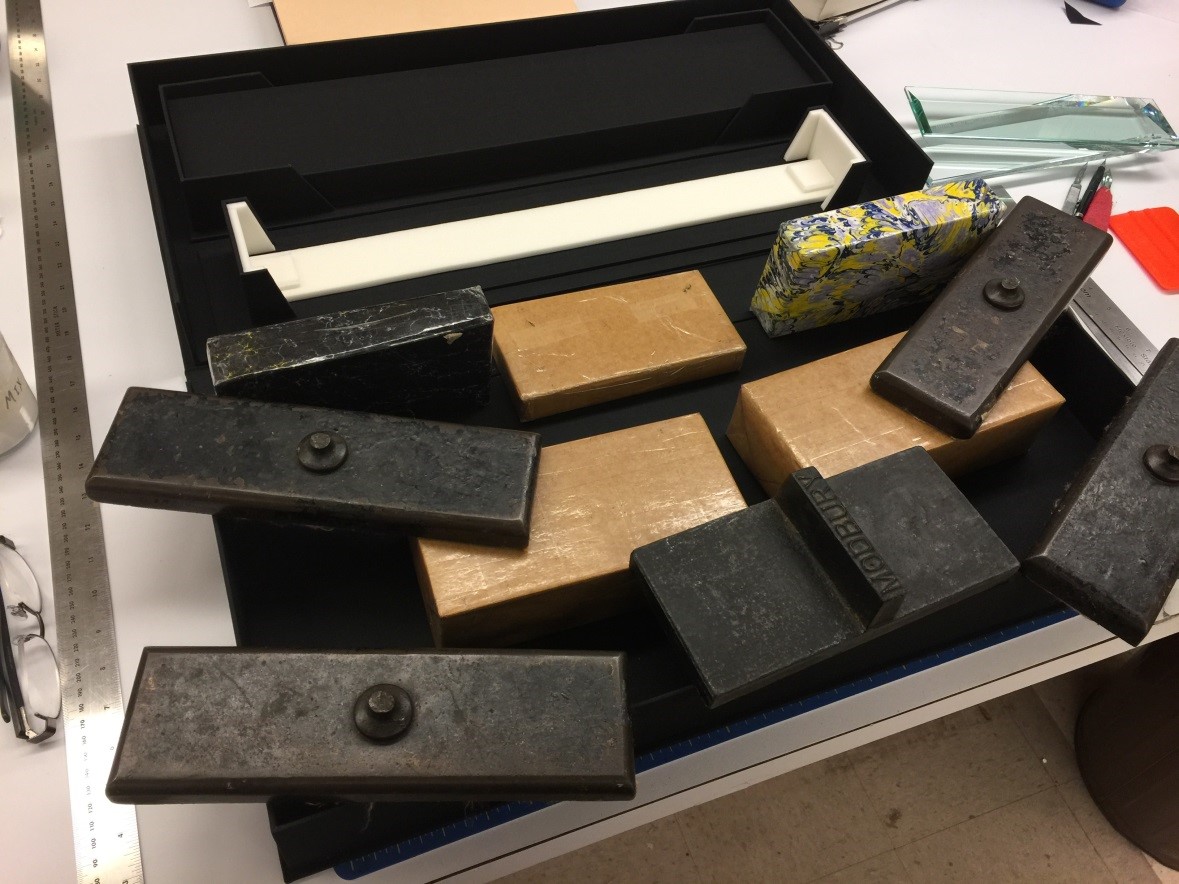
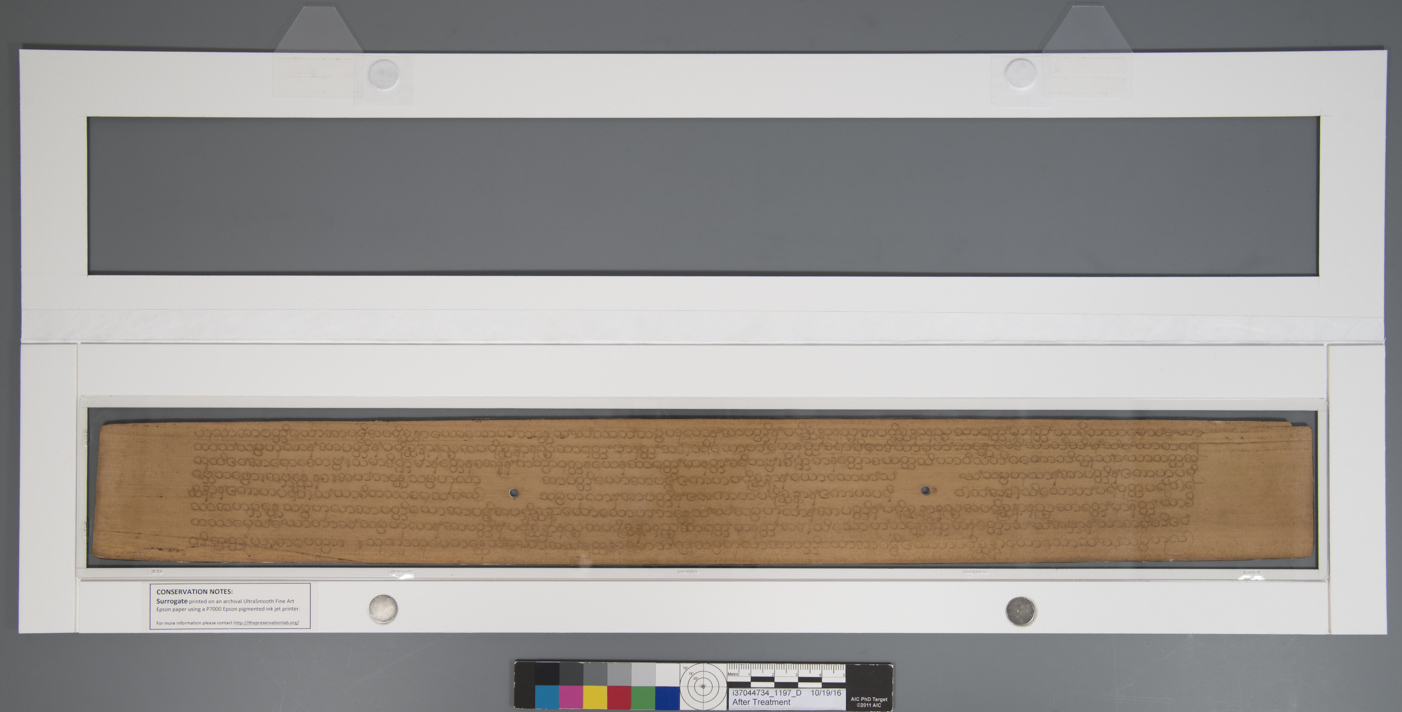
Using a structure engineered by our lab conservator, first, I created a double-sided sink mat with two open windows to display both sides of the two surrogates. Rare earth magnets were introduced as fasteners to hold the objects secure inside each mat. The surrogates are supported and viewable through a Vivak and polyester transparent L-sleeve, which is removable. The Vivak and polyester sleeve was welded together on the lab’s Minter ultrasonic welder.
Volara supports were constructed to cradle the book so the gilding would not touch any abrasive surfaces, and so there would be a support for the cover once opened. The surrogates help provide information to patrons without causing wear and tear on the fragile book through handling. Originally, we considered storing the surrogates in a tray below or above the book to conserve shelf space, however by arranging the mats next to the object, they could immediately be on display when the enclosure is opened. I am pleased with the outcome. It is now possible to enjoy all the parts of this amazing work within the enclosure itself while minimizing the opportunity for damage, as well as providing a “wow!” factor.
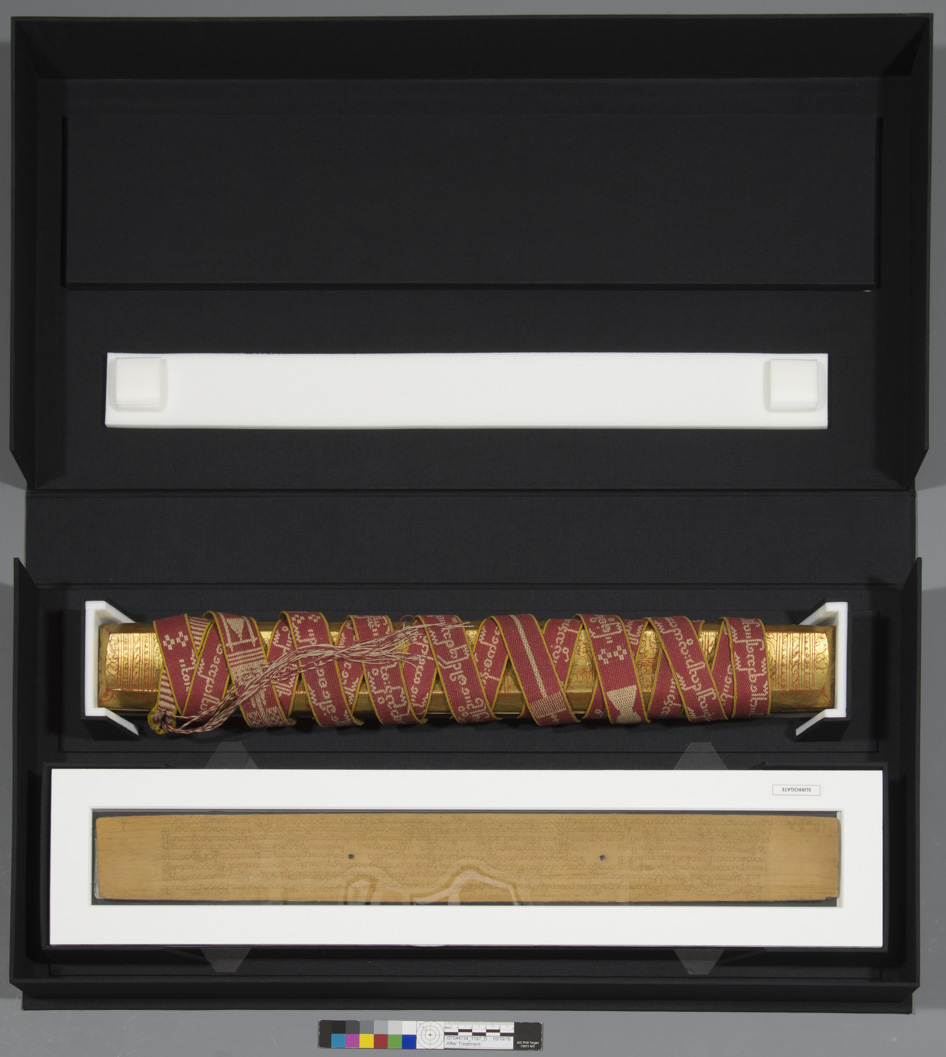
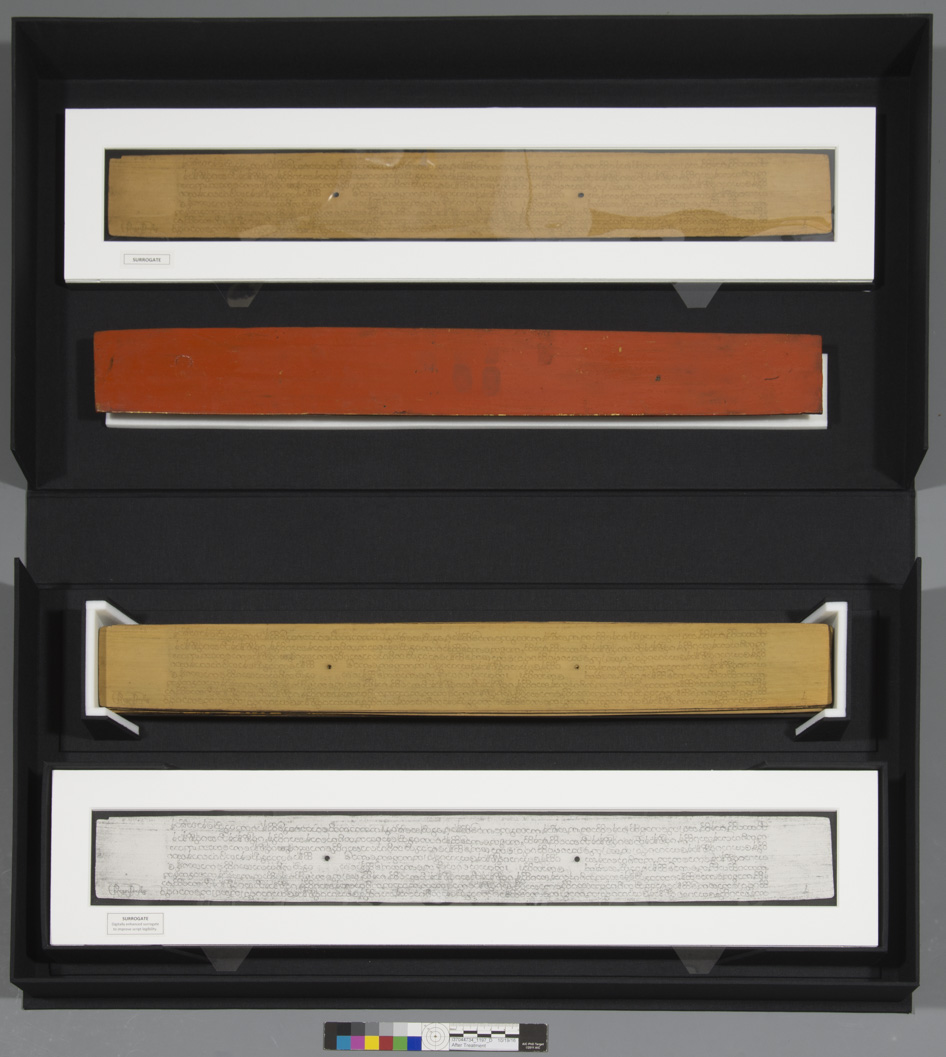
Final enclosure with the original palm leaf book and surrogates.
Catarina Figueirinhas (UCL) — Senior Conservation Technician
Ashleigh Schieszer (PLCH) — Book and Paper Conservator
Chris Voynovich (PLCH) — Conservation Technician
Photo credit: Jessica Ebert (UCL) — Conservation Technician