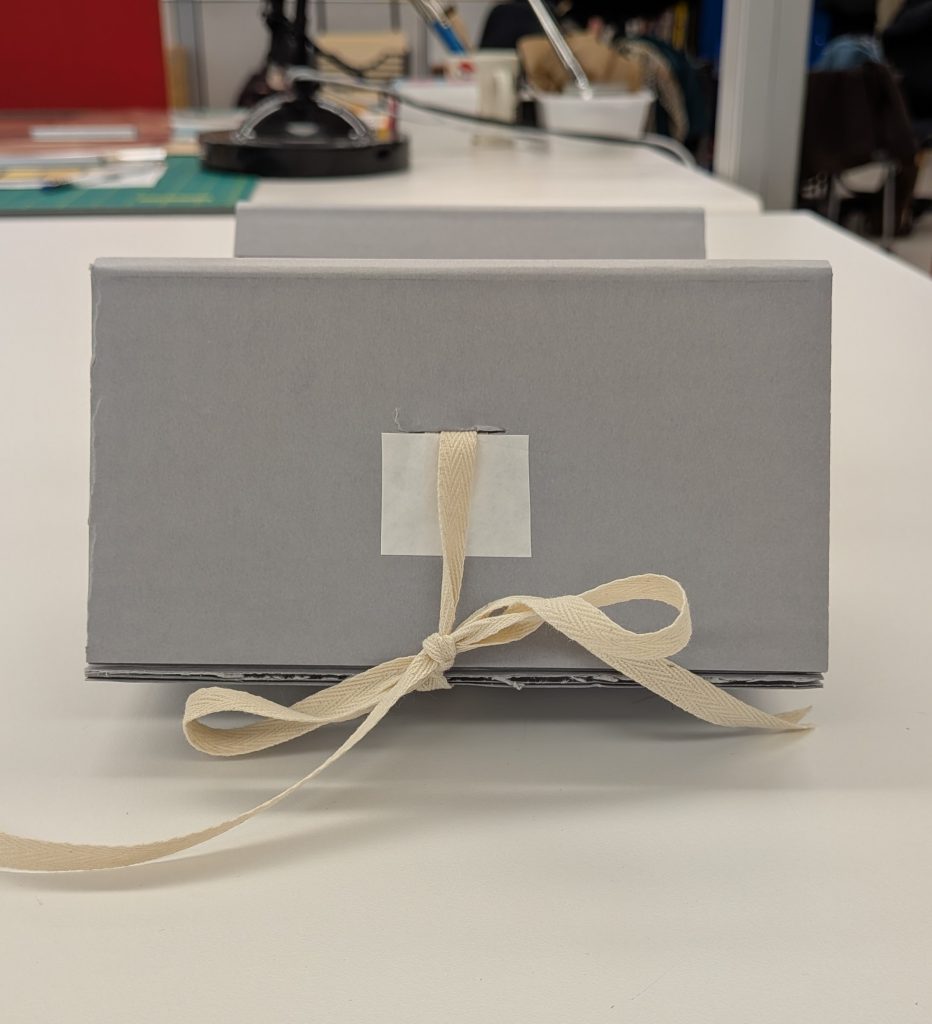
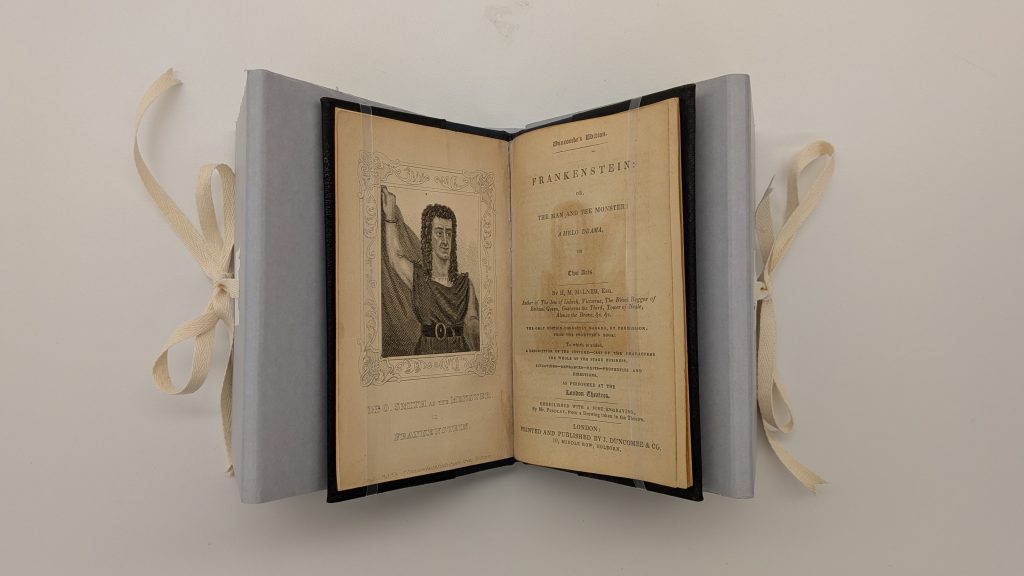
When a copy of Frankenstein: the Man and the Monster came into the lab from CHPL, Catarina asked me to make an enclosure for it – easy enough. What I didn’t imagine was how tricky a book this little can be. This book measured around 6 inches tall by 4 inches wide and maybe a quarter of an inch thick – small, thin, and not very heavy at all.
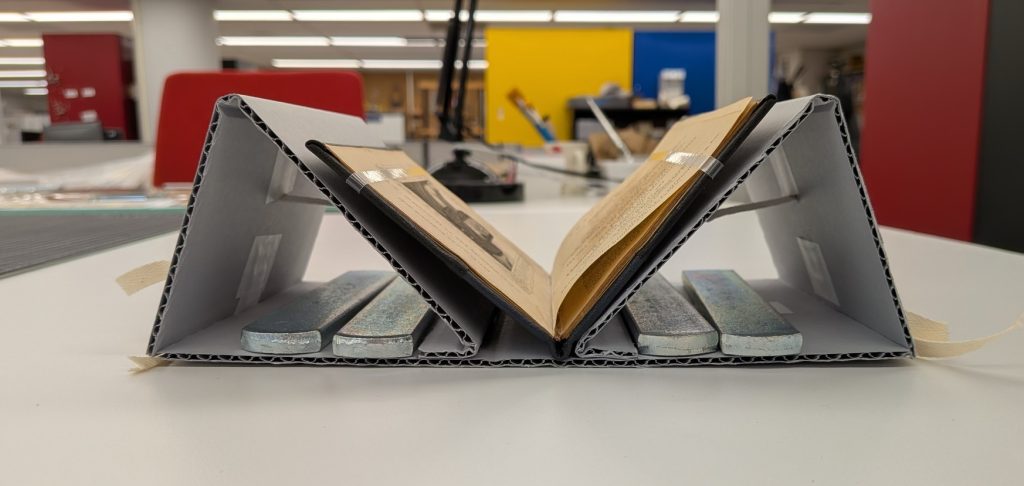
The problem wasn’t the box, but the integrated cradle, which is essentially a few pieces of corrugated board adhered together to create a rest so the book can open with less stress on the spine. With a book as small and lightweight as this one, the pages and cover weren’t heavy enough to weigh down the arms of the cradle, therefore I needed to figure out a way to keep the arms of the cradle down so the book could open fully.
To achieve this, I used linen tapes to hold the two halves of the arms together so they stayed firmly down without needing the book to weigh them. The tape on the outer part of the arm is tied into a bow with another piece of tape that is attached to the base of the cradle.
Furthermore, to keep the cradle from opening too far, I used more linen tapes on the interior of the arms to hold the arms at the exact width I wanted them from the spine of the book. This helped the cradle keep it’s shape, and created tension for the ties.
For the past six months, Jessica and Catarina have been working with the DAAP Library on housing their Teaching art collection, including prior acquisition and newly acquired items. This collection consists of different art prints on paper, print plates and manuscript parchment leaves in need of long-term housing. In addition to housing, this collection is used for teaching in a classroom setting and for exhibition.
Most of the collection only requires simple matting systems, but some require more intricate matting systems such as the copper plate along with its print, a project mentioned in a previous blog post entitled How many magnets is too many magnets!?.
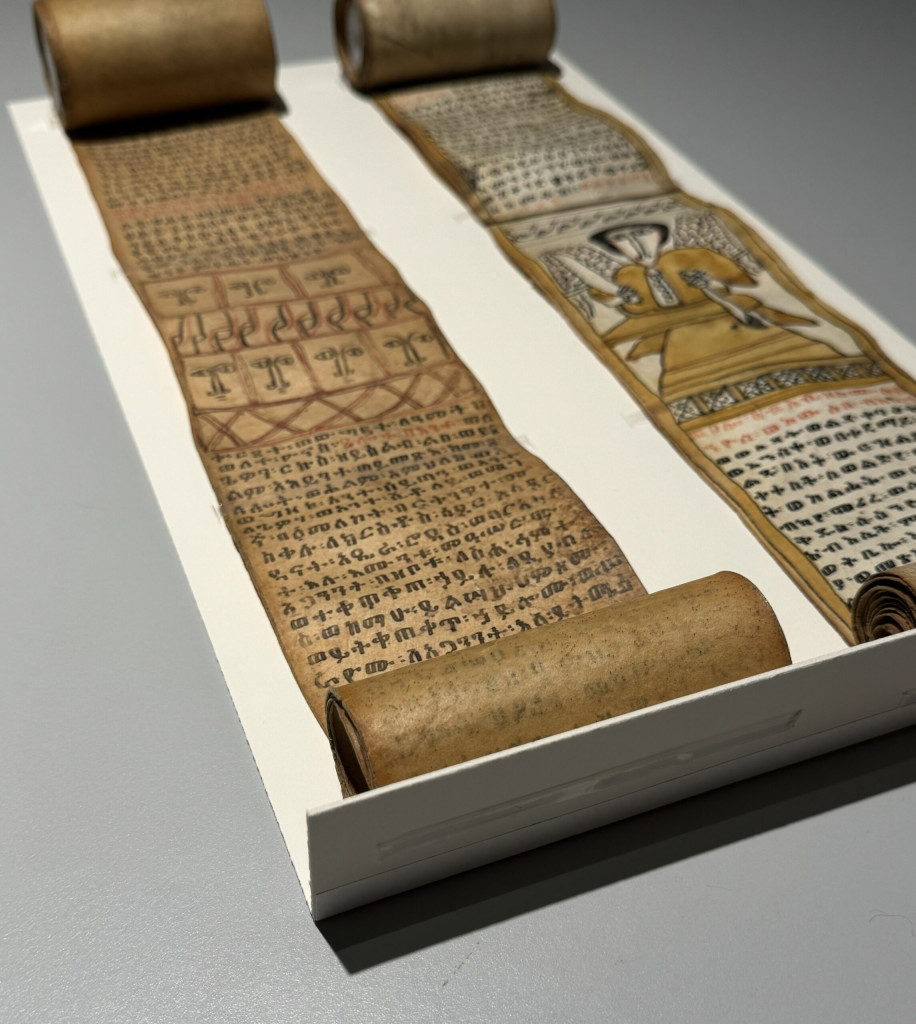
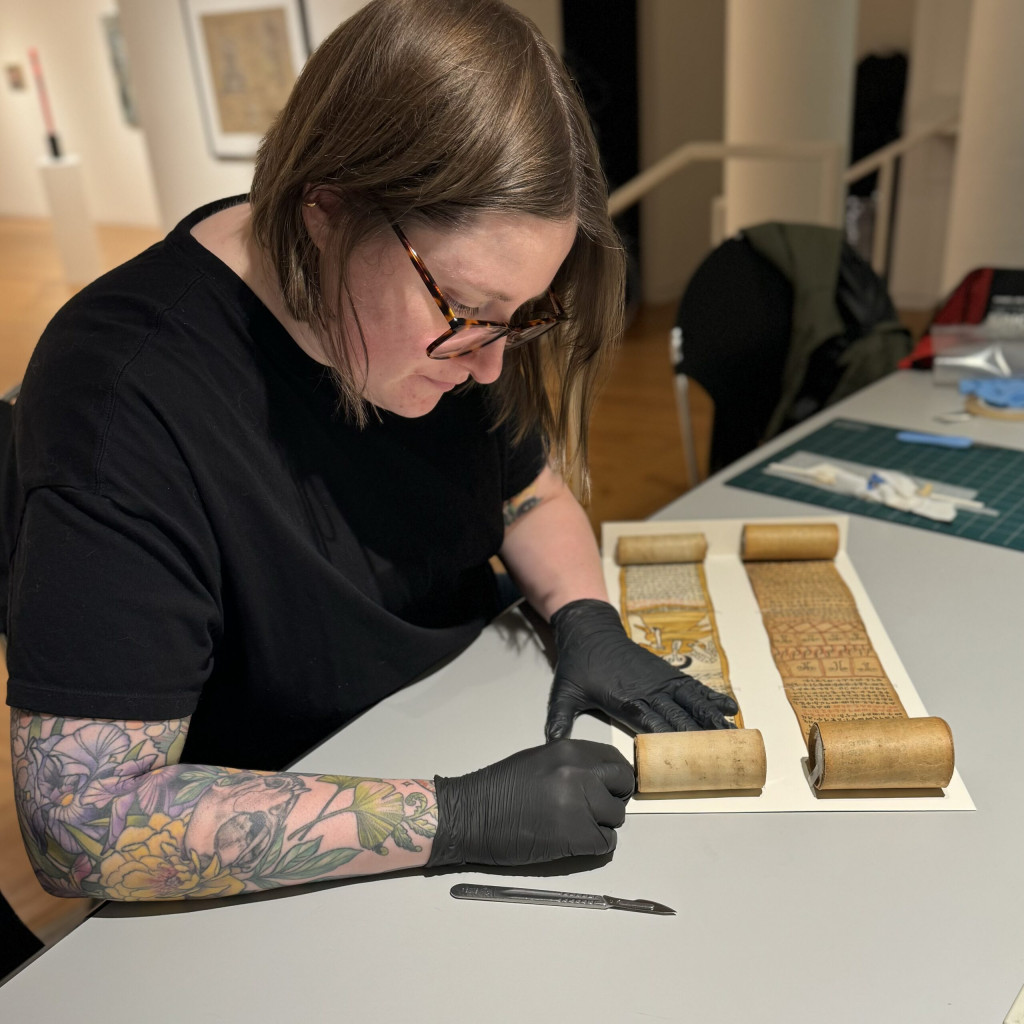
As some of the items of this collection were being prepared to go on exhibit, we had the opportunity to create mounts for other items, such as two parchment scrolls that were included in the exhibit. This was a fun project to work on, as it required us to create a support that would secure both scrolls, while providing an elegant solution for display.
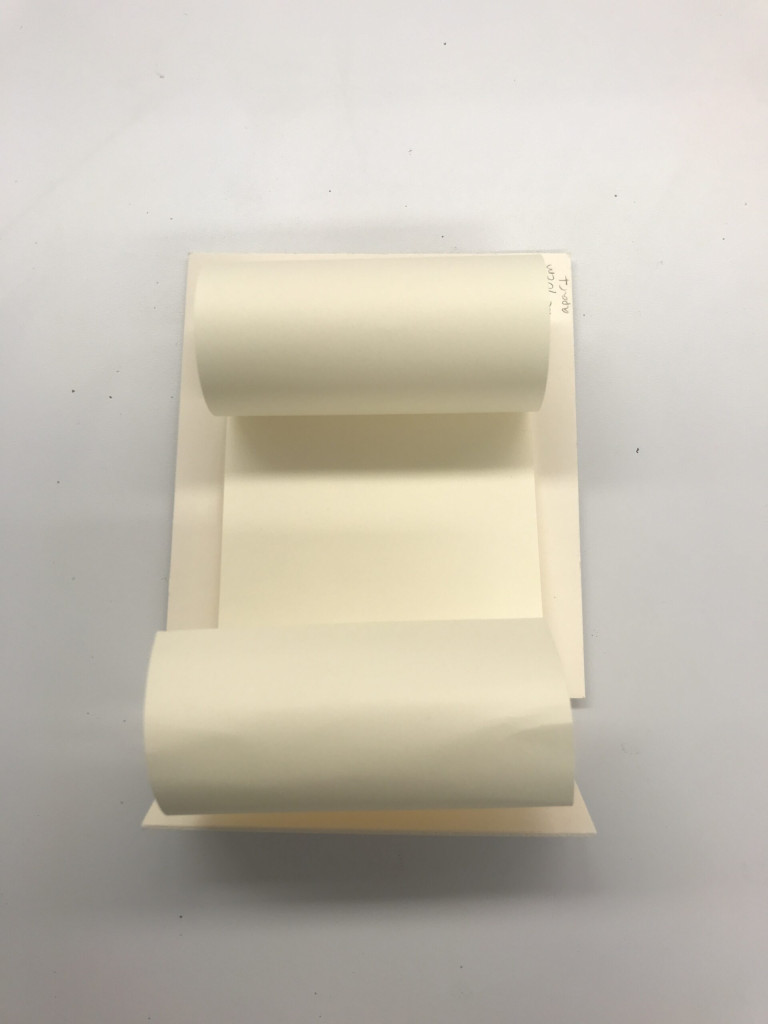
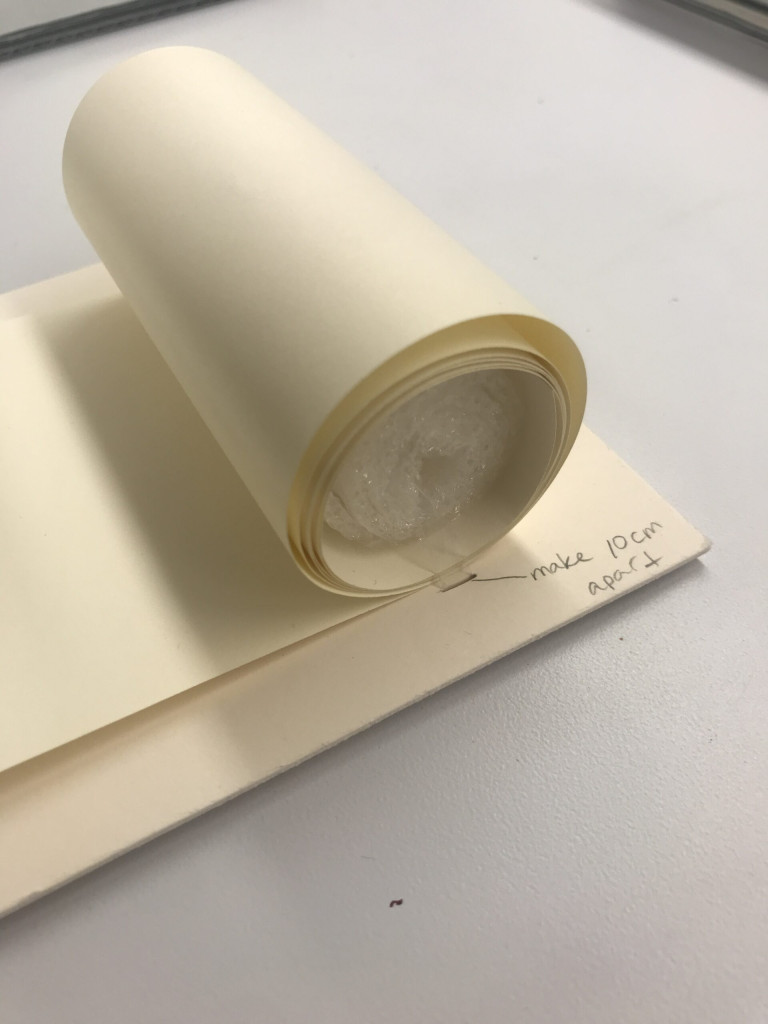
To start, Jessica created a very rough small model with mat board, polyethylene strapping, and paper (as we always do with anything new in the lab, we do love model making!!). The model provided us the visual example that we needed to create the mount for the two scrolls.
Small rough model created by JessicaSmall rough model created by Jessica
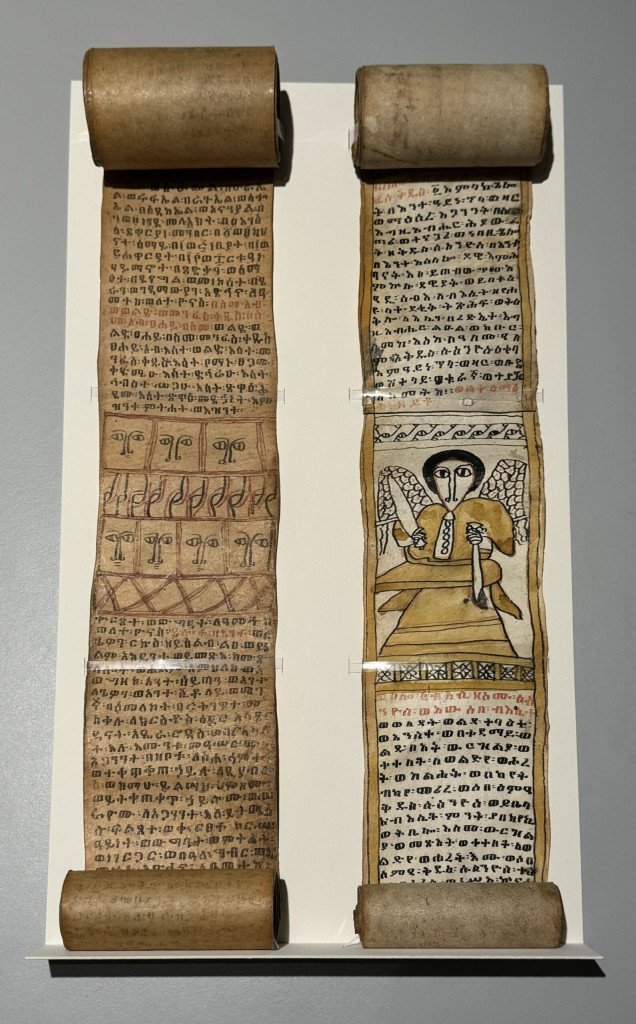
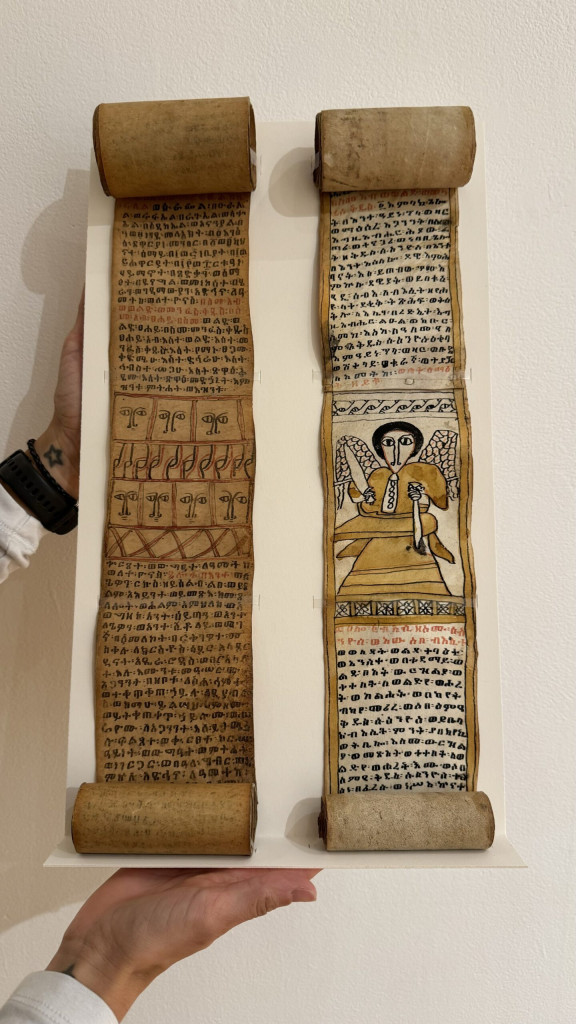
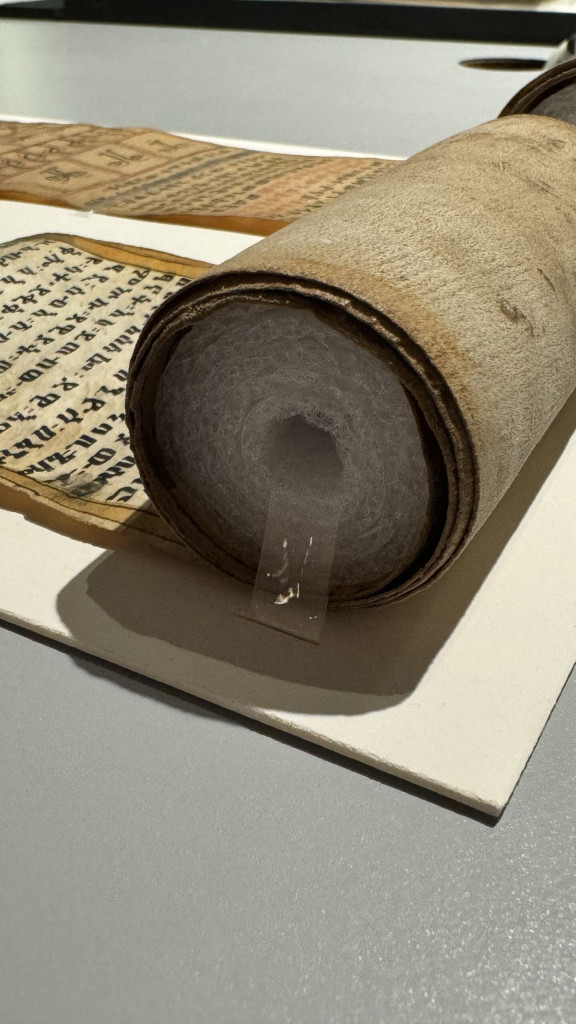
With the model in mind, we were able to engineer a good system that would provide support for the scrolls and could be used for display. The scrolls were supported with foam rolls on the inside for the rolled ends, and secured with polyethylene strapping that only touched the foam. The sections of the scrolls that were going to be displayed were also secured with polyethylene strapping that wrapped around the mat board support through slits in the board. At the bottom, the mat board extended outwards creating a small shelf to support the end of the scroll.
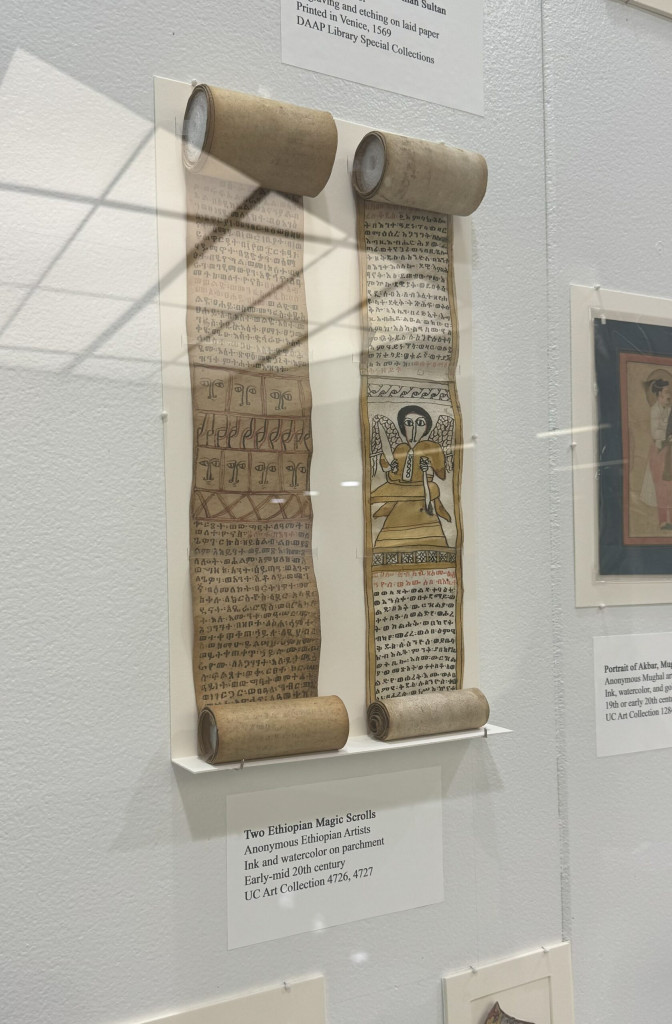
Scrolls mounted and ready for exhibition.Scrolls mounted and ready for exhibition.
A small “shelf” of mat board supports the bottom of the scrolls.
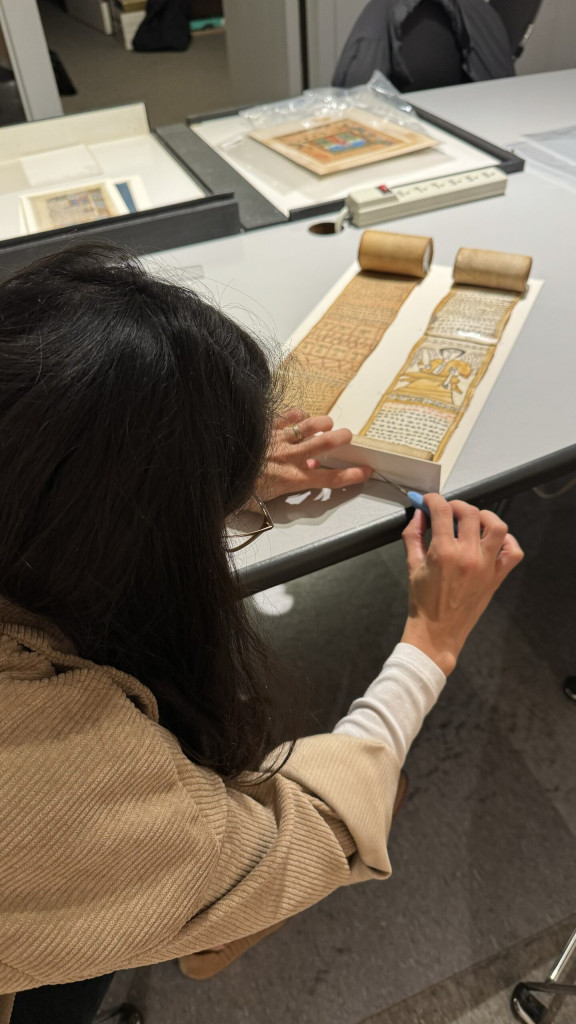
Catarina adjusting the strapping on the mount.
A small “shelf” of mat board supports the bottom of the scrolls.
A small “shelf” of mat board supports the bottom of the scrolls.
The foam rolls support the inside of the scrolls and are secured with polyethylene strapping.
Jessica securing the foam roll that supports the scroll.
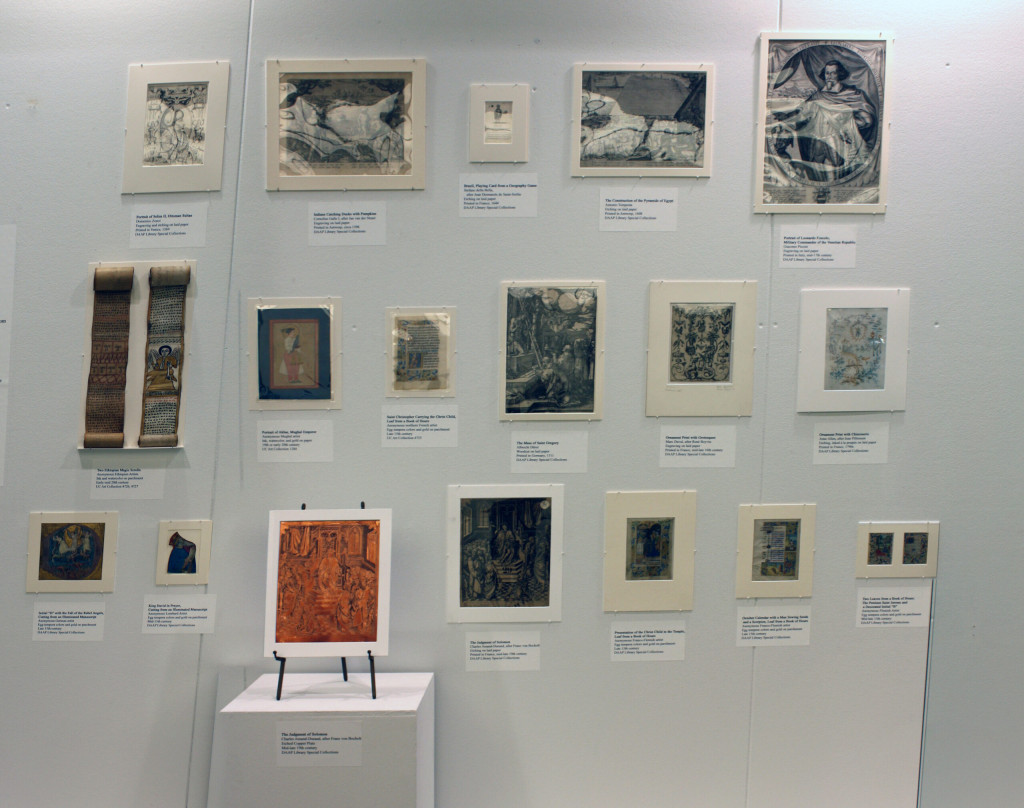
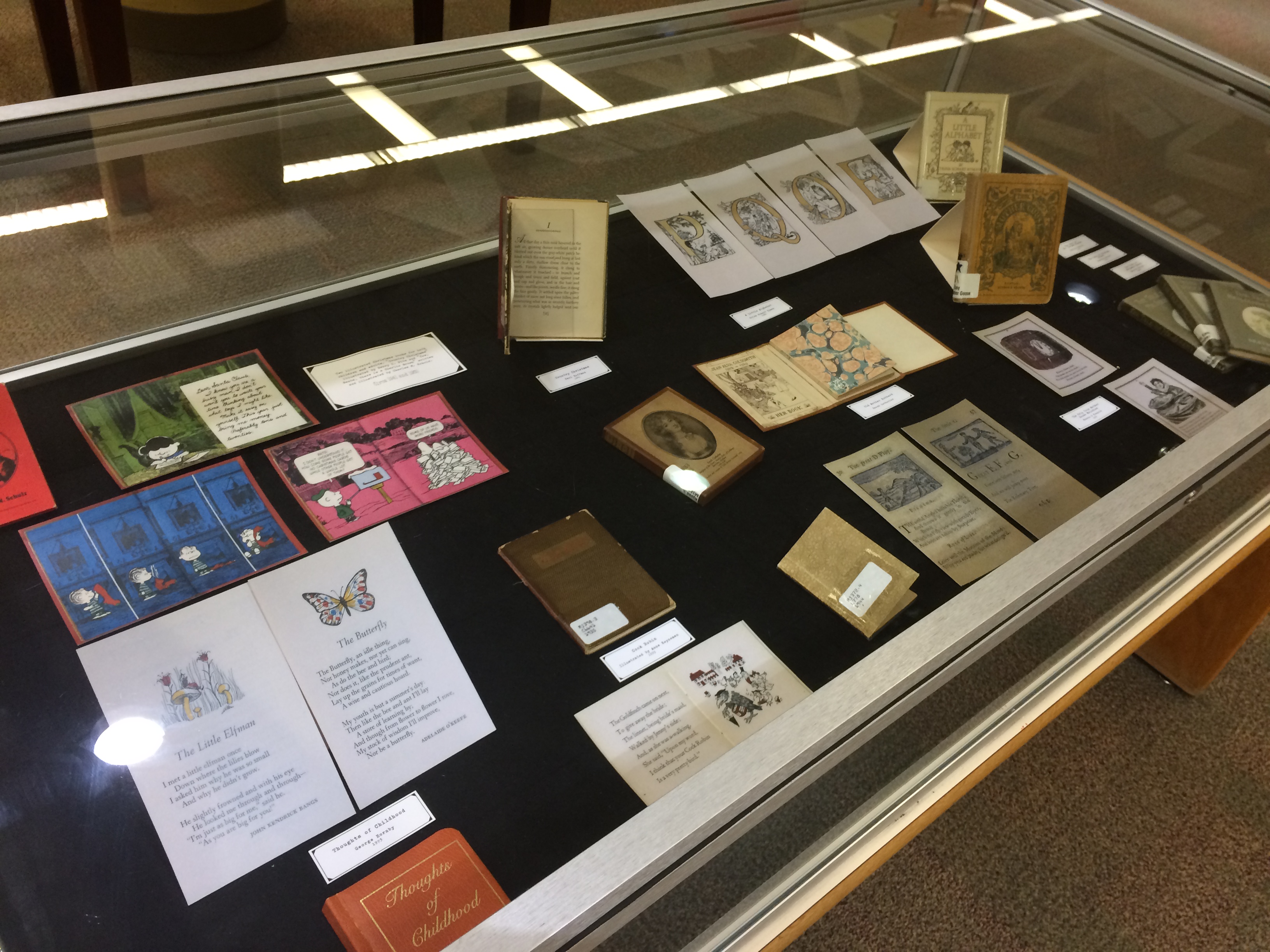
As a result of all the mounting and matting we did for the Teaching Art collection and for the scrolls, each item is currently on display at the DAAP Library entrance case:
Current display at the DAAP Library featuring the Teaching Art Collection.A close-up of the scroll mounted on exhibition.
If you are interested in learning more about our preservation considerations for exhibition of this collection, Catarina and Jessica will be giving a short gallery talk on Tuesday, December 5th at 1pm, at the DAAP Library entrance on the 5th floor.
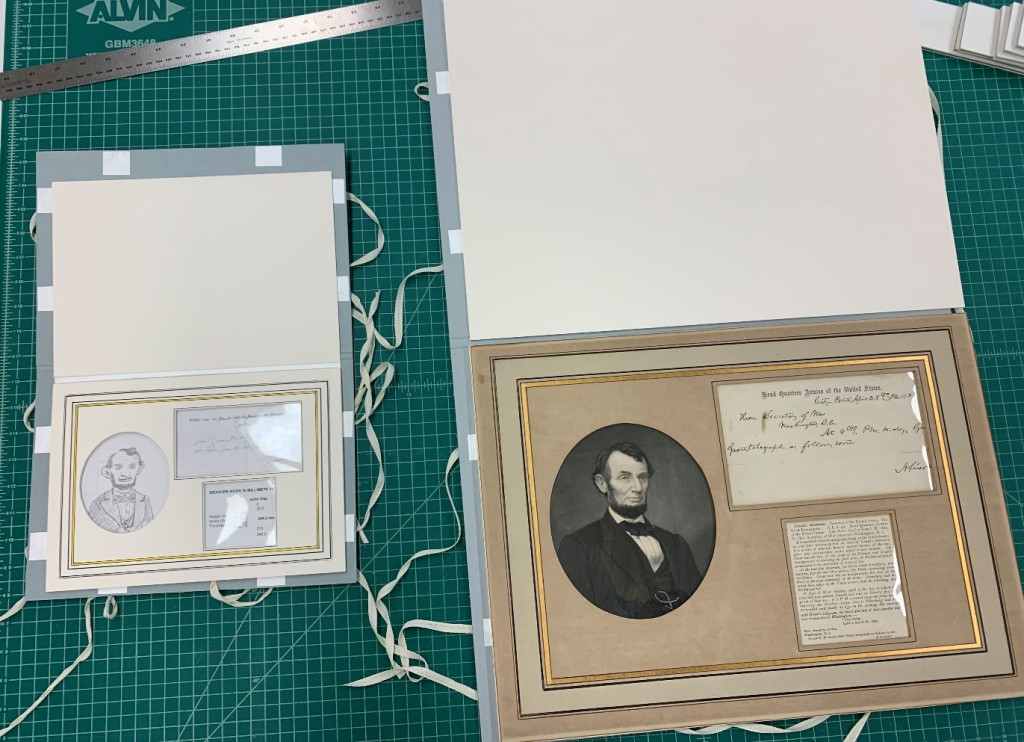
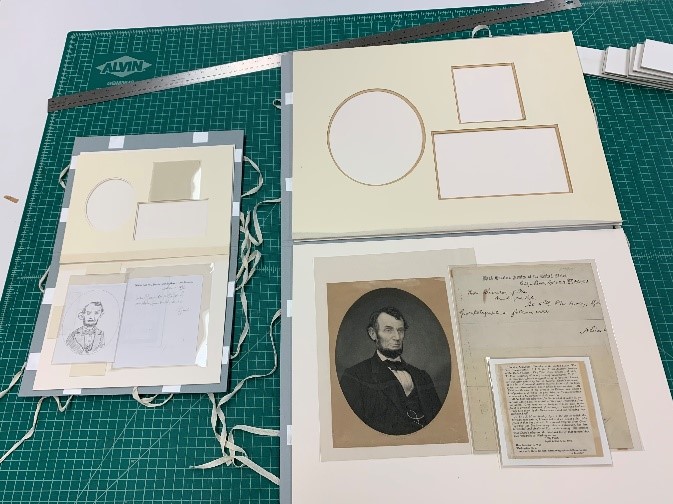
I love matting projects! Matting is an elegant way to present images and documentation for exhibition. We received a collection of letters and images from Abraham Lincoln in the lab from the Cincinnati and Hamilton County Public Library (CHPL) for preservation and conservation. After our conservator Ashleigh Schieszer completed the preliminary work of removing the artifacts from all the acidic and harmful elements they were previously in contact with, we collaborated on the matting choices. One cool thing I just love about this job is the opportunity to make tiny models of our intended work. Obviously, we can iron out some of the bugs and problem solve unforeseen obstacles with models, but making a tiny representation of my work is not only great to have as a future reference but is just really cool.
Matting model on left, original objects on right
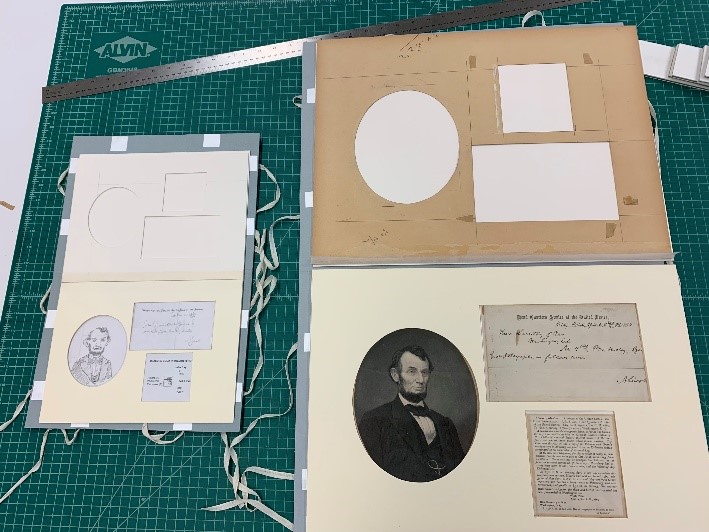
So, for one of the previously matted compilations the curator suggested retaining the beautiful custom mat for the finished system. This presented a problem because of the acidity in the original mat. The solution we came up with was to create an archival buffer mat between the original mat and the artifacts. Easy-peezy.
To mount overlapping objects, we decided to secure them to different mat board layers. For example, the document on top will be attached to the back of the archival buffer with a polyester sling while the letter and portrait will be mounted to the backing board with edge strips or photo corners.
The archival buffer mat is hinged below the opened original mat.
View of the artifacts below the archival buffer mat. Parts are mounted to different layers in the model.
We also added a custom portfolio for transportation and long term housing.
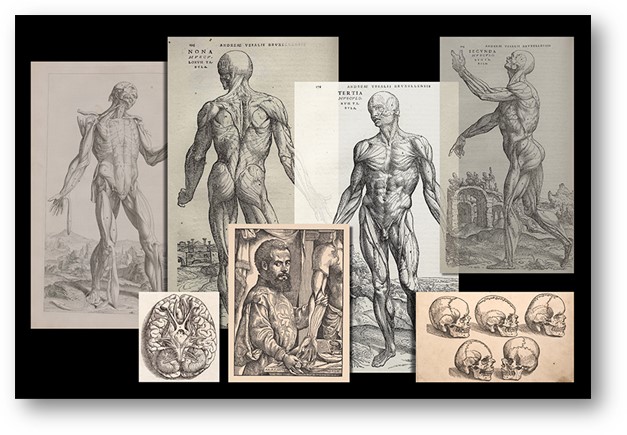
Please join us for the second lecture in the six-part series – “Making the Fabrica: The Illustrations, Printing, Binding & Publication.” Award-winning cultural historian Dániel Margócsy, PhD, University of Cambridge, will describe the creation of the “Fabrica.” Dr. Margócsy will be joined by Gabrielle Fox, a Cincinnati book binding and preservation expert, who will discuss the bindings of the first and second editions that will be on public display in the Donald C. Harrison Health Sciences Library.
The lecture, free and open to the public, will be held Tuesday, Nov. 16 at 5:30 p.m. in Kresge Auditorium, 231 Albert Sabin Way. In-person activities will be provided under CDC guidelines or local COVID-19 restrictions, with the well-being of all guests remaining the top priority. View UC’s current COVID-19 updates.For those not wishing to attend in person, the lectures will be live streamed via Zoom.
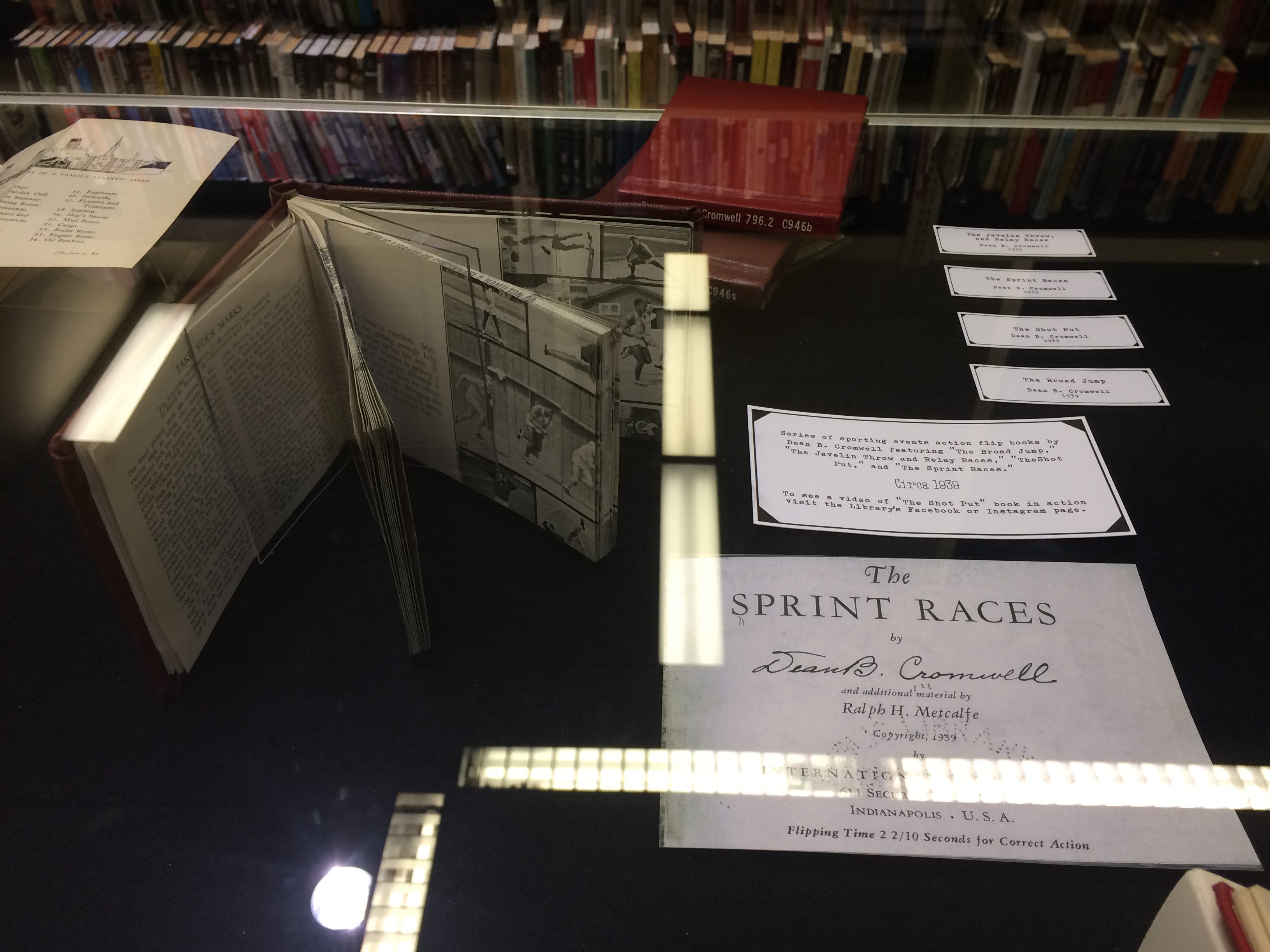
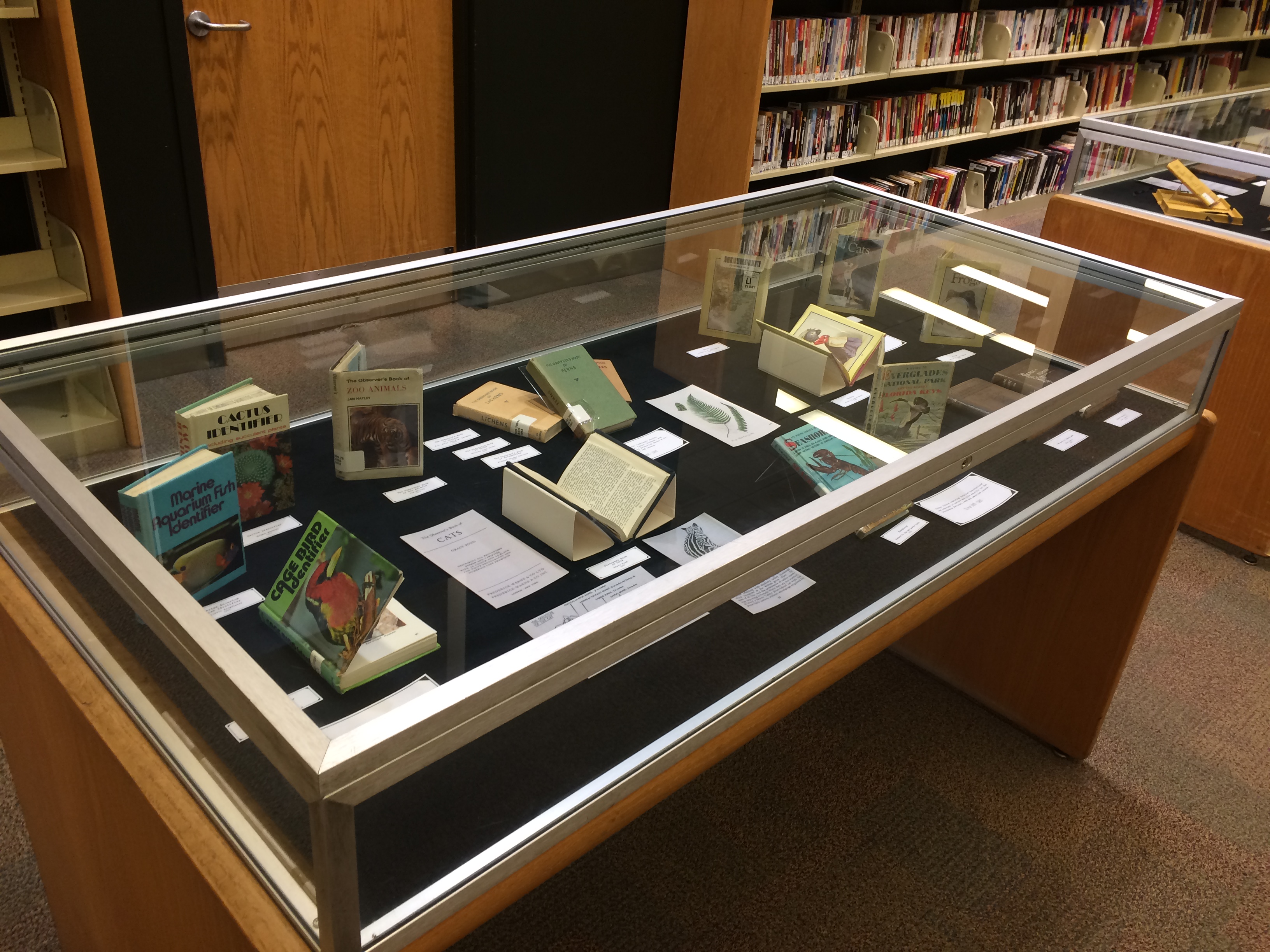
There’s an exciting new Public Library exhibit located in the Popular Library in the Main Library building downtown. It’s titled, Tiny Tomes and includes over 50 small books that are part of the reference library collection. There are a variety of subjects, binding styles, and time periods represented. Topics include sport flip books, lichens & ferns, children’s books, and many more!
This past week, the Preservation Lab assisted with preparing the books for display. Once the layout of the show was established and pages were selected for display, I helped strap bindings with soft polyethylene strapping and showed staff how to use various supports made out of Vivak and archival mat board. These supports were made beforehand in our lab by lab technician, Chris Voynovich. Since we knew the overall size of the books were generally 4 x 6 inches, a variety of general supports were constructed out of lab scraps rather than custom fitting the supports to each book. This greatly expedited the process of making the book cradles.
Out of approximately 40 constructed supports, every single one was put to use! There were V-shaped supports used to hold books open while lying flat, U-shaped supports to lift up books, triangle shaped supports to act as cradles, and other supports to hold books safely upright.
Some books were too fragile to be opened or had more than one page to exhibit. As an alternative to displaying interior pages, some of the books were scanned by Digital Services and surrogates were printed. These images are also available online, located here: http://cdm16998.contentdm.oclc.org/cdm/landingpage/collection/p16998coll52.
The exhibit runs from Jan 18th to March 13st. While you’re at Main Library, be sure to check out the Smallest Book on exhibit in the Cincinnati Room, located on the 3rd floor! Ashleigh Ferguson Schieszer (PLCH) – Book and Paper Conservator
One of the treasures I was recently asked to prepare for display was a book called The Smallest Book in the World. The library owns two copies printed by German typographer, Josua Reichert. The tiny book contains typography that was uniquely designed specifically for the binding. Each page contains a CMYK colored alphabet letter in an exquisitely designed font. While not currently the smallest book in the world, it is probably the smallest traditionally printed edition!
This week we had the pleasure of assessing the condition of some unusual objects not often found in a book and paper conservation lab.The objects, owned by the Winkler Center for the History of Health Professions at UCL, consisted of a child’s leg brace, a box of polio specimen slides from the 1960’s, and a group of honorary medals.