Category Archives: Outreach

Jazz, Dogs, and Dense Lit: A Conversation with Matt McCoy

I recently had the privilege of sitting down for a talk with the newest member of the lab staff, Matt McCoy. Matt is a CPHL employee who comes to us from…well, I’ll just let him tell it.

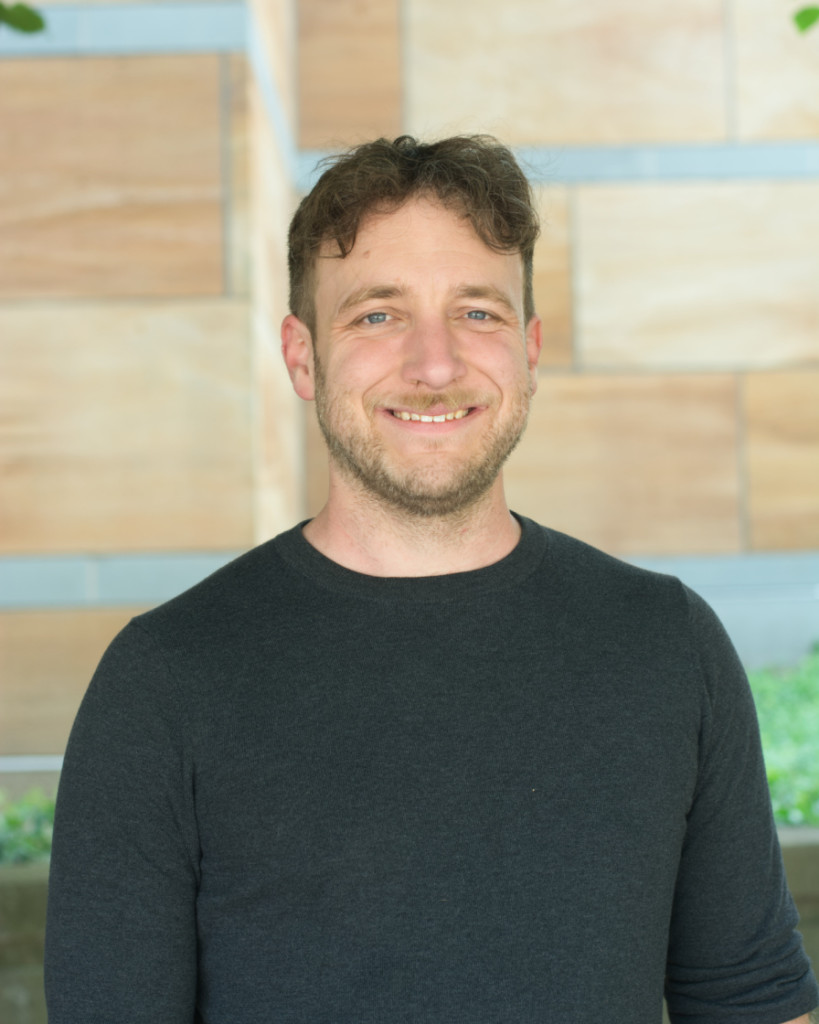
Photo of Matt

[edited for clarity]

Hyacinth: Alright, so first off, how did you come to be here in the lab?

Matt: I became aware of the lab at an open house; I think it was 2017 or 2018. I was working in Materials Retrieval downtown. I did the tour here, and I knew Cat [Catarina Figueirinhas, Assistant Conservator in the lab] because she used to work in my department. My boss picked a couple of people to go to the open house, and I got to check it out.

It was really cool, and I thought, ‘this would be a cool place to work someday.’ At the time, libraries were sort of just a side job for me. They’ve become more of a focus, especially over the pandemic. I started an MLIS but decided not to continue with it after getting a taste for the public librarianship. I guess I wouldn’t say I’ll never pick it back up again, but who knows?

I’ve always kept an eye on job postings, and I saw this one, I think it was over winter break. At that pont I had been working as a customer service substitute for CHPL for about a year. Then I saw the job posting and it just it sort of was like they have an opening there; I feel like that was the first time I had ever seen an opening pop up when I was here.

H: Yeah, it doesn’t happen often.

M: So I was like, you know what, I’m just going to apply for that. I was a little worried I’d missed my shot because I think it had been posted for a month or so. I had a friend who was staying with me over the holidays, and I applied for it the first day he was out, just kind of on a whim. Things just sort of fell into place from there, and here I am.

H: Well, you’ve been with us for nearly three weeks [at the time of the interview.] How are you liking it?

M: I love it so far. Even just the general collection stuff I’m doing so far, it’s very interesting. There are hand skills, but since I’m starting on general collections, it hasn’t been super stressful. The days fly by really quickly. I really like improving skill sets, so just getting to go through the training and practice different things and assessing how’d it go, what can I do better or what do I need more work on, that’s been fun and satisfying to do. I’m really liking that.

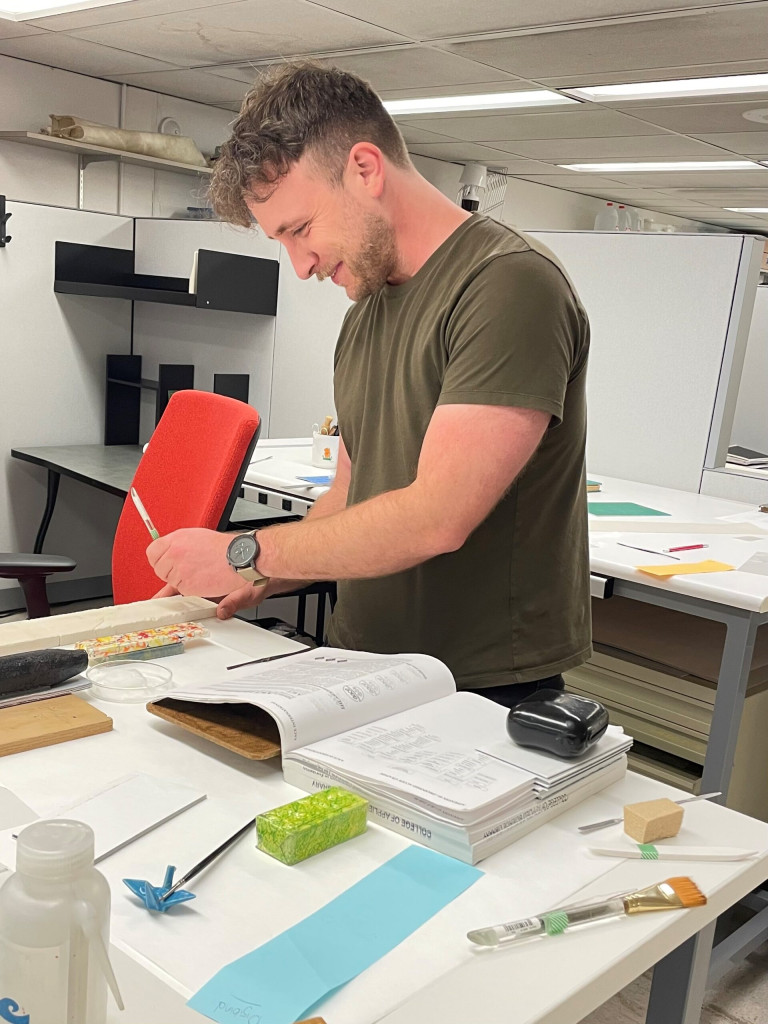
Photo of Matt working on a general collections repair

You guys have all been great so far, real good staff to have around. Everybody’s been really helpful and friendly. I’ve felt very welcomed here from the start and it’s been cool just getting to see all the stuff you guys have been working on, both at the open house but also the…I guess the pre-return meeting? That’s what it was, right?

H: Yeah. [nods]

M: Yeah, that was really cool to see too, and just get a feel for how things work with the special collection stuff, and how the process goes from an item first arriving, to you guys doing treatment on it, and then sending it on its way.

H: It’s a whole thing. We have a flow chart.

M: [laughs] I’ve noticed that a couple of times, as I’ve been leaving for the day, and think that I need to read that and then forget, and then I’ll walk by it again.

H: It’s a lot of flow chart. I mean, you get the hang of it, but it’s a lot of flow chart.

M: And the flow of my life has been really nice since starting this job. It’s a short commute, and the fact that the days go by quick. I feel like I never have enough time to…I’ll get into something and then I’ll hear the [closing] announcements go on. I’m like, ‘shoot, I was just getting into this!’ I was also a little worried, I wondered how much energy I’d have at the end of the day, to work on music and whatnot, but it hasn’t really been an issue so far.

It’s cool being on a college campus too. It’s sort of lively. I know it’s going to get more lively as we go along, but it’s a lively place to work. And I like being around people, so that’s been cool. It’s also nice that it’s not the place where I went to college. I don’t feel like ‘oh, shoot, back here again.’

H: So what’s the most fun or interesting or fascinating thing you’ve done in your training so far. I know it’s going along really quick.

M: I really like the – and I feel like it’s probably the thing I’ve had to work at the most – I like the hinge-in, doing hinge repairs. They’re just very satisfying. It’s either, you know, pages have fallen out of a book, or it’s structurally compromised and then all of a sudden, oh look how nice! It’s all nice and sturdy now, putting it back together, so I really like those. I enjoy any sewing I’ve done so far too. Once it’s all nice and tight and looking prim and proper, that’s been pretty gratifying.

H: It is very gratifying. And Jessica [Ebert, Sr. Conservation Specialist] is a good person to learn it from.

M: Absolutely! She’s been a great teacher.

H: Her sewing is fantastic. You’ll never be as fast as her.

M: She really does just fly by!

H: Even I’m not as fast as she is.

M: Yeah! And then I also like the tear repairs too. Those are nice, once everything’s all dry and put together, it’s like there we go, that looks nice.

H: What are you looking forward to learning?

M: Definitely down the road, but I’m looking forward to getting into some of the special collection stuff. Getting to have a project. I mean, I have had a couple of projects that I’ll start and finish up the next day, but I haven’t had any long-term things. And I’m sure it’s different for every item, like I’m not sure how long each of you spends on a particular treatment, but I’m sure that there’s some where there’s a lot of different steps, seeing something throughout the whole process on a broad scale, that sort of thing. I think it’d be neat to work on something like pieces of artwork or maps. I’m also excited to get into any kind of bookbinding stuff, like the models you guys have made of different types of books. The more complex things like making a cover or something like…I forget what it was, the sermon that Jessica worked on.

H: The split-board binding.

M: I think that looks really cool, yeah. I always enjoy a well put-together book and that is a nice one.

H: Well, I have found that there are two kinds of library people. There’s the kind that’s born and raised in the stacks – that was me, my family was into libraries from the time I was really little – or people who kind of stumble in one day and realize that it’s great, and then they just never leave. Which kind are you?

M: I did go a little bit as a kid, sort of here and there. I remember would do summer reading. But then I got into my teenage years and early adulthood and didn’t really utilize them that much. I think it was later in college that I started going to the downtown library because they had – this was before I got into the streaming music services – they had such a good jazz CD collection. I think it had been donated by a radio station that used to play a lot of jazz stuff, the Oscar Treadwell jazz collection. That’s what got me into it. Then I thought this might be a cool place to work, and that’s what led me here.

H: What sort of things do you like to read, and what are you reading right now?

M: Mostly fiction. Although I’d like to read more nonfiction, I think sometimes reading is a nice sort of escape from reality. So I like reading fictional stories. I’m reading this Cormac McCarthy book right now. It’s the third part of a trilogy he has called the Border Trilogy.

H: Cormac McCarthy is so bleak!

M: Oh I know, that was the exact same reaction Holly [Prochaska, Preservation Librarian] had!

H: Oh he’s a wonderful writer. Just bleak.

M: Yeah, he’s great, one of my favorites. His prose is so beautiful, but the actual contents of the story is so dark and depressing sometimes.

H: You read it and you gotta take a break.

M: Yeah, so I’ve been chipping away at this one and afterward I’m going to take a break. I’ve also gone through phases where I’m really into science fiction and kind of fantasy stuff sometimes. I think maybe when I get done with [the Cormac McCarthy], I’ve been wanting to maybe start Dune.

H: I’ve tried Dune like three times. It’s so dense.

M: That’s what I hear.

H: It has a glossary.

M:  I’m wondering if I can get into it or not because I was really into Tolkien. I did The Silmarillion a few years ago, and that was the only book where I’ve had a little sheet that just had notes on it.

H: Then you’ll probably be fine. I had an ex who read it. He loved it, but it was a lot.

M: Some other favorite authors…I like [Kazuo] Ishiguro a lot, probably one of my favorites, and Vonnegut.

H: Vonnegut’s great.

M: I really like his sense of humor, it’s very much up my alley. I also don’t think I mentioned the name of the book that I’m reading, the McCarthy one, it’s called Cities of the Plain. The most famous of the trilogy is the first one, All the Pretty Horses, and then The Crossing, and this is the third one.

H: Do you have a favorite book?

M: Let me think…I really love the Lord of the Rings trilogy. I could pick out a favorite of the movies, but not the books. I also liked Blood Meridian; I read Song of Solomon, a beautifully written book. I also enjoyed Never Let Me Go. That was Ishiguro, a really sad one, very beautiful.

H: That was adapted into a film.

M: I haven’t seen the movie yet, and I think I started it one night but then…I think I got worried. The story has such a high place in my head, it might live up to it. Sometimes for that reason if there’s a movie version I’ll watch it first and then read the book. But yes, those are a few of my favorites.

H: So you are a jazz musician. What led you to that?

M: That’s a good question and kind of similar to what you’re saying about how there’s like kind of two types of people who get led into libraries. I found there’s sort of like two kinds of a paths that lead people into jazz, and I was kind of in the middle of it. It’s usually either band kids in high school –

H: [raises hand] I was a band kid.

M: – they get into it, but then also it’s also people that like the hippie Grateful Dead sort of jam bands.

H: I like those too.

M: That’s how they get into it, more improvised music.

H: It’s very technical.

M: Yeah, so that kind of start it for me. I started playing electric bass when I was probably 14 or 15. I got really into it, I wanted to learn everything I could about it. And then I started learning about all these jazz musicians and hearing some good bass players. You check a record out and that led me down that path. I had a lesson teacher, and he pitched the idea of going to school for music. There’s a couple of programs where you can do what they call commercial music, if you want to study music in college, a jazz or classical degree. I thought, ‘Oh yeah, I wouldn’t mind going to school for a jazz degree’. Through that I got really immersed in the jazz world and fell in love with it and have been doing that ever since.

H: So not the Miles Davis route, starting with classical and hanging out in jazz clubs?

M: Yeah, there’s a lot of people who do that, it’s funny. I feel like a lot of the famous acts were classical musicians who kind of got into jazz, which is also cool.

H: What other musical genres do you listen to?

M: It’s kind of all over the place. I like a lot of hip-hop, the current modern stuff and some more classic stuff too. I like folk music and I play in a folk band, although we’re kind of losing momentum right now. Everybody in the band other than me keeps having kids, which make rehearsing a little difficult. But I grew up in the time where the pop punk emo thing was real big, so I will always have a soft spot for that in my catalog. Usually if I like something, I’ll just save it. I was listening to Bob Marley recently; I mean, everybody knows he’s great, but I couldn’t remember the last time I just sat down and listened to him. So, a pretty wide range of stuff, but there’s a few things I gravitate towards. I will end up listening to indie rock and folk more than other genres.

H: Is there a piece of music that you’re obsessed with at the moment?

M: That’s a good question. Let me look here and see if something stands out. [He flips through his phone briefly.] There is a Gregory Allen song called Dark Dark Dark that I really like. I’m going to go with that one.

H: Do you have any other hobbies?

M: I like going to the gym, although I can sometimes kind of slack on that. I feel like lately my life has just been a lot of music stuff and this job and I haven’t been doing too much else, but I really do like being outside, just hiking and stuff. I want to go camping more.

H: We’ve had good weather for it.

M: Absolutely! I also like traveling. I mean, everybody does, but you know, I like getting out to see stuff. Other than that, I’m somewhat into movies, TV shows, nothing super wild at the moment though. I have a bunch of hobbies that I’ve been meaning to get to, that I want to give a shot. I just never seem to find the time for it.

H: I know you’re a coffee guy, you come in with one every morning.

M: [laughs] Yeah.

H: So instead, Coke or Pepsi?

M: I would say Coke over Pepsi. Not that I have anything against Pepsi! In terms of cherry cola I used to like Wild Cherry Pepsi better, although I feel like I never see it around anymore. But yeah, I would say Coke.

H: Do you have a favorite movie or movie genre?

M: I really like science fiction movies. That’s maybe my favorite genre. And I’m going to Cormac McCarthy again, but I really like No Country For Old Men. The Life Aquatic with Steve Zissou, that Wes Anderson movie, that’s up there. As far as sci-fi goes, I liked Arrival; it really stood out to me.

H: What is your favorite time of year?

M: Fall, especially living around here. We have all the leaves changing, and the temperature is nice and not too humid. You can still go outside and do stuff.

H: Do you have any pets?

M: I have a dog named Baby Redbone. He’s a rescue. A significant other and I found him living on the street. We lived in Northside at the time and we used to take our other dogs out together. There was a school that has since been turned into apartment complex, it was abandoned at the time and we used to run with the dogs and wear them out real quick. One day he was just sort of back there. We initially weren’t going to keep him. She mentioned that he was just a baby, so we were calling him Baby. We thought maybe he was a Redbone coonhound because he’s got this real reddish coat, like he’s definitely part pitbull. So the name just kind of stuck. When we parted ways, she kept the other dogs, and I kept him. We weren’t having any luck finding anyone to take him from us. People don’t like having dogs sprung on them! He’s a decent-sized dog, 63 pounds or so.

H: Yeah, we have a pit/rot mix and he’s like 100 and he’s so much dog, but just the sweetest thing I’ve ever met.

M: Oh goodness, yeah. They’re so sweet. My theory is [pits] are very trainable and receptive to things, so if somebody has bad intentions with them, they can get them to be mean, and if someone has good intentions, they can get them to be sweet too.

H: I find that they often work best when they’re mixed with something.

M: Yeah, totally. You’ll have to show me pictures of your dog at some point.

H: And finally, can you leave us with a random fun fact about yourself?

M: I haven’t tried this in a while, but I feel like I could still do it, but  when I was in elementary school we had an after school program, a unicycle club where our gym teacher trained us all up to ride unicycles, and we rode in parades and stuff. So I guess my fun fact would be that I can ride a unicycle!

H: That is a very fun fact.

M: It’s been a little bit since I’ve tried it. Somebody had one at a party awhile ago and I tried. It still worked. I feel like my body would remember how to balance like just sort of like a bike.

H: Very cool. Thank you!

I hope you enjoyed getting to know Matt as much as I did!

Hyacinth Tucker [UCL] – Conservation Technician & Bindery Processor

Book Arts in the Lab

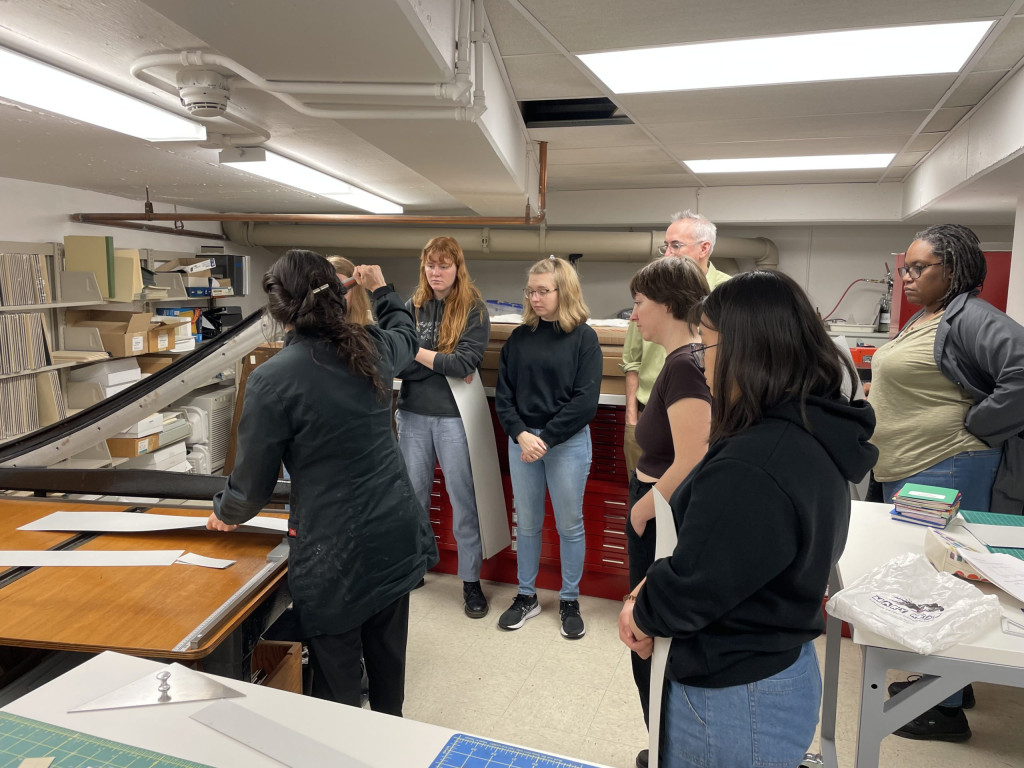
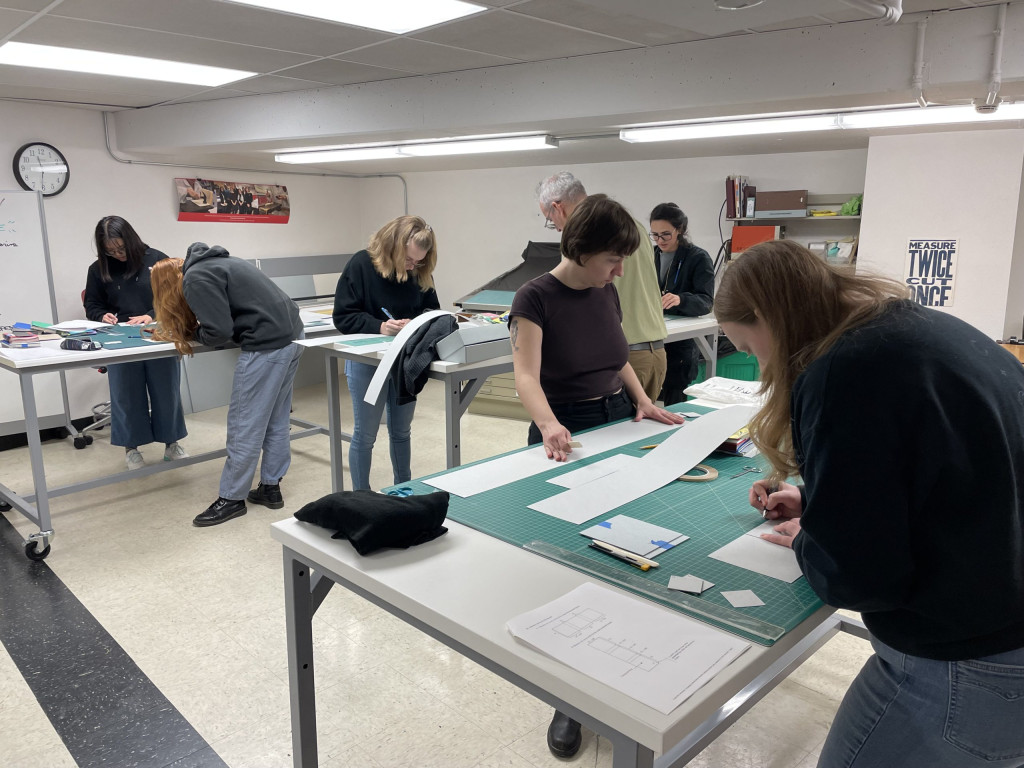
This semester the Preservation Lab is collaborating with the English department and Associate Professor Gary Weissman to teach ENGL 3097 – Book Arts. The experiential learning portion of the course is taught in the Preservation Lab by Holly Prochaska, with much assistance from Jessica Ebert, Catarina Figueirinhas, and Hyacinth Tucker. The course offers students a foundation in the history of the codex, artists’ books, and zines, as well as a hands-on introduction to paper making, bookbinding, and printing.

Last week the students finally got their hands on our beloved board-shears while making a tux box to house the many models they constructed during the course.

It has been a fun and rewarding spring thanks to the enthusiasm of our 12 students!

If you are interested in learning more about the experiential learning portion of the Book Arts curriculum, please reach out to holly.prochaska@uc.edu.

Holly Prochaska (UCL) — Preservation Librarian

Our Wonderful Week with Jeff Peachey: A Recap in Instagram Reels

At the end of October we were lucky enough to have Jeff Peachey come to the Lab for a week-long workshop on Leather Conservation. We covered sewing extensions, joint tacketing, board splitting and cotton hinges, leather rebacks, and knife sharpening. In the weeks following the workshop we shared highlights from the workshop on our Instagram…

Highlights from the workshop
Sewing extensions and joint tacketing

And we couldn’t not highlight the master at work (sharpening and paring leather likes its butter) and the amazing tools Jeff makes:

Leather rebacks, including board slitting, inserting a cloth hinge, lifting the original leather, dyeing the new leather, and paring and attaching the reback.

Finally, conservation ASMR…Jeff Peachey style! Make sure the sound is on for this one…

We had the best time with Jeff. He is such a knowledgable and approachable instructor, and we learned so much from him. Thanks for coming to the Preservation Lab, Jeff!

Fun fact, did you know that Jeff was inspired by a press we have in the Lab to collaborate with Timothy Moore to create a “perfect all purpose” press that you can buy for your lab or studio?!

Jessica Ebert [UCL] – Social Media Coordinator and Sr. Conservation & Photographic Documentation Specialist

Recap of The Haunting of the Preservation Lab

In case you missed it, here is a highlight of our Halloween-inspired Instagram series this year…

“The Board Shear”:

“The Chemist”:

“The Saw”:

“The Haunting of the Preservation Lab – Part 1”:

“The Haunting of the Preservation Lab – Part 2”:

“Behind the Scenes – the Making of the Haunting of the Preservation Lab”


We hope everyone enjoyed our spooky Insta reel series…until next year!

Jessica Ebert [UCL] – Social Media Coordinator and Sr. Conservation & Photographic Documentation Specialist

Catarina Figueirinhas (UCL) – Assistant Conservator

Join Us for “The Haunting of the Preservation Lab”

Don’t miss out on our Halloween antics this year! Make sure to follow us on Instagram for some spooky but informative Halloween reels…

A librarian’s new favorite teaching tool? A historical book model!

A before image of the original Book of Hours, open to the center. The image shows that the sewing is broken and leaves are detaching.

In February 2019, the Lab received a unique item at the special collections’ meetings for the UC Libraries, a Book of Hours (ms.37) from 1475 from the Archives and Rare Books Library.  I was so excited when this book came into the Lab.

This 15th century Book of Hours was in poor condition and in need of conservation treatment. Not only was the binding structure failing and the text block broken in half, but this book was also heavily used as a teaching tool at the ARB library, and in its current condition it could not be safely handled. This was the perfect project for Ashleigh and I to collaborate.

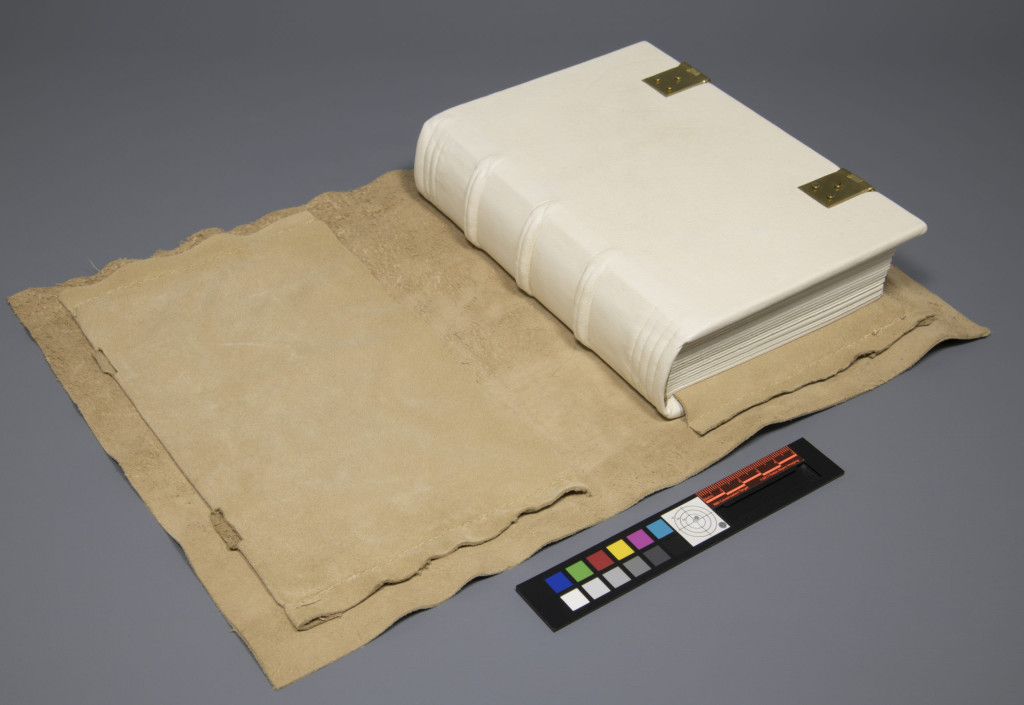
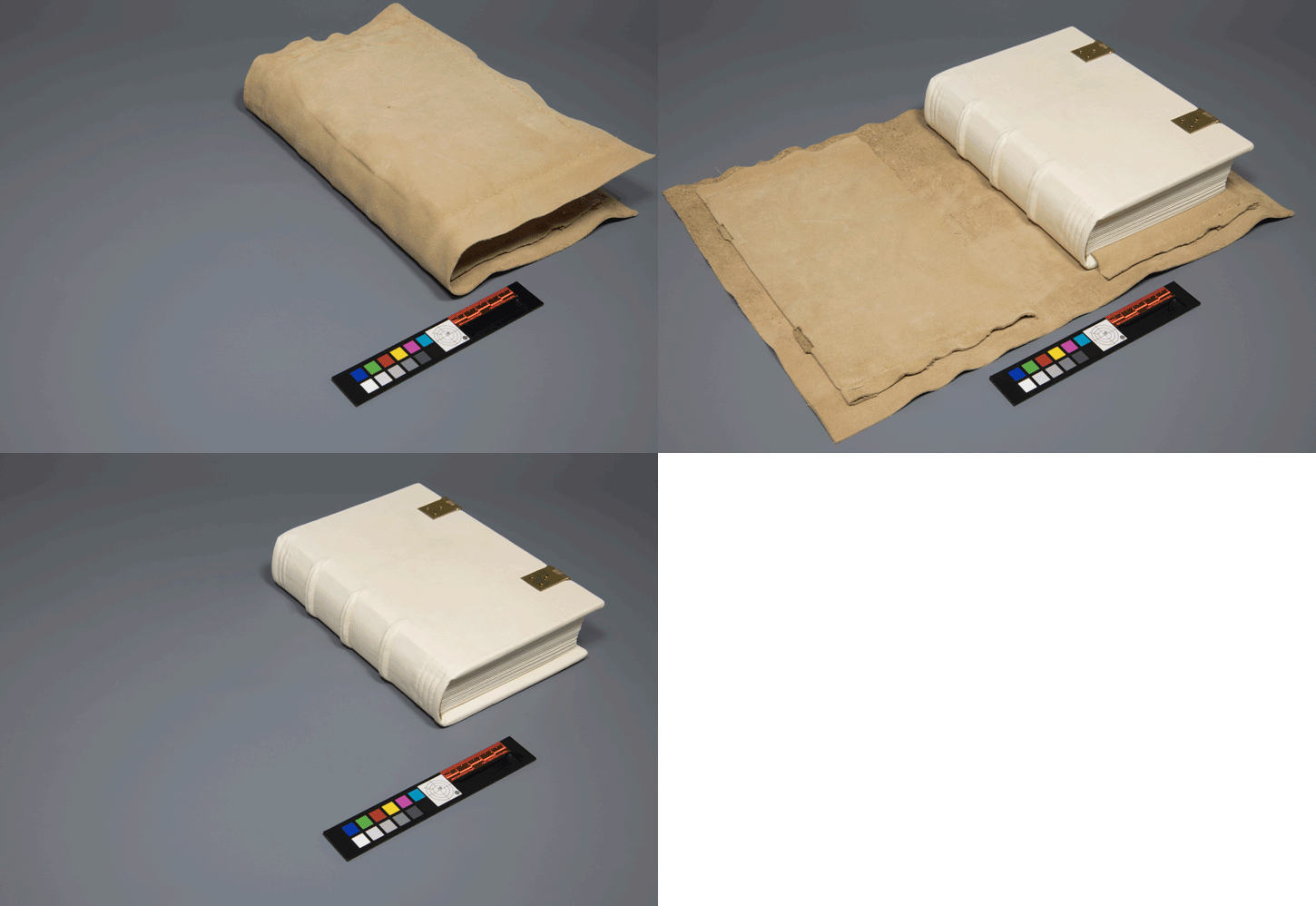
From the beginning, it was decided that in conjunction with the conservation treatment of the Book of Hours, I would create a book model like the original Book of Hours, to be used as a teaching tool in the ARB library collection. In addition, the model would have a leather chemise, a common feature in some Book of Hours of the time.

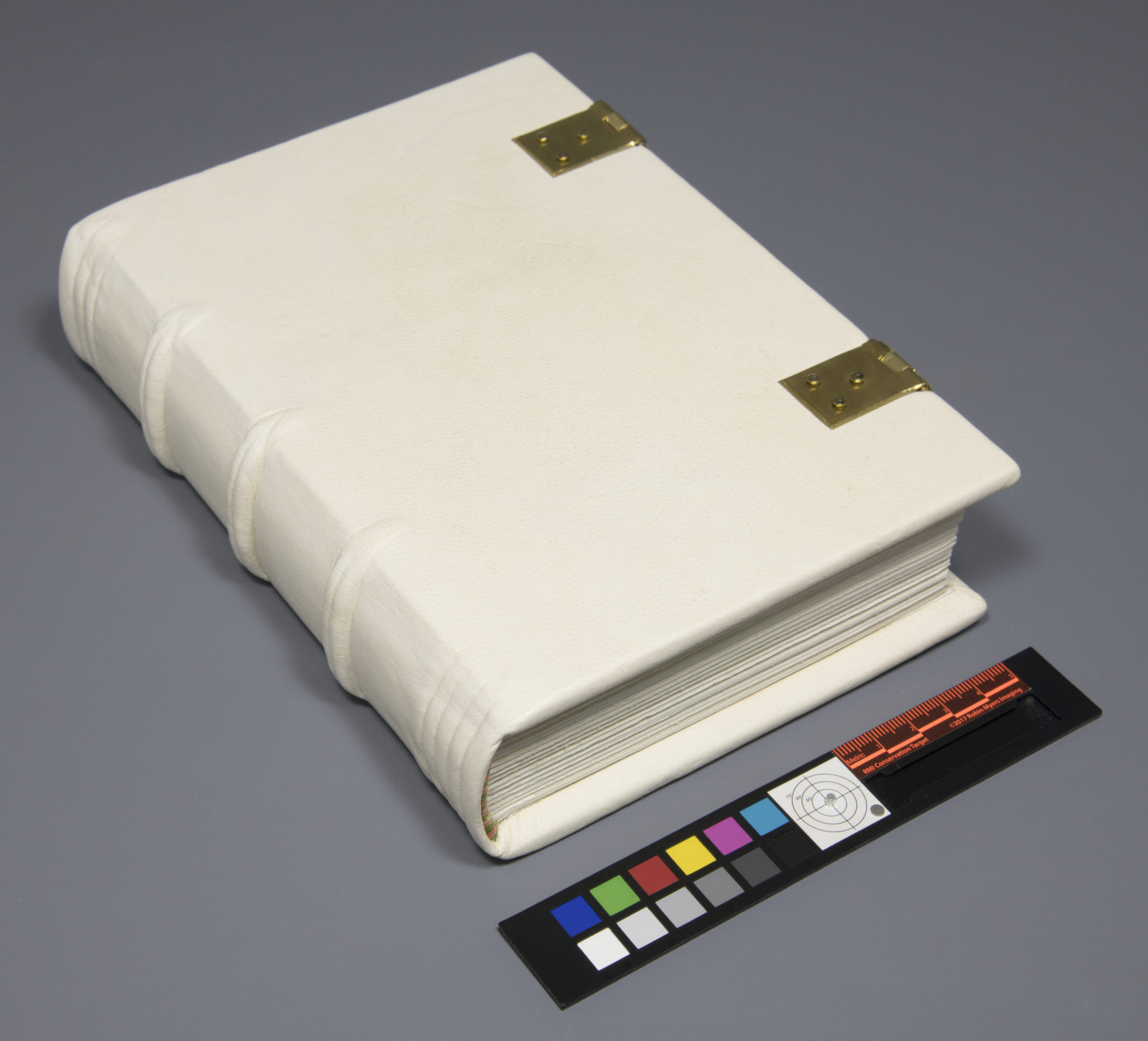
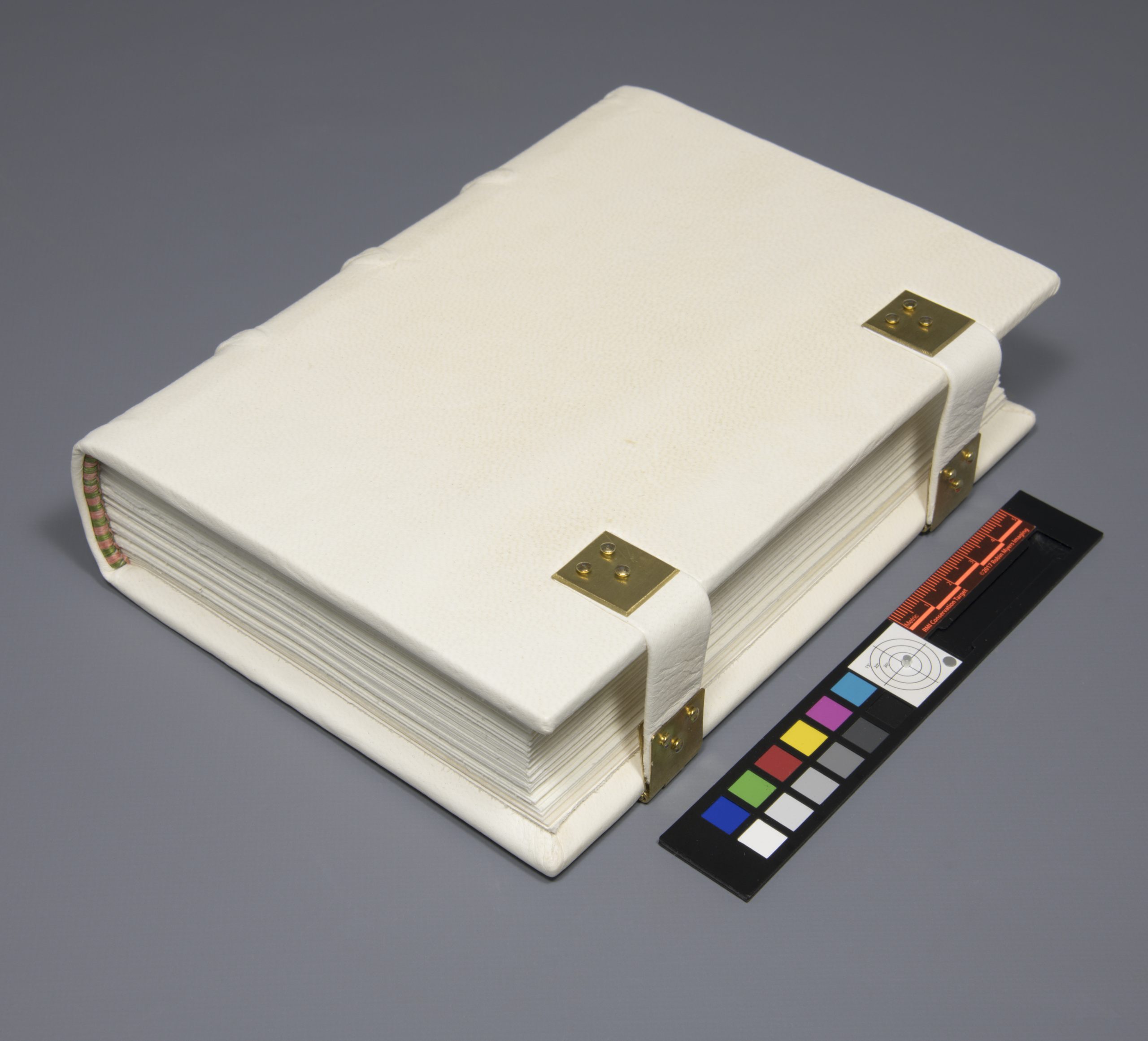
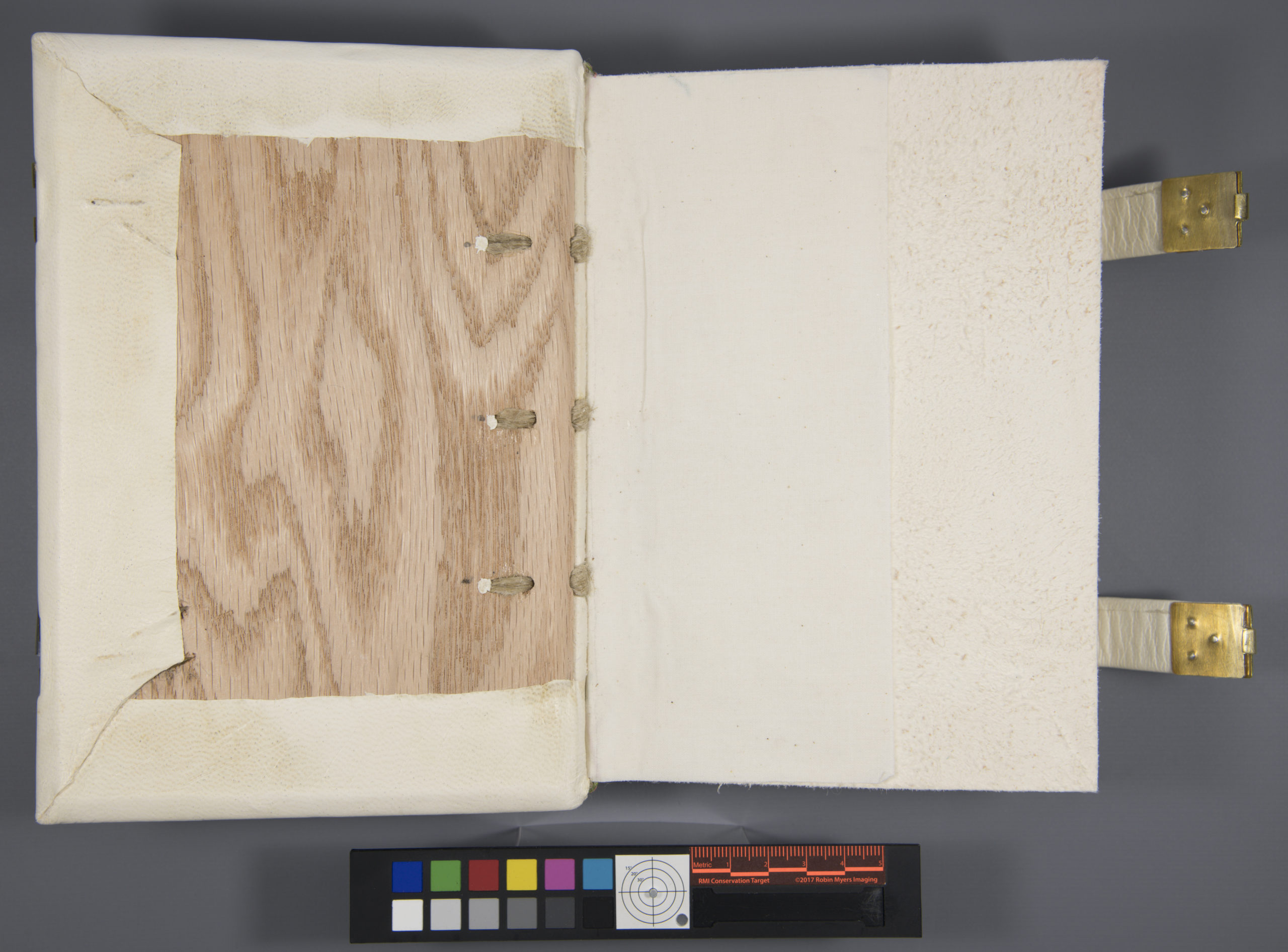
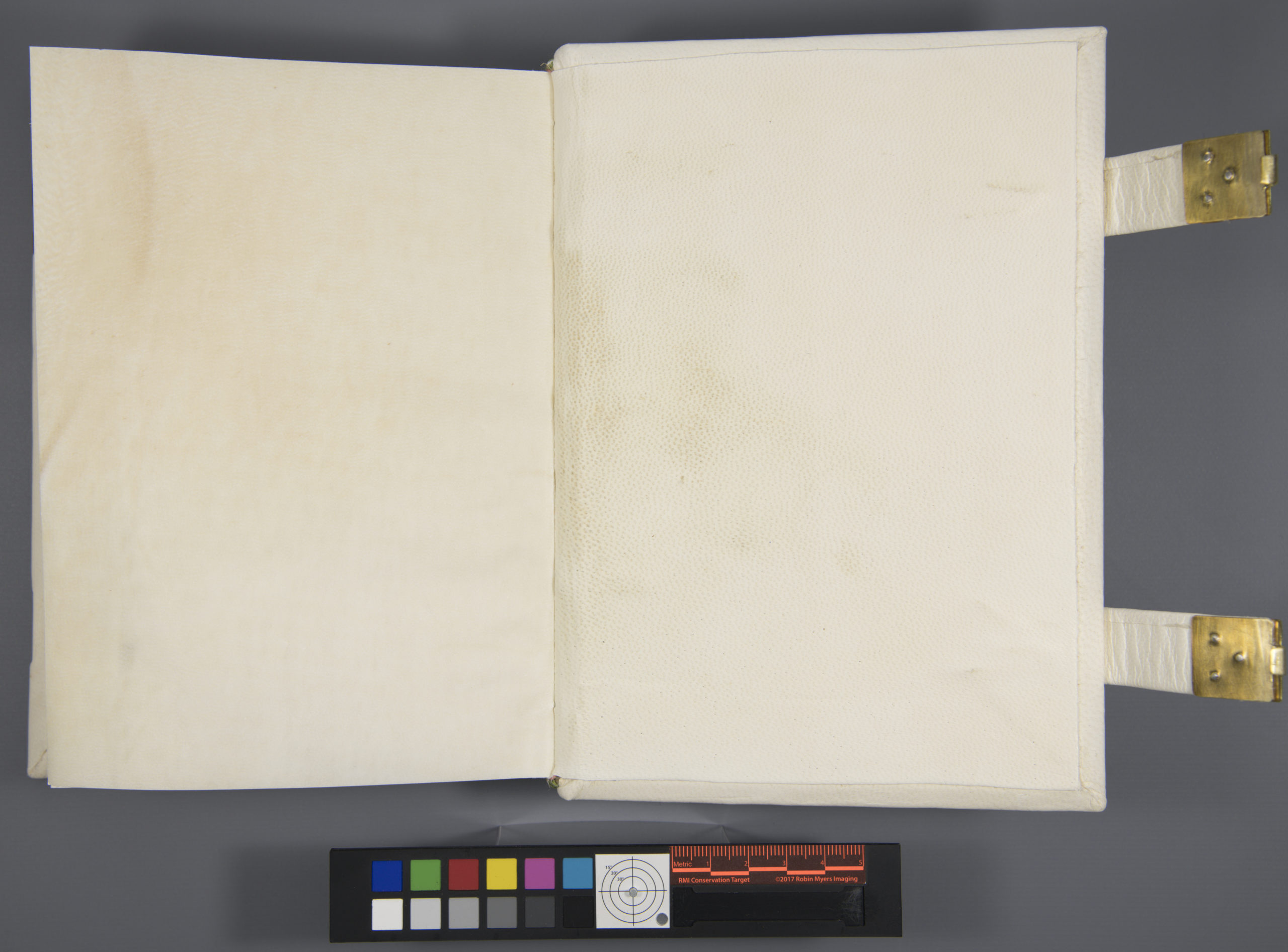
Image of the book of hours model closed. The chemise is attached to the lower board, but not the upper board.
The Book of Hours MODEL with a removable chemise.

Now here is where this story begins with the model of the Book of Hours. Often, here in the lab, we all create book models for various reasons: to learn about a new treatment, test different treatment options, to understand how some materials work together, and as teaching tools.

As a teaching tool in the ARB library collection, this model needed to resemble the original Book of Hours in its structure and materials used.

The primary goal for this model was to show how a Book of Hours was historically built, its sewing structure, the materials used, and also to provide the ARB library with a book that could be easily handled by students and scholars.

Once the treatment for the Book of Hours was fully established and confirmed with the ARB curator, I was able to start working on the book model. I will save you form reading about all the different steps of making the model, but here are the main features of model:

Text block

  • Primary support – Khadi paper white cotton rag
  • Endsheets with leather hinge – Two bifolios of calligraphy goat parchment skin wrapped along the spine edge with a hinge of Allum tawed leather (later would be used as pastedowns)
  • Sewing – Sewn on three double raised cords with a linen 18/3 thread. The dimensions of the text block and sewing holes, were guided from the original sewing holes of the Book of Hours.
  • Endbands – Primary conservation endband with the bead on the spine, and secondary endband with the bead on the text block.
  • Spine linings:
    • Reversible layer of Usu Gami thin and Zen Shofu wheat starch paste.
    • Slotted Airplane cotton cloth with flanges to be used as board attachments.

Cover

  • Boards – Oak wood
  • Board attachment – Boards were laced with the sewing supports through carved channels
  • Covering material – Full alum tawed leather binding with removable chemise
  • Clasps – Brass tension clasps (these were created in-house by Chris Voynovich, and he did an amazing job).

There was no evidence that the original Book of Hours had clasps, but the curator requested tension clasps for the book model. Clasps were common in the 15th century bookbinding, and this would provide the students with the experience of handling a book with clasps and allow them to understand their function.

The curator also requested that one of the pastedowns be kept unattached, so the students could see how the boards were attached to the text block and that they were wooden boards.

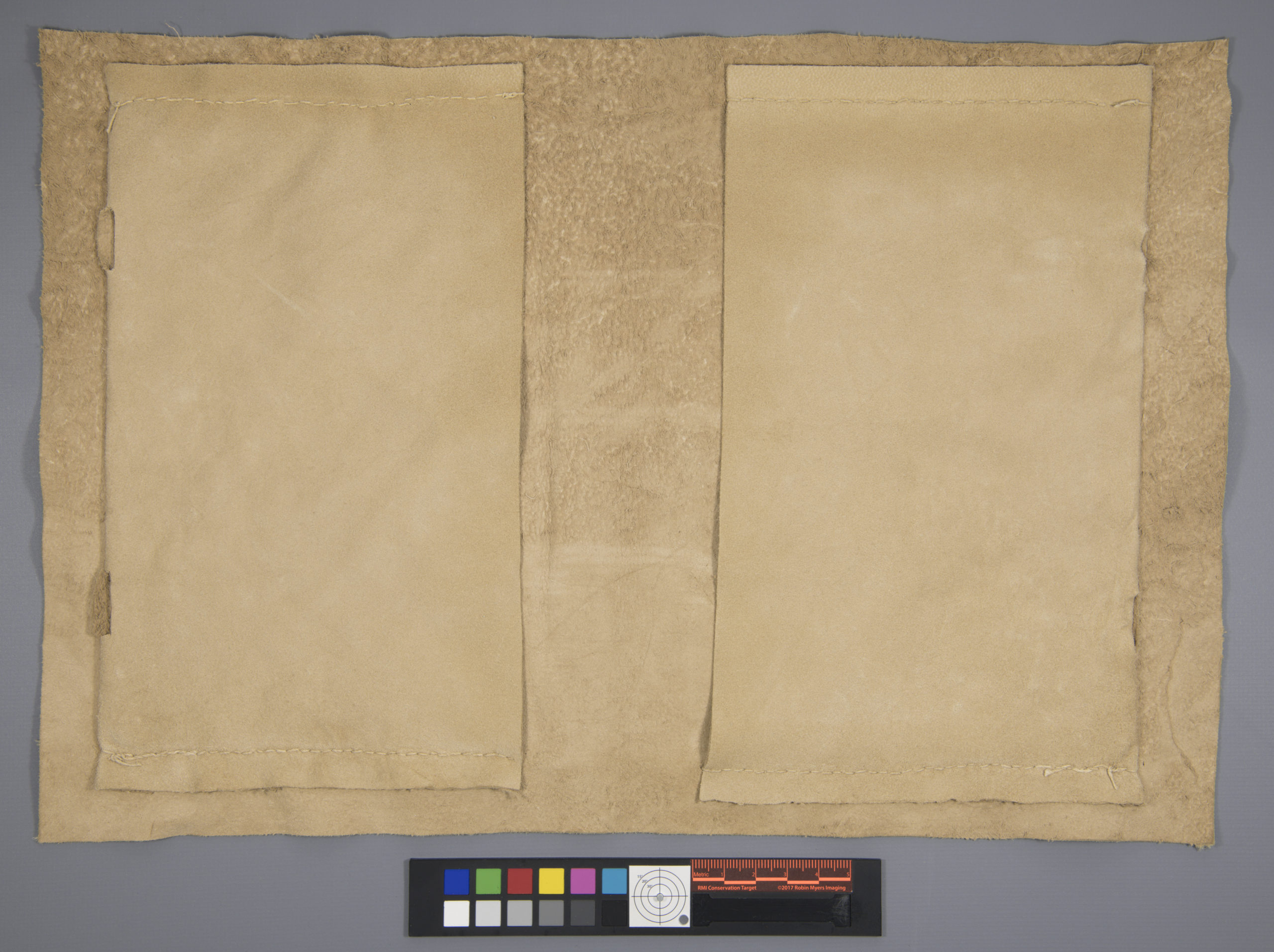
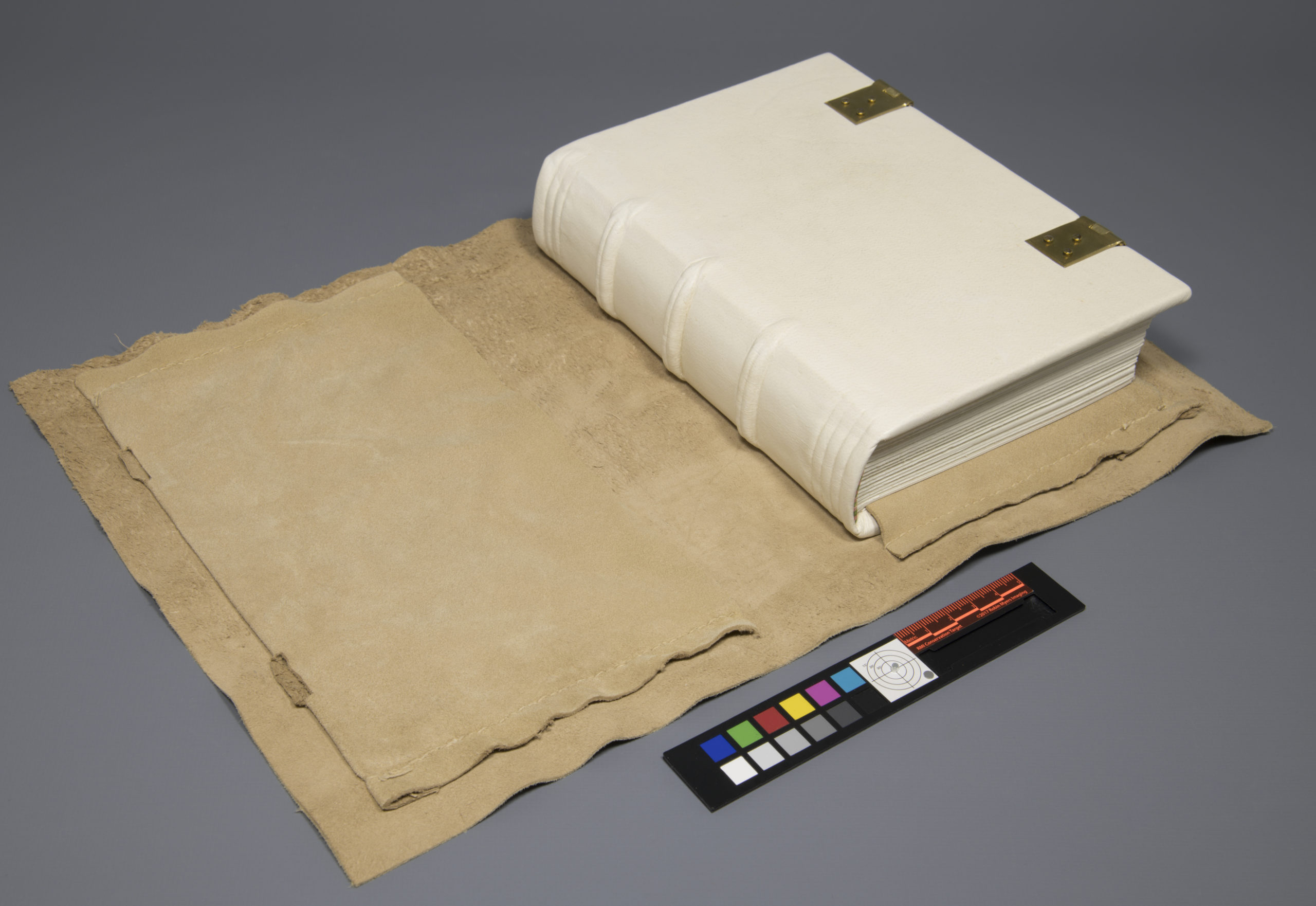
In addition, I created a removable chemise, also requested by the curator of the ARB library. In some Books of Hours, it was common to have a leather chemise, but most often they were not removable. The chemise was created from a vegetable tanned goat split skin.

Gif of the chemise on and off the model.
 The chemise in action.
Video tutorial of how to put on and remove the chemise from the model.

Stay tuned for a future blog post where we will dive into the conservation treatment and research we did on the Book of Hours (ms.37).

Catarina Figueirinhas (UCL) —- Assistant Conservator

Photographic Documentation by Catarina Figueirinhas and Jessica Ebert

Celebrate Preservation Week with Us!

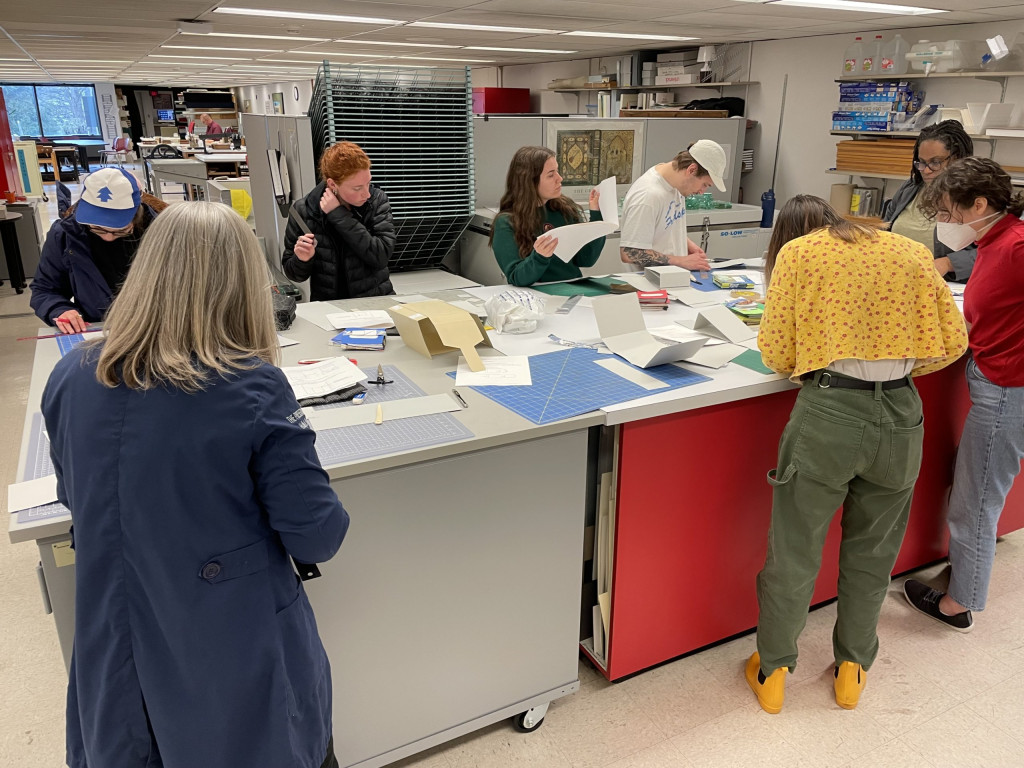
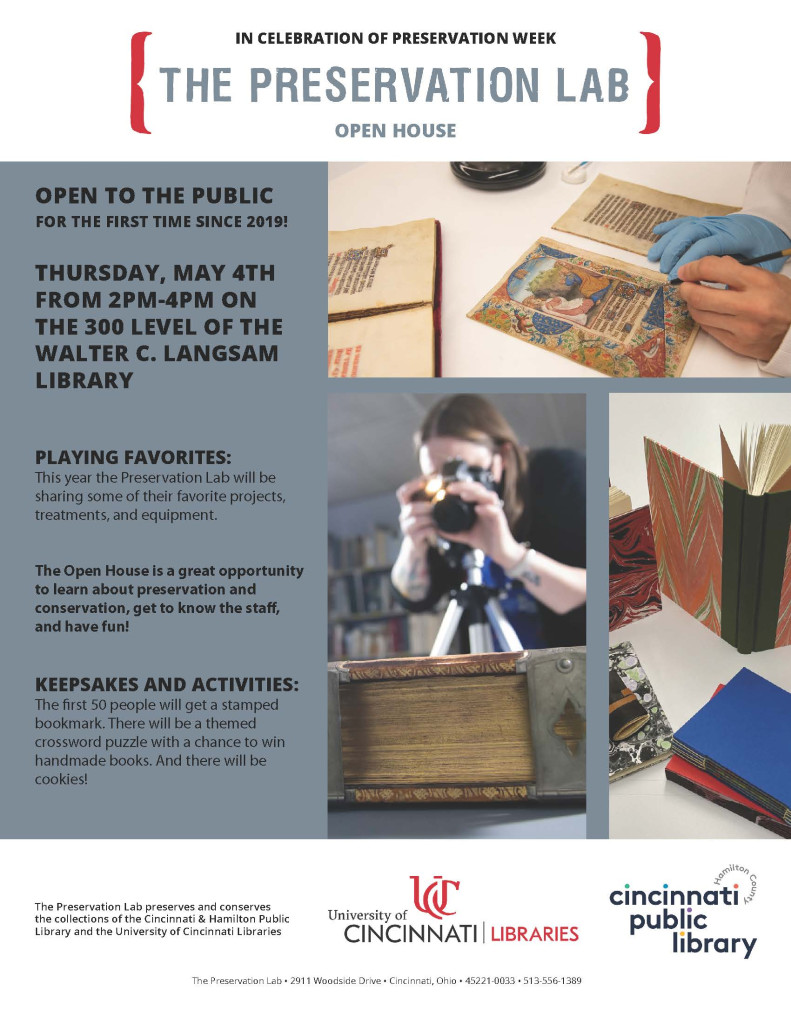
In celebration of ALA’s annual Preservation Week (April 24th-30th), Preservation Lab staff will be offering live demos and show & tells this week and next, both at UC Libraries and the Cincinnati and Hamilton County Public Library:

Each session will be unique, with different staff members showing off different aspects of preservation and conservation!

Jessica Ebert [UCL] – Sr. Conservation & Photographic Documentation Specialist