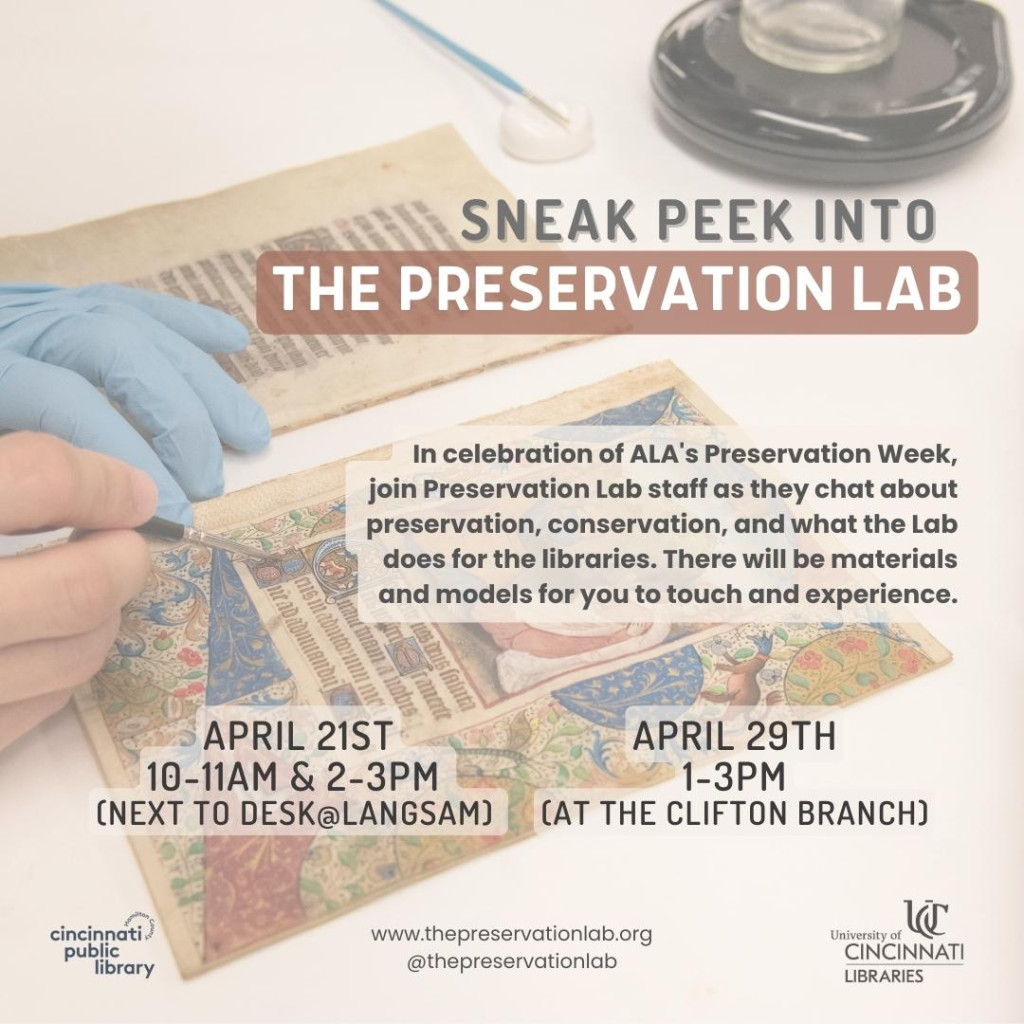
In celebration of ALA’s annual Preservation Week (April 24th-30th), Preservation Lab staff will be offering live demos and show & tells this week and next, both at UC Libraries and the Cincinnati and Hamilton County Public Library:
Each session will be unique, with different staff members showing off different aspects of preservation and conservation!
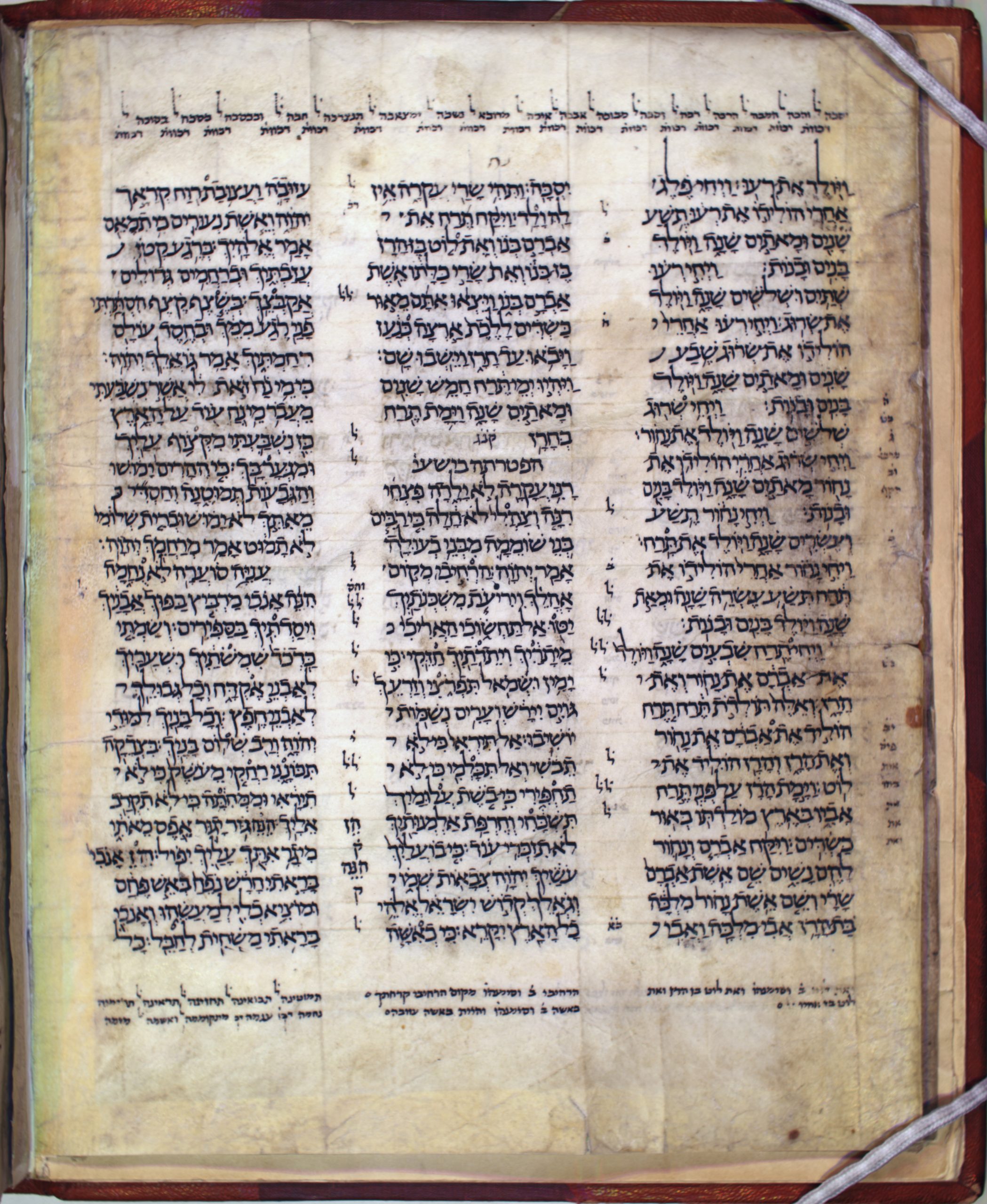
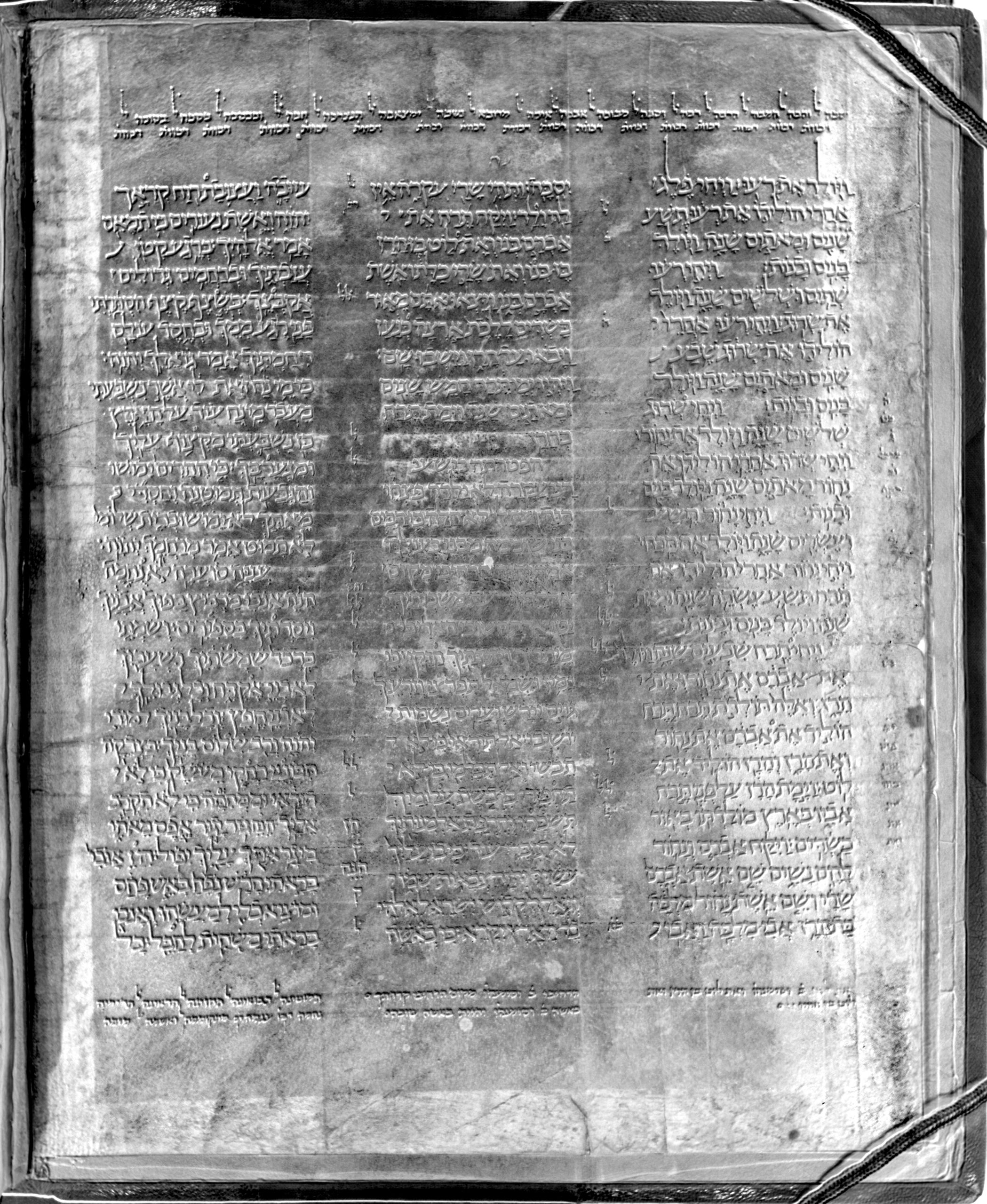
As mentioned in a previous blog post, Andrew and Naomi from Case Western Reserve came to the lab in late February to demo the MISHA portable multispectral imaging system, made possible by a National Endowment for the Humanities (NEH) Research Grant awarded to the Rochester Institute of Technology. In total, Naomi and Andrew imaged five objects from the Public Library, UC Libraries, and one of our third-party institutional clients. Imaged books included, one Otto Ege item, two Book of Hours, one undated Latin music manuscript, and a Pentateuch volume from Hebrew Union College. In all, thirteen separate capture sessions were carried out for the five objects. Afterwards, the raw data from the capture sessions was shared with the Lab via OSF (Open Science Framework) so that I could process the data in the NEH grant supported open access RCHIVE (Rochester Cultural Heritage Image processing and Visualization Environment) software.
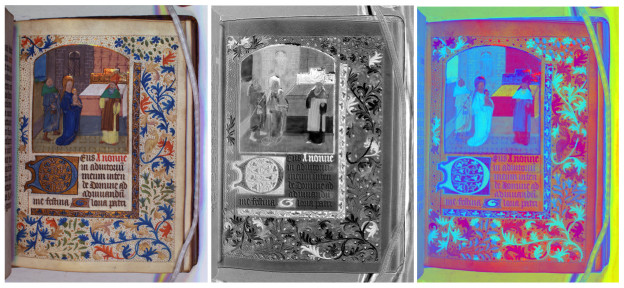
RGB representationBand 5 with the MNF (Maximum Noise Fraction) algorithm applied and the Gaussian enhancement appliedA false color representation
The image gallery above shows the recto of leaf 32 from the Public Library’s copy of Fifty Original Leaves from Medieval Manuscripts, Western Europe, XII-XVI century, by Otto Ege.
While each of the capture sessions took only two minutes to complete, I found that processing the raw data took me a bit longer to figure out. Processing the data felt very similar to using CHI’s RTI Builder and Viewer software. However, in this situation I did not have a week-long training opportunity to learn the ins and outs of the software and its functions. For the Spectral Analysis App, I had only a couple of brief documents to refer to, so the learning curve was a little steeper. I also experienced some issues with the software while processing the data with the flatfield files provided from the capture session. But in the end, the processed files seemed fine without the flatfield data, so it all worked out.
RGB representationBand 3 with the MNF (Maximum Noise Fraction) algorithm appliedA false color representation
The above image gallery depicts a leaf from Hebrew Union College’s Pentateuch Ms. 1 with adhesive staining, tape, and prior repairs.
What I discovered through processing all the MISHA data and then comparing it to the existing specialized imaging done in the Lab was that the suite of imaging we do in the Lab is very well rounded and, in general, suits our needs and our clientele quite well. In many cases, our results were at least comparable, if not better (specifically within the UV wavelengths) than the results accomplished using the MISHA. And, especially with our UV workflow, though our current capture time might be slightly longer than that of MISHA, the data processing time is significantly shorter and, in the case of UV especially, the side-by-side results of the accurate normal illumination next to the full color UV image(s) is ideal for our purposes.
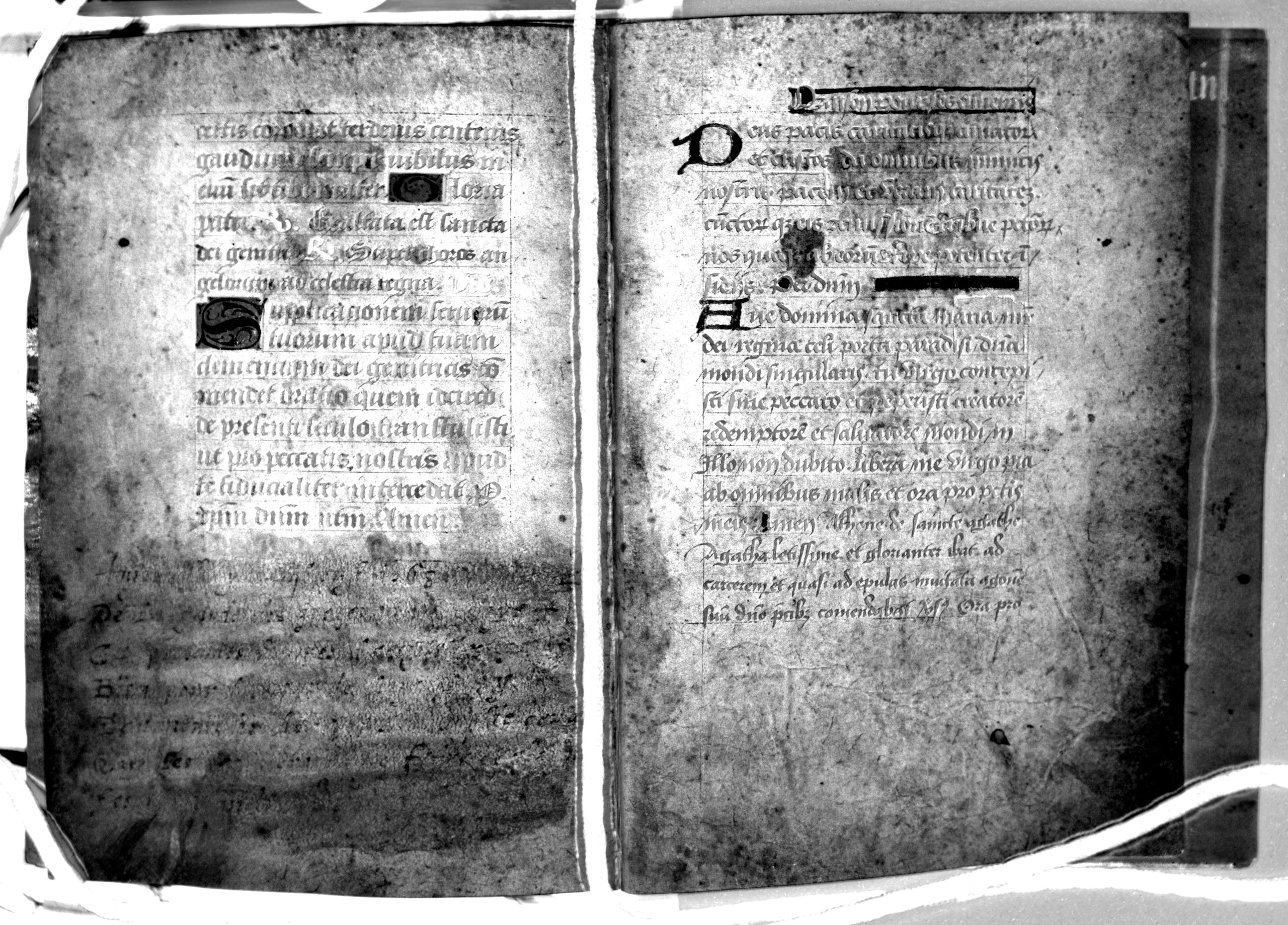
RGB representationand 2 using the Maximum Noise Fraction (MNF) algorithm with the brightness adjusted
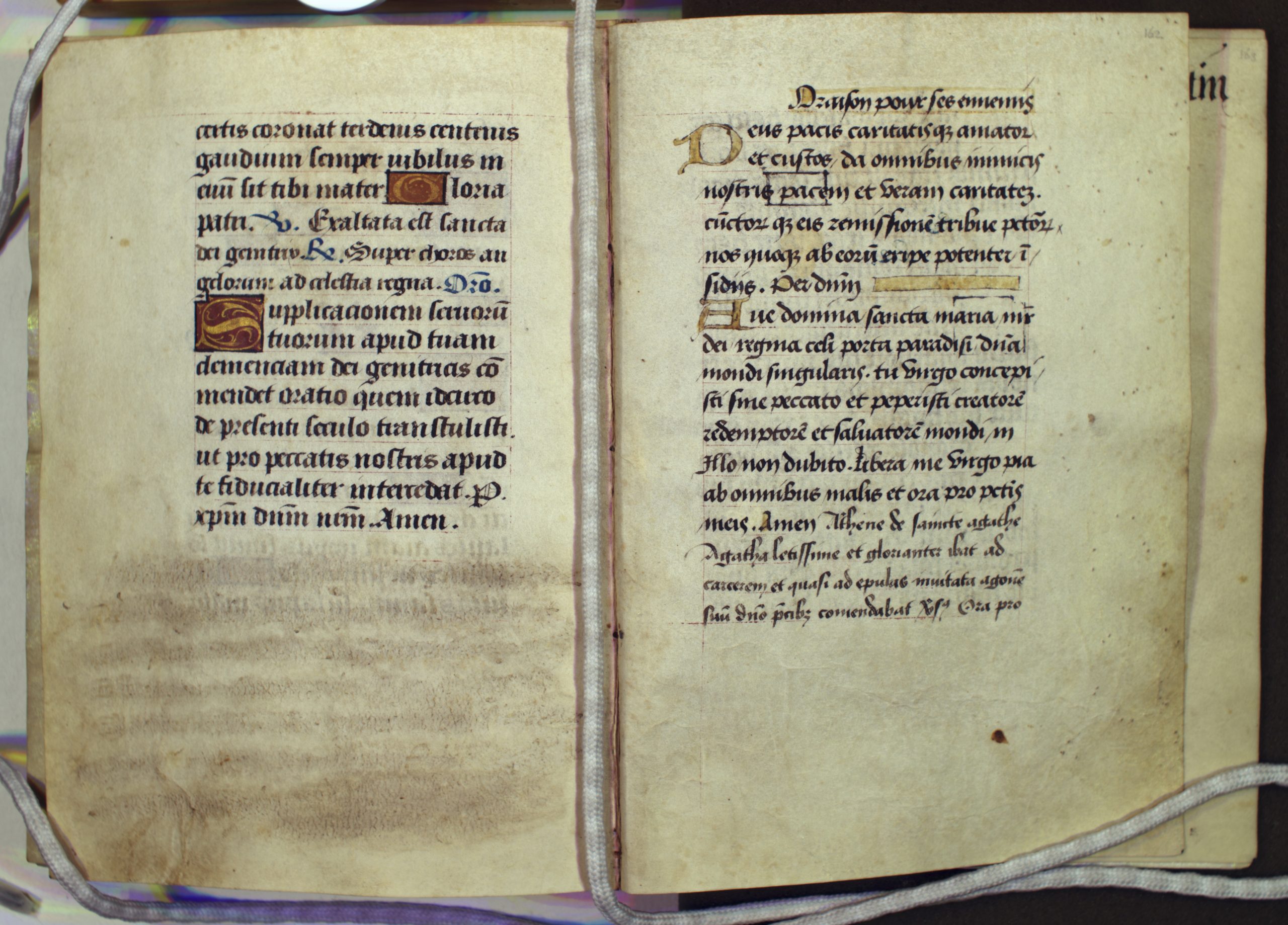
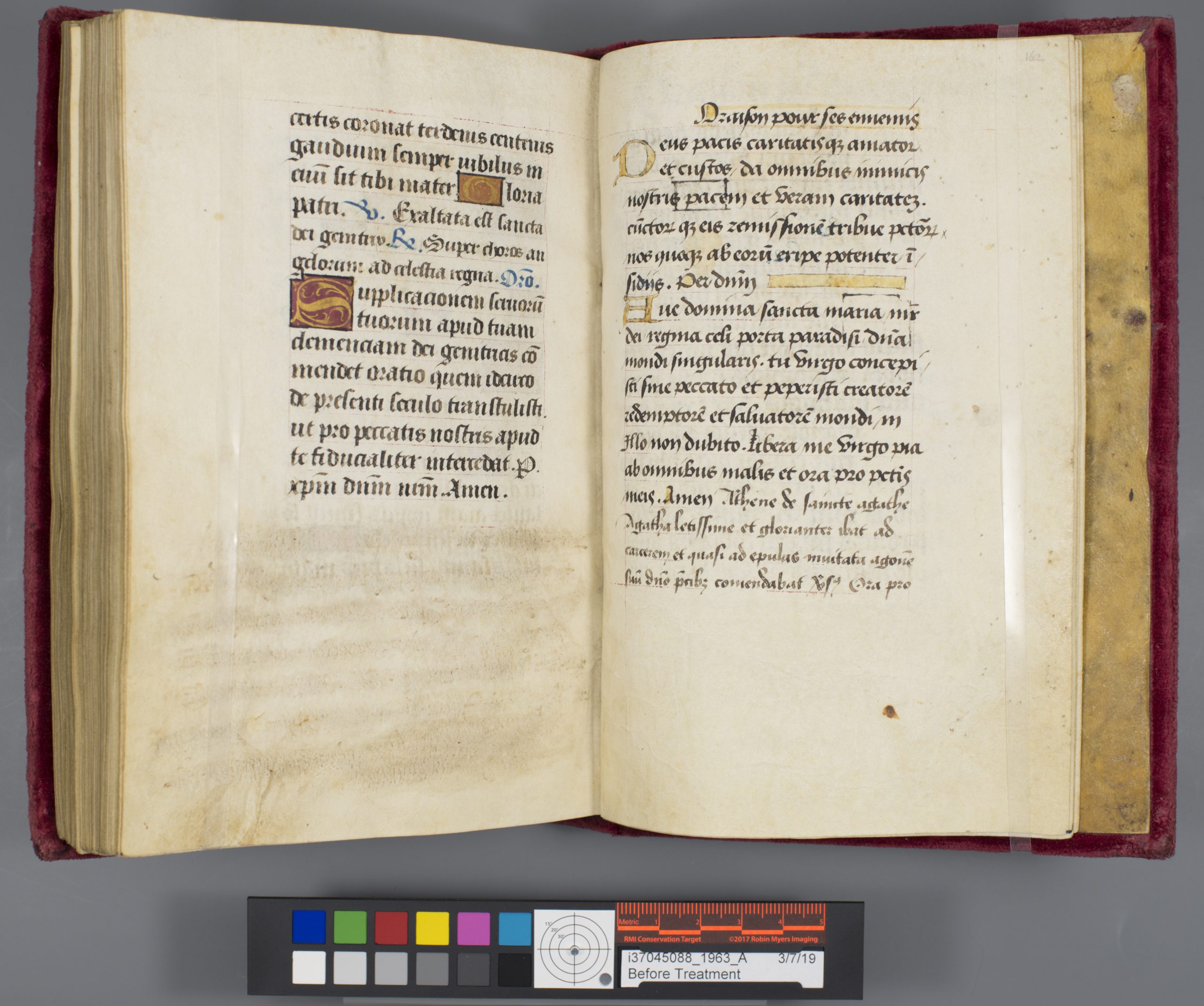
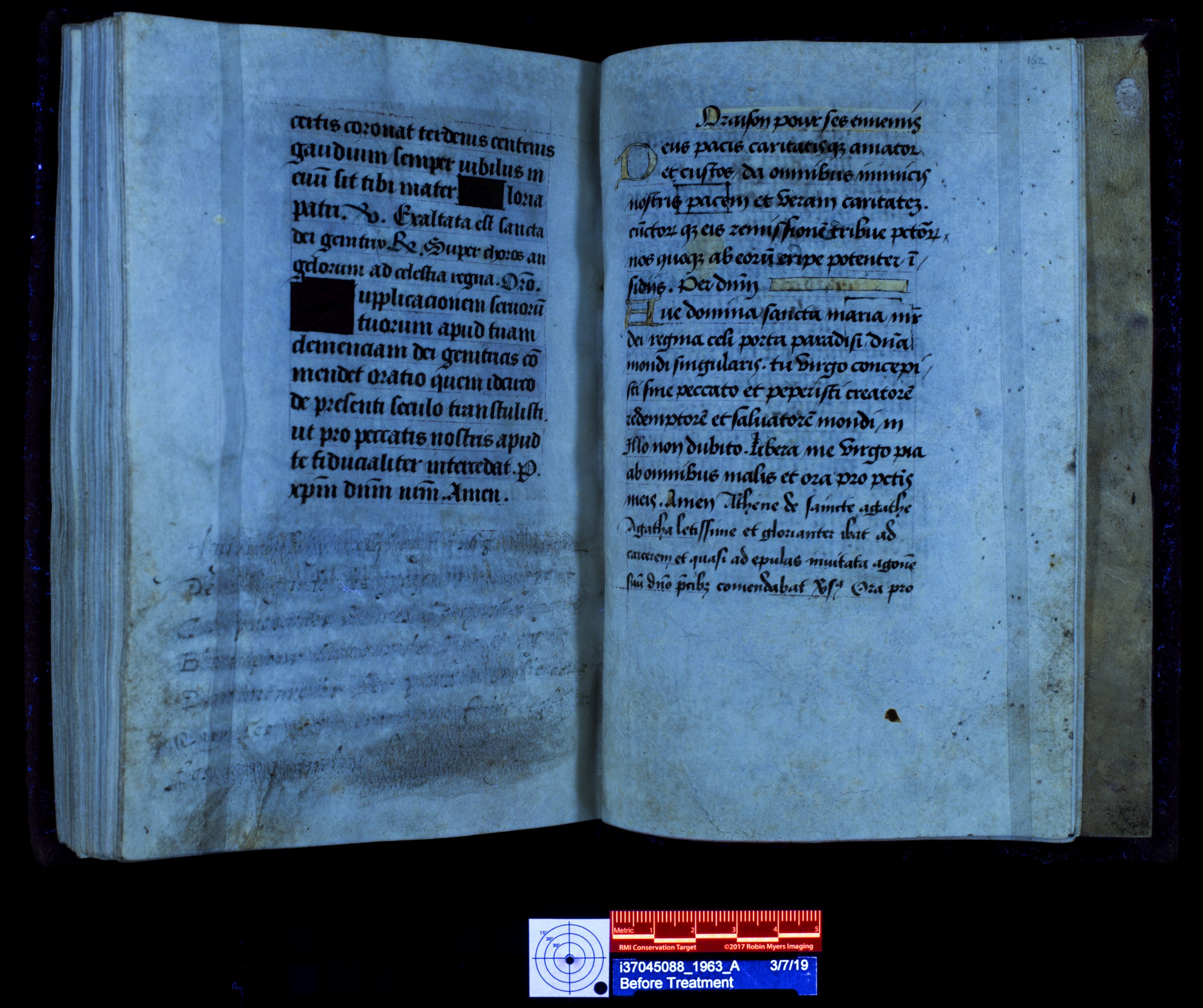
The images above show an example of scraped text on parchment from UC Libraries Hours of the Virgin from 1475, currently in the Lab for treatment. Compare these MISHA generated images to the documentation performed by Catarina Figueirinhas and myself using the Lab’s equipment and processes below.
Normal illuminationUV image (using our old setup without the UV Innovations target)
That said, I am fully aware that not everyone has access to the equipment/training that I have been fortunate to curate/experience over the last five plus years. Also, not everyone uses their finished data exactly how we do. For instance, the needs and expectations of a conservation lab and cultural heritage institutions can be very different. Even within the conservation field, how we use the data provided by specialized imaging in our hybrid book and paper lab is quite different from the kind of data needed by a fine arts conservation lab. Ultimately, I think the core audience for a system like the MISHA system is an organization looking to expand their suite of imaging services, or an institution with no multispectral imaging infrastructure interested in imaging collections in a quick and easy manner. Though for the latter, I would say that there is a big learning curve in manipulating and processing the data, but if greater focus is put into making the software and processing steps user-friendly, especially to novice users, it is completely manageable. And if this step is taken, I think the system could help a lot of institutions dive deeper into the materiality and history of their collections.
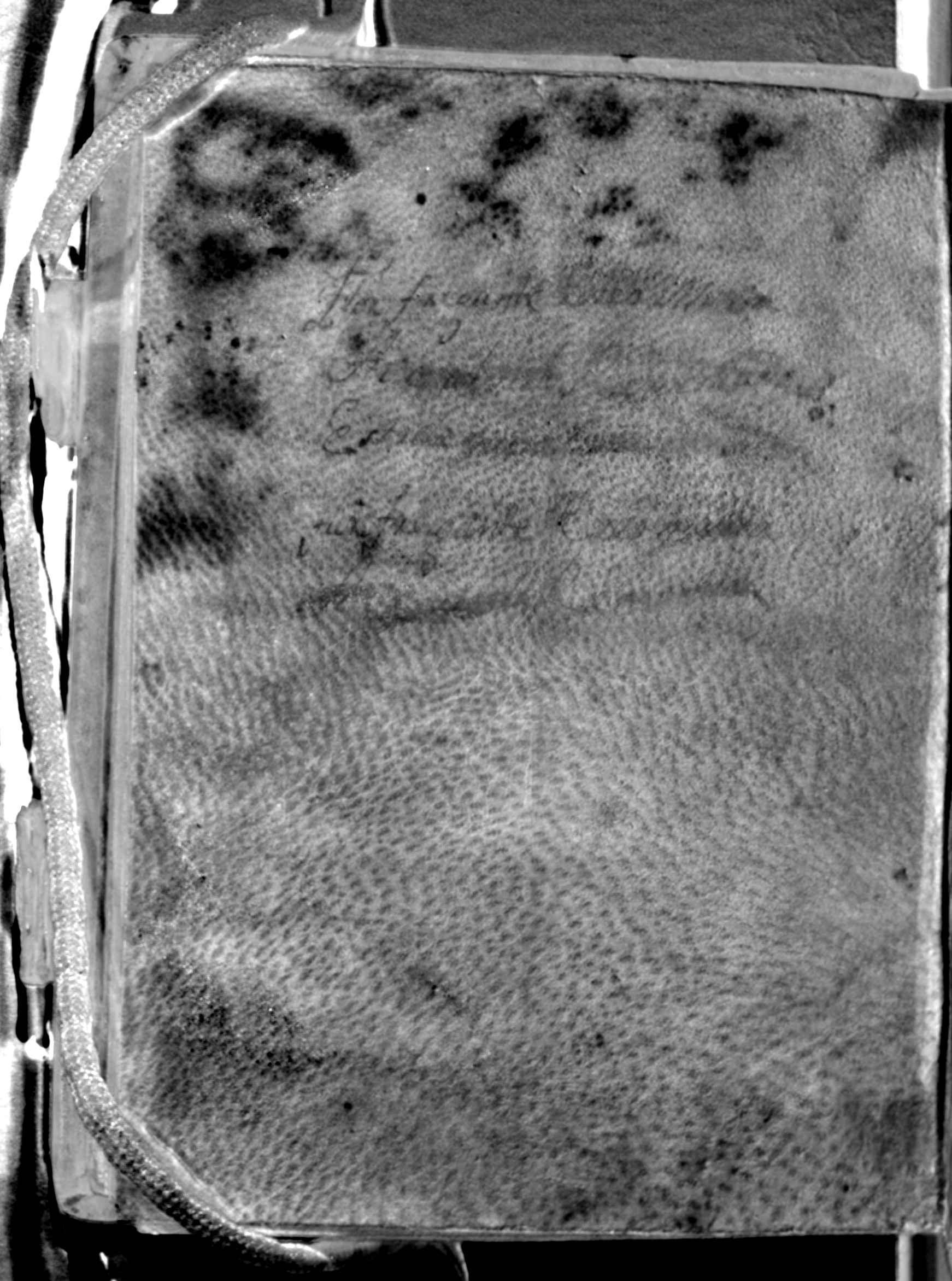
RGB representationBand 5 with the PCA (Principal Component Analysis) algorithm applied, inverted with brightness adjustedA false color representation
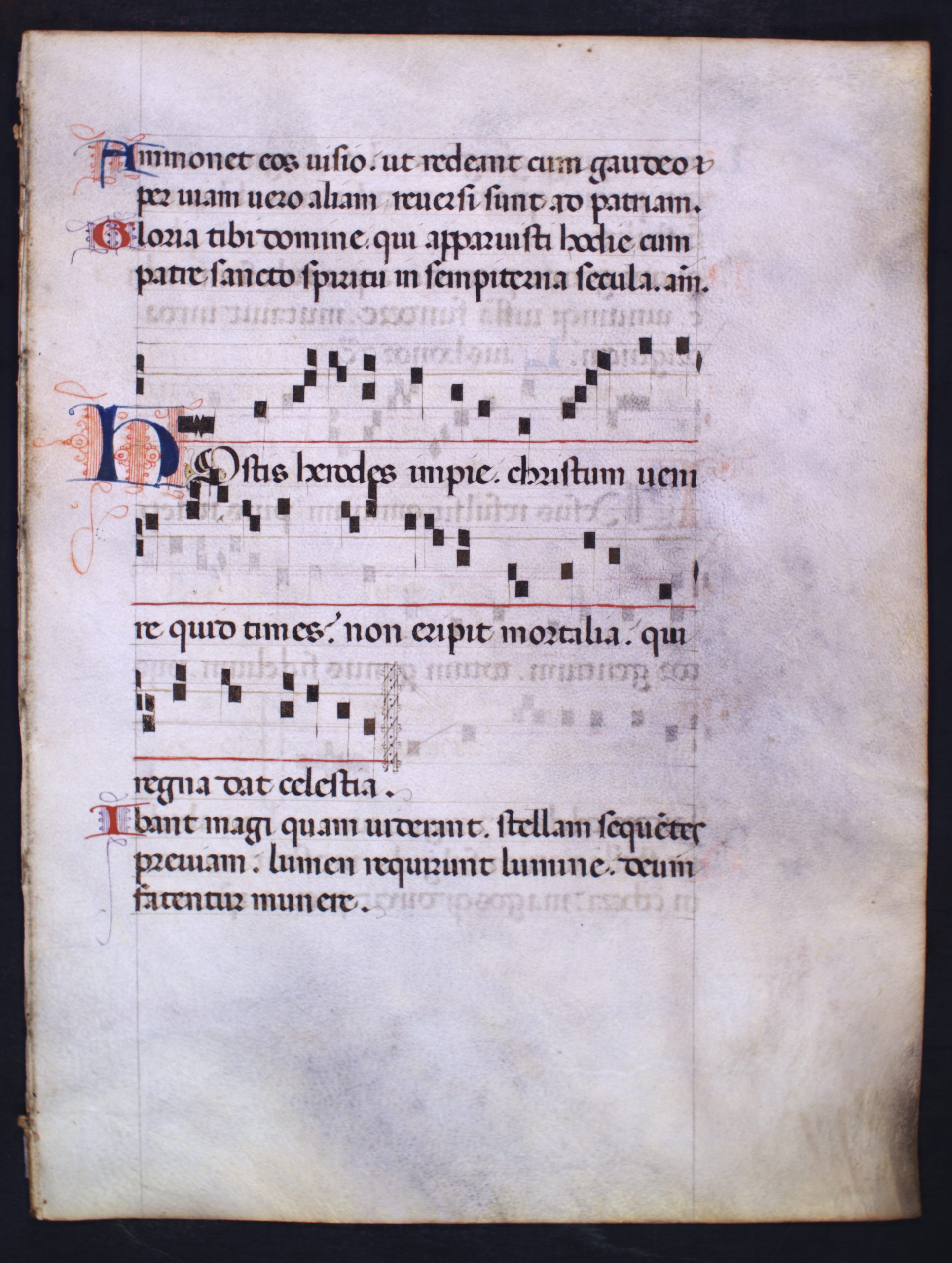
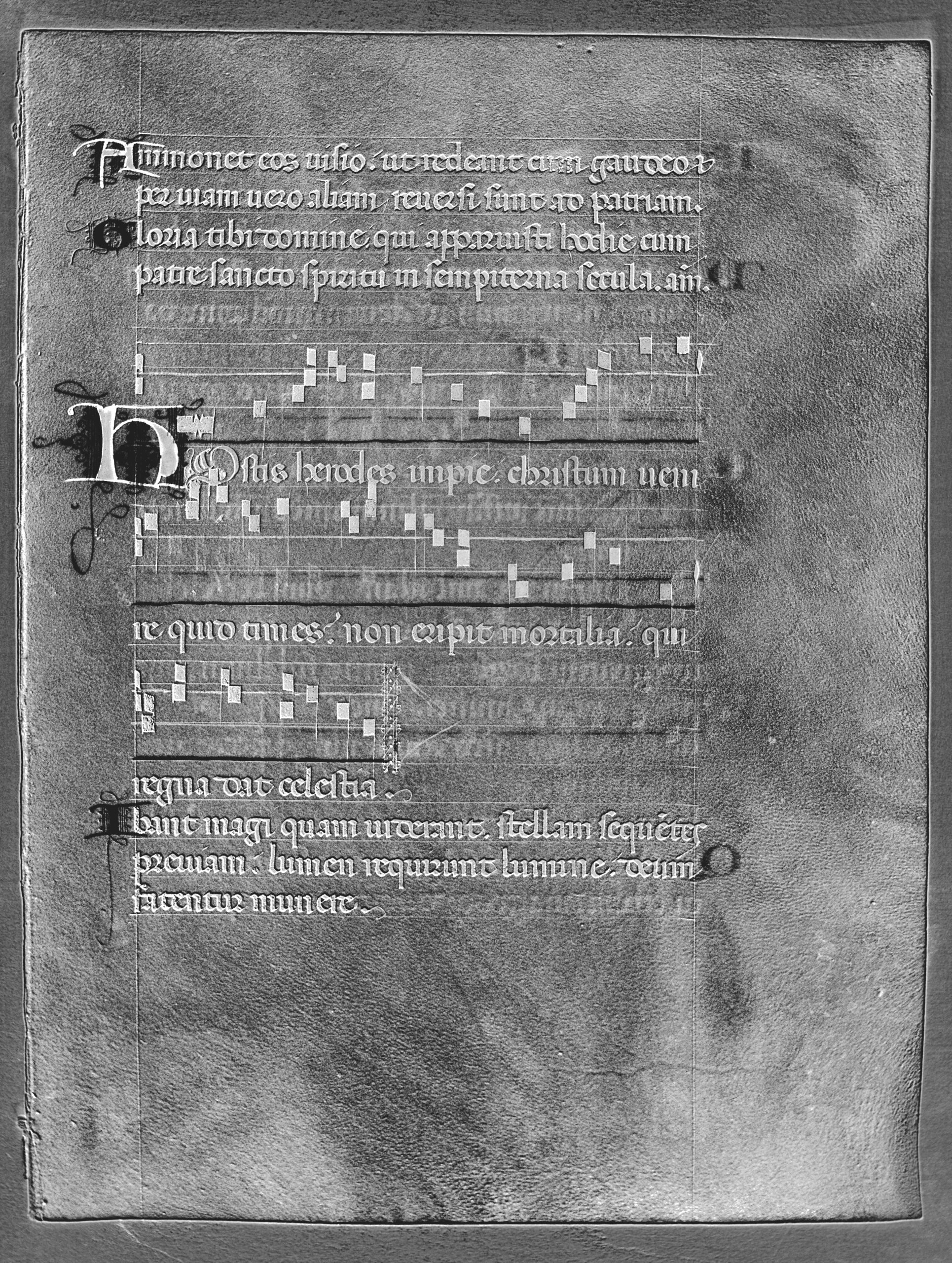
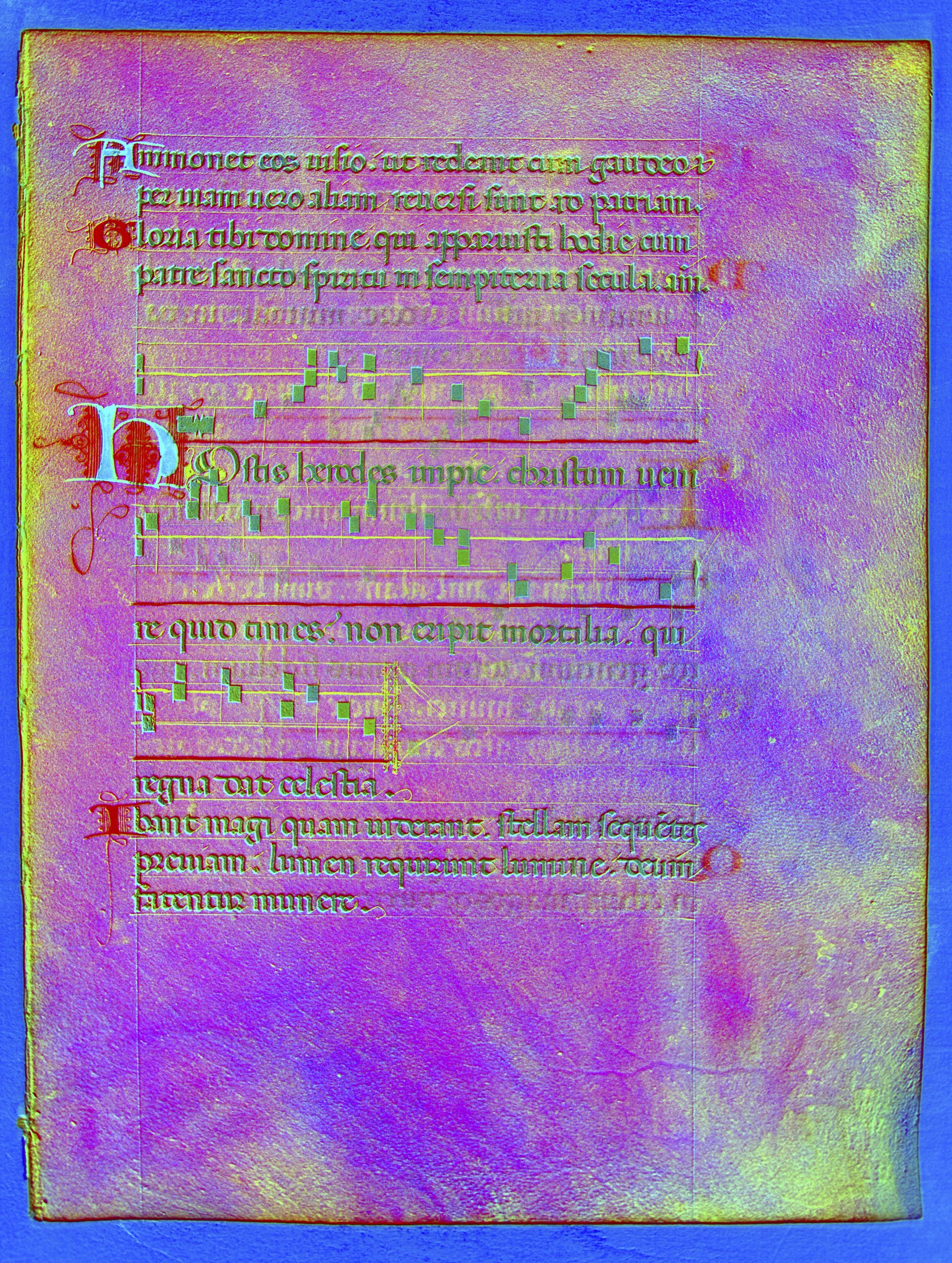
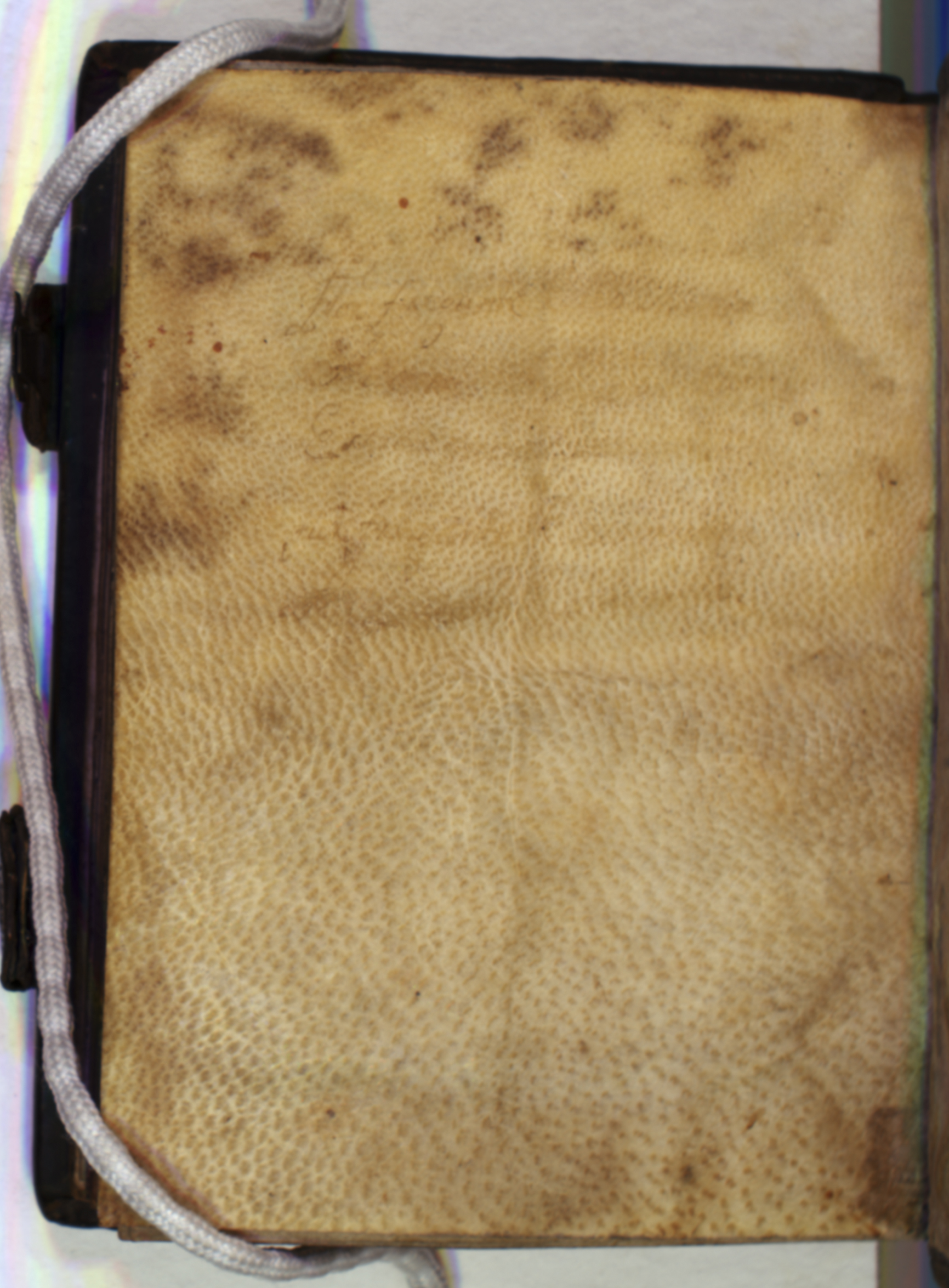
The images above depict another example of faded, scraped text. This flyleaf is from an undated Latin music manuscript that is part of the Public Library’s collection. The images below represent imaging done by the Lab, both normal illumination and UV radiation, with the goal to increase the legibility of the inscription.
Normal illuminationUV radiation image using our current, standardized workflow that has been further enhanced to bring out the text.
In the end, multispectral imaging is just plain FUN! So, the idea of making it more accessible to a wider audience is extremely exciting and I think the work that NEH, RIT, and colleagues like Andrew and Naomi are doing to share the power and wonder of multispectral imaging is amazing. The idea of a portable multispectral imaging system with free processing software that does not take a PhD to use is boundary-breaking, and it gives us a glimpse into a future of accessible and exciting imaging, which thus allows us to see and understand more of the past. I will always be an advocate for that kind of imaging!
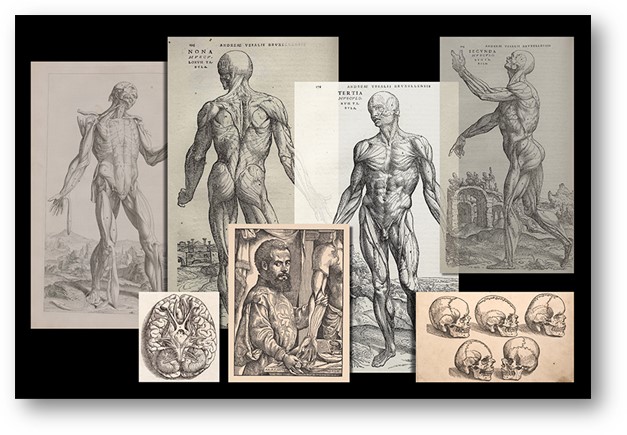
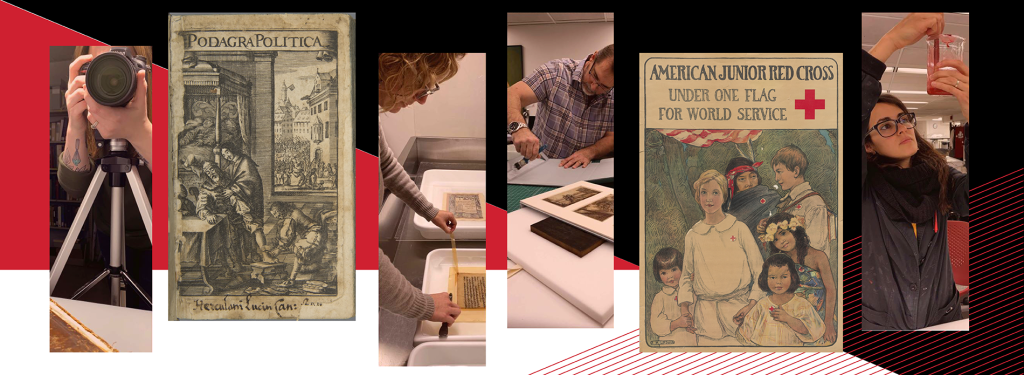
The Preservation Lab has enjoyed our involvement in the Vesalius lecture series and exhibits including preparing the loan agreements, leading and assisting with photographic documentation, and providing spectral and computational imaging to the Vesalius researchers and lecturers.
Some of this work made a guest appearance on the FoxNews 19 segment, starring Dr. Stephen Joffe, on the three rare books that had been on view in December in the Winkler Center.
Please join us for the second lecture in the six-part series – “Making the Fabrica: The Illustrations, Printing, Binding & Publication.” Award-winning cultural historian Dániel Margócsy, PhD, University of Cambridge, will describe the creation of the “Fabrica.” Dr. Margócsy will be joined by Gabrielle Fox, a Cincinnati book binding and preservation expert, who will discuss the bindings of the first and second editions that will be on public display in the Donald C. Harrison Health Sciences Library.
The lecture, free and open to the public, will be held Tuesday, Nov. 16 at 5:30 p.m. in Kresge Auditorium, 231 Albert Sabin Way. In-person activities will be provided under CDC guidelines or local COVID-19 restrictions, with the well-being of all guests remaining the top priority. View UC’s current COVID-19 updates.For those not wishing to attend in person, the lectures will be live streamed via Zoom.
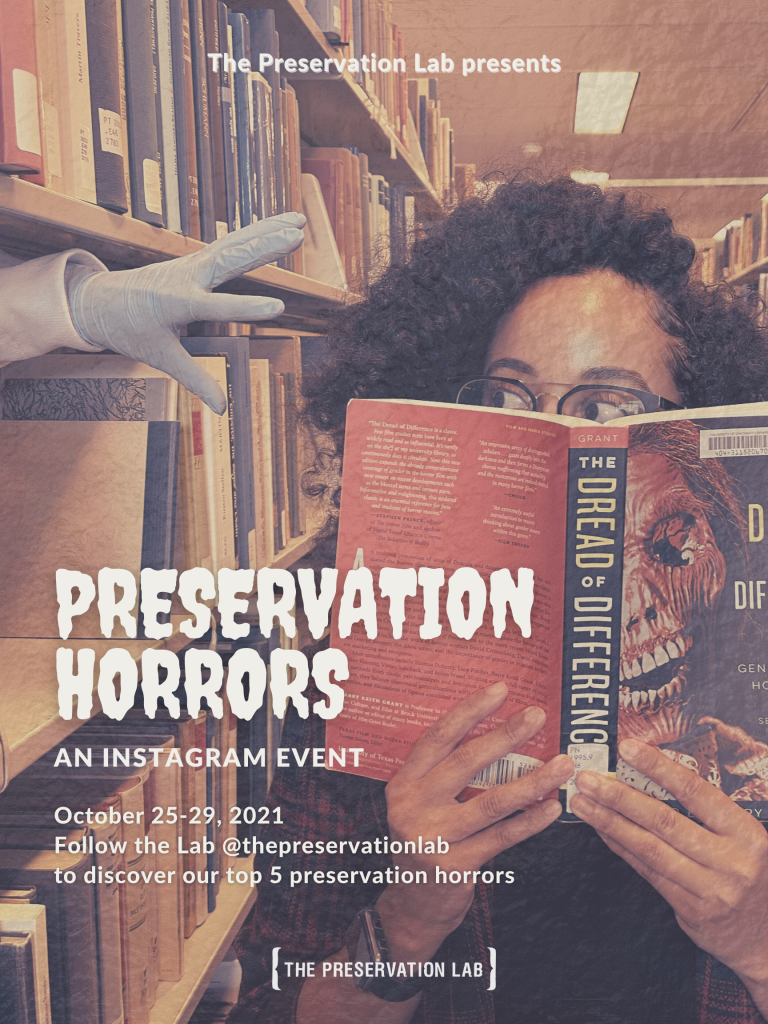
Tune into the Lab’s Instagram the entire week before Halloween, where we’ll be sharing five of the scariest “preservation horrors” that we encounter in our work. It’s bound to be a fun but frightening week that you won’t want to miss!
A very special thank you to our model, Aja Hickman, who also happened to have the wonderful idea for this event!
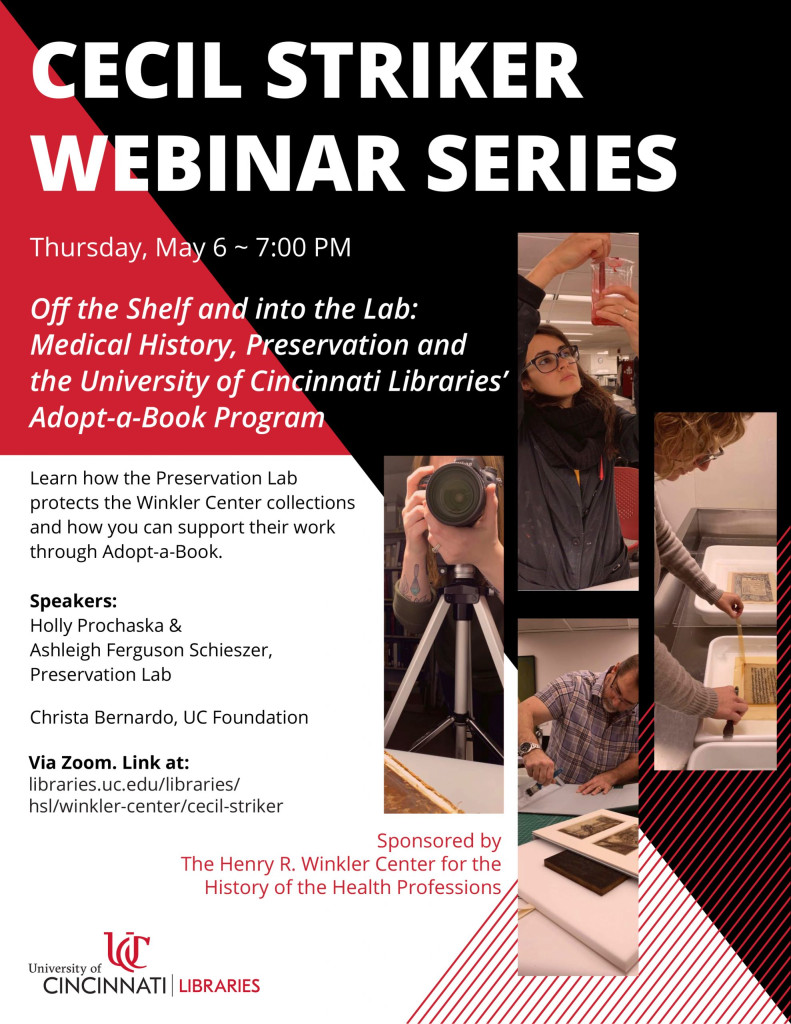
Thanks to everyone who attended the May 6th Striker Lecture, Off the Shelf and into the Lab: Medical History, Preservation, & the University of Cincinnati Libraries’ Adopt-A-Book Program.
Join Holly and Ashleigh this Thursday at 7pm (EST) for the 3rd lecture in the Cecil Striker Webinar series, Off the Shelf and into the Lab: Medical History, Preservation, & the University of Cincinnati Libraries’ Adopt-A-Book Program.
Ashleigh and Holly will talk about the work we do in the Lab and UC Libraries’ Adopt-A-Book program.
We’ve reached the end of Preservation Week and what better way to celebrate than with a fun how-to video on our Lab’s YouTube channel?!
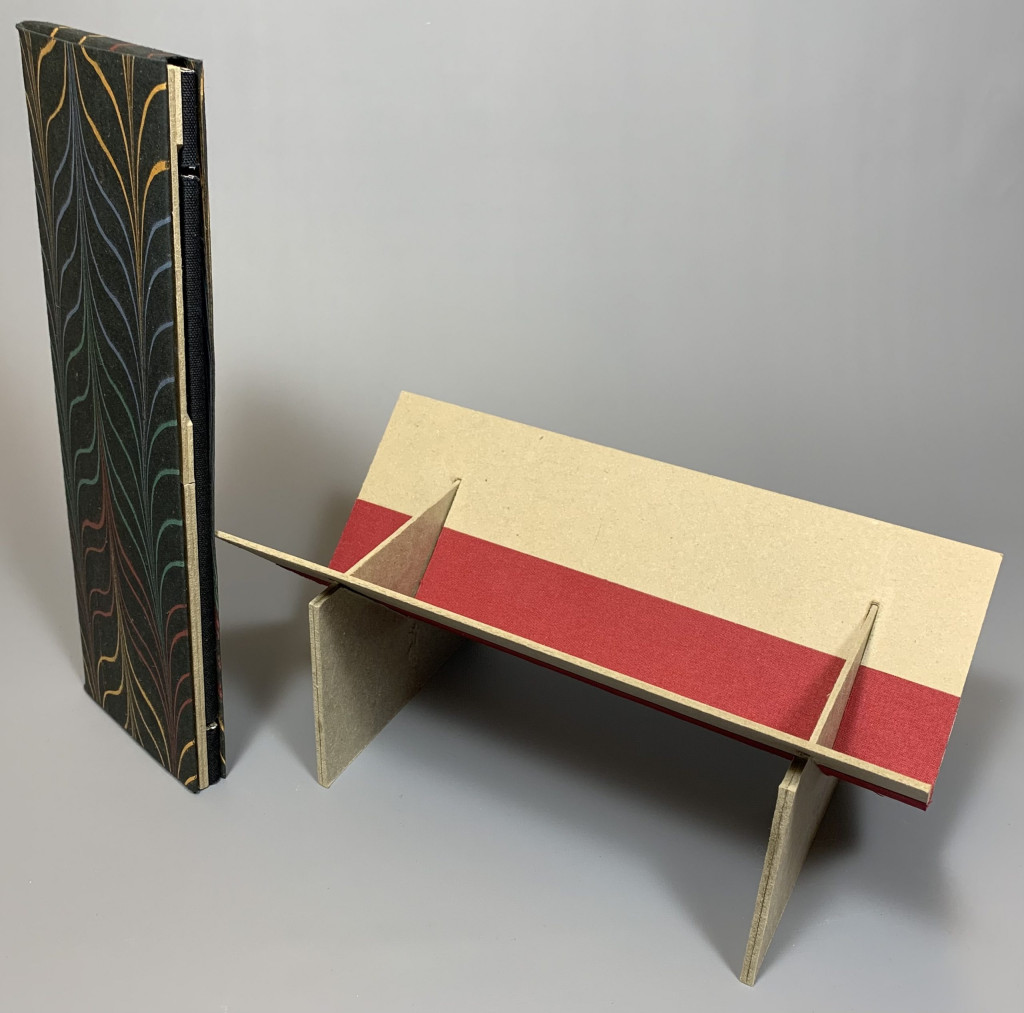
This video goes over how to make a collapsible punching cradle, step-by-step. Punching cradles are a useful bookbinding tool to have on hand in your toolbox. They allow you to create uniform sewing stations in your signatures or gatherings when you are preparing to sew a textblock. Best of all, this type of punching cradle is fully collapsible and easy to store while not in use; especially when you make one of these simple slipcases to hold all the pieces.
Here you can see a collapsed punching cradle stored in a paper slipcase made with marbled paper (left) and a punching cradle assembled and ready for use (right).
Don’t forget to “like” our video and subscribe to our YouTube channel to stay in the loop when we post new videos to the channel. If you decide to make your own punching cradle, we’d love to know what you thought of the video or, even better, tag us in a photo of it on Instagram (@thepreservationlab).
We hope you’ve enjoyed celebrating Preservation Week 2021 with us! We look forward to celebrating our 11th annual Preservation Week next year…maybe even in person this time?!