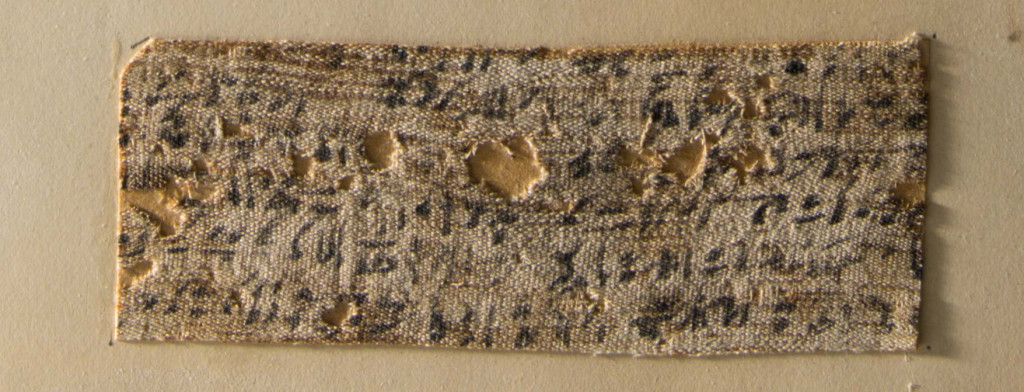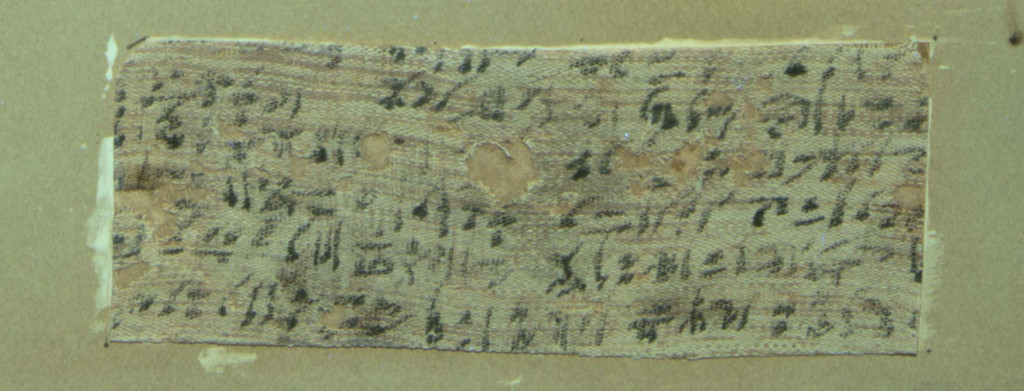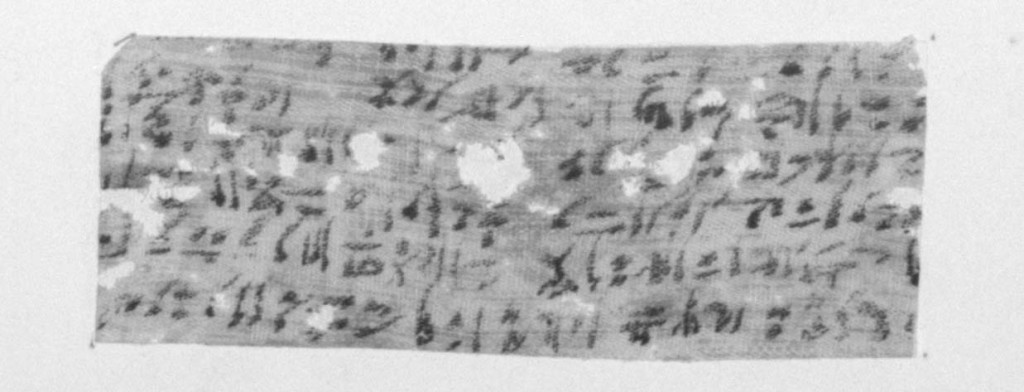
Tag Archives: Raking Illumination

Unfolding the Challenge: Conserving Folded Parchment Deeds with Wax Seals

When a group of four folded parchment deeds arrived at the Preservation Lab, I was immediately excited about the project. It is not often that we work with parchment, particularly on “flat” items such as parchment deeds. I use “flat” in quotation marks because these were anything but flat once unfolded.

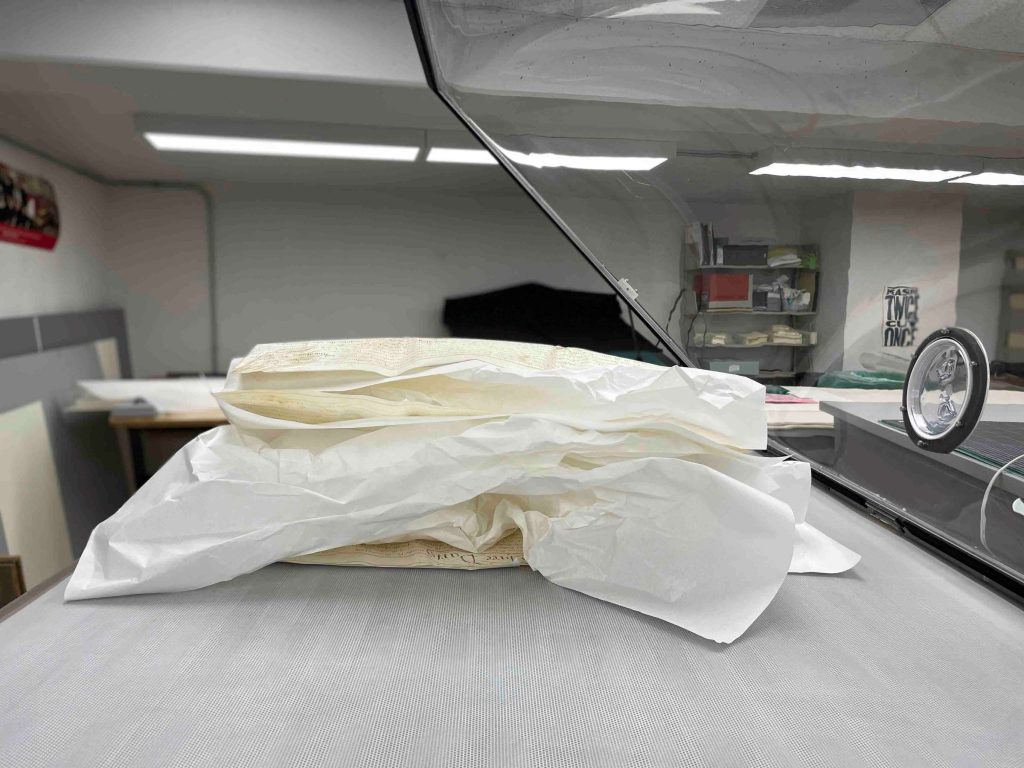
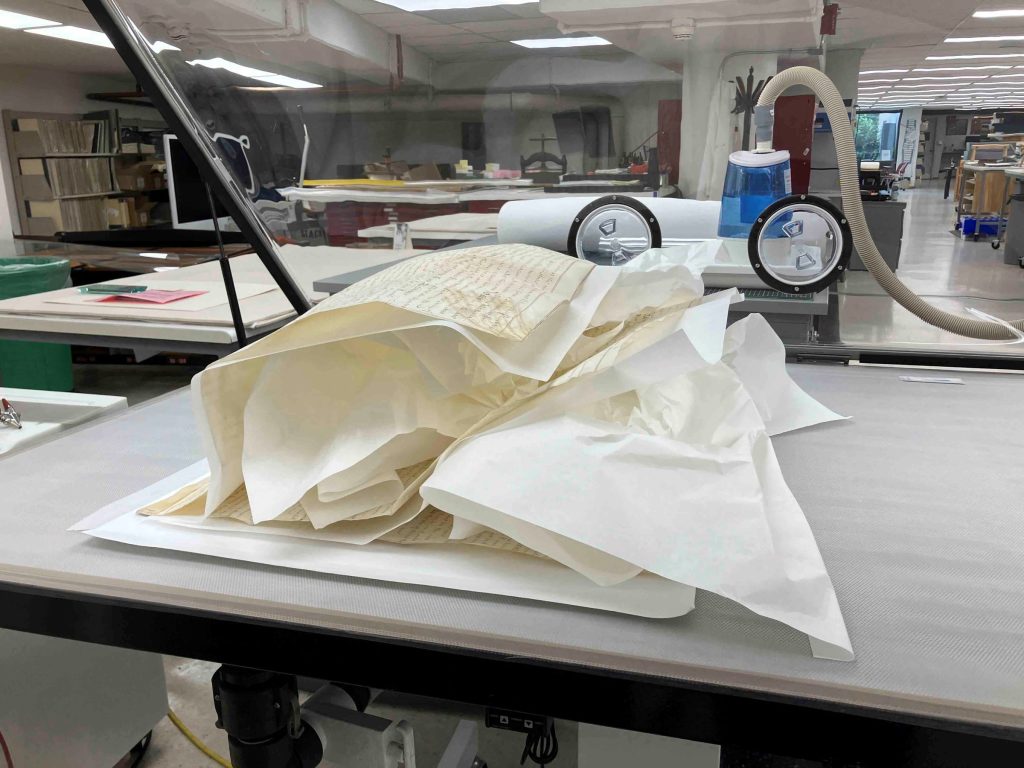
Four folded parchment documents stacked on top of one another for documentation.
Before treatment photography – four folded parchment documents.

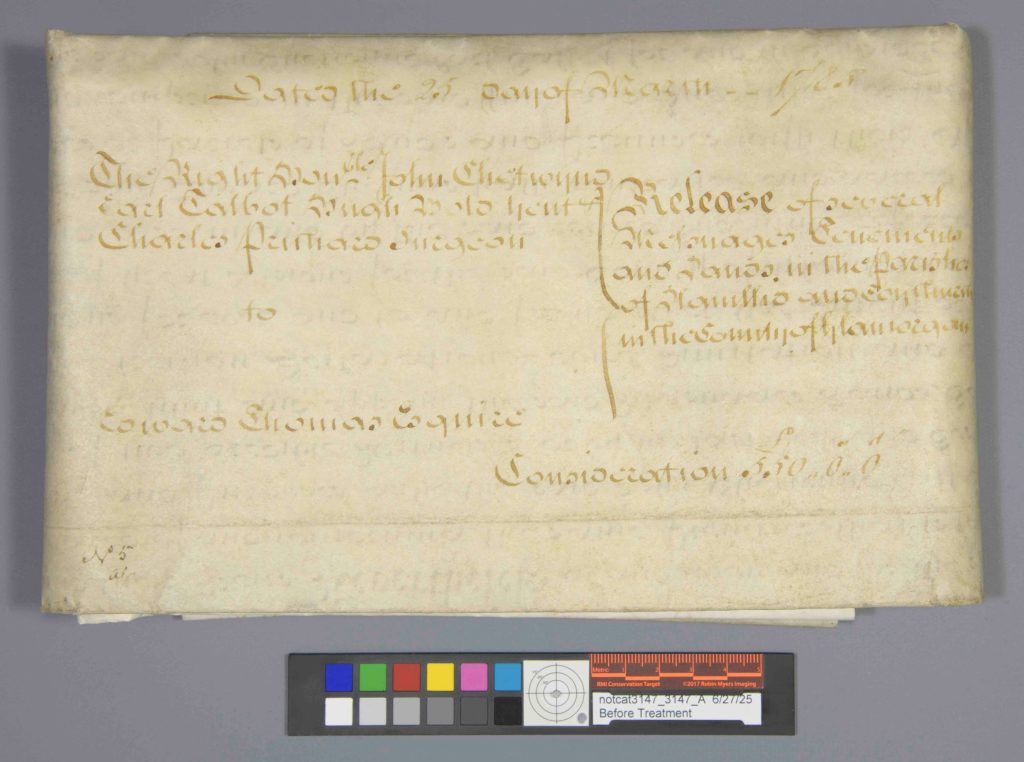
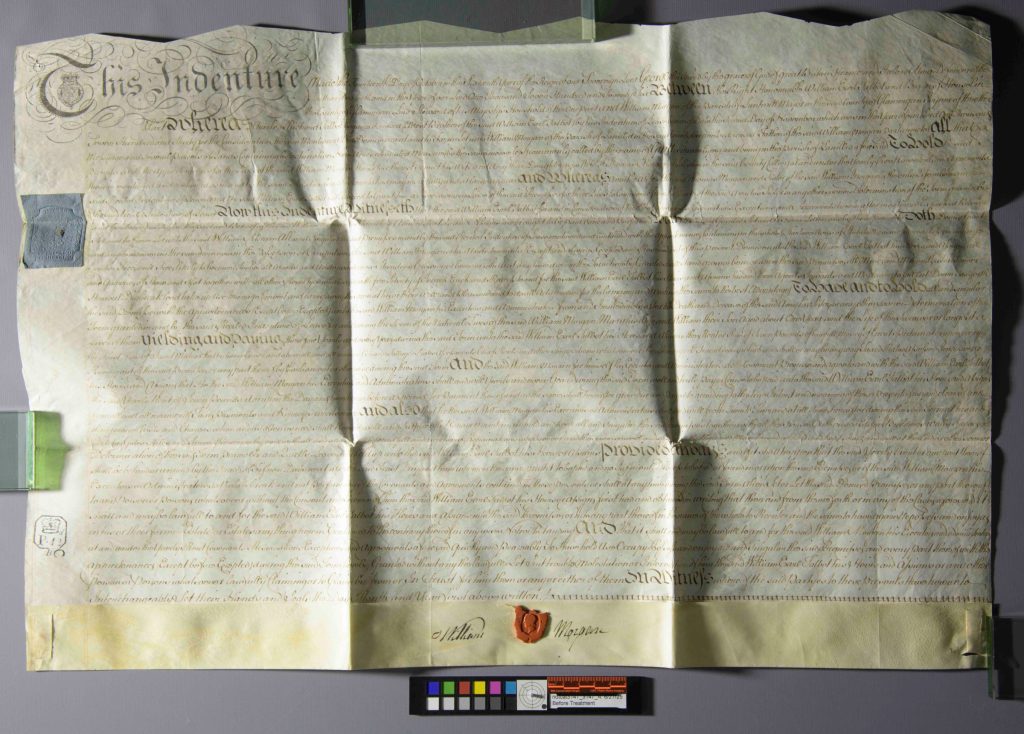
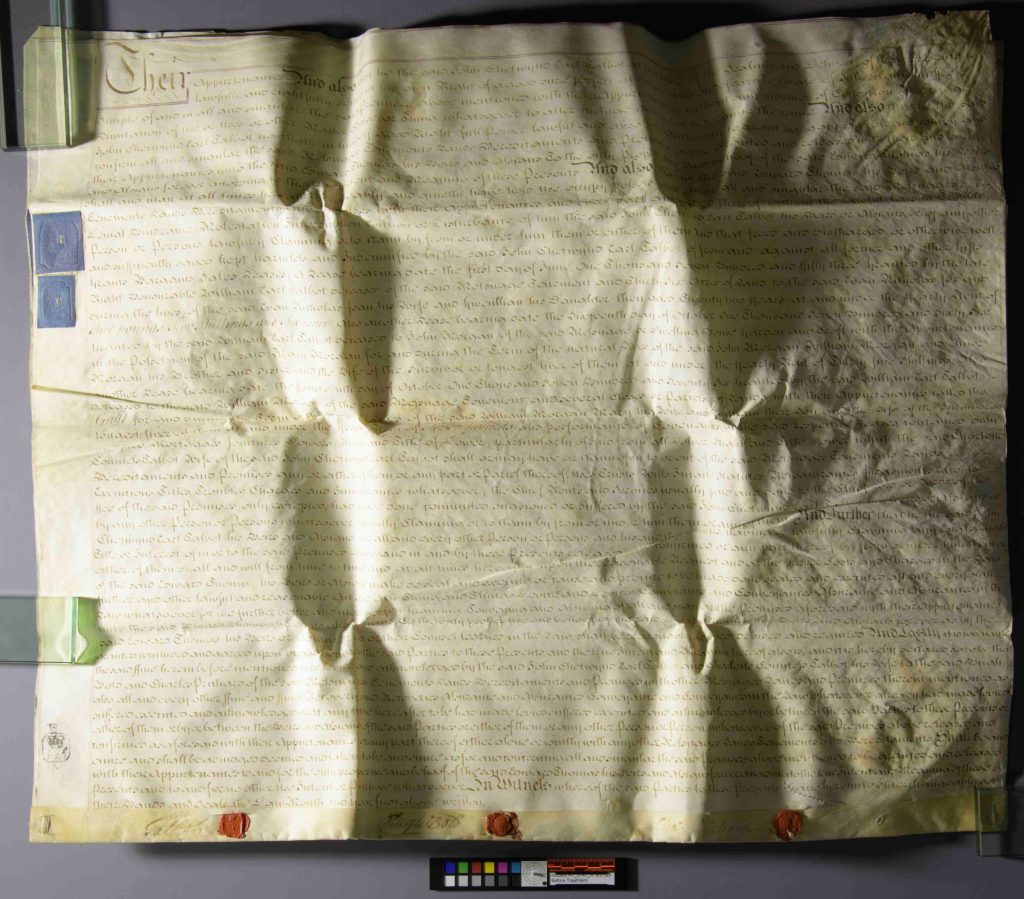
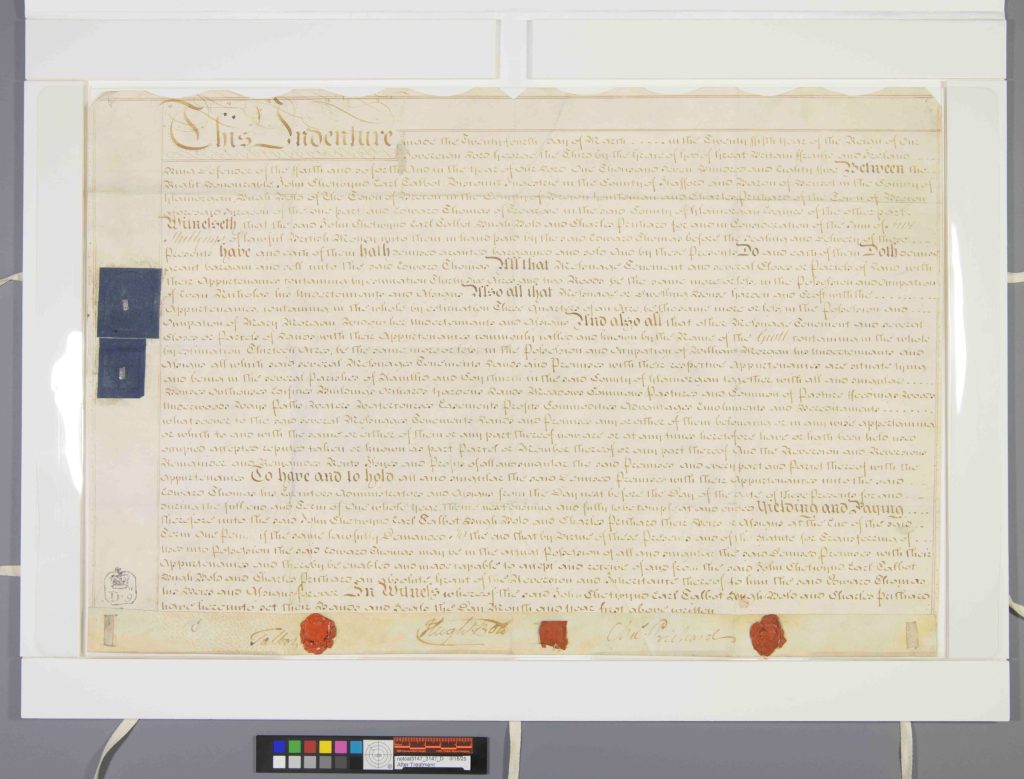
At first glance, they looked deceptively simple: compact, neatly folded, and quite small. Once opened, however, they revealed large, creased, and cockled sheets of animal skin, some with fragile wax seals and one composed of multiple leaves stitched together along the bottom edge. (Prior to treatment, each document was photographed as they were received in the Lab):

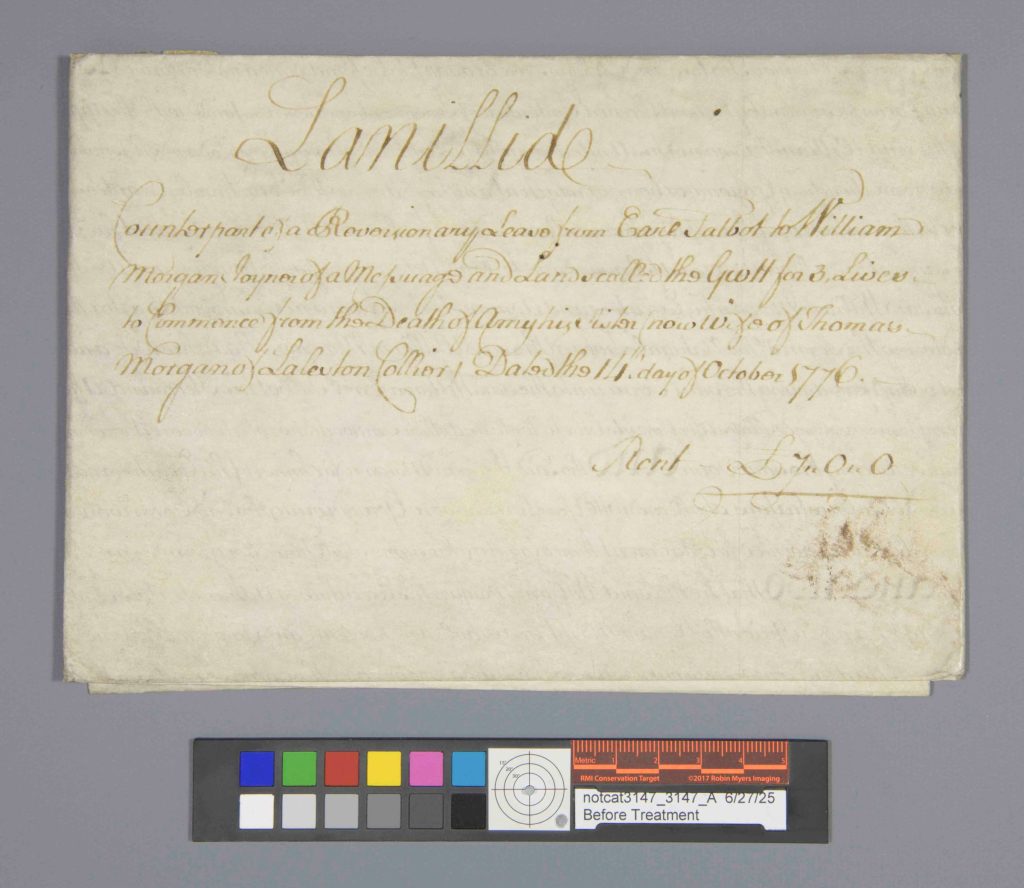
These 18th-century documents, part of the Archives and Rare Books Library, include three indentures consisting of single parchment leaves, and one composed of three parchment leaves secured with wax seals and parchment stays along the lower edge. They record land leases and property transactions.

The documents were brought to the lab for stabilization and improved access for teaching and research. In their folded state, they were difficult to handle, especially the multi-leaf example, which could not be fully examined as stored. Centuries of folded storage had clearly left their mark.

So how do we safely unfold and stabilize these items for handling, teaching, and research?

Parchment is highly responsive to humidity. It expands, contracts, cockles, and stiffens depending on environmental conditions. Long-term folded storage had left deep set creases, and exposed areas showed noticeable darkening. These distortions became even more apparent under raking light photography.
Treatment Approach

Flattening parchment is never as simple as adding moisture and pressing. Too much humidity risks gelatinization, while too little leaves folds unchanged. Wax seals add another layer of complexity since they are brittle, protruding, and highly sensitive to pressure. To begin conservation treatment, each document was first surface cleaned using a hydrophilic sponge to remove surface grime. Ink testing followed to ensure stability before any humidification. All inks tested were stable, and no iron gall ink was detected. With testing complete, humidification could begin.
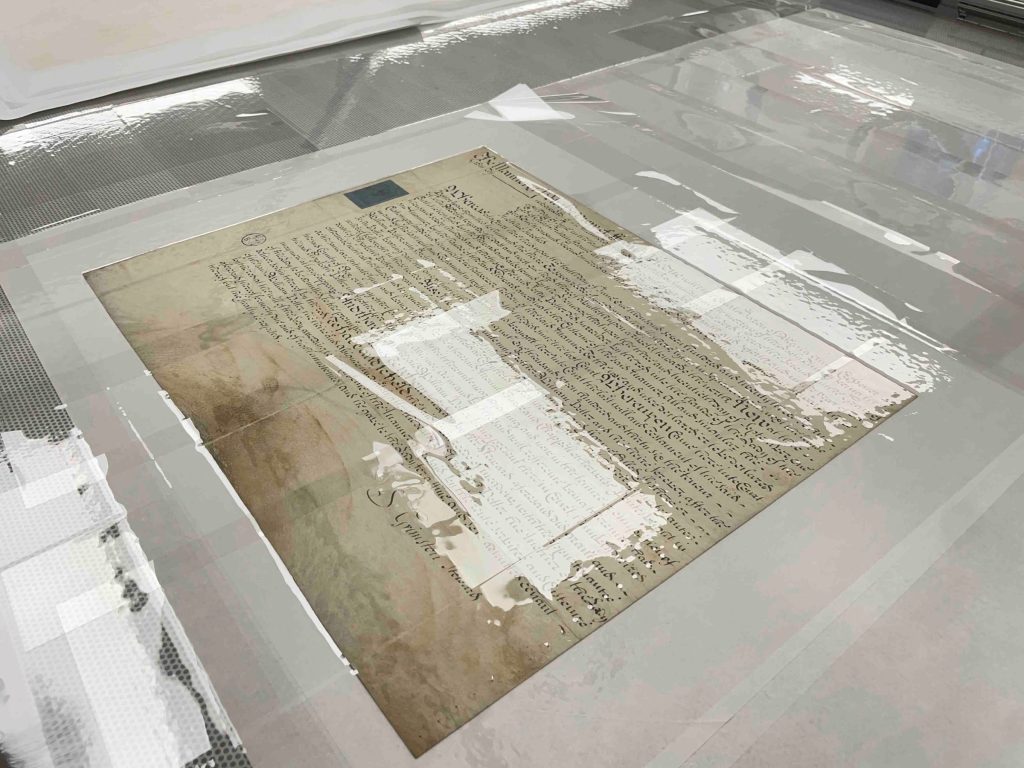
Parchment document under suction on a suction table.
Drying on the suction table.

The single-leaf documents were humidified in short cycles within a cold humidity chamber. After each cycle, they were dried gradually under felts, with pressure slowly increased and carefully kept away from seal areas. Drying methods were adapted depending on structure and condition. One single-leaf document without seals was dried under tension on the suction table, while the others were dried under felts and weights, again avoiding direct pressure on wax seals.

The Multi-Leaf Document

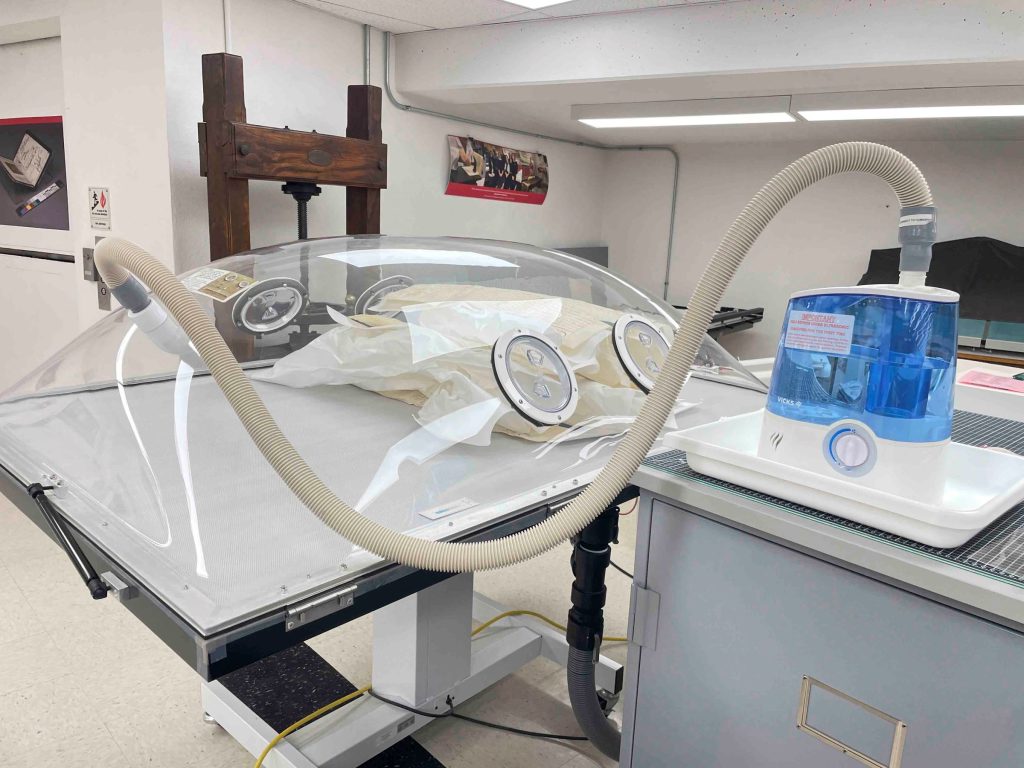
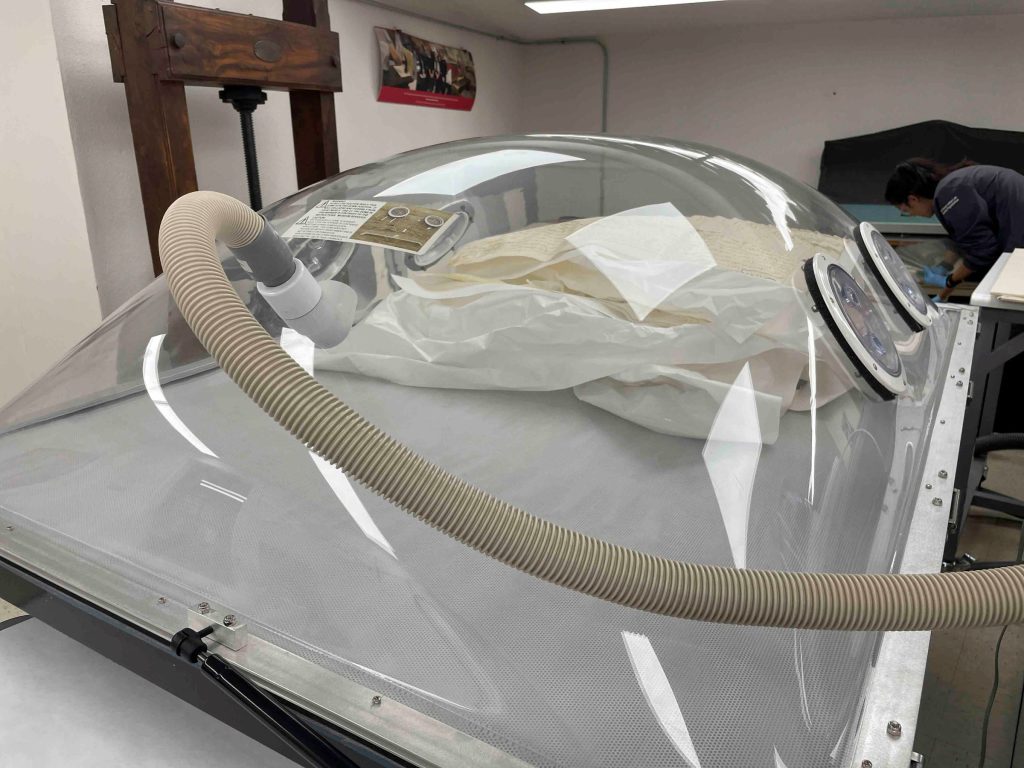
The multi-leaf deed required a more complex and iterative approach. It consists of three parchment leaves attached together, each responding differently to moisture. Initial humidification was carried out using an ultrasonic dome with a Gore-Tex barrier supporting the lower leaf. The upper leaf responded well, but the middle leaf remained resistant. To improve moisture distribution, unbuffered interleaving paper was placed between the leaves. Even so, the middle sheet required additional targeted treatment.
The most effective approach combined localized humidification with staged flattening. Each leaf was treated individually while the others were protected with polyester film and weighted mat board to prevent unwanted moisture transfer or movement. Stubborn folds were gently humidified using a localized ultrasonic humidifier and immediately set under pressing stacks of blotter and Hollytex, followed by gradual weighting. This allowed controlled relaxation of specific areas without over-treating the entire object.
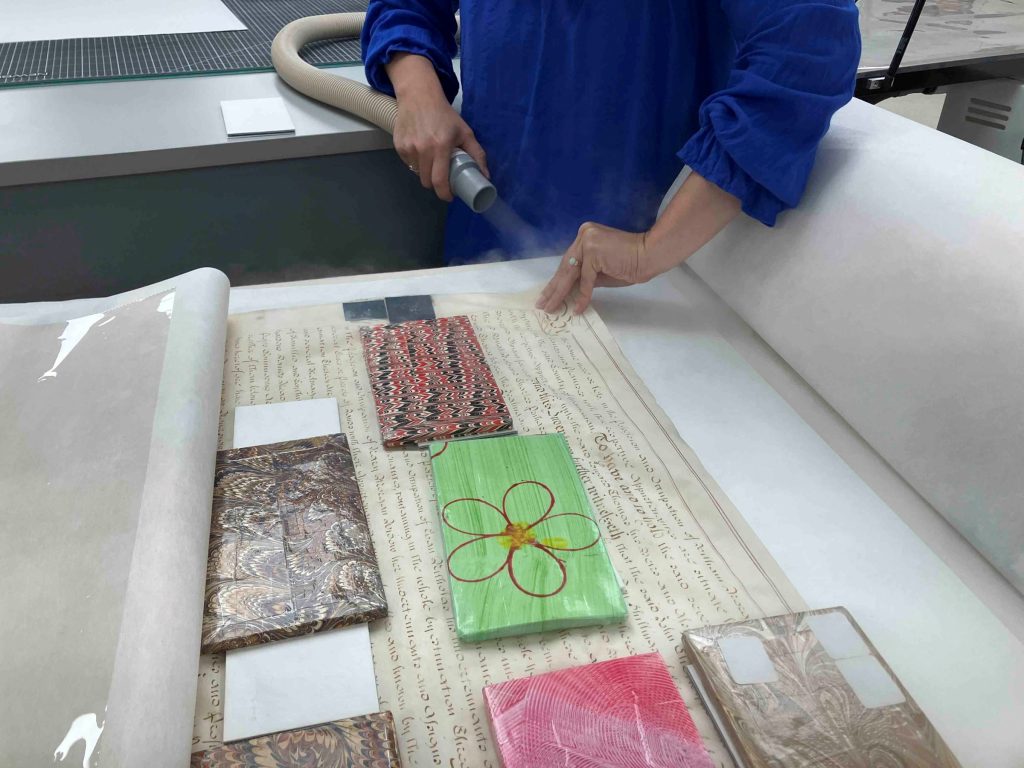
Conservator holding humidifier nozzle to locally humidify parchment document as it's being flattened on the suction table.
During treatment – localized humidification for the multi-leaf document.

The process was highly collaborative, often requiring two or three people working at once. One person applied moisture and guided the parchment while another adjusted weights and pressing materials in real time. Throughout treatment, wax seals were carefully protected using mat board barriers and spacing systems to ensure they remained free from pressure. Once fully relaxed, the document was dried under felts with weights in place, while polyester sheeting remained between the leaves to prevent adhesion or distortion.

Wax seals

Three of the four documents retain wax seals along their lower edges. These seals were structurally fragile and were consolidated using fish gelatin applied with a fine brush. During treatment and flattening, they were carefully isolated so that no direct pressure was applied.
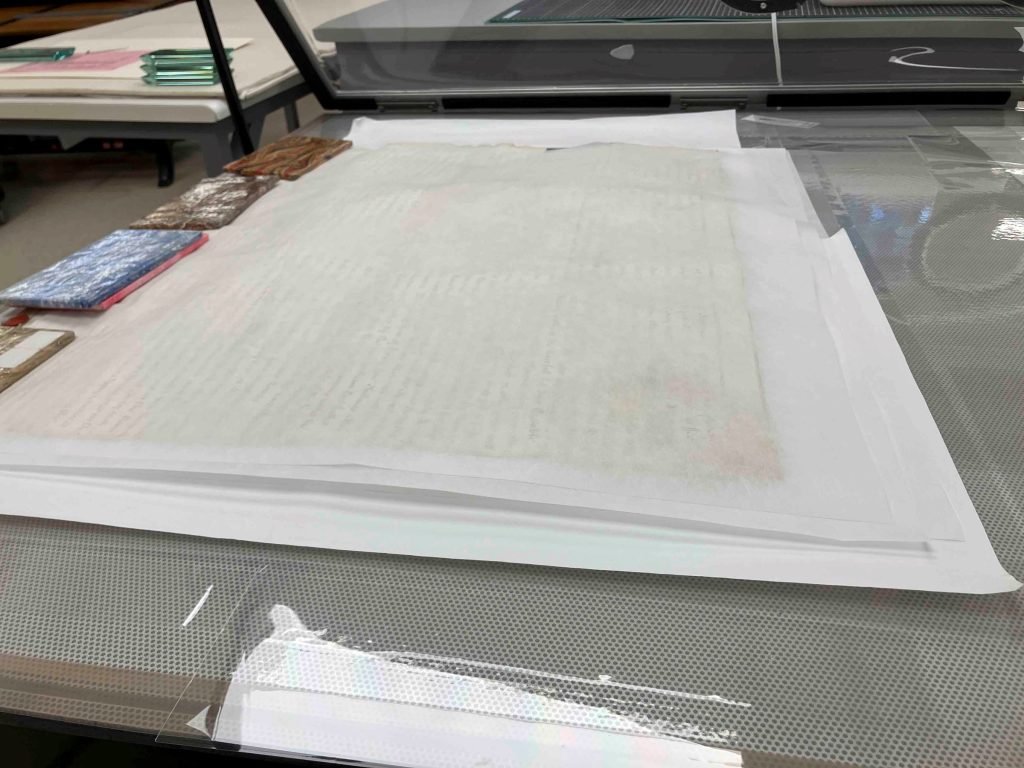
Parchment document under holly-tex, blotter and weights.
During treatment – multi-leaf document after humidification and flattening.

Housing for Support and Access

Following treatment, each document was rehoused in a custom sink mat system. Before constructing the full-sized enclosures, I made a small working model using a scrap piece of parchment to ensure that what I had in mind would actually function for these large documents in practice.
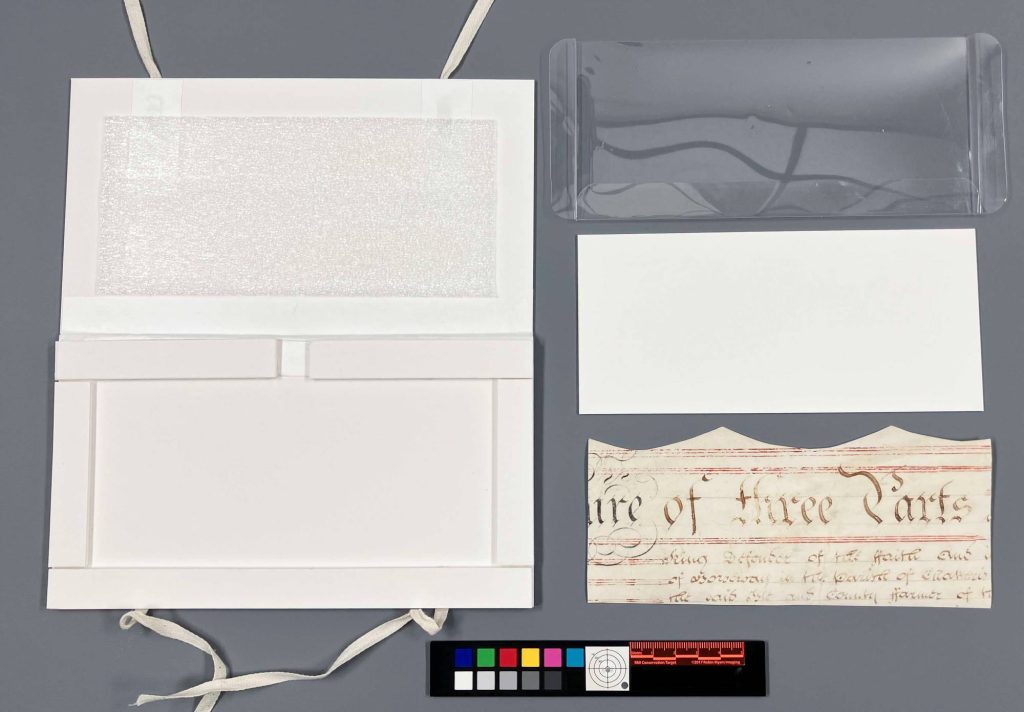
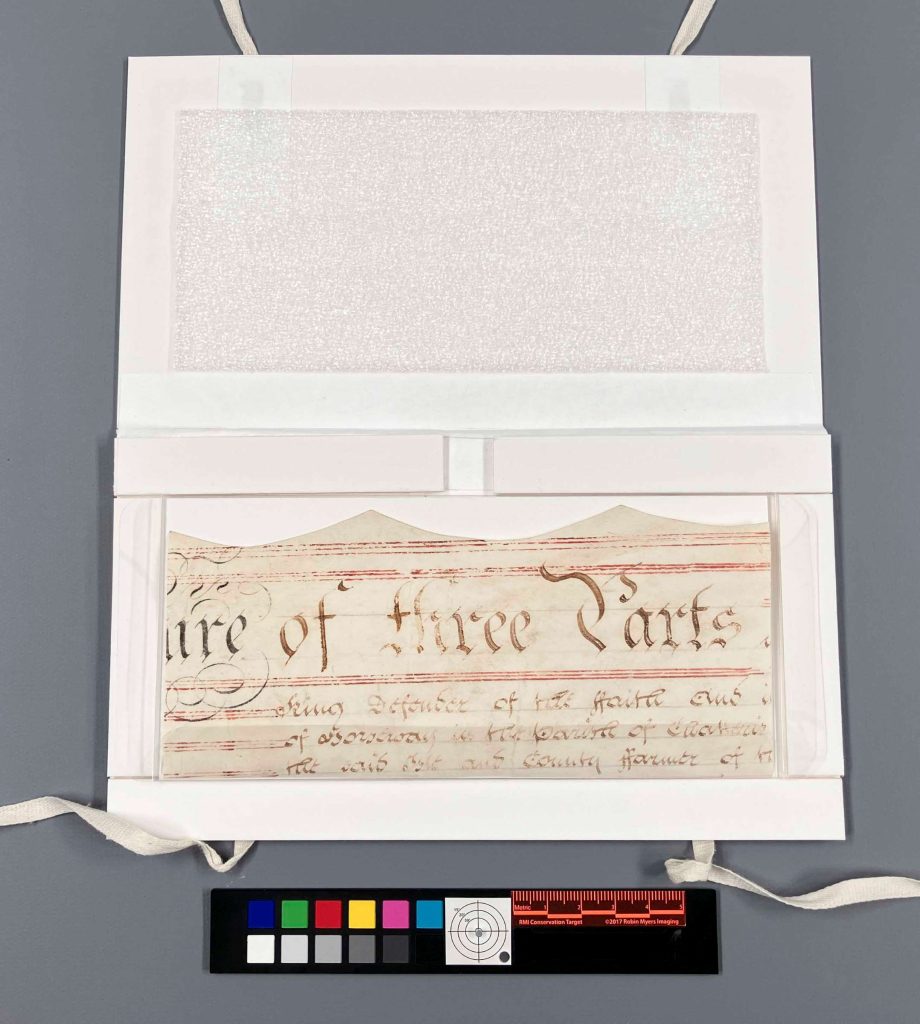
Small matting system, opened, with ethafoam on lid, mylar and mat board supports and small piece of a parchment document.
Small scaled model of the enclosure for each parchment document with the different components, including sink mat and polyester film sling.
Small sink mat model with a parchment document fragment inside.
Small scaled model created for the parchment documents.

The documents rest on polyester slings secured within sink mats and are held in place with cloth ties. The interior lids are lined with Ethafoam, providing gentle compression and helping to minimize movement caused by environmental fluctuations. The multi-leaf document required additional structural support through reinforced mat board construction. The three smaller documents were housed together in a corrugated clamshell enclosure. This housing balances long-term preservation with accessibility, allowing the documents to be safely handled for teaching and research.
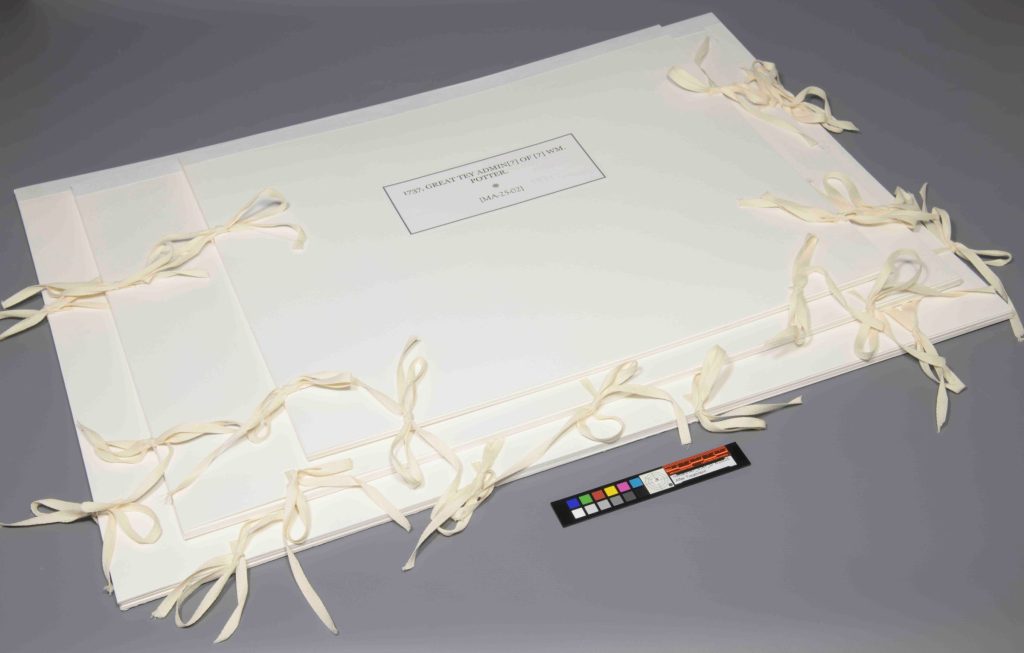
All four matting systems stacked on top of one another.
Each document housed in a custom matting system.

Final results

Raking light photography after treatment shows a clear reduction in creasing, along with a noticeable shift in how the documents behave physically. The parchment still carries evidence of its long folded history, as these materials tend to do, but it is no longer locked into those distortions. While not perfectly flat, the material is now stable, supported, and significantly less stressed along its former fold lines. Under raking light, what once appeared as sharp ridges and tension lines now reads as a softer, more coherent surface. It feels as though the parchment has settled back into itself after a long period of compression.

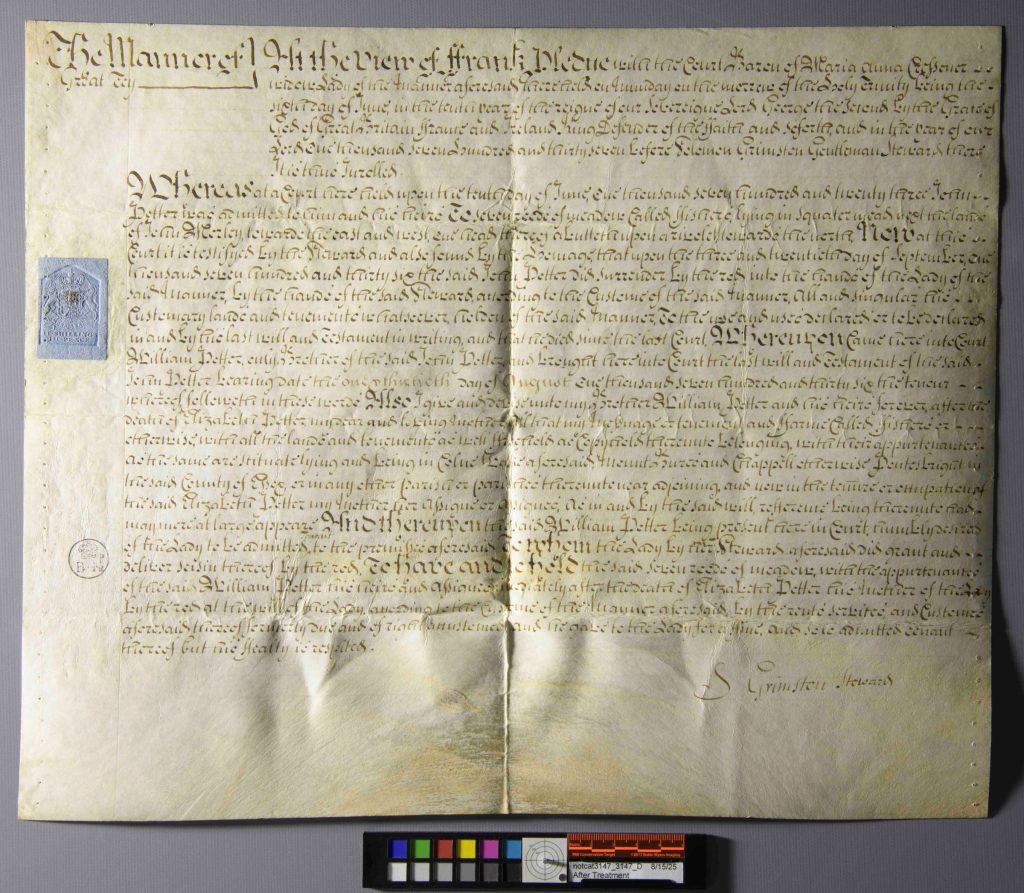
Perhaps the most satisfying change, though, is in handling. What began as awkward, resistant objects that required constant caution are now stable enough to be lifted, viewed, and studied with far more confidence. They remain delicate, but they are no longer unpredictable in the same way. There is a clear sense that they can finally move between storage, teaching, and research without the same level of hesitation at every step.

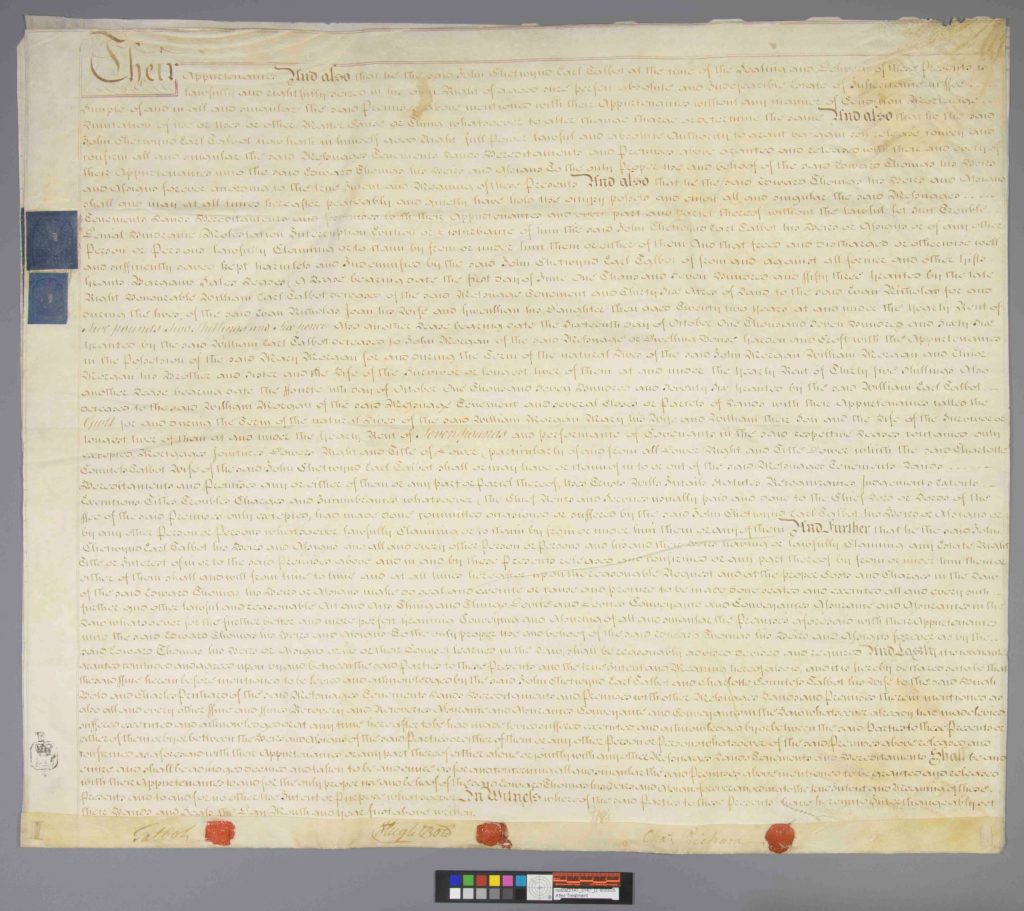
Overhead view of the multi-leaf parchment document after treatment in the matting system with a sink mat and polyester sling.
After Treatment – parchment document housed in a matting system with a polyester sling.

Catarina Figueirinhas – Assistant Conservator

Archeological Textile Discovery in the Stacks: The History

This is the second post of a four part series.

When a collection of Egyptian mummy bandage fragments at the Cincinnati and Hamilton County Public Library was found in an area used to store uncatalogued flat materials, the lab was asked to play a role in providing better stewardship.  

Click the links below to jump to the following posts:

  • Research and Examination – Examining the material composition of the objects
  • History – Historical information provided about the Egyptian inscriptions
  • Treatment – How the materials were treated after learning about their content
  • Storage Solutions – Individual solutions for separated fragments as well as storage as a collection

Learning About the Collection

Before coming to the lab, the library knew little about the fragments. So first and foremost, I reached out to a handful of scholars to see if I could glean any information.  I soon found myself engulfed in a journey of discovery with each colleague leading me to a new reference, sharing a collective wealth of knowledge.

History

With generous information provided by colleagues, the library learned the following about the fragments (fragment measurements below are with height and width at the widest points):

  • Archeological Textile Discovery in the Stacks: The History
  • Archeological Textile Discovery in the Stacks: The History
  • Archeological Textile Discovery in the Stacks: The History
  • Archeological Textile Discovery in the Stacks: The History

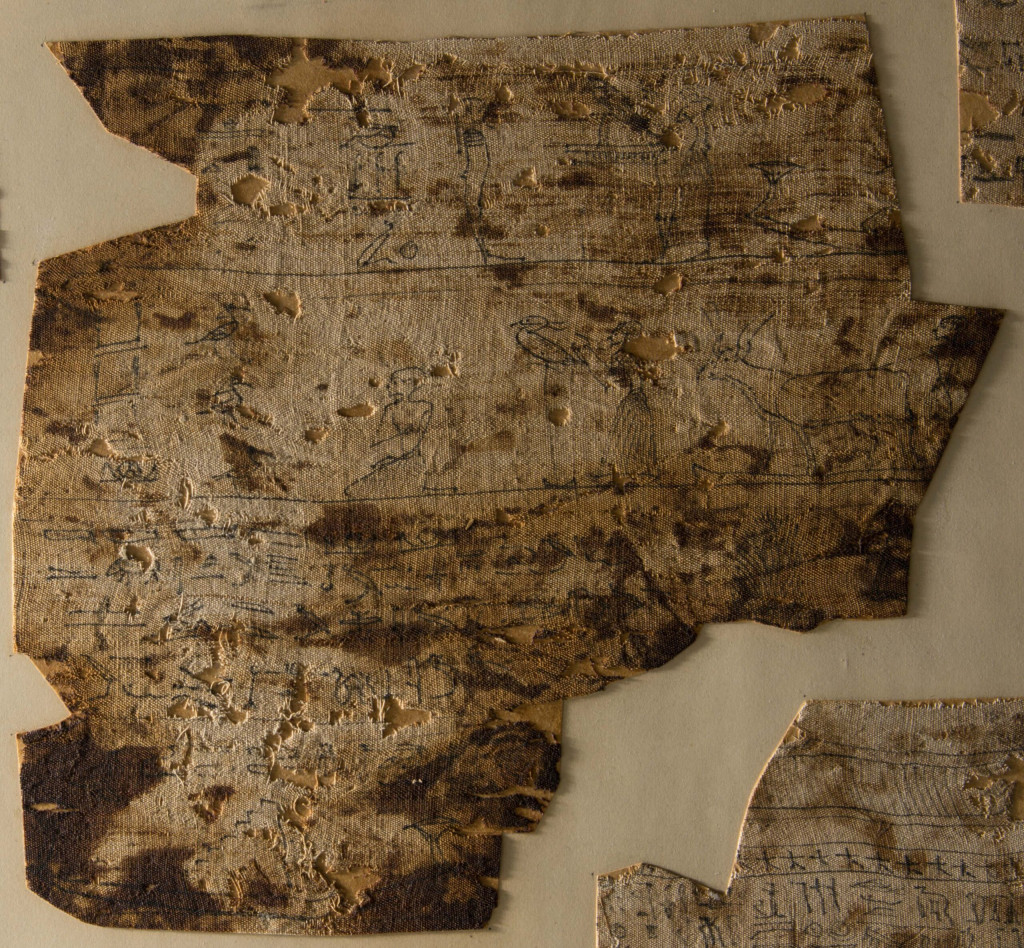
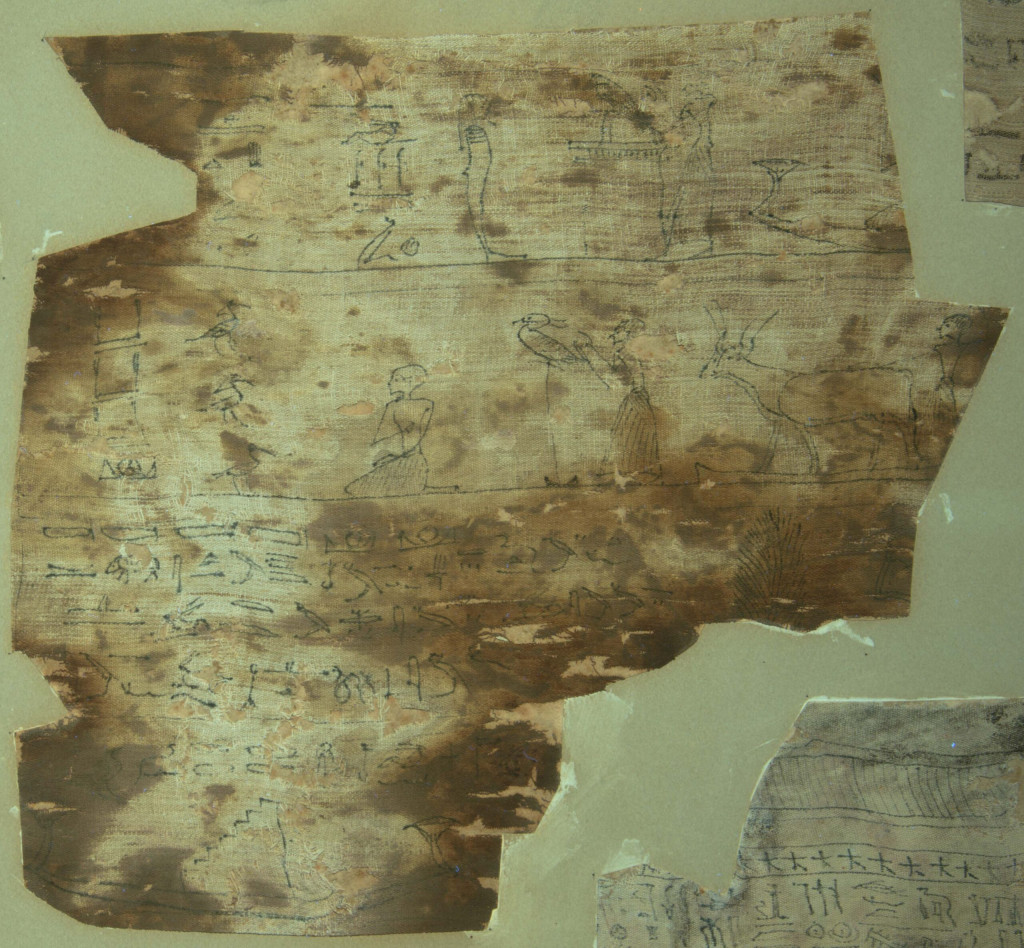
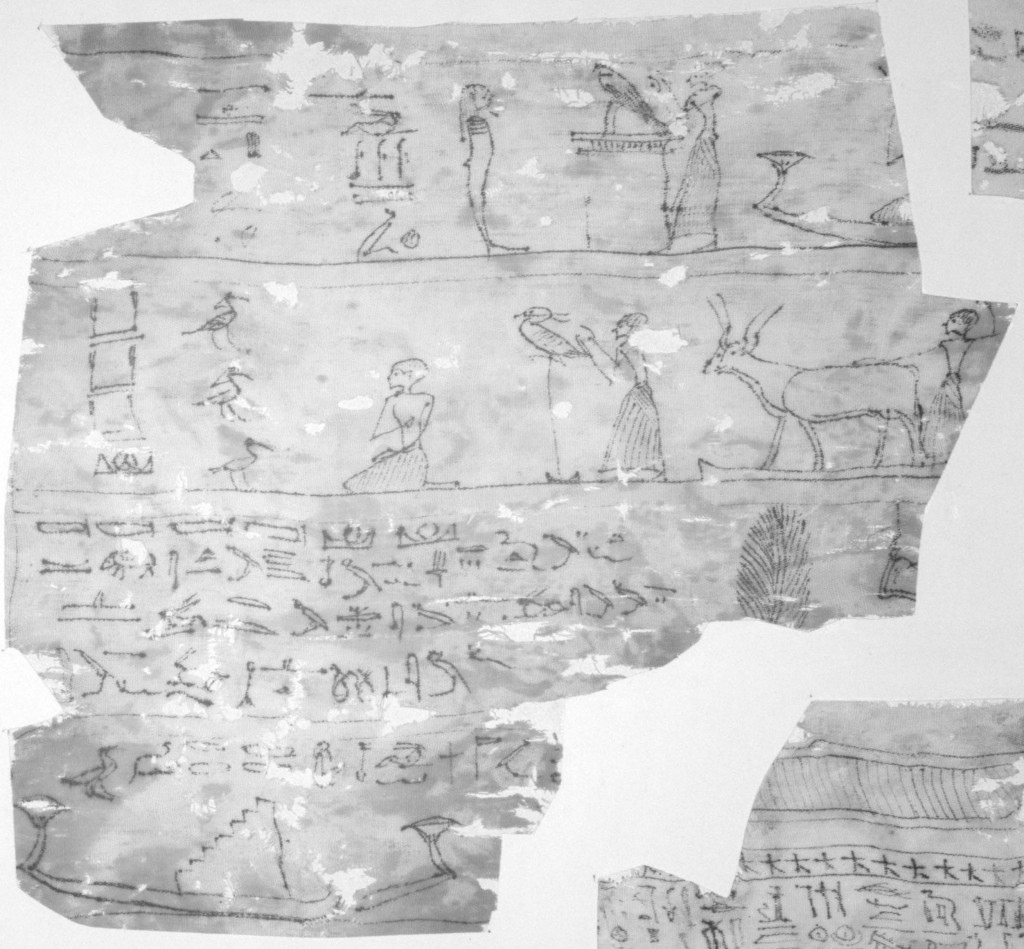
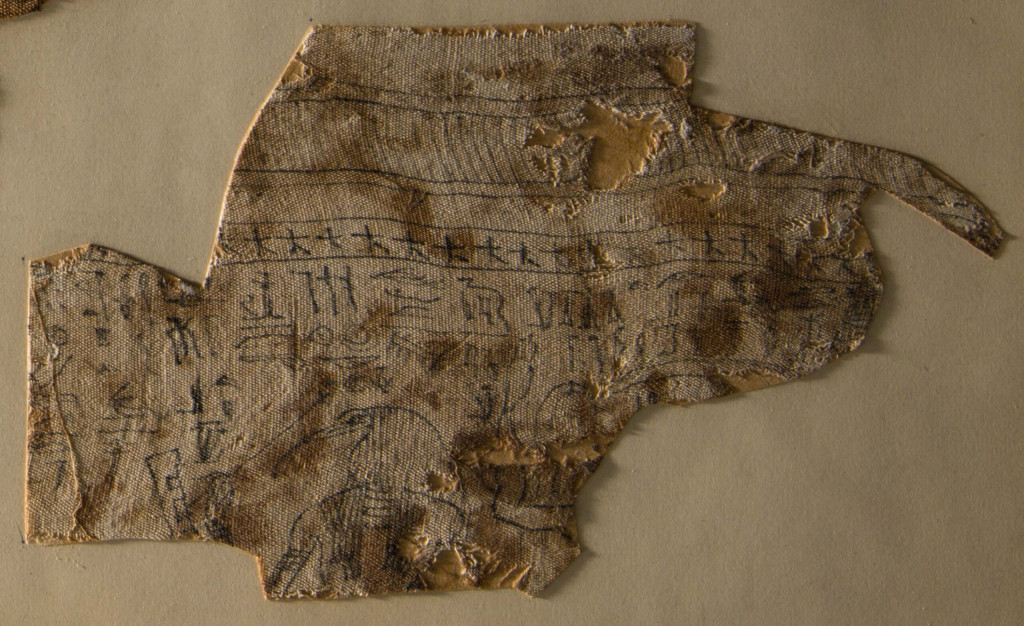
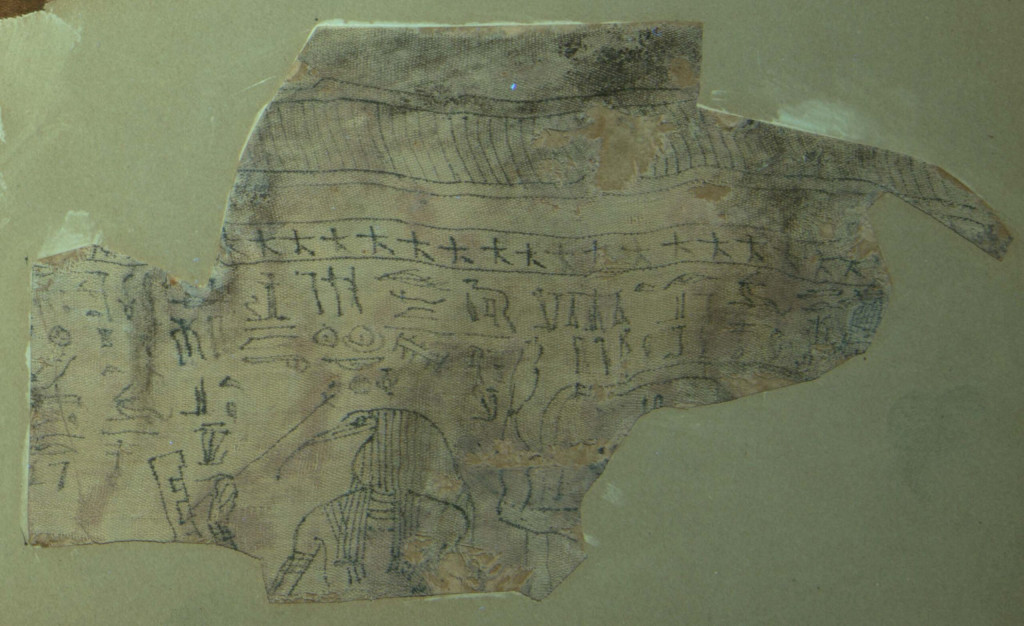
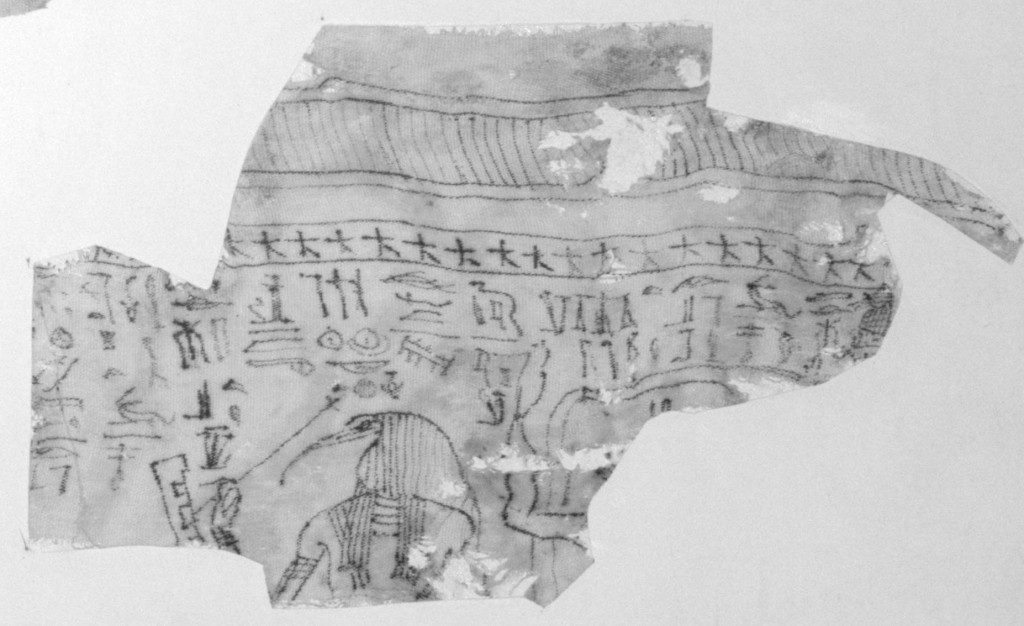
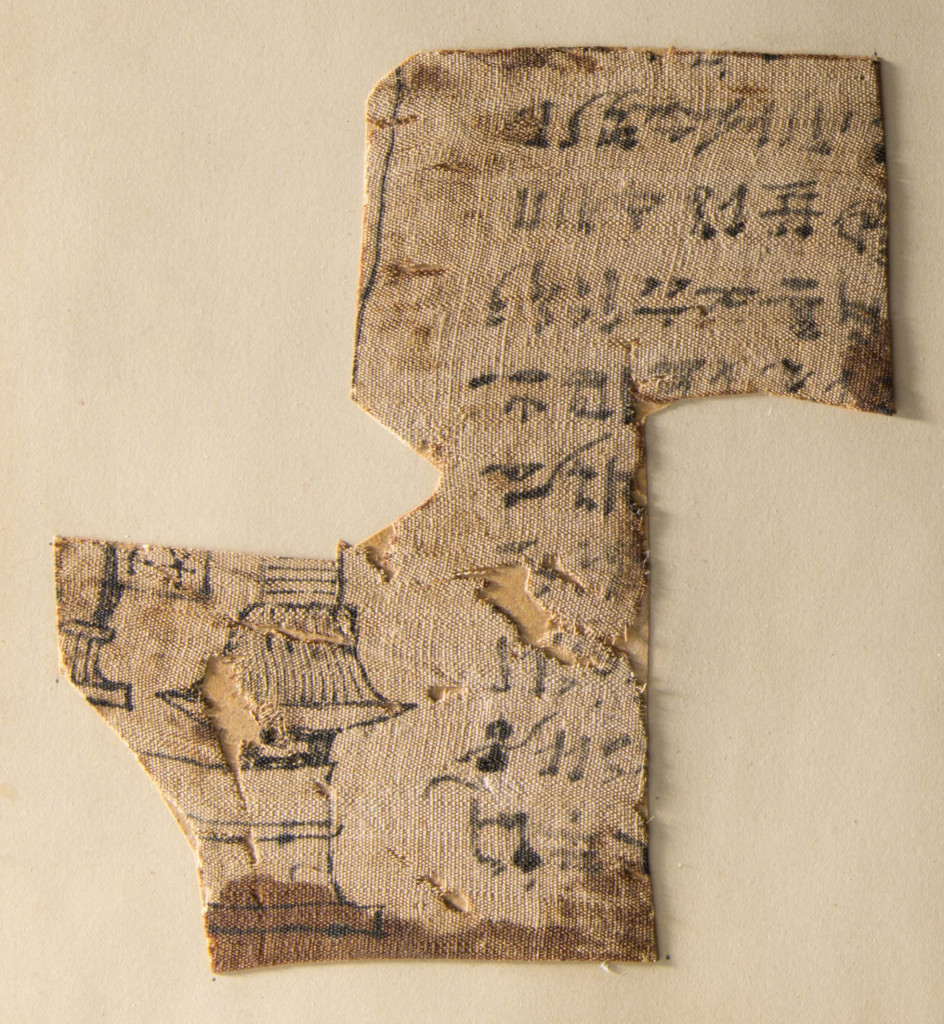
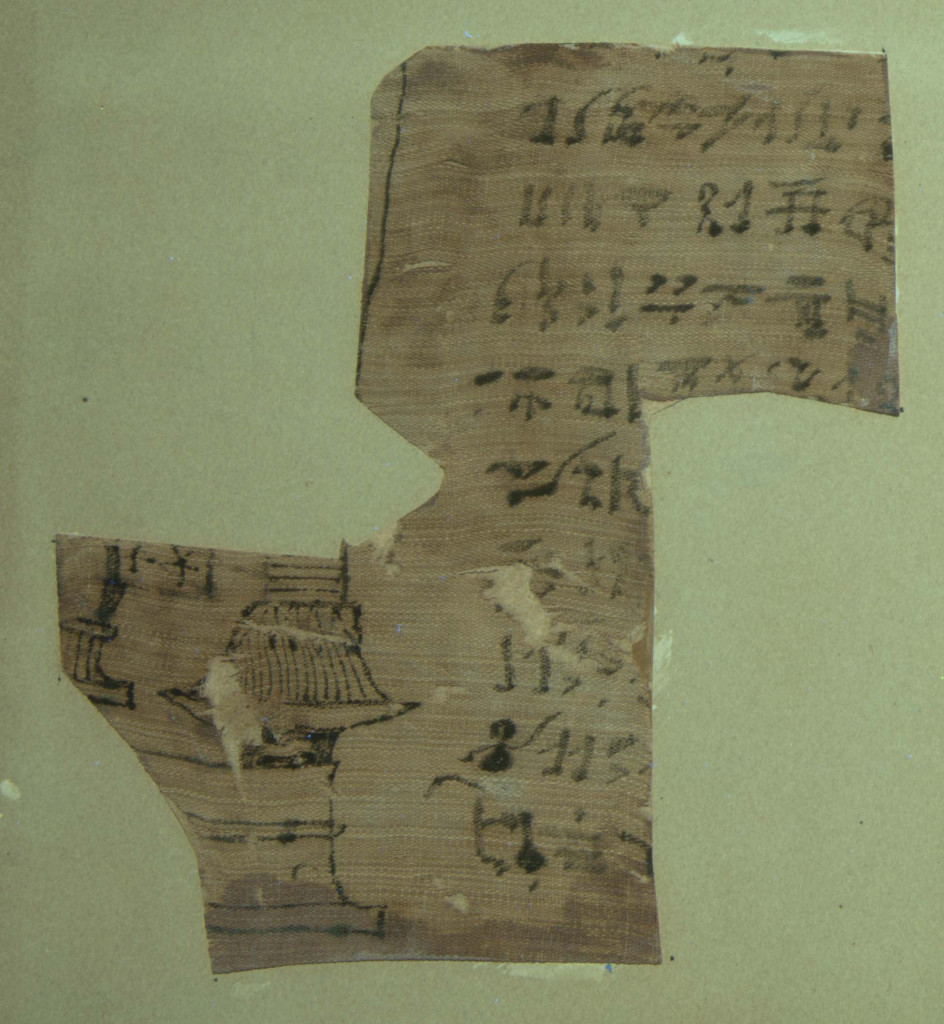
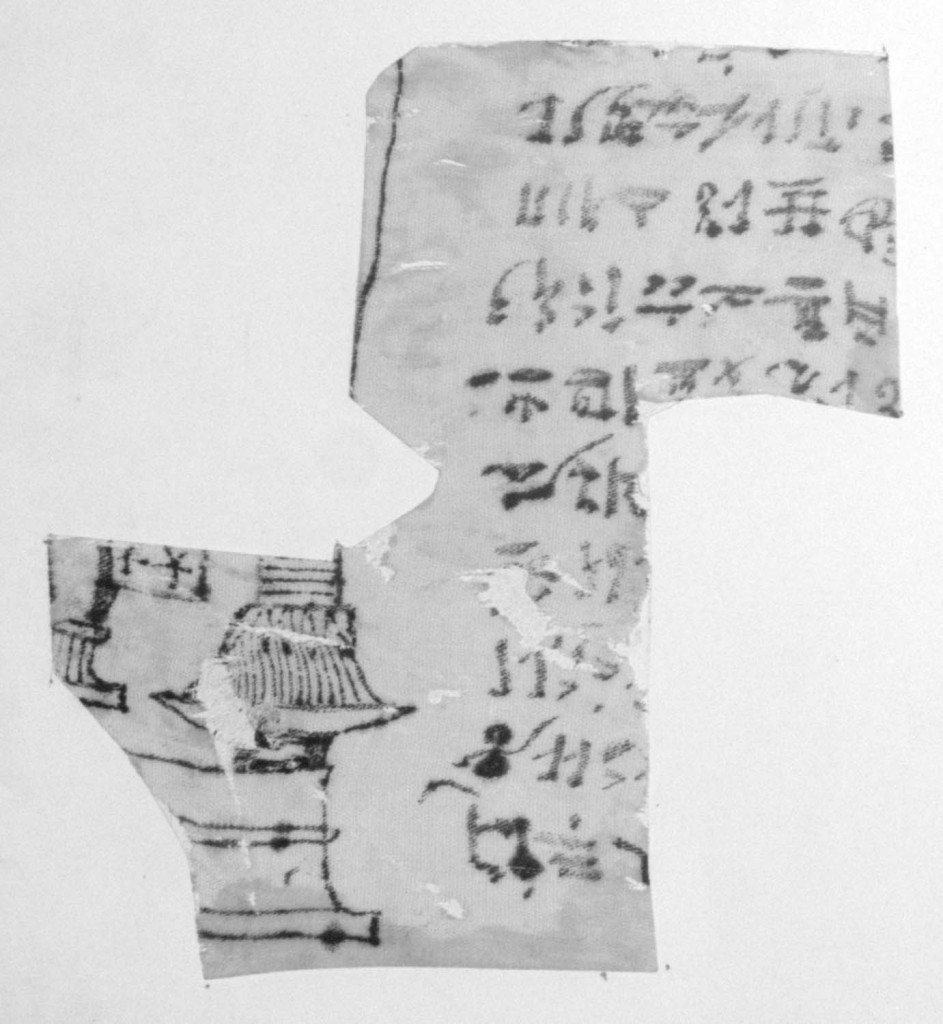
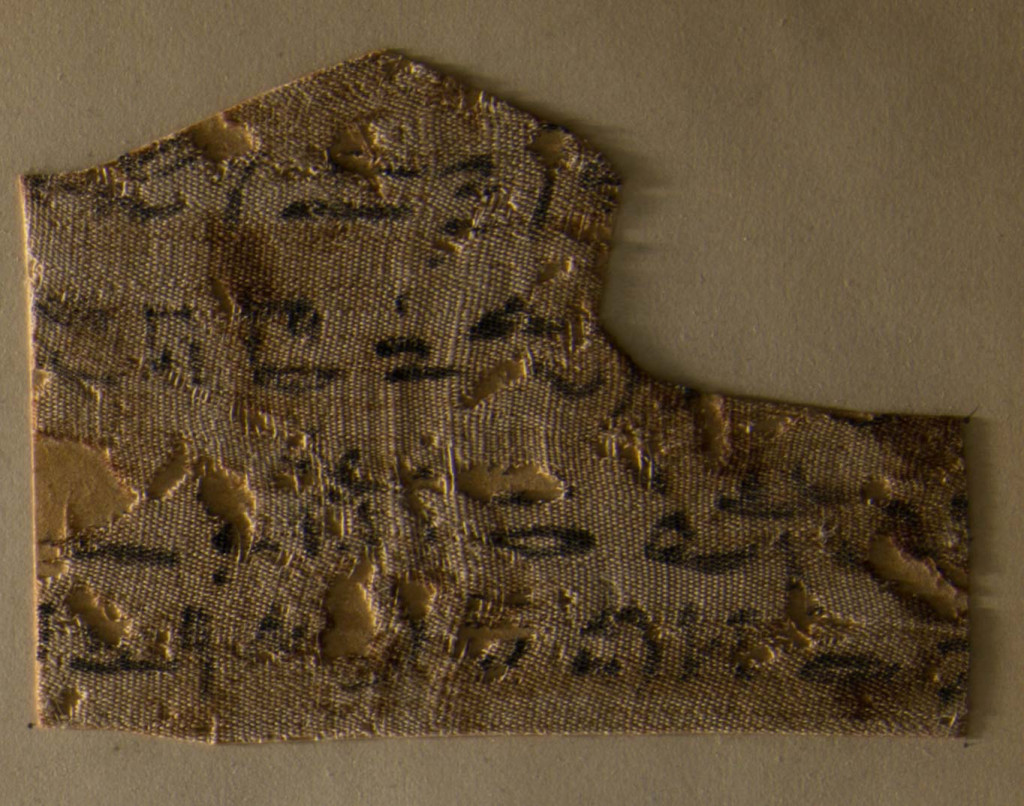
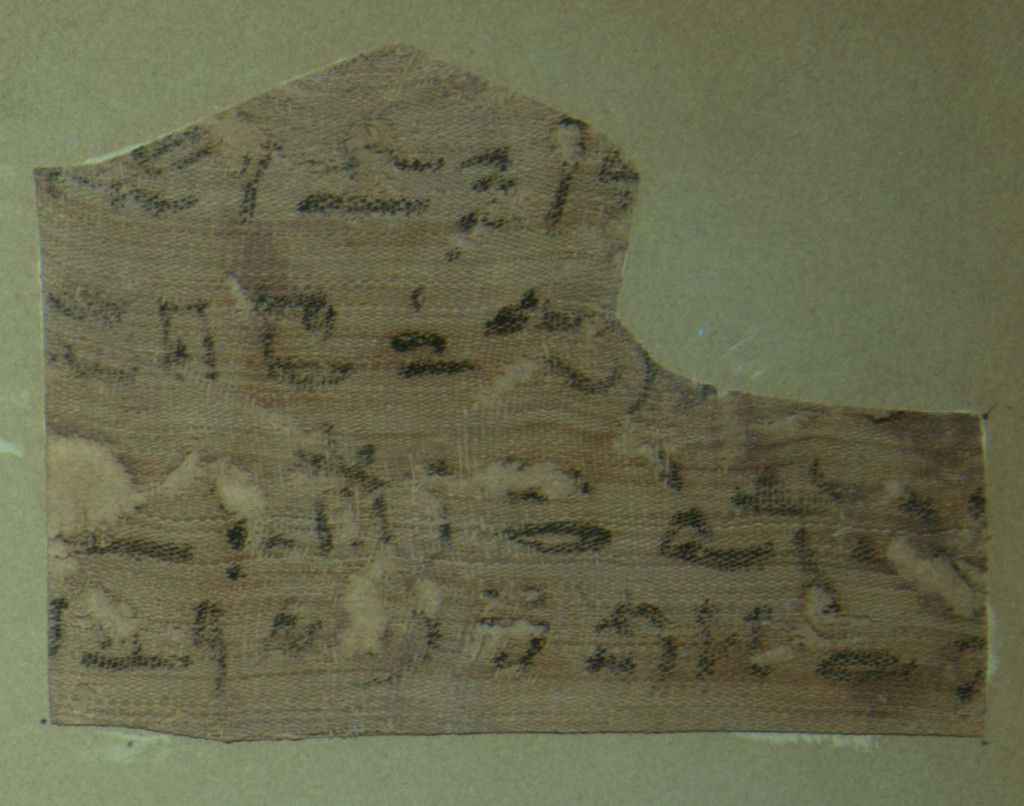
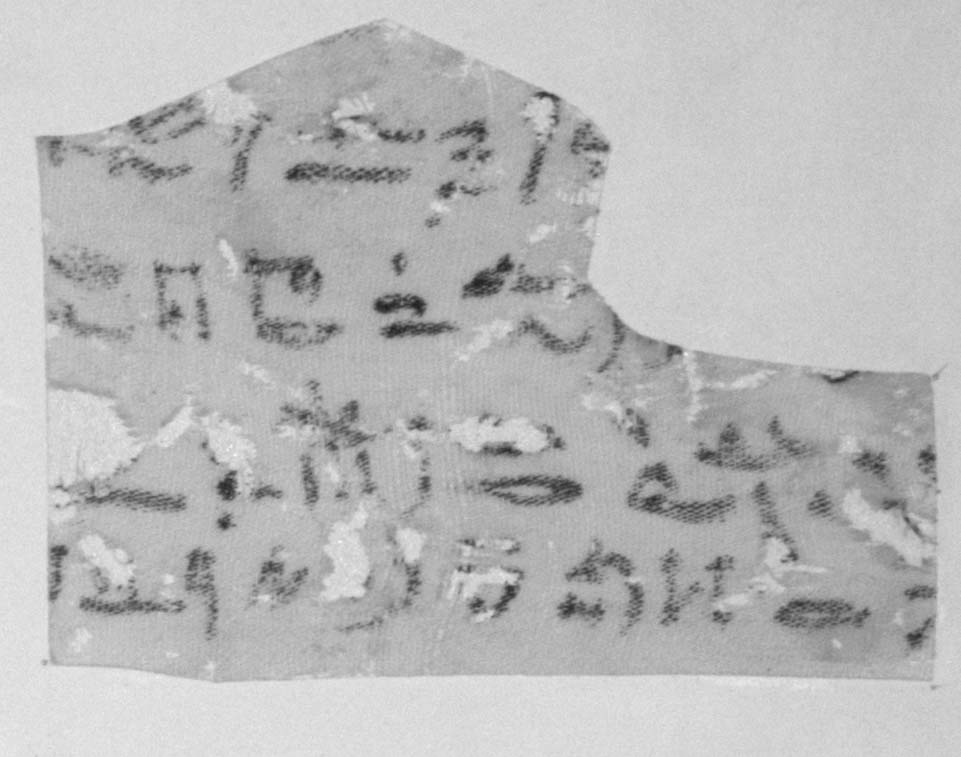
This is the center fragment.  It contains Hieroglyphic script, measuring 21 x 23 cm.  It’s part of a 3-piece set that belonged to a priest called Wennofer.  The large scene in the middle belongs to Book of the Dead Spell 110 showing the deceased doing various things in the netherworld.

  • Archeological Textile Discovery in the Stacks: The History
  • Archeological Textile Discovery in the Stacks: The History
  • Archeological Textile Discovery in the Stacks: The History
  • Archeological Textile Discovery in the Stacks: The History

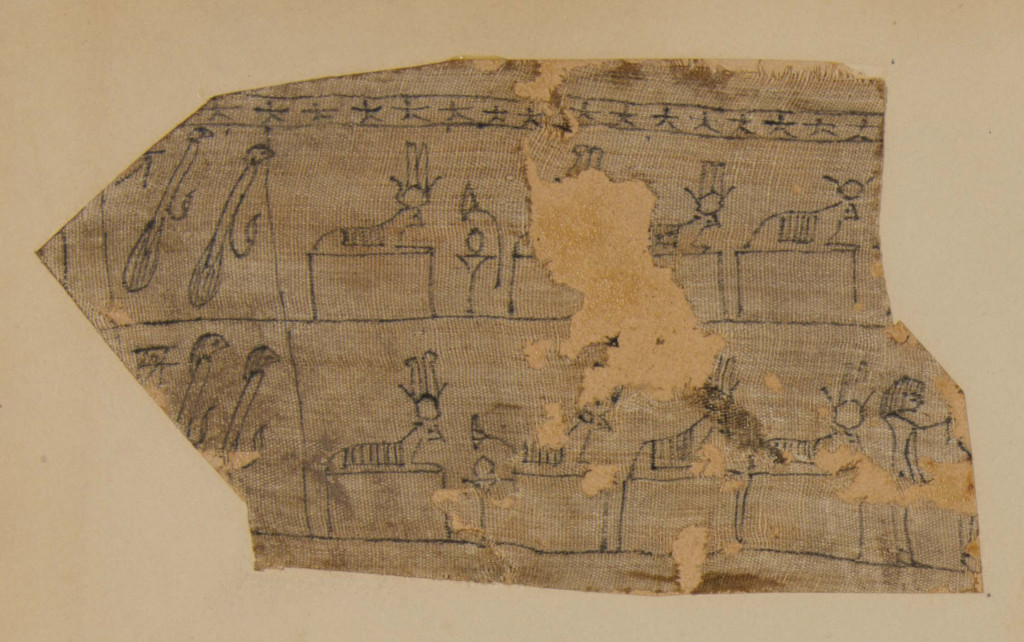
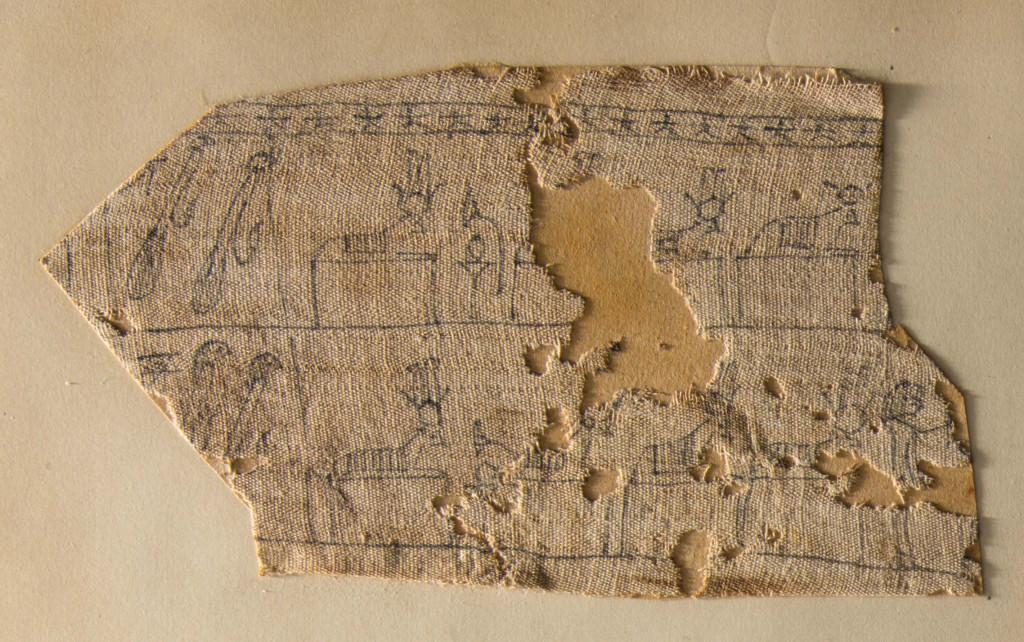
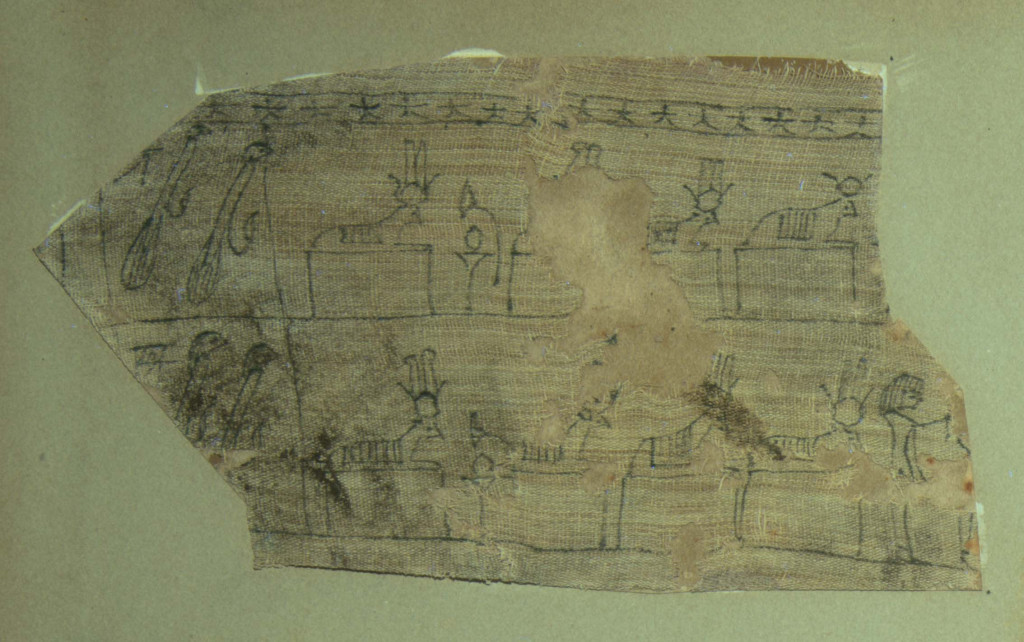
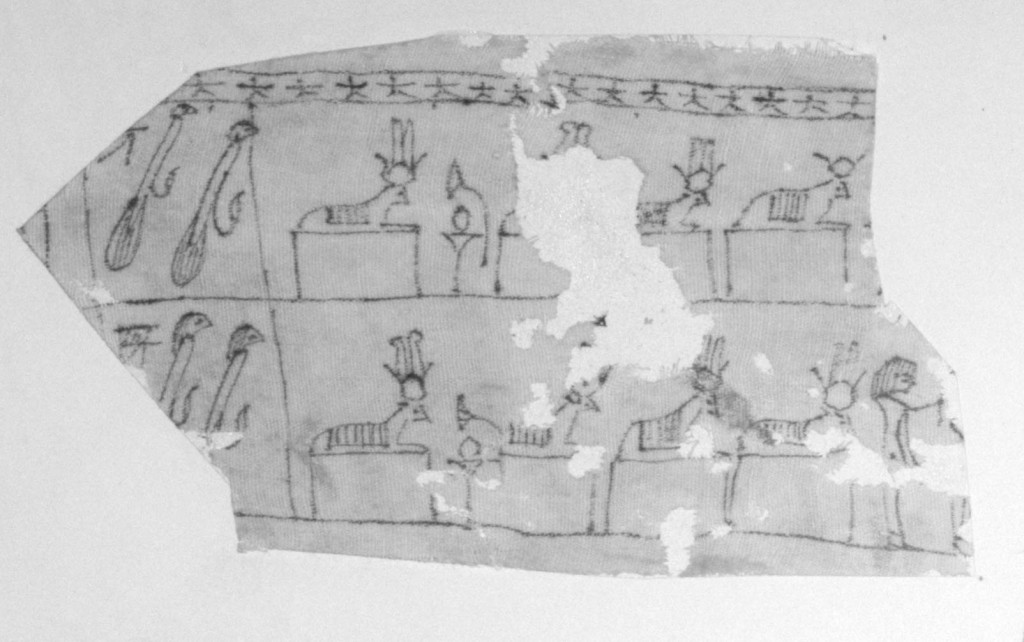
This is the upper left fragment.  It measures 8 x 14 cm. Script contains images and no preserved text. This is part of the 3-piece set that also belonged to a priest called Wennofer. Images belong to the vignette of Book of the Dead Spell 148. “For making provision for a spirit in the realm of the dead” this spell provides the names of the Bull of Heaven and his seven cows, providing an eternal supply of food and beer.

  • Archeological Textile Discovery in the Stacks: The History
  • Archeological Textile Discovery in the Stacks: The History
  • Archeological Textile Discovery in the Stacks: The History
  • Archeological Textile Discovery in the Stacks: The History

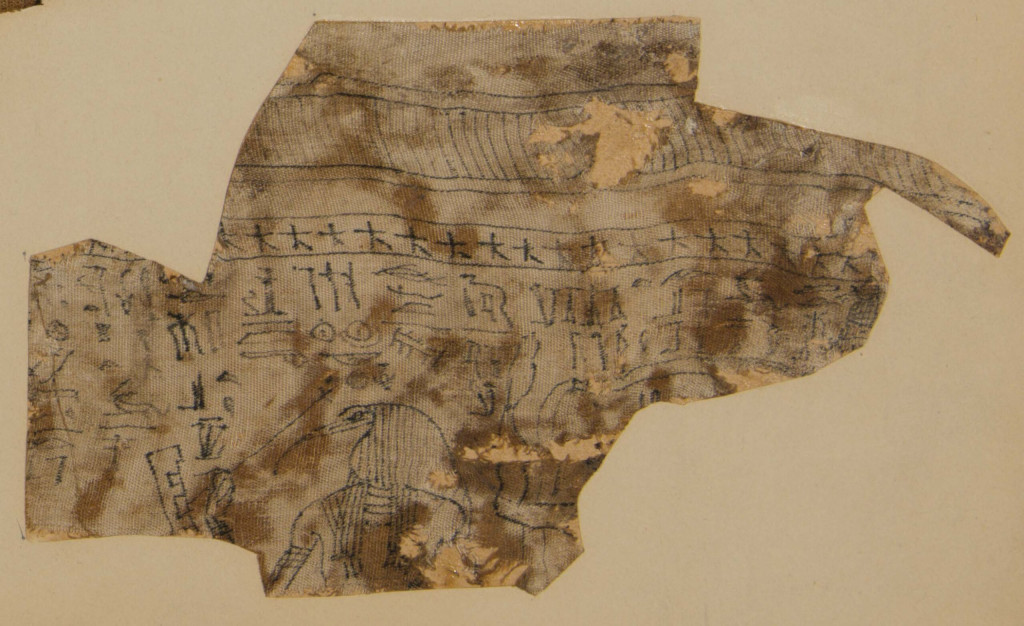
This is the bottom right fragment.  It contains Hieroglyphic writing and measures approximately 10 x 17 cm, containing a Thoth god image. It’s the final part of the 3-piece set that belonged to a priest called Wennofer. Preserved images are part of the vignette of Book of the Dead Spell 125, the so-called judgement scene.

  • Archeological Textile Discovery in the Stacks: The History
  • Archeological Textile Discovery in the Stacks: The History
  • Archeological Textile Discovery in the Stacks: The History
  • Archeological Textile Discovery in the Stacks: The History

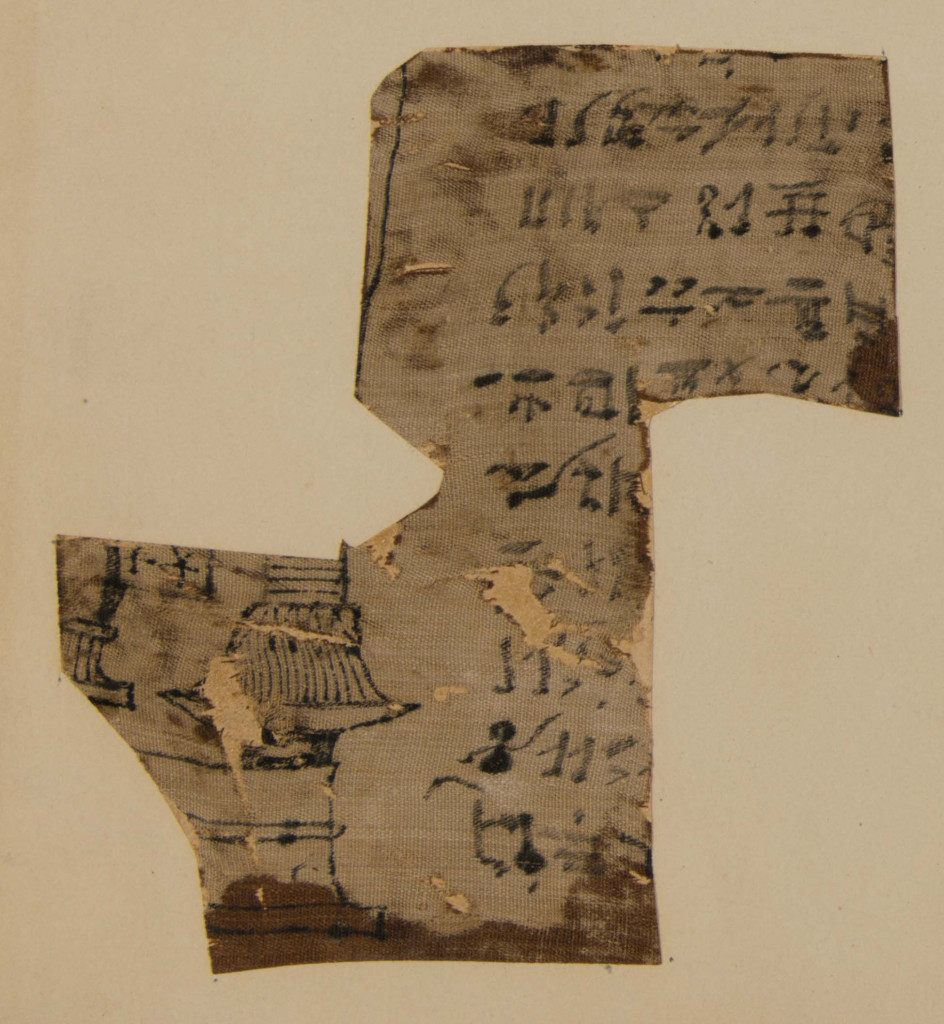
This is the bottom left fragment containing Hieratic script, however it is oriented upside down. It measures approximately 13 x 12 cm.  There isn’t an owner’s name preserved so we’re unsure if it belongs with any other fragments in this collection. Images contain a shrine column, sections of Book of the Dead Spells 125 and 126, as well as traces of the vignette belonging to Book of the Dead Spell 125.

  • Archeological Textile Discovery in the Stacks: The History
  • Archeological Textile Discovery in the Stacks: The History
  • Archeological Textile Discovery in the Stacks: The History
  • Archeological Textile Discovery in the Stacks: The History

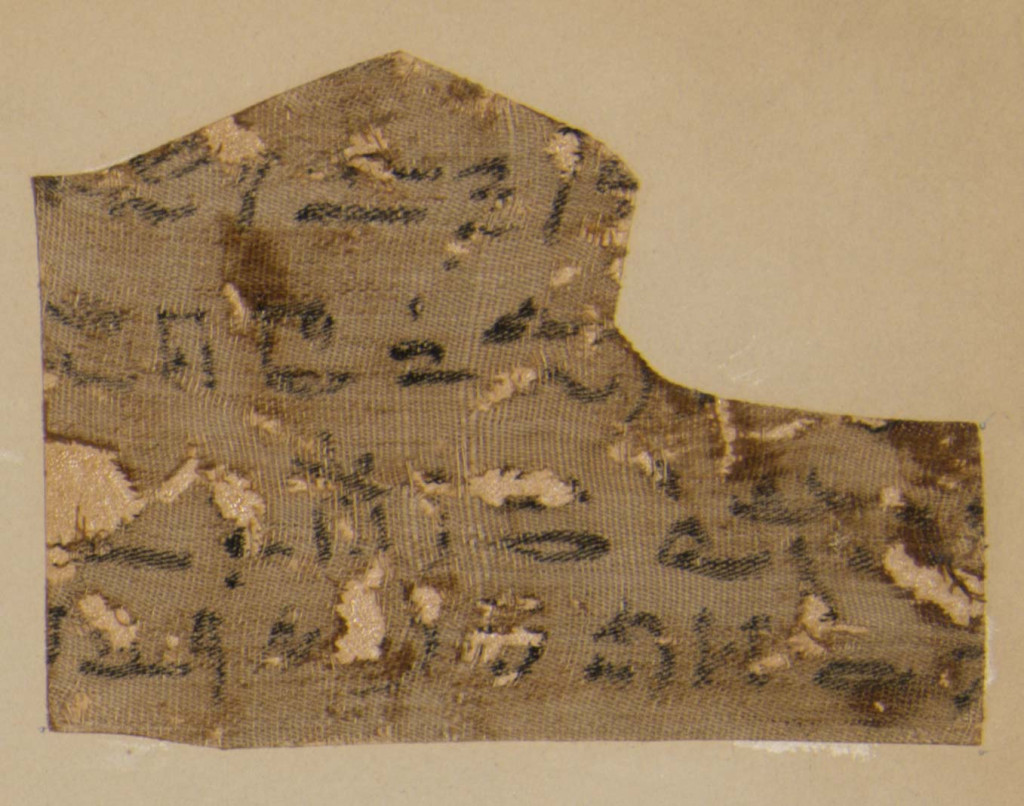
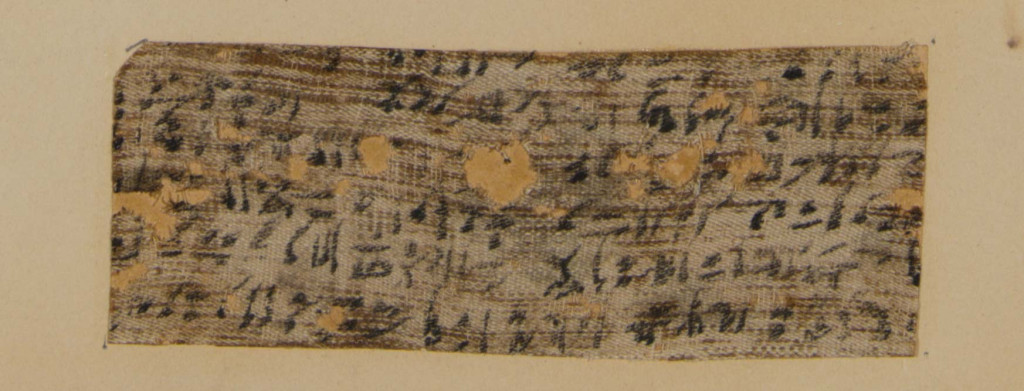
This is the upper right hieratic fragment with Hieratic script. It measures approximately 9 x 7 cm. There is no owner’s name preserved.

  • Archeological Textile Discovery in the Stacks: The History
  • Archeological Textile Discovery in the Stacks: The History
  • Archeological Textile Discovery in the Stacks: The History
  • Archeological Textile Discovery in the Stacks: The History

This is the bottom center hieratic fragment measuring 4 x 10 cm, also with no owner’s name preserved and oriented upside down.

Further Reading

Check out this essay for Glencairn Museum News by Dr. Jennifer Houser Wegner to learn more about burial practices and in particular, funerary texts, such as the Book of the Dead.

To learn about how the fragments were treated in preparation for long-term storage, check out the third post of the four-part series: The Treatment

If you missed the earlier installment, you can jump to previous post using the links below (or even skip to the final post on storage):

  • Research and Examination – Examining the material composition of the objects
  • History – Historical information provided about the Egyptian inscriptions
  • Treatment – How the materials were treated after learning about their content
  • Storage Solutions – Individual solutions for separated fragments as well as storage as a collection

Acknowledgements

  • Katherine Davis, Lecturer in Egyptology in the Department of Middle East Studies at the University of Michigan
  • Suzanne Davis, the Associate Curator and Head of Conservation at the Kelsey Museum of Archaeology at the University of Michigan
  • Dr. Ann-Katril Gill at the University of Leipzig
  • Marieka Kaye, Harry A. and Margaret D. Towsley Foundation, Head, Conservation & Book Repair, University of Michigan Library
  • Obie Linn, Textile Conservator at the Cincinnati Art Museum
  • Ann Wuertemberger, Catalog Librarian at the Cincinnati and Hamilton County Public Library
  • Meredith Montague, Textile Conservator at the Museum of Fine Arts Boston

Ashleigh Ferguson Schieszer – Special Collections Conservator and Co-Lab Manager [CHPL]