Recently Jessica and I started working on a series of special collection items from UC Libraries’ DAAP Library. These were recent acquisitions specifically bought to be used as a teaching collection within the DAAP Library. Most items are small prints and single manuscript leaves that need to be matted for exhibition and prepared for handling during class. We have been working on these in small batches since it is a much larger collection that keeps growing.
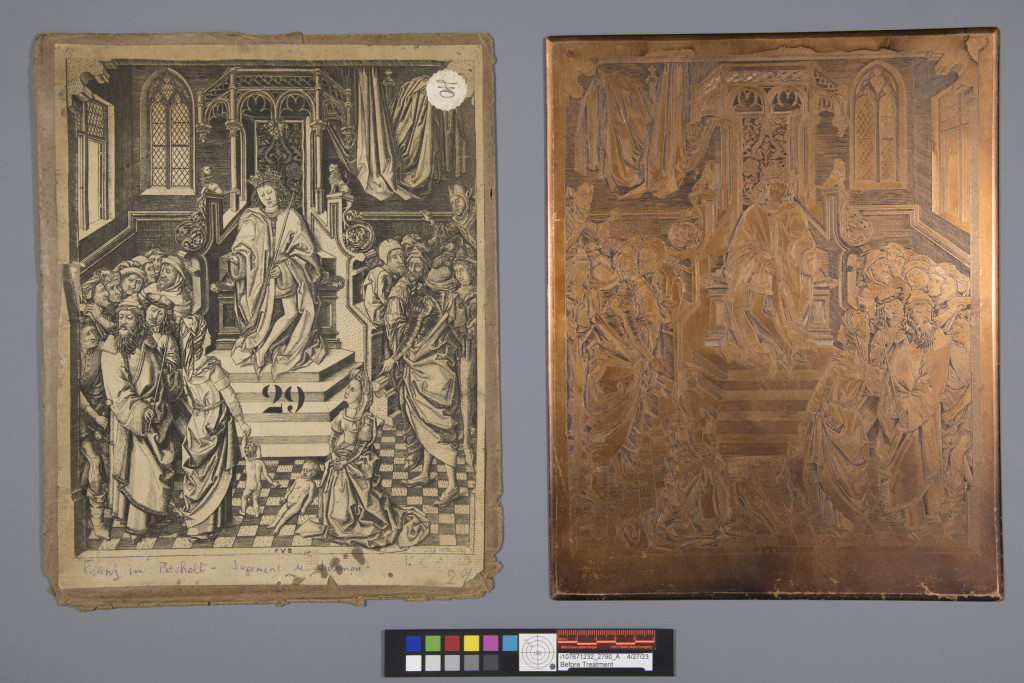
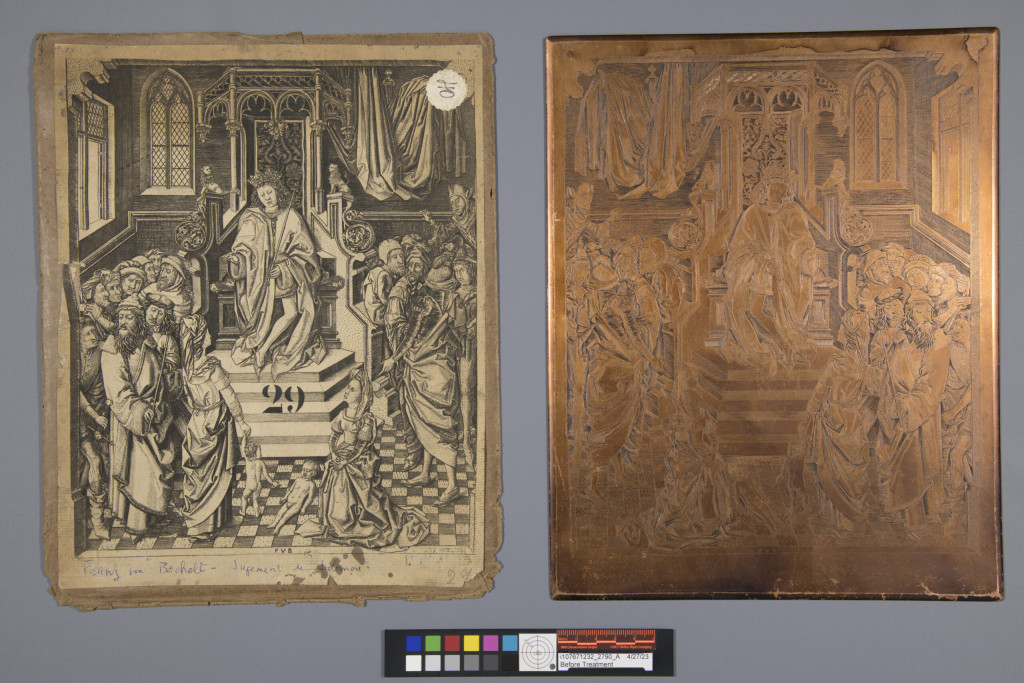
Most of the items we have received so far have been very straightforward matting projects, however we encountered one that was puzzling and fun to work on. We received this item: a proof print accompanied by its very heavy, copper engraving plate. The print was adhered to a paper brown envelope with no information and the copper plate was also unhoused.
Proof print (left) and engraving plate (right) before treatment and housing.
The curator of the collection wanted both items to be housed together and housed in a way that would allow students to touch the items, and also be able to use them for exhibits. We decided that both items would be matted individually, and then housed together in a thin corrugated clamshell box. The most challenging part would be to create a matting system that was strong enough to secure the very heavy copper plate and elegant enough to be used for exhibition.
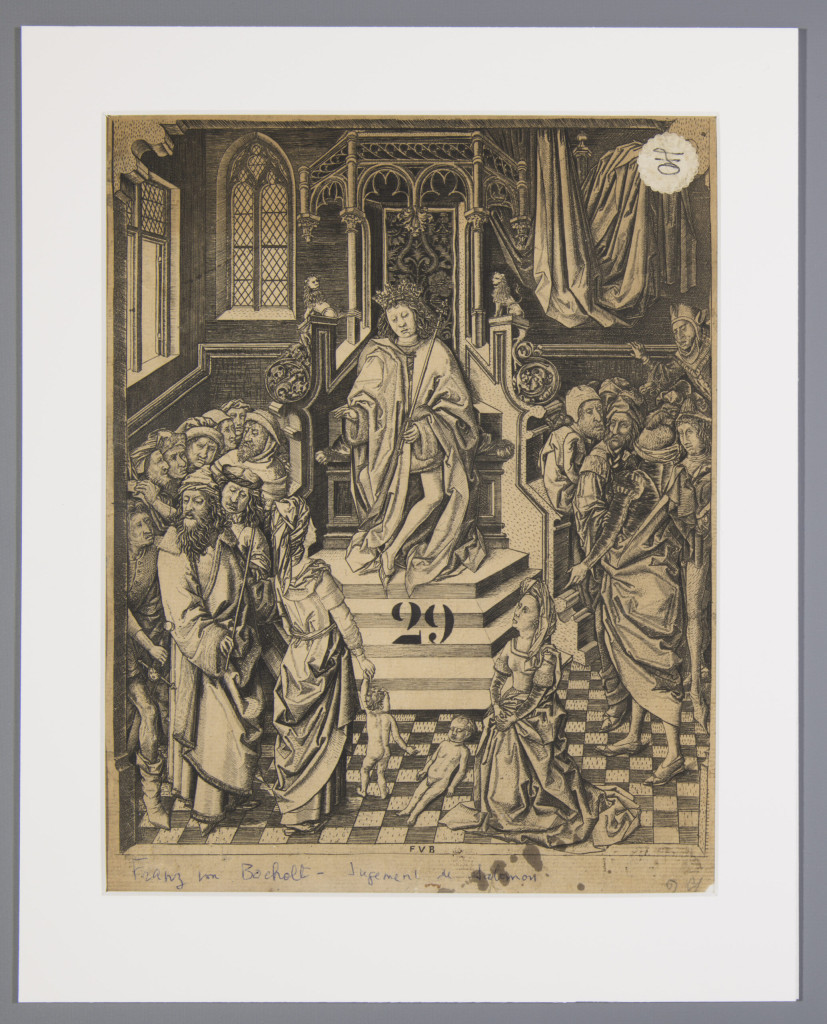
The print itself received minor treatment, with the backing envelope being removed and the print housed in a polyester L-sleeve mounted with photo corners.
Print housed in a polyester L-sleeve and matted with photo corners.
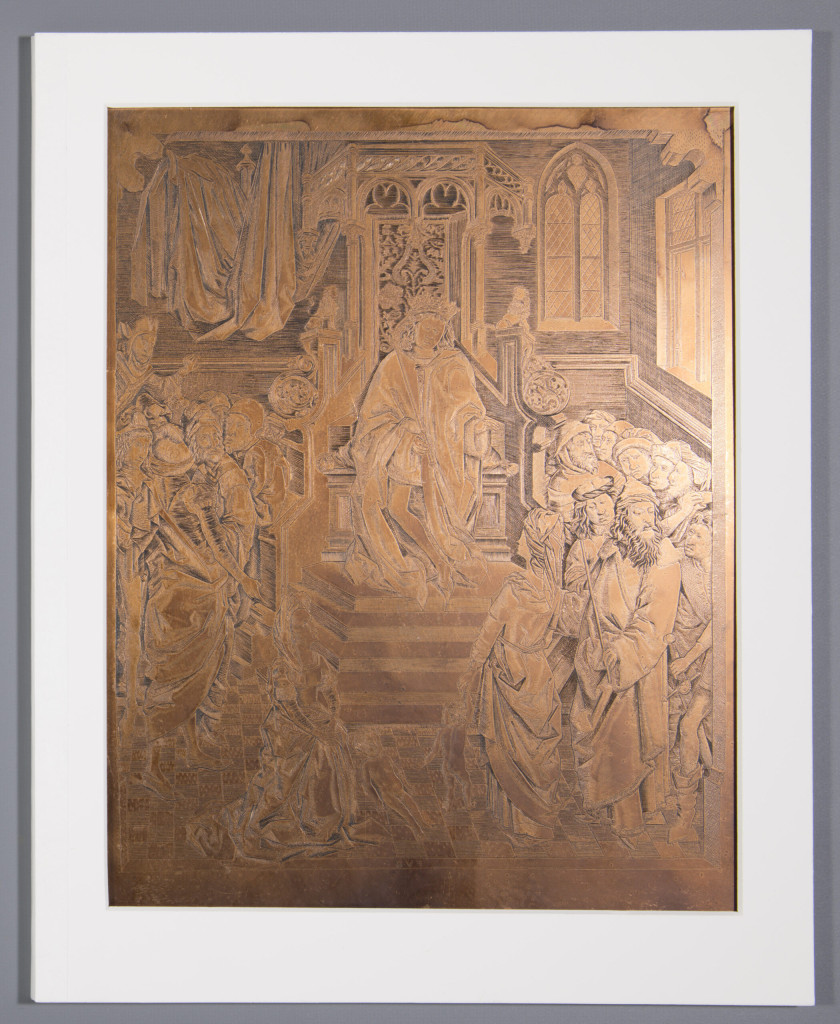
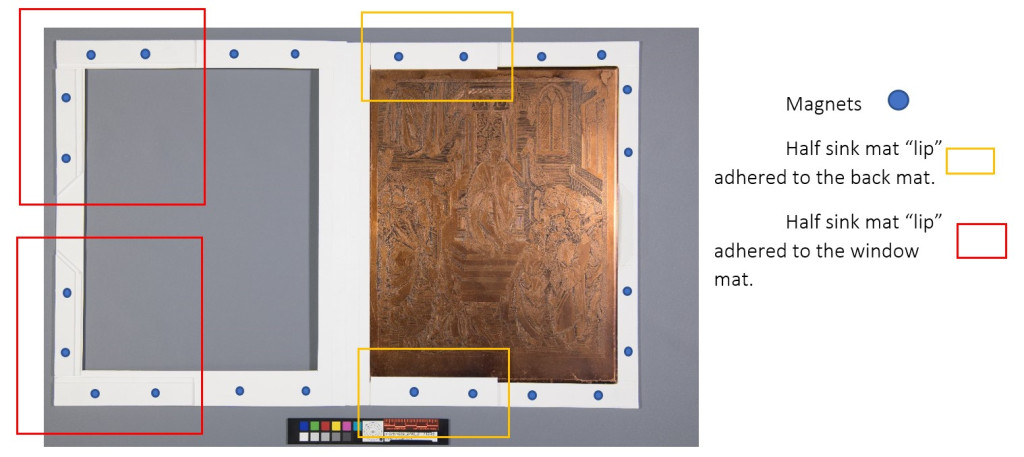
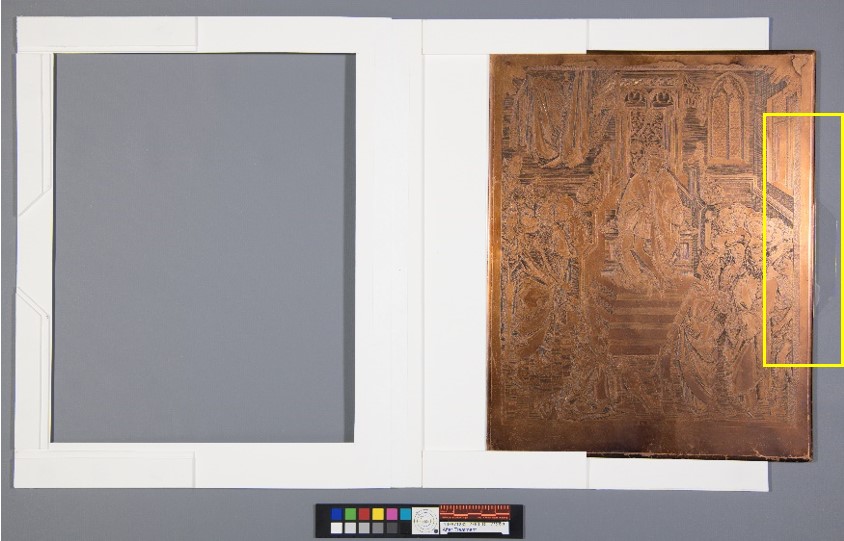
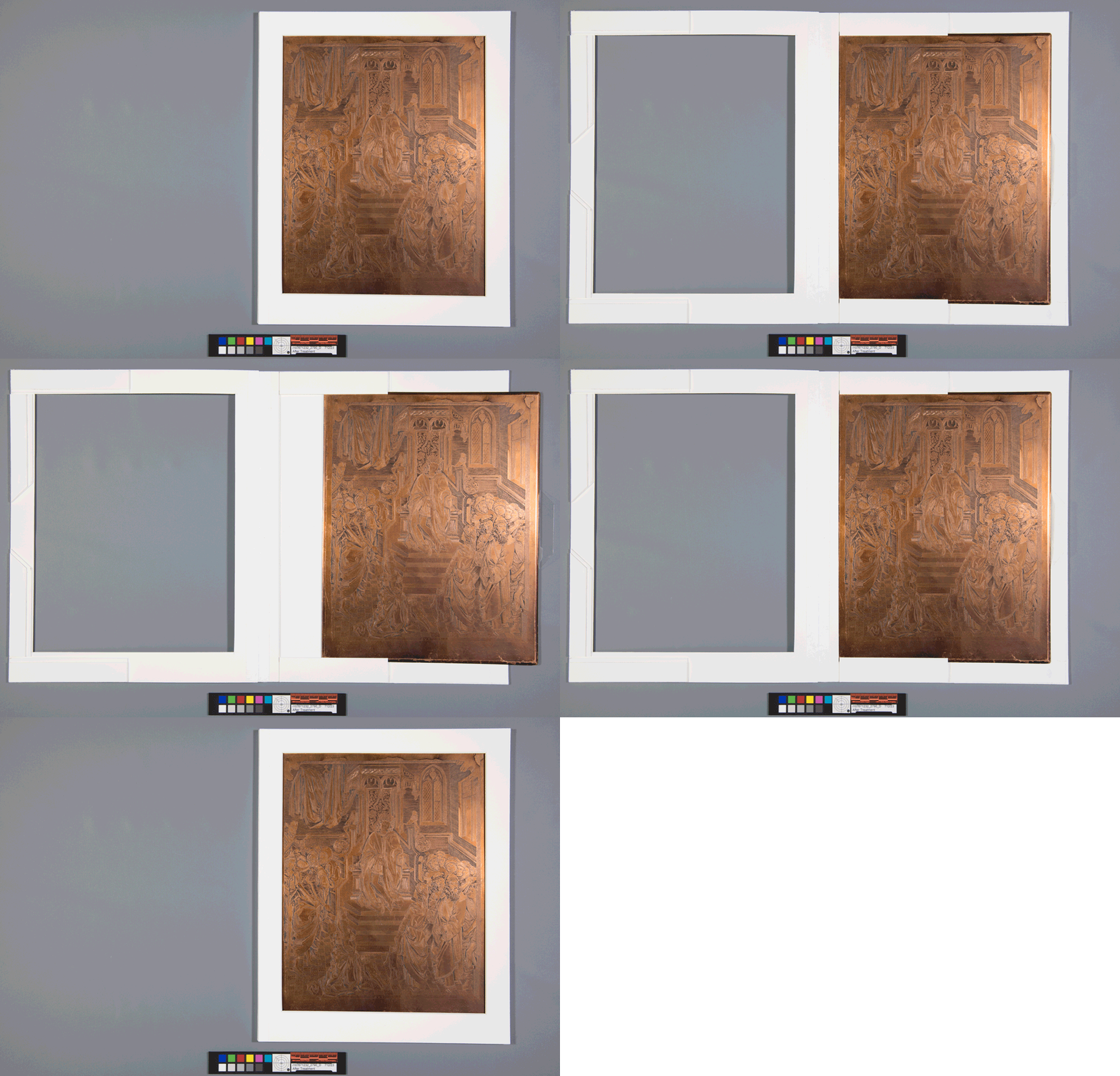
With the engraving plate, I needed to figure out how to create a matting system that was strong enough to hold the copper plate in place, especially if used for an exhibit where it may be propped at a slight angle. After considering some options, I created a sink mat that would secure the plate halfway, and then the rest of the sink mat would be adhered to the window mat so the copper plate, resting on a polyester tray, could be pulled out of the mat easily. How would I keep the matting system closed? ….with magnets, lots of magnets! For this project I used 24 rare earth magnets.
Copper engraving plate housed in a specialty sink mat with magnetic closures.Matting system for the copper plate – a sink mat, half attached to the back mat and half attached to the window mat, all secured closed with magnets.Copper plate slightly removed from the matting system by the polyester film tray.
This was a fun project to work on. After using 24 magnets and breaking a few in the process, the copper plate was securely housed in the sink mat, while also able to be propped up for exhibition and handled for teaching.
Before treatmentAfter treatmentThe matting system in action!
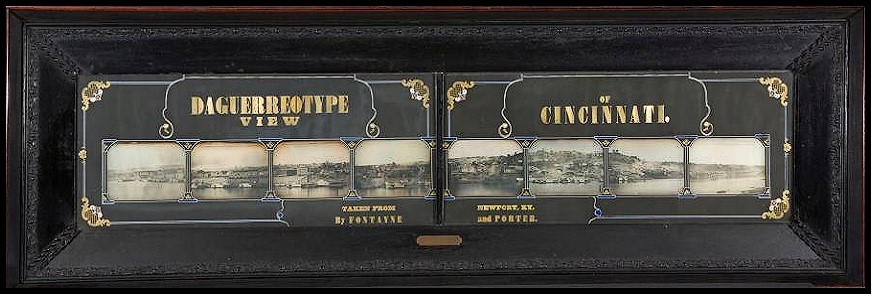
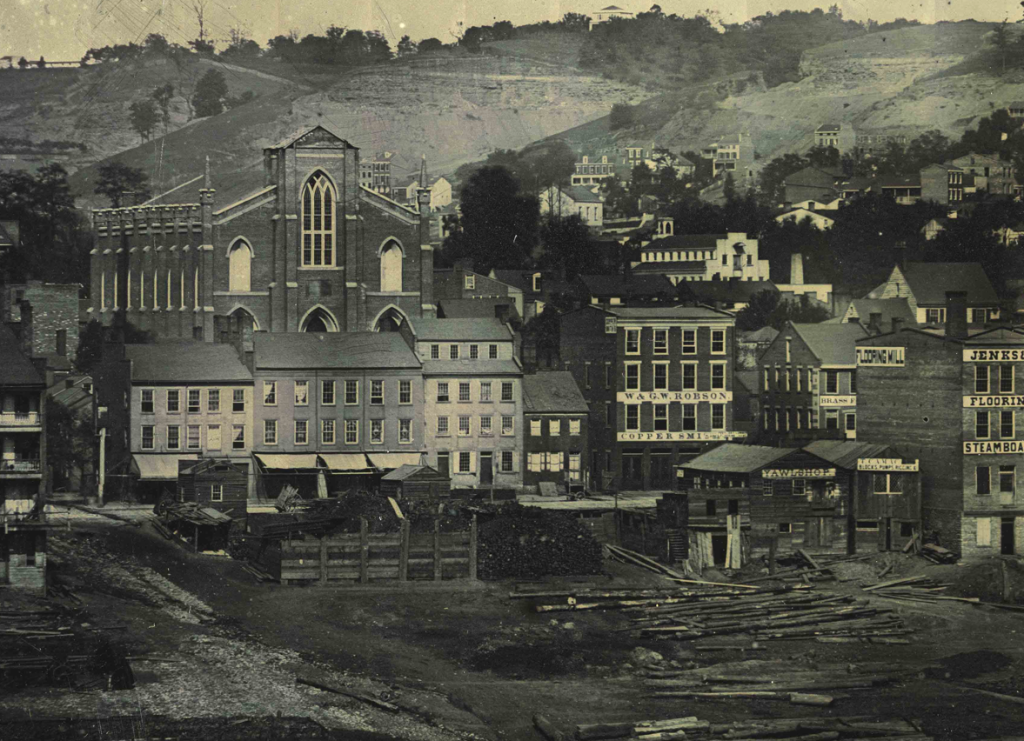
As conservation professionals at the Preservation Lab, we get to see and work with our fair share of historic, rare, and just plain interesting artifacts. I recently had the pleasure of becoming familiar with an item that is all 3 of these, and just so happens to be one of The Cincinnati & Hamilton County Public Library’s (CHPL) most prized possessions: the Fontayne and Porter 1848 Cincinnati Panorama Daguerreotype.
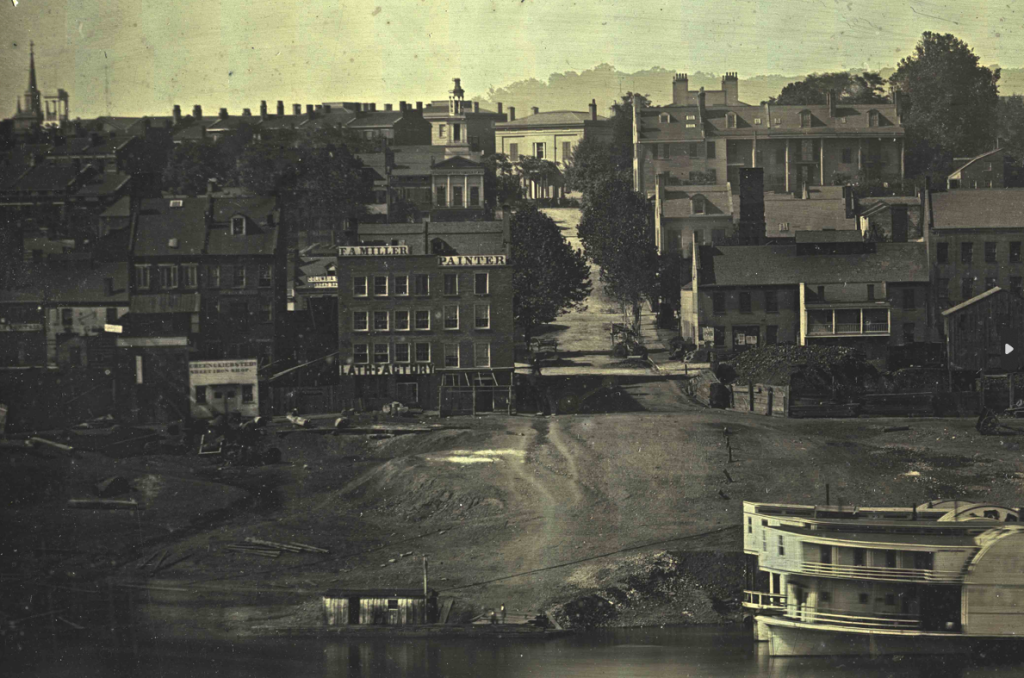
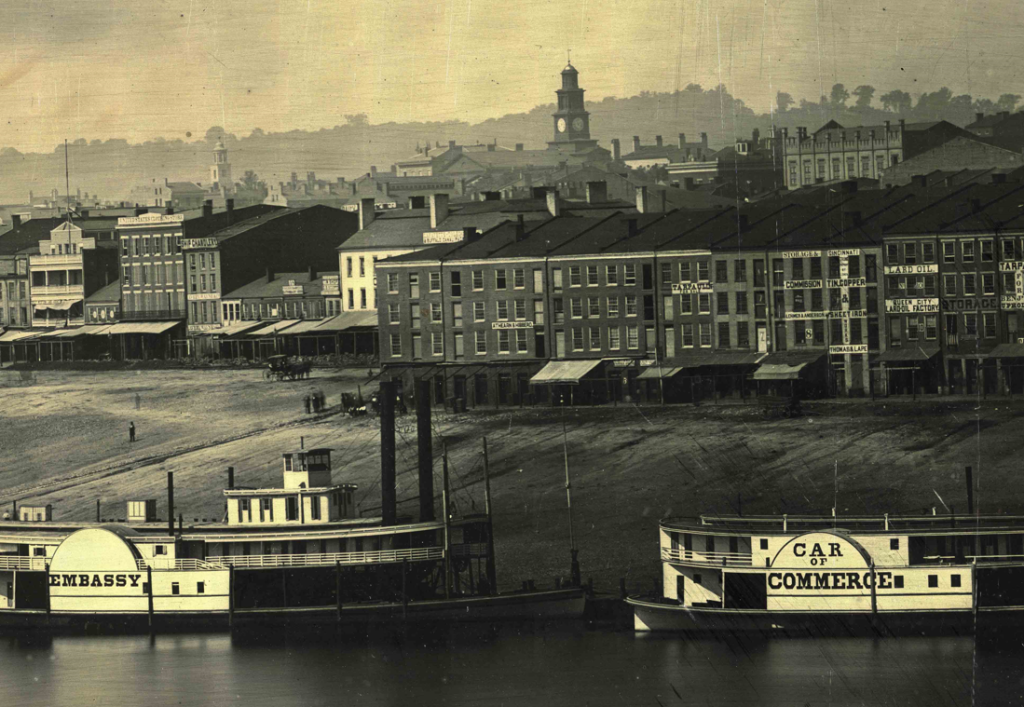
Cincinnati Daguerreotype Panorama by C. Fontayne and W. Porter, 1848
For those who are unfamiliar, a daguerreotype is the very first photographic process, utilizing iodine-sensitized silver plates and mercury vapors, often offering stunning detail and resolution. Currently on display in the downtown Main Library’s Cincinnati Room, the Cincinnati Panorama is no exception, and is considered one of the most detailed and vivid examples of daguerreotype photography currently in existence.
CHPL panorama plate 5 detail
CHPL panorama plate 4 detail
CHPL panorama plate 2 detail
Daguerreotype photography is not without its challenges, however. Most significant of these (at least which concerns us in the conservation field) is that daguerreotypes are extremely delicate. They scratch easily and can degrade with simple exposure to oxygen, atmospheric pollutants, and moisture. These attributes bring up a difficult question: how does one display an item like this, while also ensuring its preservation for generations to come?
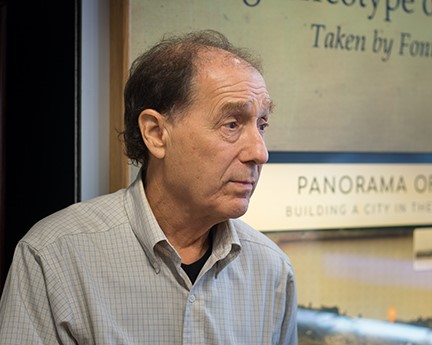
Enter Ralph Wiegandt. Wiegandt is a Photograph Research Conservator who designed and installed the 1848 Cincinnati Panorama’s enclosure and display case in 2008. He routinely has performed on-site follow-up consultations in 2012, ’14, ’16, and most recently this past June with Genealogy and Local History and Preservation Lab staff. My fellow lab mate, Hyacinth, and I had the good fortune to also meet with Wiegandt on this recent visit to attend a presentation on his uniquely designed enclosure. Although the primary purpose of the visit was to discuss the enclosure, Ralph shared no shortage of information about daguerreotype plates, the photographers (Fontayne and Porter), the conditions surrounding the panorama, and much more.
Ralph Wiegandt, photo by Hyacinth Tucker
It was clear from speaking with Wiegandt that this project was one he was deeply passionate about, referring to it as “a seminal object in my career.” He spoke with excitement about the unique attributes the Cincinnati Panorama showcases, chief among them: the stunning detail and clarity. According to Wiegandt, this image is so detailed that it can be magnified up to 30x before experiencing any resolution loss. This allowed for intense digital imaging to be performed during the initial conservation of the daguerreotype in 2008. In this process, digital photos were taken from different degrees of closeness to the original image and then stitched together, creating one large interactive digital display, viewable here.
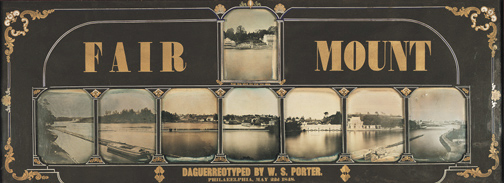
Wiegandt informed us that the 1848 Cincinnati Panorama was not the first attempt at such a picture. Just several months prior, W.S. Porter had taken another daguerreotype panorama of the Fairmount Water Works in Philadelphia.
Fairmount Water Works Daguerreotype Panorama by W.S. Porter, 1848
The detail of this image, however, is not as impressive as the Cincinnati Panorama. What can be gleaned from this fact, according to Wiegandt, is that the Philadelphia capture was a successful learning experience for Porter, and that his skills and techniques were able to improve dramatically by the time he attempted the Cincinnati Panorama with C. Fontayne.
At the time of the Cincinnati Panorama, daguerreotype photography had only existed for 9 years. Equally as remarkable as the detail these images were able to capture is the inception of this technology. Wiegandt explained how Louis-Jacques-Mande Daguerre experimented with plates of silver sensitized with iodine fumes. The idea was that the sensitized silver would be reduced as it was exposed to light (i.e., the shutters on a camera opening and allowing light from the image field to hit the plates), thus creating latent images in the silver. Although this proved to be successful, a viewable image was not detectable until a chance happening, which Wiegandt describes as “a miracle.” Legend has it that one of Daguerre’s exposed plates was stored in a cabinet, sharing this space with one other singular item: a broken instrument that utilizes mercury (such as a thermometer, barometer, etc.). Upon examining this plate, Daguerre realized the latent image was now detectable, correctly deducing that the mercury fumes had developed the film. The fumes had caused the light-exposed areas on the silver plate to form small bumps, roughly 1 micron in size, creating an instant high-resolution image. The microscopic size of these bumps means that, according to Wiegandt, daguerreotype images are an early example of what we would today call nanotechnology. (Ralph also notes the actual circumstances of its discovery are unclear since any notes from Daguerre’s studio would have been lost during a fire shortly afterwards.)
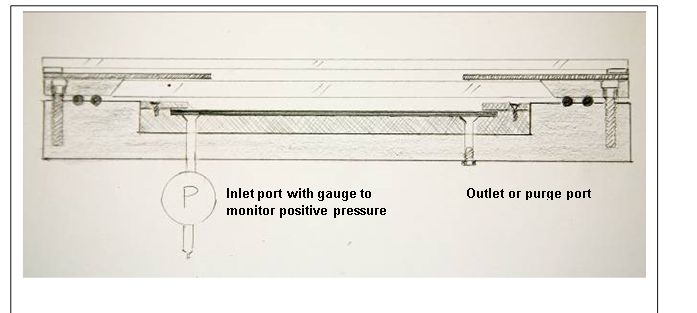
Much like the Fontayne and Porter Cincinnati Daguerreotype, the current display case is quite unique as well. As mentioned before, daguerreotypes are incredibly delicate. To successfully prevent further degradation and preserve this object for generations to come, its exposure to oxygen and other reactive gases must be severely limited. The solution that Wiegandt produced was a specialized inert gas case, similar in concept to how the Declaration of Independence is housed. The goal of this case is “to maintain a slightly elevated pressure of a non-reactive gas such that it will not put excessive strain on the seals yet will be above the potentially highest barometric pressure” (Wiegandt, 2006), thus preventing any atmospheric air from coming in contact with the sensitive daguerreotype plates.
Wiegandt’s sealed encasement design sketch provided in treatment documentation
Wiegandt chose argon to pressurize the case with as it has a better diffusion rate and is more inert than other gases such as nitrogen, all while being cost effective.
Wiegandt informed us on his most recent visit that the case is doing its job: the panorama has experienced no detectable degradation since its installation. However, this was likely his final visit to the Cincinnati Library, as he is retiring from the field. I should add that a further and perhaps more important purpose for this visit was to advise and inform CHPL (and Preservation Lab) staff to be successful in monitoring and caring for the object in his absence. Fortunately, Wiegandt was able to leave us with a wealth of information and resources that will aid in the continued preservation of this amazing artifact. With an updated preservation plan, knowledgeable staff in both the Genealogy & Local History and Preservation Lab departments, and a commitment to preserving cultural property, we can be confident the Cincinnati daguerreotype panorama will be enjoyed by library visitors for many generations to come.
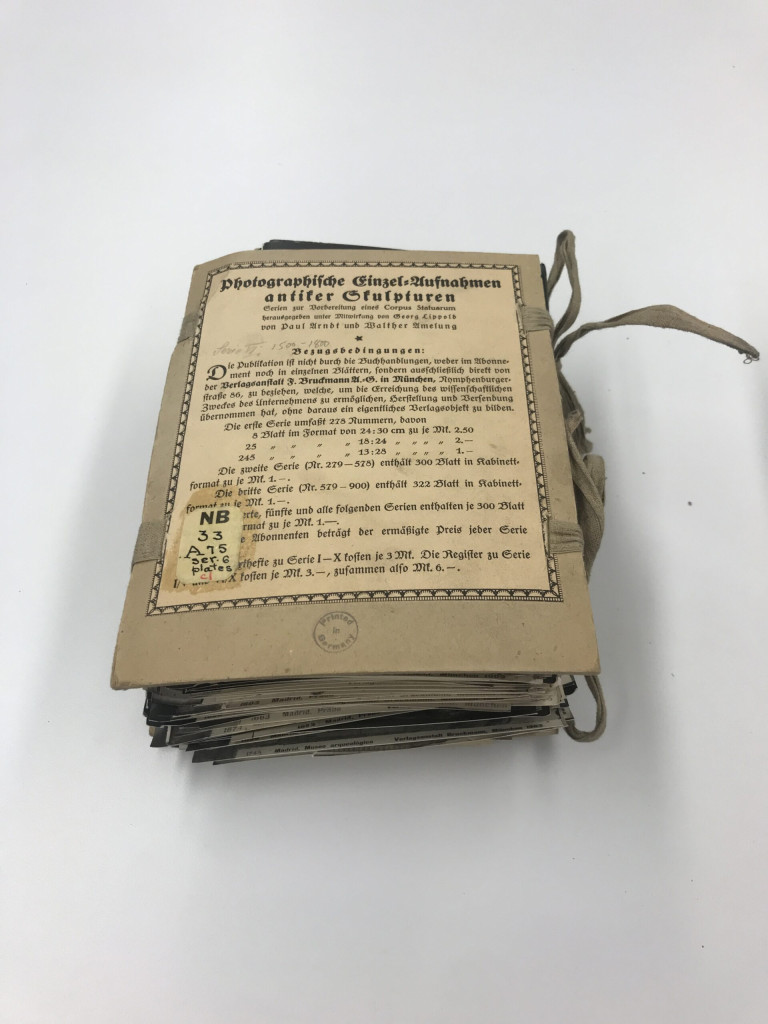
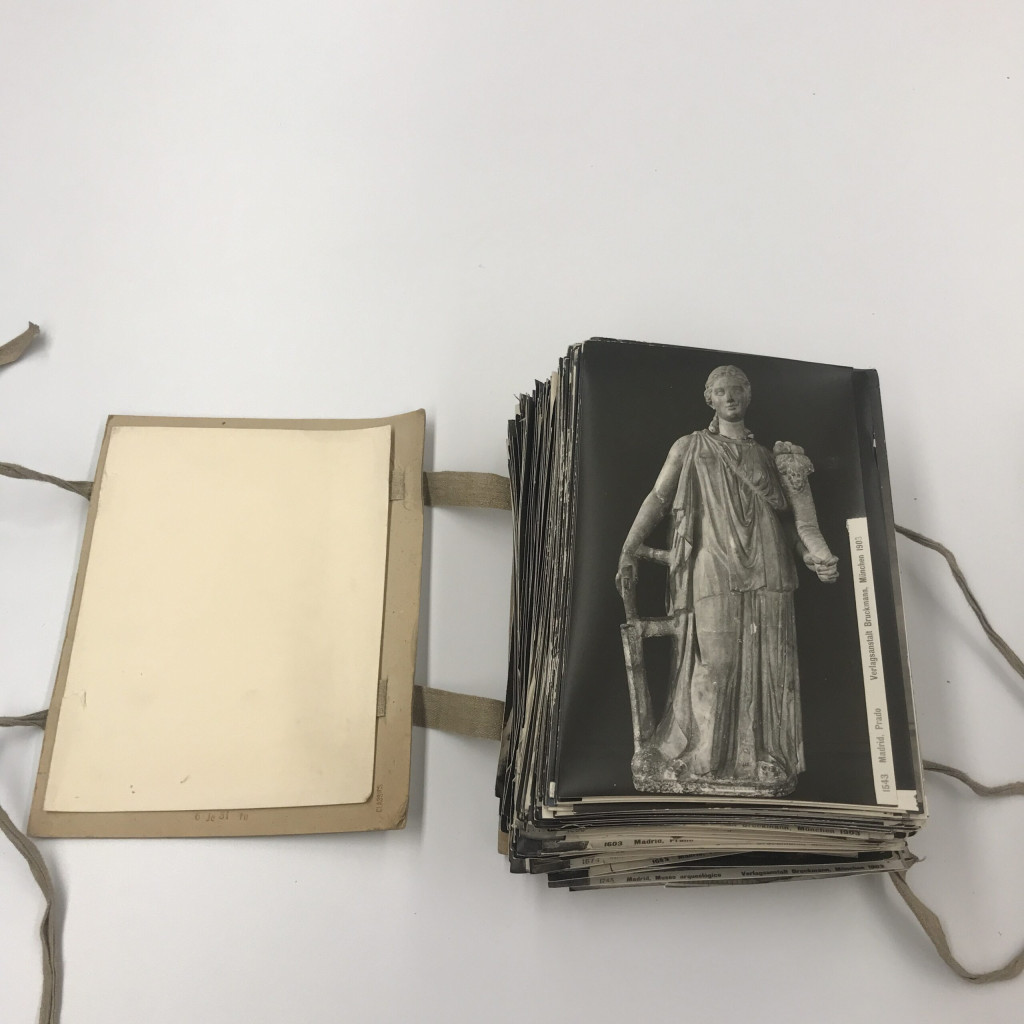
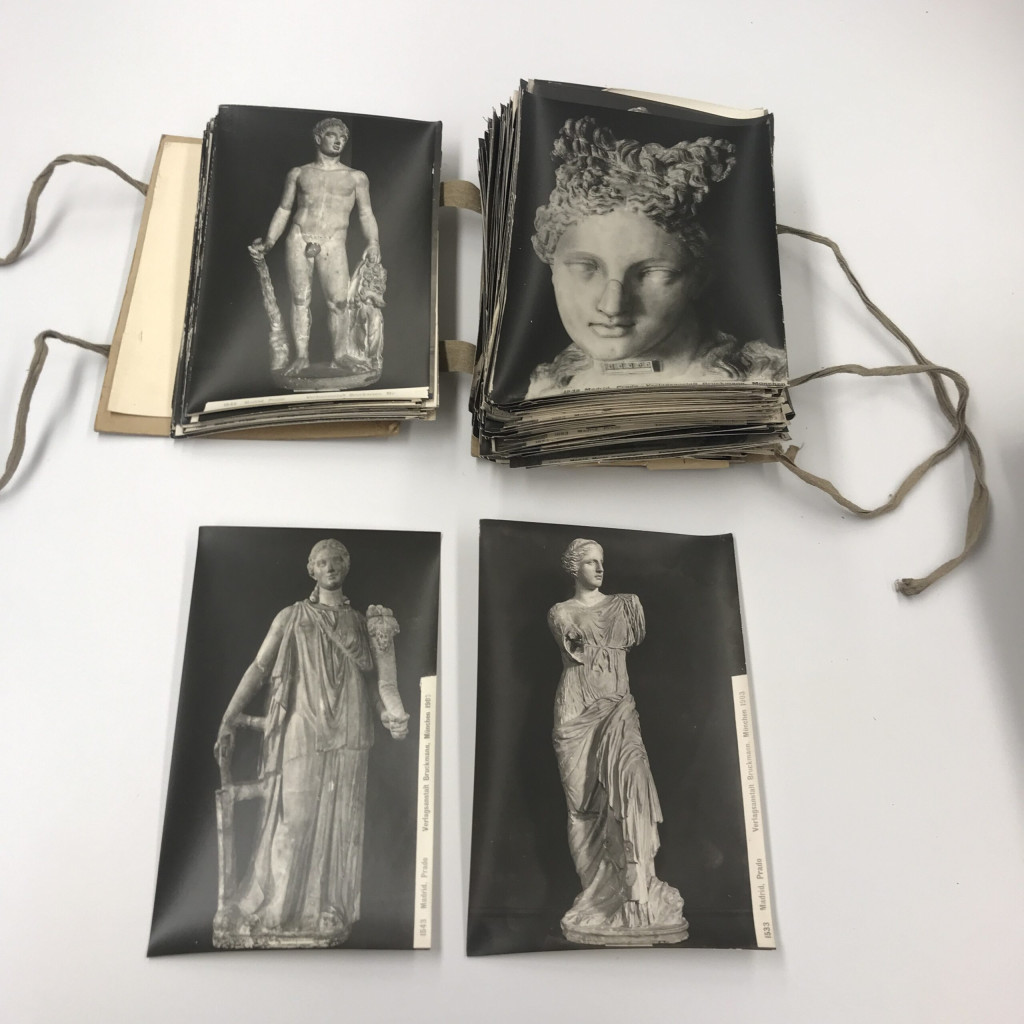
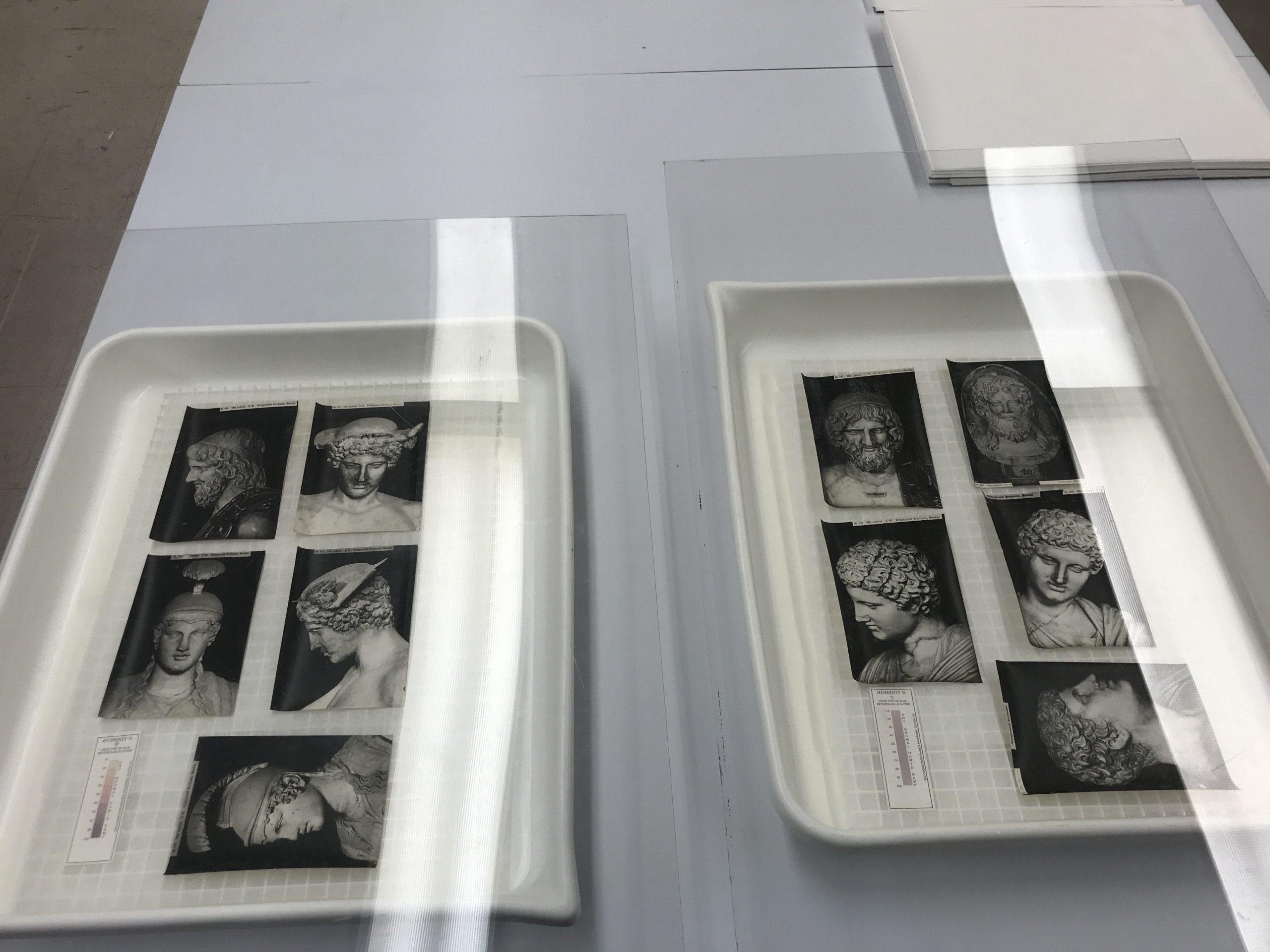
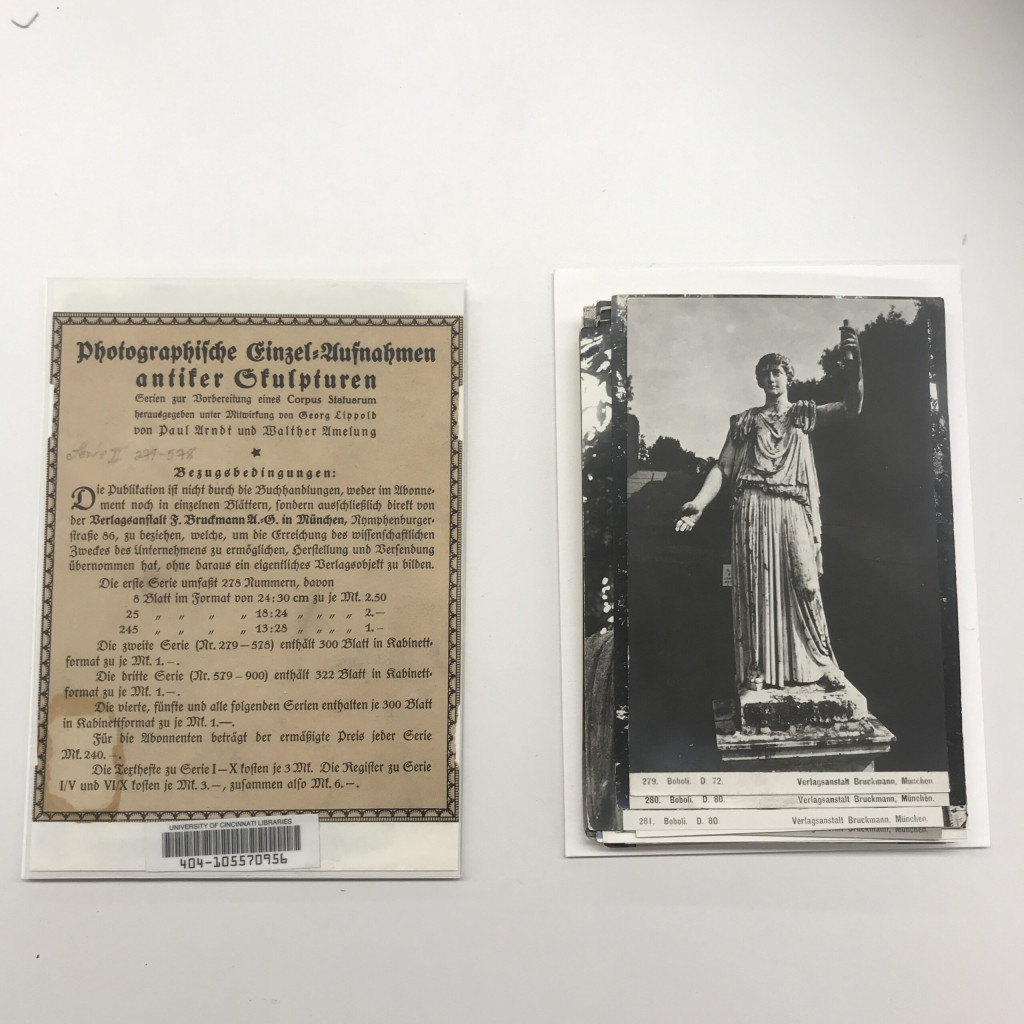
This past March, at one of our Special collections meetings, the Lab received a photographic project from UC’s Classics Library. This was a large German collection comprised of 16 series, each series with approximately 300 photographs, a total of about 4800 photographs!! These are silver gelatin photographs that depict ancient sculptures. The photographs are important since in some cases they show sculptures that may have been destroyed during the WWII.
Before Treatment – Series 5 of the 16 series of photographs
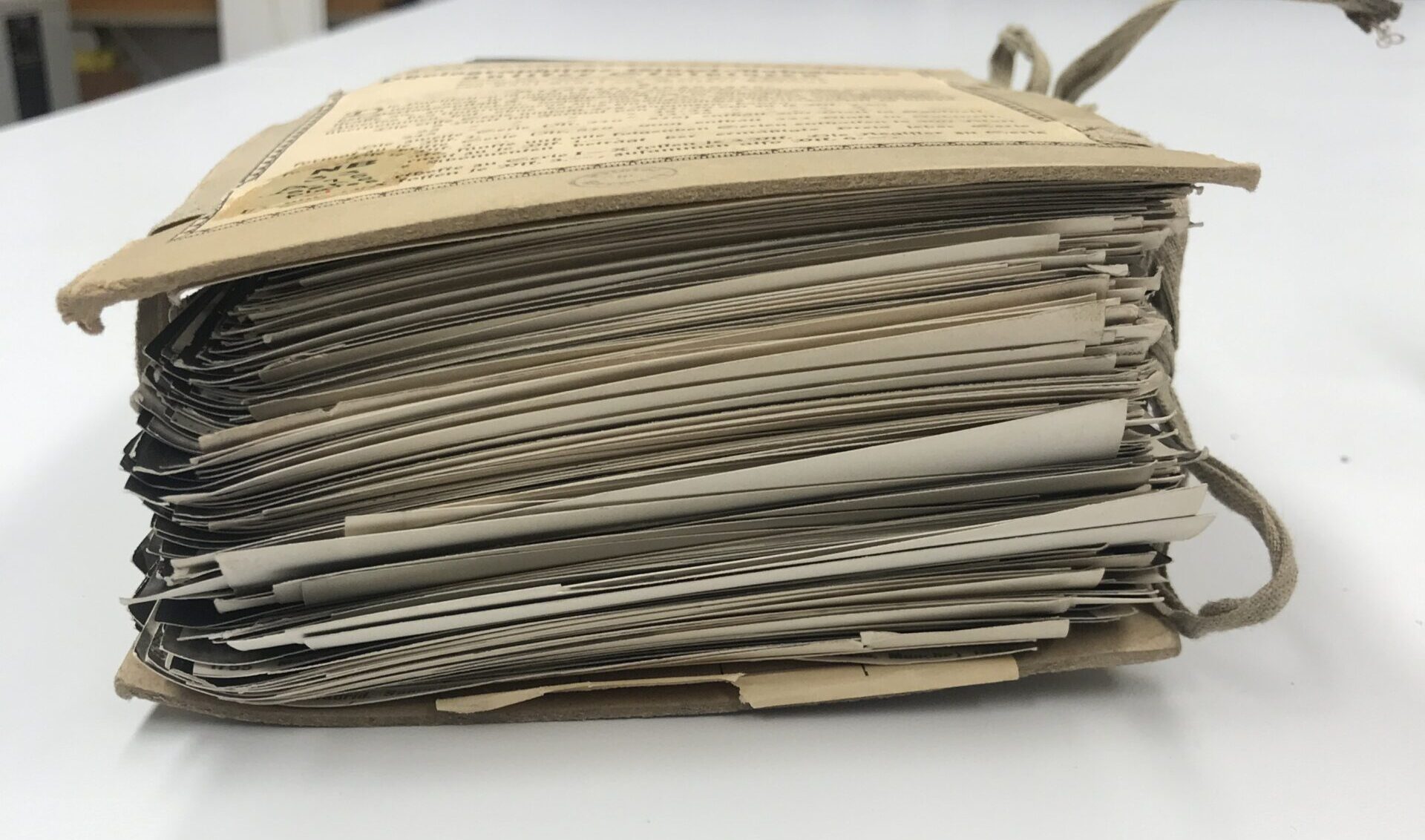
Before Treatment – Original enclosure – Book board with cloth ties
Before Treatment – Curled photographs
All the photographs were curled, some showed silver mirroring, and minor tears along the edges, or creases. Most of the conservation treatment focuses on humidification and flattening of each photograph. With such a large number of photographs, the project was divided between Chris (Senior Conservation Technician), Hyacinth (Conservation Technician), and myself (Assistant Conservator).
Before Treatment – Photographs as they were received in the Preservation Lab. Overall, curled with small tears along the edges.
We each took a series of photographs to work on. Ahead of starting the project, we conducted some tests, along with Ashleigh (Conservator), to understand how long we should humidify the photographs, we create the pressing stacks that would be used for the flattening, and some guidelines that we could all refer to throughout the projects.
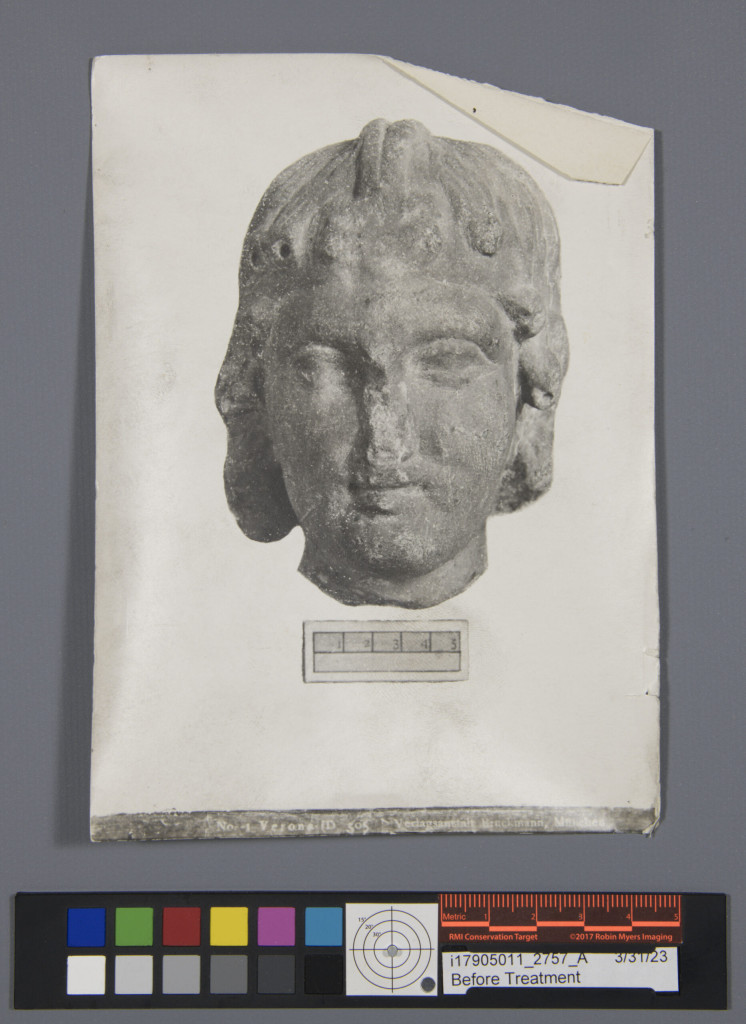
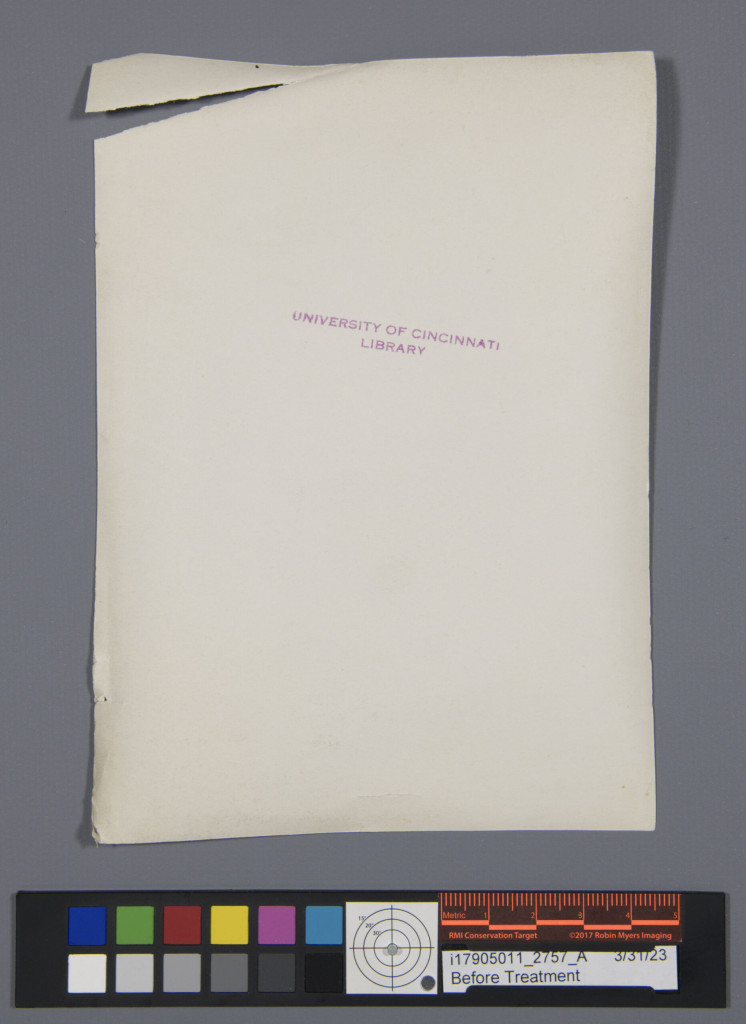
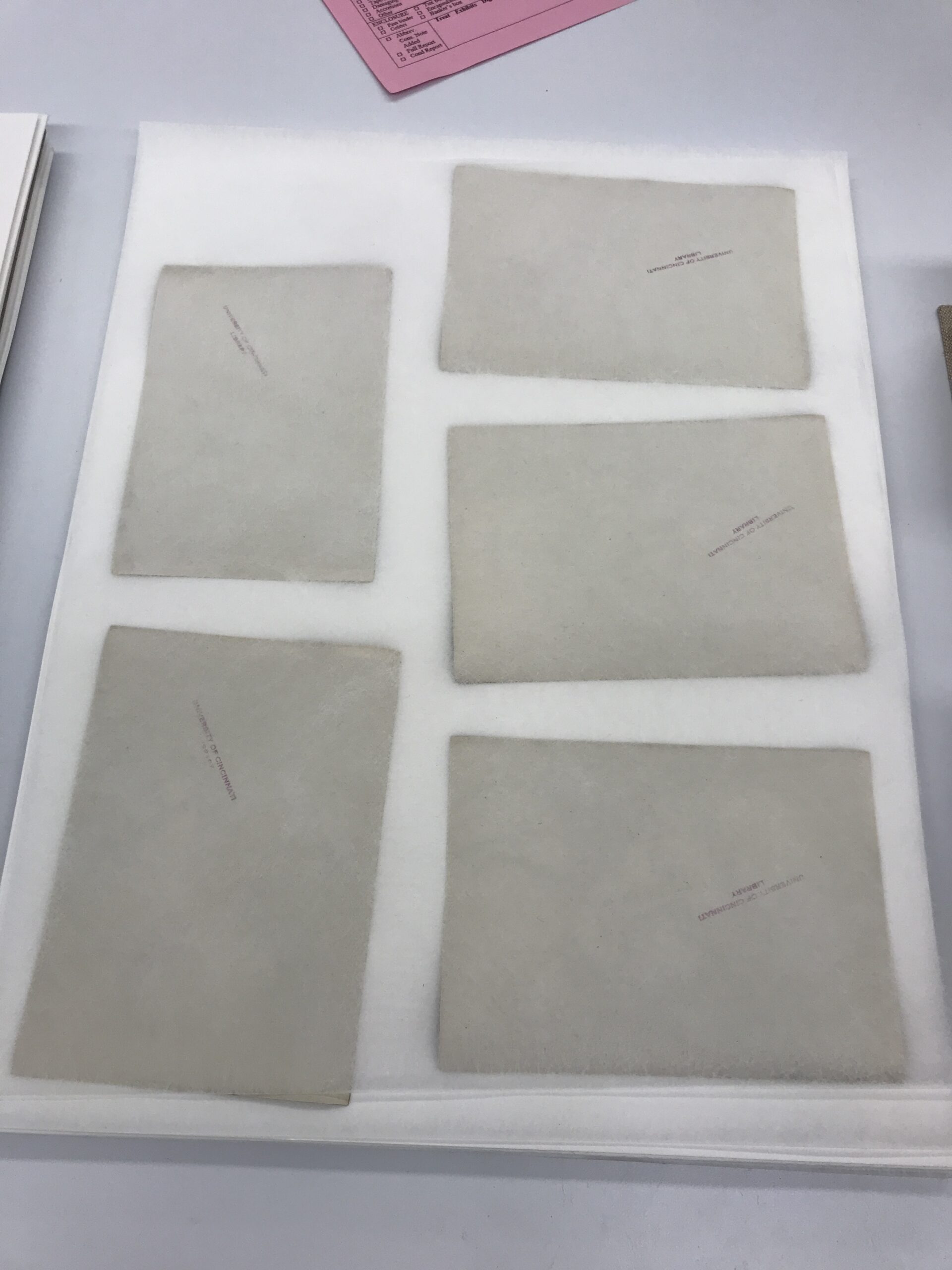
Before Treatment – Curled photograph, tear, and creased corners (Recto) Before Treatment – Curled photograph, tear, and creased corners (Verso)
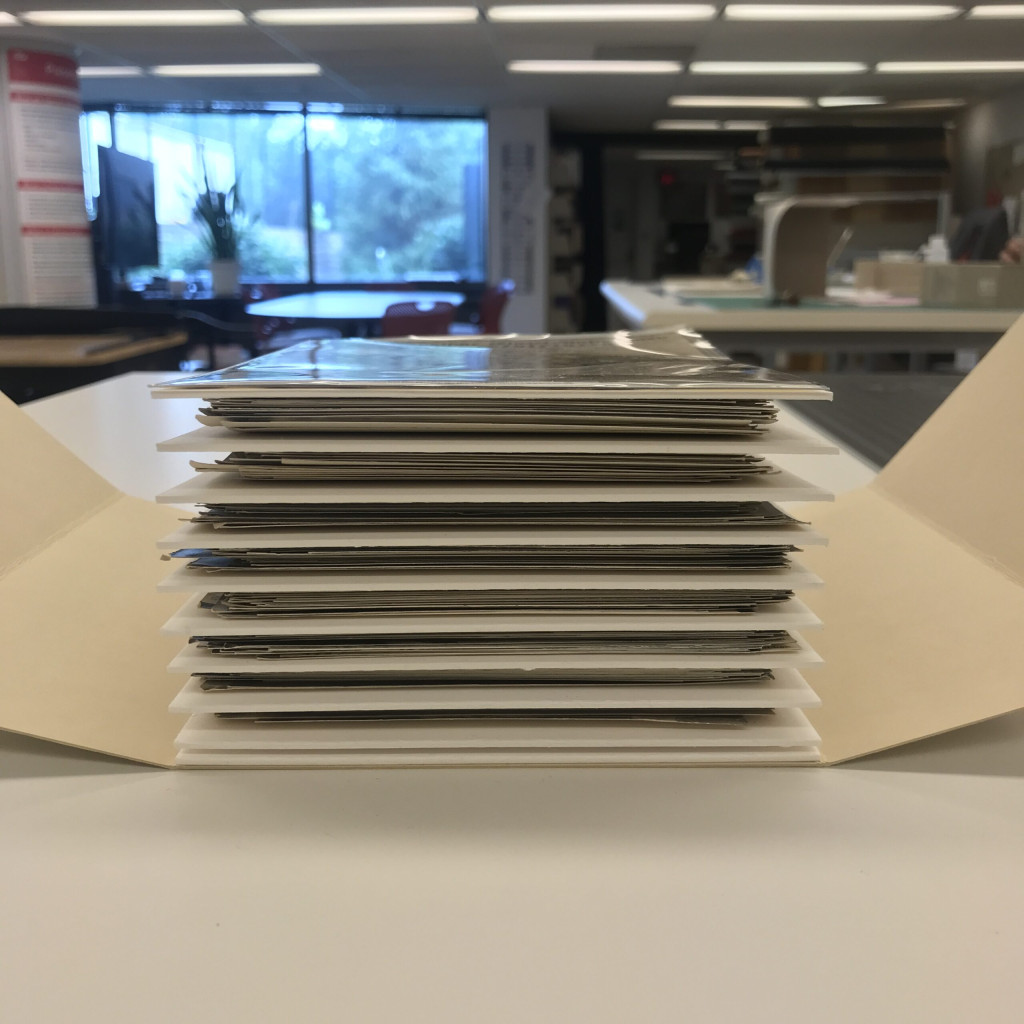
We concluded that we would obtain the best results by only humidifying the photographs for a maximum of 20-30 mins and then pressing them. First, we pressed the photographs between pressing stacks of thin Hollytex, blotter, Rising Museum Photomount mat board and binders board for two days. Then we pressed them in a book press or under weights between Photomount mat board until the compression enclosure is created. Before humidification, each photograph was surface cleaned with a hydrophilic sponges.
During Treatment – Small batch of Photographs being humidified in a cold humidity chamber.
During Treatment – Photographs being prepared for flattening by being pressed in a pressing stack.
After being humidified, small cracks on the emulsion and small tears were repaired.
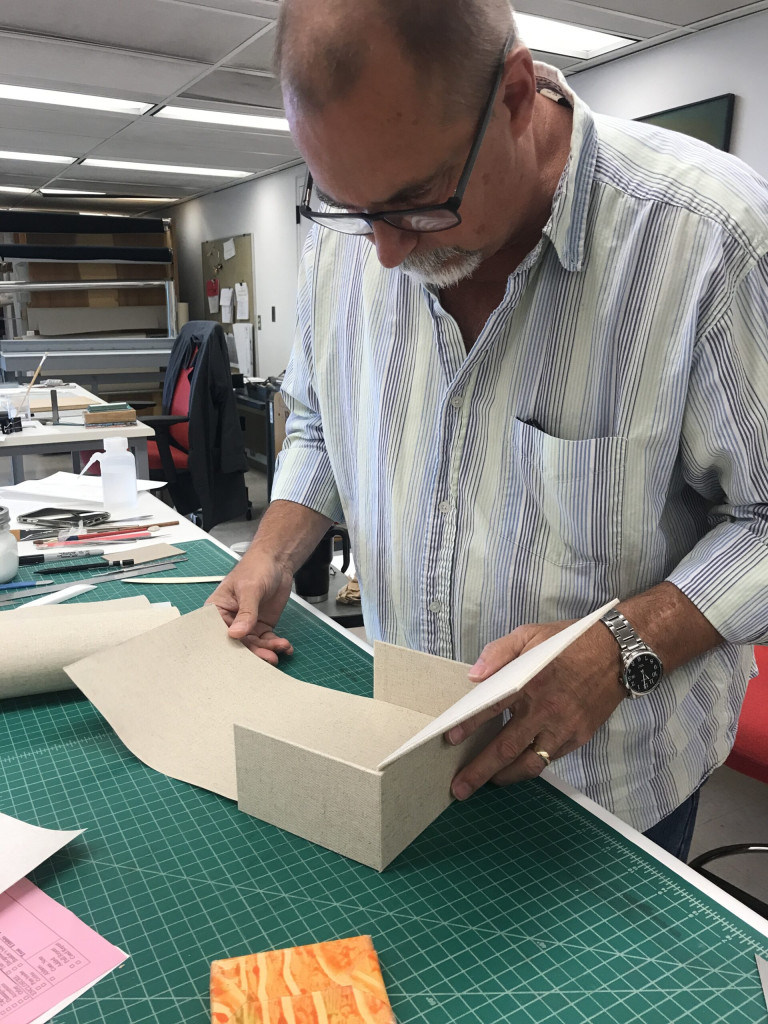
Chris is usually faster with any treatment, so his batch has been fully treated, and now he is in the process of making an enclosure, a cloth clamshell compression enclosure to ensure the photographs don’t start to curl again.
During Treatment – Chris working on the cloth clamshell compression enclosure.
I am still working on my batch. I currently have one-fifth of the photographs being pressed and the rest are awaiting humidification and flattening. This is a long project that requires constant monitoring and time for pressing, but it is so satisfying to see the photographs slowly relaxing and flattening. It will probably take us a few years or more to fully complete the entire 16 series, but once the project is complete each series will be safely housed and repair.
Before Treatment – Photographs as they were received in the Preservation Lab. Overall, curled with small tears along the edges.After treatment – Photographs have been humidified and flattened, each received minor stabilization treatment After treatment – Photographs flattened.
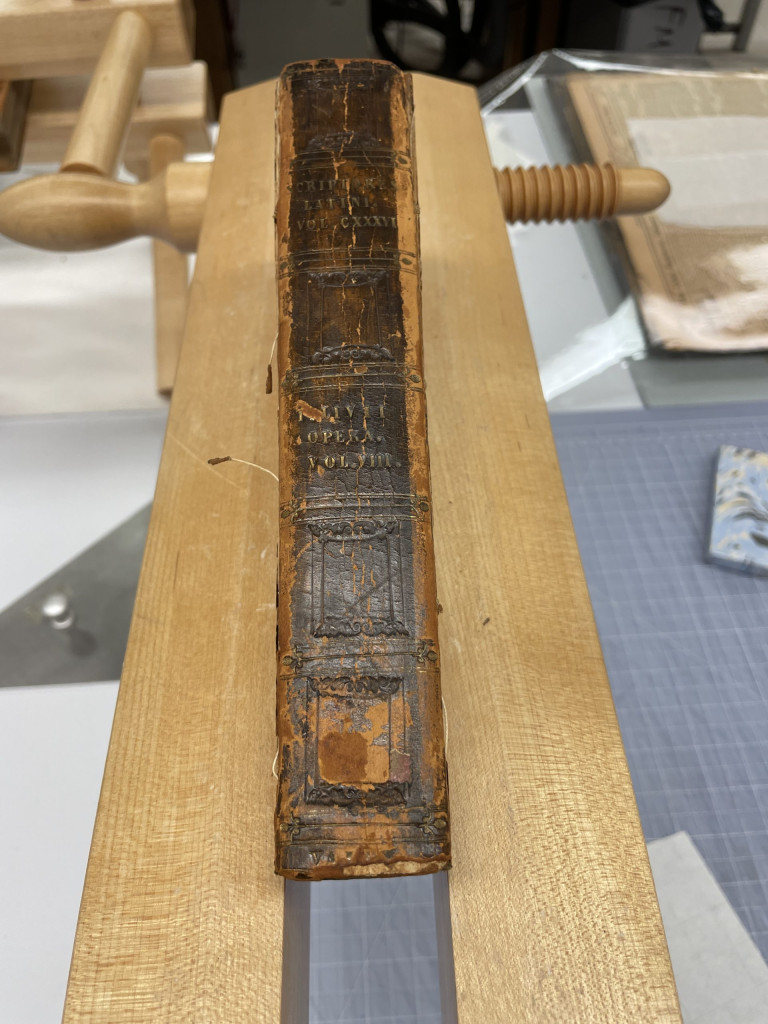
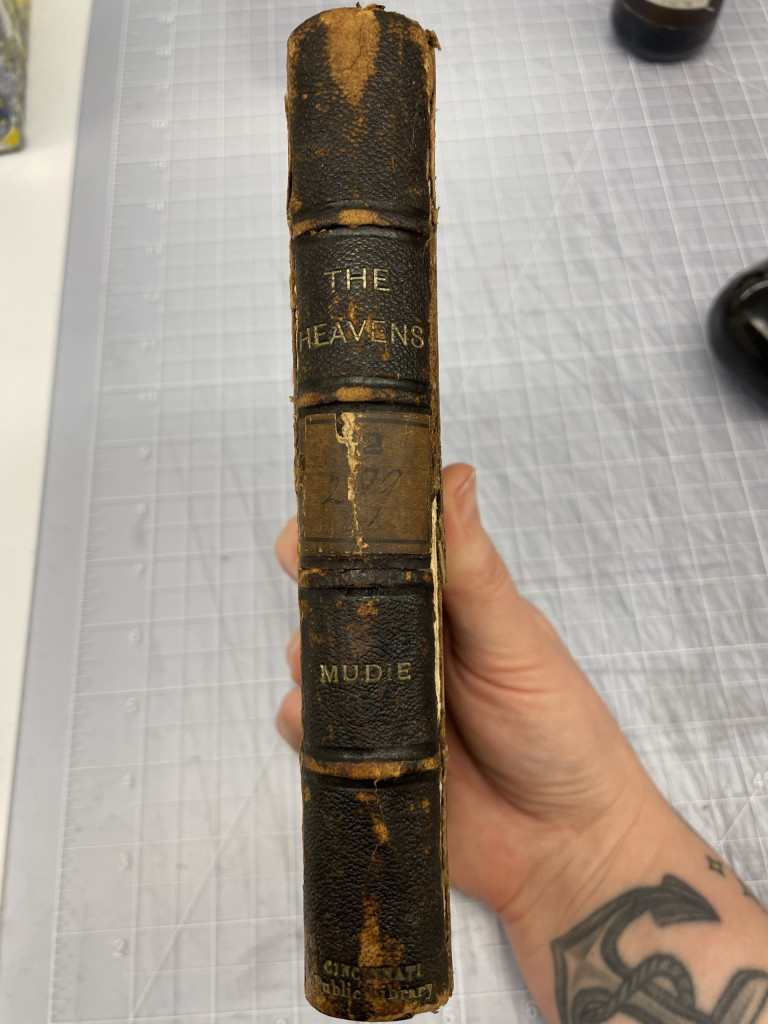
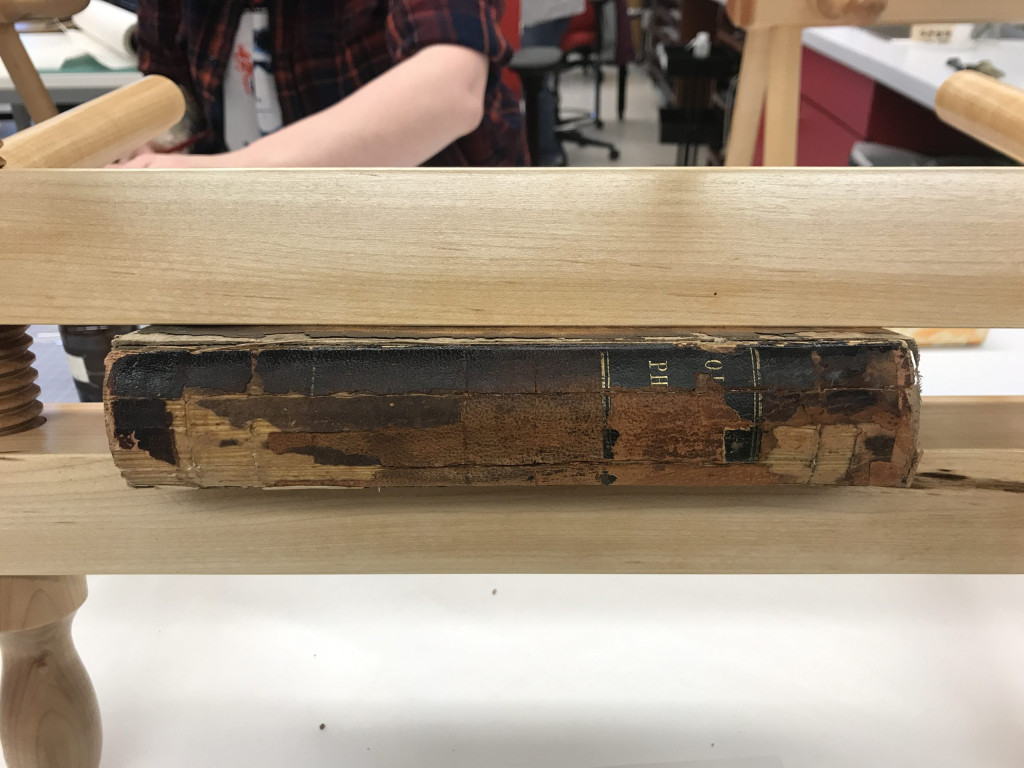
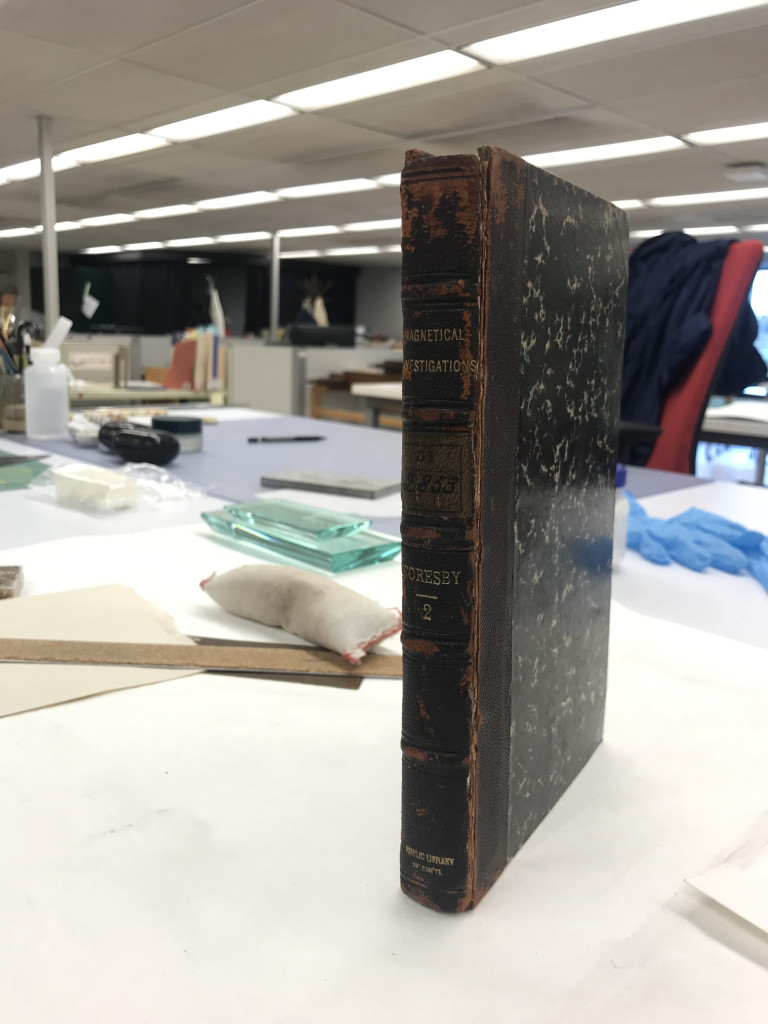
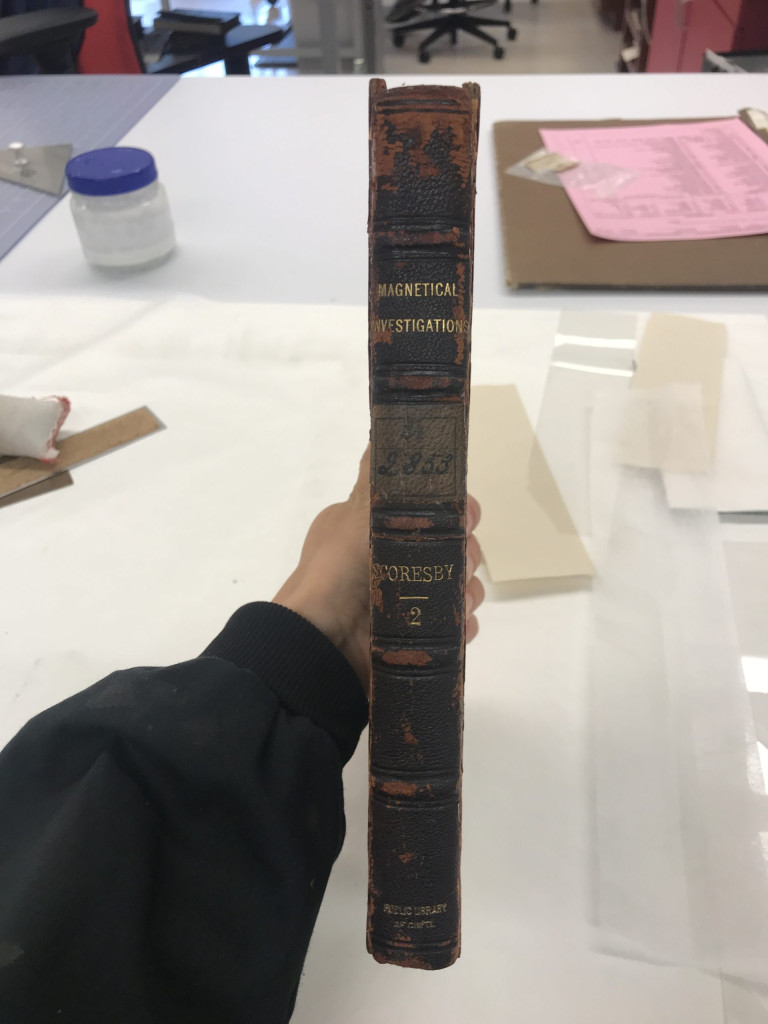
Back in October of 2022, The Preservation Lab had the pleasure of hosting Book Conservator, Jeff Peachey, for a week-long workshop on Conservation of Leather Bindings. One of the topics that was mentioned, but not discuss in depth, was leather facing.
No one in the lab had ever faced leather before, so Sr. Conservation Specialist, Jessica Ebert, and I decided to conduct some tests to understand the process, the best materials, and tools. With the research available, Jessica and I focused primarily on two sources, Conservation of Leather and Related Materials by Marion Kite and Roy Thomson and an article written by James Reid-Cunningham entitled Leather Rebacking, for the Seminar in Standards of Excellence in Hand Bookbinding, The Guild of Book Workers, 2013.
The primary reasons for testing out this technique was the fact that there were leather books from UC’s Archives and Rare Books Library here in the Lab for treatment and they could potentially be good candidates for leather facing.
Let the tests begin!!
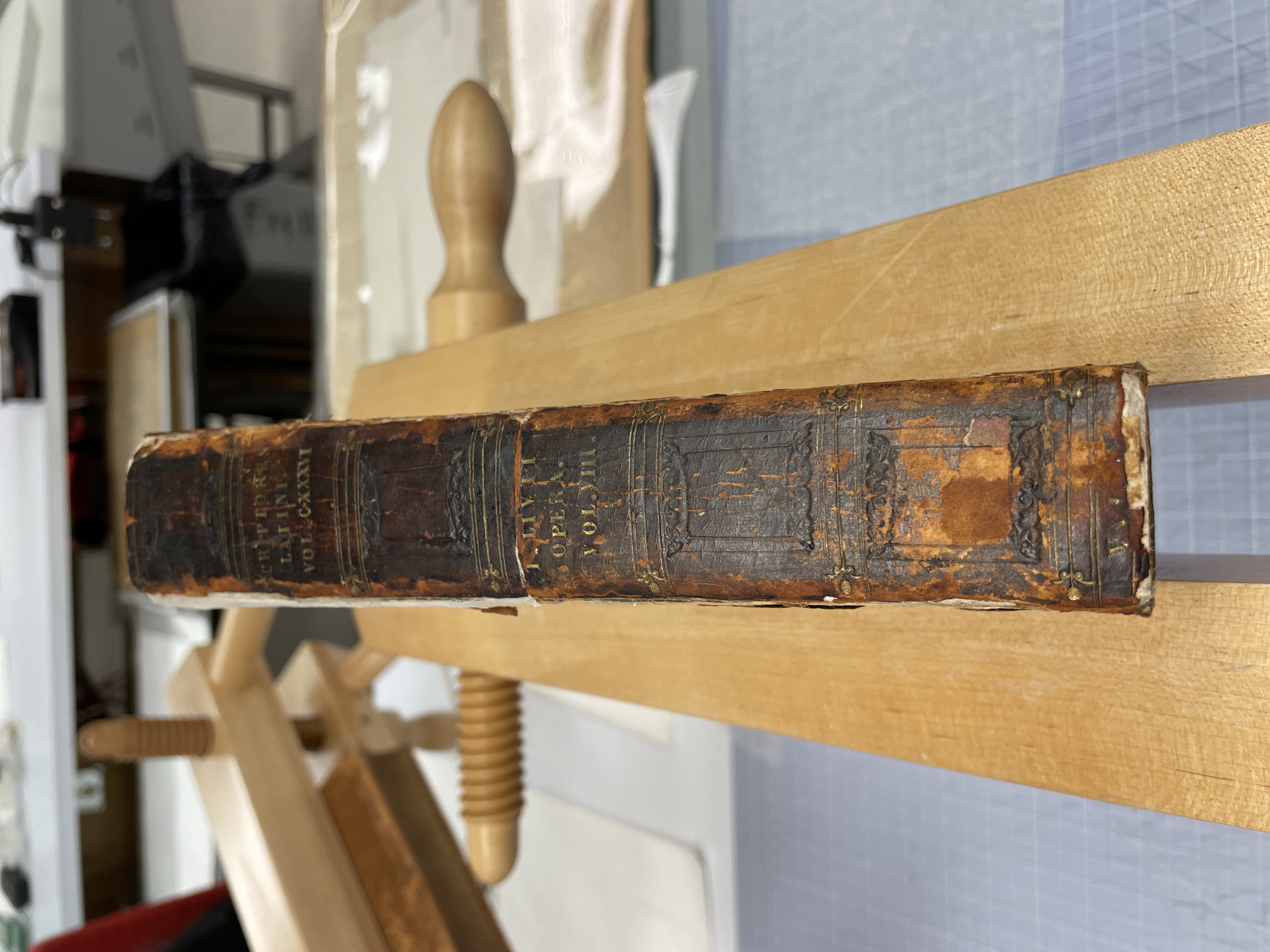
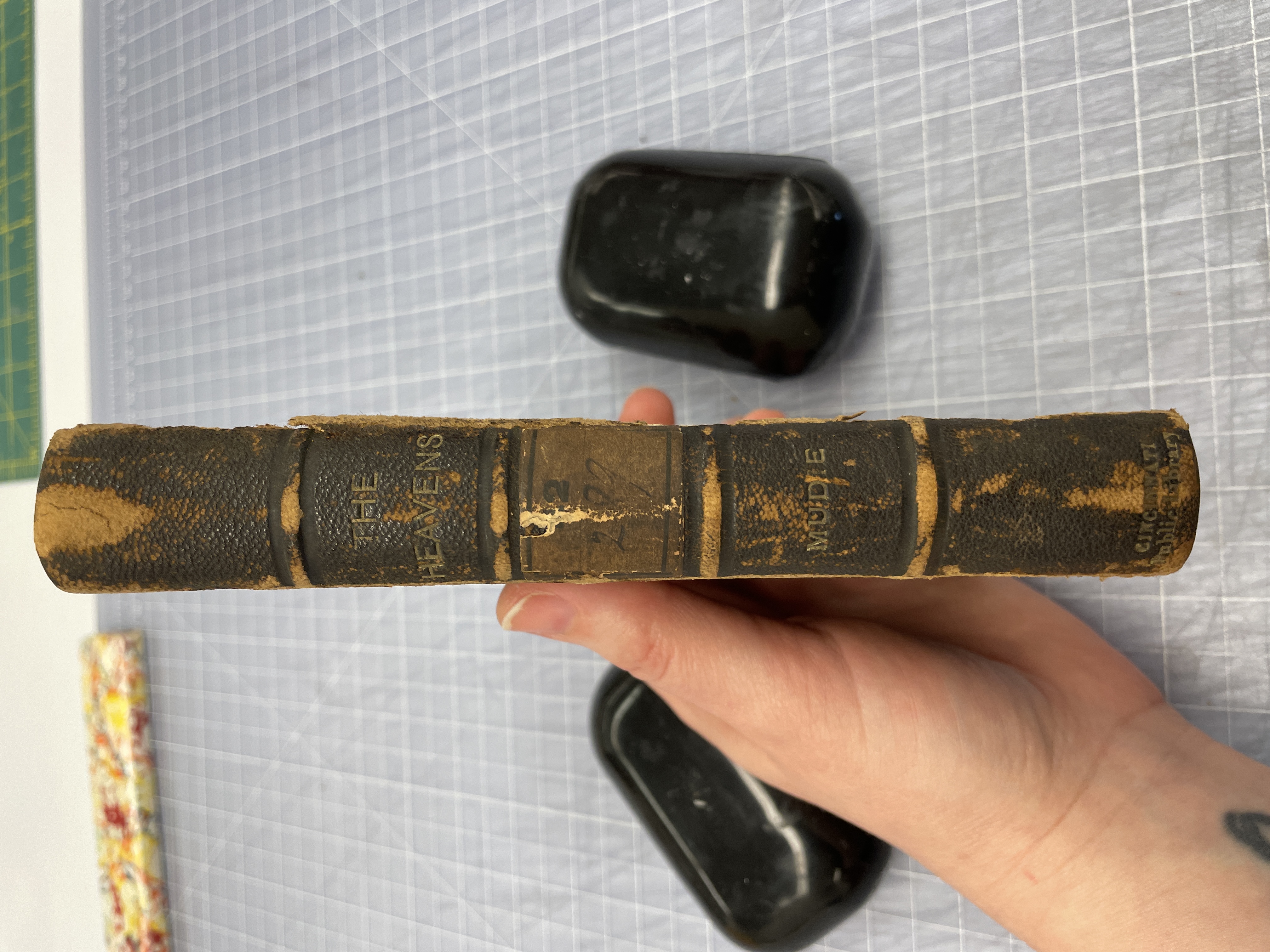
Both Jessica and I chose two different withdrawn leather books to test on:
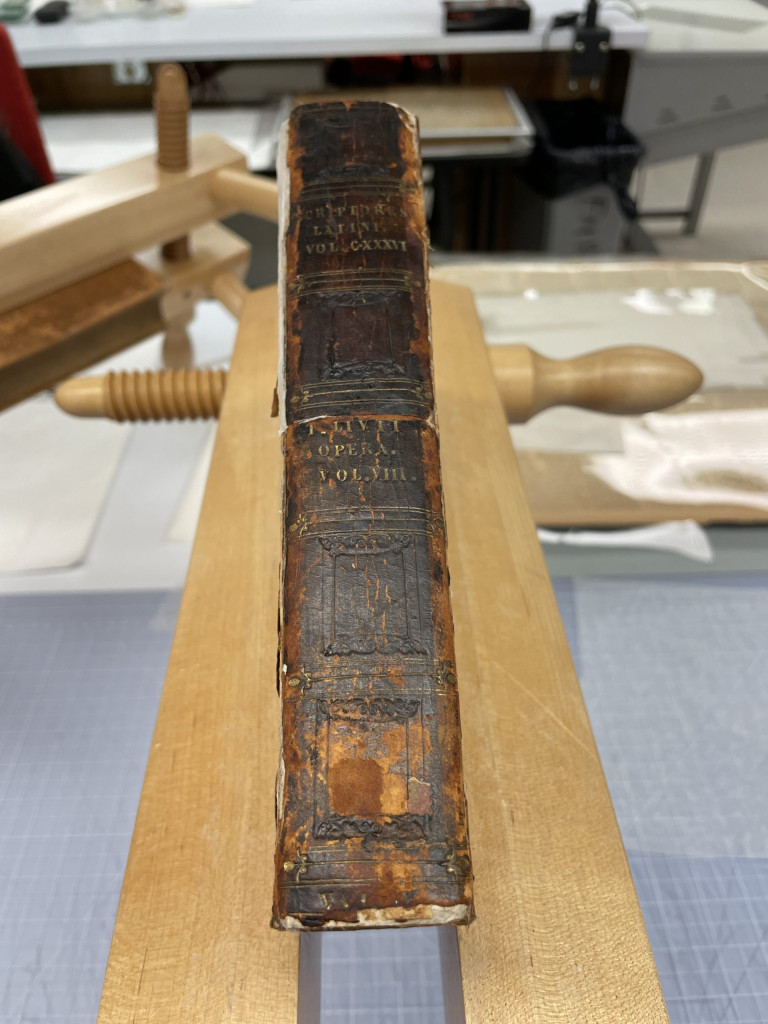
A tight back leather book
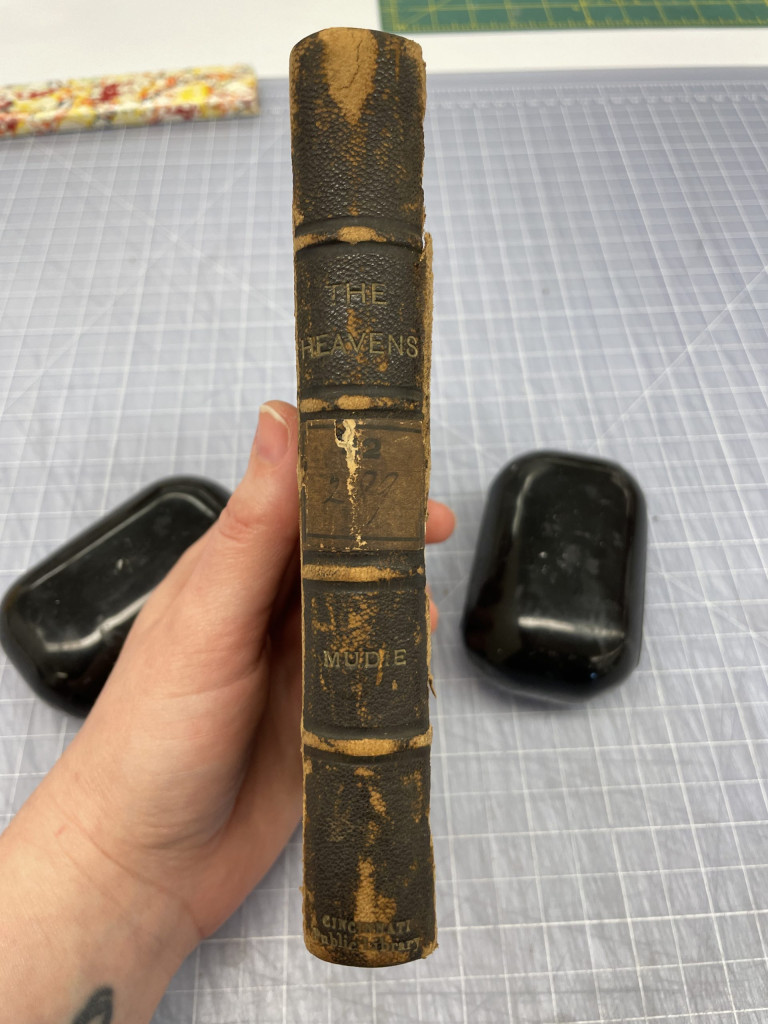
A leather book with false raised bands and a hollow tube
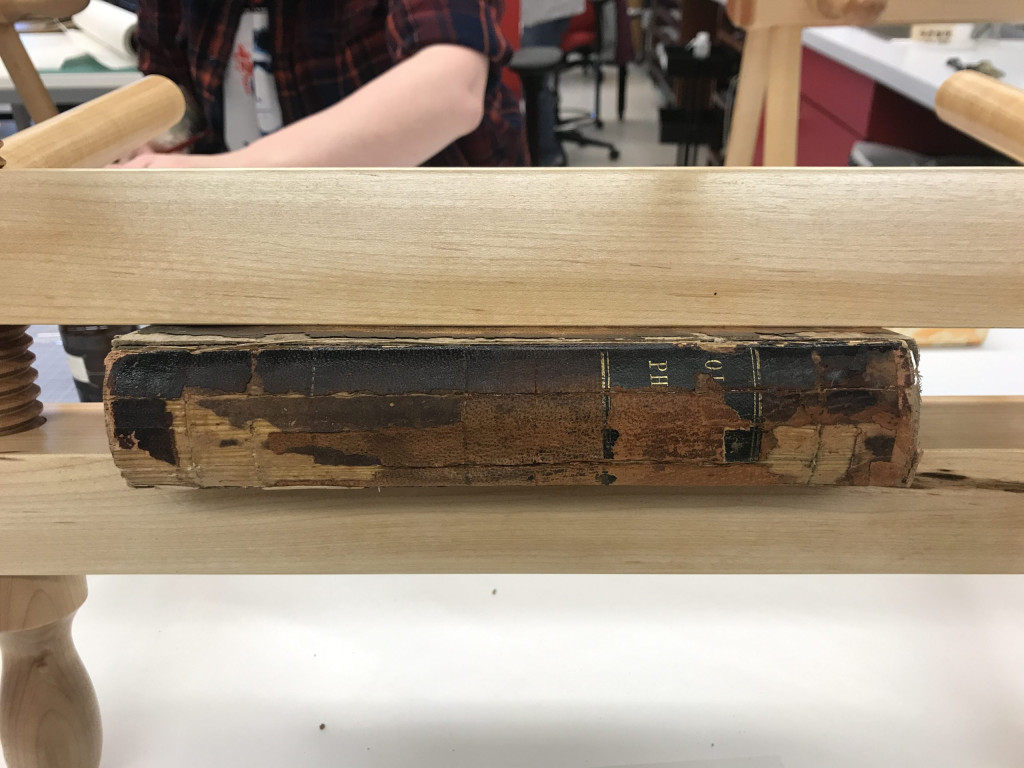
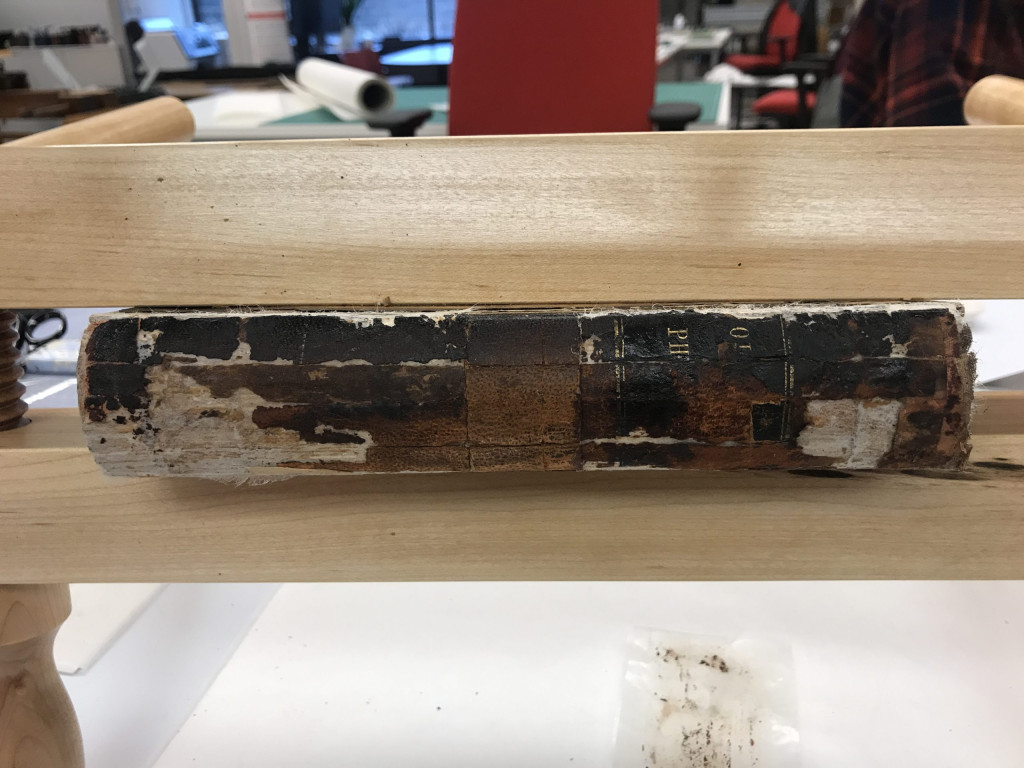
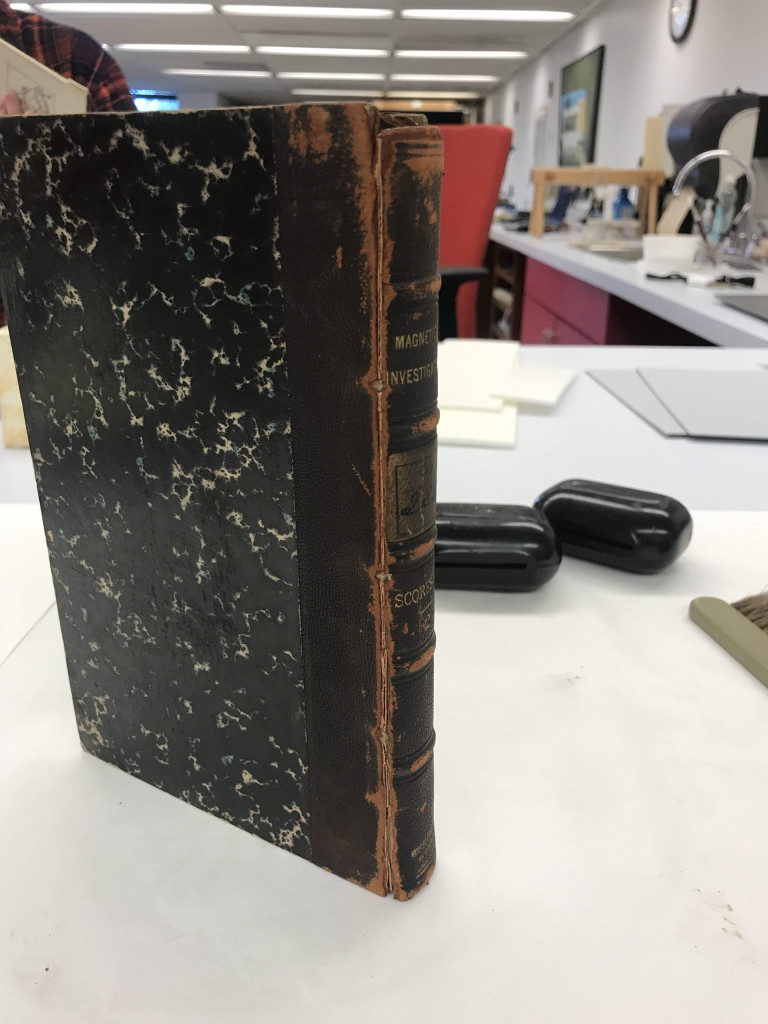
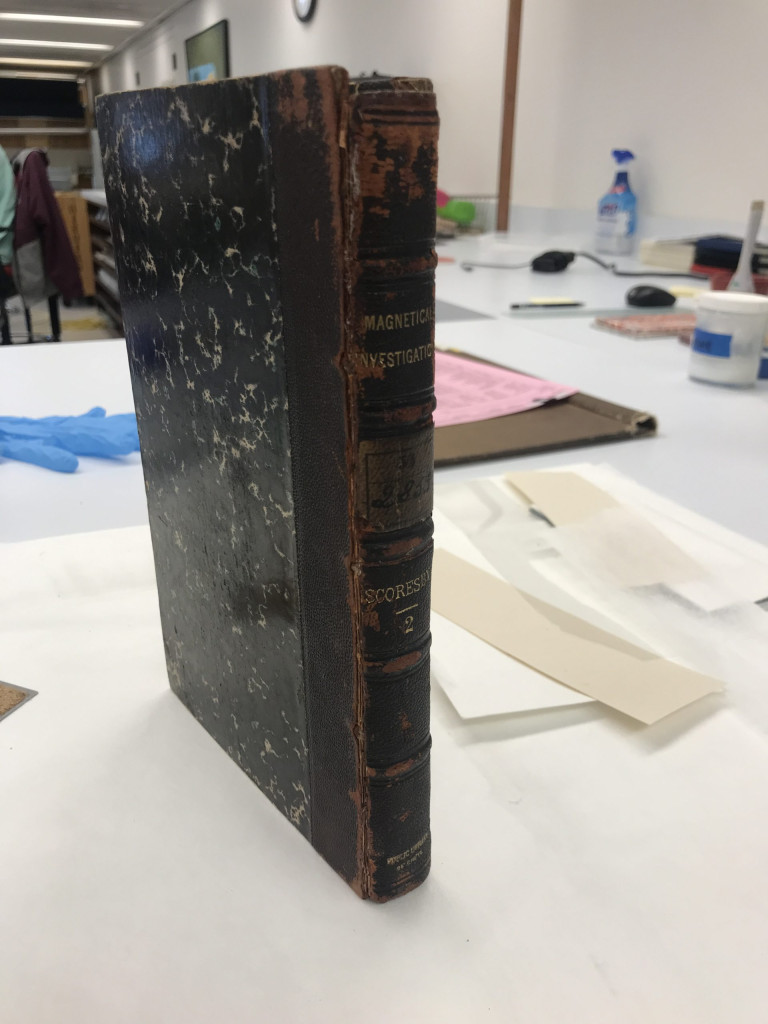
Catarina’s test model (tight back) before facing.Catarina’s test book model (tight back) after facing.Jessica’s test book model (tight back) before facing.Jessica’s test book model (tight back) after facing.Catarina’s test model (hollow tube with false raised bands) before facing.Catarina’s test model after the leather facing.Jessica’s test model (hollow tube with false raised bands) before facing.Jessica’s test model after the leather facing treatment.
The first step was to consolidate the leather on all the withdrawn books we were using as models. The leather was consolidated with 3% Klucel G in isopropanol. Since there were different methods shown in the available resources regarding leather facing, we decided to use two different methods for facing: facing with Japanese tissue adhered with Klucel G and facing with a Crompton heat-set tissue activated with ethanol. Trying out these two different methods would help us to understand which one of these materials would work best and cause less damage/staining to the leather.
Catarina’s Test Models
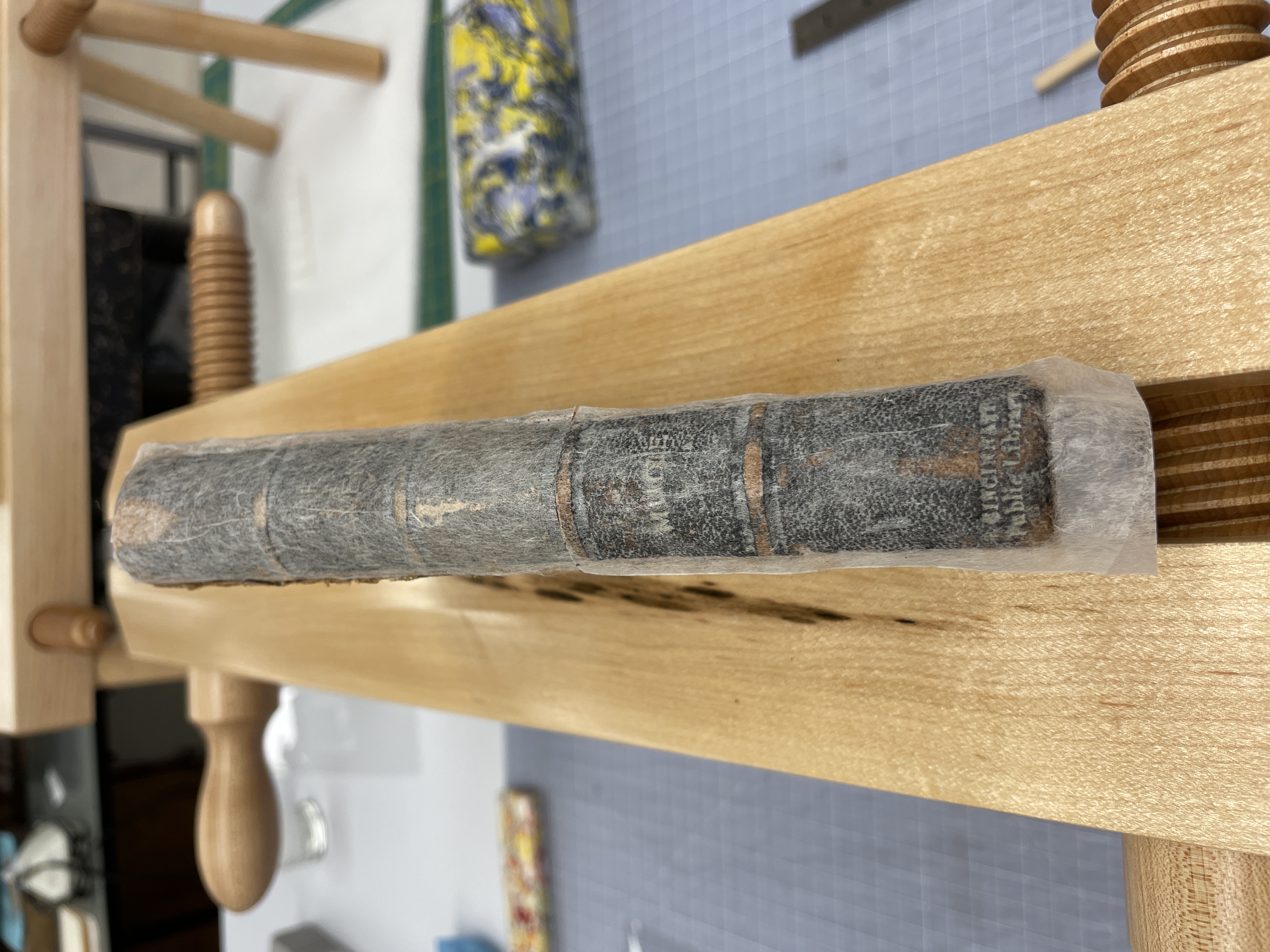
After having consolidated the leather, the spine was “divided” in two sections, top and bottom, with a small portion of the spine in between. The reason the spine wasn’t fully faced was because I wanted to see if there were any changes in the leather after being faced, removed, and reattached.
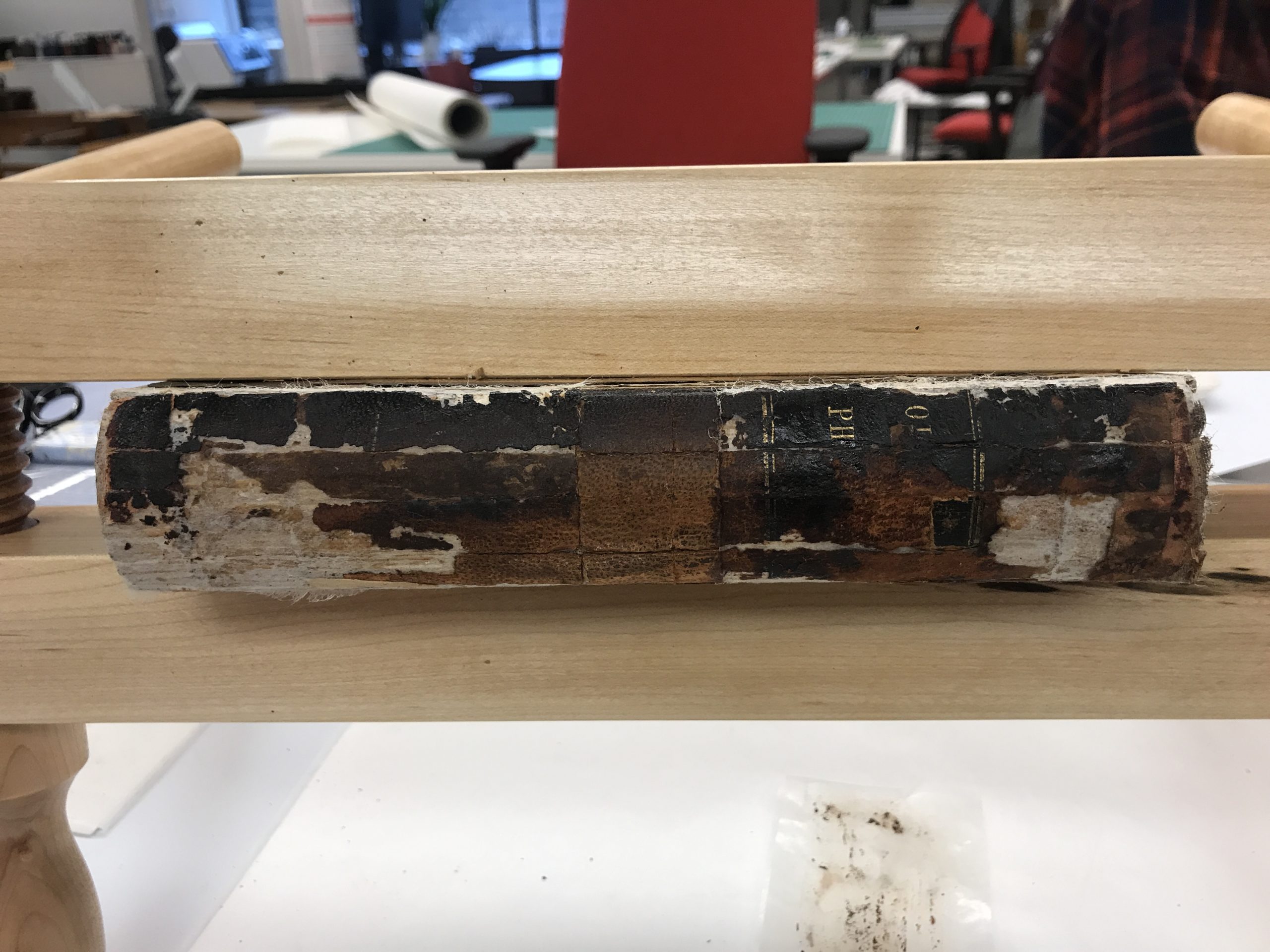
Leather consolidated with 3% Klucel G in isopropanol. For this model, since the leather was so degraded, it wasn’t possible to get the Japanese tissue to adhere with klucel G. Therefore, only the Crompton heat-set tissue was used.
For this book, the leather was very degraded, and I couldn’t get the Japanese tissue to adhere to the leather spine with Klucel G. As a result, for this model I only used the Crompton heat-set tissue method.
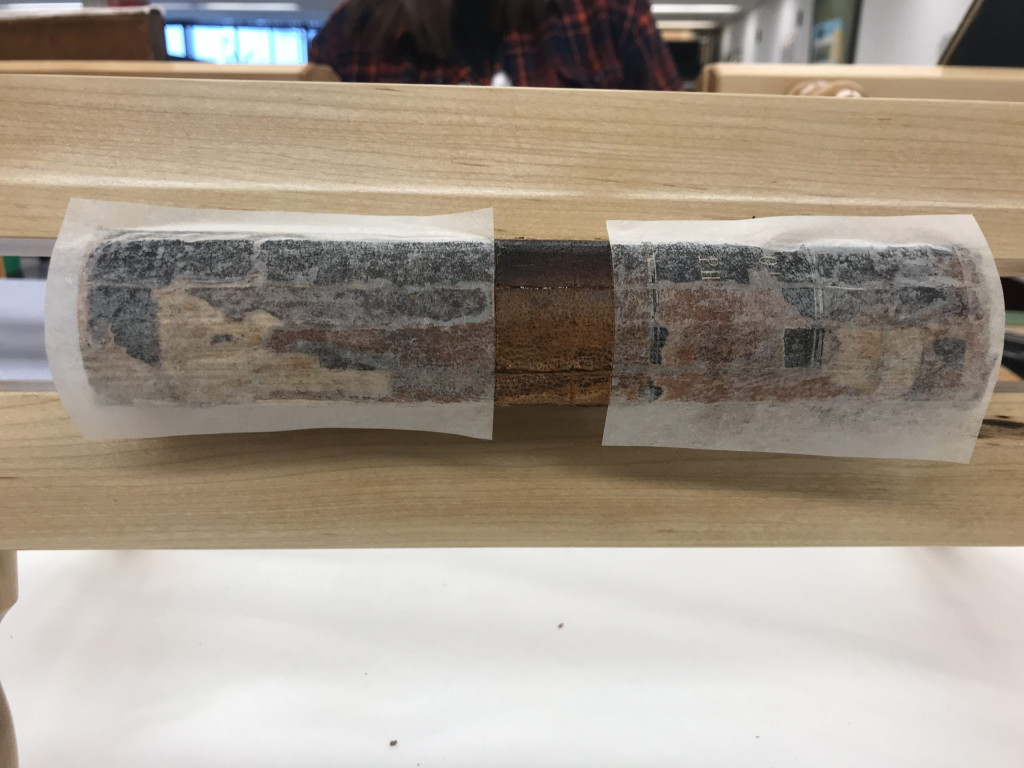
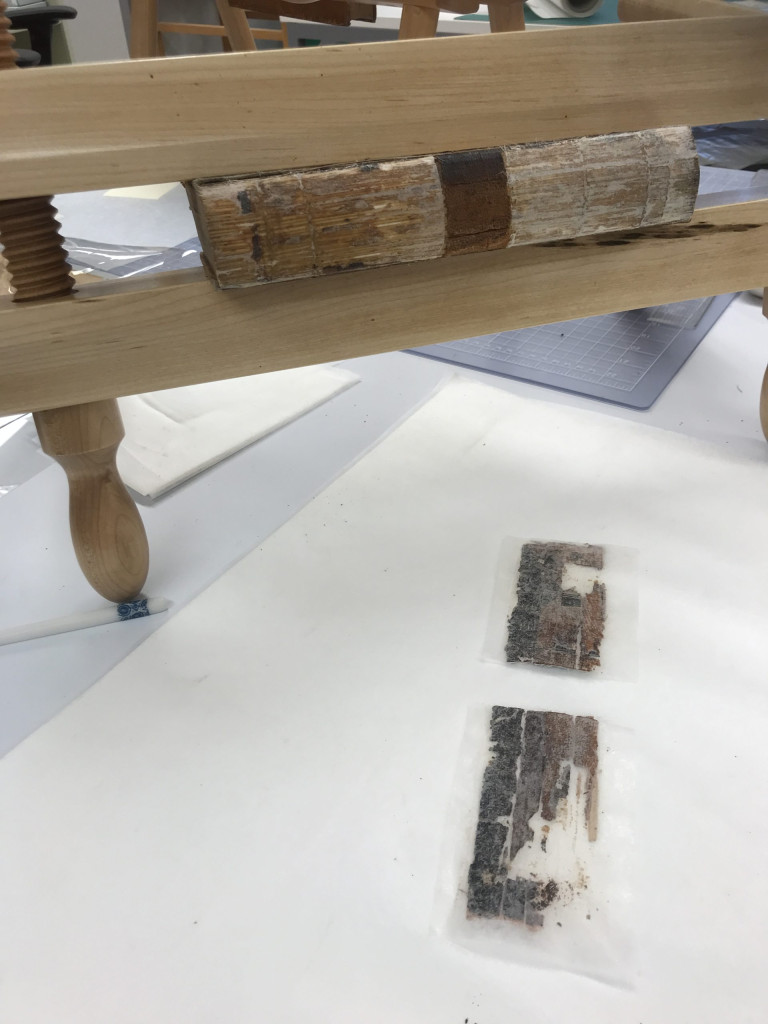
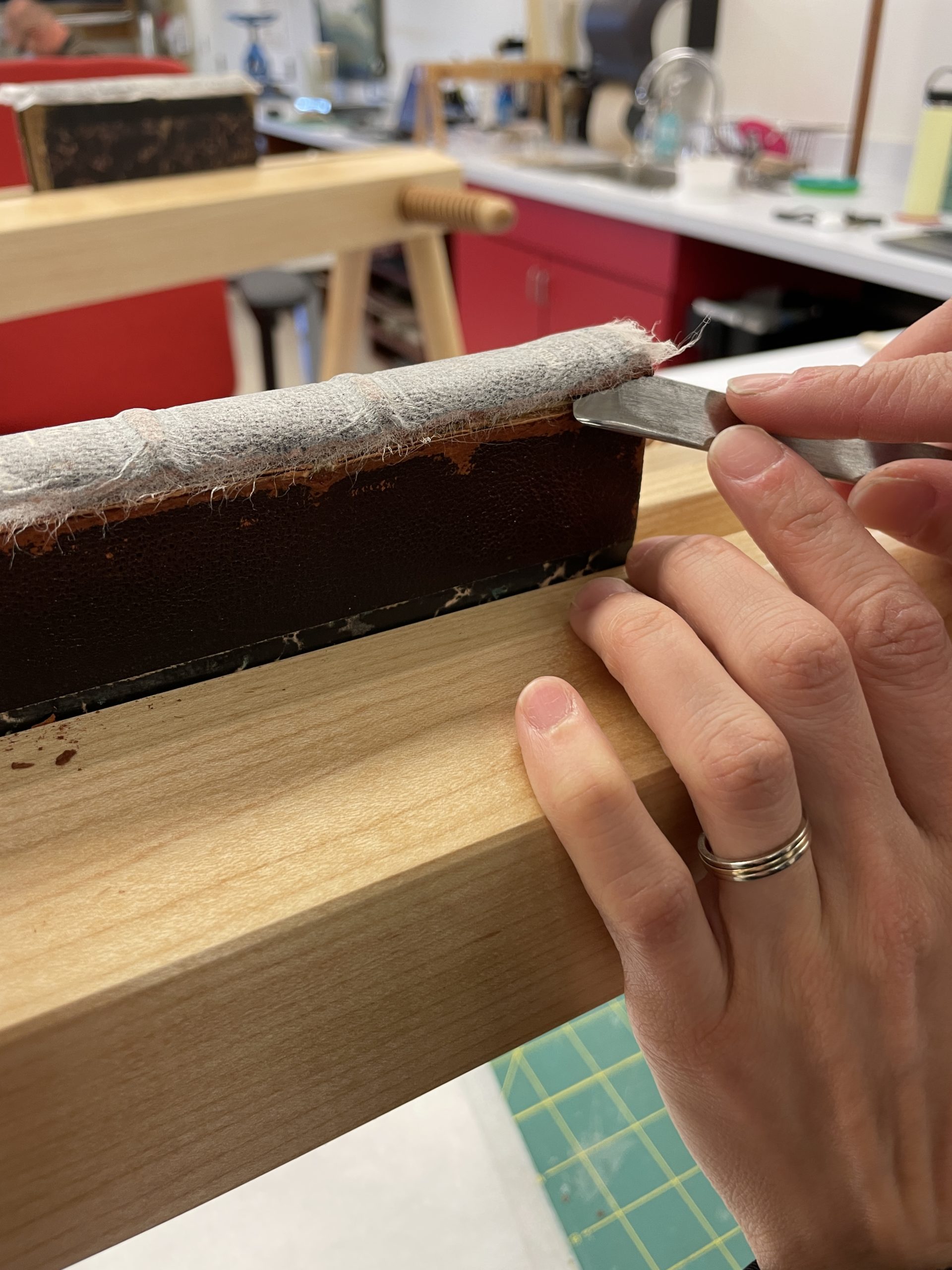
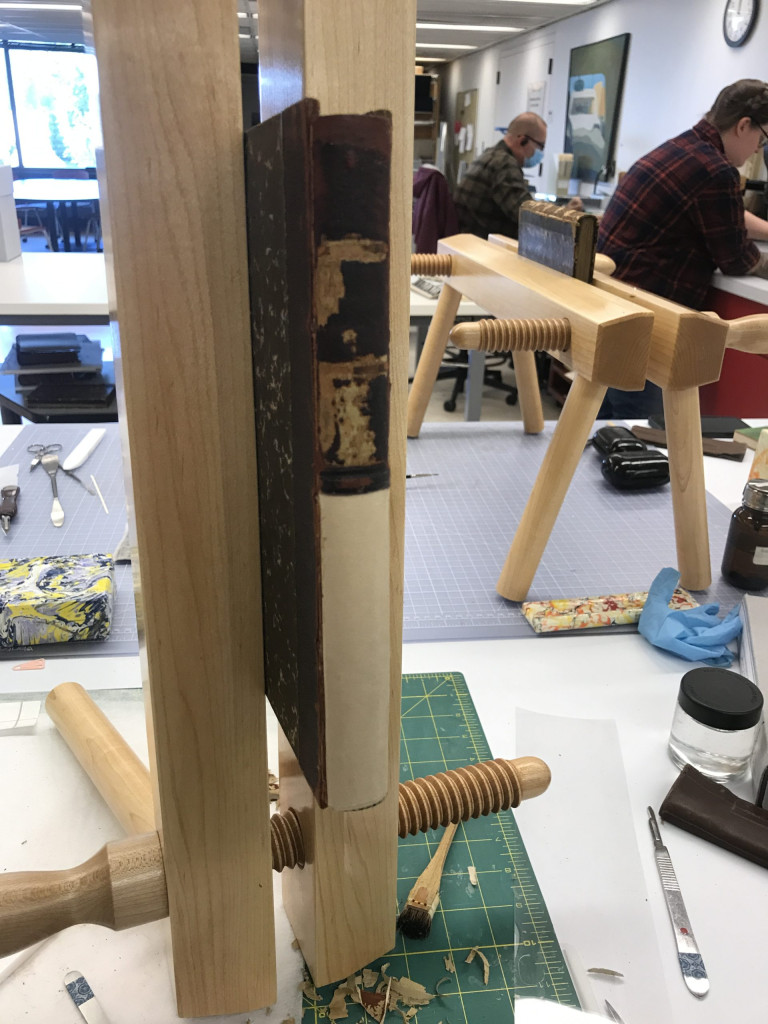
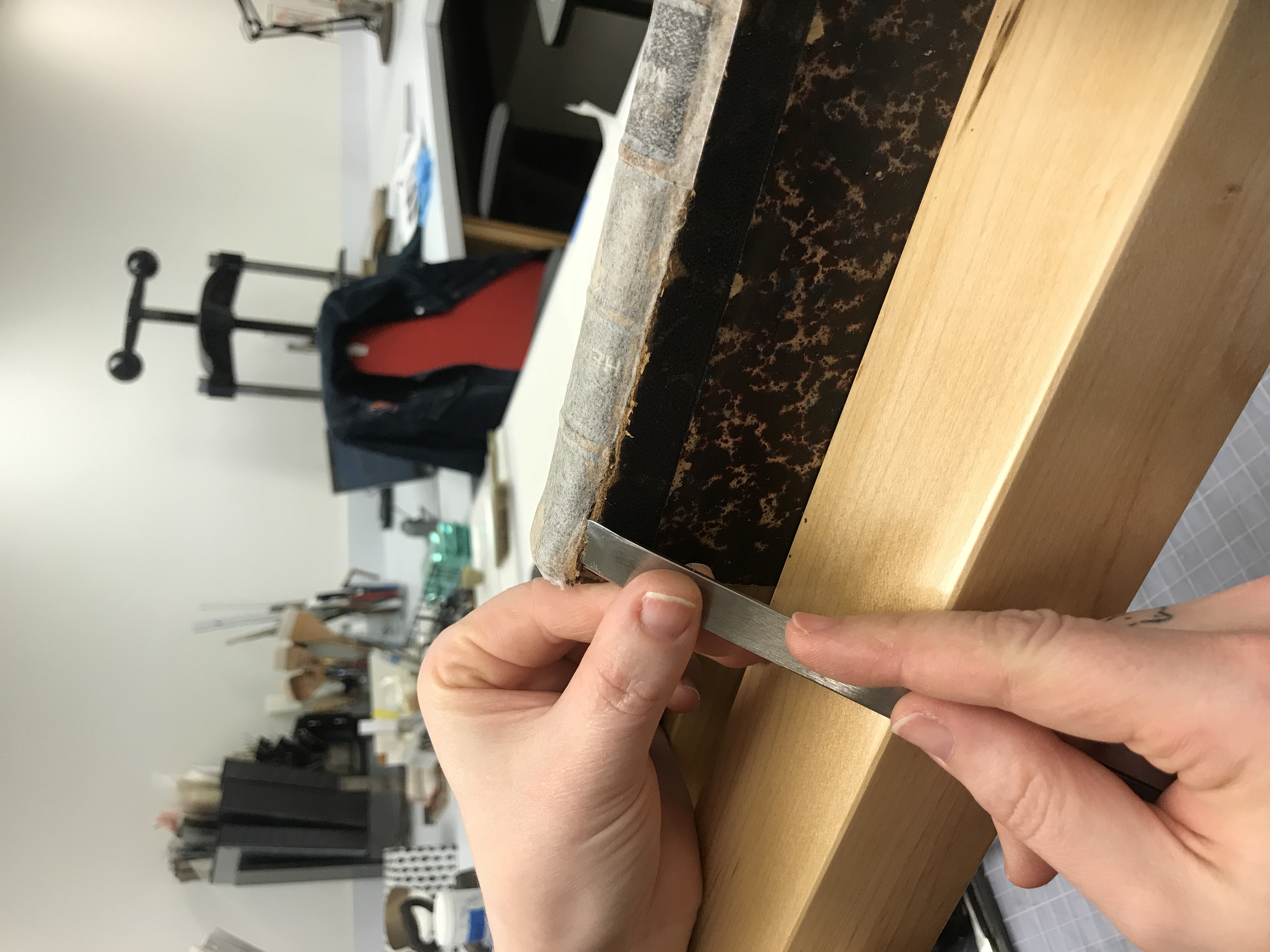
The adhesive on the heat-set tissue was activated by brushing on a thin layer of ethanol. Once it was activated, the heat-set tissue was placed on the spine, and with a tamping brush pressed on the leather. Using a lifting knife, I was able to remove the leather spine, leaving the middle portion still adhered to the text block for comparison.
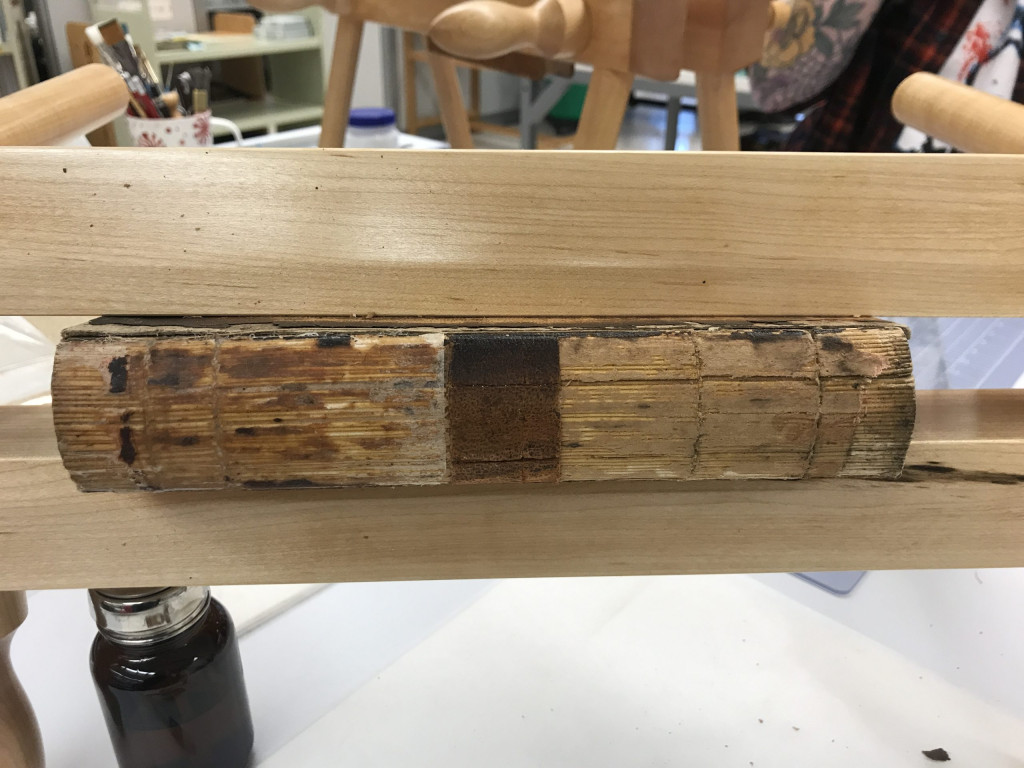
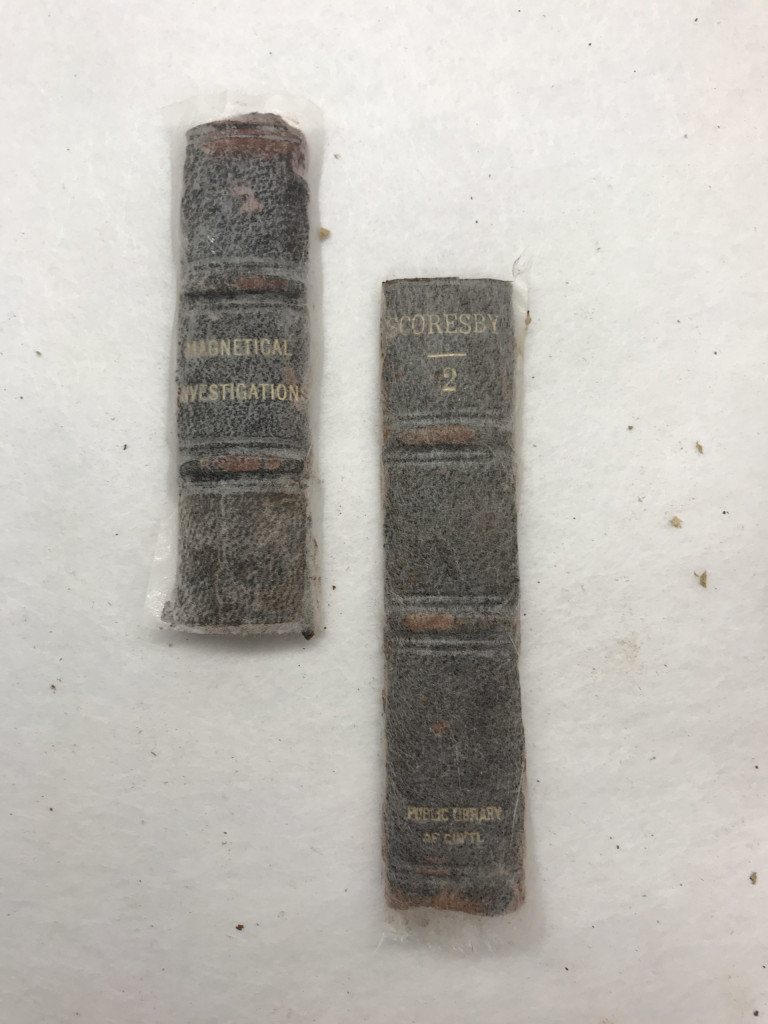
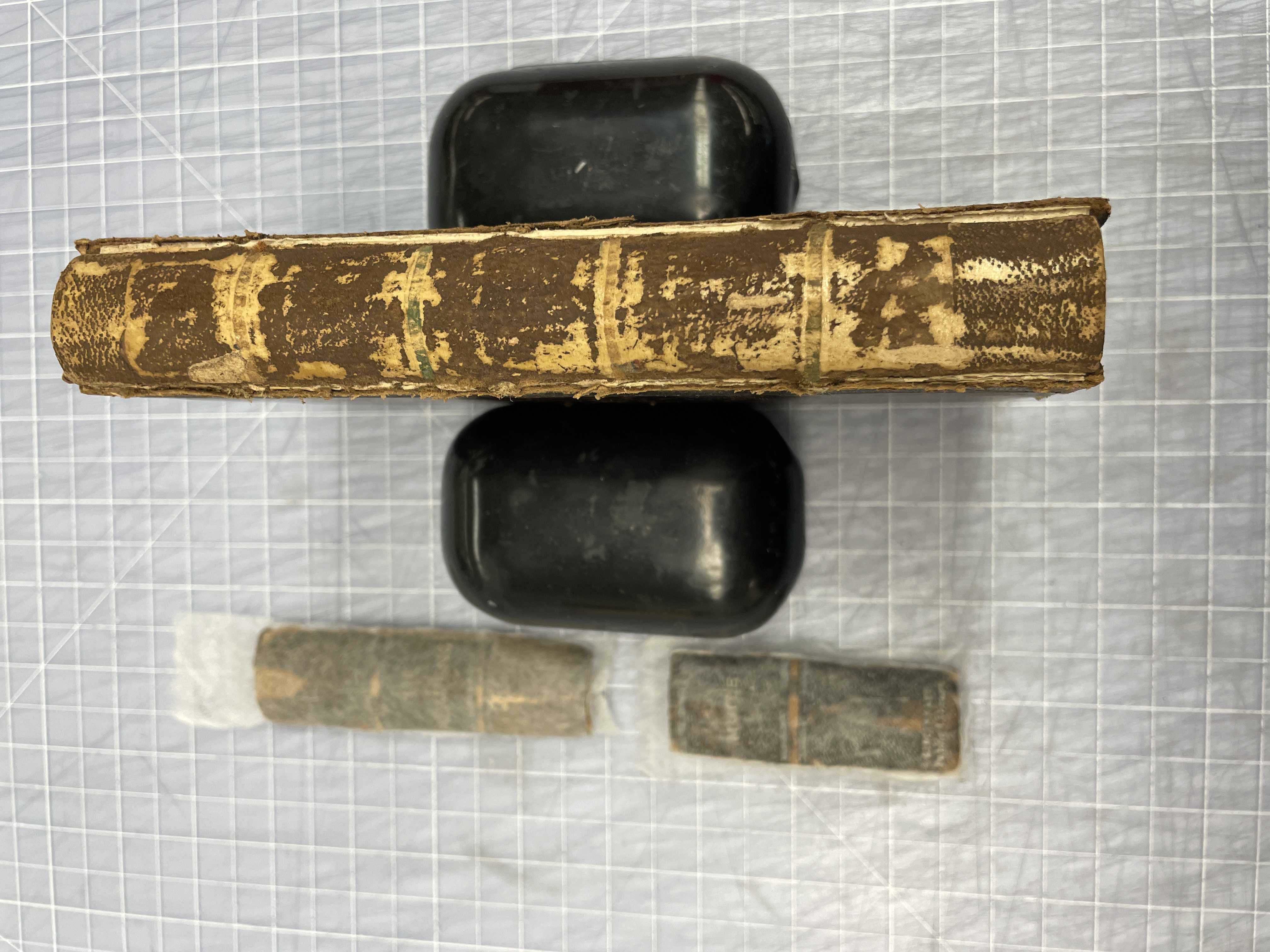
Two portions of the spine fully removed.Leather spine removed, and two portions of the spine faced.
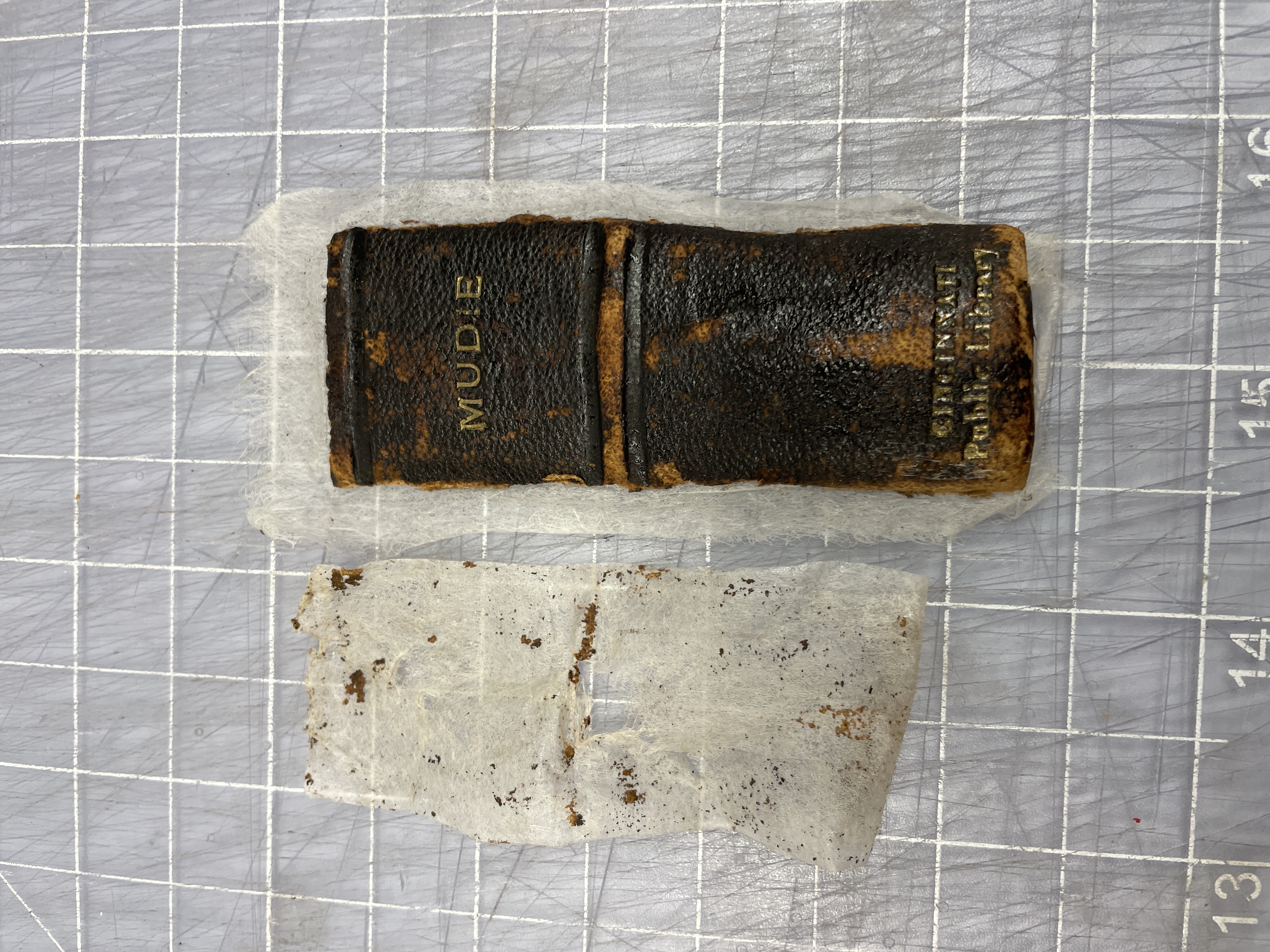
Once the leather spine was removed, I relined the text block spine with a reversible layer of Japanese tissue and wheat starch paste. The two portions of the leather spine were lined from the back with Japanese kozo fiber tissue and wheat starch paste.
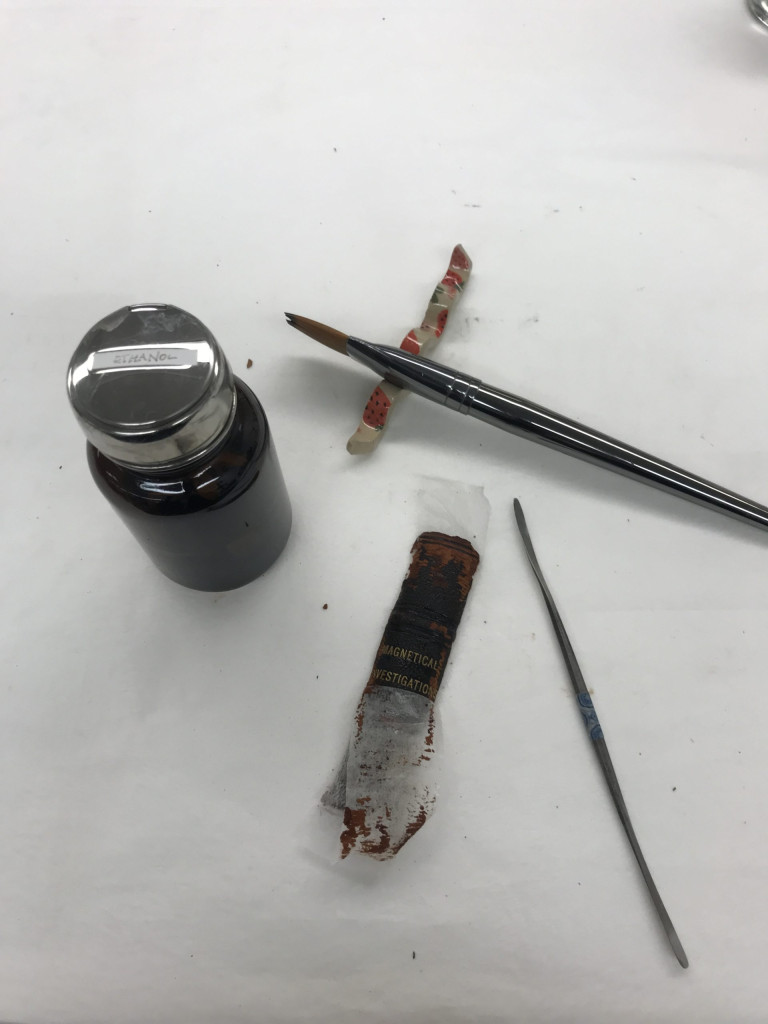
At this point, there were two different ways to follow, I could adhere the faced spines to the text block and then remove the heat-set tissue, or I could remove to heat-set tissue first and then adhere the leather spine to the text block. I decided to first remove the heat-set tissue by activating the adhesive again with ethanol and gently removing it with a Caselli spatula. Once the heat-set tissue was fully removed and the leather was dry, I reattached each portion of the leather spine to the text block with wheat starch paste.
Two portions of the leather spine adhered to the text block spine.
For the leather book with false raised bands and hollow tube, the process was very similar. However, for this model I was able to try out both the Japanese tissue adhered with Klucel G as a facing method and the Crompton heat-set tissue.
Test book model with false raised bands and hollow tube.
The spine was “divided” in two sections: top portion was faced with Crompton heat-set tissue activated with ethanol and the bottom portion of the spine was faced with Japanese kozo fiber tissue adhered with Klucel G.
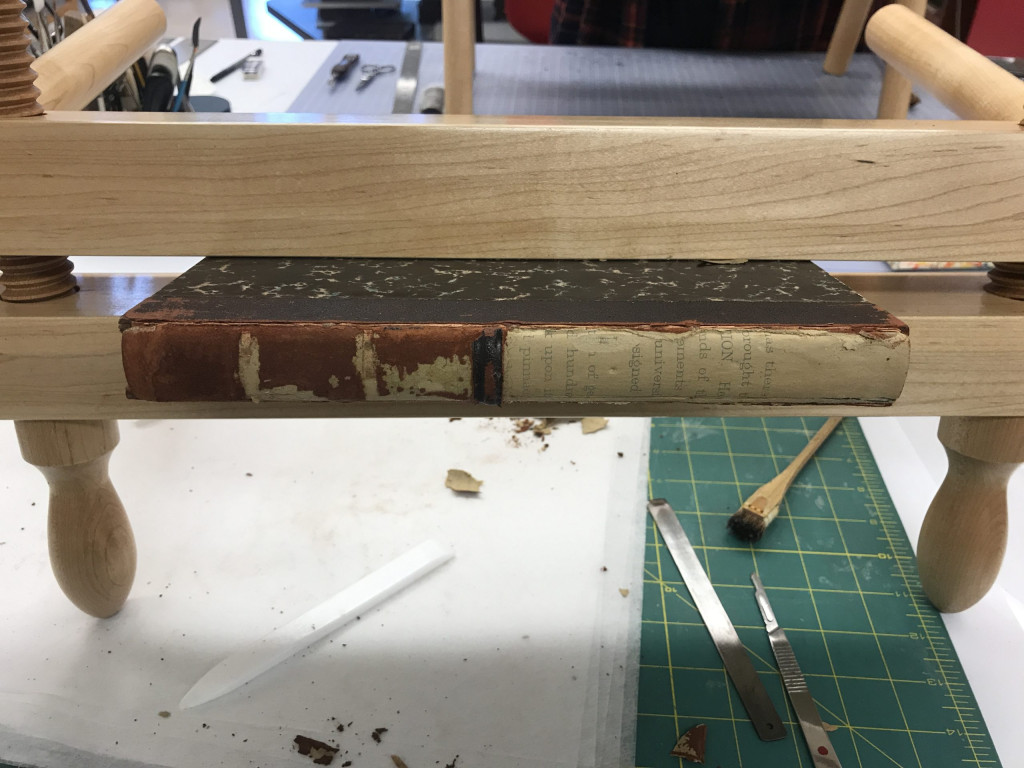
Using a Peachey lifting knife, I was able to remove both portions of the spine. On the top portion of the spine, I ended up not removing the previous hollow tube, but removed it completely on the bottom portion of the spine.
Leather spine was removed. The hollow tube was not removed on the top portion of the spine and removed completely on the bottom portion of the spine.Two sections of the leather spine faced with different methods.
Once the two portions of the spine were removed, a new hollow tube was created to adhered to the bottom portion of the text block spine. The hollow tube was mode of Griffin Mill Broadsheet 60 gm/115 gm paper. The new hollow tube was adhered with wheat starch paste.
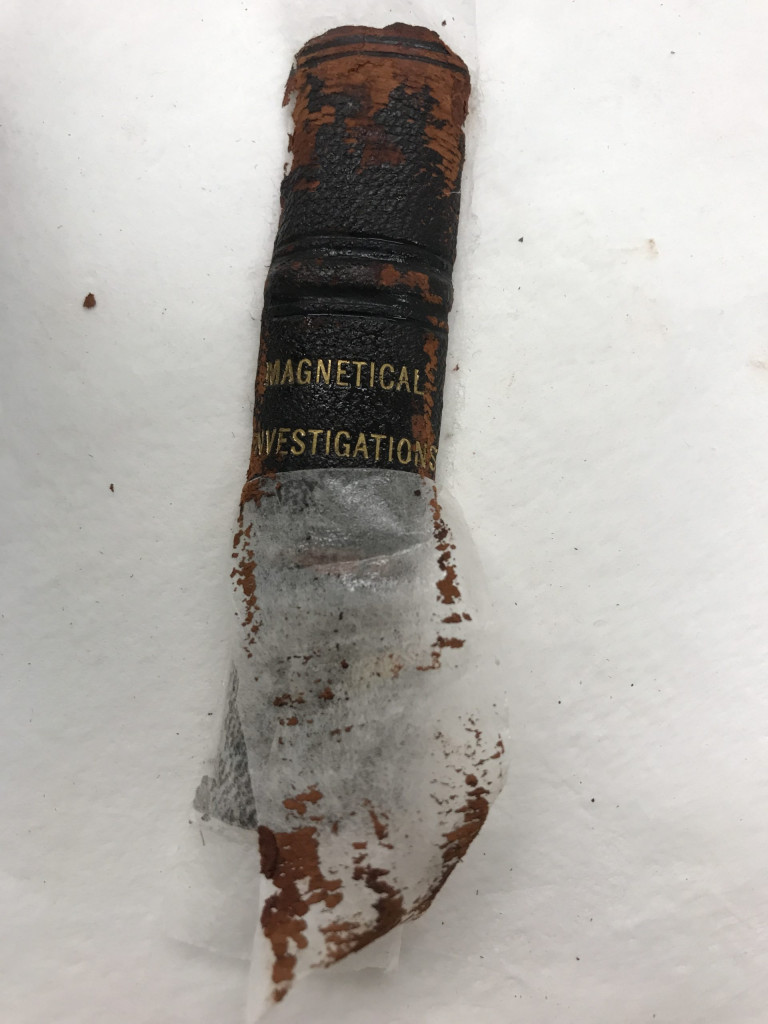
Again, I decided to remove the facing tissue before adhering the leather spine back on. With ethanol, I was able to remove the facing tissue from both pieces of the spine. As seen in the pictures below, while removing the Crompton heat-set tissue there was some loss of the leather along the edges and where the leather was most degraded already.
New hollow tube adhere to the bottom section of the spine.
Removing the Crompton heat-set tissue with a Caselli spatula and ethanol.
Removing the Crompton heat-set tissue with a Caselli spatula and ethanol.
Each spine piece was lined on the verso with a Tengujo tissue and wheat starch paste. This provided some support to the fragile leather spines. The two pieces of the spine were then adhered back on with wheat starch paste.
Leather spine after being faced, removed, and reattached.
Leather spine after being faced, removed, and reattached.
Jessica’s Test Models
Here are a few of Jessica’s test models (she has a better eye for taking good photographs throughout the process).
Tight back leather binding before facing.
Spine faced with Japanese tissue adhered with Klucel G and with Crompton heat-set tissue.
Mid process, spine fully detached.
Two sections of the spine faced with different materials.
Tight back test model after facing.
Final Thoughts…
This was a great project that Jessica and I worked together. It was useful to test out different methods using different types of books with leathers in various stages of deterioration. We learned that Japanese tissue may not be able to be used as a facing material when coated with Klucel G, since in one of the tests I did, it did not adhere to the leather. This could lead to further testing, perhaps working with a Klucel G of a different concentration since we only used a 3% concentration for these tests. In addition, depending on how degraded the leather is, using a Crompton heat-set tissue may not be an ideal good solution for every item as it created some damage on the surface layer of the leather spine of our of the test books. Finally, at least in one of my models, the leather became darker than it was originally. There is still more testing and practice to do before we use this technique on a collection item, but this was a great place to start.
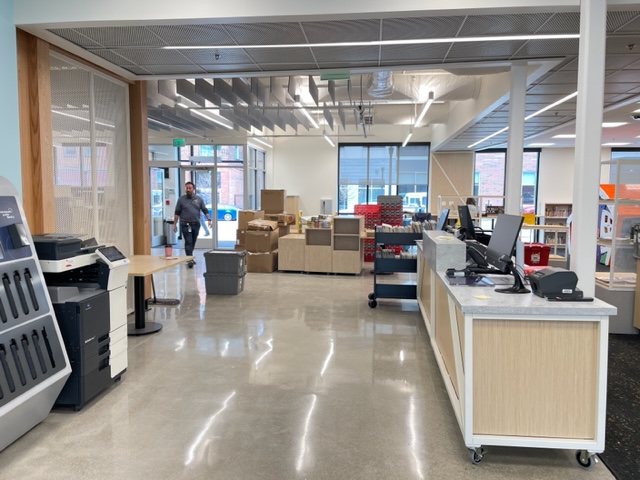
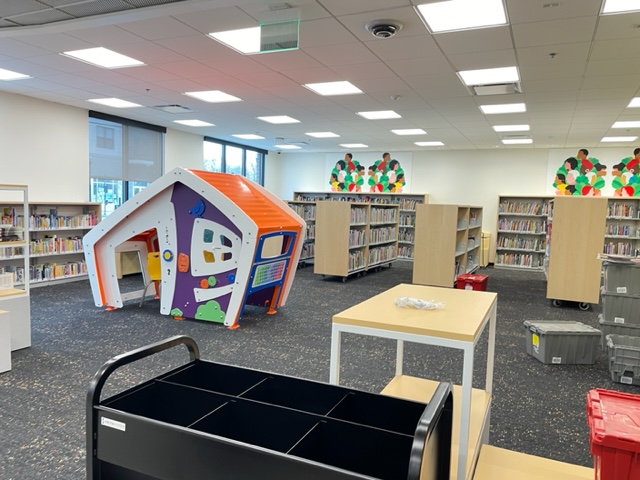
We’re excited to announce that the Madisonville branch is in its final stages to re-open their newly renovated space! Please join the library for the opening eventMarch 18th! At the event, the Genealogy and Local History Department staff member, Chris Smith will talk about Madisonville’s history from 3:30 pm – 4 pm.
During the event, the Madisonville scrapbook will be on view for festivities March 18th.
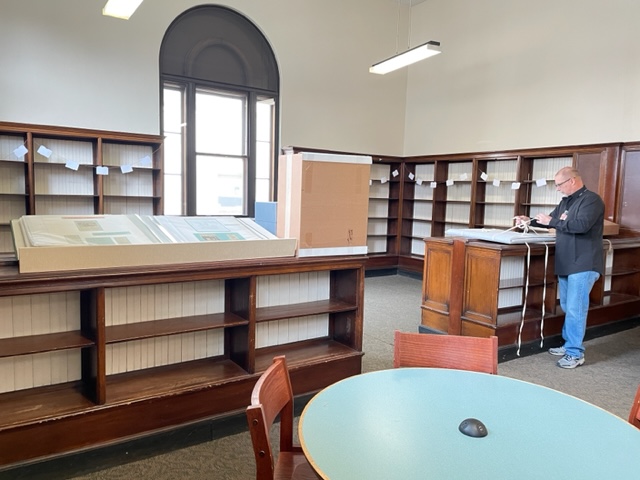
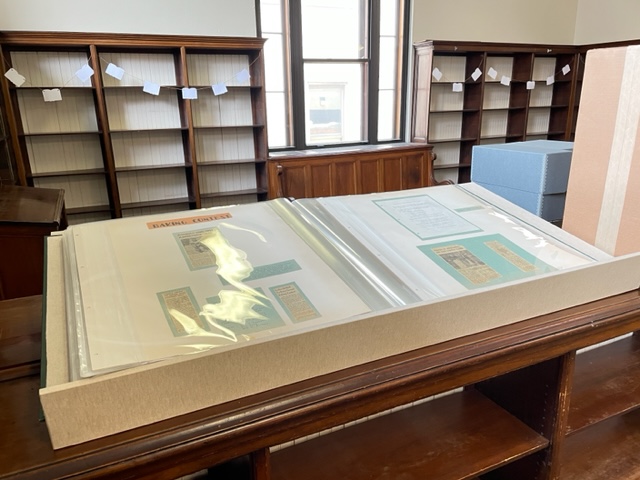
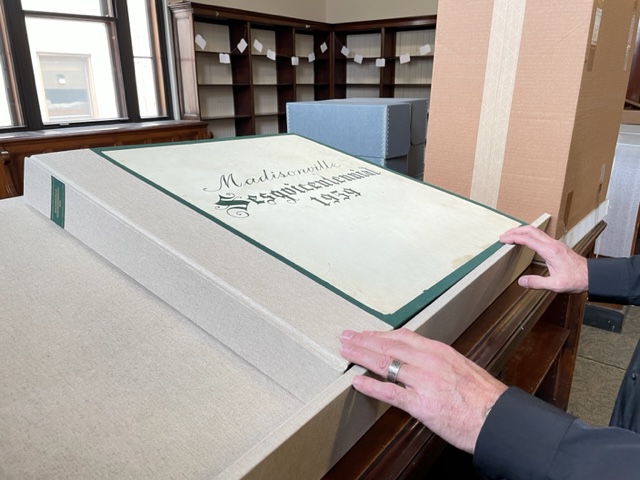
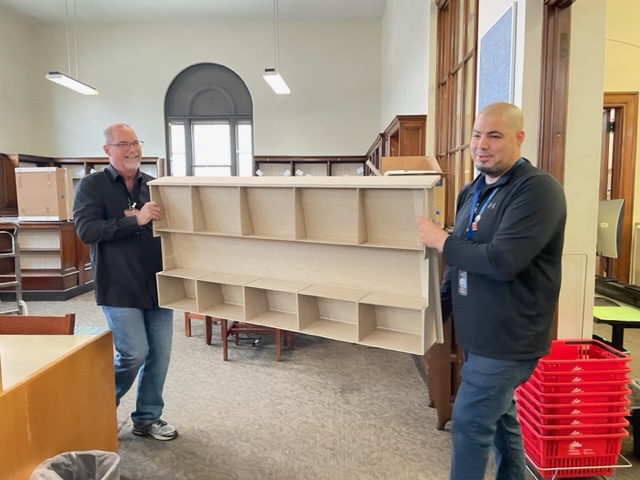
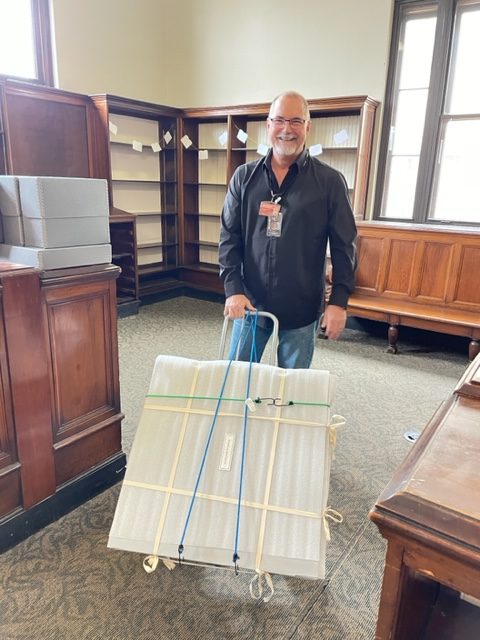
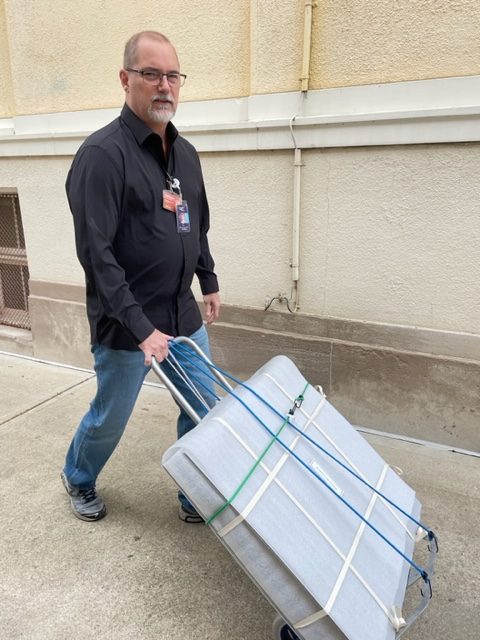
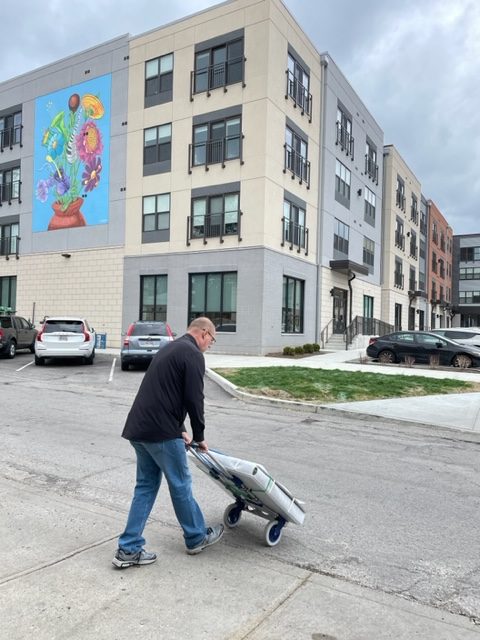
Because this material is HUGE and considered a rare irreplaceable item, both the book and cradle were hand delivered from one building to another by Preservation Lab and Madisonville staff. Below are “behind the scenes” images showing the delivery of these oversized materials.
View of book in its prior home location, recently cleared of books:
Scrapbook & cradle in room empty of booksCradle in prior locationScrapbook coverB
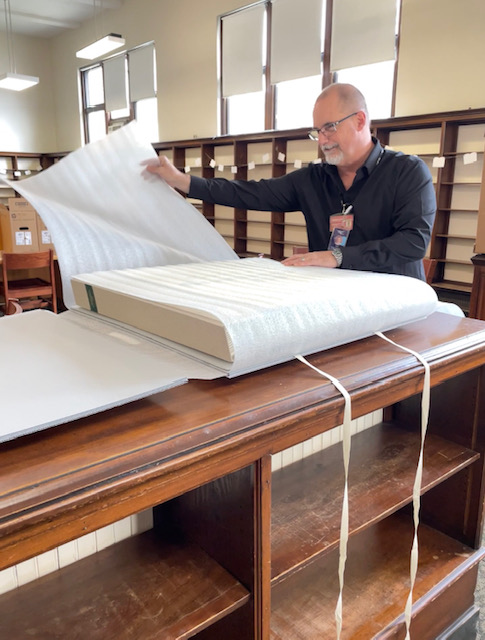
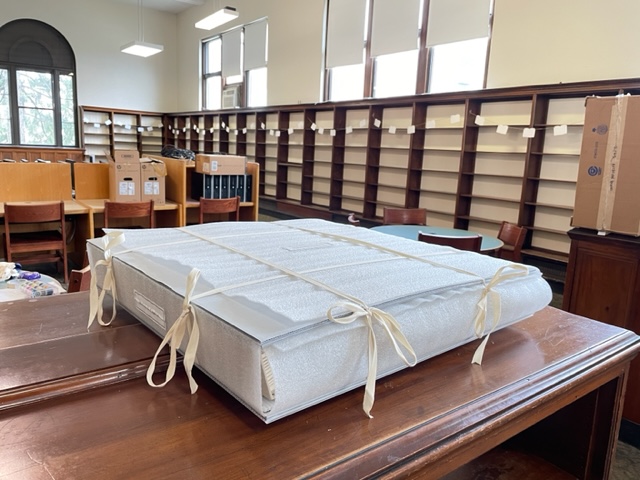
For transport, the oversized book was stored in a lightweight (but strong!) custom enclosure:
Two flaps of foam were first sandwiched under a flap of boardChris Voynovich closes all flapsFlaps were secured with integrated cloth ties
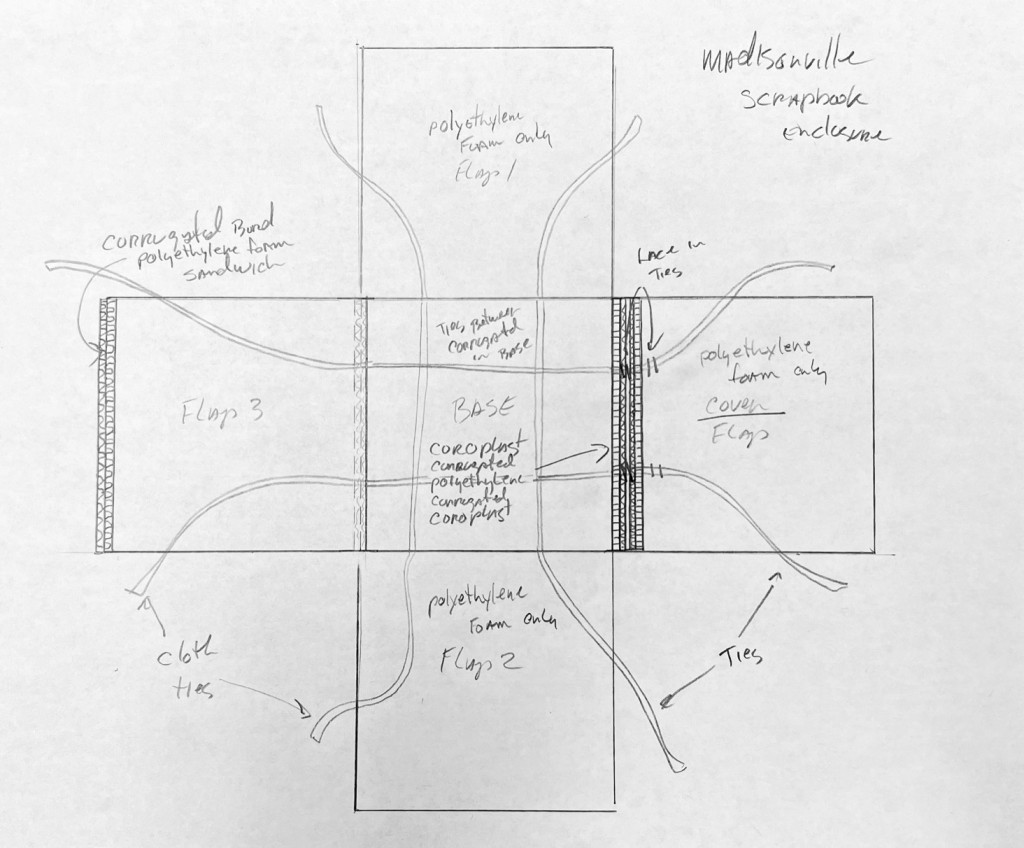
The custom enclosure consists of multiple light-weight layers and flaps of foam, all tied together with cotton ties, as shown in Chris’ schematic. This enclosure will be used both for transport and for long-term storage.
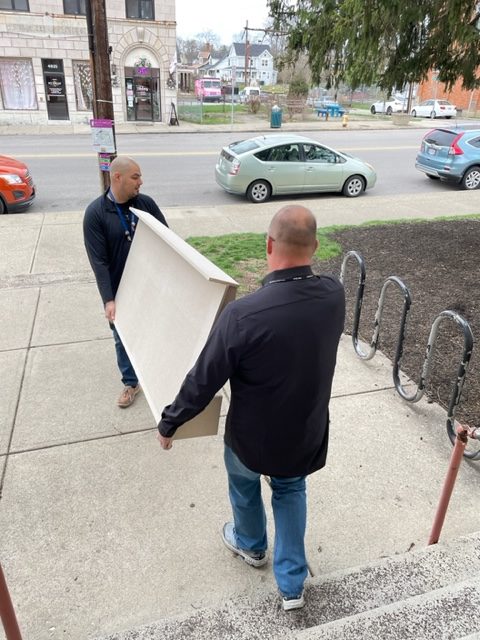
Once packaged, both the book and cradle were hand delivered to their new home next door:
Cradle hand delivered next door by Terry Barnum and Chris VoynovichBottom view of cradleBook strapped to dollyBook is oriented spine edge down for safe transport
The book now awaits the re-opening event while staff continue unpacking the rest of collections!
Boxes being unpacked in new spaceChildren’s area is coming together!
We hope to see you there!
Ashleigh Ferguson Schieszer [CHPL] – Rare book and paper conservator
To read about the conservation of the scrapbook and construction of the book’s cradle, please see the treatment documentation and a prior blog article titled, Madisonville Scrapbook.
As a bonus, to celebrate the completion of the oversized treatment, Chris created a comic you can fold from an 8 1/2 x 11 sheet of paper. Check out the printable file below! Instructions on how to fold can be found on the Preservation Lab’s YouTube channel video titled Preserving Scrapbooks beginning at the 10:42 time stamp.
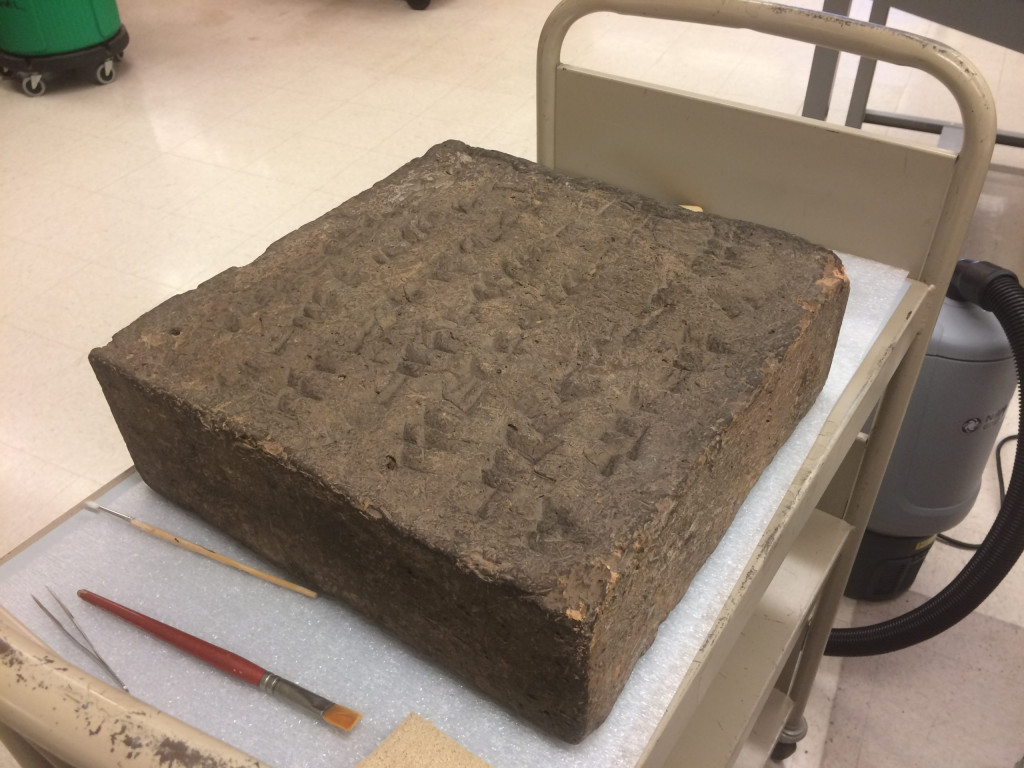
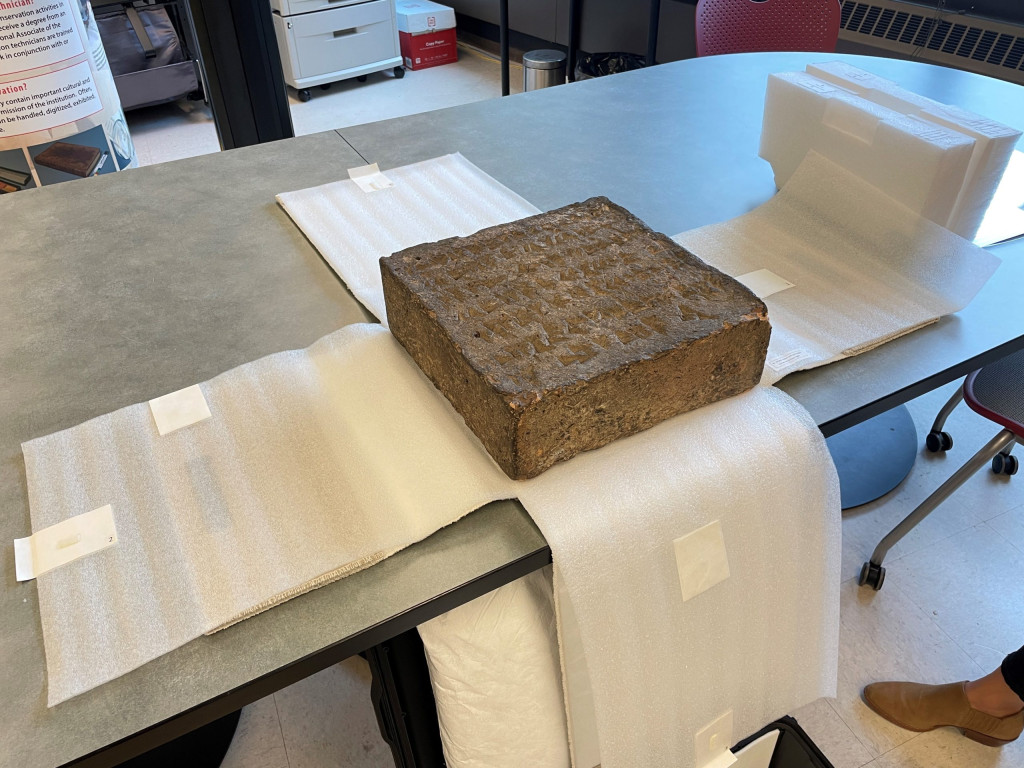
The University of Cincinnati’s Archives and Rare Books Library owns a few cuneiform tablets that date around the 1st century BCE. Most are small enough to fit within the palm of your hand. However, the clay tablet in question measures 14 inches (W) by 14 inches (T) x 4.5 inches (D) and weighs roughly 40-50 lbs.
Assyrian cornerstone during surface cleaning
More accurately, it is thought to be an Assyrian cornerstone that dates between 860 and 824 BCE. It is described in the catalog record to be from the ruins of Calah (near Ninevah) on the Tigris River. It is likely the cornerstone of a temple or palace erected by Salmanser III, king of Assyria. The provenance of how the University acquired the tablet is uncertain.
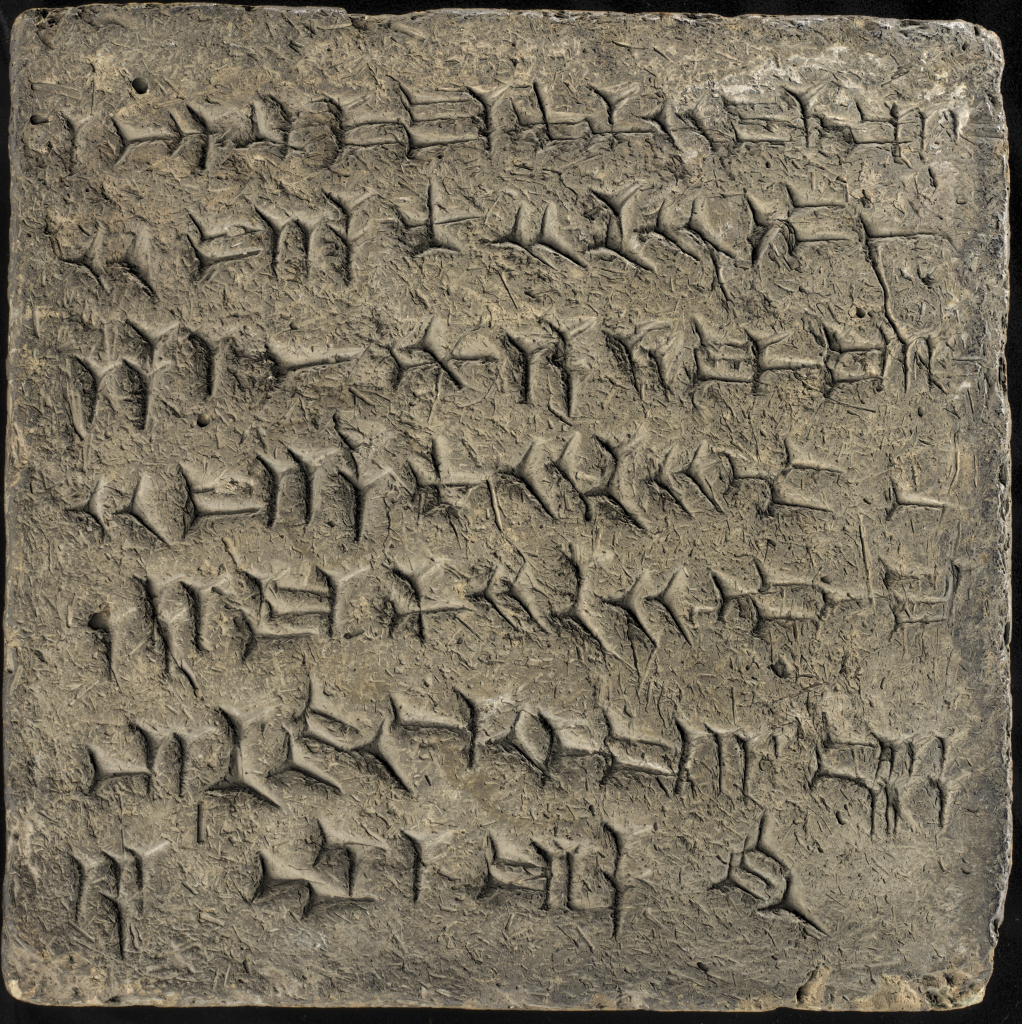
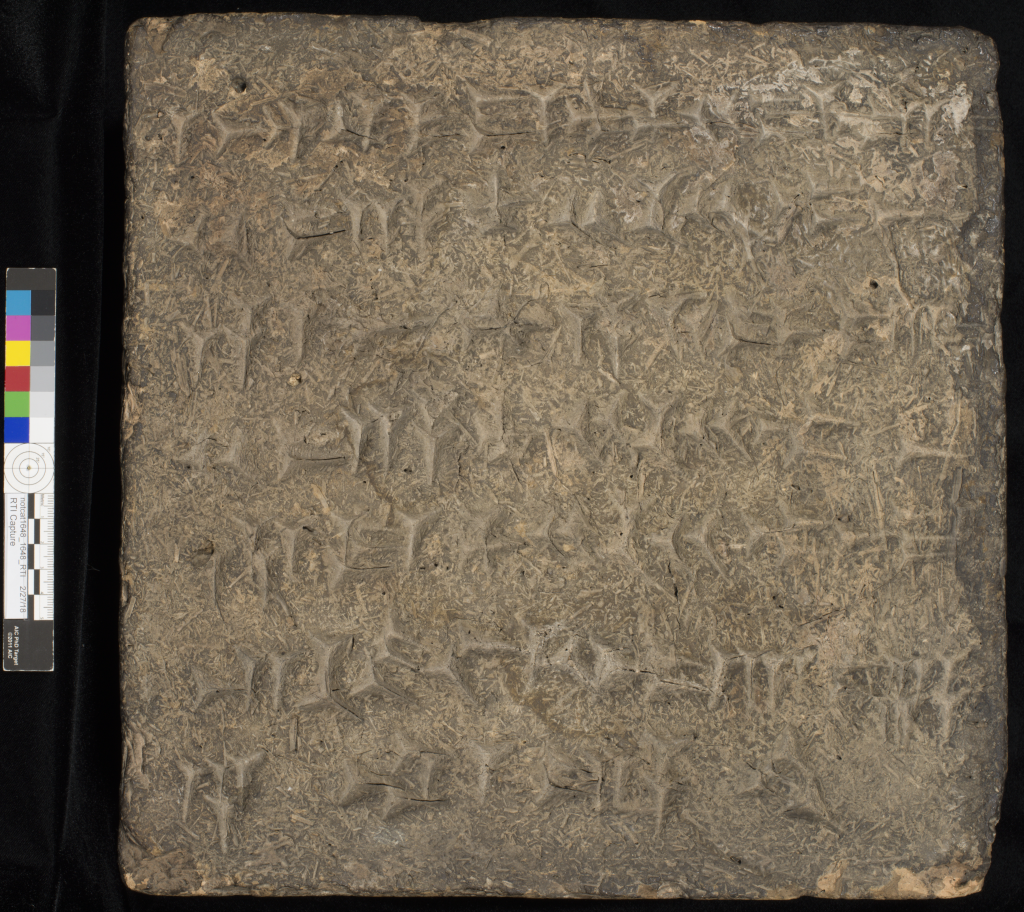
A translation of the cuneiform writing reads, ““Salmaneser, the great king, the mighty king, king of the universe, king of Assyria, son of Asurnaserpal, the great king, the mighty king, the king of Assyria, son of Tukulbi-Ninib, king of the universe, king of Assyria, and indeed builder of the temple-tower of the city of Calah.”
Front, Raking Illumination with Reflectance Transformation Imaging (RTI) by Jessica Ebert
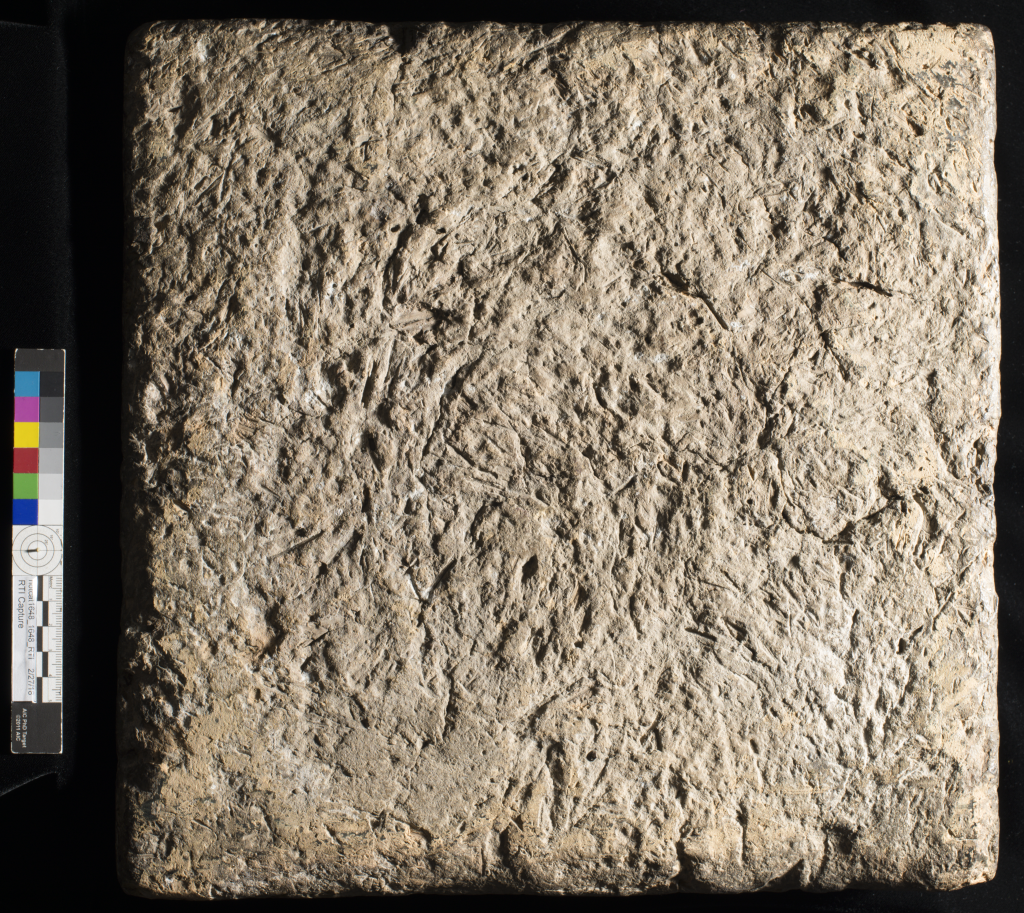
Front, Normal Illumination by Jessica Ebert
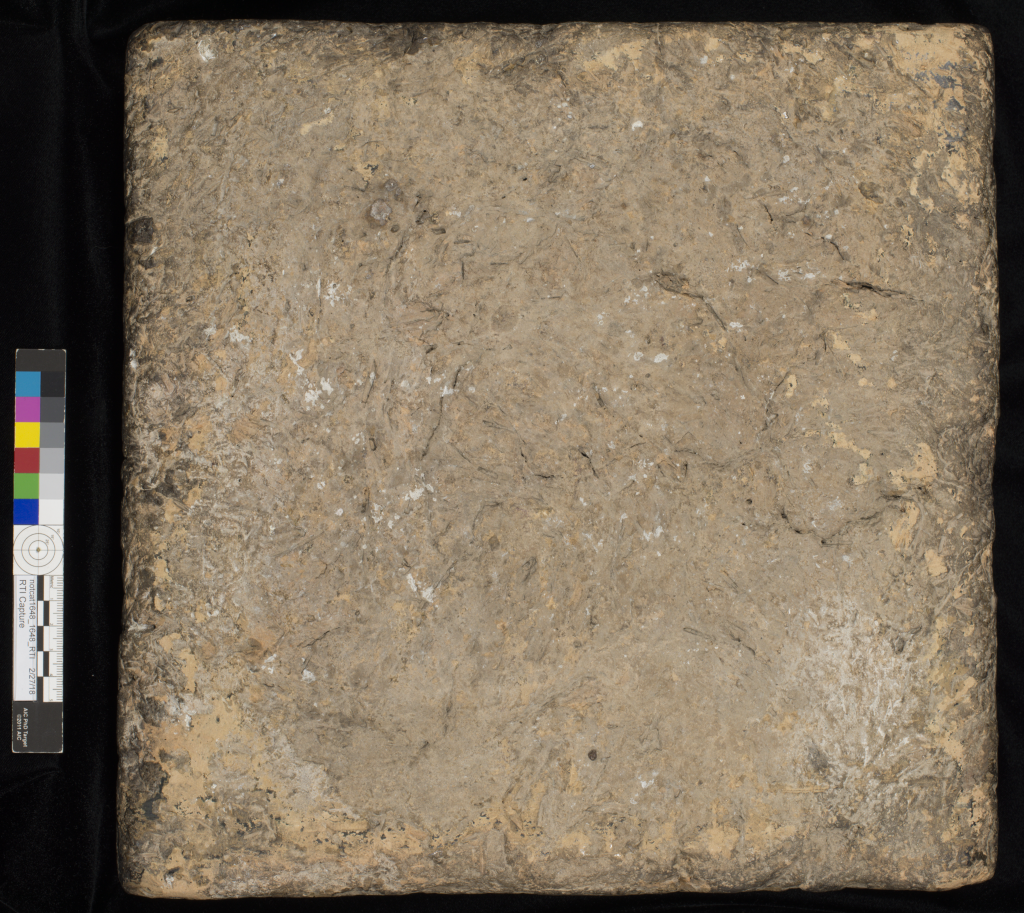
Back, Raking Illumination by Jessica Ebert
Back, Normal Illumination by Jessica Ebert
After surface cleaning and digitizing the cornerstone, finding suitable storage for an Assyrian cornerstone tablet seemed like a straightforward task in the beginning. I thought, “Let’s get it off the floor, house it, and protect it from dust!” No problem, right?
But once we got the item back in the lab, the weight of the object combined with its fragility proved more of a challenge after Chris, Holly and I began thinking about how the object would be retrieved from storage and how it would be handled. Rather than being stored in specialty shelving (such as items might be in a museum), this item was a library item. We needed to fit the tablet amongst archival book shelving. We were also faced with the prospect of transporting the cornerstone up and down a flight of stairs from the secure rare book storage. There is no easy elevator access! And finally, once it was put in an enclosure, how would a librarian get it out to show researchers and students?
We decided on an industrial case with wheels that could be transported and stored anywhere. I knew I wanted a device with handles to pull the object in and out of the case, but immediately decided against the idea of ratchet straps. The threat of fracturing would be too great if the ratchet straps were over-tightened.
After careful thought (and the creation of mock up solutions!) the following custom design was created in five stages:
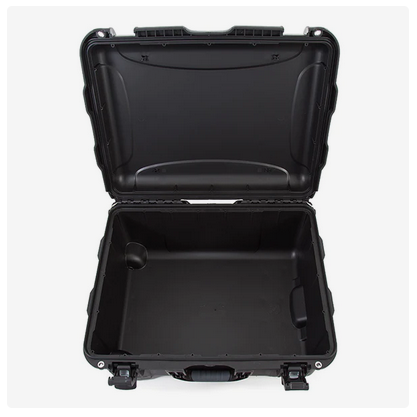
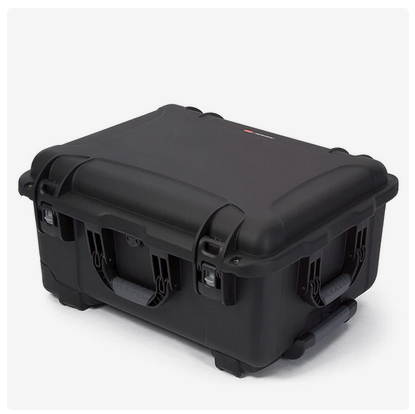
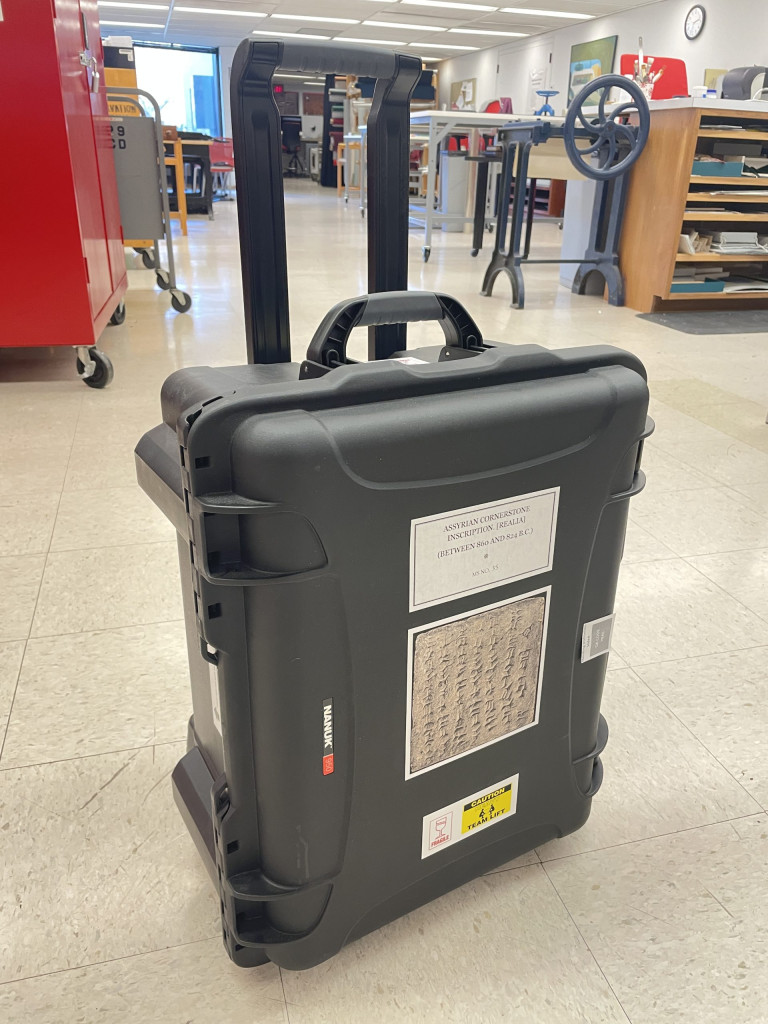
1. A waterproof, shock-proof rolling Nanuk 950 case (similar to a Pelican case) was purchased.
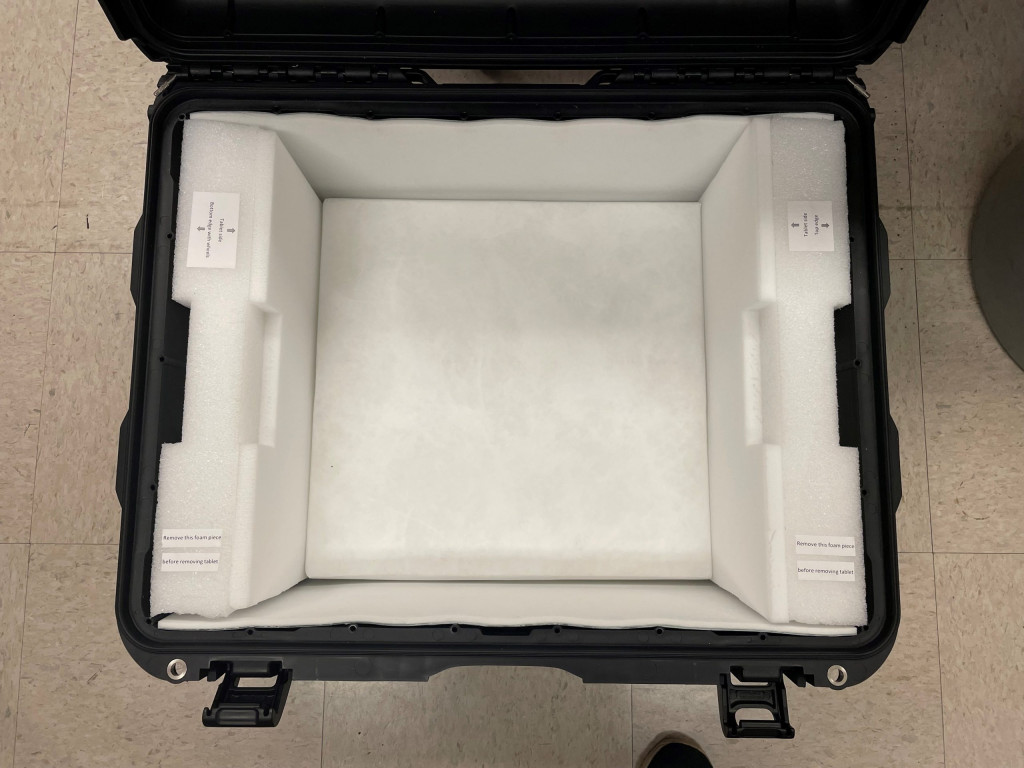
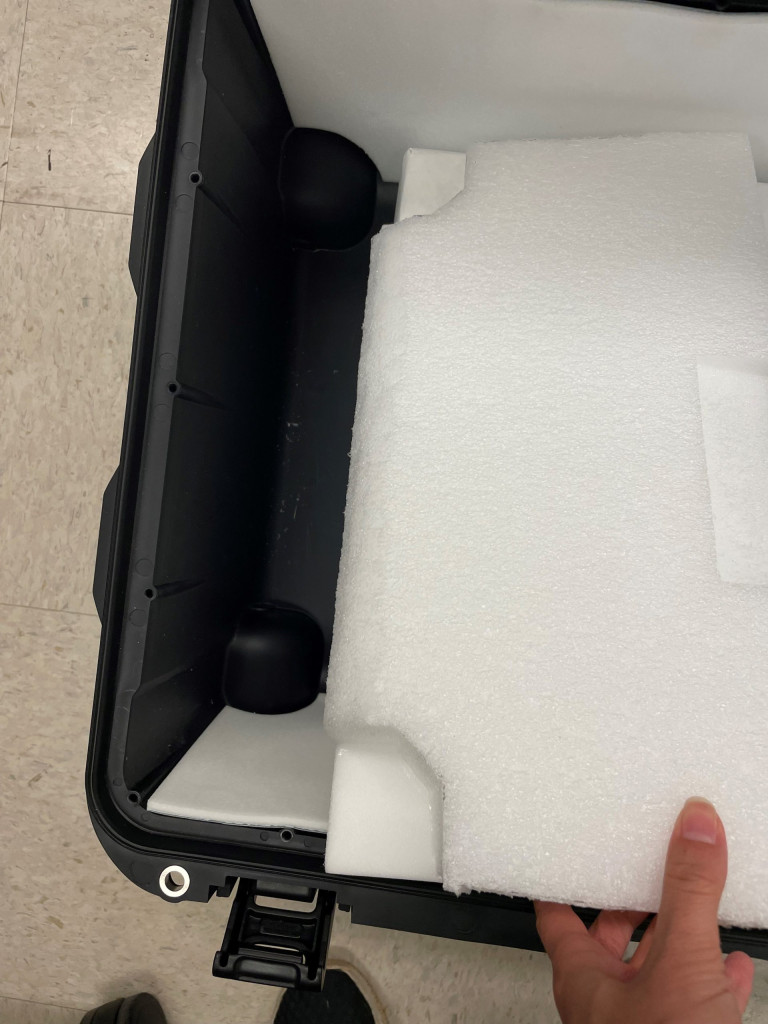
Nanuk case openNanuk case closedLabeled Nanuk case
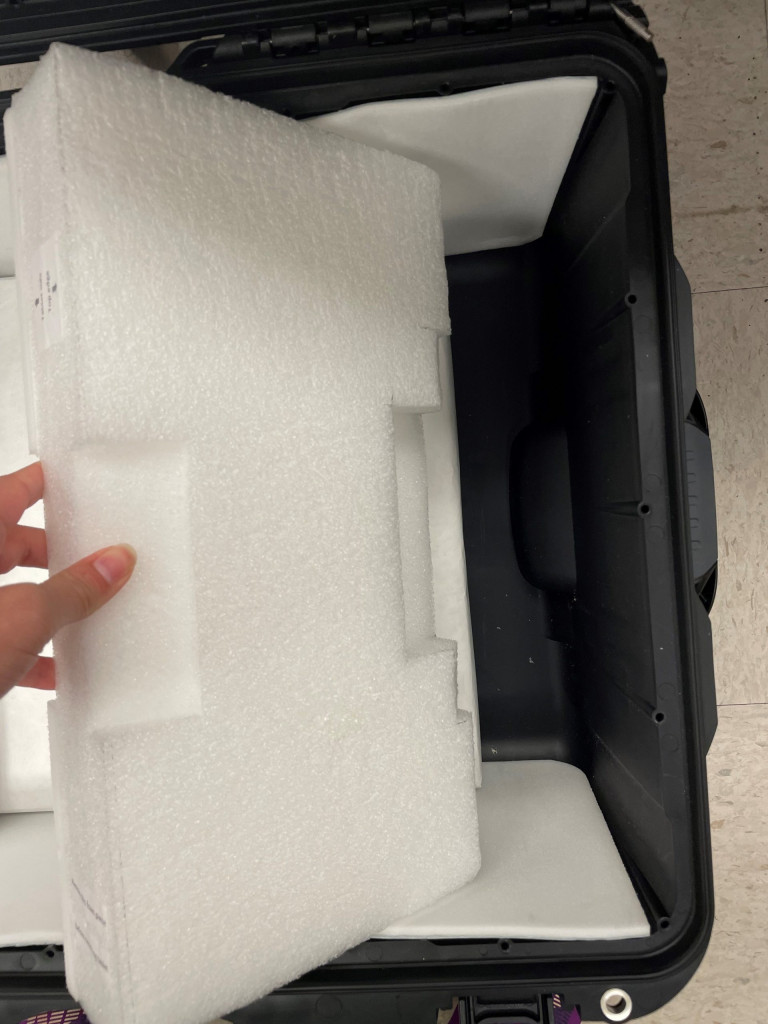
2. The interior was customized with foam and supports.
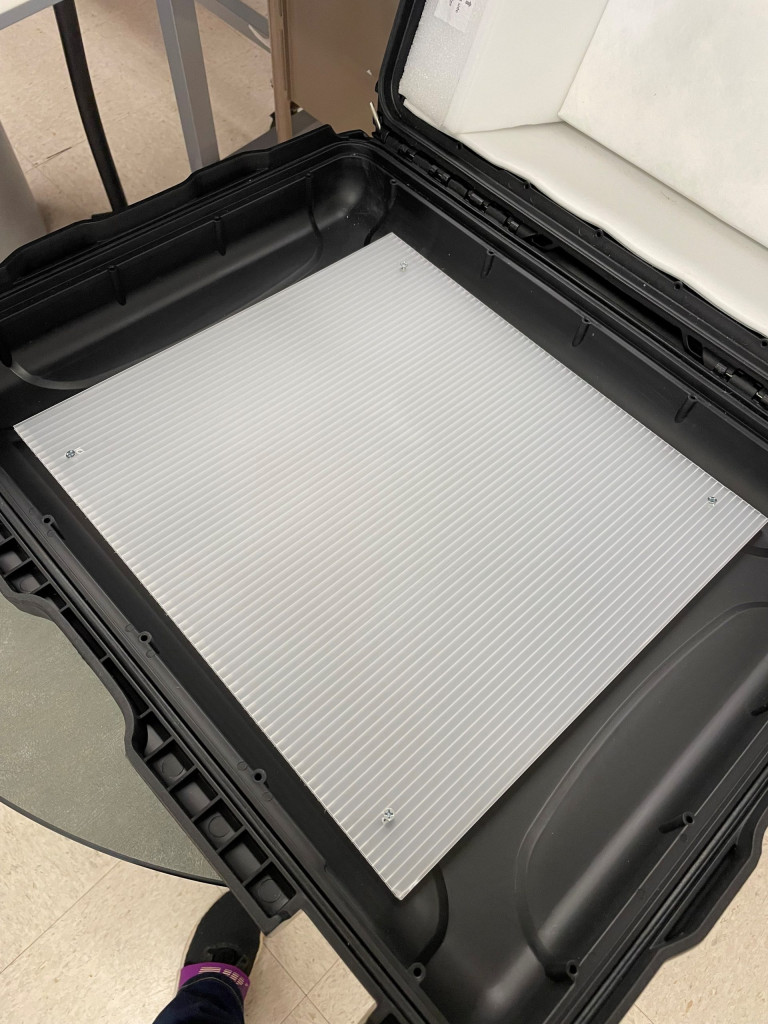
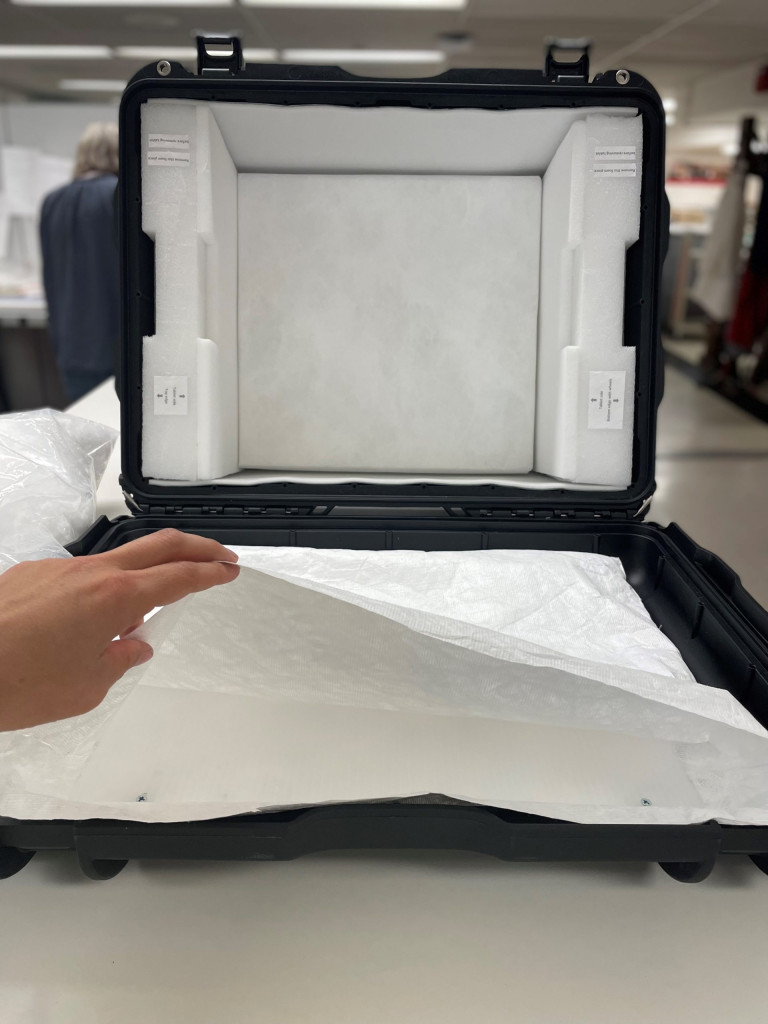
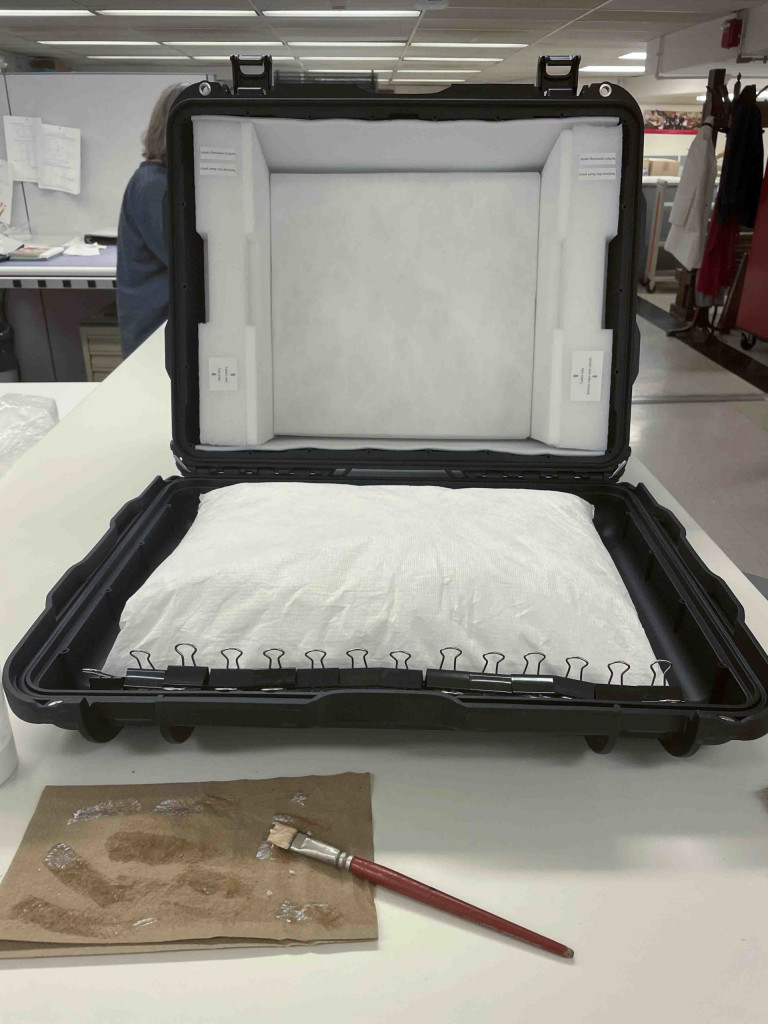
3. The lid was fashioned with a Tyvek pillow screwed to the top with an interior Coroplast sheet.
Marking screw holesCoroplast screwed to lid inside pillowcaseSealing pillow filled with polyester
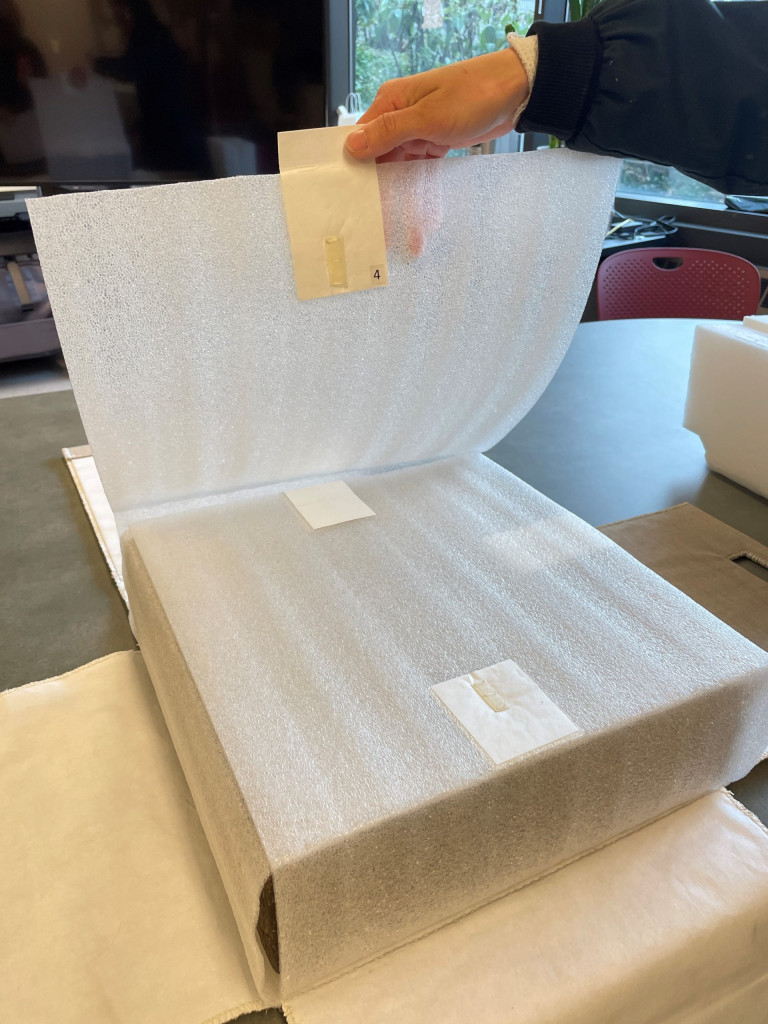
4. The cornerstone was wrapped around all sides in a foam sheet with four flaps.
Foam flaps secured with VelcroUnfolded flas
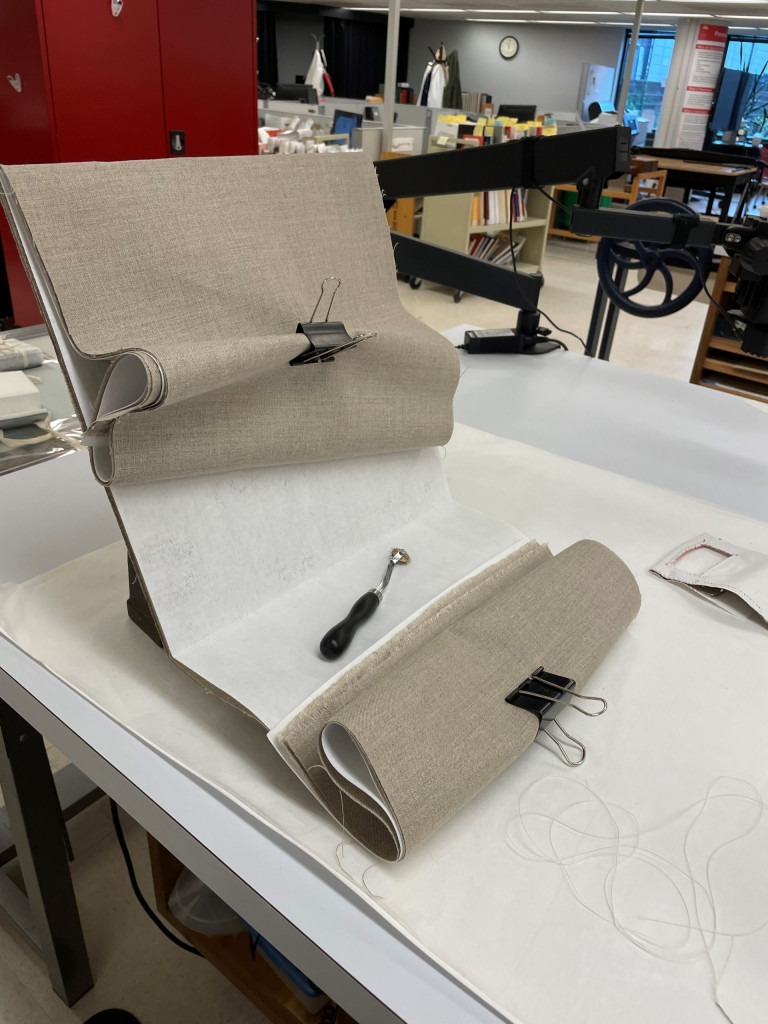
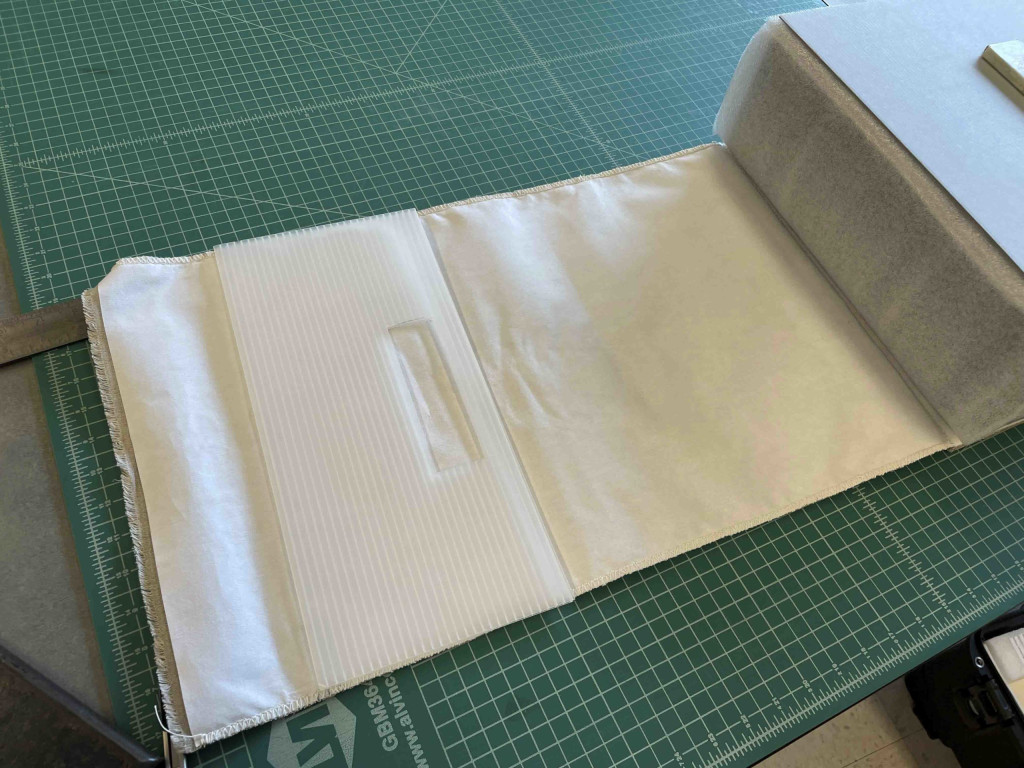
5. A cloth wrapper with custom handles was sewn to support the tablet during insertion into and retrieval from the case.
Sewing cloth wrapperDuring creation of handlesCompleted wrapper
In addition, life-size surrogate photographs were printed by Jessica Ebert and stored in a polyester sleeve within the case. These images may prove even more useful during exhibition or teaching than seeing the actual tablet as they were captured with raking light that beautifully highlights the cuneiform writing. They could even be used as an alternative to handling the heavy tablet.
To help guide future librarians on how to handle the cuneiform tablet in the future, handling instructions were provided, a handling video was created, and a QR code of the video was pasted onto the case. Check out the video below.
I was appreciative to have been able to hearken back to my object’s conservation experience working at the Musical Instrument Museum. My prior experience helped guide me to dust the tablet and store surface cleaning samples, however, this was a project that took me out of my library conservation comfort zone. The knowledge required to house such an object (and the amount of textile sewing used to create the cloth wrapper!) gave me even more appreciation for the work objects and textile conservators do to preserve our oversized and heavy materials – especially when transporting and taking them on and off display!
Ashleigh Ferguson Schieszer [CHPL] – Rare book and paper conservator
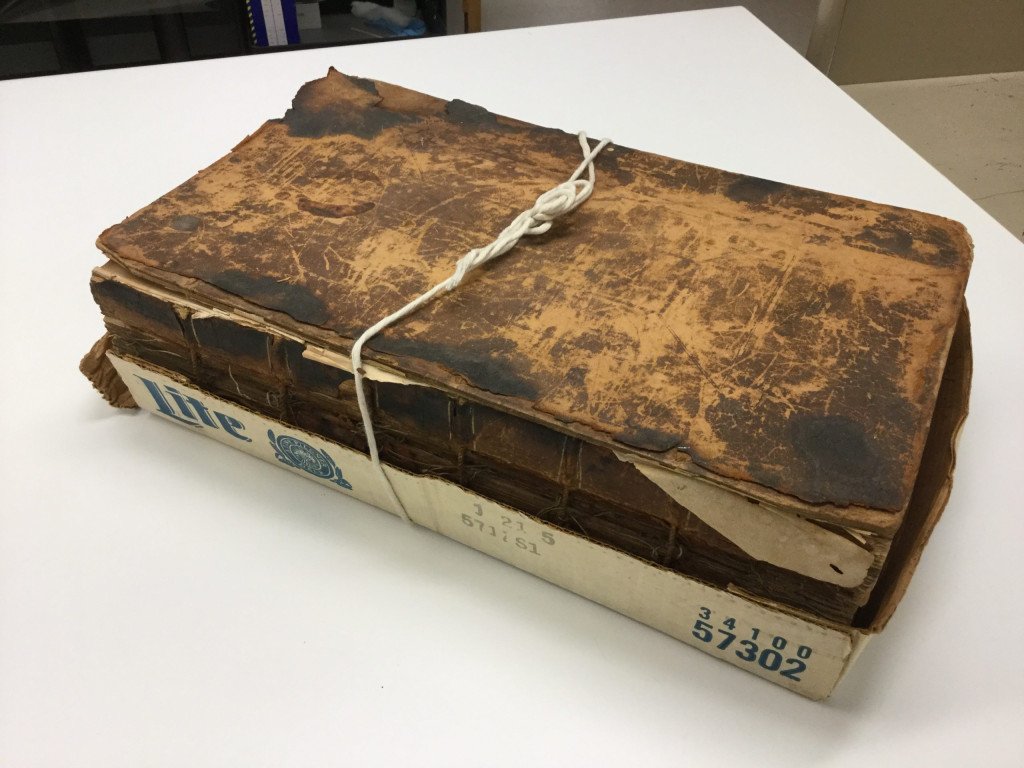
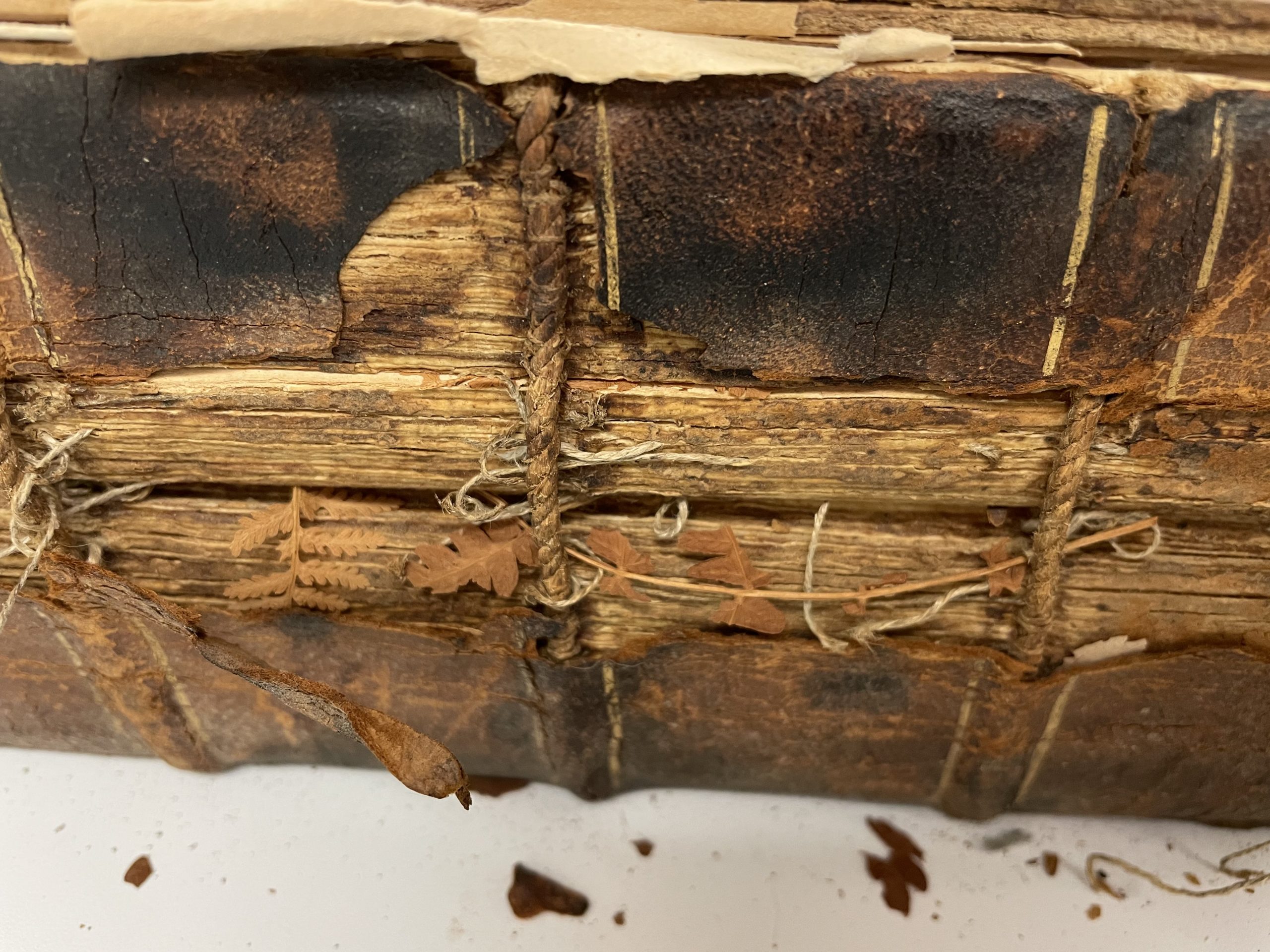
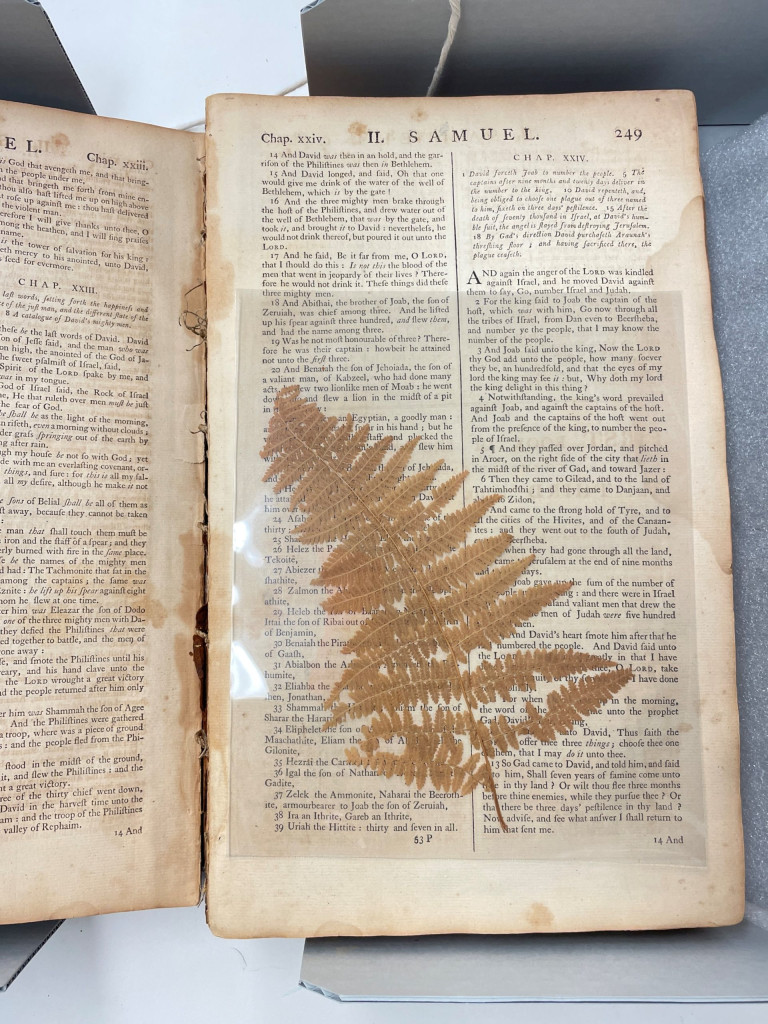
The lab received a heavy bible in exceptionally bad condition. The spine was almost nonexistent, with the leather fragments that were hanging on “by a thread.” There were many breaks in the sewing and the book block was in many pieces. The boards were also completely detached making it nearly impossible to handle. With pages that were water stained, the culmination of condition issues demonstrated how the bible had been around the block (a couple times!).
Bible as received
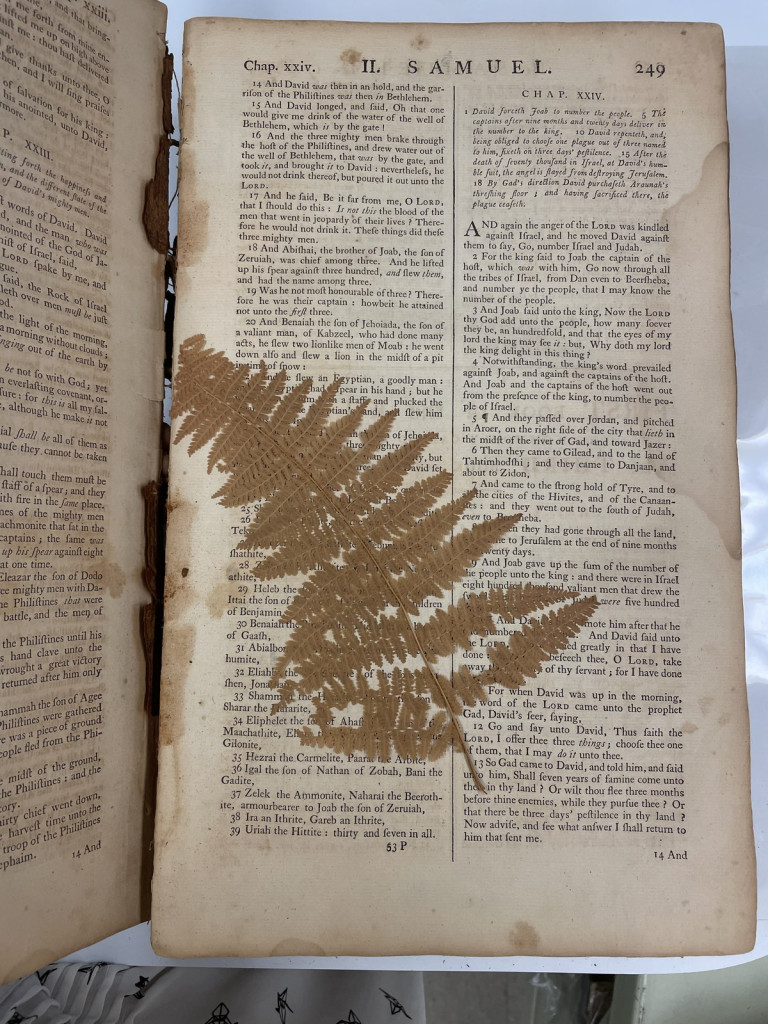
Hidden treasures discovered
While examining the book in preparation for constructing a housing solution, there within the pages I unexpectedly discovered plant specimens! There were quite a few different types. While impossible to know for sure, it seemed to me at one point these specimens were added to mark significant passages. For example, there is a passage in the Christian bible that reads, “And the leaves of the tree are for the healing of the nations,” Revelation 22:2. When I saw the added plant specimens near this passage, my mind immediately went there.
Before preservation
After rehousing
It’s funny how things can trigger thoughts and emotions. With a religious item such as a bible, the dried plant fragments made me imagine how a reader might be moved spiritually to express something they felt deeply in the text in a material way. I was also inspired and glanced at passages beneath the plant specimens seeking out hidden connections. My quest sometimes proved rewarding while others I was left to ponder the hidden meaning.
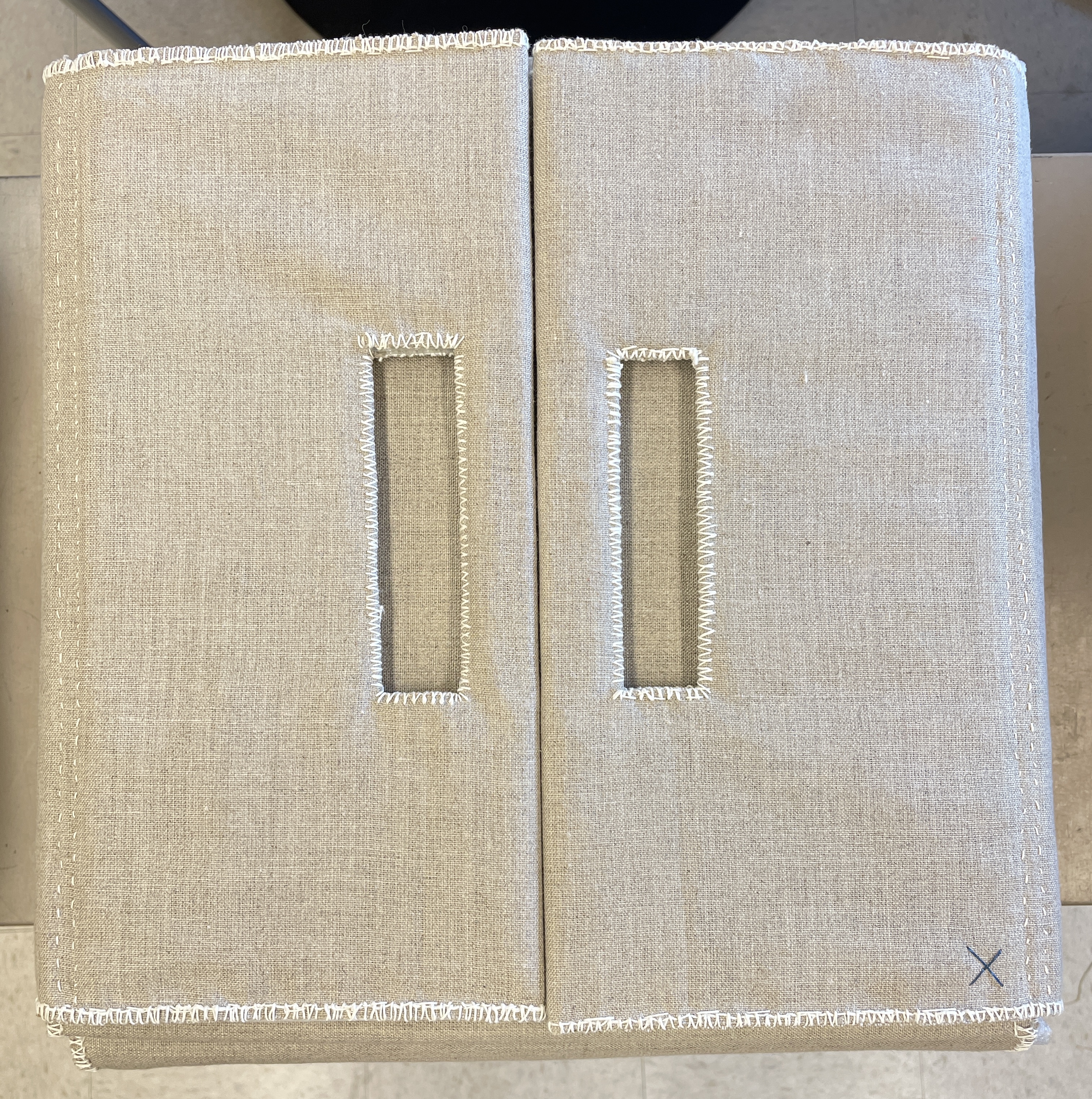
After rehousing, book is wrapped in foam with cloth ties
The unique plant specimens were retained and stored in polyester sleeves in the same position on each page as they were discovered. Upon the completion of sleeving, I also consolidated and performed minor leather repair and care to prevent leather fragments from falling off. For long-term storage I created an archival blue corrugated clamshell and wrapped the fragile binding in a sheet of polyester foam.
Chris Voynovich [CHPL] – Senior Conservation Assistant
At the end of October we were lucky enough to have Jeff Peachey come to the Lab for a week-long workshop on Leather Conservation. We covered sewing extensions, joint tacketing, board splitting and cotton hinges, leather rebacks, and knife sharpening. In the weeks following the workshop we shared highlights from the workshop on our Instagram…
Leather rebacks, including board slitting, inserting a cloth hinge, lifting the original leather, dyeing the new leather, and paring and attaching the reback.
Finally, conservation ASMR…Jeff Peachey style! Make sure the sound is on for this one…
We had the best time with Jeff. He is such a knowledgable and approachable instructor, and we learned so much from him. Thanks for coming to the Preservation Lab, Jeff!
The phrase “chain of custody” doesn’t illicit much excitement generally speaking, but it’s one part of the workflow in the Preservation Lab that leads to the exciting part — materials return days!
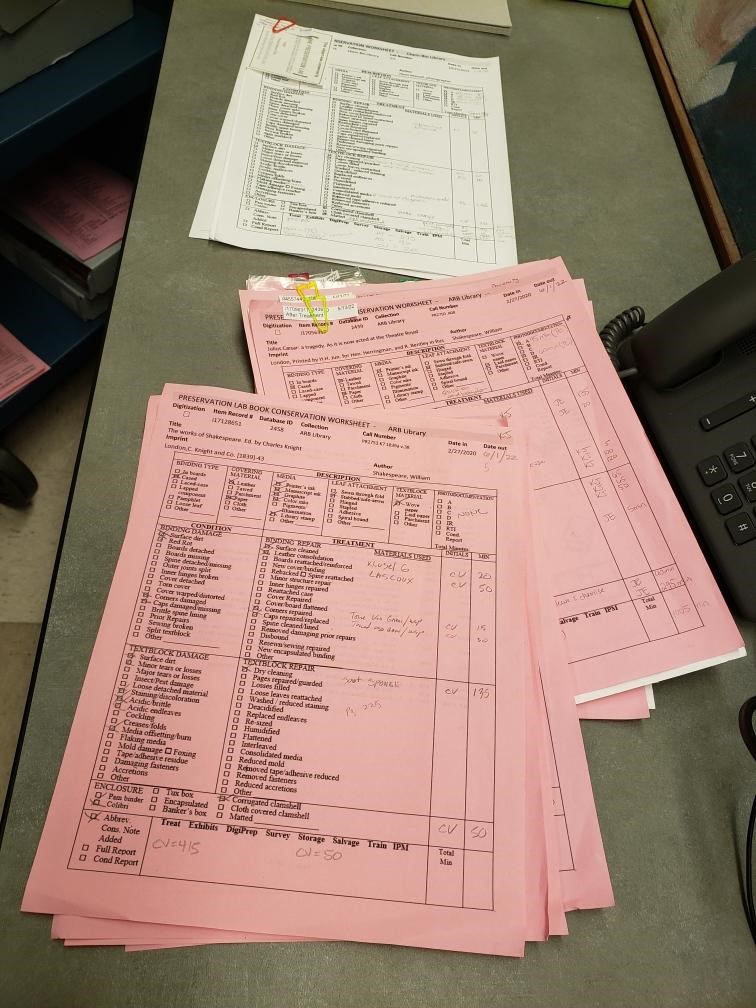
We count on paper forms (pictured below), our homegrown treatment database, and our partner’s catalogs to make sure that at all times our partners know where their treasures are in the conservation workflow.
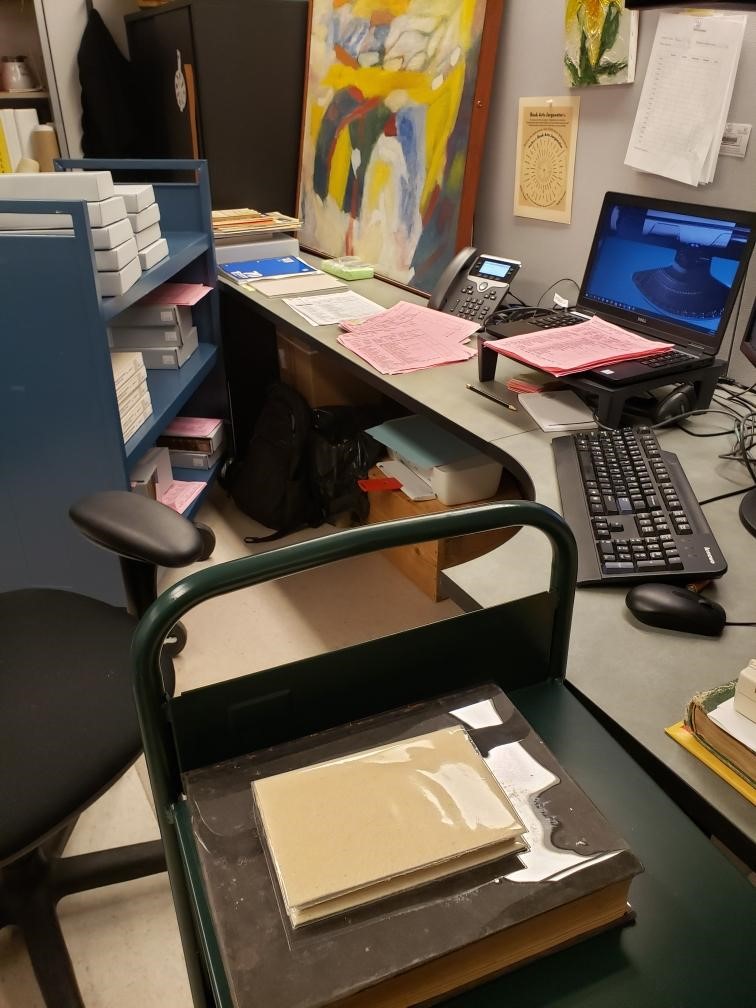
(Left) Paper treatment forms where we record our conservation time. (Right) My office area with materials preparing to “go home” after chain of custody work completed.
The materials above are ready for return. This happens at regularly scheduled meetings where the materials are delivered back by the lab and the treatments are discussed with the subject selectors. At the return meetings we also do our new intake… and the process begins again!
After a two year hiatus, the Preservation Lab once again was able to celebrate the American Library Association’s Preservation Week. And this year, the lab decided to take Preservation Week to the public.
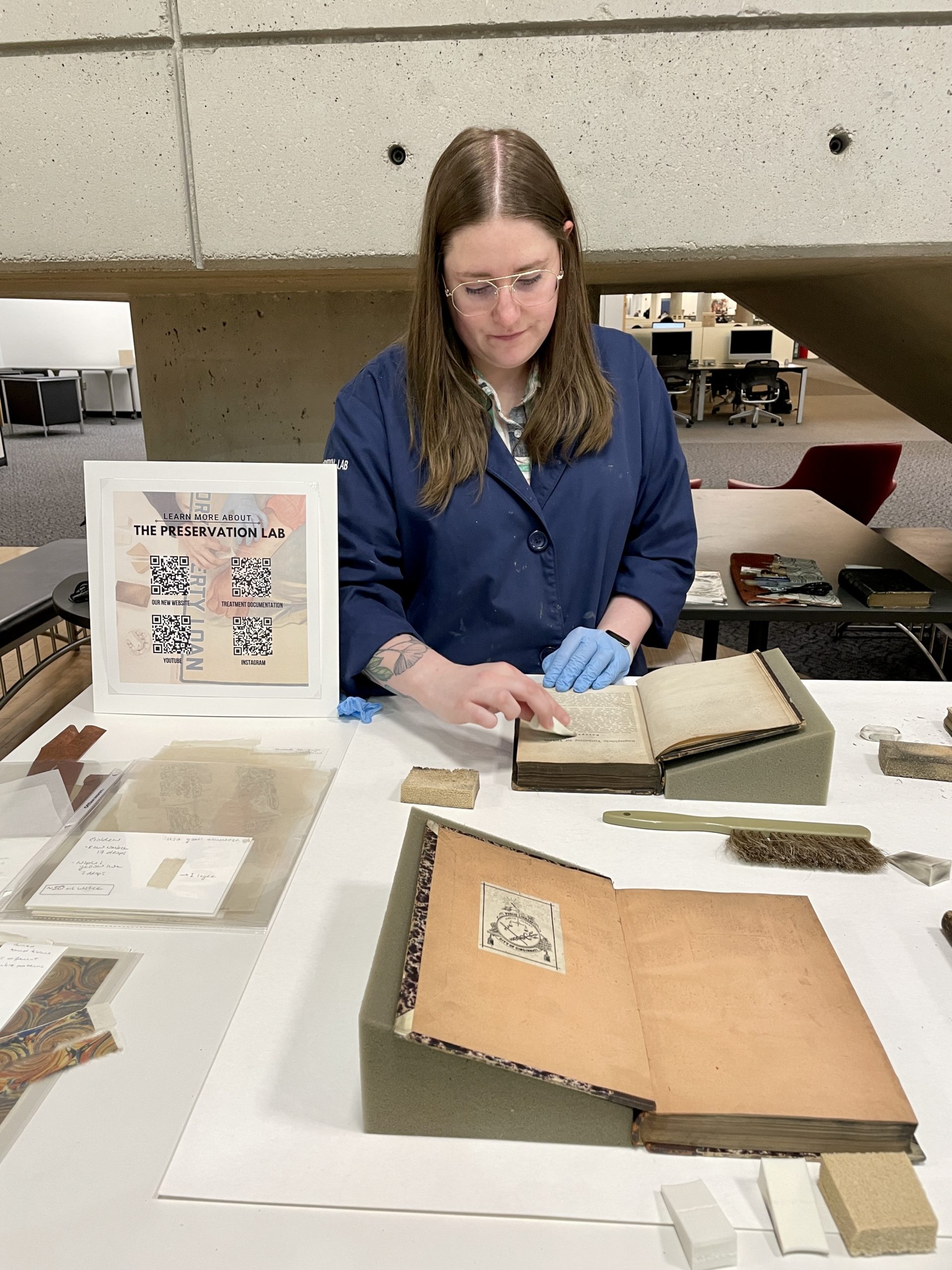
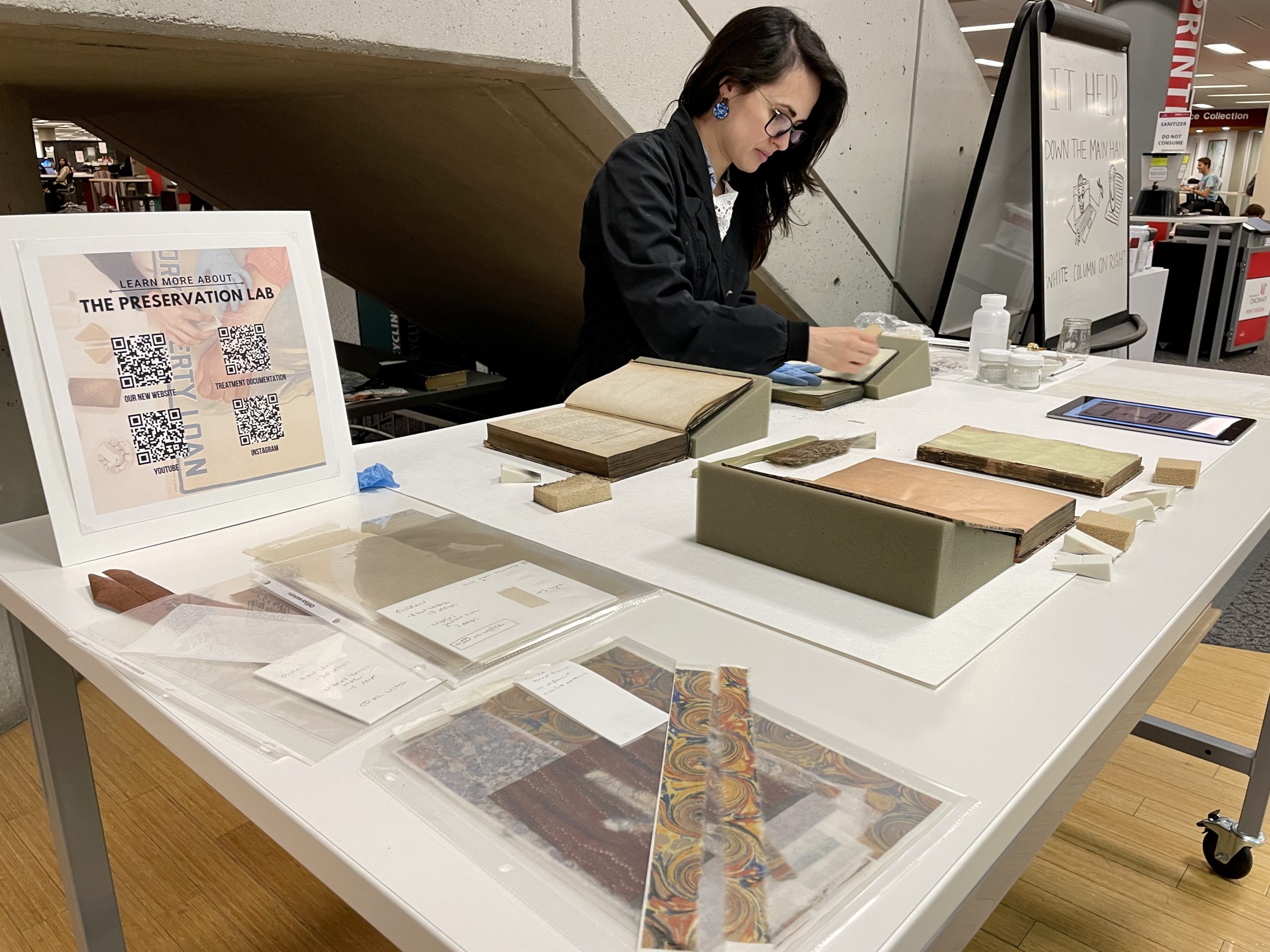
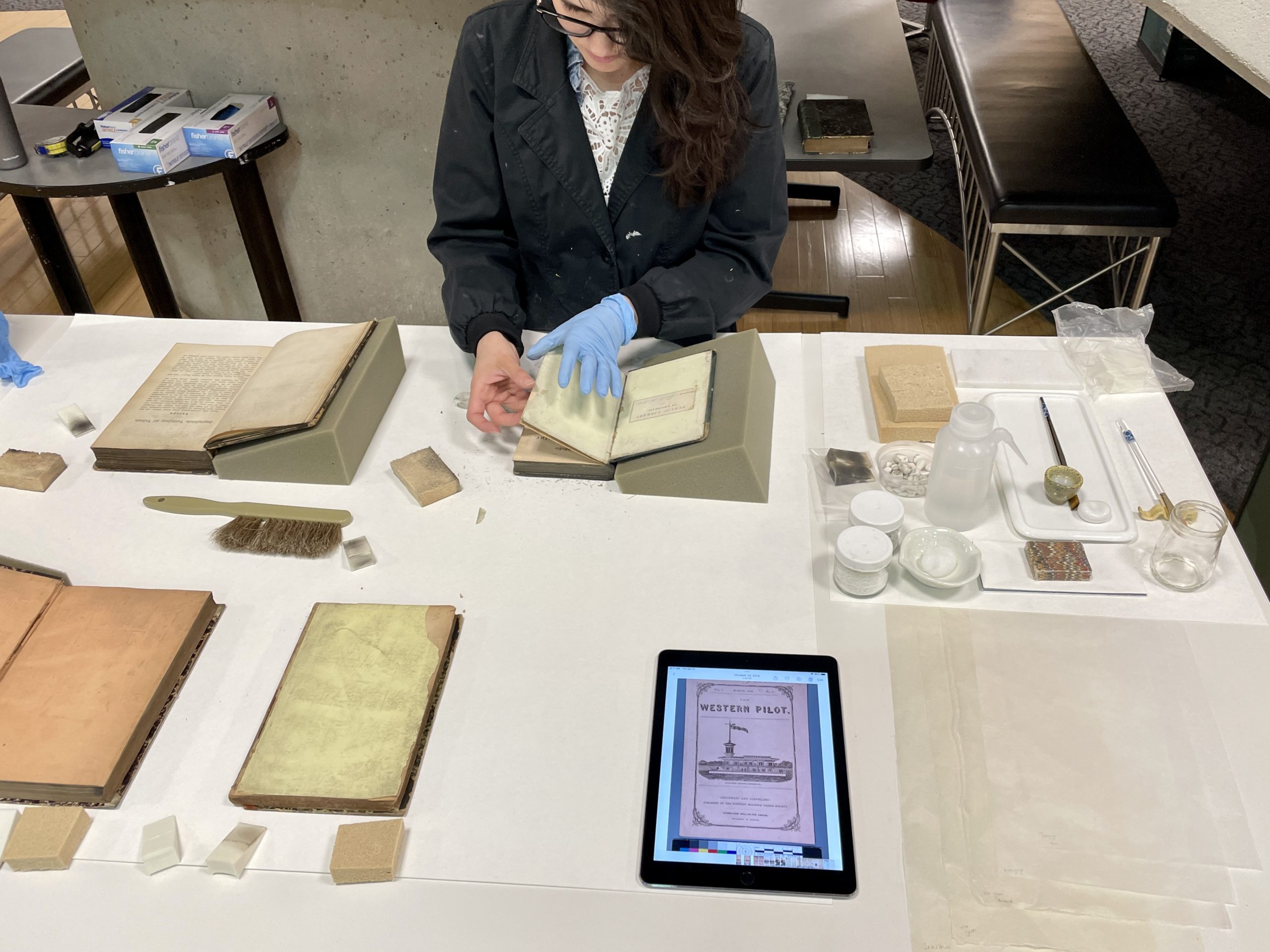
On the morning of April 21st, Catarina and Jessica took one of the lab’s rolling work tables to the entrance of the Langsam library. There they set up a demonstration area with some very dirty books, to show the public a little bit about surface cleaning. They brought out the different supplies used in surface cleaning (such as hydrophilic sponges, smoke sponges, eraser crumbles and vinyl erasers). In addition to surface cleaning materials, Jessica and Catarina also brought some Japanese tissue for the public to touch and learn about tear repair.
Jessica is actively surface cleaning a very grimy book.Catarina is surface cleaning a dirty book using a hydrophilic sponge.Another view of the entire set up with a tear repair station.
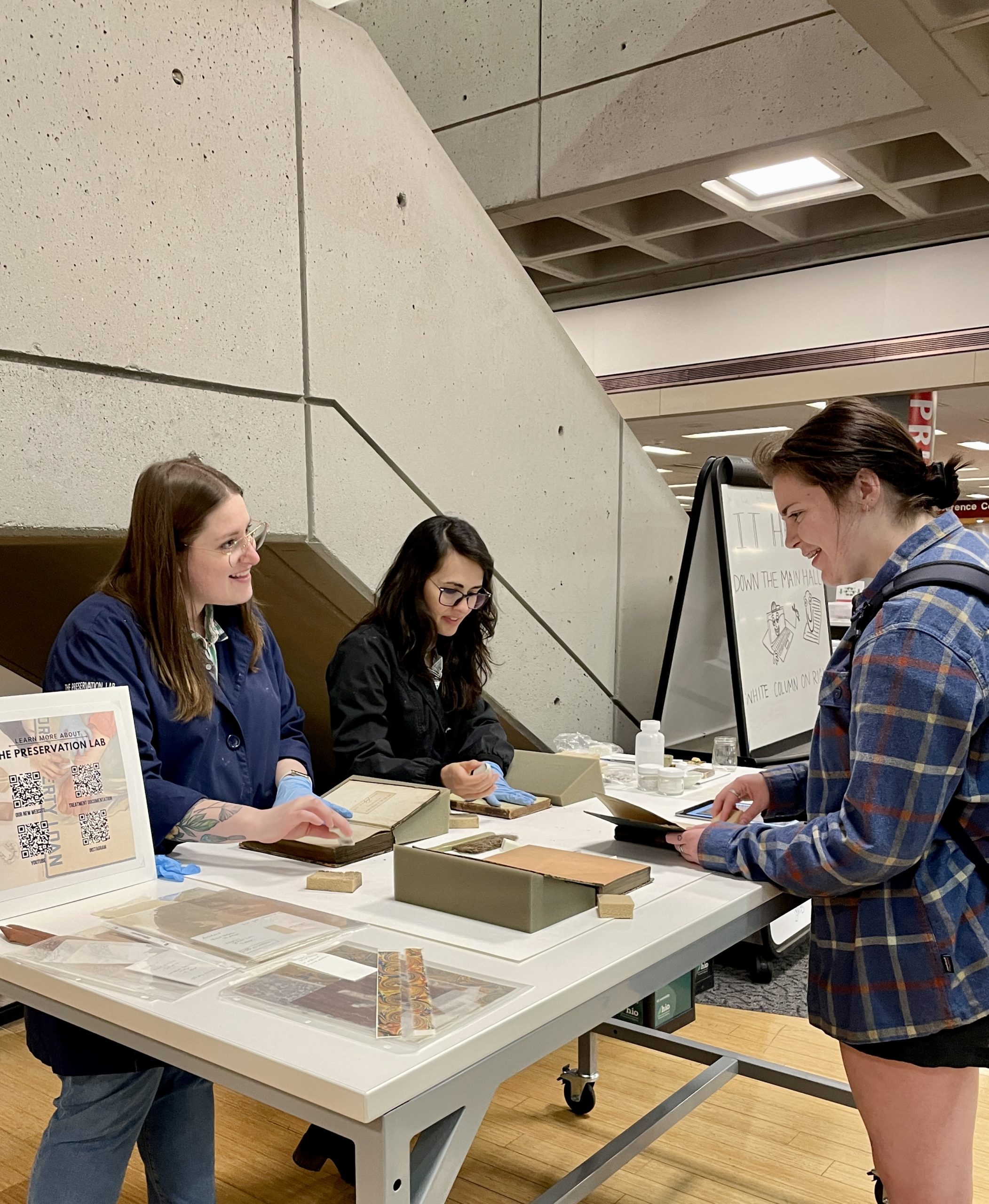
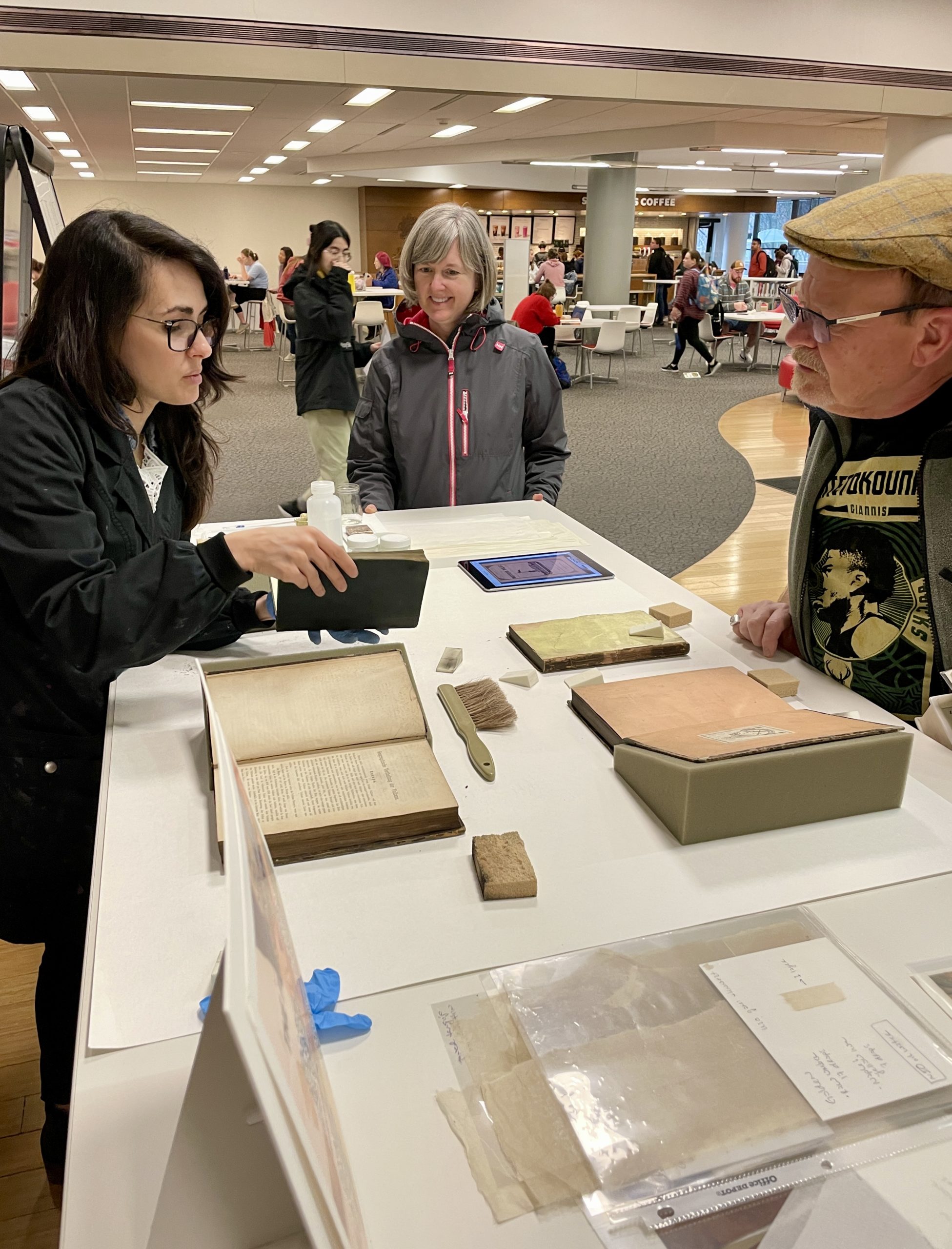
A few members of the public were too nervous to even try to surface clean a little bit of the dirty books (all filled with soot from coal burning stoves), but others were brave enough and felt that surface cleaning was a very satisfying and relaxing treatment.
Jessica encouraging a UC student to try to surface clean.Catarina explaining why surface cleaning was the first step to repair the broken inner joint.
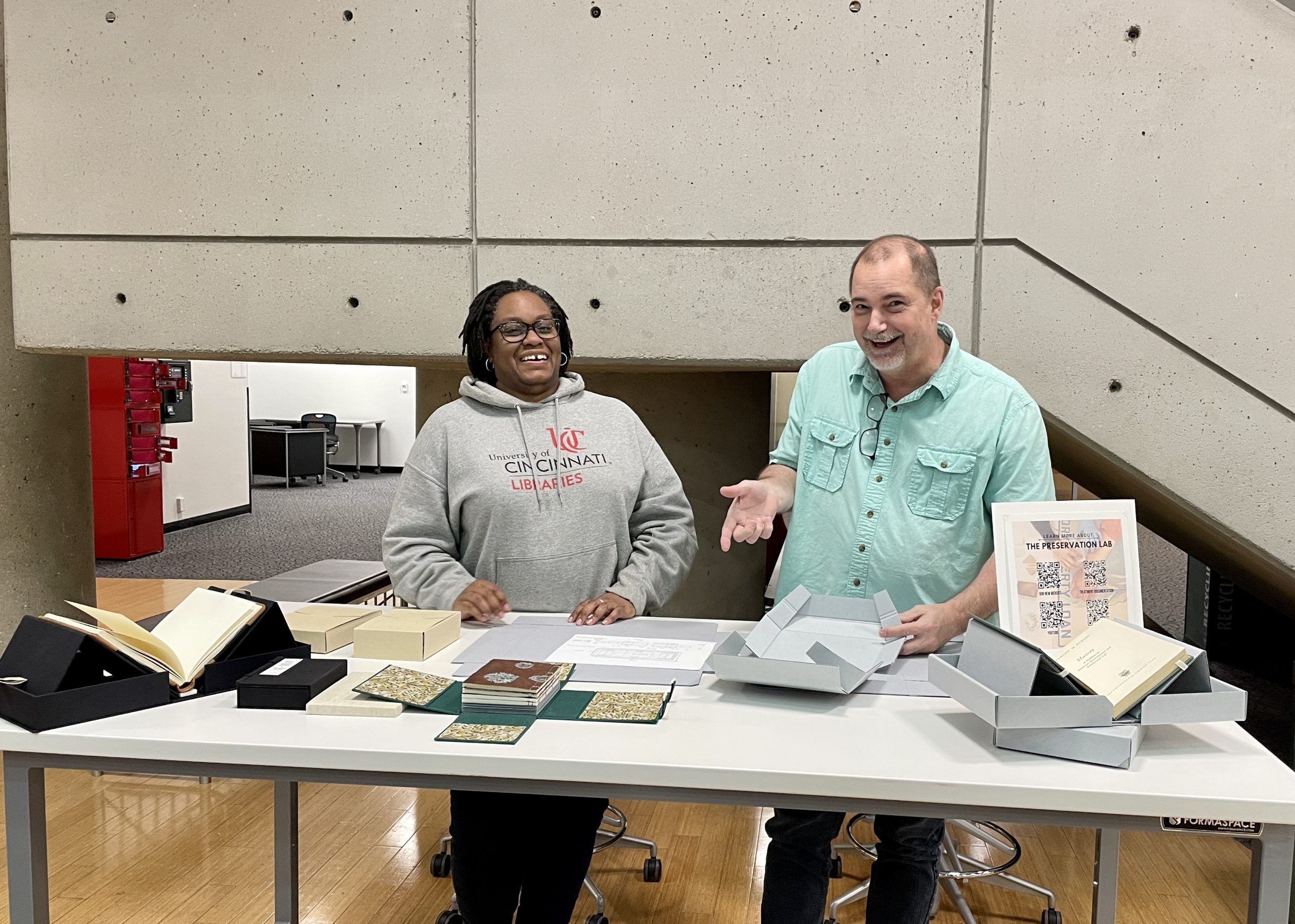
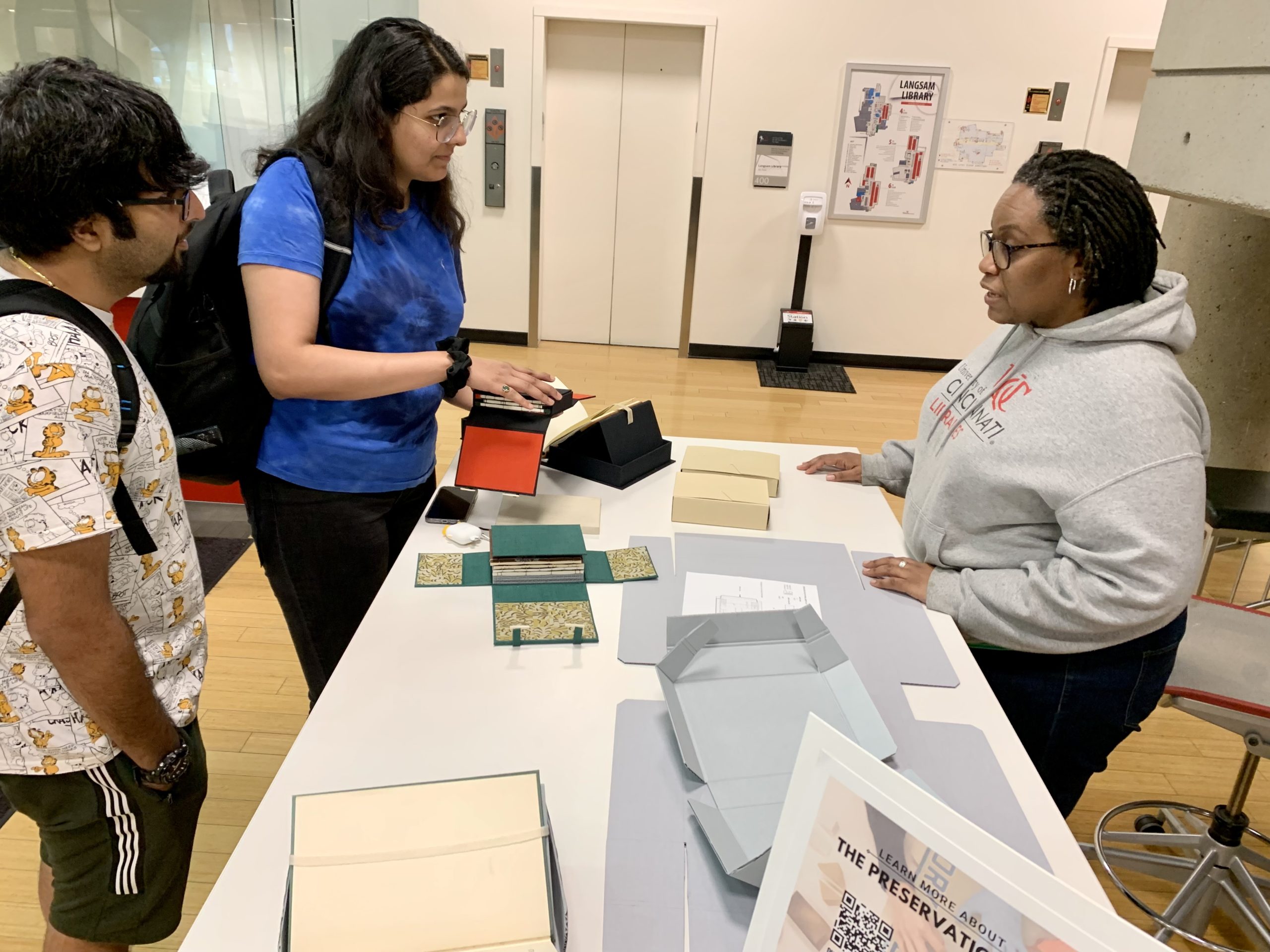
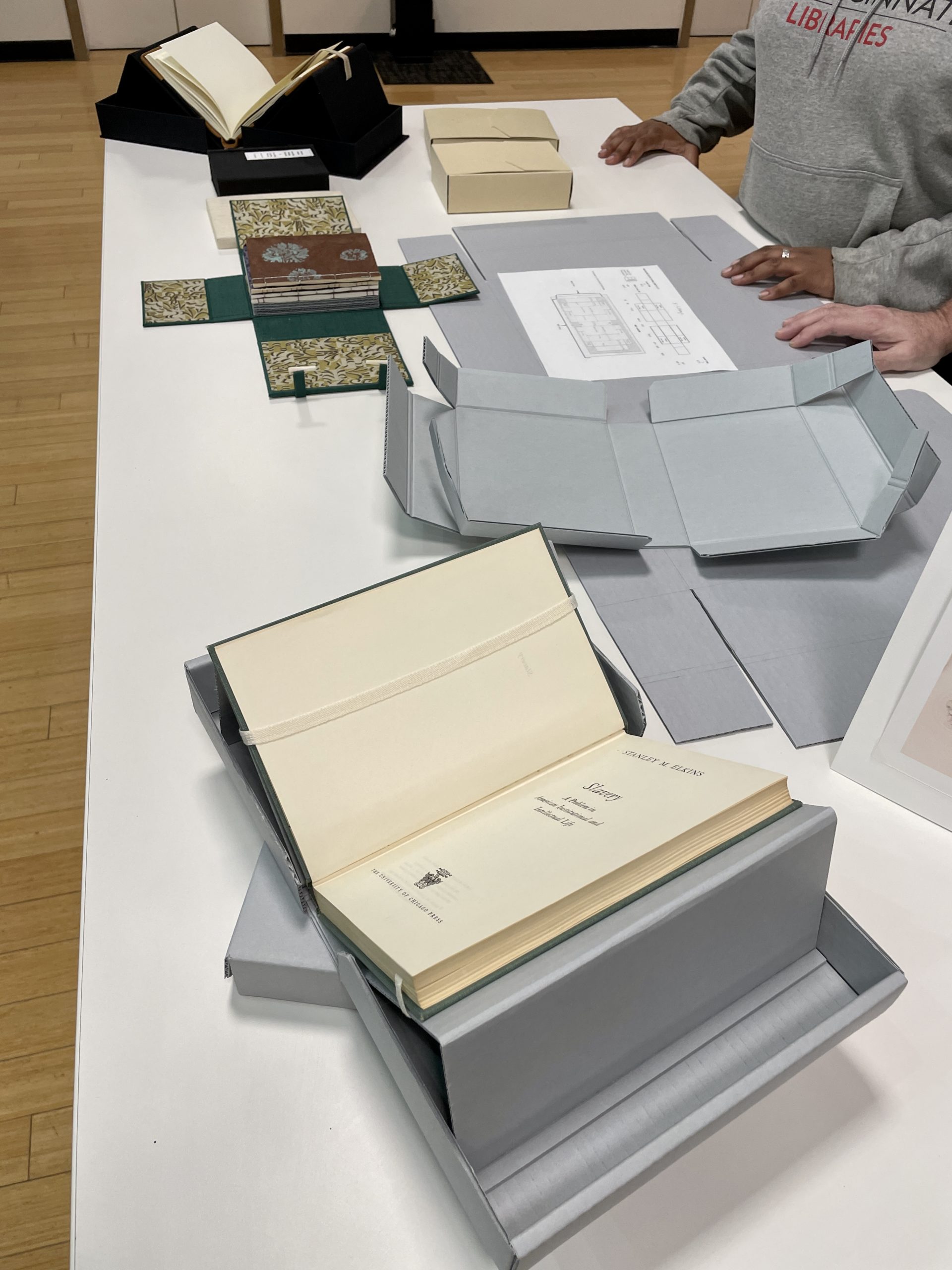
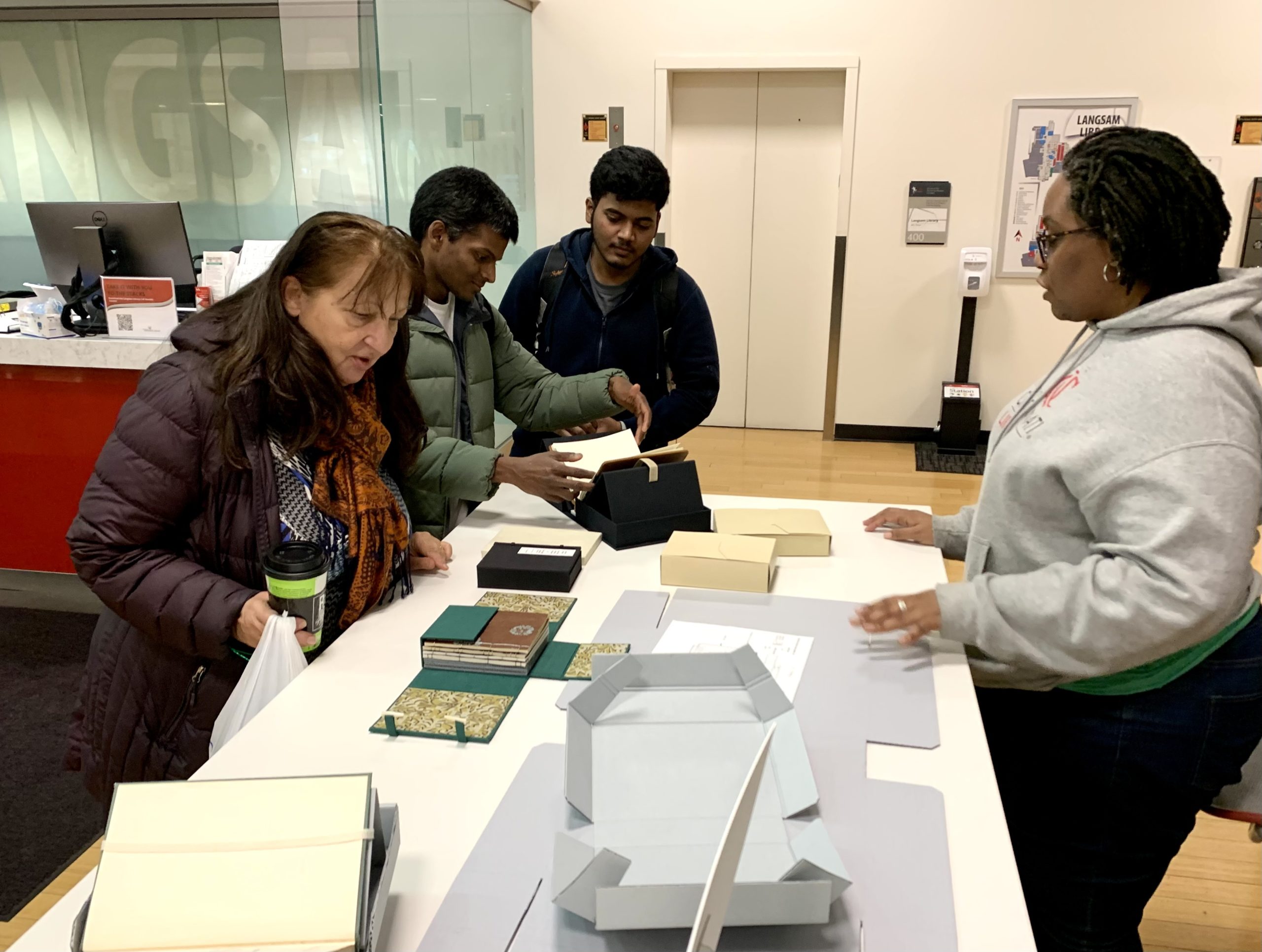
In the afternoon of the same day, Chris and Hyacinth showed the public a variety of enclosures and how they are made from beginning to end. There were corrugated clamshell boxes, one with an integrated cradle, cloth clamshell boxes, tuxedo boxes and a Japanese four-sided enclosure.
Chris also brought a corrugated clamshell in its early stages to show the public how the process of making a corrugated clamshell begins.
Chris and Hyacinth showing their display of models and enclosures.Hyacinth explaining to some UC students the different Japanese four-sided enclosure compared to other enclosures.The different enclosures that Chris and Hyacinth showed to the public. Hyacinth sharing with an interested public.
The crowd favorites were the elaborate cloth covered clamshell box made by Chris, and the beautiful Japanese four-sided enclosure made by Hyacinth.
Even though this was a smaller event compared to our open house tours of the past, the event was a success; allowing the Preservation Lab staff to share with the UC community a peek into our daily work and explain what goes on in the Preservation Lab. But Preservation week is not done yet…
This upcoming Friday, April 29th at 1 pm, join Holly and Ashleigh at the Clifton Branch of the Cincinnati and Hamilton Public Library, .They will be showing some books models, explaining how books are made and what materials are used. You can find more details in the following link: https://cincinnatilibrary.bibliocommons.com/events/625422b5cd8e792f000bcfc5