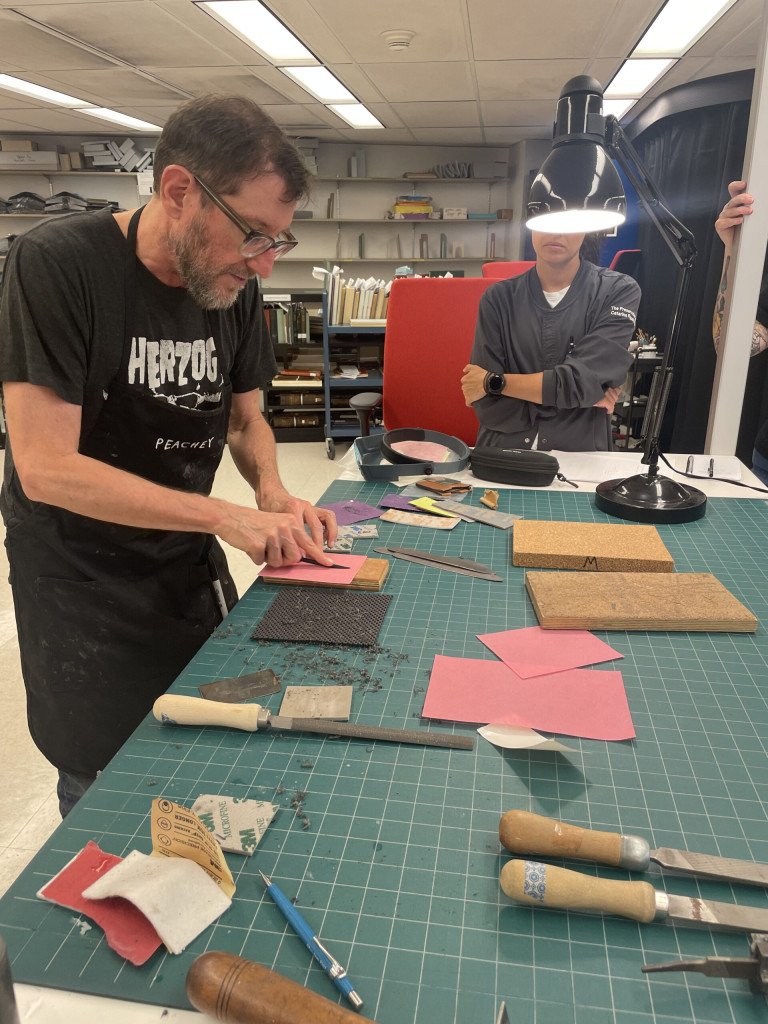
For one week in July, 2024, the Preservation Lab busted out belt sanders and opened the elbow grease to host a workshop taught by Jeff Peachey, learning all about making, modifying and maintaining our own hand tools. Jeff, a book conservator and master tool maker, brought all kinds of fun machinery and exciting tools for us to learn from and use. From hacksaws to pencil sharpeners, Jeff’s tool collection is inspiring, and we all left the week with some amazing new additions to our bench.
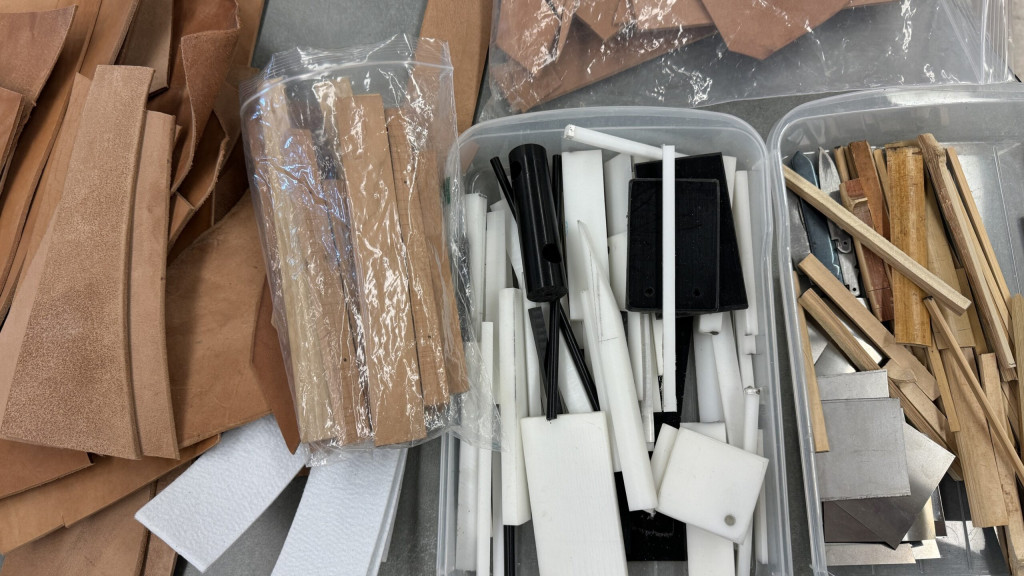
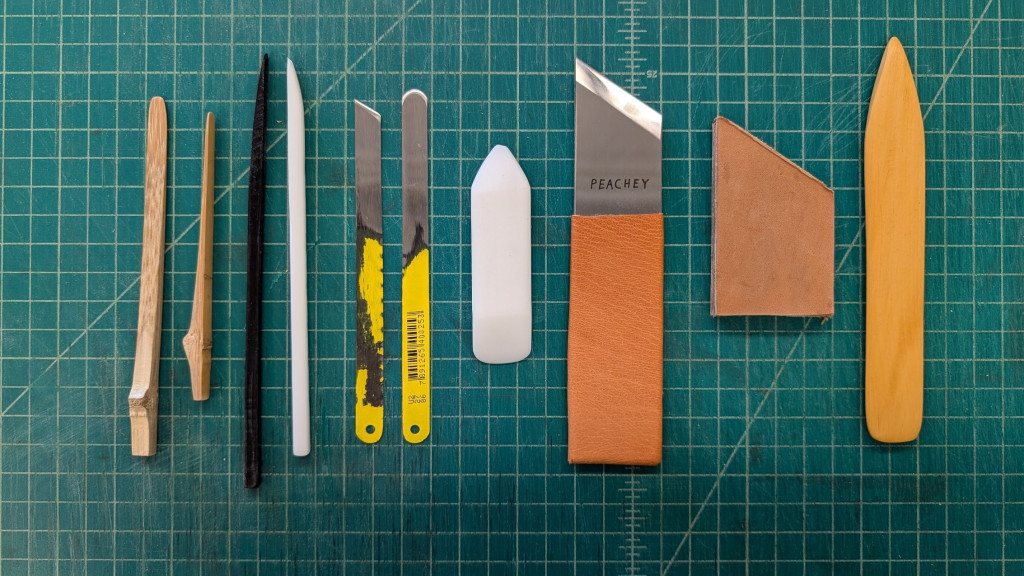
A set of raw materials each participant received at the beginning of the week to shape into their own personal new tool set! Credit: Jeff Peachey
Extra scraps of horse butt, cherry, pear and box wood, Delrin, and bamboo: materials we used and experimented with during our workshop. Credit: Jessica Ebert
Delrin
We started the week off working with Delrin. Delrin, an acetal homopolymer plastic that appears similar to Teflon, was easy to shape with saws, files, scrapers and silicon carbide sandpapers. We burnished with sanding pads and polishing paper.
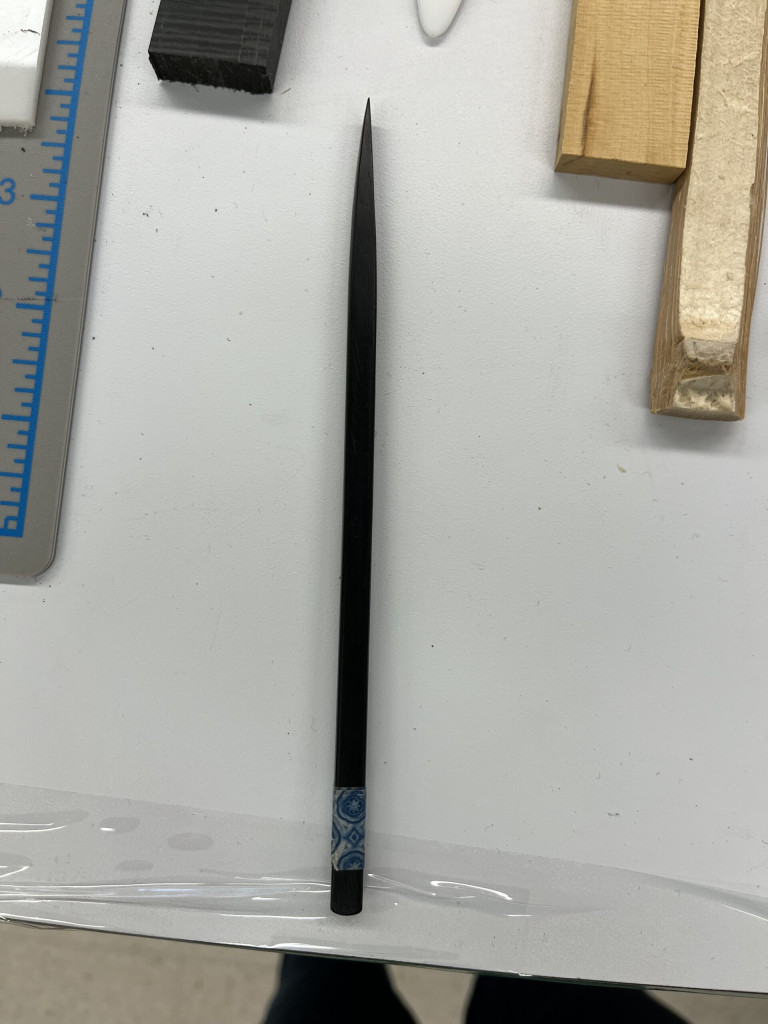
We started off with Delrin rods that we shaped into delicate heras. Heras are thin tools with spatula-like ends that Jeff says are great for delicate prying, inserting small amounts of adhesive, and lifting tape to name a few of the uses for this handy little tool.
We made a rough cut of the shape we wanted with the bandsaw, then smoothed everything out by going through a sandpaper grit progression. Once we’d crafted these, many of us tried our hand at making versatile Delrin folders. With lots of filing and sanding, this malleable Delrin was easy to manipulate into a variety of tool shapes, and no two tools were exactly alike.
A Delrin hera created by Holly. Credit: Holly Prochaska
Ashleigh uses a saw to shape her Delrin. Credit: Ashleigh Ferguson Schieszer
Jeff demonstrates how to work with Delrin. Credit: Ashleigh Ferguson Schieszer
Knives
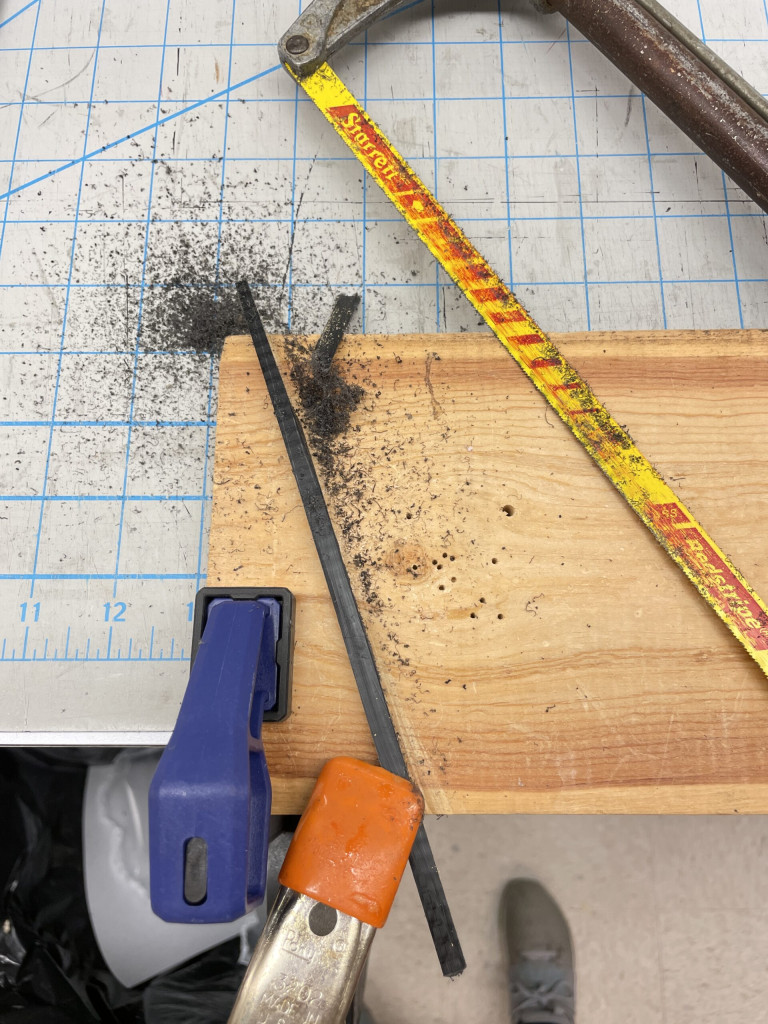
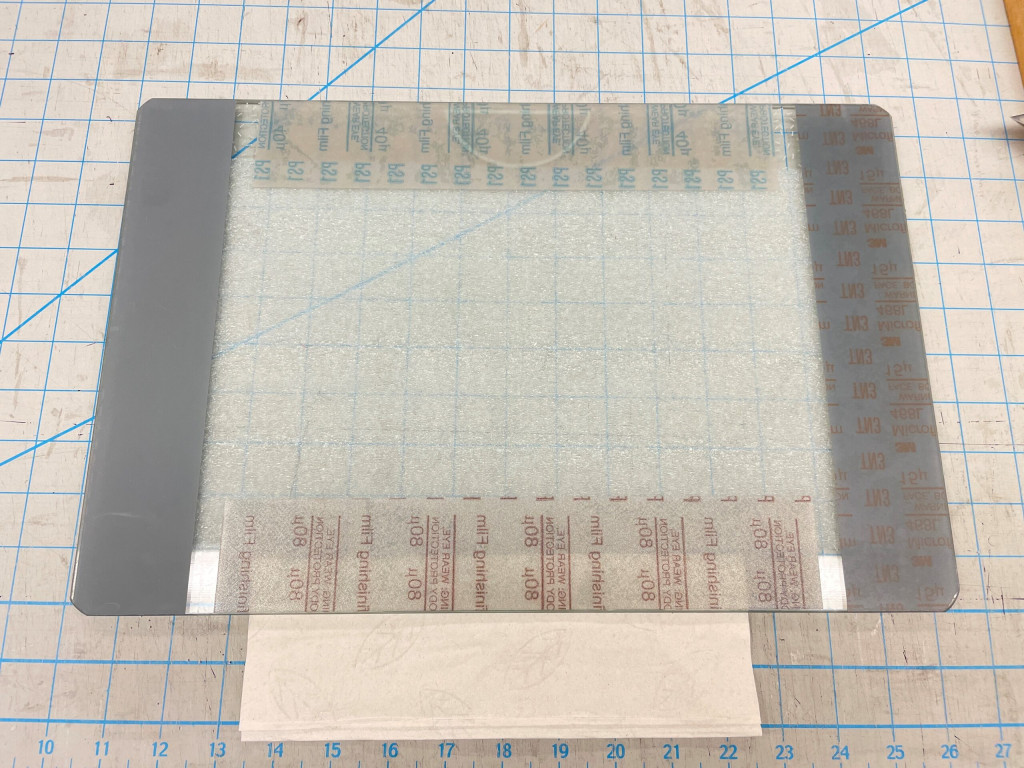
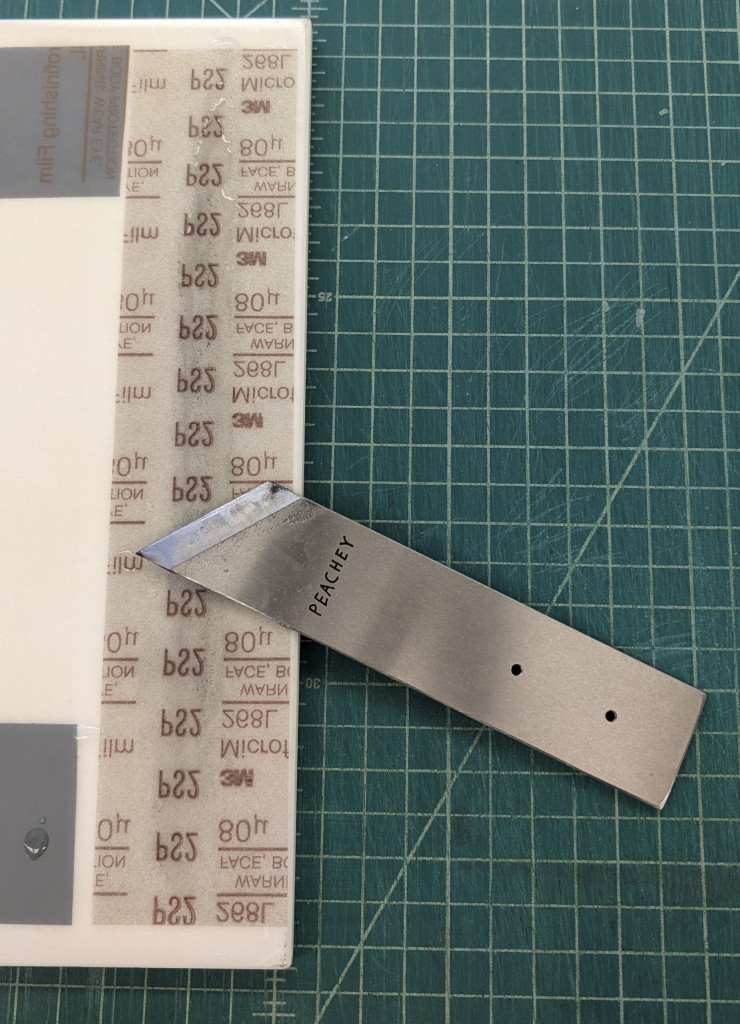
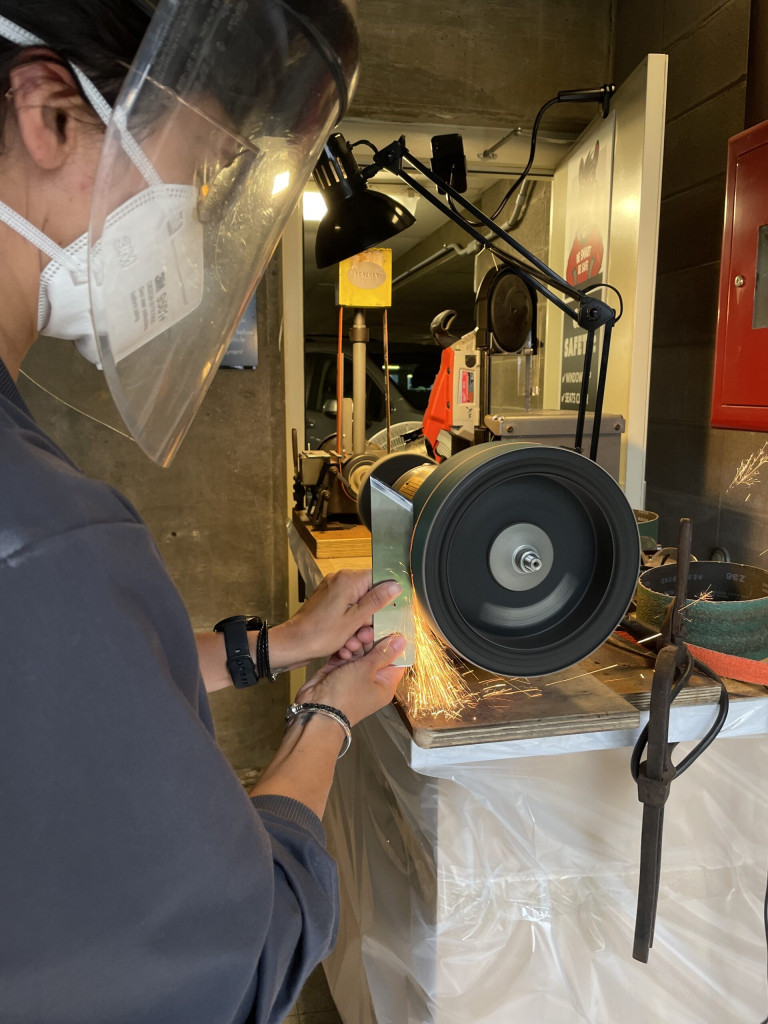
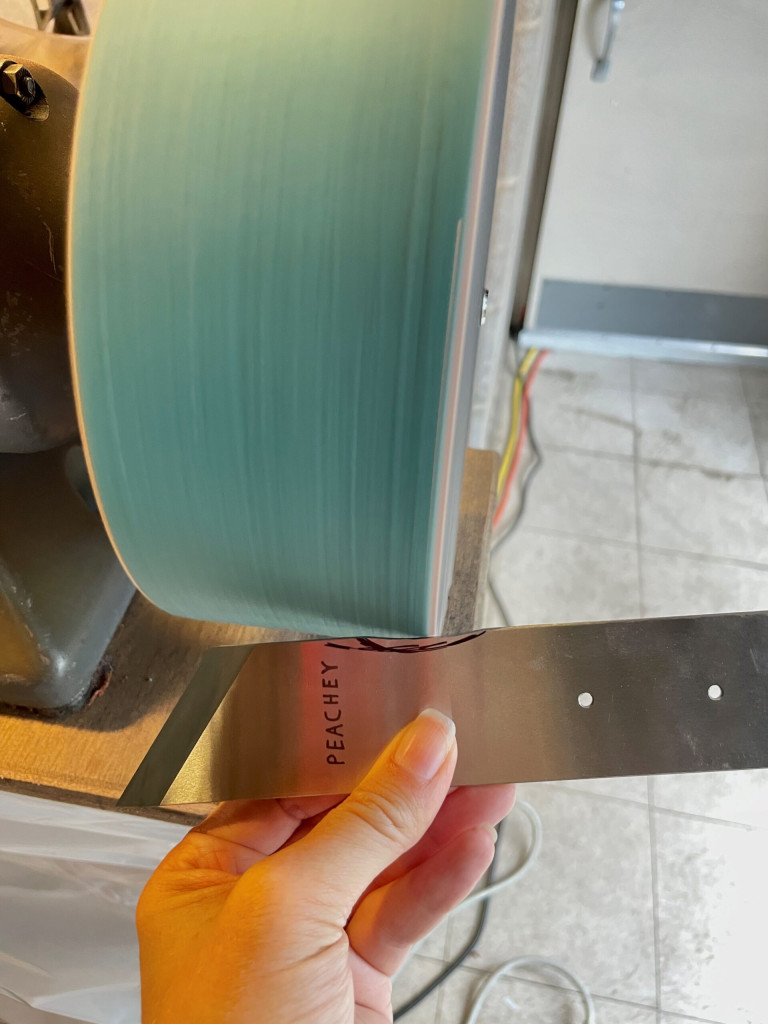
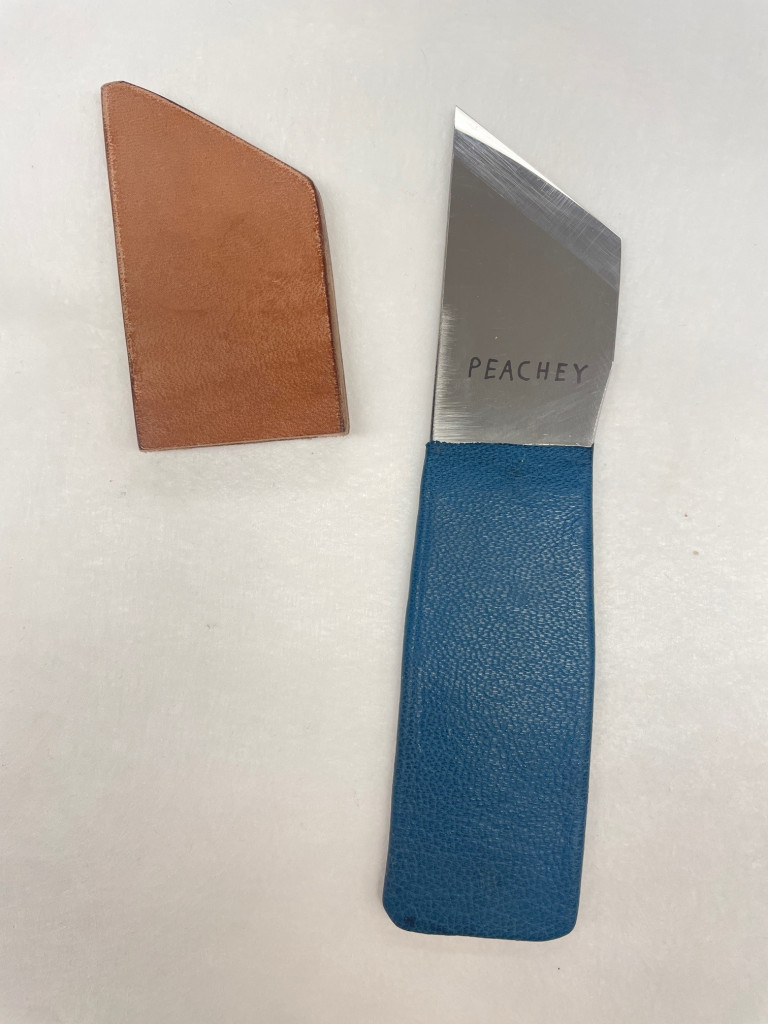
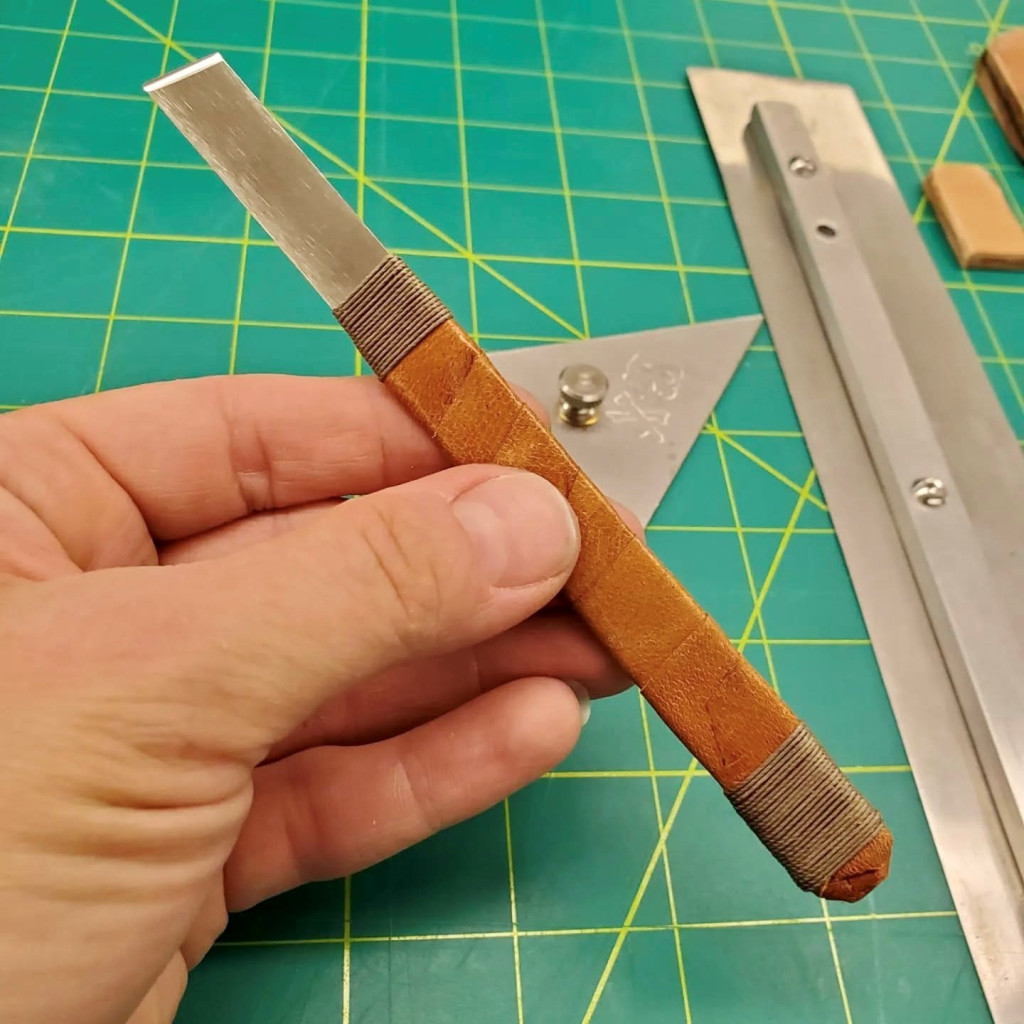
Our second and third days with Jeff were all about M2 steel knifes, both sharpening them and making them. We learned all about using Jeff’s sharpening system and honed down our own Peachey paring knife. We also made two lifting knives out of Starrett 32T hacksaw blades by grinding the blades down on a belt sander and then taking them through the sharpening system with microfinishing films to achieve a sharp edge.
A progression of 3M Microfinishing Films adhered to a glass plate for sharpening. Credit: Ashleigh Ferguson Schieszer
A Peachey knife next to a sharpening system on marble. Credit: Holly Prochaska
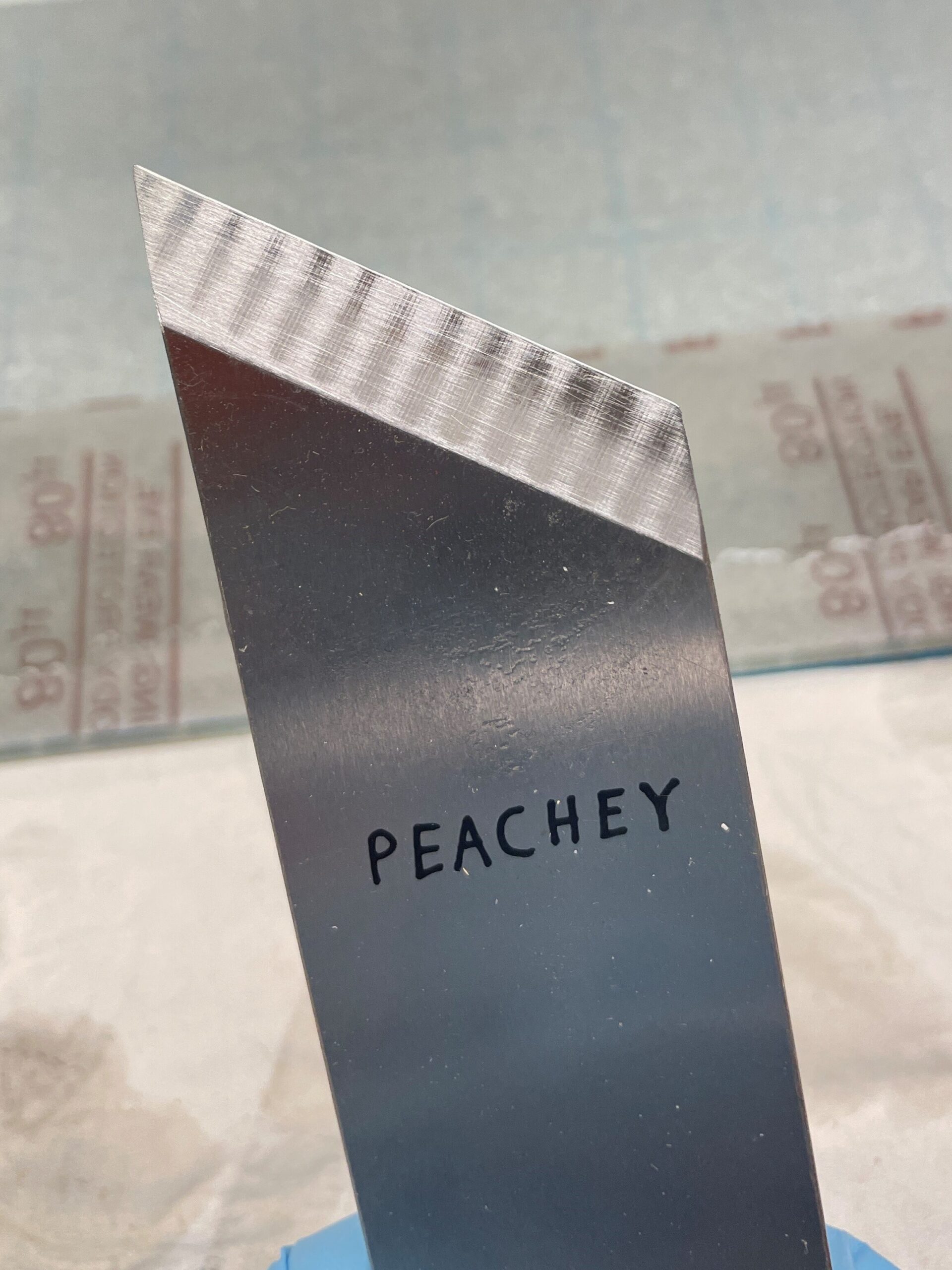
Sharpening knives turned out to be a complex process – a burr must be formed at each grit gradient before moving on to the finer grind, and if your hand position is off this could take some time. Furthermore, the wrong hand position could yield a bevel angle too big or too small on the plane of the knife. We aimed for an ideal bevel angle between 11 and 13 degrees.
Specular light shows a raw bevel angle during sharpening, before it has been ground smooth on the first grit progression. Credit: Ashleigh Ferguson Schieszer
Additional Knife Features
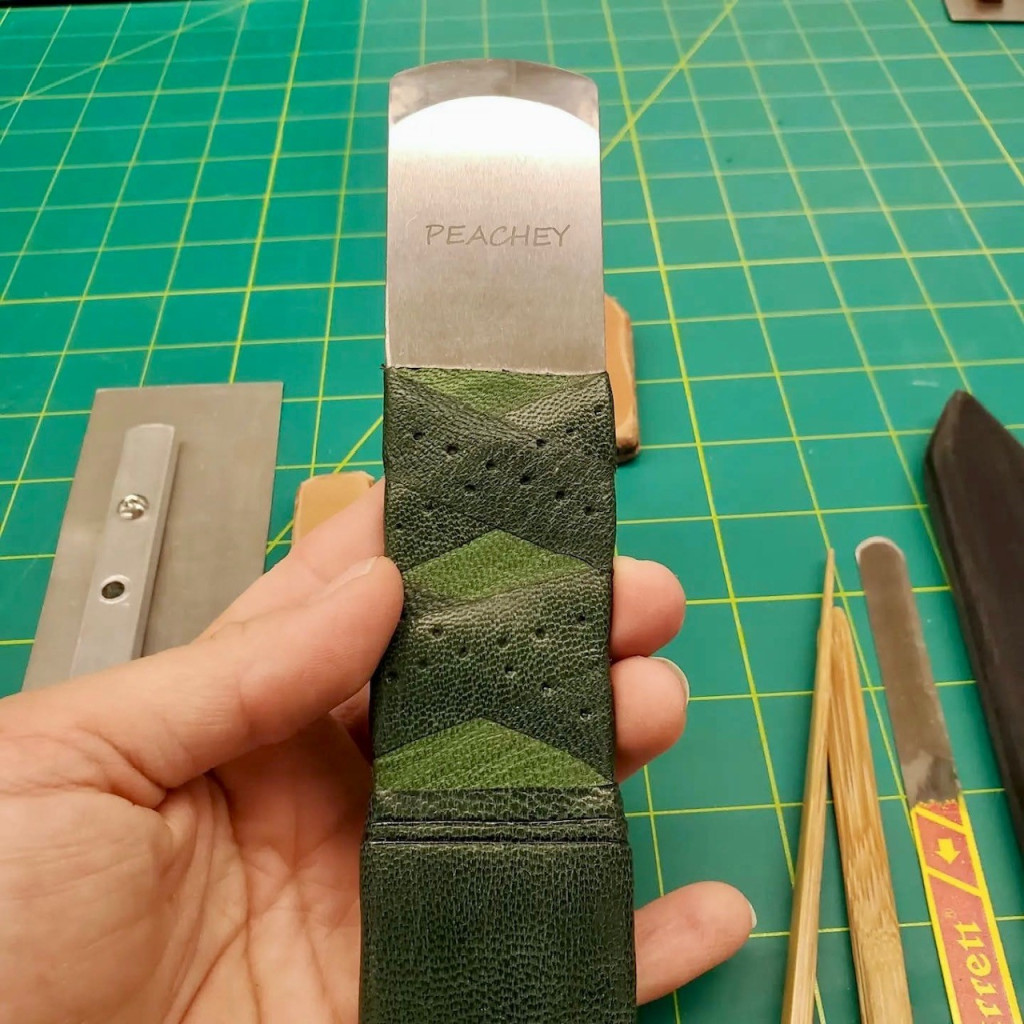
Some people chose to add grooves into the sides of their paring knives for a more comfortable grip; some of us chose to wrap our knife handles in leather and make horse butt sheaths for them. Matt was the bravest of all and mounted a custom carved wooden handle to his left-handed paring knife.
Catarina finishes a groove on the belt sander to make it more comfortable to hold. Credit: Ashleigh Ferguson SchieszerAshleigh begins her groove. Credit: Ashleigh Ferguson SchieszerMatt’s paring knife is pictured with a wooden handle and leather sheath. Credit: Matt McCoyAshleigh’s German-style paring knife with a leather covered handle. Credit: Ashleigh Ferguson SchieszerKathy Lechuga’s completed hack saw lifting knife. Credit: Signature ConservationKathy Lechuga’s rounded French-style paring knife with a leather covered handle. Credit: Signature Conservation
Grained Book Cloth
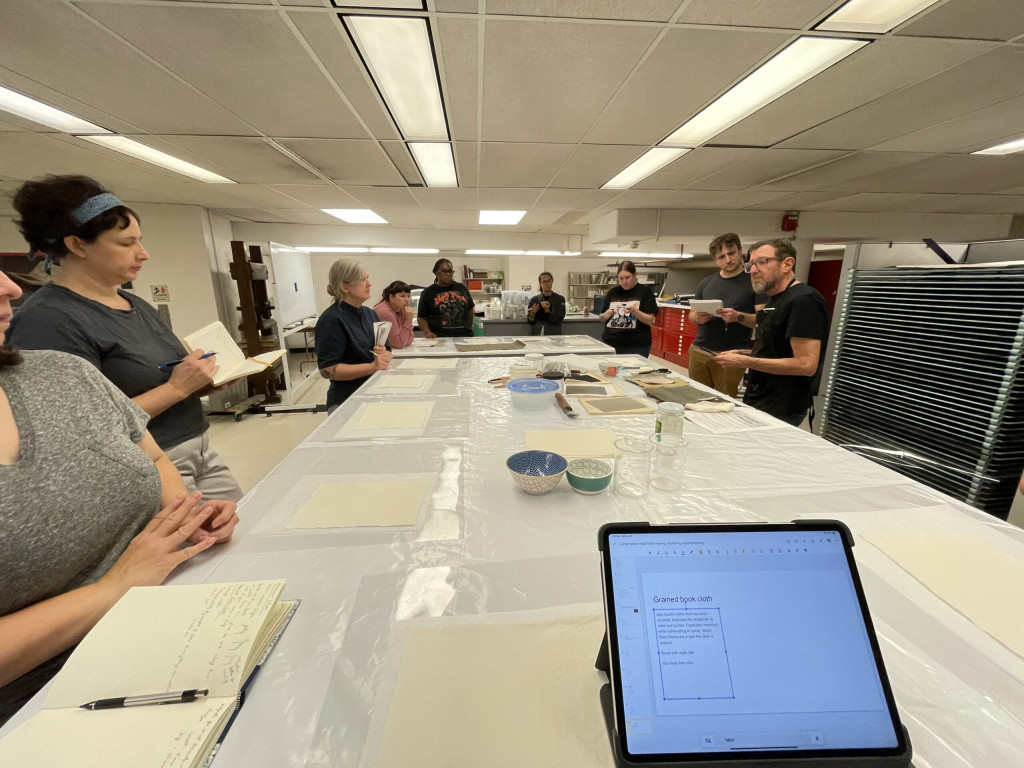
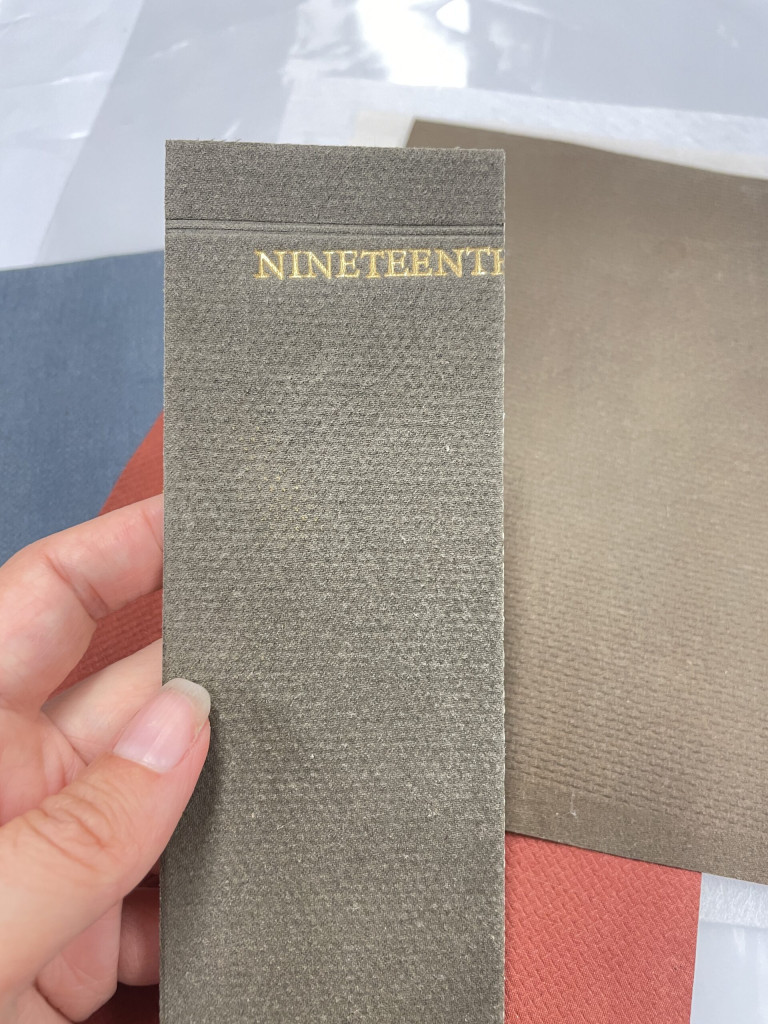
We also went over creating 19th century grained book cloth on our third day. Through toning, glazing, then pressing with a die that has your desired pattern, it’s possible to create book cloth that mimics the textures of 19th century book cloth. After going through the time-consuming process, the idea of making up large batches at one time became appealing.
Jeff demos coating a cotton muslin with acrylics and paste, pressing the coated cloth with screens to add a grain, then finishing with an egg glare. Credit: Ashleigh Ferguson Schieszer
Jeff’s samples he made ahead of the workshop
Wood and Bamboo
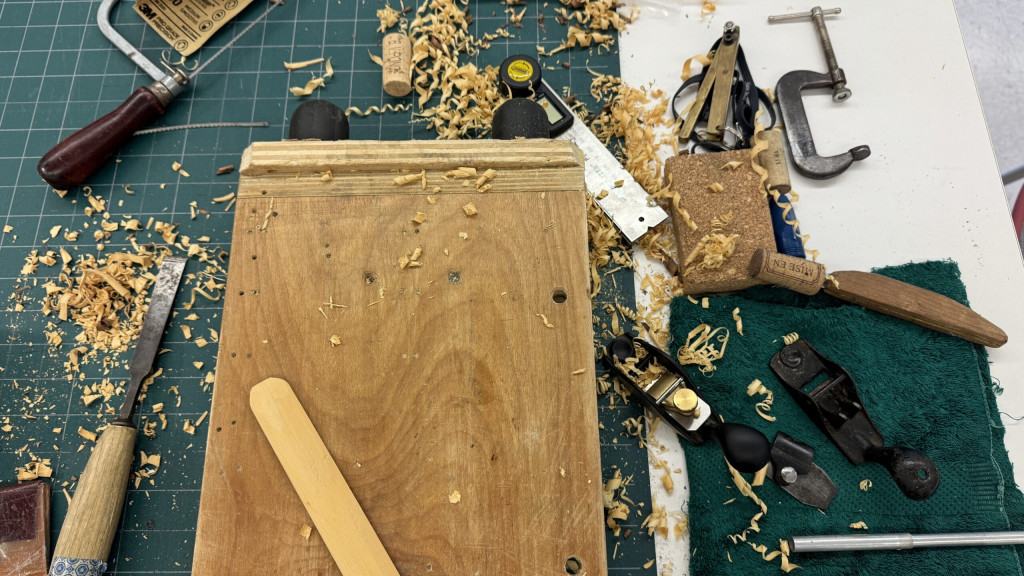
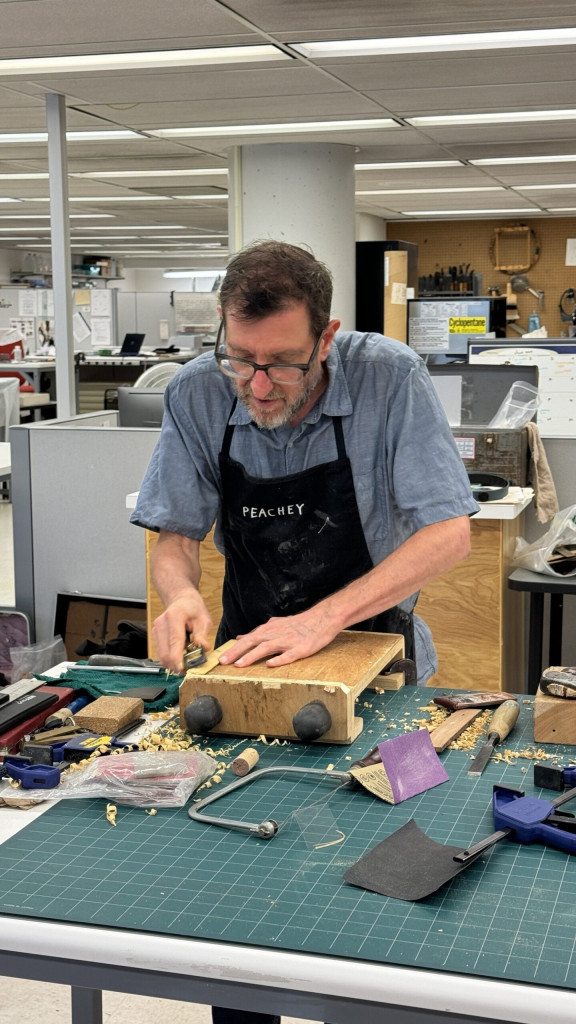
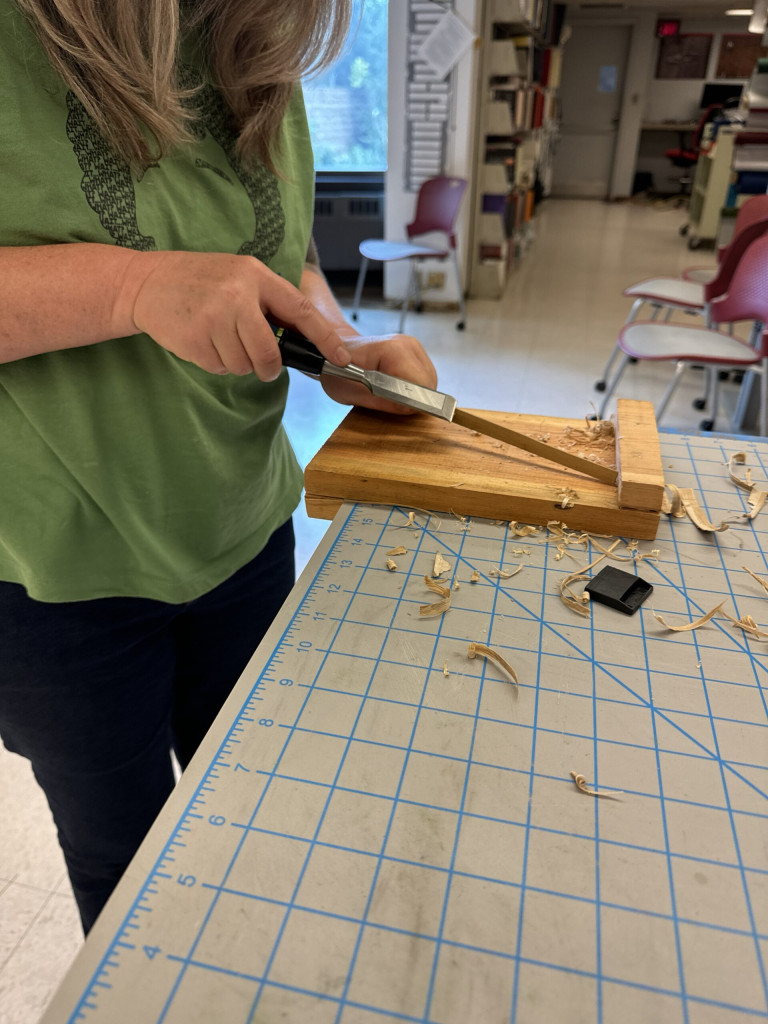
On our fourth day we learned all about wood and bamboo carving. Using a chisel, wood plane or hatchet, we created the crude shape we wanted our wooden tools to take. Then we got to work sanding until the wood was smooth, and created a more precise shape. A final finish with nose grease or wax was optional.
Jeff’s workbench after his wood carving demo. Credit: Jessica Ebert
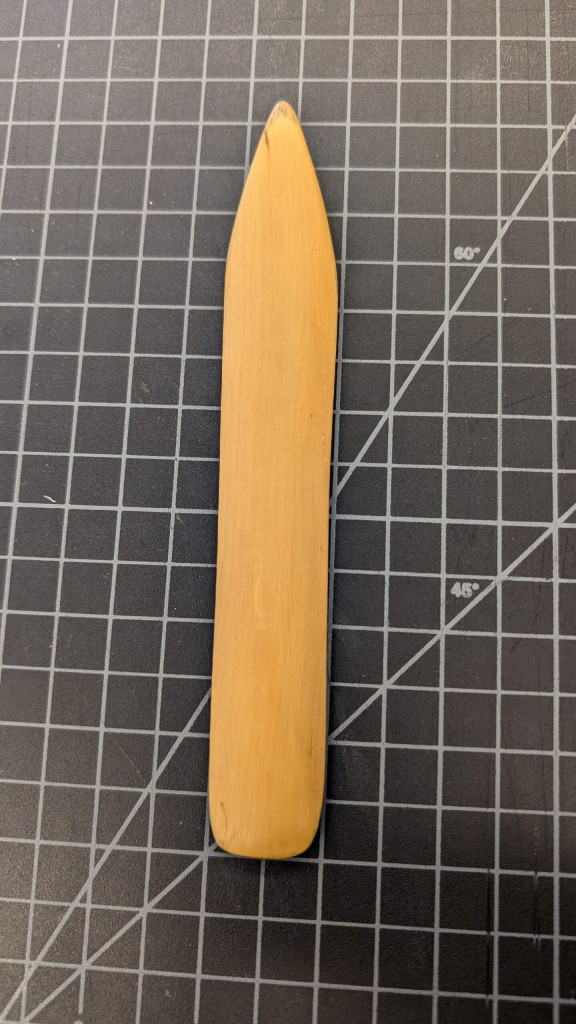
Bamboo is great for creating thin, flexible tools. With our pieces of wood most of us created folders, but a few decided to make wooden handles for their knives or straight edges. Personally, my favorite tool I created the whole week was my wooden folder I made, though it was probably the hardest to create. I had to shape it using a small hatchet, then sand it for quite some time before it took on the shape that I wanted.
Jeff demonstrating how to carve our piece of wood using his proprietary bench hook. Credit: Jessica Ebert
Holly chiseling a piece of bamboo using a generic bench hook. Credit: Jessica Ebert
My new wood folder. Credit: Nicole Browning
Stainless Steel
Our final day with Jeff was spent shaping stainless steel tools, which to me was the hardest material we worked with, as it took a lot of patience with the belt sander, and the metal was prone to heating up quickly and potentially burning our fingers. We created straight edges or 45 degree triangles, and even learned how to drill holes and attach small handles to these tools. We also had a thicker piece of stainless steel for creating a folder, which I found the most challenging of all. The stainless steel was harder to manipulate, understandably, and much less forgiving than the wood or Delrin.
Holly drilling holes in the stainless steel handle of her straight edge. Credit: Ashleigh Ferguson Schieszer
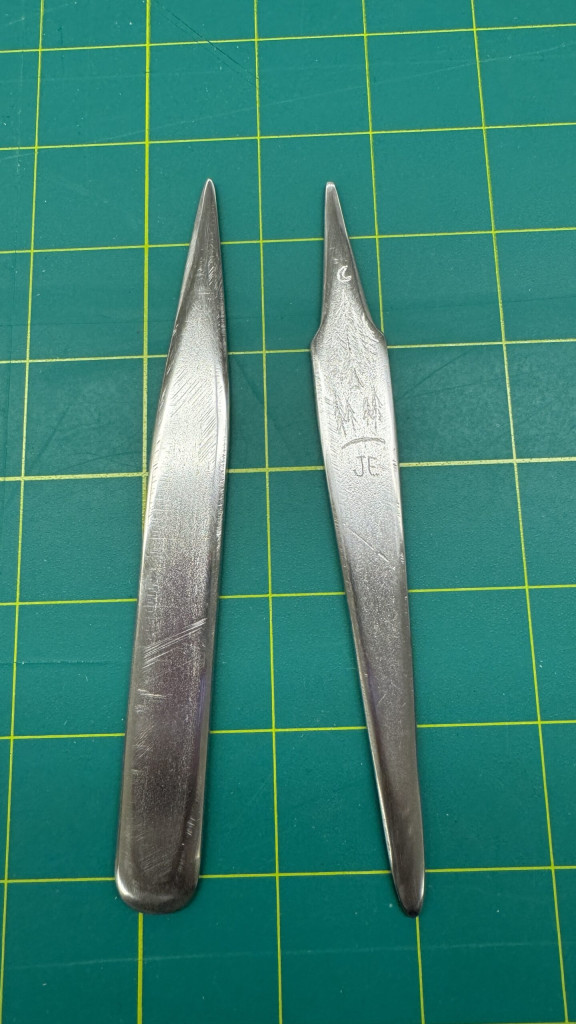
Two stainless steel folders made and engraved by Jessica. Credit: Jessica Ebert
We ended the week by testing the sharpness of our blades and doing a little show and tell of our favorite tools that we made. It was so amazing to see all the different tool shapes people were inspired to make based upon what they most used in their work.
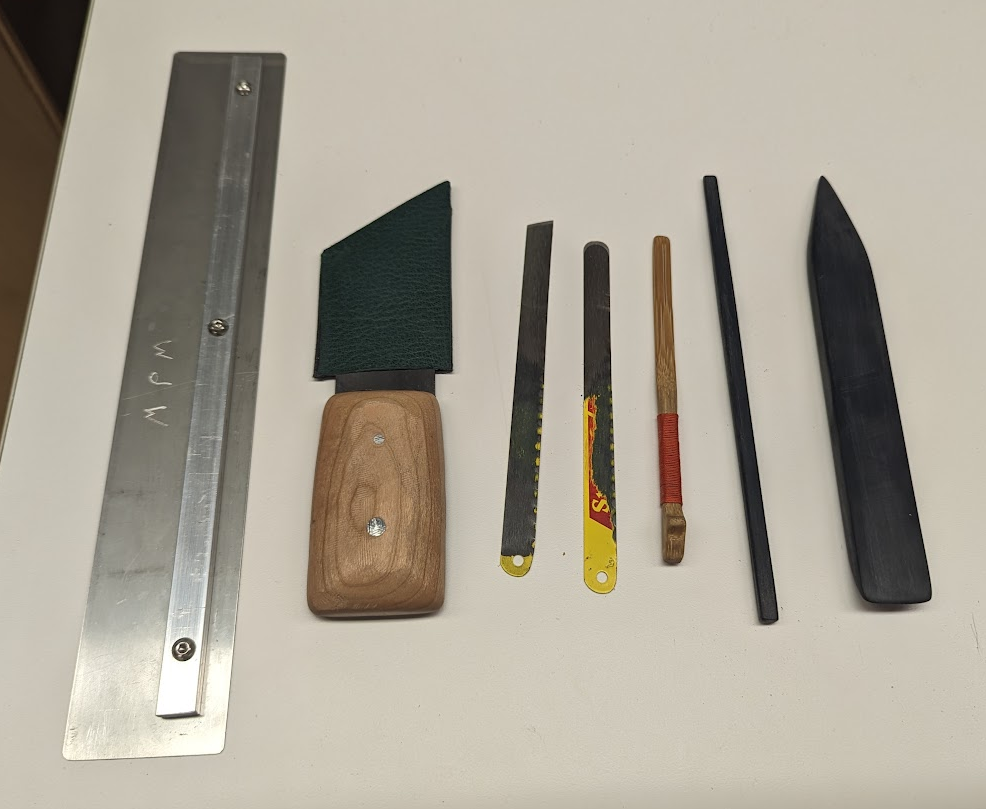
My assortment of tools I made at the workshop. From left to right: bamboo lifters, two Delrin Heras, two lifting knifes, a Delrin folder, a paring knife and its sheath, and a wooden folder. Credit: Nicole Browning
Learning from Jeff was such an amazing opportunity, and it was so eye-opening and world-expanding to learn that so many of these tools we use every day can be created from our own hands.
Jeff did a fabulous job tailoring his tool-making workshop to the the availability of machinery and other logistics of our facility. As a result, the actual tools made in our version of this workshop vary from other workshops Jeff has taught, empowering us to keep making tools with our space in the future. If you ever have the chance to take this workshop, we highly recommend it!
Be sure to check out this Instagram post by Jeff featuring all of us showing off our favorite hand tools we created!
In preparation for reopening, the Preservation Lab has been working closely with a variety of CHPL staff to prepare collection items and exhibit cases for display.
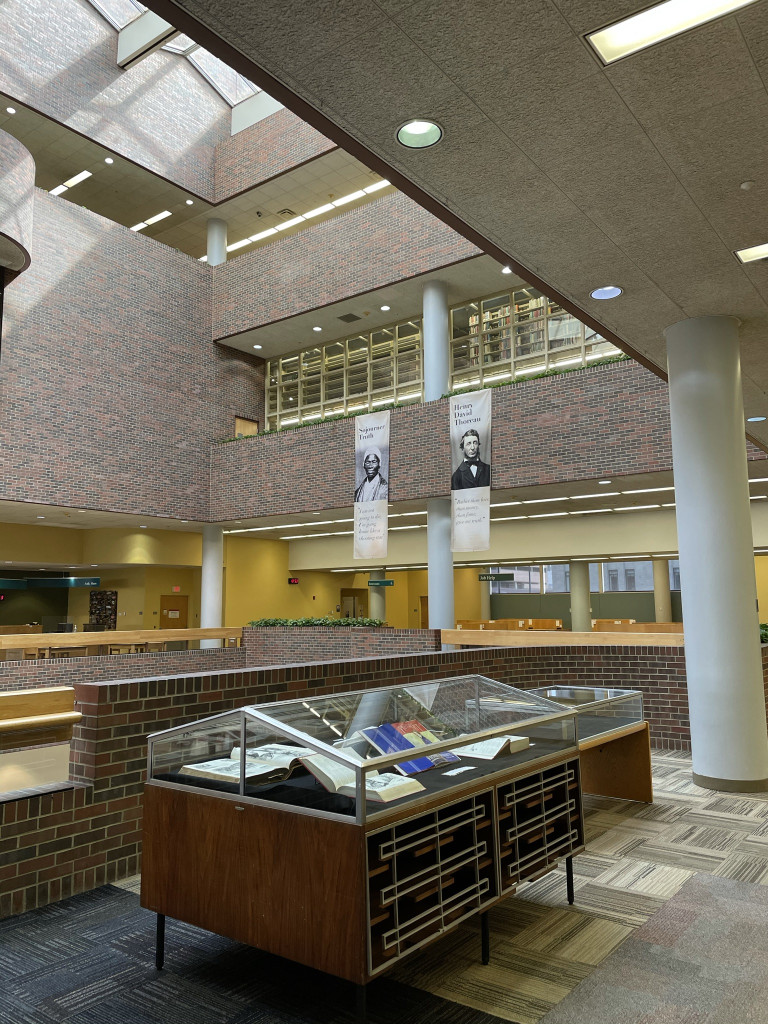
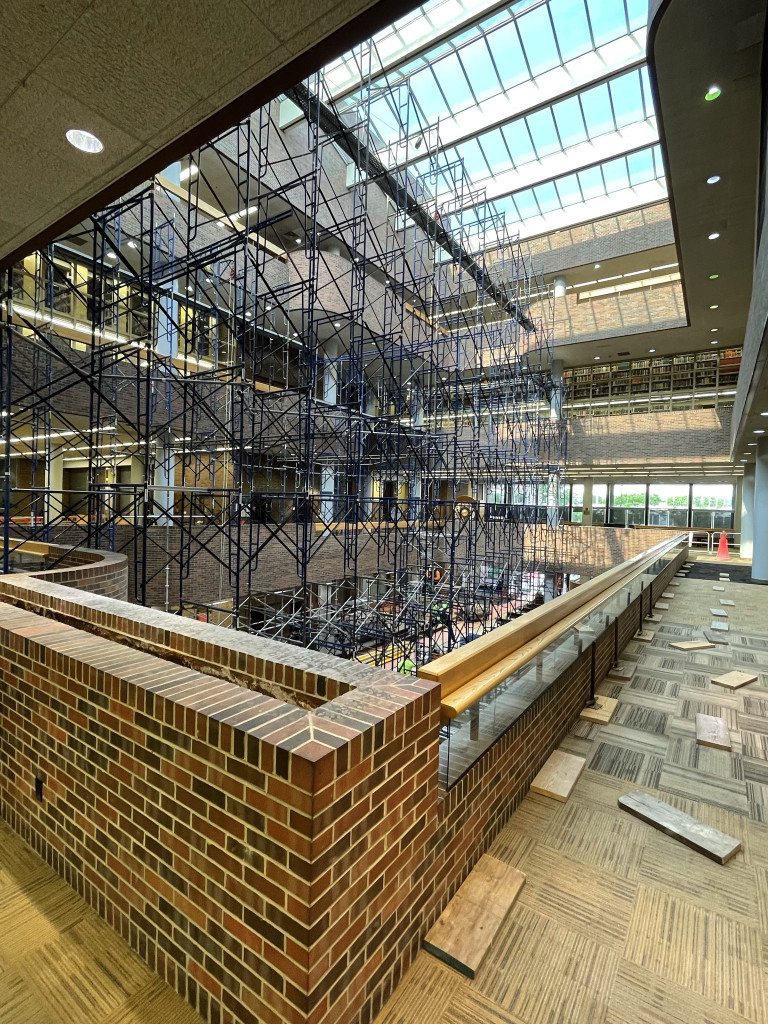
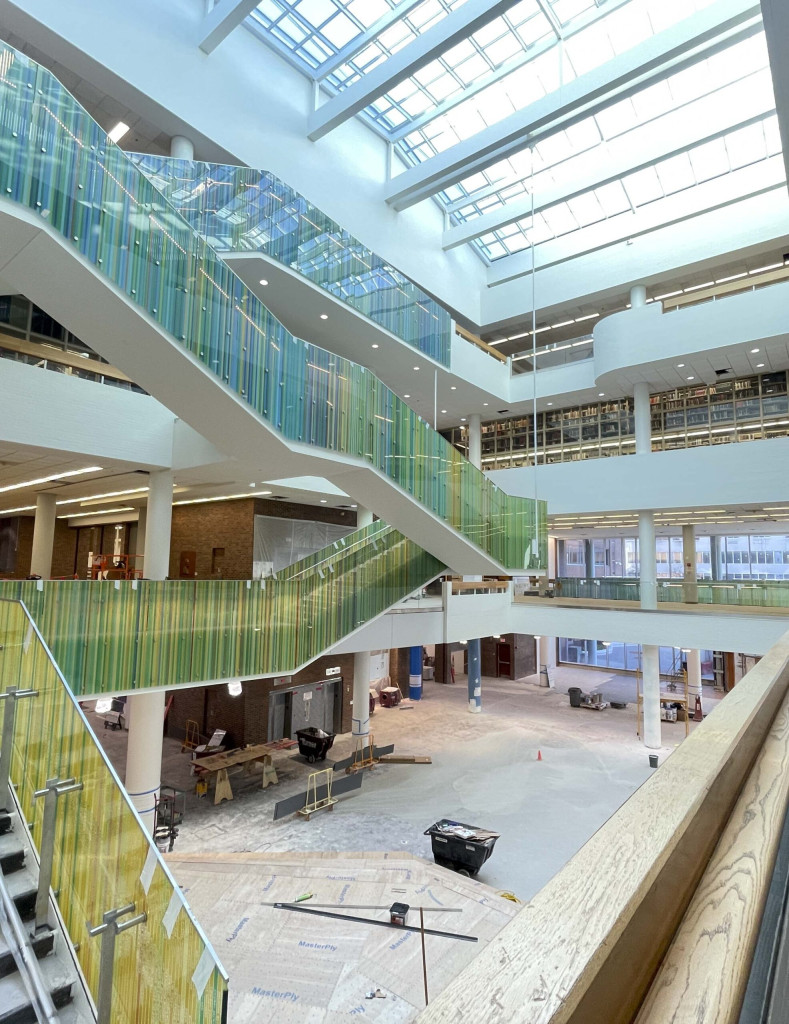
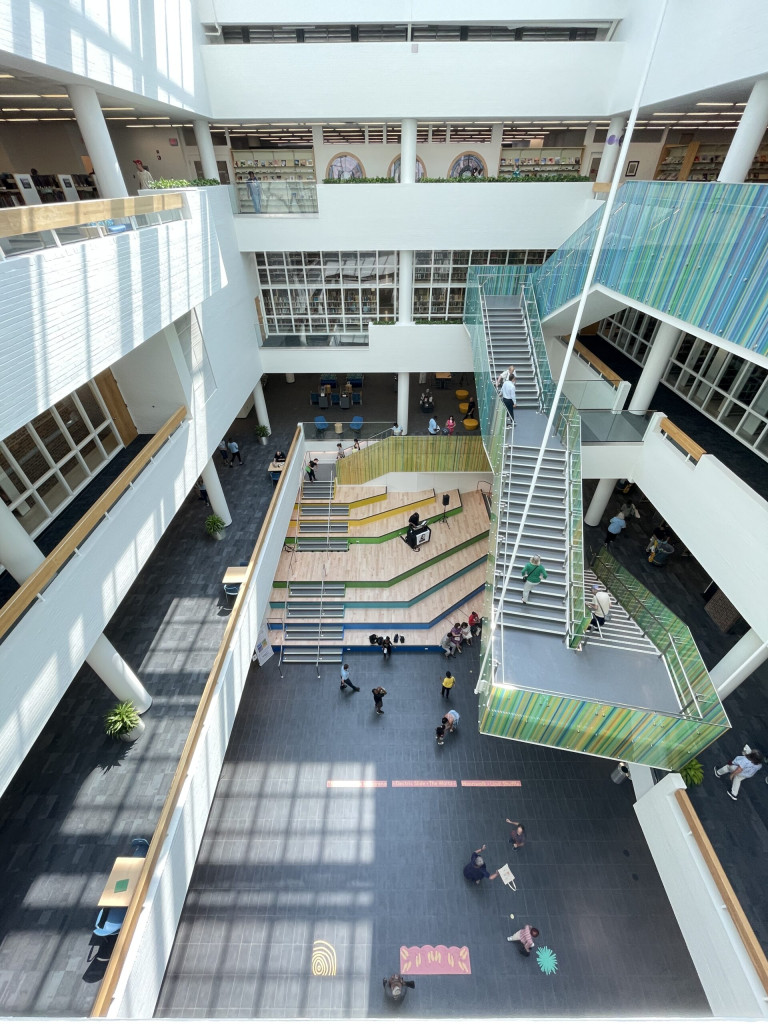
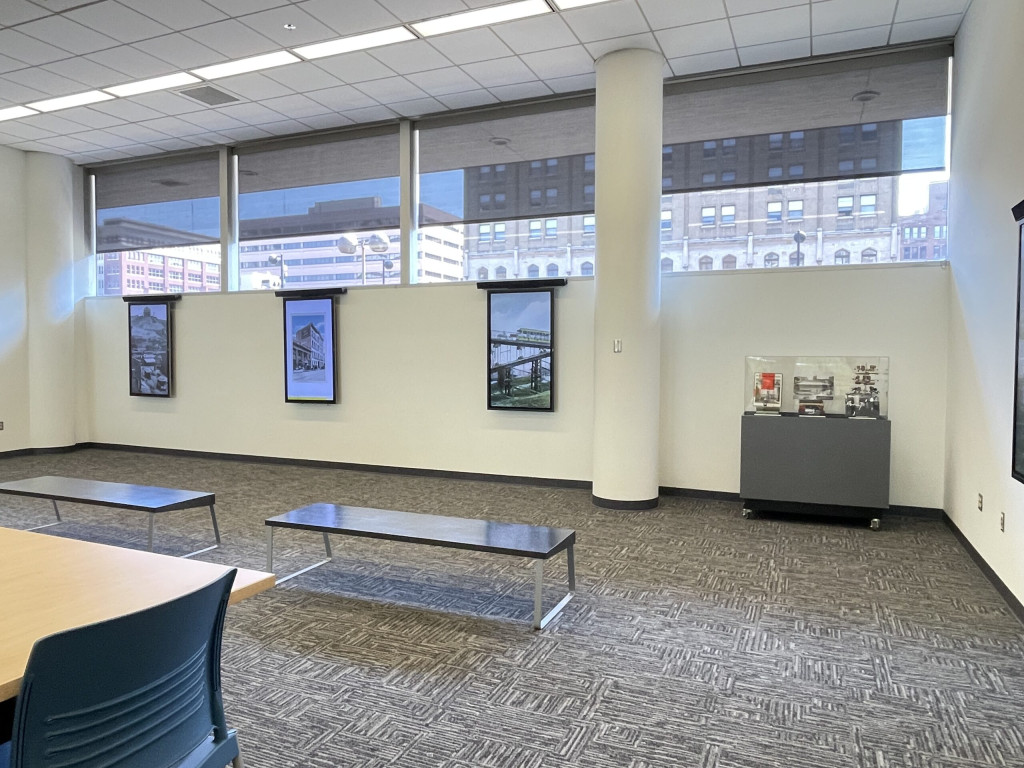
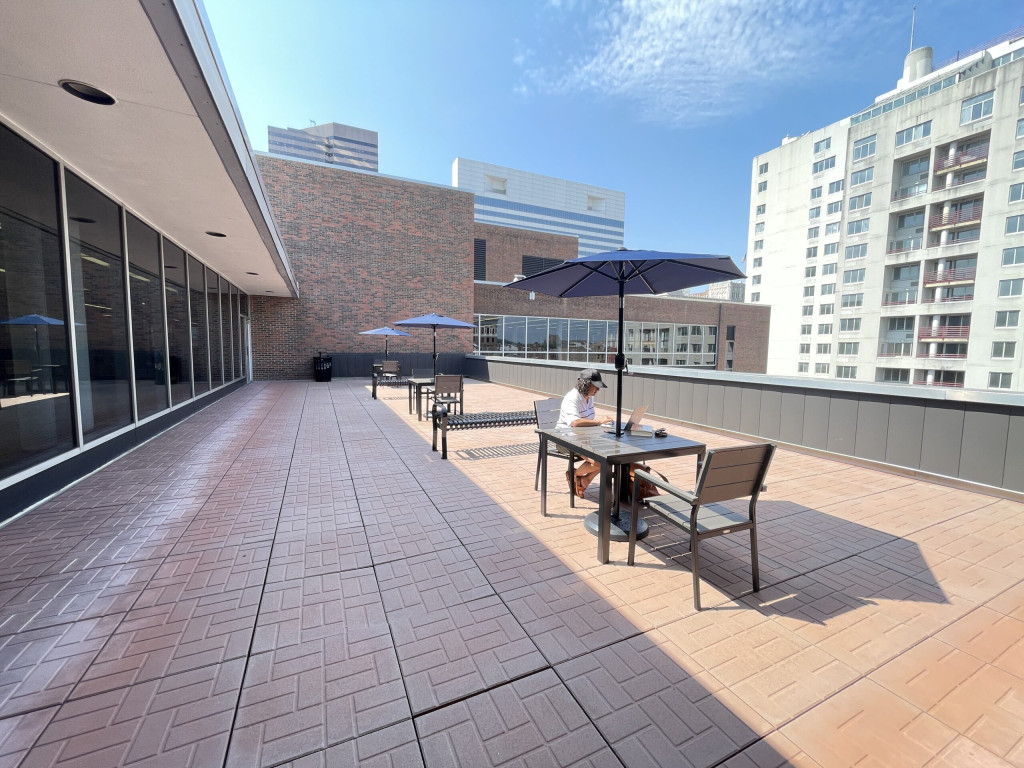
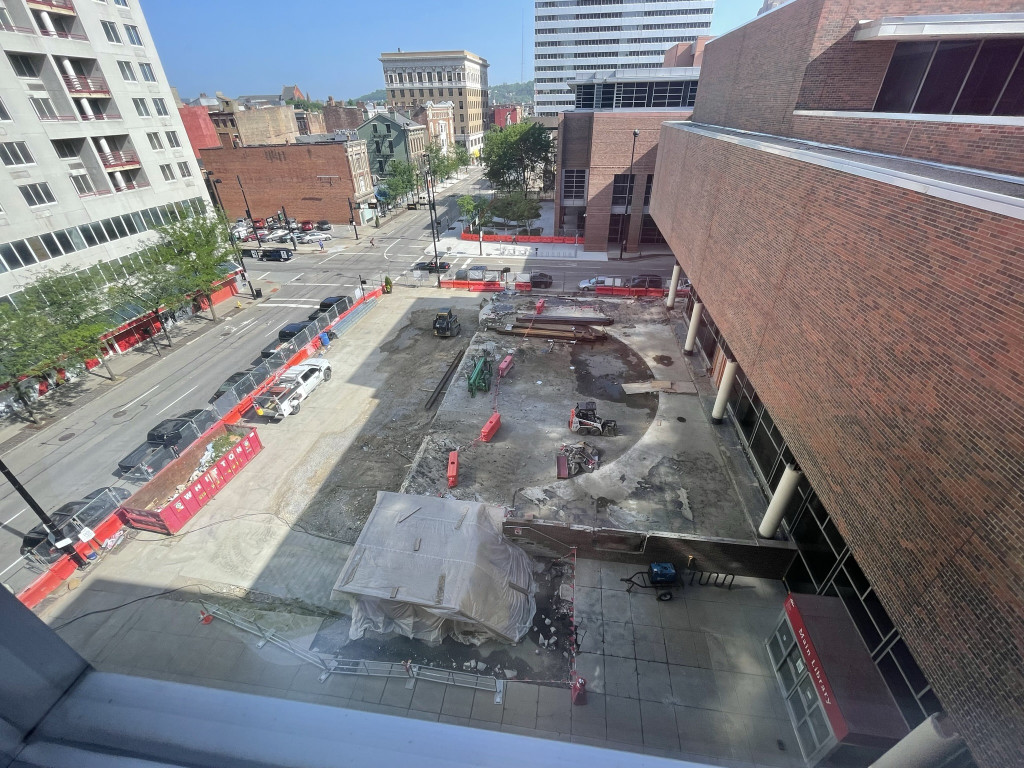
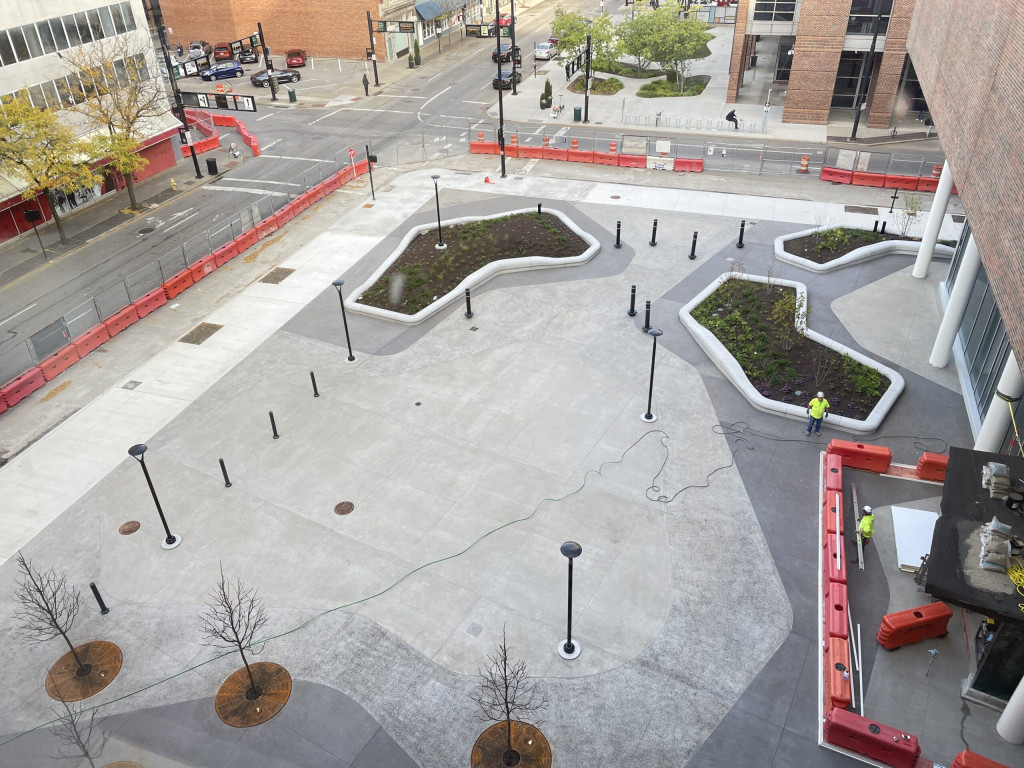
To celebrate the dramatic reveal of updates, we’ve provided before and after pictures of the Main downtown library followed by a sneak peek at some of the exhibits.
Main Library Before, During, and After Renovations
Before construction
Installation of scaffolding for skylight maintenance
Nearing completion
July 12th, 2024 – Opening Day! A view of the atrium with a new social staircase.
Exhibits
Exhibit prep work consisted of treatment, matting, creating custom supports, install on site (and more!) for eight different exhibits!
1. Eugenia Rhein Doll Collection
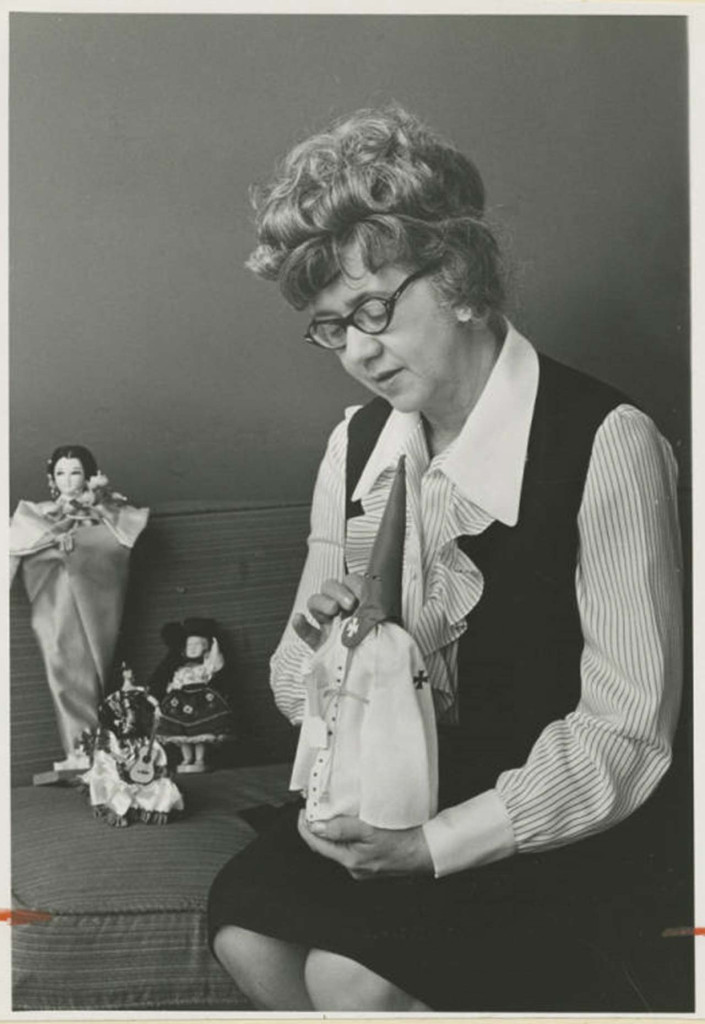
Eugenia holds a Spanish doll wearing a cofrades hat symbolizing penance, often worn on Easter
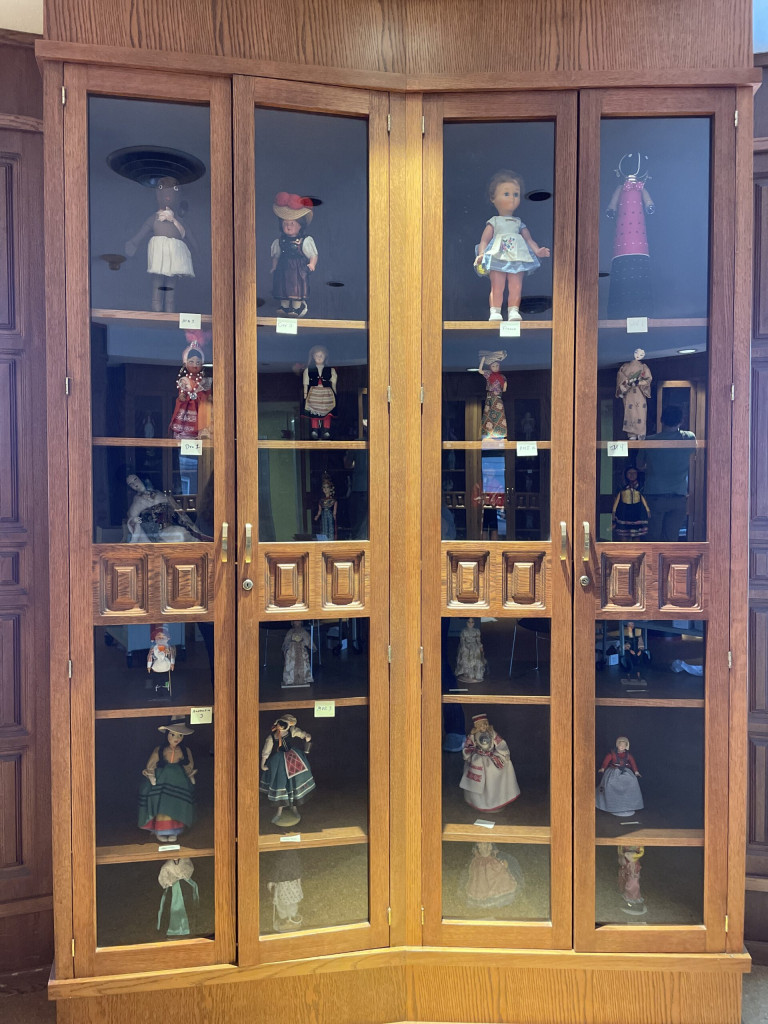
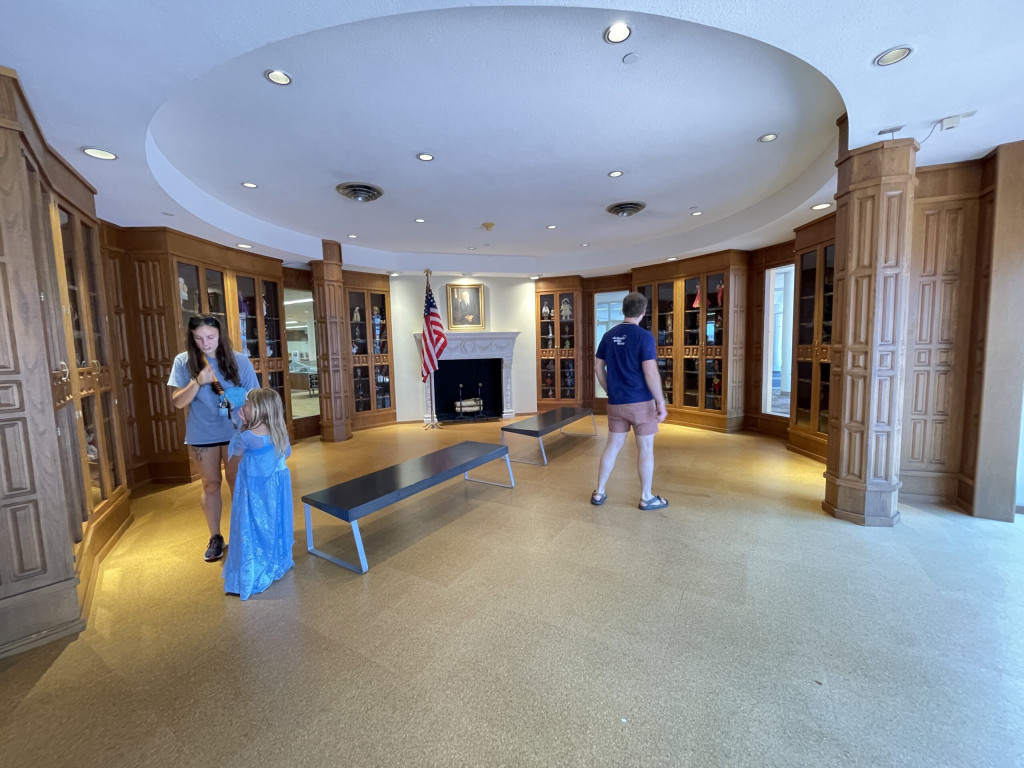
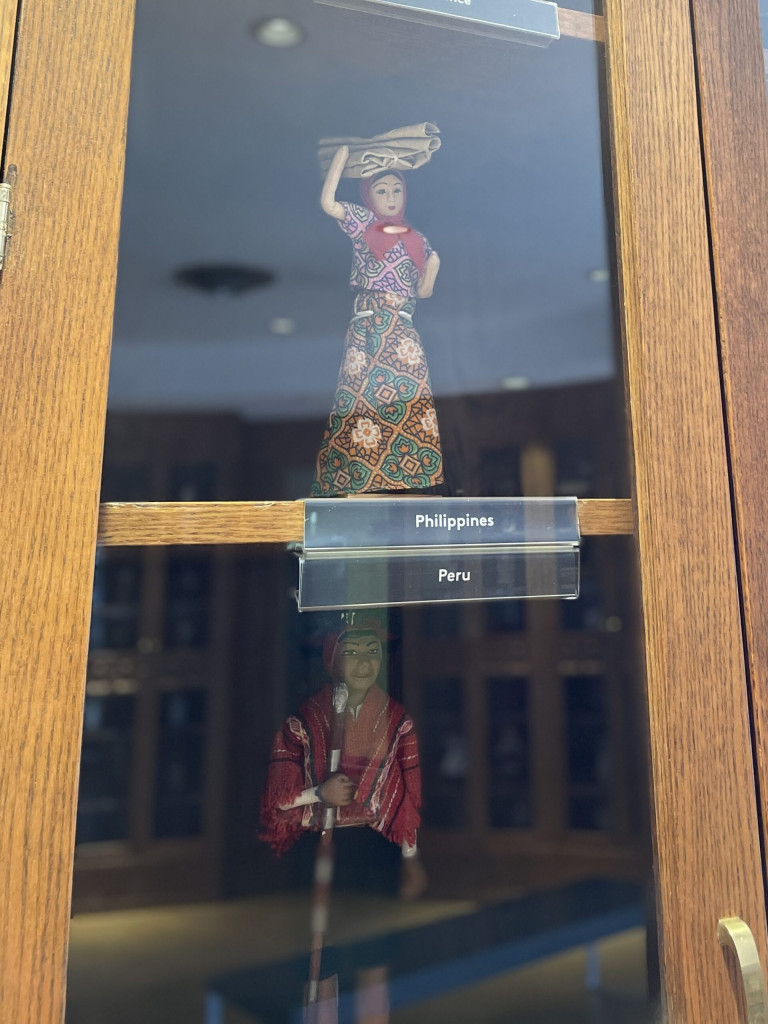
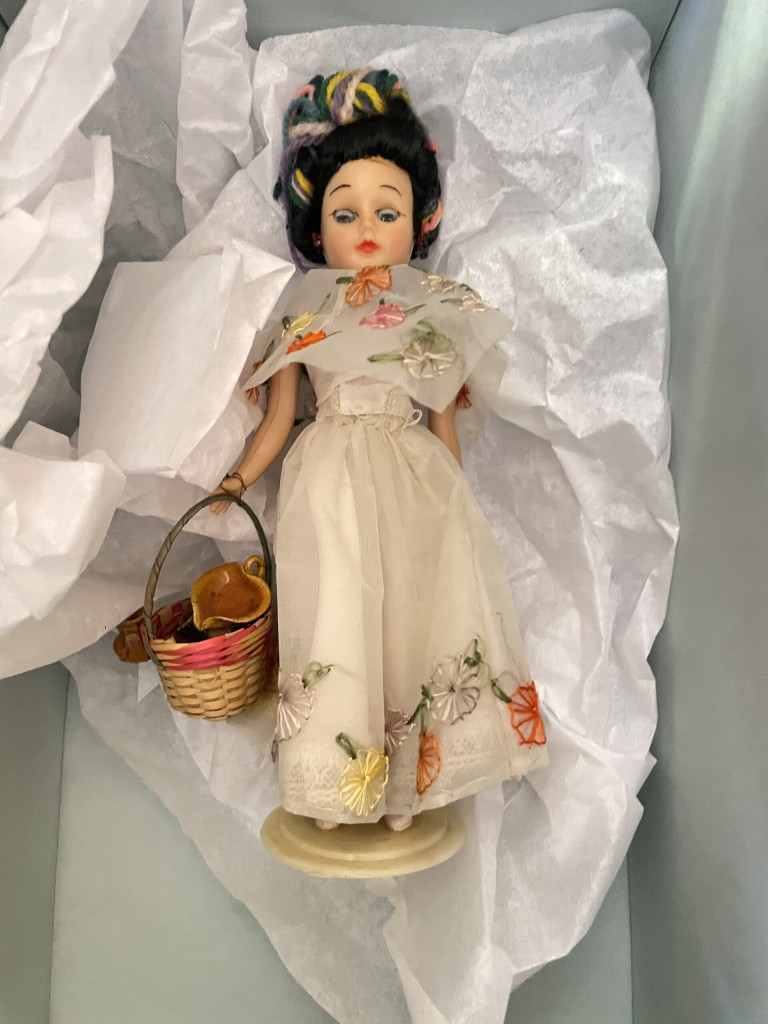
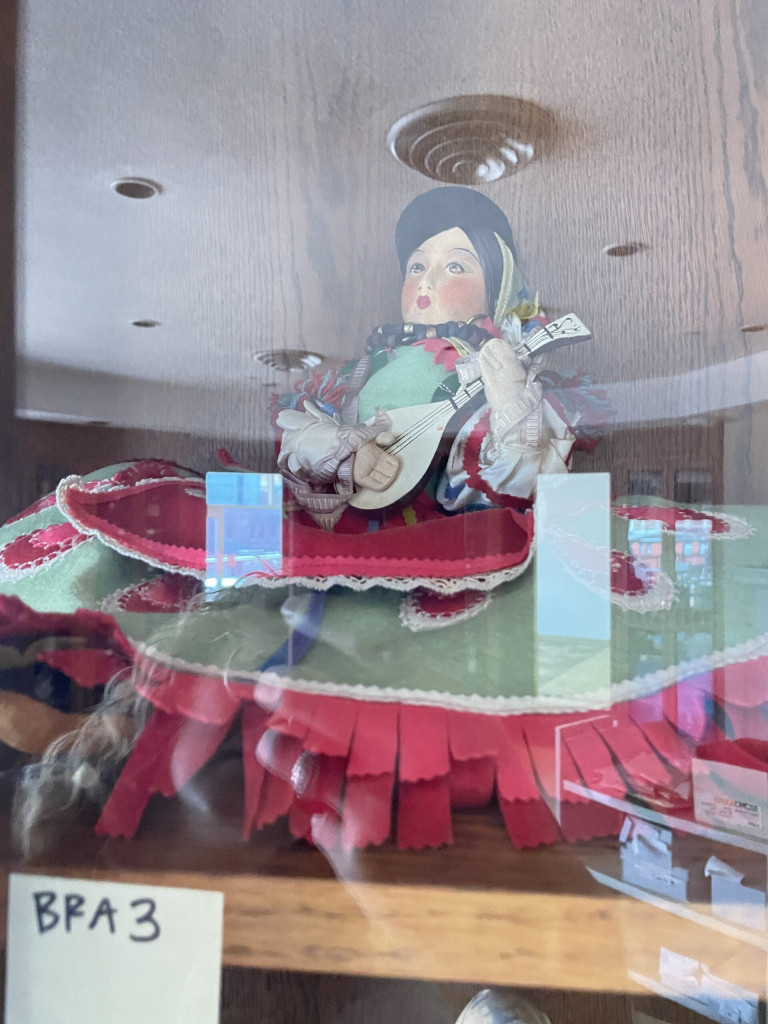
Located in the Nolan Room (namesake of John T. Nolan Jr, president of the board of trustees from 1951-1983, known as “Jack”), are a collection of dolls from all over the world, representing nearly 100 countries. The dolls were gifted to the Library by Eugenia Rhein who was an administration assistant and a deeply committed employee for over 40 years. During Eugenia’s extensive travels she collected the dolls from countries such as Kuwait, Algeria, Rhodesia, Korea, Pakistan, Whales and more. In the 1970’s the dolls were often used in displays at the library to tell stories about children from other cultures by the Children’s Librarian.
Image of Eugenia is courtesy of the Cincinnati and Hamilton County Public Library.
The Nolan Room
Now open to the public, this uniquely round room is located on the third floor next to the tower room.
Staged dollsThe Nolan RoomLabeled by country
During Doll Installation
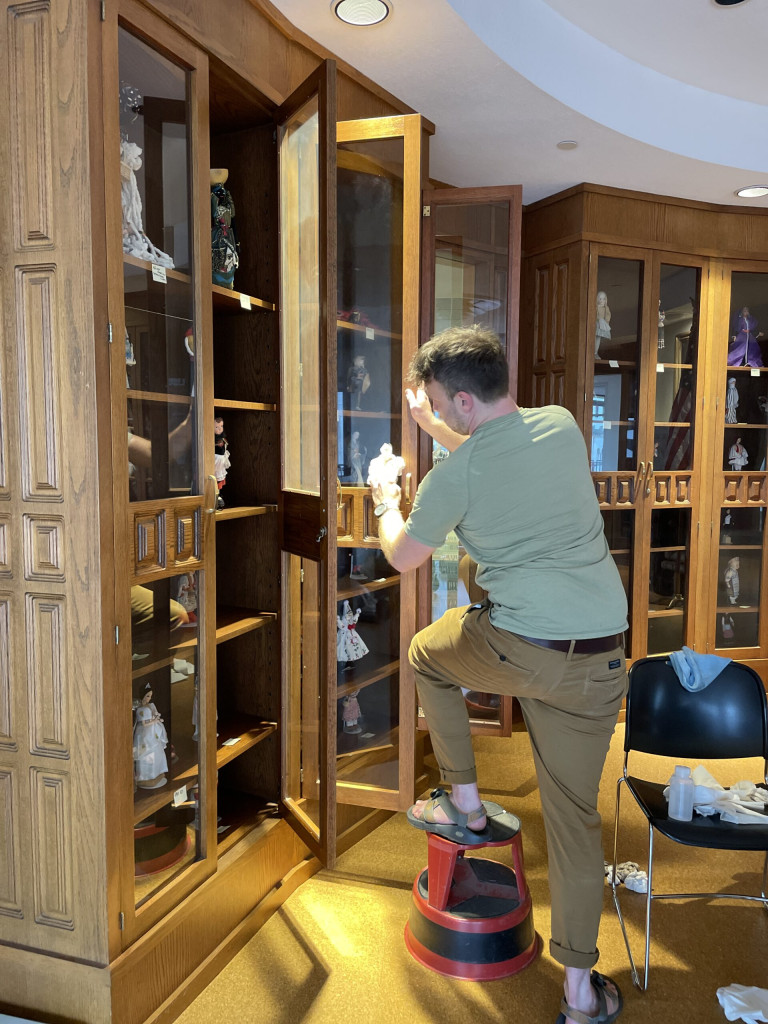
Matt McCoy cleans the glass inside and out
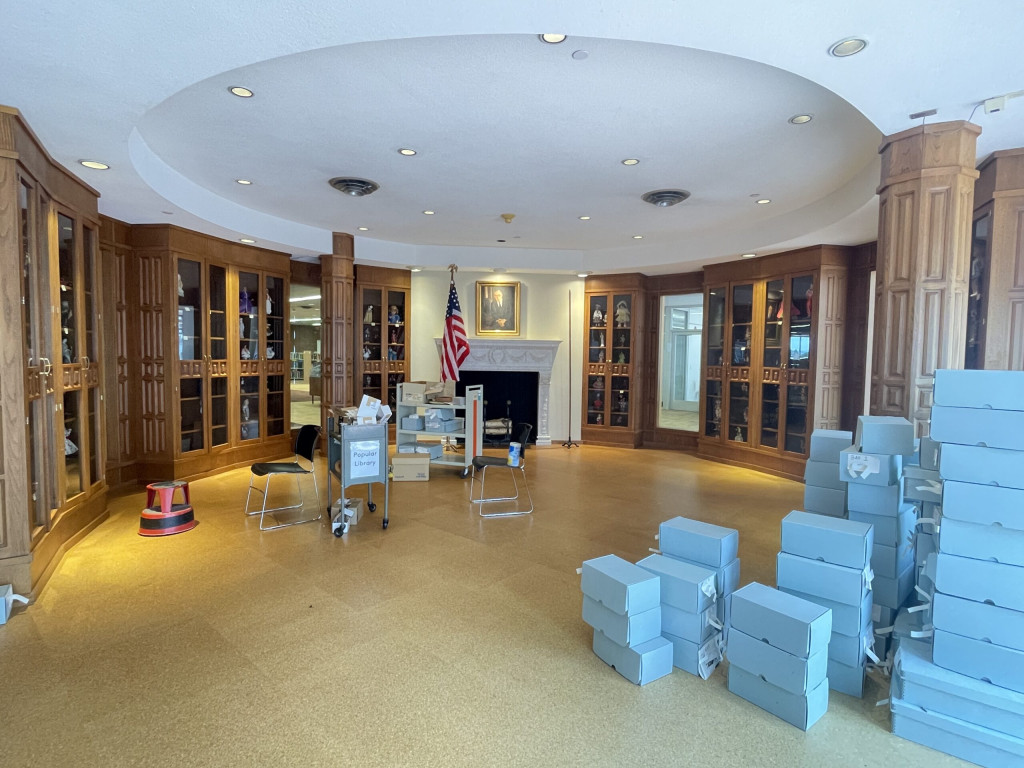
Empty doll boxes during installation
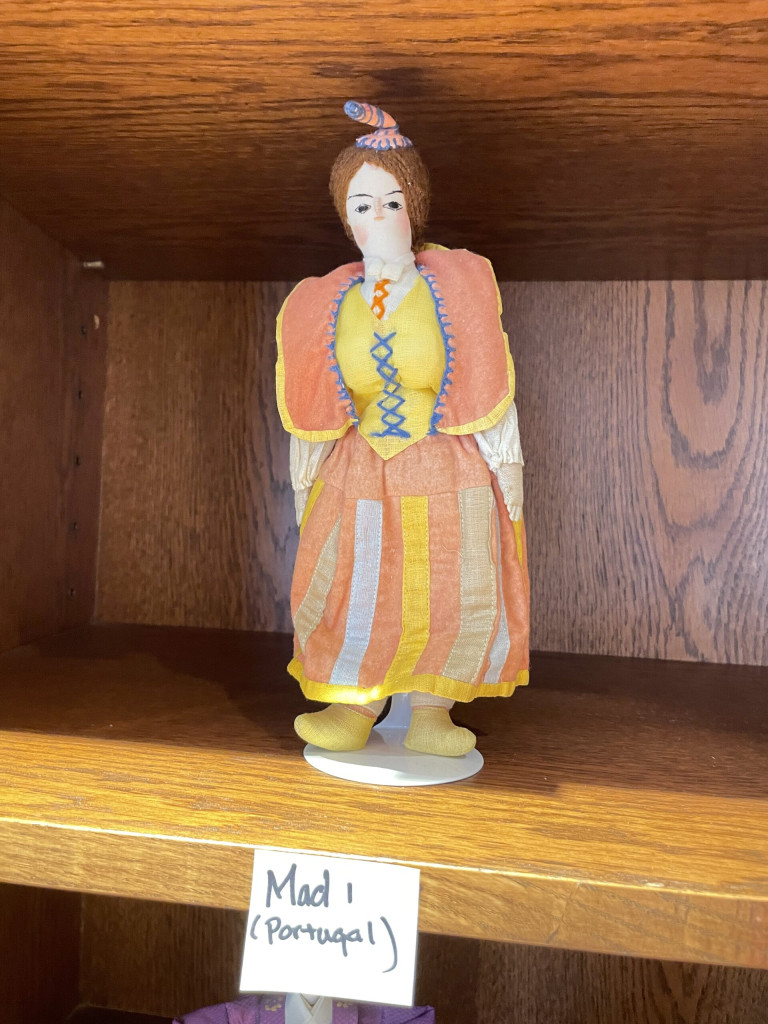
Dolls were examined for condition during install. Dolls too fragile (or broken) were left stored in their corrugated clamshells. Dolls in good condition were carefully placed on stands, secured around their waste. Larger dolls required special strapping or additional supports to secure the object in place. Minor treatment was performed on site to repair dolls, reduce creasing in outfits, or clean dust and debris.
Fragile doll remains in boxExtra support requiredPortuguese doll on stand
2. Veterans Exhibit
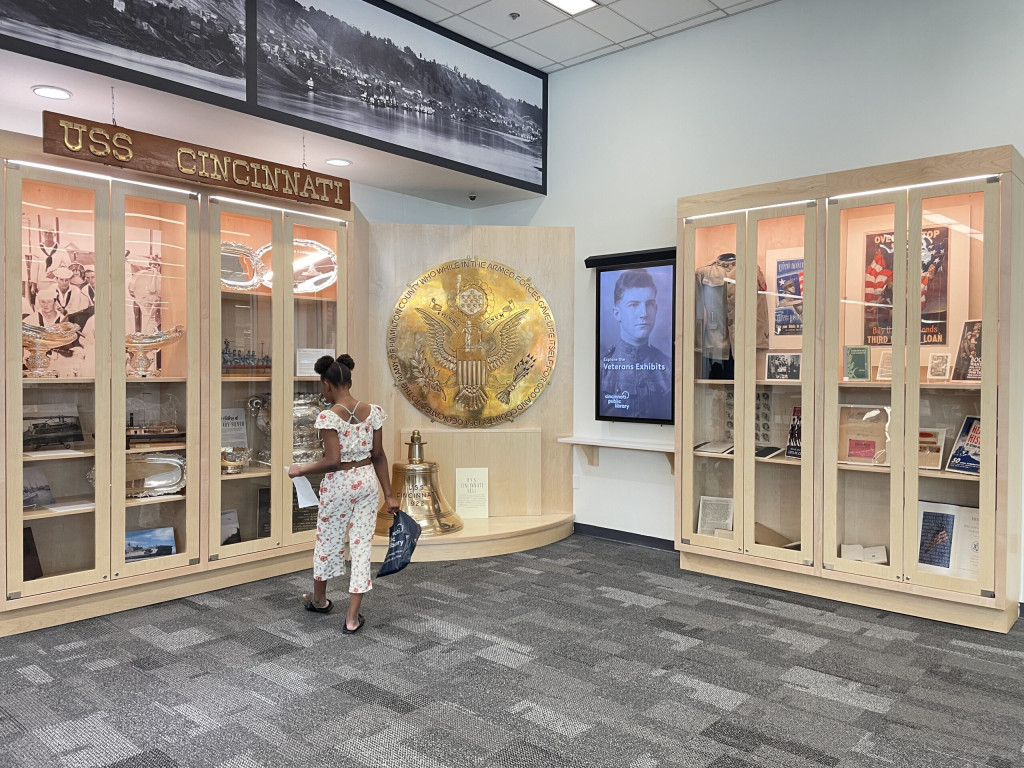
Located on the second floor at the top of the social staircase, a new purpose built space was built for the Veteran’s exhibit where artifacts are displayed in concert with stories provided by a digital exhibit and recorded interviews. The Book of Homage is highlighted with the pages turned periodically to reveal lists of names. Original War Bond posters, that were conserved and matted by the Preservation Lab, show the Victory Book Campaign requesting Americans donate books to their local library. War Bond posters will be rotated periodically to protect the vibrant printed colors from fading and the papers from darkening, but perhaps more importantly, show the wide range of art and messages conveyed during times of war.
New purpose-built Veterans exhibit the day of openingOne of my favorite war bond posters drawn by DR. SEUSS! (Not currently on display but available upon request.)
You might also be interested in:
This blog post where Jessica has highlighted war bond poster photographic documentation.
Conservation treatment reports for the War Bond Posters on the UC Libraries Digital Repository can be accessed here.
3. Real Art for Young Artists: Original Illustrations from Noisy Nora by Rosemary Wells
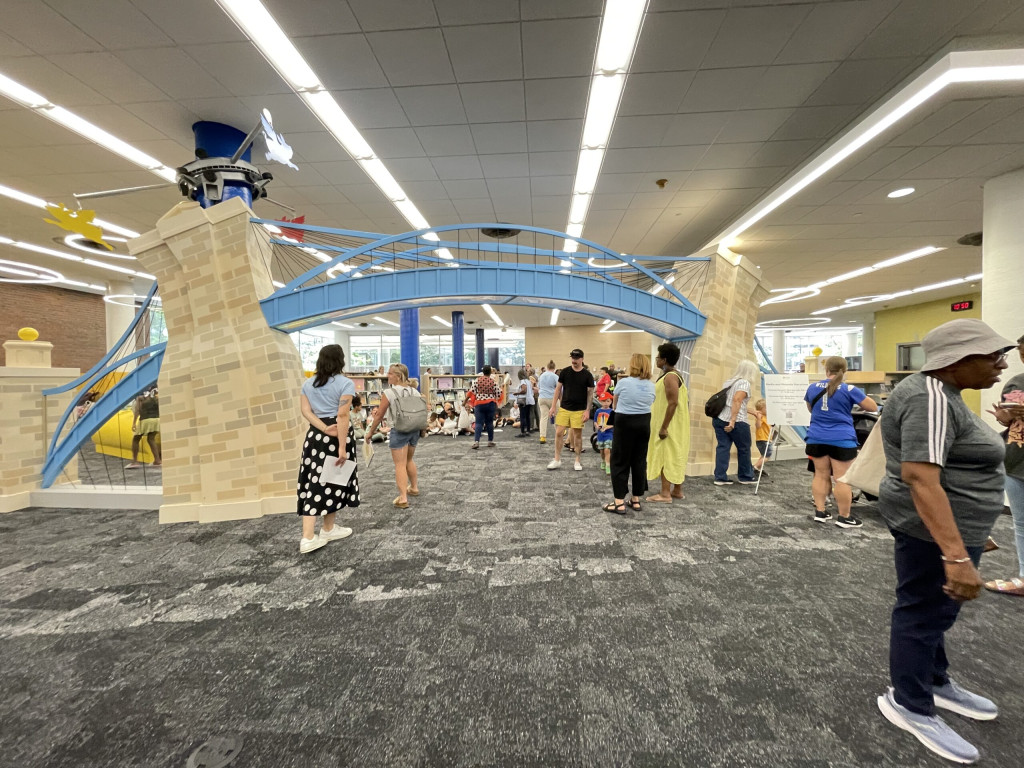
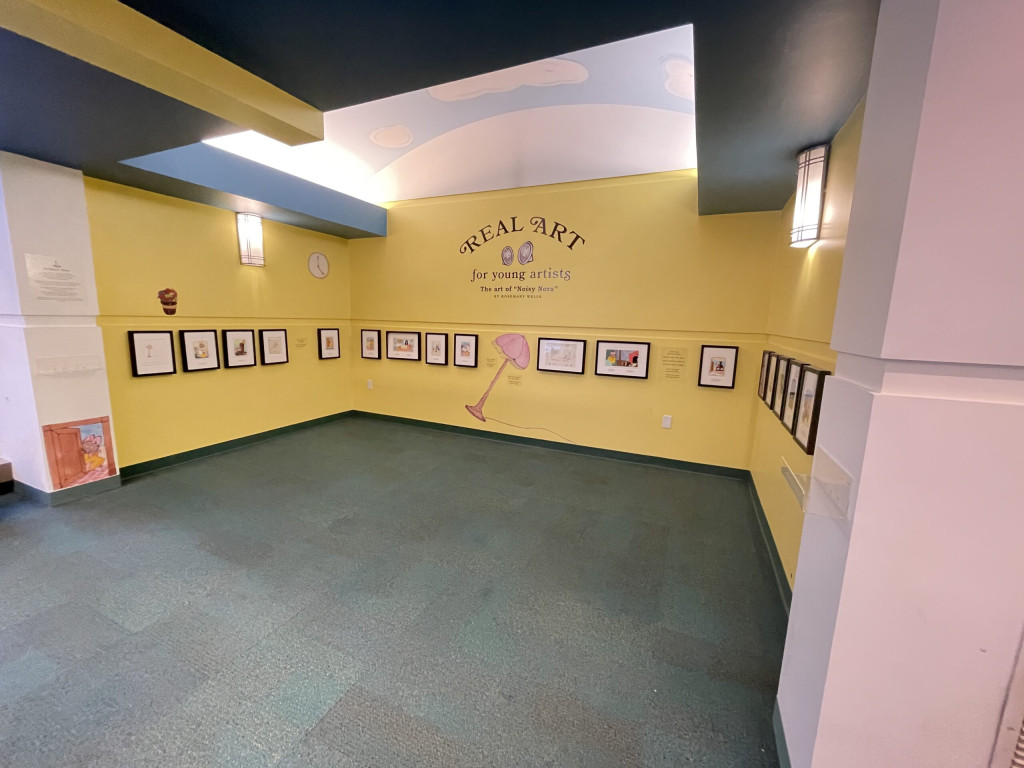
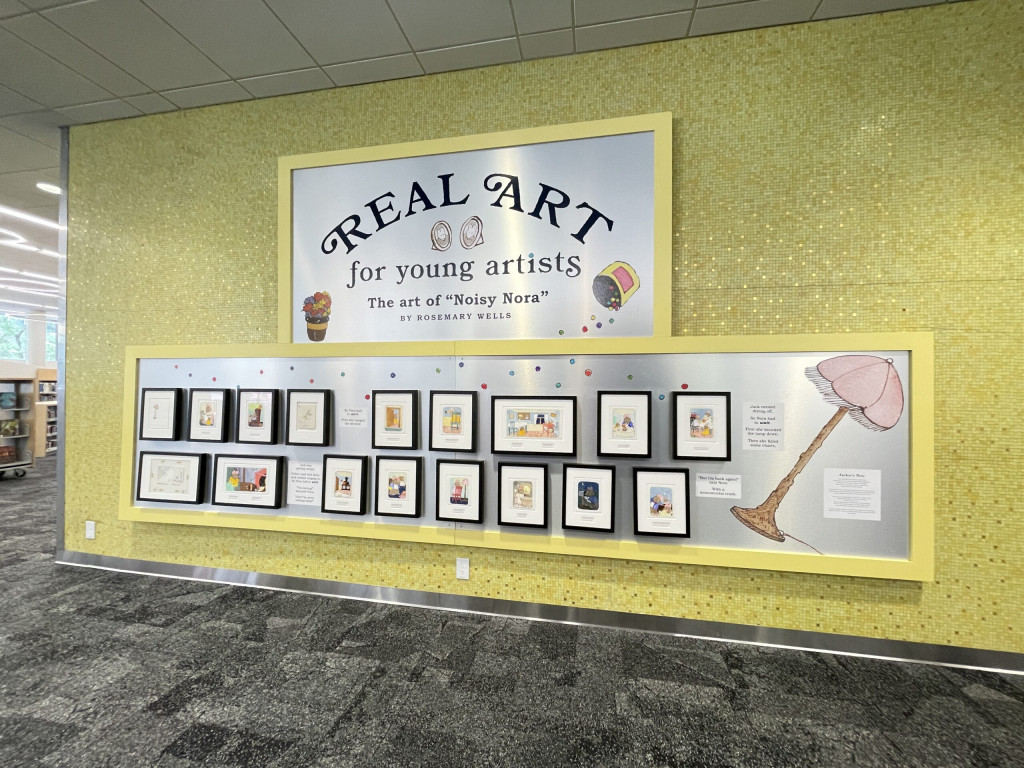
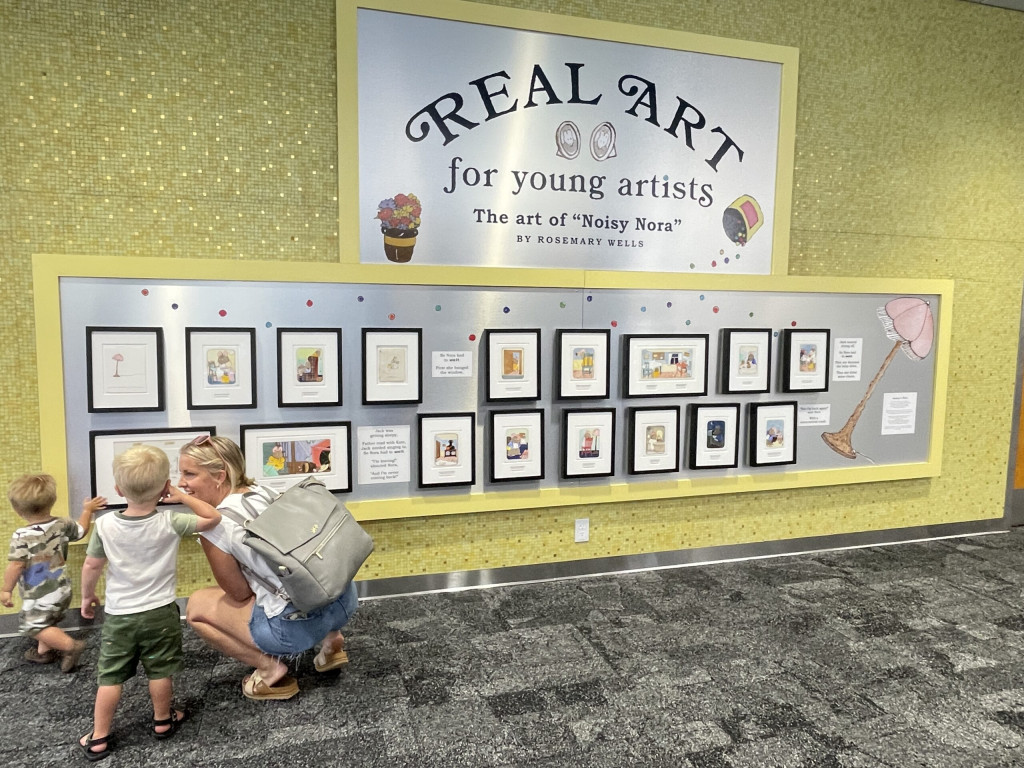
This exhibit, initially installed in the North building in 2019, was moved to the NEW children’s library location, now on the first floor in the renovated South building.
New Children’s Library
The new children’s library in the South building contains interactive sculptures with lights and sounds, such as this replica of the Roebling Bridge
Updated Exhibit Location
The exhibit showcases original hand-drawn illustrations created for the book Noisy Nora, donated to the library by the author and artist, Rosemary Wells.
Original 2019 location in North building
New 2024 installation in South building
Exhibit Preparation
Luckily, much of the exhibit prep work had already been completed in 2018 for the initial installation (you can read about the original conservation and matting of the illustrations here that are UV protected and waterproof!), but now it was time for maintenance and upkeep.
In particular, the glazing on the frames had developed an iridescent coating residue from well-intentioned cleaners. This made detailed viewing of the illustrations problematic.
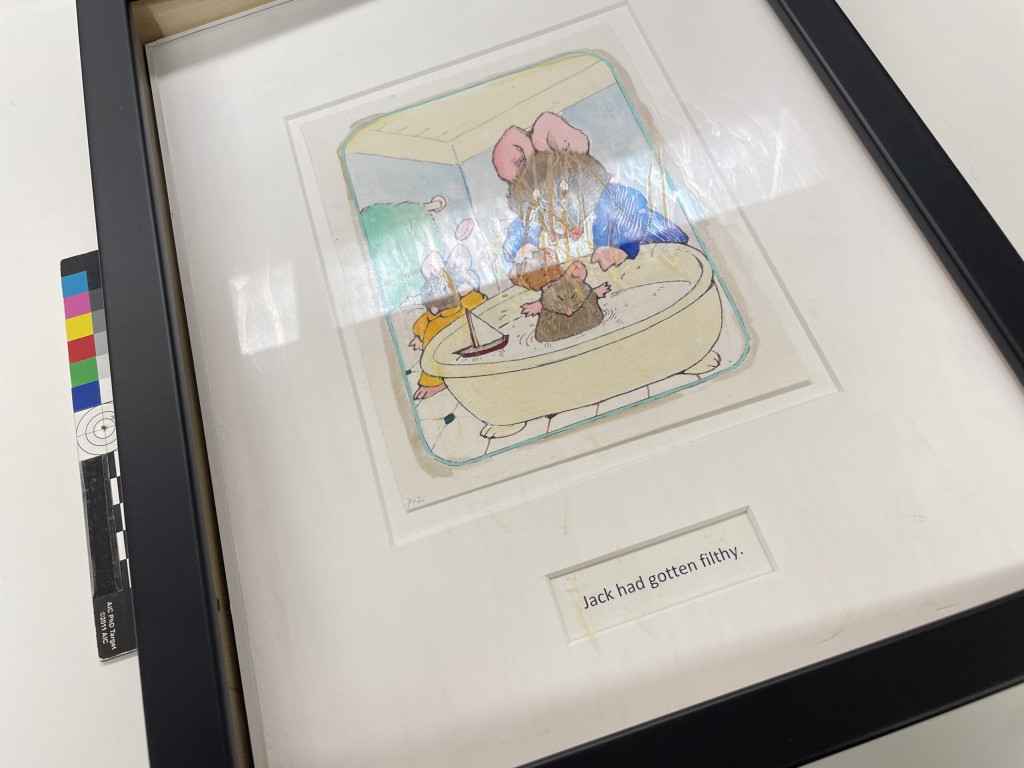
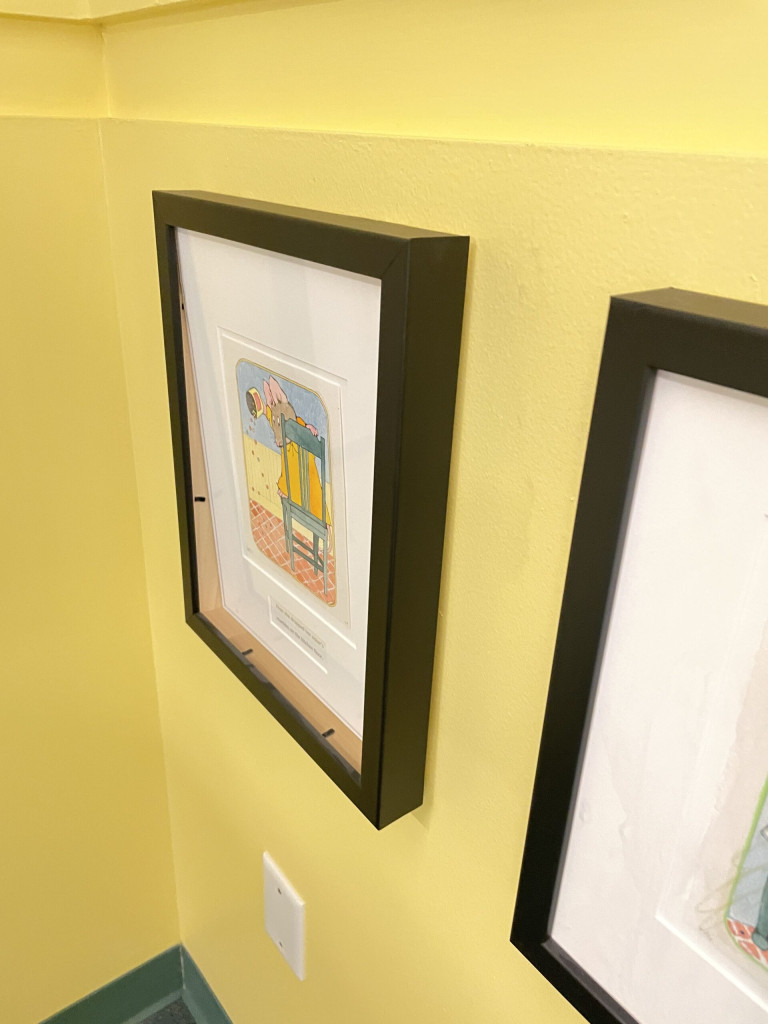
Other issues stemmed from the art being at children’s height. The matting and glazing packages had come loose from the frames in a few instances from being pushed inward. Others, such as the illustration “Jack had gotten filthy” had been drawn on with yellow crayon. The crayon marks were not easily removable and needed evaluation by the conservation team to improve.
Despite these issues, due to our forward-thinking work in 2018, the tightly sealed matting packages kept the original artwork completely safe and undamaged. Improvements required adjustments to the frames only!
Before exhibit maintenance, the glazing of the matting package suffers from being drawn on by crayons
Before exhibit maintenance, a matting package was pushed into the frame
During treatment, the matting package is secured with strong nails to the inside of the frame rather than using the folding metal tabs
After treatment the art is secured in the frames and the UV coated glazing is clean
4. History of the Library
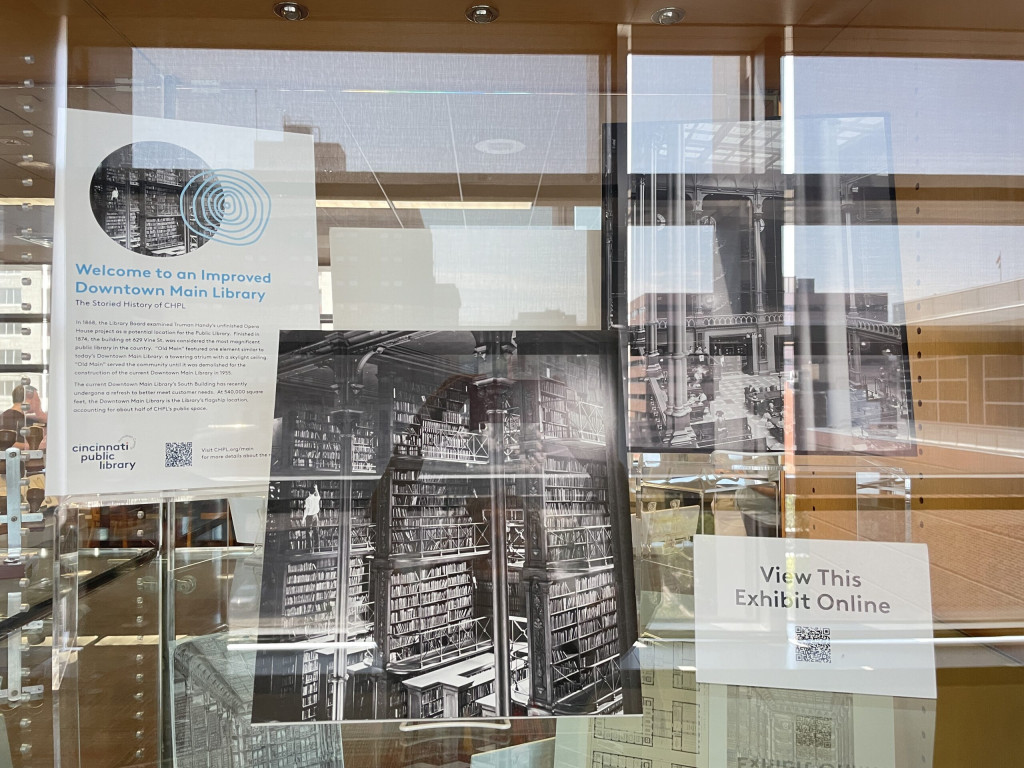
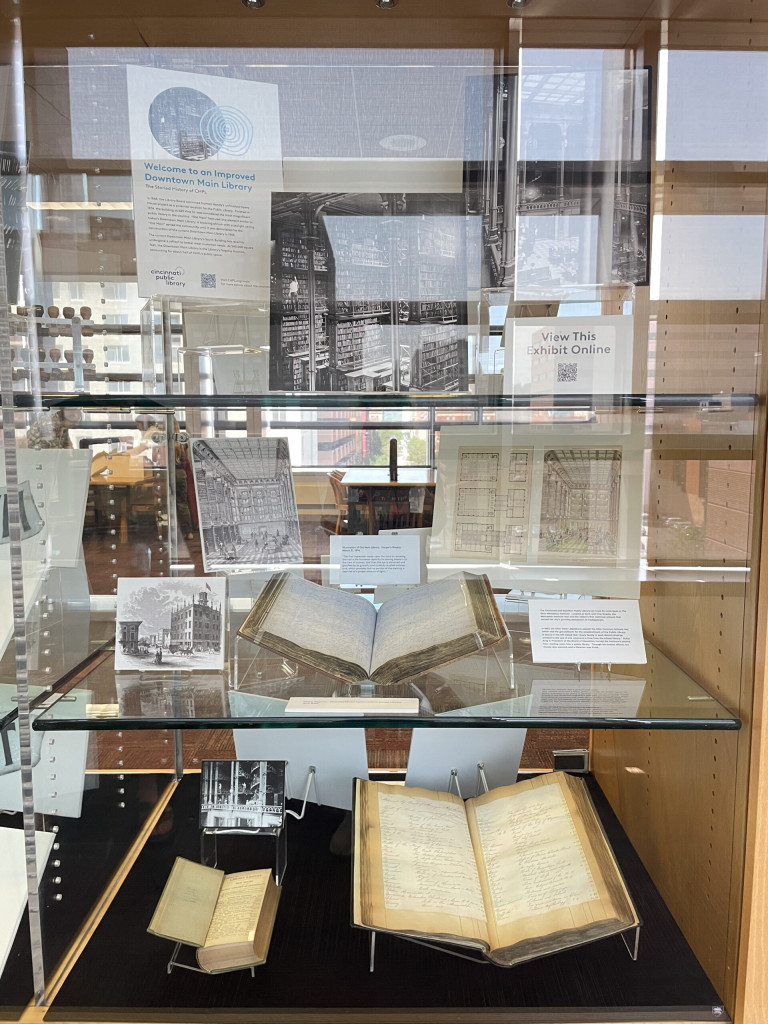
With the establishment of the Cincinnati and Hamilton County Public Library in 1853, it’s no surprise that it’s one of the oldest libraries in the county and thus full of history to highlight! This physical exhibition beautifully compliments the online virtual exhibit located here.
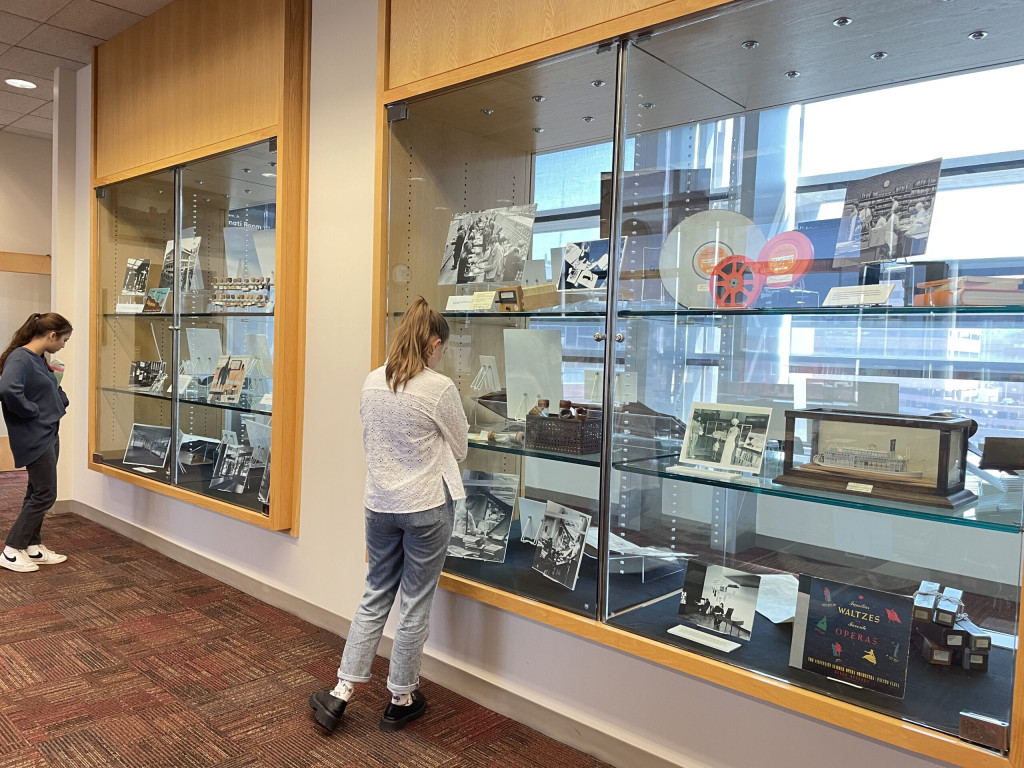
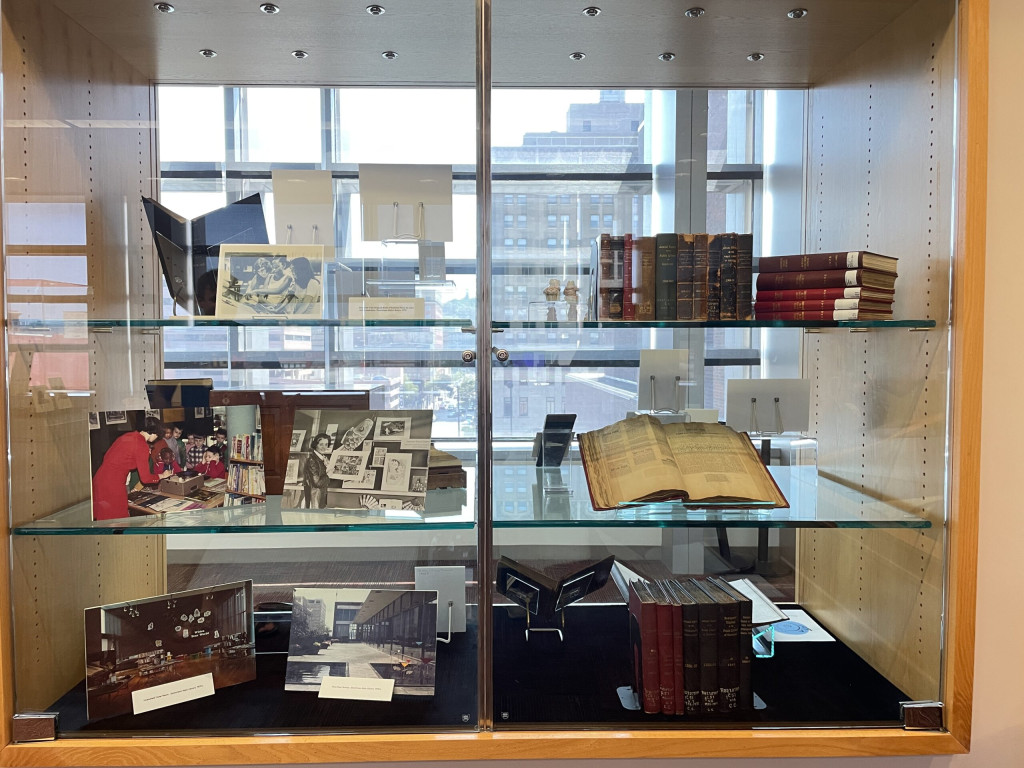
The physical exhibit is located on the 3rd floor in the Cincinnati Room along the connector where special collections are carefully monitored while on display with specialized light, humidity and temperature controls.
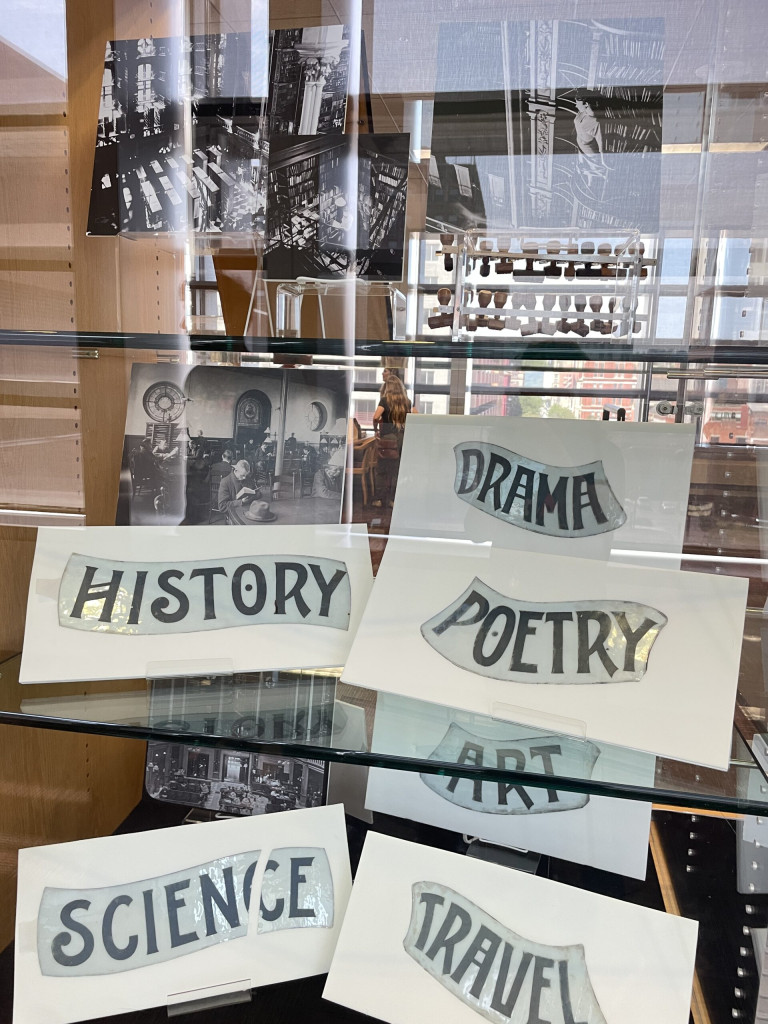
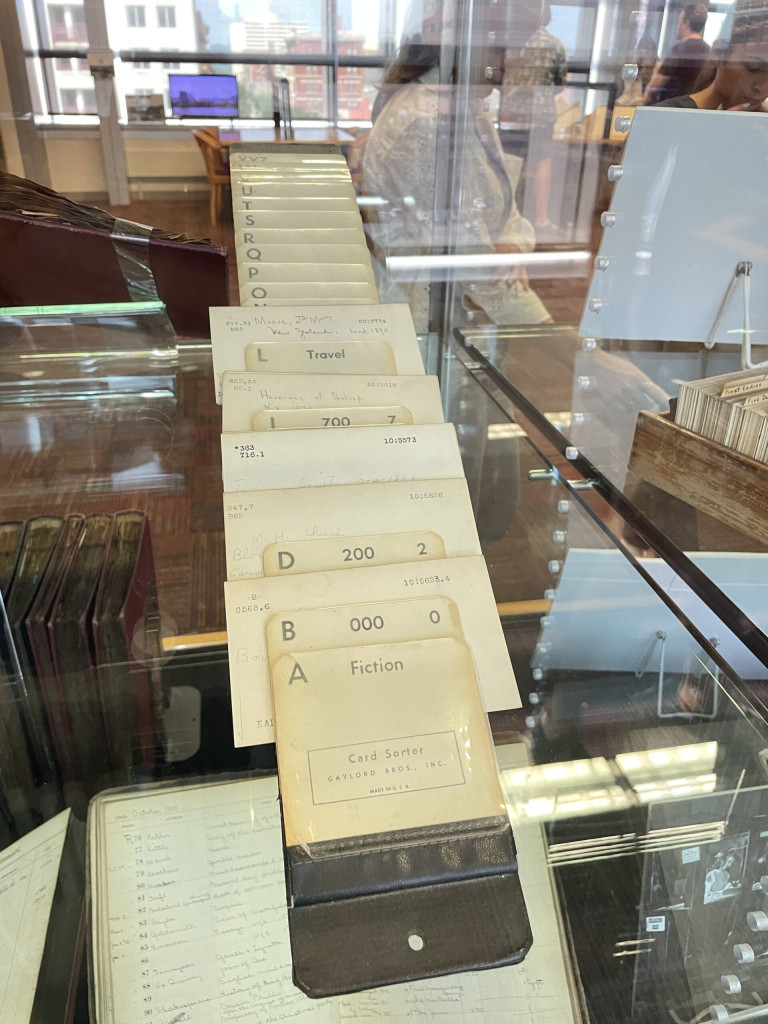
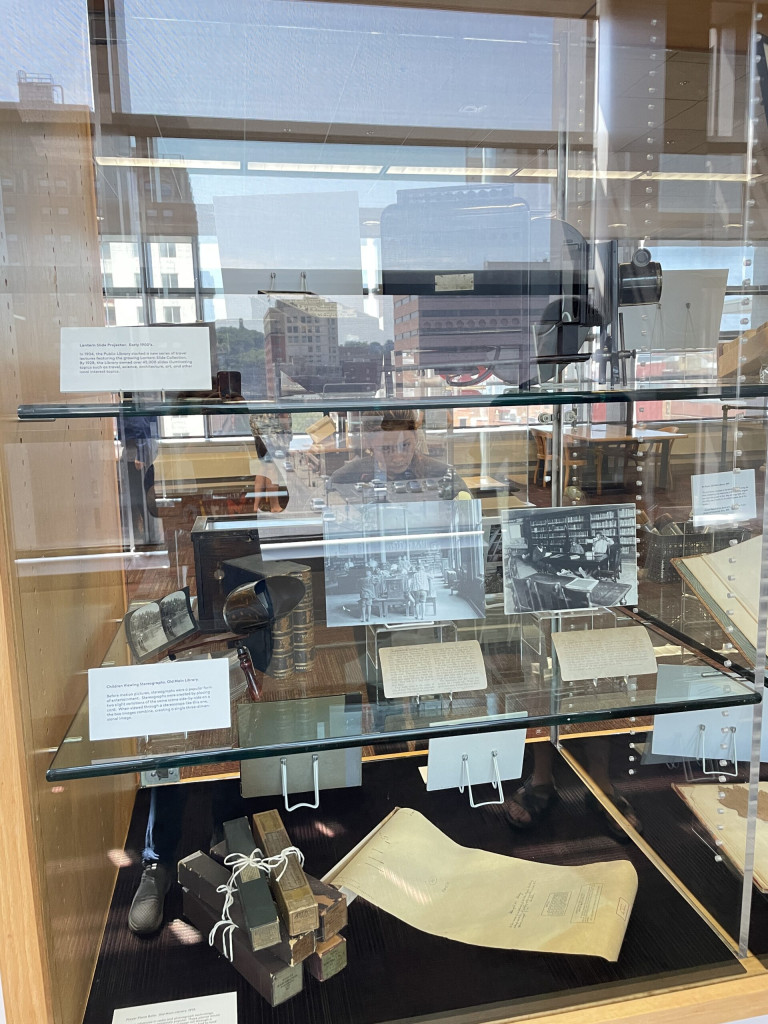
On view are captivating images of the iconic lost library of Vine Street as well as other branch locations, many of which are Carnegie buildings. You can also get up close and personal with past library technologies and special collection objects such as stained glass from the original Vine Street location.
View inside Cincinnati Room
Physical exhibit complements digital exhibt
Original stained glass fragments
Card catalog sorter
Stereoview, lantern slide projector, and paper piano rolls
Special collection ledgers
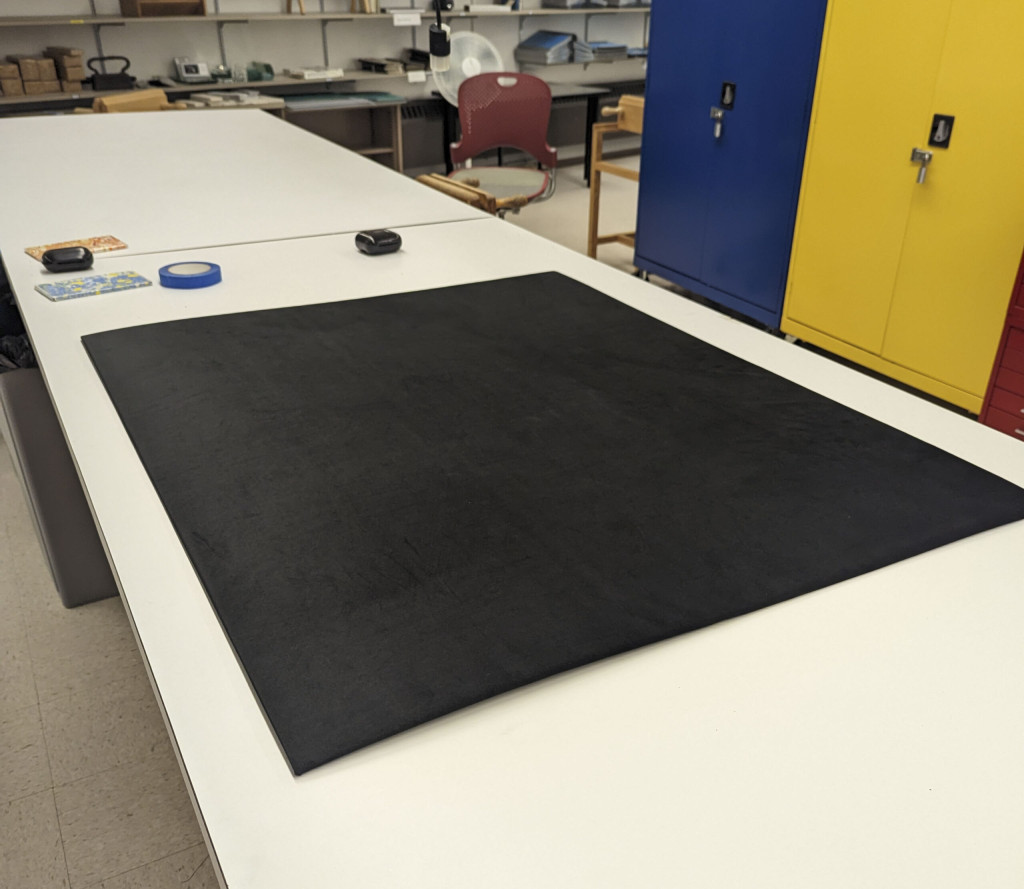
For this exhibit (and many others!), Conservation Specialist, Matt McCoy worked diligently to replace non-archival black felts at the base of the cases with fresh polyester velvet covered boards. This great improvement is not only archival, but no longer slips and slides when objects are set in place and it’s easily removable to clean crumbs of books off with a brush.
Matt created custom boards covered in polyester velvet in the lab…
Then tweaked and installed on site!
5. Circulating Art Books
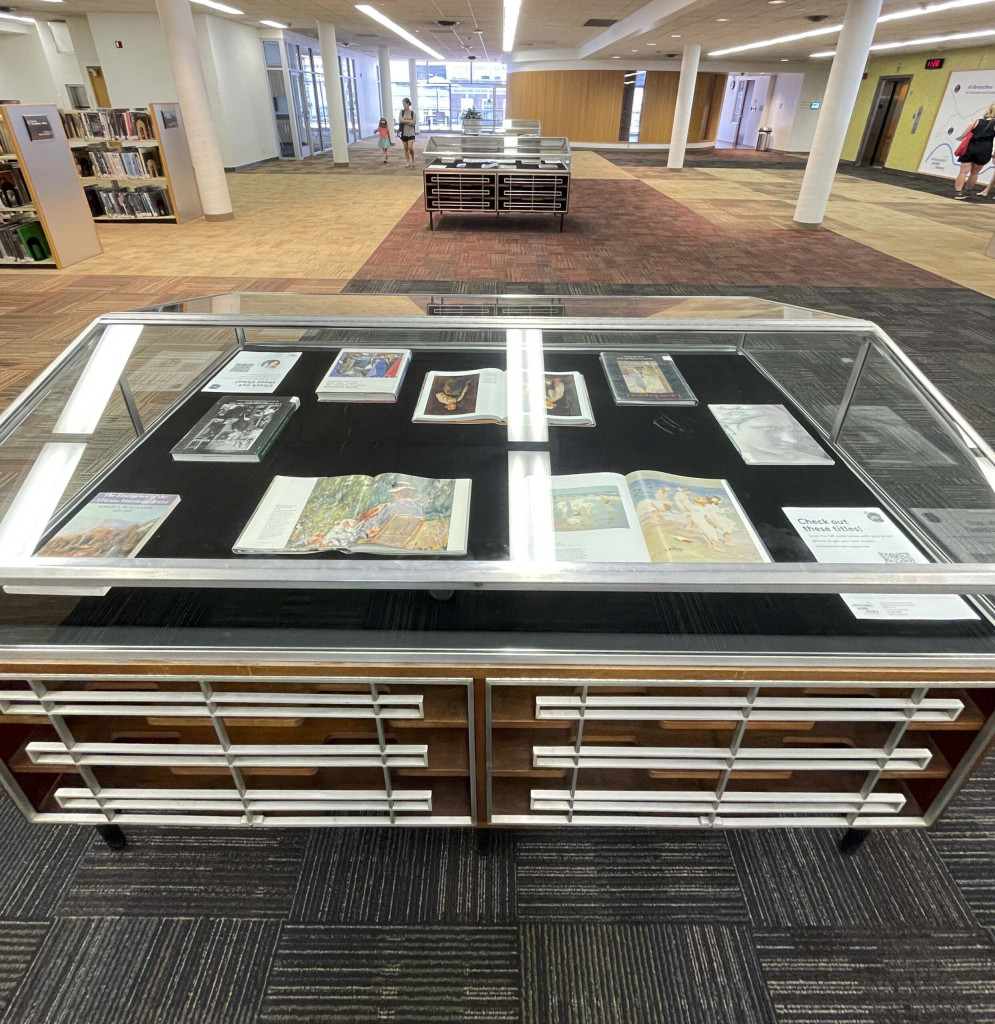
Located on the third floor of the South building, these stylish 1950’s cases were also refreshed by the lab with new bases of polyester velvet covered boards.
Currently on display are a variety of beautiful art books, sometimes referred to as coffee-table books. Unlike materials in the Cincinnati Room, these materials can be checked out and taken home!
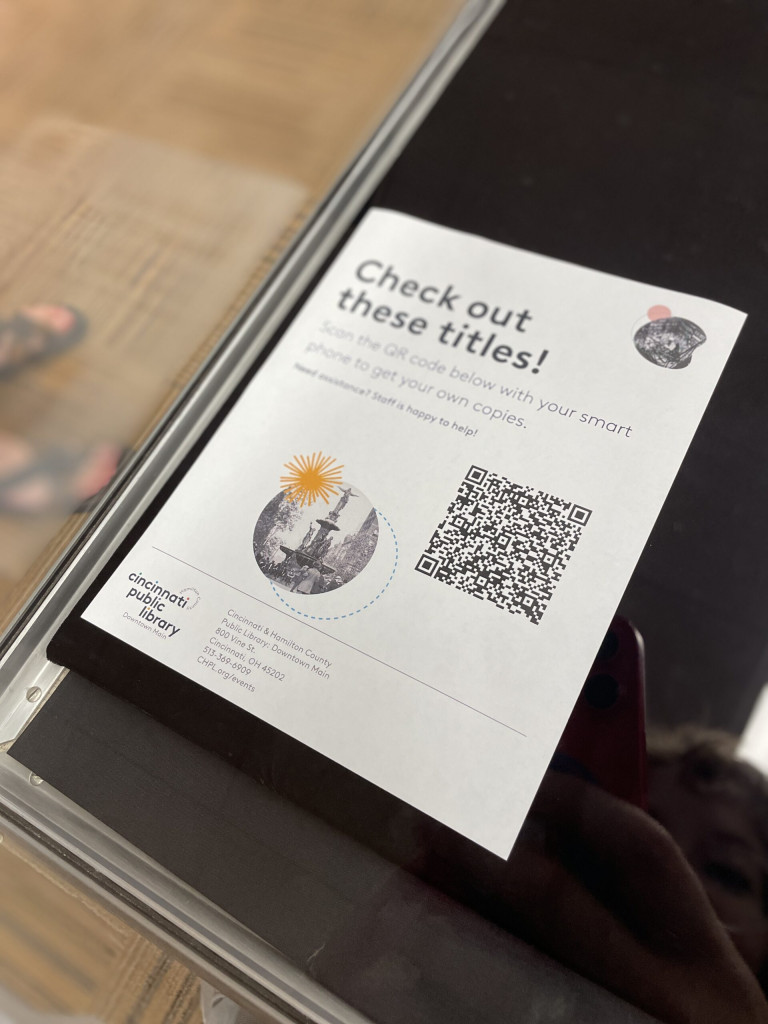
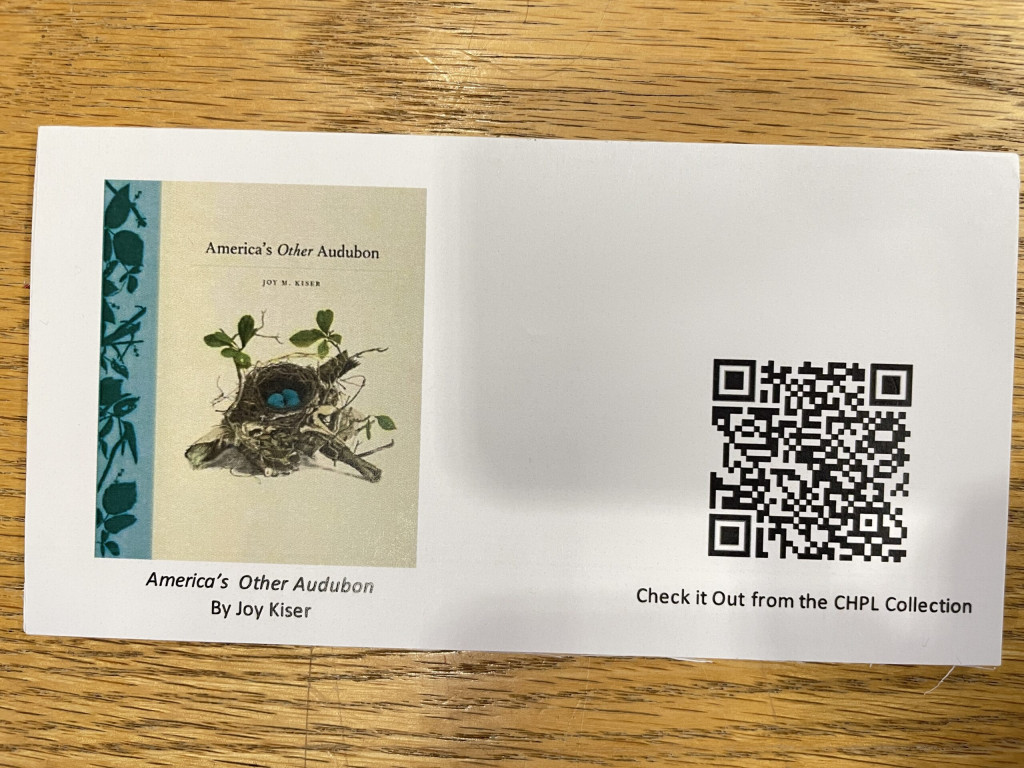
Interested in an art book you see? Scan the QR code to check out any of the titles on display!
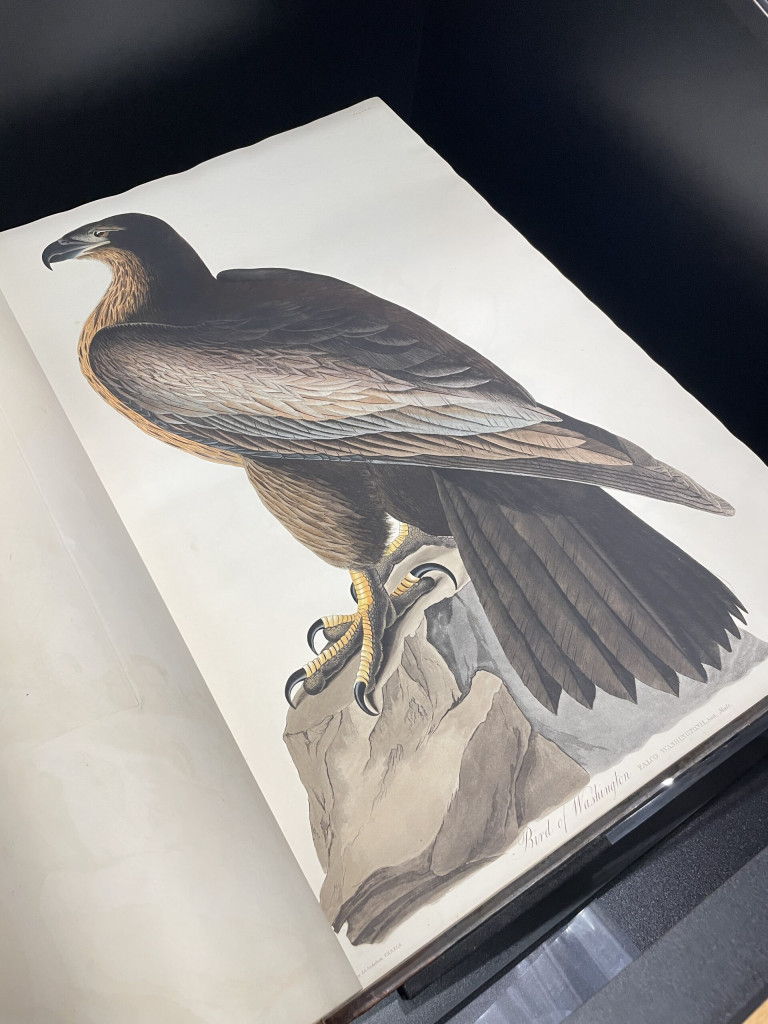
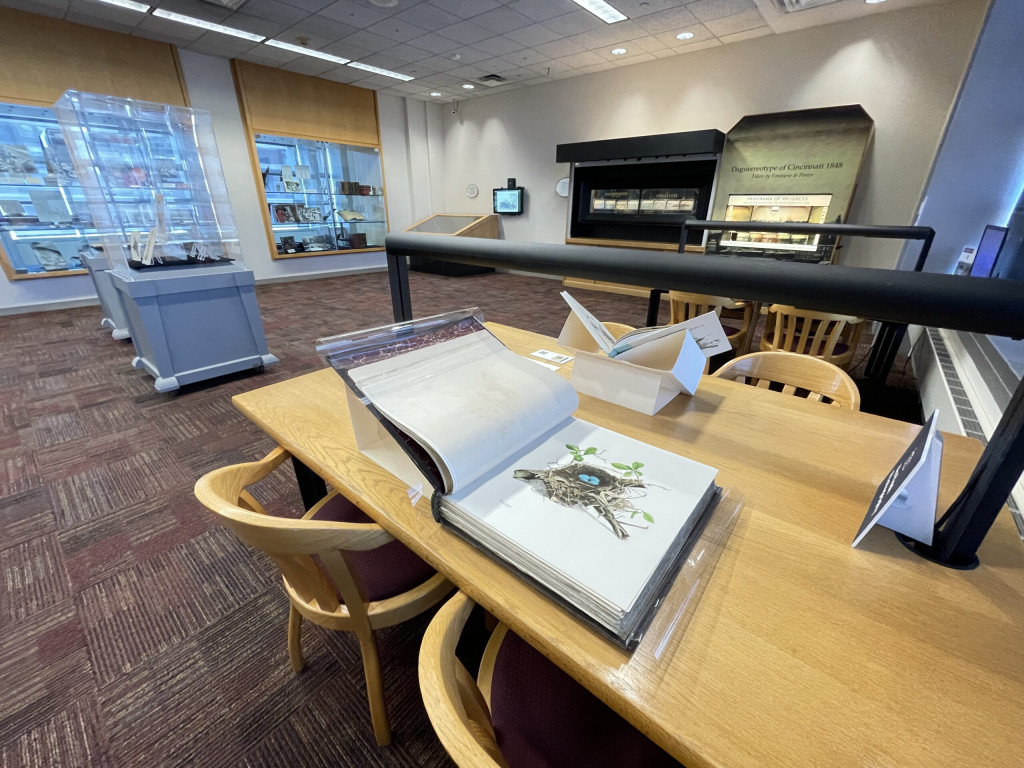
6. Birds of America by John James Audubon
Located in the reading room, named the Cincinnati Room, on the 3rd floor connector is where one of the library’s most famous special collection items lives. This item is proudly back on display after resting during renovations. It is the early 19th century double elephant folio known for its gigantic size: the Birds of America Vols. 1-4 by John James Audubon.
With pages that are turned once a week, their grandeur enables you to see the birds represented to scale! Even the flamingo is life size (albeit the neck is wrapped around the page instead of upright).
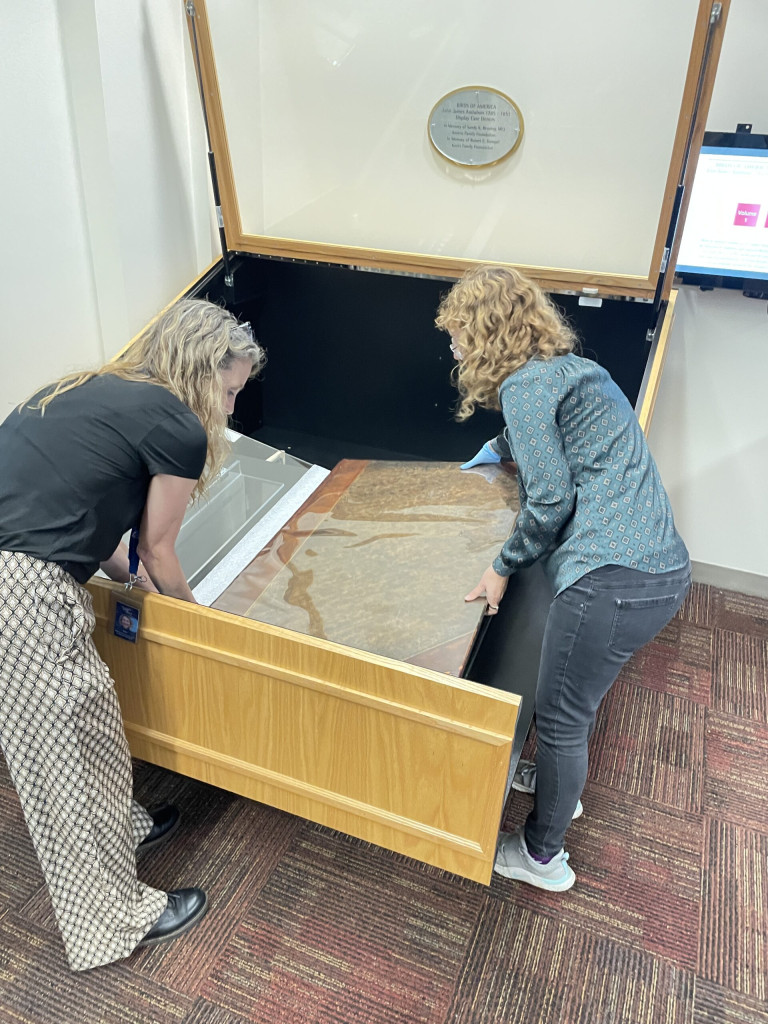
Cleaning the cases was the first step before installation as they were covered in construction dust inside and out! Before main closed for renovations, the Cincinnati Museum Center modified these cases for us so that the beds pull out for easy access. Their generous modifications were provided as a thank you for loaning all four volumes of the Birds of America for their 2019 exhibit titled In the Audubon Tradition and were a wonderful improvement!
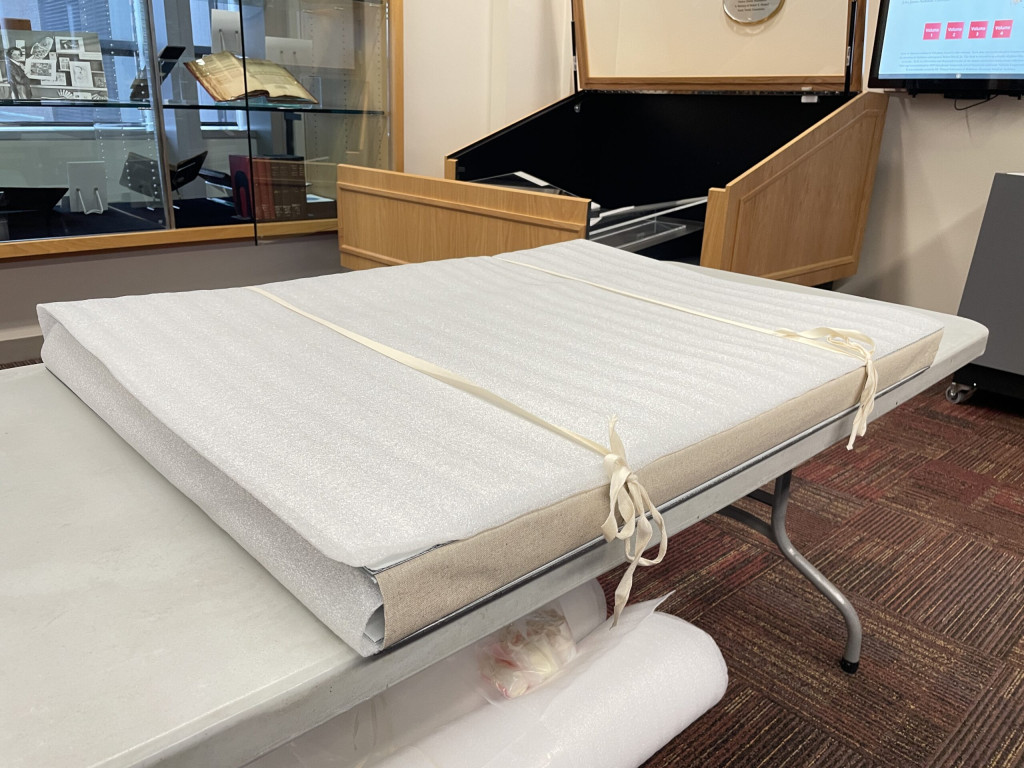
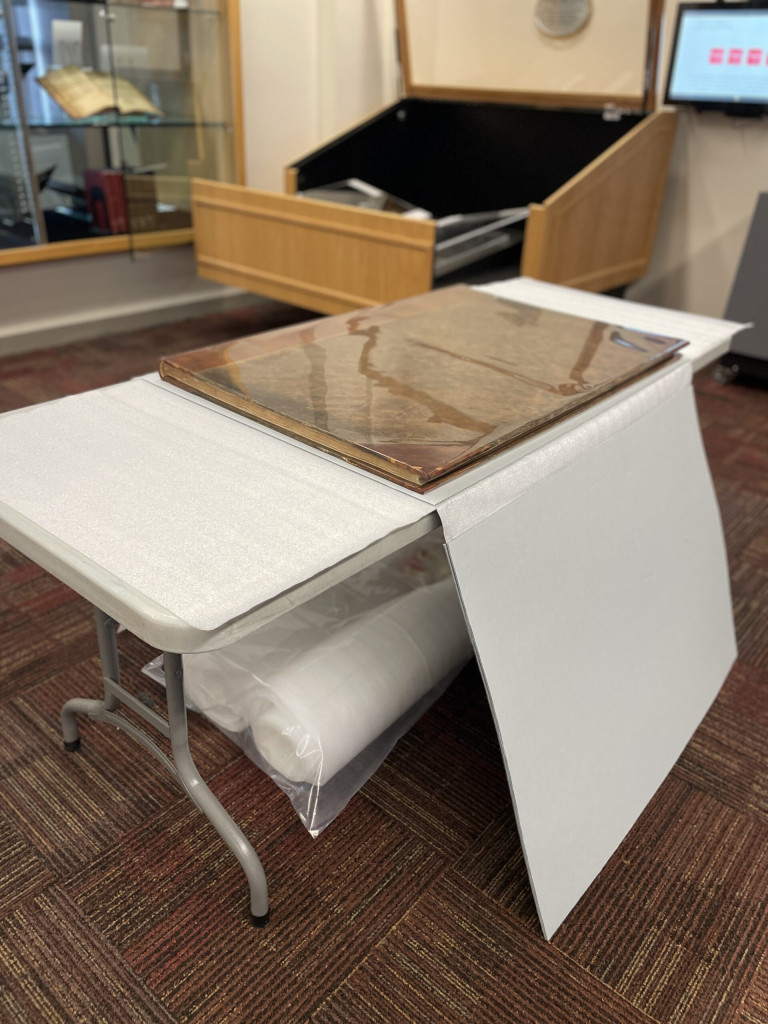
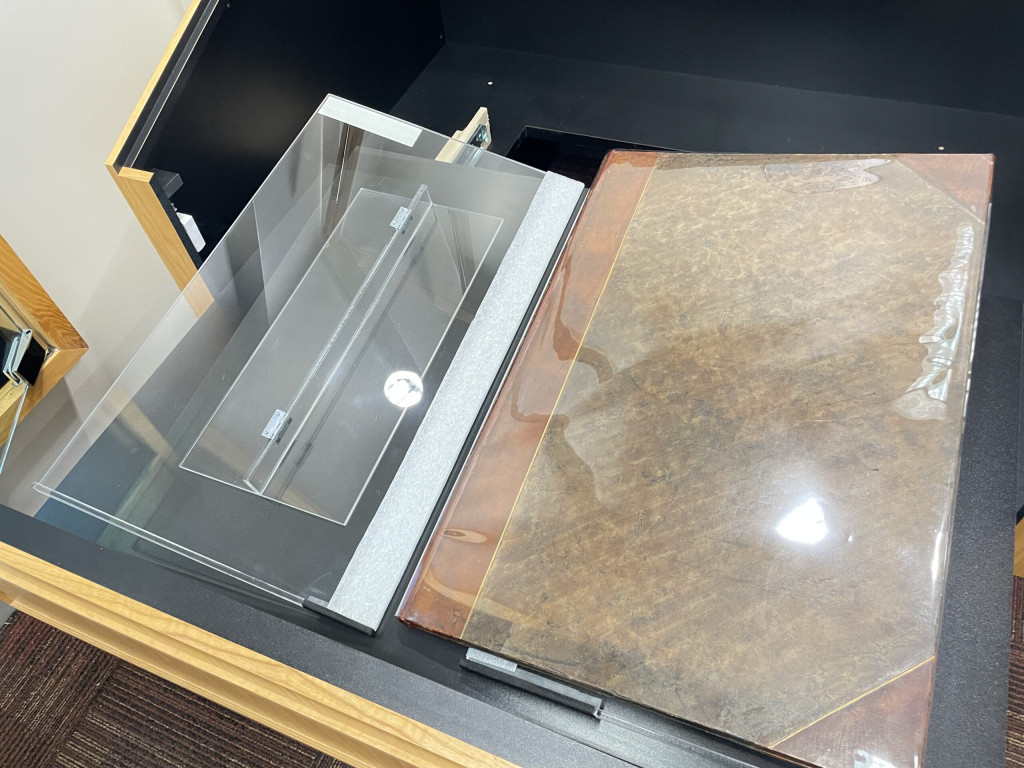
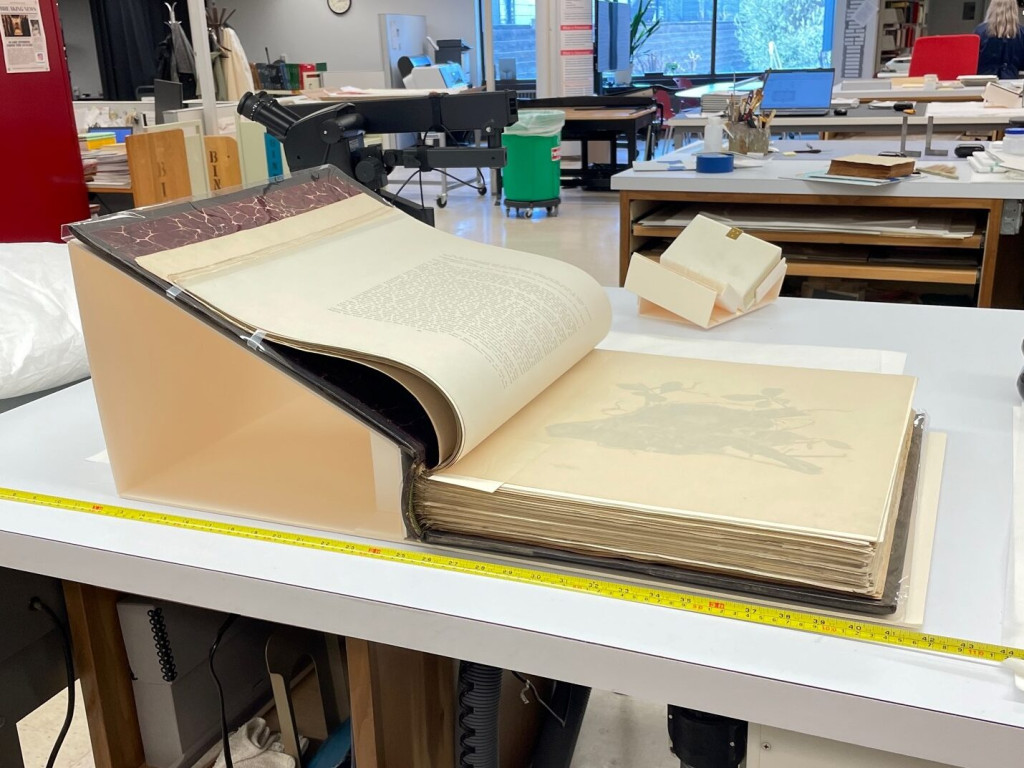
Volumes are protected with custom wrappers. Wrappers consist of strong but lightweight Dibond, archival corrugated board, cloth spines, and ethafoam sheeting secured with cloth ties.
Volumes are also covered in polyester jackets
These heavy books require at least two people to carry
Books are supported with hinging cradles from Benchmark Catalog. The cradles adjust to the weight of the book when pages are turned.
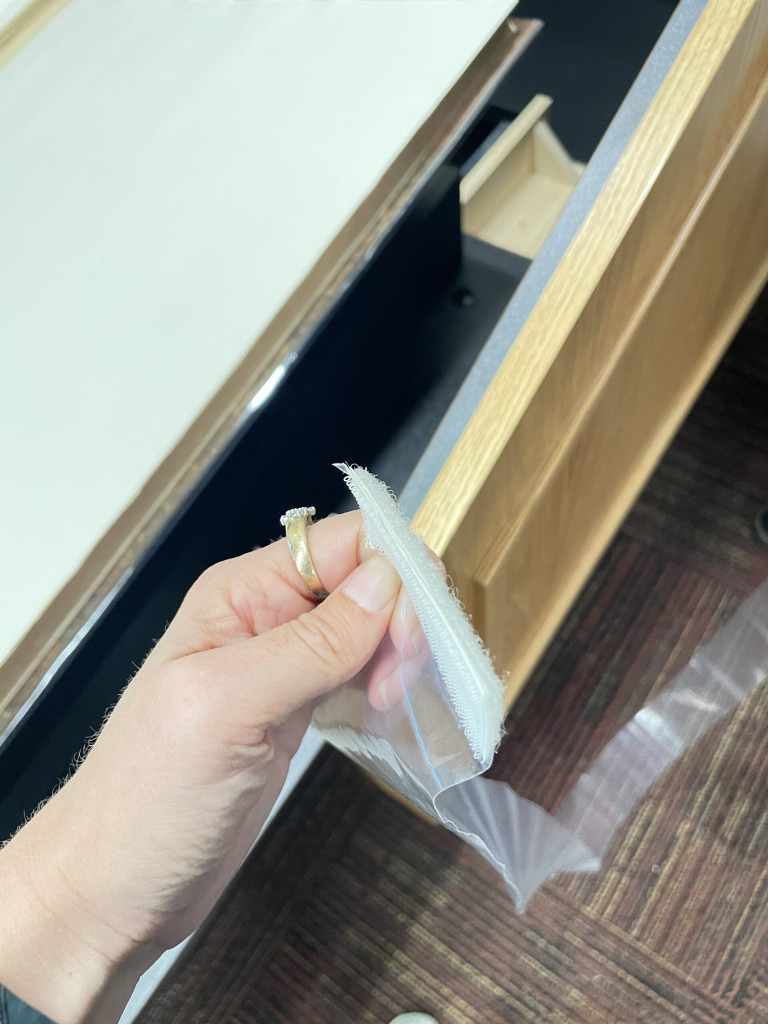
Polyethylene strapping attaches to back of the cradles with Velcro. Strapping protects pages from sagging due to gravity.
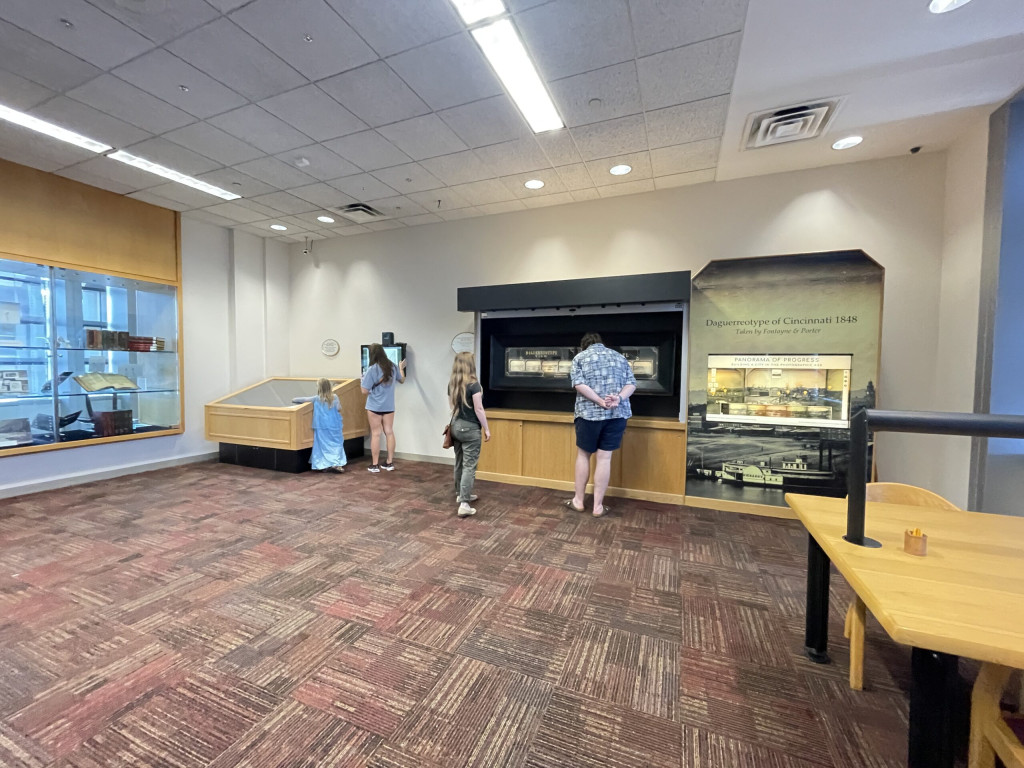
The digitized pages are available on a touch screen next to the display case. Nearby, the 1848 eight-plate daguerreotype panorama is also on display!
Supplemental Materials
Perhaps less well-known but just as captivating are the Nests and Eggs of Birds of Ohio. In nearby cases, these supplemental materials beautifully complement the Birds of America.
Read more about this amazing collection item that was recently on exhibit March 2024 at the Cincinnati Symphony Orchestra here and see images of the vibrantly colored lithographs. Or, check out the book America’s Other Audubon by Joy Kiser to see reproductions of the illustrations and learn about the female artist and her family who produced them.
The prospectus of Nests and Eggs is temporarily on display that may have been owned by the illustrator, Gabrielle Estelle Jones, used to entice funders
View the original Nests and Eggs by requesting the material in the Cincinnati Room
Check out and take home this reference material with reproductions of the illustrations and learn about the history of how they’re made
7. Satellite display of reference materials about the Birds of America
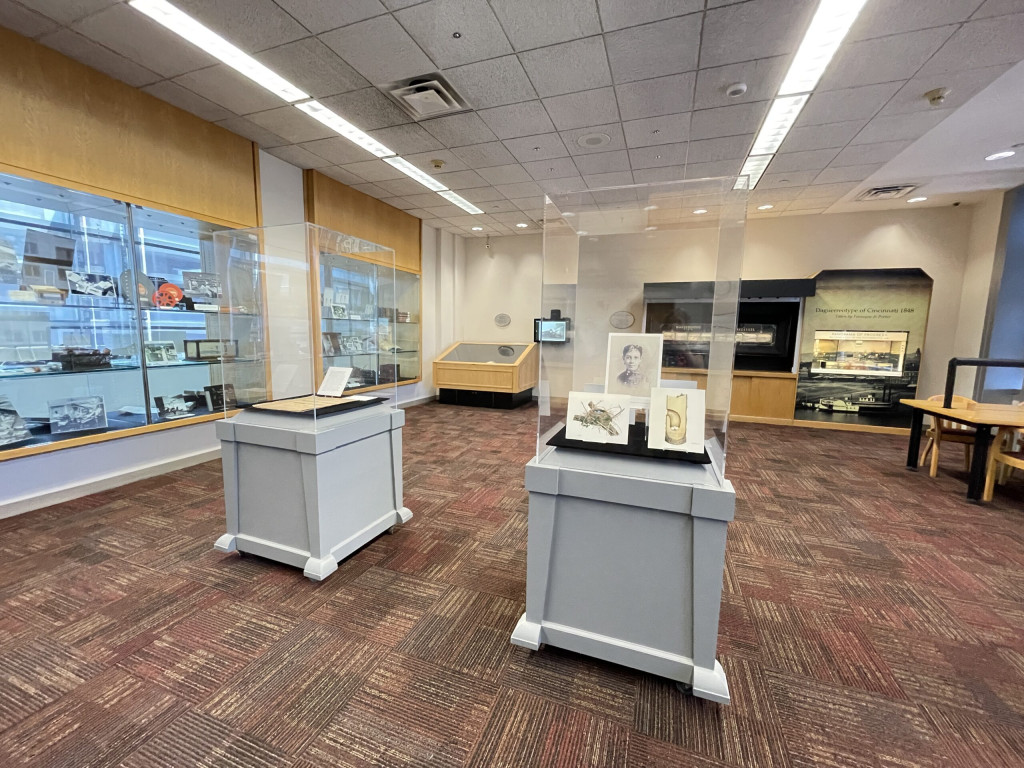
Located near the 1950’s cases on the 3rd floor of the South building are supplemental materials relating to the Birds of America. For example, John James Audubon also collaborated with his two sons to depict 150 plates of four-legged animals. While the Cincinnati and Hamilton County Public Library owns these two original volumes which can be viewed in the Cincinnati Room, this display shows reference materials relating to such items.
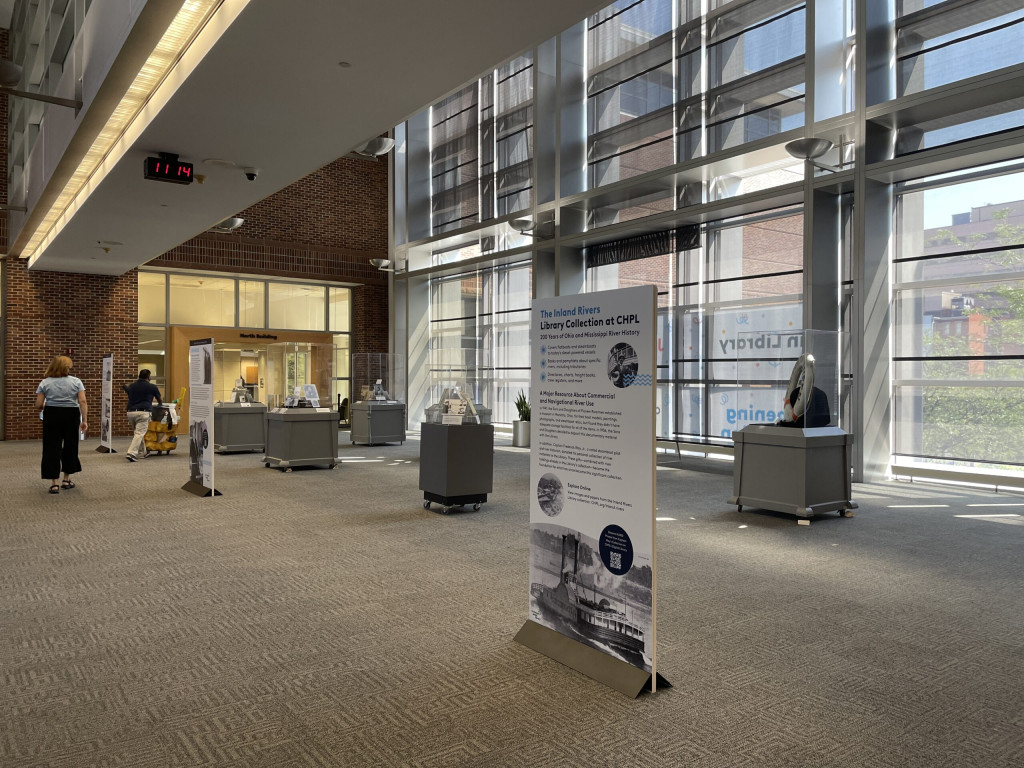
8. The Inland Rivers Steamboat Exhibition
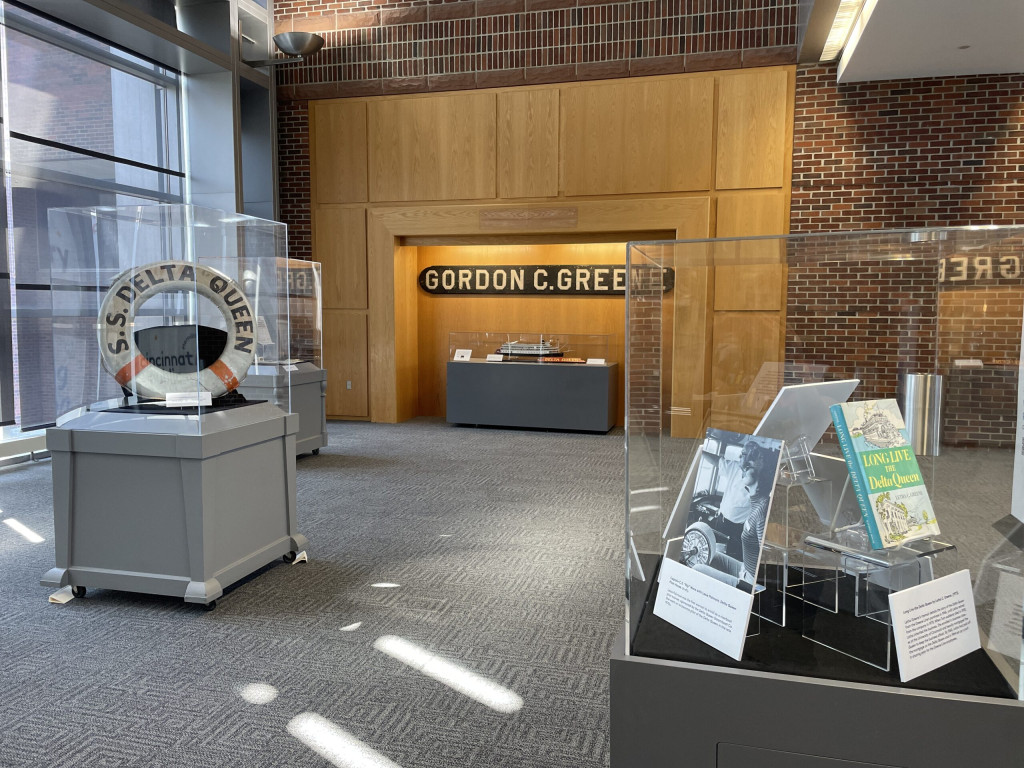
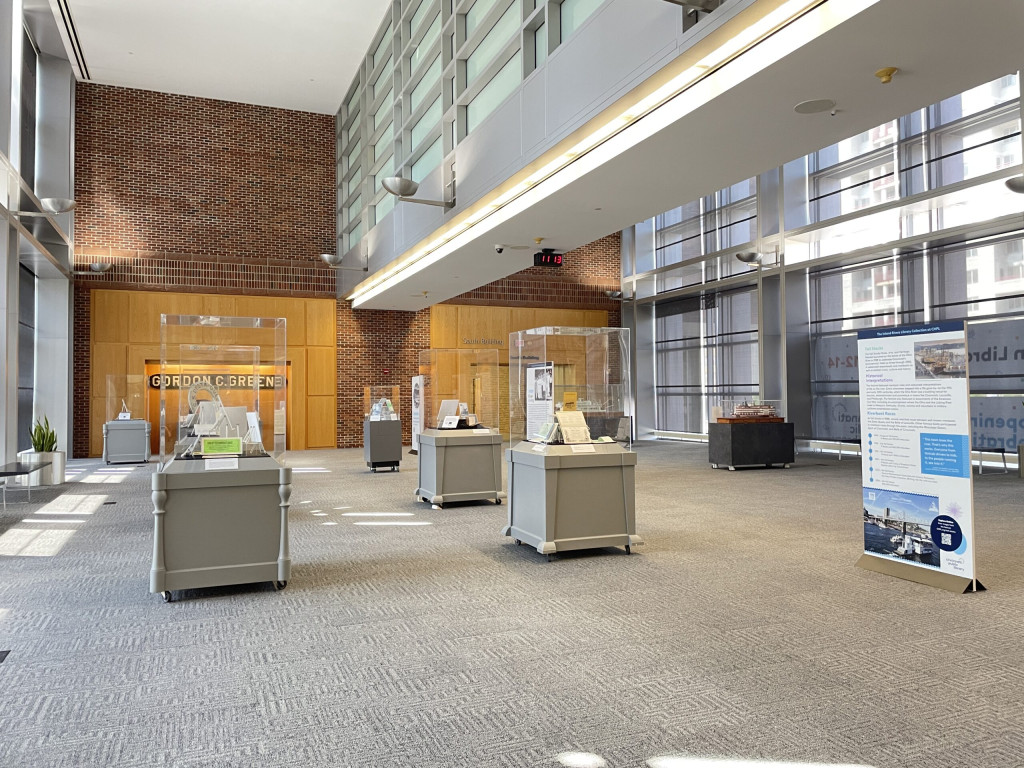
This exhibit utilizes the Inland Rivers Collection at CHPL to illustrate the historic steamboat and river culture in the region. It is located on the 2nd floor connector.
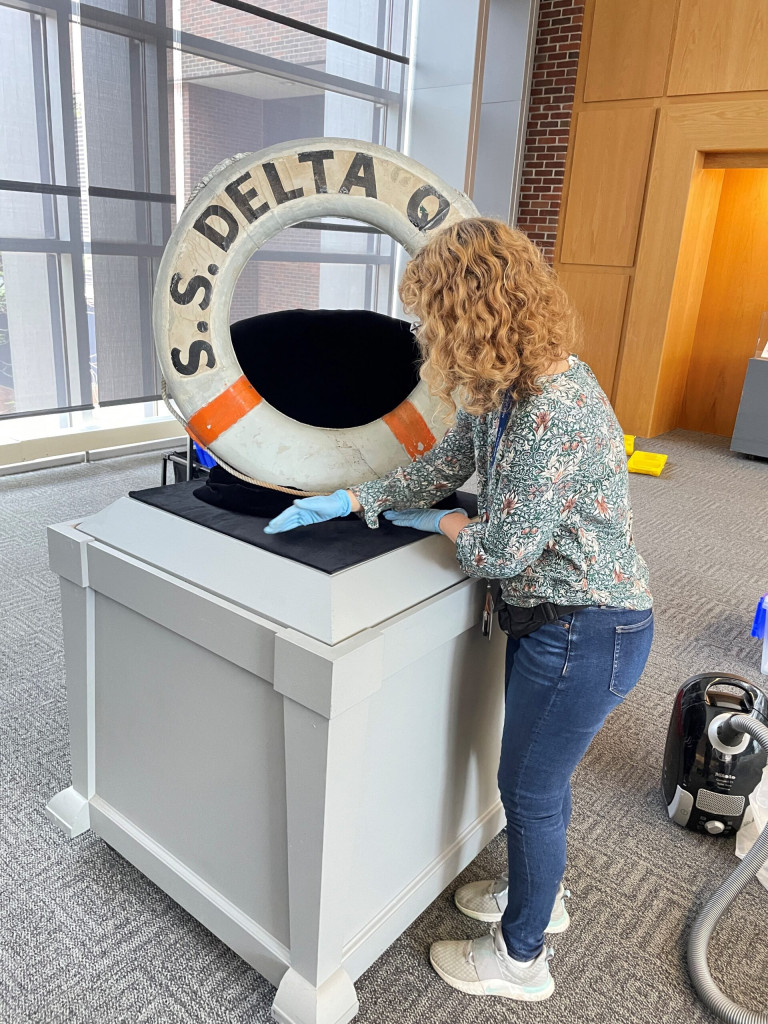
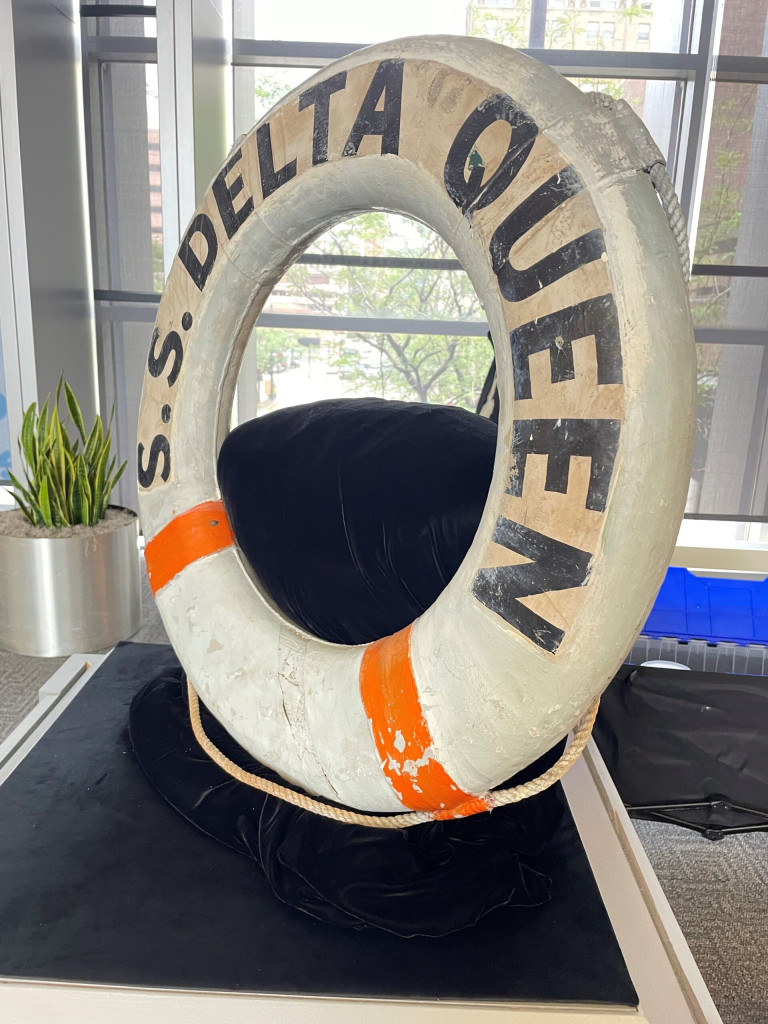
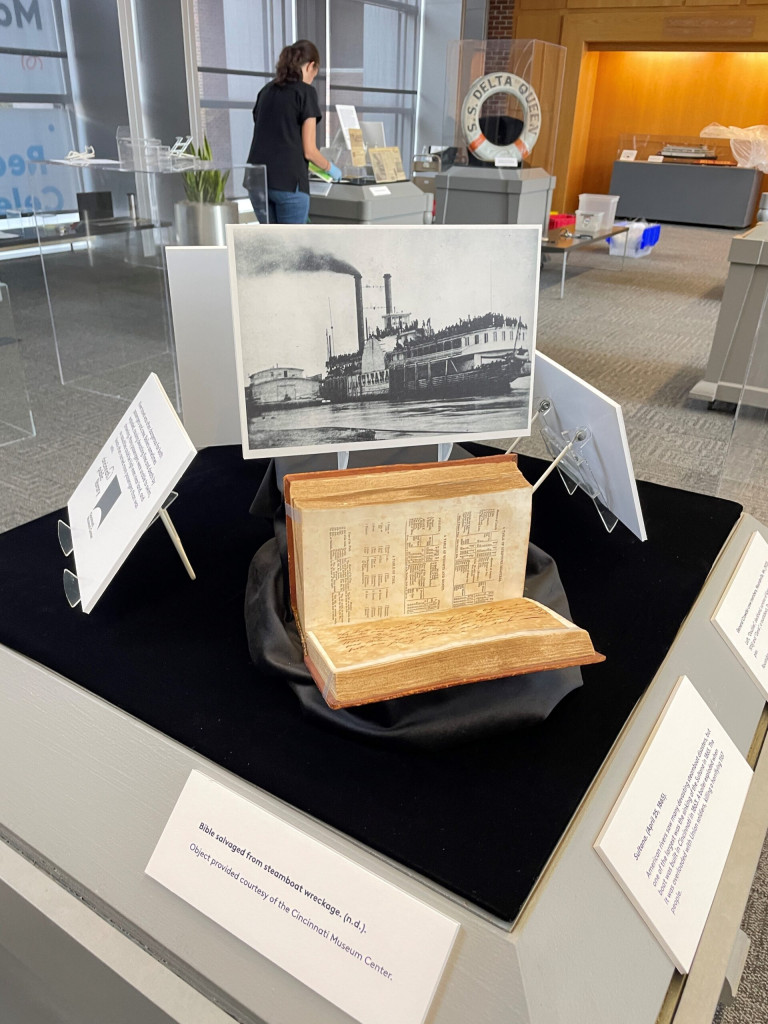
While much of the materials in the exhibit are owned by the Public Library, some of the more unique treasures are on loan from the Cincinnati Museum Center who provided items such as a heavy life preserver made of cork and a leather-bound bible with handwritten inscriptions salvaged from steamboat wreckage.
Exhibit Installation
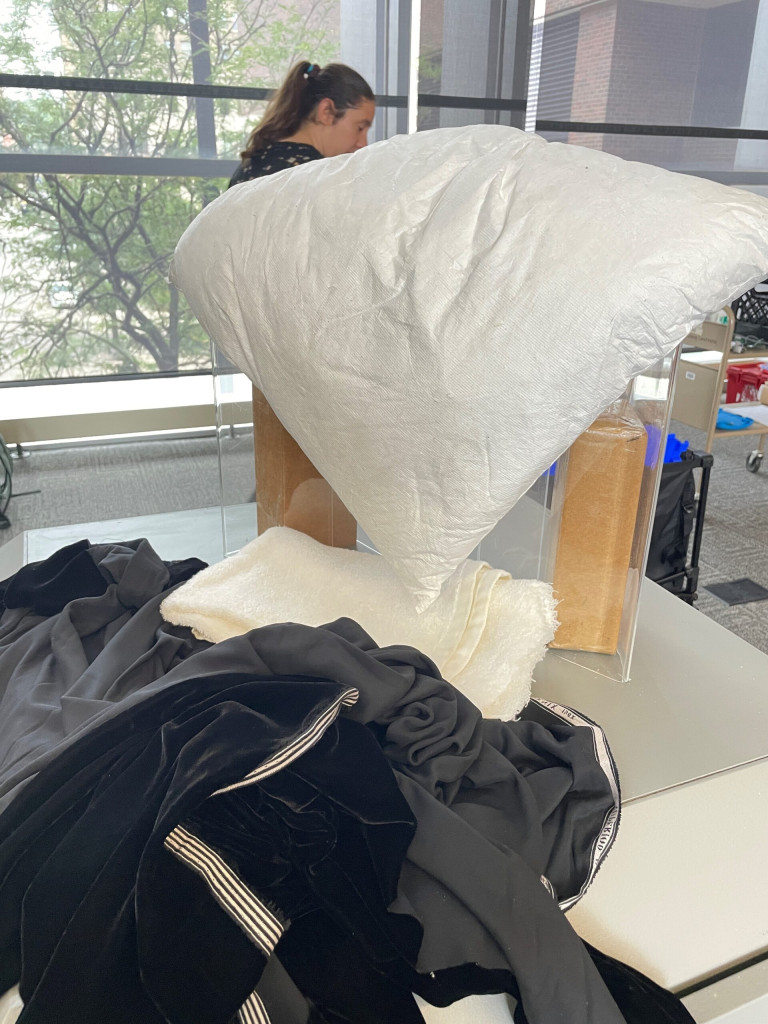
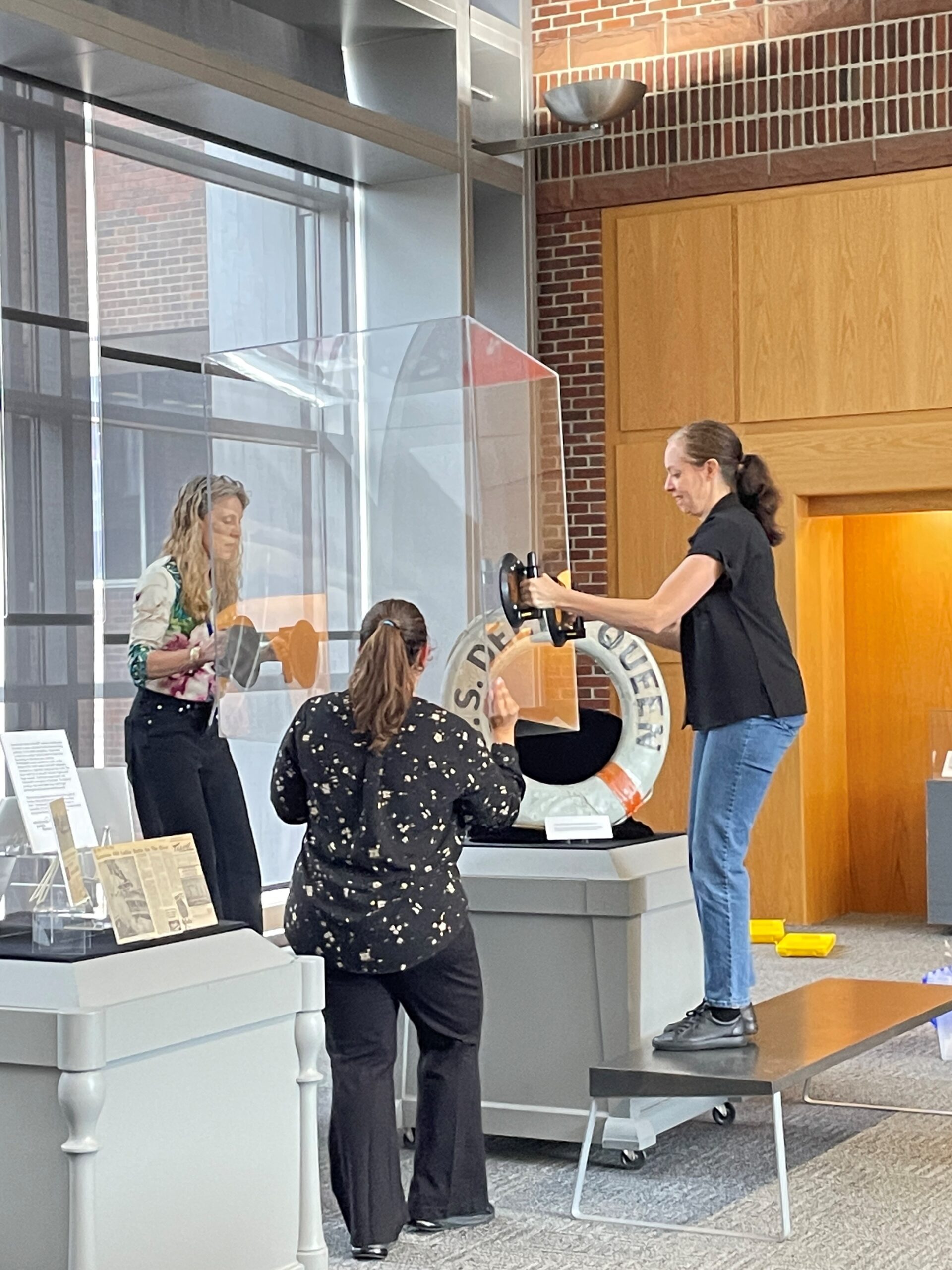
Exhibit Installation consisted of creating custom 3-D supports for special collection items on loan while CHPL materials were supported with flat mat board supports. Photographs were mounted to archival boards to prevent them from curling in changes of ambient humidity.
Creating a soft yet strong custom support for the life preserverCleaning dust from velvetLife preserver is also secured to support with polyethylene strapping
Three people are necessary to lift the vitrines safely over objects within these cases
Life preserver ready for showtime!
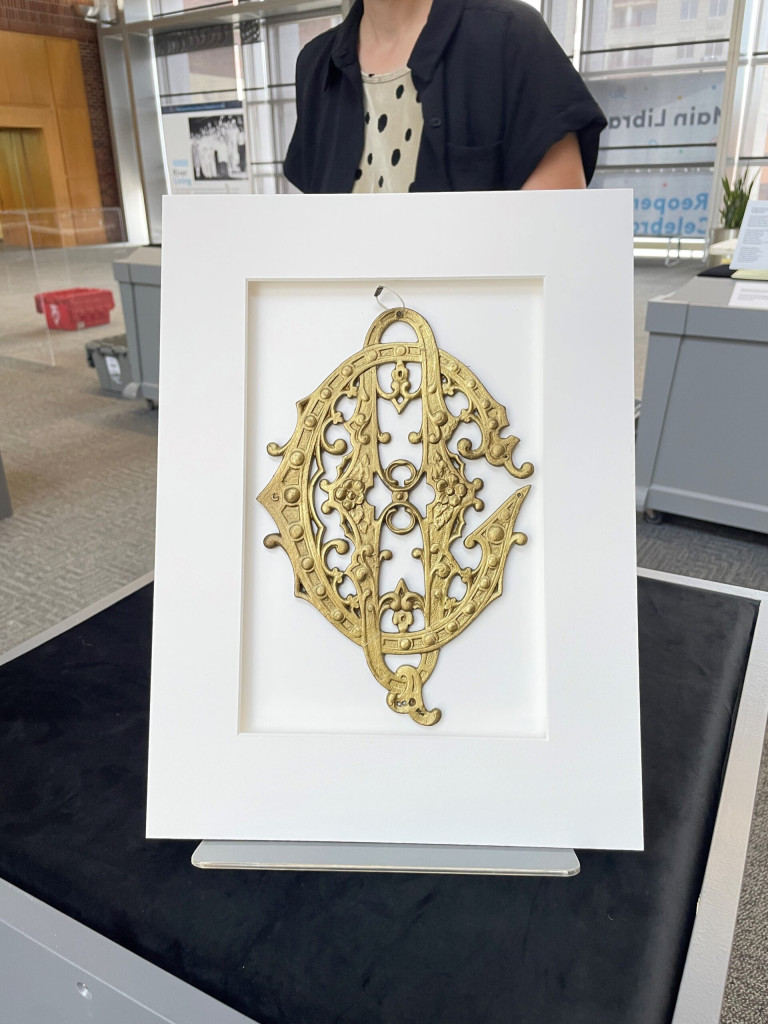
This steamboat relic was previously mounted and matted at the Preservation Lab by Chris Voynovich
Steamboat salvaged bible needed strapping and a custom cradle to show the handwritten inscription
View of Inland Rivers Steamboat Exhibit from the opposite end of the connector
With so many exhibits and a variety of content for all ages be sure to head downtown and visit them in person!
Ashleigh Ferguson Schieszer[CHPL] – Conservator and Conservation Lab Co-Manager
Bonus Images of Main
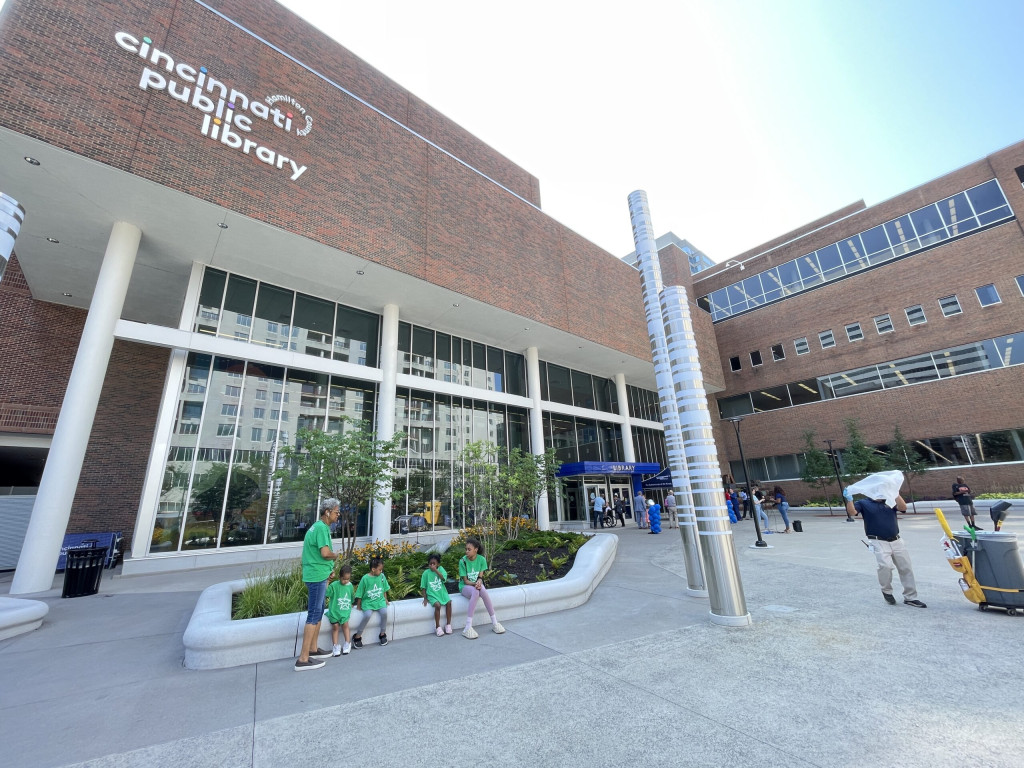
Front of library is easily accessible
The new Story Center with large touch screens for digital exhibits
Terraces available during certain hours
Demolition of the front entranceDuring renovations to improve access
Hi! I’m Nicole, and I’m the newest member of the Preservation Lab.
When I was interviewing for the position of Conservation Assistant, I did a deep dive into what preservation and conservation really mean. I read through blog posts and perused the Lab’s Instagram, trying to get a grasp on what exactly the lab did. Little did I know, these snapshots into lab life hardly even scratched the surface.
Materials and Tools
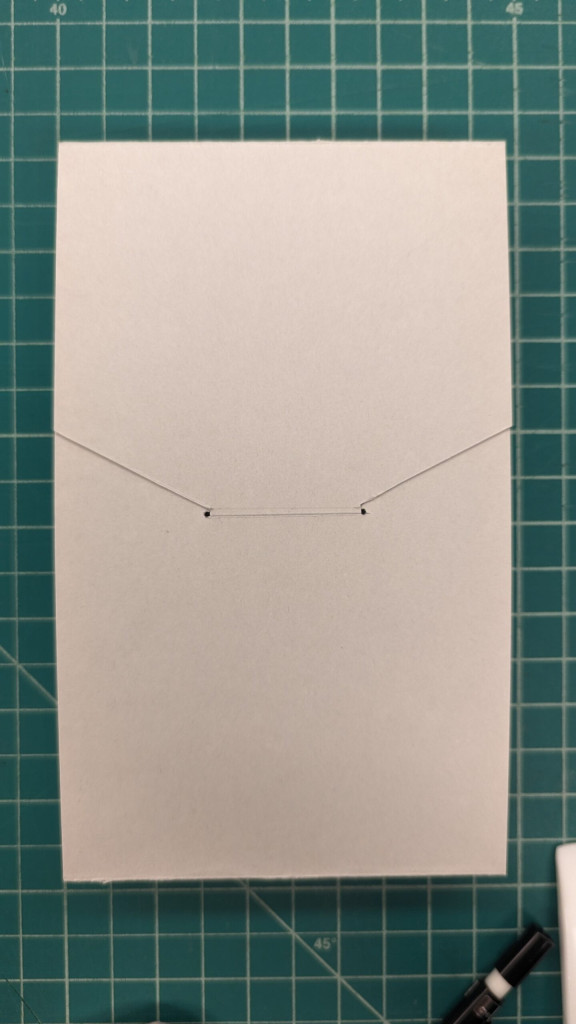
My first week as a Conservation Assistant was full of learning, from what types of boards and paper supplies are available, to how to create a pamphlet binder and sew music scores. I had no idea there were so many types of paper out there, and I was ignorant about how many tools there exist simply to cut these pieces of paper. My hand skills were immediately put to the test with learning the stitches used to attach pamphlets to protective premade binders, which create a hard cover for these otherwise soft materials. I was also instructed in which methods of cutting are best for which practices and types of paper, such as board shears for larger pieces of Bristol or corrugated board, scalpels and Olfas for small, precision cutting, and even a corner cutter to clean up the corners of your pamphlet binders!
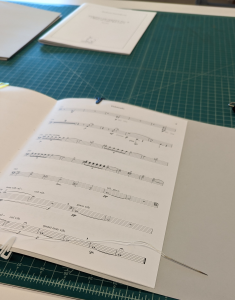
Sewing parts of a music score with a needle and thread.
Enclosures
Over the next few weeks, I was thrust into a whole new world of enclosures after learning about pamphlet binders and music scores. Enclosures are typically boxes that are used to keep a book or object safe from light, dust, and other environmental factors that can harm the item over time.
Tuxedo boxes
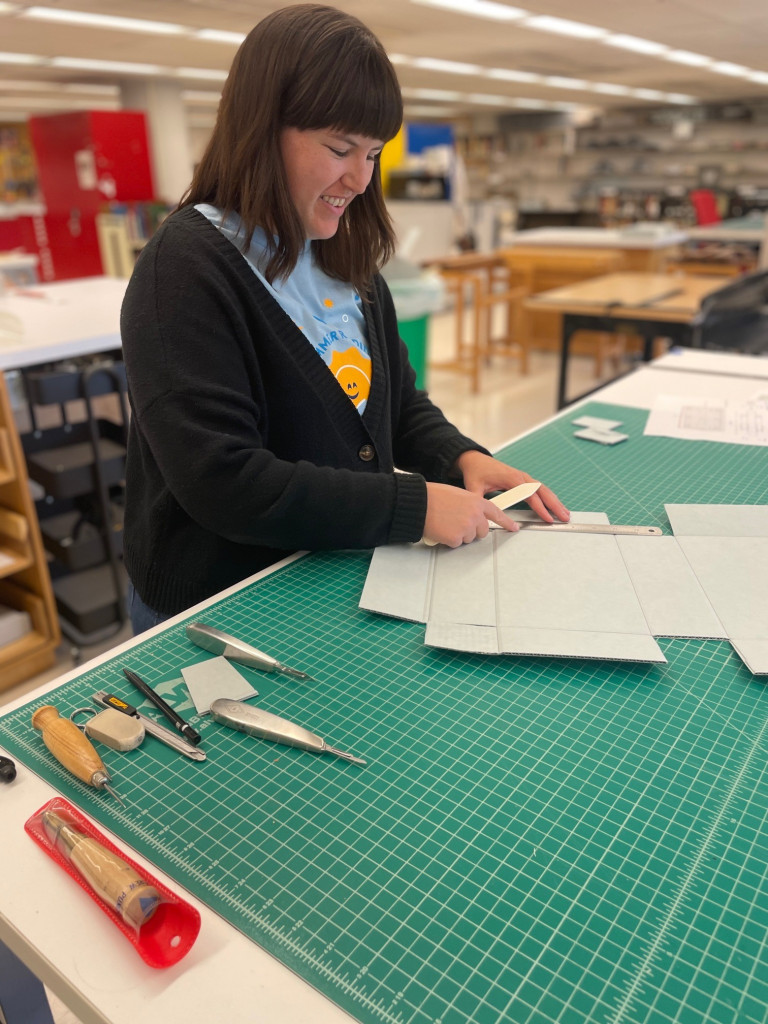
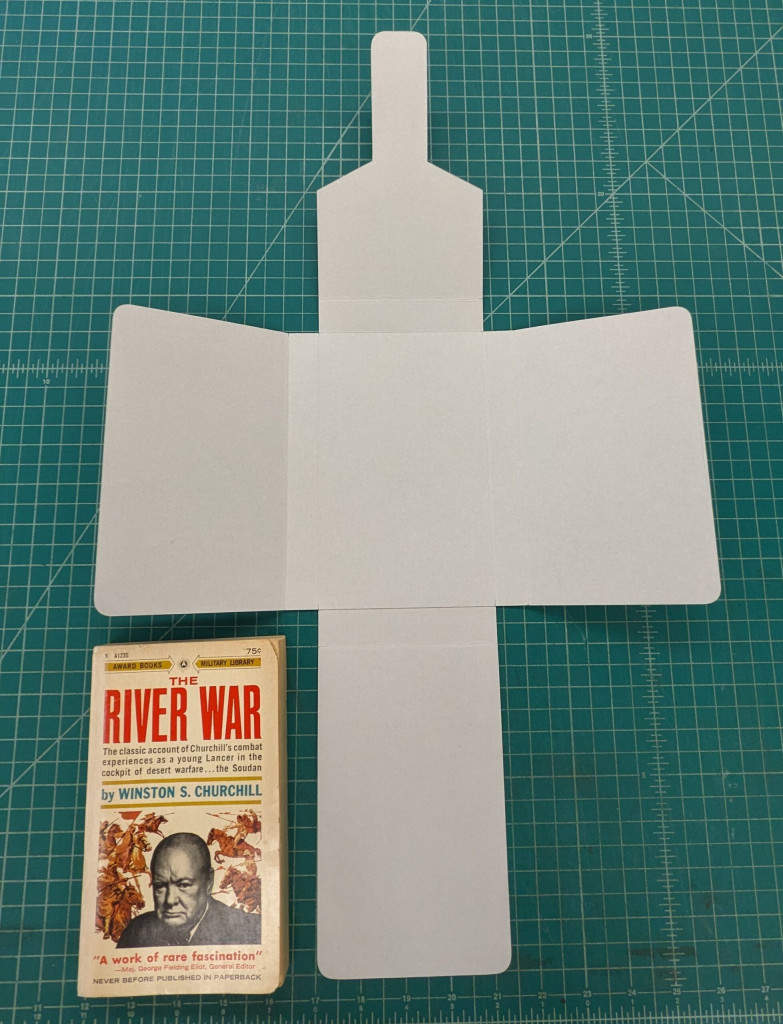
Creating tuxedo boxes was an exciting and fun challenge, as getting all the measurements right and being precise is so important. These boxes take a lot of focus to make, and attaching the two pieces of board can be daunting, as you must make sure not to overlap the folds and ruin the whole box.
A finished tuxedo box on the left, and the two pieces of an unfinished tuxedo box opened to show the full spread of the box on the right.
Corrugated Clamshells
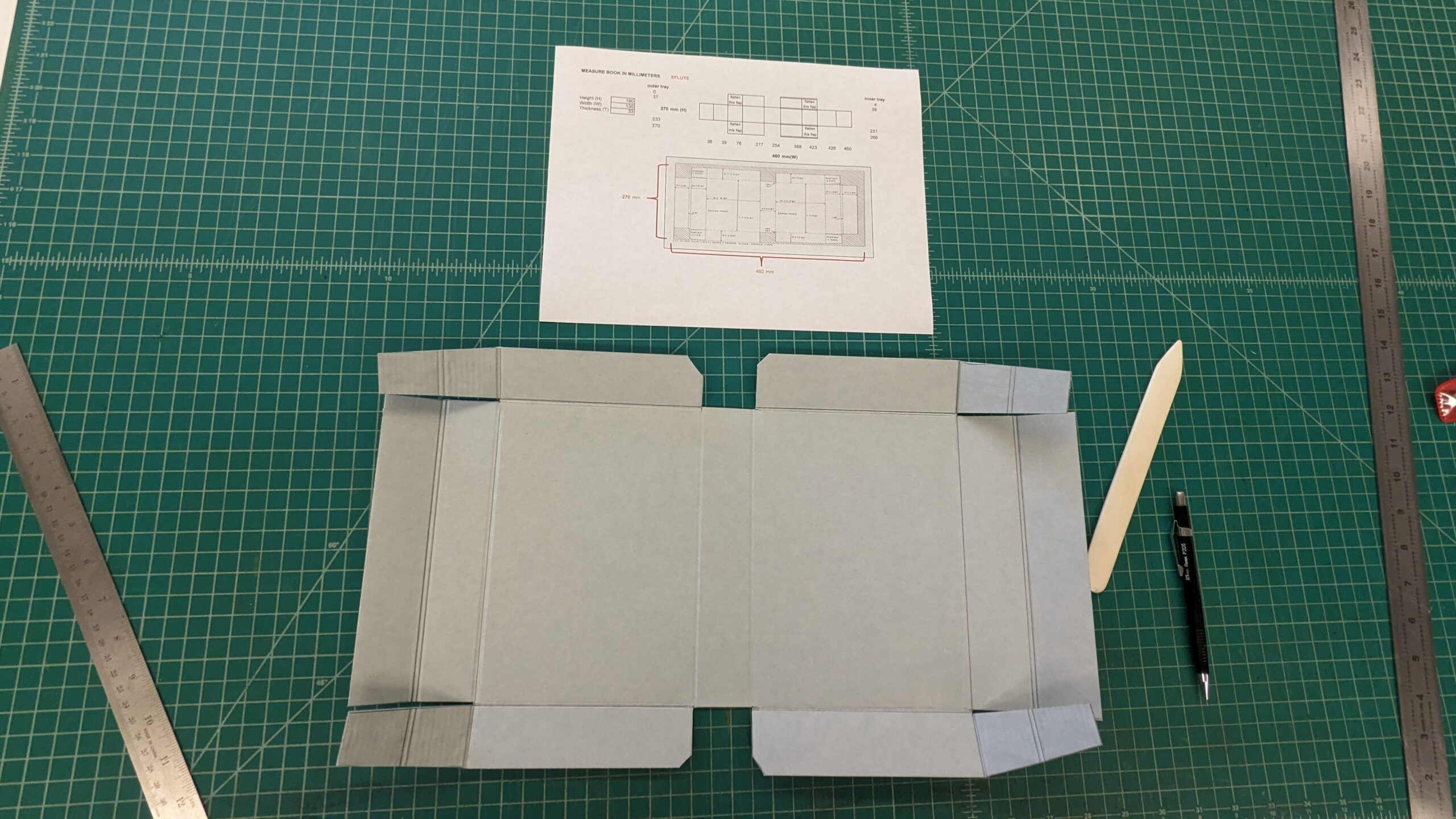
Corrugated clamshell boxes came next, with their in depth measuring and precision crimping and cutting. Like a tuxedo box, these boxes offer better storage from light and dust, and are a more structured enclosure. Where they differ, though, is they are made from corrugated board rather than Bristol board, and this offers more support to items that need a little boost of structural help. These boxes are made from one piece of board that is cut and folded into a clam-like box that opens on one end and is attached at the spine.
A corrugated clamshell during the construction process. This clamshell still needs it’s ends glued in to create it’s box shape.
General Collections Treatment
My final big learning project was cloth tape removal, which was something completely different, making it very enjoyable to learn. Cloth tape removal is taking off old adhesive tape that has been applied to materials that is now falling apart. To remove cloth tape, a poultice of methyl cellulose is applied in thirds to the tape. Introducing moisture to the adhesive allows you to slowly and carefully use a Casselli microspatula to loosen and remove the tape, leaving behind only the original materials.
An old pamphlet that’s been bound together with cloth tape in the middle of the removal process. Weights hold down pieces of Mylar to keep the pamphlet cover from absorbing any of the poultice. The cloth tape is the grey strip on the right of the pamphlet, and you can see where some of the tape has been removed and what still needs to be done.
Final Impressions
I’ve learned so much over my first month at the lab, but so far corrugated clamshells have been my favorite. It’s been so fun to grow my hand skills and to see how much of a difference one month can make, and I’m so excited to expand my horizons and learn more about the lab in the upcoming months!
For Preservation Week 2024, Duke University Libraries will host a virtual panel discussion about Public Digital Collections of Conservation Treatment Documentation on Thursday May 2 at 11 am EDT. Conservation representatives from four institutions (The British Museum, The Preservation Lab (Cincinnati, Ohio), Duke University Libraries, and Stanford Libraries) will share their experiences in building and sharing their institutions’ digital collections of conservation treatment documentation. Panelists will introduce their collections and discuss topics such as digital preservation of treatment records, metadata creation, linking to catalog records and finding aids, and potential privacy and copyright issues.
The free webinar will take place at 11 am Eastern Daylight Time (8 am Pacific Daylight Time/ 4 pm British Summer Time) and will last 60-70 minutes. The panel will be recorded and the video will be shared with registered attendees upon request.
A recording of the webinar and available resources is now available inthis shared folder.
Additional information
Host
Beth Doyle, Preservation Officer; Leona B. Carpenter Senior Conservator; and Head, Conservation Services Department (she/her)
Panelists
Louisa Burden, Head of Conservation, British Museum
Ashleigh Ferguson Schieszer, Book and Paper Conservator, Co-Lab Manager, (she/her)
Erin Hammeke, Senior Conservator for Special Collections, Duke University Libraries (she/they)
Ryan Lieu, Conservation Operations Coordinator, Stanford Libraries (he/him)
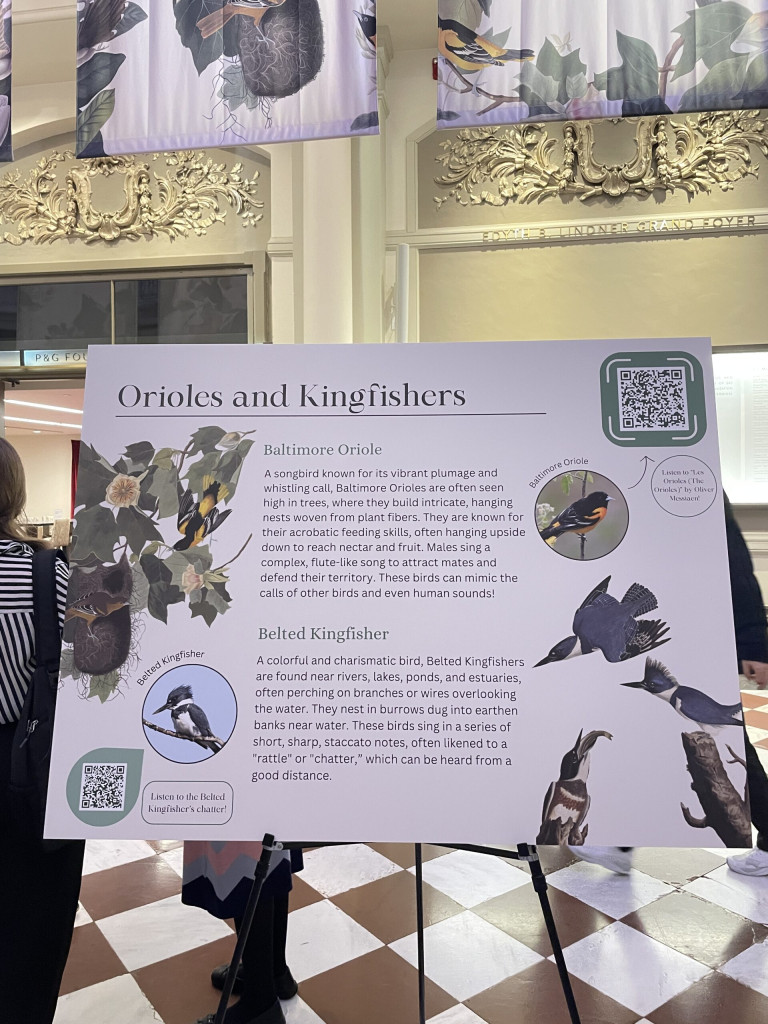
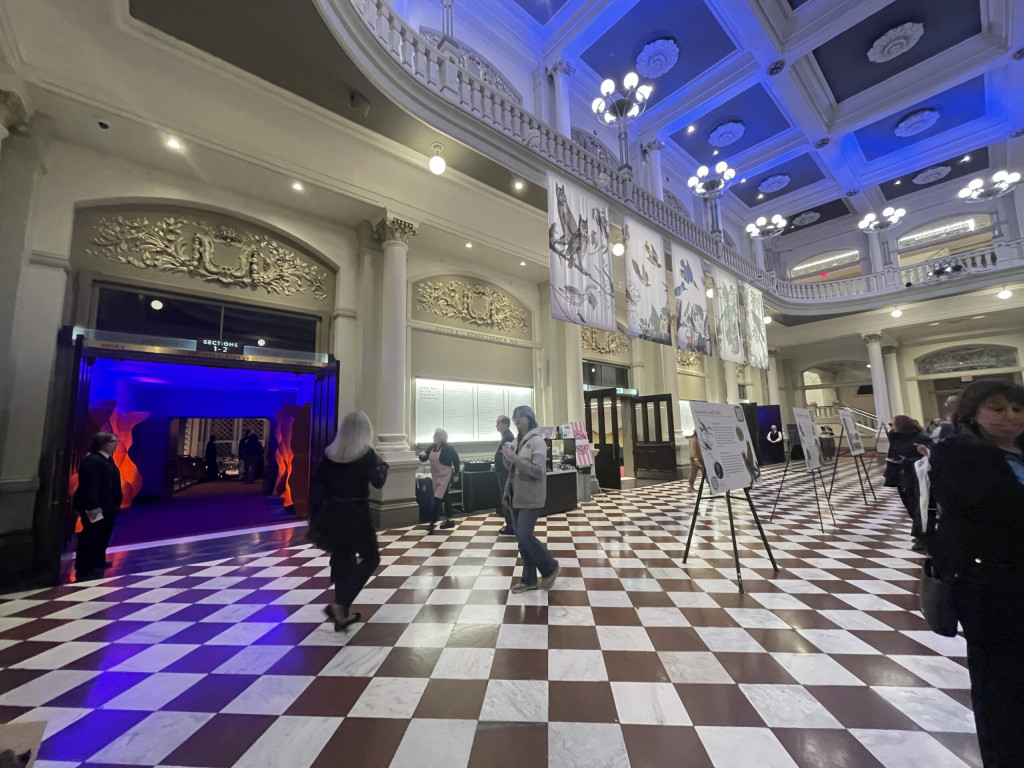
Illustrations of the Nests and Eggs of Birds of Ohio are on display at the Cincinnati Symphony Orchestra March 1st and 2nd as part of a musical program honoring Oliver Messiaen who was both a major composer of the 20th century and an ornithologist.
Synesthesia
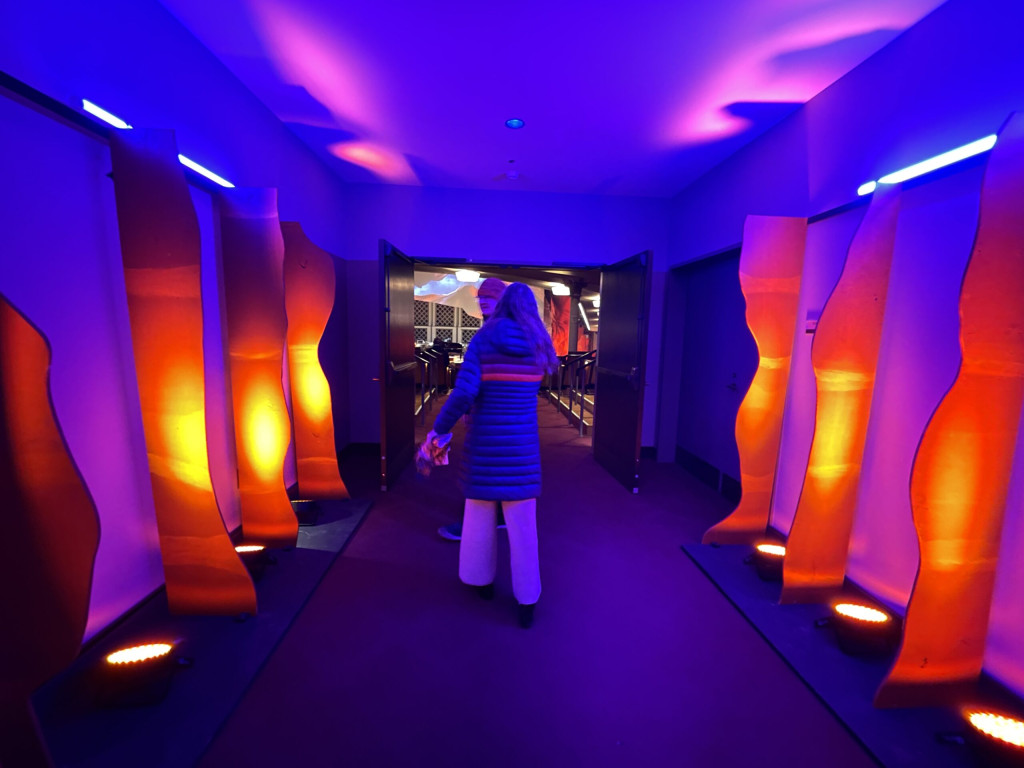
Oliver Messiaen is well known for studying bird songs and interpreting their notes into musical transcriptions. His works are also unique in that Messiaen experienced synesthesia which greatly influenced his creations. Synesthesia is when a person perceives more than one sense at a time, such as Messiaen who experienced colors when listening to music and was able to see sounds.
Cincinnati Symphony Orchestra Program
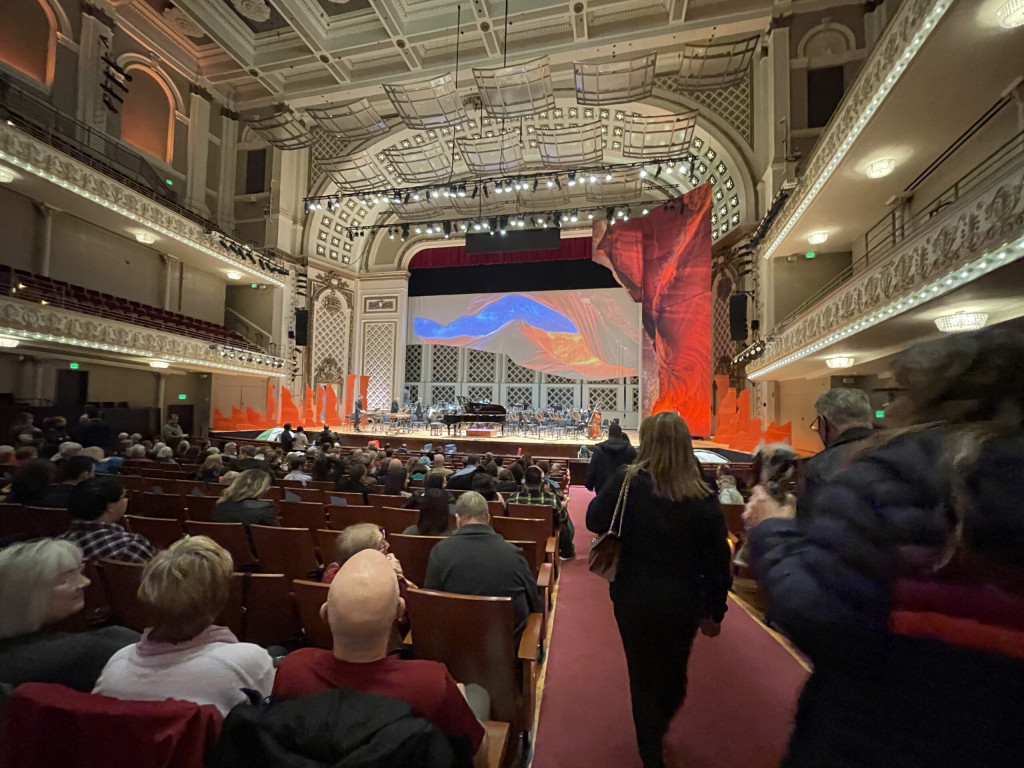
The program at the CSO honors Messiaen by incorporating both music, color, and bird visuals to invite the audience to experience a unique multi-sensory experience. Messiaen’s Des canyons aux étoiles (“From the Canyons to the Stars”) will be performed by the conductor, Matthias Pintscher, and pianist Pierre-Laurent Aimard.
Click the image for a link to the digital program for the CSO Proof: From the Canyons to the Stars
“Inspired by his visits to Utah’s Bryce Canyon and Zion National Park, Messiaen’s Des canyons aux étoiles (“From the Canyons to the Stars”) depicts the birdsong and red rock hues he experienced during his time in the desert… Accompanied by immersive video-art, Springer Auditorium will be transformed, allowing listeners to escape into the southwestern landscape and experience a synesthesia of their own.” – As described by the CSO website
Nests and Eggs
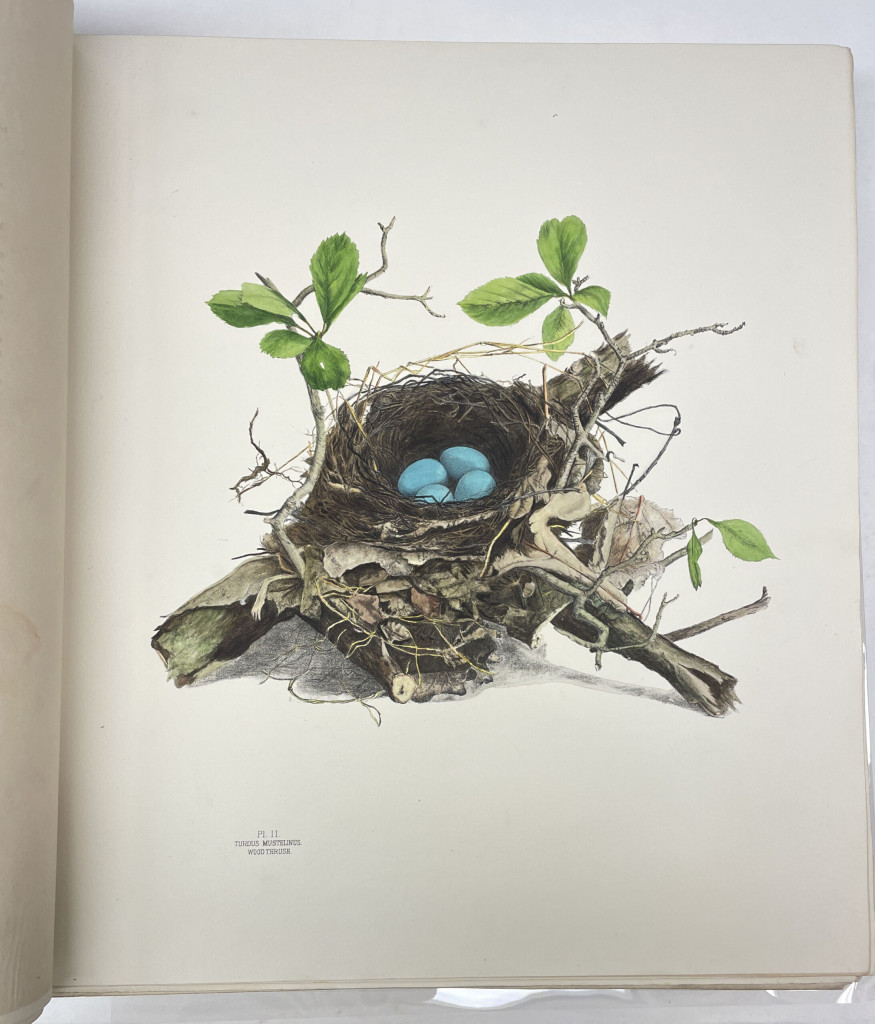
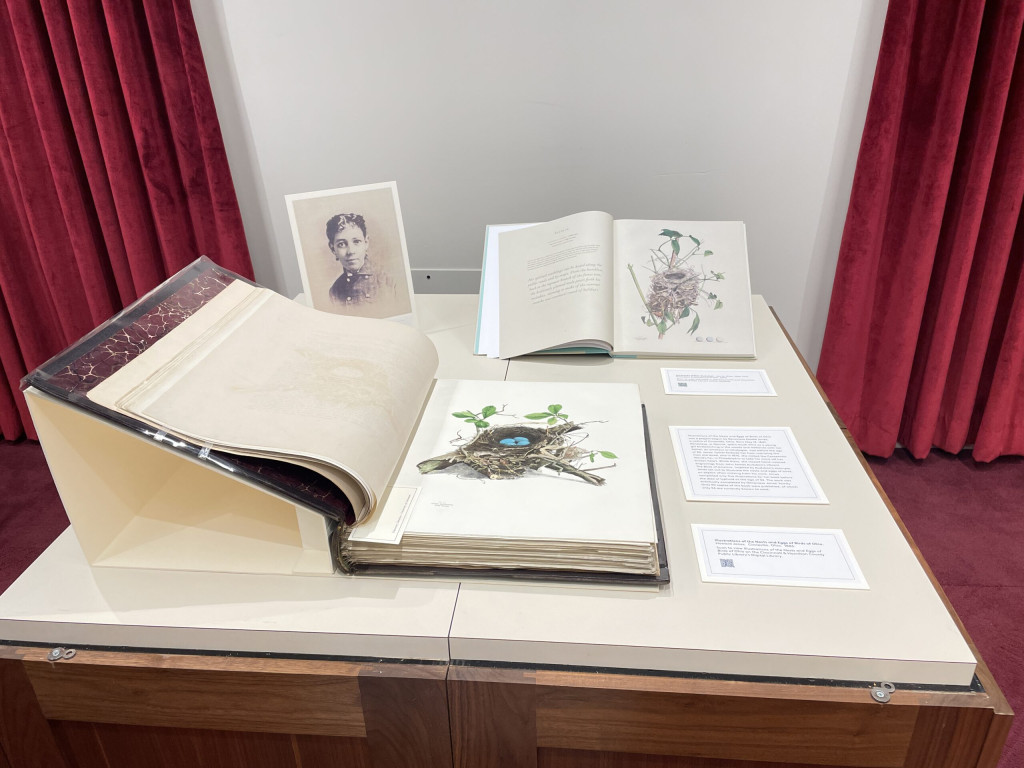
Complementing the musical performances, on display will be a page from Cincinnati and Hamilton County’s Illustrations of the nests and eggs. The page showcases a local Ohio native, the Wood Thrush, who lays bright blue colored eggs within a nest made of old leaves, dried grasses and moss (rarely sticks). The nest of the Wood Thrush also contains “rootlets” placed intentionally inside of the nest, resulting in a pinkish brown or black lining. The nest is “plastered” with a thin mud that is easily missed as it’s thoroughly worked in and covered.
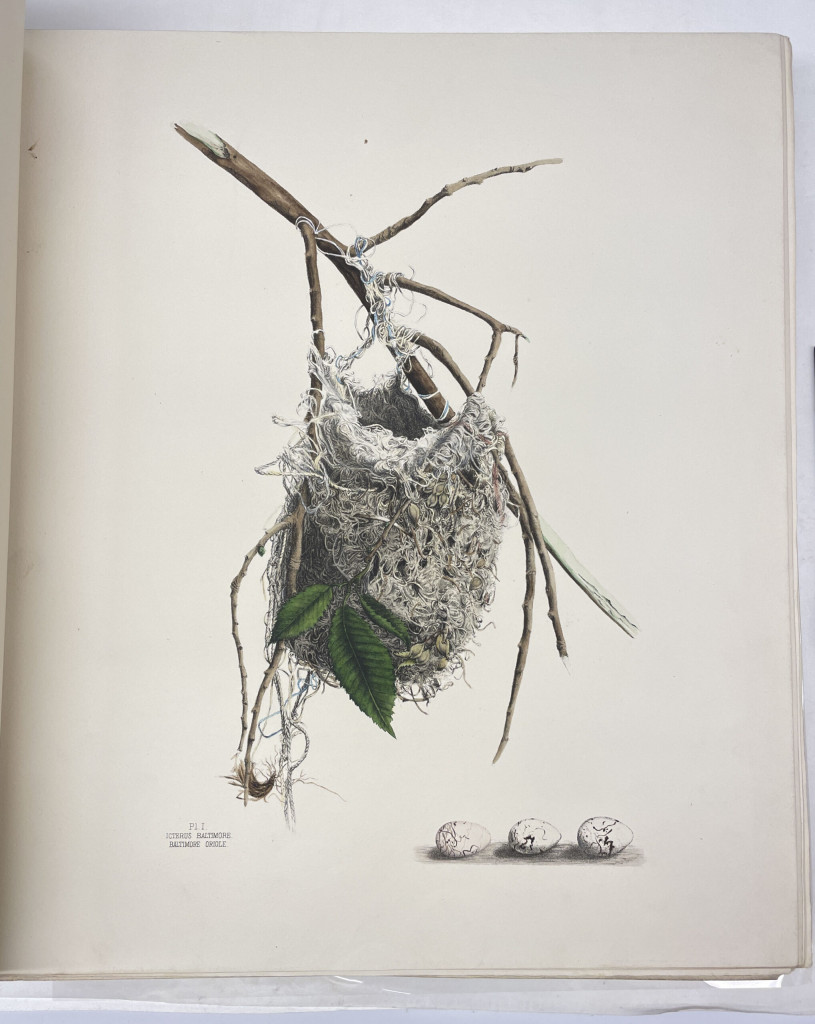
Nests and Eggs, while lesser known than Audubon’s Birds of America, is quite extraordinary in how it highlights the uniqueness of the construction of nests made by different bird species. Take for instance, the Baltimore Oriole’s nest, which primarily consists of strings and flax fibers to create a soft and long pocket. Compare that to the more traditional nest of the Wood Thrush whose home is bowl-shaped with a wide opening.
Baltimore Oriole – Plate 1
Wood Thrush – Plate II
It’s also extraordinary that the illustrations are detailed lithographic portraits created by Gabrielle Estelle Jones and her family, despite not having been formally trained. Their work was intended to be used as a companion volume to John James Audubon’s Birds of America. While not as large as the Birds of America double elephant folios, Eggs and Nests is still an impressively large-sized volume.
Gabrielle “Gennie” Estelle Jones
The following excerpt was written by Sara Williams, Arts & Special Collections Reference Librarian:
Illustrations of the Nests and Eggs of Birds of Ohio was a project begun by Genevieve Estelle Jones, a native of Circleville, Ohio. Born May 13, 1847, Genevieve, or Gennie, spent much time as a young girl birdwatching in the woods and wetlands with her father, an amateur ornithologist. Just before the age of 30, Jones’ father forbade her from marrying the man she loved, and in 1876, she visited the Centennial World’s Fair in Philadelphia to take her mind off her broken heart. While there, she viewed hand-colored engravings from John James Audubon’s vibrant The Birds of America. Inspired by Audubon’s example, Jones set out to illustrate the nests and eggs of birds, an aspect often missing from his work. Jones completed only five illustrations for her book before she died of typhoid at the age of 32. The work was eventually completed by Genevieve Jones’ family. Only 90 copies of the book were published, of which only 34 are currently known to exist.
Preservation
As part of the Preservation Lab’s role in displaying the object, a condition report book was created to accompany the item to ensure the object’s condition is preserved. This helps those who are installing anticipate any possible challenges in supporting fragile pages or bindings. In this case, the upper endsheets are extremely brittle and have been previously repaired, but could break again if not carefully draped and held with polyester strapping in a safe manner.
After determining a proper exhibit case to fit and secure the binding, a custom cradle was made. To protect weak points of the binding on display, a support was constructed out of 8 ply museum mat board to support the heavy and oversized pages from stress along the joint.
Solutions were tested to fit within an 18 inch deep case, however, the book was just too large!
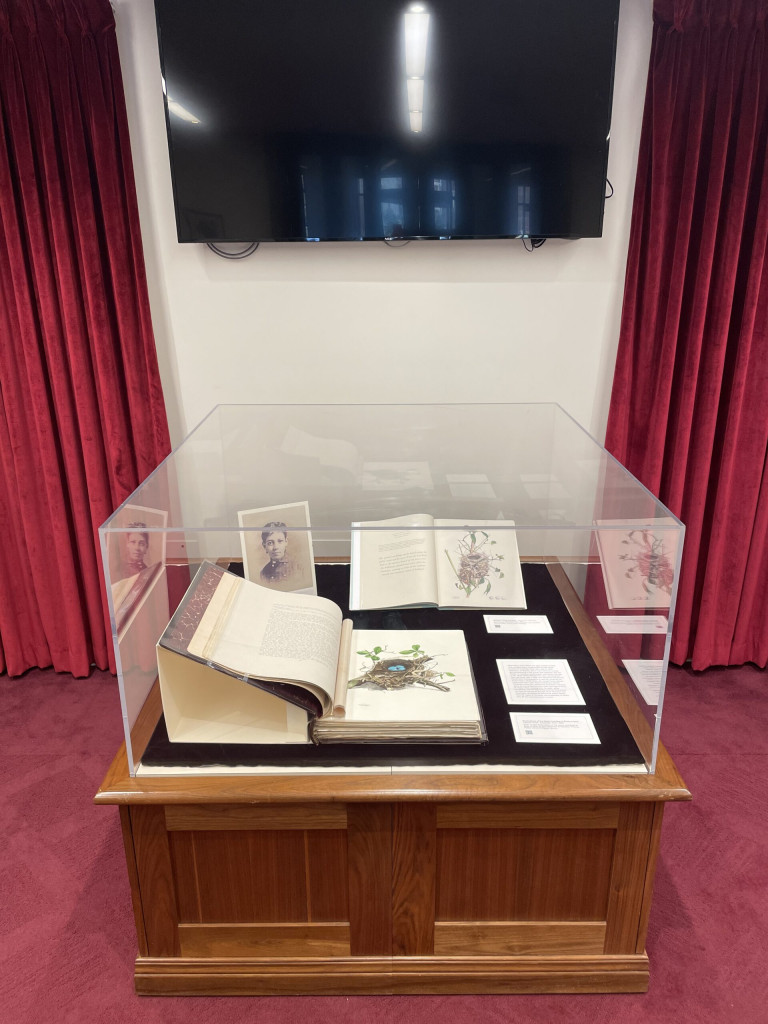
A custom 8 ply mat board cradle was created to fit within a more appropriate 4 ft case. Pages are strapped with polyester strapping
Before an object travels, it’s often reviewed to make sure it can handle transport and treated if necessary. Luckily, in this case, the binding was treated in 2016 and is still in great condition for its age. When it received treatment, at that time it received a lightweight yet strong enclosure that will also work well to safely protect the item for travel to the CSO.
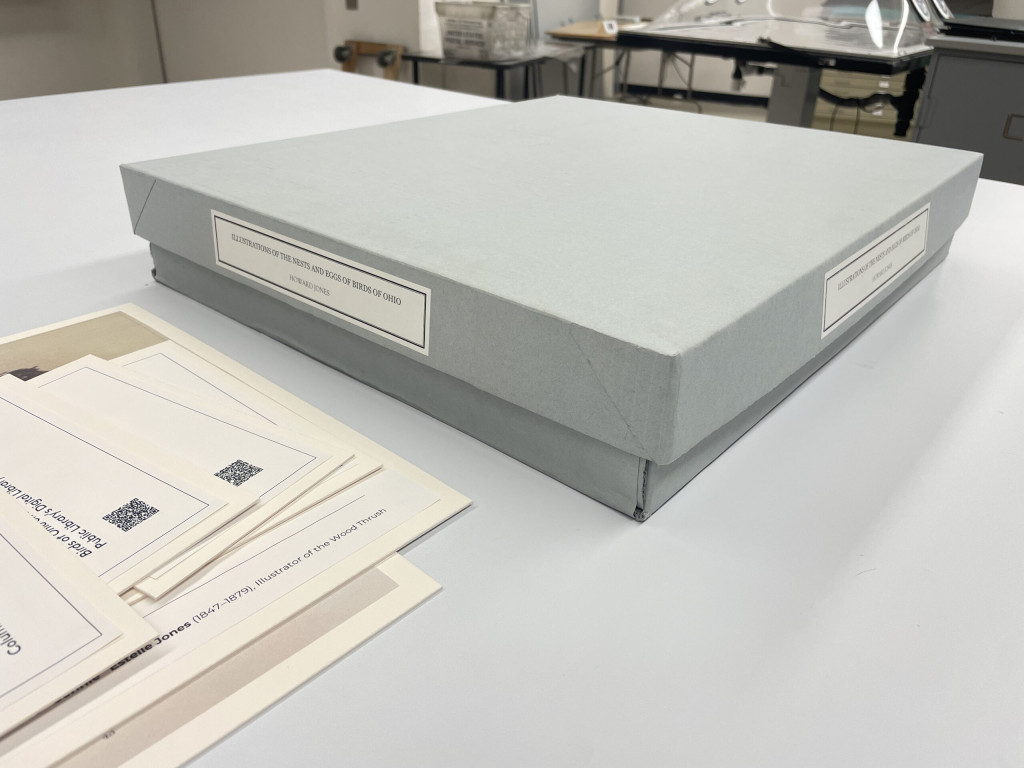
Corrugated banker’s box with a drop spine houses the Nests and Eggs book. Binding and exhibit labels are ready for packing.
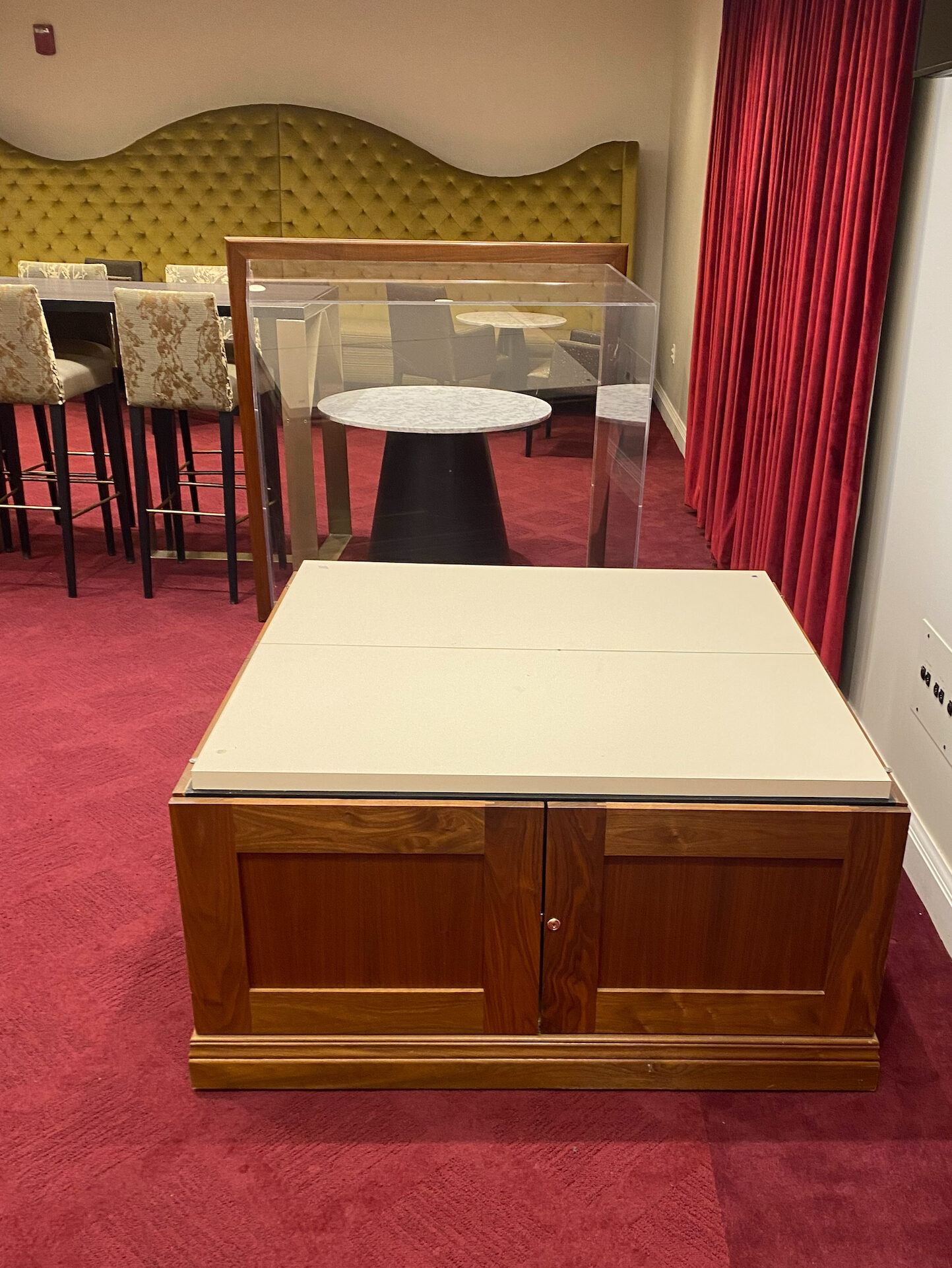
A 4-foot case was kindly loaned to the CSO from the Behringer-Crawford Museum and is ready for use! (Image credit: Amber Ostaszewski)
Entrance to the Founder’s Room
Bird sounds were played in the entryway
During staging of the exhibit
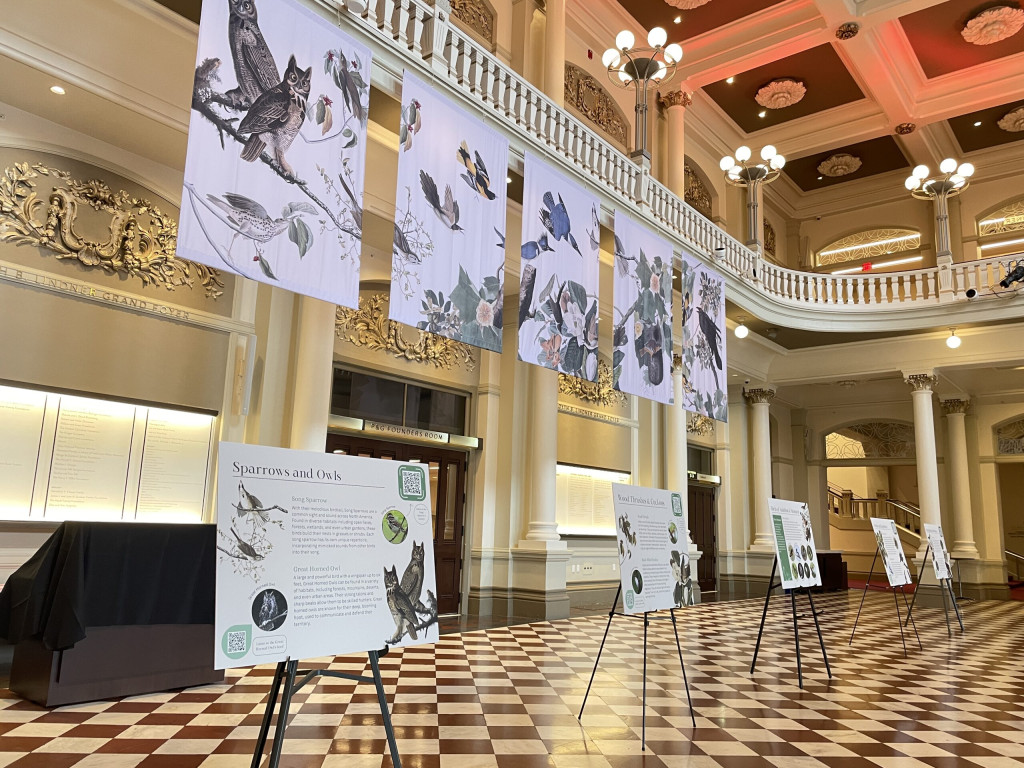
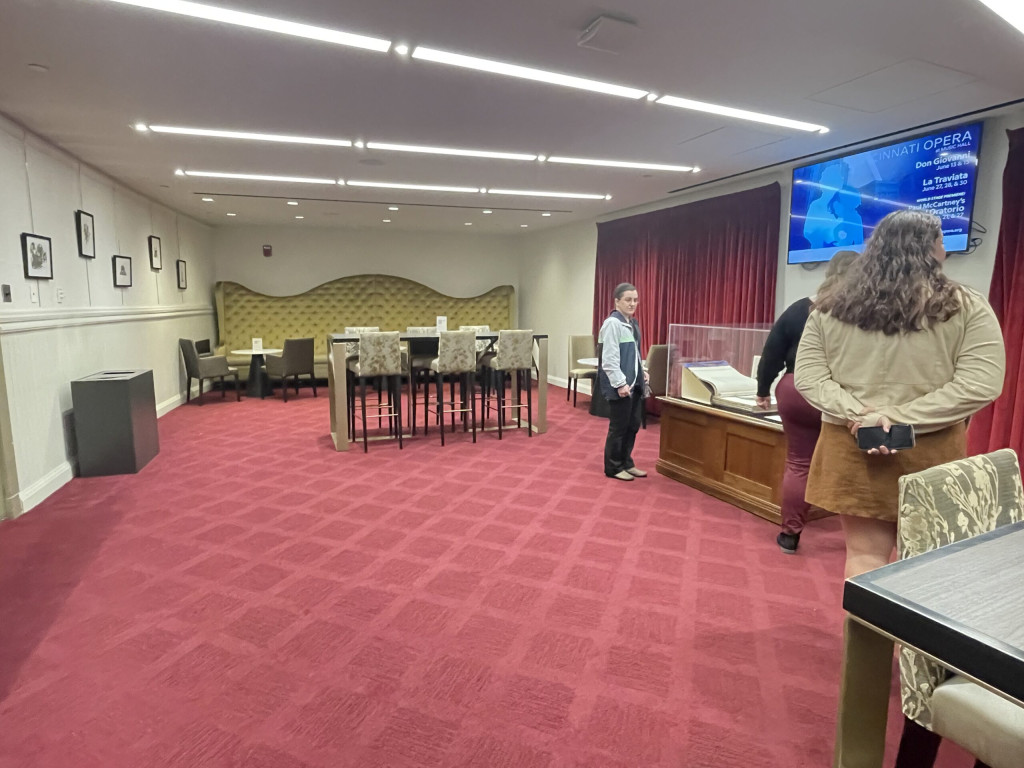
Nests and eggs on display in the Founder’s Room
The Founder’s Room
Night of the performance
Entering the theatre
Not visible are the camping chairs and fire pits in the orchestra pit
Additional Resources
Interested in seeing more Nests and Eggs? The entire binding is conserved and digitized where it is made publicly available online. More information about Gennie’s fascinating and tragic history can be read at the Linda Hall website.
CSO Program Dates
There are two programs where you can view the item on display, Friday, March 1st and Saturday, March 2nd, both at 8pm at the Music Hall. Interested? Click here for the digital program.
We hope to see you there!
Ashleigh Ferguson Schieszer [CHPL] – Book and Paper Conservator, Co-Lab Manager
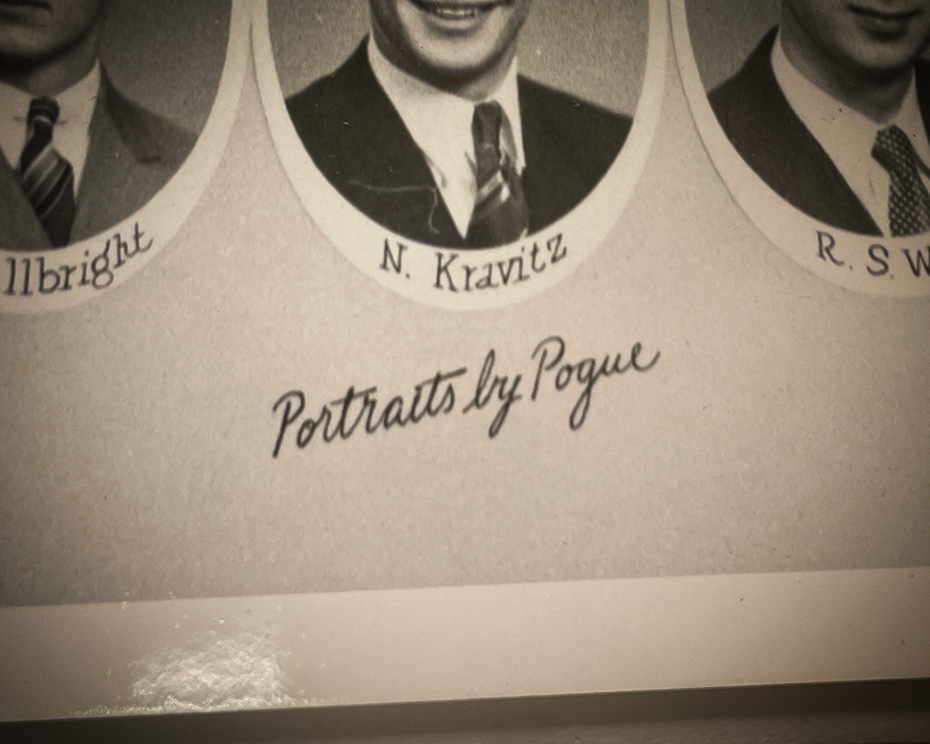
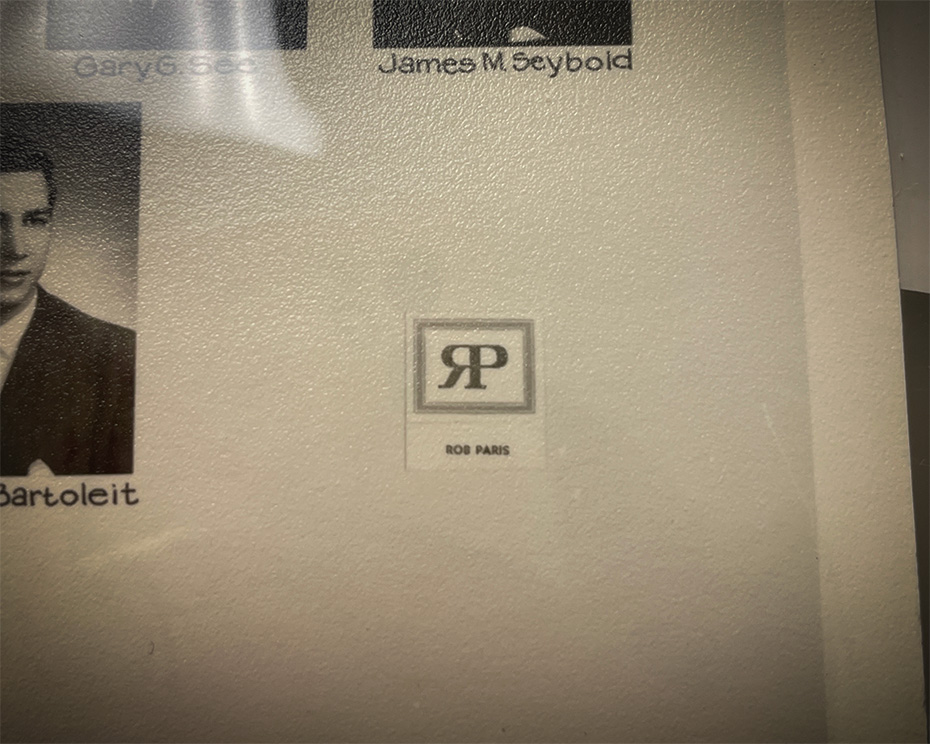
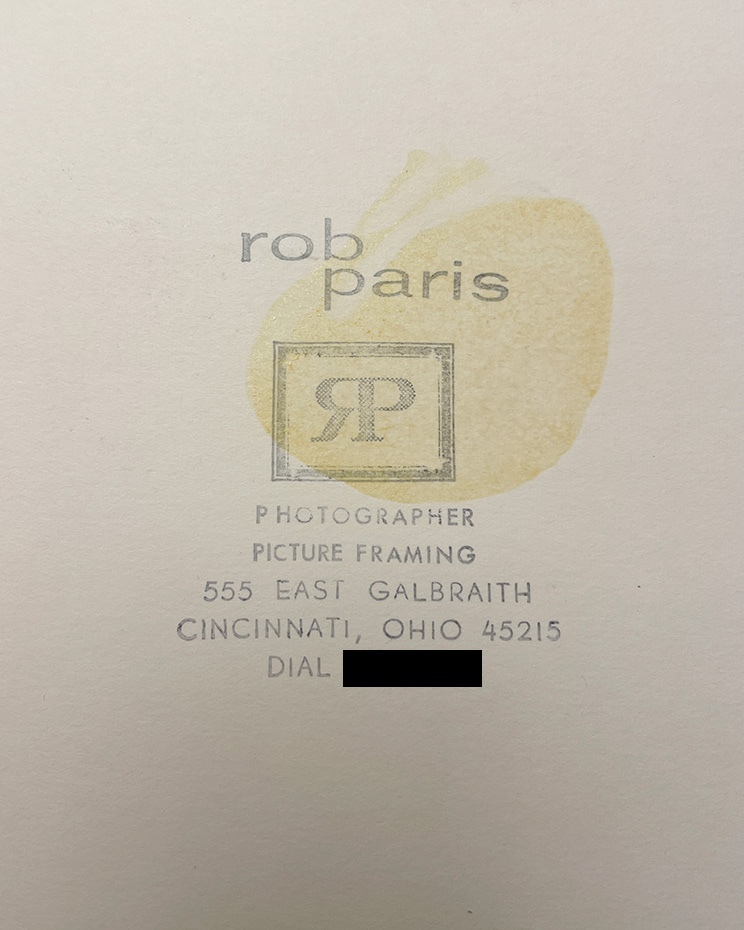
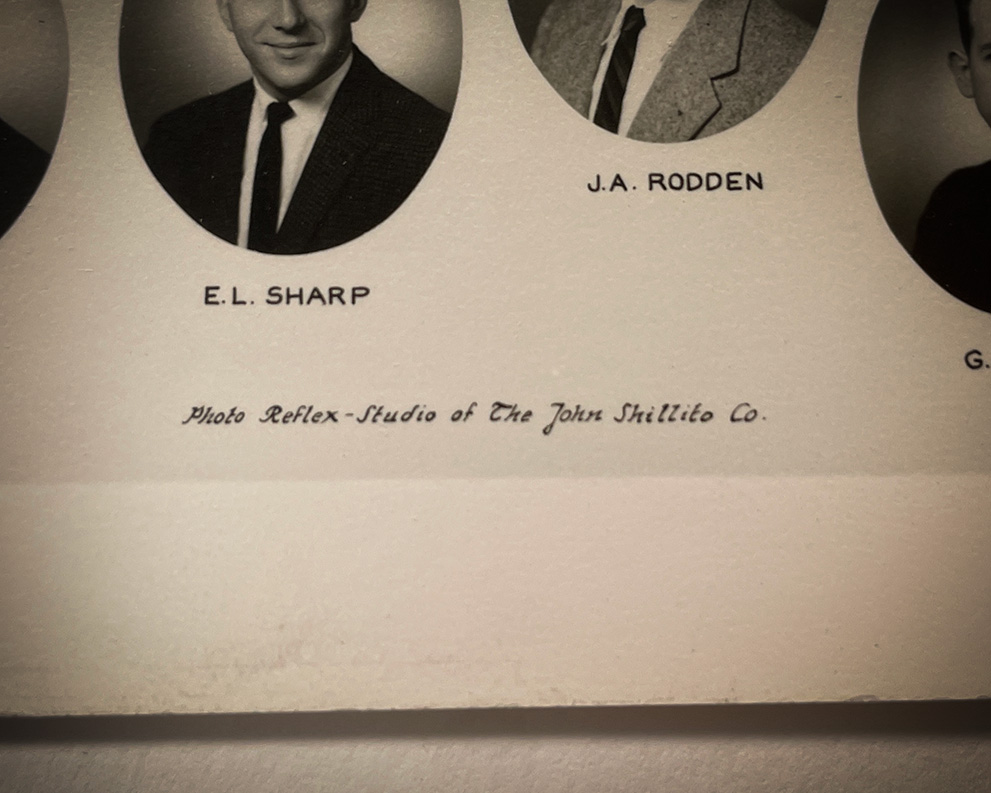
Catarina and I are working on rehousing a large series of College of Engineering class composites from the mid-1950s through the early 2000s. It is a fantastic visual timeline of 20th century photographic processes. It also perfectly charts cultural shifts through the decades (so many haircuts and mustaches!) There was even a gentleman that I sang in Chorus with during my years as a student here! But even beyond all of that, there were some unexpected tiny bits of Cincinnati history. The University handles its own photography now, but that wasn’t always the case. The early class composites were done by local businesses. The bulk of them were done by three now-defunct studios: Pogue, Shillito’s, and Rob Paris Photography. If you are a Cincinnati native, you may have heard of them. If you are of a certain age, you may even have had your portraits done by one or all of them. (I personally had portraits taken at Shillito’s as a child.) What a fun little piece of history. Of all the things that I enjoy about working with the photographs in our collections, I think the unexpected finds may be my favorite!
The imprint of the H & S Pogue Department Store.
Imprint of Rob Paris studio.
Photographer’s stamp found of the verso of several of the Rob Paris composites.
Imprint of the Shillito’s photo studio.
Hyacinth Tucker —- (UCL) Conservation Technician and Bindery Coordinator
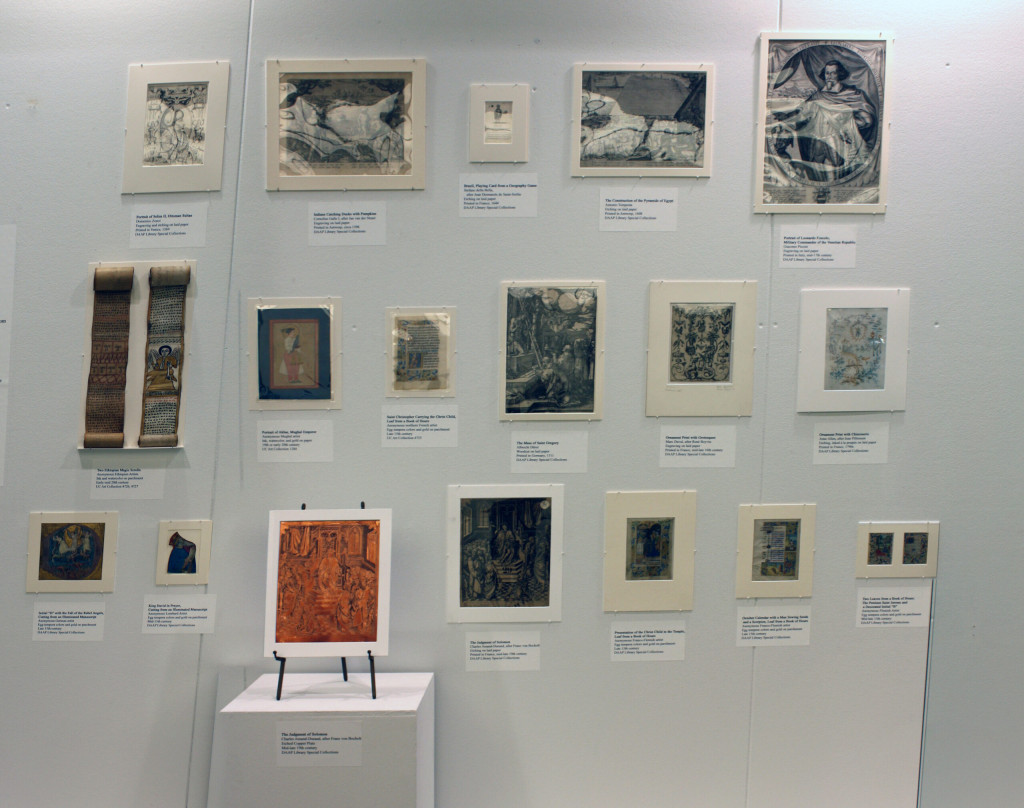
For the past six months, Jessica and Catarina have been working with the DAAP Library on housing their Teaching art collection, including prior acquisition and newly acquired items. This collection consists of different art prints on paper, print plates and manuscript parchment leaves in need of long-term housing. In addition to housing, this collection is used for teaching in a classroom setting and for exhibition.
Most of the collection only requires simple matting systems, but some require more intricate matting systems such as the copper plate along with its print, a project mentioned in a previous blog post entitled How many magnets is too many magnets!?.
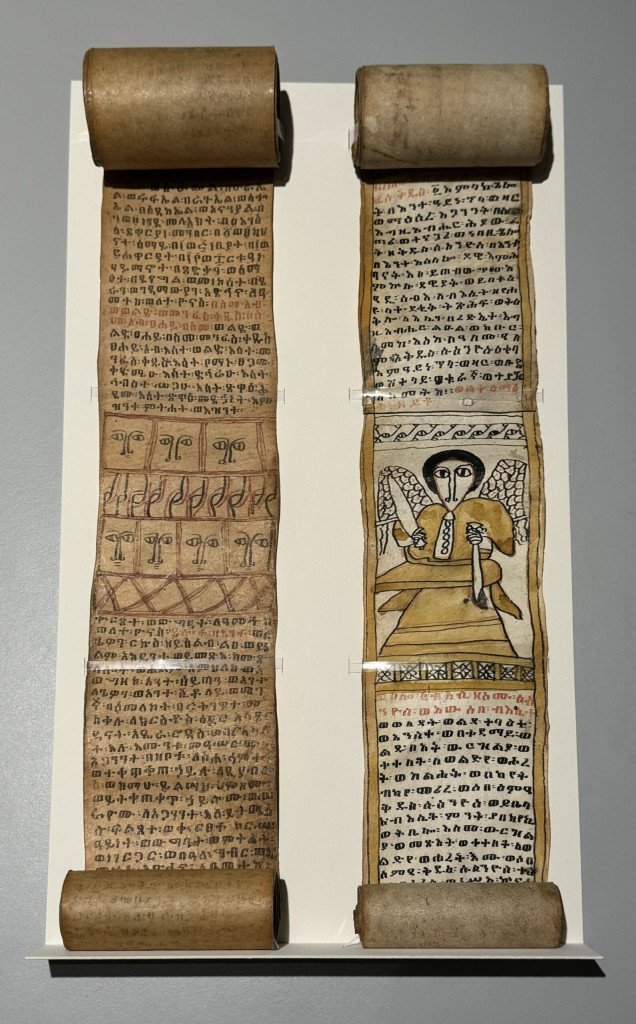
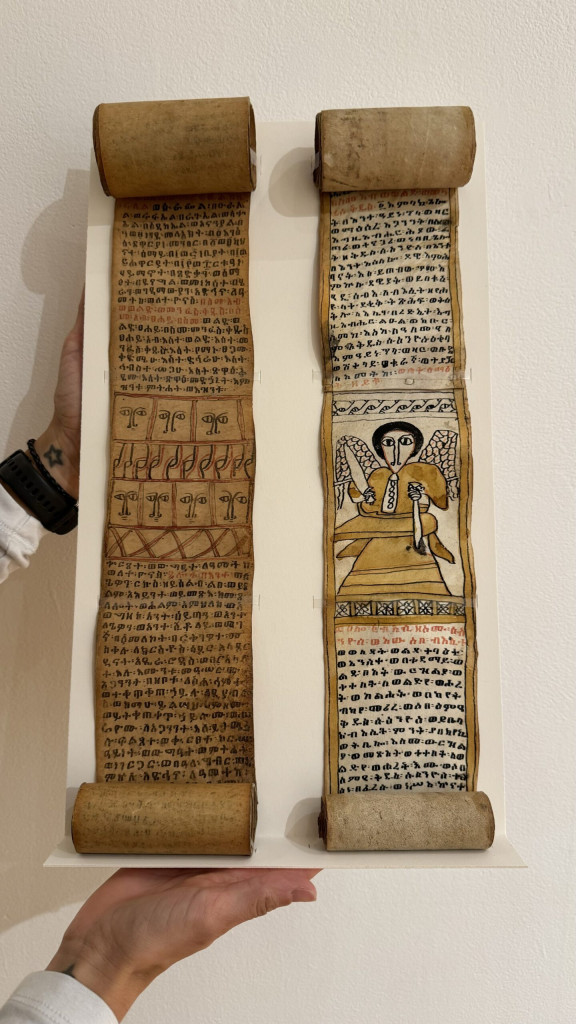
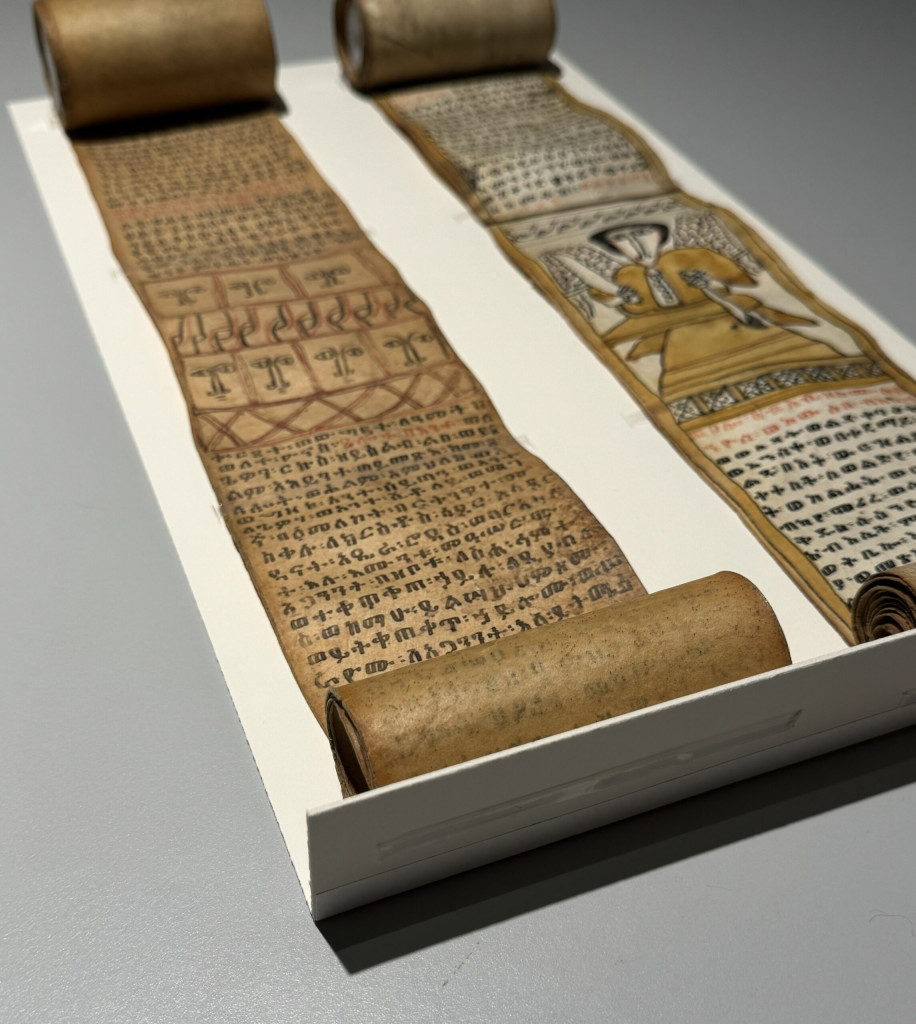
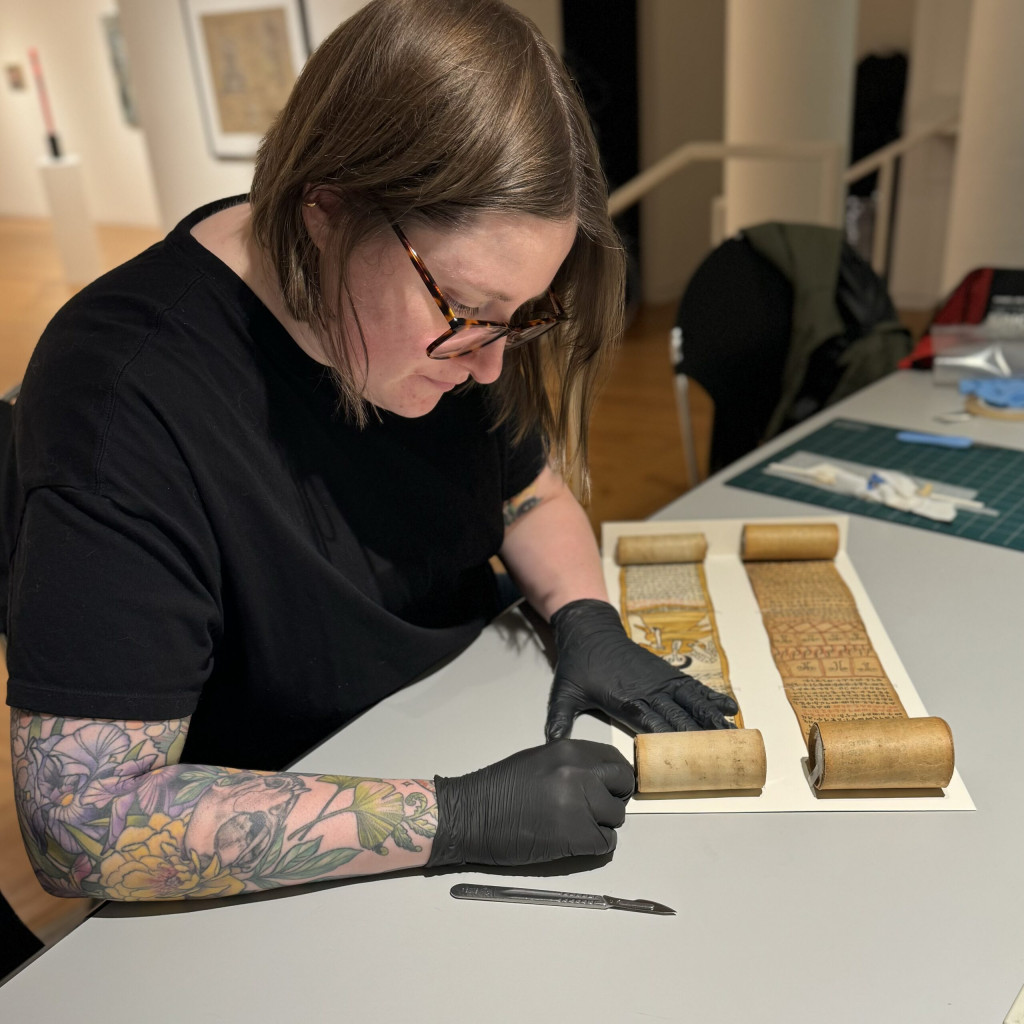
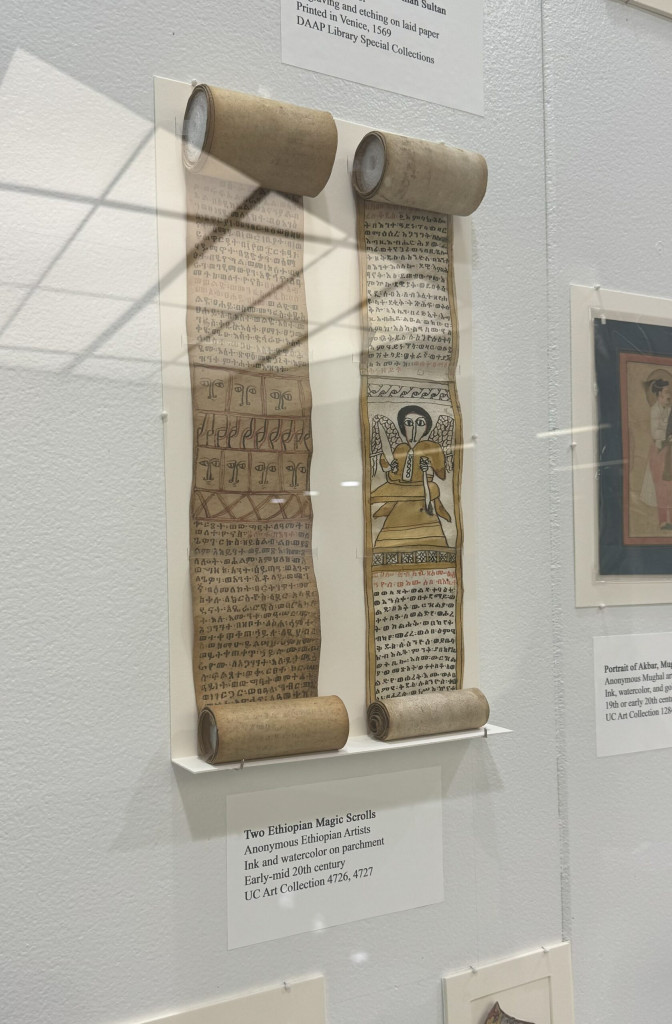
As some of the items of this collection were being prepared to go on exhibit, we had the opportunity to create mounts for other items, such as two parchment scrolls that were included in the exhibit. This was a fun project to work on, as it required us to create a support that would secure both scrolls, while providing an elegant solution for display.
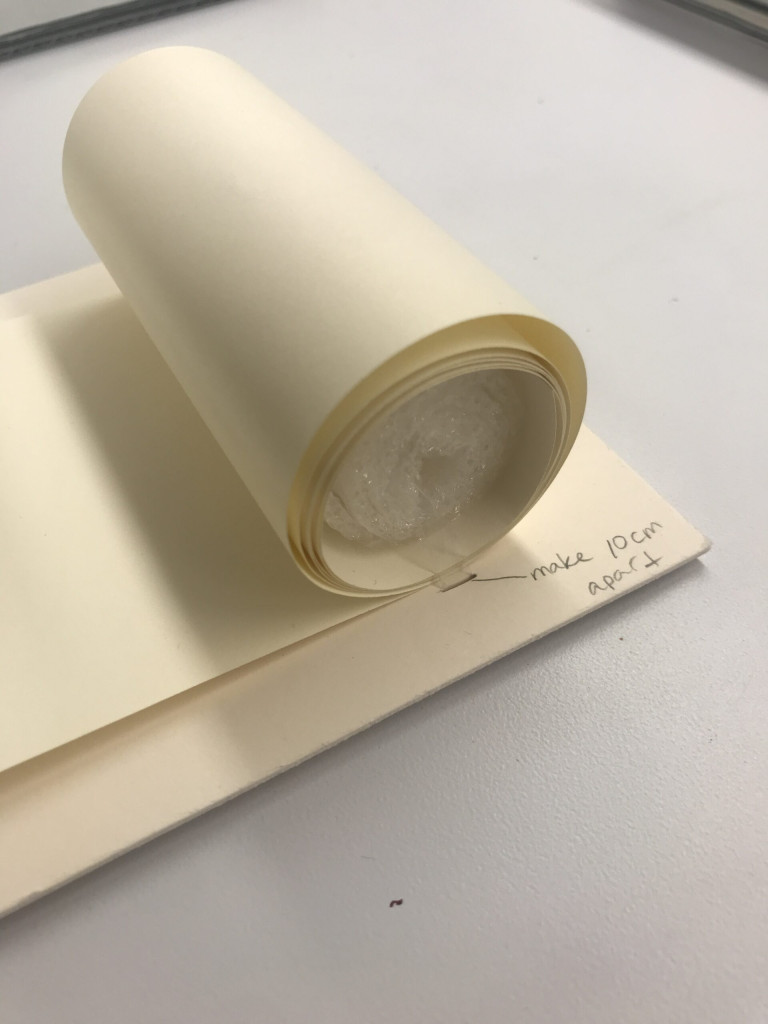
To start, Jessica created a very rough small model with mat board, polyethylene strapping, and paper (as we always do with anything new in the lab, we do love model making!!). The model provided us the visual example that we needed to create the mount for the two scrolls.
Small rough model created by JessicaSmall rough model created by Jessica
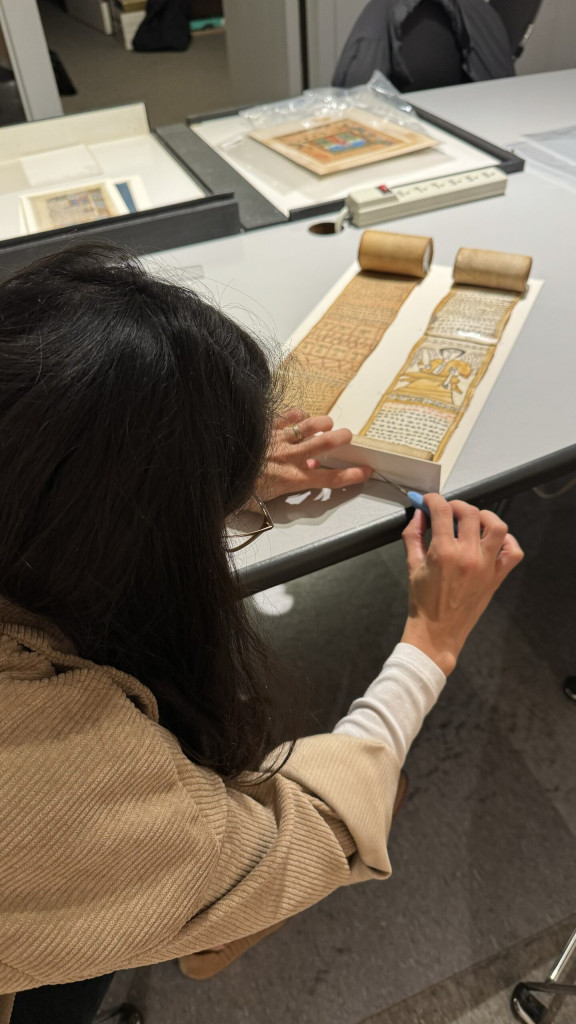
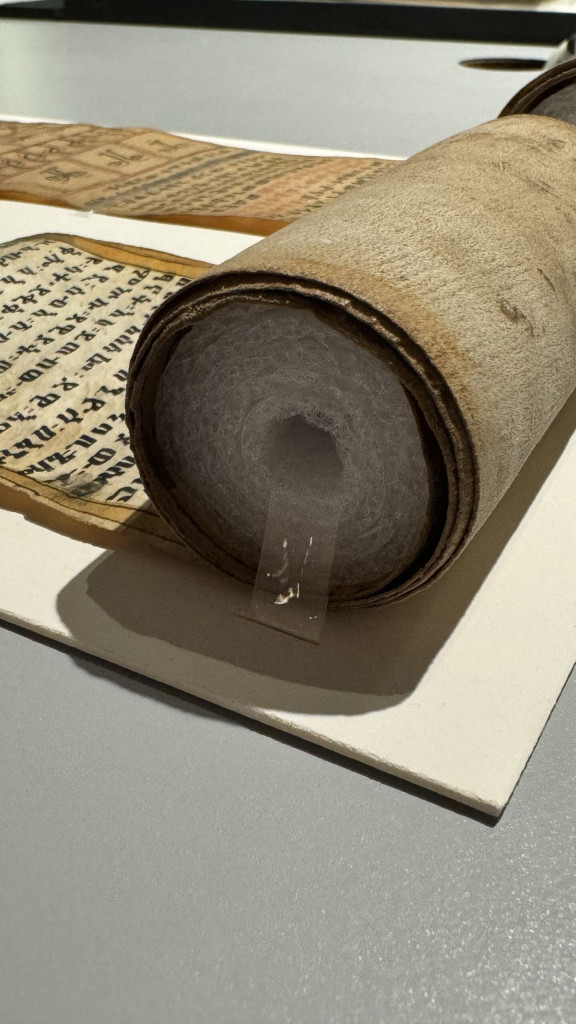
With the model in mind, we were able to engineer a good system that would provide support for the scrolls and could be used for display. The scrolls were supported with foam rolls on the inside for the rolled ends, and secured with polyethylene strapping that only touched the foam. The sections of the scrolls that were going to be displayed were also secured with polyethylene strapping that wrapped around the mat board support through slits in the board. At the bottom, the mat board extended outwards creating a small shelf to support the end of the scroll.
Scrolls mounted and ready for exhibition.Scrolls mounted and ready for exhibition.
A small “shelf” of mat board supports the bottom of the scrolls.
Catarina adjusting the strapping on the mount.
A small “shelf” of mat board supports the bottom of the scrolls.
A small “shelf” of mat board supports the bottom of the scrolls.
The foam rolls support the inside of the scrolls and are secured with polyethylene strapping.
Jessica securing the foam roll that supports the scroll.
As a result of all the mounting and matting we did for the Teaching Art collection and for the scrolls, each item is currently on display at the DAAP Library entrance case:
Current display at the DAAP Library featuring the Teaching Art Collection.A close-up of the scroll mounted on exhibition.
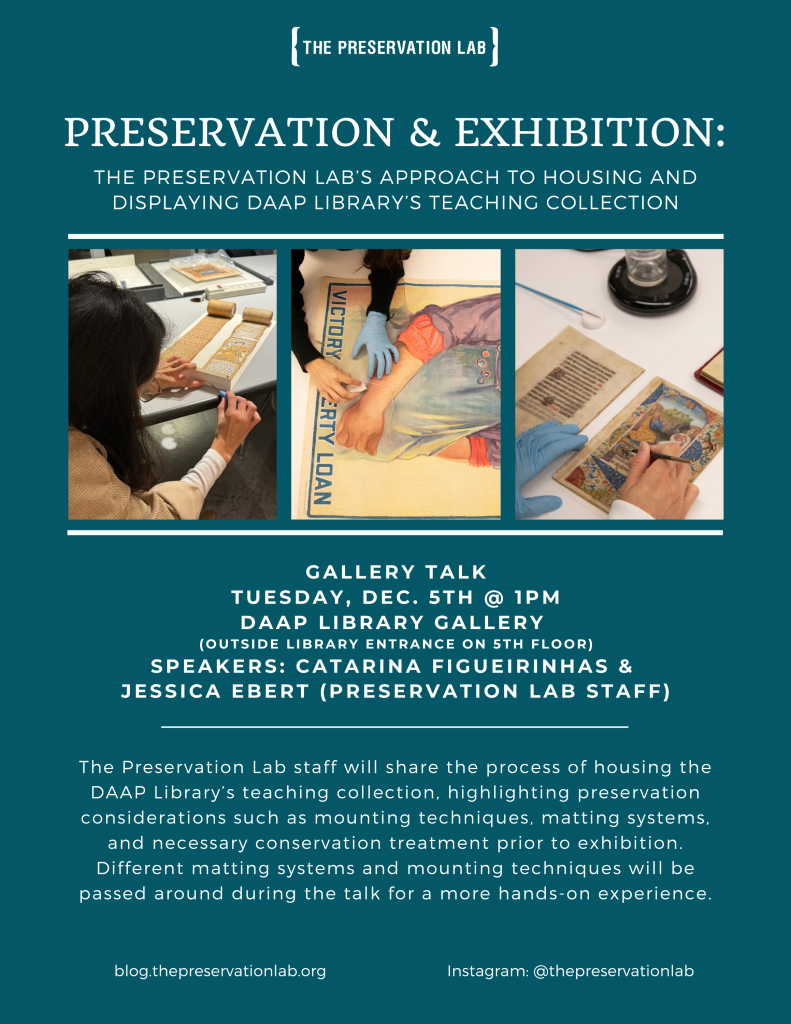
If you are interested in learning more about our preservation considerations for exhibition of this collection, Catarina and Jessica will be giving a short gallery talk on Tuesday, December 5th at 1pm, at the DAAP Library entrance on the 5th floor.
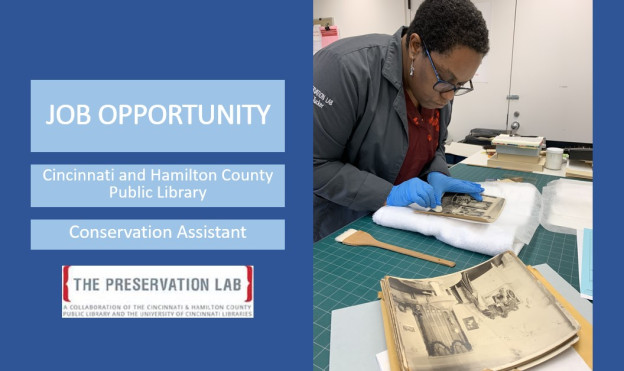
The Preservation Lab, a partnership to preserve and conserve the collections of the Cincinnati & Hamilton County Public Library and the University of Cincinnati Libraries, seeks applicants for a Conservation Assistant position.
The Conservation Assistant is a technician level position with on-the-job training that may appeal to emerging conservation professionals. This position will join a collaborative team of 7 full-time staff members, including conservators, a preservation librarian, technicians, student workers and volunteers to preserve collections from both institutions. The Preservation Lab staff consists of both Cincinnati Public Library and the University Library members. This position is a Cincinnati and Hamilton County Public Library position but is stationed at the University of Cincinnati West campus.
The successful candidate will demonstrate the ability to execute hands-on work with skill.
Founded in 1853, the Cincinnati and Hamilton County Public Library today is one of the busiest and most highly acclaimed library systems in the United States, providing service to over 800,000 residents through a network of 40 branch libraries, a major downtown Main Library, and a Distribution Center. CHPL holds one of the largest genealogical collections in the United States and many other specialized collections, most of which are housed in the Main library.
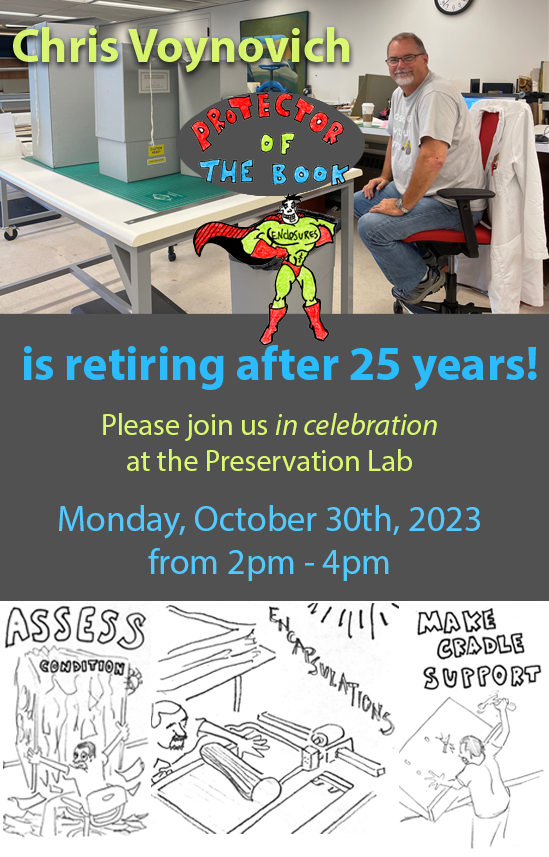
Congratulations are in order! We are happy to celebrate with our lab colleague, Chris Voynovich. After 25 years at the Public Library, Chris is retiring to a lovely beach house in Florida.
Chris first began his career at the library working in Shipping and Receiving. He then transitioned to Cataloging and Processing where he began his journey in material repair. He was a quick learner, able to utilize hand skills from his personal experience in metal work, graphic design, drumming, and matting at a frame shop.
Since 2011, Chris has grown his skills to preserve a WIDE variety of materials at the Preservation Lab. Chris has…
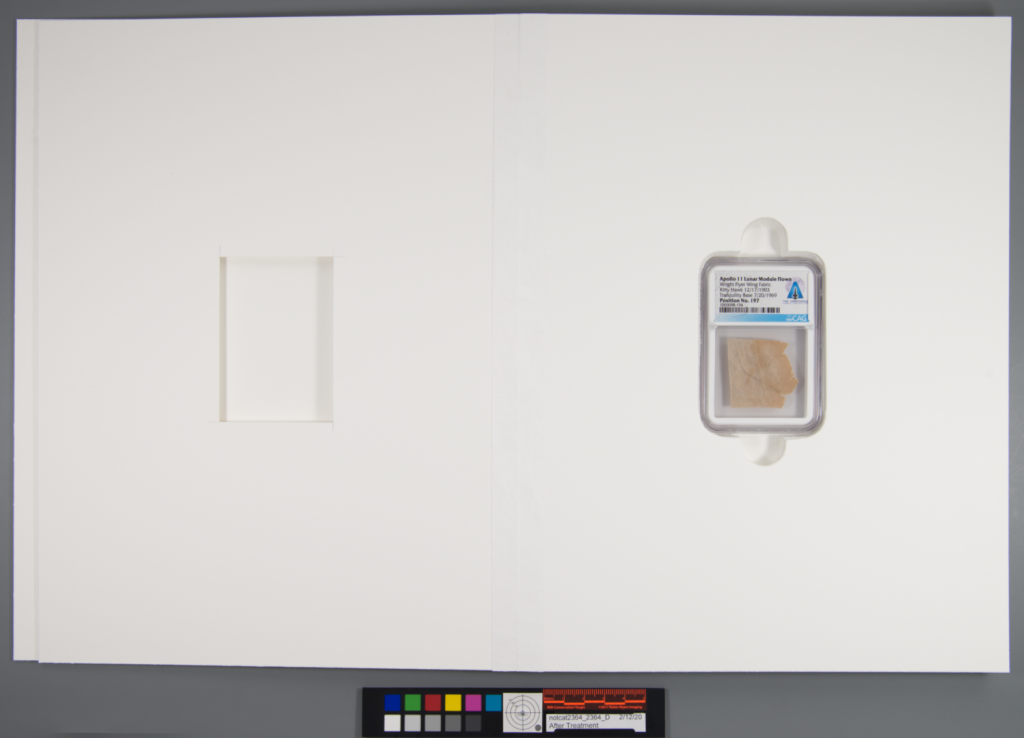
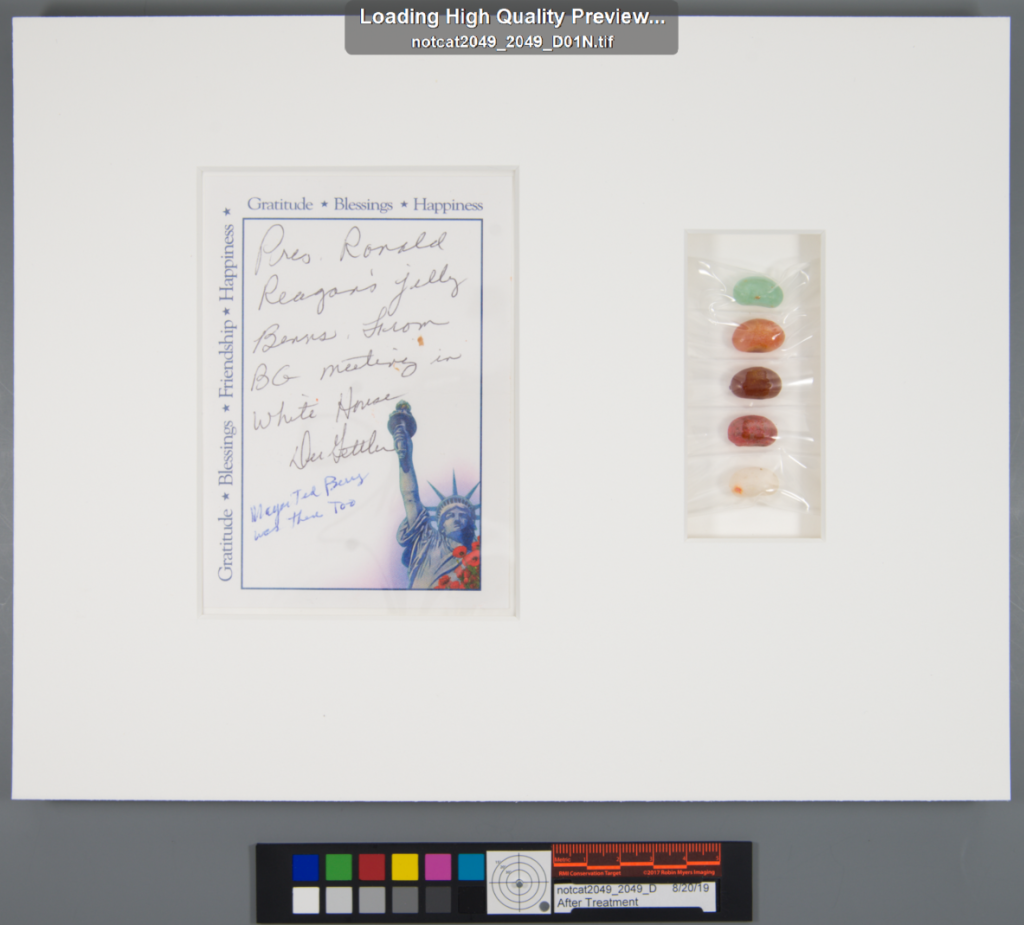
matted Ronald Regan’s jelly beans (see image below),
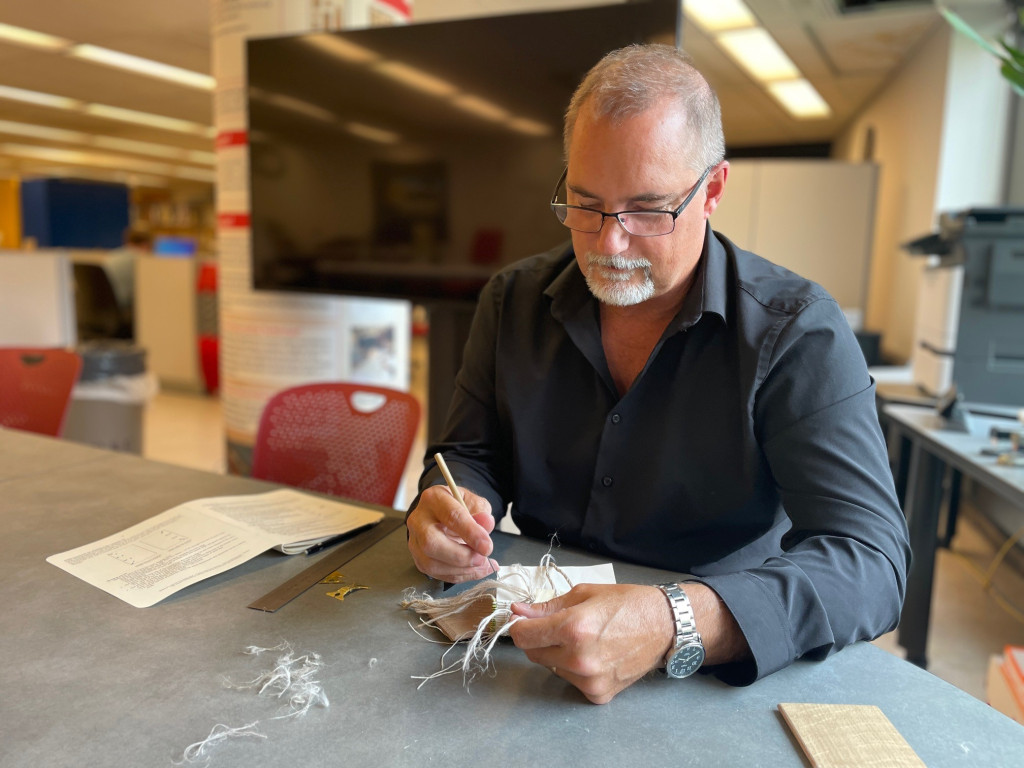
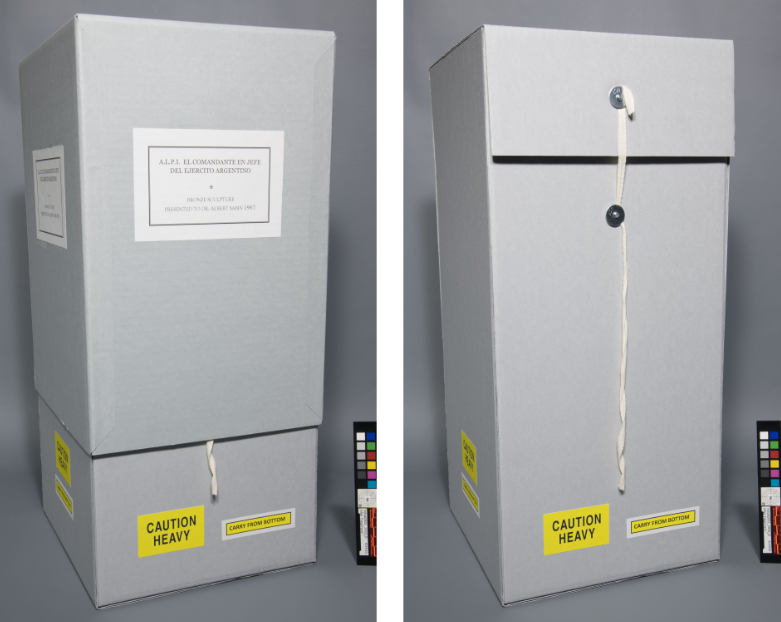
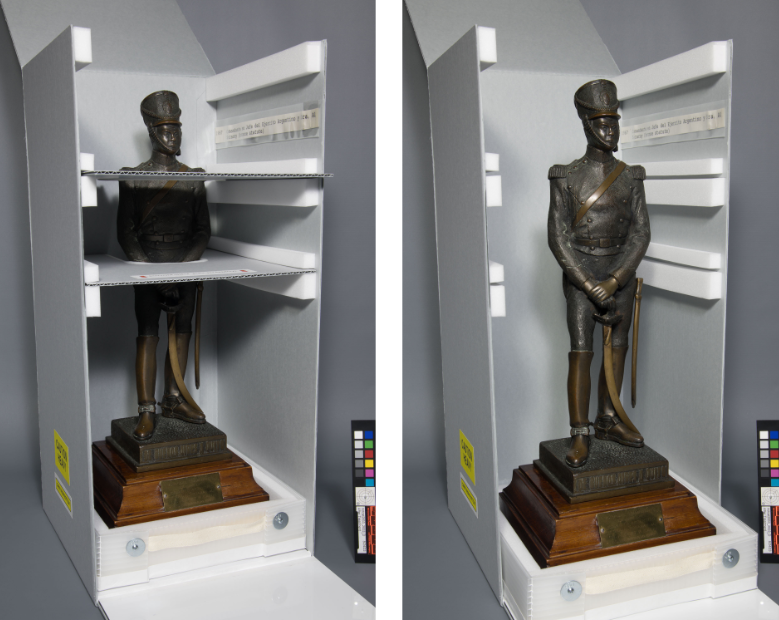
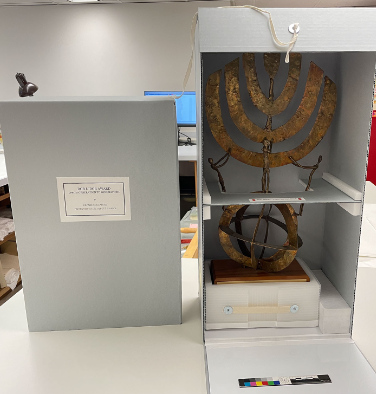
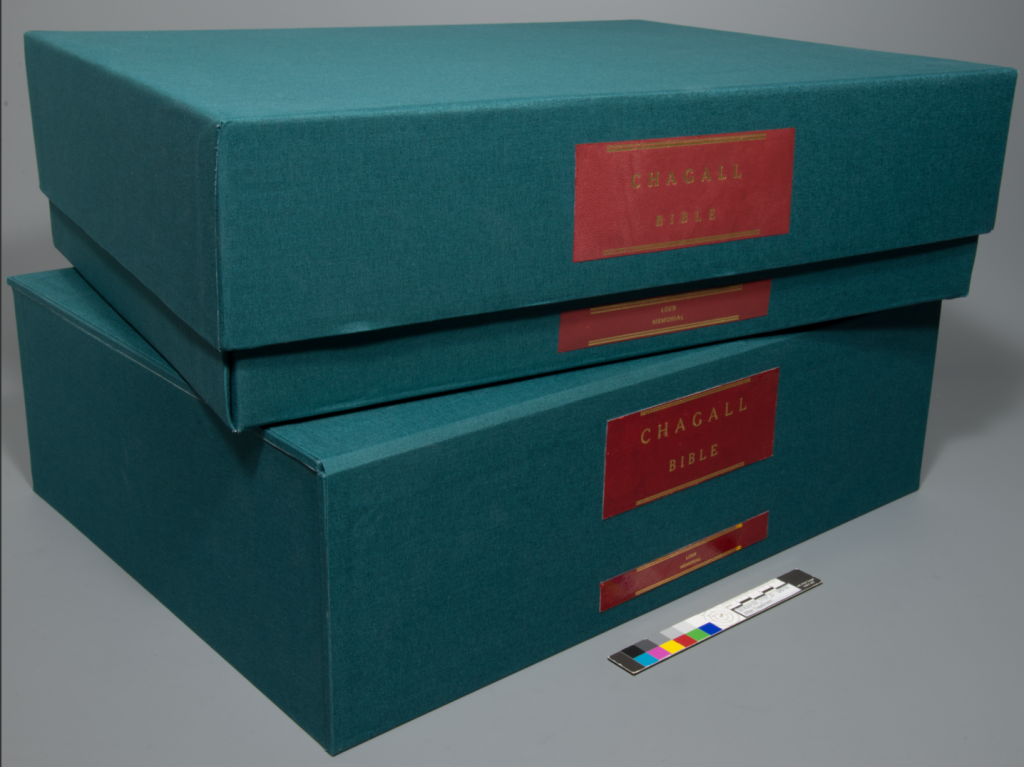
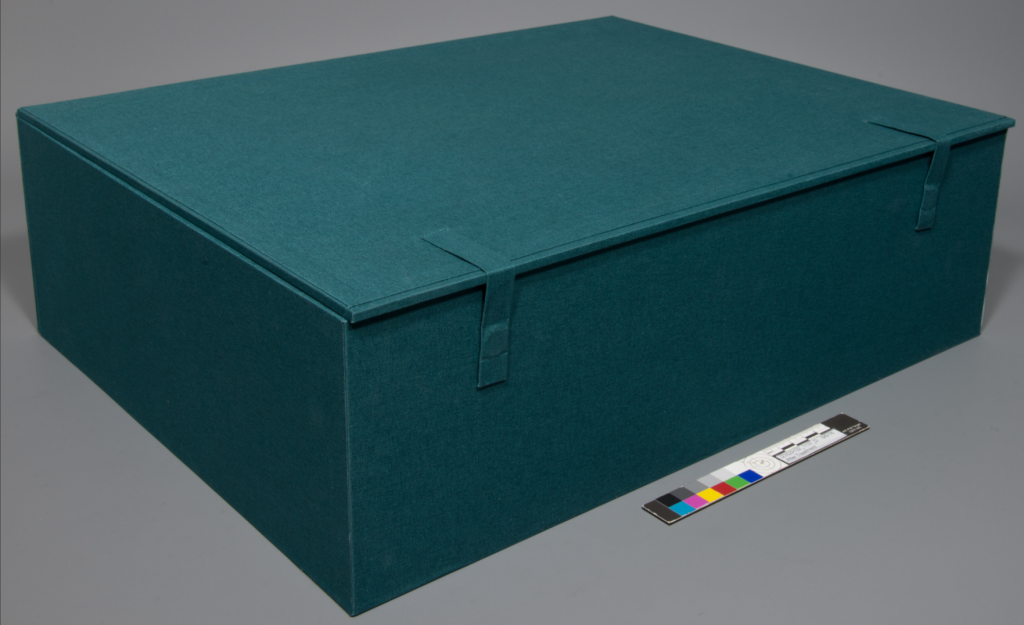
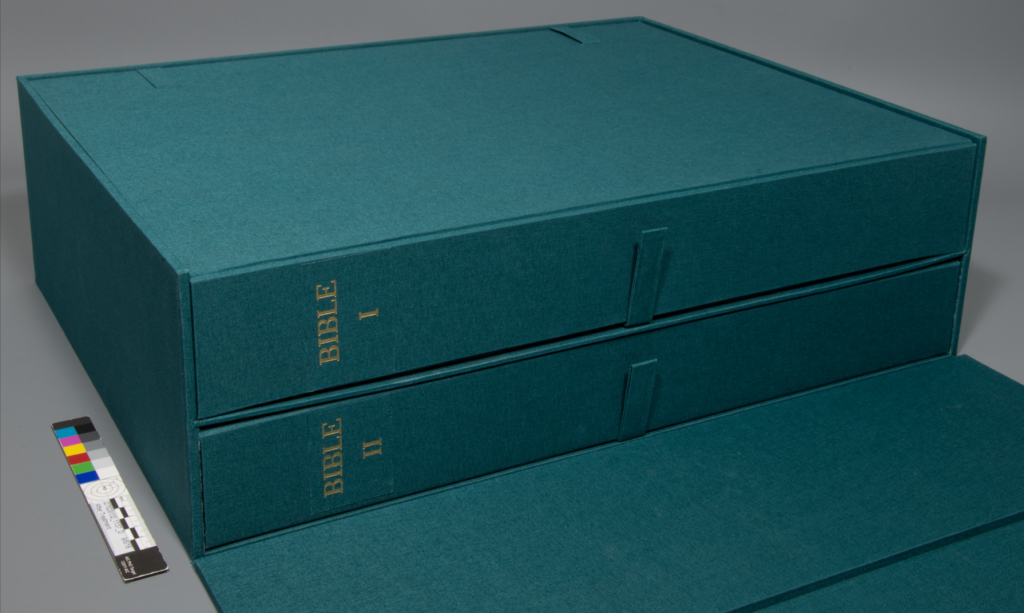
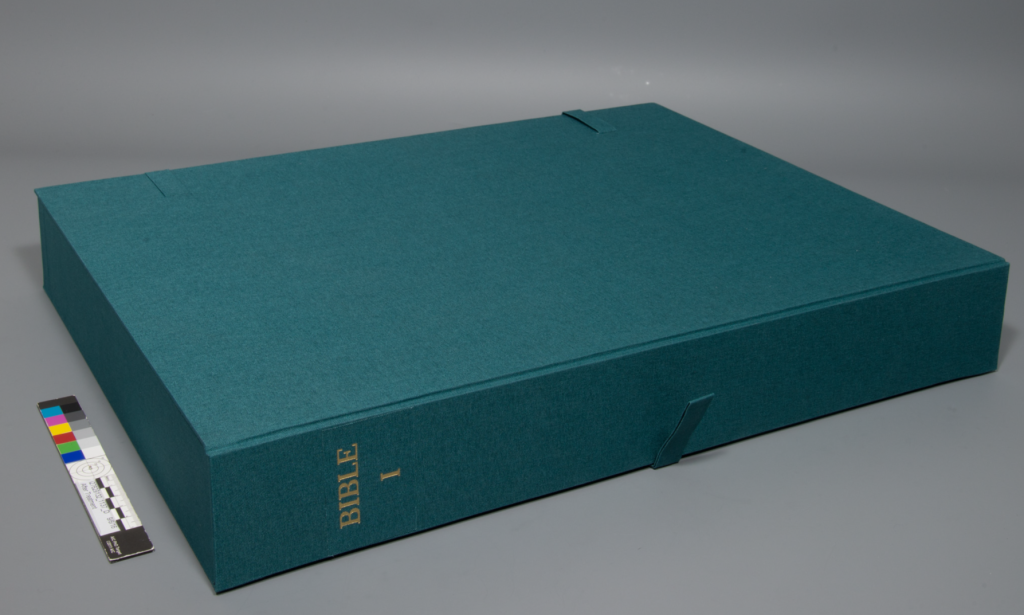
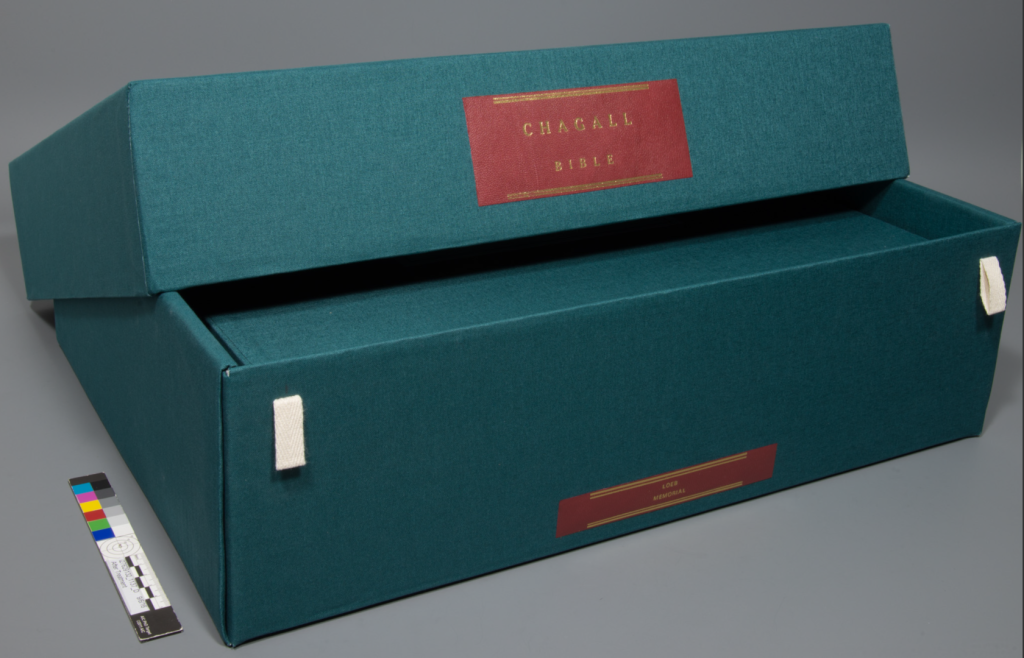
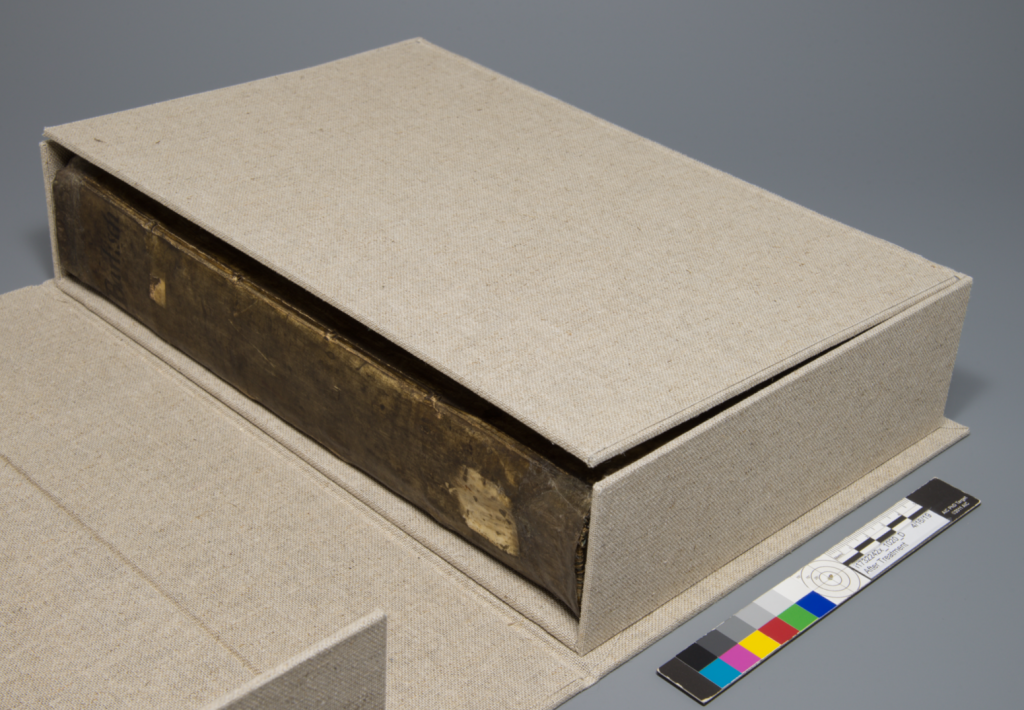
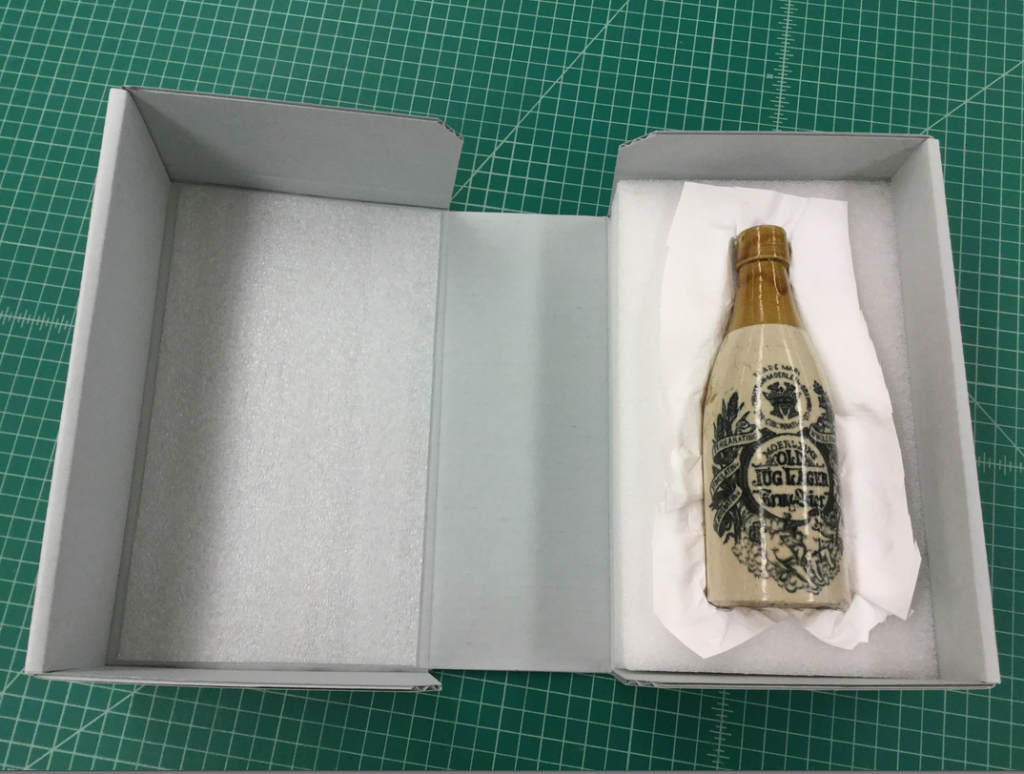
While he brought many skills with him, such as an ability to cut oversized mats, solder and work with metal files, his treatment skills have grown from general collections conservation to the treatment of special collections – with interests in leather, scrapbooks, and making clasps for medieval books. Treatment aside, Chris has held the esteemed title of Box-Maker Extraordinaire.
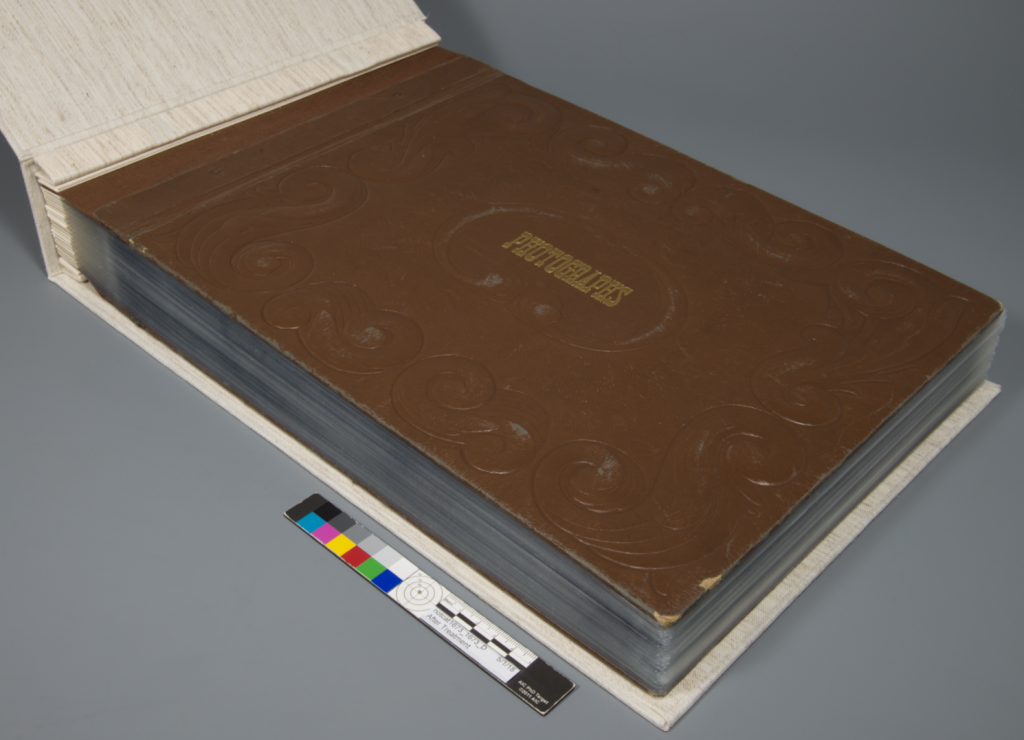
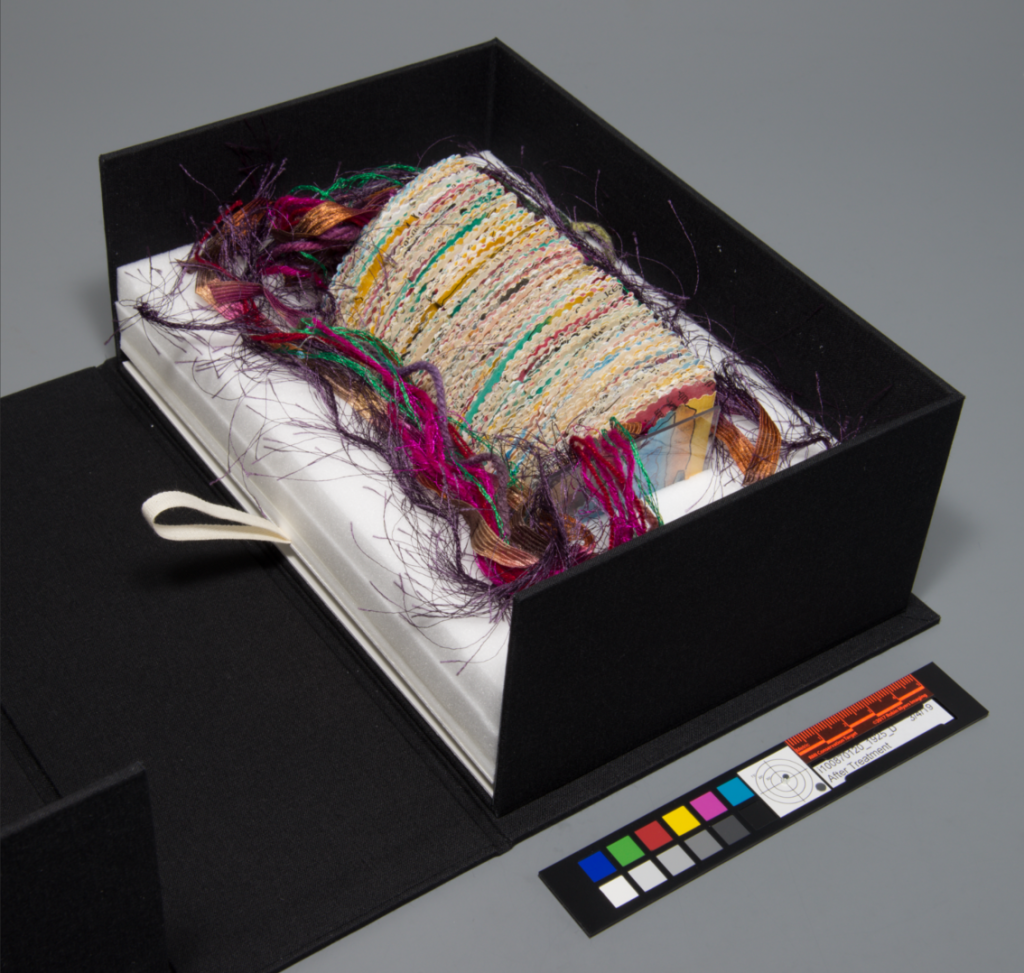
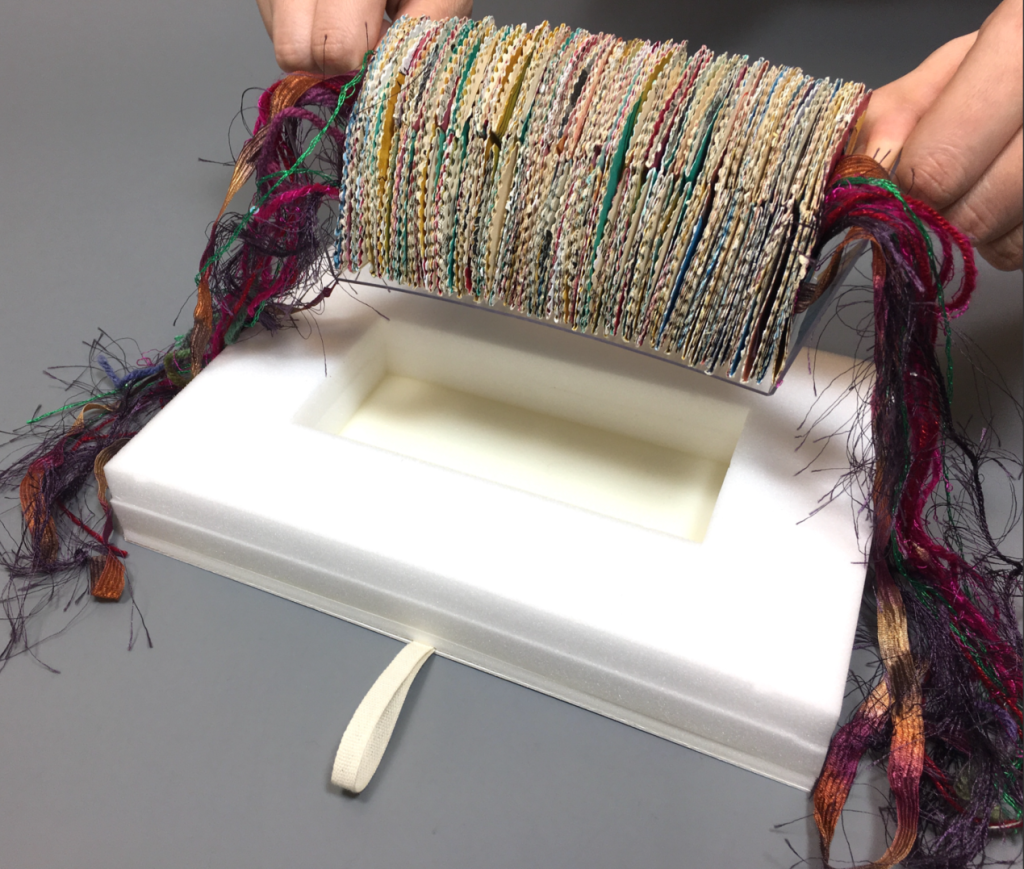
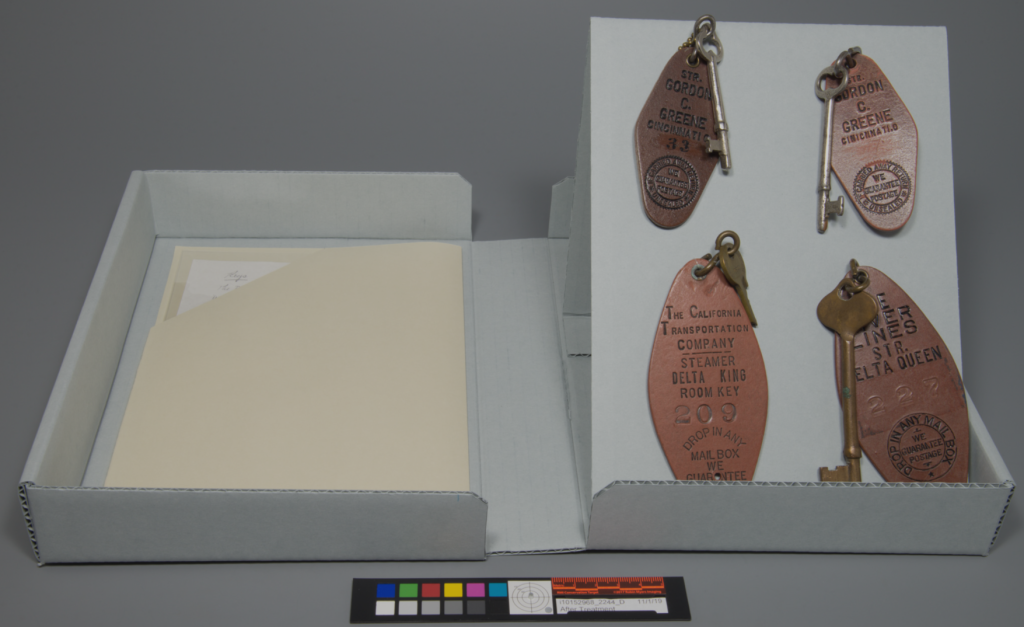
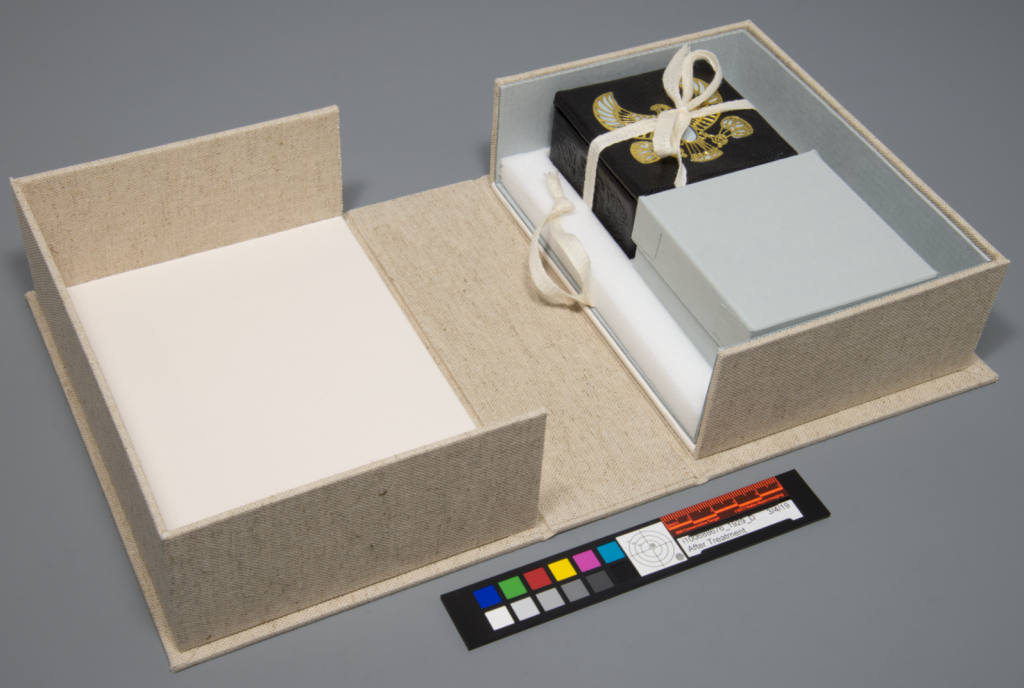
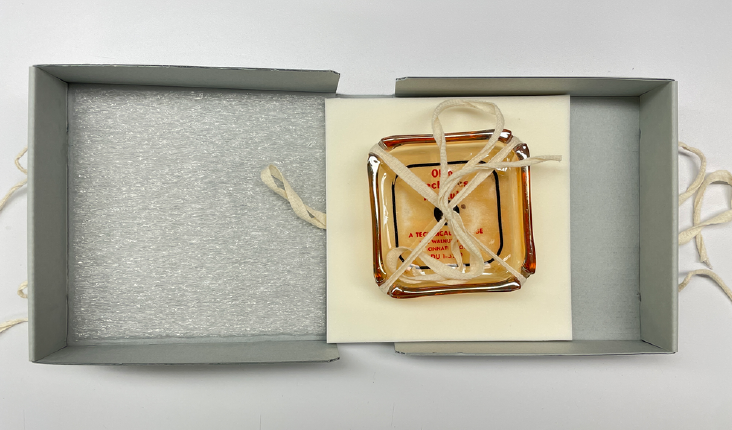
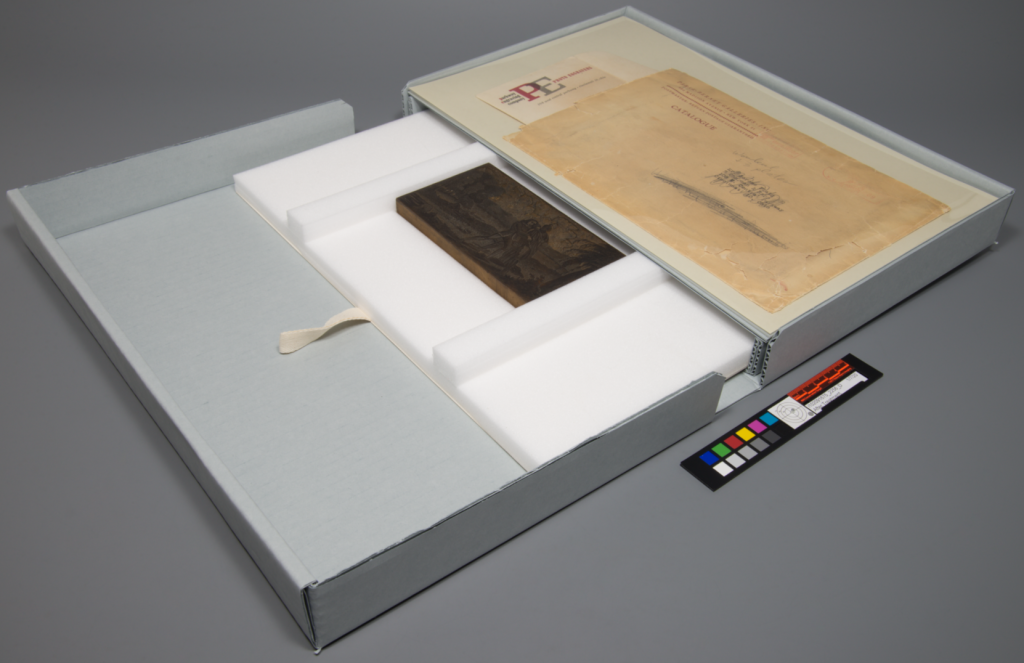
Known for his engineering feats, a few of Chris’ masterpieces can be viewed below:
As you can see, we will miss Chris’ can-do attitude when faced with any challenge. His positive outlook, efficiency (no one makes a box as fast as Chris!!), cartoons and dad jokes will especially be missed, but we are so happy for the new adventures that await him.
Please join us in celebration on Oct. 30th! RSVP to ashleigh.fergusonschieszer@chpl.org.
Ashleigh Ferguson Schieszer [CHPL] – Special Collections Conservator, Co-Lab Manager
The Preservation Lab at UC Blog uses Accessibility Checker to monitor our website's accessibility.