Tune in Friday, November 3rd on our Instagram and ask us anything you might want to know about conservation, preservation or the Lab!
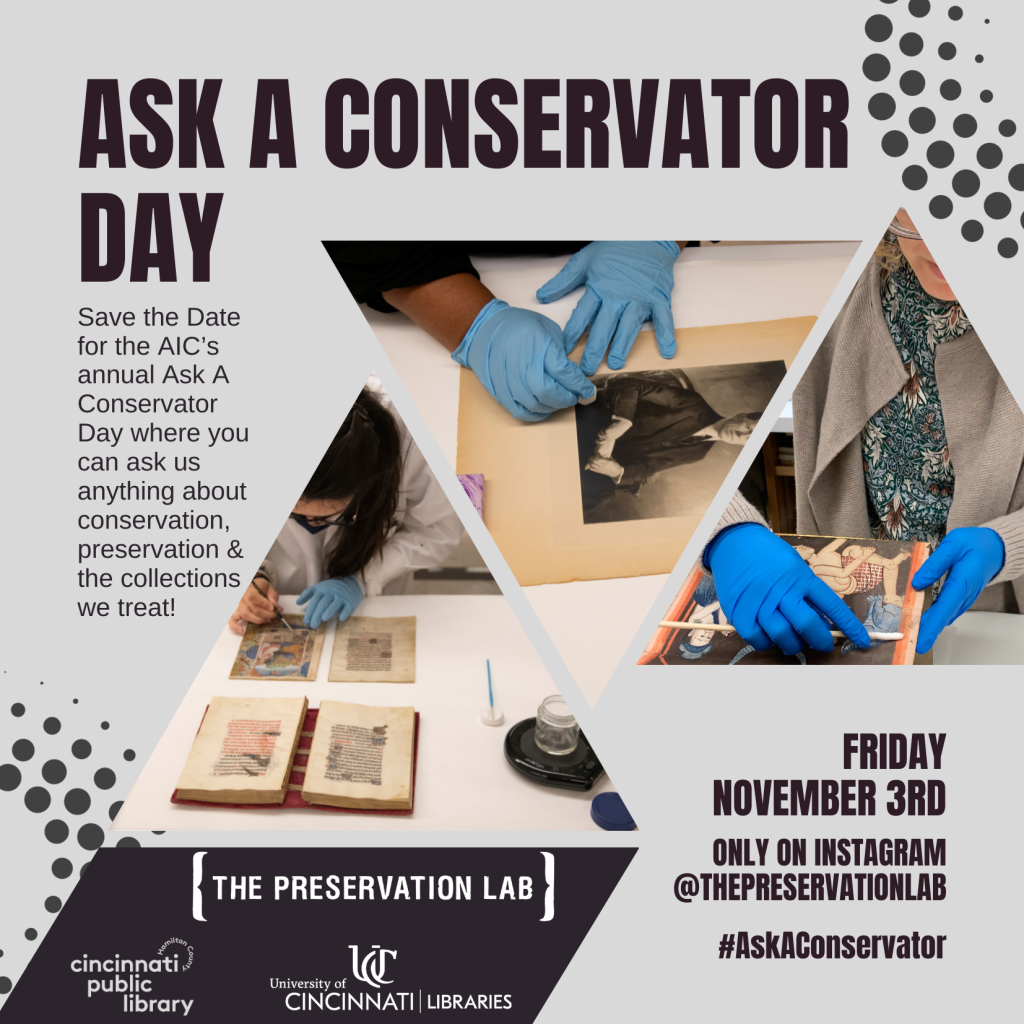
Tune in Friday, November 3rd on our Instagram and ask us anything you might want to know about conservation, preservation or the Lab!
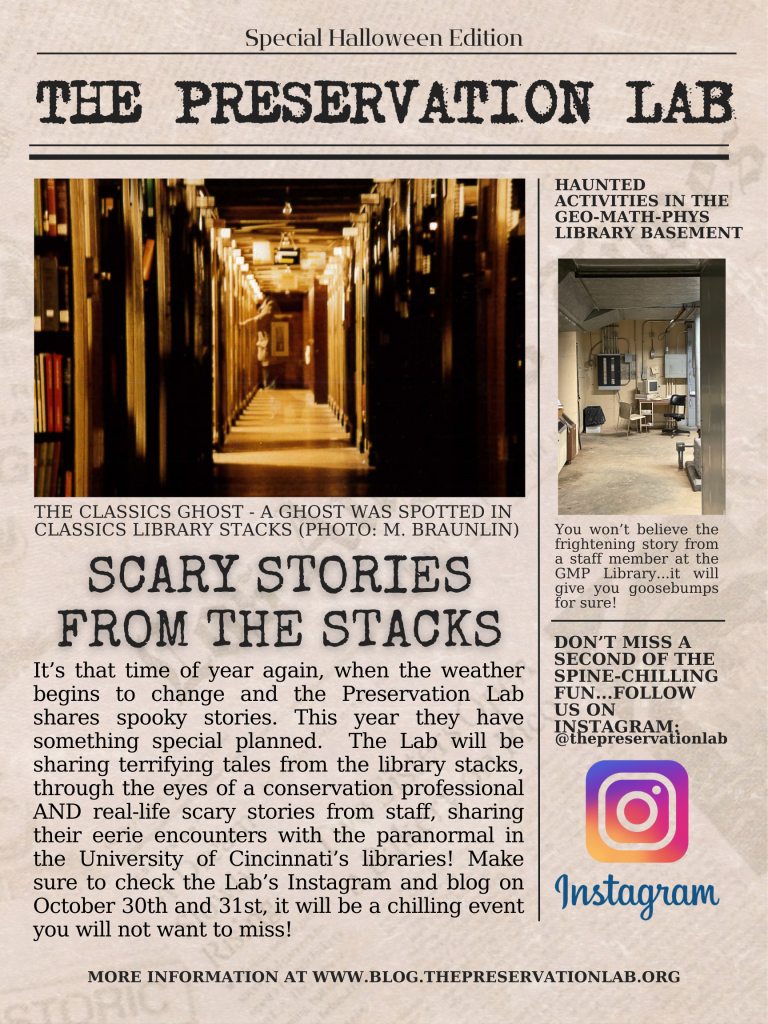
Per our annual Halloween tradition, we have some spooky happenings planned next week. This year we have ventured into the stacks to bring you some spooky stories, so make sure to check the Lab’s blog and Instagram on October 30th and 31st, if you dare!
Recently Jessica and I started working on a series of special collection items from UC Libraries’ DAAP Library. These were recent acquisitions specifically bought to be used as a teaching collection within the DAAP Library. Most items are small prints and single manuscript leaves that need to be matted for exhibition and prepared for handling during class. We have been working on these in small batches since it is a much larger collection that keeps growing.
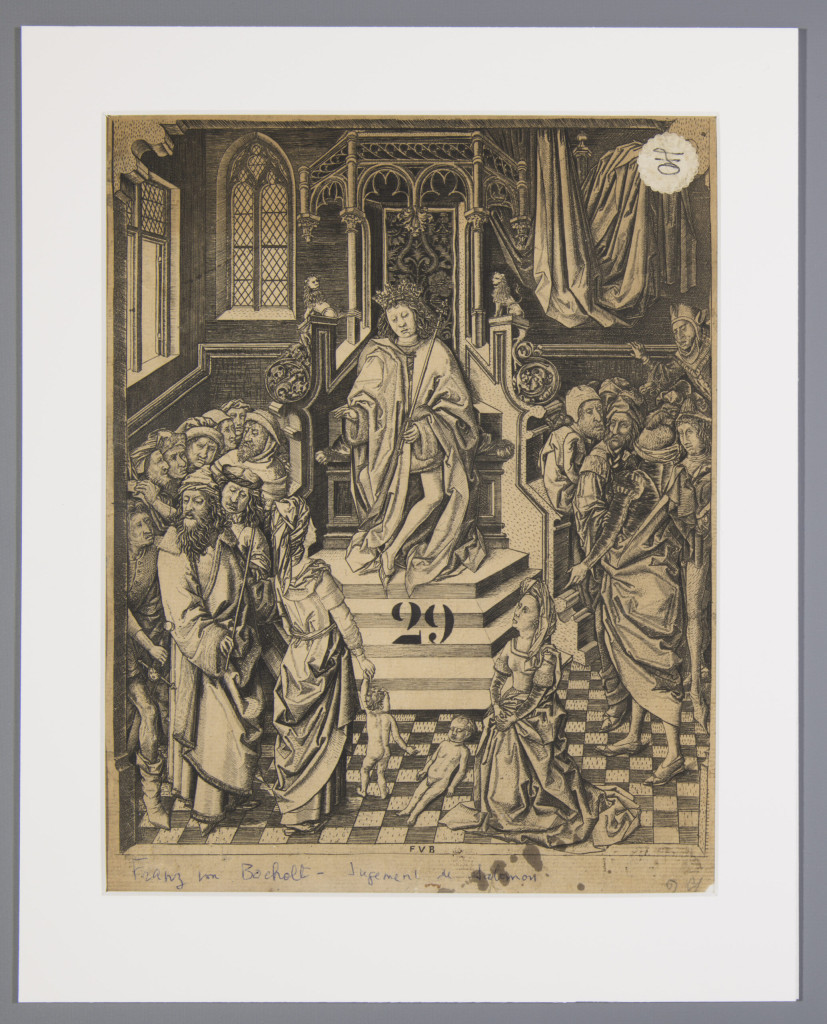
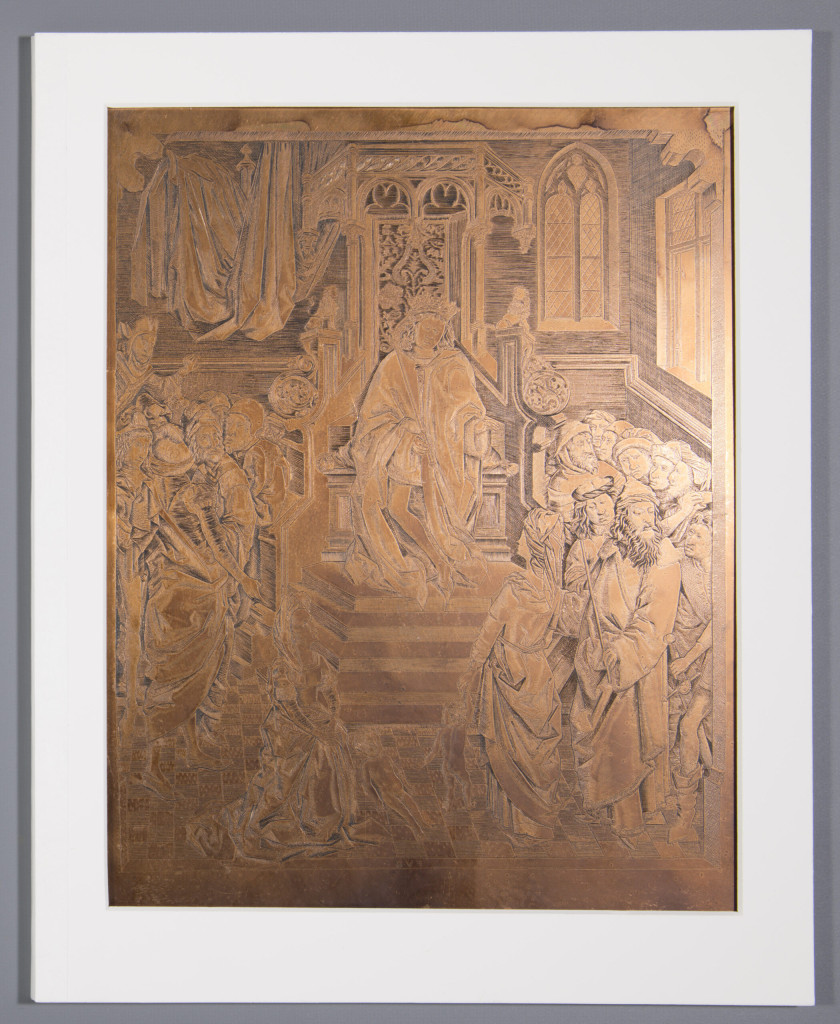
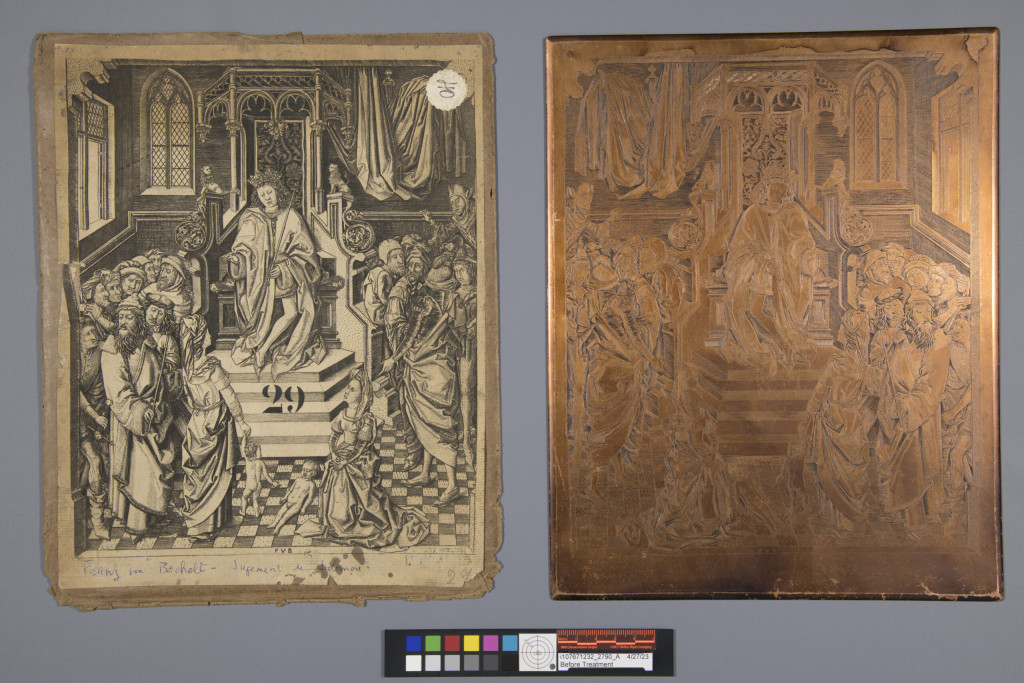
Most of the items we have received so far have been very straightforward matting projects, however we encountered one that was puzzling and fun to work on. We received this item: a proof print accompanied by its very heavy, copper engraving plate. The print was adhered to a paper brown envelope with no information and the copper plate was also unhoused.
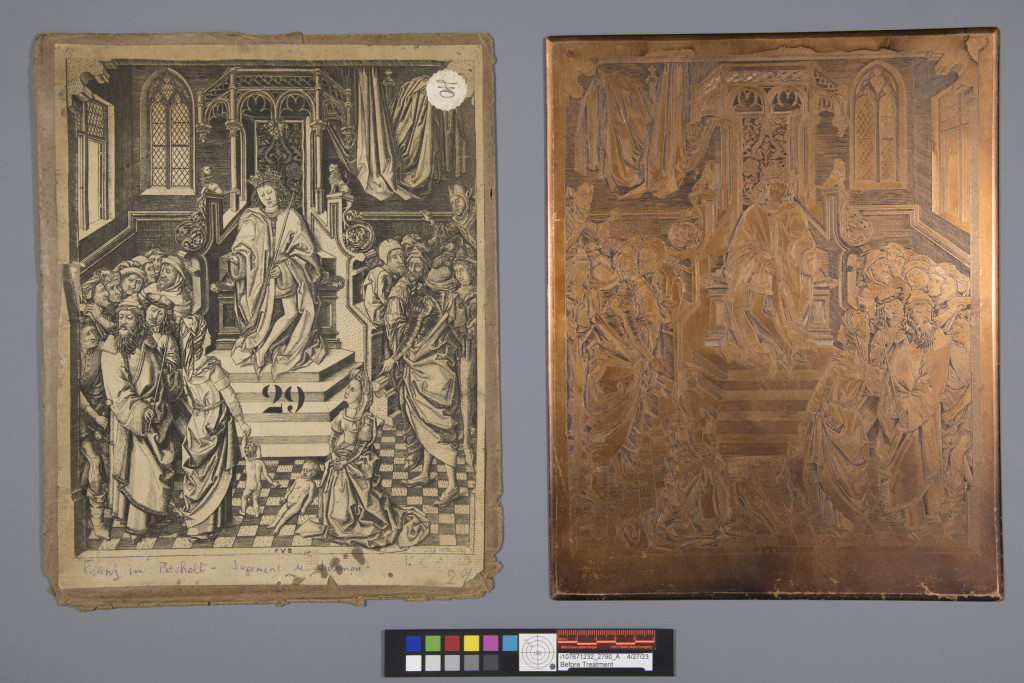
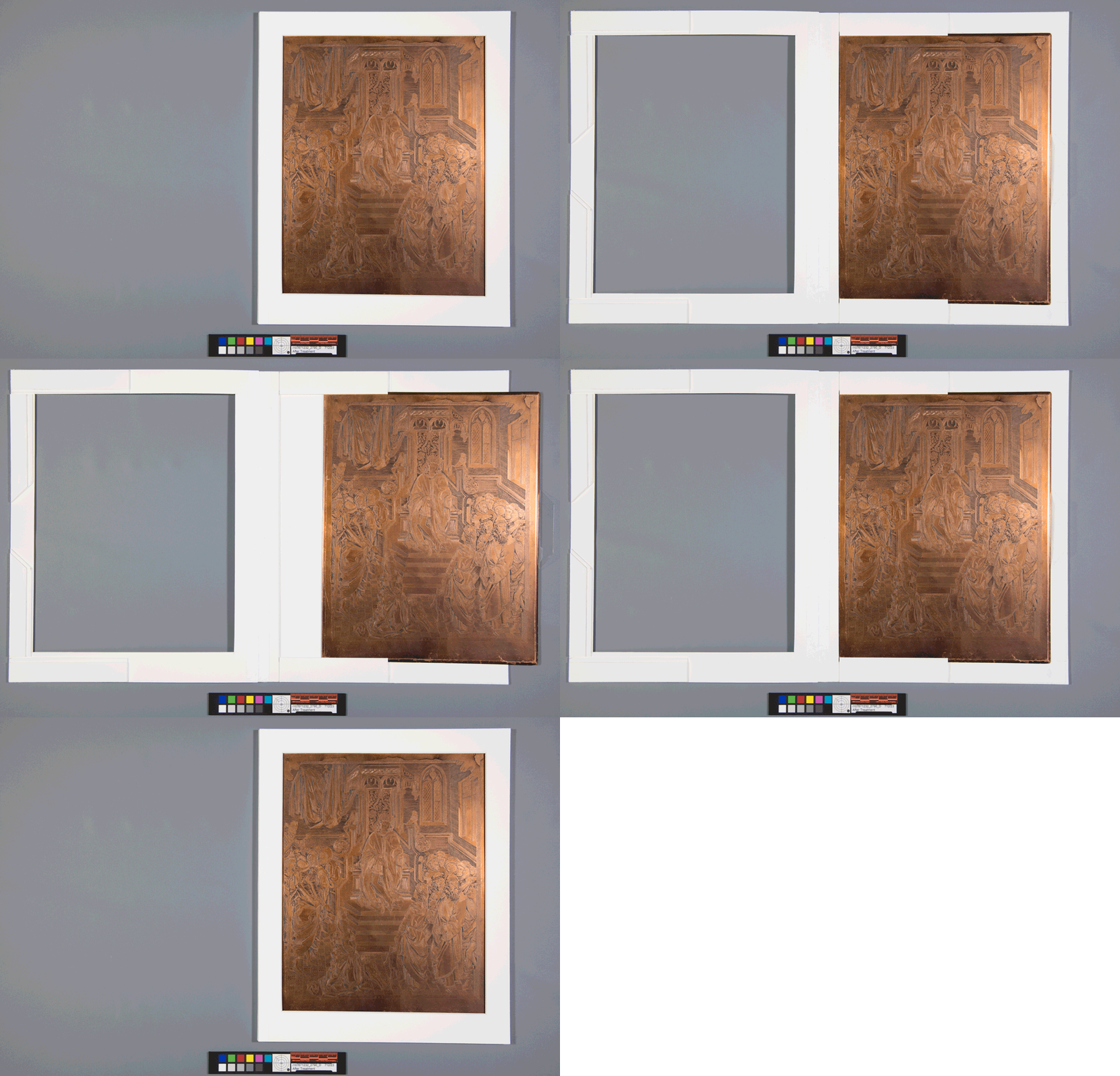
The curator of the collection wanted both items to be housed together and housed in a way that would allow students to touch the items, and also be able to use them for exhibits. We decided that both items would be matted individually, and then housed together in a thin corrugated clamshell box. The most challenging part would be to create a matting system that was strong enough to secure the very heavy copper plate and elegant enough to be used for exhibition.
The print itself received minor treatment, with the backing envelope being removed and the print housed in a polyester L-sleeve mounted with photo corners.
With the engraving plate, I needed to figure out how to create a matting system that was strong enough to hold the copper plate in place, especially if used for an exhibit where it may be propped at a slight angle. After considering some options, I created a sink mat that would secure the plate halfway, and then the rest of the sink mat would be adhered to the window mat so the copper plate, resting on a polyester tray, could be pulled out of the mat easily. How would I keep the matting system closed? ….with magnets, lots of magnets! For this project I used 24 rare earth magnets.
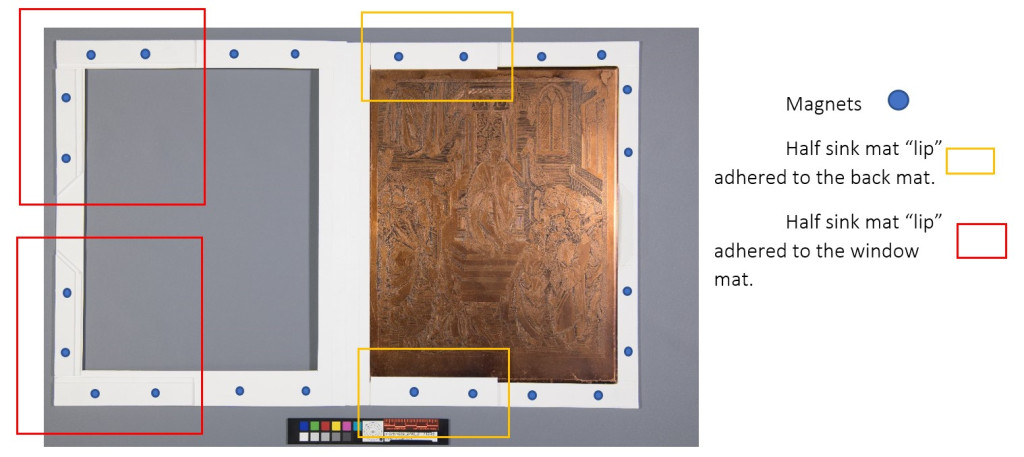
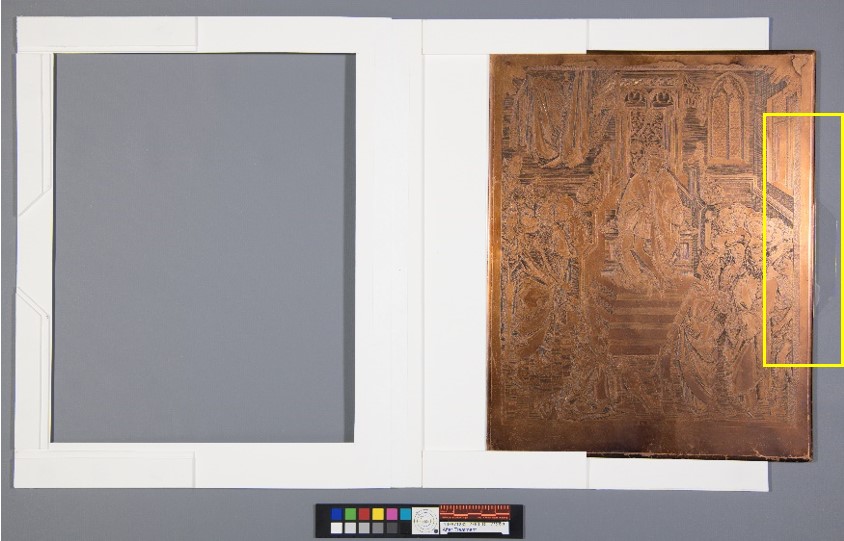
This was a fun project to work on. After using 24 magnets and breaking a few in the process, the copper plate was securely housed in the sink mat, while also able to be propped up for exhibition and handled for teaching.

Catarina Figueirinhas [UCL] – Assistant Conservator
Conservation photography by Jessica Ebert

In February 2019, the Lab received a unique item at the special collections’ meetings for the UC Libraries, a Book of Hours (ms.37) from 1475 from the Archives and Rare Books Library. I was so excited when this book came into the Lab.
This 15th century Book of Hours was in poor condition and in need of conservation treatment. Not only was the binding structure failing and the text block broken in half, but this book was also heavily used as a teaching tool at the ARB library, and in its current condition it could not be safely handled. This was the perfect project for Ashleigh and I to collaborate.
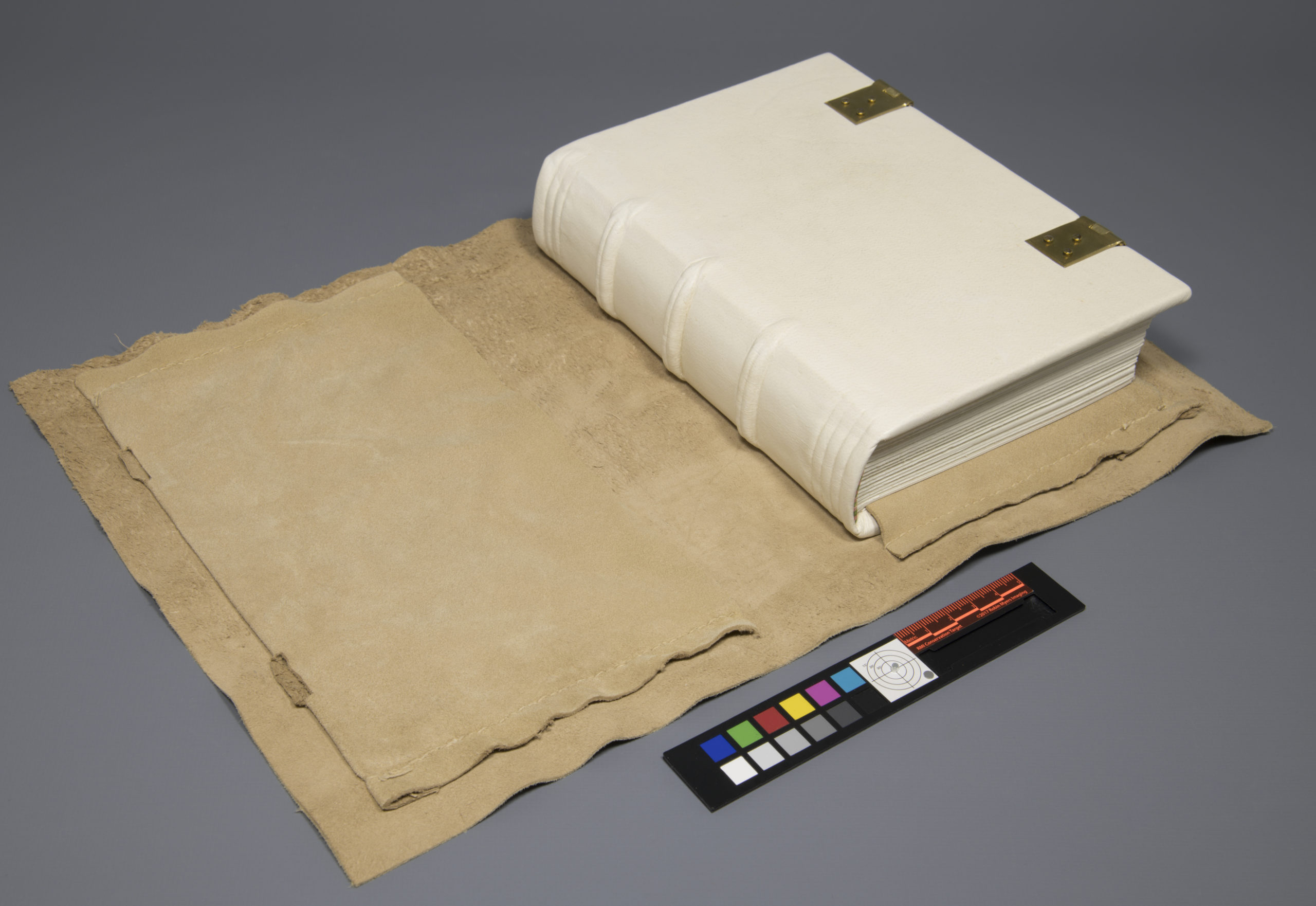
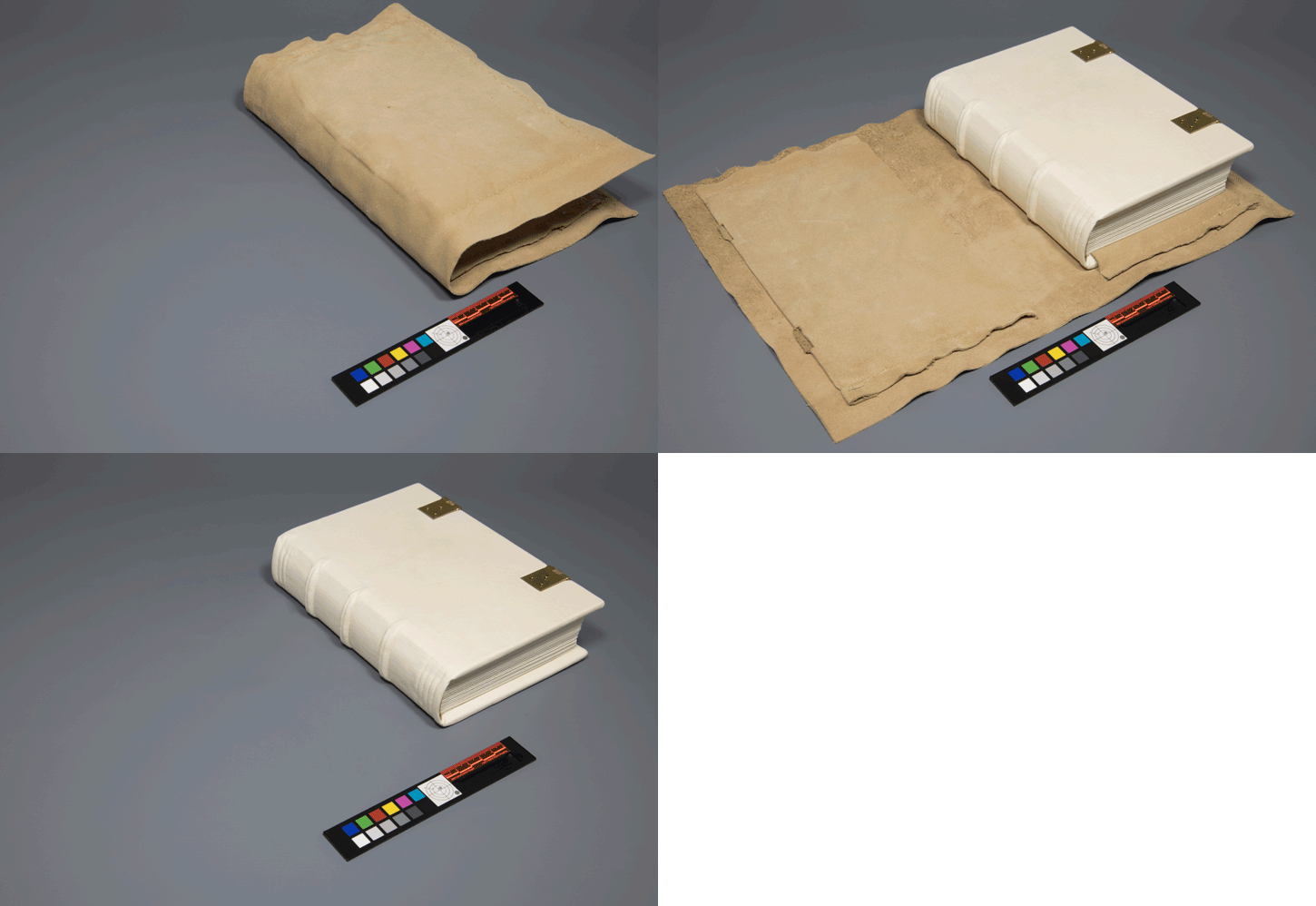
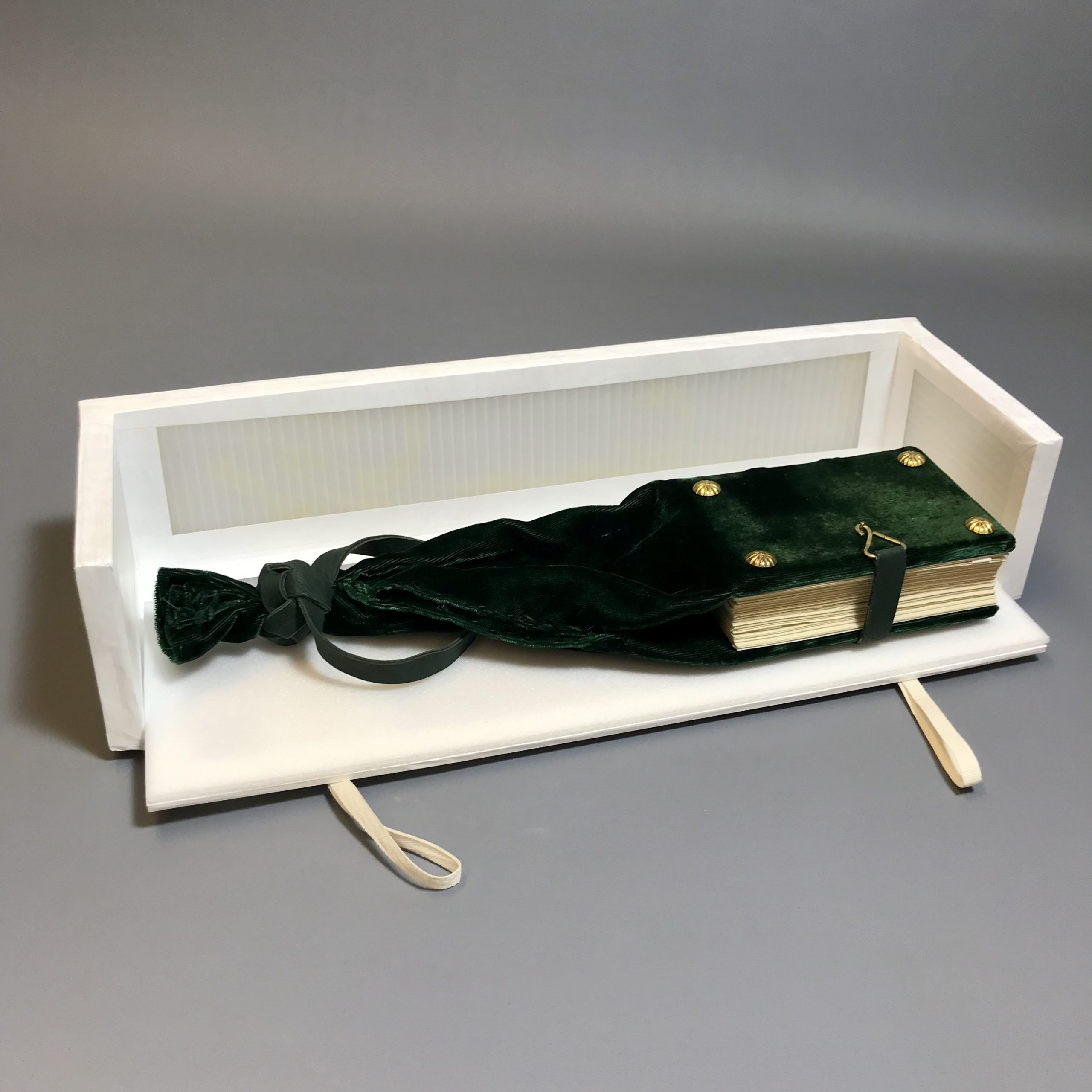
From the beginning, it was decided that in conjunction with the conservation treatment of the Book of Hours, I would create a book model like the original Book of Hours, to be used as a teaching tool in the ARB library collection. In addition, the model would have a leather chemise, a common feature in some Book of Hours of the time.
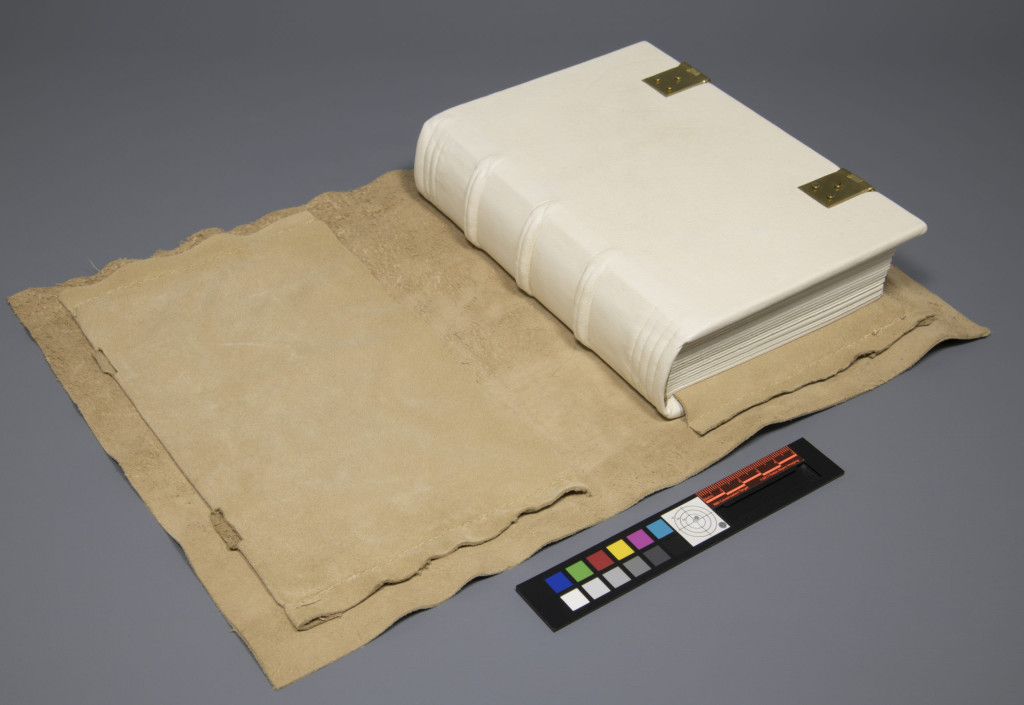
Now here is where this story begins with the model of the Book of Hours. Often, here in the lab, we all create book models for various reasons: to learn about a new treatment, test different treatment options, to understand how some materials work together, and as teaching tools.
As a teaching tool in the ARB library collection, this model needed to resemble the original Book of Hours in its structure and materials used.
The primary goal for this model was to show how a Book of Hours was historically built, its sewing structure, the materials used, and also to provide the ARB library with a book that could be easily handled by students and scholars.
Once the treatment for the Book of Hours was fully established and confirmed with the ARB curator, I was able to start working on the book model. I will save you form reading about all the different steps of making the model, but here are the main features of model:
Text block
Cover
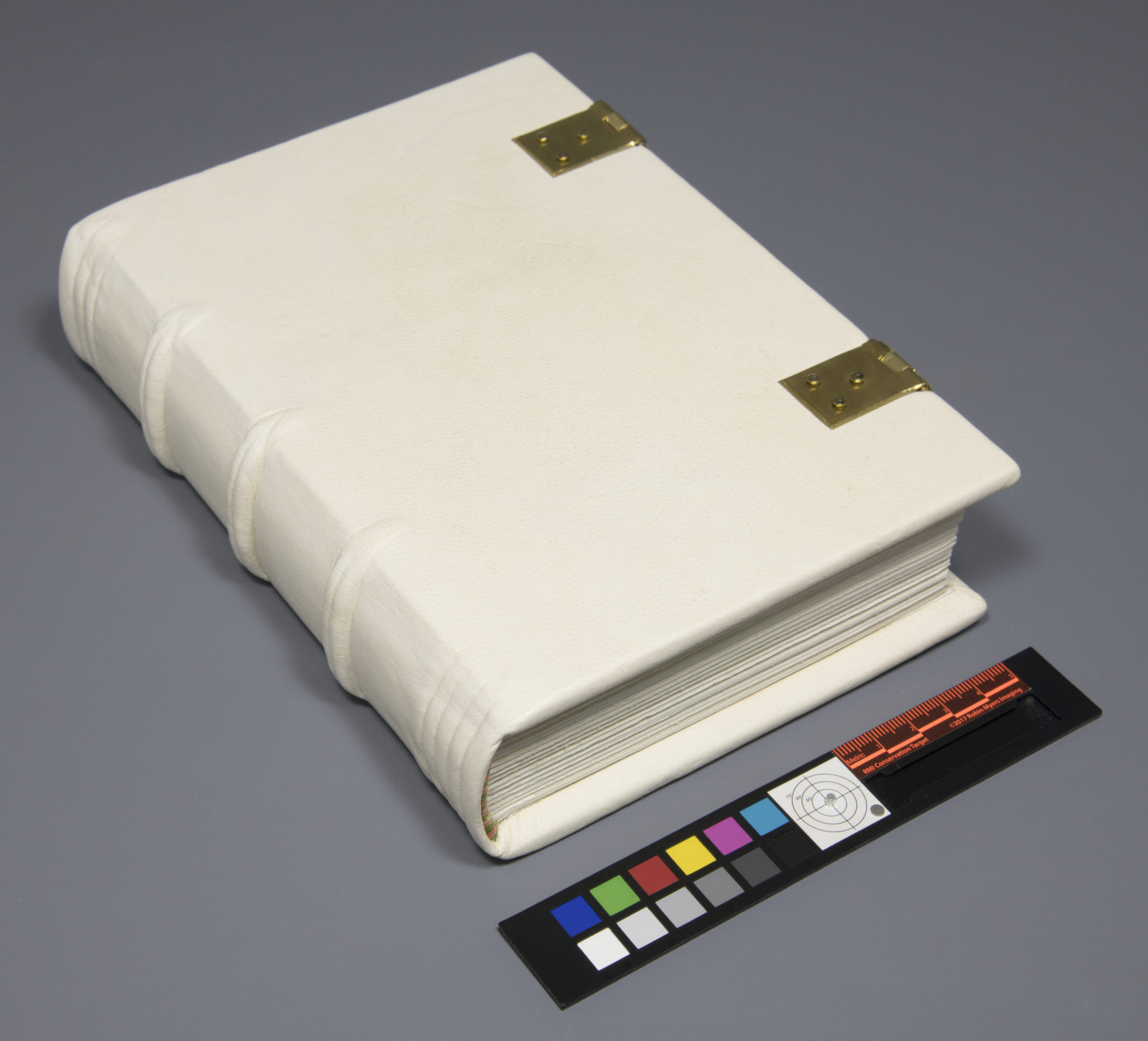
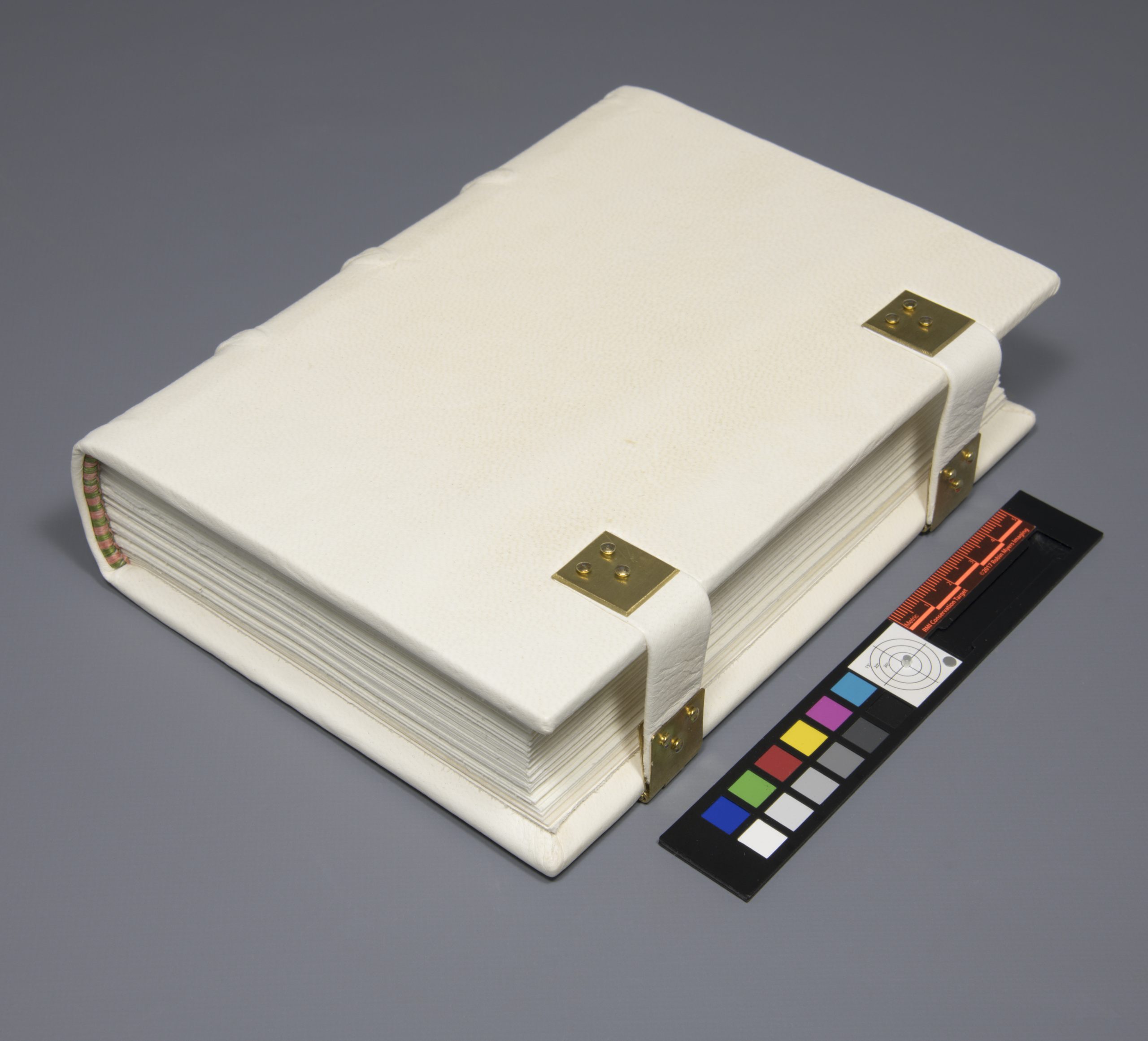
There was no evidence that the original Book of Hours had clasps, but the curator requested tension clasps for the book model. Clasps were common in the 15th century bookbinding, and this would provide the students with the experience of handling a book with clasps and allow them to understand their function.


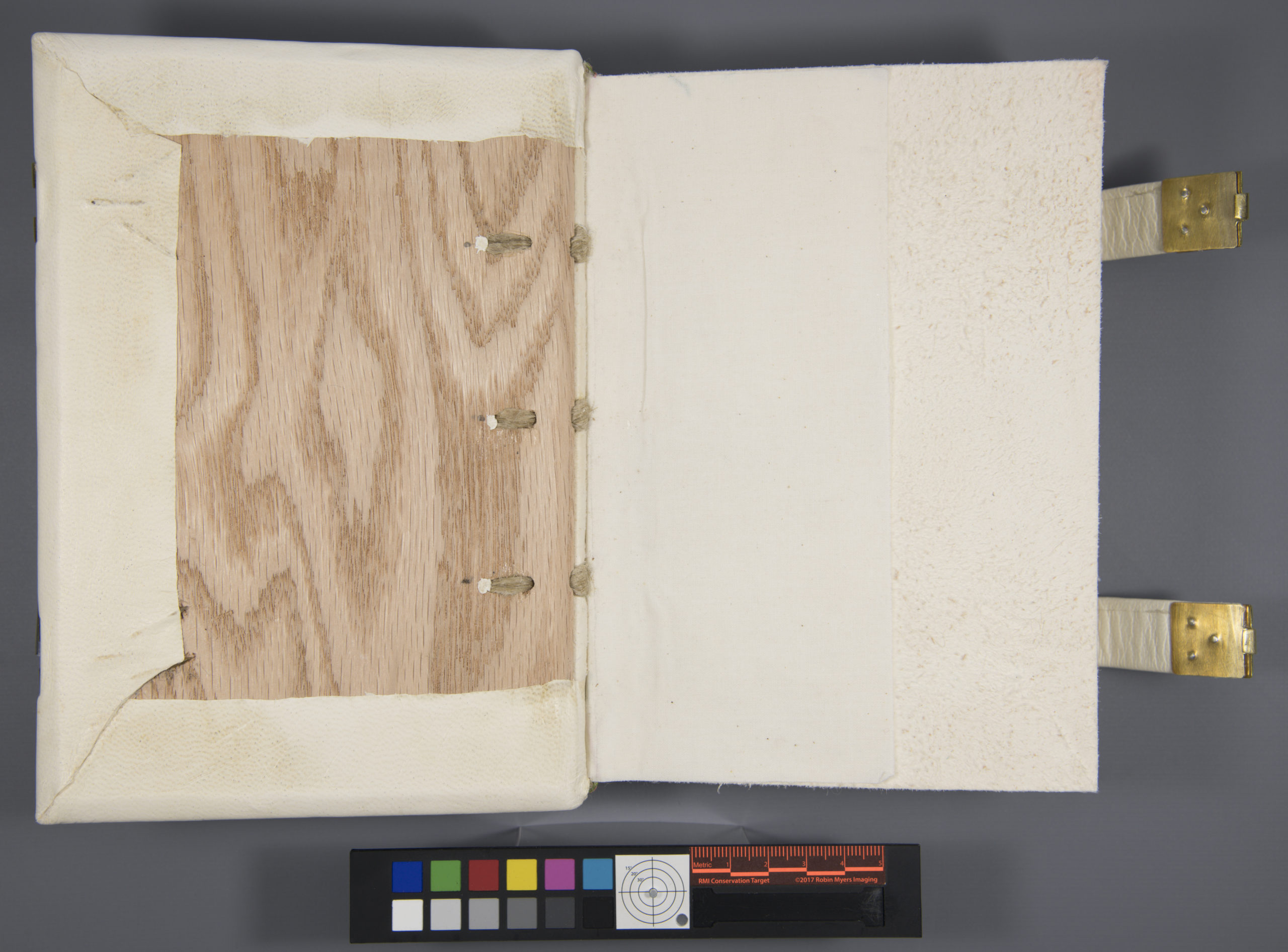
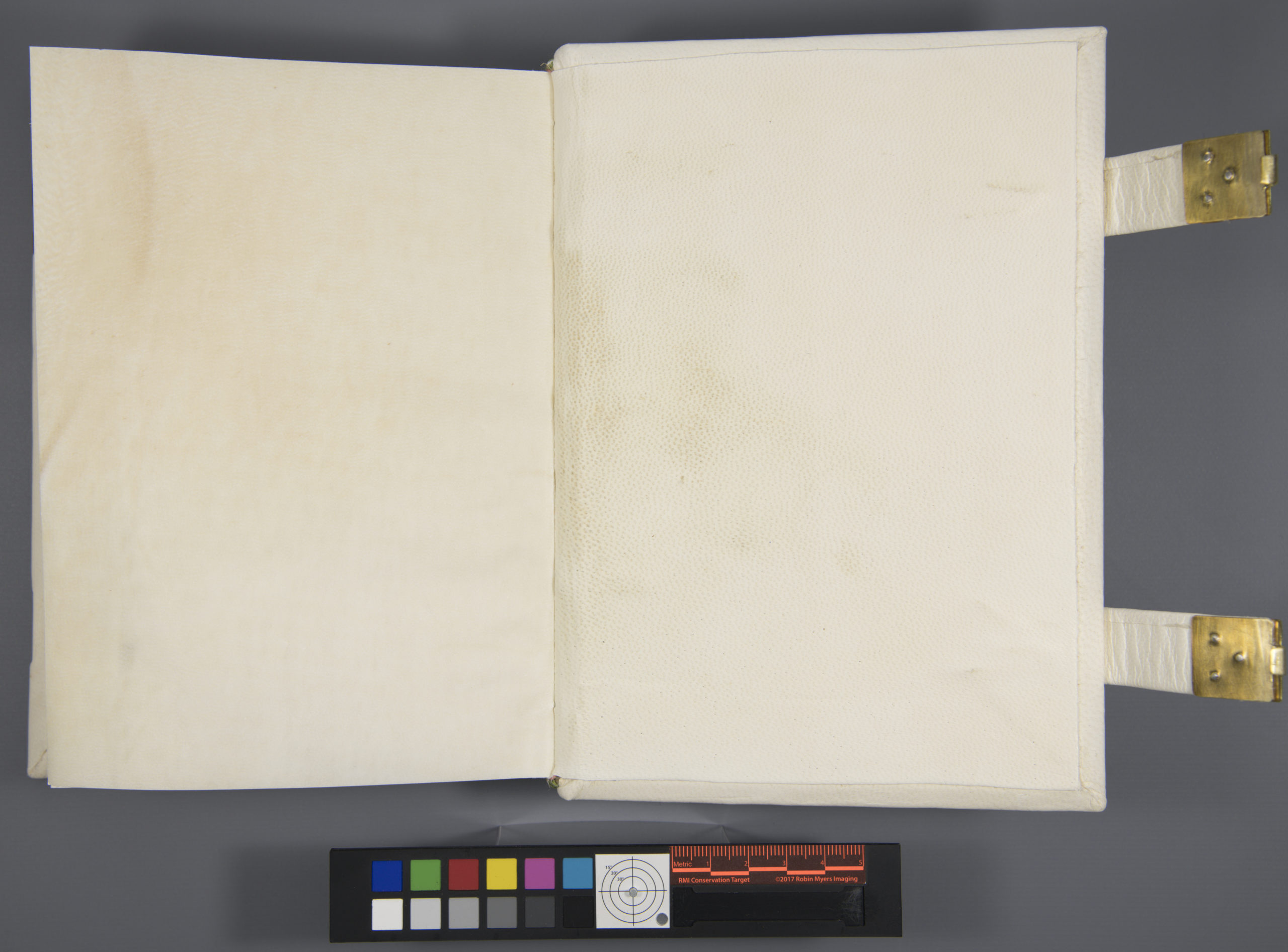
The curator also requested that one of the pastedowns be kept unattached, so the students could see how the boards were attached to the text block and that they were wooden boards.
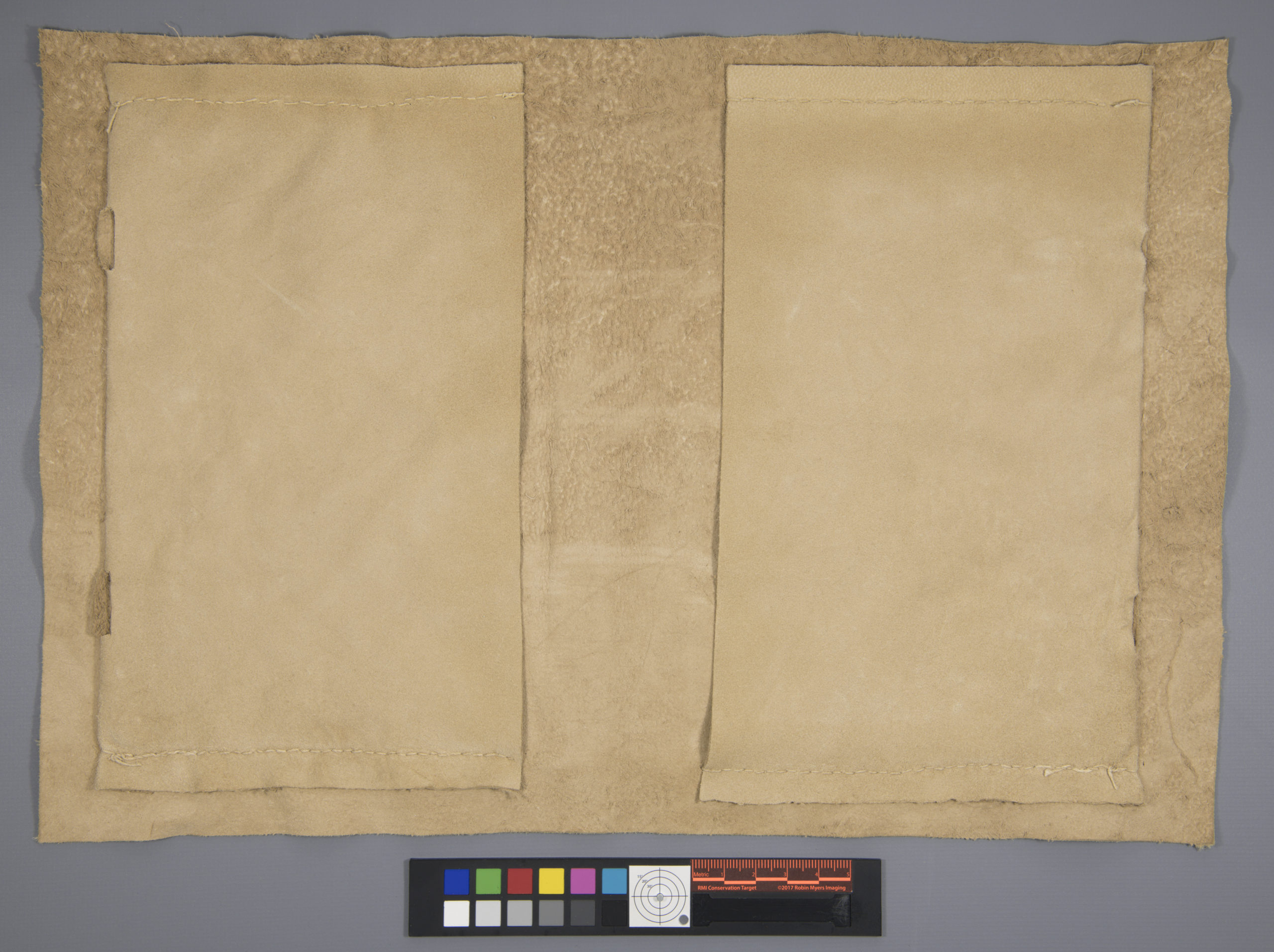
In addition, I created a removable chemise, also requested by the curator of the ARB library. In some Books of Hours, it was common to have a leather chemise, but most often they were not removable. The chemise was created from a vegetable tanned goat split skin.
Stay tuned for a future blog post where we will dive into the conservation treatment and research we did on the Book of Hours (ms.37).
Catarina Figueirinhas (UCL) —- Assistant Conservator
Photographic Documentation by Catarina Figueirinhas and Jessica Ebert
In celebration of ALA’s annual Preservation Week (April 24th-30th), Preservation Lab staff will be offering live demos and show & tells this week and next, both at UC Libraries and the Cincinnati and Hamilton County Public Library:
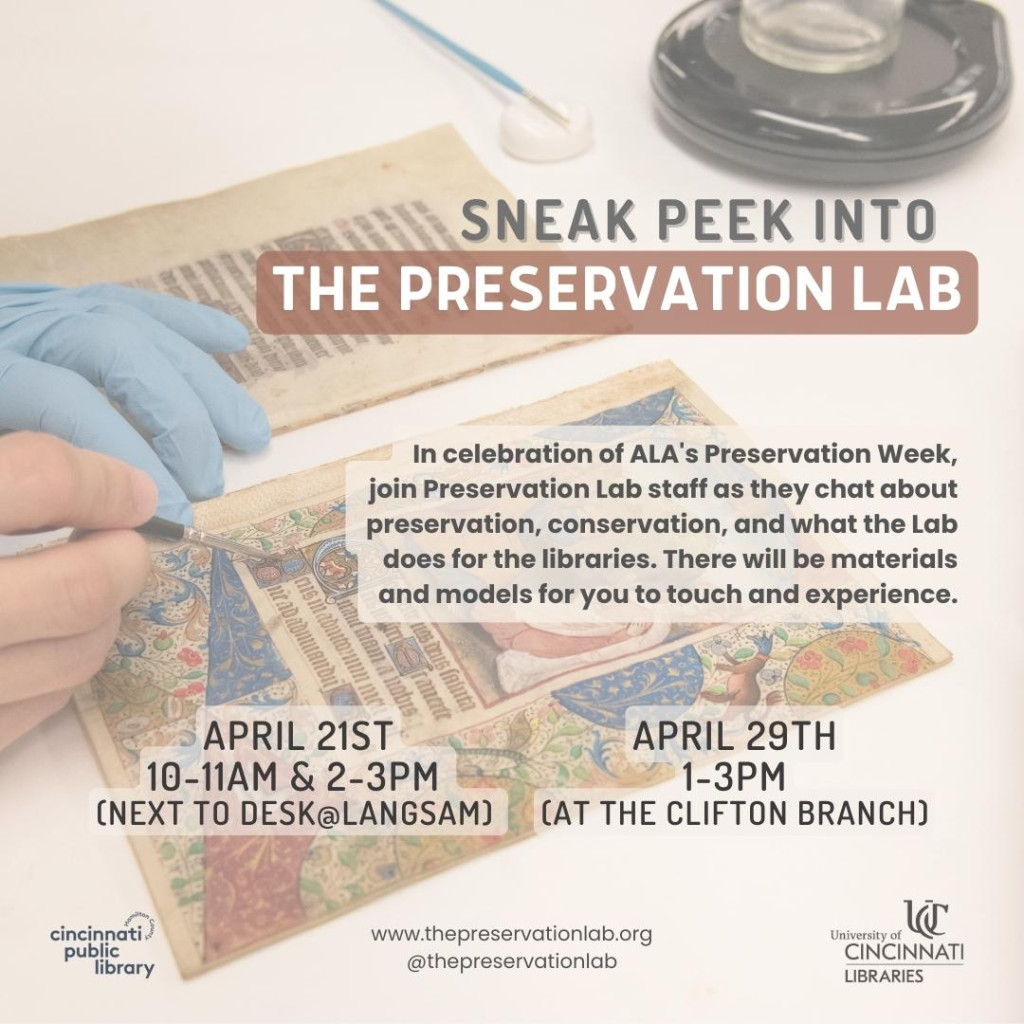
Each session will be unique, with different staff members showing off different aspects of preservation and conservation!
Jessica Ebert [UCL] – Sr. Conservation & Photographic Documentation Specialist
As mentioned in a previous blog post, Andrew and Naomi from Case Western Reserve came to the lab in late February to demo the MISHA portable multispectral imaging system, made possible by a National Endowment for the Humanities (NEH) Research Grant awarded to the Rochester Institute of Technology. In total, Naomi and Andrew imaged five objects from the Public Library, UC Libraries, and one of our third-party institutional clients. Imaged books included, one Otto Ege item, two Book of Hours, one undated Latin music manuscript, and a Pentateuch volume from Hebrew Union College. In all, thirteen separate capture sessions were carried out for the five objects. Afterwards, the raw data from the capture sessions was shared with the Lab via OSF (Open Science Framework) so that I could process the data in the NEH grant supported open access RCHIVE (Rochester Cultural Heritage Image processing and Visualization Environment) software.
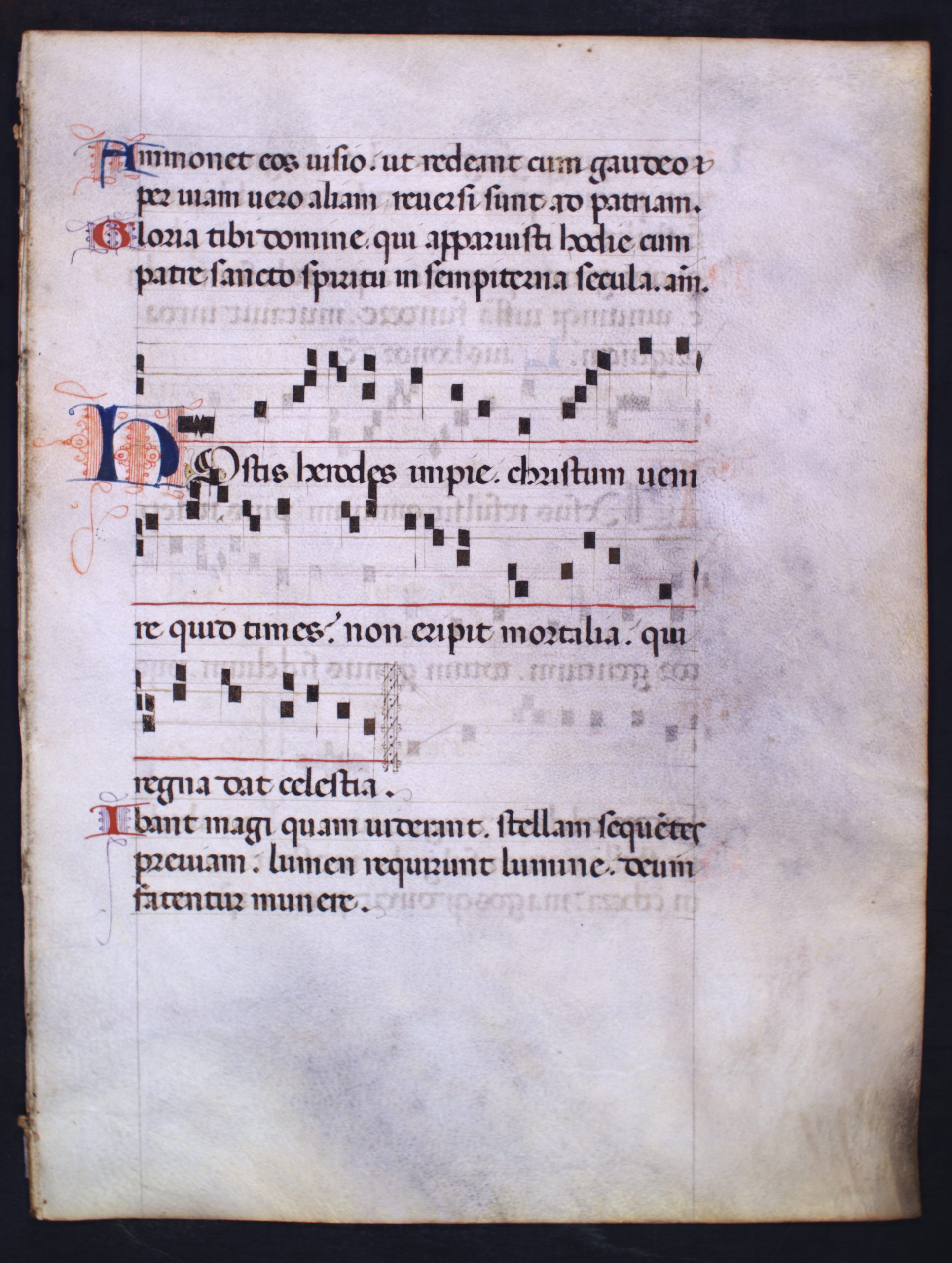
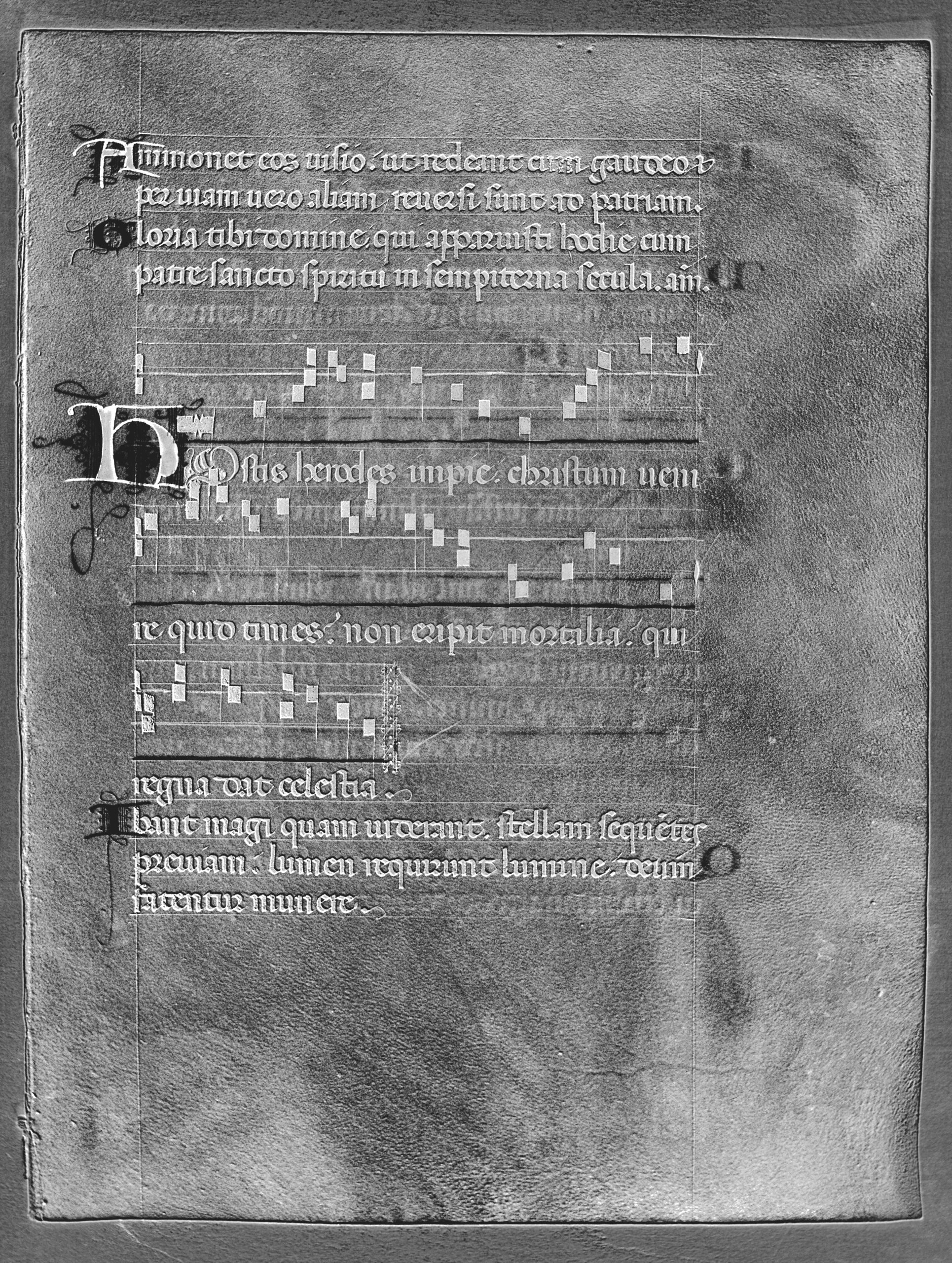
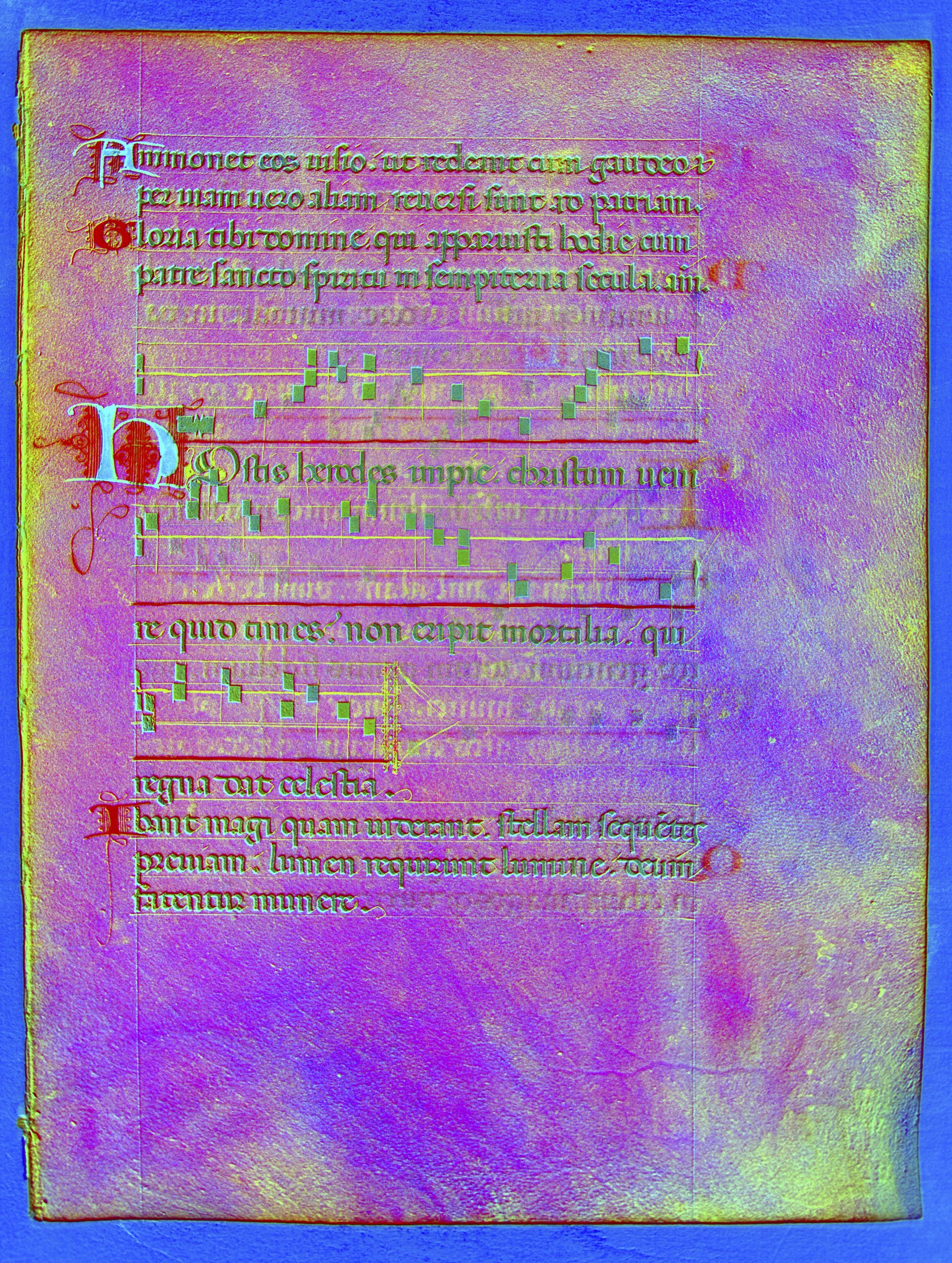
The image gallery above shows the recto of leaf 32 from the Public Library’s copy of Fifty Original Leaves from Medieval Manuscripts, Western Europe, XII-XVI century, by Otto Ege.
While each of the capture sessions took only two minutes to complete, I found that processing the raw data took me a bit longer to figure out. Processing the data felt very similar to using CHI’s RTI Builder and Viewer software. However, in this situation I did not have a week-long training opportunity to learn the ins and outs of the software and its functions. For the Spectral Analysis App, I had only a couple of brief documents to refer to, so the learning curve was a little steeper. I also experienced some issues with the software while processing the data with the flatfield files provided from the capture session. But in the end, the processed files seemed fine without the flatfield data, so it all worked out.
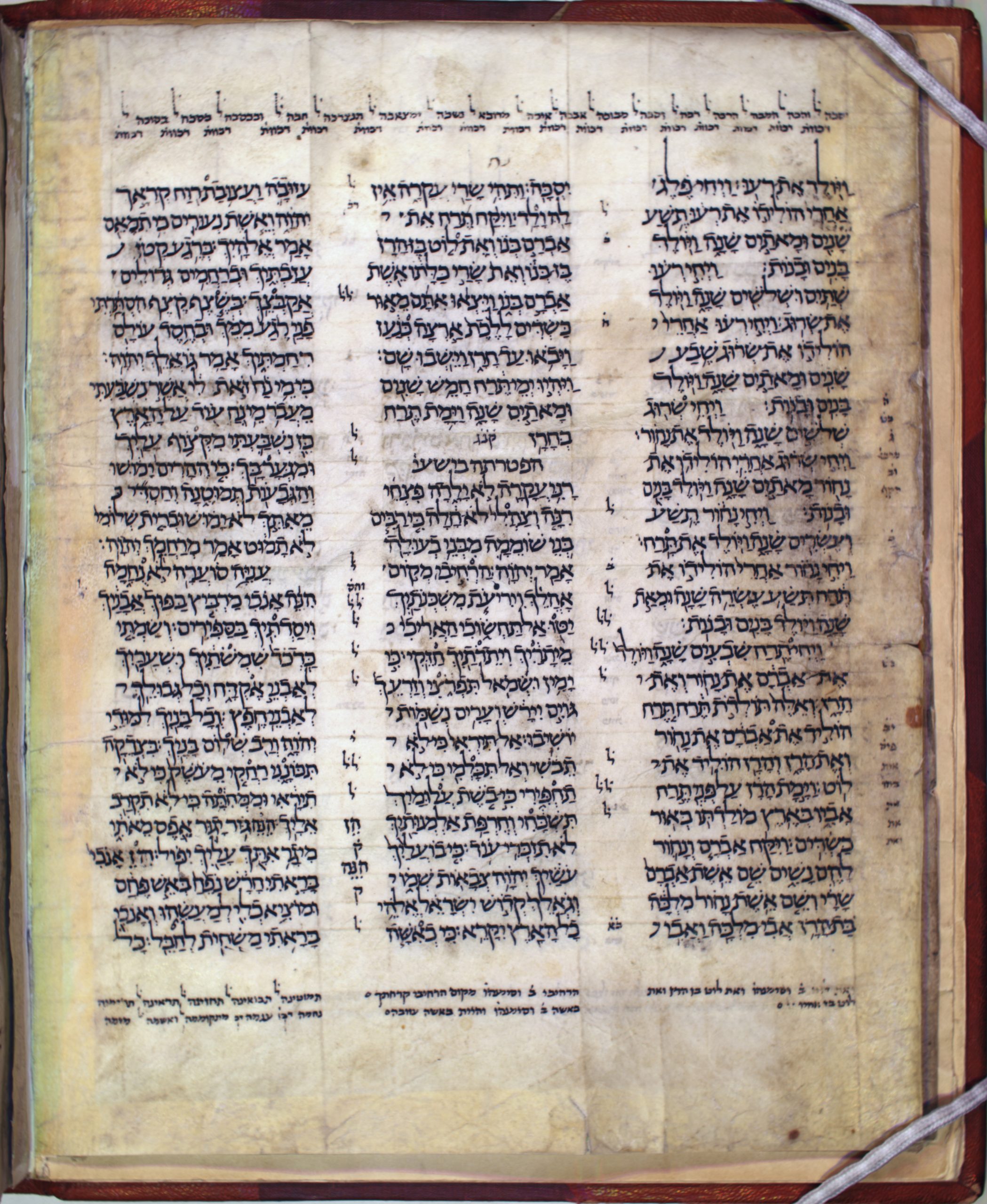
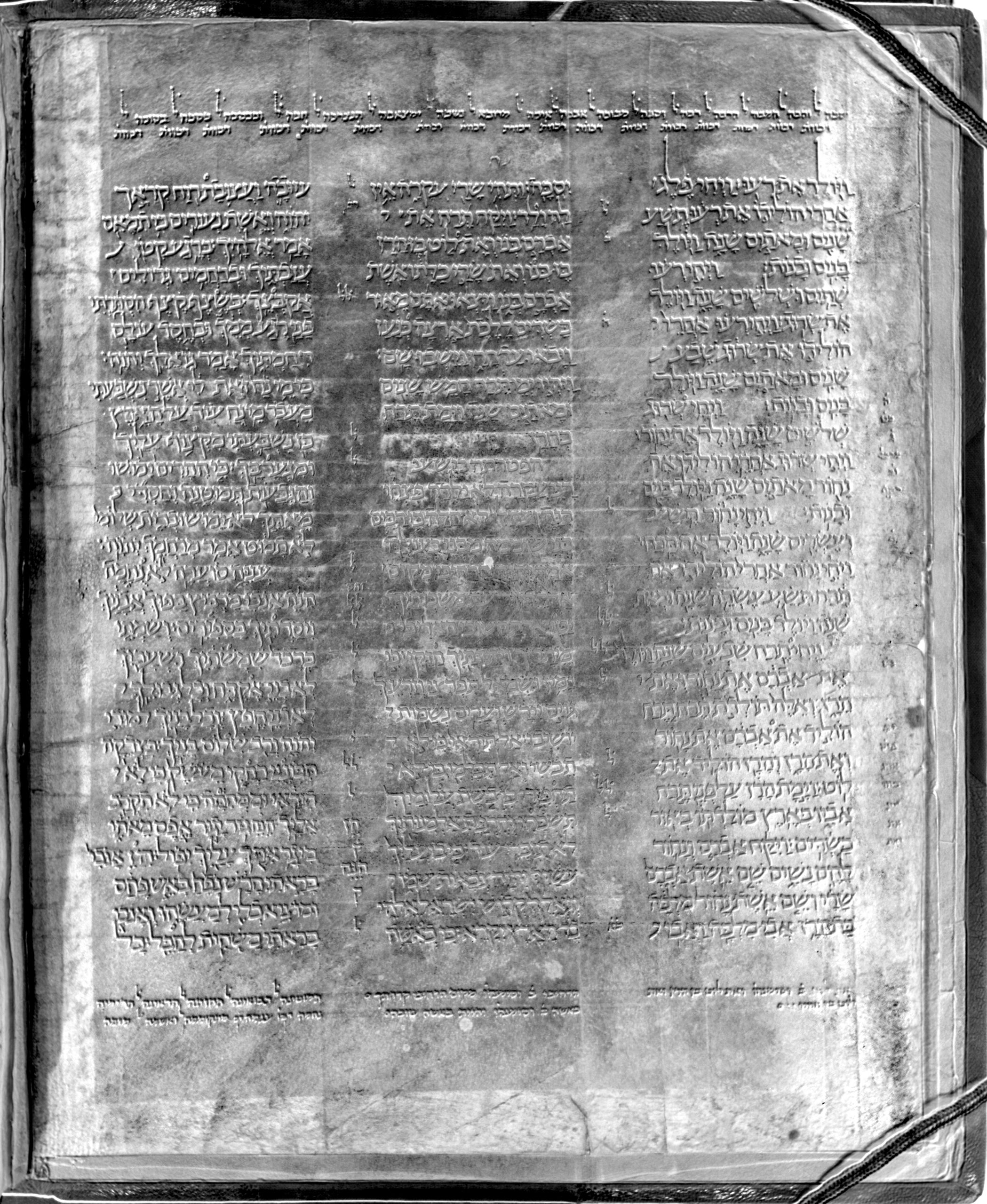

The above image gallery depicts a leaf from Hebrew Union College’s Pentateuch Ms. 1 with adhesive staining, tape, and prior repairs.
What I discovered through processing all the MISHA data and then comparing it to the existing specialized imaging done in the Lab was that the suite of imaging we do in the Lab is very well rounded and, in general, suits our needs and our clientele quite well. In many cases, our results were at least comparable, if not better (specifically within the UV wavelengths) than the results accomplished using the MISHA. And, especially with our UV workflow, though our current capture time might be slightly longer than that of MISHA, the data processing time is significantly shorter and, in the case of UV especially, the side-by-side results of the accurate normal illumination next to the full color UV image(s) is ideal for our purposes.
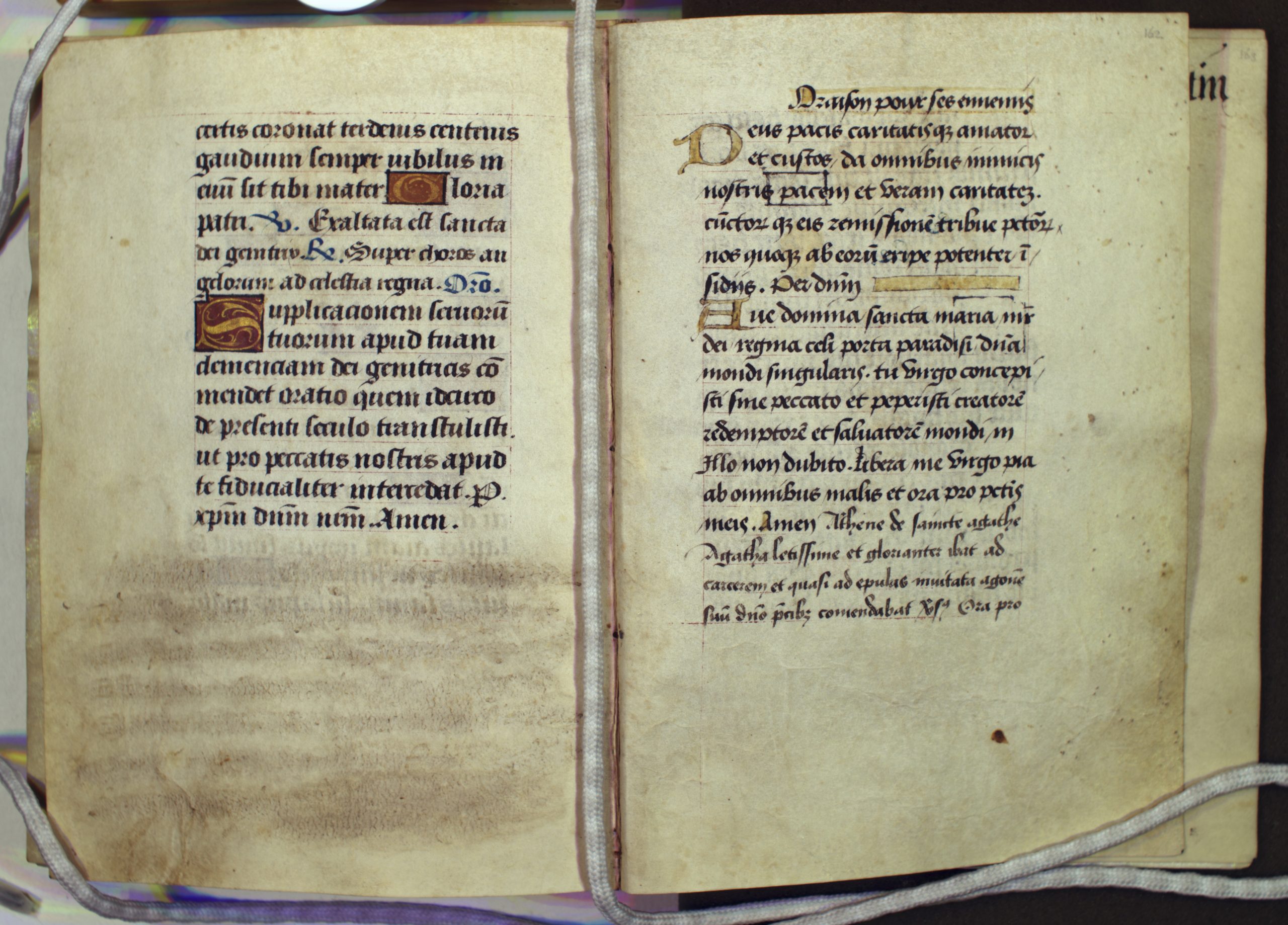
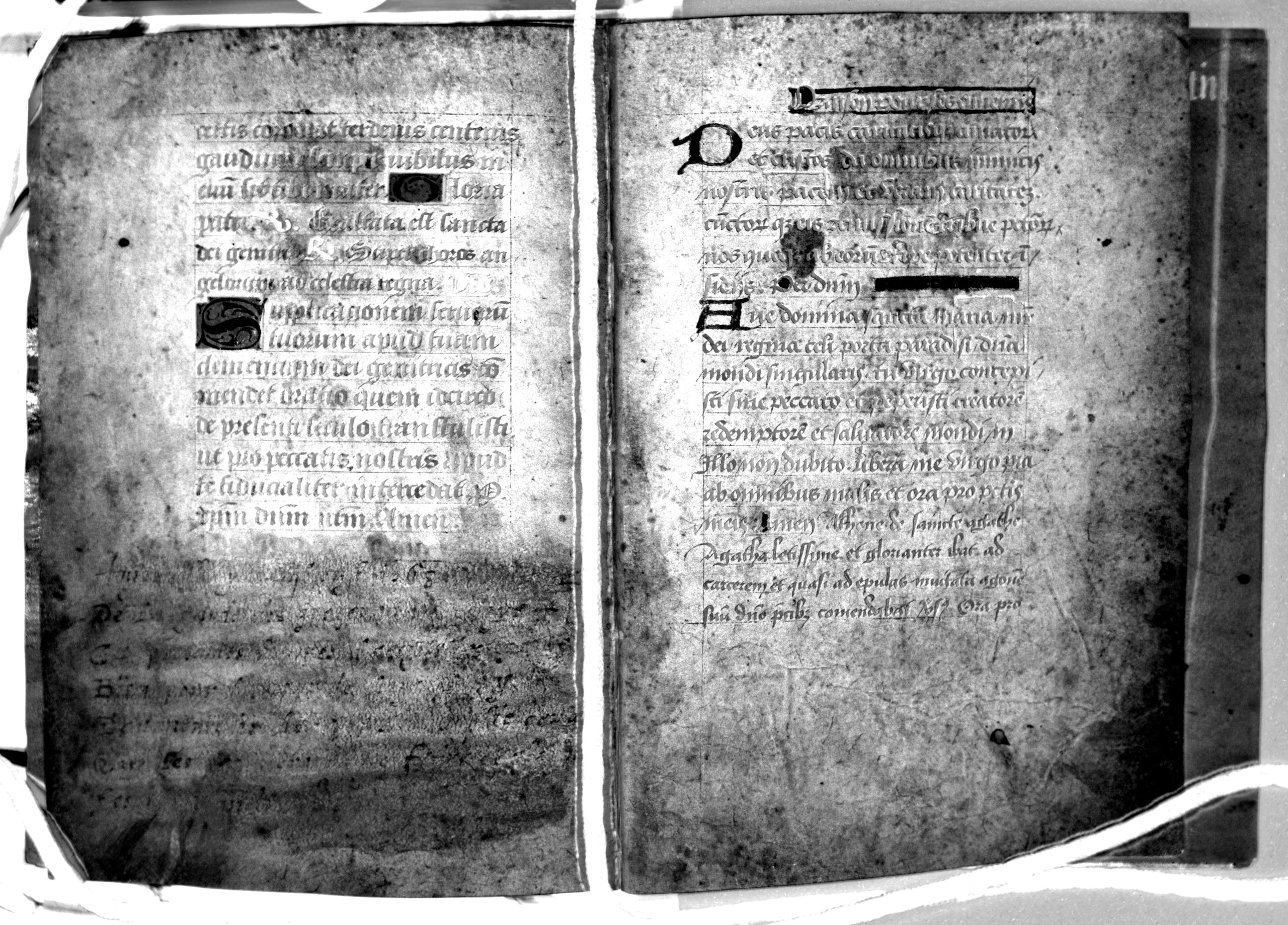
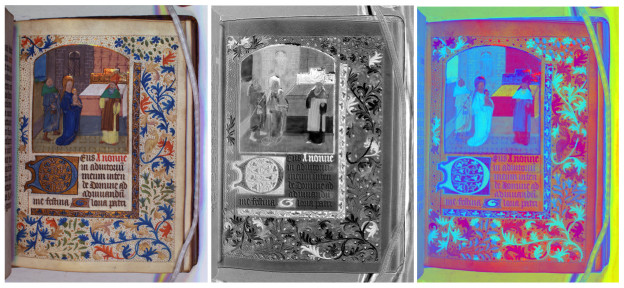
The images above show an example of scraped text on parchment from UC Libraries Hours of the Virgin from 1475, currently in the Lab for treatment. Compare these MISHA generated images to the documentation performed by Catarina Figueirinhas and myself using the Lab’s equipment and processes below.
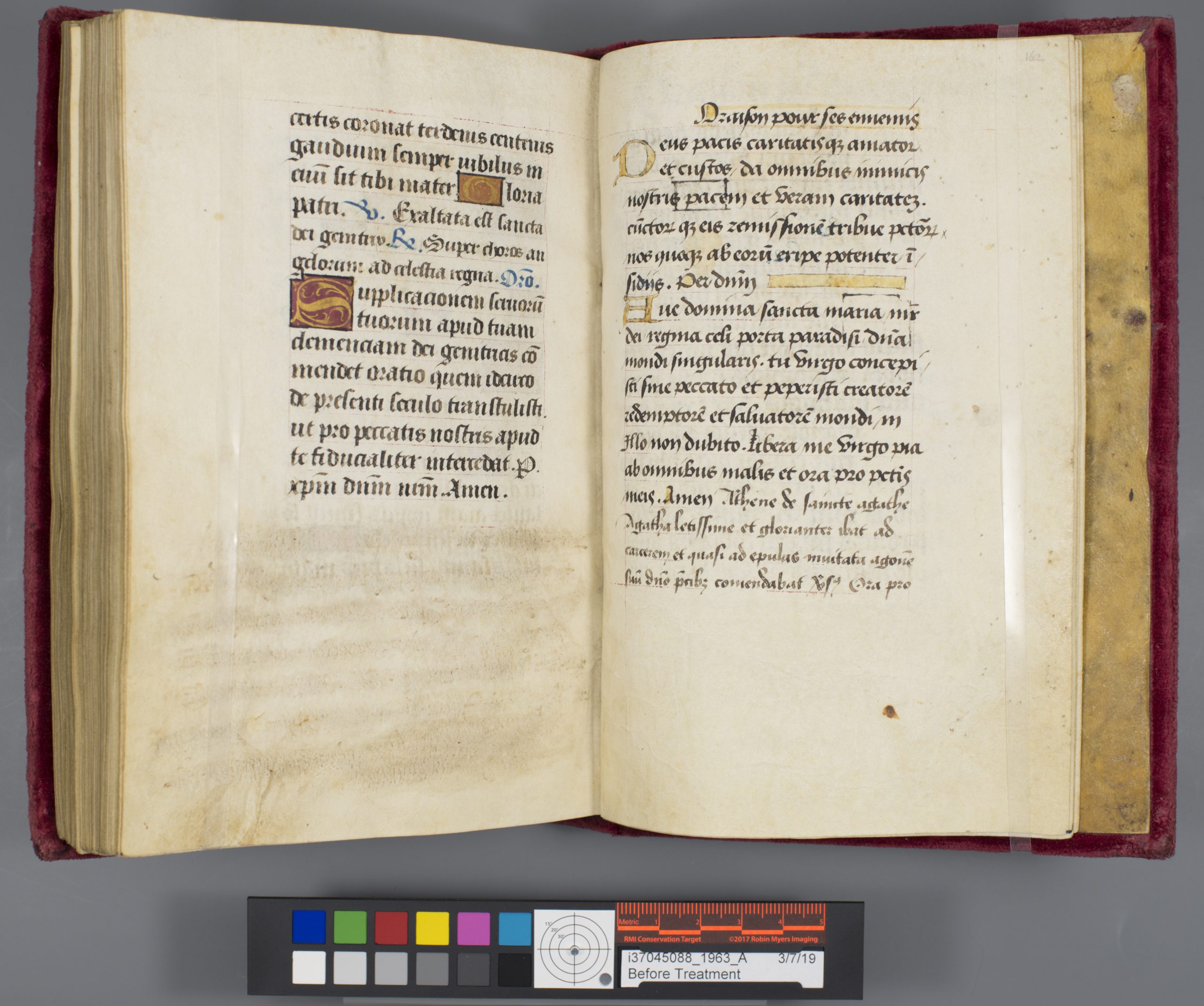
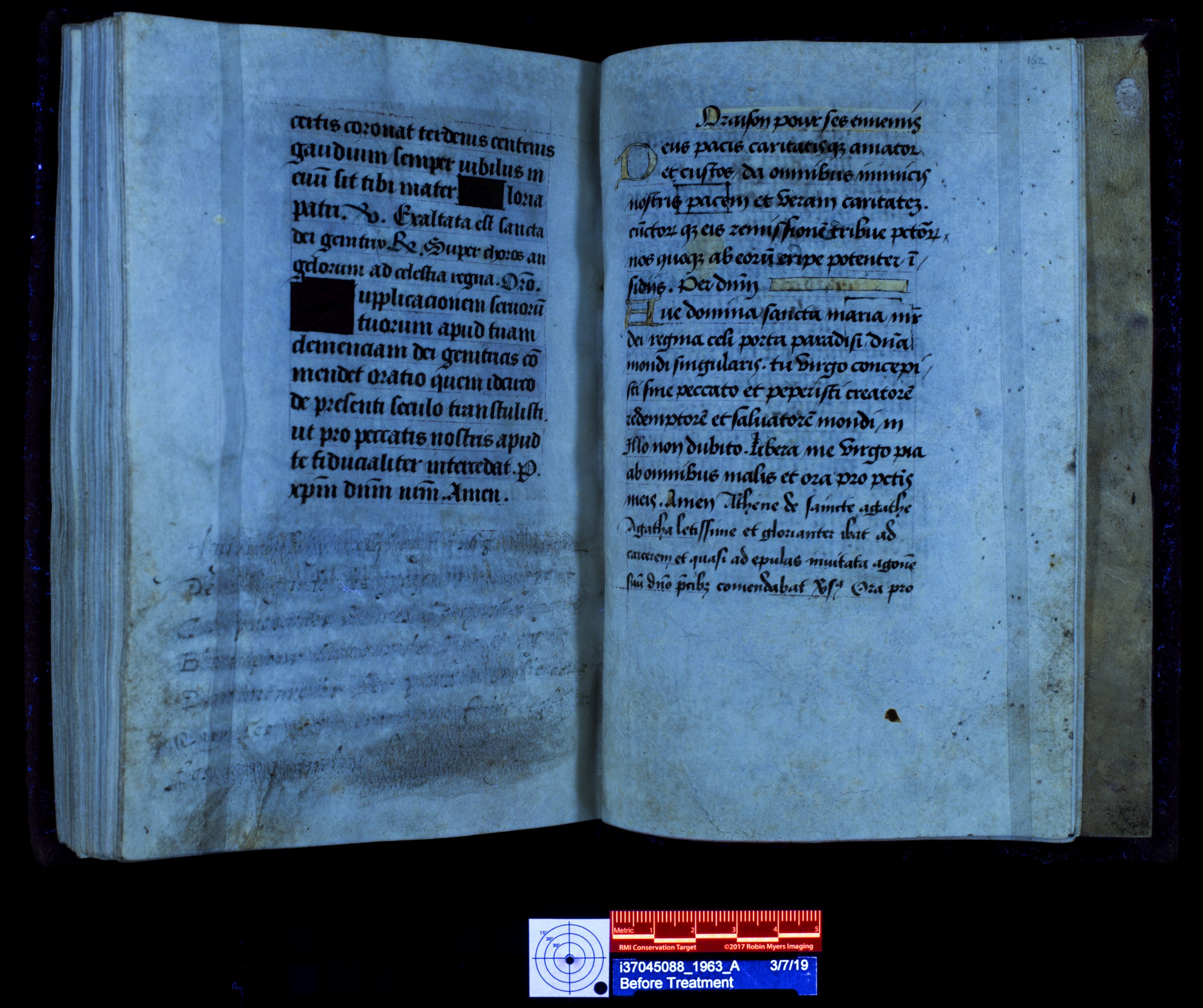
That said, I am fully aware that not everyone has access to the equipment/training that I have been fortunate to curate/experience over the last five plus years. Also, not everyone uses their finished data exactly how we do. For instance, the needs and expectations of a conservation lab and cultural heritage institutions can be very different. Even within the conservation field, how we use the data provided by specialized imaging in our hybrid book and paper lab is quite different from the kind of data needed by a fine arts conservation lab. Ultimately, I think the core audience for a system like the MISHA system is an organization looking to expand their suite of imaging services, or an institution with no multispectral imaging infrastructure interested in imaging collections in a quick and easy manner. Though for the latter, I would say that there is a big learning curve in manipulating and processing the data, but if greater focus is put into making the software and processing steps user-friendly, especially to novice users, it is completely manageable. And if this step is taken, I think the system could help a lot of institutions dive deeper into the materiality and history of their collections.
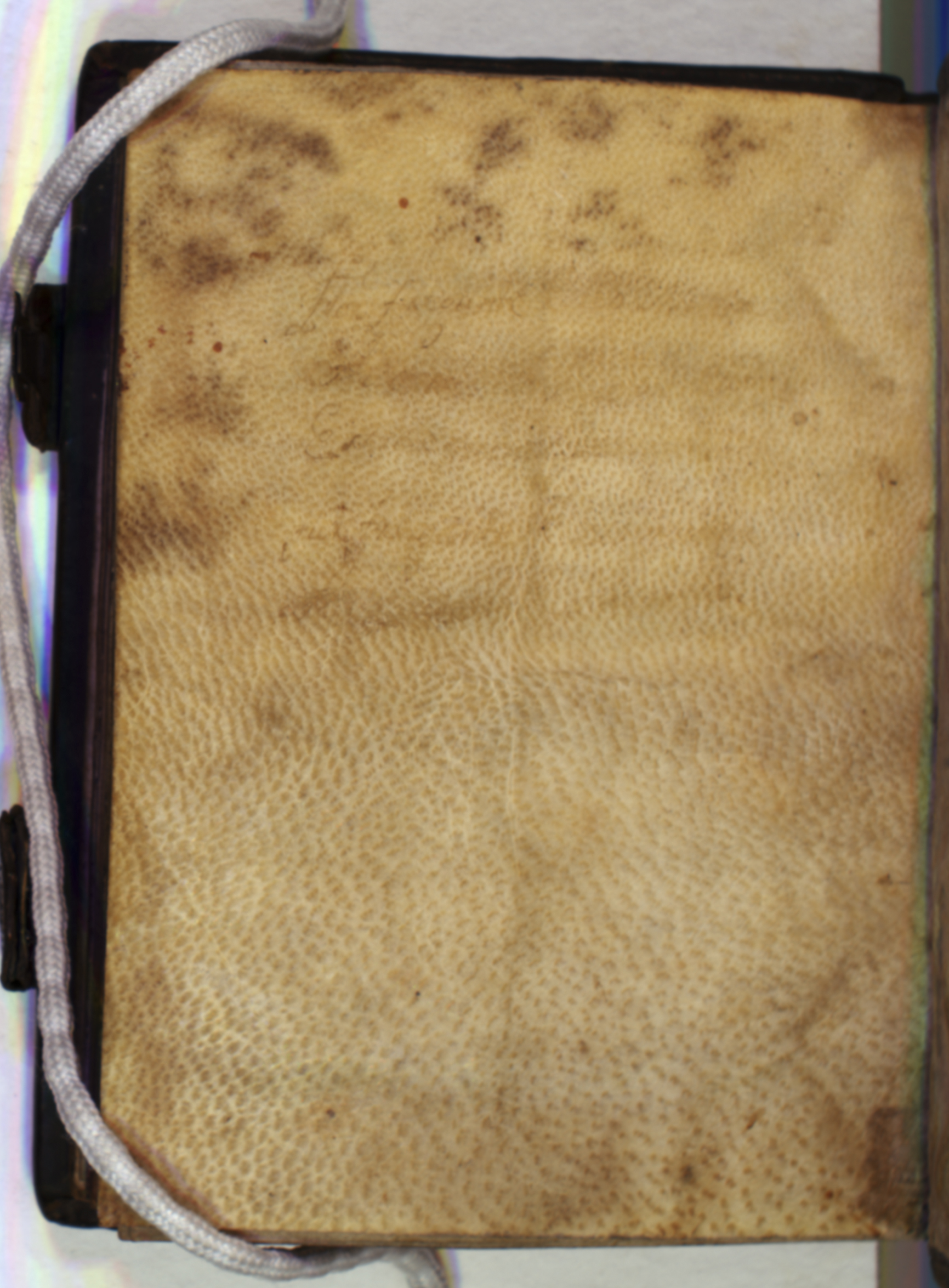
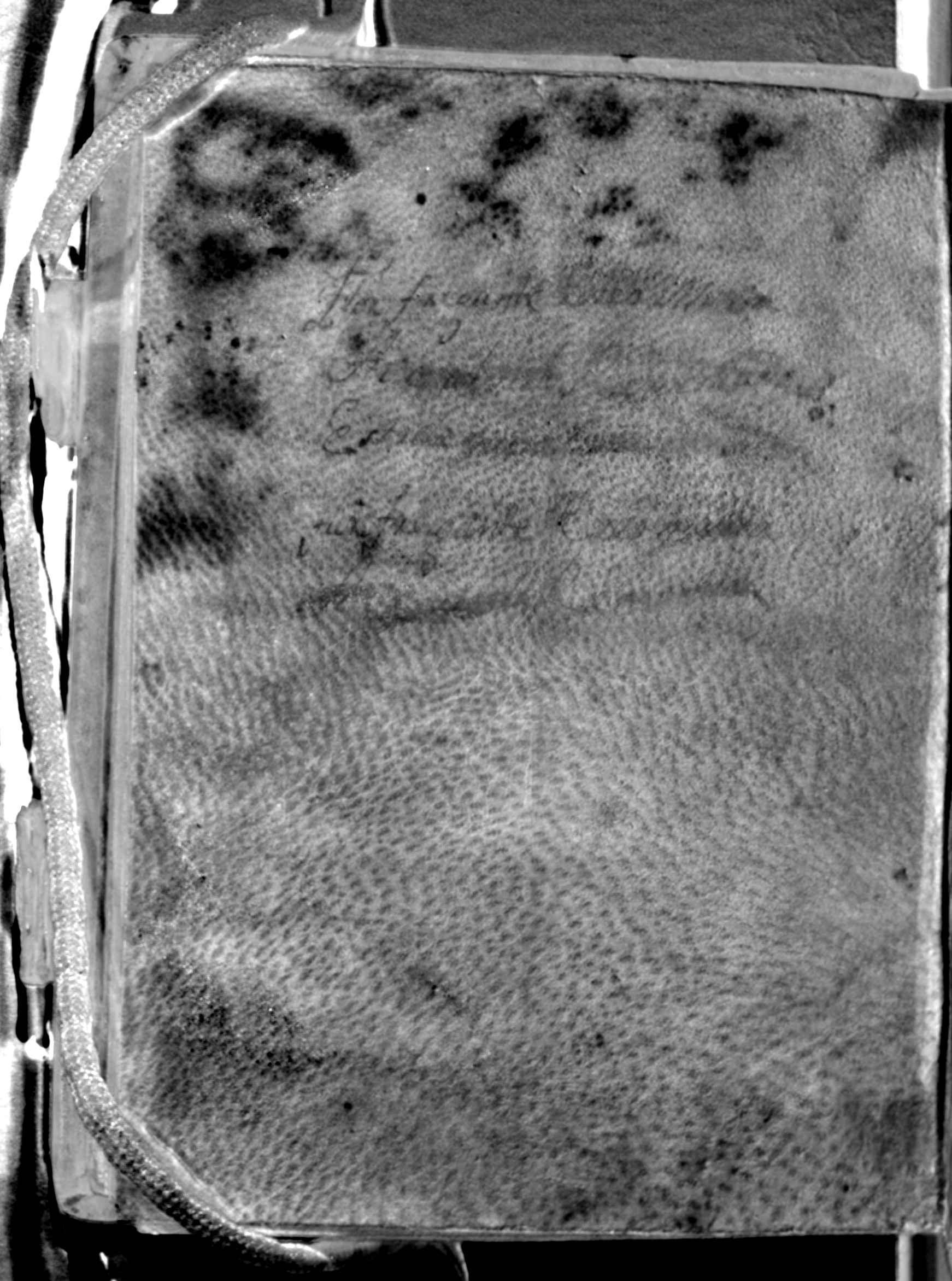

The images above depict another example of faded, scraped text. This flyleaf is from an undated Latin music manuscript that is part of the Public Library’s collection. The images below represent imaging done by the Lab, both normal illumination and UV radiation, with the goal to increase the legibility of the inscription.
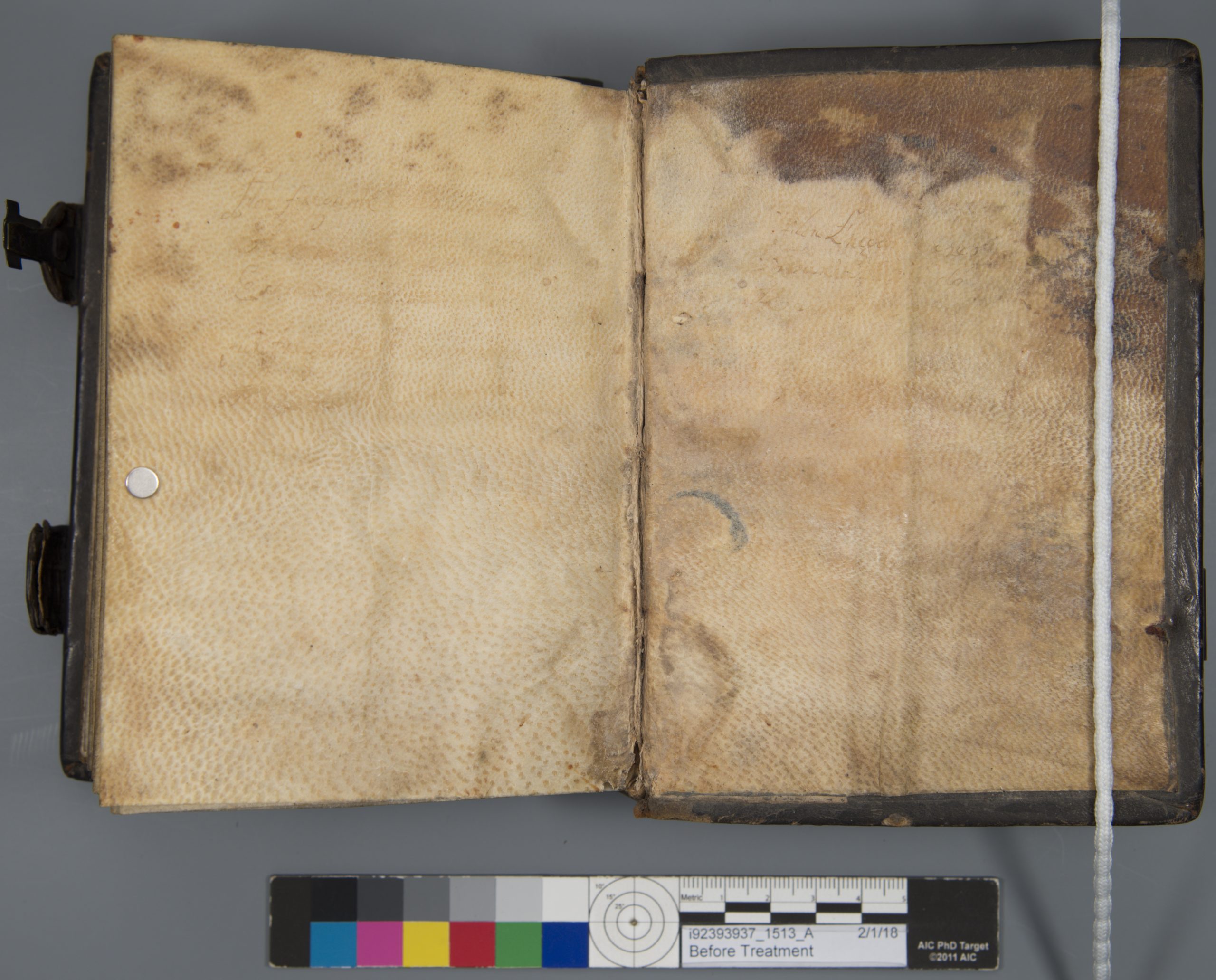
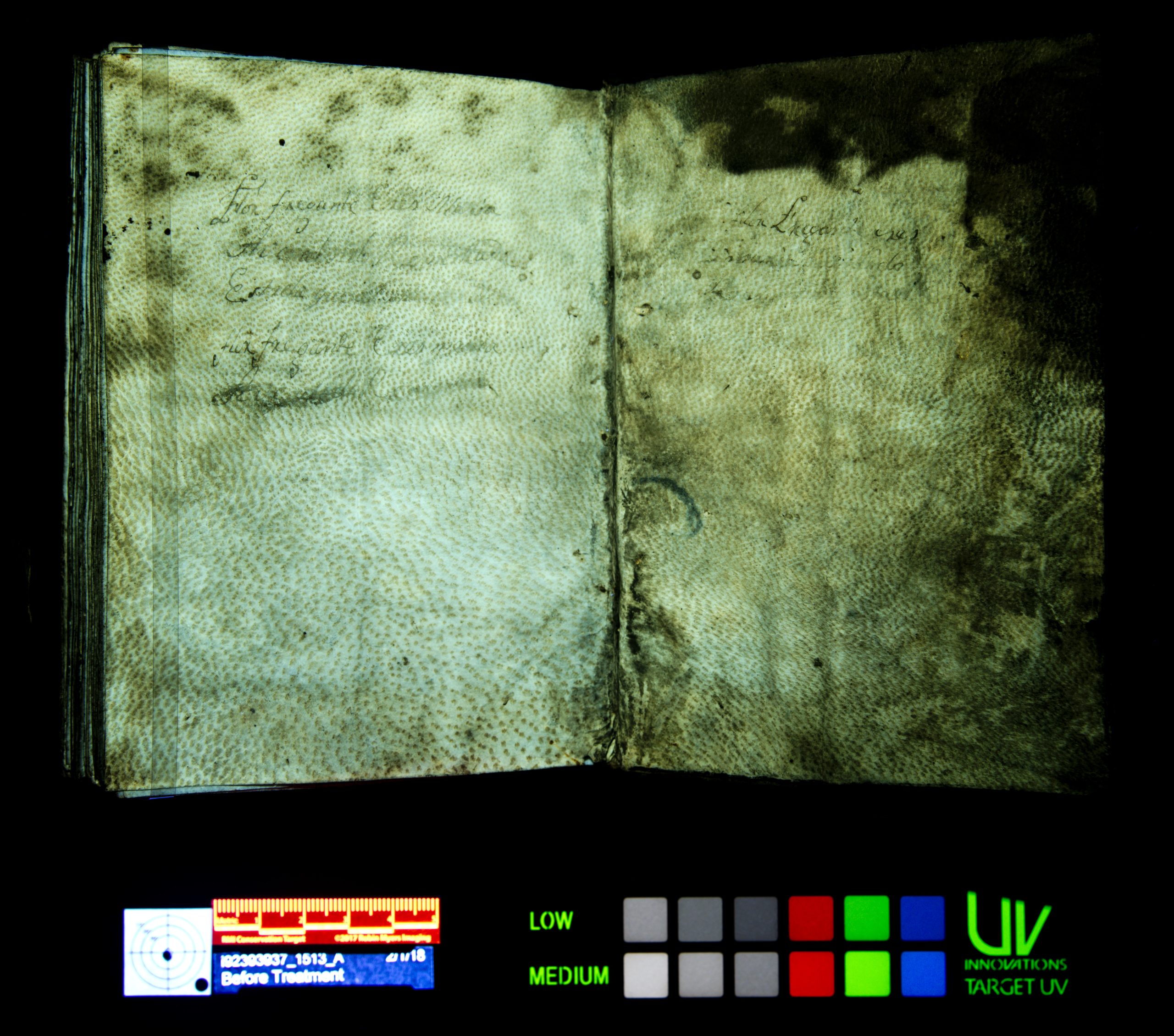
In the end, multispectral imaging is just plain FUN! So, the idea of making it more accessible to a wider audience is extremely exciting and I think the work that NEH, RIT, and colleagues like Andrew and Naomi are doing to share the power and wonder of multispectral imaging is amazing. The idea of a portable multispectral imaging system with free processing software that does not take a PhD to use is boundary-breaking, and it gives us a glimpse into a future of accessible and exciting imaging, which thus allows us to see and understand more of the past. I will always be an advocate for that kind of imaging!
Jessica Ebert [UCL] – Sr. Conservation & Photographic Documentation Specialist
Winter is approaching here in Cincinnati, far too quickly for my taste! But at the Lab we have been thinking about a winter staple a bit differently… The sled! A book sled, that is. This open-topped carrier of bound treasures has become the newest edition to our enclosure family. It is perfect for housing oversized books to be stored flat, as it enables easy transport of these large tomes, without adding too much extra weight.
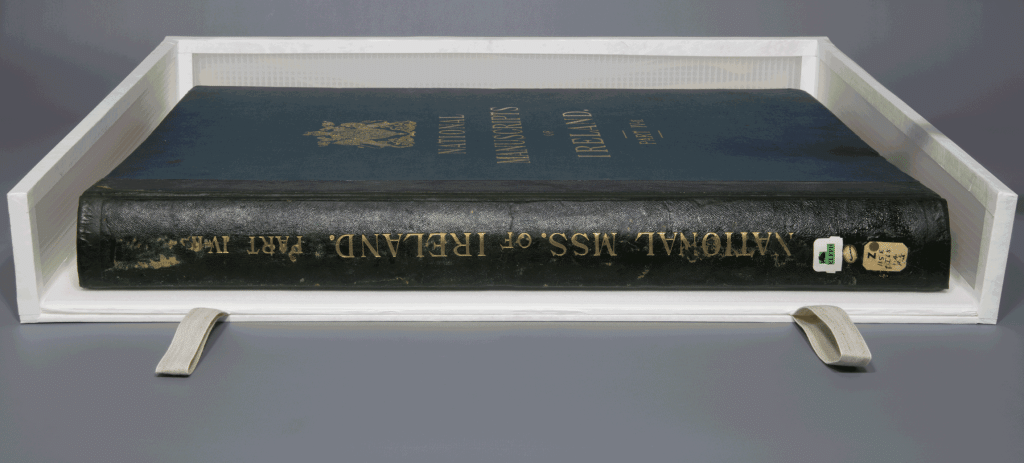
The sled has been honed and developed over the years by conservation professionals, but it has its roots at the Newberry in Chicago, where they were used to house their large antiphonary collection. I had the privilege of working at the Newberry prior to joining the incredible team here at The Preservation Lab, so the idea of starting to create book sleds at the Lab has been lurking at the back of my mind. At the Newberry, I was able to create my very first book sled, and understand the simple, yet highly functional structure.
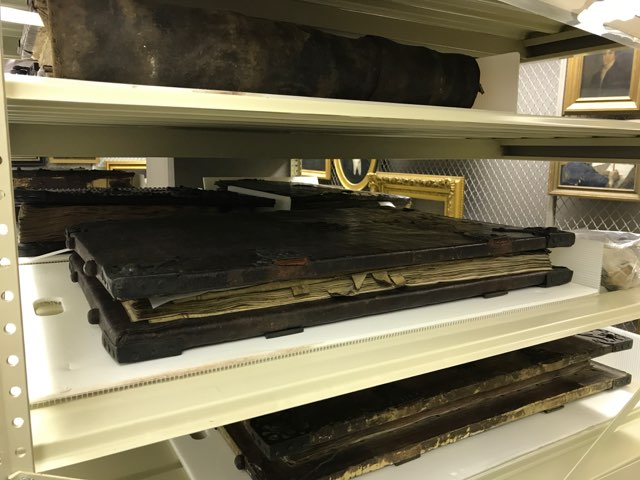
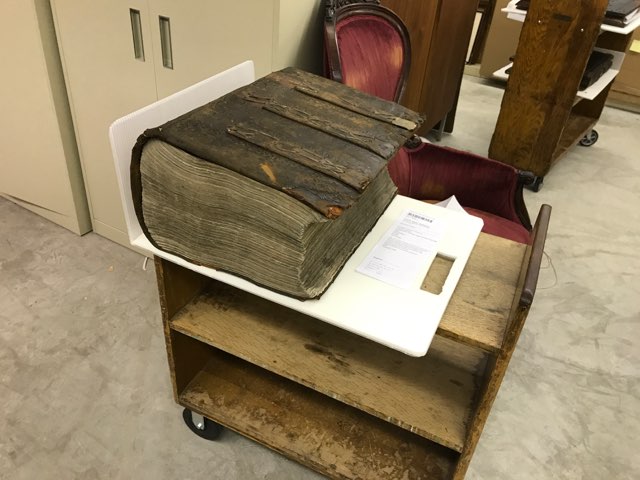
The book sled was refined by Ann Lindsey and Melina Avery from the University of Chicago when they treated and housed a 52-pound antiphonary from their collection. They were able to design a sled with additional walls and stronger reinforcements. Chris Saclolo from the University of Central Florida further enhanced the book sled by adding wall reinforcements and a removable lower tray.
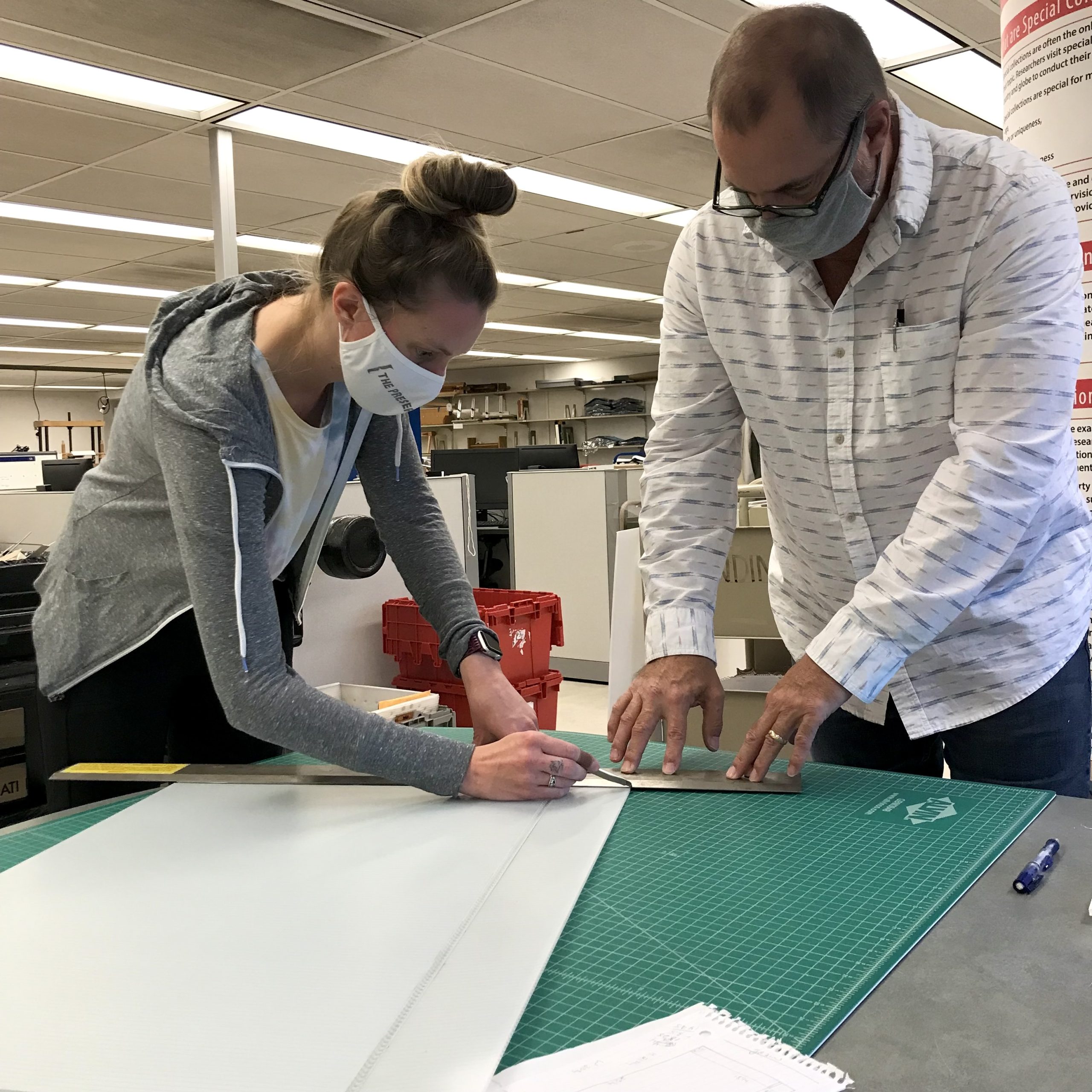
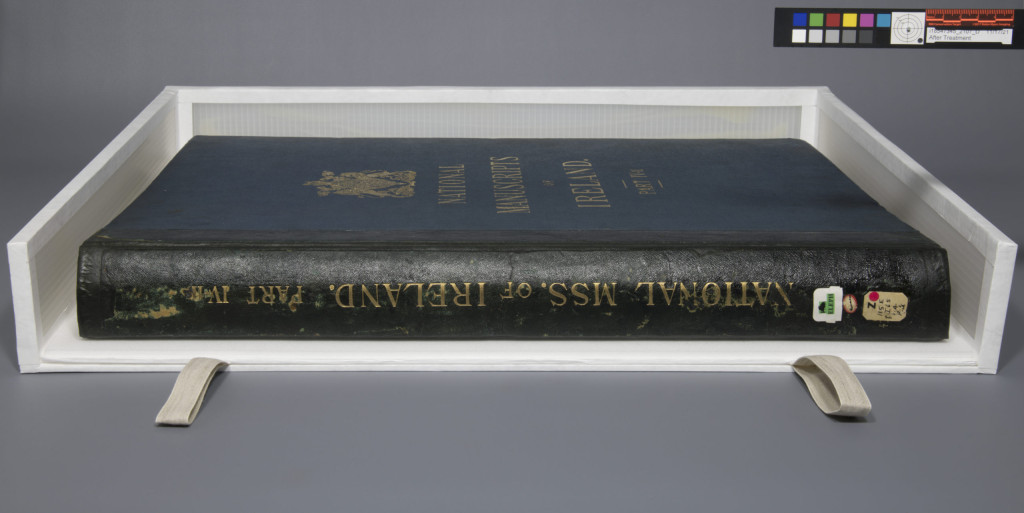
When the Lab received an elephant folio from the University of Cincinnati Classic’s Library that needed treatment and housing, we were able to create the very first book sled at our Lab! Housing a book over 20 inches tall is no easy feat, so we were thrilled to be able to use the experience and advice from our fellow conservation professionals. I worked alongside Chris Voynovich and Catarina Figueirinhas (because 3 minds are so much better than 1) where we problem solved, planned, and constructed this large book sled. The finished sled design closely follows Saclolo’s recommendations, with minor adjustments to the tray, as our book did not have bosses.
Ultimately, the book sled will allow the book, Facsimiles of National Manuscripts of Ireland, to be visible on the shelf while also aiding in transporting the book through the library when needed. It will also prevent additional damage and abrasion to the leather at the spine, which received a reback during treatment.
We already have additional oversized books in the Lab for treatment, so more sleds will be on the docket this winter!
Kasie Janssen (CHPL) – Senior Conservation Technician
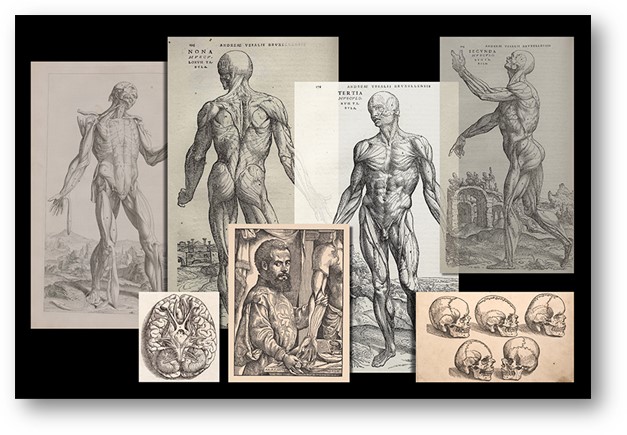
Please join us for the second lecture in the six-part series – “Making the Fabrica: The Illustrations, Printing, Binding & Publication.” Award-winning cultural historian Dániel Margócsy, PhD, University of Cambridge, will describe the creation of the “Fabrica.” Dr. Margócsy will be joined by Gabrielle Fox, a Cincinnati book binding and preservation expert, who will discuss the bindings of the first and second editions that will be on public display in the Donald C. Harrison Health Sciences Library.
The lecture, free and open to the public, will be held Tuesday, Nov. 16 at 5:30 p.m. in Kresge Auditorium, 231 Albert Sabin Way. In-person activities will be provided under CDC guidelines or local COVID-19 restrictions, with the well-being of all guests remaining the top priority. View UC’s current COVID-19 updates. For those not wishing to attend in person, the lectures will be live streamed via Zoom.
Register to attend the lecture.
Tune into the Lab’s Instagram the entire week before Halloween, where we’ll be sharing five of the scariest “preservation horrors” that we encounter in our work. It’s bound to be a fun but frightening week that you won’t want to miss!
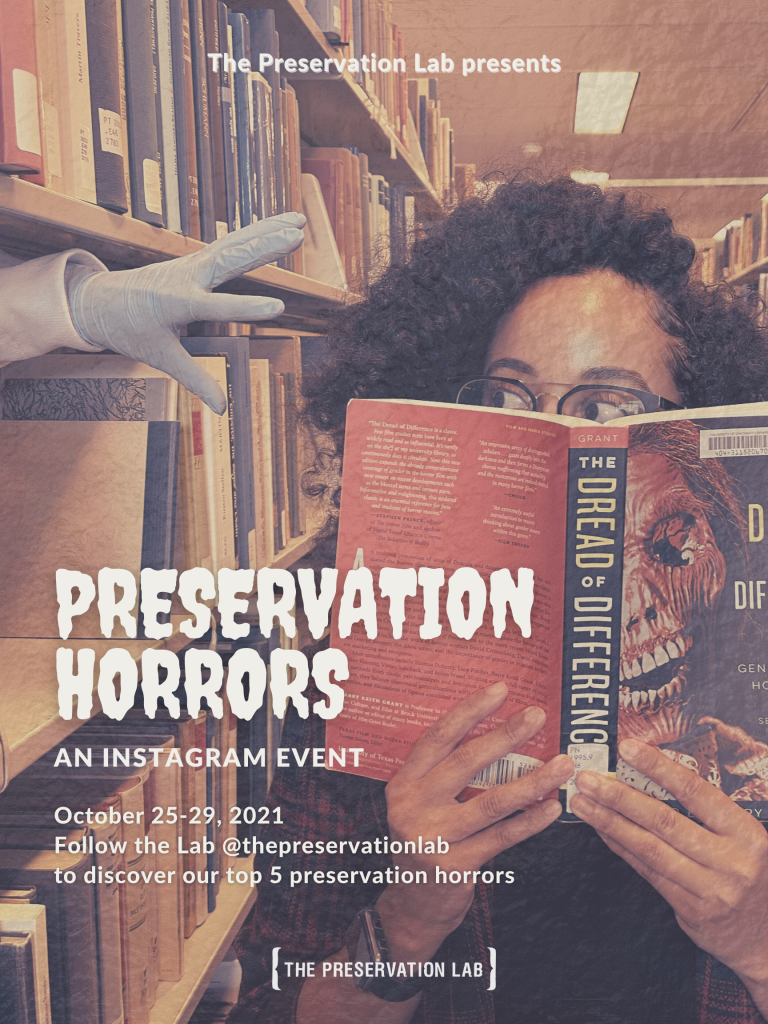
A very special thank you to our model, Aja Hickman, who also happened to have the wonderful idea for this event!
Jessica Ebert [UCL] – Sr. Conservation & Photographic Documentation Specialist
Join Holly and Ashleigh this Thursday at 7pm (EST) for the 3rd lecture in the Cecil Striker Webinar series, Off the Shelf and into the Lab: Medical History, Preservation, & the University of Cincinnati Libraries’ Adopt-A-Book Program.
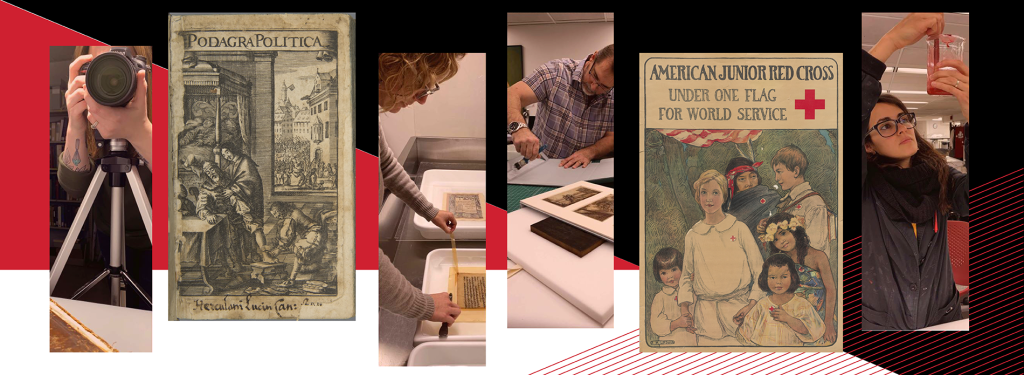
Ashleigh and Holly will talk about the work we do in the Lab and UC Libraries’ Adopt-A-Book program.
Zoom details:
https://ucincinnati.zoom.us/j/93403337138
Meeting ID: 934 0333 7138
More details about the Adopt-A-Book Program and items up for adoption can be found at: https://libapps.libraries.uc.edu/adoptabook/
Jessica Ebert (UCL) – Conservation Tech & Photographic Documentation Specialist
The Preservation Lab at UC Blog uses Accessibility Checker to monitor our website's accessibility.