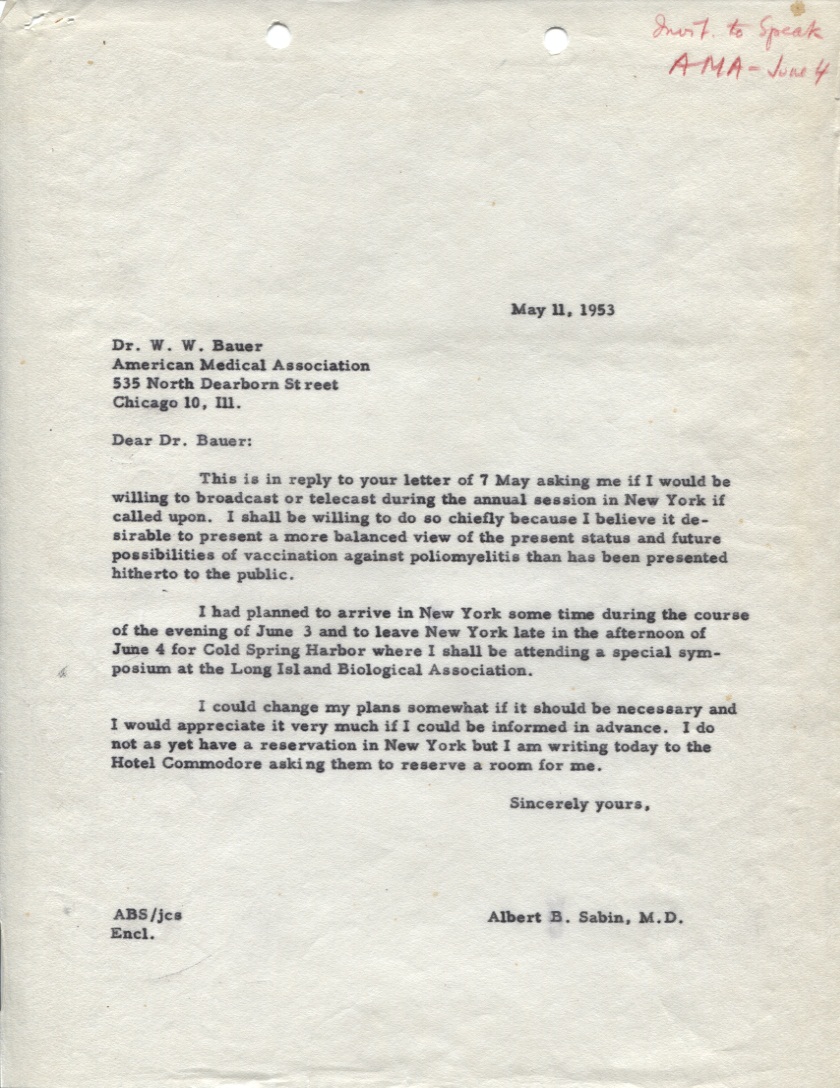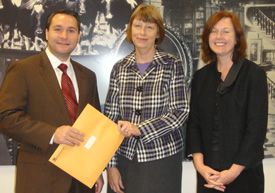
I was recently processing a binder that contained letters and photographs from a ceremony where Dr. Sabin was awarded the Spirit of Life Award from the City of Hope for his “contributions to mankind” for developing the oral polio vaccine. This banquet was held on September 3, 1986, and the proceeds went to establish a research fellowship in Dr. Sabin’s name at the City of Hope National Pilot Medical Center and the Beckman Research Institute. When accepting the award, Dr. Sabin spoke of the need for compassion in medicine and suggested the idea of a “total care physician” who could provide both medicine and compassion to their patients. Continue reading
Apple Co-Founder Steve Wozniak Makes a 1987 Guest Appearance at OCAS
By Janice Schulz
As the Engineering and Applied Science merger comes to a conclusion, College of Engineering and Applied Science Library Director Ted Baldwin has presented the Archives with some interesting material from his offices at the former CAS Library. Recently we came across a reminder that an intriguing guest speaker was on the agenda for OCAS’s 1987 Technology Exposition. Steve Wozniak, who prefers to be addressed simply as “Woz,” co-founded Apple Computer Inc. in 1976 along with Steve Jobs. Woz was the engineering muscle behind the development of the Apple I and Apple II personal computers, released in 1976 and 1979 respectively. In 1981 a plane crash forced him to take time off from Apple and he decided to return to the University of California at Berkley to complete his Bachelor of Science degree in electrical engineering and computer science. (To divert attention away from himself, he enrolled under the name Rocky Raccoon Clark.) He returned to Apple in 1983, but left again in 1985 to devote his attention to inventions and education. Continue reading
T.M. Berry Project: A Long Way from the Back of the Bus
By Laura Laugle
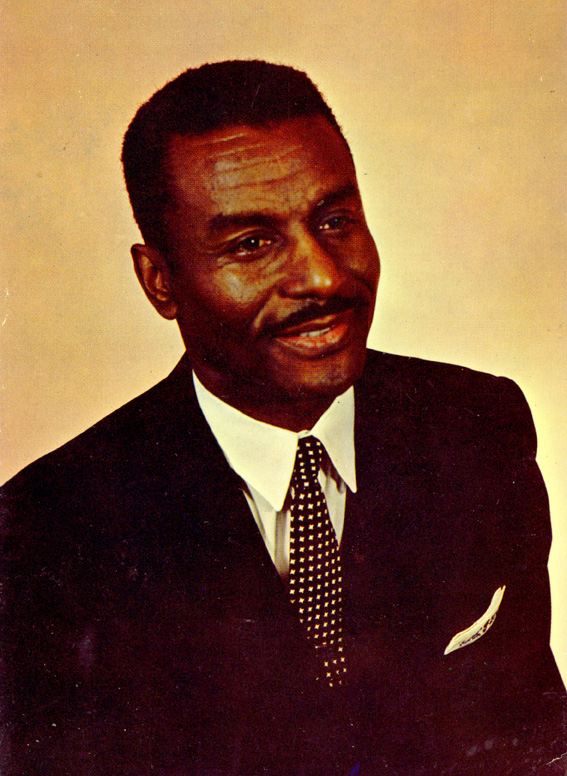
Throughout processing the collection there have been a few things which I’ve really wanted to find. This photo is one of them. On the left is Lt. Roger Terry, one of three Tuskegee Airmen whom Theodore M. Berry defended during court-martial hearings for entering an illegally segregated officers’ club at Freeman Field in Indiana.
For more information on the Tuskegee Airmen trial and the Freeman Field Mutiny, please see T.M. Berry Project: The Tuskegee Airmen Case of 1945.
The Bearcat
By Janice Schulz
Have you looked at the Archives & Rare Books Library’s Bearcat exhibit lately? If not, you will want to check it out because we are continually adding new images and links to this evolving display of Bearcat memorabilia. The exhibit’s 70-plus images date back to 1914, when Leonard “Teddy” Baehr lent his name to what would become UC’s beloved mascot. Recent additions include the new Bearcat statue installed in 2010. In addition to the images we have provided links to pages on Bearcat history and tradition as well as current news. (Remember the snowball arrest at last year’s Pitt game? – Yeah, we have the video!) Join us for a fun trip through the years with our Bearcat!
The Albert B. Sabin Digitization Project: The Faces Behind Polio Eradication
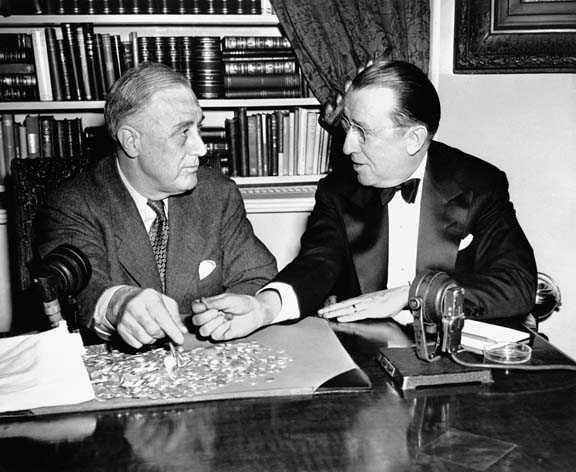
Together, these four men represent the public face of polio – the courageous victim, the devoted foundation leader, the brilliant researchers with their lifesaving vaccines.
-Historian David M. Oshinsky,
in reference to President Franklin Roosevelt, Basil O’Connor, and Drs. Sabin and Salk
Prior to starting on the grant to digitize the Albert B. Sabin archives, I wasn’t quite sure what polio was or how much of an impact the Sabin vaccine had. After spending the last couple of months reading Dr. Sabin’s correspondence, I started to learn some of the names of scientists who had a hand in helping to eradicate polio throughout the world.

Several great scientific minds were honored at the Polio Hall of Fame for their contributions to the fight against the disease.
While going through some boxes to locate photographs to scan for this project, I came across several copies of the photo seen here, which was addressed to Dr. Sabin from Basil O’Connor, who was the one of the founders of the National Foundation for Infantile Paralysis. The photograph is from the dedication of the Polio Hall of Fame in January 1958 at what is now called the Institute for Rehabilitation in Warm Springs, Georgia, and the busts on the wall represent the most influential polio researchers at the time.
2011 Ohio Sunshine Laws Manual Available
By Janice Schulz
As a State of Ohio public entity, the University of Cincinnati is required to adhere to Ohio’s public records laws. The laws can be found in Ohio Revised Code 149.43, but interpretation can be tricky. To assist Ohio agencies and citizens with understanding and applying both the public records laws and the open meeting laws, collectively known as “sunshine laws,” the Ohio Attorney General and the Ohio Auditor of State have jointly published the Ohio Sunshine Laws Manual. In plain language, the manual describes what a public record is, how to request records, exceptions to the law, enforcement of the law, and obligations of public offices. Like many state laws, interpretation of the public records laws happens during actual court cases, and the manual is updated annually to include new and/or different interpretations that affect how we need to comply. The 2011 Sunshine Manual can be viewed and downloaded free of charge and hard copies, also free of charge, can be requested on the Ohio Attorney General’s website.
Memorial Holiday Hours
Please Note: UC Libraries will be closed Monday, May 30 for Memorial Day, except for the Health Sciences Library which will be open from 9am-5pm.
In addition, Langsam Library will be open May 29, Noon – 10pm.
A complete list of library hours is available online.
T. M. Berry Project: Alpha Phi Alpha Continued
By Laura Laugle

Close up of Theodore M. Berry with Alpha Brothers from the group photo below at the 26th Anniversary Convention in St. Louis, Missouri, 1933
The photos that I took to preservation a couple of weeks ago (see my blog post T. M. Berry Project: Alpha Phi Alpha) came back last week and are looking lovely! They really did a great job, especially with the photos featured in today’s blog which had been tightly rolled and were incredibly stiff and brittle. They are now nice and flat and beautiful. So here’s a big “thank you” to the preservation department in Langsam Library!
I know that the panoramic photographs below seem small on a computer screen; in fact it’s difficult for me to even make out faces, but in real life they are pretty large. The three original photos we have range from 27” to 36” in length and are well big enough to see each individual clearly which is especially important with these photos. Continue reading
Researching Student Life at the Archives & Rare Books Library
By Janice Schulz
While students enter college with the goal of gaining a formal education, a good bit of learning also occurs outside of the classroom. A university campus is in many ways like a self-contained community, providing students a place to live, study, work and socialize. Much of this lifestyle is student-driven, allowing students to build leadership, organizational, social and even political skills for use in life after university. At the same time, students react to and are affected by the wider world outside of the university.
The Archives and Rare Books Library has compiled a guide to its holdings that can be used to research student life at the University of Cincinnati. Research ideas are endless, but can include topics such as: Continue reading
The Albert B. Sabin Digitization Project: Sabin Sundays
Just last year, the University of Cincinnati and Cincinnati Children’s Hospital came together to celebrate the 50th anniversary of April 24, 1960. Why was this date so important? Sunday, April 24, 1960, is also known as “Sabin Sunday,” which was the first public distribution of the Sabin oral polio vaccine in the United States. This took place right here in Hamilton County, Ohio!
One document I found (of many) referring to this massive undertaking was a copy of an advertisement from the Cincinnati Enquirer, which was published on Sabin Sunday. Called the “Children’s Crusade,” from April 24-May 11, children could receive a free oral polio vaccine from doctors and clinics around Cincinnati and the surrounding area. This effort was sponsored by the Academy of Medicine of Cincinnati, the Cincinnati Pediatrics Society, the Southwestern Ohio Society of General Physicians and the Cincinnati Board of Health. I love the photograph of Dr. Sabin administering the vaccine because this is the way many of that generation remember receiving the vaccine. Continue reading