
The University of Cincinnati Libraries have received a $61,287 grant from the National Historical Publications and Records Commission to process the papers of Theodore Moody Berry (1905-2000), a civil rights pioneer, community activist, and elected official from Cincinnati.
Tag Archives: Cincinnati History
Fair Housing in Cincinnati: The Records of Housing Opportunities Made Equal
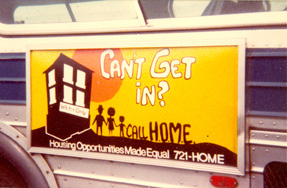
HOME Bus Advertisement, undated
In 1969, Mrs. Estelle Busch attempted to rent an apartment in Avondale, but was unable to secure an appointment to view the property. A short time later Mrs. Ruth VanDerzee viewed the apartment and was assured her deposit would be accepted. Mrs. Busch was black. Mrs. Vanderzee was white.[1]
In 1990, Joanna Ahlers attempted to acquire an apartment for herself and her two children in Milford, Ohio. An apartment manager told Ahlers that a 2 bedroom apartment would be available soon, and Ahlers offered to put a deposit on the apartment. When the manager discovered that Ahlers had children, she told Ahlers that she was not renting to families with children and refused to rent the apartment to her.[2] Continue reading
Starring the Queen City
 On exhibit on the 4th floor of Langsam Library, Starring the Queen City, celebrates books and films set in Cincinnati. In such books as Suzi Sinzinnati, Jazz Bird, and Beloved, and films such as Rain Man, Eight Men Out, and The Mighty, Cincinnati is either featured or plays a prominent role in the story.
Cincinnati General Hospital Architectural Specifications Added to the University Archives
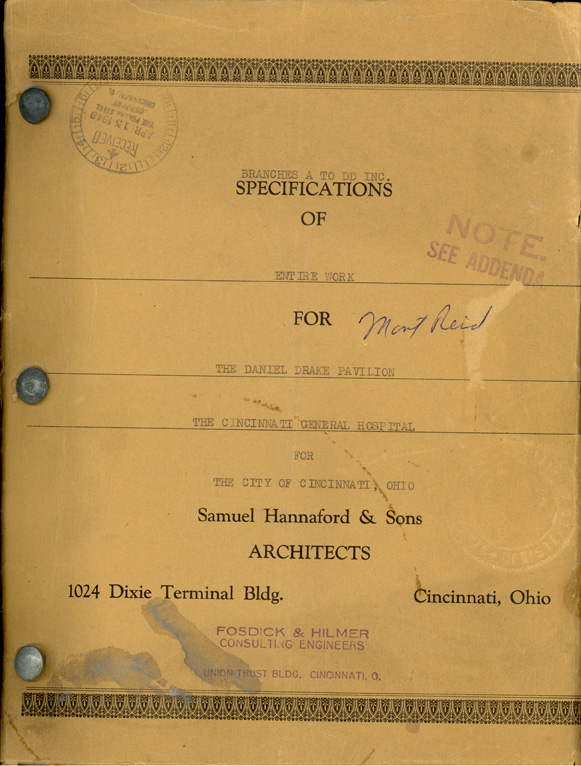
Cover of the specification book for the “Daniel Drake Pavilion,” later to be built as the “Mont Reid Pavilion.”
The University Archives recently processed a new collection of eight architectural specification books for new construction, additions, and renovations to buildings on the Cincinnati General Hospital Campus dating from 1935-1957. The specification books were found by staff members of University Hospital’s Plant Operations & Maintenance Department, and were transferred to the Archives for research and preservation. With the exception of the Mont Reid Pavilion (which was referred to as the Daniel Drake Pavilion at the time of specification) the buildings for which these specifications were written no longer exist. All of the specifications were drawn up by Samuel Hannaford & Sons Architects and include general contract conditions as well as details regarding carpentry, electrical work, plumbing, equipment, and other construction areas. Continue reading
Protest! The Campus and Reaction Against War
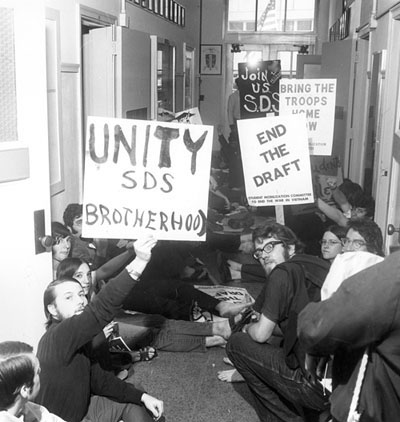 In May 1970 the University of Cincinnati closed its doors to students and canceled classes. Campus demonstrations over the escalating Vietnam War and the invasion of Cambodia, the deaths of protesters at Kent State University and Jackson State University, and discontent with the administration’s efforts in enfranchising African American students led to the occupation of Van Wormer Hall and Beecher Hall. UC came to a standstill as students, faculty, staff, and administrators grappled with the issues of world turmoil being faced at the university. Continue reading
Poor Pearl, Poor Girl! The Awful Story of the Murder of Pearl Bryan
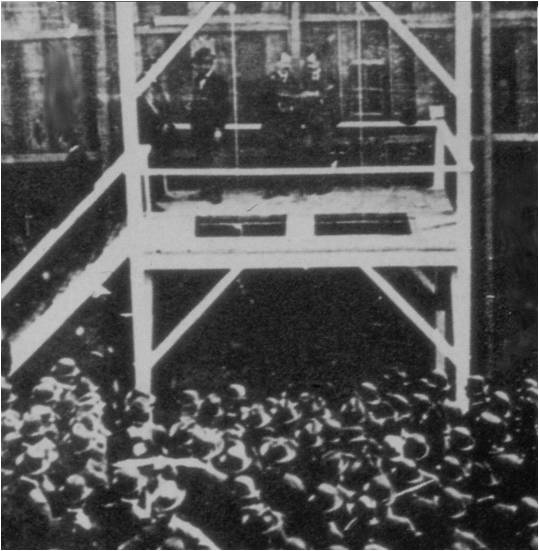 One hundred thirteen years ago, two UC dental students were executed by hanging. Yes, it’s true: the University of Cincinnati once had a dental school. It was the Ohio College of Dental Surgery and from 1888 to 1906, and then again from 1923 to its closing in 1926, the dental college was part of the university. Cincinnati had a distinct shortage of dentists in the early years of the 19th century – there were only two in 1830. The Ohio College of Dental Surgery was founded in 1845, and just a few short years after that, the Queen City boasted a directory of over forty dentists. The school attracted students from around the Midwest and was the first dental college to graduate a woman, one Lucy Hobbs of McGregor, Iowa. It was the custom of the college’s faculty in those days to send each student out into the world equipped with both a diploma and a Bible. There are, after all, many kinds of cavities to fill in day-to-day existence. The college’s later affiliation with the University of Cincinnati was a reflection of the number of medicine-oriented schools in 19th century Cincinnati that strived to combine classroom instruction with practical experience. Continue reading
Sam the Scaramouch - Cincinnati's 19th Century Satirical Tabloid
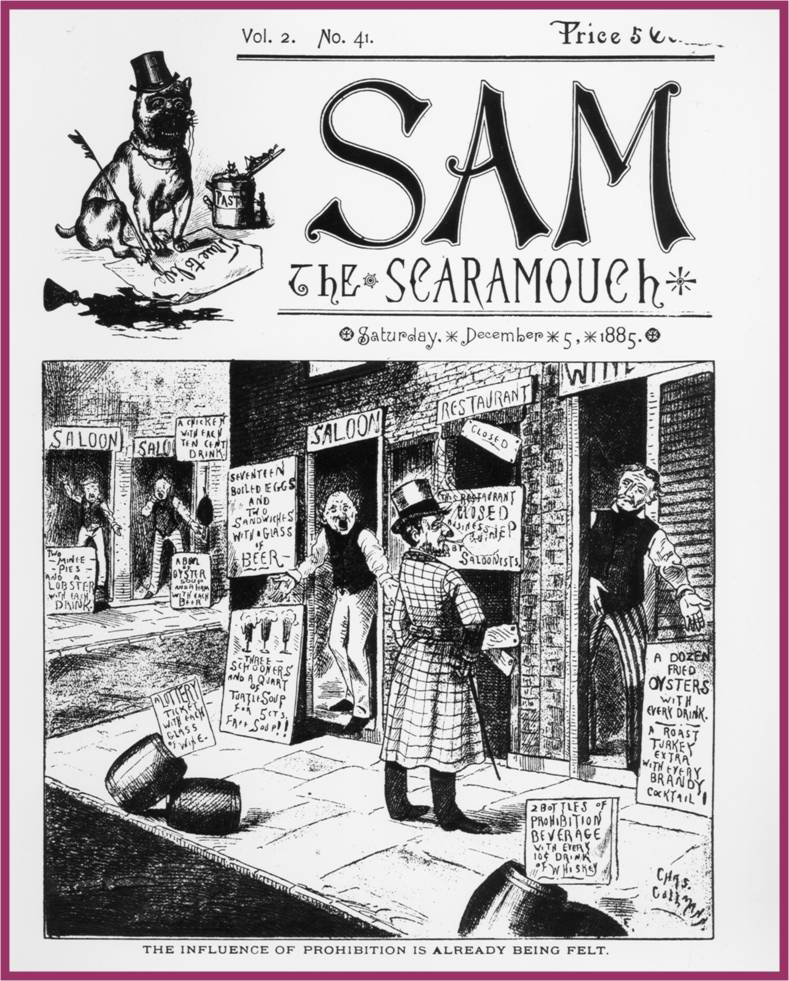 For thirteen months between February 1885 and February 1886, a tabloid publication in Cincinnati published a wide range of articles, cartoons, editorials, and stories that lampooned American life. No topic or person escaped the sharp wit of Sam the Scaramouch, and for the short time this weekly newspaper was in existence, its editors took on national tariffs, elections from Cincinnati to Washington, the temperance issue, urban sophisticates and country bumpkins, race and ethnicity, and, a growing national obsession with sports. Grover Cleveland was president. European colonization of Africa was in full force. The Statue of Liberty arrived in New York, and Ulysses S. Grant died. And, in many ways, Sam was like other newspapers around the country in covering these events, carrying local advertisements and notices, and publishing occasional doggerel and short fiction, and reflecting the “new” journalistic Realism. Continue reading
Hamilton County Morgue Records Offer Unique Perspective on Social History
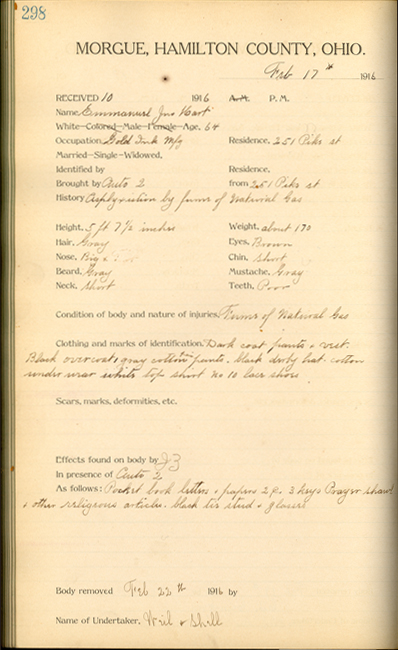 As part of the Ohio Network of American History Research Centers, the Archives and Rare Books Library holds Hamilton County Morgue records spanning the years 1887-1930. Despite the rather gloomy first impression that these 21 volumes may give, they offer valuable information for use in social research.
The office of Coroner is one of the oldest in the State of Ohio, dating back to a 1788 ordinance of the Northwest Territory, which provided that the Governor appoint a coroner for each county to serve a term of two years. The purpose of the Coroner in the early days was to preside over inquests held over bodies believed to have been victims of criminal violence. Continue reading
The Eugene Ruehlmann Papers Show the Dramatic Changes in Cincinnati in the 1960s
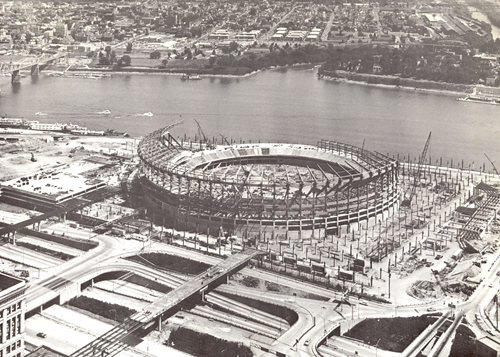 The 1960s were a tumultuous time in American history, and the city of Cincinnati was not immune to the changes during this decade. Riots displayed the city’s difficult race relations, the Bengals brought professional football to the city, Riverfront Stadium was built and changed the layout of the riverfront, and the city of Cincinnati grappled with urban renewal. Each of these events is documented in the papers of Eugene Ruehlmann, which are housed in the Archives and Rare Books Library’s Urban Studies Collection. Continue reading
St. John's Unitarian Church Records: Searching the History of one of Cincinnati's Oldest Churches
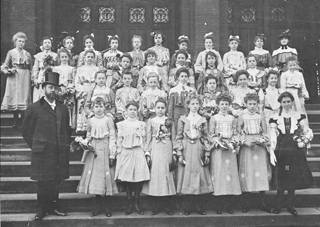
The Confirmation class of 1903 with Rev. H.G. Eisenlohr
The Archives and Rare Books Library holds the records of a few local churches, including St. John’s Unitarian Church, one of Cincinnati’s oldest houses of worship. This church’s rich history began in 1814 when Joseph Zaeslin (also spelled Zaeslein), a Moravian minister, organized a church for German immigrants in Cincinnati under the name The German Evangelical and Reformed Church. The history of this church is important to both Cincinnati’s religious history and to the history of Cincinnati’s German-American community. Continue reading