Saint Mary’s Hospital Collection

Saint Mary's Hospital Collection, 1884-1977. https://findingaids.libraries.uc.edu/repositories/4/resources/1075

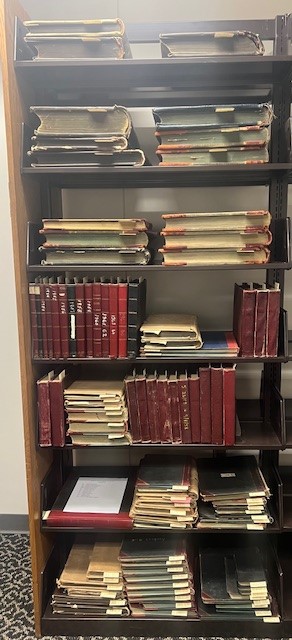
The Saint Mary’s Hospital Collection consists of 93 ledgers of hospital information about patient admissions, patients of German heritage, births, surgical operations, intensive care unit patients, deaths, physicians in Cincinnati, Ohio and information about a tuberculosis outbreak in New York City. The hospital was founded in 1858-1859 in Cincinnati, Ohio by the Franciscan Sisters of the Poor.
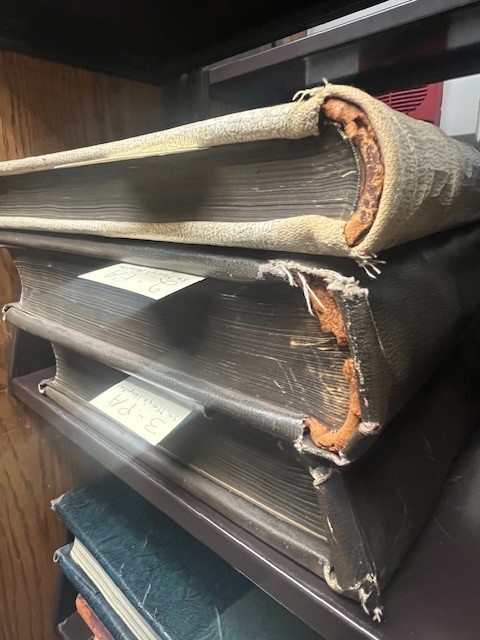
Saint Mary's Hospital Collection ledgers.  Many of the ledgers are oversized and weigh approximately 40 lbs.

St. Mary’s Hospital in Cincinnati was a historic medical institution established in 1858–1859 by the Sisters of the Poor of St. Francis on Betts and Linn Streets. Designed by architect Anthony Bley, the hospital served thousands of Cincinnati’s impoverished and German citizens. With a capacity of 325 hospital beds, St. Mary’s Hospital treated over 2,000 patients each year. The hospital was enlarged in 1860 and again in 1875. It was well-known as an important facility for emergency cases and taking care of the medical needs of Cincinnati’s West End neighborhood. St. Mary’s was supported by the contributions of the public and the Archdiocese of Cincinnati. The historic hospital closed on May 1, 1971. The Sisters of the Poor of St. Francis also shaped other healthcare organizations in the Cincinnati region, including what is now Mercy Health. The St. Mary’s Hospital Collection may be useful for research in genealogy and the social and medical history of Cincinnati in the late 19th century.

Continue reading
A Look at Doing Time in Cincinnati: The Workhouse Jail Registers

By Janice Schulz

Researchers know that life events tend to leave some amazingly informative paper trails and that sometimes you can find good things in seemingly bad places. For some individuals, a prison sentence was a significant, formative life event, and the paper trails that prison stays provide can tell some interesting stories. The Cincinnati Workhouse, which operated from 1869-1985, tried to take those prison sentences and turn them into more positive experiences for inmates and society through rehabilitation, emphasis on moral ideals, and hard work. As part of our Ohio Network of Local Government Records collection, the Archives and Rare Books library holds jail registers from the Cincinnati Workhouse for the years 1877-1945.

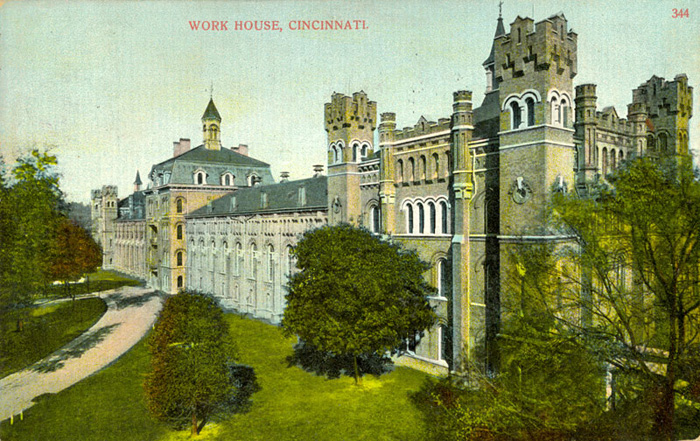
Postcard showing workhouse

The Cincinnati Workhouse in an idyllic, undated postcard from ARB’s Nelson and Florence Hoffmann Cincinnati Postcard Collection

On March 9, 1866, the Ohio General Assembly passed an act authorizing any Ohio city exceeding 100,000 in population to erect and maintain a workhouse. A workhouse was a new concept in the field of criminal justice, responding to the emerging idea that crime was related to societal and moral issues, and providing not only punishment, but rehabilitation as well. A workhouse aimed to rehabilitate by stressing moral values, providing inmates with something productive to do, and possibly introducing them to a new trade. Additionally, they were seen to be more cost-effective than traditional jails, as inmate labor contributed to the institution’s operations and provided outside income. Continue reading

City of Cincinnati Birth and Death Records

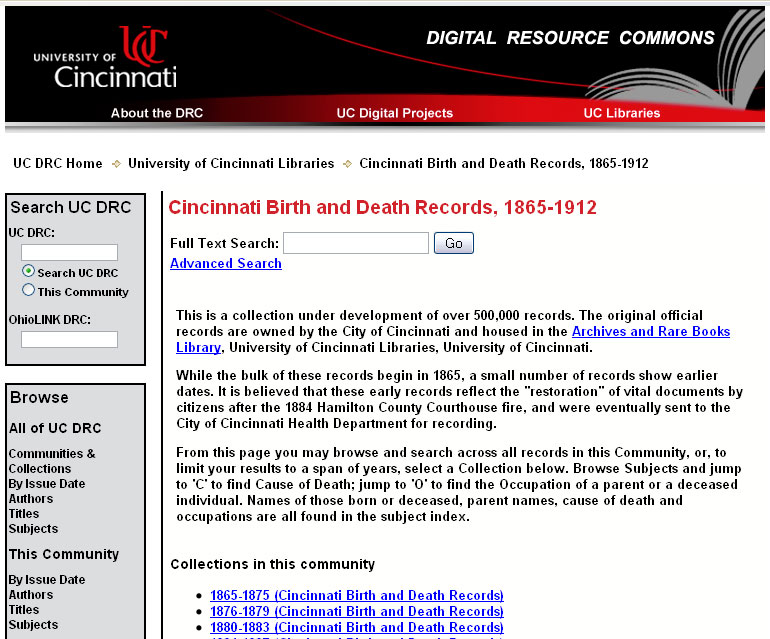
City of Cincinnati birth and death records from 1865 to 1908 with surnames beginning with the letter “A” through the surname “Bach” are now available online. The remaining records are being loaded as quickly as possible. Please continue to check the Digital Collections and Archives and Rare Books Library websites for further updates.

The University of Cincinnati Libraries was awarded a Library Services and Technology Act (LSTA) grant from the State Library of Ohio to digitize the records.City of Cincinnati Birth and Death Records Read more about the project online.

– By Janice Schulz

St. John's Unitarian Church Records: Searching the History of one of Cincinnati's Oldest Churches

1903confirmation_web2

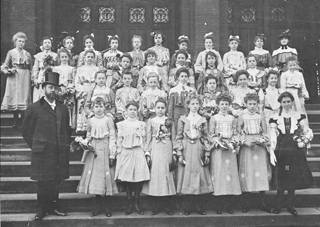
The Confirmation class of 1903 with Rev. H.G. Eisenlohr

The Archives and Rare Books Library holds the records of a few local churches, including St. John’s Unitarian Church, one of Cincinnati’s oldest houses of worship.  This church’s rich history began in 1814 when Joseph Zaeslin (also spelled Zaeslein), a Moravian minister, organized a church for German immigrants in Cincinnati under the name The German Evangelical and Reformed Church.   The history of this church is important to both Cincinnati’s religious history and to the history of Cincinnati’s German-American community. Continue reading

Hamilton County Probate Court Makes Over 1.1 Million Historic Records Available Online

Probate Judge James Cissell announced on December 29, 2009 that probate records dating back to 1791 have been digitized and are now available for public use on the Probate Court website. The five-year project to digitize the records was intended to both preserve the original, sometimes fragile, records and provide increased public access to them. Included in the digitized records are indexes and docket books for estates, wills, trusts, marriages, guardianships, births, deaths, and physician certificates as well as minister’s license indexes and probate entries. A list of all available records and the search pages are available at http://www.probatect.org/courtrecordsarchive/bukcats.aspx. Access to these records is important to historians and genealogists who are looking to document the life changing events of family and historic figures. Continue reading

Cincinnati Birth and Death Record Availability

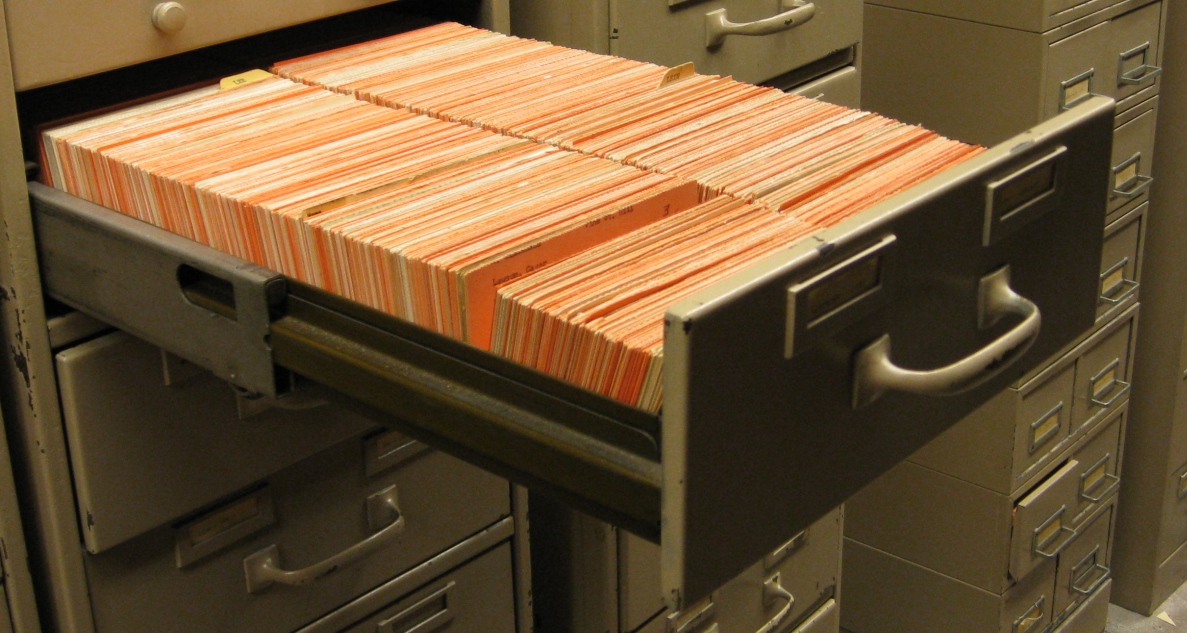
One of the many filing cabinets filled with birth and death records.

One of the many filing cabinets filled with birth and death records.

Digitization has begun on the City of Cincinnati’s birth and death records prior to 1909.  For the next several months, portions of the records will be unavailable for research while they are being digitized.  If you wish to view any of the birth and death records, please contact the Archives and Rare Books Library by phone at 513-556-1959 or by email at archives@ucmail.uc.edu to ensure that the records are available.  Also, please be aware that replies to research requests may be delayed while certain records are inaccessible.  Further information on these records and guidelines for submitting a research request can be found on the Archives and Rare Books Library website.  Full web access to the digitized records should be available by Summer 2010.