The Archives and Rare Books Library is excited to announce a new ARB digital exhibition that has been completed and is now accessible online. This digital exhibition was a part of the National Association for the Advancement of Colored People project to process and create a finding aid for the NAACP Bronson v. Board of Education of the City of Cincinnati records through the National Historical Publications & Records Commission grant we received in November 2024.
Last November, the University of Cincinnati Libraries announced the award of an Archives Grant from the National Historical Publications and Records Commission to the Libraries’ Archives and Rare Books Library (ARB). This grant supports the archival processing of records related to the lawsuit Bronson v. Board of Education of the City School District of the City of Cincinnati maintained by the local branch of the National Association for the Advancement of Colored People (NAACP) and donated to the University of Cincinnati in the 1980s.
As ARB wraps up the project to process the records of the Cincinnati Branch of the NAACP regarding the 1974 lawsuit Bronson v. Board of Education of the City School District of the City of Cincinnati, we look at the 1984 settlement agreement that brought to an end the decade-long legal struggle to end racial isolation in Cincinnati’s public schools.
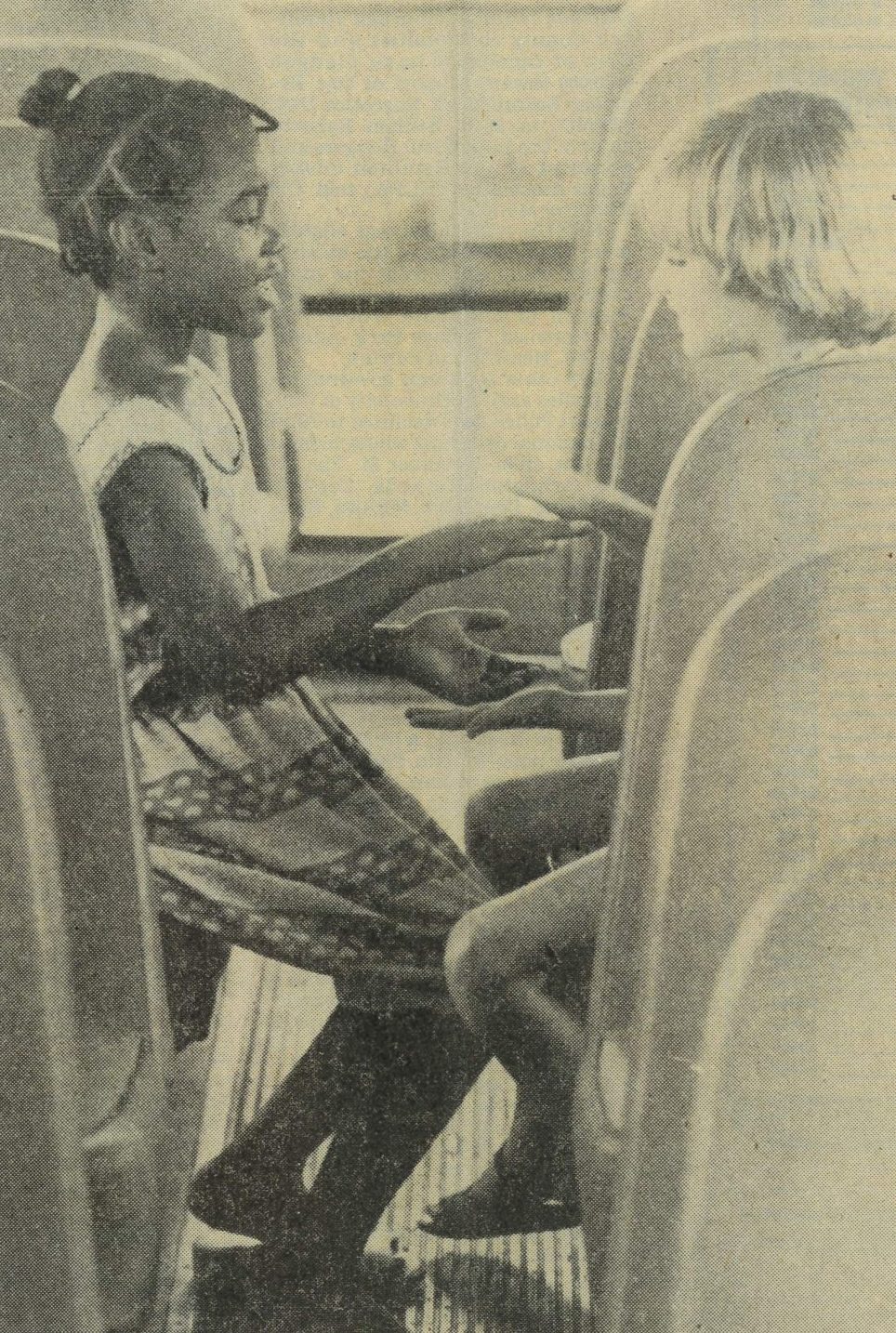
Image from Cincinnati Enquirer, February 17, 1984
On April 6, 1984, the ten-year lawsuit ended when a final settlement was approved by all parties and fairness hearings were conducted. Although the case did not go to trial, it is clear through the thousands of exhibits, dozens of deposed individuals and numerous lawyers that the case had a lasting impact on the city of Cincinnati. The settlement called for Cincinnati Public Schools to lessen racial isolation in the school system by 1991. The four major sections of the settlement stated:
Last November, the University of Cincinnati Libraries announced the award of an Archives Grant from the National Historical Publications and Records Commission to the Libraries’ Archives and Rare Books Library (ARB). This grant supports the archival processing of records related to the lawsuit Bronson v. Board of Education of the City School District of the City of Cincinnati maintained by the local branch of the National Association for the Advancement of Colored People (NAACP) and donated to the University of Cincinnati in the 1980s.
History of alternative programs and schools
Alternative programs and schools in Cincinnati Public Schools existed prior to the Bronson v. Board of Education lawsuit and continued to grow in numbers as the case proceeded. These programs were designed to give students more opportunities in the classroom compared to the standard taught subjects. These were voluntary programs and open to students of all ages.
Last November, the University of Cincinnati Libraries announced the award of an Archives Grant from the National Historical Publications and Records Commission to the Libraries’ Archives and Rare Books Library (ARB). This grant supports the archival processing of records related to the lawsuit Bronson v. Board of Education of the City School District of the City of Cincinnati maintained by the local branch of the National Association for the Advancement of Colored People (NAACP) and donated to the University of Cincinnati in the 1980s.
Image from Cincinnati Enquirer, November 14, 1978
The struggle of busing
During the legal proceedings of the Bronson case, one of the examples of discrimination within Cincinnati schools cited by the NAACP was the policy of busing students to school further away rather than allowing them to attend a much closer school in order to prevent integration at particular schools.
Last November, the University of Cincinnati Libraries announced the award of an Archives Grant from the National Historical Publications and Records Commission to the Libraries’ Archives and Rare Books Library (ARB). This grant supports the archival processing of records related to the lawsuit Bronson v. Board of Education of the City School District of the City of Cincinnati maintained by the local branch of the National Association for the Advancement of Colored People (NAACP) and donated to the University of Cincinnati in the 1980s.
Archival records from organizations may contain an array of documents and an incredible amount of those documents, such as correspondence, meeting minutes and case files. When this occurs, archivists may arrange the material into series and subseries in order to assist researchers in accessing the collection. The NAACP Bronson v. Board records is an example of this practice. Due to the extensive material within the collection, it is vital to note the different types of documents and what they mean in the context of the case. This includes files created and kept by the school districts and documents that originated in the court. For both document types, ARB has consulted with the Office of General Counsel to determine if any records need to be restricted or redacted.
Last November, the University of Cincinnati Libraries announced the award of an Archives Grant from the National Historical Publications and Records Commission to the Libraries’ Archives and Rare Books Library (ARB). This grant supports the archival processing of records related to the lawsuit Bronson v. Board of Education of the City School District of the City of Cincinnati maintained by the local branch of the National Association for the Advancement of Colored People (NAACP) and donated to the University of Cincinnati in the 1980s.
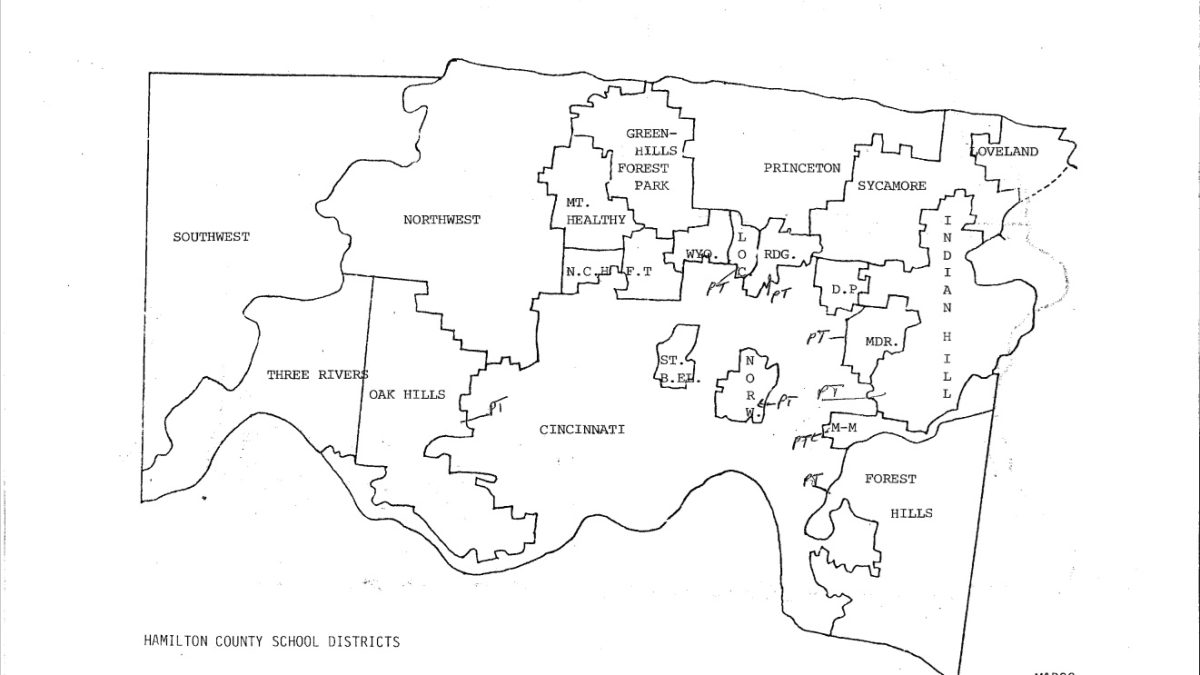
Map of Hamilton County School Districts provided by Metropolitan Association Religious Coalition of Cincinnati, undated
Last November, the University of Cincinnati Libraries announced the award of an Archives Grant from the National Historical Publications and Records Commission to the Libraries’ Archives and Rare Books Library (ARB). This grant supports the archival processing of records related to the lawsuit Bronson v. Board of Education of the City School District of the City of Cincinnati maintained by the local branch of the National Association for the Advancement of Colored People (NAACP) and donated to the University of Cincinnati in the 1980s.
Before and during Bronson v. Board, there were several local organizations working towards education desegregation. These groups included committees, religious groups and nonprofits. The Cincinnati NAACP’s records related to the lawsuit include many examples of the different ways in which these organizations worked towards desegregation as seen in Community Notices, Exhibits, Research Materials and Attorney’s Work Files series housed within the Bronson v. Board records. Listed below are some of the different organizations and their impact.
Last November, the University of Cincinnati Libraries announced the award of an Archives Grant from the National Historical Publications and Records Commission to the Libraries’ Archives and Rare Books Library (ARB). This grant supports the archival processing of records related to the lawsuit Bronson v. Board of Education of the City School District of the City of Cincinnati maintained by the local branch of the National Association for the Advancement of Colored People (NAACP) and donated to the University of Cincinnati in the 1980s.
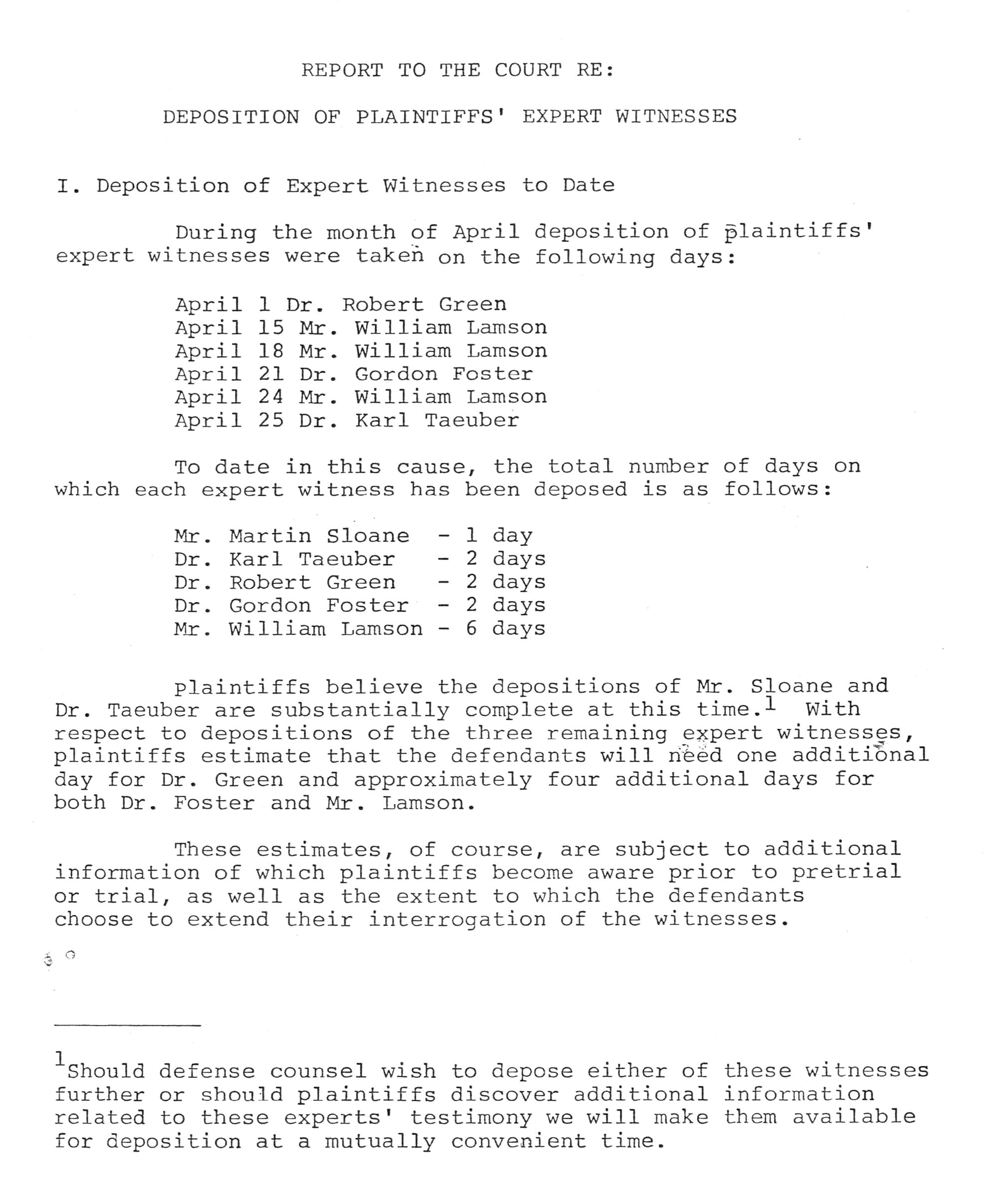
Last November, the University of Cincinnati Libraries announced the award of an Archives Grant from the National Historical Publications and Records Commission to the Libraries’ Archives and Rare Books Library (ARB). This grant supports the archival processing of records related to the lawsuit Bronson v. Board of Education of the City School District of the City of Cincinnati maintained by the local branch of the National Association for the Advancement of Colored People (NAACP) and donated to the University of Cincinnati in the 1980s.
All achievements and accomplishments of the witnesses listed are current as of 1979, the year that the witnesses began giving depositions.
Last November, the University of Cincinnati Libraries announced the award of an Archives Grant from the National Historical Publications and Records Commission to the Libraries’ Archives and Rare Books Library (ARB). This grant supports the archival processing of records related to the lawsuit Bronson v. Board of Education of the City School District of the City of Cincinnati maintained by the local branch of the National Association for the Advancement of Colored People (NAACP) and donated to the University of Cincinnati in the 1980s.
For the continuing blog series on this project, project archivist Julianna Witt provides a timeline of events from the filing of the case in 1974 to its settlement nearly a decade later.
May 29, 1974
Bronson v. Board of Education of the City of Cincinnati is filed on behalf of Mona Bronson, and other school children by the National Association for the Advancement of Colored People (NAACP) to address racial isolation in Cincinnati’s public schools. The lawsuit is filed against the Cincinnati Board of Education, Ohio State Board of Education, State Superintendent, Attorney General, and Governor.
January 30, 1975
The affirmative defense opinion by Judge David S. Porter of the District Court is declared. Judge Porter raises the question whether the decision in the earlier Cincinnati desegregation case Deal v. Board of Education is still viable in the 10 years since the decision and if the same matters can be re-litigated. Judge Porter finds that the decision in Deal v. Board is still acceptable, and the doctrine of res judicata is acknowledged. This doctrine prevents the plaintiffs from relitigating arguments prior to the July 1965 Deal v. Board decision.
April 23, 1975
The plaintiffs file an appeal that transferred the case to the Sixth Circuit Court. Judge C.J. Lively and Judge Harry Phillips find that res judicata does not apply and instead collateral estoppel, which is the least strict of the two re-litigation doctrines. They introduce the fact that this does not prevent the plaintiffs from bringing forth post-July1965 evidence that occurred after Deal v. Board. Pre-Deal v. Board evidence can also be offered, however, only if the evidence is introduced on behalf of children born or not of school age as of July 1965 as long as it does not contradict earlier arguments. A rehearing of the appeal is denied, and the case is returned to the District Court.
June 27, 1980
Judge Porter retires and the case is transferred to Judge Walter H. Rice. Judge Rice issues “Entry Setting Forth This Court’s Interpretation of Sixth Circuit Opinion in Bronson v. Board of Education” which asserts Judge Porter’s affirmative defense opinion.
October 14, 1980
The plaintiffs file a response memorandum with the court that introduces the dual school system theory which was argued in two United States Supreme Court cases, Dayton Board of Education v. Brinkman and Columbus Board of Education v. Penick. Both cases ended in 1979 and evidence in both found that in the Cincinnati schools, dual school systems were existent in May 1954, the date of the Brown v. Board decision. Since this was not discussed in Deal v. Board, the plaintiffs maintain that the case does not have to follow collateral estoppel completely.
February 11, 1982
Judge Rice decides collateral estoppel is still in effect as there is not sufficient evidence to suggest that Cincinnati schools had a dual school system but enough reasoning to consider if evidence is brought forth. The plaintiffs cannot relitigate the exact arguments that were discussed in Deal v. Board. However, they do not have any restrictions when it comes to pre- or post-July 1965 evidence that was declared in 1975 and 1980.
December 19, 1983
Judge Rice accepts the suburban school districts’ motion for summary judgement and dismisses them from the case. In the court pleadings, Judge Rice explains the reason for dismissal as the plaintiffs were unable to produce sufficient evidence to find the suburban school districts guilty of unlawful segregation. Cincinnati Board of Education and the State defendants have not been excused.
April 6, 1984
A settlement is reached and agreed by both sides without going to trial. This does not include the suburban school district defendants, as they were dismissed. The matters of the settlement include:
The Cincinnati Board of Education has seven years to reduce the current Taeuber Index of Dissimilarity score by 17 points. This index measures racial composition within a school compared to the district.
The Board can decide how they will reduce racial isolation. However, they must claim responsibility to achieve the target Taeuber Index score.
The State will provide financial assistance for efforts in reducing racial isolation with some restrictions.
A committee will meet yearly to review the district’s progress.
This project has been made possible in part by grant RH-104772-24 from the National Historical Publications and Records Commission (NHPRC). Any views, findings, conclusions, or recommendations expressed in this blog post do not necessarily represent those of the NHPRC.