
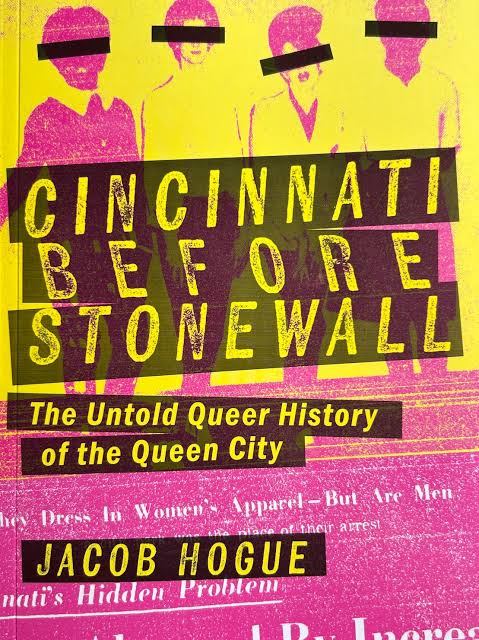
Jacob Hogue, author of Cincinnati Before Stonewall: The Untold Queer History of the Queen City, shares his experience with libraries and archives and his research process as a public historian with Nimisha Bhat, research & instruction librarian.
Congratulations on the publication of your new book! How has your research practice in and around libraries and archives evolved since you were a student? Were there particular classes or opportunities during your time at NKU that prepared you for undertaking the research for this book?
Since writing my debut book, I have actually taken a position as a Programmer in the Local History and Genealogy Department at the Kenton County Public Library. That experience has significantly expanded both the resources available to me and my understanding of how to use them. I now have access to historical maps, city directories, county histories, and other reference materials that have helped me uncover stories that might otherwise have remained hidden. Through the library’s resources, including Ancestry, I have also improved my ability to locate vital records and trace individuals through historical documents.
My degree is in Public History, and of all the courses I took at NKU, I would say my archives class prepared me the most for researching and writing this book. It taught me how to navigate archival collections, evaluate primary sources, and piece together fragmented stories from incomplete records. Those skills proved invaluable when researching LGBTQ+ history, where sources are often scattered, hidden, or difficult to identify. More broadly, NKU taught me how historians think—how to ask questions, follow evidence, and remain comfortable with ambiguity when the historical record is incomplete.
Continue reading