By Eira Tansey
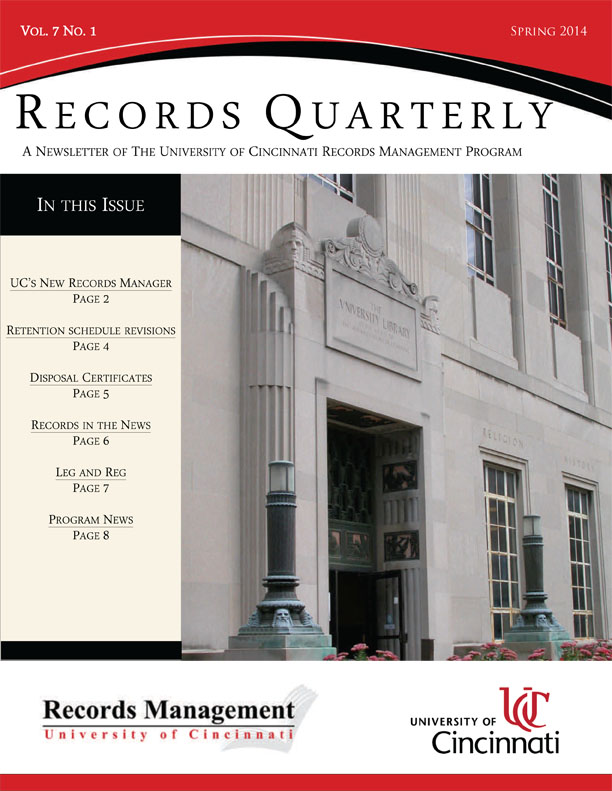 The Spring 2014 edition of Records Quarterly, a newsletter of the University of Cincinnati Records Management Program, is now available on the records management website. Articles in this issue include:
Introduction from UC’s New Records Manager — Meet Eira Tansey, graduate of UC, and the new Digital Archivist/Records Manager
Retention Schedule Revisions — If it’s been a while since your office revised its retention schedule, here’s what to expect during the process
Disposal Certificates — How and why to fill out disposal certificates when you dispose of records
You will also find announcements for the spring shredding event sponsored by the Office of Information Security, “Records in the News,” current events in legislation that could affect record keeping, and recent records transfers to the University Archives.
The next Introduction to Records Management workshop will take place on May 8 at 10am in Blegen Library, 8th floor. Anyone from the university community may attend, please RSVP by sending an email to eira.tansey@uc.edu
Records Quarterly is distributed electronically via the Records Management website and the Records Management listserv.


 By Kevin Grace

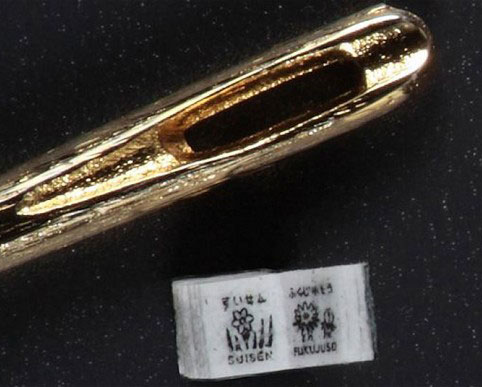 The December presentation for 50 Minutes-1 Book features CCM Librarian Mark Palkovic talking about the new “World’s Smallest Book!” It is a 22-page micro-book measuring just 0.75 millimeters (or for the metric-impaired, 0.03 inches). Entitled Shiki no Kusabana, this book of flowers was published by Toppan Printing in Japan. Toppan printed the volume using its ultrafine printing technology, the same method used to avoid forgery of paper currency.