Gustav Mahler’s Symphony No. 4 and Theodore Spiering in the CCM Library Special Collections

A single part of a symphony can open the door to a world of story-telling. As the CCM Philharmonia presents the music of Mahler’s Symphony No. 4 on October 16, 2026, the CCM Library shares the story of the violin I part held in the Theodore Spiering Collection.

The Albino Gorno Memorial / CCM Library Special Collections holds a collection of annotated sheet music that belonged to Theodore Spiering (1871-1925), an American violinist, conductor, and teacher. Spiering studied violin with Henry Schradieck at the College of Music of Cincinnati in the 1880s before moving to Berlin to study with Joseph Joachim. Spiering later performed as concertmaster for the New York Philharmonic under Gustav Mahler from 1909 to 1911 and conducted the final seventeen concerts of 1911 during Mahler’s illness. On January 17 and 20, 1911, the New York Philharmonic performed Mahler’s Symphony No. 4 with Spiering as concertmaster and conducted by Mahler. A highlight of the Theodore Spiering Collection is the violin I part of the symphony, bearing edits and paste-overs of performance markings and notation. While the violin part in the Spiering Collection was evidently not used in the 1911 performances, the background of the marked-up sheet music illuminates a rich snapshot of the symphony’s editorial and performance history.
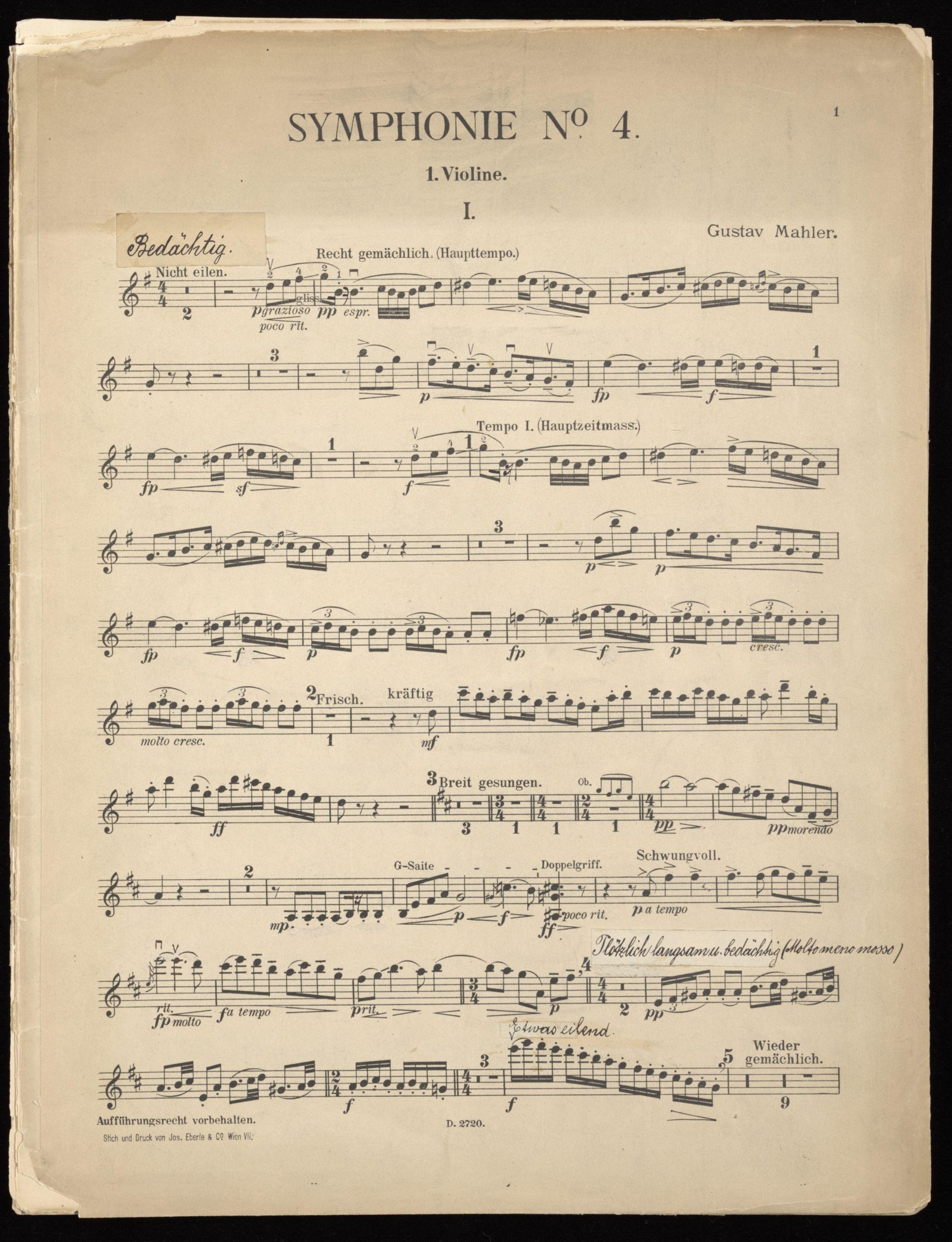
violin sheet music for Mahler Symphony Number 4
Page 1 of the Spiering violin I part of Mahler’s Symphony No. 4, digitized on JSTOR. Theodore Spiering Collection, Albino Gorno Memorial College-Conservatory of Music Library Special Collections, University of Cincinnati. https://www.jstor.org/stable/community.42074264

Gustav Mahler (1860-1911) began composing his fourth symphony in 1899 and completed it during the winter of 1900/1901, though he continued to refine the orchestration of the piece over the next several years. Mahler sent his score of the symphony to the publisher and requested a proof to use during a reading rehearsal with the Vienna Philharmonic in October, as he wanted to hear what it sounded like before it was published. It is not clear if the publishing house also provided proofs of the parts—it is possible the musicians performed from manuscript parts when the symphony was premiered in Munich by the Kaim Orchestra on November 25, 1901. The first edition was engraved and printed by Josef Eberle and published by Ludwig Doblinger in Vienna in December 1901.

Mahler made further edits over the next few years, adding corrections to conducting scores for performances given by Willem Mengelberg in Amsterdam in 1904 and by Richard Wickenhauser in Graz in 1905. In 1910, Mahler transferred publication rights to Universal Edition and sent to the publisher a galley proof with numerous revisions. After Mahler conducted the piece with the New York Philharmonic in January 1911, he sent his final corrections to Universal Edition.

Mahler’s Symphony No. 4 premiered in New York on November 6, 1904, performed by the New York Symphony conducted by Walter Damrosch. Beginning in 1907, Mahler traveled between the U.S. and Europe, spending time in New York each season conducting with the Metropolitan Opera, New York Symphony Orchestra, and New York Philharmonic. Mahler conducted his Symphony No. 4 with the New York Philharmonic in January of 1911, a significant occasion of the composer interpreting his own work with the ensemble.
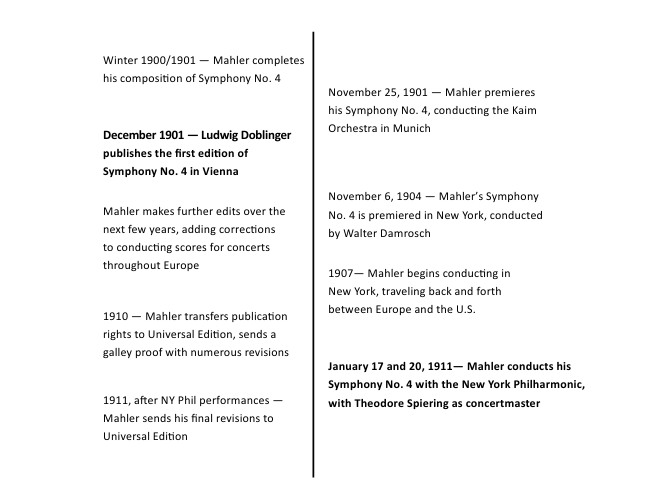
Text arranged in a timeline indicating chronology of Mahler's performance and publishing activities
Timeline of Mahler’s publishing and performance activities surrounding Symphony No. 4, 1900-1911
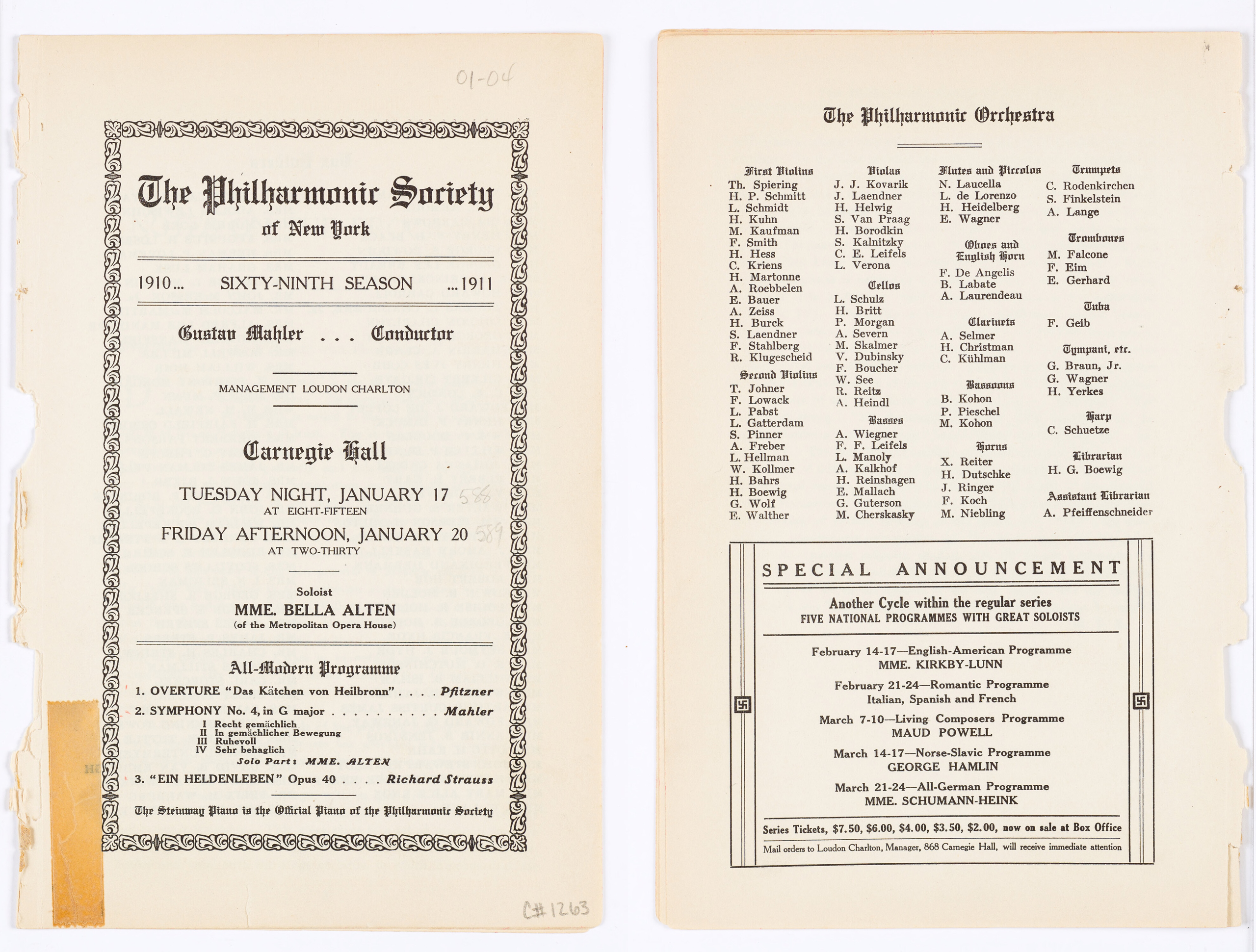
Concert program cover page and list of ensemble members
Program of the January 1911 New York Philharmonic performances of Mahler’s Symphony No. 4, conducted by Mahler, with Theodore Spiering as concertmaster. Program ID: 1263. New York Philharmonic Shelby White and Leon Levy Digital Archives.  https://archives.nyphil.org/asset-management/2TTUGPT6VOQA?WS=2TTURYF6K50F

For the January 1911 performances, the New York Philharmonic used the 1901 Doblinger first edition orchestral parts, which had been marked up with Mahler’s revisions by Viennese copyist Johann Forstik. Theodore Spiering performed as concertmaster during these January 1911 performances—the violin I part held in the CCM Library Special Collections is also the Doblinger first edition and was also marked up by Forstik, though it evidently does not belong to the New York Philharmonic set of parts. The violin part of the New York Philharmonic set bears annotations not present in the CCM Library Spiering part, including bowings, dynamics, notation edits, and rehearsal letters in blue, red, and graphite pencil. Shortly after the January 1911 New York performances, Mahler fell ill. Spiering took over as conductor of the New York Philharmonic while Mahler traveled back to Vienna, where he died on May 18, 1911.

The Mahler Symphony No. 4 violin I part from the Theodore Spiering Collection has been digitized by the UC Libraries Digital Initiatives Team. It is accessible on JSTOR, along with many other pieces from the Theodore Spiering Collection. Materials in the Theodore Spiering Collection were donated by Lenore Spiering, Theodore Spiering’s daughter.

Check out the digitized Theodore Spiering Collection on JSTOR, and access the Mahler Symphony No. 4 violin I part!
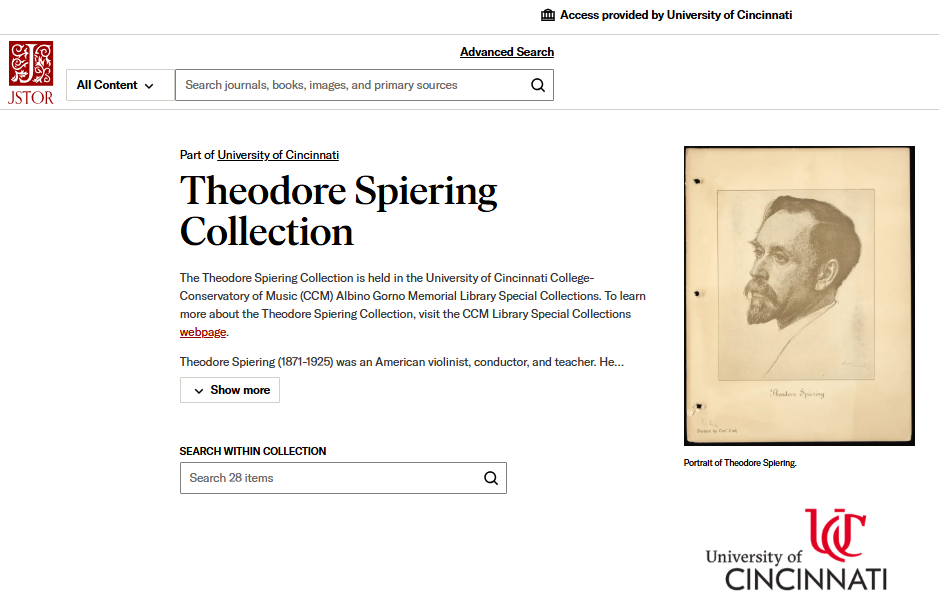
Screenshot of JSTOR landing page for the Theodore Spiering Collection
Landing page of the Theodore Spiering Collection on JSTOR, digitized by the University of Cincinnati Libraries Digital Initiatives Team. https://www.jstor.org/site/uc/spiering

As you explore the revisions and paste-overs, you can compare to a digitized score of Mahler’s Symphony No. 4 from the NY Philharmonic Archives, which shows more clearly what was in the score prior to the changes. Image 7 is the cover page of the Doblinger first edition with a note indicating red corrections after Mahler and green corrections after later Universal Edition revisions. You will see significant changes right from the beginning: the Spiering part has a paste-over of “Bedächtig” (deliberately) at m. 1, which is covering the original marking of “Heiter, Bedächtig” (cheerful, deliberately). Imagine the different interpretive ways the music would feel and sound as you explore the revisions!
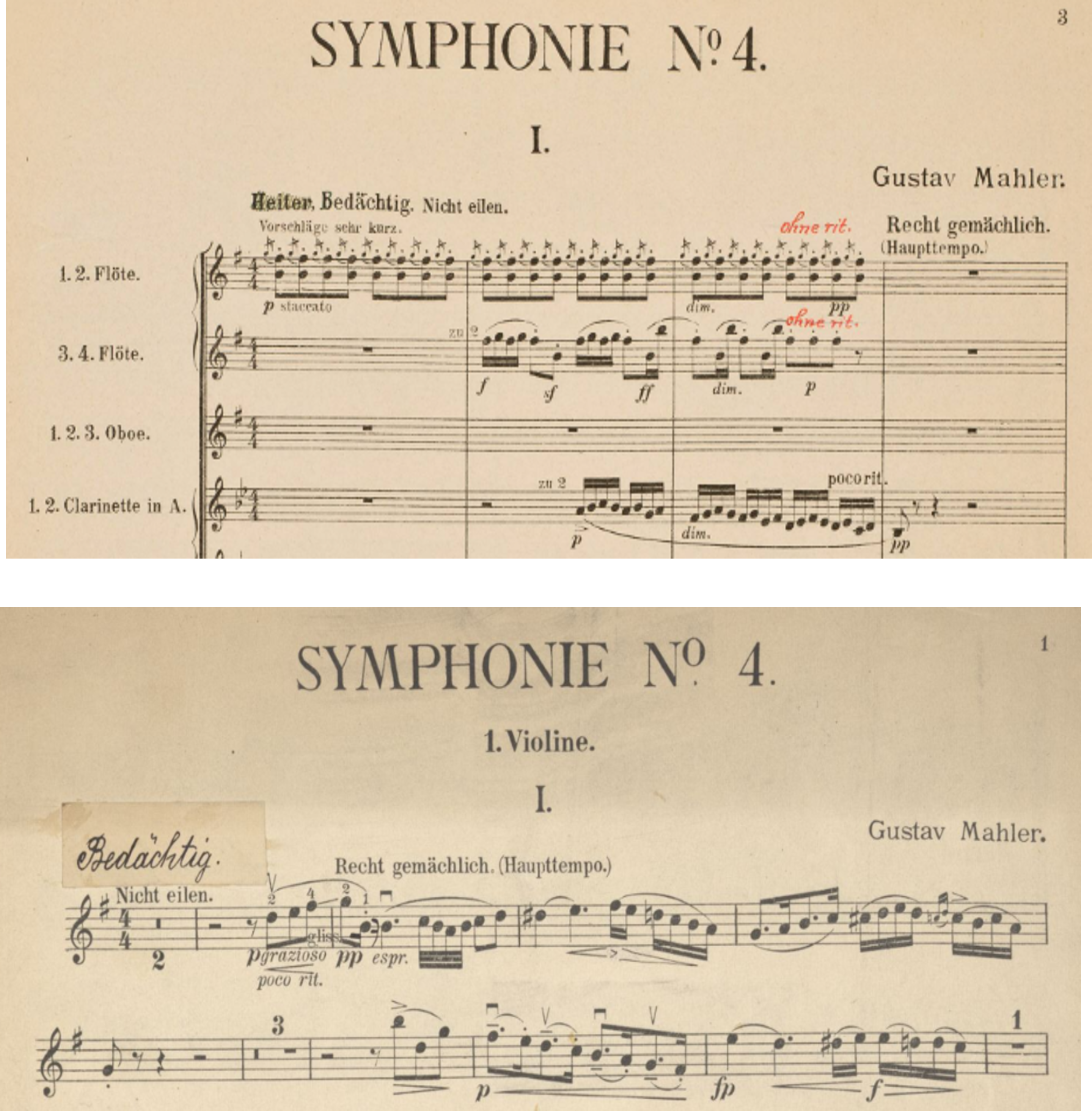
Excerpts of the score and violin part sheet music of Mahler Symphony Number 4
Top: Score of 1901 Doblinger edition with inked revisions. Mahler, Gustav – SYMPHONY NO. 4 IN G MAJOR – Score. Library ID: 2175. New York Philharmonic Shelby White and Leon Levy Digital Archives. https://archives.nyphil.org/asset-management/2TTUGPYF7IT6?WS=2TTURYFJ1D6S
Bottom: Spiering violin I part of Doblinger edition with pasted-over revision. Theodore Spiering Collection, Albino Gorno Memorial College-Conservatory of Music Library Special Collections, University of Cincinnati. https://www.jstor.org/stable/community.42074264

References:

  • Peter Franklin, “Mahler, Gustav,” Grove Music Online. 24 June 2024. https://doi-org.uc.idm.oclc.org/10.1093/gmo/9781561592630.article.40696.
  • Gustav Mahler, Symphonie Nr. 4 für Sopran-Solo und Orchester, ed. Christian Rudolf Riedel (Wiesbaden: Breitkopf & Härtel, 2019).
  • “Theodore Spiering,” promotional booklet, Theodore Spiering Collection, Albino Gorno Memorial College-Conservatory of Music Library Special Collections, University of Cincinnati.
  • “Theodore Spiering, Composer, Is Dead,” New York Times, 14 August 1925, p. 13. ProQuest Historical Newspapers: The New York Times.
  • James L. Zychowicz, Mahler’s Fourth Symphony (New York: Oxford University Press, 2000).

Written by Rebecca Schreiber
Read Source, which is celebrating 25 years as UC Libraries newsletter!

source graphic

Read Source, to learn about the news, events, people and happenings in UC Libraries. This year marks the 25th anniversary of the newsletter! To mark the occasion, Source underwent a design refresh to both the graphics and website to herald the publication into the next quarter century.

In this issue of Source, Liz Kiscaden, dean and university librarian, welcomes everyone back to the start of the academic year, while a photo slide show features early outreach activities welcoming Bearcats to campus. And don’t miss a list of Fall Events taking place throughout UC Libraries. The Source @ 25! article talks about some of the changes at UC Libraries documented by Source, and an interview with the Preservation Lab’s Jessica Ebert marks her upcoming 20th anniversary at UC Libraries. A new exhibit on display in the Archives and Rare Books Library explores Cincinnati’s growth and transit transformation from its founding in 1788 to the present day, and the CEAS Library launches a wellness collection. And for those who can’t travel to campus, UC Libraries digital collections are now available via Preservica for viewing online.

Read these articles, as well as past issues, on the website. To receive Source via e-mail, contact melissa.norris@uc.edu to be added to the mailing list. Happy reading.

SMOKE GETS IN YOUR EYES Exhibition–University of Cincinnati Health Sciences Library

A visiting psychiatrist alumni of the University of Cincinnati College of Medicine recently remarked,

cigarette advertisements associate smoking with positive emotional, social, and personal benefits rather than the physical act of smoking itself. The ads target specific psychological needs, such as the desire for independence, peer acceptance, social status, and stress relief.  The advertisements exploit the emotional vulnerabilities in adolescents and adults.

This psychological phenomenon is illustrated by the SMOKE GETS IN YOUR EYES Exhibition on display on the E level of the University of Cincinnati Donald C. Harrison Health Sciences Library. Advertising increases brand recognition by creating emotional connections, making commodities well-known in a consumer’s mind before and when they are ready to purchase a product. Advertisements use targeted messaging that will reach specific audiences through consistency and memorable images. They employ emotional impressions which negate reliance on logical persuasion.

Continue reading →

New online collection features caricatures of notable scientists

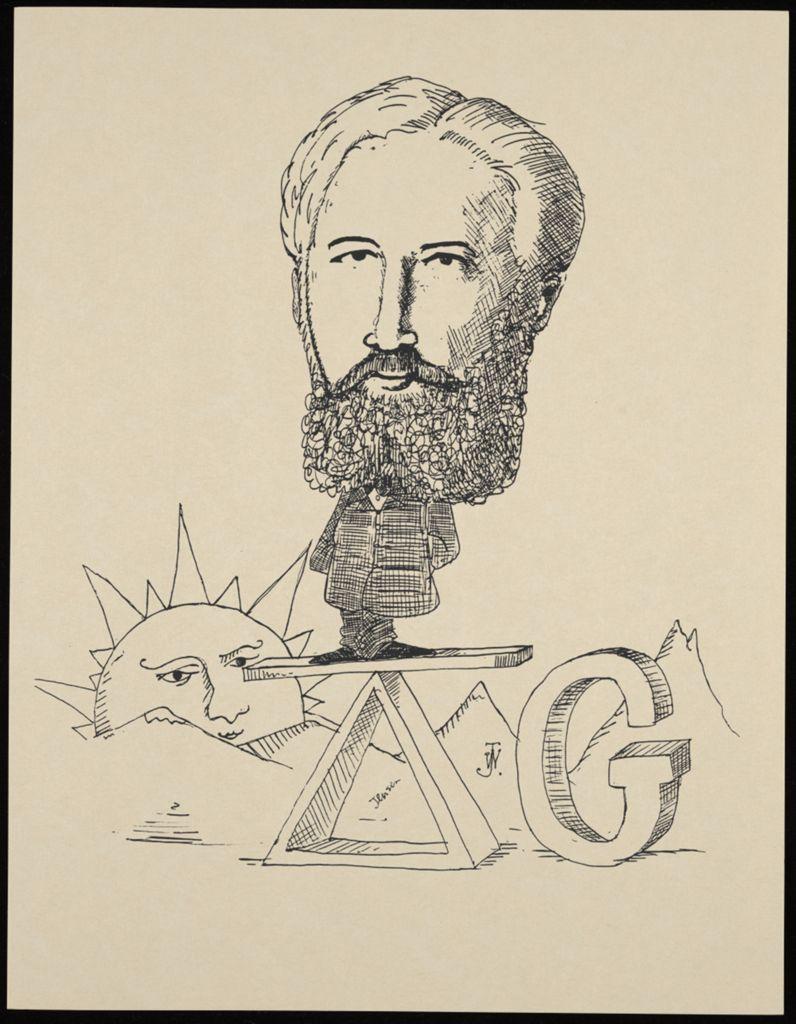
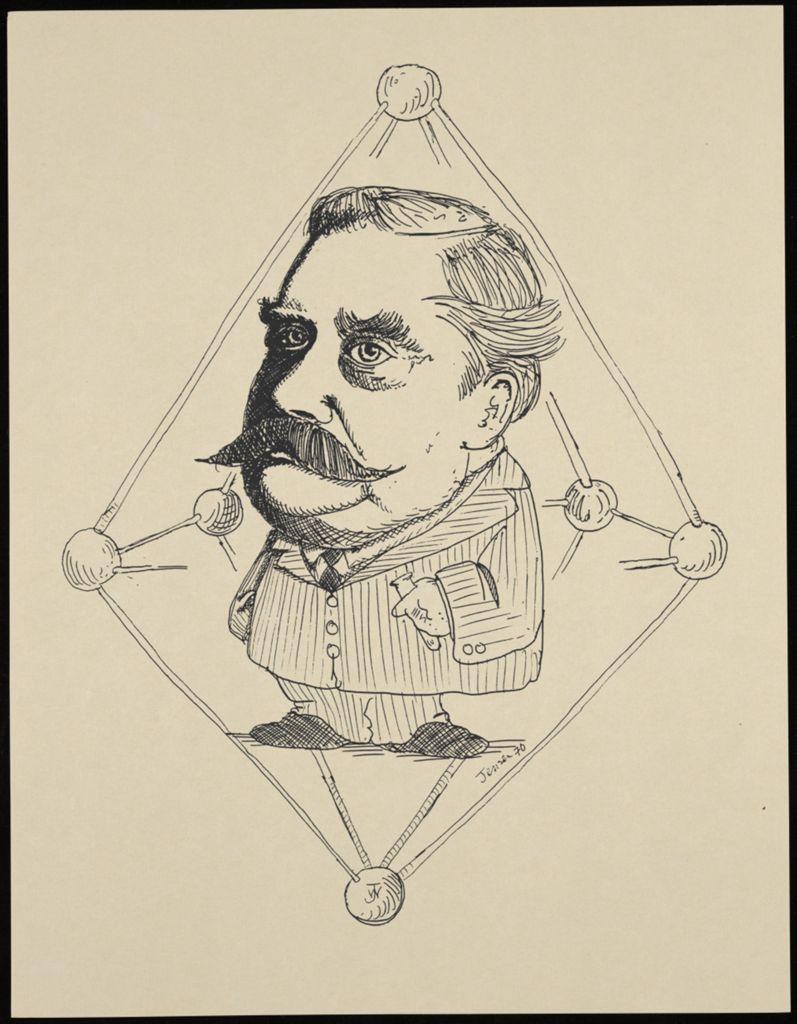
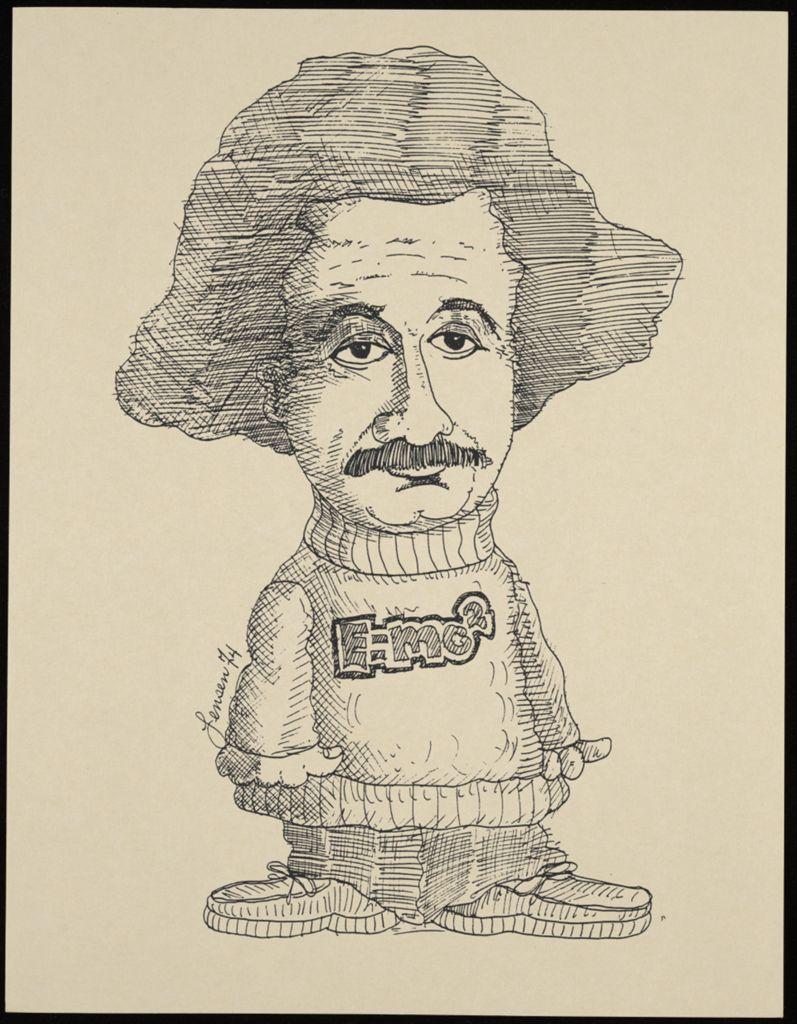
When William B. Jensen (1948-2024), the Ralph E. Oesper Professor of the History of Chemistry at the University of Cincinnati from 1986-2024, was a student at the University of Madison-Wisconsin taking the History of Chemistry class, he sketched caricatures of the chemists he was learning about. While Aaron Ihde lectured, Jensen would select a chemist and caricature them based on the portraits found in Ihde’s textbook, “The Development of Modern Chemistry” (1964).

Line drawing caricature of Friedrich Wilhelm Ostwald balancing on a delta G-shaped teeter-totter while the sun rises above the mountaintops behind.
Friedrich Wilhelm Ostwald, Baltic German chemist and philosopher. Caricature by Dr. William Jensen, Courtesy Oesper Collections in the History of Chemistry, University of Cincinnati Libraries.

Now available online via JSTOR, the UC Libraries online collection contains the 33 original, hand-drawn caricatures of notable chemists and physicists Jensen penned between 1970 and 1974. They are held by the Oesper Collections in the History of Chemistry. The collection was scanned and digitized by the UC Libraries Digital Initiatives Team.

Line drawing caricature of Alfred Werner standing in the middle of a giant three-dimensional chemical structure.
Swiss chemist Alfred Werner. Caricature by Dr. William Jensen, Courtesy Oesper Collections in the History of Chemistry, University of Cincinnati Libraries.

Throughout the years, Jensen would submit the caricatures to appear in scientific journals and publications, and reported that there was interest in reproducing them on t-shirts, coffee mugs and even an album cover. Jensen eventually published the caricatures in a 2010 booklet, “Chymists: That strange class of of mortals: Caricatures of famous chemists with a few physicists and biologists,” which was recently published digitally.

Upon Jensen’s death in 2024, the collection was acquired by the Oesper Collection in April 2025.

Line drawing caricature of Albert Einstein wearing a sweater that says "E=mc(2)" on the front
Albert Einstein. Caricature by Dr. William Jensen, Courtesy Oesper Collections in the History of Chemistry, University of Cincinnati Libraries.

The Oesper Collections in the History of Chemistry is a nationally recognized collection of scientific artifacts, books, journals, photos and prints related to the history of chemistry. They are a joint venture of the University of Cincinnati Libraries and the UC Department of Chemistry. They were founded in 1986 by William B. Jensen.

Illustrating War: Announcing the Daniel S. Young Archives of Medical Illustrations digital collection

Medical illustrations and drawings are a reflection of the state of medical practice at a specific moment in time providing a visual record of science, technology, and anatomical knowledge. 

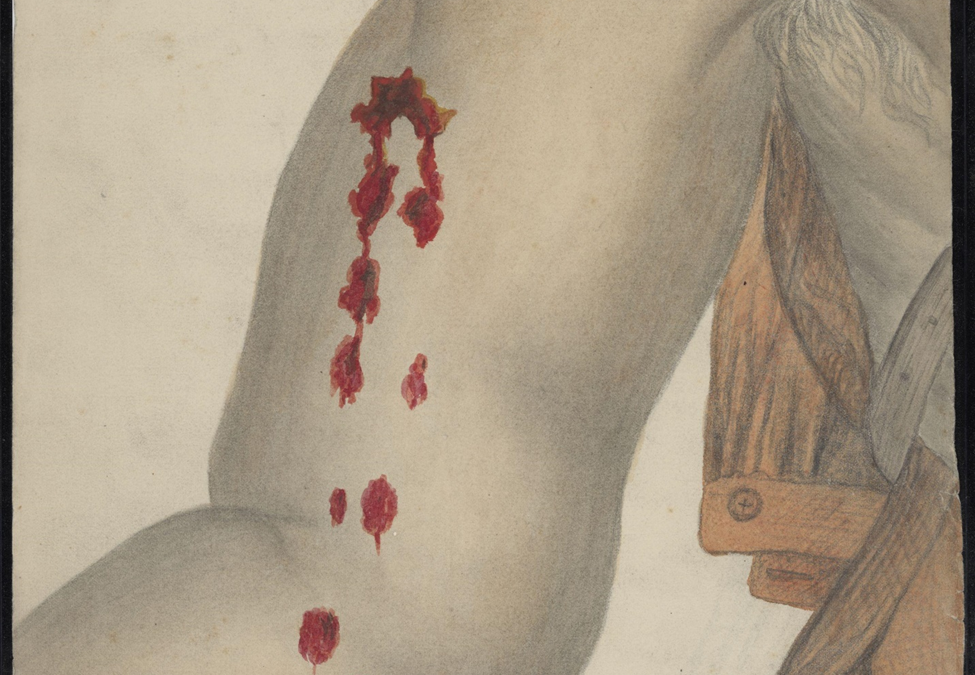
The artwork of Daniel S. Young highlights the artistic and medical contributions of an American Civil War era medical illustrator in a military context. Daniel S. Young: American Civil War Medical Illustrations on JSTOR. His artistry paints a portrayal of how medical illustration informed medical professionals during the 19th century. Young’s Civil War medical illustrations were crucial in educating doctors on surgical procedures and about previously unseen wounds. While medical illustrations such as Dr. Daniel Young’s served to educate doctors they were also important in aiding veterans in their pension claims and showing how the war impacted the soldiers’ health.

Cuts along the upper arm and elbow. Stone's River, Tennessee.
Cuts along the upper arm and elbow. Stone’s River, Tennessee.
Continue reading →

Read Source, the online newsletter, to learn about the news, events, people and happenings in UC Libraries.

source

Read Source, the online newsletter, to learn about the news, events, people and happenings in UC Libraries.

In this issue of Source, Liz Kiscaden, dean and university librarian, welcomes Bearcats to campus and we highlight what we did over the summer. We announce a new digital collection, The Daniel S. Young Archives of Medical Illustrations, as well as a collaboration to digitize rare manuscripts. We invite readers to the upcoming Cecil Striker Annual Lecture, “Pharmacy Education in the Queen City,” and to learn more about other Library Events. Chris Platts, assistant professor of art history and frequent collaborator with the Libraries, talks about some of his projects and research interests. And Katie Foran-Mulcahy writes about efforts to re-make the MakerLab in the CECH Library.

Read these articles, as well as past issues, on the website. To receive Source via e-mail, contact melissa.norris@uc.edu to be added to the mailing list.

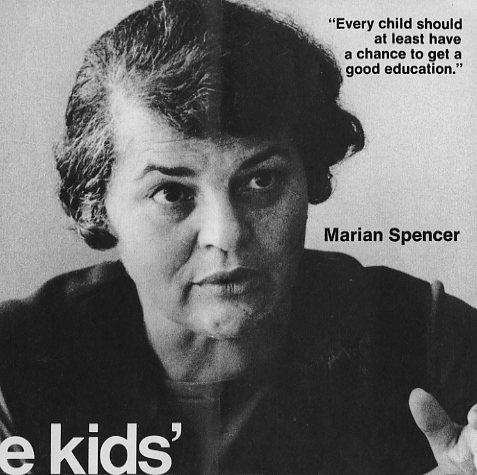
Black History Month spotlight: Marian Spencer  

Our final spotlight of Black History Month is a well-known figure in Cincinnati’s history of civil rights and activism, Marian Spencer. Born in Gallipolis, Ohio in 1920, Marian Alexander was a graduate of Gallia Academy and went on to study English literature at the University of Cincinnati. During her time at the university, she was involved in campus life and was an active member of Alpha Kappa Alpha Sorority. While here, she also met her husband, Donald Spencer. After college, the couple settled down and had two sons, Donald and Edward. 

"Every child should at least have a chance to get a good education."

Spencer’s sons were actually what sparked her passion for civil rights and equality. When the boys were young, they wanted to go to an event at Coney Island Amusement Park but were disappointed when they showed up and were escorted out because it was a segregated event. Spencer, along with 28 other witnesses filed a lawsuit and won the case to desegregate the park.  

Following this event, Spencer dedicated herself to fighting for civil rights and equality in the Cincinnati area. She spent time as the NAACP Cincinnati Chapter president, served on Cincinnati’s City Council and was a representative of Ohio’s Democratic Party at a national level. Even more than this, Spencer was passionate about equality in education and played a pivotal role in the 1974 Bronson case, which was a catalyst in desegregating Cincinnati Public Schools. Other organizations Spencer worked with include Housing Opportunities Made Equal, Planned Parenthood, Cincinnati Human Services Task Force and the U.S. Civil Rights Commission Ohio Advisory Board.  

You might recognize Marian Spencer’s name by the street that’s named after her downtown, the dormitory that’s named after her or perhaps by her well-known scholarship here at UC. To learn more about Marian Spencer’s life and work, visit the digital exhibit: 

To see the full collection of Marian and Donald Spencer Papers, visit the University Archives at UC’s Archives and Rare Books Library.  

New Health and Business eBook Collection from Taylor & Francis

UC Clermont students have requested more access to digital resources in their fields of study and the library is here to help! This summer, the Frederick A. Marcotte Library at UC Clermont has established perpetual access to a new collection of Health and Business eBooks through Taylor and Francis. You can follow this link to check out the whole digital collection here.

Announcing the 2022-2023 UC Libraries Annual Report

annual report graphic

Beginning Anew

Announcing the 2022-2023 University of Cincinnati Libraries Annual Report. My tenure as dean and university librarian began in mid-August 2023, a time of great growth at the University of Cincinnati. I’ve spent these past six months learning as much as I can about the Libraries – how our mission to “empower discovery, stimulate learning and inspire the creation of knowledge by connecting students, faculty, researchers and scholars to dynamic data, information and resources” supports the university’s NEXT Lives Here Strategic Directions. Documents such as the Annual Report have been key to my education.

In this Annual Report, we look back at the top News & Events, applaud Staff Accomplishments & Milestones and look at the Libraries By the Numbers and Financially. Under the leadership of interim dean and university librarian Lori Harris, we welcomed a significant number of new librarians and staff members who will provide essential library services and research support and help move the Libraries forward. We acquired, processed, preserved and made available collections used for research. We held events to bring people into the Libraries to interact with our facilities and collections. We created welcoming places – both virtual and in-person – for people to study, research and collaborate. And, we provided our expertise to the students, faculty and researchers who rely on UC Libraries for their academic pursuits.

Looking Forward

While we celebrate the accomplishments of the past academic year, we also continue to move forward and plan for the future. This past fall we began the process of developing an updated strategic plan with goals and initiatives that will continue to advance the mission of the University of Cincinnati. This plan will build upon the successes of UC Libraries and respond to the rapidly changing landscape of higher education, as well as the increasingly diverse needs of our students, faculty and researchers. The strategic plan will be completed this summer and will guide our work for the next three years. Stay tuned.

In the meantime, enjoy reading the 2022-2023 University of Cincinnati Libraries Annual Progress Report.

Liz Kiscaden,
Dean and University Librarian

Read Source, the online newsletter, to learn about the news, events, people and happenings in UC Libraries.

source graphic

Read Source, the online newsletter, to learn about the news, events, people and happenings in UC Libraries.

In this issue of Source, Liz Kiscaden, dean and university librarian, writes about Creating a shared vision for UC Libraries, and in an interview we learn more about her professional background, immediate goals for the new position and her early impressions of UC Libraries, as well as how she is having fun exploring Cincinnati.

We learn how Mikaila Corday did investigative work to catalog Japanese design books and the Digital Collections Team provides tips on how to digitize your home collections like a pro. We celebrate the return of the She-Wolf (Lupa) statue to Cincinnati and a new book published by the University of Cincinnati Press that focuses on the challenge for non-profits. We recap two recent events held in the Libraries: the Generational Summit and the Data & Poetry / Poetry & Data workshop.

Read these articles, as well as past issues, on the website. To receive Source via e-mail, contact melissa.norris@uc.edu to be added to the mailing list.