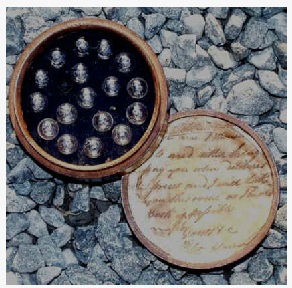
Issue 34 explores some of the curious uses of glass balls to approximate the density of liquids.
Click here for all other issues of Notes from The Oesper Collections and to explore the Jensen-Thomas Apparatus Collection.
Issue 34 explores some of the curious uses of glass balls to approximate the density of liquids.
Click here for all other issues of Notes from The Oesper Collections and to explore the Jensen-Thomas Apparatus Collection.

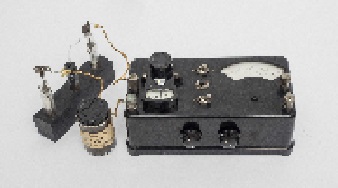
Our recently acquired Youden null-point pH meter. The Moir electrode system, minus one of the salt bridges, is to the left and a circa 1940 bottle of quinhydrone is displayed between it and the meter.
Issue 33 describes a recently acquired compact pH meter from the 1940s that uses a quinhydrone electrode, rather than either a hydrogen electrode or a standard glass electrode.
Click here for all other issues of Notes from The Oesper Collections and to explore the Jensen-Thomas Apparatus Collection.

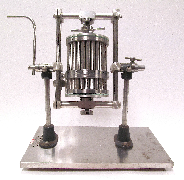
The circa 1949 Craig cylindrical countercurrent
distribution apparatus recently donated to the Oesper Collections by Dr. Edward Bennett (Jensen-Thomas Apparatus Collection).
Issue 32 describes the recent acquisition of an even earlier version of a Craig countercurrent distribution apparatus than the version that was described in issue 3 of 2010.
Click here for all other issues of Notes from The Oesper Collections and to explore the Jensen-Thomas Apparatus Collection.
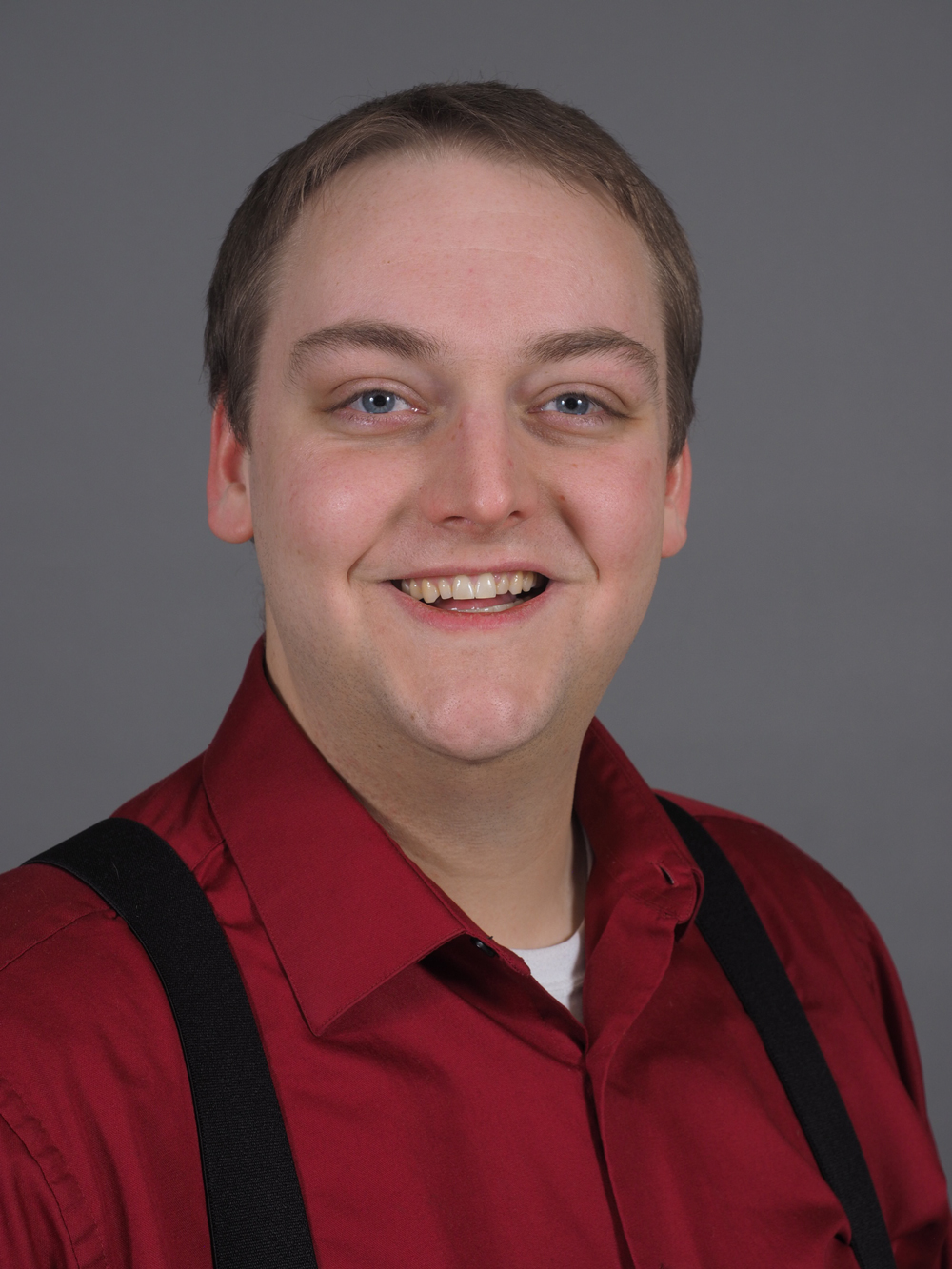
Nathan Tallman, digital content strategist and assistant librarian for digital collections and repositories at the University of Cincinnati Libraries, has been selected as one of 13 future library leaders to participate in ILEAD USA – Ohio 2015.
Sponsored by The State Library of Ohio, ILEAD USA is a multi-state program designed to help library staff understand and respond to user needs through the application of participatory technology tools. Ohio participants will join others from Wisconsin, South Carolina, Pennsylvania, Delaware, North Dakota, New York, Maine, Illinois and Utah in this national initiative. Participants are organized into teams, mentors and instructors for the year-long program. Tallman and his team members, Jillian Carney (Ohio History Connection), Shannon Kupfer (State Library of Ohio) and Elizabeth Allen (Bexley Public Library), successfully submitted a proposal for a team focused on digital preservation of Ohio cultural heritage materials. Continue reading
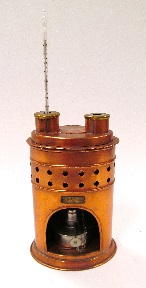
Issue 31 of Museum Notes recounts some of the puzzles that have confronted the museum curator when it comes to identifying the nature and use of some of the items that are donated to the museum.
Click here for all other issues of Notes from The Oesper Collections and to explore the Jensen-Thomas Apparatus Collection.
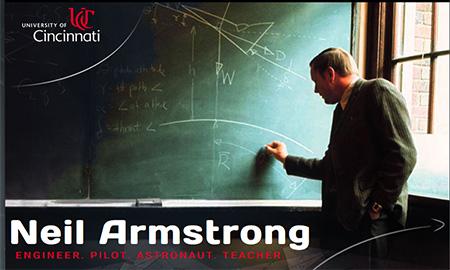
Have you visited the Neil Armstrong Website? The site pays tribute to Armstrong’s professional life from his early career as a test pilot to his monumental first steps on the moon and concluding with his time as a professor and researcher at the University of Cincinnati?
Check out what others are saying about it:
Anyone curious about the career of the first man to walk on the moon should begin with this site. The rich content exposes users to highlights as well as little-known but important, interesting aspects of Neil Armstrong’s life.
The University [of Cincinnati] has a nice online archive commemorating Armstrong’s time on the faculty. The collection includes some items from the astronaut’s early life, like his pilot’s log book from the Navy, but mostly it covers in pictures and documents his career in academia.

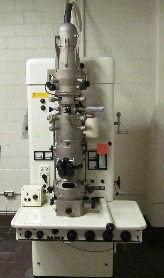
Front view of the Siemens IA Elmiskop in its
original location at UC Environmental Health and Safety.
Issue 30 of Museum Notes highlights the recently acquired, circa 1964, Siemens Elmiskop 1A Microscope now on display on the upper mezzanine of the Chemistry-Biology Library in 503 Rieveschl.
Click here for all other issues of Notes from The Oesper Collections and to explore the Jensen-Thomas Apparatus Collection.
Dr. William B. Jensen introduces his new series:
Like most museums, only about 25% of the holdings of the Oesper Collections
in the History of Chemistry are on public display at a given time. In order to make the remaining 75% available in some form, it was decided to initiate a series of short museum booklets, each dedicated to a particular instrument or laboratory technique of historical importance to the science of chemistry.
Each booklet would include not only photographs of both displayed and stored museum artifacts related to the subject at hand, but also a short discussion of the history of the instrument or technique and of its impact on the development of chemistry as a whole. Several of these booklets are expansions of short articles which have previously appeared in either the bimonthly series Museum Notes, which is posted on the Oesper website, or the series Ask the Historian, which appeared in the Journal of Chemical Education between 2003 and 2012.
You can access the booklets by clicking here.
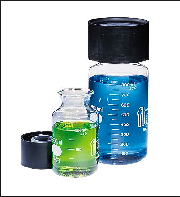
The 29th issue of Museum Notes highlights a recent innovation in laboratory glassware known as the “fleaker” and traces its historical antecedents to a late 19th-century innovation known as the “beaker flask.”
Click here for all other issues of Notes from The Oesper Collections and to explore the Jensen-Thomas Apparatus Collection.
Dr. William Jensen explains “The Strange Blowpipe 19th Century Miners Used to Analyze Ore” in the Wired article at http://www.wired.com/2014/08/crazy-blowpipe-apparatus/#slide-id-1232521.
For more topics like these from the history of chemistry visit the Oesper Collections at http://digital.libraries.uc.edu/oesper/.
LiBlog uses Accessibility Checker to monitor our website's accessibility. Read our Accessibility Policy.