
 The Donald C. Harrison Health Sciences Library invites you to join us for our Fall Lunch & Learn instruction series, Tuesdays, October 2 – 30, 12:10-12:50pm, in the Health Sciences Library Classroom (MSB G005G). Continue reading
Tag Archives: Did You Know?
Free Trial: Nursing Reference Center
 On trial until October 31, 2012, the Nursing Reference Center (NRC) provides a user-friendly point-of-care resource intended for staff nurses, nurse administrators, nursing students, and nurse faculty. It delivers the best available and most recent clinical evidence and knowledge on conditions and diseases via a nursing-specific graphical interface.
The Nursing Reference Center free trial includes:
DynaMed: Point of Care Tool
 DynaMed™ is now available! Created to use at the point-of-care by physicians for physicians and other health care professionals, DynaMed is a clinical reference tool with clinically – organized summaries for more than 3,200 topics. DynaMed is updated daily and provides the latest content and resources with validity, relevance and convenience.
- DynaMed is available from on and off campus
- Install DynaMed on your mobile device: request a serial number from Edith Starbuck at edith.starbuck@uc.edu or 558-1433
SciVerse Hub: Search Across Scopus, ScienceDirect, and the Scientific Web
 With one click, access content from 3 sources using SciVerse Hub.
Search across the content of SciVerse Scopus, SciVerse ScienceDirect full-text articles, and the scientific web. See results ranked by relevancy and with no duplication.
Content includes:
- Full-text journal content from 18 scholarly publishers
- Millions of theses, dissertations, and other documents from 246 repositories worldwide
- 376 million scientific web pages from global Scientific, Technical, and Medical publishers, university and government sites
- Over 24 million patent records from 5 major patent offices
View this video to learn more about how to search SciVerse Hub
So if you haven’t searched the SciVerse Hub yet, try it today.
Bookmark SciVerse Hub or access it via the Health Sciences Library home page at http://libraries.uc.edu/hsl/ under Express Links.
Dreams of Biblical Proportions
By Lauren Fink, ARB Intern, 2011-2012

Bible in ARB
Though no longer a large part of our socio-political life, in years passed, dreams influenced both religion and government. In fact, in their foundation, most major religions involve some sort of divine vision and/or dream experience revealed to man from a higher being. Christianity, Islam, and Judaism all document dream and visionary experiences in their holy books. For example, in the Old Testament of the Bible (in Chapter 41 of Genesis) the Pharaoh has a dream which Joseph, son of Jacob (dreamer of the ladder to heaven in Gen., ch. 28), is able to interpret. Because of his interpretation, Joseph is made a secondary ruler of Egypt, is able to prepare Egypt for the seven years of famine to come, and is ultimately able to save his kin that all move to Egypt under the Pharaoh’s blessing. If not for Joseph’s interpretation, the 12 tribes of Israel might not have existed – Joseph’s fathers and brothers most likely would have perished in Canaan. Continue reading
Falling Asleep Reading in The Archives and Rare Books Library
By: Lauren Fink, ARB Intern, 2011-2012
Falling asleep reading is common problem that can result from a number of factors. Firstly, reading typically involves the photoreception of dark text against a light background, or vice versa, which can tire out the muscles of the eye due to their repeated adjustment to contrast. Secondly, reading may become habitual with falling asleep, i.e. if you always read before bed you will associate reading with time to fall asleep. The following are some important considerations when trying to read and comprehend effectively: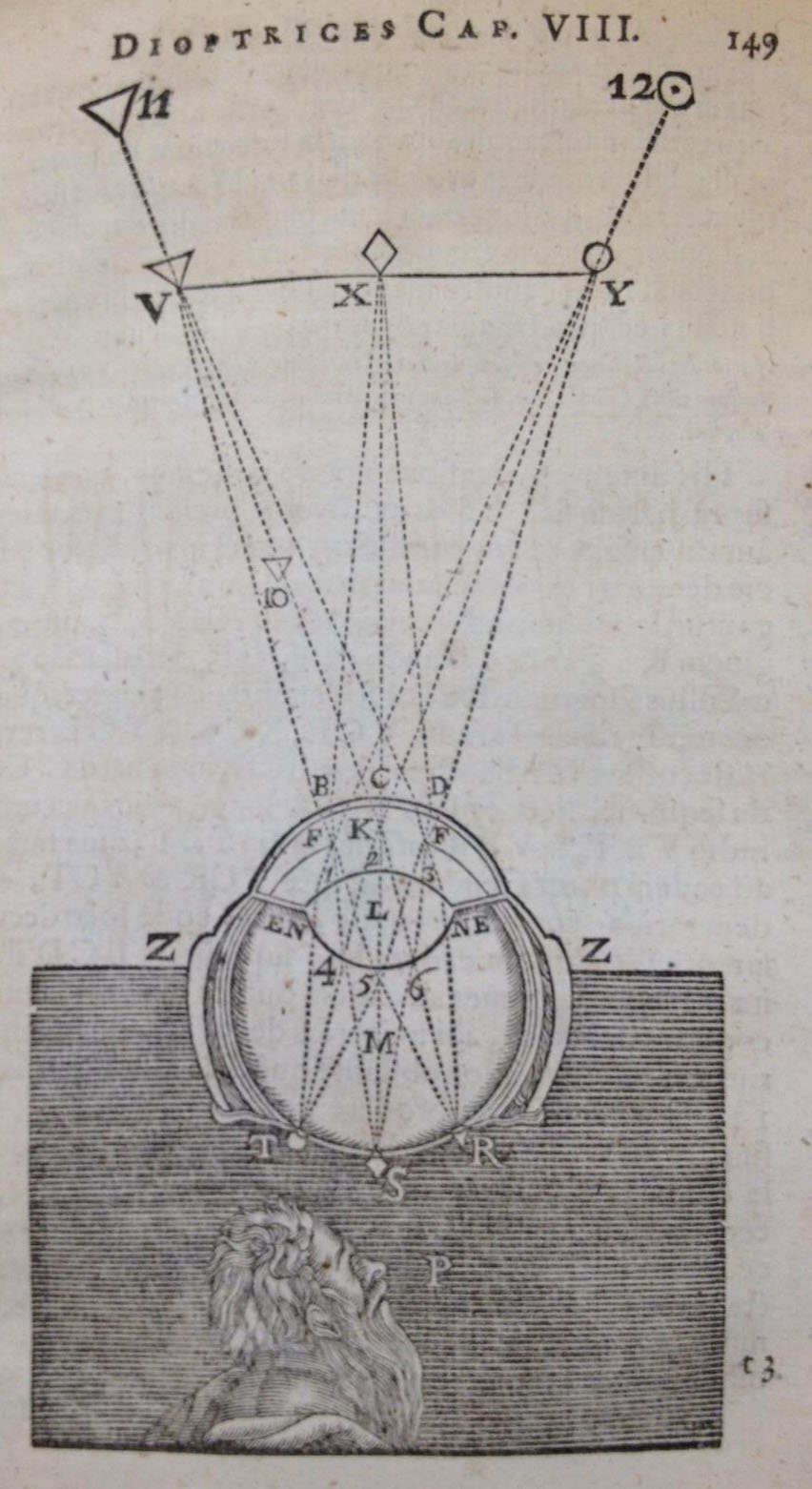
- Make a habit of reading during a time of day when you are most awake.
- Do not read in the sun
- Avoid bare light bulbs
- Avoid light windows
- Avoid glare on your book page
- Reduce screen glare
- Reduce contrast in your room and on computer screen
- Avoid hypnotism from highlighting
- Improve sitting posture
- Get up and move around. In general, take breaks about every 45 minutes
- Stay hydrated; take water breaks (dehydration makes you tired). Having to get up to go to the bathroom will also wake you up and get your blood flowing!
- Snack – not on something that will induce a sugar crash though! Try fruit or nuts.
- Sit up while studying; change positions regularly; do not lay in bed or in a comfy chair
And if you’re looking for something to read, try these books about reading in the Archives and Rare Books Library: Continue reading
Workplace Health and Safety Information Resource
The Canadian Centre for Occupational Health and Safety (CCOHS) provides multiple resources and tools that address workplace health and safety in Canada, the United States, and other countries around the world. Resources included in this platform are:
- MSDS: more than 310,000 Material Safety Data Sheets, obtained directly from 2,000 North American manufacturers and suppliers
- CHEMINFO: comprehensive and up-to-date chemical health and safety information for more than 1,700 workplace chemicals
- RTECS® (Registry of Toxic Effects of Chemical Substances): find critical toxicological information including 400,000+ chemical names and synonyms plus 130,000 unique CAS numbers plus citations on over 165,000 chemical substances from more than 2,500 sources
- OSH References: a collection of bibliographic databases that provide authoritative, international sources of OSH-related information. Databases in the collection include: OSHLINE®, NIOSHTIC®, NIOSHTIC-2, HSELINE, CISILO, Canadiana, and PubMed. Continue reading
No Food or Drink in the Library! An Exploration of Coffee and Tea in ARB
By Lauren Fink, ARB Intern, 2011-2012


 With three Starbucks Cafés, Rohs St. Café, Taza Coffee House, and Sitwell’s Coffee House all within walking distance of campus, readers should have no problem staying awake while reading these fascinating coffee and tea-related titles in the Archives & Rare Books Library (but be sure to finish your beverage before entering!):
PubMed: New Filters Sidebar
 Use the new Filters sidebar to narrow or focus your PubMed search results! Filters are now visible next to your search results. PubMed replaced the Limits page with a Filters sidebar on May 10, 2012. Applying filters still work the way limits worked; once they’ve been selected, all subsequent searches will be filtered until you remove or change the filters.
To see examples of how the filters sidebar can be used, view the National Library of Medicine tutorial on YouTube or take a look at the NLM Technical Bulletin news article.
Want to learn more about how the filters sidebar works in person? Register for a PubMed class taught at the Health Sciences Library. Each month an introductory or a more advanced PubMed class is offered. Both classes include using filters to narrow or focus search results. To register, browse the HSL class schedule at http://webcentral.uc.edu/hslclass/
Dreaming of Books in the Archives and Rare Books Library
By Lauren Fink, ARB Intern, 2011-2012
 Though sayings like, “you can sleep when you’re dead,” abound in American, and especially college, culture, sleep is a crucial activity for maintaining health, conserving energy, and learning. During sleep, the body decreases its temperature by about 1-2 degrees Celsius, rests its muscles, rebuilds proteins, and reorganizing synapses. Increased brain activity occurs in the same areas of the brain that were activated by the learning of a new task during the day and correlates with improved performance on the same task the following day.
Humans spend 1/3 of their lives asleep, with about 1/5 of that time in Rapid-Eye-Movement (REM) sleep. A typical nightly sleep cycle occurs in about 90 minutes with a pattern of stages 1-2-3-4-3-2-REM. Though the exact function of REM sleep remains a mystery, it is known that REM deprivation results in increased time spent in REM when no longer REM-deprived. Dreams, which also remain elusive in terms of function, if not meaning, occur mainly during REM sleep but can also occur during other stages. Continue reading