
In honor of Native American Heritage Month, the University of Cincinnati Libraries’ RESPECT (Racial Equity Support Programming to Educate the Community Team), presents the exhibit “Indigenous Dispossession: U.S. laws & policies promoting European settlement and Western Expansion resulting in Indian Removal from tribal, ancestral lands.”
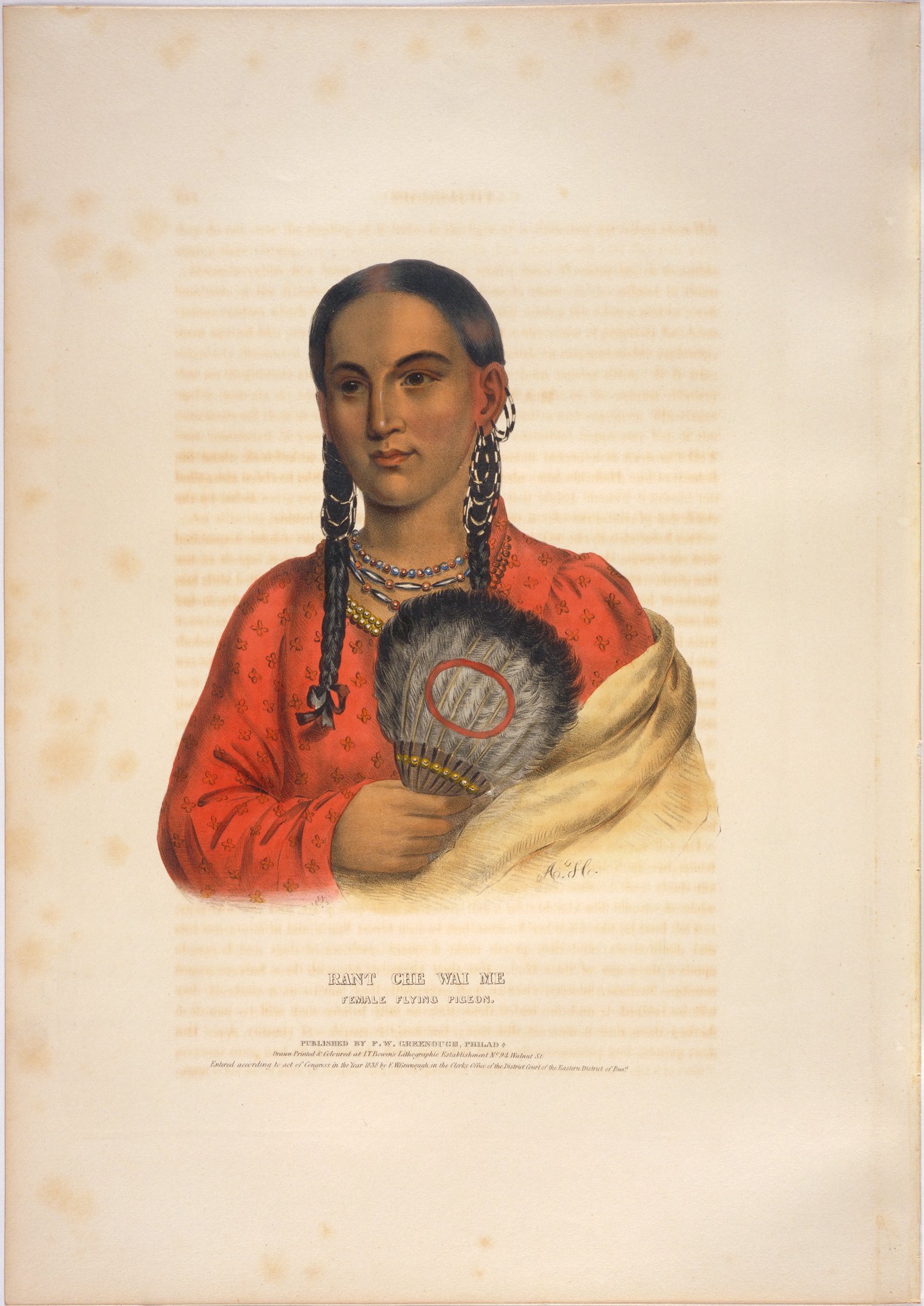
Rant Che Wai Me. From the McKenney and Hall digital collection.
On display on the 4th floor lobby of the Walter C. Langsam Library, the exhibit begins by listing the justification for European Settlement on Native American lands through the Doctrine of Discovery and Manifest Destiny, the ideas that the United States is destined to expand its dominion and to spread democracy and capitalism across the entire North American continent. The exhibit then goes on to list laws and acts such as the Northwest Ordinance, Indian Removal Act and the General Allotment Act that all contributed to the removal of Native American peoples from their tribal homes. It also includes information on the Indian Civilization Act, which aimed to “civilize” and “Christianize” Native children. What resulted was a loss of their culture and identity and a system of abuse.
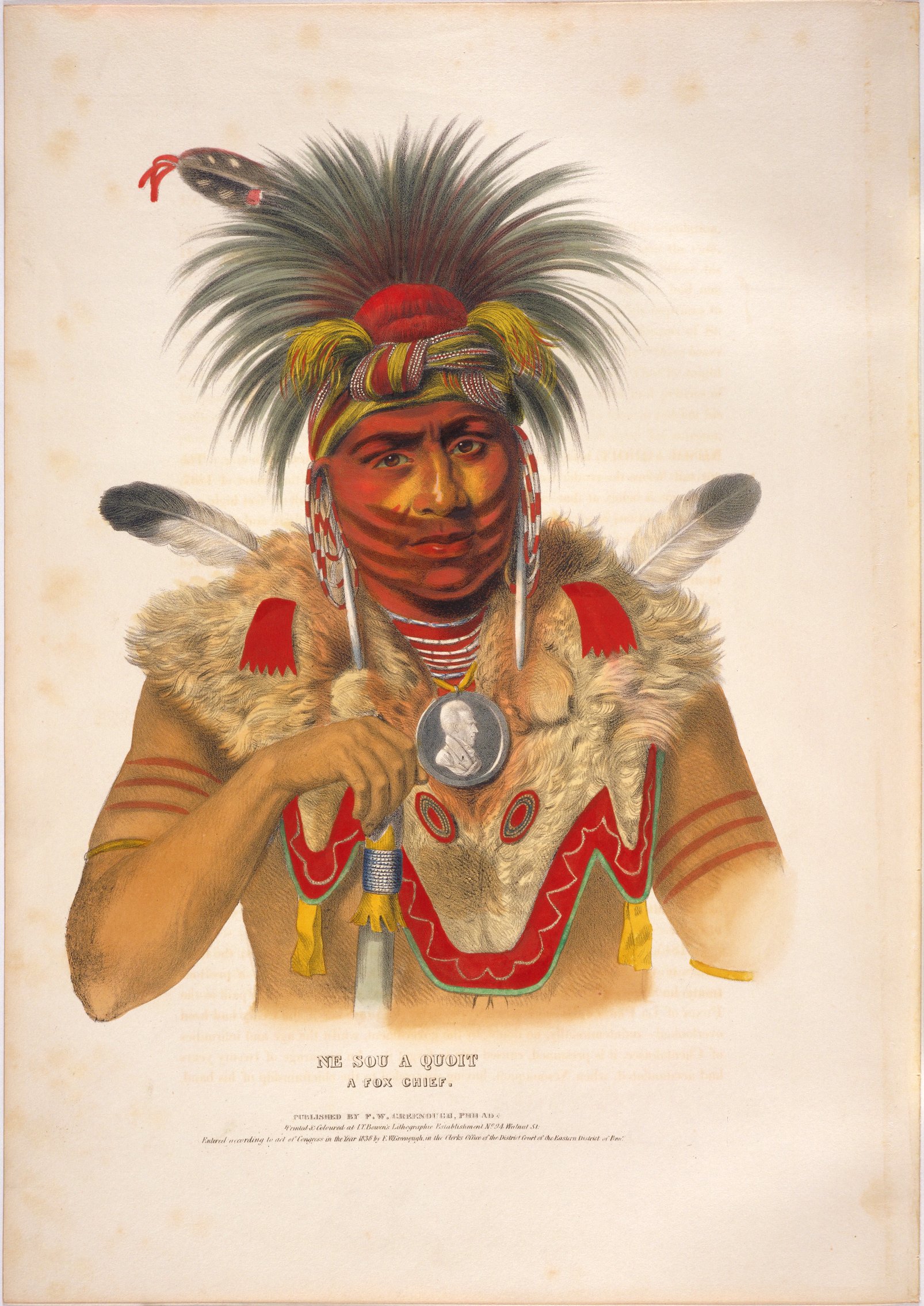
Ne Sou A Quoit – A Fox Chief. From McKenney and Hall digital collection.
The second part of the exhibit, on display on the 5th floor lobby, outlines steps to rectify the early treatment of Native Americans by granting citizenship and ending allotment of tribal lands with such policies as the Indian Citizenship Act, the Indian Reorganization Act and the Indian Self-Determination and Education Assistance Act. It is noted, however, that while legislation around self-determination and self-governance offers a certain degree of independence and protection under the law, the legacy of displacement, oppression and neglect in American public policy affects Native communities and families to this day.
The exhibit highlights the collections of UC Libraries by featuring prominently illustrations from George Catlin who traveled the North American continent from 1830-1838 to chronicle the people, customs and traditions of Native American tribes and from Thomas Loraine McKenney and James Hall’s “History of the Indian Tribes of North America.”
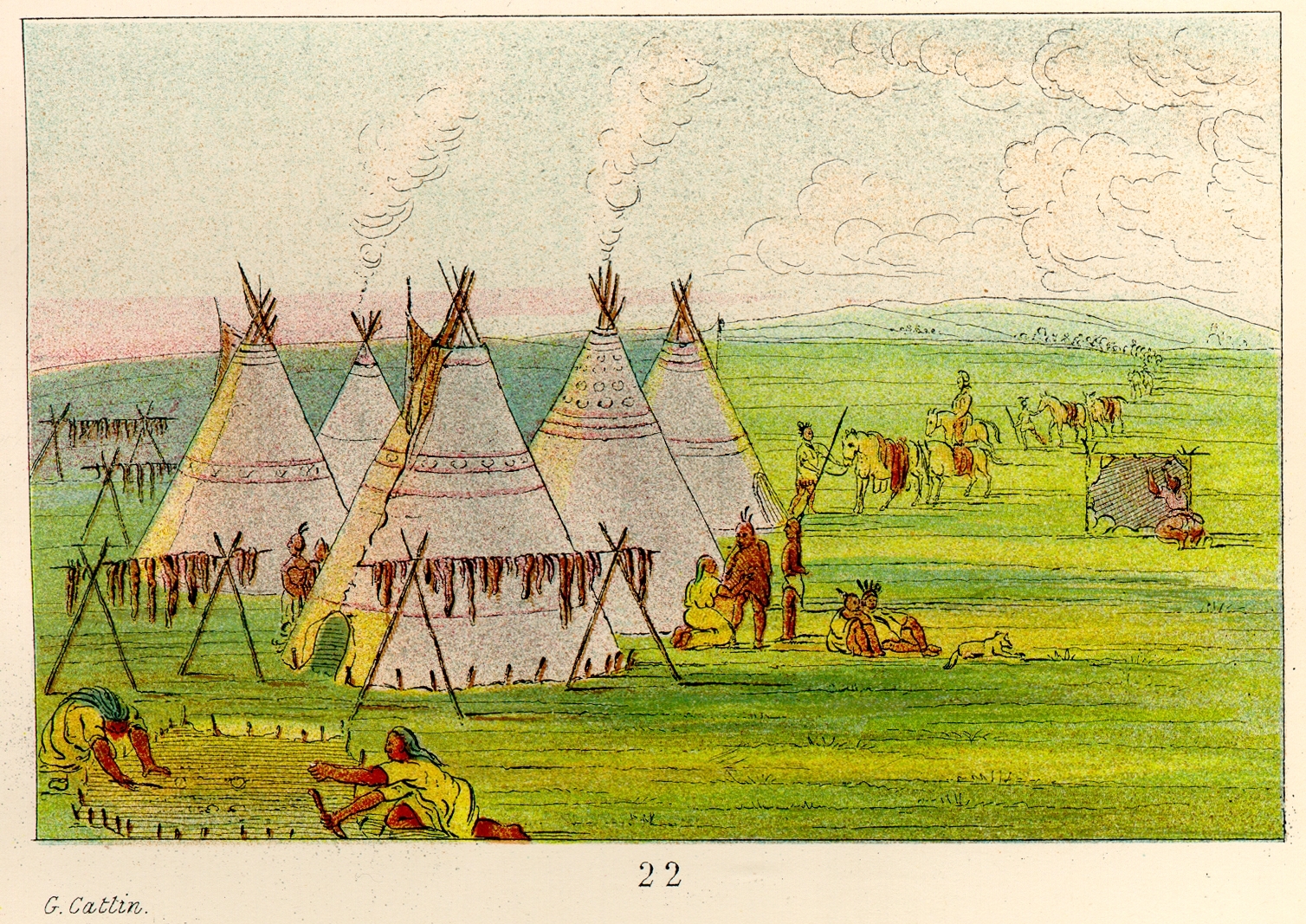
From George Catlin’s “The Printed Works.”
To learn more, a bibliography of works from the collections of UC Libraries is available in print at the exhibit and online as a PDF.
The exhibit helps the RESPECT group in their mission to draw awareness of Systemic Racism, defined as “policies and practices that exist throughout a whole society or organization, and that result in and support a continued, unfair advantage to some people and unfair or harmful treatment of others based on race.”
 Read Source, the online newsletter, to learn about the news, events, people and happenings in UC Libraries.
 The Life of the Mind lecture series has merged with the former Authors, Editors & Composers to create one event that celebrates the achievements of UC’s Artists, Authors, Editors & Composers.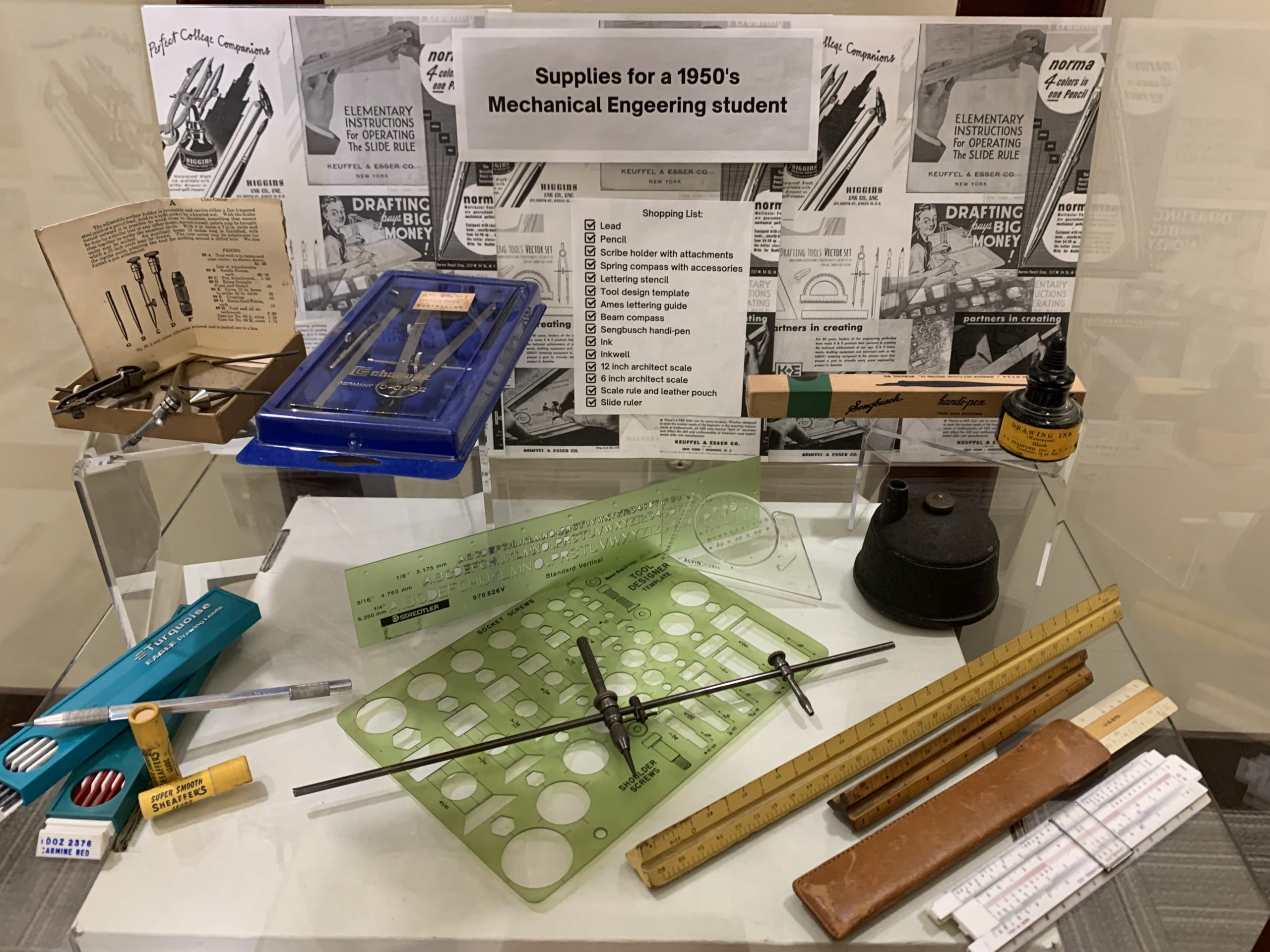
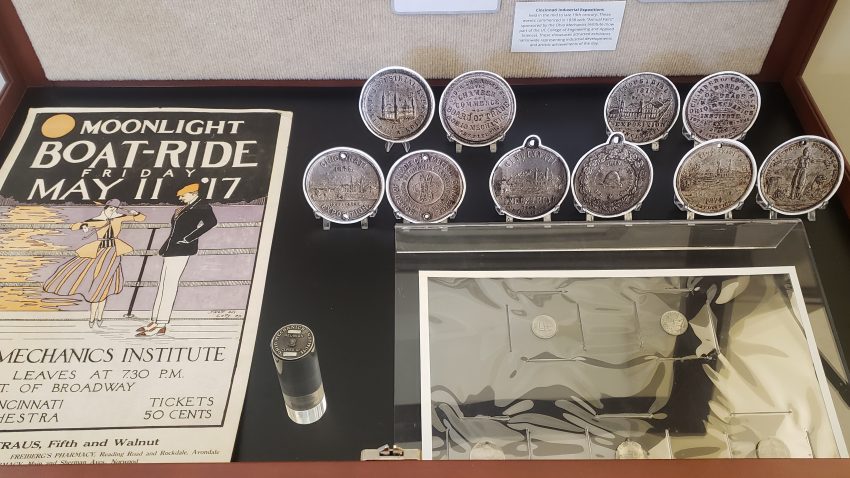 The Ohio Mechanics Institute (OMI), founded in 1828, is one of the College of Engineering and Applied Science’s (CEAS) source institutions and provided vital technical education during the early development of Cincinnati. In 1870, OMI partnered with the Board of Trade and Chamber of Commerce to present the first “Grand Industrial Exposition.” These showcases attracted exhibitors nationwide representing industrial developments and artistic achievements of the day.