Coming in November – Free NCBI Training Workshop Series!

In November, the University of Cincinnati Health Sciences Library is partnering with The National Center for Biotechnology Information (NCBI) to bring a series of workshops for researchers on a number of database housed within the NCBI domain.  All are welcome to attend.

The workshops will be held November 8th-10th 2016 in Kresge Auditorium in the College of Medicine. Each workshop will be 3  hours long and will be facilitated by NCBI experts and trainers.

Workshop topics include:

  1. Practical Guide to NCBI Blast
  2. Accessing Genomes, Assemblies and Annotation Products
  3. Accessing NCBI Human Variation and Medical Genetics Resources
  4. Exploring Gene Expression Information at the NCBI
  5. Principles of PubChem

Each workshop is free and open to the public, so please feel free to share this information with your friends and colleagues. We are extremely excited about these workshops and we hope you will be as well. More information about the workshops, registration, and the NCBI expert trainers can be found at http://libapps.libraries.uc.edu/sites/ncbi/.

We look forward to seeing you in November!

NCBI Training Workshop Series Announcement

Writing Assistance Available in the Health Sciences Library Every Wednesday in September

Need help with writing? Visit the Donald C. Harrison Health Sciences Library any Wednesday in September and sign up for a same-day appointment with a writing tutor. Receive free writing assistance on all documents, including: personal statements, grant applications, reports and articles.

The writing tutor is available from 12:45pm-5:45pm on September 14, 21 and 28 in the Health Sciences Library’s Informatics Lab located on the E level. Simply visit the library to sign up for a same-day appointment with the writing tutor, then come back to the library at your scheduled time.

The service is open to all. For more information, contact Joseph Cunningham of the Academic Writing Center at cunninju@ucmail.uc.edu.

Liebig and Combustion Analysis : Notes from the Oesper Collections, No. 40, September/October 2016

Justus von Liebig (1803-1873) posing with his apparatus for combustion analysis.

Justus von Liebig (1803-1873) posing with his apparatus for combustion analysis.

Issue 40 outlines the history and importance of the chemical technique known as combustion analysis and highlights a reproduction of Liebig’s famous 1831 instrument for this purpose made by the late Dr. Melvyn Usselman of the University of Western Ontario and donated to our museum collections in 2005.

Click here for all other issues of Notes from the Oesper Collections and to explore the Jensen-Thomas Apparatus Collection.


Sept. 20 “Life of the Mind” Lecture to Feature John McNay

Life of the MindLife of the Mind, interdisciplinary conversations with UC faculty, will return Tuesday, September 20, 3:30-5pm in the Russell C. Myers Alumni Center, with a lecture by John McNay, professor of history and chair of the department of history, philosophy and political science at UC Blue Ash College. Professor McNay will speak on, “I would rather have peace than be president”: Presidential Decisions for Peace.

Life of the Mind is a semi-annual lecture series that features a distinguished University of Cincinnati faculty member presenting his or her work and expertise. A panel of three responds to and discusses the lecture from diverse perspectives. The series includes intriguing insights from diverse perspectives and encourages faculty and students from across UC to engage in further discourse. The presentation is not simply a recitation of the faculty member’s work but promotes an informed point of view. Continue reading

Dean’s Corner: IFLA Revisited

Welcome back!

It was a long and busy summer here at UC Libraries with several exciting projects that kicked off just in time for the start of the fall semester.  August in particular was full of library sponsored events, including the Grand Opening of the Langsam Starbucks the first week of school. Several other events took place right before the start of the semester that centered on the International Federation of Library Associations and Institution’s (IFLA) World Library and Information Congress. Continue reading

Behind the Scenes with UC’s Digital Archivist: Much Ado About Digital

By Eira Tansey, Digital Archivist/Records Manager

Within the archives profession, “Digital Archivist” is one of the fastest-growing job titles (http://digitalcommons.kennesaw.edu/provenance/vol31/iss2/5/). The Society of American Archivists offers a Digital Archives Specialist curriculum and certificate (www2.archivists.org/prof-education/das).   And library and archives conferences abound on topics of an electronic and digital nature – like Saving The Web (https://www.loc.gov/loc/kluge/news/save-web-2016.html), the Digital Library Federation (https://www.diglib.org/), and the Software Preservation Network Forum (http://www.softwarepreservationnetwork.org/spn-forum/).

So what does a digital archivist do? Every digital archivist’s responsibilities will look slightly different depending on institutional mission, priorities and resources. As the first link indicates, there isn’t even professional consensus whether a digital archivist is one who works with digitization of analog material (like paper documents and manuscripts, rare books, maps, etc), or someone who works with “born-digital” materials. In many institutions, both of those responsibilities may be within the Digital Archivist’s charge. As UC’s Digital Archivist/Records Manager, my responsibilities center on working with born-digital archives, digital preservation, and overseeing UC’s Records Management program. I also work closely with my colleagues in Digital Collections on digitization projects (http://digital.libraries.uc.edu/).

Continue reading

A New Rackham-Illustrated Volume in the Rare Books Collection

By: Bridget McCormick

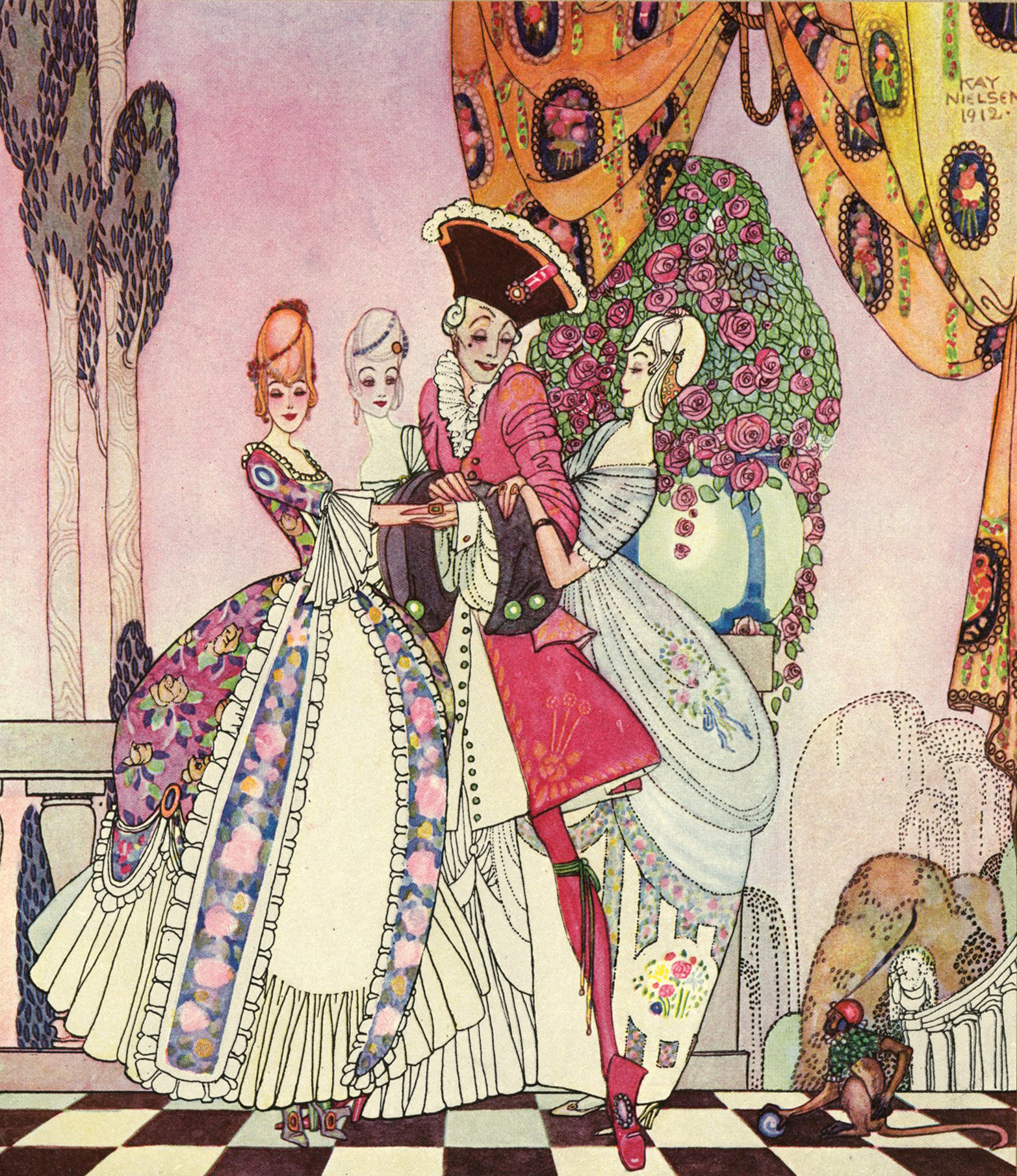
Hans Christen Andersen was born in Odense, Denmark on April 2, 1805. Hans Andersen Sr. died in 1816, leaving his son and a wife, Anne Marie. While Andersen was not born into wealth, he was finely educated, which has led to speculation that he was secretly an illegitimate child of the Danish royal family. These rumors have never been confirmed.

Cover of Andersen's Fairy TalesInner Cover of Andersen's Fairy Tales

By 1819, Andersen returned to school supported by a benefactor named Jonas Collin. At the time, he was working as an actor.  However through Collin’s encouragement, Andersen began to write. Despite the support, during this period of Andersen’s career, his work was often discouraged by teachers. Continue reading

Check out the UCBA Faculty Research Guide!

by Lauren Wahman

ucba-fac-researchAs another fall semester gets underway, the UCBA librarians are ready to help faculty with their research needs.  Whether it’s discipline-specific, creative, or a classroom-based (e.g. Scholarship of Teaching & Learning) research project, we’re getting you started with a newly updated Faculty Research Guide (guides.libraries.uc.edu/ucba-facultyresearch).  You still find those resources that you know and trust, but you’ll also find new grant and data management resources along with contact information for your go-to experts (including your library faculty liaison).  In addition, check out UC’s institutional repository – Scholar@UC – as well as OhioLINK’s Digital Resource Commons.  As the semester moves forward, we’ll continue to add more resources.

Bookmark the guide for quick and easy access: http://guides.libraries.uc.edu/ucba-facultyresearch