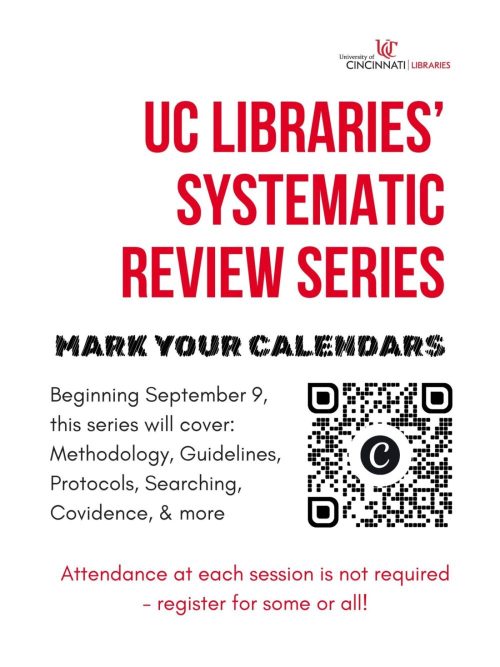
The University of Cincinnati Libraries and the UCL Evidence Synthesis Network is offering our popular series of workshops on systematic reviews and evidence synthesis.
Students, staff, and faculty can learn about and work through various components of the review process – from protocol to data extraction – with the support of experienced librarians. We are also offering supplemental workshops on advanced searching, reviews in the social sciences, Covidence, and more!
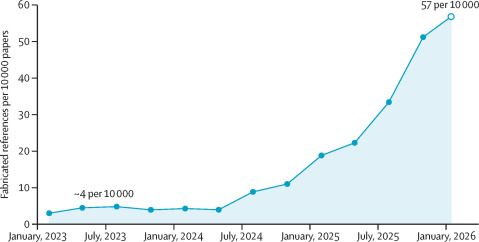
Fabricated citations have increased dramatically recently and have sparked debates about how to address this problem within scholarly publishing. When these citations are discovered, those articles frequently get retracted. However, there is a time lag.
So what’s a librarian or researcher to do? How can we keep retracted articles out of our literature searches?
Rate of fabricated references per 10 000 papers in PubMed Central January, 2023- February, 2026, as cited in Topaz M et al. (2026) The Lancet, 407, 1779-1781
At this year’s Medical Library Association conference, I learned about a strategy in a paper session entitled, “Identifying Retractions in Systematic Review Searching” by Caitlin J. Bakker et al. In their presentation, the authors describe a multistep process to identify retracted papers using the citation manager Zotero and the LibKey Nomad browser extension paired with Covidence, the systematic review screening software.
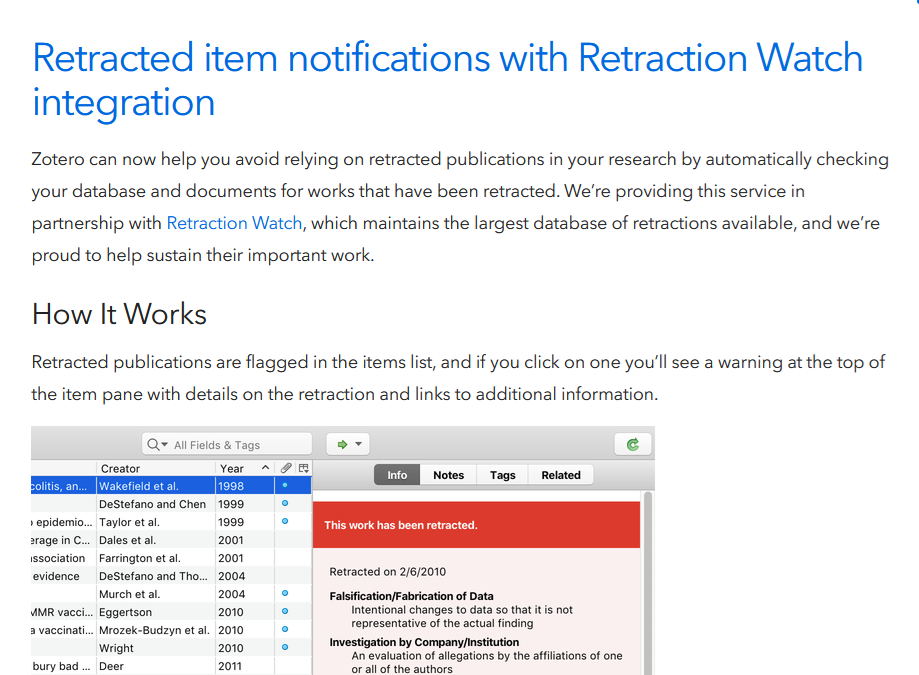
Image of a retracted citation flagged in Zotero, from zotero.org
Zotero has a built-in feature, which automatically flags retracted articles at the item level using data from Retraction Watch. The presenters recommend running database searches and importing citations first into Zotero, followed by Covidence during title and abstract screening. They use this process first at the outset; again prior to data extraction and finally, before submitting manuscripts for publication.
From the CECH Library, welcome back for another great school year!
The CECH Library will be offering a variety of virtual and in-person workshops this fall. Register for workshops via Faculty OneStop using the links below.
Keep your sources organized and your citations pristine with Zotero, a free citation management tool. Zotero boasts desktop and web functionality as well as collaboration features. Come to a Zotero workshop to learn more.
Need a research refresher? Been out of school for a few years and your research skills feel a little rusty? Join us at our research skills refresher workshop.
Did you notice that the UC Libraries homepage looks a little different? Want to learn the ins-and-outs of our new search bar? Get all your questions answered at our Secrets of OneSearch workshop.
Brought to you by UC Libraries, Embase is a key resource for biomedical evidence from published, peer-reviewed literature, in-press publications and conference abstracts. Embase is known as an authoritative resource for generating systematic reviews and for drug, disease, and medical device data. Comprehensive indexing maximizes the searchability of this database. Continue reading →

 Brought to you by UC Libraries,