Tips to filter out retracted articles from systematic reviews

Fabricated citations have increased dramatically recently and have sparked debates about how to address this problem within scholarly publishing. When these citations are discovered, those articles frequently get retracted. However, there is a time lag.

So what’s a librarian or researcher to do? How can we keep retracted articles out of our literature searches?
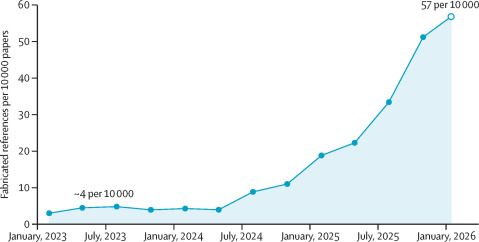
Quarterly rate of fabricated references per 10 000 papers in PubMed Central from January, 2023, to February, 2026
Rate of fabricated references per 10 000 papers in PubMed Central January, 2023- February, 2026, as cited in Topaz M et al. (2026) The Lancet, 407, 1779-1781

At this year’s Medical Library Association conference, I learned about a strategy in a paper session entitled, “Identifying Retractions in Systematic Review Searching” by Caitlin J. Bakker et al. In their presentation, the authors describe a multistep process to identify retracted papers using the citation manager Zotero and the LibKey Nomad browser extension paired with Covidence, the systematic review screening software.
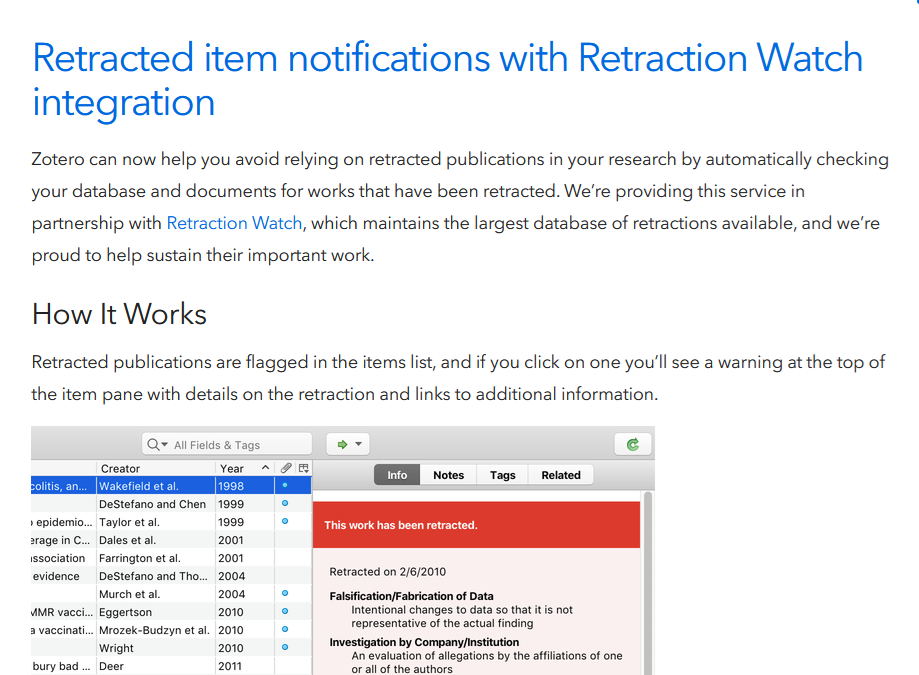
image of retracted item flagged within Zotero's citation manager
Image of a retracted citation flagged in Zotero, from zotero.org

Zotero has a built-in feature, which automatically flags retracted articles at the item level using data from Retraction Watch. The presenters recommend running database searches and importing citations first into Zotero, followed by Covidence during title and abstract screening. They use this process first at the outset; again prior to data extraction and finally, before submitting manuscripts for publication.

Continue reading
SMOKE GETS IN YOUR EYES Exhibition–University of Cincinnati Health Sciences Library

A visiting psychiatrist alumni of the University of Cincinnati College of Medicine recently remarked,

cigarette advertisements associate smoking with positive emotional, social, and personal benefits rather than the physical act of smoking itself. The ads target specific psychological needs, such as the desire for independence, peer acceptance, social status, and stress relief.  The advertisements exploit the emotional vulnerabilities in adolescents and adults.

This psychological phenomenon is illustrated by the SMOKE GETS IN YOUR EYES Exhibition on display on the E level of the University of Cincinnati Donald C. Harrison Health Sciences Library. Advertising increases brand recognition by creating emotional connections, making commodities well-known in a consumer’s mind before and when they are ready to purchase a product. Advertisements use targeted messaging that will reach specific audiences through consistency and memorable images. They employ emotional impressions which negate reliance on logical persuasion.

Continue reading

Dr. Wolfgang Ritschel—Scientist, Professor, Painter and Sculptor

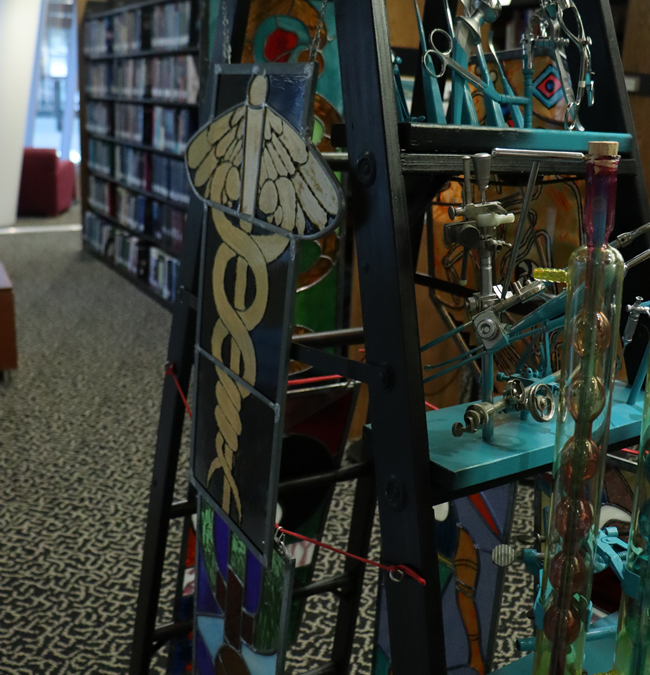
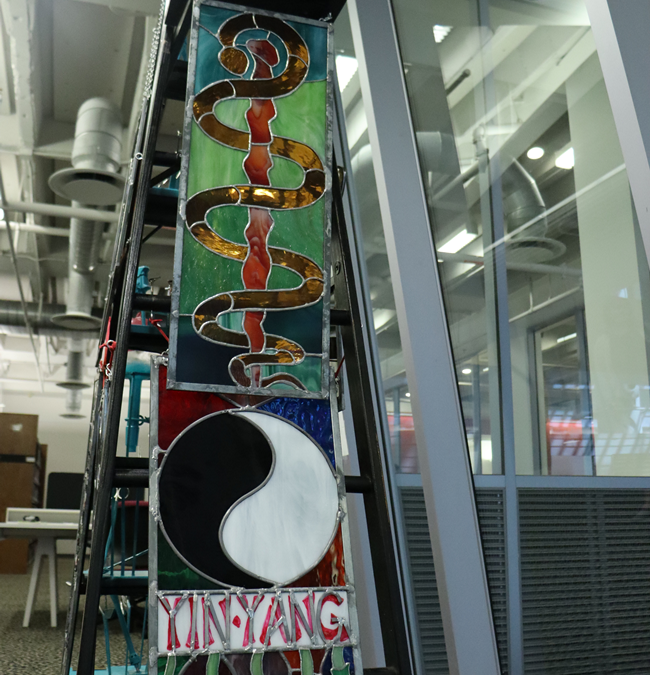
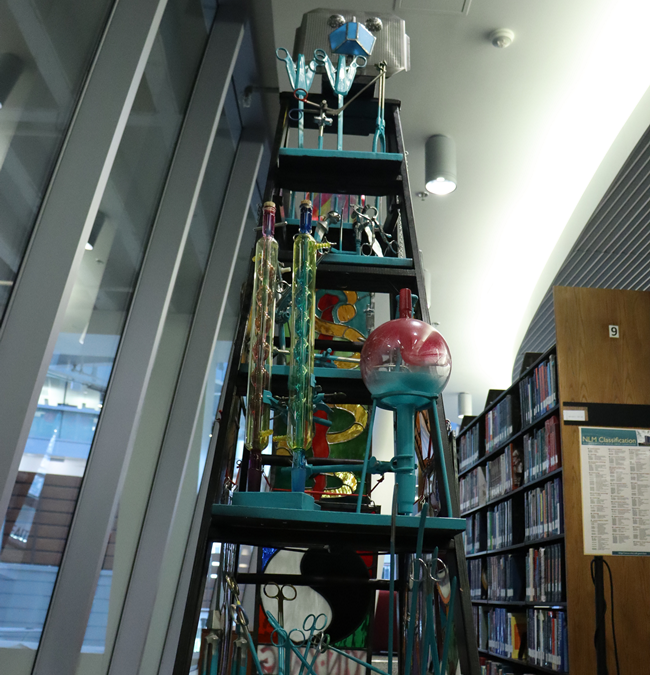
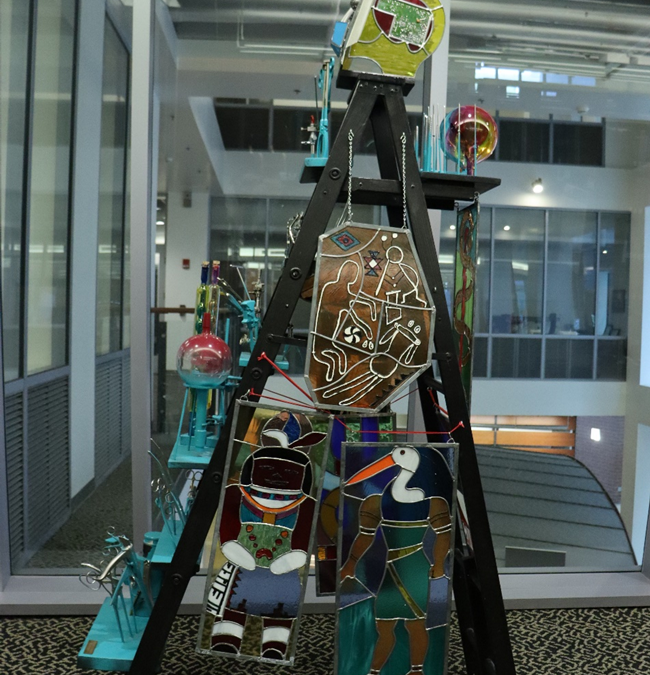
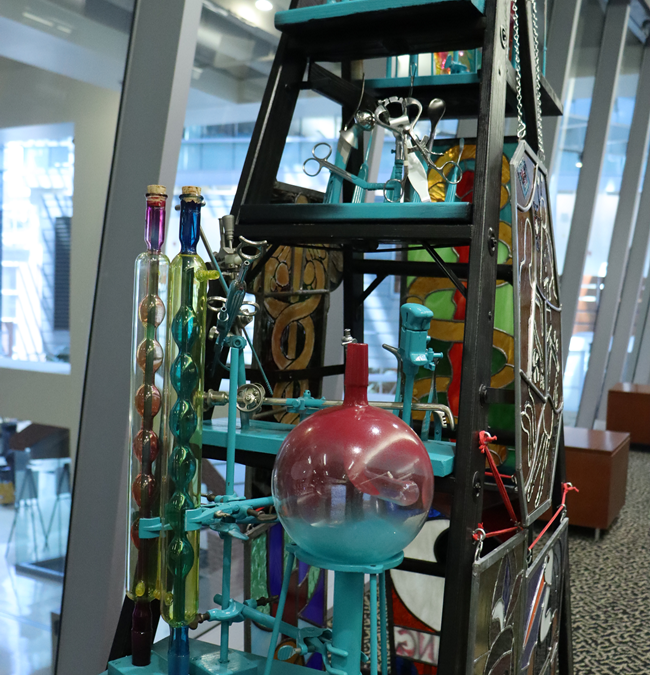
As the University of Cincinnati Donald C. Harrison Health Sciences Library welcomes the 2024-25 College of Medicine students and faculty back to the academic calendar, they are greeted by the new installation of MEDSTEPS. The sculpture is the work of renowned artist and scientist Wolfgang Ritschel (1933-2010). It is located on the G-level of the Health Sciences Library.

medsteps sculpture
medsteps sculpture
medsteps sculpture

Dr. Ritschel described MEDSTEPS as:

Stairs may have different purposes and meanings. Essentially, they are a means to reaching different levels, both literally and figuratively speaking. This sculpture uses stairs or, rather steps on a ladder, as a metaphorical form of expression in paying tribute to the development and advancement of medicine from its beginnings at the dawn of time – including Chinese, Egyptian, Greek, and Native American medicine with their symbols as shown in the stained-glass panels – to computerized medicine, along with corresponding “step-by-step” technological progress in diagnosis and therapy. Medicine and the arts were always intertwined, as is suggested by the common expression “medical arts.”  In fact, in 15th-century Europe, physicians, pharmacists and artists all belonged to the same guild, a development which presumably originated with the use of mortar and pestle as a grinding tool for both pharmaceutical substances and pigments.  I like to think of this as part of my personal and artistic statement in sculptures with a medical theme.

medsteps sculpture
medsteps sculpture

The sculpture is composed of stainless steel, gold leaf, stained glass, lead, polymer, paint, wood and measures 91” x 51” x 22”.

Continue reading

Controversy to Concurrence: The Modern and Current UC Health Holmes Hospital

By: Nathan Hood

DSCN1137 edited

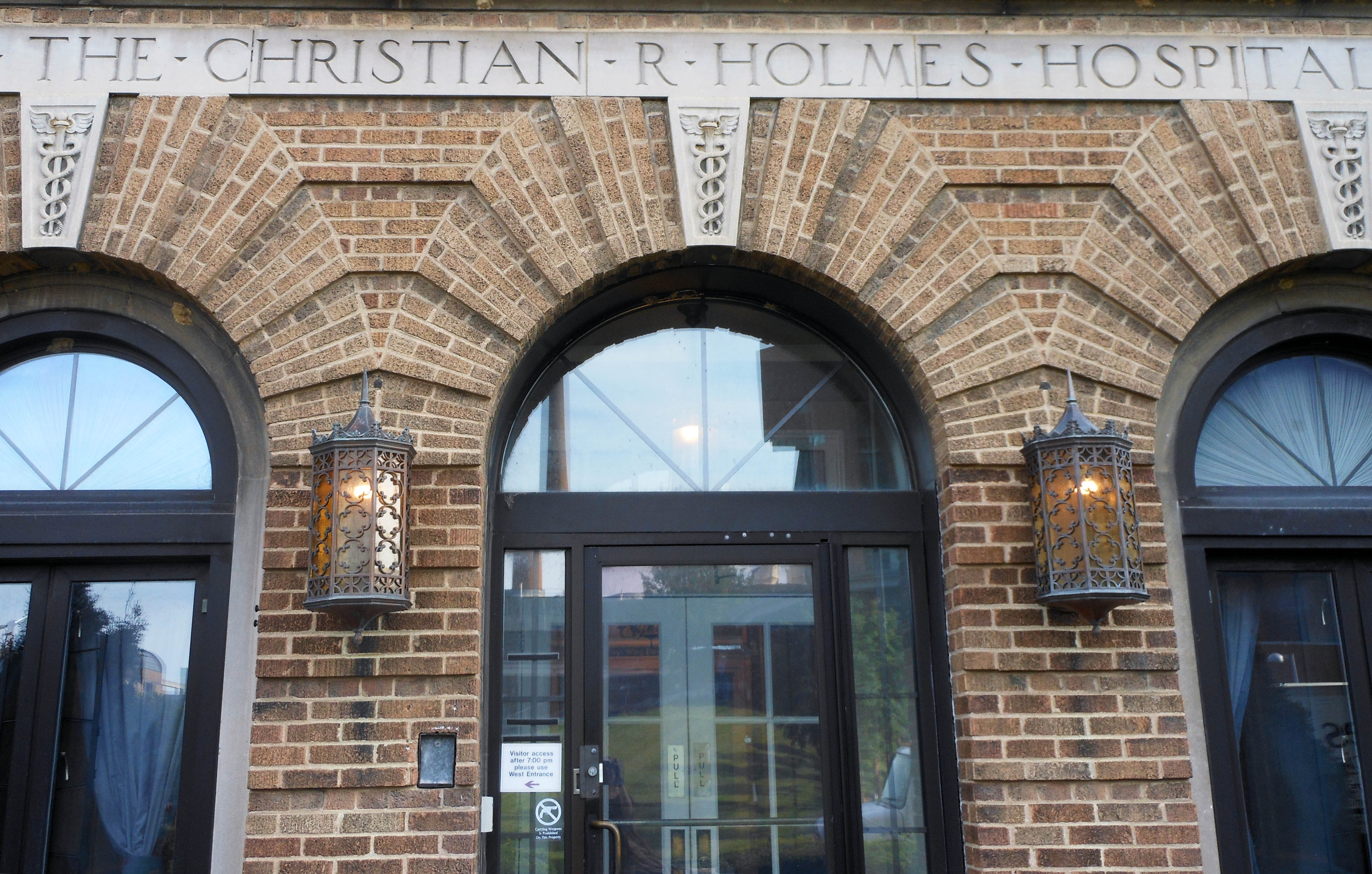
Christian R. Holmes Hospital,
opened May of 1929.
This photo serves as a link to the Winkler Center blog, “The Origin and Evolution of The Christian R. Holmes Hospital.”

The Christian R. Holmes Hospital opened in May of 1929, but it wasn’t until the University of Cincinnati’s proposal process for a new Holmes Hospital Auxiliary building that any serious controversy arose over the Holmes Hospital’s modern function. As has been enumerated before, from the time of its opening the Holmes Hospital was intended to function as a private institution exclusively utilized by the College of Medicine faculty. The Hospital has long since been converted to an extension of the University Hospital; but its history, even still contentious today, is definitely worth understanding because of its pivotal role in sculpting the University medical institution Cincinnati knows today.

Continue reading

The Origin and Evolution of The Christian R. Holmes Hospital

By Nathan Hood

Christian R. Holmes

Dr. Christian R. Holmes. This photo serves as a link to the Winkler Center blog, “Dr. Christian R. Holmes, The Cincinnati General Hospital, and the Surgical Amphitheater.”

The history of the “Holmes Hospital” is typically remembered as beginning in the early 1900’s with the construction of the building then and presently located adjacent to Eden Avenue; however, long before that land was developed for such purpose, there existed an original “Dr. C. R. Holmes Hospital” once located on East Eighth Street. This private establishment was made possible through Dr. Holmes collaboration with his associate at the time, Dr. D. T. Vail. Dr. Though Holmes’ wife, Bettie, was perhaps just as indispensable as Holmes himself – she was the supervisor of Holmes’ hospital for more than five years. Opening probably sometime in the very-late 1800’s, for several years it was home to a Nurses’ Training School. Though renovated in 1917, it closed that same year when Holmes took up duties at Camp Sherman. It was never re-opened.

Continue reading