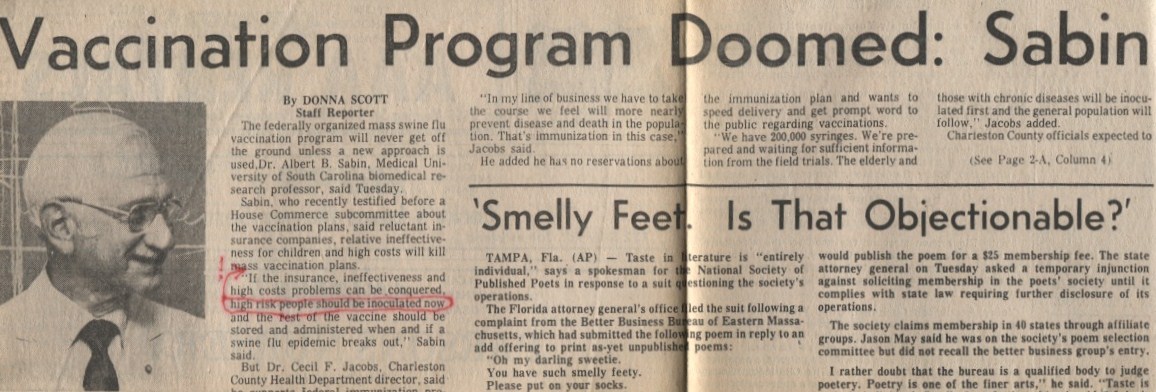
Throughout his career, Dr. Sabin was featured in many headlines and articles. Many of his friends and colleagues sent him copies of these newspaper clippings over the years, which Dr. Sabin saved. I wanted to highlight some of them here, in order to give you some perspective as to what he was involved in over the years.
Author Archives: Melissa Cox Norris
The Albert B. Sabin Digitization Project: Lost in Translation
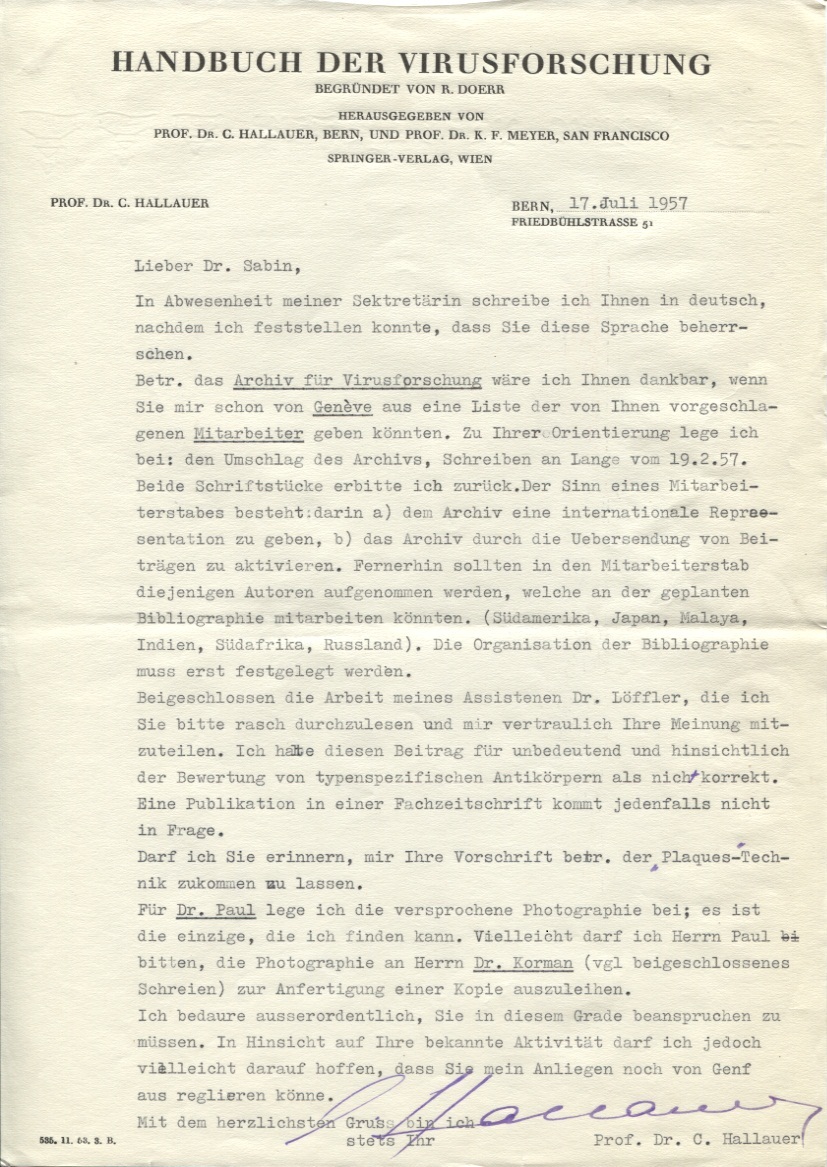
Being both a well-known scientist and a world traveler, Dr. Sabin’s collection of correspondence reflects many different parts of the world with letters in Russian, German, Portuguese, Spanish, Japanese, and more. As we move into the next phase of the Sabin digitization project, I will begin to look at the correspondence more closely, determining the important messages within each letter and assigning descriptive data (also known as metadata) to the letters so researchers can more easily search the material. In order to do this, I may need some help with those letters in foreign languages.
Here’s a recent example of a letter in a foreign language, as well as its background:
Langsam Library Exhibit Features Graphic Novels
By Janice Schulz
You would probably not be surprised to learn that UC Libraries hold copies of Malcolm X’s biography, Fahrenheit 451, Shakespeare’s Macbeth, and Treasure Island. What might surprise you, however, is that these are all titles of graphic novels. A new exhibit currently on display on the fourth floor of Langsam Library features these and many of the other graphic novels available in UC Libraries’ collections. The exhibit was curated by Janice Schulz, University Records Manager and Archives Specialist, and designed by Cole Osborn, former design student.
The Albert B. Sabin Digitization Project: The Weizmann Institute of Science
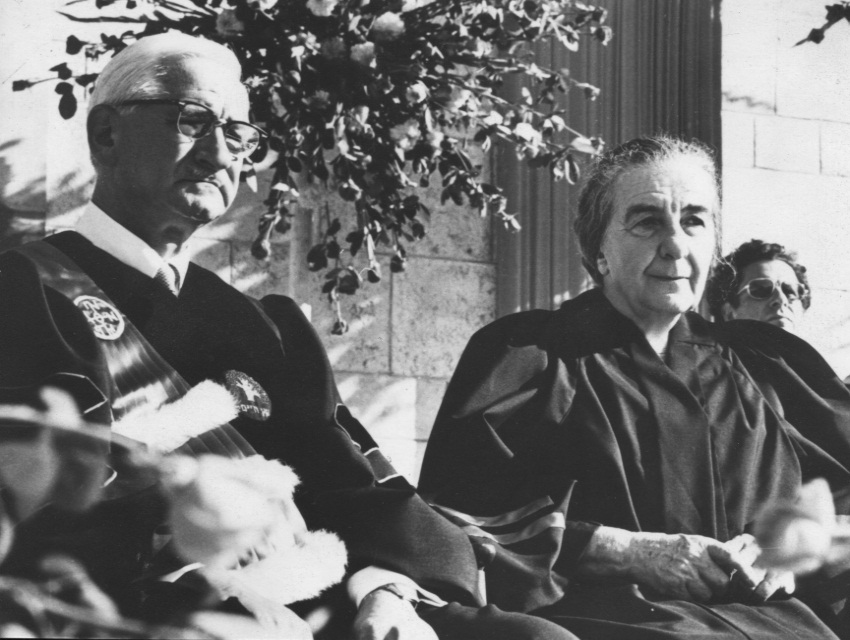
After Dr. Sabin’s long career at the University of Cincinnati and the Children’s Hospital Research Foundation, he became the President of the Weizmann Institute of Science in Rehovot, Israel, from 1970 until 1972. His archives contain much of his correspondence and photographs from his time at the Institute.
According to the Weizmann Institute of Science’s website, Dr. Sabin was the first President of the Institute that was required to be a scientist. While serving as President, Dr. Sabin reorganized the Institute into “five scientific Faculties”: Mathematics, Physics, Chemistry, Biophysics-Biochemistry, and Biology. While serving as President, Dr. Sabin rubbed elbows with some pretty important people, so I wanted to share some of these photographs with you. Continue reading
The Albert B. Sabin Digitization Project: Dr. Sabin’s Name
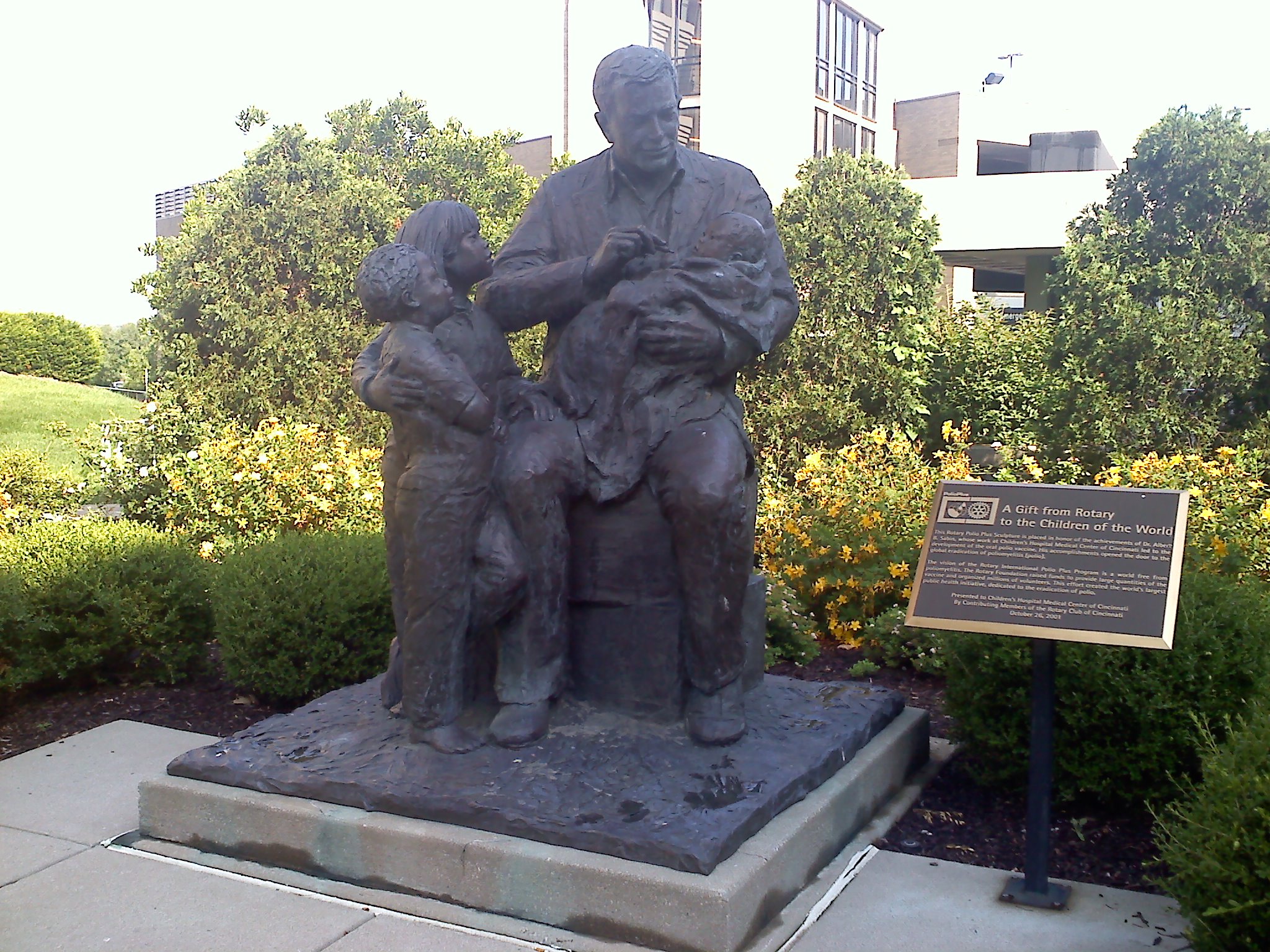
A post from a couple weeks ago where I mention the renaming of the road outside of our building to Albert Sabin Way made me think of other places that have Dr. Sabin’s name. I thought I would briefly touch on some of the places that are named after him.
One very close to where the Winkler Center is located is the Albert B. Sabin Education and Conference Center, which is located on the Cincinnati Children’s Hospital Medical Center’s Main Campus. In 1999, the medical center announced the naming of the building after Dr. Sabin. The building opened in 2000 as part of a large renovation program for the campus. According to the hospital’s website, this Center contains meeting space, the hospital’s libraries, a cafeteria, and many hospital services. At the time of the announcement of the naming, a press release stated, “In naming our center for Dr. Sabin, we hope to inspire all of those we teach to follow his example.” Continue reading
The Albert B. Sabin Digitization Project: Dr. Sabin’s Military Service
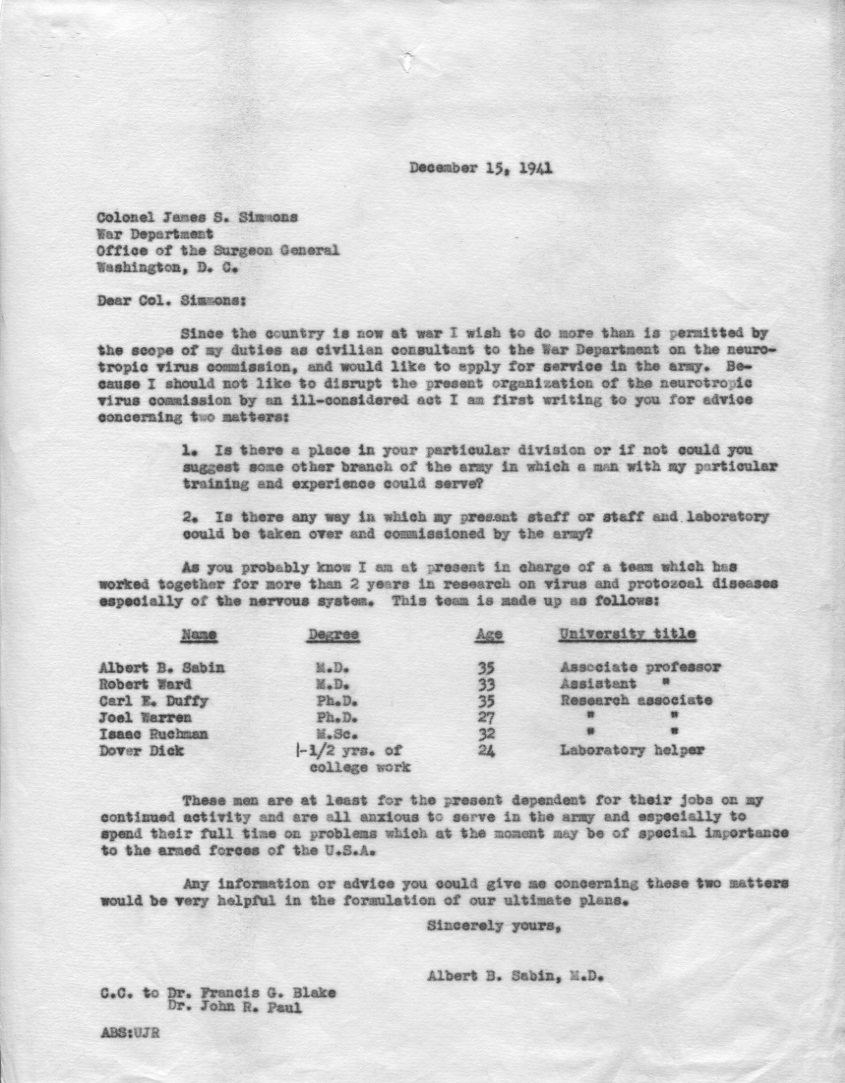
The Hauck Center for the Albert B. Sabin Archives contains 14.5 linear feet (29 boxes) dedicated to Dr. Sabin’s work as a civilian consultant with the Armed Forces Epidemiological Board from 1941 to 1943 and again from 1946 to 1969.
From 1943 to 45, Dr. Sabin served on active duty with the Medical Corps, first as a Major and later as Lieutenant Colonel. He researched such diseases as dengue, sandfly fever, Japanese B and St. Louis encephalitis, and other neurotropic viral infections as part of the military’s effort to reduce non combat-injury related illnesses and deaths. He helped to develop the St. Louis and Japanese B encephalitis and dengue vaccines. His service, both as a civilian and while on active duty, took him to many places across the world and allowed him to interact with many great scientific minds. Continue reading
OhioLINK NOTICE
The Albert B. Sabin Digitization Project: Helping the Children
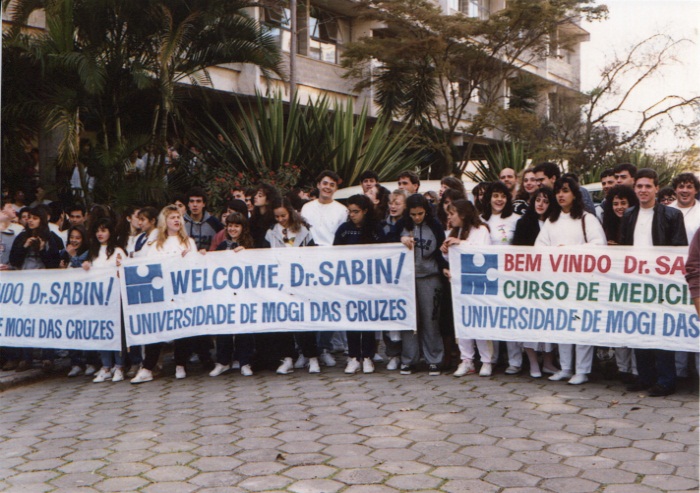
Dr. Sabin’s oral polio vaccine has helped millions of children since its first public distribution many years ago. Besides the numerous awards and accolades that Dr. Sabin received for his work, he traveled around the world and advised others on how to implement a vaccination program. Along the way, Dr. Sabin was greeted by crowds, including many children, who expressed their appreciation for his work. The photos seen here are only a couple of the photos we have in our collection from his visits around the world. Continue reading
Holiday Hours
All UC Libraries will be closed Monday, July 4th, for Independence Day. Library hours are listed online.
The Albert B. Sabin Digitization Project: Famous Scientists
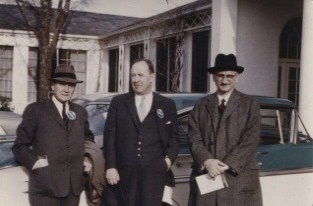
A couple weeks ago, I posted a photo of a gathering at the Polio Hall of Fame in January 1958. Recently, I found another photo from the same event. Continue reading