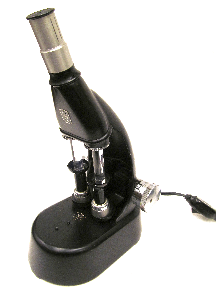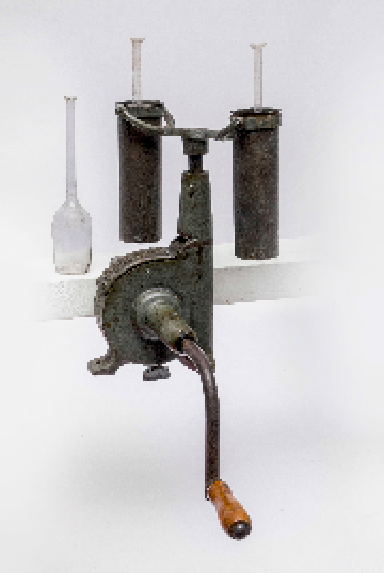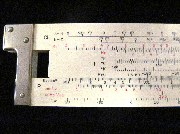
Issue 47 gives a brief history of the laboratory centrifuge illustrated by various instruments in the Oesper Collections.
Click here for all other issues of Notes from the Oesper Collections and to explore the Jensen-Thomas Apparatus Collection.
A recent article by Danniah Daher, graduate assistant to the Graduate School Office, entitled Scholar@UC: The Archive You Need, talks about the need to preserve and protect scholarly work and research data by submitting it to the university repository. Linda Newman, head of digital collections and repositories, is quoted as saying, “The mission of Scholar@UC is to preserve the permanent intellectual output of UC…We are very serious about preservation. We’re also very serious about access. We want to make the content accessible—content that otherwise would just be sitting on someone’s hard drive in their office. We consider preservation and access our two most important jobs.”
The full article can be read online at http://grad.uc.edu/student-life/news/scholaratuc.html.
Available at https://scholar.uc.edu/, Scholar@UC is a digital repository that enables the University of Cincinnati community to share its research and scholarly work with a worldwide audience. Faculty and staff can use Scholar@UC to collect their work in one location and create a durable and citeable record of their papers, presentations, publications, datasets, or other scholarly creations. Students, through an approved process, may contribute capstone projects such as senior design projects, theses, and dissertations.
The mission of Scholar@UC is to preserve the permanent intellectual output of UC, to advance discovery and innovation, to foster scholarship and learning through the transformation of data into knowledge, to collect a corpus of works that can be used for teaching and to inspire derivative works, and to enhance discoverability and access to these resources.

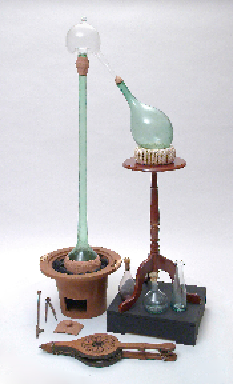
A reproduction of a circa 17th-century alembic
with an “ostrich”-necked cucubert, clay luting, various
receiving flasks, charcoal furnace, bellows, tongs, and poker
The 45th issue of Museum Notes gives a brief history of the oldest known distillation apparatus as illustrated by various reproductions found in the Oesper Collections.
Click here for all other issues of Notes from the Oesper Collections and to explore the Jensen-Thomas Apparatus Collection.
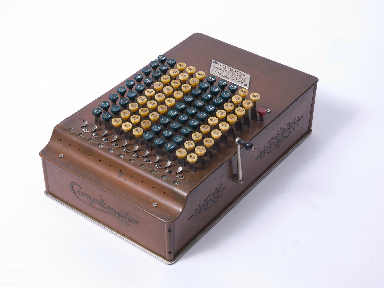
Issue 43 gives a brief overview of some of the desktop and hand-held calculators used by chemists over the years and currently on display in the hallway outside of the Oesper Collections in Rieveschl Hall.
Click here for all other issues of Notes from the Oesper Collections and to explore the Jensen-Thomas Apparatus Collection.
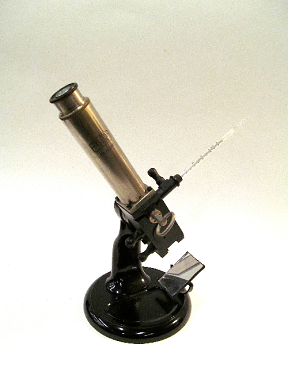
Issue 42 describes a new addition to the museum’s refractometer collection – a circa 1920 Zeiss butter refractometer – and its historical importance as a means for rapidly differentiating between pure butter and margarine.
Click here for all other issues of Notes from the Oesper Collections and to explore the Jensen-Thomas Apparatus Collection.
The following post was written by Winkler Center assistant archivist, Nina Herzog. All images courtesy of the Henry R. Winkler Center for the History of the Health Professions
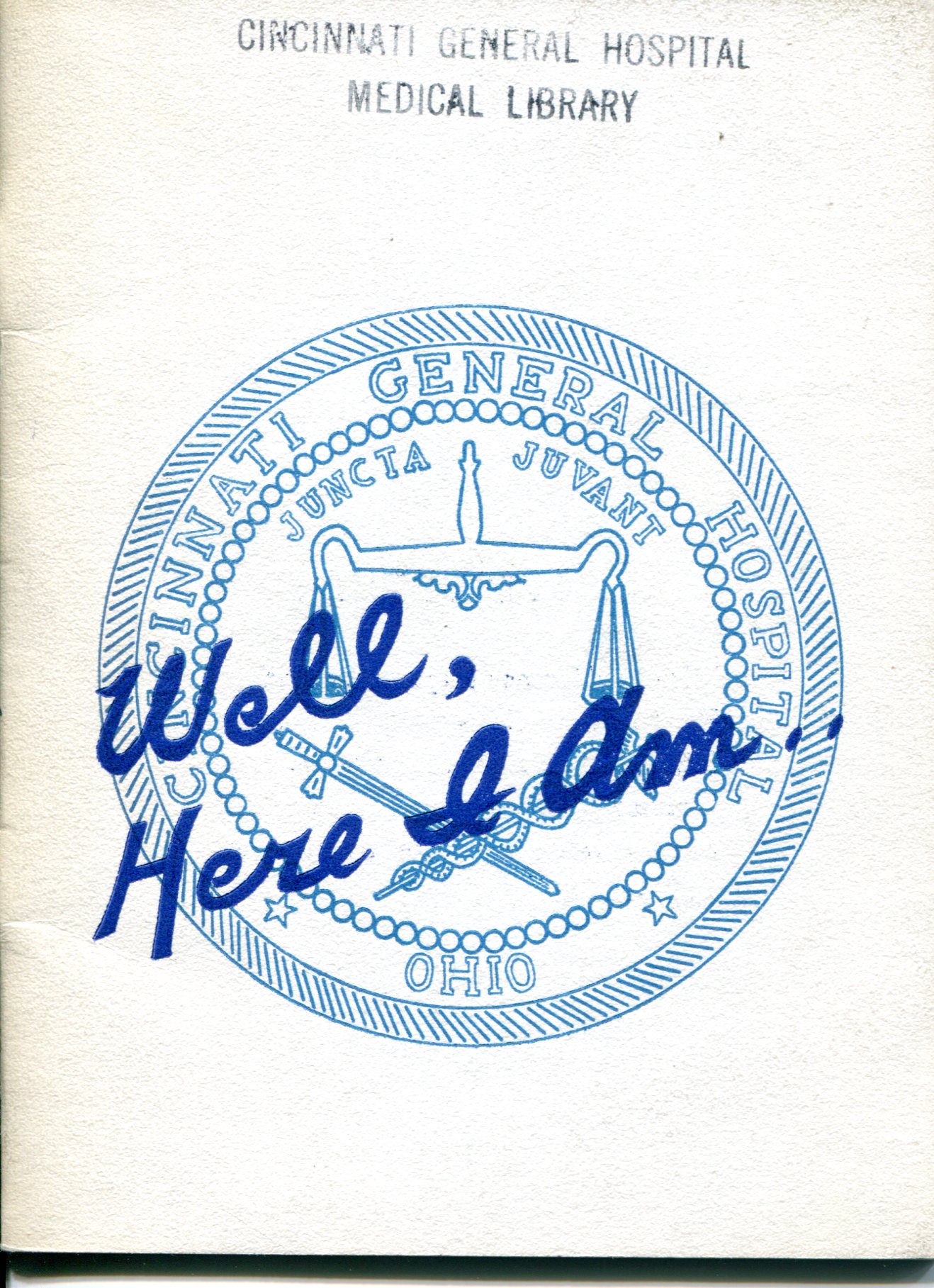
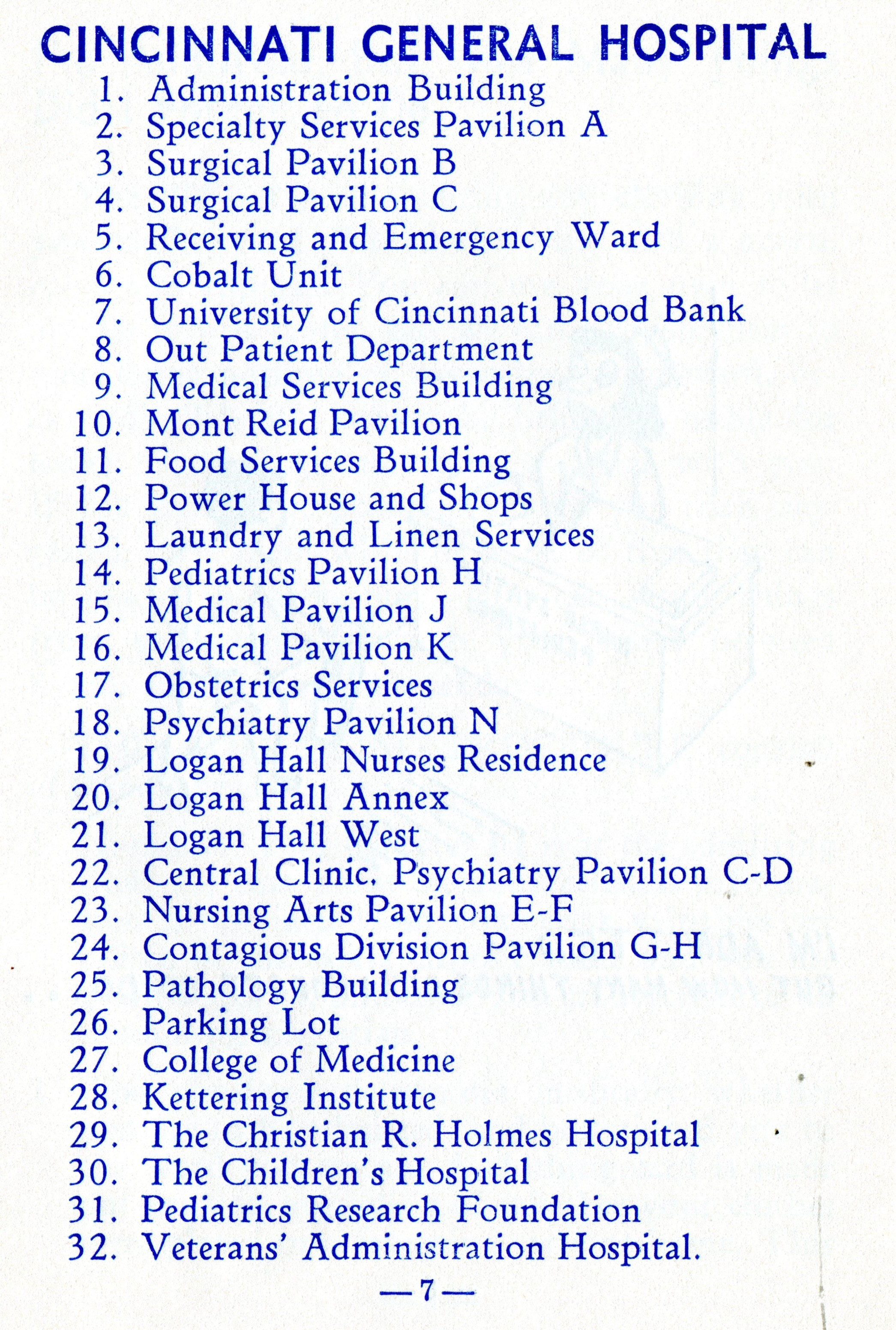
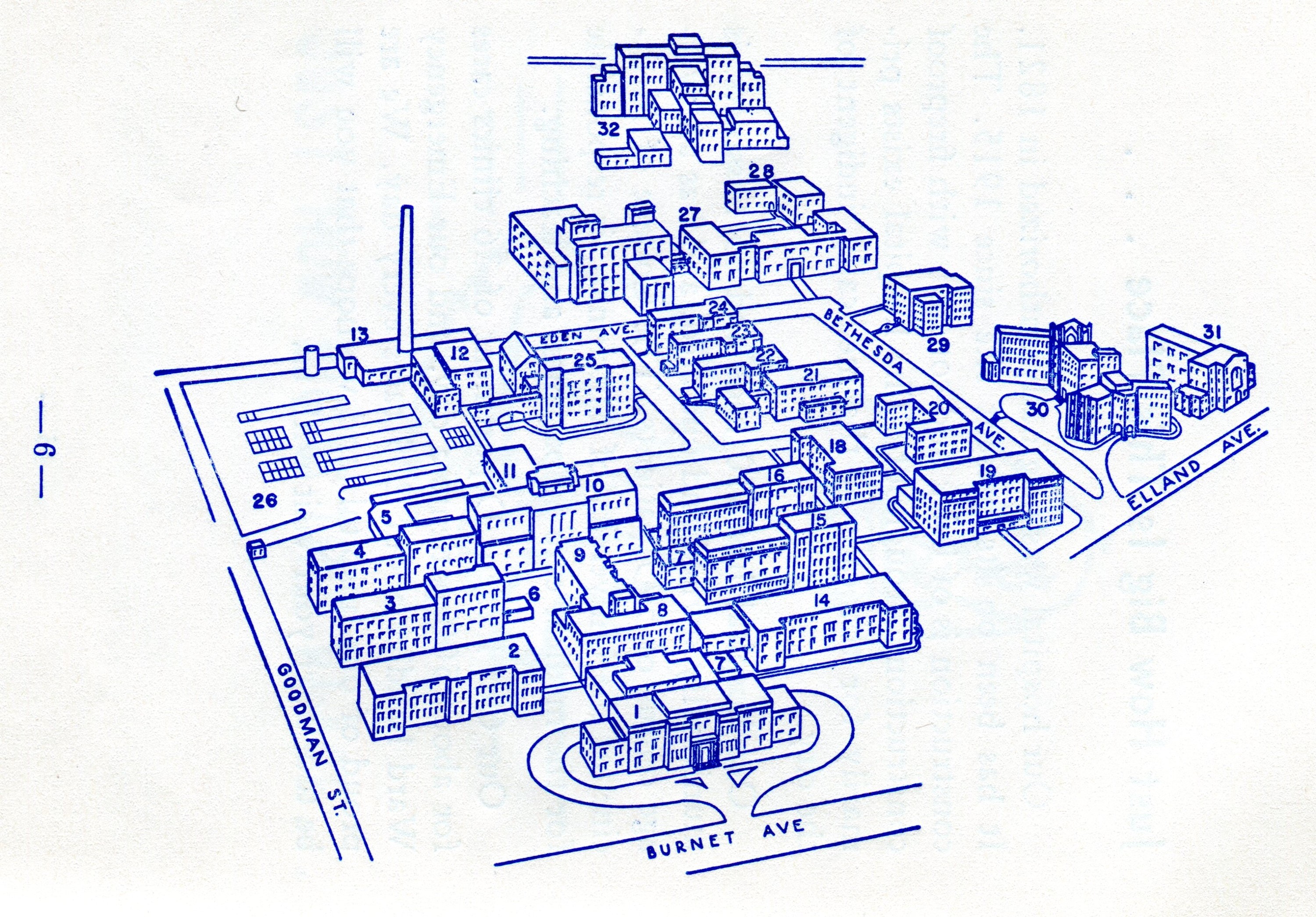
Without a doubt, checking into and staying at hospitals is a lot different today than it was over a half century ago. Computerized check-ins, televisions in rooms and bans on smoking, etc. have all improved the patient experience. The images below were taken from an informational booklet given to patients at the Cincinnati General Hospital (CGH) in 1958.
The instructive pamphlet titled, “Well Here I Am,” provides the incoming patient with information on subjects ranging from check in, dining hours, and visitor information to hospital maps, directions, and much more.
Issue 41 describes a new addition to the instrument collection on the mezzanine of the chemistry-biology library. Dating from the early 1970s, this desktop Varian E-4 Electron Paramagnetic Resonance (EPR) Spectrometer was donated by Dr. Albert Bobst of the UC Chemistry Department.
Click here for all other issues of Notes from The Oesper Collections and to explore the Jensen-Thomas Apparatus Collection.
At the close of the 8th Open Access Week, Jerry Sheehan of the White House Office of Science And Technology Policy blogged about the impact of openly accessible research findings, especially federally funded research.
Three more agencies have announced public access plans (Department of Education (ED), Agency for International Development, and Office of the Director of National Intelligence (ODNI)), bringing the total to 19. A good resource for understanding the requirements of the plans is the the Scholarly Publishing and Academic Resources Coalition – http://sparcopen.org/ and the data sharing resource http://datasharing.sparcopen.org/ available through SPARC.
To read the complete blog post, click here.