“An Evening with Aristophanes” in the Classics Library March 28

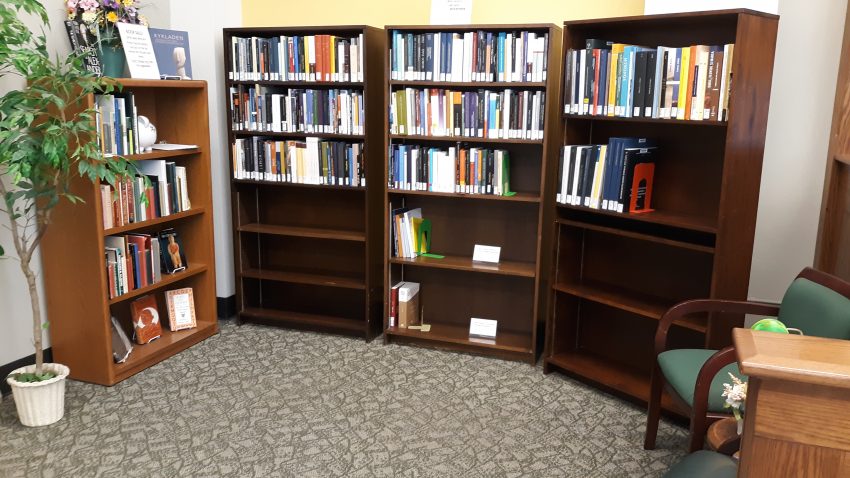
evening with AristophanesJoin the John Miller Burnam Classics Library, Thursday, March 28 from 5:00 to 7:00 p.m., in celebrating the life and work of the Greek comedy playwright Aristophanes.

The evening will include remarks by Rebecka Lindau, head of the Classics Library; a brief presentation of Aristophanes’ life and work by Susan Prince, associate professor of classics; and a reading of the play Lysistrata in Jeffrey Henderson’s Loeb translation, under the direction of Brant Russell, assistant professor of acting. The play will feature students from both UC’s Classics Department and from the College-Conservatory of Music (CCM). True to ancient Greek drama, music will further accompany the entrances and exits of the chorus and interludes, under the direction of Yo Shionoya, a graduate student in CCM.

The evening will conclude with a reception including Greek food.

The event will be presided over by the Greek god Dionysus who will greet all revelers at the door. The Classics Library will also feature a book exhibition with works of Aristophanes, including rare editions.

Please RSVP to Cade Stevens at stevencd@ucmail.uc.edu or (513) 556-1314 by Monday, March 25.

UPDATED: Interlibrary Loan Service Unavailable Monday, March 18, 8am-5pm because of Maintenance

UPDATE TWO:   Correct link to Illiad: https://illiad.uc.edu/illiad/index.html

If you have problems logging into Illiad, please use the above link to login.

We are working to correct all links now.

***************************************************

Thank you!

UPDATE: the scheduled maintenance is taking longer than anticipated. Please note we’ve changed the estimated up time to 5pm. Thank you for understanding.

***************************************************

The Libraries Interlibrary Loan (Illiad) server will be offline for maintenance Monday, March 18 from 8:00 AM to 12:00 PM. During that time, Interlibrary Loan will be unavailable.

Thank you for your patience.

Three Recent Articles Highlight Work being done in the Digital Scholarship Center

Three recent articles from faculty and staff working in or with the university’s Digital Scholarship Center demonstrate the transdisciplinary, enterprise-wide research mission of the center. In these three articles, topics include information science, new media and communications, and digital scholarship/digital humanities:

“Embracing semantic ambiguity to enhance interpretability of complex unstructured machine learning problems.” – https://onlinelibrary.wiley.com/doi/full/10.1002/pra2.2018.14505501144

“Tweeting for social justice in #Ferguson: Affective discourse in Twitter hashtags” – https://journals.sagepub.com/doi/abs/10.1177/1461444819827030?casa_token=mSwlsllzyaQAAAAA:o8PzOiTUUyS1zCblmTKMvkE1HBromRj1bXExxvk8qiZVg0LItZlr9Ne5y9EW10EqqpWPqi4KwvDI

“Epic social networks and Eve’s centrality in Milton’s Paradise Lost” – https://academic.oup.com/dsh/advance-article/doi/10.1093/llc/fqz001/5365481?guestAccessKey=71453a56-cfdb-48f2-a5bc-ae279bf4b0ac

The University of Cincinnati’s Digital Scholarship Center, located in the Walter C. Langsam Library, is a joint venture between the College of Arts and Sciences and the Libraries.

On campus and in the community, the DSC serves as a catalyst for hybrid forms of research and teaching, bringing together humanistic methods with technical innovations to test paradigms and to create new knowledge at the boundary between disciplines as they are conventionally imagined in humanities.

For more about the DSC, visit their website at http://dsc.uc.edu/

DAAP Library Exhibit-Emil Robinson

Come see Assistant Professor of Design, Emil Robinson’s paintings in the Robert A. Deshon and Karl J. Schlachter Library for Design, Art, Architecture and Planning (DAAP). On display across from the circulation desk are: Tulips 1, Broken Bumper, Tulips 2–all three paintings are oil on panel and painted in 2019. He has paired them with books, which give clues to his technique/process. It’s a sneak peek of the spring we are all desiring. 

New Langsam Library Exhibit – “Animals in Antiquity” as Reflected through Books and Artifacts in the John Miller Burnam Classics Library

animals in antiquityOn the fifth floor lobby of the Walter C. Langsam Library is the exhibit “Animals in Antiquity: An exhibition from the collections of the John Miller Burnam Classics Library.”

Curated by Rebecka Lindau, head of the John Miller Burnam Classics Library, and Michael Braunlin, assistant head of the  Classics Library, and designed by Michelle Matevia, library communication design co-op student, the exhibit highlights the role and importance of animals in Antiquity.

Bastet the Cat

Cats were sacred in ancient Egypt. There was even a cat goddess, Bastet.

Animals were divinities, especially in Egypt.  In Ancient Greece and Rome they were the companions or theomorphic stand-ins for gods and goddesses. Many animals were considered sacred to the ancient Greeks and Romans. However, as humans went from a nomadic existence to one of settlers and farmers, they began taming and using animals for their own purposes and so the status of animals began to decline.

After their domestication, bulls, cows, horses, donkeys, pigs, sheep and goats were used to plow fields, to provide milk and meat, transportation, and clothing. Wild boars were hunted for food and for “displays of manhood” by well-to-do young men as were various birds, deer, hares and even lizards.  Some animals were made companions or pets such as sparrows, pigeons, doves, dogs, cats, monkeys and even wild animals, gazelles and cheetahs. Animals in Greece, rabbits, dogs, roosters and doves, were given as presents, also in courtship as “love gifts.”

Foxes were wild and often considered a nuisance for wine growers because they liked eating the vines.

Various kinds of fish were eaten in antiquity, but they, too, could be pets and were sacred to the gods. Animals such as horses and elephants were used in war and as entertainment, for example, among the Romans at the Colosseum where lions, tigers, elephants, giraffes, bears, rhinoceroses, hippopotamuses, wild donkeys, hyenas and ostriches were forced to fight to their deaths. Greek and Roman authors such as Plutarch, Aelian and Pliny the Elder wrote about animals in works on ethics, morals and natural history and prose, poetry and history writers such as Homer, Aesop’s Fables, Lucretius, Ovid, Seneca, Dio Cassius, Diodorus Siculus frequently used animals to tell stories and to illustrate the human experience.

Sections of the exhibit inform how animals were used as entertainment, as companions, for ritual sacrifice, even in war. In addition, the exhibit features animals in art, displayed on coins, vases and statues. A bibliography of resources used in the creation of the exhibit is available on site and online as a PDF.

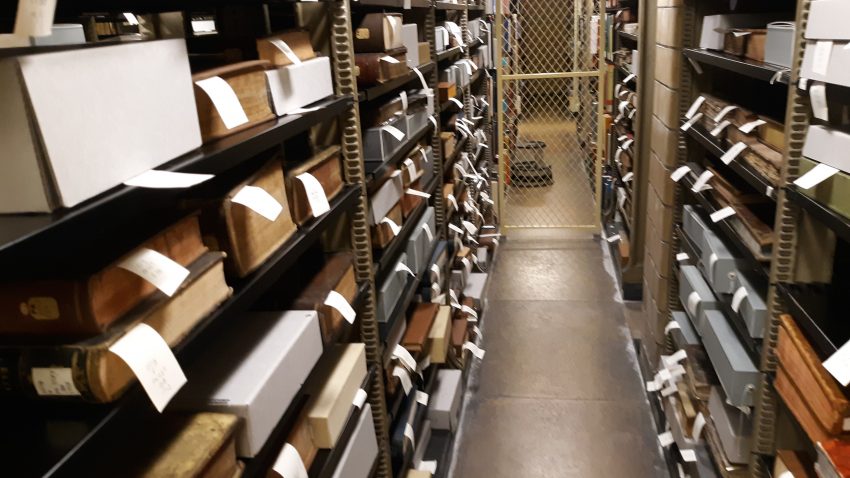
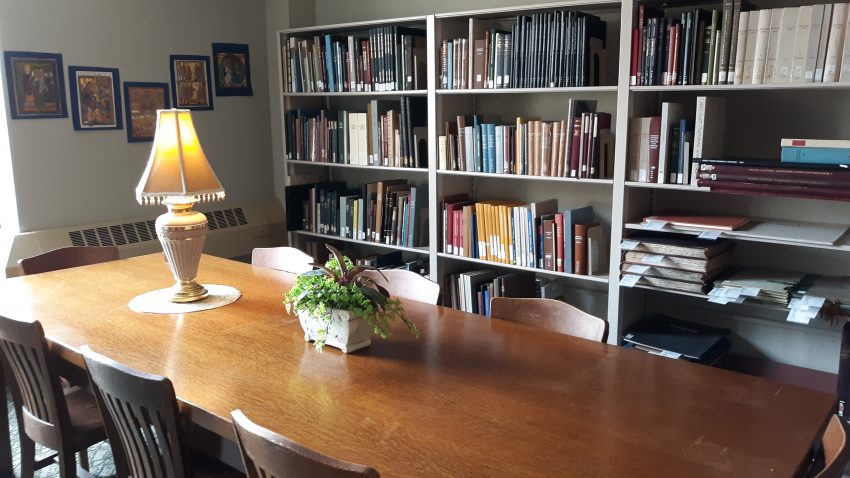
To learn more about Animals in Antiquity, read about or visit the Classics Library located on the fourth floor of Blegen Library where the books and artifacts featuring the texts and images in this exhibition are housed and where the librarian is happy to answer questions and offer research advice on this or any other topic concerning classical antiquity.

The New Deal in the Archives

Survey of Federal Archives project (Ohio History Connection)

With the Green New Deal in the news, there is renewed interest in President Franklin Roosevelt’s original New Deal. The New Deal was a series of federal programs meant to combat the major issues of the Depression, including soil loss, stabilizing the banking system, and providing jobs and relief for the unemployed. One of the famous programs of the New Deal was the Works Progress Administration, popularly known as the WPA. The WPA was responsible for constructing many of the significant buildings, roads, and infrastructure that the American public still uses. But the WPA also employed many writers, musicians, playwrights, artists, historians, clerks, and other unemployed white-collar professionals.

One of the most comprehensive, but least known programs to come out of the WPA was the Historical Records Survey. Originally envisioned by American archivist TR Schellenberg, it was expanded into a workable program by Luther Evans, who would go on to become the Librarian of Congress and UNESCO director. The Historical Records Survey had two major programs: a survey of federal records located in offices outside of the Washington DC area, and a survey of state and local records. During its initial operation, the Historical Records Survey was part of the Federal Writers Project, which was known for producing travel guides for 48 states and many large cities, as well as compiling narratives of ex-slaves.

The Historical Records Survey lasted between 1935 and 1943. Its largest achievement was surveying county records – of the 3,066 counties in existence at the time of the survey, fieldwork was completed for 90% of them. WPA workers carried out the field work by going to county courts and administrative agencies to determine what kinds of records existed, where they were located, and a short description of the records. The field work also generated significant information about the history of the states and their counties. In some areas, municipal records surveys were also completed, such as for the city of Cleveland. Although there had been some attempts to survey America’s local and state records before (mainly through the efforts of the American Historical Association’s Public Archives Commission), the WPA Historical Records Survey was a significant advance in trying to establish a comprehensive picture of the overall condition of America’s public records.

Unfortunately like many worthy archival projects, the Historical Records Survey had some significant setbacks. Only 20% of county inventories were published. At least 27 county inventories were published in the state of Ohio, including for major counties such as Cuyahoga, Franklin, Hamilton, Lucas, and Summit. In the guide to the Hamilton County records, the introduction stated there would be a guide issued for every county. Perhaps the suspension of the Historical Records Survey in 1943 ended the publication of these guides. The remaining records from the Historical Records Survey of Ohio can be found at the Ohio History Connection and the Western Reserve Historical Society.

In fact, the fate of the multitude of records generated by the field workers of Historical Records Survey across the country varied wildly. Many of the records ended up in universities and state and local historical societies. But in some cases, they did not and in fact met a fairly tragic fate – when archivist and National Archives employee Leonard Rapport went searching for Maine’s Historical Records Survey field records in the 1970s, he eventually found that they had been dumped into a bay.

If you would like to learn more about the Historical Records Survey, I recommend Loretta Hefner’s 1980 guide to the unpublished records of the Historical Records Survey, and Sargent Child and Dorothy Holmes’ inventory of publications associated with the Survey (Z1223.Z7 C52, ARB Reference). For additional study, Marguerite Bloxom’s guide Pickaxe and Pencil contains an extensive bibliography arranged by WPA program.

Greeks and Romans — Beware of Ides of March – καὶ σὺ τέκνον!

Today is the day of the assassination of Julius Caesar in 44 BCE, precipitating the death of the Republic. Below are some passages from Plutarch, Suetonius, and Shakespeare speaking of the Ides of March as well as of the assassination itself, an image and description of the most famous of Roman coins, that of a bust of one of the principal assassins, Marcus Brutus, followed by a brief bibliography of primary and secondary sources.

The Curia building by the Theater of Pompey on the present day Largo Argentina in Rome, the place of Julius Caesar’s assassination. Supposedly, the place will undergo renovations and be opened to the public in a couple of years (although there have been many earlier reports to this effect), which is causing concern among the city of Rome’s many cat lovers since the spot is currently inhabited by felines who have lived there, probably ever since the murder of Caesar. https://www.smithsonianmag.com/smart-news/site-where-julius-caesar-was-stabbed-will-finally-open-public-180971613/?utm_source=smithsoniandaily&utm_medium=email&utm_campaign=20190305-daily-responsive&spMailingID=39059296&spUserID=ODM4Njc3MTA5NjUS1&spJobID=1480462980&spReportId=MTQ4MDQ2Mjk4MAS2&fbclid=IwAR1llLQDzEH15xKhUGIe-PB25s67afhUOjMnjG6ageSAL0Hjg5hYbO9NoSU  

Plutarch

“…ὥς τις αὐτῷ μάντις ἡμέρᾳ Μαρτίου μηνός, ἣν Εἰδοὺς Ῥωμαῖοι καλοῦσι, προείποι μέγαν φυλάττεσθαι κίνδυνον· ἐλθούσης δὲ τῆς ἡμέρας προϊὼν ὁ Καῖσαρ εἰς τὴν σύγκλητον ἀσπασάμενος προσπαίξειε τῷ μάντει φάμενος· “Αἱ μὲν δὴ Μάρτιαι Εἰδοὶ πάρεισιν,” ὁ δὲ ἡσυχῆ πρὸς αὐτὸν εἴποι· “Ναὶ πάρεισιν, ἀλλ᾿οὐ παρεληλύθασι…” (Parallel Lives, Caesar 63.3-4). https://www.loebclassics.com/view/plutarch-lives_caesar/1919/pb_LCL099.443.xml?rskey=FylsHE&result=37

“A certain seer warned Caesar to be on his guard against a great peril on the day of the month of March which the Romans call the Ides; and when the day had come and Caesar was on his way to the senate-house, he greeted the seer with a jest and said: “Well, the Ides of March are come,” and the seer said to him softly: “Aye, they are come, but they are not gone.”

Shakespeare

Julius Caesar, Act I, Scene II:

http://shakespeare.mit.edu/julius_caesar/julius_caesar.1.2.html

Soothsayer

Caesar!

CAESAR

Ha! who calls?

CASCA

Bid every noise be still: peace yet again!

CAESAR

Who is it in the press that calls on me?
I hear a tongue, shriller than all the music,
Cry ‘Caesar!’ Speak; Caesar is turn’d to hear.

Soothsayer

Beware the ides of March.

CAESAR

What man is that?

BRUTUS

A soothsayer bids you beware the ides of March.

CAESAR

Set him before me; let me see his face.

CASSIUS

Fellow, come from the throng; look upon Caesar.

CAESAR

What say’st thou to me now? speak once again.

Soothsayer

Beware the ides of March.

CAESAR

He is a dreamer; let us leave him: pass.

Suetonius

Assidentem conspirati specie officii circumsteterunt, ilicoque Cimber Tillius, qui primas partes susceperat, quasi aliquid rogaturus propius accessit renuentique et gestu in aliud tempus differenti ab utroque umero togam adprehendit; deinde clamantem: “Ista quidem vis est!” alter e Cascis aversum vulnerat paulum infra iugulum. Caesar Cascae brachium arreptum graphio traiecit conatusque prosilire alio vulnere tardatus est; utque animad­vertit undique se strictis pugionibus peti, toga caput obvolvit, simul sinistra manu sinum ad ima crura deduxit, quo honestius caderet etiam inferiore corporis parte velata. Atque ita tribus et viginti plagis confossus est uno modo ad primum ictum gemitu sine voce edito, etsi tradiderunt quidam Marco Bruto irruenti dixisse: καὶ σὺ τέκνον; Exanimis diffugientibus cunctis aliquamdiu iacuit, donec lecticae impositum, dependente brachio, tres servoli domum rettulerunt. Nec in tot vulneribus, ut Antistius medicus existimabat, letale ullum repertum est, nisi quod secundo loco in pectore acceperat” (De Vita Caesarum, The Deified Julius 82.1-4).https://www.loebclassics.com/view/suetonius-lives_caesars_book_i_deified_julius/1914/pb_LCL031.37.xml?rskey=IIrllU&result=1

“As he took his seat, the conspirators gathered about him as if to pay their respects, and straightway Tillius Cimber, who had assumed the lead, came nearer as though to ask something; and when Caesar with a gesture put him off to another time, Cimber caught his toga by both shoulders; then as Caesar cried, “Why, this is violence!” one of the Cascas stabbed him from one side just below the throat. Caesar caught Casca’s arm and ran it through with his stylus, but as he tried to leap to his feet, he was stopped by another wound. When he saw that he was beset on every side by drawn daggers, he muffled his head in his robe, and at the same time drew down its fold to his feet with his left hand, in order to fall more decently, with the lower part of his body also covered. And in this wise he was stabbed with three and twenty wounds, uttering not a word, but merely a groan at the first stroke, though some have written that when Marcus Brutus rushed at him, he said in Greek, “You too, my child?” All the conspirators made off, and he lay there lifeless for some time, until finally three common slaves put him on a litter and carried him home, with one arm hanging down. And of so many wounds none turned out to be mortal, in the opinion of the physician Antistius, except the second one in the breast.”

The Most Famous of all Roman Coins!

BRVT ∙ IMP ∙ PLAET ∙ CEST with Brutus head on the obverse and EID ∙ MAR with a pileus and two daggers on the reverse.

Late summer-autumn 42 BC. AR Denarius (18mm, 3.59 g, 12h). Military mint traveling with Brutus and Cassius in western Asia Minor or northern Greece; L. Plaetorius Cestianus, magistrate. Bare head of Brutus right; BRVT above, IMP to right, L • PLAET • CEST around to left / Pileus between two daggers pointing downward; EID • MAR below. Crawford 508/3; Cahn 22 (same dies); CRI 216; Sydenham 1301; RSC 15; RBW –. Good VF, deeply toned, a little off center and minor porosity on obverse. Very rare. This extraordinary type is one of the few specific coin issues mentioned by any classical author, in this case, Dio Cassius. Roman History 47.25.3: “Brutus stamped upon the coins which were being minted his own likeness and a cap and two daggers, indicating by this and by the inscription that he and Cassius had liberated the fatherland.”

Brief Bibliography

  • Beware of Ides of March. But why? By Martin Stezano, Match 13, 2017. History Channel stories — https://www.history.com/news/beware-the-ides-of-march-but-why
  • Caesar. TNT presents a De Angelis Group and Five Mile River Films production; a film by Uli Edel; producers, Giuseppe Pedersoli, Jonas Bauer; written by Peter Pruce and Craig Warner; directed by Uli Edel. Featuring Jeremy Sisto, Richard Harris, Christopher Walken, Christopher Noth, Valeria Golino, Heino Ferch, Tobias Moretti. New York: Good Times Entertainment, 2004 — CLASS Reserves DG 261.C337 2004
  • Caesar Must Die. San Francisco: Kanopy Streaming, 2014 — https://uc.kanopystreaming.com/video/caesar-must-die
  • Dando-Collins, Stephen. The Ides: Caesar’s Murder and the War for Rome. Hoboken, NJ: Wiley, 2010 — CLASS Stacks DG 267.D26 2010
  • Freeman, Philip. Julius Caesar. New York: Simon & Schuster, 2008 — CLASS Stacks DG 261.F784 2008
  • Julius Caesar. Festival Films (1948). New York: Distributed by Films Media Group, 2016. Films on Demand — http://fod.infobase.com/p_ViewVideo.aspx?xtid=115179
  • Julius Caesar. San Francisco: Kanopy Streaming, 2015 — https://uc.kanopystreaming.com/video/julius-caesar-0
  • Life and Death of Julius Caesar. Arden Shakespeare. MIT  —http://shakespeare.mit.edu/julius_caesar/full.html (The Complete Works of William Shakespeare http://shakespeare.mit.edu/index.html)
  • Living History: Experiencing Great Events of the Ancient and Medieval Worlds: The Final Days of Julius Caesar. San Francisco: Kanopy Streaming, 2016 — https://uc.kanopystreaming.com/video/living-history-experiencing-great-events–10
  • Mackay, Christopher. The Breakdown of the Roman Republic: From Oligarchy to Empire. New York: Cambridge University Press, 2009 — CLASS Stacks DG 254.M25 2009
  • Manfredi, Valerio Massimo. The Ides of March [fiction]. New York: Europa Editions, 2010 — Langsam PQ 4873.A4776 I3513 2010
  • Parenti, Michael. The Assassination of Julius Caesar: A People’s History of Ancient Rome. New York: New Press, 2003 — CLASS Stacks DG 267.P37 2003
  • Plutarch. The Age of Caesar: Five Roman Lives. Translated by Pamela Mensch; edited, with preface and notes, by James Romm; introduction by Mary Beard. New York: W. W. Norton & Company, 2017 — CLASS Stacks DG 260.A1 P53 2017
  • “The Real Story behind the Assassination of Julius Caesar” by Larry Getlen, March 1, 2015. The New York Post — https://nypost.com/2015/03/01/the-real-story-behind-the-assassination-of-julius-caesar/
  • Strauss, Barry S. The Death of Caesar: The Story of History’s Most Famous Assassination. New York, NY: Simon & Schuster, 2015 — CLASS Stacks DG 267.S77 2015
  • Suetonius. Lives of the Caesars. With an English translation by J.C. Rolfe. Cambridge, MA: Harvard University Press, 2014 — https://www.loebclassics.com/view/LCL031/1914/volume.xml
  • Sumi, Geoffrey S. Ceremony and Power: Performing Politics in Rome between Republic and Empire. Ann Arbor: University of Michigan Press, 2005 — CLASS Stacks DG254.2.S86 2005
  • Tempest, Kathryn. Brutus: The Noble Conspirator. New Haven: Yale University Press, 2017 —  CLASS Stacks DG 260.B83 T46 2017
  • The Tragedy of Julius Caesar. Open Source Shakespeare (see esp. lines 96-110) — https://www.opensourceshakespeare.org/views/plays/play_view.php?WorkID=juliuscaesar&Act=1&Scene=2&Scope=scene
  • What Are the Ides of March? March 12, 2014. History Channel stories — https://www.history.com/news/ask-history/what-are-the-ides-of-march
  • William Shakespeare’s Julius Caesar. BBC Play of the Month adaptation, originally broadcast on the 13th of April 1969. Featuring Robert Stephens as Mark Antony, Maurice Denham as Julius Caesar, Frank Finlay as Brutus and Edward Woodward as Cassius. YouTube — https://www.youtube.com/watch?v=JInTNKLaEI4
  • Woolf, Greg. Et tu, Brute?: The Murder of Caesar and Political Assassination. London: Profile Books, 2006 — CLASS Stacks DG 267.W66 2006

UC Libraries Seeks Books Good Enough to Eat for the International Edible Books Festival

20,000 Leagues Under the Sea

2018 Best Overall – 20,000 Leagues Under the Sea by Jessica Ebert

Know of a good book to eat?! Create an Edible Book for UC Libraries International Edible Books Festival!

It’s time once again for the fan-favorite International Edible Books Festival scheduled for Monday, April 1, 2019, from 1-2:00pm in the Walter C. Langsam Library’s 5th floor lobby. UC Libraries is seeking people interested in creating an edible book for the enjoyment (and consumption) of all in attendance. There are few restrictions – namely that your creation be edible and have something to do with a book – so you may let your creativity run wild.

t-shirtAs in previous years, entries will be judged according to such categories as “Most Delicious,” “Most Creative,” “Most Checked Out” and “Most Literary.” Those awarded “Best Student Entry” and “Best Overall” will win a limited-edition UC Libraries t-shirt.

If you are interested in creating an edible book, please e-mail melissa.norris@uc.edu by Friday, March 22 with your name and the title of your creation.

Looking for inspiration? Visit UC Libraries on Facebook to see photos from the 2018 festival.

Read Source to learn more about the news, events, people and happenings in UC Libraries.

source graphicRead Source, the online newsletter, to learn more about the news, events, people and happenings in UC Libraries.

In this edition of Source, Dean Xuemao Wang writes about the university’s Bicentennial and we announce an exhibit of books from the libraries that document the university’s 200 years.  We interview Brad Warren, associate dean of library services, and focus on the Visualization Lab located in the Geology-Mathematics-Physics Library.

An article from Rich Puff, assistant vice president of public relations & communications, Academic Health Center, honors Lucy Oxley, MD, ‘a pioneer and a servant leader.’ University archivist and head of the Archives and Rare Books Library Kevin Grace writes about James Landy’s 1876 images celebrating William Shakespeare

Lastly, we promote to upcoming events: Hidden Treasures: An Adopt-A-Book Evening on March 14 and the Cecil Striker Society Annual Lecture on May 15.

Read these articles, as well as past issues, on the web at http://libapps.libraries.uc.edu/source/ and via e-mail. To receive Source via e-mail, contact melissa.norris@uc.edu to be added to the mailing list.

New UC VPN by March 1, 2019

UC is transitioning to the new VPN software Cisco AnyConnect by March 1, 2019.  For UC students, faculty and staff who use the VPN to access library resources from off-campus will need to download and install the new VPN software by March 1st.  Both AnyConnect and Pulse Secure will work until March 1, 2019.  After March 1st, only AnyConnect will work.

New to the SSL VPN?

The Secure Sockets Layer Virtual Private Network (SSL VPN) provides authorized users to access UC Library resources from off-campus and is ideal for longer research sessions.

VPN AnyConnect Software Installation

Go to vpn.uc.edu to access the UC AnyConnect client application installers.

Step-by-step setup instructions for downloading and installing the UC AnyConnect VPN software

After installation, log into the VPN software on your computer/device using your UC central login and then open a browser window to start your research session.

Both AnyConnect and Pulse Secure will work until March 1, 2019.  After March 1st, only AnyConnect will work.

Questions?  Contact IT@UC

  • Phone: 513-556-4357
  • Toll Free: 866-397-3382