Read these articles, as well as past issues, on the website. To receive Source via e-mail, contact melissa.norris@uc.edu to be added to the mailing list.
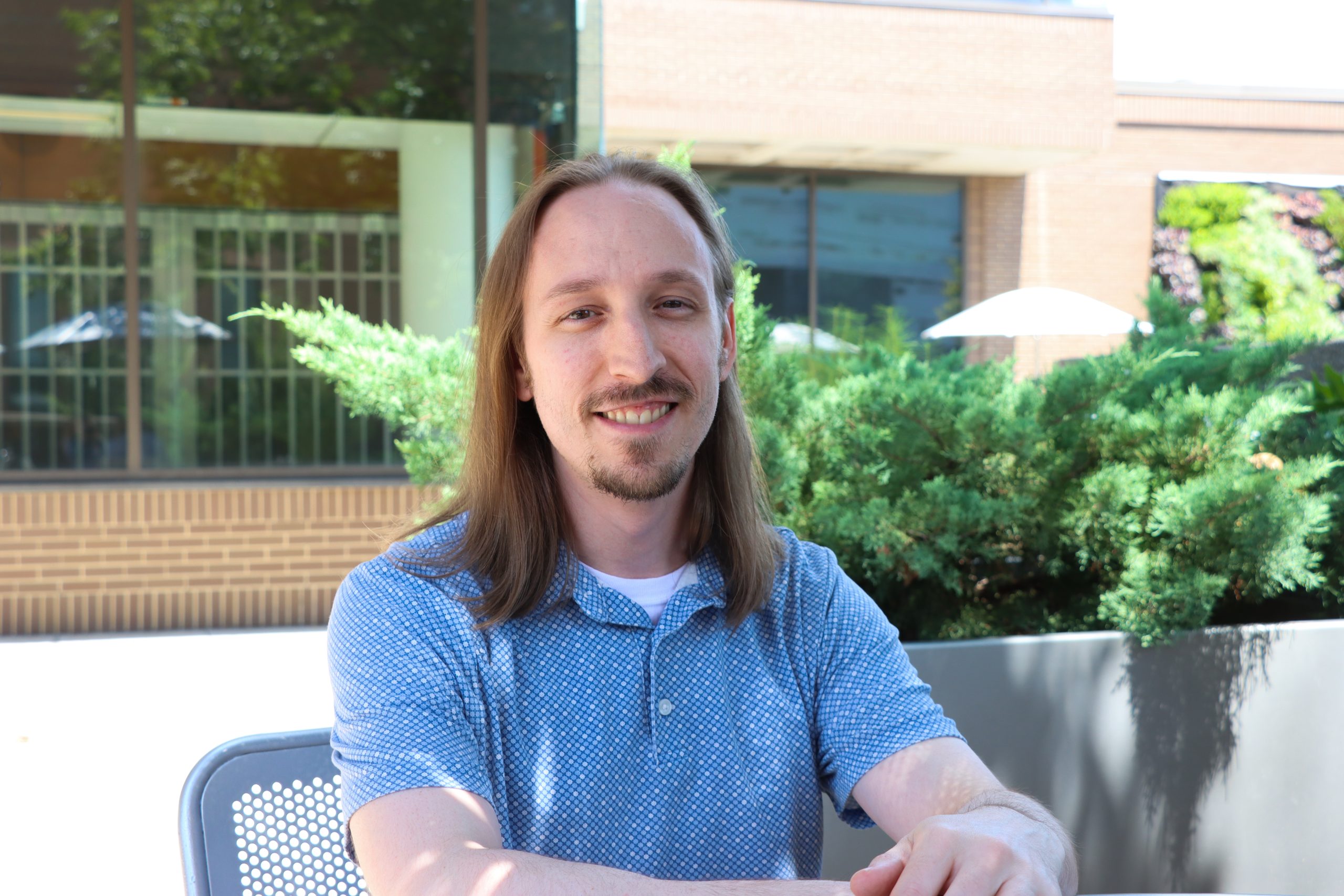
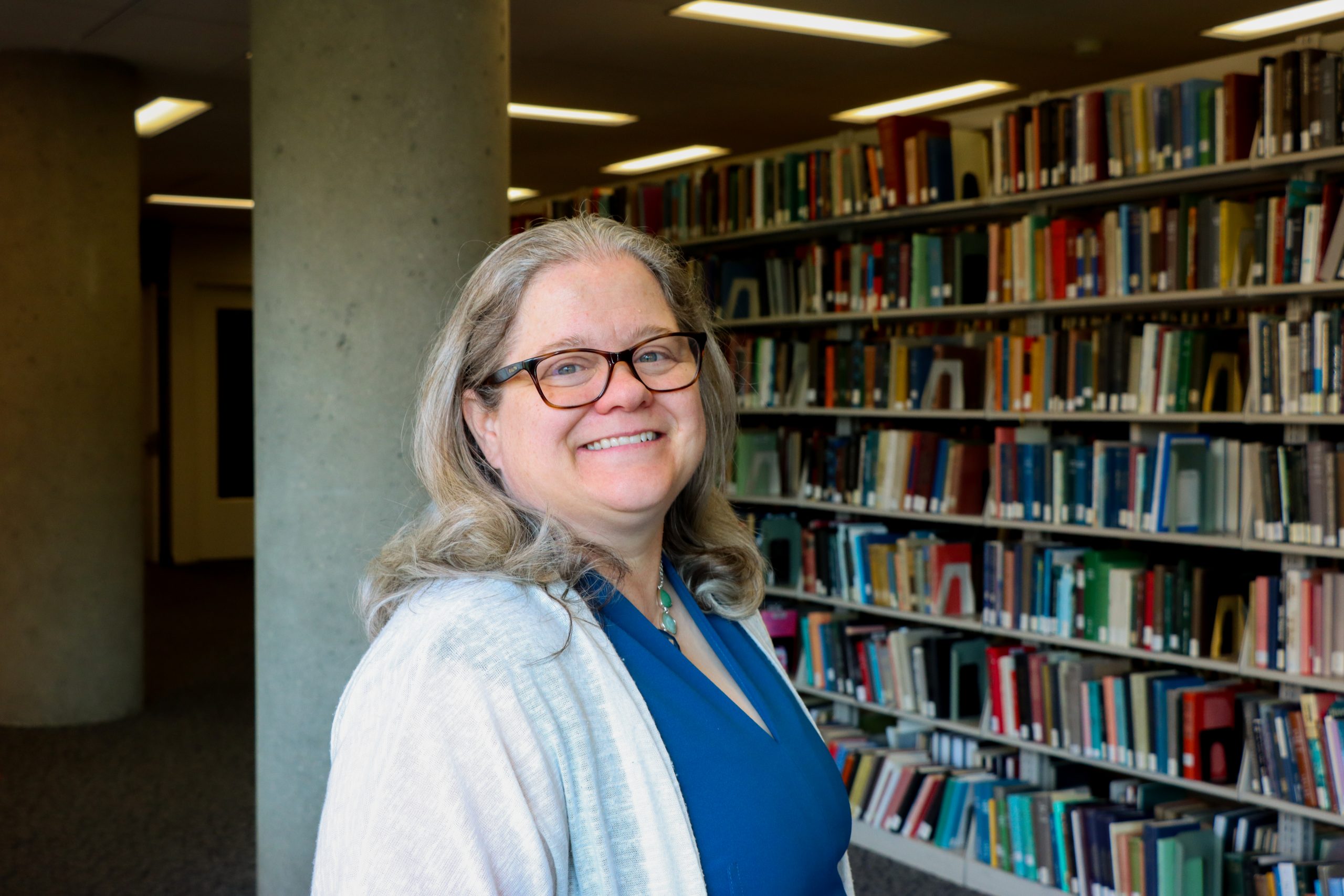
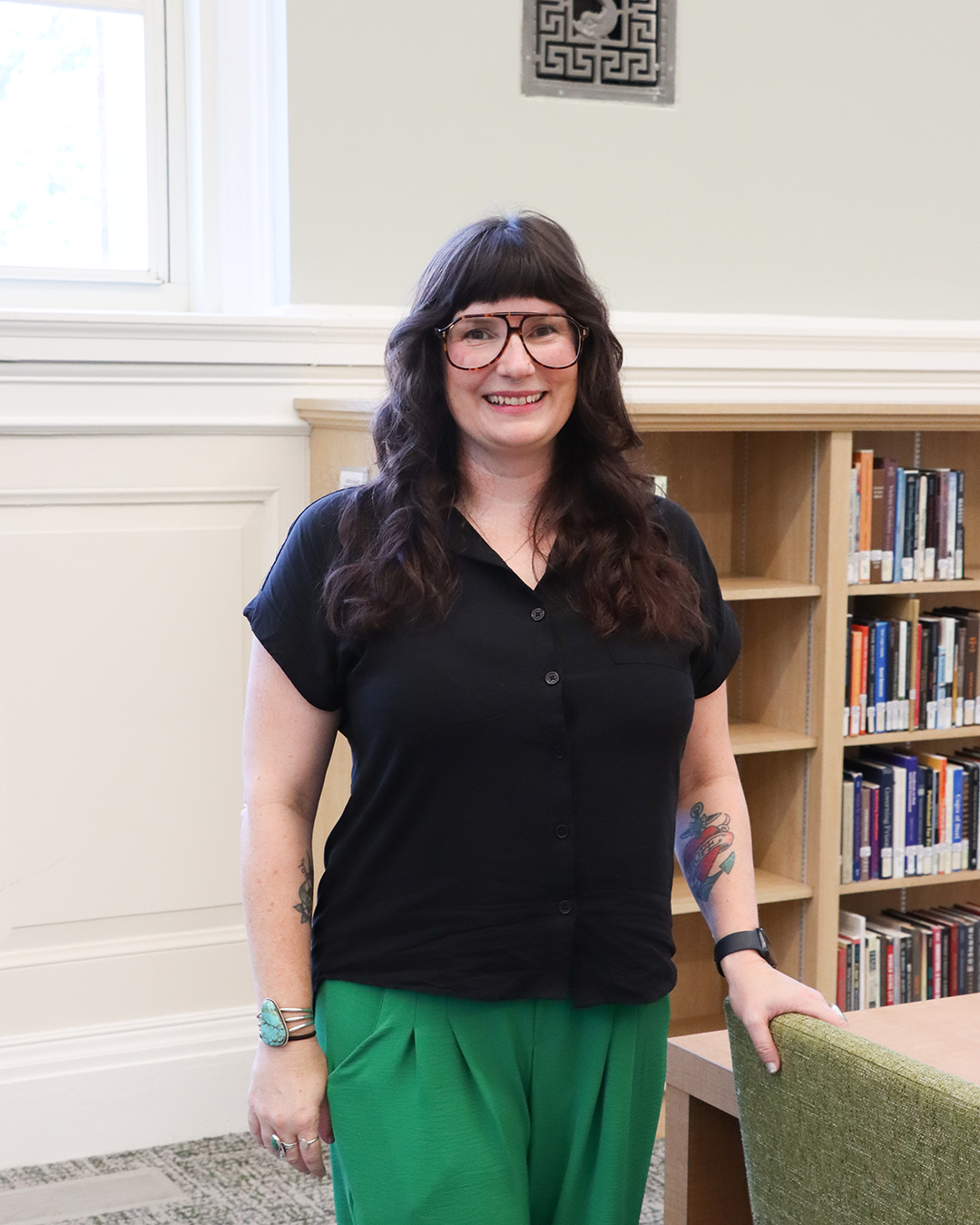
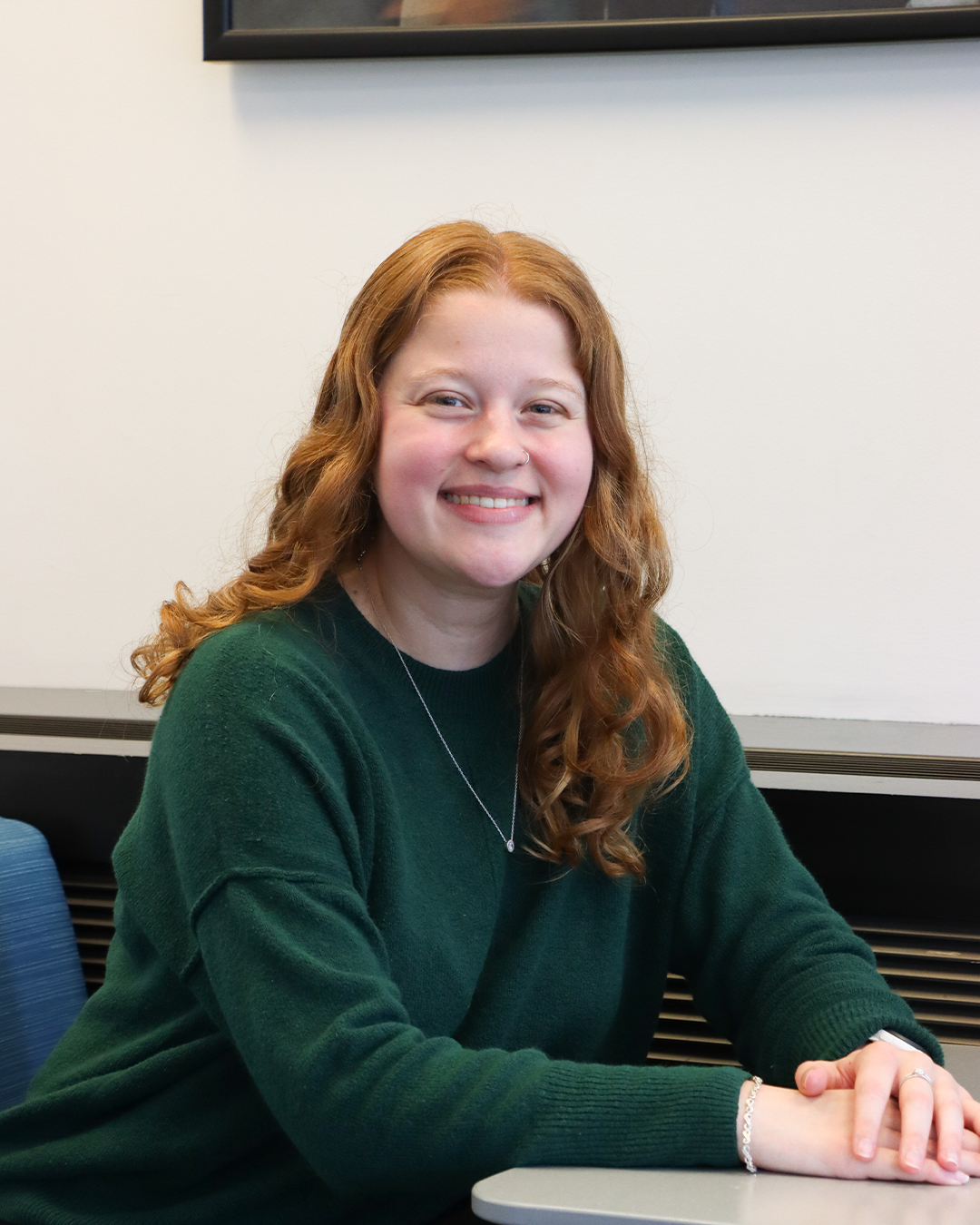
At the next event, scheduled for Wednesday, Feb. 18 at 4:30pm, three poets will read their original work:
Richard Hague is author or editor of 23 volumes, including, with Sherry Cook Stanforth and Michael Thompson, Tributaria: Poetry, Prose, & Art Inspired by Tributaries of the Ohio River Watershed, the poetry collection Continued Cases, and the essay collection Earnest Occupations: Teaching, Writing, Gardening, & Other Local Work. He was named Co-Poet of the Year in 1984 by the Ohio Poetry Association, received the Appalachian Poetry Book of the Year in 2003, and the Weatherford Award in Poetry in 2013. He has been a Pushcart Prize nominee in both poetry and nonfiction and has received several Individual Artist Fellowships in poetry and creative nonfiction from the Ohio Arts Council, and a Katherine Bakeless Scholarship in Creative Nonfiction to Bread Loaf. He is 2025-2027 Poet Laureate of Cincinnati & The Mercantile Library and was 2021-2022 President of the Literary Club of Cincinnati. He has taught writing in Cincinnati and elsewhere for 56 years.
Chelsea Whitton is the author of Bear Trap and Wonder Wheel, forthcoming in March of 2026. She holds a PhD from the University of Cincinnati and an MFA in Poetry from The New School. Her poetry and prose have appeared in many of print and online publications, including Beloit Poetry Journal, Copper Nickel, Cream City Review, Poetry Ireland, The Atlanta Review, and Forklift-Ohio. Her work has been a finalist for the Gearhart Prize and the Frost Place and Adrienne Richard awards for poetry. She is the recipient of the 2018 Sandy Crimmins National Poetry Prize. Since 2021 she has been a staff member for the Sewanee Writers’ Conference. Raised in North Carolina, she spent her twenties in New York, and now lives in Cincinnati with her husband, Matthew, their twin sons, and their cat, Dolly. She teaches creative writing and literature at the Art Academy of Cincinnati.
EmmaJohnson-Rivard is a doctoral student in creative writing at the University of Cincinnati. Her work has appeared in Strange Horizons, Tales to Terrify, Red Flag Poetry, and others. She can be found @blackcattales on Bluesky and at emmajohnson-rivard.com.
The University of Cincinnati Libraries will be closed Monday, Jan. 19 in observance of Martin Luther King, Jr. Day. The Libraries will resume normal hours on Tuesday, Jan. 20.
Martin Luther King, Jr., pictured with prominent Cincinnatian and gospel singer, Louise Shropshire. Courtesy of The Archives and Rare Books Library.
The UC Office of Research supported repository UCFigshare is now available for data deposits resulting from any Federal Funder. If you are funded by any of the 15 federal agencies such as NIH or NSF which have a data sharing requirement as part of the grant, you can contact the UCFigshare team and request access to deposit. The UCFigshare website provides instructions on how to request storage, upload datasets, and use the system. It also provides important budget considerations.
Research data sharing has been encouraged as a part of grant funding since the publication of the 2013 Holdren memorandum entitled “Expanding Public Access to the Results of Federally Funded Research”. The 2022 Nelson OSTP memorandum accelerated the timeline and included required sharing the article and the data supporting without embargo as soon as the grant period ends. Under the recent May 2025 executive order entitled Restoring Gold Standard Science, this is still the case that federally funded research data needs to be shared per the agency policy (1). It is now required to indicate the repository where you will share the data as part of the data management and sharing plan (DMSP).
Agencies with Updated Policies Published but not yet in Effect
ACF | ACL | Census | CMS | CPSC
Even if your research is not funded by a federal agency, sharing research data can benefit a researcher greatly. Research data sharing accelerates research discovery, facilitates research reproducibility, helps identify issues with the data, and increases research impact. Sharing the data and other research outputs such as registrations, protocols, code, and preprints helps the next generation of researchers better understand and reuse the outputs. Data sharing comes with the cost of extra time invested to create good documentation and uploading the data and other project associated research outputs to the designated repository. Planning from the start of any project can help ease this additional labor. These planning steps are also part of writing the DMSP accompanying a grant application. Some recommended steps (2) are:
Identify a data repository as early as possible for the informed consent forms and to specify in the DMSP
Establish a file naming convention and organization
Include file-level Information
Keep track of sensitive information
Keep memos about analytic decisions
Create a “data narrative” and a readme file
Prepare your data for sharing
Make a human readable form and a raw / machine readable form
(1) Badger, K., Biszaha, A. Sadvari, S., and Walsh, M., 2025 Federal Sponsor Updates to Article and Data Sharing [Webinar]. Ohio State University Library. 12-11-2025. Personal communication.
(2) Karcher, Sebastian; Kirilova, Dessi; and Page, Christiane, “Sharing and Managing Qualitative Data” (2019). Moynihan Institute of Global Affairs. 2. https://surface.syr.edu/miga/2
Due to inclement weather, University of Cincinnati campuses are closed from 6 a.m. to 10 a.m. Friday, Dec. 12, 2025. Visit Commencement and Registrar’s pages for additional details. This closure applies to all UC Libraries locations except for the Donald C. Harrison Health Sciences Library, which will be open at 7:45 a.m.
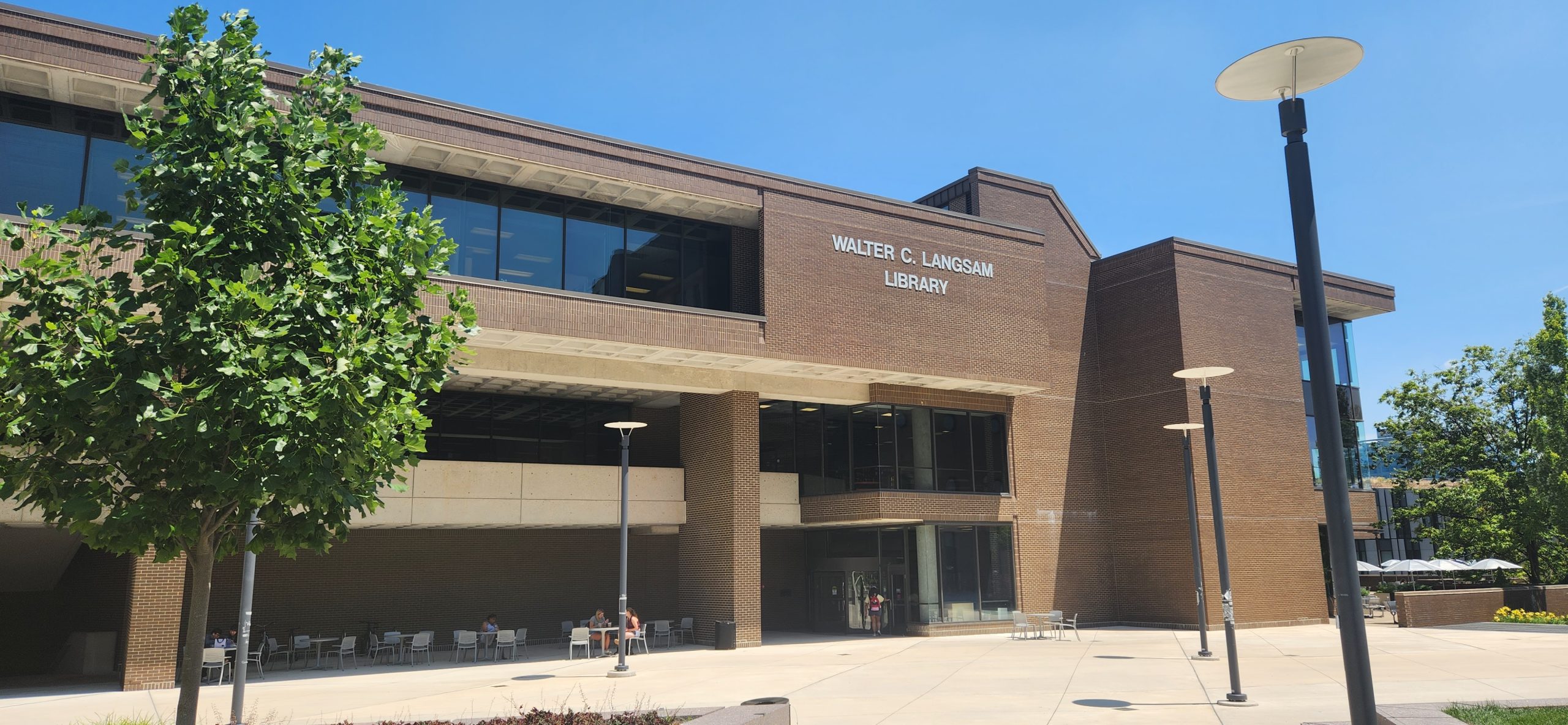
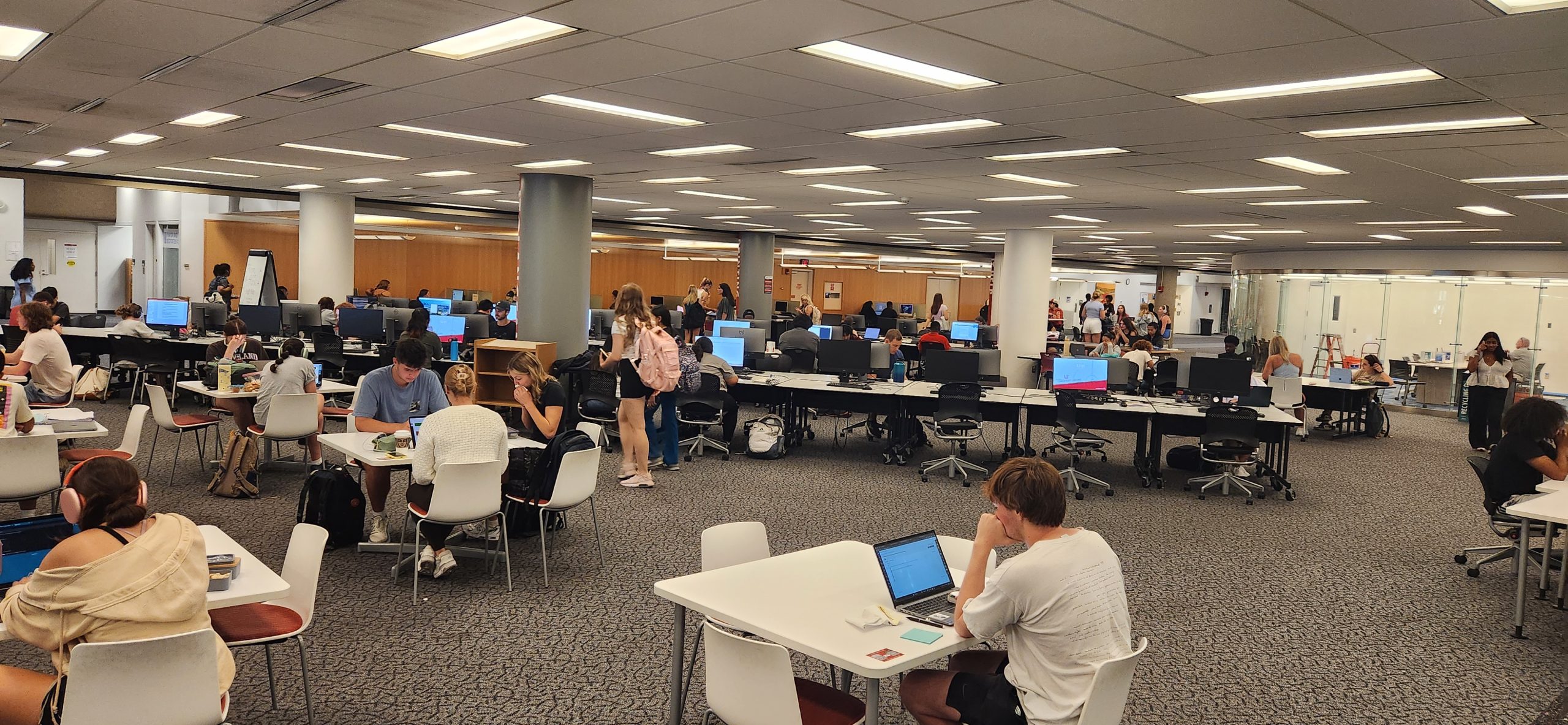
Need a place to study for exams? Working late on a class project? The Walter C. Langsam Library has extended building hours now through exams. Sunday – Thursday, the building is open until 3am. The Desk@Langsam will maintain regular hours. The Exam hours are listed on the Libraries website.
Due to inclement weather, the University of Cincinnati campus will close from 7 a.m. Dec. 2, 2025, until 7 a.m. on Dec. 3, 2025. This closure applies to all UC Libraries locations except for the Donald C. Harrison Health Sciences Library, which will be open Tuesday, Dec. 2 from 7:45 a.m. to 4 p.m.
As I’m writing this, it is my one-year anniversary as UC Libraries’ digital content specialist. Or, as I like to say, “social media girl.” It has been a year full of learning, collaboration and new experiences. One of those experiences being a trip to the great city of St. Louis, Missouri, to attend the 2025 Library Marketing and Communications Conference with my Comm Team partner, Melissa Cox Norris. This was not only my first conference as a UC Libraries staff member, but also my first conference as a working professional.
Throughout the two-day conference, we attended sessions covering topics such as how to build an engaging library program, maximizing the features of Canva, creating accessible graphic design materials and even finding the most efficient ways to measure the success and reach of social media content. Some of my favorite takeaways were:
A storyboarding template for creating engaging and organized reels and short videos
A point system for auditing and calculating the success of social media posts
Key functions and shortcuts for creating specific effects in Canva
Shared experiences from other library marketers on how they create captivating events for patrons that highlight the purpose of the libraries while still simply being fun
We also had the chance to hear from some amazing keynote speakers. Scott Bonner, Director of Ferguson Municipal Public Library District, spoke about the library’s service to the people of Ferguson following the killing of Mike Brown in August 2014. He went into detail about how the library was able to provide safe spaces, as well as places for teachers to have class time while school was out of session due to riots. It was an incredibly real and insightful perspective on how libraries, and really any kind of public service, can make a difference during a crisis.
On a non-conference related note, I had the chance to enjoy some St. Louis staples, including a Blues game (they beat Calgary 3-2), Imo’s pizza and toasted ravioli and Charlie Gitto’s Restaurant on the Hill. And of course, I can’t forget about The Gateway Arch. Thanks to Melissa for all the fun suggestions! It was a great first conference experience, and I am so excited to visit St. Louis again in the future.