Know of a good book to eat?! Create an Edible Book for UC Libraries International Edible Books Festival!
Dragons Love Tacos. Edible book by Lexi Davis, 2025 Best Overall
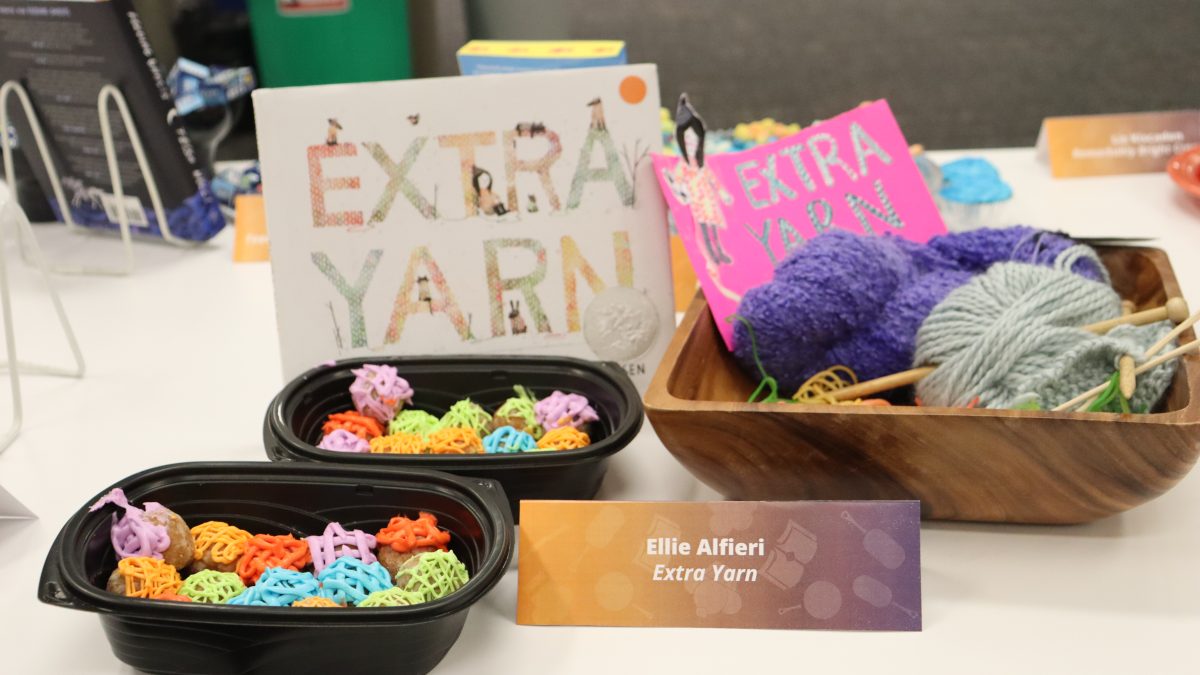
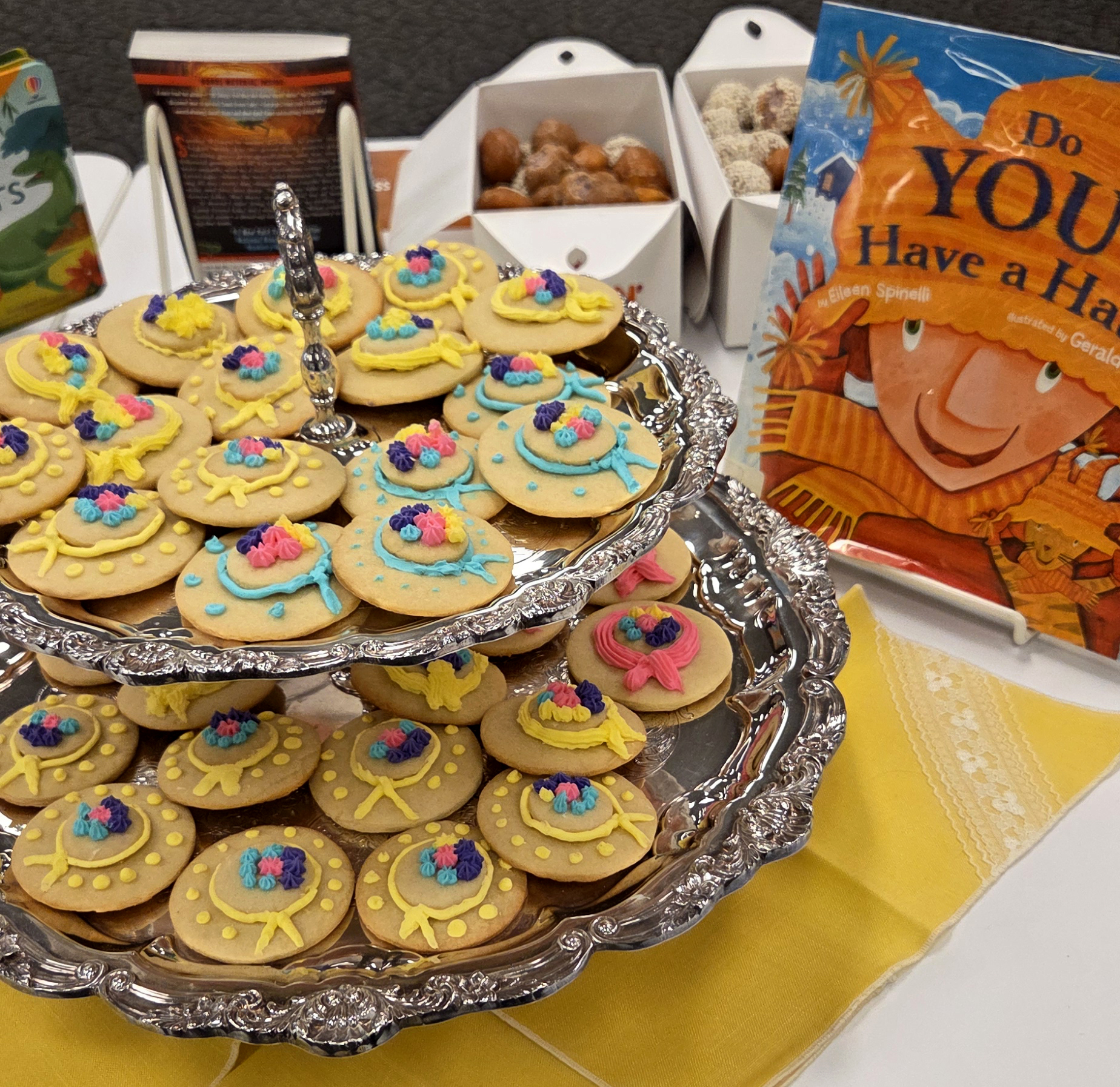
It’s time once again for the fan-favorite International Edible Books Festival scheduled for Wednesday, April 1, 2025, 11 a.m. on the 4th floor of the Walter C. Langsam Library. UC Libraries is seeking people interested in creating an edible book for the enjoyment of all in attendance. There are few restrictions – namely that your creation be edible and have something to do with a book – so you may let your creativity run wild.
As in previous years, entries will be judged according to such categories as “Most Delicious,” “Most Creative,” “Most Checked Out” and “Most Literary.” Those awarded “Best Student Entry” and “Best Overall” will win UC swag.
Looking for inspiration? View images from last year’s Edible Books on the Libraries Facebook page.
Interested in creating an Edible Book? Complete the entry formby Wednesday, March 25.
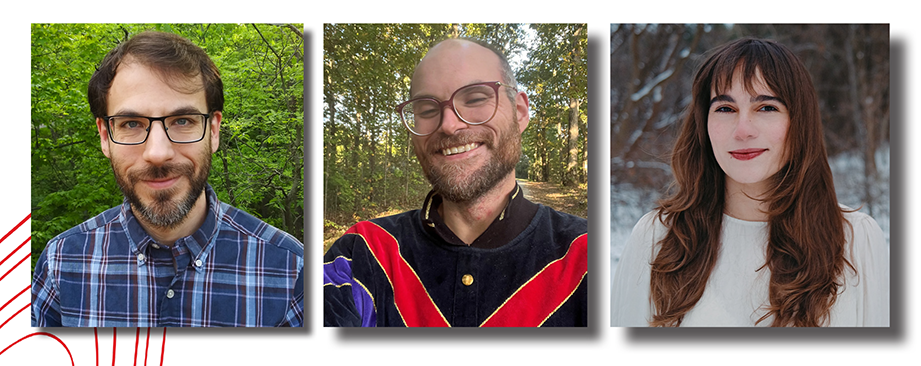
At the next event, scheduled for Wednesday, March 11 at 4pm, three poets will read their original work:
Dr. Taylor Byas, Ph.D. is a Black Chicago native currently living in Cincinnati, Ohio. Her debut full-length, I Done Clicked My Heels Three Times from Soft Skull Press, won the 2023 Maya Angelou Book Award, the 2023 Chicago Review of Books Award in Poetry and the 2024 Ohioana Book Award in Poetry. Her second full-length, Resting Bitch Face (2025), was a September pick for Roxane Gay’s Audacious Book Club. She is represented by Noah Grey Rosenzweig at Triangle House Literary.
Jim Palmarini has been facilitating and participating in public poetry readings for more than 40 years. He currently hosts the Word of Mouth Cincinnati series, now in its 12th year, at Over the Rhine’s MOTR Pub. His work has appeared in numerous journals, online and in print, including Shellys, ClayDrum, Jawbone and For a Better World. His narrative poem, “Welcome to the Reading”, was included in the Fall, 2023 edition of The Cincinnati Review.
Luca Campagnoli is a fourth-year fiction writer and poet majoring in creative writing at the University of Cincinnati. His work is forthcoming or has appeared in Solid State, Mr. Bull and Short Vine Journal. He serves as president of the university’s Writer’s Circle and Poetry Collective. He also works at Household Books, an independent bookstore in Cincinnati.
Read these articles, as well as past issues, on the website. To receive Source via e-mail, contact melissa.norris@uc.edu to be added to the mailing list.
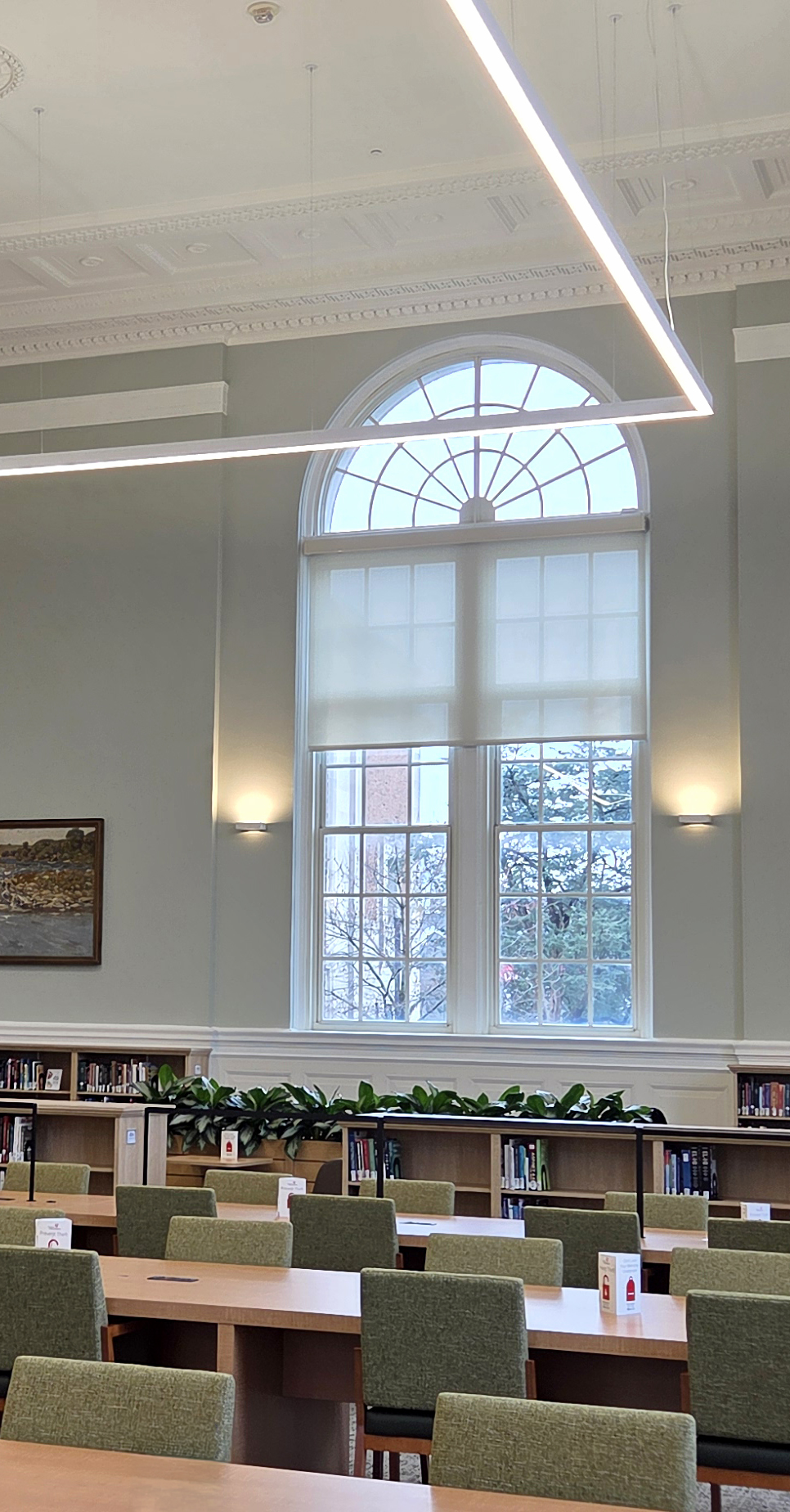
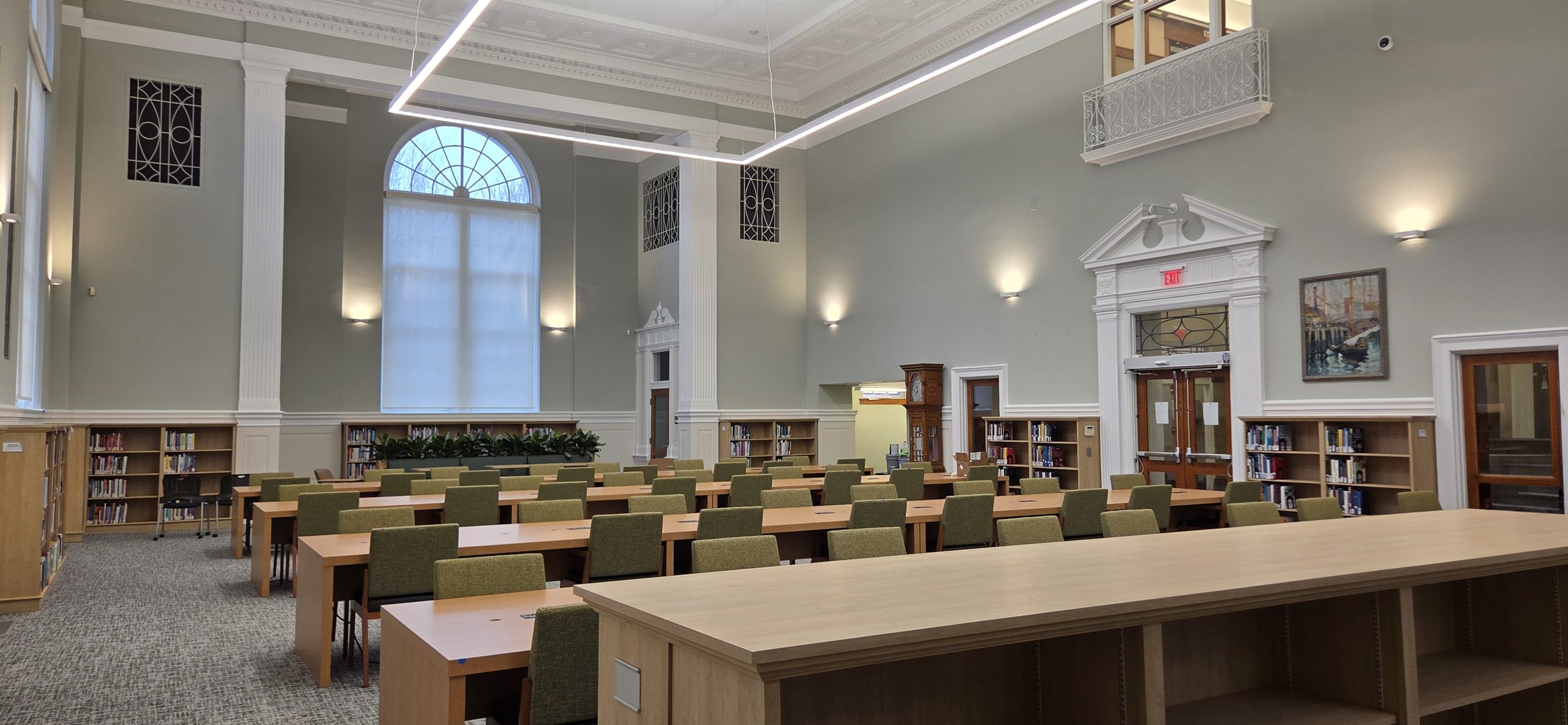
During the summer and fall semesters of 2025, a significant university investment fueled the vibrant formation of a combined Science Library in Braunstein Hall. This thoughtfully transformed space creates a united hub of services, spaces, technology and specialized collections dedicated to supporting the teaching and research needs of the Natural Sciences departments within the College of Arts & Sciences. Although its collections focus on the sciences, the Science Library invites ALL to come and enjoy and make use of the revitalized space in the heart of UC’s campus.
Celebrate Our Grand Opening! We invite you to join us on Monday, February 16 from 2:00-4:00pm for the Science Library’s Grand Opening Reception! Enjoy refreshments, learn about our new spaces and services, be inspired by our special collections displays, explore science through demonstrations and more!
The Science Library boasts a new service desk, new carpeting, expanded and improved lighting, updated stair treads and a remarkable selection of contemporary furniture. Seating capacity has greatly increased, and over 230 seats are available for individual study, computing, group collaboration and a wide range of special events. The interior design – highlighted by innovative fabrics and wall graphics – draws inspiration from scientific disciplines and the natural world, including works by Cincinnati-based artist Charley Harper. A soothing palette of blues and greens invites students and other visitors alike to experience focus and tranquility.
I recently had the unique opportunity to visit my child’s classroom on Career Day to talk about academic librarianship. The audience was a pod of nearly 100 third and fourth graders, and I had 15 minutes to make an impression.
To start, I shared a short time-lapse video of our library building, highlighting collaborative spaces, art installations, and our massive stacks. The kids seemed genuinely engaged. I talked about student employment opportunities in university libraries, which caught the attention of a few of the fourth-grade girls. From there, I moved into an age-appropriate lesson on information literacy—how to recognize fake information in (my son’s favorite) YouTube videos and across the internet more broadly.
I introduced Special Collections and explained just how old some of our materials are, hundreds of years old, in fact, which managed to impress even the hardest-to-impress third and fourth graders. My one misstep was mentioning the artist of our very cool Tricercopter: The Hope for the Obsolescence of War sculpture, requested that their ashes be placed inside the piece after their death. I immediately knew I’d gone too far when a student raised their hand to ask, “What are ashes?”
In all honesty, this was a challenging presentation. Academic librarianship is incredibly broad; how do you choose what to share when your goal is to inspire future librarians? With the rapid introduction of new technologies like artificial intelligence, our work is becoming even more critical. We’re facing yet another overwhelming flood of information and are tasked with understanding how it’s created, building ethical and moral guardrails for its use, and, of course, identifying what’s fake. If current trends are any indication, we are going to be drowning in AI-generated content very soon, if we aren’t already.
This is core librarian work. We have been organizing, evaluating, and understanding information since the dawn of recorded knowledge. To keep up, we must continually adapt our foundational frameworks to meet challenges we haven’t yet experienced or even imagined.
This is an exciting, and some might say transformational, time for librarianship and higher education. I hope I was able to convey that excitement to those bright third and fourth graders, because we’re going to need their help.
At the next event, scheduled for Wednesday, Feb. 18 at 4:30pm, three poets will read their original work:
Richard Hague is author or editor of 23 volumes, including, with Sherry Cook Stanforth and Michael Thompson, Tributaria: Poetry, Prose, & Art Inspired by Tributaries of the Ohio River Watershed, the poetry collection Continued Cases, and the essay collection Earnest Occupations: Teaching, Writing, Gardening, & Other Local Work. He was named Co-Poet of the Year in 1984 by the Ohio Poetry Association, received the Appalachian Poetry Book of the Year in 2003, and the Weatherford Award in Poetry in 2013. He has been a Pushcart Prize nominee in both poetry and nonfiction and has received several Individual Artist Fellowships in poetry and creative nonfiction from the Ohio Arts Council, and a Katherine Bakeless Scholarship in Creative Nonfiction to Bread Loaf. He is 2025-2027 Poet Laureate of Cincinnati & The Mercantile Library and was 2021-2022 President of the Literary Club of Cincinnati. He has taught writing in Cincinnati and elsewhere for 56 years.
Chelsea Whitton is the author of Bear Trap and Wonder Wheel, forthcoming in March of 2026. She holds a PhD from the University of Cincinnati and an MFA in Poetry from The New School. Her poetry and prose have appeared in many of print and online publications, including Beloit Poetry Journal, Copper Nickel, Cream City Review, Poetry Ireland, The Atlanta Review, and Forklift-Ohio. Her work has been a finalist for the Gearhart Prize and the Frost Place and Adrienne Richard awards for poetry. She is the recipient of the 2018 Sandy Crimmins National Poetry Prize. Since 2021 she has been a staff member for the Sewanee Writers’ Conference. Raised in North Carolina, she spent her twenties in New York, and now lives in Cincinnati with her husband, Matthew, their twin sons, and their cat, Dolly. She teaches creative writing and literature at the Art Academy of Cincinnati.
EmmaJohnson-Rivard is a doctoral student in creative writing at the University of Cincinnati. Her work has appeared in Strange Horizons, Tales to Terrify, Red Flag Poetry, and others. She can be found @blackcattales on Bluesky and at emmajohnson-rivard.com.
On a cold, snowy Friday at the end of the semester,The Preservation Lab hosted a 3D imaging workshop where two professors from UC’s College of Design, Architecture, Art & Planning (DAAP) taught 3D imaging techniques to a small group of imaging colleagues from Ohio and Michigan labs.
The instructors, Jordan Tate and John-David Richardson, both teach photography in DAAP. Previously, Jordan cross-collaborated with Jessica Ebert from the Preservation Lab on imaging the Assyrian Cornerstone, found in the collection of the Archives and Rare Books Library. Jordan demonstrated 3D imaging techniques and Jessica demonstrated how to do Reflectance Transformation Imaging (RTI).
Participants in the Friday, Dec.12th workshop were:
Erin Wilson – Ohio University Libraries, Preservation & Digital Initiatives
Matt Carissimi – The Ohio State University Libraries, Digitization
Sidney Gao – UC Libraries, Digital Initiatives Team
Biz Gallo – Library of Michigan, Digitization Initiatives
Dustin Wood – New South Associates/Veterans Affairs History Office (Dayton), Digital Archives & Museum Imaging Specialist
The object photographed came from the Henry R. Winkler Center for the History of the Health Professions.
The Yoruba, Luba or Luluwa/Lulua Statue (circa 1800—1900) was presented by “the Interns & Residents Wives Club, 1974” to the University of Cincinnati Hospital. The statue’s distinct shapes and facial features match most closely to the sculpture style of the Yoruba, Luba or Luluwa/Lulua. The figure appears to be working with a mortar and pestle, and was made for sale, rather than ceremonial or cultural use.
The Preservation Lab provides the full suite of preservation services to the University of Cincinnati Libraries. The Lab’s expertise is in book and paper conservation, with services available in general circulating materials repair, single-item conservation treatment, housing, exhibition prep and preservation consulting.
The use of 3D imaging in preservation is crucial as it creates an accurate visual record of an object before and after treatment. It allows conservators to examine often fragile objects in close detail without touching, and possibly damaging, the structure. In addition, 3D imaging provides a visual record for students and researchers to view and study.
At the next event, scheduled for Wednesday, Nov. 19 at 4:30pm, three poets will read their original work:
Kim Jacobs-Beck is the author of Luminaries and a chapbook, Torch. Her poems can be seen in Museum of Americana, Great Lakes Review, West Trestle Review, Nixes Mate, Gyroscope, SWWIM, and Apple Valley Review, among other journals. She is the founder and editor-in-chief of Milk & Cake Press. Kim is professor of English at UC Clermont College.
Matt Hart is the author of 12 books of poetry, including most recently FALLING FINE: Selected & New Poems. His poems, reviews and essays have appeared or are forthcoming in numerous print and online journals, including American Poetry Review, Big Bell, The Kenyon Review and Poetry, among others. From 1993-2019, he was a co-founder and the editor-in-chief of Forklift, Ohio: A Journal of Poetry, Cooking, & Light Industrial Safety. Currently, he lives in Cincinnati where he plays in the post-punk/indie rock band NEVERNEW and edits, solders, and publishes the poetry journal SOLID STATE.
Bella Gordo is a creative writing student at UC, where she is an intern for Short Vine Literary Journal and the vice president of Cincinnati Poetry Collective. She edits the zine Cincinnati Girlfriend with her roommate in hopes to spread awareness of the revolutionary potential of bug life in the Queen City.
In addition to reading their poetry, each poet will speak briefly on their experience as an editor.
Two new exhibits have been installed in the Walter C. Langsam Library.
On display on the 4th floor lobby, Bronson v. Board of Education: Cincinnati Desegregation Efforts in the 1960s and 1970s chronicles the work of project archivist Julianna Witt as she completed the archival processing of the National Association for the Advancement of Colored People’s, Bronson v. Board of Education of the City of Cincinnati records. This collection contains material related to the class-action lawsuit Bronson v. Board from 1974-1984 and consists of legal documents created for court submission and records that originated from the Cincinnati Board of Education. The collection itself, housed in the Archives and Rare Books (ARB) Library, provides a detailed history of race relations in Cincinnati. A finding aid is available for more information.
Last November, the University of Cincinnati Libraries announced the award of an Archives Grant from the National Historical Publications and Records Commission to ARB.
On display on the 5th floor lobby is an exhibit promoting The Libraries of UC. The exhibit includes images and descriptions of each of the nine University of Cincinnati Libraries, along with the fan-favorite Triceracopter. A map of the libraries is available for take away at the exhibit.
Both exhibits were designed by UC Libraries design co-op student Ashleigh Stout.
Join Poetry Stacked for the fall workshop: Masques & Personas, led by Kristyn Garza, Poetry Stacked alumna and PhD student in poetry at the University of Cincinnati.
Learn about persona poetry over spooky snacks. Come in a costume and compete to win fun prizes!
A semi-regular poetry reading series held in the 6th floor east stacks of the Walter C. Langsam Library, the mission of Poetry Stacked is to celebrate poetry and raise awareness of the collections of both UC Libraries and the Elliston Poetry Room.