Read these articles, as well as past issues, on the website. To receive Source via e-mail, contact melissa.norris@uc.edu to be added to the mailing list.
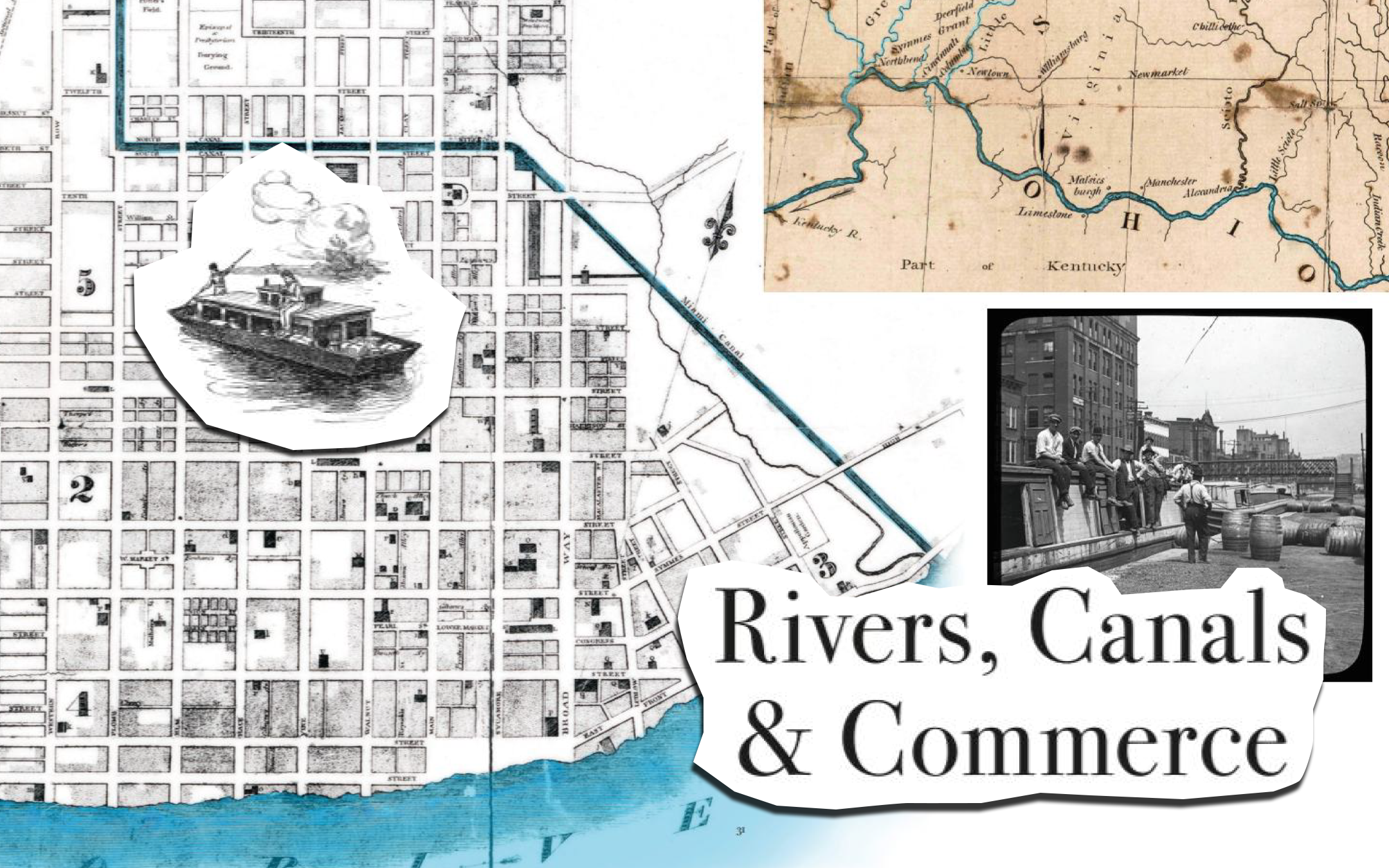
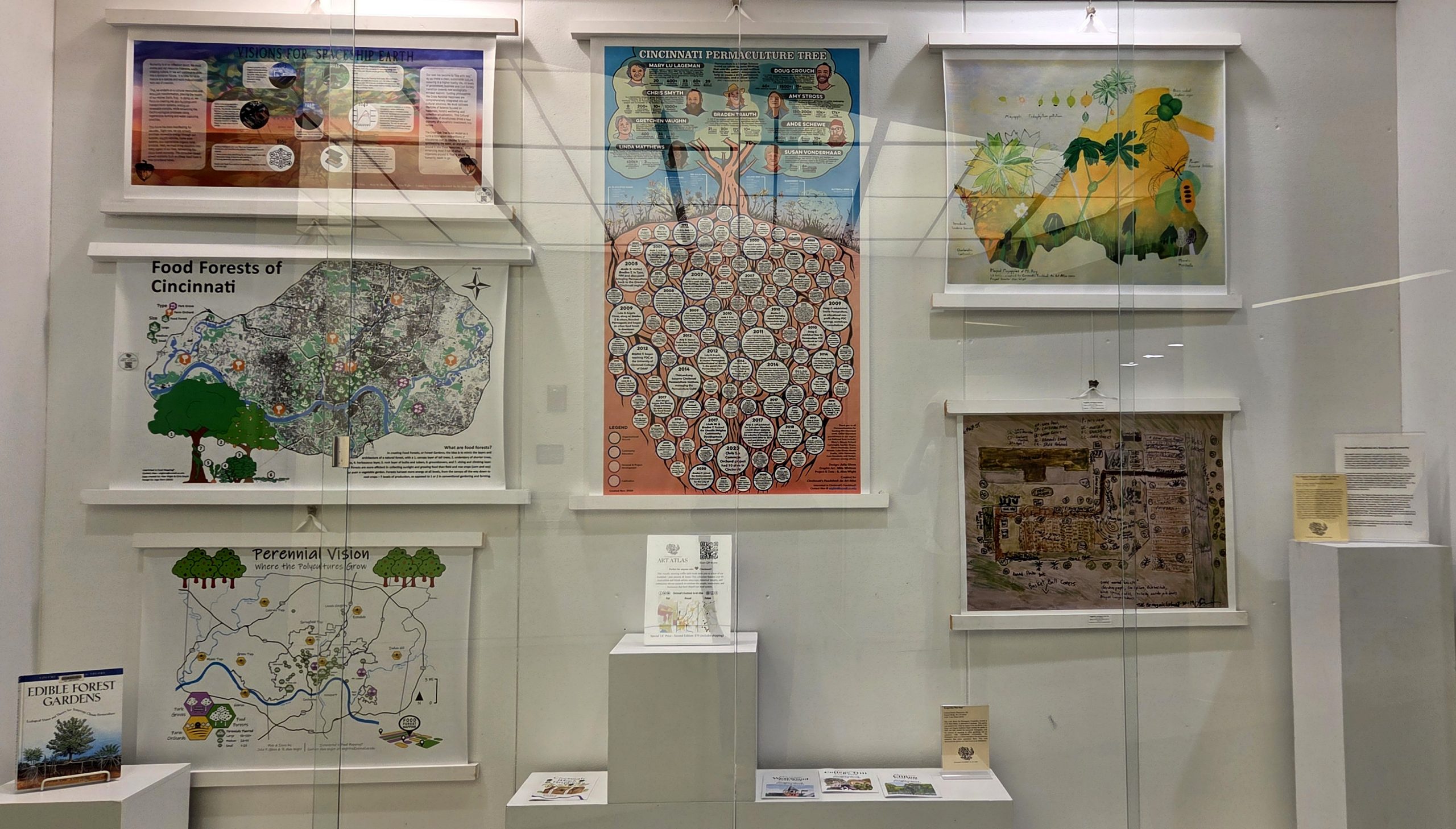
Two exhibits on display on the 4th and 5th floor lobbies of the Walter C. Langsam Library feature the work of Cincinnati’s Foodshed: An Art Atlas, a visually stunning and thought-provoking exploration through the past, present and future of the Cincinnati Tristate region’s food economy. The exhibit features timelines and storymaps to celebrate the people, innovations and businesses that have shaped the local food movement.
Food mapping is one way to analyze data and share stories of how the physical environment intersects with the lived experience of food access. The exhibit displays maps created in partnership with neighborhood associations and by walking the area.
The exhibit promotes the availability of UC Libraries Research & Data Services – informationists and librarians that can assist researchers in managing and preserving research data, finding and acquiring external data, and in utilizing GIS techniques and software. People wanting to create their own map or work with spatial data and need assistance, can work with GIS research consultants available to help.
A bibliography of related UC Libraries resources is available for takeout at the exhibit for people who want to learn more about the topics covered in the exhibit.
Cincinnati’s Foodshed: An Art Atlas was written by Alan Wight, PhD. The exhibit was curated by Alan Wight and Amy Koshoffer, assistant director of RDS. It was designed by Reece Guthier, communication design co-op student.
The Langsam exhibits correspond with a similar exhibit on display in the Karl J. Schlachter and Robert A. Deshon Library for Design, Architecture, Art and Planning (DAAP). Cincinnati’s Foodshed: Art, Ecology and Community features a selection of works from the book. The exhibit is on display at the entrance to the library.
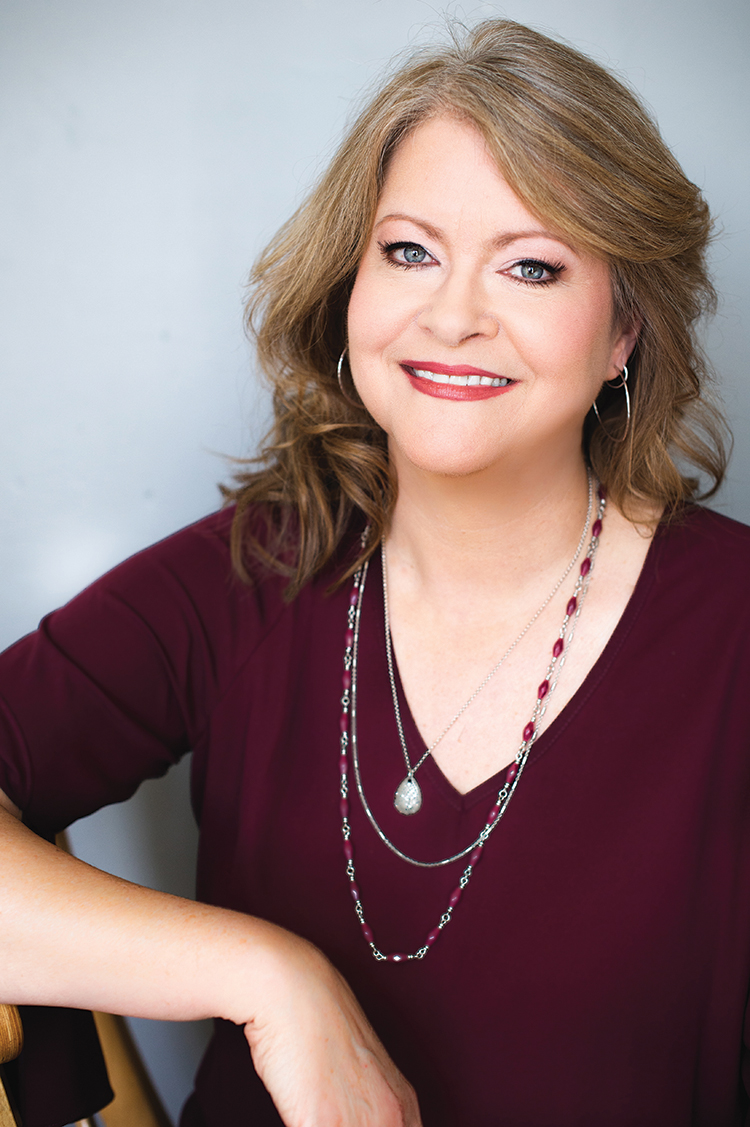
At the next event, scheduled for Wednesday, April 8 at 4:30pm, Amy Lemmon, UC alumna along with five undergraduate student poets: Madison Crock, Grace Harsh, Nate Murphy, Iris Rokvić and Madeline Schrand.
Amy Lemmon is the author of the poetry collections Saint Nobody (Red Hen Press) and The Miracles (C&R Press) and coauthor, with Denise Duhamel, of the chapbooks ABBA: The Poems (Coconut Books) and Enjoy Hot or Iced: Poems in Conversation and a Conversation (Slapering Hol Press, 2011). Her poems and essays have appeared in The Best American Poetry, Rolling Stone,Prairie Schooner, The Hopkins Review, The Cincinnati Review, The Journal, Marginalia, and many other magazines and anthologies. Recipient of fellowships from the Constance Saltonstall Foundation, Sewanee Writers’ Workshop, and Antioch Writers’ Workshop, Amy is Professor of English at the Fashion Institute of Technology-SUNY, where she teaches writing, literature, and creativity studies. She has performed her poetry widely including the KGB Bar-Lit series, the Montevallo Literary Festival, and the New York Public Library. She lives in Astoria, Queens.
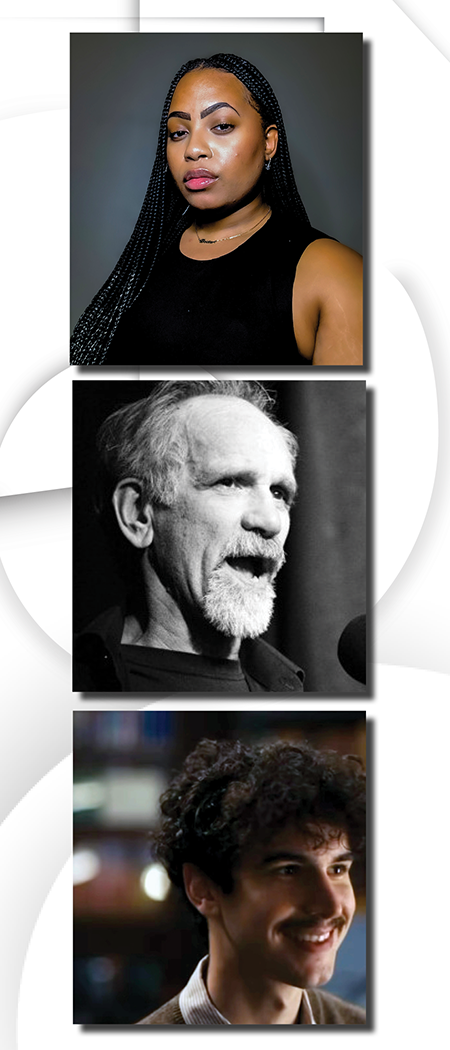
At the next event, scheduled for Wednesday, March 11 at 4pm, three poets will read their original work:
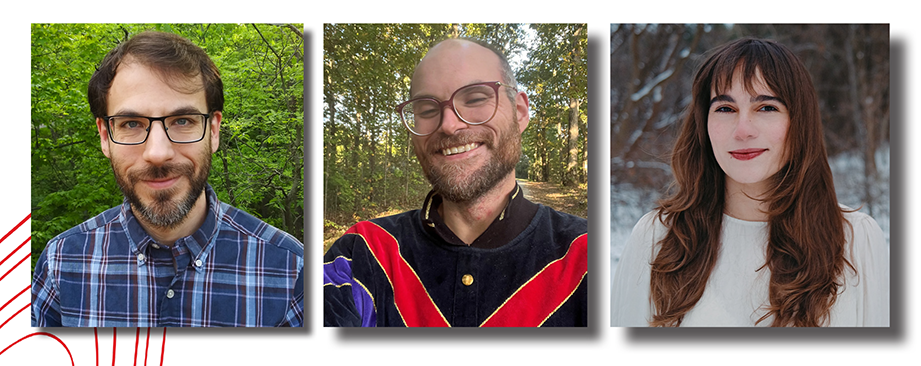
Dr. Taylor Byas, Ph.D. is a Black Chicago native currently living in Cincinnati, Ohio. Her debut full-length, I Done Clicked My Heels Three Times from Soft Skull Press, won the 2023 Maya Angelou Book Award, the 2023 Chicago Review of Books Award in Poetry and the 2024 Ohioana Book Award in Poetry. Her second full-length, Resting Bitch Face (2025), was a September pick for Roxane Gay’s Audacious Book Club. She is represented by Noah Grey Rosenzweig at Triangle House Literary.
Jim Palmarini has been facilitating and participating in public poetry readings for more than 40 years. He currently hosts the Word of Mouth Cincinnati series, now in its 12th year, at Over the Rhine’s MOTR Pub. His work has appeared in numerous journals, online and in print, including Shellys, ClayDrum, Jawbone and For a Better World. His narrative poem, “Welcome to the Reading”, was included in the Fall, 2023 edition of The Cincinnati Review.
Luca Campagnoli is a fourth-year fiction writer and poet majoring in creative writing at the University of Cincinnati. His work is forthcoming or has appeared in Solid State, Mr. Bull and Short Vine Journal. He serves as president of the university’s Writer’s Circle and Poetry Collective. He also works at Household Books, an independent bookstore in Cincinnati.
Read these articles, as well as past issues, on the website. To receive Source via e-mail, contact melissa.norris@uc.edu to be added to the mailing list.
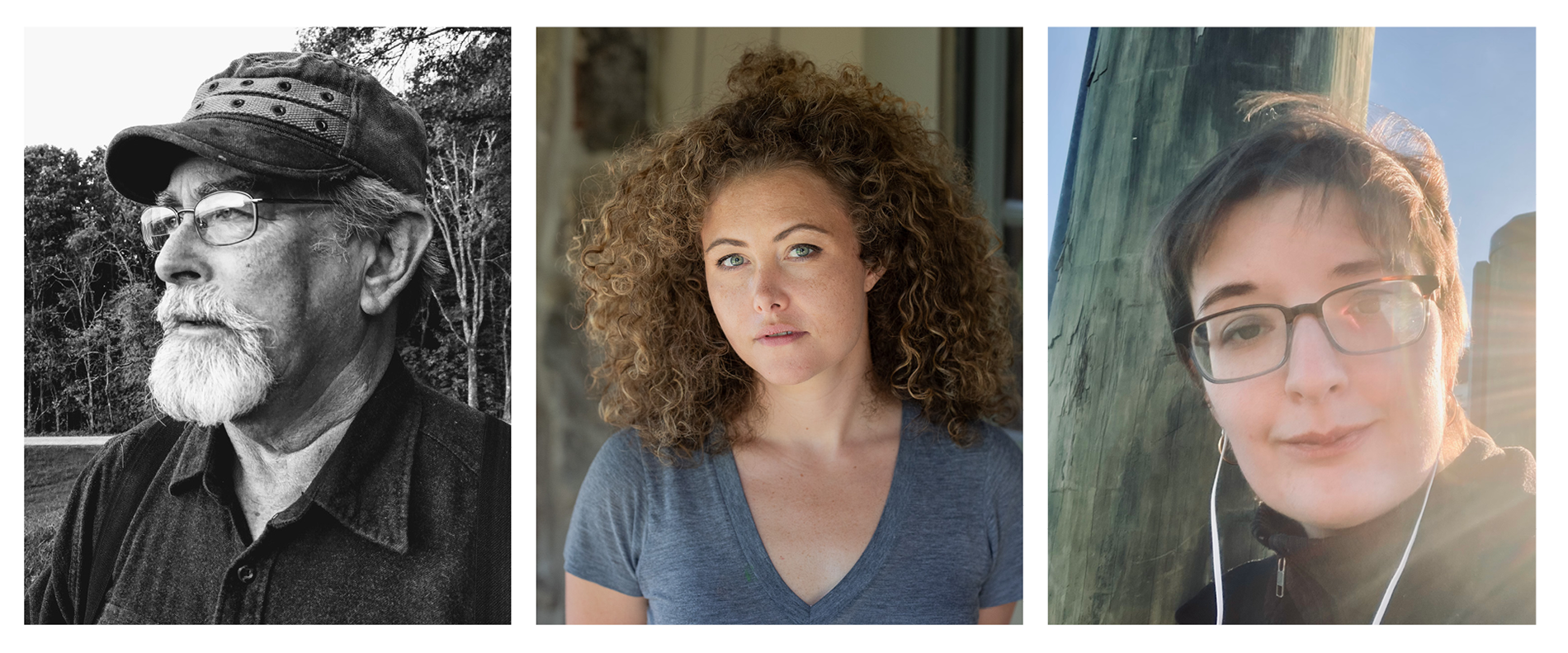
At the next event, scheduled for Wednesday, Feb. 18 at 4:30pm, three poets will read their original work:
Richard Hague is author or editor of 23 volumes, including, with Sherry Cook Stanforth and Michael Thompson, Tributaria: Poetry, Prose, & Art Inspired by Tributaries of the Ohio River Watershed, the poetry collection Continued Cases, and the essay collection Earnest Occupations: Teaching, Writing, Gardening, & Other Local Work. He was named Co-Poet of the Year in 1984 by the Ohio Poetry Association, received the Appalachian Poetry Book of the Year in 2003, and the Weatherford Award in Poetry in 2013. He has been a Pushcart Prize nominee in both poetry and nonfiction and has received several Individual Artist Fellowships in poetry and creative nonfiction from the Ohio Arts Council, and a Katherine Bakeless Scholarship in Creative Nonfiction to Bread Loaf. He is 2025-2027 Poet Laureate of Cincinnati & The Mercantile Library and was 2021-2022 President of the Literary Club of Cincinnati. He has taught writing in Cincinnati and elsewhere for 56 years.
Chelsea Whitton is the author of Bear Trap and Wonder Wheel, forthcoming in March of 2026. She holds a PhD from the University of Cincinnati and an MFA in Poetry from The New School. Her poetry and prose have appeared in many of print and online publications, including Beloit Poetry Journal, Copper Nickel, Cream City Review, Poetry Ireland, The Atlanta Review, and Forklift-Ohio. Her work has been a finalist for the Gearhart Prize and the Frost Place and Adrienne Richard awards for poetry. She is the recipient of the 2018 Sandy Crimmins National Poetry Prize. Since 2021 she has been a staff member for the Sewanee Writers’ Conference. Raised in North Carolina, she spent her twenties in New York, and now lives in Cincinnati with her husband, Matthew, their twin sons, and their cat, Dolly. She teaches creative writing and literature at the Art Academy of Cincinnati.
EmmaJohnson-Rivard is a doctoral student in creative writing at the University of Cincinnati. Her work has appeared in Strange Horizons, Tales to Terrify, Red Flag Poetry, and others. She can be found @blackcattales on Bluesky and at emmajohnson-rivard.com.
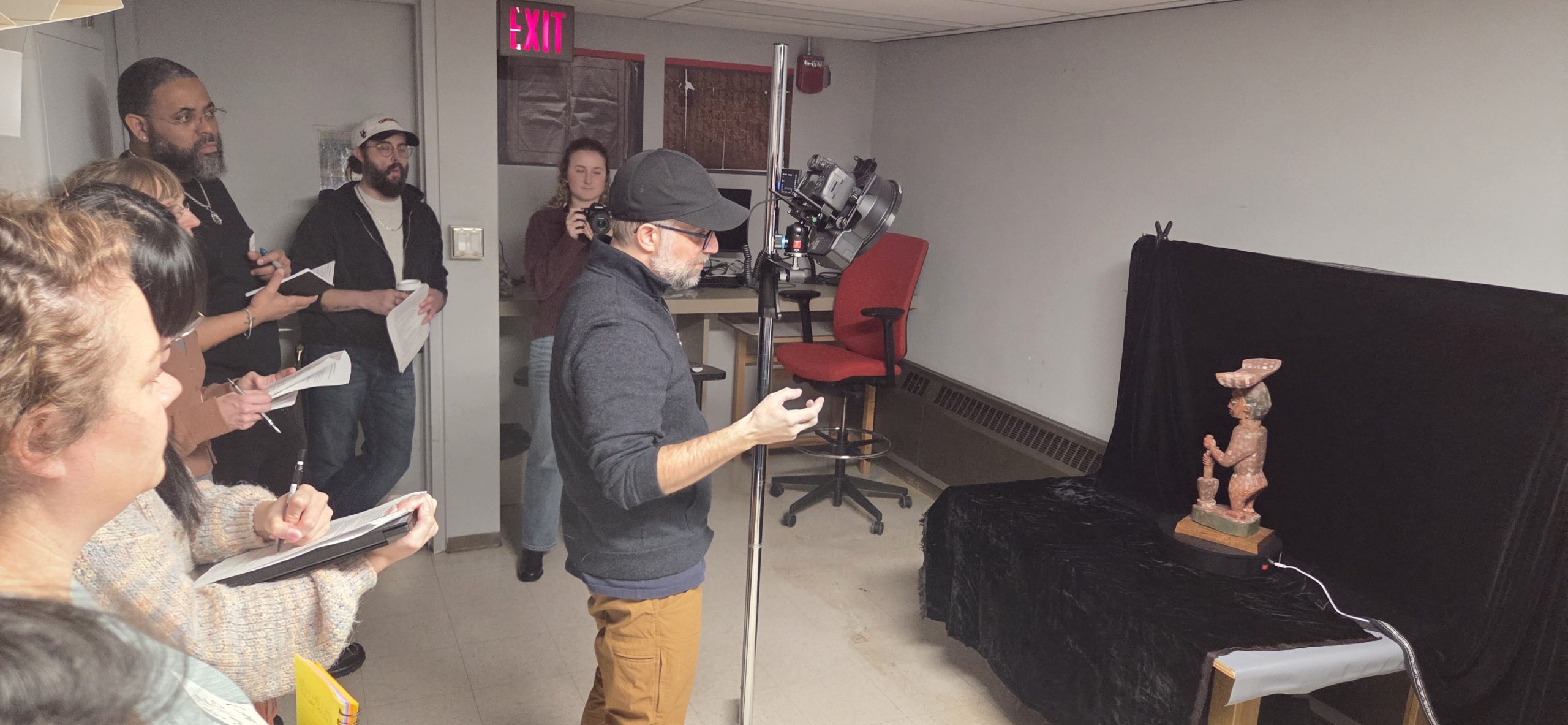
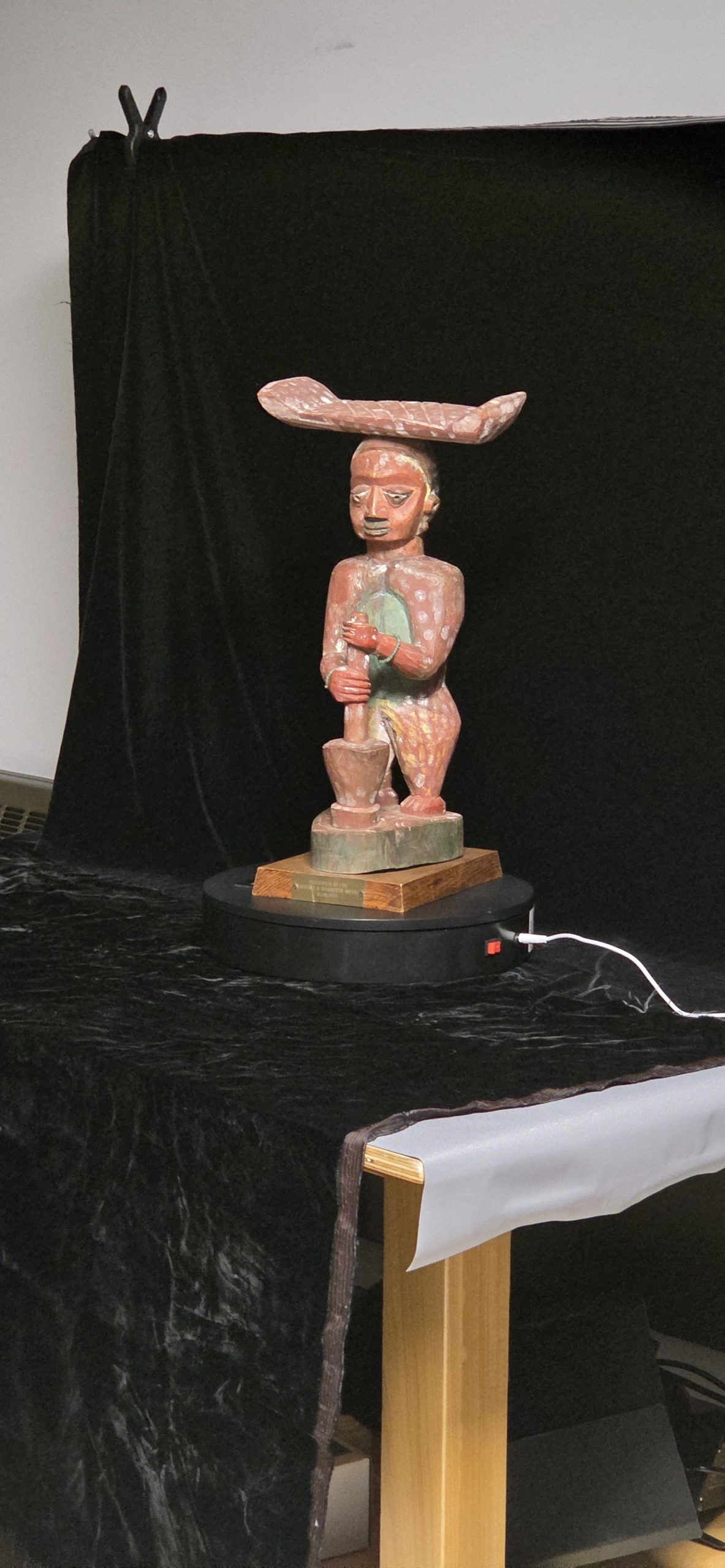
On a cold, snowy Friday at the end of the semester,The Preservation Lab hosted a 3D imaging workshop where two professors from UC’s College of Design, Architecture, Art & Planning (DAAP) taught 3D imaging techniques to a small group of imaging colleagues from Ohio and Michigan labs.
The instructors, Jordan Tate and John-David Richardson, both teach photography in DAAP. Previously, Jordan cross-collaborated with Jessica Ebert from the Preservation Lab on imaging the Assyrian Cornerstone, found in the collection of the Archives and Rare Books Library. Jordan demonstrated 3D imaging techniques and Jessica demonstrated how to do Reflectance Transformation Imaging (RTI).
Participants in the Friday, Dec.12th workshop were:
Erin Wilson – Ohio University Libraries, Preservation & Digital Initiatives
Matt Carissimi – The Ohio State University Libraries, Digitization
Sidney Gao – UC Libraries, Digital Initiatives Team
Biz Gallo – Library of Michigan, Digitization Initiatives
Dustin Wood – New South Associates/Veterans Affairs History Office (Dayton), Digital Archives & Museum Imaging Specialist
The object photographed came from the Henry R. Winkler Center for the History of the Health Professions.
The Yoruba, Luba or Luluwa/Lulua Statue (circa 1800—1900) was presented by “the Interns & Residents Wives Club, 1974” to the University of Cincinnati Hospital. The statue’s distinct shapes and facial features match most closely to the sculpture style of the Yoruba, Luba or Luluwa/Lulua. The figure appears to be working with a mortar and pestle, and was made for sale, rather than ceremonial or cultural use.
The Preservation Lab provides the full suite of preservation services to the University of Cincinnati Libraries. The Lab’s expertise is in book and paper conservation, with services available in general circulating materials repair, single-item conservation treatment, housing, exhibition prep and preservation consulting.
The use of 3D imaging in preservation is crucial as it creates an accurate visual record of an object before and after treatment. It allows conservators to examine often fragile objects in close detail without touching, and possibly damaging, the structure. In addition, 3D imaging provides a visual record for students and researchers to view and study.
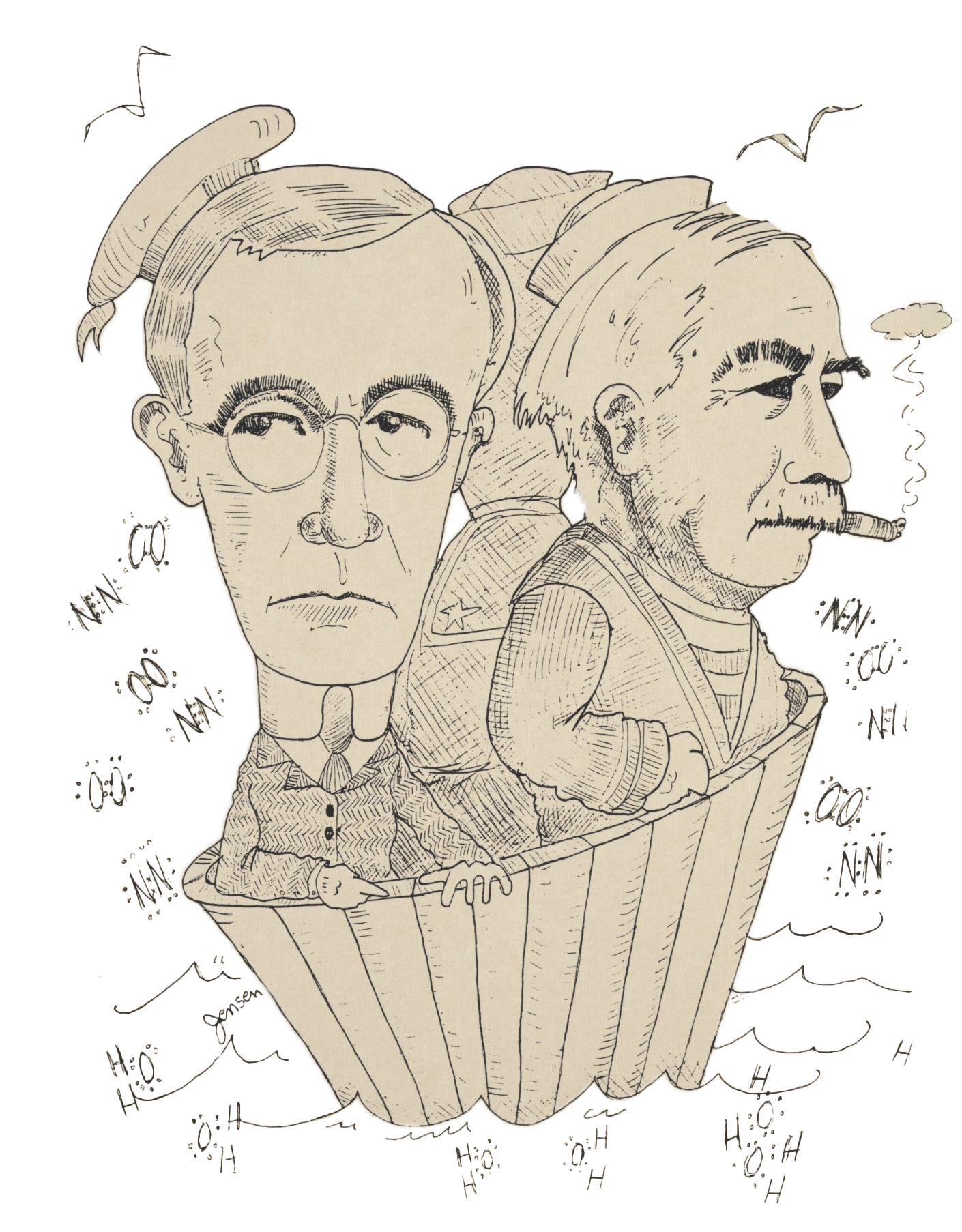
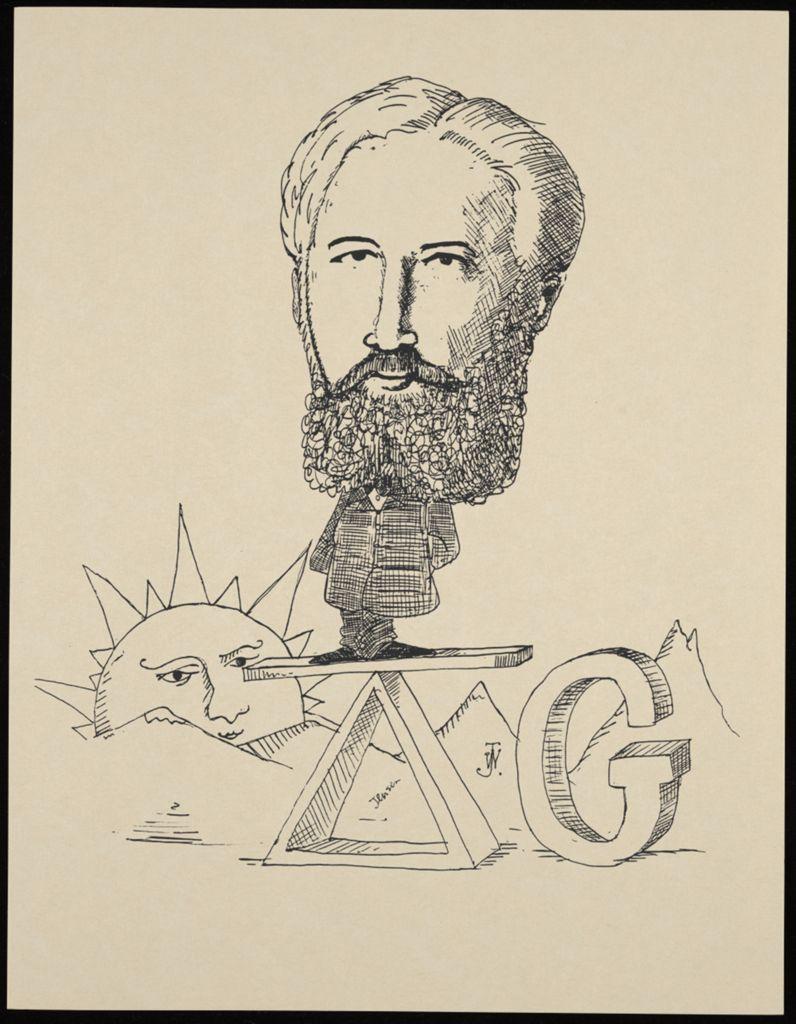
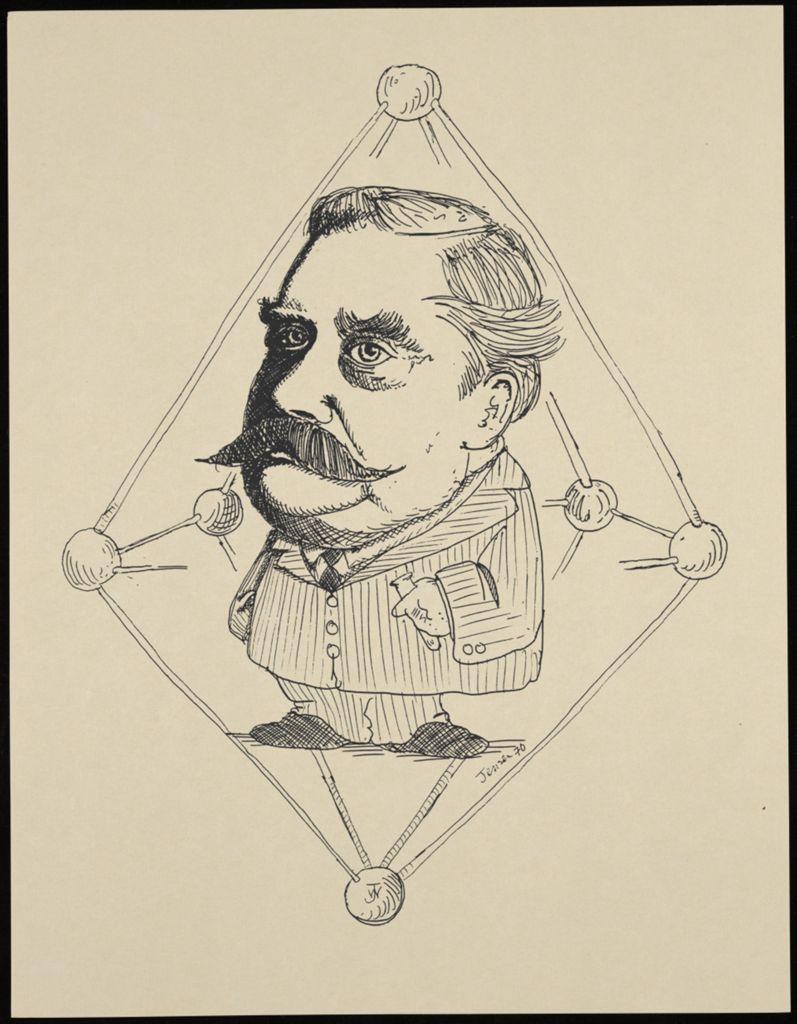
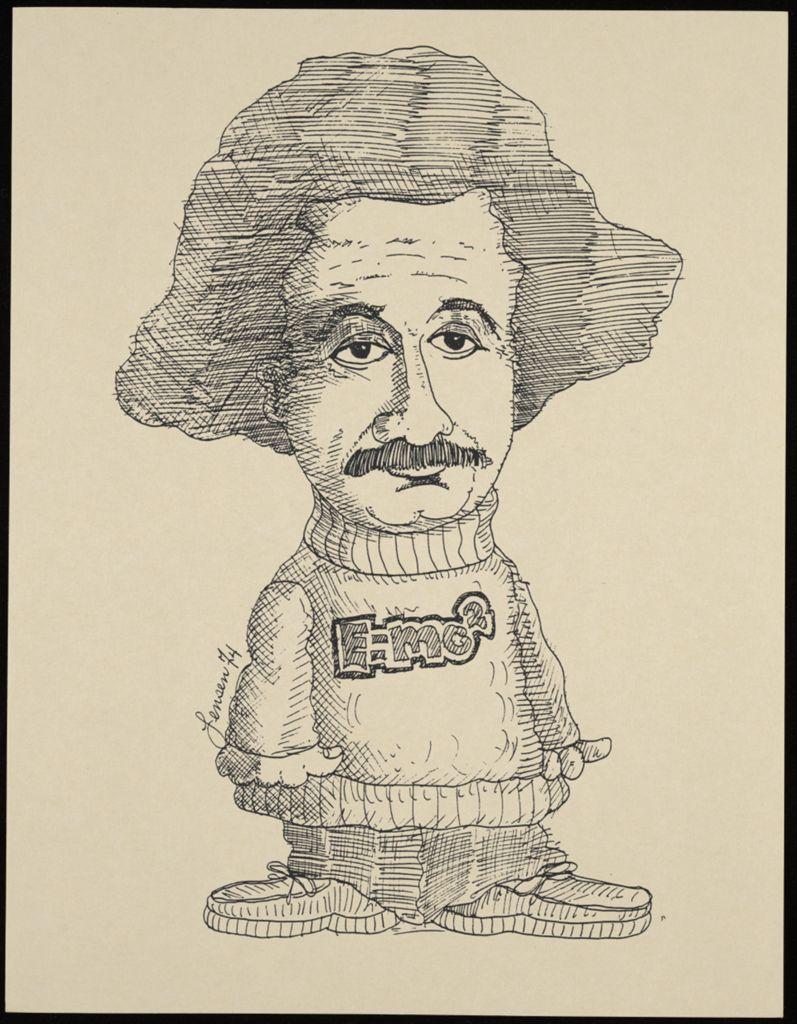
When William B. Jensen (1948-2024), the Ralph E. Oesper Professor of the History of Chemistry at the University of Cincinnati from 1986-2024, was a student at the University of Madison-Wisconsin taking the History of Chemistry class, he sketched caricatures of the chemists he was learning about. While Aaron Ihde lectured, Jensen would select a chemist and caricature them based on the portraits found in Ihde’s textbook, “The Development of Modern Chemistry” (1964).
Friedrich Wilhelm Ostwald, Baltic German chemist and philosopher. Caricature by Dr. William Jensen, Courtesy Oesper Collections in the History of Chemistry, University of Cincinnati Libraries.
Now available online via JSTOR, the UC Libraries online collection contains the 33 original, hand-drawn caricatures of notable chemists and physicists Jensen penned between 1970 and 1974. They are held by the Oesper Collections in the History of Chemistry. The collection was scanned and digitized by the UC Libraries Digital Initiatives Team.
Swiss chemist Alfred Werner. Caricature by Dr. William Jensen, Courtesy Oesper Collections in the History of Chemistry, University of Cincinnati Libraries.
Two new exhibits have been installed in the Walter C. Langsam Library.
On display on the 4th floor lobby, Bronson v. Board of Education: Cincinnati Desegregation Efforts in the 1960s and 1970s chronicles the work of project archivist Julianna Witt as she completed the archival processing of the National Association for the Advancement of Colored People’s, Bronson v. Board of Education of the City of Cincinnati records. This collection contains material related to the class-action lawsuit Bronson v. Board from 1974-1984 and consists of legal documents created for court submission and records that originated from the Cincinnati Board of Education. The collection itself, housed in the Archives and Rare Books (ARB) Library, provides a detailed history of race relations in Cincinnati. A finding aid is available for more information.
Last November, the University of Cincinnati Libraries announced the award of an Archives Grant from the National Historical Publications and Records Commission to ARB.
On display on the 5th floor lobby is an exhibit promoting The Libraries of UC. The exhibit includes images and descriptions of each of the nine University of Cincinnati Libraries, along with the fan-favorite Triceracopter. A map of the libraries is available for take away at the exhibit.
Both exhibits were designed by UC Libraries design co-op student Ashleigh Stout.
Medical illustrations and drawings are a reflection of the state of medical practice at a specific moment in time providing a visual record of science, technology, and anatomical knowledge.
The artwork of Daniel S. Young highlights the artistic and medical contributions of an American Civil War era medical illustrator in a military context. Daniel S. Young: American Civil War Medical Illustrations on JSTOR. His artistry paints a portrayal of how medical illustration informed medical professionals during the 19th century. Young’s Civil War medical illustrations were crucial in educating doctors on surgical procedures and about previously unseen wounds. While medical illustrations such as Dr. Daniel Young’s served to educate doctors they were also important in aiding veterans in their pension claims and showing how the war impacted the soldiers’ health.
Cuts along the upper arm and elbow. Stone’s River, Tennessee.Continue reading →