Gustav Mahler’s Symphony No. 4 and Theodore Spiering in the CCM Library Special Collections

A single part of a symphony can open the door to a world of story-telling. As the CCM Philharmonia presents the music of Mahler’s Symphony No. 4 on October 16, 2026, the CCM Library shares the story of the violin I part held in the Theodore Spiering Collection.

The Albino Gorno Memorial / CCM Library Special Collections holds a collection of annotated sheet music that belonged to Theodore Spiering (1871-1925), an American violinist, conductor, and teacher. Spiering studied violin with Henry Schradieck at the College of Music of Cincinnati in the 1880s before moving to Berlin to study with Joseph Joachim. Spiering later performed as concertmaster for the New York Philharmonic under Gustav Mahler from 1909 to 1911 and conducted the final seventeen concerts of 1911 during Mahler’s illness. On January 17 and 20, 1911, the New York Philharmonic performed Mahler’s Symphony No. 4 with Spiering as concertmaster and conducted by Mahler. A highlight of the Theodore Spiering Collection is the violin I part of the symphony, bearing edits and paste-overs of performance markings and notation. While the violin part in the Spiering Collection was evidently not used in the 1911 performances, the background of the marked-up sheet music illuminates a rich snapshot of the symphony’s editorial and performance history.
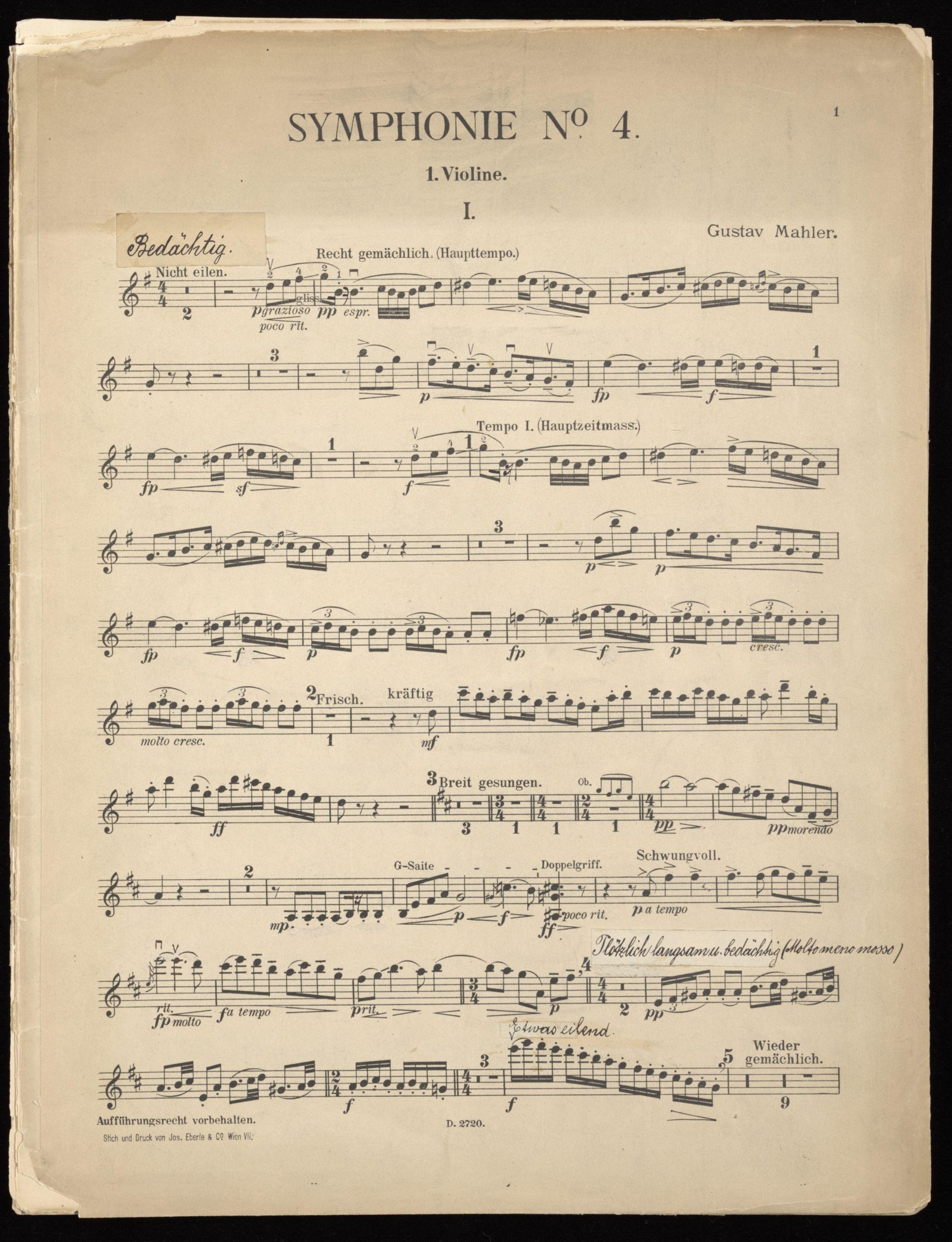
violin sheet music for Mahler Symphony Number 4
Page 1 of the Spiering violin I part of Mahler’s Symphony No. 4, digitized on JSTOR. Theodore Spiering Collection, Albino Gorno Memorial College-Conservatory of Music Library Special Collections, University of Cincinnati. https://www.jstor.org/stable/community.42074264

Gustav Mahler (1860-1911) began composing his fourth symphony in 1899 and completed it during the winter of 1900/1901, though he continued to refine the orchestration of the piece over the next several years. Mahler sent his score of the symphony to the publisher and requested a proof to use during a reading rehearsal with the Vienna Philharmonic in October, as he wanted to hear what it sounded like before it was published. It is not clear if the publishing house also provided proofs of the parts—it is possible the musicians performed from manuscript parts when the symphony was premiered in Munich by the Kaim Orchestra on November 25, 1901. The first edition was engraved and printed by Josef Eberle and published by Ludwig Doblinger in Vienna in December 1901.

Mahler made further edits over the next few years, adding corrections to conducting scores for performances given by Willem Mengelberg in Amsterdam in 1904 and by Richard Wickenhauser in Graz in 1905. In 1910, Mahler transferred publication rights to Universal Edition and sent to the publisher a galley proof with numerous revisions. After Mahler conducted the piece with the New York Philharmonic in January 1911, he sent his final corrections to Universal Edition.

Mahler’s Symphony No. 4 premiered in New York on November 6, 1904, performed by the New York Symphony conducted by Walter Damrosch. Beginning in 1907, Mahler traveled between the U.S. and Europe, spending time in New York each season conducting with the Metropolitan Opera, New York Symphony Orchestra, and New York Philharmonic. Mahler conducted his Symphony No. 4 with the New York Philharmonic in January of 1911, a significant occasion of the composer interpreting his own work with the ensemble.
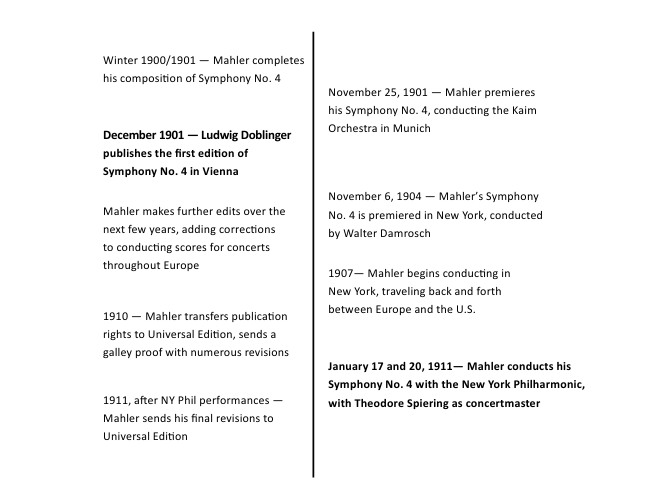
Text arranged in a timeline indicating chronology of Mahler's performance and publishing activities
Timeline of Mahler’s publishing and performance activities surrounding Symphony No. 4, 1900-1911
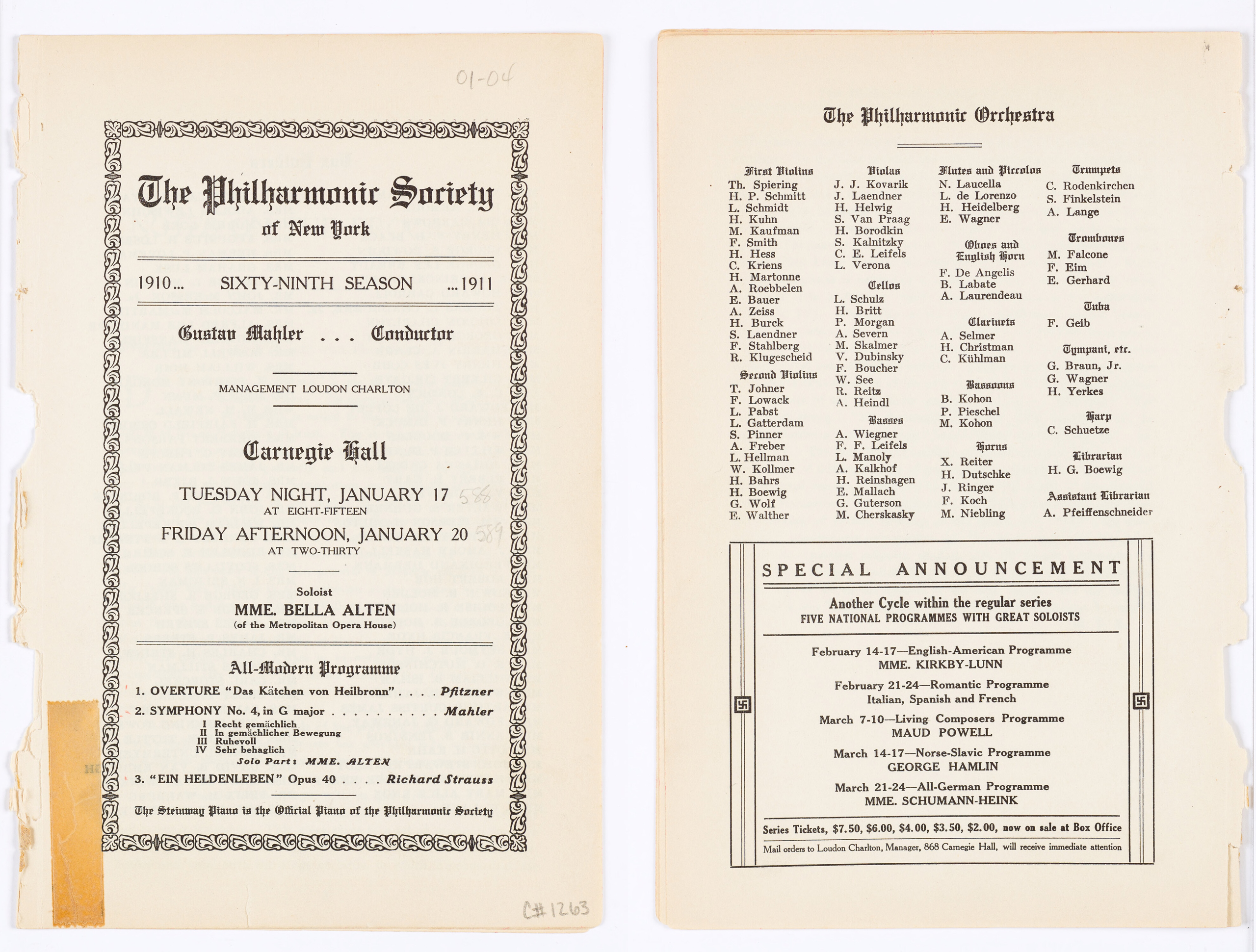
Concert program cover page and list of ensemble members
Program of the January 1911 New York Philharmonic performances of Mahler’s Symphony No. 4, conducted by Mahler, with Theodore Spiering as concertmaster. Program ID: 1263. New York Philharmonic Shelby White and Leon Levy Digital Archives.  https://archives.nyphil.org/asset-management/2TTUGPT6VOQA?WS=2TTURYF6K50F

For the January 1911 performances, the New York Philharmonic used the 1901 Doblinger first edition orchestral parts, which had been marked up with Mahler’s revisions by Viennese copyist Johann Forstik. Theodore Spiering performed as concertmaster during these January 1911 performances—the violin I part held in the CCM Library Special Collections is also the Doblinger first edition and was also marked up by Forstik, though it evidently does not belong to the New York Philharmonic set of parts. The violin part of the New York Philharmonic set bears annotations not present in the CCM Library Spiering part, including bowings, dynamics, notation edits, and rehearsal letters in blue, red, and graphite pencil. Shortly after the January 1911 New York performances, Mahler fell ill. Spiering took over as conductor of the New York Philharmonic while Mahler traveled back to Vienna, where he died on May 18, 1911.

The Mahler Symphony No. 4 violin I part from the Theodore Spiering Collection has been digitized by the UC Libraries Digital Initiatives Team. It is accessible on JSTOR, along with many other pieces from the Theodore Spiering Collection. Materials in the Theodore Spiering Collection were donated by Lenore Spiering, Theodore Spiering’s daughter.

Check out the digitized Theodore Spiering Collection on JSTOR, and access the Mahler Symphony No. 4 violin I part!
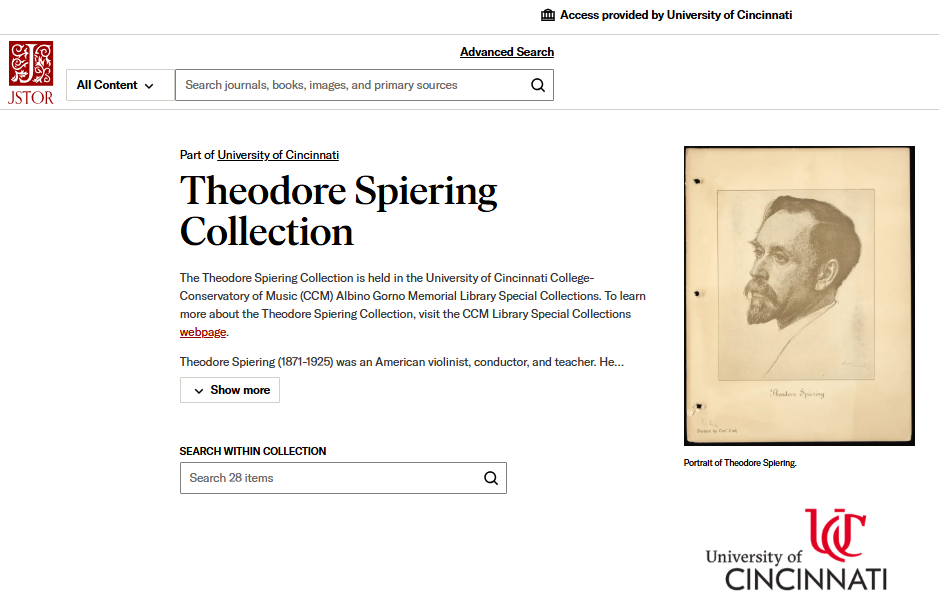
Screenshot of JSTOR landing page for the Theodore Spiering Collection
Landing page of the Theodore Spiering Collection on JSTOR, digitized by the University of Cincinnati Libraries Digital Initiatives Team. https://www.jstor.org/site/uc/spiering

As you explore the revisions and paste-overs, you can compare to a digitized score of Mahler’s Symphony No. 4 from the NY Philharmonic Archives, which shows more clearly what was in the score prior to the changes. Image 7 is the cover page of the Doblinger first edition with a note indicating red corrections after Mahler and green corrections after later Universal Edition revisions. You will see significant changes right from the beginning: the Spiering part has a paste-over of “Bedächtig” (deliberately) at m. 1, which is covering the original marking of “Heiter, Bedächtig” (cheerful, deliberately). Imagine the different interpretive ways the music would feel and sound as you explore the revisions!
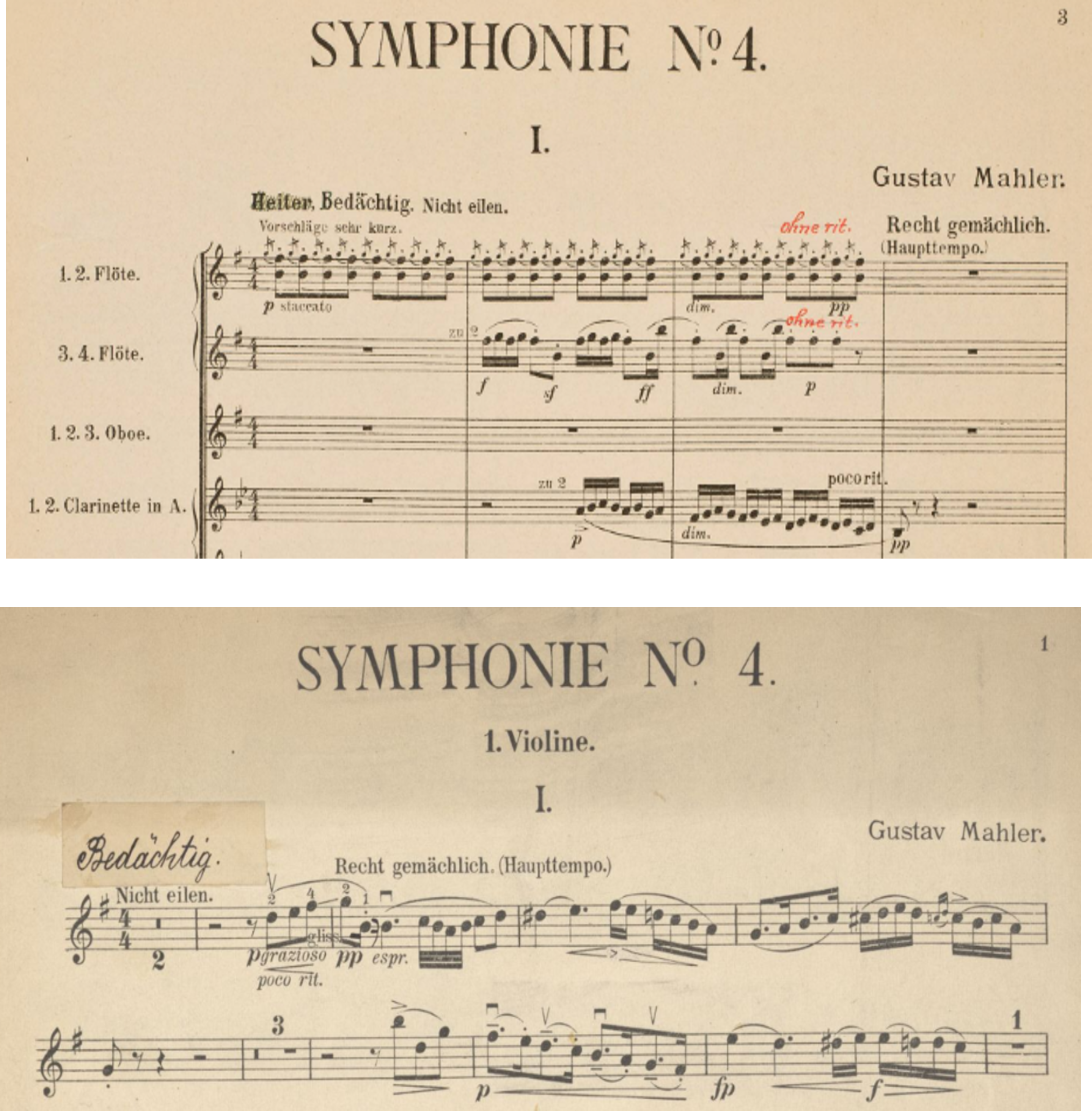
Excerpts of the score and violin part sheet music of Mahler Symphony Number 4
Top: Score of 1901 Doblinger edition with inked revisions. Mahler, Gustav – SYMPHONY NO. 4 IN G MAJOR – Score. Library ID: 2175. New York Philharmonic Shelby White and Leon Levy Digital Archives. https://archives.nyphil.org/asset-management/2TTUGPYF7IT6?WS=2TTURYFJ1D6S
Bottom: Spiering violin I part of Doblinger edition with pasted-over revision. Theodore Spiering Collection, Albino Gorno Memorial College-Conservatory of Music Library Special Collections, University of Cincinnati. https://www.jstor.org/stable/community.42074264

References:

  • Peter Franklin, “Mahler, Gustav,” Grove Music Online. 24 June 2024. https://doi-org.uc.idm.oclc.org/10.1093/gmo/9781561592630.article.40696.
  • Gustav Mahler, Symphonie Nr. 4 für Sopran-Solo und Orchester, ed. Christian Rudolf Riedel (Wiesbaden: Breitkopf & Härtel, 2019).
  • “Theodore Spiering,” promotional booklet, Theodore Spiering Collection, Albino Gorno Memorial College-Conservatory of Music Library Special Collections, University of Cincinnati.
  • “Theodore Spiering, Composer, Is Dead,” New York Times, 14 August 1925, p. 13. ProQuest Historical Newspapers: The New York Times.
  • James L. Zychowicz, Mahler’s Fourth Symphony (New York: Oxford University Press, 2000).

Written by Rebecca Schreiber
Exhibition explores the legacy of English designer William Morris and the Kelmscott Press

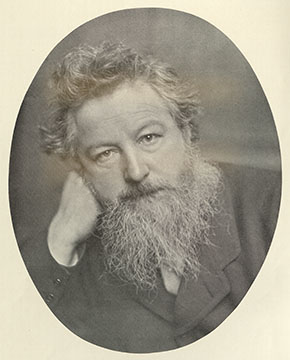
Portrait of English designer William Morris.
Portrait of William Morris by F. Hollyer. Pickford Robert Waller collection on William Morris and the Kelmscott Press (MA-26-01)

When English designer William Morris died at the age of 62 in October 1896, his physician stated that the cause of his death was “simply being William Morris, and having done more work than most ten men.” The University of Cincinnati Libraries and the Archives and Rare Books Library are currently celebrating the life of Morris and his many roles  —  designer of stained glass, tapestries, wallpaper, chintzes, furniture, books, and typefaces, as well as preservationist, socialist, poet, novelist, lecturer, calligrapher, translator of Icelandic and English sagas, and founder of the Kelmscott Press – with an exhibition in Blegen Library now through February 2027.

Associated with the Pre-Raphaelite Brotherhood of artists and critics of the mid-19th century, Morris went on to become a leading figure in the later Arts and Crafts movement. His great passions in life were design, aesthetics, and the production and preservation of cultural heritage. Morris was an incredibly detailed and thorough designer and craftsman, but he was motivated not by the end product itself, but rather by the values represented in their making.

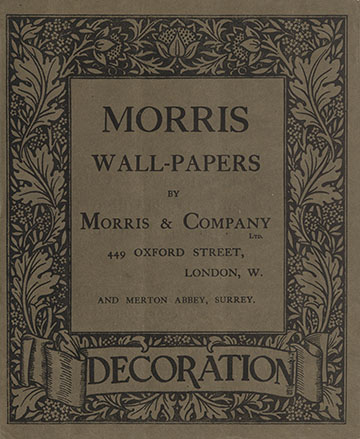
image of a catalog for the company Morris & Company
Morris & Co. catalog for wallpaper designs. Pickford Robert Waller collection on William Morris and the Kelmscott Press (MA-26-01)

The exhibition touches upon Morris’ life; the founding of his design firm, Morris & Co.; and his interest in socialism, while focusing on the founding of the Kelmscott Press, Morris’ most enduring legacy, which produced 52 hand-printed books from 1891 to 1898. The Kelmscott Press was founded after Morris attended a lecture by printer Emery Walker in November 1888, and Morris’ goal was nothing less than to produce the “ideal book.” With a dislike for the mechanization of printing during that time, Morris and his associates found inspiration in 15th century book traditions.

The Archives and Rare Books Library preserves a small, but growing set of Kelmscott titles as well as pamphlets and books by Morris and manuscript materials about Morris. Stop by the fourth floor lobby of Blegen Library to view the exhibition and contact us at archives@ucmail.uc.edu to learn more about our Morris and Kelmscott holdings. We also wish to thank our colleagues at the DAAP Library for lending some of their holdings for display in the exhibition.

“I began printing books with the hope of producing some which would have a definite claim to beauty….
–W. Morris, “The Ideal Book”

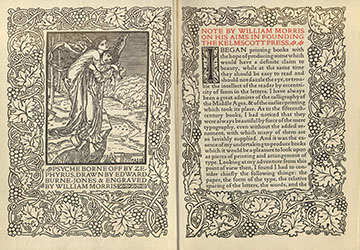
opening pages of a book printed by the Kelmscott Press showing an illustration on the left side and text on the right, both within decorative borders.
The last book printed at the Kelmscott Press, which was sold by the trustees of William Morris. Note by William Morris on His Aims in Founding the Kelmscott Press [Z232.M87 M7]

Read Source, which is celebrating 25 years as UC Libraries newsletter!

source graphic

Read Source, to learn about the news, events, people and happenings in UC Libraries. This year marks the 25th anniversary of the newsletter! To mark the occasion, Source underwent a design refresh to both the graphics and website to herald the publication into the next quarter century.

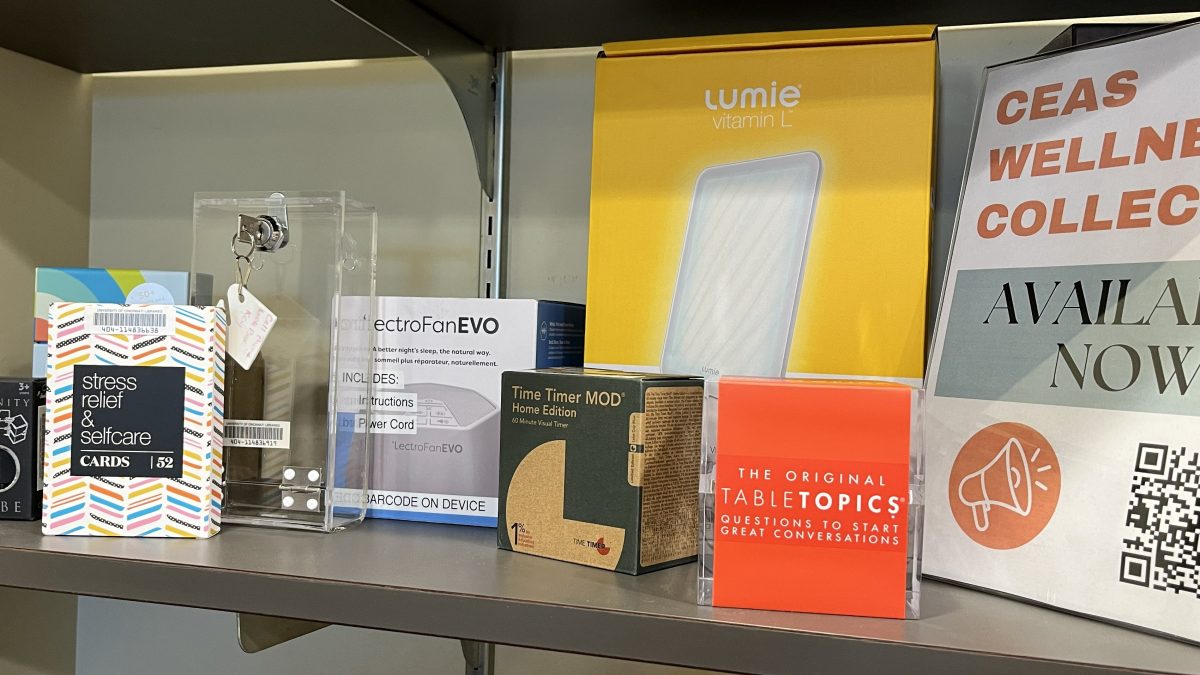
In this issue of Source, Liz Kiscaden, dean and university librarian, welcomes everyone back to the start of the academic year, while a photo slide show features early outreach activities welcoming Bearcats to campus. And don’t miss a list of Fall Events taking place throughout UC Libraries. The Source @ 25! article talks about some of the changes at UC Libraries documented by Source, and an interview with the Preservation Lab’s Jessica Ebert marks her upcoming 20th anniversary at UC Libraries. A new exhibit on display in the Archives and Rare Books Library explores Cincinnati’s growth and transit transformation from its founding in 1788 to the present day, and the CEAS Library launches a wellness collection. And for those who can’t travel to campus, UC Libraries digital collections are now available via Preservica for viewing online.

Read these articles, as well as past issues, on the website. To receive Source via e-mail, contact melissa.norris@uc.edu to be added to the mailing list. Happy reading.

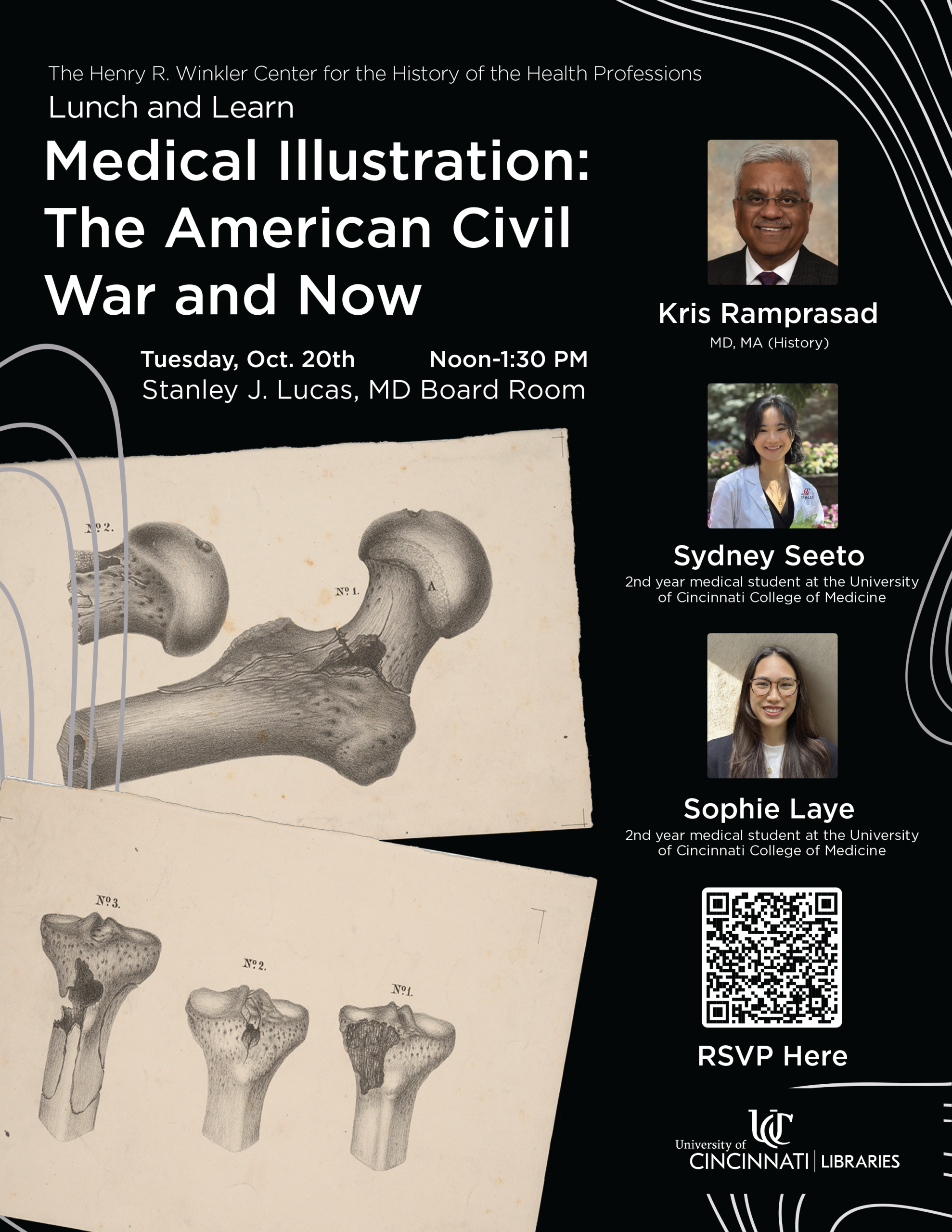
October 20th Lunch & Learn to focus on Medical Illustration: The American Civil War and Now

Join the Henry R. Winkler Center for the History of the the Health Professions Tuesday, Oct. 20, NOON-1:30PM, in the Stanley J. Lucas, MD, Board Room, Health Sciences Library, for a lunch & learn to explore Medical Illustration: The American Civil War and Now. Speakers: Kris Ramprasad, MD, MA (history) and retired UC associate professor, Sydney Seeto and Sophie Laye, both second-year medical students at UC’s College of Medicine, will discuss the Daniel S. Young archives.

Dr. Ramprasad will discuss the varying injuries of the Civil War through his eyes and how these illustrations should be viewed, understood and appreciated now – updating our understanding of the care provided at that time. As co-presidents of the Medical Art and Illustration, Sydney and Sophie will discuss the modern process for creating a medical illustration, showcasing their own work and explaining plans for the Medical Art club for the upcoming year.

The lunch & learn is free and open to all to attend, but RSVP is requested.

Following the lunch & learn, attendees can view the exhibit on display in the library featuring the medial illustrations by Daniel S. Young.

October 20th Lunch & Learn to focus on Medical Illustration: The American Civil War and Now

Daniel S. Young: American Civil War Medical Illustrations, available online via JSTOR, contains the artistic and medical contributions of an American Civil War era medical illustrator in a military context. The Daniel S. Young Archives were donated by the University of Cincinnati’s College of Medicine to the Medical Heritage Center, now the Henry R. Winkler Center for the History of the Health Professions. Young was a surgeon, artist and inventor. During the American Civil War, Young was the surgeon of the 21st Regiment Ohio Volunteer Infantry (O.V.I.).

Continue reading →

Data Focus – Upcoming Workshop “Introduction to ArcGIS Online”

Do you want to know more about working with spatial data? Attend the upcoming workshop “Introduction to ArcGIS Online” on October 7 from 1:30 om to 3:00 pm. Registration and workshop details are available in Faculty Onestop. The workshop is free and open to any Bearcat who wants to learn more about the Ersi Platform ArcGIS Online, how to get an UC Esri account, and how to find data with spatial attributes.

Workshop description: This introductory in-person workshop introduces the fundamentals of web mapping and spatial analysis using ArcGIS Online. No previous GIS or ArcGIS experience is required. ArcGIS Online runs directly in a web browser and is available to participants with a UC login.

The workshop will begin with an introduction to GIS and spatial data, followed by a guided tour of the ArcGIS Online interface. Participants will learn how to sign in, navigate Map Viewer, find and add spatial data, work with map layers and attributes, change basemaps and symbology, and explore geographic patterns.

By the end of the workshop, participants will have experience creating and interpreting a web map in ArcGIS Online and will have a foundation for applying GIS tools to their own research or projects.

The workshop will be facilitated by Le Tu, Research and Data Services GIS research consultant. If you want to explore spatial data and GIS resources deeper after the workshop, Le is available for consultations. Visit the GIS Services lab in 412 Langsam.

Woman at computer

Open Access Week 2026 – What Researchers need to know

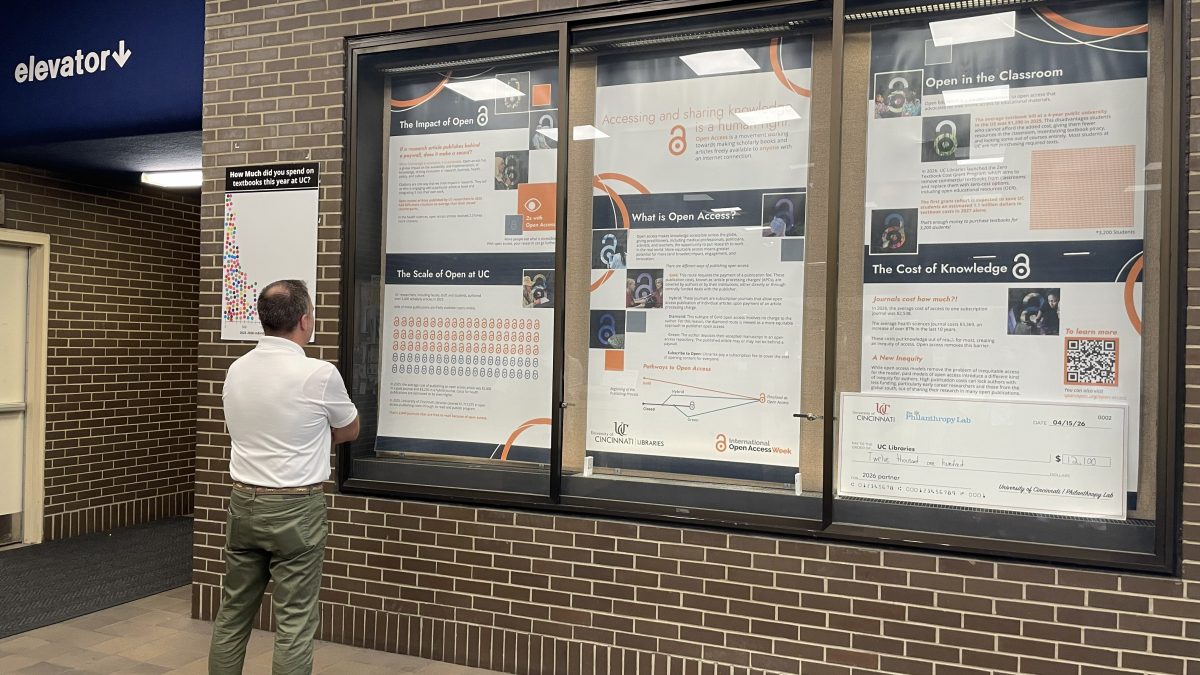
Person looking at a library exhibit on Open Access.  The exhibit is three posters in a glass cabinet.

Join UC Libraries in celebrating International Open Access Week October 19 to 23, 2026.  During this week, there will be several opportunities to learn what Open Access means and how you can use UC Libraries resources to further the impact of your research.  Join us for the many activities going on this week

  • Check out the Open Access display on the ground (4th floor) of Langsam Library
  • Watch LiBlog for special Open Access week content
  • Visit the Open Educational Resources (OER) gallery in the Faculty Enrichment Center
  • Register for workshops, panel discussions, and other Open Access Week events
    • Attend the Open Access Panel “What Researchers Need to Know About Open Access in 2026” – Monday Oct 19th @ 2 pm [Link to register].
    • Attend one of the two workshop “Demystifying Open Access: Busting Myths and Taking Questions” [Oct 22 | Oct 23 ].
  • Set up a consultation with our Scholarly Communications Librarian Melissa Moreau to discuss your plan for publishing your work.  [Pro-tip: start when you are planning the project].
  • Learn more about the open access initiatives at UC Libraries.

Pick and choose which workshops meet your needs and fit your schedule! See the full list of workshops and register online.

 “America 250: Cincinnati in Transit(ion)” exhibition now open at the ARB

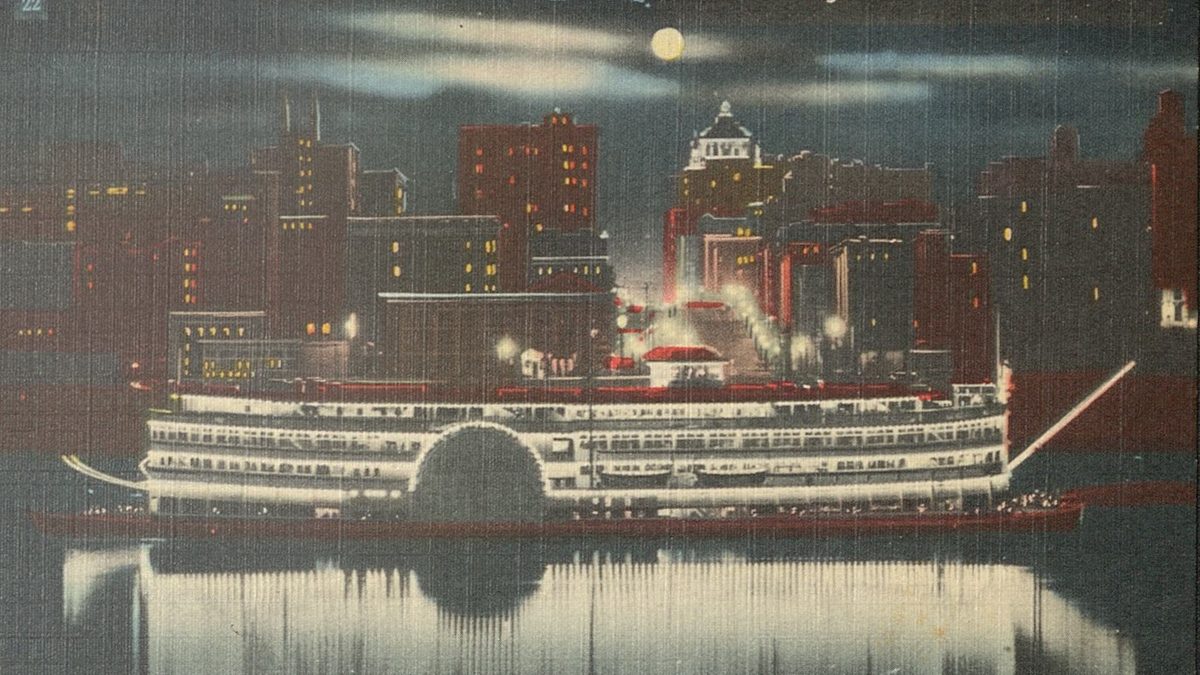
Postcard in color of "Island Queen" steamboat in the moonlight and being reflected off the river with the city skyline in the background.
“Island Queen at Moonlight” postcard, undated. From the Nelson and Florence Hoffman Cincinnati Postcard Collection US-12-03, Archives and Rare Books Library.

“America 250: Cincinnati in Transit(ion)” is an exploration of Cincinnati’s growth and transit transformation from its founding in 1788 to the present day. Over the last two hundred and thirty-eight years, Cincinnati has journeyed from steamboats to railroads, to interstate highways, and to international airports. The exhibition can be viewed inside and outside the Archive and Rare Book’s Library Reading Room in Blegen Library.

Continue reading →

The Great Library Guess Off: Join us for an evening of fun and games

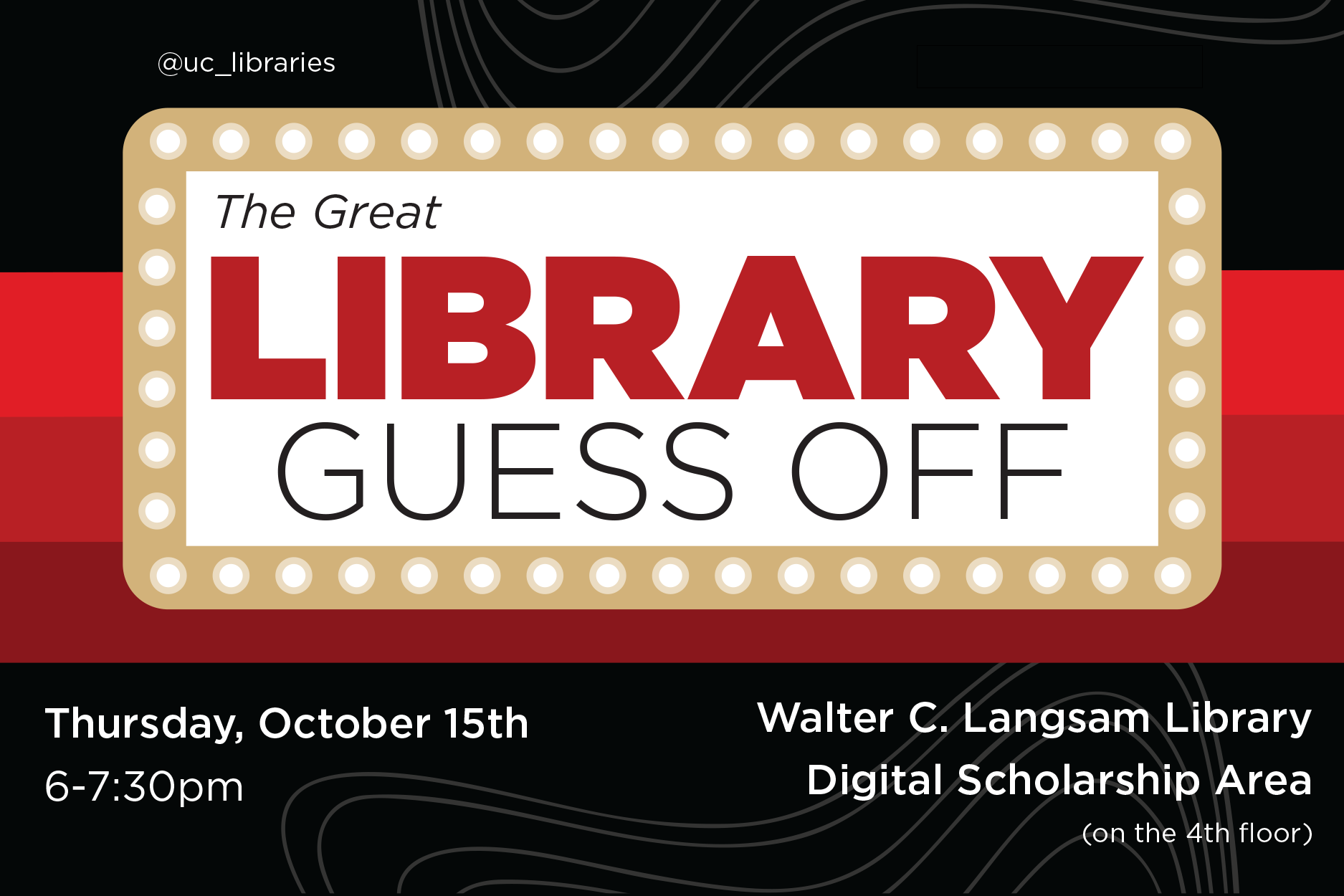
Bring your friends for The Great Library Guess Off, a Guesspionage™ -style challenge, inspired by a popular Jackbox online game. Join us Thursday, Oct. 15 from 6-7:30pm in the Walter C. Langsam Library Digital Scholarship Area (4th floor) for an evening of fun and games.

The Great Library Guess Off: Join us for an evening of fun and games

Students will be divided into small teams to take turns guessing statistics. Their assigned rival teams will have the opportunity to “steal” points before the answer is revealed. The three teams with the highest number of points will win small prizes to encourage active participation. Questions will highlight UC Libraries-specific statistics (as appropriate), such as percentage of students who utilize library resources, as well as available statistics on student wellness that contribute to belonging and academic success (i.e., reported sleep, stress levels, and study habits).

The Great Library Guess Off is free and open to all to attend. Refreshments will be served.

UC Libraries welcomes Jeremy Brenner-Levoy as qualitative data services librarian

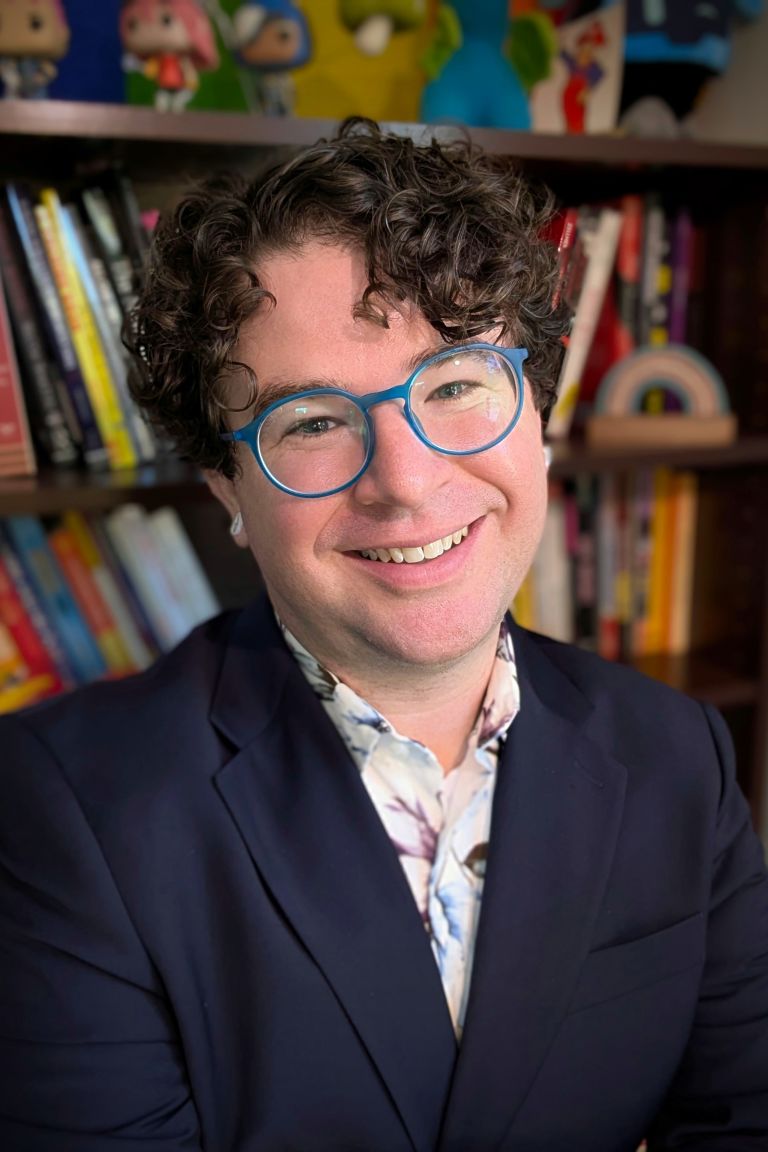
We are excited to share that Jeremy Brenner-Levoy (they/them) has joined UC Libraries in the Research & Data Services department as the Qualitative Data Services Librarian. In this role, they will be responsible for providing instruction and consultation to researchers on data literacy, tools and resources, as well as identifying and implementing best practices and services that meet research needs in areas that generate qualitative data. 

Jeremy holds a PhD in Sociology from the University of Cincinnati, where their research explored gender, sexuality, work in video games and digital culture. After completing their PhD, they joined the faculty at Davidson College, where teaching and mentoring students helped them discover just how much they enjoy helping others become confident and curious researchers. Whether conducting interviews and ethnographic research, analyzing digital content or designing surveys, Jeremy enjoys thinking through methodological puzzles and finding creative ways to answer difficult questions. Now, Jeremy is excited to join UC Libraries, where they look forward to supporting researchers across disciplines and helping make qualitative and mixed-methods research more approachable, creative and exciting.

Welcome, Jeremy!

Jeremy Brenner-Levoy