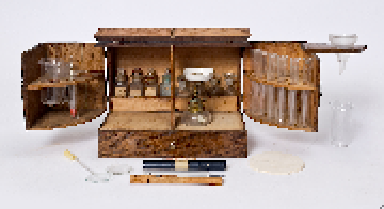
Issue 53 highlights antique apparatus used in physiological chemistry for the analysis of urine.
Click here for all other issues of Notes from the Oesper Collections and to explore the Jensen-Thomas Apparatus Collection.
Sign up for a 3-minute Flash Talk here: https://goo.gl/forms/5VFzvFoUGbg1DiHq2.
RSVP and Questions: ucitresearch@ucmail.uc.edu
Food will be provided
Flyer: DCSS social flyer_20181031
Please join the Data and Computational Science Series (DCSS) team for a (free!) ‘Understanding Science Gateways’ presentation & lunch with Dr. Sandra Gesing, Computational Scientist, University of Notre Dame.
Science Gateways and the Science Gateways Community Institute (SGCI) with Dr. Sandra Gesing
Tuesday October 30 – TUC 400B FREE REGISTRATION
Science Gateways – also called virtual research environments or virtual labs – allow science and engineering communities to access shared data, software, computing services, instruments and other resources specific to their disciplines and use them also in teaching environments. The U.S. Science Gateways Community Institute (SGCI) provides free resources, services, experts, and ideas for creating and sustaining science gateways.
11am-1pm: General Introduction to Science Gateways & the Science Gateways Community Institute (SGCI) – Lunch provided
1pm-3pm: Science Gateways Presentation On Usability With Hands-On Portion – please bring a laptop
These events are free and open to all.
Flyer – DCS2 _Intro to Science Gateways_30oct18
Flyer – DCS2 _Science Gateways Usability presentation_30oct18
General Introduction to Science Gateways & the Science Gateways Community Institute (SGCI)
In the last decade mature complete science gateway frameworks have evolved such as HUBzero, Galaxy, Agave and Apache Airavata. Successful implementations have been adapted for several science gateways, for example, the technologies behind the science gateways CIPRES, which is used by over 25.000 users to date and serves the community in the area of large phylogenetic trees. Lessons learned from the last decade include that approaches should be technology agnostic, use standard web technologies or deliver a complete solution. Independent of the technology, the major driver for science gateways are the user communities and user engagement is key for successful science gateways. The US Science Gateways Community Institute (SGCI), opened in August 2016, provides free resources, services, experts, and ideas for creating and sustaining science gateways. It offers five areas of services to the science gateway developer and user communities: the Incubator, Extended Developer Support, the Scientific Software Collaborative, Community Engagement and Exchange, and Workforce Development. The talk will give an introduction to science gateways, examples for science gateways & an overview on the services offered by the SGCI to serve user communities & developers for creating successful science gateways.
Discover UCIT Research Computing Tools and Services
Please mark your calendars on November 14, 2018 as UC Libraries will join the Department of Geography & GIS, GISSA and the Geography Graduate Student Association in celebrating National GIS Day.
This year’s speaker will be Dr. Daniel Sui , Vice President for Research, University of Arkansas and former Division Director for Social and Economic Sciences (SES) at the U.S. National Science Foundation.
Agenda:
Venue – 402 Braunstein Hall
10:00 a.m. – 11:00 a.m. Open meet and greet
Venue – TUC 427
11:00 a.m. – 12:00 p.m. Lunch
12:00 p.m. – 1:00 p.m. Featured Speaker: Dr. Daniel Sui
1:00 p.m. – 2:00 p.m. Question and Answer Session
This event is free and open to all
Flyer – UC_GIS_Day
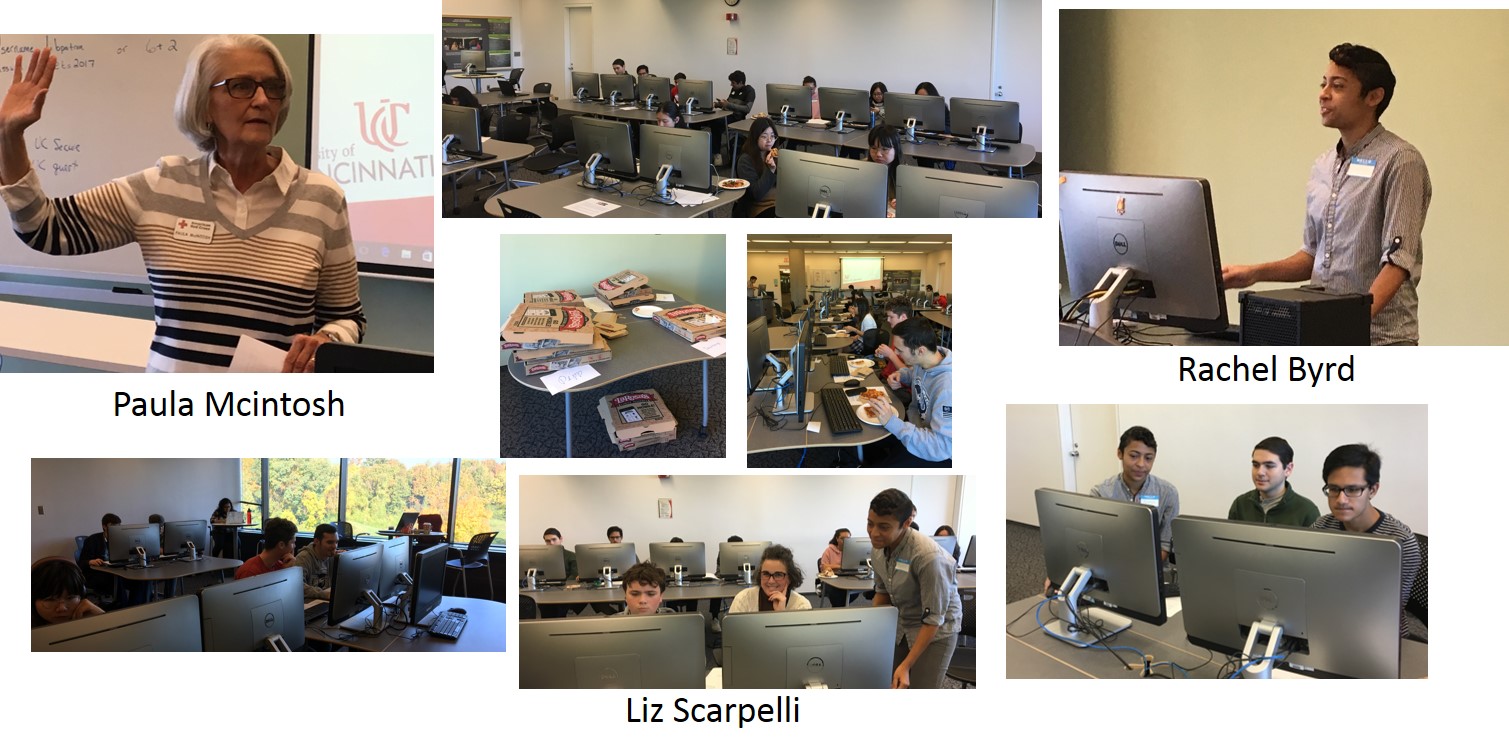
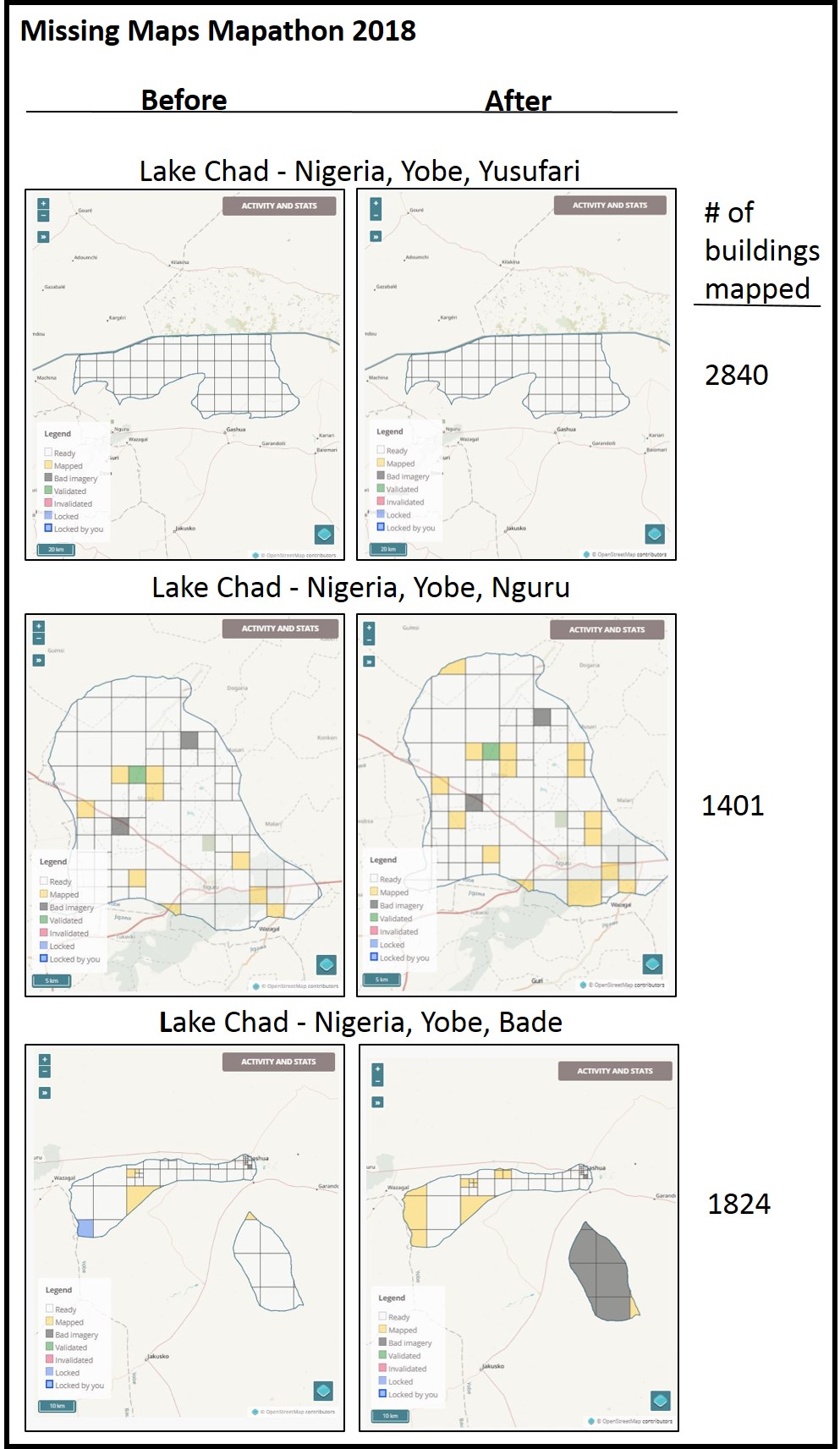
On Nov 3rd, The Red Cross will hold their second Missing Maps Mapathon at UC Libraries in 475 Langsam from 10 am to 2 pm. The information collected from a Mapathon helps the Red Cross identify the best locations to bring in emergency supplies, where to house emergency operations and what local resources they can collaborate with in emergency response efforts. In order to participate, you do not need extensive mapping experience. The maps are creating using the Open Street Map platform and you can learn quickly by watching these training videos (1. Create an Open Street Map account, 2. Learn to map buildings).
If you are interested to participate, please register here – https://goo.gl/forms/b2sAl9zlS4ajSklg1 and watch the training videos. A Pizza lunch will be provided for attendees. Please bring a drink or refillable water bottle. This is a great and fun way to get service hours if you need them.
Please contact Amy Koshoffer – ASKDATA@UC.EDU if you have questions about the event. More information is provided in the attached flyer.
Flyer – Missing Maps Flyer rev. 10.3.18
Indiana University’s Jeremy Fischer will present a hands-on workshop on Jetstream, a free, cloud-based, on-demand high performance computing resource.
Please join IT@UC R&D and UCL on October 31 from 9:30am to 12:30pm in Langsam Library room 475 for a free workshop on Jetstream, the National Science Foundation’s first science and engineering cloud. With a focus on ease of use and broad accessibility, Jetstream is designed for those who have not previously used high performance computing and software resources.
Jetstream Core capabilities
Workshops are open to anyone who interested in learning about Jetstream resources. There are no prerequisites for attending. Please bring a lap top. REGISTER
Flyer: jetstream_oct_31
For additional information, contact Jane Combs at combsje@uc.edu.
After the workshop head to the Catskeller for the first Data Science Social from 4-6 pm. Food provided through the Provost funded Data & Computational Science Series. Drinks on you!

Yanli Liu gave a presentation about data services and courses at the National Science Library, China Academy of Sciences

Yanli Liu and Amy Koshoffer co-taught a session for summer research students.
Hong Cheng, Ted Baldwin, Xuemao Wang, Yanli Liu, Leslie Schick at Yanli’s final presentation.
Yanli Liu, the visiting librarian from the National Science Library, Chinese Academy of Sciences completed her six-month period at the University of Cincinnati. Splitting time at the CEAS Library and the HSL Library, Yanli was involved in research data services, engineering librarianship, attending campus-wide workshops and webinars. On October 4th, she gave a final presentation about her two main projects: citation analysis of Mathematics and Physics researchers at UC and data management services survey and workshop.
Many thanks to all who attended the UC Libraries and IT@UC Research Reproducibility Workshops offered on Oct 3rd and 4th. We are especially thankful to April Clyburne-Sherin, Director of Scientific Outreach for Code Ocean who came and shared her knowledge part of the Provost sponsored Data and Computational Science Series. The videos from the workshop are available through the STRC youtube channel and at these links:
Oct 3rd – Video – Integrating reproducible best practices into biomedical & clinical research : https://www.youtube.com/watch?v=V_VBmFNXWg0
Slides – http://bit.ly/2DToKHt
Oct 4th – Preparing your data and code for reproductive publication: https://youtu.be/TkQbtEYXuUA
Slides – shorturl.at/iwDVY
Also many thanks to Jay Sinnard and Jace Cheeseman for capturing and creating the videos. We are grateful for the talent and knowledge in the STRC!
If you want to discuss research reproducibility or other data related issues, please contact the UC Libraries Research and Data Services Team at ASKDATA@UC.EDU. 
XSEDE HPC Workshop: GPU Programming Using OpenACC
Description: The University of Cincinnati is pleased to be a remote site for the XSEDE HPC Workshop GPU Programming using OpenACC, taught by the Pittsburg Supercomputing Center. OpenACC is the accepted standard using compiler directives to allow quick development of GPU capable codes using standard languages and compilers. It has been used with great success to accelerate real applications within very short development periods. This workshop assumes knowledge of either C or Fortran programming. Due to demand, this workshop is telecast to several satellite sites. Tentative Agenda
When: November 6, 2018: 11am – 5pm
Location: University Hall Room 454
51 Goodman Street
Cincinnati, OH 45221
Note: You need an XSEDE account to register Create Account
Parking: Kingsgate Garage, 151 Goodman Street
Special Instructions: Participants should bring their own laptop, lunch will be provided.
Questions? Contact Amy Latessa latessak@uc.edu
XSEDE (eXtreme Science and Engineering Discovery Environment) is a virtual system that provides compute resources for scientists and researchers from all over the country. Its mission is to facilitate research collaboration among institutions, enhance research productivity, provide remote data transfer, and enable remote instrumentation. XSEDE is funded by National Science Foundation (NSF). Getting Started Guide for XSEDE.
Flyer – DCS2-OpenACC Nov 6, 2018

A portable Berzelius oil lamp for blowpipe analysis. The additional ring and alcohol lamp could be used to evaporate mineral water samples for analysis.
Issue 52 highlights items in the Oesper Collections related to the practice and teaching of blowpipe analysis.
Click here for all other issues from the Oesper Collections and to explore the Jensen-Thomas Apparatus Collection.