Smoking Permitted and No Tipping Allowed!?! Hospital Information for Overnight Patients, 1958

The following post was written by Winkler Center assistant archivist, Nina Herzog.   All images courtesy of the Henry R. Winkler Center for the History of the Health Professions

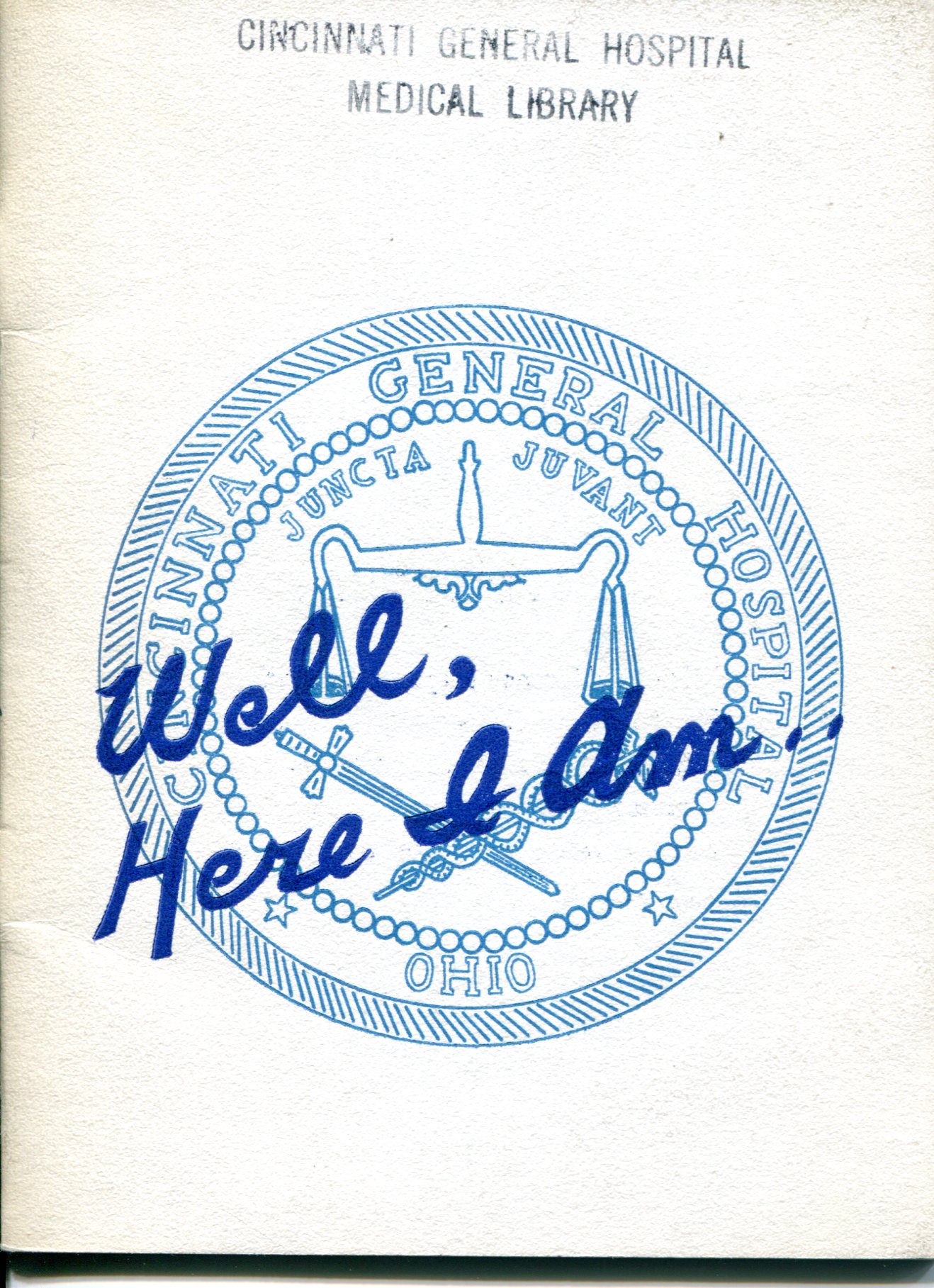
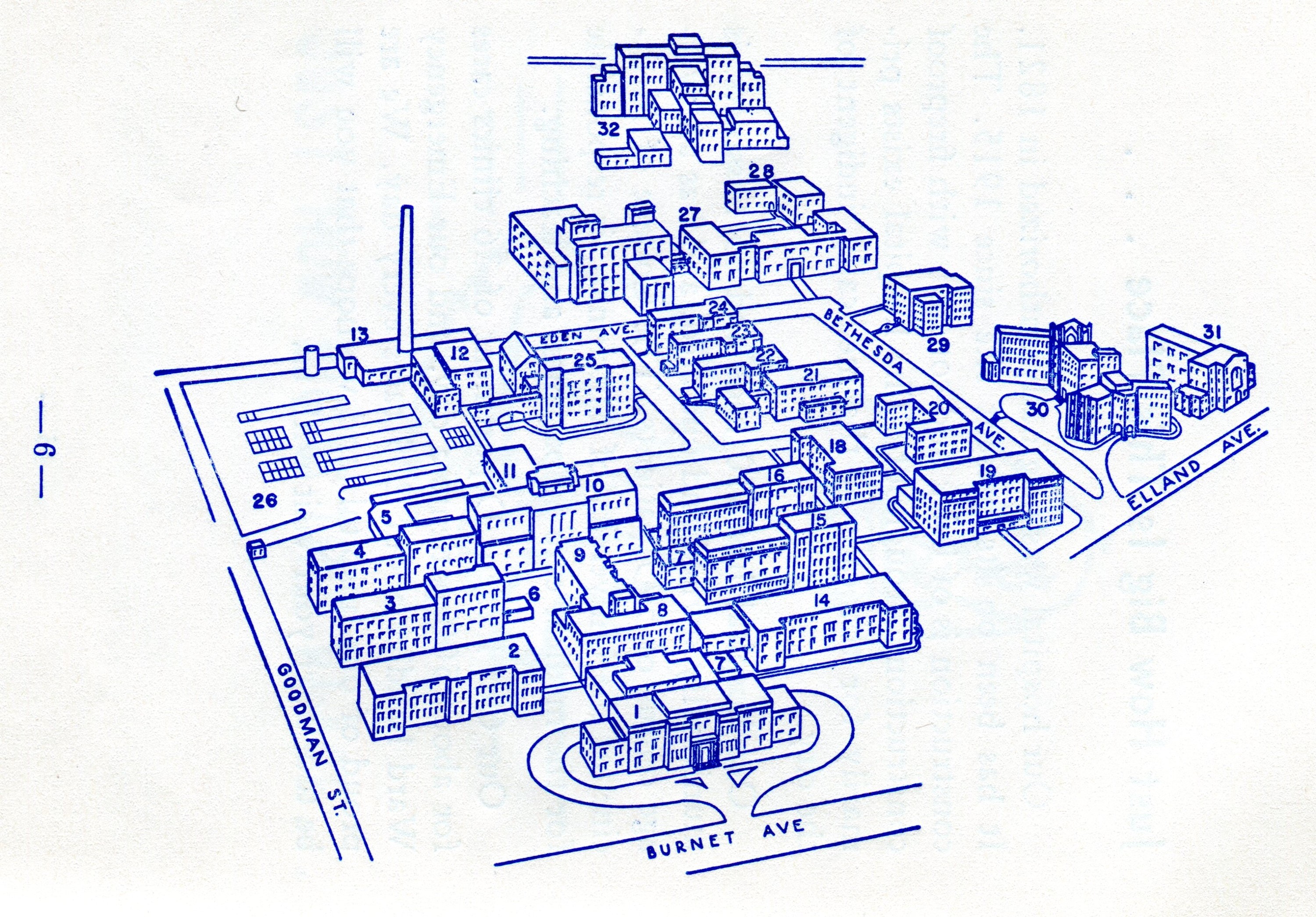
CGH  Informational Booklet, 1958.


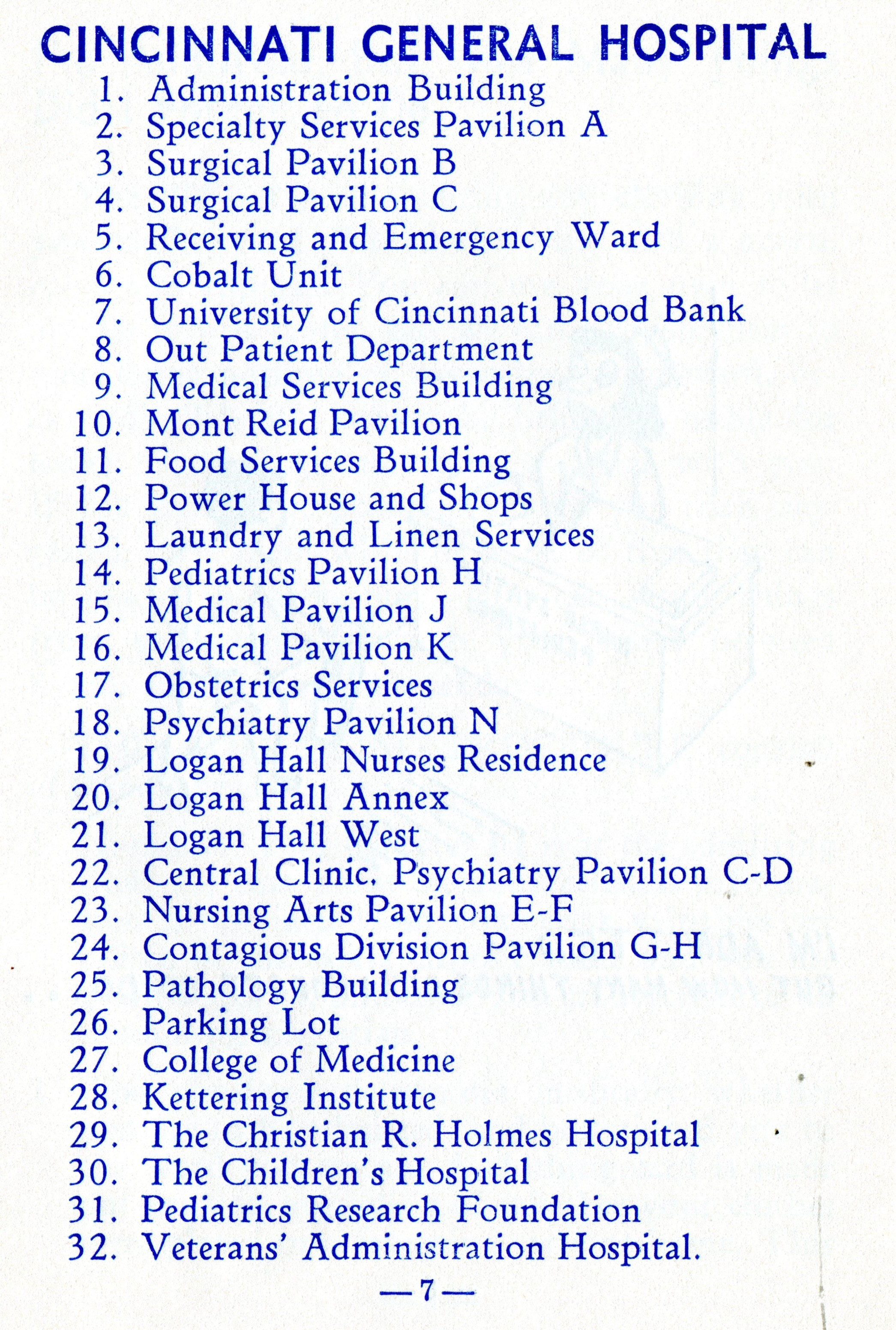
Without a doubt, checking into and staying at hospitals is a lot different today than it was over a half century ago.  Computerized check-ins, televisions in rooms and bans on smoking, etc. have all improved the patient experience. The images below were taken from an informational booklet given to patients at the Cincinnati General Hospital (CGH) in 1958.

The instructive pamphlet titled, “Well Here I Am,” provides the incoming patient with information on subjects ranging from check in, dining hours, and visitor information to hospital maps, directions, and much more.


Continue reading

A Varian E-4 EPR Spectrometer : Notes from the Oesper Collections, No. 41, November/December 2016

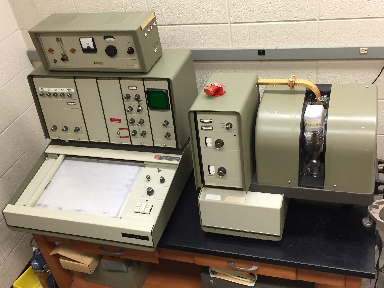
The Varian E-4 EPR instrument as it appeared while still in use in Dr. Bobst’s laboratory.

The Varian E-4 EPR instrument as it appeared while still in use in Dr. Bobst’s laboratory.

Issue 41 describes a new addition to the instrument collection on the mezzanine of the chemistry-biology library. Dating from the early 1970s, this desktop Varian E-4 Electron Paramagnetic Resonance (EPR) Spectrometer was donated by Dr. Albert Bobst of the UC Chemistry Department.

Click here for all other issues of Notes from The Oesper Collections and to explore the Jensen-Thomas Apparatus Collection.

Jerry Sheehan Post’s on Federally Funded Research Results and Accessibility

At the close of the 8th Open Access Week, Jerry Sheehan of the White House Office of Science And Technology Policy blogged about the impact of openly accessible research findings, especially federally funded research.

Three more agencies have announced public access plans (Department of Education (ED), Agency for International Development, and Office of the Director of National Intelligence (ODNI)), bringing the total to 19.  A good resource for understanding the requirements of the plans is the  the Scholarly Publishing and Academic Resources Coalition – http://sparcopen.org/ and the data sharing resource http://datasharing.sparcopen.org/ available through SPARC.

To read the complete blog post,  click here.

Behind the Scenes with UC’s Digital Archivist: Finding the Needle in the Haystack

By Eira Tansey, Digital Archivist/Records Manager

A constant challenge for digital archivists is identifying potentially sensitive material within born-digital archives. This content may be information that fits a known pattern (for example, a 3-2-4 number that likely indicates the presence of a social security number), or sensitive keywords that indicate the presence of a larger body of sensitive information (for example, the keywords “evaluation” and “candidate” in close proximity to each other may indicate the presence of an evaluation form for a possible job applicant).

Digital archivists use a number of tools to screen for potentially sensitive information. When this information is found, depending on the type of information, institutional policy, legal restrictions, and ethical issues, archivists may redact the information, destroy it, or limit access to it (either by user, or according to a certain period of time). Continue reading

Paper featuring Scholar@UC Gets Best Research Paper Award!

Congratulations to Dr. Nan Niu and his research team!re16_bestresearchpaperaward_niu

Recently Dr. Nan Niu traveled to Beijing, China to attend the RE16 conference- Requirements Engineering16 http://re16.org/downloads/RE16%20program.pdf. He took with him high hopes for the requirements engineering research paper he and his team submitted together with Linda Newman, Head of Repositories and Digital Collections and Amy Koshoffer, Science Informationist. For the beginning of this story and more on the models created using Scholar@UC use cases, see the blog entry “Scholar@UC Goes to Class” (https://libapps.libraries.uc.edu/liblog/2016/01/scholaruc-goes-to-class/).

Dr. Niu has made all the research materials supporting this work available through Scholar@UC https://scholar.uc.edu/works/documents/wm117q084.  Dr. Niu is making brilliant use of Scholar@UC as a teaching tool, a research subject, data preservation tool and an open data/access model.  Again congratulations to Dr. Niu and the whole team!!

Behind the Scenes with UC’s Digital Archivist: Making Sense of It All

By Eira Tansey, Digital Archivist/Records Manager

When archivists first make contact with a large group of records, they often perform some form of appraisal. You might think of appraisal as being the calling card of the much-loved PBS television show Antiques Roadshow, in which average people realize that Great Aunt Milly’s painting is a valued masterpiece – or a total dud.

Unlike appraisers, when archivists appraise something they generally aren’t assigning a monetary value, but seeking to articulate the value of the records and the information they contain. The Society of American Archivists defines (http://www2.archivists.org/glossary/terms/a/appraisal#.V2hA1jXERmM)  appraisal as:

  1. ~ 1. The process of identifying materials offered to an archives that have sufficient value to be accessioned. – 2. The process of determining the length of time records should be retained, based on legal requirements and on their current and potential usefulness. – 3. The process of determining the market value of an item; monetary appraisal.

Continue reading

Liebig and Combustion Analysis : Notes from the Oesper Collections, No. 40, September/October 2016

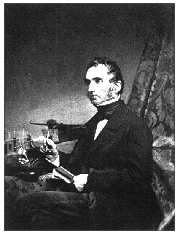
Justus von Liebig (1803-1873) posing with his apparatus for combustion analysis.

Justus von Liebig (1803-1873) posing with his apparatus for combustion analysis.

Issue 40 outlines the history and importance of the chemical technique known as combustion analysis and highlights a reproduction of Liebig’s famous 1831 instrument for this purpose made by the late Dr. Melvyn Usselman of the University of Western Ontario and donated to our museum collections in 2005.

Click here for all other issues of Notes from the Oesper Collections and to explore the Jensen-Thomas Apparatus Collection.


Behind the Scenes with UC’s Digital Archivist: Much Ado About Digital

By Eira Tansey, Digital Archivist/Records Manager

Within the archives profession, “Digital Archivist” is one of the fastest-growing job titles (http://digitalcommons.kennesaw.edu/provenance/vol31/iss2/5/). The Society of American Archivists offers a Digital Archives Specialist curriculum and certificate (www2.archivists.org/prof-education/das).   And library and archives conferences abound on topics of an electronic and digital nature – like Saving The Web (https://www.loc.gov/loc/kluge/news/save-web-2016.html), the Digital Library Federation (https://www.diglib.org/), and the Software Preservation Network Forum (http://www.softwarepreservationnetwork.org/spn-forum/).

So what does a digital archivist do? Every digital archivist’s responsibilities will look slightly different depending on institutional mission, priorities and resources. As the first link indicates, there isn’t even professional consensus whether a digital archivist is one who works with digitization of analog material (like paper documents and manuscripts, rare books, maps, etc), or someone who works with “born-digital” materials. In many institutions, both of those responsibilities may be within the Digital Archivist’s charge. As UC’s Digital Archivist/Records Manager, my responsibilities center on working with born-digital archives, digital preservation, and overseeing UC’s Records Management program. I also work closely with my colleagues in Digital Collections on digitization projects (http://digital.libraries.uc.edu/).

Continue reading

The Steelyard Balance : Notes from the Oesper Collections, No. 39, July/August 2016

A recently acquired 19th-century Chinese steelyard or so-called “opium balance” with an 11” ivory beam and accompanying “teardrop” storage case

A recently acquired 19th-century Chinese steelyard or so-called “opium balance” with an 11” ivory beam and accompanying “teardrop” storage case

Issue 39 briefly outlines the history and principles underlying traditional single pan or “steelyard” balances and illustrates their evolution using examples from our museum collections.

Click here for all other issues of Notes from The Oesper Collections and to explore the Jensen-Thomas Apparatus Collection.


Epicurus and Atomism : Notes from the Oesper Collections, No. 38, May/June 2016

Our recently acquired bust of Epicurus (341-270 BC)

Our recently acquired bust of Epicurus
(341-270 BC)

Issue 38 describes a recently acquired bust of the Greek philosopher Epicurus and his importance to the history of atomism.

Click here for all other issues of Notes from The Oesper Collections and to explore the Jensen-Thomas Apparatus Collection.