The Classics Library’s Welcoming Host Handing Out The Library Guide.
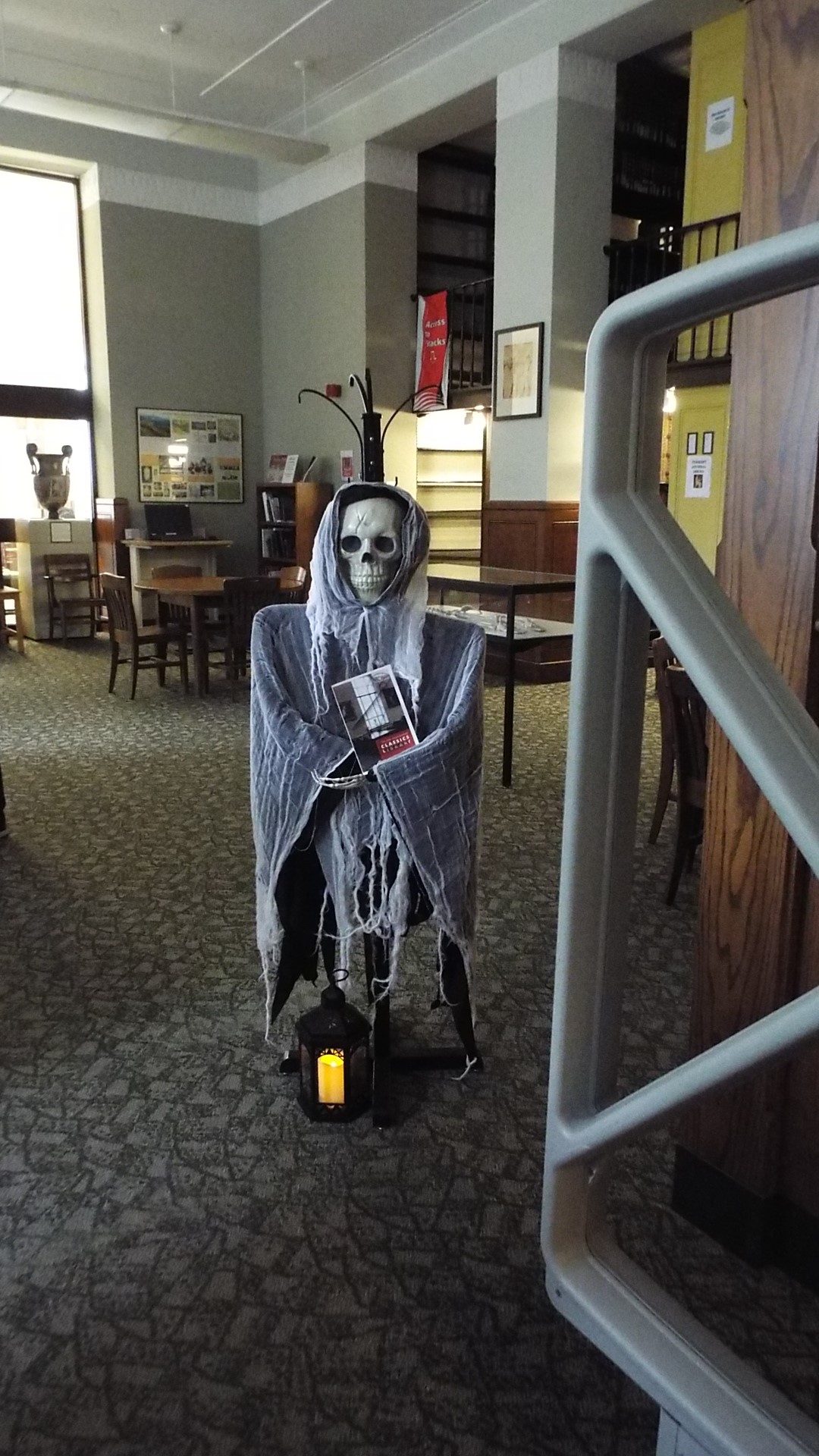
Excerpt from a dialogue between the slave Tranio and his master Theopropides from Plautus’ comedy Mostellaria, The Haunted House. Theopropides’ son has squandered his father’s fortune and the slave Tranio is trying to divert the father’s attention by asserting that the house is haunted before the money lenders arrive to claim it.
Tranio
“sed ecce quae illi in somnis mortuos:“ego transmarinus hospes sum Diapontius. hic habito, haec mi dedita est habitatio. nam me Accheruntem recipere Orcus noluit, quia praemature uita careo. per fidem deceptus sum: hospes me hic necauit isque medefodit insepultum clam [ibidem] in hisce aedibus, scelestus, auri causa. nunc tu hinc emigra. scelestae [hae] sunt aedes, impia est habitatio.” quae hic monstra fiunt anno uix possum eloqui” (496-505).
“But look what the dead man said to him in his sleep: “I am a guest from overseas, Diapontius. I live here, this dwelling place has been allotted to me: Orcus did not want to receive me into the Underworld because I lost my life before my time. I was deceived in violation of the obligations of hospitality: my host murdered me here and he secretly put me underground in this house without due rites, for the sake of gold, the criminal. Now move out from here. This house is under a curse, this dwelling place is defiled.” I could barely tell you in a year what apparitions take place here.”
Theopropides
“guttam haud habeo sanguinis, uiuom me accersunt Accheruntem mortui” (508-509).
“I don’t have a drop of blood! The dead are taking me to the Underworld while I’m still alive!”
The Classics Library’s staff shortage has temporarily been relieved by our most recent hire. Come meet Hecate.
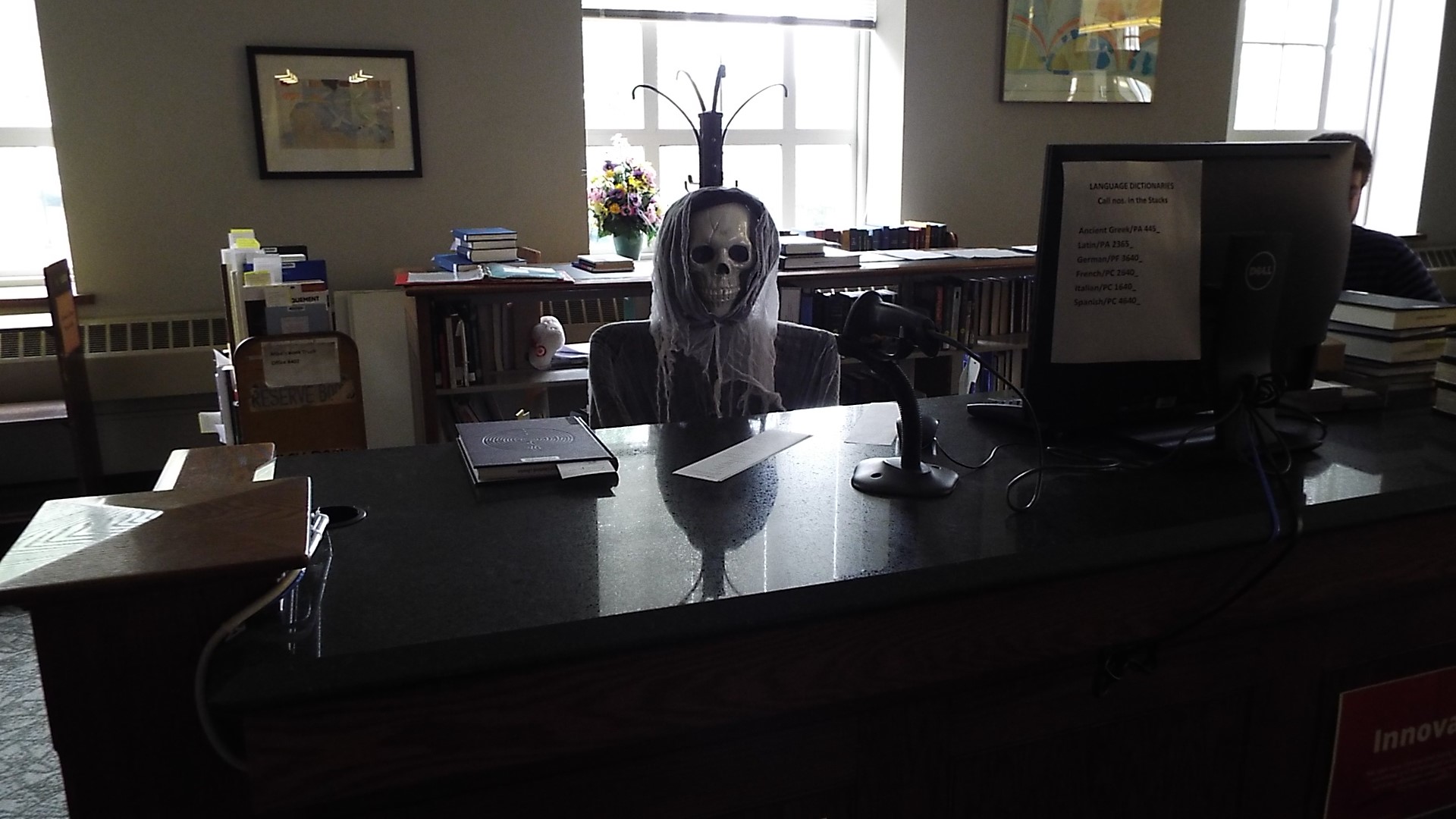
Excerpts from Homer’s Odyssey.
“αὐτὰρ ἐπεὶ ψυχὰς μὲν ἀπεσκέδασ᾿ ἄλλυδις ἄλλῃἁγνὴ Περσεφόνεια γυναικῶν θηλυτεράων, ἦλθε δ᾿ ἐπὶ ψυχὴ Ἀγαμέμνονος Ἀτρεΐδαο ἀχνυμένη· περὶ δ᾿ ἄλλαι ἀγηγέραθ᾿, ὅσσοι ἅμ᾿ αὐτῷ οἴκῳ ἐν Αἰγίσθοιο θάνον καὶ πότμον ἐπέσπον. ἔγνω δ᾿ αἶψ᾿ ἔμ᾿ ἐκεῖνος, ἐπεὶ πίεν αἷμα κελαινόν” (Od. 11. 385-90).
“When then holy Persephone had scattered this way and that the ghosts of the women, there came up the ghost of Agamemnon, son of Atreus, sorrowing, and round about him others were gathered, ghosts of all those who were slain with him in the house of Aegisthus, and met their fate. He knew me instantly, when he had drunk the dark blood.”
“δεδάκρυνται δὲ παρειαί, αἵματι δ᾿ ἐρράδαται τοῖχοι καλαί τε μεσόδμαι· εἰδώλων δὲ πλέον πρόθυρον, πλείη δὲ καὶ αὐλή, ἱεμένων Ἔρεβόσδε ὑπὸ ζόφον· ἠέλιος δὲοὐρανοῦ ἐξαπόλωλε, κακὴ δ᾿ ἐπιδέδρομεν ἀχλύς” (Od. 20. 353-57).
“sprinkled with blood are the walls and the fair panels. And full of ghosts is the porch, full also the court, ghosts hastening down to Erebus beneath the darkness, and the sun has perished out of heaven and an evil mist covers all.”
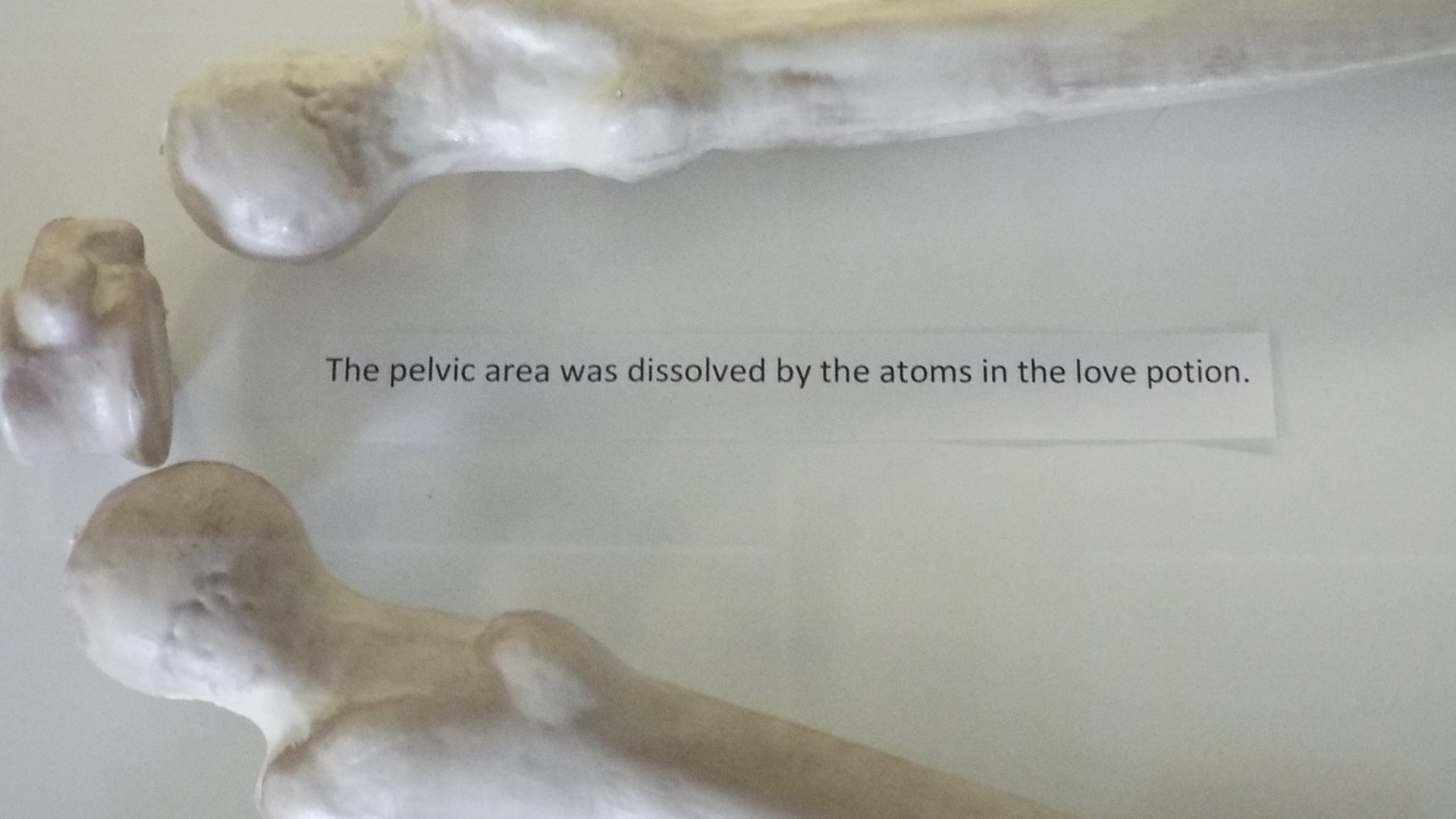
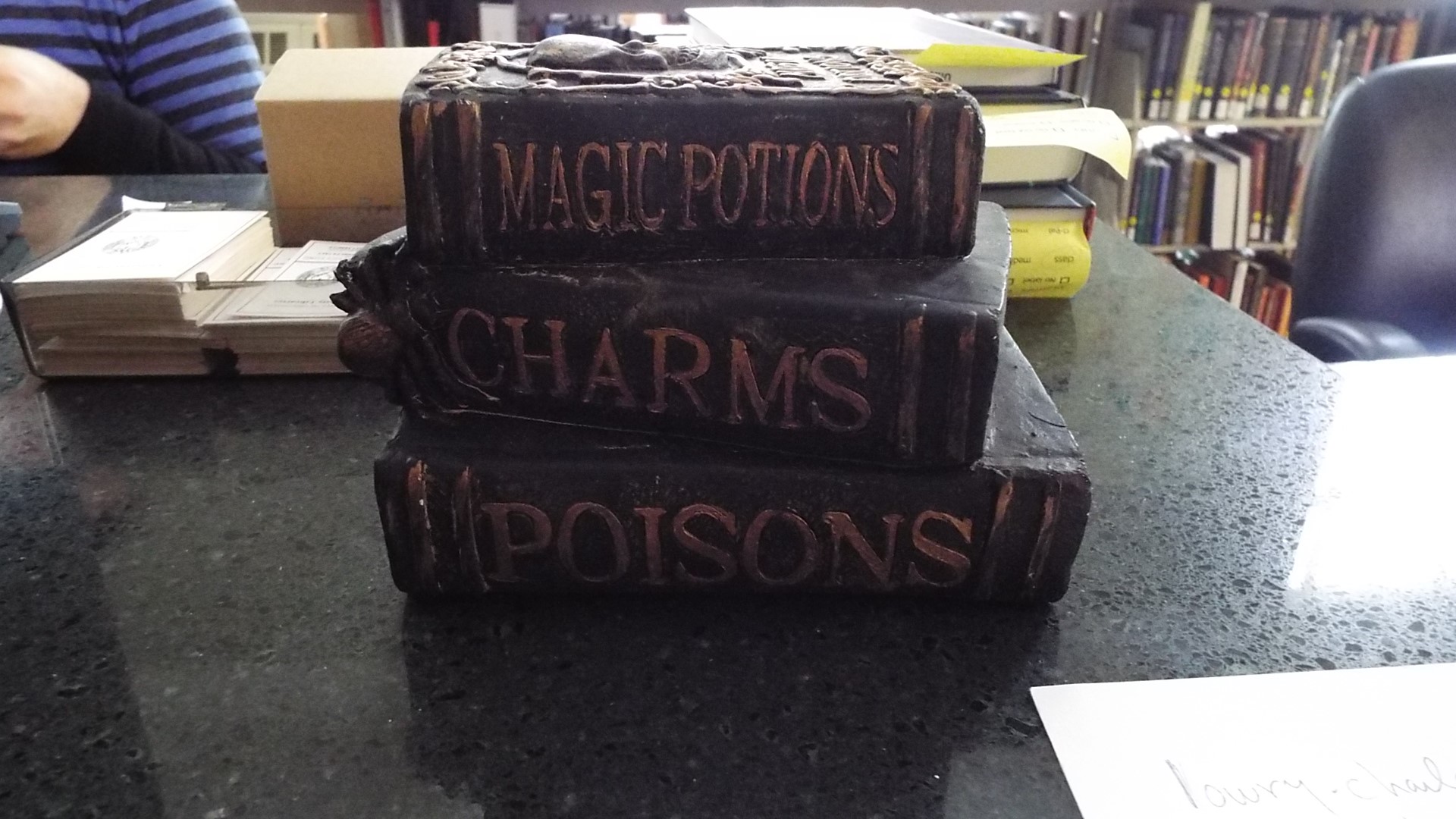
A recent archaeological find by the UC Classics Department of the skeleton of Roman poet Lucretius, proving that St. Jerome was correct in assigning the cause of the poet’s death to a love potion. Exhibition in the circulation area.
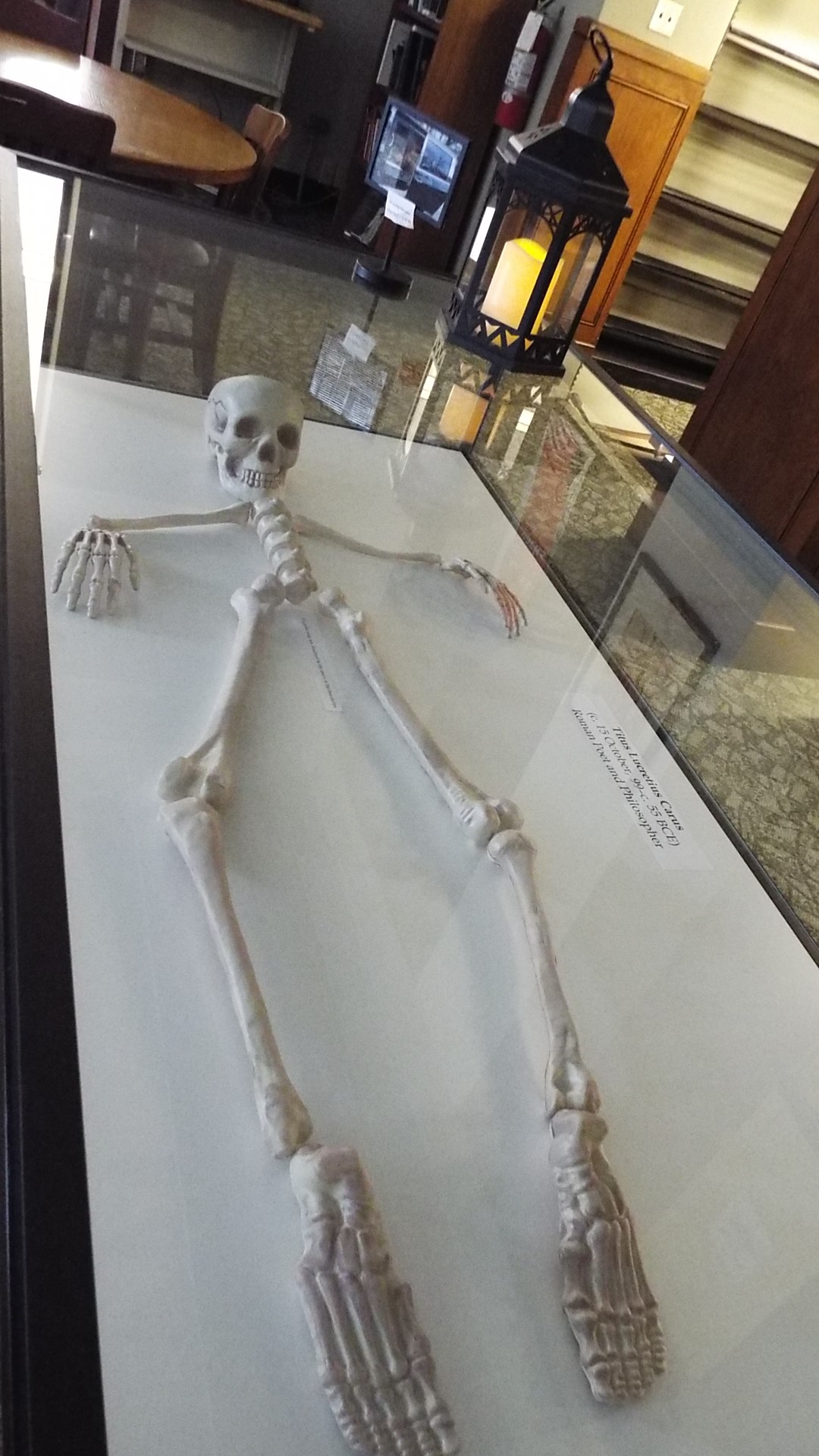
The ghost of Clytemnestra in Aeschylus’ Oresteia (Eumenides) when coming upon the furies fast asleep laments.
“ἐγὼ δ᾿ ὑφ᾿ ὑμῶν ὧδ᾿ ἀπητιμασμένη ἄλλοισιν ἐν νεκροῖσιν, ὧν μὲν ἔκτανον ὄνειδος ἐν φθιτοῖσιν οὐκ ἐκλείπεται, αἰσχρῶς δ᾿ ἀλῶμαι· προὐννέπω δ᾿ ὑμῖν ὅτιἔχω μεγίστην αἰτίαν κείνων ὕπο, παθοῦσα δ᾿ οὕτω δεινὰ πρὸς τῶν φιλτάτων οὐδεὶς ὑπέρ μου δαιμόνων μηνίεται κατασφαγείσης πρὸς χερῶν μητροκτόνων” (95-102).
“I am shunned in dishonor like this among the other dead, thanks to you. I am unceasingly taunted among the shades because of those I killed, and I wander disgraced; and I proclaim to you that I receive the greatest blame from them because, though I have suffered so grievously at the hands of those closest to me, none of the divinities is wrathful on my behalf, slaughtered as I have been by matricidal hands.”
A reference for the few…
Excerpt from a letter (XXVII) to Lucinius Sura by Pliny the Younger.
“Initio, quale ubique, silentium noctis; dein concuti ferrum, vincula moveri. Ille non tollere oculos, non remittere stilum, sed offirmare animum auribusque praetendere. Tum crebrescere fragor, adventare et iam ut in limine, iam ut intra limen audiri. Respicit, videt agnoscitque narratam sibi effigiem.”
“At first there was nothing but the general silence of night; then came the clanking of iron and dragging of chains. He did not look up nor stop writing, but steeled his mind to shut out the sounds. Then the noise grew louder, came nearer, was heard in the doorway, and then inside the room. He looked round, saw and recognized the ghost described to him.”
The Library’s most recent book acquisitions.
Dialogue between the ghost of Tantalus and Menippus from Lucian’s Dialogues of the Dead, illustrating that even in death “life” is a struggle.
ΤΑΝΤΑΛΟΣ
“Τοῦτ᾿ αὐτὸ ἡ κόλασίς ἐστι, τὸ διψῆν τὴν ψυχὴν ὡς σῶμα οὖσαν.”
ΜΕΝΙΠΠΟΣ
“Αλλὰ τοῦτο μὲν οὕτως πιστεύσομεν, ἐπεὶ φῂς κολάζεσθαι τῷ δίψει. τί δ᾿ οὖν σοι τὸ δεινὸν ἔσται; ἢ δέδιας μὴ ἐνδείᾳ τοῦ ποτοῦ ἀποθάνῃς; οὐχ ὁρῶ γὰρ ἄλλον ᾅδην μετὰ τοῦτον ἢ θάνατον ἐντεῦθεν εἰς ἕτερον τόπον.”
ΤΑΝΤΑΛΟΣ
“Ὀρθῶς μὲν λέγεις· καὶ τοῦτο δ᾿ οὖν μέρος τῆς καταδίκης, τὸ ἐπιθυμεῖν πιεῖν μηδὲν δεόμενον.”
Tantalus
“It’s just that that’s my punishment—that my ghost should be thirsty as if it were a body.”
Menippus
“Well, we’ll believe it, since you tell us you’re punished by thirst. But what do you find so terrible in that? Are you afraid of dying for lack of drink? I can’t see another Hades after this one, or a death hereafter taking us elsewhere.”
Tantalus
“You are quite right; but this is part of my sentence—to long to drink when I’ve no need.”
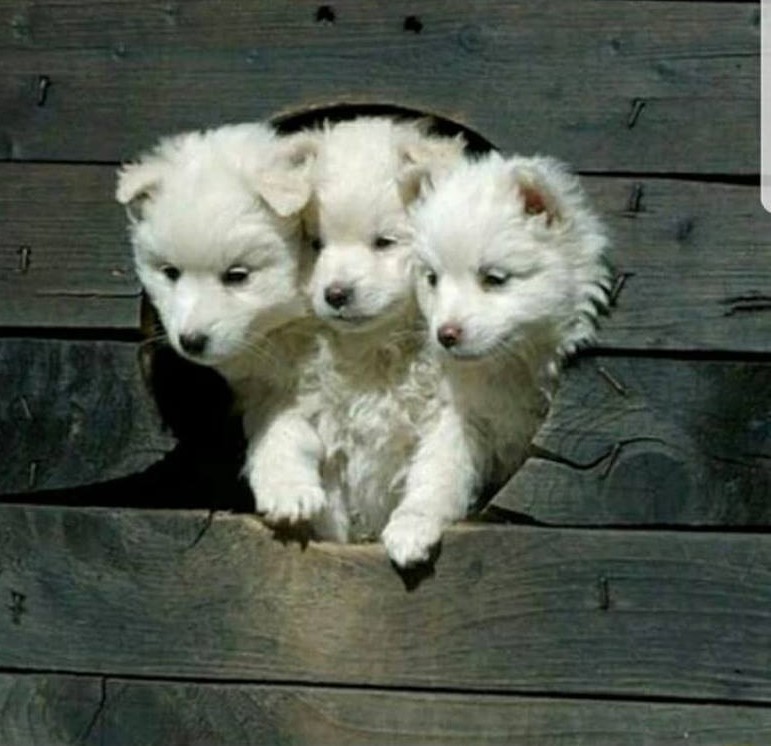
Cerberus as a puppy guarding the Gates of Hades.
HAPPY HALLOWEEN, GREEKS AND ROMANS!
FROM THE STAFF OF THE CLASSICS LIBRARY



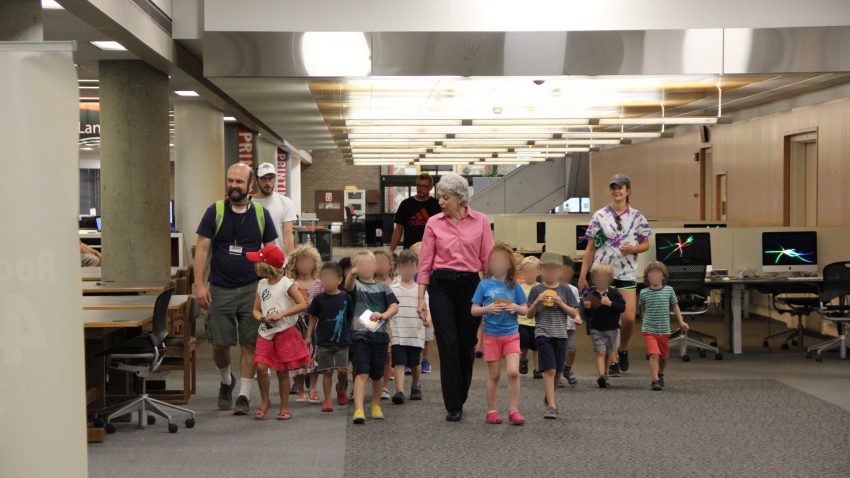
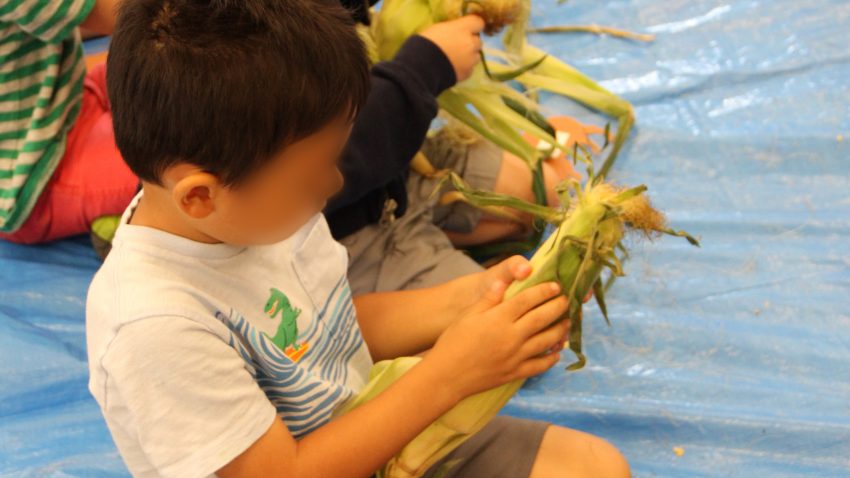
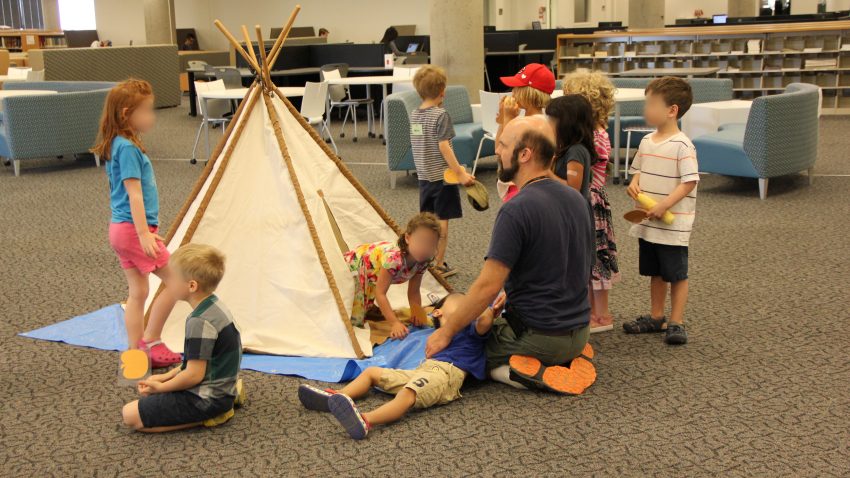
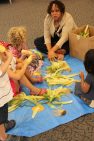
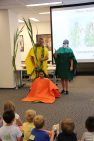
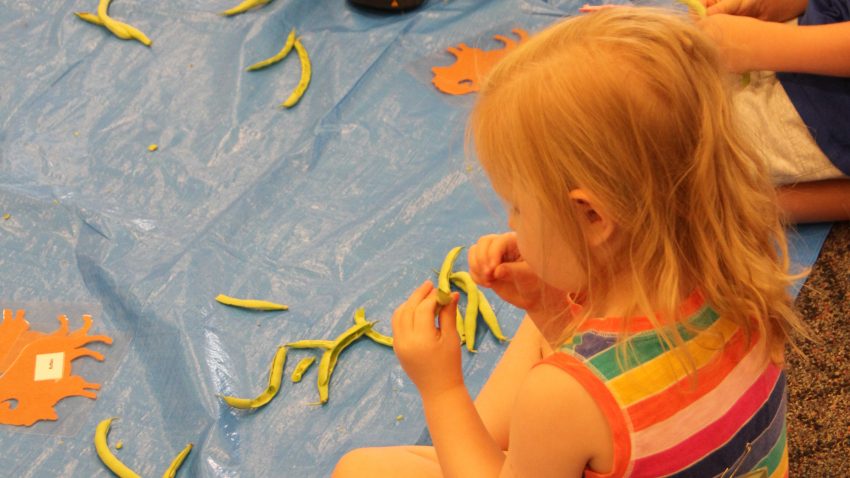 Finally, as a parting gift, each child received the book D is for Drum: A Native American Alphabet by Debbie and Michael Shoulders and Irving Toddy. The event lasted approximately an hour and at no time did our worries of waning attention spans among the children materialize. They never once lost interest. A success, if we do say so! And a huge thanks to all who assisted.
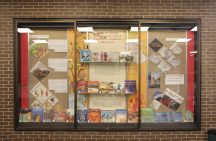
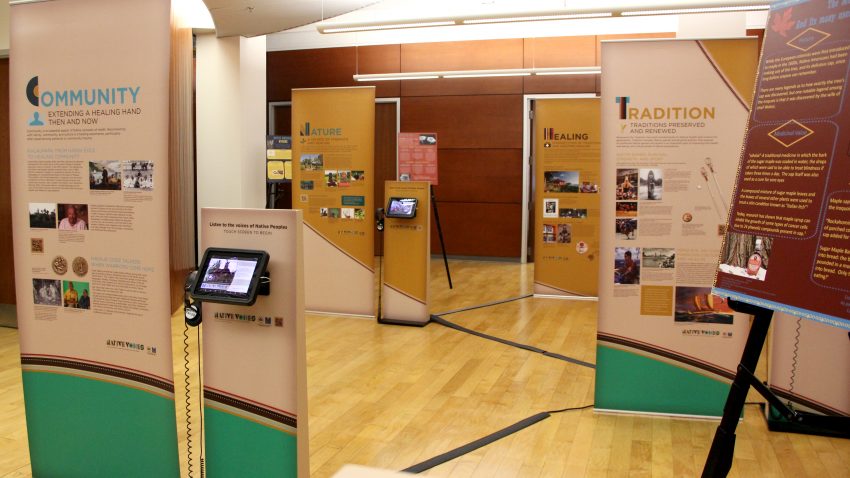 Native Voices: Native Peoples’ Concepts of Health and Illness, a traveling exhibition to U.S. libraries, is on display now through August 30 on the main level of the
  In association with the Native Voices exhibit, related events have been scheduled to explore the topic of Native Peoples’ Concepts of Health and Illness.
 On display in the 4th floor lobby of the Walter C. Langsam Library, the exhibit “The Kretschmer Collection of Native American Children’s Literature donated by Drs. Richard and Laura Kretschmer” features children’s books with Native American themes, written and illustrated by Native Americans. The books are part of a collection of over 275 books donated by Drs. Richard and Laura Kretschmer and housed in the