By: Sydney Vollmer
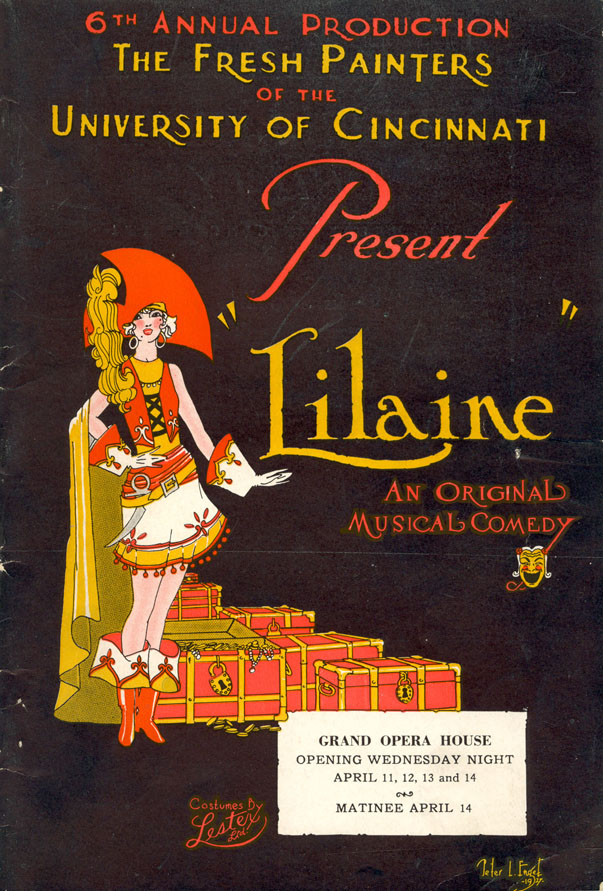 I’m a little late on posting a few big Shakespeare things. I promise they’re coming. In the craziness that has been finals, Kevin decided maybe I would like a little break from the Bard. (He was right.) He suggested I try painting for a little—and by that he meant looking into the Fresh Painters Club that was once a major extra-curricular at the University of Cincinnati. Conveniently, there was a history of the club that was written several decades ago. Though I don’t know who wrote it or exactly when it was penned, he or she explained the organization far better than I can. The text is as follows:
ANALYSIS OF THE FRESH PAINTER ACTIVITY
OF THE UNIVERSITY OF CINCINNATI.
HISTORY.
Looking backward, the Fresh Painters has developed from an old Varsity tradition. Every year during the period between 1900 and 1921, students gave a revue called “Varsity Vanities”. These revues were disconnected sets depicting the frivolities of campus life, and demonstrated singing, dancing and acting talents of undergraduates. Every spring the varsity Vanities Committee was organized and the revue was produced. Continue reading
 Connect to these databases for free practice tests, care plans, and more.